Justice Sotomayor Begs Lawyers to ‘Fight This Fight’ against Trump’s Agenda

(Luis Cornelio, Headline USA) Leftist Justice Sonia Sotomayor appeared to urge lawyers to “stand up” and “fight this fight” amid legal battles targeting President Donald Trump’s agenda following his victory in the 2024 presidential election 

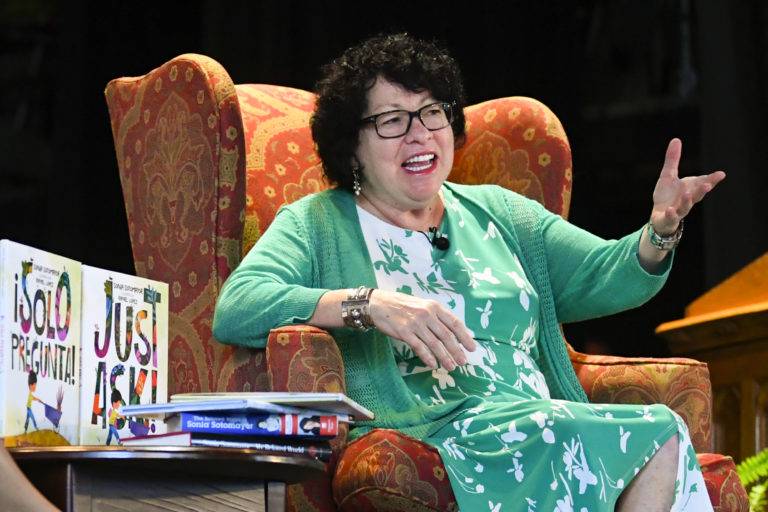
“If you’re not used to fighting, and losing battles, then don’t become a lawyer,” Sotomayor said at an American Bar Association event on Thursday. “Our job is to stand up for people who can’t do it themselves.” 

“Right now, we can’t lose the battles we are facing,” she added, as quoted by the New York Times. 

While her comments did not directly address Trump, they coincided with mounting lawsuits filed by powerless Democrats aimed at thwarting his administration’s priorities.  

Many of these left-driven lawsuits are likely headed for the Supreme Court. What’s more troubling, Sotomayor openly backed attorneys willing to “fight this fight,” while strategically avoiding any direct mention of Trump. 

“We need trained and passionate and committed lawyers to fight this fight,” she added. “For me, being here with you is an act of solidarity.” 

Sotomayor’s remarks sparked backlash from Republican figures on social media, with many calling for her to recuse herself from upcoming cases involving Trump. 

Author and Judicial Network President Carrie Severino wrote on X that Sotomayor’s comments make “a mockery of any appearance of objectivity in cases challenging the administration or involving the ABA.” 

Similarly, Sen. Thom Tillis, R-N.C., stated: “This is incredibly rich after liberals spent all of last year freaking out about the political views of Justice Alito’s wife. It is not the job for Justice Sotomayor or any other judge to be partisan politicians in robes.”  

“Their job is to follow the Constitution,” he added. 

Legal scholar and Fox News host Mark Levin blasted her as the “dumbest, most unethical, and politically leftwing lawyer” on the court. He also called her remarks a rallying cry for “ambulance-chasing attorneys to continue their unconstitutional attack on the presidency and separation of powers.” 

“Sotomayor is a shameless disgrace,” Levin concluded. 

President Barack Obama appointed Sotomayor to the high court in 2009. She has long angered conservatives with her politically charged comments. 

At a Harvard event in 2024, she admitted, “There are days that I’ve come to my office after an announcement of a case and closed my door and cried. There have been those days. And there are likely to be more.” 
Rubio, Vance Help Advance Ceasefire between India, Pakistan

(The Center Square) President Donald Trump announced a temporary ceasefire Saturday morning between India and Pakistan after days of military fighting in the neighboring nations.

“After a long night of talks mediated by the United States, I am pleased to announce that India and Pakistan have agreed to a FULL AND IMMEDIATE CEASEFIRE,” Trump wrote on Truth Social. “Congratulations to both Countries on using Common Sense and Great Intelligence.”

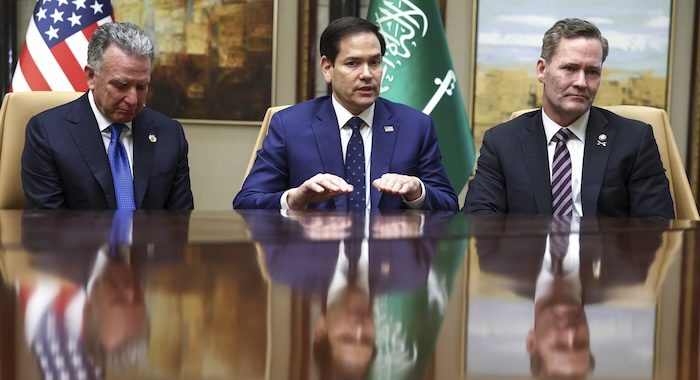
Secretary of State Marco Rubio and Vice President J.D. Vance helped broker the ceasefire deal with leaders from Pakistan and India. Both men spent the past two days working with Indian and Pakistani officials, including Indian Prime Minister Narendra Modi and Pakistan Prime Minister Shehbaz Sharif.

“I am pleased to announce the Governments of India and Pakistan have agreed to an immediate ceasefire and to start talks on a broad set of issues at a neutral site,” Rubio wrote on X. “We commend Prime Ministers Modi and Sharif on their wisdom, prudence, and statesmanship in choosing the path of peace.”

Vance echoed those comments.

“Great work from the President’s team, especially Secretary Rubio,” Vance wrote on X. “And my gratitude to the leaders of India and Pakistan for their hard work and willingness to engage in this ceasefire.”

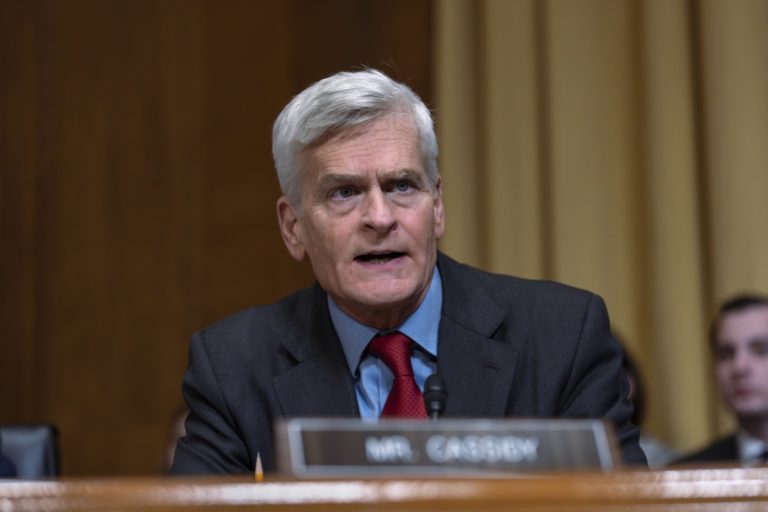
Trump Mulling Support for Primary Challenger to RINO Sen. Bill Cassidy

(Headline USA) President Donald Trump and Louisiana Gov. Jeff Landry have discussed U.S. Rep. Julia Letlow challenging U.S. Sen. Bill Cassidy in next year’s Republican primary, according to multiple people familiar with the matter.

The Republican governor’s promotion of a new challenger to Cassidy reflects unease within Trump’s base about the two-term senator. Cassidy voted to convict Trump in Trump’s 2021 impeachment trial over the protest at the U.S. Capitol on Jan. 6, 2021. And Cassidy, who is a medical doctor, expressed doubts about Trump’s pick of Robert F. Kennedy Jr. as the nation’s health secretary before voting to confirm Kennedy.

Republicans hold a 53-47 majority in the Senate and have a favorable electoral map in the 2026 midterms to help them keep control. But Cassidy is among several GOP senators up for reelection next year who are facing challenging primaries over past moves to distance themselves from Trump.

For the senator, “the biggest hurdle is going to be the impeachment vote. That’s what he has to overcome. And I don’t think he has the mindset to say, ‘I made a mistake,’” said Eddie Rispone, the Republican nominee for Louisiana governor in 2019 and a Cassidy supporter. “And Louisiana is a big Trump state.”

Landry, a close Trump ally, spoke last month with the president about Letlow as a potential Senate candidate, according to two people with knowledge of the conversation. They were granted anonymity to share contents of a conversation they were not authorized to discuss publicly.

A spokesperson for Letlow declined to comment on a potential campaign for Senate or the discussion between Landry and Trump. Landry’s office declined to comment.

Landry, elected in 2023, has been advocating for Letlow to consider a run, according to the people who confirmed their April conversation about Letlow. A Senate seat would be a safe bet for a Republican given that Trump received 60% of the vote in carrying Louisiana last year.

Republican insiders describe Landry and Cassidy not as close, but as having a cordial working relationship despite a difference in their feelings of loyalty to Trump, which creates some distance between Cassidy and segments of the party base in the state.

“Senator Cassidy delivers conservative results for the people of Louisiana,” Cassidy spokesperson Ashley Bosch said in a statement. “He’s worked hard to support the President’s agenda and we’re confident voters will re-elect him next year.”

Letlow is a three-term Republican representative from northeast Louisiana. She won the seat in a special election in March 2021 after her husband, Luke, had been elected but died of complications from COVID-19.

Letlow sits on the influential House Appropriations Committee. Her district was a mostly rural swath of northeast Louisiana when she arrived in Congress. It has shifted as a result of a redistricting map ordered by the U.S. Supreme Court in 2024 and now also include parts of metropolitan Baton Rouge, where Cassidy lives.

Cassidy already faces one major challenger, Louisiana State Treasurer John Fleming, a former congressman.

Some Republican activists in the state condemned Cassidy for his 2021 vote to convict Trump, a vote Cassidy said afterward he was “at peace” casting.

The state Republican executive committee voted unanimously to censure Cassidy. The Republican committee in Bossier Parish, which includes the city of Shreveport in northwest Louisiana, adopted a censure measure describing Cassidy as “an object of extreme shame” and called for his resignation.

Trump revived his public contempt for Cassidy a year ago after the senator spoke out when the then-former president promised to pardon those convicted in connection with the Capitol riot; Trump did that after taking office in January.

In an April 2024 post on Truth Social, Trump called Cassidy “one of the worst Senators in the United States Senate” and a “disloyal lightweight.”

Louisiana’s new congressional primary election system also could be a wrinkle for Cassidy.

Until the new system was adopted this year, congressional candidates from all parties seeking the same office ran on the same ballot regardless of party affiliation. In these so-called jungle primaries, only a candidate who received 50% of the vote would win the office outright. If no one reached the threshold, the top two finishers would face each other in a runoff.

Next year, only voters who note Republican affiliation on their voter registration — and those who affiliate with no party — will be able to participate in the GOP Senate primary. The effect is seen as a potential challenge for Cassidy, who had benefited from the less-partisan nature of the old system.

“It does tighten it a little bit for him, because you do have the far-right Republicans — for them, it’s going to be hard to forgive him for that impeachment vote,” Rispone said.

Still, Cassidy has a clear fundraising advantage, with more than $7.4 million in his campaign account at the end of the first quarter. Cassidy has also begun laying the campaign groundwork in Louisiana and is expected to announce his candidacy formally in the coming weeks.

And in a sign things might not be as bad with Trump as they were, Cassidy received different sort of recognition from the president at an economic event at the White House this month.

“We have some great people, great senators, here,” Trump said. “Bill Cassidy, thank you, Bill.”

Adapted from reporting by the Associated Press

US to Accept White South African Refugees

(Headline USA) The Trump administration will welcome more than two dozen white South Africans to the United States as refugees next week, officials and documents said Friday.

The first Afrikaner refugees are arriving Monday at Dulles International Airport outside Washington, according to a document obtained by The Associated Press. They are expected to be greeted by a government delegation, including the deputy secretary of state and officials from the Department of Health and Human Services, which has organized their resettlement under its Office for Refugee Resettlement.

The flight will be the first of several in a “much larger-scale relocation effort,” White House deputy chief of staff Stephen Miller told reporters.

“What’s happening in South Africa fits the textbook definition of why the refugee program was created,” he said. “This is persecution based on a protected characteristic — in this case, race. This is race-based persecution.”

State Department refugee programs have been put on hold since President Donald Trump ordered a review in February. While halting arrivals from Afghanistan, Iraq, most of sub-Saharan Africa and throughout Latin America, Trump also issued an executive order prioritizing the processing of white South Africans who claim racial discrimination in their home country.

“The U.S. Embassy in Pretoria has been conducting interviews and processing pursuant to President Trump’s Executive Order on Addressing Egregious Actions of the Republic of South Africa,” the State Department said. “The Department of State is prioritizing consideration for U.S. refugee resettlement of Afrikaners in South Africa who are victims of unjust racial discrimination.”

The department said nothing about the imminent arrival of what officials said are believed to be more than two dozen white South Africans from roughly four families who had applied for resettlement in the U.S. Their arrival had originally been scheduled for early last week but was delayed for reasons that were not immediately clear.

The HHS refugee office was ready to offer them support, including with housing, furniture and other household items, and expenses like groceries, clothing, diapers and more, the document says. “This effort is a stated priority of the Administration.”

HHS didn’t respond to messages seeking comment.

The Trump administration has taken an outspoken adversarial position in regard to South Africa, which is the homeland of close Trump adviser Elon Musk and also holds the rotating presidency of the Group of 20 developed and developing nations.

Secretary of State Marco Rubio notably boycotted a G20 foreign ministers meeting in Johannesburg in March because its main agenda centered on diversity, inclusion and climate change. Rubio also expelled South Africa’s ambassador to the U.S. in March for comments that the Trump administration interpreted as accusing the president of promoting white supremacy.

Shortly thereafter, the State Department ended all engagement with the G20 during South Africa’s presidency. The U.S. is due to host G20 meetings in 2026.

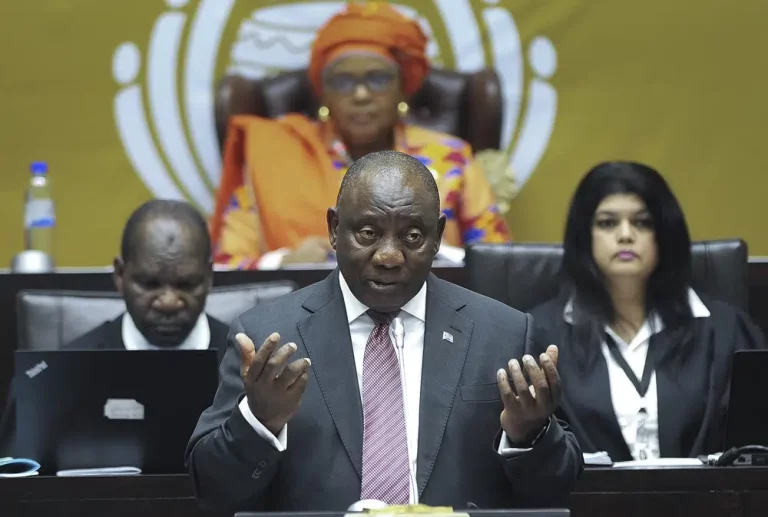
South African President Cyril Ramaphosa’s office said in a statement Friday that he had spoken with Trump late last month on issues including the U.S.‘s criticism of South Africa and the Trump administration’s allegations that Afrikaners are being persecuted. Ramaphosa told Trump that the information the U.S. president had received “was completely false,” the statement said.

“Therefore, our position is that there are no South African citizens that can be classified as refugees to any part of the world, including the U.S.,” the statement from Ramaphosa’s office said.

South African Deputy Foreign Minister Alvin Botes spoke with U.S. Deputy Secretary of State Christopher Landau on Friday about the refugees, the South African foreign ministry said. Landau is expected to lead the delegation to welcome the refugees Monday.

The foreign ministry said South Africa had “expressed concerns with the information conveyed that the United States has commenced with processing alleged refugees from South Africa and will begin resettling these citizens in the United States.”

The foreign ministry said the allegations of discrimination against Afrikaners in South Africa “are unfounded.”

Adapted from reporting by the Associated Press


Senators Cotton and Graham Work To Sabotage Chances of Iran Deal

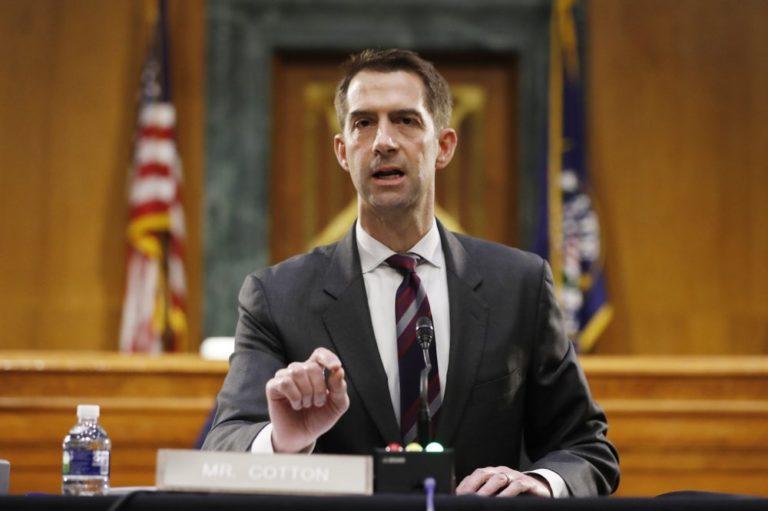
(Dave DeCamp, Antiwar.com) Senators Tom Cotton (R-AR) and Lindsey Graham (R-SC), two of the most hawkish members of Congress, are working together to sabotage the Trump administration’s chances of reaching a deal with Iran.

On Thursday, the senators held a press conference outlining a resolution they’re introducing that demands that any deal with Iran must include the total dismantlement of Tehran’s nuclear enrichment program, an idea that Iranian officials have made clear is a non-starter.

“To the Iranian regime: you claim all you want is a peaceful nuclear power program. You can have it, but you cannot enrich and you must dismantle,” Graham said. “And you must dismantle now.”

Graham and Cotton said that any deal must require ratification from the Senate and must also impose limits on Iran’s ballistic missile program and support for its allies in the region, conditions that are also a non-starter for Tehran.

“A treaty with Iran in this space is only possible if you get 67 votes,” Graham said. “You’re not going to get 67 votes for a treaty regarding their nuclear program unless they deal with the missile program and their terrorism activity. So is it possible? Yes, if Iran changes.”

The senators also repeated President Trump’s threat that if there is no deal, the US will attack Iran. “Iran can either have a nuclear program that’s lying in ruins, smoking, destroyed, and dismantled, or it can have a peaceful civilian nuclear power program with no centrifuges, no enriching, no re-processing, and no pathway to a nuclear weapon,” he said.

Trump has been threatening to bomb Iran over its nuclear program even though his intelligence agencies recently reaffirmed that there’s no evidence Tehran is building a bomb or that Ayatollah Ali Khamenei has reversed his ban on the development of nuclear weapons.

Iran is currently enriching some uranium at 20% and 60%, which is still lower than the 90% needed for weapons-grade. Tehran has made clear that it’s willing to bring enrichment levels back down to 3.67%, the limit imposed by the JCPOA.

This article originally appeared at Antiwar.com.


CA’s $10B Deficit ‘Precisely’ Matches Illegal Immigrant Health Care Cost

(The Center Square) California legislators have been told to expect a deficit of $10 billion or more even if revenues do not fall due to higher than anticipated spending, reports Politico.

Critics note that the $10 billion figure matches estimated costs of the state’s expansion of eligibility for Medi-Cal, the state’s taxpayer-financed health care system, to all income-qualifying illegal immigrants.

“What a fiscal coincidence: precisely the estimated cost of Gavin Newsom’s plan to extend state Medi-Cal to illegal immigrants,” said Will Swaim, president of the conservative California Policy Center on X.

Earlier this week, the state-funded Legislative Analyst’s Office warned the state’s economy is “stagnant” and “fragile” and that the budget is reliant on an “unsustainable” stock market. Earlier Friday, the LAO urged lawmakers to consider the possible negative downturn that tends to but does not always accompany significant decreases in consumer sentiment.

“If hard economic data fall in-line with worrisome economic indicators, the state’s revenue outlook will turn more negative; however, recent history suggests this outcome is far from certain,” wrote the LAO. “As such, we urge policymakers to weigh the risks of both the possibility of a further downturn and of better than expected growth when making budget decisions.”

Last year, the state narrowly closed a $73 billion deficit through a combination of spending cuts, deferrals, shifts, and reserve withdrawals.

Now, even if state tax revenue remains steady, rising non-discretionary spending, such as from Medi-Cal, combined with possible cuts or funding withholding at the federal level could leave the state billions of dollars short yet again.

Federal spending in California is set to be $171 billion this year.

In February, state officials said California had spent $9.5 billion thus far on Medi-Cal services for illegal immigrants, The Center Square first reported, resulting in California Gov. Gavin Newsom requesting a $6.4 billion emergency bailout to fund the program for the remainder of the fiscal year.

In April, Newsom bragged about the strength of the California economy, sharing it’s now the world’ fourth-largest economy in U.S. dollars — due to the relative decline of the Japanese yen to the dollar. After accounting for the high cost of goods and services, California only barely edges out low-performing Italy, and the state has shed hundreds of thousands of private sector jobs amid lower projected sales and corporate tax revenue.

Marjorie Taylor Greene Makes Big Decision in Georgia Senate Race

(Headline USA) U.S. Rep. Marjorie Taylor Greene said Friday she won’t challenge Democratic Sen. Jon Ossoff of Georgia in next year’s midterms, delivering relief for some Republicans who worry she’s too divisive to win.

In a lengthy post on the social media platform X, Greene disputed GOP donors and consultants who fear she would turn off the moderate Republicans and independents needed to beat Ossoff. But Greene said she doesn’t want to serve in a Senate that “doesn’t work” and that she said is dominated by lawmakers hostile to grassroots Trump supporters and unwilling to shake up the status quo.

“If I’m going to fight for a team, it will only be a team willing to lay it all on the line to save this country,” she wrote.

Ossoff, a first-term senator, won the seat by a slim margin in a state that has historically been a Republican stronghold but has more recently become a battleground. He is a top target for Republicans looking to expand their narrow Senate majority.

Republican Gov. Brian Kemp, who could be a formidable opponent for Ossoff, opted out of the 2026 race on Monday. His decision leaves a wide-open race for the GOP nomination.

U.S. Rep. Buddy Carter, who represents a district on the Georgia coast, became the first major Republican candidate to declare Thursday.

Six other GOP officeholders besides Greene have acknowledged interest in running to The Associated Press. They include two other Republicans in the U.S. House, Mike Collins and Rich McCormick. Also considering the race are Secretary of State Brad Raffensperger, state Agriculture Commissioner Tyler Harper, state Insurance Commissioner John King and state Sen. Greg Dolezal.

“I expect a competitive primary — Senate seats don’t come along that often,” said Eric Tanenblatt, a top national GOP fundraiser and Kemp ally who has backed Trump’s rivals in presidential primaries.

Greene is nationally known and a prolific fundraiser, but she has feuded with members of her own party. On Thursday, she noted to reporters that she has more than 11 million social media followers, saying that’s because people know where she stands.

Greene’s appeal would be clear in a GOP primary with many voters fiercely loyal to the president. Her decision not to run came a day after she told reporters she was considering it.

“I’m going to give it some thought, talk to my family. I’m honored to have so much support from the great people of Georgia. And I have options,” she said Thursday.

Greene was first elected to the House in 2020. She initially planned to run in a competitive district in northern Atlanta’s suburbs, but relocated into the much more conservative 14th District in Georgia’s northwest corner.

Greene continued to embrace conspiracies even after 11 House Republicans joined Democrats to remove her committee assignments in February 2021. She embraced people jailed on charges following the Jan. 6, 2021, uprising at the U.S. Capitol as political prisoners, part of her campaign to reframe the narrative of the attack and cast Democrats, not Republicans, as a party of violence.

She was welcomed back into the mainstream of the Republican conference by Kevin McCarthy, who forged an alliance with her. But Greene kept feuding with Republicans and Democrats alike. The House Freedom Caucus expelled Greene in 2023.

Adapted from reporting by the Associated Press

Google to Pay Texas $1.4B to Settle Claims of Collecting Users’ Data w/o Permission

(Headline USA) Google will pay $1.4 billion to Texas to settle claims the company collected users’ data without permission, the state’s attorney general announced Friday.

Attorney General Ken Paxton described the settlement as sending a message to tech companies that he will not allow them to make money off of “selling away our rights and freedoms.”

“In Texas, Big Tech is not above the law.” Paxton said in a statement. “For years, Google secretly tracked people’s movements, private searches, and even their voiceprints and facial geometry through their products and services. I fought back and won.”

The agreement settles several claims Texas made against the search giant in 2022 related to geolocation, incognito searches and biometric data. The state argued Google was “unlawfully tracking and collecting users’ private data.”

Paxton claimed, for example, that Google collected millions of biometric identifiers, including voiceprints and records of face geometry, through such products and services as Google Photos and Google Assistant.

Google spokesperson José Castañeda said the agreement settles an array of “old claims,” some of which relate to product policies the company has already changed.

“We are pleased to put them behind us, and we will continue to build robust privacy controls into our services,” he said in a statement.

The company also clarified that the settlement does not require any new product changes.

Paxton said the $1.4 billion is the largest amount won by any state in a settlement with Google over this type of data-privacy violations.

Texas previously reached two other key settlements with Google within the last two years, including one in December 2023 in which the company agreed to pay $700 million and make several other concessions to settle allegations that it had been stifling competition against its Android app store.

Meta has also agreed to a $1.4 billion settlement with Texas in a privacy lawsuit over allegations that the tech giant used users’ biometric data without their permission.

Adapted from reporting by the Associated Press


Authorities Arrest over 100 People on Tennessee Roads in Support of Trump’s Deportations

(Headline USA) More than 100 people have been taken into custody by federal immigration officials in a joint operation with the Tennessee Highway Patrol.

The operation with U.S. Immigration and Customs Enforcement is a reminder of how local and state law enforcement jurisdictions are critical to President Donald Trump’s plans for mass deportations. Last week, Florida officials touted a joint operation with ICE that resulted in 1,120 immigration arrests.

Tennessee’s Gov. Bill Lee recently signed a law creating a division of immigration enforcement with the state’s Department of Safety and Homeland Security, which includes the Highway Patrol. He is one of a number of Republican officials pledging to use state resources to carry out Trump’s plans.

Meanwhile, city officials in the Democratic stronghold of Nashville have disavowed involvement and been critical of the arrests. Nashville Law Director Wally Dietz said the state-federal operation, which began May 3, caught everyone in city government by surprise.

Responding to concerns about Nashville police presence outside an ICE office, Dietz said Wednesday that the city “routinely receives requests for extra patrols for a variety of reasons and responds to the extent resources are available.” He said he didn’t know who was detained and that, when he requested more information from the Highway Patrol, he was told to file a public records request.

The Highway Patrol said Friday that it made 588 stops in the joint operation with ICE, which took custody of 103 under investigation for immigration violations.

The stops “led to the recovery of illegal drugs and firearms — taking dangerous elements off the street and making Tennessee safer,” the Highway Patrol said. One person was wanted in a killing in El Salvador.

The Highway Patrol said stops are based solely on driver behavior. “We do not enter neighborhoods or stop vehicles based on who someone is — we stop based on what they do behind the wheel,” it said.

About 9% of the Nashville metropolitan area population of about 2 million are immigrants, with many from Mexico and Honduras, according to the Migration Policy Institute’s analysis of census data. The city also has a large Kurdish population living alongside refugees from Sudan, Myanmar and other countries.

Adapted from reporting by the Associated Press


Seattle Police Rethink Nude Beach Patrols amid Complaints of Lewd Public Behavior

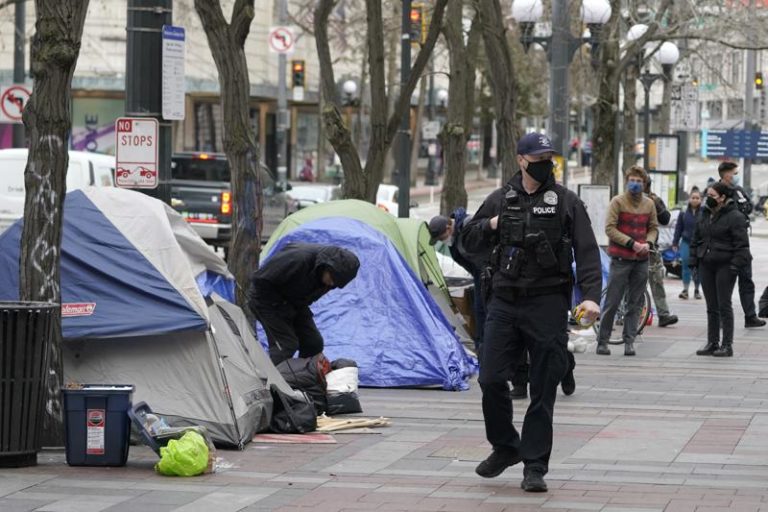
(The Center Square) The Seattle Police Department is reevaluating how to patrol a nude beach in the city following complaints by area residents of frequent masturbation at Denny Blaine Park.

Last month, a community group, Denny Blaine for All, sued the city over what it claims is ongoing and unaddressed illegal activity at the park. The lawsuit alleges nearby residents often witness “lewd” public acts.

In addition to being an unofficial nude beach, Denny Blaine Park has historically been a gathering place for the LGBTQ community, which Seattle Police Chief Shon Barnes acknowledged in a statement on Thursday. Barnes issued the statement after a Sunday incident where Seattle police showed up at the beach for a premise check and threatened to bar anyone from the park who didn’t put on clothes – and trespassed one person who refused.

Park-goers are not committing a crime just for being in the buff. State law does not make being nude in public a crime. However, a person is guilty of indecent exposure if they intentionally make any open and obscene exposure of themselves in a way likely to cause reasonable affront or alarm. Barnes acknowledged that in his statement.

“Simply being nude at this park is not a crime, [but] we do not have tolerance for illegal indecent or lewd behavior at the park,” Barnes said. “Every person in the park should feel safe. This is something I have heard from both park users and neighbors.”

Barnes added that SPD will explore how to patrol the park to “best meet the needs of the community,” while enforcing the law, but left it unclear whether this reevaluation means more hands-on policing – or backing off entirely.

The police chief’s statement comes after calls to end patrols at Denny Blaine Park from Katie Wilson – a candidate for Seattle mayor in the upcoming November election – who said SPD should prioritize violent crimes rather than nude people at a public park.

Wilson accused wealthy neighbors near the park of being behind the push to end nudity there, with Mayor Bruce Harrell’s administration obliging to do so. She pointed to a KUOW article from 2024 that revealed Stuart Sloan – a wealthy Seattle resident – offered a donation to a planned $550,000 children’s playground project at Denny Blaine Park to deter public nudity that was ultimately scrapped.

“How can people have faith in an apparatus they see doing favors for the wealthy and well-connected — a millionaire campaign donor who texts back and forth with the mayor — while the rest of us are an afterthought,” Wilson posted on social media. “Mayor Harrell and SPD need to reassess their priorities and make a clear public statement that this treatment of Denny Blaine beachgoers will end.”

Barnes’ statement came two days after Wilson’s post, although he did not acknowledge Wilson’s post.

Harrell’s office did not respond to The Center Square’s request for comment on SPD’s patrols of Denny Blaine Park.