Jury Hits a ‘Snag’ in Diddy Trial, Doesn’t Reach Verdict

(Headline USAJury deliberations got underway on Monday in Sean “Diddy” Combs’ federal sex trafficking trial and hit a snag almost as soon as they started. But, by the end of the day, jurors indicated they were making progress weighing complex charges that could put the hip-hop mogul in prison for life.

The first day of deliberations saw a flurry of notes from the jury and Combs and his supporters bowing their heads in prayer in the courtroom — but no verdict.

The jury of eight men and four women are sifting through seven weeks of sometimes graphic and emotional testimony about the rap, fashion and reality TV impresario ’s propensity for violence and his sexual predilections, including drug-fueled sex marathons dubbed “ freak-offs ” or “hotel nights.”

About an hour in, the foreperson reported that a juror might be having trouble following the 61 pages worth of instructions the judge had just read to them.

“We are concerned (the juror) cannot follow your honor’s instructions,” the foreperson said in a note to Judge Arun Subramanian just after 12:30 p.m.

After the judge originally proposed asking the jury foreperson the nature of concerns about the fellow juror, defense lawyer Marc Agnifilo suggested caution and that it was better to say less than more.

“We can always ratchet it up. We can’t ratchet it down,” Agnifilo said.

Judge Arun Subramanian sent his response to the jury around 2 p.m. reminding the panel to deliberate and to follow his instructions on the law.

The jury sent another note about three hours later asking for clarification on part of the instructions dealing with drug distribution — an allegation included in Combs’ racketeering conspiracy charge.

As deliberations were happening, Combs prayed with his family and friends in the courtroom. Wearing his customary sweater and khakis, he faced his contingent in the audience and bowed his head with them. As they finish, they applauded and eventually left the courtroom.

Combs also showed off two books he’s reading: “The Power of Positive Thinking,” by Norman Vincent Peale and “The Happiness Advantage,” by Shawn Achor.

As he sent the jury to deliberate, Subramanian told the five alternate jurors to remain on standby in case they’re needed to fill in on the main jury.

Jurors are being provided with a laptop loaded with all of the exhibits shown in court, including text messages, photographs and videos of the sexual encounters at the heart of the case.

Combs, 55, has pleaded not guilty to federal charges of racketeering conspiracy, two counts of sex trafficking — relating to two of his ex-girlfriends — and two counts of transportation to engage in prostitution for allegedly arranging to fly his girlfriends and sex workers across state lines.

In closing arguments last week, federal prosecutors and Combs’ defense team took their last shots at convincing jurors to convict or acquit the Grammy Award-winning founder of Bad Boy Records.

“The defendant used power, violence and fear to get what he wanted,” Assistant U.S. Attorney Christy Slavik said. “He thought that his fame, wealth and power put him above the law.”

She said that he used his “close inner circle and a small army of personal staff, who made it their mission to meet the defendant’s every desire, promote his power and protect his reputation at all costs.”

Defense lawyer Marc Agnifilo countered, “This isn’t about crime. It’s about money.” He noted that one of Combs’ accusers in the criminal case also sued him in civil court.

“He is not a racketeer. He is not a conspirator to commit racketeering. He is none of these things. He is innocent. He sits there innocent. Return him to his family, who have been waiting for him,” the lawyer told jurors.

In all, 34 witnesses testified, headlined by Combs’ former girlfriends Cassie — the R&B singer born Casandra Ventura — and “ Jane,” who testified under a pseudonym. Both women said he often was violent toward them. Cassie said he forced her into hundreds of sexual encounters with paid male sex workers while Jane recounted numerous “hotel nights.”

Jurors also saw now-infamous security camera video of Combs beating, kicking and dragging Cassie at a Los Angeles hotel in 2016 and clips from videos of sexual encounters.

Combs chose not to testify, and his lawyers didn’t call any witnesses in their defense case. His attorneys elected instead to challenge the accusers’ credibility during lengthy cross-examination questioning.

The defense has acknowledged that Combs veered into violence, but his lawyers maintain that the sex acts were consensual. They contend that prosecutors are intruding in Combs’ personal life and that he’s done nothing to warrant the charges against him.

Adapted from reporting by the Associated Press
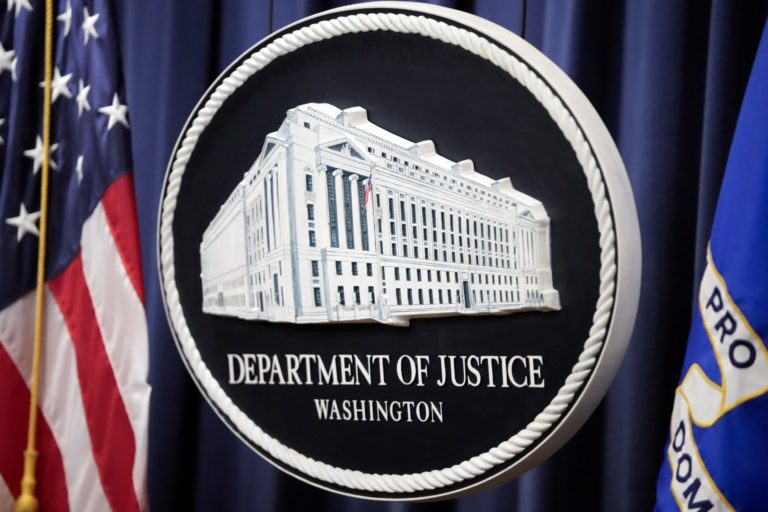
More Than 300 Charged in $14.6 Billion Healthcare Fraud Schemes Takedown

(Headline USAState and federal prosecutors have charged more than 320 people and uncovered nearly $15 million in false claims in what they described Monday as the largest coordinated takedown of health care fraud schemes in Justice Department history.

Law enforcement seized more than $245 million in cash, luxury vehicles, cryptocurrency, and other assets as prosecutors warned of a growing push by transnational criminal networks to exploit the U.S. health care system. As part of the sweeping crackdown, officials identified perpetrators based in Russia, Eastern Europe, Pakistan, and other countries.

“These criminals didn’t just steal someone else’s money. They stole from you,” Matthew Galeotti, who leads the Justice Department’s criminal division, told reporters Monday. “Every fraudulent claim, every fake billing, every kickback scheme represents money taken directly from the pockets of American taxpayers who fund these essential programs through their hard work and sacrifice.”

The alleged $14.6 billion in fraud is more than twice the previous record in the Justice Department’s annual health care fraud crackdown. It includes nearly 190 federal cases and more than 90 state cases that have been charged or unsealed since June 9. Nearly 100 licensed medical professionals were charged, including 25 doctors, and the government reported $2.9 billion in actual losses.

Among the cases is a $10 billion urinary catheter scheme that authorities say highlights the increasingly sophisticated methods used by transnational criminal organizations. Authorities say the group behind the scheme used foreign straw owners to secretly buy up dozens of medical supply companies and then used stolen identities and confidential health data to file fake Medicare claims.

Nineteen defendants have been charged as part of that investigation — which authorities dubbed Operation Gold Rush — including four people arrested in Estonia and seven people arrested at U.S. airports and at the border with Mexico, prosecutors said. The scheme involved the stolen identities and personal information of more one million Americans, according to the Justice Department.

“It’s not done by small time operators,” said Dr. Mehmet Oz, who leads the Centers for Medicare and Medicaid Services. “These are organized syndicates who are designing to hurt America.”

Adapted from reporting by the Associated Press

U.S. Officials Told Trump Last Year that Iranian ‘Hit Teams’ Were Hunting Him

(Headline USAA new book says that national security officials working under the Biden administration told Donald Trump last September that there were Iranian “hit teams” hunting him inside the U.S.—a claim for which there is no credible evidence. Thus far, the only publicly known “hitmen” involved in Iranian assassination conspiracies in the U.S. have been either undercover FBI agents or informants.

The book, “2024: How Trump Retook the White House and the Democrats Lost America,” also claims that Iran nearly assassinated Trump’s former CIA director, Mike Pompeo, in Paris, France in 2022.

“In 2022, Iranians learned of the Paris hotel where Pompeo was staying and tried to assassinate him. He narrowly escaped,” states a Washington Post review of the book. WaPo admitted that the book didn’t present any evidence for its claim, such as law enforcement reports, witnesses or other documentation, Instead, the book is largely underpinned by interviews with anonymous sources, according to WaPo.

The book says that the Trump campaign went to great lengths to protect itself after receiving the briefing on the so-called Iranian threat.

“Trump switched planes for one trip after Secret Service agents grew especially concerned about his jet, which could be vulnerable to surface-to-air missiles with fewer defensive systems than Air Force One,” the book says, according to WaPo.

“On the other days, when Trump did travel in his own jet, Secret Service agents started flying decoy planes and driving down the runway behind him as he took off, extra precautions in case someone were to shoot at the jet. Trump’s team began meeting at Mar-a-Lago for security sweeps instead of converging at the airport. One time, an agent yelled at staff as they boarded: ‘Get on the plane as fast as you can! Keep your head down!’” the book reportedly says.

“The agents, the aides later learned, were worried about snipers and missiles.”

The new book, which hits shelves July 8, echoes similar claims made by Axios writer Alex Isenstadt, as well as intelligence analyst Sam Shoemate, who told ex-CIA operator Shawn Ryan in January that “Iranian missiles” had been smuggled into the country through a U.S. port of entry.

“Their intent was to take down Trump’s airplane,” Shoemate said.

However, there has been no evidence released to support the above-mentioned claims. As Headline USA has documented extensively, the only “hitmen” involved in Iranian assassination conspiracies have been undercover FBI agents and an informant. Additionally, the man who was busted for trying to hire these undercover FBI agents has no known associates in the U.S., according to the Bureau of Prisons.

Unfortunately for those who care about the truth, it appears as if Trump believes what the national security officials have been telling him.

According to the 2024 book, he would repeatedly ask then-Secret Service Acting Director Ronald Rowe about whether would-be assassins Thomas Crooks or Ryan Routh were sponsored by Iran.

“What is clear is that Iran weighed heavily on Trump’s mind,” WaPo said in its book review.

In February, Trump said he’s left his administration instructions to “obliterate” Iran if he’s assassinated.

Adapted from reporting by the Associated Press

Connecticut Ends All Taxes on Purchases of Gold and Silver

(Sound Money Defense League, Money Metals News Service) Today, Connecticut Gov. Ned Lamont (D) signed House Bill 7287 into law, which includes a provision removing the last remaining tax on purchases of gold, silver, platinum, and palladium bullion.

The Connecticut General Assembly originally considered a standalone sound money bill, carried by lead sponsor Sen. John Fonfara (D-1). The bill received a successful hearing before eventually being amended and absorbed into the state’s larger budget bill.

Both Sen. Fonfara, a strong advocate for sound money and fiscal responsibility in Connecticut, and Erik Bartone, managing director for Cygnus Financial Group based in Glastonbury, CT, delivered strong testimony in favor of this measure.

Connecticut had been one of only six states in the United States maintaining merely a partial sales tax exemption on purchases of precious metals. Connecticut’s regressive practice of taxing only purchases under $1,000 singled out small-time savers for a tax penalty that larger gold and silver purchases do not face.

By enacting HB 7287 with the sound money language intact, Connecticut has set an example for legislators in California, Florida, Massachusetts, New Jersey, and New York, where smaller-sized purchases (under $500, $1,000, or $2,000) of precious metals are still hit with sales taxes.

The Connecticut sales tax exemption on the monetary metals will take effect on July 1, 2027.

The measure also calls for the establishment, effective upon the bill’s signing, of a Connecticut precious metals working group to monitor (1) economic conditions, (2) inflation expectations, (3) precious metals prices and activities, including the market activities of leading commodities exchanges and bullion market associations, and (4) precious metals legislation proposed in or enacted by other states.

The working group will be made up of members of the General Assembly, the state treasurer, and any other individuals necessary to carry out the duties of the working group. Commencing in 2026 and annually thereafter, the working group is expected to submit a report summarizing the group’s findings, including any recommendations to improve the precious metals market in the state.

Meanwhile, a full exemption bill passed in Kentucky earlier this year, as the national backlash against taxing constitutional money accelerates in today’s environment of rising inflation and geopolitical conflict.

Including Connecticut, 46 U.S. states now fully or partially exempt gold and silver from the sales taxes as of this writing. That leaves 4 states and the District of Columbia as the primary jurisdictions that still harshly penalize citizens seeking to protect their savings against the serial devaluation of the Federal Reserve Note.

On July 1, 2025, Virginia and Maryland will reimpose sales tax on all purchases of precious metals in their states, and in January 2026, Washington will begin taxing metals as well. The Sound Money Defense League and Money Metals Exchange are already in communication with lawmakers in these three states to ensure legislation is introduced next year to restore the lost exemptions.

Jp Cortez, executive director for the Sound Money Defense League, explained that “by eliminating sales taxes on purchases of precious metals under $1,000, a huge impediment has been removed to storing one’s wealth in gold and silver, and Connecticut has officially joined the sound money movement. The Constitution State has earned its namesake by further aligning itself with the U.S. Constitution related to sound money issues.”

“Inflation has become an undeniable problem due to financial mismanagement by the Federal Reserve and by the politicians in Washington, DC. Thankfully, both large and small investors in Connecticut can now protect the purchasing power of their wealth with sound money without being taxed,” said Money Metals Exchange president Stefan Gleason, whose company is the leading advocate for sound money policy in the United States.

States have been removing sales taxes from monetary metals for the following reasons:

  • Taxing precious metals is unfair to certain savers and investors. Gold and silver are held as forms of savings and investment. States do not tax the purchase of stocks, bonds, ETFs, currencies, and other financial instruments, so it makes no sense to tax monetary metals.
  • Levying sales taxes on precious metals is illogical because gold and silver are inherently held for resale. Sales taxes are typically levied on final consumer goods. But precious metals are inherently held for resale, not “consumption.”
  • Taxing gold and silver harms in-state businesses. It’s a competitive marketplace, so buyers in states with precious-metals sales taxes often take their business to neighboring states that have eliminated or reduced sales tax on precious metals. Coin conventions also tend to avoid the sales tax states.
  • Taxing precious metals is harmful to citizens attempting to protect their assets. Purchasers of precious metals aren’t fat-cat investors. Most who buy precious metals do so in small increments as a way of saving money. Precious metals investors are purchasing precious metals as a way to preserve their wealth against the damages of inflation. Inflation harms the poorest among us-including pensioners, Connecticuters on fixed incomes, wage-earners, savers, and more.

2025 has become another extremely successful year for sound money policies across the country. The Sound Money Defense League has now worked on successful 2025 legislative projects in Wyoming which will establish a $10 million state gold reserveIdaho which reaffirmed gold and silver as constitutional money and eliminated the state capital gains tax on precious metals, Alabama which declared gold and silver to be legal tender, and now Connecticut which has ended sales taxes.


Sound Money Defense League is a non-partisan public policy group working nationally since 2014 to restore gold and silver as sound money – America’s constitutional money. The League, in partnership with Money Metals, also publishes the annual Sound Money Index.

Turks Holding Large Amounts of Gold Under Their Pillows

(Mike Maharrey, Money Metals News Service) Turks are holding billions of dollars in gold “under their pillows.”

The Turkish central bank estimates that Turkish households have more $311 billion worth of unregistered gold, most of it outside of the official financial system.

The central bank calculated this amount by adding the current quarter’s gold production and imports to the previous period’s stock and then subtracting gold exports.

To put the amount into perspective, the Turkish central bank holds $86.5 billion in gold reserves.

Turks have a long history of “saving under the pillow,” a term that refers to keeping valuables such as gold at home.

Why?

There are a number of reasons, some of them deeply embedded in Turkish culture.

Turks traditionally gift, save, and invest in gold. As Turkiye Today put it, “This cultural norm is deeply embedded in social life, where gold serves both symbolic and financial functions in weddings, religious ceremonies, and as a trusted form of family savings.”

Turks view gold as the most trusted safe haven and tend to “view jewelry as a hedge against financial volatility—reinforcing their longstanding preference for tangible, personally held assets.”

Turks hold a lot of gold in the form of jewelry. But it isn’t the same kind of gold jewelry you typically find in the U.S. Turkish gold jewelry tends to be much purer – generally 18 karat or greater. This is much closer to investment-quality gold.

According to the World Gold Council, Turkey ranks as the fourth-largest gold jewelry market in the world, trailing only China, India, and the U.S. Over the past decade, annual gold jewelry demand has averaged 41 tonnes.

Tepid economic growth has created headwinds for Turkish gold demand, particularly after the global recession in 2008. In the late 1990s and early 2000s, Turkish gold jewelry demand exceeded 150 tonnes annually. This corresponded with double-digit GDP growth.

Even as jewelry demand contracted, gold coin and bar demand remained resilient. According to Turkiye Today, the gap between investment-oriented and jewelry demand has become “more pronounced” in recent years, as “macroeconomic instability intensified.”

“With persistent inflation and a weakening Turkish lira eroding trust in the national currency, households increasingly shifted their savings toward physical gold. This trend favored bars and coins over traditional jewelry, especially after Türkiye’s inflation rate peaked at 85.51 percent in October 2022, according to official data.”

However, cultural impulses die hard. Jewelry demand has increased as well, with the final quarter of 2023 coming in at the highest level since 2016.

“This surge was primarily driven by households seeking a tangible hedge against inflation and currency depreciation. Rather than opting for formal investment products, many preferred jewelry as a practical, wearable form of savings, allowing both value preservation and direct control over personal wealth.”

Gold also shields investors from taxation on deposit interest and large financial transactions. Simply put, the government can’t collect taxes on gold stuffed under the pillow.

“In contrast, gold purchased and held privately—especially outside the banking system—remains largely beyond the reach of tax authorities. This makes gold not only a stable store of value but also a discreet way to preserve wealth.”

Economist Mahfi Egilmez told Turkiye Today that these stashes of gold serve as a financial buffer for the country.

“During periods of economic distress, individuals and businesses liquidate part of their gold or foreign exchange holdings to meet urgent needs. Once stability returns, they tend to replenish these reserves gradually, usually through informal, undocumented means. This ongoing cycle of withdrawal and replenishment reflects a widespread strategy for managing risk, especially in environments of financial volatility.”

This is similar to the way Indians use gold.

According to a 2018 ICE360 survey, one in every two households in India had purchased gold within the last five years. Overall, 87 percent of Indian households own some gold. Even households at the lowest income levels in India hold some of the yellow metal. According to the survey, more than 75 percent of families in the bottom 10 percent of income managed to buy some gold.

The yellow metal was a lifeline for Indians buffeted by the economic storm caused by the government’s response to COVID-19. After the Indian government locked down the country, banks tightened credit to mitigate the default risk. Unable to secure traditional loans, Indians used gold to secure financing. As Indians endured a second wave of lockdowns, many Indians resorted to selling gold outright to make ends meet.

The Turkish government has tried to harness some of the revenue in the country’s massive underground gold market, but has had limited success. The government recently introduced a 0.2 percent transaction tax on gold purchases not made through banks. This simply drove more investors away from formal channels, pushing them toward physical holdings purchased through private transactions.


Mike Maharrey is a journalist and market analyst for Money Metals with over a decade of experience in precious metals. He holds a BS in accounting from the University of Kentucky and a BA in journalism from the University of South Florida.

Money Supply Expansion: This Is Inflation

(Mike Maharrey, Money Metals News Service) Despite the prevailing notion that the Federal Reserve has implemented “tight” monetary policy, the money supply has expanded by more than $600 billion since its low point in mid-2023.

Based on the “true,” or Rothbard-Salerno, money supply measure (TMS), the money supply expanded by 2.2 percent year-over-year in April. That was up from a 1.4 percent increase in March.

On a month-on-month basis, the money supply grew 0.6 percent from March to April. Over the past year, it has increased month over month during eight of the 12 months.

Economists Murray Rothbard and Joseph Salerno developed the TMS metric to provide a more accurate measure of money supply fluctuations.

Money supply growth as measured by the Fed’s M2 metric is surging even faster. Year-over-year, it grew by 4.5 percent, up from 3.9 percent in March.

As of May, the M2 money supply stood at $21.94 trillion and is above the peak reached during the pandemic.

As you can see from the chart, M2 and the TMS measures both show a similar money supply trajectory – up.

Looking at the bigger picture, we can see just how much the central bank has expanded the money supply.

There was a massive spike during the COVID era, when the Fed injected nearly $5 trillion into the money supply through quantitative easing (QE) alone. That was on top of the nearly $4 trillion in QE injected during the Great Recession. This doesn’t even account for the new money created by lending incentivized by well over a decade of zero percent interest rates.

Mises Institute Ryan McMaken explained just how much the money supply has expanded since the 2008 financial crisis.

“Since 2009, the TMS money supply is now up by nearly 194 percent. (M2 has grown by nearly 156 percent in that period.) Out of the current money supply of $19.4 trillion, nearly 26 percent of that has been created since January 2020. Since 2009, in the wake of the global financial crisis, more than $12 trillion of the current money supply has been created. In other words, nearly two-thirds of the total existing money supply have been created just in the past thirteen years.”

This Is Inflation

Despite this, President Trump and many others have been highly critical of Jerome Powell and the Federal Reserve for holding rates higher. They argue that CPI and other inflation indicators prove that the inflation dragon is dead.

However, given the expansion of the money supply, one could argue that the central bank never did enough to put inflation in the grave.

During the Fed’s inflation fight, the M2 money supply contracted. This is exactly what needs to happen to wring out inflation from the economy. The money supply bottomed a little over a year ago at $20.60 trillion.

That sounds like an impressive inflation fight, until you realize that the money supply would need to fall by at least another $3 trillion to get back to the trend of 2019. Clearly, that’s not the trajectory.

While inflation watchers focus almost exclusively on price measures such as the CPI, an expanding money supply drives price inflation. In fact, inflation used to be defined as an increase in the amount of money and credit in the economy, or more succinctly, an expansion in the money supply.

Economist Ludwig von Mises defined it this way in his essay “Inflation: An Unworkable Fiscal Policy“:

Inflation, as this term was always used everywhere and especially in this country, means increasing the quantity of money and bank notes in circulation and the quantity of bank deposits subject to check.

Henry Hazlitt is best known for his brilliant book Economics in One Lesson. In another essay titled “Inflation in One Page,” he explained why using a more precise definition of inflation is crucial.

Inflation is an increase in the quantity of money and credit. Its chief consequence is soaring prices.

Therefore inflation—if we misuse the term to mean the rising prices themselves—is caused solely by printing more money. For this the government’s monetary policies are entirely responsible. (Emphasis added)

This confusion of terms is precisely why so many people believe inflation is a thing of the past. They are only looking at one symptom of inflation (rising prices), completely ignoring the inflation pumping into the system as you read this.

Here’s the rub: those calling for lower rates aren’t wrong. The U.S. economy is addicted to easy money. It is loaded up with debt and simply can’t function in a normal interest rate environment over the long term. Higher interest rates don’t play well with massive levels of debt.

A higher interest rate environment will eventually crack the debt-riddled economy and pop the bubbles. The economy needs its easy money drug. However, a few good CPI reports notwithstanding, inflation is far from dead.

Simply put, the Federal Reserve is in a Catch-22. It simultaneously needs to cut rates to prop up the easy money-addicted economy and hold rates steady (or even raise them) to keep inflation at bay.

Powell and his fellow central bankers have been walking this tightrope for quite a while. He acknowledged it in April during a speech at the Economic Club of Chicago. As the AP described it, “The Fed would essentially have to choose whether to keep interest rates high to fight inflation or cut them to spur growth and hiring.

Our tool only does one of those two things at the same time,” Powell said during a Q&A session.

History indicates that the central bank will ultimately cave and pick inflation. In fact, it already has.


Mike Maharrey is a journalist and market analyst for Money Metals with over a decade of experience in precious metals. He holds a BS in accounting from the University of Kentucky and a BA in journalism from the University of South Florida.

More Than 2,700 Foreign Terrorist Organization Members Arrested Nationwide

(Bethany Blankley, The Center Square)  Federal agents have so far arrested more than 2,700 members of transnational criminal organizations designated as foreign terrorist organizations,  Attorney General Pam Bondi said Friday.

Among them are members of the violent Venezuelan prison gang Tren de Aragua, which the Trump administration designated as an FTO in February.

A handful of district judges have tried to restrict the Trump administration from removing TdA members, as well as violent criminals, as part of a widespread effort to target crime, The Center Square has reported. The injunctions played a key role in attempts to block immigration enforcement, including high profile deportations of TdA members.

After Friday’s U.S. Supreme Court ruling banning district judges from imposing nationwide injunctions, Bondi said, “No longer will we have rogue judges striking down President Trump’s policies across the entire nation.” The 6-3 Supreme Court ruling “correctly holds that the district court lacks authority to enter nationwide or universal injunctions. These lawless injunctions gave relief to everyone in the world instead of the parties before the court,” she said, effectively turning “district courts into the imperial judiciary.”

A handful of district judges “tried to seize the executive branch’s power and they cannot do that,” she said. “Their injunctions allowed district court judges to be emperors. They vetoed all of President Trump’s power, and they cannot do that.”

Of the 94 federal judicial districts nationwide, only five issued a record 35 nationwide injunctions, out of 40 issued since Trump’s been in office.

“No longer,” she said. “These injunctions have blocked our policies from tariffs to military readiness to immigration to foreign affairs, fraud, abuse and many other issues.”

The Supreme Court ruling will impact dozens of cases after more than 300 lawsuits were filed against the administration over a range of policies, The Center Square reported.

When it comes to immigration enforcement, Friday marked the 2,711th arrest of individuals linked to FTO-designated transnational criminal organizations, she said. Arrests are being made by Homeland Security Investigations, Immigration and Customs Enforcement, the FBI and others.

In January, Trump issued an executive order directing the Secretary of State to designate transnational criminal organizations as FTOs. In February, Secretary of State Marco Rubio designated eight as FTOs:

  • Tren de Aragua (also known as Aragua Train);
  • Mara Salvatrucha (also known as MS-13);
  • Cartel de Sinaloa (also known as Sinaloa Cartel, Mexican Federation, Guadalajara Cartel);
  • Cartel de Jalisco Nueva Generacion (also known as New Generation Cartel of Jalisco, CJNG, Jalisco New Generation Cartel);
  • Carteles Unidos (also known as United Cartels, Tepalcatepec Cartel, Cartel de Tepalcatepec, The Grandfather Cartel, Cartel del Abuelo, Cartel de Los Reyes);
  • Cartel del Noreste (also known as CDN, Northeast Cartel, Los Zetas);
  • Cartel del Golfo (also known as CDG, Gulf Cartel, Osiel Cardenas-Guillen Organization); and
  • La Nueva Familia Michoacana (also known as LNFM).

In May, Rubio also designated two violent Haitian gangs, Viv Ansanm and Gran Grif, as FTOs and Specially Designated Global Terrorists, The Center Square reported.

The Trump administration began targeting transnational criminal organizations after millions of foreign nationals illegally entered the country under the Biden administration from FTO-based countries, including Venezuela, El Salvador and Mexico. As the border crisis worsened, violent TdA crime expanded in at least 22 states, The Center Square exclusively reported.

The Trump administration is also targeting violent criminals from countries of foreign concern like China and state sponsors of terrorism like Iran.

In his first 100 days in office, Trump’s National Counterterrorism Center identified nearly 1,200 alleged terrorists illegally in the U.S., The Center Square reported.

Trump Calls for Gaza Deal But Israeli Government Discussing Only a Temporary Ceasefire

(Dave DeCamp, Antiwar.com) President Trump on Sunday called for a deal that would release the remaining Israeli captives in Gaza, but there’s no sign that Israeli Prime Minister Benjamin Netanyahu is ready to end his genocidal war.

“MAKE THE DEAL IN GAZA. GET THE HOSTAGES BACK!!! DJT,” Trump wrote in a post on Truth Social.

According to Israel Hayom, the Israeli security cabinet is expected to hold a meeting on Sunday night to discuss the prospect of a Gaza deal, but one that would involve only a temporary ceasefire, an idea that’s been repeatedly rejected by Hamas. The Palestinian group’s long-standing position is that it’s willing to release the remaining Israelis in exchange for a permanent ceasefire and Israeli withdrawal from Gaza.

Sources close to Netanyahu told Israel Hayom that the Israeli leader hasn’t given up on his goals and that ending the war isn’t under consideration. Israeli officials are discussing the idea of a deal previously put forward by US special envoy Steve Witkoff that would free some captives, followed by a return to military operations.

Mahmoud Mardawi, a senior Hamas official, said on Sunday that Netanyahu doesn’t want a deal because he is putting forward “impossible conditions” and is insisting on selecting the names of 10 Israeli hostages to be released instead of all of them.

The report said that IDF Chief of Staff Eyal Zamir favors a temporary truce to allow the Israeli military to regroup for further operations. Several ministers in the cabinet are opposed to the idea because they fear that a temporary deal could become permanent.

While Trump is calling for a deal, there’s no sign that he’s putting any pressure on Netanyahu to reach one, which he could do by leveraging US military aid since it’s required for the IDF to maintain operations in Gaza. Instead, Trump is strongly backing Netanyahu by demanding an end to his corruption trial and hinting that US military aid could be at risk if it continues.

“The United States of America spends Billions of Dollar a year, far more than on any other Nation, protecting and supporting Israel. We are not going to stand for this,” Trump said in a post on Saturday. The president also claimed that Netanyahu was attempting to negotiate a Gaza ceasefire and hostage deal.

In an analysis published by the Israeli newspaper Haaretz, the author, Amir Tibon, said that in order to reach a deal in Gaza, Trump must pressure Netanyahu, but instead he is “coddling” the Israeli leader.

“Trump’s claim that the Netanyahu trial is somehow an impediment to the hostage deal doesn’t hold water,” Tibon wrote. “The main obstacle to a hostage and ceasefire deal was, has been and continues to be Netanyahu’s refusal to end the war. Hamas hasn’t budged on this demand in the last 100 days, despite heavy losses in Gaza and the killing of some of its last remaining senior leaders.”

This article originally appeared at Antiwar.com.

Republican Senate Tax Bill Would Add $3.3 Trillion to the US Debt Load, CBO Says

(Headline USA) The changes made to President Donald Trump’s big tax bill in the Senate would pile trillions onto the nation’s debt load while resulting in even steeper losses in health care coverage, the nonpartisan Congressional Budget Office said in a new analysis, adding to the challenges for Republicans as they try to muscle the bill to passage.

The CBO estimates the Senate bill would increase the deficit by nearly $3.3 trillion from 2025 to 2034, a nearly $1 trillion increase over the House-passed bill, which CBO has projected would add $2.4 to the debt over a decade.

The analysis also found that 11.8 million more Americans would become uninsured by 2034 if the bill became law, an increase over the scoring for the House-passed version of the bill, which predicts 10.9 million more people would be without health coverage.

The stark numbers are yet another obstacle for Republican leaders as they labor to pass Trump’s bill by his self-imposed July 4th deadline.

Even before the CBO’s estimate, Republicans were at odds over the contours of the legislation, with some resisting the cost-saving proposals to reduce spending on Medicaid and food aid programs even as other Republicans say those proposals don’t go far enough. Republicans are slashing the programs as a way to help cover the cost of extending some $3.8 trillion in Trump tax breaks put in place during his first term.

The push-pull was on vivid display Saturday night as a routine procedural vote to take up the legislation in the Senate was held open for hours as Vice President JD Vance and Republican leaders met with several holdouts. The bill ultimately advanced in a 51-49 vote, but the path ahead is fraught, with voting on amendments still to come.

Still, many Republicans are disputing the CBO estimates and the reliability of the office’s work. To hoist the bill to passage, they are using a different budget baseline that assumes the Trump tax cuts expiring in December have already been extended, essentially making them cost-free in the budget.

The CBO on Saturday released a separate analysis of the GOP’s preferred approach that found the Senate bill would reduce deficits by about $500 billion.

Democrats and economists decry the GOP’s approach as “magic math” that obscures the true costs of the GOP tax breaks.

In addition, Democrats note that under the traditional scoring system, the Republican bill bill would violate the Senate’s “Byrd Rule” that forbids the legislation from increasing deficits after 10 years.

In a Sunday letter to Oregon Sen. Jeff Merkley, the top Democrat on the Senate Budget Committee, CBO Director Phillip Swagel said the office estimates that the Finance Committee’s portion of the bill, also known as Title VII, “increases the deficits in years after 2034” under traditional scoring.

Adapted from reporting by the Associated Press.

 A Violent Ambush in Idaho Leaves 2 Firefighters Dead and 1 Injured

(Headline USA) Authorities say two firefighters were killed and another was badly injured after they were ambushed and shot while responding to a wildfire near Coeur d’Alene, Idaho, on Sunday afternoon.

Here’s what to know about the attack, the investigation and next steps.

Ambush starts with a brush fire

Kootenai County Sheriff Bob Norris said firefighters first responded to an early afternoon report of a brush fire at Canfield Mountain, a popular and scenic hiking and biking area near the outskirts of town. But once the firefighters arrived, someone began shooting at them.

The fire was set to lure the firefighters into an ambush, Norris said.

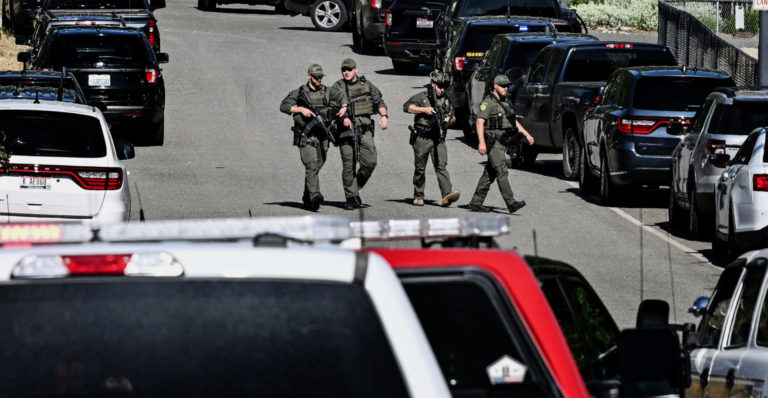
Law enforcement officials responded, locking down the neighborhoods near the hiking area and trying to find the shooter in hilly terrain that had plenty of cover, with thick brush and trees and smoke from the fire nearby.

First hours are chaotic, with injuries and number of shooters unknown

Over the next few hours, it wasn’t clear if hikers or other recreationists were stuck on the mountain, or if any civilians had been injured in the shooting, Norris said. What was clear was the danger the firefighters and responding law enforcement faced. They exchanged gunfire with the shooter, he said.

“We don’t know how many suspects are up there, and we don’t know how many casualties there are,” Norris told reporters at a 4:30 p.m. news conference. “We are actively taking sniper fire as we speak.”

A spokesperson with Kootenai Health, later confirmed that three patients were transported to the hospital — two were dead by the time they arrived, and a third was injured.

The deceased included a firefighter from the Coeur d’Alene Fire Department and one from Kootenai County Fire and Rescue. A third firefighter was badly injured but had made it through surgery and was “fighting for his life,” Norris said later that night.

Coeur d’Alene police stage with other law enforcement at Cherry Hill Park off 15th Street on Sunday afternoon, June 29, 2025, following reports of an ambush shooting attack on Canfield Mountain, in Coeur d’Alene, Idaho. (Bill Buley/Coeur D’Alene Press via AP)

Cell phone data helps law enforcement find the suspect

Faced with more than 17,000 square feet (1,580 square meters) of containment area, part of it burning, authorities used cell phone data to narrow their search. They identified a cell signal around 3:15 p.m. and noticed it had not changed location for some time, Norris said.

A tactical response team went to the location and found a deceased man with a weapon nearby. Officials believe the man was the shooter, the sheriff said.

The fire complicates the crime scene

The fire was burning close to the body of the suspect, and so authorities had to “scoop the body up” before it was engulfed in flames, Norris said.

Crews were stationed around the area overnight and the sheriff said the investigation would continue Monday morning.

Norris said investigators believe that once they are able to fully search the area, they may find that more weapons had been placed by the suspect.

Names and other details have not been released

The names of the slain and injured firefighters have not been released.

Nor has the name of the suspect, whose identity authorities are waiting to confirm, Norris said.

A procession of fire and law enforcement vehicles accompanied the bodies of the fallen firefighters as they were taken from the hospital in Coeur d’Alene to the medical examiner’s office in Spokane, Washington, a neighboring city just across the state line.

Adapted from reporting by the Associated Press.