‘Geoengineering’ Suspected of Causing Deadly Texas Flood

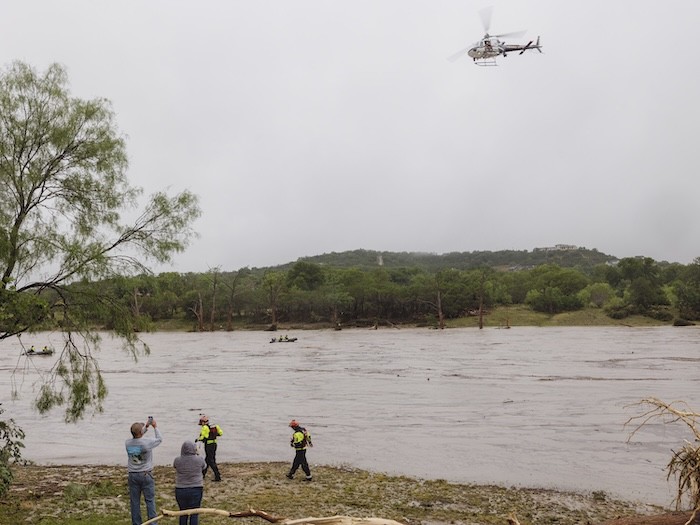
(Ken Silva, Headline USA) In the early hours of July 4, a flash flood swept through an area of Hill Country dotted with summer camps and small towns about 70 miles northwest of San Antonio. At least 68 people died in Kerr County, and 10 girls from one camp were still unaccounted for, officials said in a late afternoon update on July 6. More than a dozen deaths were reported in nearby counties.

While all the victims haven’t even been accounted for, online observers are already formulating theories about why the flooding was so historically disastrous. Some are pointing a finger at Rainmaker Technology, a California–based weather modification startup that engages in “cloud seeding”—a type of geoengineering that aims to increase the amount of rain by spraying substances such as silver iodine into the clouds. Rainmaker CEO Augustus Doricko has denied responsibility for the tragedy.

“Rainmaker did not operate in the affected area on the 3rd or 4th or contribute to the floods that occurred over the region,” he said on Twitter/X.

Nevertheless, lawmakers have already jumped at the opportunity to ban cloud seeding while the topic is in the news cycle. Rep. Marjorie Taylor Greene, R-Ga., said Saturday that she’s introducing a bill that prohibits the “injection, release, or dispersion of chemicals or substances into the atmosphere for the express purpose of altering weather, temperature, climate, or sunlight intensity.”

“I want clean air, clean skies, clean rainwater, clean ground water, and sunshine just like God created it!! No person, company, entity, or government should ever be allowed to modify our weather by any means possible!!” Greene said, adding that Rep. Tim Burchett, R-Tenn., has joined her cause.

The Trump administration’s Environmental Protection Agency has already launched a probe into at least one geoengineering firm:  a startup that’s been launching balloons filled with sulfur dioxide (SO2) into the atmosphere.

According to the EPA, the company in question, Making Sunsets, has already launched dozens of balloons filled with SO2, which is an air pollutant that can be harmful to humans. The EPA also noted that Making Sunsets is already banned in Mexico.

Making Sunsets has been pushing back against the EPA’s accusations online. Its cofounder, Andrew Song, quipped that it “only takes 124 balloons filled with sulfur dioxide deployed into the stratosphere to start the stop of global warning.”

The Associated Press contributed to this report.

Ken Silva is the editor of Headline USA. Follow him at x.com/jd_cashless.

The Founding Fathers and Paper Money

(Mike Maharrey, Money Metals News Service) As we celebrate America’s independence, there is a lot of focus on the Founding Fathers. After all, they drove the American Revolution.

The revolution was a mind-boggling accomplishment. It was incredible that rag-tag U.S. forces were able to face down the mighty British Empire. But I would argue the philosophical evolution in the hearts and minds of the founding generation was the real revolution, and it was even more unlikely than the military victory.

After the war, John Adams argued that a “radical change in the principles, opinions, sentiments and affections,” along with a “change in their Religious Sentiments, of their Duties and Obligations” made up the “real American Revolution.” 

Most significantly, the Americans came to believe that the people are sovereign and above the government, the government exists to serve them, and that government power is rightfully limited by the will of the people.

It’s hard to conceptualize just how radical these ideas were in their time. The revolution sprang up during a time when most people still believed that kings had absolute authority and governments could do as they pleased.

Of course, the founders were far from perfect, but we can’t deny their wisdom given their grasp of political philosophy and the nature of power, and the safeguards they attempted to create in order to protect individual liberty.

With this in mind, I thought it would be a good idea to highlight how some key founding era figures viewed money.

In a nutshell, the founding generation was deeply skeptical of paper money.

That’s because they understood history. They knew that governments and bankers tend to abuse paper money, rapidly depreciating its value. In fact, they lived through it during the war. Paper money almost doomed American independence. And sound money helped save it during the war.

Here are just a few quotes about money from key founding fathers. (Bold emphasis added.)

“The evils of paper money have no end” – Thomas Paine 

“Paper is poverty, that it is only the ghost of money, and not money itself.” – Thomas Jefferson

“THE only proper use for paper, in the room of money, is to write promissory notes and obligations of payment in specie upon. A piece of paper, thus written and signed, is worth the sum it is given for, if the person who gives it is able to pay it; because in this case, the law will oblige him. But if he is worth nothing, the paper-note is worth nothing. The value, therefore, of such a note, is not in the note itself, for that is but paper and promise, but in the man who is obliged to redeem it with gold or silver.” – Thomas Paine 

“The evils of this deluge of paper money are not to be removed until our citizens are generally and radically instructed in their cause & consequences” – Thomas Jefferson

“It has been long & often observed, that when the current Money of a Country is augmented beyond the Occasions for Money, as a Medium of Commerce, its Value as Money diminishes, its Interest is reduced, and the Principal sinks if some Means are not found to take off the surplus Quantity.” – Benjamin Franklin

“Every Body sees that the Depreciation of the Paper Currency is owing to the Floods of it which have been necessarily issued.” – Samual Adams

“Paper money has had the effect in your State that it ever will have, to ruin commerce – oppress the honest, and open a door to every species of fraud and injustice.” – George Washington

“Provisions, and all kinds of goods rise in proportion to the depreciation of the paper money.” – Thomas Jefferson

“The Resources of the Country may be drawn forth by our Paper at the same Time it must be confessed that this Paper will thereby be less valuable. After all the Debt does not increase for a certain Sterling Sum which would have paid it one Year ago will pay it now. The Depreciation in the Interim hath operated as a Tax.” – Gouverneur Morris 

“The flood of paper money, as you well know, had produced an exaggeration of nominal prices and at the same time a facility of obtaining money, which not only encouraged speculations on fictitious capital, but seduced those of real capital, even in private life, to contract debts too freely.” – Thomas Jefferson

“ONE of the evils of paper-money is, that it turns the whole country into stock-jobbers. The precariousness of its value and the uncertainty of its fate continually operate, night and day, to produce this destructive effect. Having no real value in itself it depends for support upon accident, caprice and party, and as it is the interest of some to depreciate and of others to raise its value, there is a continual invention going on that destroys the morals of the country.” – Thomas Paine 

“The general Effect of the Depreciation among the Inhabitants of the States, has been this, that it has operated as a gradual Tax upon them. Their Business has been done and paid for by the Paper Money, and every Man has paid his Share of this Tax according to the Time he retain’d any of the Money in his Hands, and to the Depreciation within that Time. Thus it has proved a Tax on Money” – Benjamin Franklin

Money is Money, and Paper is Paper. – All the invention of man cannot make them otherwise.” – Thomas Paine


Mike Maharrey is a journalist and market analyst for Money Metals with over a decade of experience in precious metals. He holds a BS in accounting from the University of Kentucky and a BA in journalism from the University of South Florida.

Iran Throws Cold Water on Idea of Resuming Talks With the US This Week

(Dave DeCamp, Antiwar.comAfter media reports said the US and Iran were expected to resume negotiations this week, Iranian Foreign Ministry spokesman Esmail Baghaei threw cold water on the idea, citing public opinion within Iran.

“Public opinion is currently so angry that no one even dares to talk about negotiations and diplomacy,” Baghaei told Iranian media on Saturday, according to The Cradle.

Baghaei’s comments came two days after Axios reported that US Middle East envoy Steve Witkoff is planning to meet Iranian Foreign Minister Abbas Araghchi in Oslo the week to restart nuclear negotiations. Amwaj.media also reported that Washington and Tehran were set to restart talks, but it hasn’t been confirmed by either side.

Iranian officials have not ruled out diplomacy with the US but say they need a guarantee that Iran wouldn’t be attacked again during the next negotiations. Israel launched the 12-day war against Iran with full US backing on June 13, two days before US and Iranian officials were set to hold another round of nuclear talks.

Iranian officials have also vowed that Tehran will restart its nuclear enrichment program despite threats from President Trump that he would bomb the country again if it did so. The president told reporters on Friday that he believed the US airstrikes on three Iranian nuclear facilities set the sites back “permanently,” but he acknowledged Iran could resume its enrichment program at another location.

“I would think they’d have to start at a different location. And if they did start, it would be a problem,” Trump said.

Also on Friday, the International Atomic Energy Agency (IAEA) said that its employees in Iran had left the country after Tehran took steps to suspend cooperation with the nuclear watchdog over what Iranian officials saw as its role in providing justification for the US-Israeli war.

Neither the IAEA nor the US had evidence that Iran was seeking a bomb before the war, but the IAEA’s Board of Governors passed a resolution on June 12, the day before the bombing campaign began, that alleged Tehran was not living up to its commitments to the Non-Proliferation Treaty. The claim was mainly based on alleged nuclear activity from over 20 years ago, which posed no risk of proliferation.

Iran has also alleged that Israel obtained the names of Iranian nuclear scientists it has killed from the IAEA, and has been critical of the watchdog for remaining silent on Israel’s secret nuclear weapons program. Israel is estimated to have somewhere between 90 and 300 nuclear weapons, and its nuclear arsenal gets very little attention since neither the US nor Israel acknowledges its existence.

While taking steps to suspend cooperation with the IAEA, Iran has also said it’s still committed to the Non-Proliferation Treaty and that it does not seek nuclear weapons.

This article originally appeared at Antiwar.com.

Russia and Ukraine Trade Hundreds of Drone Attacks

(Dave DeCamp, Antiwar.comRussia and Ukraine fired hundreds of drones at each other’s territory over the weekend as fighting continued to rage across the frontlines in eastern Ukraine amid a stalled peace process.

Ukrainian officials said that Russia launched its largest drone attack on the war overnight Thursday into Friday, which killed one person in Kyiv and injured at least 39. Russia fired at least 322 drones and decoys into Ukraine overnight Friday into Saturday, and Russian attacks continued on Sunday, with drone and missile strikes reported across the country.

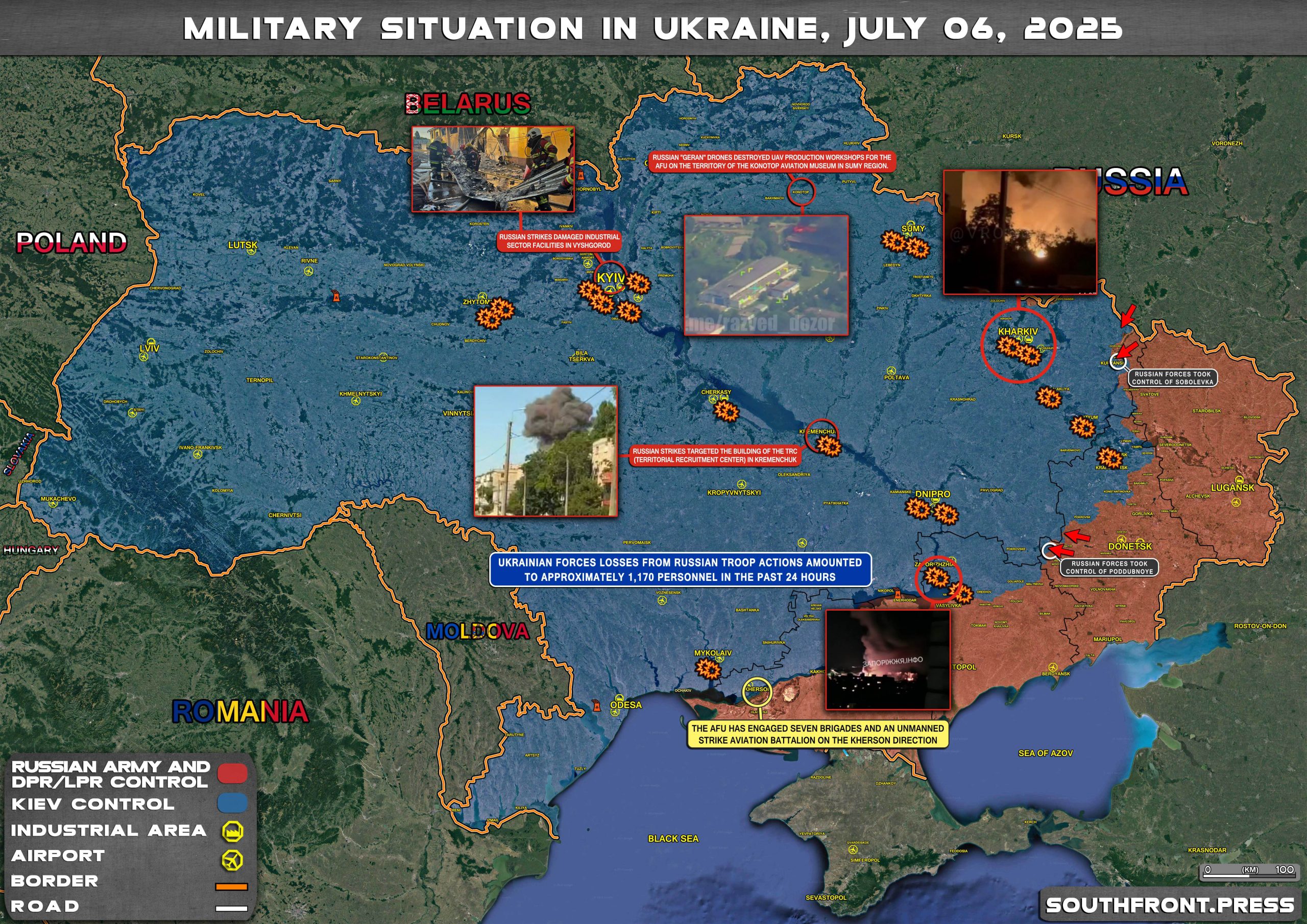
Military situation in Ukraine on July 6, 2025 (SouthFront.press)

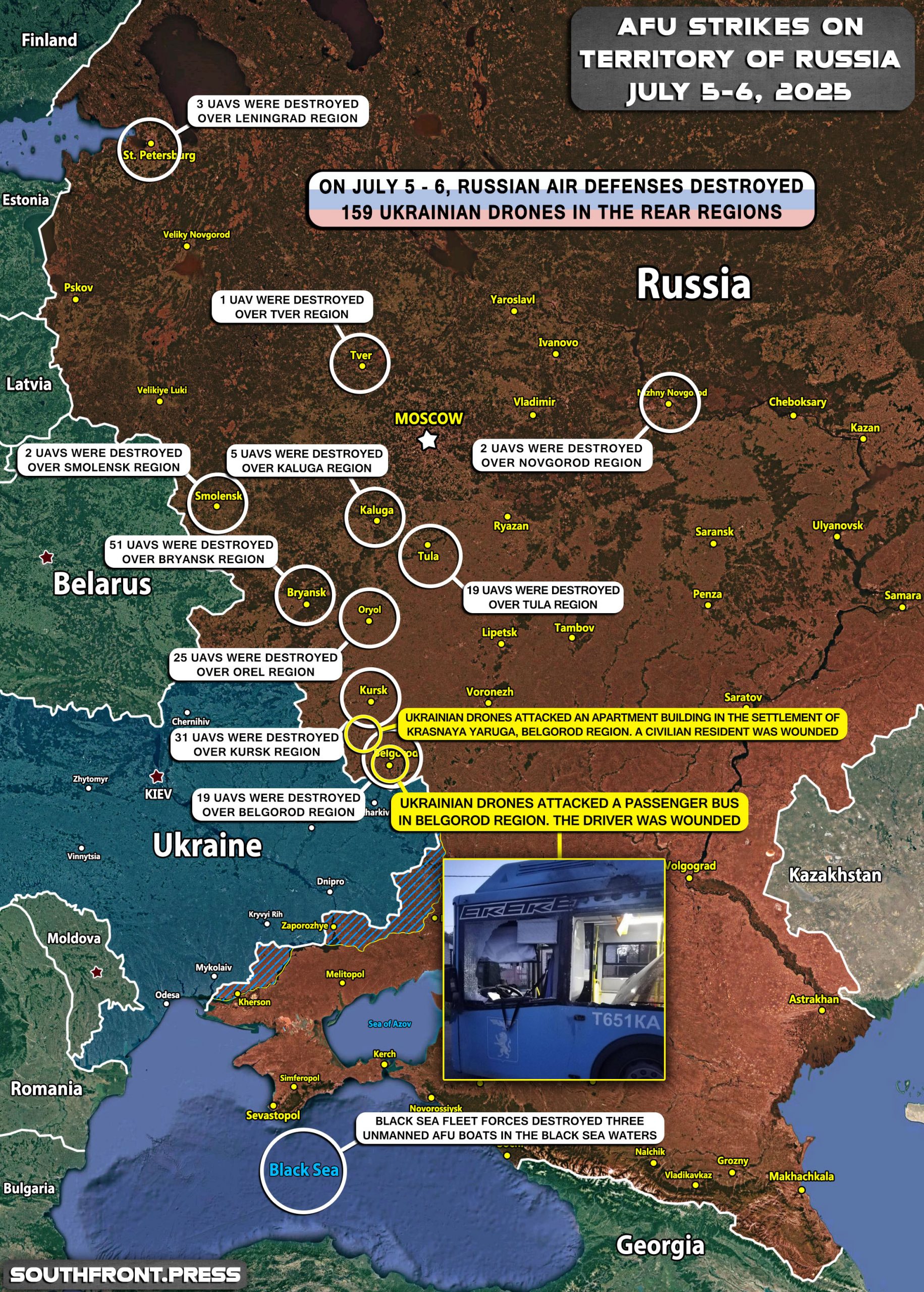
Ukraine also fired a significant number of drones into Russian territory and claimed to have hit a Russian airbase on Saturday. According to SouthFront, from Saturday to Sunday, Russian air defenses destroyed 159 Ukrainian drones over Russian regions.

Also on Sunday, Russia said that its forces captured two settlements, one in Ukraine’s eastern Donetsk Oblast and another in the northeastern Kharkiv Oblast.

Ukrainian drone attack on Russian territory from July 5 to July 6 (SouthFront.press)

The heavy fighting comes after President Trump spoke with Russian President Vladimir Putin and said he made no “progress” on reaching a ceasefire in Ukraine. On Friday, Trump hinted that he could impose sanctions on Russia, saying he discussed the possibility with Putin. “He understands that it may be coming,” Trump said.

Trump held a call with Ukrainian President Volodymyr Zelensky on Friday, which came after the UShalted a series of weapons shipments to Ukraine. Despite the pause in some arms supplies, Zelensky appeared to be very happy with the call. “This was probably the best conversation in all this time, it was maximally productive. We discussed the topic of air defenses. I am grateful for the readiness to help,” he said.

The pause in US weapons shipments included a halt in the supply of Patriot air defense missiles. The US used a significant number of Patriots to repel the recent Iranian retaliatory attack on the Al Udeid Airbase in Qatar, which came after the US bombed Iran’s nuclear facilities.

This article originally appeared at Antiwar.com.

BREAKING: FBI Concludes Jeffrey Epstein Had No Clients, Didn’t Blackmail Anyone, and Definitely Killed Himself

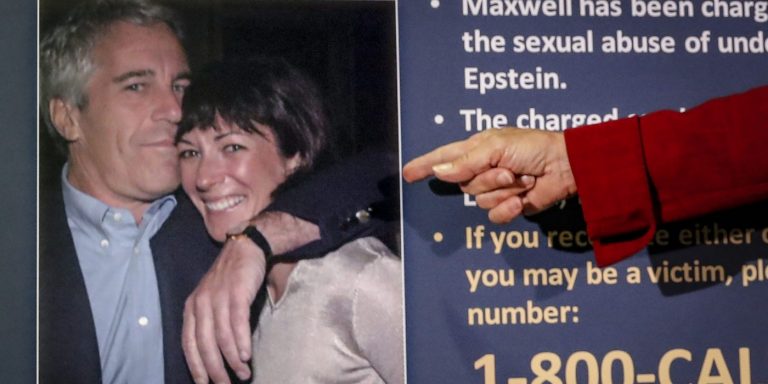
(Ken Silva, Headline USA) Deceased financier Jeffrey Epstein and his colleague, Ghislaine Maxwell, were both charged by the Justice Department with sex trafficking—and Maxwell was convicted. But according to the DOJ, the two apparently didn’t have any clients.

In a bombshell FBI memo leaked to Axios and published Sunday night, officials said they’ve reviewed more than 300 gigabytes of Epstein evidence—and haven’t found any vast human trafficking or sexual blackmail operation.

“This systematic review revealed no incriminating ‘client list.’ There was also no credible evidence found that Epstein blackmailed prominent individuals as part of his actions. We did not uncover evidence that could predicate an investigation against uncharged third parties,” the unsigned memo said.

The FBI also reiterated its previous claim that Epstein did kill himself. In an attempt to demonstrate that Epstein’s cellblock was secure the night he purportedly killed himself, the FBI released footage from the once camera that was recording. However, the camera only showed a tiny sliver of a staircase leading to Epstein’s cell.

According to a DOJ-OIG report released in 2023, only two cameras in Epstein’s housing unit were recording—and those cameras had numerous blind spots. The camera in Epstein’s cell block, which had at least three other inmates, wasn’t recording. Nor was the camera covering one of the elevator bays that led to Epstein’s floor.

The DOJ-OIG report also revealed that prison officials actually knew about the malfunctioning cameras the day before Epstein died.

Inspector General Michael Horowitz said his staff interviewed an MCC technician, who started to repair the cameras on Aug. 8, 2019, but did not finish his work. The technician told the inspector general he had “no idea” why he did not stay at the facility to resolve the problem that day.

Epstein’s death was ruled a suicide by hanging after he was found dead in his jail cell on August 10, 2019. But his lawyers contested that claim. Skeptics point to malfunctioning surveillance cameras, sleeping guards, and broken bones in Epstein’s neck as indications that his death was something other than suicide.

Because of Epstein’s extensive fraternization with high-profile politicians and celebrities such as Bill Clinton, former Israeli PM Ehud Barak, Prince Andrew and Bill Gates and many more, some claim that Epstein’s death was actually a hit job to silence him. Proponents of that theory include Epstein’s former partner, Maxwell, who’s serving a 20-year prison sentence for sex trafficking.

“I believe that he was murdered. I was shocked, and I wondered, ‘How did this happen?’ Because I was sure he was going to appeal, and I was sure he was covered by the non-prosecution agreement,” Maxwell told British reporter Jeremy Kyle of TalkTV in 2023.

The non-prosecution agreement referenced by Maxwell was a sweetheart deal Epstein signed with the Department of Justice in 2008, in which he pleaded guilty to a state charge of procuring for prostitution a girl below the age of 18. Epstein was housed in a private wing of the Palm Beach County Stockade, and was reportedly allowed to leave the jail on “work release” for up to 12 hours a day.

After the Miami Herald published an expose on Epstein and his non-prosecution agreement in late 2018, Epstein was arrested again on July 6, 2019, on federal charges for the sex trafficking of minors in Florida and New York.

Ken Silva is the editor of Headline USA. Follow him at x.com/jd_cashless.

Trump Declares Major Disaster in Texas as Rescue Operations Continue

(The Center Square) President Donald Trump on Sunday declared a major disaster in Texas as at least 67 people have died and dozens remain missing after torrential rainfall caused historic flooding along the Guadalupe River in the state’s Hill Country.

“These families are enduring an unimaginable tragedy, with many lives lost, and many still missing,” Trump posted on social media. “The Trump Administration continues to work closely with State and Local Leaders. Secretary of Homeland Security Kristi Noem was on the ground yesterday with Governor Greg Abbott, who is working hard to help the people of his Great State. Our incredible U.S. Coast Guard, together with State First Responders, have saved more than 850 lives. GOD BLESS THE FAMILIES, AND GOD BLESS TEXAS!”

Search and rescue crews continued to look for 11 girls and one counselor attending Camp Mystic in Kerr County, an all-girls private Christian camp.

Kerr County Sheriff Larry Leitha said during a Sunday news conference that 59 people have been confirmed dead in his county alone, including 38 adults and 21 children.

Leitha said 11 young girls and one counselor from Camp Mystic were still missing.

“We extend our sincerest condolences and prayers for every single family affected by this tragedy, and we continue to work around the clock and reunite these families,” Leitha said. “We will continue to search, our search efforts until everybody is found.”

In a statement posted on social media, Texas Gov. Greg Abbott also vowed to continue searching for the missing girls until they were found.

“It, and the river running beside it, were horrendously ravaged in ways unlike I’ve seen in any natural disaster,” Abbott said. “The height the rushing water reached to the top of cabins was shocking. We won’t stop until we find every girl who was in those cabins.”

The National Weather Service faced heavy criticism about the lack of notification prior to the floods.

U.S. Department of Homeland Security Secretary Kristi Noem said Saturday that the Trump administration is working to update what she called “neglected” and “ancient” systems.

U.S. Contractor Who Worked for Gaza Humanitarian Foundation Saw Colleagues Fire on Hungry Palestinians

(Dave DeCamp, Antiwar.comAn American security contractor who previously worked at aid distribution sites inside Gaza run by the US and Israeli-backed Gaza Humanitarian Foundation (GHF) has told the BBC that he witnessed his co-workers fire live ammunition at unarmed, hungry Palestinians who posed no threat.

In one incident, the contractor said a guard had opened fire from a watchtower with a machine gun because a group of women, children, and elderly people were moving too slowly away from the site. A second guard opened fire, and a Palestinian man appeared to have been hit.

“A Palestinian man dropped to the ground motionless. And then the other contractor who was standing there was like, ‘damn, I think you got one’. And then they laughed about it,” the former contractor, who spoke to the BBC on the condition of anonymity, said.

The former contractor said the teams operating at the distribution sites were told by a team leader: “If you feel threatened, shoot – shoot to kill and ask questions later.” He said the culture in the company is that there are “no rules” in Gaza, and the crowds of hungry Palestinians are referred to as “zombie hordes,” insinuating that they have no value.

“If a Palestinian is walking away from the site and not demonstrating any hostile intent, and we’re shooting warning shots at them regardless, we are wrong, we are criminally negligent,” the contractor said.

He said Palestinians were also harmed by pepper spray and stun grenades used on the crowds, and in one instance, he saw a woman get hit in the head by a stun grenade. “This metal piece hit her directly in the head and she dropped to the ground, not moving,” he said. “I don’t know if she was dead. I know for a fact she was unconscious and completely limp.”

The Associated Press had a similar report that cited two GHF contractors who also said they saw colleagues use live fire, stun grenades, and pepper spray against the starving Palestinians. In response to the BBC report, the GHF said the allegations were false and claimed no civilians ever came under fire at its distribution sites.

The GHF also claimed the former contractor was “disgruntled” after being fired for misconduct, but the BBC said its source showed evidence that he left the job on good terms. The former contractor noted that each aid site has CCTV monitoring, and GHF’s claim that no one there had been hurt or shot at was “an absolute bare-faced lie.”

Over the weekend, the GHF said that two of its contractors were injured in a grenade attack, which the group blamed on Hamas, but it did not provide video footage or other evidence to back up the claim.

The GHF’s distribution sites have become death traps for desperate Palestinians as hundreds have been killed by Israeli forces while making their way to or leaving the sites. A report from Haaretz revealed that IDF troops had been given orders to fire on unarmed Palestinians attempting to reach GHF distribution sites to drive them away or disperse them, even though they posed no threat.

This article originally appeared at Antiwar.com.

U.S. Launches Series of Airstrikes During Major Battle Between US-Backed Force and Al-Shabaab in Somalia

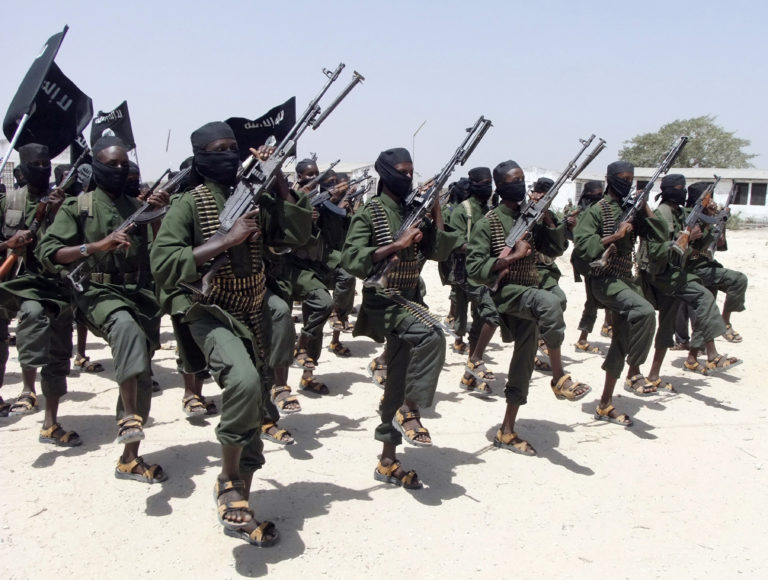
(Dave DeCamp, Antiwar.comUS Africa Command said in a press release on Thursday that its forces launched multiple airstrikes in southern Somalia between June 27 and June 30, a time when Somali media reported major battles between a US-backed force and al-Shabaab.

It’s unclear how many strikes AFRICOM launched during the battle, but it means the US has now launched more than 45 in the country this year and is well on its way to breaking the annual record, which President Trump set at 63 during his first term in 2019. Besides its air war against al-Shabaab in southern and central Somalia, the US has also been launching airstrikes against an ISIS affiliate in the northeastern Puntland region.

AFRICOM didn’t offer any details about the latest strikes other than saying they were launched against al-Shabaab west of the city of Kismayo, in the vicinity of the village of Buulo Xaaji, which is located in Somalia’s Jubaland region. “Specific details about units and assets will not be released to ensure continued operations security,” the command said.

Since April, AFRICOM has stopped sharing estimates of casualties and assessments of civilian harm. According to Somali media, the Danab, a US-trained special operations force, launched an offensive against al-Shabaab near the village of Buulo Xaaji, and the Somali Defense Ministry said in a statementon June 30 that its forces killed more than 50 al-Shabaab fighters in the area over the previous five days.

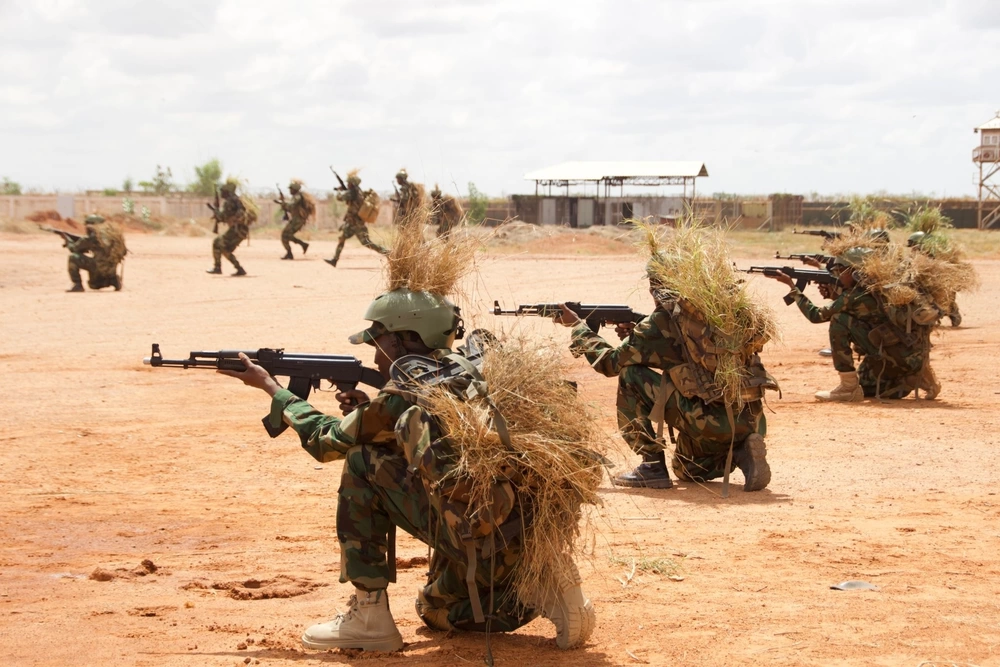
Recruits of the Somali National Army Danab Advanced Infantry Brigade mark the completion of their intensive basic training program at Baledogle Military Airfield, Somalia, April 9, 2023 (US military photo via DVIDS)

The Defense Ministry said the operation was carried out with the support of “international partners” and that “successive airstrikes” were launched during the battle. It acknowledged the death of two of its soldiers, while al-Shabaab claimed it killed six US-trained troops.

The Defense Ministry claimed that its forces took control of the area while al-Shabaab claimed to have repelled the attack. The ministry also said that the Danab fought alongside the Jubaland Darawish, a local security force.

Last year, the US-backed Federal Government rejected the election results in Jubaland, causing the state of Jubaland to suspend ties with the government. Sporadic clashes between government troops and local Jubaland land forces have broken out since then, but they appear to be continuing to cooperate against al-Shabaab.

The US-backed government, led by President Hassan Sheikh Mohamud, controls a small amount of territory within Somalia’s internationally recognized borders and is considered to be very weak. Counterterrorism experts have called for the government to negotiate with al-Shabaab, saying a military victory against the militant group isn’t possible.

Al-Shabaab has been waging a relatively successful offensive against government forces, enough so that the US has discussed the possibility of Mogadishu falling to the militant group. The New York Times reported on April 10 that State Department officials suggested closing down the US embassy in Mogadishu and evacuating most US personnel due to the threat. But other officials, including Sebastian Gorka, the top counterterrorism official on the National Security Council, called for the US to escalate in Somalia and double down on its policy of propping up the government, and they appear to have won the internal debate.

Hawks who favor continued intervention in Somalia portray al-Shabaab as a major threat to the US due to its size and al-Qaeda affiliation, but it’s widely believed the group does not have ambitions outside of Somalia.

Al-Shabaab was born out of a US-backed Ethiopian invasion in 2006 that toppled the Islamic Courts Union, a coalition of Muslim groups that briefly held power in Mogadishu after ousting CIA-backed warlords. Al-Shabaab was the radical offshoot of the Islamic Courts Union. The group’s first recorded attack was in 2007, and it wasn’t until 2012 that al-Shabaab pledged loyalty to al-Qaeda.

This article originally appeared at Antiwar.com.

Sean ‘Diddy’ Combs Gets Standing Ovation from Inmates after Court Victory, His Lawyer Says

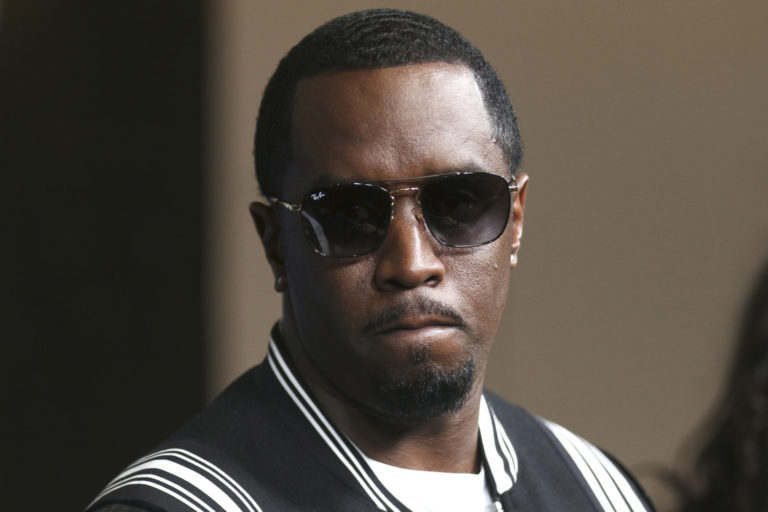
(Headline USASean “Diddy” Combs got a standing ovation from fellow inmates when the music mogul returned to jail after winning acquittals on potential life-in-prison charges, providing what his lawyer says might have been the best thing he could do for Black incarcerated men in America.

“They all said: ‘We never get to see anyone who beats the government,’” attorney Marc Agnifilo said in a weekend interview days after a jury acquitted Combs of sex trafficking and racketeering conspiracy charges.

Combs, 55, remains jailed after his Wednesday conviction on prostitution-related charges and could still face several years in prison at an upcoming sentencing after being credited for 10 months already served.

After federal agents raided his homes in Los Angeles and Miami in March 2024, the lawyer said he told Combs to expect arrest on sex trafficking charges.

“I said: ‘Maybe it’s your fate in life to be the guy who wins,’” he recalled during a telephone interview briefly interrupted by a jailhouse call from Combs. “They need to see that someone can win. I think he took that to heart.”

Blunt trial strategy works

The verdict came after a veteran team of eight defense lawyers led by Agnifilo executed a trial strategy that resonated with jurors. Combs passed lawyers notes during effective cross examinations of nearly three dozen witnesses over two months, including Combs’ ex-employees.

The lawyers told jurors Combs was a jealous domestic abuser with a drug problem who participated in the swinger lifestyle through threesomes involving Combs, his girlfriends and another man.

“You may think to yourself, wow, he is a really bad boyfriend,” Combs’ lawyer Teny Geragos told jurors in her May opening statement. But that, she said, “is simply not sex trafficking.”

Agnifilo said the blunt talk was a “no brainer.”

“The violence was so clear and up front and we knew the government was going to try to confuse the jury into thinking it was part of a sex trafficking effort. So we had to tell the jury what it was so they wouldn’t think it was something it wasn’t,” he said.

Combs and his lawyers seemed deflated Tuesday when jurors said they were deadlocked on the racketeering count but reached a verdict on sex trafficking and lesser prostitution-related charges. A judge ordered them back to deliberate Wednesday.

“No one knows what to think,” Agnifilo said. Then he slept on it.

Morning surprise awakes lawyer

“I wake up at three in the morning and I text Teny and say: ”We have to get a bail application together,” he recalled. “It’s going to be a good verdict for us but I think he went down on the prostitution counts so let’s try to get him out.”

He said he “kind of whipped everybody into feeling better” after concluding jurors would have convicted him of racketeering if they had convicted him of sex trafficking because trafficking was an alleged component of racketeering.

Agnifilo met with Combs before court and Combs entered the courtroom rejuvenated. Smiling, the onetime Catholic schoolboy prayed with family. In less than an hour, the jury matched Agnifilo’s prediction.

The seemingly chastened Combs mouthed “thank you” to jurors and smiled as family and supporters applauded. After he was escorted from the room, spectators cheered the defense team, a few chanting: “Dream Team! Dream Team!” Several lawyers, including Geragos, cried.

“This was a major victory for the defense and a major loss for the prosecution,” said Mitchell Epner, a lawyer who worked with Agnifilo as a federal prosecutor in New Jersey over two decades ago. He credited “a dream team of defense lawyers” against prosecutors who almost always win.

Agnifilo showcased what would become his trial strategy — belittling the charges and mocking the investigation that led to them — last September in arguing unsuccessfully for bail. The case against Combs was what happens when the “federal government comes into our bedrooms,” he said.

Lawyers gently questioned most witnesses

During an eight-week trial, Combs’ lawyers picked apart the prosecution case with mostly gentle but firm cross-examinations. Combs never testified and his lawyers called no witnesses.

Sarah Krissoff, a federal prosecutor in Manhattan from 2008 to 2021, said Combs’ defense team “had a narrative from the beginning and they did all of it without putting on any witnesses. That’s masterful.”

Ironically, Agnifilo expanded the use of racketeering laws as a federal prosecutor on an organized crime task force in New Jersey two decades ago, using them often to indict street gangs in violence-torn cities.

“I knew the weak points in the statute,” he said. “The statute is very mechanical. If you know how the car works, you know where the fail points are.”

He said prosecutors had “dozens of fail points.”

“They didn’t have a conspiracy, they just didn’t,” he said. “They basically had Combs’ personal life and tried to build racketeering around personal assistants.”

Some personal assistants, even after viewing videos of Combs beating his longtime girlfriend, Casandra “Cassie” Ventura, had glowing things to say about Combs on cross examination.

Once freed, Combs likely to re-enter domestic abusers program

For Combs, Agnifilo sees a long road ahead once he is freed as he works on personal demons, likely re-entering a program for domestic batterers that he had just started before his arrest.

“He’s doing OK,” said Agnifilo, who speaks with him four or five times daily.

He said Combs genuinely desires improvement and “realizes he has flaws like everyone else that he never worked on.”

“He burns hot in all matters. I think what he has come to see is that he has these flaws and there’s no amount of fame and no amount of fortune” that can erase them,” he said. “You can’t cover them up.”

For Agnifilo, a final surprise awaited him after Combs’ bail was rejected when a man collapsed into violent seizures at the elevators outside the courtroom.

“I’m like: ‘What the hell?’” recalled the lawyer schooled in treating seizures.

Agnifilo straddled him, pulling him onto his side and using a foot to prevent him from rolling backward while a law partner, Jacob Kaplan, put a backpack under the man’s head and Agnifilo’s daughter took his pulse.

“We made sure he didn’t choke on vomit. It was crazy. I was worried about him,” he said.

The man was eventually taken away conscious by rescue workers, leaving Agnifilo to ponder a tumultuous day.

“It was like I was getting punked by God,” he said.

Adapted from reporting by the Associated Press

Trump Wants to Set Up a Sovereign Wealth Fund. What is It?

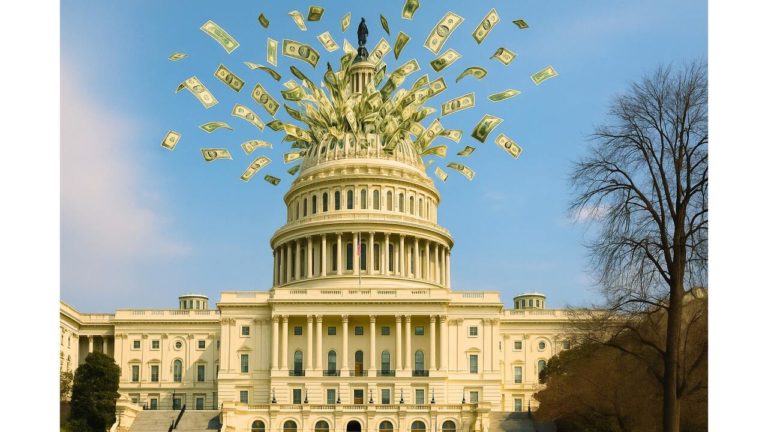
(The Center Square) President Donald Trump’s plan to create a sovereign wealth fund that’s the world’s envy remains undefined.

In the meantime, Norway’s Government Pension Fund Global is among the largest in the world, with more than $1.8 trillion in assets.

In February, Trump told Treasury Secretary Scott Bessent and Commerce Secretary Howard Lutnick they had 90 days to present him with a plan for a sovereign wealth fund. That time has passed and no plans have been released.

“Treasury and Commerce Departments have formulated plans for a Sovereign Wealth Fund, but no final decisions have yet been made,” White House spokesperson Kush Desai said.

Ana Nacvalovaite, a sovereign wealth funds research fellow at the University of Oxford’s Kellogg College, said the fund’s appearance depends on the details, including funding mechanisms, investment strategies, fund structure, and governance.

Nacvalovaite noted that relatively little information is known about the U.S. plans for a sovereign wealth fund. However, she said many other countries have established funds that the U.S. could follow, but the U.S. will likely face challenges.

Saudi Arabia’s Public Investment Fund, with $925 billion in assets, was established by royal decree in 1971. That could be one roadmap, but America has a different culture and government.

“There is a huge difference between a fund run by a country … where the Royals rule everything, versus an American system where it doesn’t quite work that way,” Nacvalovaite said.

Another question that remains unanswered is how the administration would seed the fund and whether it would need help from Congress, which traditionally allocates federal revenue. The U.S. has $36.2 trillion in debt and hasn’t had a surplus budget since 2001. The White House noted in February that the U.S. government holds about $5.7 trillion in assets. The administration said the U.S. holds far more in natural resources.

Trump also is bringing in new revenue through tariffs. Just how much that generates could vary based on the final terms of trade deals the White House initially hoped to complete by July 9. Tariffs are taxes on imported goods paid to the federal government by the company that imports the goods.

In Norway, the government declared it owned all offshore oil in the North Sea in 1963. Much of the money in the Government Pension Fund Global now comes from a mix of investments, including stocks and real estate. The fund reports it owns nearly 1.5% of total shares in the world’s publicly listed companies.

Most SWFs don’t report everything, which could raise concerns in the U.S.

“Any state-owned investment vehicle must have a focused mandate and a highly transparent and accountable governance structure,” Adnan Mazarei, Anna Gelpern and Edwin M. Truman wrote in a report for the Peterson Institute for International Economics after Trump’s executive order.

Nacvalovaite said some SWFs share more information publicly than others.

“Let’s not forget that there are some sovereign wealth funds which are not transparent,” she told The Center Square.

Four months ago, Bessent said the U.S. would have a fund “within the next 12 months.” That timeline could prove challenging.

Control in the U.S. would almost certainly be an issue. Some nations assign the task to a central bank or government agency.

Norway’s Ministry of Finance has overall responsibility for the fund. It also issues management guidelines. Norges Bank manages the fund.

Norway’s government gets some of the money to spend.

“The Norwegian government can spend only a small part of the fund, but this still amounts to almost 20% of the government budget,” according to the bank.

On average, the Norwegian government spends only the returns – estimated to be around 3% per year – not the fund’s capital.

The report from Peterson Institute for International Economics said the proposal carries risks, especially in absence of more information

“Without much greater clarity and a broadly shared understanding on these issues, a US SWF risks becoming a misplaced fiscal gimmick and an inefficient and potentially corrupt diversion of public resources that could do long-term damage to the US and global economy and financial markets,” it concluded.