A U.S. Senator Referred an Epstein Client to the DOJ; You’ll Never Guess What Happened Next

(Ken Silva, Headline USA) Sen. Ron Wyden, D-Ore., reportedly said this week that he provided the Justice Department with “actionable” information about Jeffrey Epstein’s relationship with a prominent billionaire and an untold number of Wall Street banks—but the DOJ hasn’t doing anything with the info.

“I’ve handed the Trump administration a ready-made Epstein case involving a billionaire financier and Wall Street banks, and they have done nothing with it,” Wyden told All Rise News.

“I know for a fact that the Trump administration is sitting on an Epstein file that contains new actionable information,” Wyden reportedly added. “So I don’t blame anybody for asking what’s going on.”

Wyden could be talking about former Apollo Global CEO and billionaire Epstein client Leon Black, whom the senator investigated for years. Black paid Epstein $158 million between 2012 and 2017 for his advice on several tax and estate planning matters.

In 2023, Wyden wrote an open letter to Black, suggesting that he may have engaged in tax evasion with Epstein.

“As you are aware, the Committee is investigating the $158 million in payments you made to Epstein for services related to a variety of tax and estate planning matters,” Wyden told Black in the letter.

“In particular, the Committee seeks information on Epstein’s participation in structuring trusts and other complex transactions designed to avoid federal gift and estate taxes on as much as $2 billion in wealth transferred to your children.”

Wyden revealed that his investigation has been ongoing since June 2022.

Thus far, the investigation has found that Epstein helped Black avoid more than $1 billion in federal taxes, Wyden said.

The senator also revealed that the IRS has not audited any of Black’s trusts or transactions that are subject to the congressional probe.

It’s unclear whether Black ever responded to the senator. And according to Wyden’s 2023 letter, Black had not been cooperative in the probe.

“You have refused to answer questions or provide documents related to payments you made to Epstein or substantiate how such payments were calculated or were compensation for services,” the senator said at the time.

“Your failure to substantiate Epstein’s compensation scheme has heightened the Committee’s concerns about whether such payments were properly characterized as income or gifts for tax purposes.”

Wyden asked Black to provide him with information on a number of Epstein- and Apollo-related topics. Wyden seeks, among other things, a copy of a “written service agreement” between Epstein and Black, as well as information about Epstein’s financial advice related to Black’s private art collection, which is worth over $1 billion.

Ken Silva is the editor of Headline USA. Follow him at x.com/jd_cashless.
Hegseth Hosts Netanyahu at the Pentagon, Says It Was an ‘Honor’ To Be Part of the War Against Iran

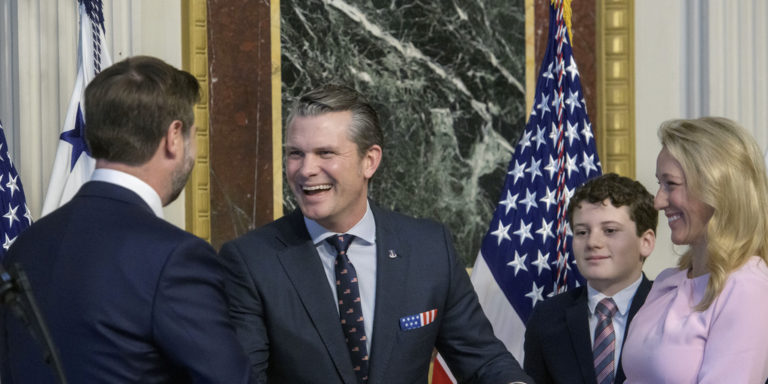
(Dave DeCamp, Antiwar.com) Secretary of Defense Pete Hegseth hosted Israeli Prime Minister Benjamin Netanyahu at the Pentagon on Wednesday and said that it was “an honor” to be a part of the war against Iran with Israel.

Before holding a private meeting, Hegseth and Netanyahu spoke to each other in front of reporters for a few minutes and praised US and Israeli forces for conducting the 12-Day War. The US supported Israel’s initial attacks by refueling Israeli warplanes and intercepting Iranian missiles fired at Israel in counterattacks, and then carried out its own airstrikes against three Iranian nuclear facilities.

The skill, and the bravery, and the courage of US forces involved in that operation, including in the defense of Israel, whether it was in the Mediterranean, or with THAAD batteries or others, was incredible,” Hegseth said. “It was an honor to be a part of it.”

Hegseth referenced President Trump’s threats to bomb Iran throughout his negotiations with the country and the 60-day deadline that he set for a deal. “After 60 days of negotiation, President Trump was very clear, after 60 days he gave them every opportunity, and then Operation Rising Lion took place,” he said.

Israel attacked Iran on June 13, two days before the US and Iran were scheduled to hold another round of talks. The US and Israel used the cover of negotiations to keep Tehran off guard before the initial Israeli airstrikes.

Netanyahu told Hegseth that Israel was grateful for the support and that the war was like “the roar of two lions,” referring to the US and Israel. Hegseth praised the “capabilities” of the Israeli military and said what Israeli forces accomplished was “absolutely incredible.”

While Israel was able to take out senior Iranian military leaders and launched heavy airstrikes on the country, which killed over 1,000 people, Iranian missiles also did significant damage in Israel, the extent of which is unclear since Israel’s military is attempting to censor what exactly was hit. Iran was also able to hit Israel until the last moments of the war.

“Israel got hit really hard. Those ballistic missiles, boy, they took out a lot of buildings,” President Trump said at the NATO summit last month.

Netanyahu, who is wanted by the International Criminal Court for his role in war crimes in Gaza, has received a warm welcome in Washington. Wednesday marked his third day of meetings with US officials, which included two meetings at the White House with President Trump.

This article originally appeared at Antiwar.com.

Trump Brags About Threatening To Bomb Moscow and Beijing in Recording From 2024

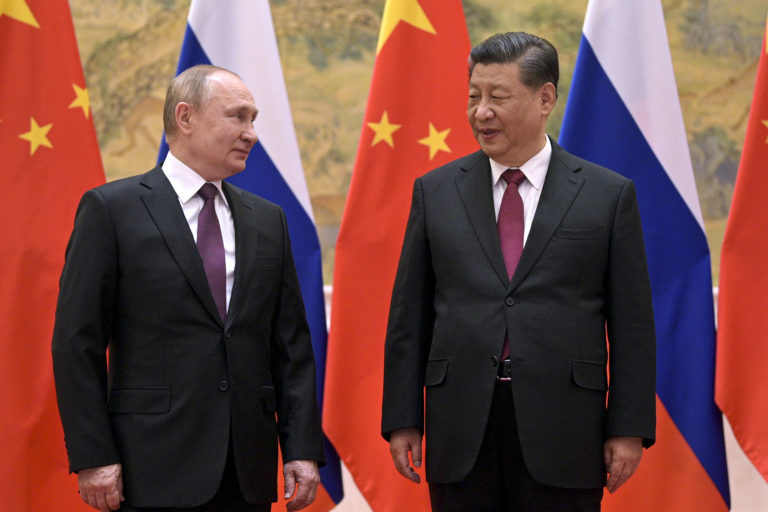
(Dave DeCamp, Antiwar.com) CNN has released audio of President Trump speaking to a private group of donors in 2024 and bragging that he threated to “bomb the Sh*t” out of Moscow and Beijing in conversations with Russian President Vladimir Putin and Chinese President Xi Jinping if they invaded Ukraine or Taiwan.

“With Putin I said, ‘If you go into Ukraine, I’m going to bomb the sh*t out of Moscow. I’m telling you I have no choice,’” Trump said in the recording. “And then [Putin] goes, like, ‘I don’t believe you.’ But he believed me 10%.”

Trump also said he made the same threat to Xi if China invaded Taiwan. “I said if you go into Taiwan, I’m going to bomb the sh*t out of Beijing. He thought I was crazy … and he didn’t believe me either, he said 10%. And 10% is all you need, in fact 5% is all you need, and we never had a problem,” Trump said.

Kremlin spokesman Dmitry Peskov responded to the report, saying he couldn’t confirm if the recording was authentic. “Whether this is fake or not, we don’t know either. There are a lot of fakes now. Often there are many more fakes than truthful information. And we always proceed from this when analyzing this or that news,” he said

CNN released a series of recordings that were obtained during 2024 fundraisers in Florida and New York, including one where Trump pledged to deport foreign students involved in protests critical of Israel, something his administration has been attempting to do but has faced legal challenges since the students are being targeted for their speech.

CNN said the recording was obtained by journalists Josh Dawsey, Tyler Pager, and Isaac Arnsdorf and was detailed in their new book about the 2024 presidential race titled “2024.” The Trump campaign declined to comment on the contents of the recordings.

This article originally appeared at Antiwar.com.

Largest U.S. Teachers Union Encourages Resistance to Trump

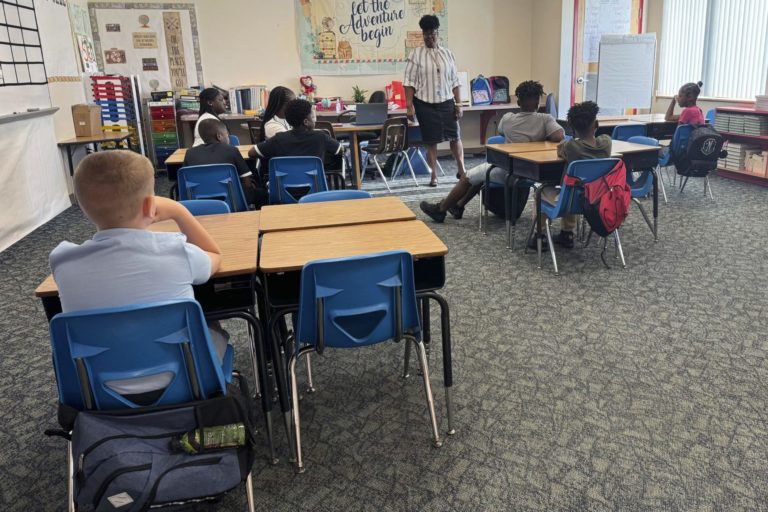
(Esther Wickham The Center Square) The National Education Association adopted new resolutions encouraging resistance to the Trump administration.

The NEA, the largest U.S. teachers union with over 3 million members, approved multiple business items that oppose any kind of action by the Trump administration and characterized the president as a fascist. It also said it would no longer endorse the Anti-Defamation League, a longtime organization known for combatting antisemitism.

The union OK’d the resolutions during its annual convention July 3-6 in Portland, Oregon.

Corey DeAngelis, a senior fellow at the American Culture Project, obtained a copy of the NEA’s resolutions and posted them on X.

“I just received a copy of the National Education Association’s resolutions that they passed at their annual convention,” said DeAngelis. “They kept them private this year.”

Throughout the X thread, DeAngelis exposes each newly adopted business item.

“NEA pledges to defend democracy against Trump’s embrace of fascism by using the term facism [sic] in NEA materials to correctly characterize Donald Trump’s program and actions,” according to the union’s resolution. “NEA will use existing media channels to oppose any move to eliminate the U.S. Department of Education as an illegal, anti-democratic, and racist attempt to destroy public education and privatize it in the interests of the billionaires.”

The NEA changed the language of deporting illegal immigrants to “kidnapping” and expressed its support for students protesting against ICE raids.

“NEA opposes Immigration and Customs Enforcement kidnapping student leaders and supports students’ right to organize against ICE raids and deportations,” read another resolution.

The NEA stated it will no longer endorse or publicize material from the Anti-Defamation League, an organization founded to combat antisemitism.

“Allowing the ADL to determine what constitutes antisemitism would be like allowing the fossil-fuel industry to determine what constitutes climate change,” NEA delegate Stephen Siegel said at the convention.

ADL found the NEA’s actions disturbing and said it will continue to support Israel and reach students through education programs.

“It is profoundly disturbing that a group of NEA activists would brazenly attempt to further isolate their Jewish colleagues and push a radical, antisemitic agenda on students,” ADL said. “We will not be cowed for supporting Israel, and we will not be deterred from our work reaching millions of students with educational programs every year.”

After DeAngelis’s X post, the NEA blocked him.

The Center Square reached out to the NEA for comment but has not received a response.

At the convention, NEA President Becky Pringle encouraged the audience by stating educators will leave the convention excited and ready to keep advocating for students and their communities.

“Our educators will leave energized and prepared to carry their learnings back to every corner of the country — ready to engage with school boards, town halls, state legislatures, and even Congress,” said Pringle at the convention. “United in purpose, they are ready to keep advocating for their students, schools, and communities — facing the challenges to public education head-on with renewed strength and solidarity.”

Trump Establishes Make America Beautiful Again Panel

(Liam Hibbert, The Center Square) After public backlash to the proposed sale of millions of acres in public land in Western states, the Trump administration appears to have taken a 180-degree turn on land conservation.

The Make America Beautiful Again commission will advise President Donald Trump on conservation of, in Trump’s words, America’s “national treasures and natural resources.”

“America’s national parks, forests, waterways, and public lands have inspired generations and kindled our Nation’s spirit of exploration,” read a July 3 executive order signed by Trump. “To ensure that the next generation of Americans inherits this same sense of duty and adventure, my Administration will prioritize conserving our great American national parks and outdoor recreation areas.”

Two MABA commission executive orders were signed the day before the federal government’s One Big Beautiful Bill Act became law. The massive tax bill had been set to include the sell-off of over 1.2 million acres of public lands, a large portion of which would have been in Nevada.

But late in the months-long negotiations for the bill, U.S. Sen. Mike Lee, R-Utah, who had proposed the public lands sale, pulled the provision.

“I was unable to secure clear, enforceable safeguards to guarantee that these lands would be sold only to American families – not to China, not to BlackRock and not to any foreign interests,” Lee wrote on social media. “I’ve made the decision to withdraw the federal land sales provision from the bill.”

Earlier this year in April, the Bureau of Land Management sold 6,800 acres of public land for oil and gas development.

Instead of development, Trump’s MABA commission will focus on conservation and economic impact from Western public lands. The apparent U-turn on public land sales will look to increase entrance fees, attract more foreign tourists and expand national park infrastructure to generate more revenue from the country’s natural lands.

Made of 11 of President Trump’s cabinet members, the MABA commission will be headed by Secretary of the Interior Doug Burgum, the former North Dakota governor who has drawn criticism for his close ties to the oil industry.

With over 80% of Nevada’s land publicly owned, the MABA commission could have a large impact on the state in the coming years.

“Given the all-out assault on clean water, public lands and wildlife protection from the Trump administration, it’s hard not to be skeptical of anything it announces,” said Andrew Wetzler, senior vice president for nature at the Natural Resources Defense Council, as per The Washington Post.

The executive orders call for economic development through conservation efforts, but vague details leave out most information on how the economics and conservation will be balanced.

The Center Square reached out to the BLM for further detail but did not receive an immediate response.

Silver Upleg Imminent

(Clive Maund, Money Metals News Service) The uptrend in silver is gathering pace.

On its latest 6-month chart, we can see that, after breaking sharply higher, it rose by several dollars early in June before settling into a consolidation pattern – a bull Flag – that has served to ease its overbought condition and allowed the 50-day moving average to partially close the gap with the price.

This bull Flag is believed to be about complete, and we can therefore expect to see another sharp upleg soon that is likely to be similar in magnitude to the one leading the Flag and may well be stronger given that there is now less overhanging supply to be worked through.

Unfortunately, Stockcharts charts no longer show volume, but we can get around this by looking at the chart for the faithful silver proxy, iShares Silver Trust, for the same period.

This is well worth doing as it reveals a powerfully bullish volume pattern, with strong volume on the sharp rally early in June that has progressively died back as the bull Flag has formed over the past several weeks, which of course parallels the one in silver itself…

We can more readily see why silver is likely to accelerate to the upside on its 7-year chart.

Leaving aside the fact that it is way undervalued relative to gold, the price is now advancing away from a giant Bowl pattern that looks set to slingshot it higher.

The final resistance is at $50, which it is getting within striking distance of – once it clears that, it should take off in a manner that few can presently imagine.

On the long-term chart going back to the start of the millennium, i.e., to the start of 2000, we can see the origins of the resistance that silver is currently working its way through, which is the top that formed in 2011 – 2012.

Once it breaks clear above the high point of this, which is at $50, it will be in new high ground and free to accelerate away to the upside.

Lastly, it’s worth taking a look at the silver over gold ratio chart for the same time period, from 2000, which shows that despite gold’s big gains from early last year, this ratio is still at a very low level, which means that this sector bull market has much further to go.

This sort of low reading means that there remains very little retail interest in the sector – this is very bullish for the sector and for silver in particular, which is regarded as a “steal” at these prices.

The rationale behind interpreting this chart is this; when there is a lot of speculative interest in the PM sector, investors favor silver over gold, because it has the capacity to make bigger percentage gains faster – this is what we saw when the sector peaked in 2011 with silver hitting $50 in the late Spring of that year and gold topping out later in the year in September which is why the silver over gold ratio hit a peak.

When, on the other hand, the silver over gold ratio is at a low level, it means that speculative interest in the sector is at a low ebb, investors have no interest in it, which is very bullish as it means that there is the potential for it to go much higher.

This is what we saw at the ratio lows in 2003 before the sector headed much higher, at the lows of the 2008 broad market crash which dragged the PMs down with it and at the time of the Covid Crash in the Spring of 2020 when we saw a freak low due to the orchestrated mass psychosis that existed at that time.

In conclusion, silver looks poised to begin another sharp upleg shortly, and the long-term outlook for it could not be better.

Originally Published by Clive P. Maund.


Clive P. Maund is a longtime trader who has provided professional chart analysis for over a decade, covering a wide range of markets with a special focus on the resource sector. In addition to his decades of trading experience and financial research, Clive obtained a UK Society of Technical Analysts diploma.

Consumer Borrowing Tanks: Bad News for an Economy That Runs on Consumption

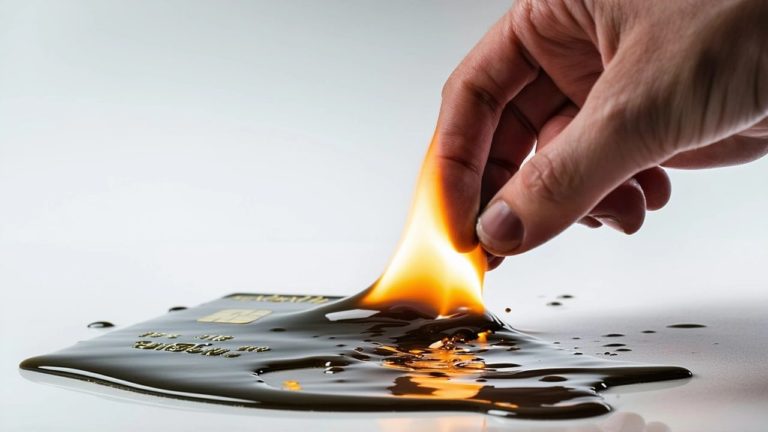
(Mike Maharrey, Money Metals News Service) After a one-off surge in April, consumer borrowing tanked again in May, a sign that Americans might be close to tapping out as they hit their credit card limits.

Locked at home and flush with stimulus money, Americans paid down their credit card debt and beefed up their savings during the pandemic. And then they dipped into their savings, pulled out the plastic, and went on a spending spree.

It wasn’t that people were buying more. They were just paying more, trying to keep up with surging price inflation. Once they blew through their savings, consumers were forced to finance life using Visa and Mastercard. Consumer debt surged from $4.15 trillion in 2020 to over $5 trillion today.

Over the last several months, credit card spending has dropped, signaling that Americans may be running out of borrowing power. This is bad news for an economy that depends on consumers buying stuff to stay afloat.

There was a surge in borrowing in April as consumers tried to get ahead of potential tariff costs, but it appears this was an outlier. Consumer debt grew by just 1.2 percent ($5.1 billion) in May as revolving credit contracted, according to the latest data from the Federal Reserve. This returns to the trend of declining borrowing that began at the beginning of the year.

The Federal Reserve consumer debt figures include credit card debt, student loans, and auto loans, but do not factor in mortgage debt. When you include mortgages, U.S. households are buried under a record level of debt. As of the end of Q1 2025, total household debt stood at $18.2 trillion.

Credit card borrowing plunged in May. In fact, revolving credit balances decreased by 3.2 percent.

Americans currently owe $1.3 trillion in revolving credit, primarily made up of credit card debt.

The double whammy of rising debt and interest rates exacerbates the debt problem. The average annual percentage rate (APR) currently stands at 20.13 percent, with some companies still charging rates as high as 28 percent. The average is only slightly down from the record high of 20.79 percent set last August.

Rates aren’t coming down much, even with Federal Reserve rate cuts last year. According to an ABC News report, despite a full percentage point in rate cuts, credit card companies are charging a higher margin “to weather default risk, cover overhead costs and recoup profits, experts added.

Credit card rates are high, and they’re staying high,” Bankrate analyst Ted Rossman told ABC News.

Americans are clearly feeling the strain from all this debt.

Late-stage delinquencies on credit card debt surged year over year in Q1. Meanwhile, 4.3 percent of total outstanding household debt is in some stage of delinquency. Serious delinquencies, defined as debts that are 90 or more days past due, rose to 2.8 percent of total debt, a 52 percent increase year on year.

According to CreditGauge, consumer credit delinquencies hit the highest level in five years in 2024.

“The combination of rising mid-to-late-stage credit delinquencies and rising credit balances suggests a growing debt burden that some consumers are increasingly struggling to manage.”

Subprime credit card borrowers are struggling the most, with delinquency rates nudging upward by about 5.6 percent since the Federal Reserve began raising rates to battle price inflation.

Non-revolving credit, primarily reflecting outstanding auto loans, student loans, and loans for other big-ticket durable goods, rose by $8.6 billion, a 2.8 percent increase. This is generally in line with the tepid growth of around 2 percent in non-revolving credit over the last year, as consumers cut back on big-ticket spending to cover the increasing costs of day-to-day necessities.

Before the pandemic, revolving credit growth averaged 5 percent.

Borrowers are also struggling with their non-revolving loans – particularly their student debt.

According to the latest data from TransUnion, around 5.8 million student loan borrowers were 90 days or more past due on their payments as of April 2025. That represents nearly a third of borrowers who have a payment due. The number was up from 20.5 percent in February and nearly triple the 11.7 percent delinquency rate before the pandemic.

This big drop in consumer borrowing reverts to a trend we saw developing last fall. Credit card spending tanked in August 2024 and remained muted in September. They pulled out the plastic again for the holidays, but that might have been a last gasp for the American consumer.

The bottom line is that Americans have blown through the savings they accumulated during the pandemic and have run their credit cards close to the limit. An economy run on Visa and Mastercard simply isn’t sustainable. When Americans finally hit their credit limit, it will have major implications for economic growth.


Mike Maharrey is a journalist and market analyst for Money Metals with over a decade of experience in precious metals. He holds a BS in accounting from the University of Kentucky and a BA in journalism from the University of South Florida.

Despite Near-Term Headwinds Gold Still Has Upside

(Mike Maharrey, Money Metals News Service) Since hitting an all-time high of $3,500 in April, gold has consolidated and generally traded sideways in a range between $3,200 and $3,400 an ounce. Does this mean the bull run is over?

A recent report by Metals Focus argues that while there are still plenty of short-term headwinds, the gold price remains well-supported, with a strong potential for further upside.

Headwinds for Gold

President Trump’s trade policy has been one of the primary market drivers over the last few months. Tariff worries initially drove stocks lower and gave gold a boost as a safe haven. But as it’s become clear that the president is using tariffs as a negotiating tool, worries have faded. He recently extended the country-specific tariff deadline to August 1.

While the deadline extension creates more uncertainty, it also provides more time for negotiations, raising optimism that deals will get done. As concerns have eased, the markets have brushed off trade war worries, once again rising to record levels. We’ve also seen a moderation of the VIX (volatility) index compared to the spike we saw in the aftermath of “Liberation Day” on April 2.

Easing geopolitical tensions with the Israel-Iran conflict remaining limited in nature and a reduced fear of a trade war-induced global recession have also increased the “risk-on” sentiment in the marketplace, lowering safe-haven demand.

Rising U.S. Treasury yields, along with an anticipated slower pace for Federal Reserve interest rate cuts, have also created some headwinds for gold. Because gold is a non-yielding asset, demand tends to ease in a higher interest rate environment.

As Metals Focus explains, the price support in the physical markets we saw as tariff worries drove tons of gold from London to New York has also waned.

“Following the U.S. government’s decision on 2nd April to exempt precious metals from reciprocal tariffs, gold EFPs collapsed. As a result, CME inventories have since begun to decline. This trend is also reflected in the latest trade statistics: Swiss gold bullion imports from the U.S. hit a record high of 63 tonnes in April, followed by another 59 tonnes in May. Meanwhile, the UK also reported an increase in deliveries from the U.S. For both countries, the U.S. has been the largest bullion supplier in recent months, a reversal of the trend seen in late 2024 and early 2025, when the U.S. was their largest export destination.”

Further dampening gold demand, higher prices have squeezed gold jewelry sales in key Asian markets, including India and China. Metals Focus noted that in addition to a price-elastic response, “Jewelry demand has been affected by weak economic conditions and the fact that many markets have already entered a seasonally slow period for retail jewelry sales.

Fuel for the Gold Bulls

Despite these near-term headwinds, gold prices have remained well-supported and seem to have strong support around $3,200 an ounce.

We can see that the bulls aren’t dead in futures and ETF positioning.

In early July, net long positions in CME futures returned to levels we saw in April as gold was pushing to $3,500. Meanwhile, after modest outflows of gold in May, ETFs reported a return to gold inflows in June, with funds globally adding 74.6 tonnes of metal. Gold ETF inflows through the first half of the year were at levels not seen since the pandemic. In dollar terms, gold ETF assets under management (AUM) reached a new all-time high of $383 billion.

Central bank gold buying continues to support the market. In May, central banks globally added 20 tonnes of gold to their reserves.

Based on the World Gold Council’s 2025 Central Bank Gold Survey, the buying trend will continue. Of the 73 central banks that responded to the survey, 95 percent said they believe central bank gold reserves will increase over the next 12 months. A record 43 percent of the respondents indicated they expect their own gold reserves to expand. That was up from 29 percent in 2024.

This is part of a broader trend of de-dollarization. As a recent UBS note put it, the U.S. dollar is “unattractive.”

U.S. weaponization of the dollar as a foreign policy tool has made many countries wary of holding greenbacks. More generally, the soaring national debt and the relentless borrowing and spending have undermined confidence in the dollar.

As Metals Focus notes, there is no sign that the rapidly deteriorating fiscal situation in the U.S. is going to improve. There is no political will to tackle government borrowing and spending.

“While the dollar’s role as the primary reserve currency is not under immediate threat, longer-term concerns about its stability continue to support gold.”

De-dollarization is one of the three macro factors supporting gold that I have identified, along with the likelihood of more inflation and recession worries.

Metals Focus pointed out that record stock valuations should be concerning, “reinforcing the case for gold as a diversification vehicle.

And finally, one never knows when the next round of geopolitical tension will bubble to the surface. There are plenty of hot spots from Ukraine to the Middle East.

Metals Focus concludes, “Looking ahead, we maintain a constructive outlook for gold prices over the remainder of this year.

“All these factors should underpin gold’s investment appeal. Even with the rise in investor positioning so far this year, outstanding positions remain below previous peaks. This leaves room for further inflows, which could drive gold prices higher later in the year.”


Mike Maharrey is a journalist and market analyst for Money Metals with over a decade of experience in precious metals. He holds a BS in accounting from the University of Kentucky and a BA in journalism from the University of South Florida.

Biden Physician Pleads the Fifth Amendment during House Deposition

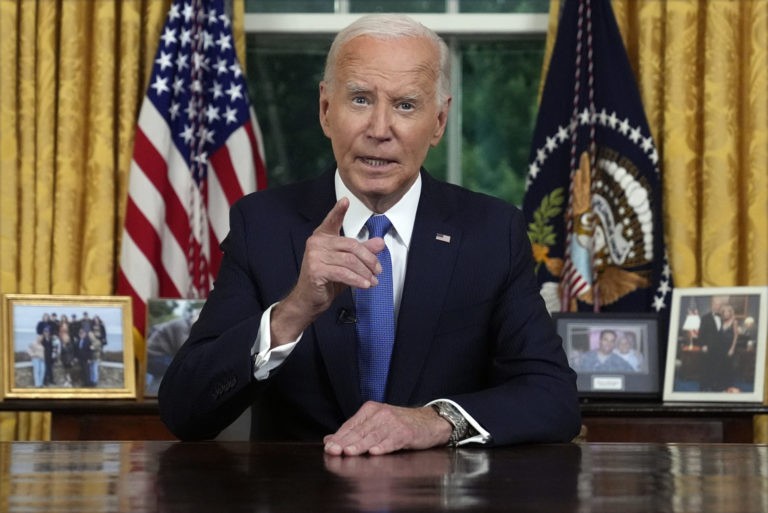
(The Center Square) Former President Joe Biden’s personal physician Dr. Kevin O’Connor pleaded the Fifth Amendment in a closed-door congressional deposition Wednesday as part of a GOP investigation into Biden’s mental acuity while in office.

House Committee on Oversight and Government Reform Chairman Rep. James Comer, R-Ky., took O’Connor’s invocation of the Fifth Amendment as proof that he was part of a broader effort to keep the former president’s deteriorating mental fitness from the public.

“It’s clear there was a conspiracy to cover up President Biden’s cognitive decline after Dr. Kevin O’Connor, Biden’s physician and family business associate, refused to answer any questions,” Comer said in a statement.

“Dr. O’Connor took the Fifth when asked if he was told to lie about President Biden’s health and whether he was fit to be President of the United States,” Comer disclosed.

Fox News reported that questions were raised about Biden’s mental fitness for office back in 2019, during the run-up to the 2020 presidential campaign.

Throughout Biden’s presidency, the White House maintained that his medical check-ups and exams reflected a clean bill of health and a president who was fully capable and competent to fulfill the duties of his role – even after dropped out of the race and endorsed former Vice President Kamala Harris.

In May, news broke of the president battling an aggressive form of prostate cancer that had spread to his bones.

However, though various media pressed the former administration on the issue of Biden’s health throughout his presidency, there is no law requiring presidents to disclose their medical records. It has become standard practice for the White House to summarize the results of presidents’ annual physicals to the public, but the lack of a legal framework has caused Republicans, like Comer, to call upon Congress to create one.

“Congress must assess legislative solutions to prevent such a coverup from happening again. We will continue to interview more Biden White House aides to get the answers Americans deserve,” Comer said.

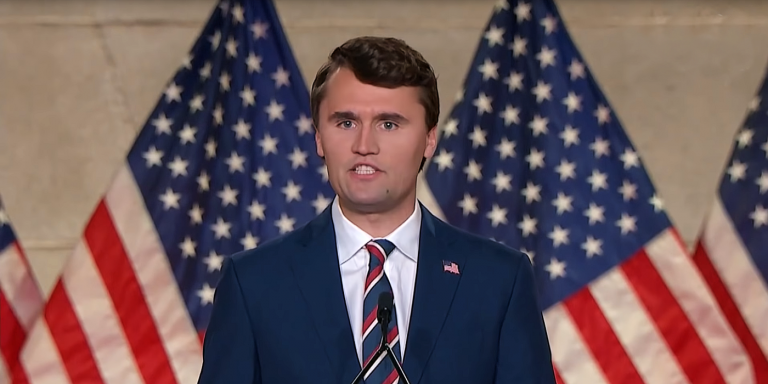
Charlie Kirk Claims Secretive D.C. Effort for Mass Amnesty Underway

(José Niño, Headline USA) Just days after President Trump signed the “Big Beautiful Bill,” conservative activist Charlie Kirk is warning of a behind-the-scenes effort to push amnesty for millions of illegal immigrants.

Kirk has issued some of his most urgent warnings yet about what he calls a “major push” for amnesty legislation in the days following President Trump’s signing of the “Big Beautiful Bill” last Friday.

According to Kirk, powerful interests within the Republican establishment and corporate world are pressuring Trump to pursue mass amnesty of illegal immigrants—a move Kirk says would be disastrous for the GOP coalition.

On his Monday broadcast, Kirk declared, “This is bigger than anything with Epstein. This is bigger than anything with tax cuts. It is happening right now in Washington, DC. And I can say this from firsthand experience that people are pushing President Trump for amnesty. They are pushing him for mass legalization of illegals.”

He claimed that after the bill’s passage, “members of the ruling class” called him to say, “Now we need mass amnesty,” arguing that deportations would cost Republicans the midterms and that legalization was necessary for the party’s future.

Kirk’s remarks came in direct response to President Trump’s comments at a Thursday rally, where Trump floated the idea of working with farmers and hotel owners to legalize workers who have been in the country for 14-15 years. Trump acknowledged that “serious radical right people… may not be quite as happy, but they’ll understand.” Kirk, identifying himself as part of that “radical right,” shot back, “Hello. Hi. I’m one of those radical right people. And I want to know what I’m not going to like.”

Drawing on the historical example of the 1986 Simpson-Mazzoli Act, Kirk argued that amnesty has never delivered the promised electoral gains among Hispanic voters. Instead, he warned that any move toward legalization would result in a “10 to 15 maybe 20% disappearance of the MAGA voter” and represent the “number one” threat to the coalition that delivered Trump’s victories.

Kirk has continued to stress that: “We ran on mass deportations,” not amnesty, and insisted that polling shows most Americans support deporting all illegal immigrants rather than legalizing them. He maintains that the GOP’s recent success with Hispanic voters is the result of strong immigration enforcement, not amnesty proposals.

Following his urgent warnings on Monday, Charlie Kirk dedicated his Tuesday show to reinforcing his anti-amnesty stance with an episode titled “Say It Again: No Amnesty!” Kirk reported that his dire warnings from the previous day had prompted immediate reactions from MAGA leaders.

According to Kirk, “the secretive push for a sweeping post-BBB amnesty is already falling apart” after his warnings. He noted that “MAGA leaders are scrambling to make it clear that the future is deportations, not amnesty.”

However, Kirk emphasized that “the threat isn’t gone” and used his July 8th show to explain “the arguments and euphemisms that D.C. will use to push for amnesty by another name in the months to come.”

When President Trump clarified on Wednesday that “There’s no amnesty” and that the administration was implementing “a work program” rather than amnesty, Kirk appeared to celebrate this clarification. On his Twitter account, Kirk posted: “DAILYMAIL: Mass deportations to ESCALATE as Trump vows ‘there will be no amnesty’ for migrants. Kaboom.”

In recent days, Kirk has maintained that while his initial warnings may have helped derail immediate amnesty plans, the underlying threat remains. He has specifically warned about “amnesty by another name” and emphasized that any form of legalization program would still constitute amnesty regardless of what it’s called.

José Niño is the deputy editor of Headline USA. Follow him at x.com/JoseAlNino