One Year Later: DEI Law Enforcement Initiatives Questioned after Assassination Attempt

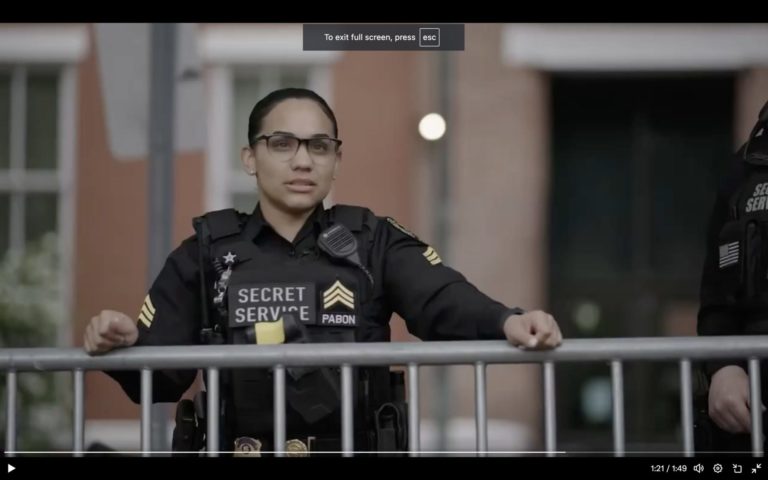
(The Center Square) In the year that has passed since the assassination attempt of President Donald Trump in Butler, Pa., efforts to increase female presence in law enforcement have waned.

The fallout from the Secret Service’s handling of the assassination attempt has led Republican lawmakers to question the nationwide effort to increase the female recruitment rate to 30% by 2030.

By 2022, the “30×30 pledge” had the signatures of 150 law enforcement agencies. Signees included the Secret Service, FBI and U.S. Marshalls.

Since taking office in January, Trump has signed several executive orders repealing DEI initiatives and has subsequently revoked funding from institutions who have not complied with these orders. This led some law enforcement agencies, like the Des Moines Police Department, to abandon their 30×30 pledges.

At the center of the Secret Service’s malfeasance in Butler, Pa. last summer was the agency’s former director, Kimberly Cheatle, the second woman to hold the agency’s top position.

Cheatle was called to testify in front of the House Oversight Committee one week after the assassination attempt last year. She was grilled with questions about how an armed man was able to scale a roof about 130 yards from a former president, and after calls to resign came from both sides of the aisle, Cheatle resigned.

Republicans took the opportunity to link the events of July 13, 2024, to the Secret Service’s recent DEI initiatives. U.S. Rep. Tim Burchett, R-Tenn., called Cheatle a “DEI horror story.” Others, like U.S. Rep. Glenn Grothman, R-Wis., questioned Cheatle about her support of the 30×30 pledge and asked if standards for new agents had relaxed as a result.

Others questioned the height of female Secret Service agents who were part of the detail and were not tall enough to shield the 6-foot-3 Trump from a bullet.

After returning to the Oval Office for a second time, Trump appointed Sean Curran, one of the Secret Service agents on stage with him on July 13, to Cheatle’s job.

The Secret Service announced this week that it has implemented broad reforms to “ensure clear lines of accountability and improved information sharing” as a response to last year’s assassination attempt. The agency also announced Wednesday that six agents were issued suspensions related to the events in Butler last year.

DOJ Drops Charges against Doctor Who Refused to Give Kids Experimental COVID Jab

(Headline USAThe federal government on Saturday dismissed charges against a Utah plastic surgeon accused of giving children saline shots instead of the experimental COVID-19 jab, and selling faked vaccination cards.

U.S. Attorney General Pam Bondi said in a post on the social media platform X that charges against Dr. Michael Kirk Moore, of Midvale, Utah, were dismissed at her direction.

Moore and other defendants faced up to 35 years in prison after being charged with conspiracy to defraud the government; conspiracy to convert, sell, convey and dispose of government property; and aiding and abetting in those efforts. The charges were brought when Joe Biden was president.

“Dr. Moore gave his patients a choice when the federal government refused to do so,” Bondi wrote. “He did not deserve the years in prison he was facing. It ends today.”

Felice John Viti, acting U.S. attorney for Utah, filed the motion Saturday, saying “such dismissal is in the interests of justice.”

The trial began Monday in Salt Lake City with jury selection. It was expected to last 15 days.

Messages sent to the U.S. Department of Justice, Viti’s office in Salt Lake City and to Moore were not immediately returned Saturday to The Associated Press.

A federal grand jury on Jan. 11, 2023, returned an indictment against Moore, his Plastic Surgery Institute of Utah Inc., others associated with the clinic and a neighbor of Moore’s. The indictment alleged more than $28,000 of government-provided COVID-19 vaccine doses were destroyed.

They were also accused of providing fraudulently completed vaccination record cards for over 1,900 doses of the vaccine in exchange for either a cash or a donation to a specified charitable organization.

The government also alleged some children were given saline shots, at their parents’ request, so the minors believed they were getting the vaccine.

Health Secretary Robert Kennedy Jr., a leading anti-vaccine activist before becoming the nation’s top health official, posted his support for Moore in April, saying on X that Moore “deserves a medal for his courage and his commitment to healing!”

During his confirmation hearings in January, Kennedy repeatedly refused to acknowledge scientific consensus that childhood vaccines don’t cause autism and that COVID-19 vaccines saved millions of lives.

In a follow-up X post on Saturday, Bondi said Georgia Republican Rep. Marjorie Taylor Greene brought the case to her attention.

Adapted from reporting by the Associated Press

Taxpayers Will No Longer Fund Illegal Aliens’ Education

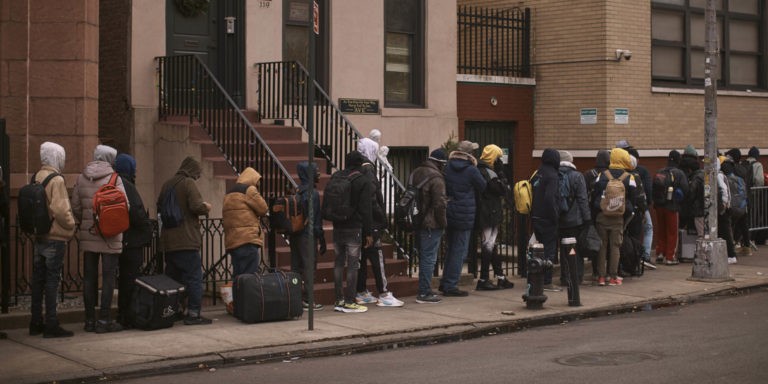
(The Center Square) Taxpayers will no longer pay for the education of noncitizens in the U.S. illegally, the U.S. Department of Education said Thursday.

The department said “it will end taxpayer subsidization of illegal aliens in career, technical, and adult education programs.”

A news release said that this change takes place due to an interpretative rule issued Thursday in which “the Department rescinded a Dear Colleague letter from the Clinton Administration that enabled non-qualified illegal aliens to access federal public benefits in contravention of the Personal Responsibility and Work Opportunity Reconciliation Act (PRWORA).”

Title IV of PRWORA “generally limits eligibility for ‘federal public benefits’ to U.S. citizens, permanent residents, and certain categories of ‘qualified aliens,’” the release said.

Federal public benefits include “any retirement, welfare, health, disability, public or assisted housing, postsecondary education, food assistance, unemployment benefits, or any similar benefits for which payments or assistance are provided to an individual, household, or family eligibility unit.”

In 1997, “the Clinton Administration issued a Dear Colleague Letter that erroneously exempted career, technical, and adult education programs from being subject to PRWORA,” the release said.

“In doing so, the Department’s interpretation mischaracterized the law by creating artificial distinctions between federal benefit programs based upon the method of assistance,” the release said. “Congress made no such distinction in PRWORA.”

The department’s release said that Thursday’s interpretive rule “also ensures that postsecondary education programs authorized under the Higher Education Act (HEA), such as Pell Grants and student loans, continue to be inaccessible to illegal immigrants.”

U.S. Secretary of Education Linda McMahon said in the release: “Postsecondary education programs funded by the federal government should benefit American citizens, not illegal aliens.”

“Under President Trump’s leadership, hardworking American taxpayers will no longer foot the bill for illegal aliens to participate in our career, technical, or adult education programs or activities,” McMahon said.

“The Department will ensure that taxpayer funds are reserved for citizens and individuals who have entered our country through legal means who meet federal eligibility criteria,” McMahon said.

Director of Policy Studies Jessica M. Vaughan at the Center for Immigration Studies told The Center Square that “taxpayers should not have to subsidize vocational or other post-secondary education for illegal aliens, who aren’t allowed to work in this country.”

The Center for Immigration Studies is an “independent, non-partisan, non-profit, research organization,” according to its website.

“Illegal workers displace American workers and cause their wages to go down,” Vaughan said.

The department’s release explained that “interpretive rules cannot have effective dates and are not binding on the public or the Department.”

Additionally, Thursday’s interpretive rule “represents the Department’s current position on the issue and may be referenced when enforcing or monitoring grantee and subgrantee compliance with PRWORA.”

When reached, the Department of Education referred The Center Square to its news release, as well as its March decision to revoke waivers to California and Oregon colleges and universities that used “federal funds to provide services to illegal aliens.”

The department’s action is in response to Trump’s February executive order “Ending Taxpayer Subsidization of Open Borders,” the release said.

The U.S. Departments of Housing and Urban Development and Homeland Security announced in March that they were ending taxpayer-funding house for illegal aliens, The Center Square reported.

The executive order “directed federal agencies to stop funding public benefits for foreign nationals living illegally in the U.S.,” as The Center Square reported.

Sen. Nesbitt: Time to Open Federal Investigation into Whitmer Grant Scandal

(The Center Square) Investigations continue after a Gov. Gretchen Whitmer political appointee and donor was set to receive $20 million of taxpayer funding for her Oakland County-based nonprofit.

Senate Republican Leader Aric Nesbitt, R-Lawton, is calling for a federal investigation into the matter, sending a letter to U.S. Inspector General Michael E. Horowitz.

“I am writing to request a review by the Office of the Inspector General into the actions of Gov. Gretchen Whitmer, Fay Beydoun and the Michigan Economic Development Corp. regarding a $20 million grant awarded to Beydoun’s nonprofit, Global Link International,” Nesbitt said.

He added that he issued the request due to “serious allegations of misuse of public funds, conflicts of interest and potential national security risks.”

Beydoun has been a long-time political supporter of Whitmer and was serving on the MEDC executive board in 2022 at the time the grant was awarded. She filed paperwork to incorporate Global Link International just days before securing the grant.

The scandal around the grant has been growing for years, with Whitmer consistently stating that there was no favoritism at play. The Center Square first reported on the grant to Global Link International in 2023.

Its funding was meant to help attract international businesses to Michigan, but was canceled in March following allegations of misuse, including a reported $550,000 salary for Beydoun and questionable expenditures such as a $4,500 coffee maker.

According to Nesbitt’s letter, email records show that Beydoun coordinated directly with Whitmer’s office to obtain the grant, including that the “governor personally intervened to ensure its approval.”

Though the governor denies this, it has caused outrage from many.

“Since day one, Gov. Whitmer has denied culpability on this grant, but we now have indisputable confirmation that Whitmer herself was the ultimate architect,” said Zach Rudat, spokesperson for Michigan Forward Network, a nonprofit political organization.

“Whitmer wasted millions of taxpayer dollars to line the pockets of a campaign donor and lied to the public about this pay-to-play scheme for years. This new revelation underscores just how corrupt Lansing has become on Whitmer’s watch and the necessity for a top-to-bottom change in the MEDC and governor’s office.”

Michigan Attorney General Dana Nessel has been conducting an investigation into the matter, raiding the MEDC Lansing office June 18 to seize relevant documents.

MEDC’s attorneys filed a lawsuit to seek the return of those documents, arguing they are confidential under attorney-client privilege. A judge subsequently ruled against that lawsuit and MEDC had until today to appeal that decision.

Nesbitt argues a federal investigation is also needed though.

“While Michigan Attorney General Dana Nessel is conducting a state-level investigation into the grant’s misuse, the potential national security implications and the involvement of foreign officials elevate this matter to a federal concern,” his letter stated. “I respectfully urge your office to initiate an inquiry to ensure transparency and safeguard the public interest.”

This is not the only controversy with MEDC grants, with Nesbitt calling for a total overhaul of the system.

“MEDC is Michigan’s USAID,” Nesbitt posted on social media. “It’s time to DOGE it and END the non stop waste, fraud, and abuse.”

U.S. Envoy: Disarm Hezbollah or Israel, Syria Will Conquer Lebanon

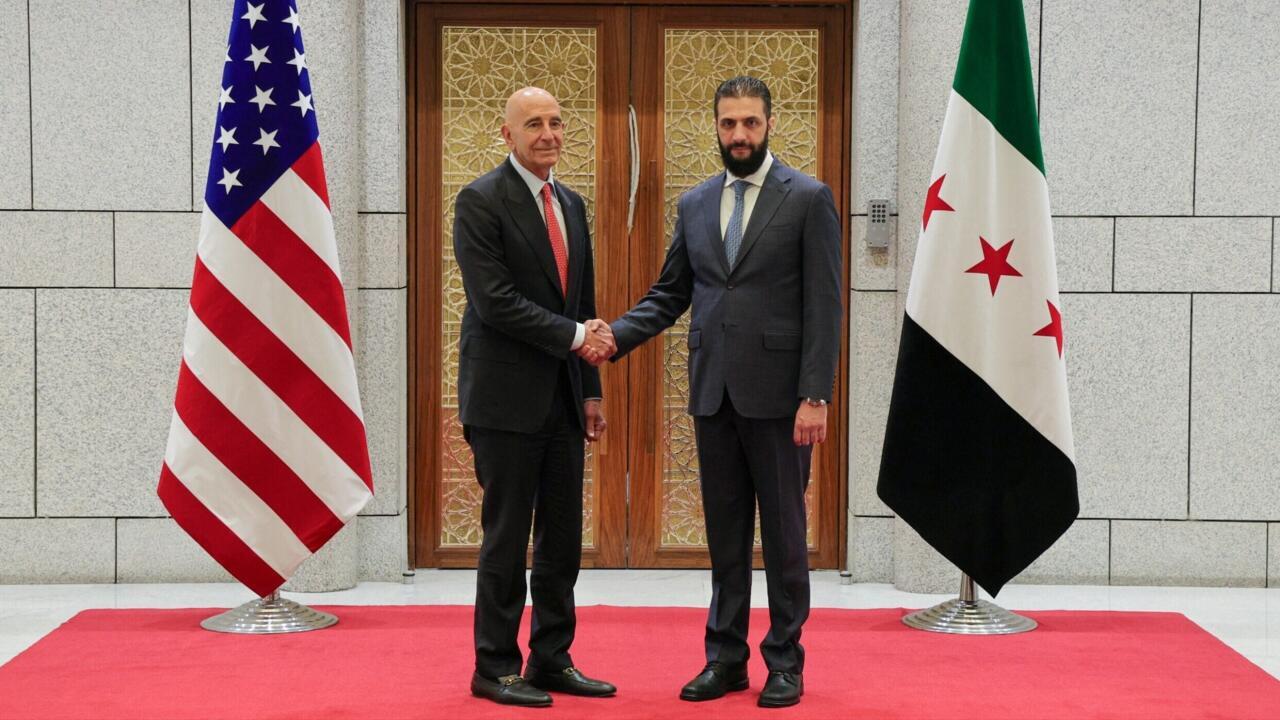
(, Antiwar.comIn comments in an interview with The National, US Ambassador to Turkey and special envoy to Syria Tom Barrack warned that Lebanon faces an “existential” crisis if they don’t give in to US demands to fully disarm Hezbollah and all other armed factions by November.

“You have Israel on one side, you have Iran on the other, and now you have Syria manifesting itself,” Barrack insisted, adding that if Lebanon doesn’t give in to the demands both Israel and Syria are liable to just carve up the area as Bilad al-Sham, or Greater Syria.

If Lebanon doesn’t hurry up and get in line, everyone around them will,” Barrack cautioned. The US recently issued demands or Lebanon to disarm everyone, though last week Lebanon responded after Hezbollah made it clear they would not disarm simply because of US demands.

Tom Barrack with Syrian leader Ahmed al-Sharaa | Image from X

While Barrack presented himself as “unbelievably satisfied” at the time, which was less than a week ago, his current comments suggest he is anything but, and rejecting the US demands seem to have escalated into full-scale threats to wipe Lebanon off the map by way of US allies.

Last weekend, it was further being reported that Israel and Syria were in talks regarding their own ongoing tensions, which center on Israeli occupations of parts of southwest Syria. The talks were said to include proposals to give Syria substantial parts of northern Lebanon, including the major city of Tripoli, in return for letting Israel nominally retain the Golan Heights.

It has also been reported Syria’s Islamist government has issued an ultimatum to Lebanon, threatening them over Syrian prisoners being held in Lebanese prisons. Syria denied this was the case, however, saying they have no intention to take “escalatory measures” against Lebanon over the prisoners.

That may not be that reassuring, however, with the caveat of it not being about the prisoners. With Syria eagerly cozying up the US of late, Barrack’s comments suggest the Syrian government may be being incentivized to take over part of Lebanon to impose the monopoly over arms that was the center of US demands.

This article originally appeared at Antiwar.com.

Trump to Mark 1 Year Anniversary of His Assassination Attempt Quietly

(The Center Square) Sunday marks the first anniversary of the attempted assassination of President Donald Trump during a campaign rally in Butler, Pa. Despite the life-altering milestone, the president appears to be keeping it quiet.

After touring the devastation in Texas on Friday along with First Lady Melania Trump, the first couple is scheduled to travel to the president’s golf club in New Jersey for the weekend.

Trump, known for marking historic occasions with pomp, will observe part of the shooting anniversary by attending a soccer game in East Rutherford, N.J., appearing to mark the events of July 13, 2024, in private.

The world of then-presidential candidate Trump was altered when would-be assassin Thomas Crooks, 20, fired shots at him during a campaign rally in the Pittsburgh suburb, grazing the president’s ear and fatally shooting firefighter Corey Comperatore before being shot and killed by Secret Service agents.

It remains unclear if Trump plans to honor the memory of Comperatore over the weekend. During the Republican National Convention in Milwaukee, Wis., in late July 2024, the president prominently honored Comperatore’s memory throughout the convention.

A year later, the motive for the shooting remains unclear. However, security blunders made by the Secret Service, spotlighted by lawmakers, eventually led to the ousting of leadership within the organization.

Trump Tariffs Bring in $27 Billion Surplus in June

(The Center Square) Government revenue exceeded government spending in the month of June due to increased revenue from tariffs, according to the Department of the Treasury.

The department’s monthly report, released Friday, showed that the federal government collected $526 billion in revenue and posted $499 billion in outlets, resulting in a $27 billion surplus. That $27 billion surplus is the exact amount of revenue collected from tariffs.

Additionally, gas prices are at a four-year low and grocery prices remained steady during June, easing fears that tariffs would spike prices and spelling good news for the economy.

“The tariff panic and inflation fearmongering from Democrats and their friends in the media hasn’t held up,” Treasury Secretary Scott Bessent posted on social media. “[I]mported goods prices are down this year, falling even faster than overall goods prices.”

Since the beginning of 2025, the U.S. government has collected $108 billion in tariff revenues. Bessent has predicted that number will rise to at least $300 billion by the end of the year.

Most recently, President Donald Trump announced a 50% tariff on imports from Brazil and tariffs ranging from 25% to 40% on more than a dozen other countries, including U.S. allies.

Trump’s aggressive and often unpredictable tariff policy has garnered condemnation from those worried he will damage relationships with allies, while fiscal watchdogs have praised his policies as a way to tackle America’s soaring deficit.

Republicans in Congress are also hopeful that continued tariffs will help offset the cost of the president’s multitrillion-dollar “big, beautiful bill,” which permanently extends the bulk of the 2017 Tax Cuts and Jobs Act, among other policies.

LA Mayor Offers Cash Aid to Illegals Targeted by ICE 

(Luis CornelioHeadline USA) Los Angeles Mayor Karen Bass announced Friday a new plan to hand out cash to illegal aliens targeted by President Donald Trump’s aggressive ICE raids. 

The aid will come in the form of pre-loaded cards with a few hundred dollars, Bass said. They will be available as soon as next week, Bass said. 

“You have people who don’t want to leave their homes, who are not going to work, and they are in need of cash,” she claimed.  

While Bass said that the cash itself would come from philanthropic efforts, she admitted that the city would use its taxpayer-funded services to play a central role in coordinating the program. 

She unveiled the cash during a press conference promoting her new executive order, which directs city agencies to come up with bolstered plans to comply with Los Angeles’s sanctuary policies. 

City officials and agencies are currently barred from investigating, citing, arresting, holding, transferring or detaining any individual for the purpose of immigration, the Los Angeles Times reported. 

The newspaper also claimed that leftist groups like the Coalition for Humane Immigrant Rights of Los Angeles will help distribute the cash. 

It remains unclear who will qualify for the aid.  

Bass compared the plan to the “Angeleno Cards” handed out during the COVID-19 pandemic by then-Mayor Eric Garcetti. 

FEMA Removed Dozens of Camp Mystic Buildings from 100-Year Flood Map before Expansion

(Headline USA) Federal regulators repeatedly granted appeals to remove Camp Mystic’s buildings from their 100-year flood map, loosening oversight as the camp operated and expanded in a dangerous flood plain in the years before rushing waters swept away children and counselors, a review by The Associated Press found.

The Federal Emergency Management Agency included the prestigious girls’ summer camp in a “Special Flood Hazard Area” in its National Flood Insurance map for Kerr County in 2011, which means it was required to have flood insurance and faced tighter regulation on any future construction projects.

That designation means an area is likely to be inundated during a 100-year flood — one severe enough that it only has a 1% chance of happening in any given year.

Located in a low-lying area along the Guadalupe River in a region known as flash flood alley, Camp Mystic lost at least 27 campers and counselors and longtime owner Dick Eastland when historic floodwaters tore through its property before dawn on July 4.

The flood was far more severe than the 100-year event envisioned by FEMA, experts said, and moved so quickly in the middle of the night that it caught many off guard in a county that lacked a warning system.

But Syracuse University associate professor Sarah Pralle, who has extensively studied FEMA’s flood map determinations, said it was “particularly disturbing” that a camp in charge of the safety of so many young people would receive exemptions from basic flood regulation.

“It’s a mystery to me why they weren’t taking proactive steps to move structures away from the risk, let alone challenging what seems like a very reasonable map that shows these structures were in the 100-year flood zone,” she said.

Camp Mystic didn’t respond to emails seeking comment and calls to it rang unanswered. The camp has called the flood an “unimaginable tragedy” and added in a statement Thursday that it had restored power for the purpose of communicating with its supporters.

FEMA exempted buildings at old and new sites

In response to an appeal, FEMA in 2013 amended the county’s flood map to remove 15 of the camp’s buildings from the hazard area. Records show that those buildings were part of the 99-year-old Camp Mystic Guadalupe, which was devastated by last week’s flood.

After further appeals, FEMA removed 15 more Camp Mystic structures in 2019 and 2020 from the designation. Those buildings were located on nearby Camp Mystic Cypress Lake, a sister site that opened to campers in 2020 as part of a major expansion and suffered less damage in the flood.

Campers have said the cabins at Cypress Lake withstood significant damage, but those nicknamed “the flats” at the Guadalupe River camp were inundated.

Experts say Camp Mystic’s requests to amend the FEMA map could have been an attempt to avoid the requirement to carry flood insurance, to lower the camp’s insurance premiums or to pave the way for renovating or adding new structures under less costly regulations.

Pralle said the appeals were not surprising because communities and property owners have used them successfully to shield specific properties from regulation.

Analysis shows flood risks at both camp sites

Regardless of FEMA’s determinations, the risk was obvious.

At least 12 structures at Camp Mystic Guadalupe were fully within FEMA’s 100-year flood plain, and a few more were partially in that zone, according to an AP analysis of data provided by First Street, a data science company that specializes in modeling climate risk.

Jeremy Porter, the head of climate implications at First Street, said FEMA’s flood insurance map underestimates flood risks. That’s because it fails to take into account the effects of heavy precipitation on smaller waterways such as streams and creeks. First Street’s model puts nearly all of Camp Mystic Guadalupe at risk during a 100-year flood.

The buildings at the newer Cypress Lake site are farther from the south fork of the flood-prone river but adjacent to Cypress Creek. FEMA’s flood plain doesn’t consider the small waterway a risk.

However, First Street’s model, which takes into account heavy rain and runoff reaching the creek, shows that the majority of the Cypress Lake site lies within an area that has a 1% chance of flooding in any given year.

In a statement, FEMA downplayed the significance of the flood map amendments.

“Flood maps are snapshots in time designed to show minimum standards for floodplain management and the highest risk areas for flood insurance,” the agency wrote. “They are not predictions of where it will flood, and they don’t show where it has flooded before.”

An ‘arduous’ appeal process can help property owners

Property owners challenging FEMA’s map designations hire engineers to conduct detailed studies to show where they believe the 100-year flood plain should actually be drawn. That is a “pretty arduous process” that can lead to more accurate maps while making it easier for future construction, said Chris Steubing, executive director of the Texas Floodplain Management Association, an industry group that represents floodplain managers.

Pralle, who reviewed the amendments for AP, noted that some of the exempted properties were within 2 feet of FEMA’s flood plain by the camp’s revised calculations, which she said left almost no margin for error. She said her research shows that FEMA approves about 90% of map amendment requests, and the process may favor the wealthy and well-connected.

A study she published in 2021 with researcher Devin Lea analyzed more than 20,000 buildings that had been removed from FEMA flood maps. It found that the amendments occurred more often in places where property values were higher, more white people lived and buildings were newer.

Camp expanded after ‘tremendous success’

FEMA had cautioned in its amendments that other parts of Camp Mystic remained on the flood map, and that “any future construction or substantial improvement” would be subject to flood plain management regulations.

County officials not only allowed the camp to keep operating, but to dramatically expand.

Considered Texas royalty after decades of taking care of the daughters of elite families, Camp Mystic owners Dick and Tweety Eastland cited the “tremendous success” of their original camp in explaining the need for a second site nearby.

The expansion included new cabins and a dining hall, chapel, archery range and more. The camp had 557 campers and more than 100 staffers between its two locations when a state licensing agency conducted an inspection on July 2, two days before the tragedy, records show.

FEMA referred questions about the expansion to local officials, who didn’t reply to messages seeking comment.

Steubing, a longtime municipal engineer in Texas, said the rain and flooding that hit Kerr County in a matter of hours were so much more intense than anything in its history that it’s hard to call the flood plain management a failure.

Local officials likely believed they were following existing regulations when they allowed the camp to keep growing, but “then Mother Nature set a new standard,” he said.

“You could have built things 2 feet higher, 3 feet higher, and they still might have gotten taken down,” he said.

Adapted from reporting by the Associated Press



Gold’s Next Chapter: Central Banks, Policy Shifts & Market Momentum

(Money Metals News Service) In a recent episode of the Money Metals podcast, host Mike Maharrey sat down with Joseph Cavatoni, aka Joe Cavatoni, market strategist for the World Gold Council, to explore current trends in the gold market, long-term investment strategies, central bank buying, and key legislative efforts aimed at integrating gold more fully into the financial system.

Cavatoni, a veteran of BlackRock and now a leading voice at the World Gold Council, provided insights grounded in both institutional strategy and global market dynamics.

(Interview Starts Around 7:28 Mark) 

From Fringe to Financial Fixture: The U.S. Wakes Up to Gold

Over the past eight years, Joseph Cavatoni has seen a significant transformation in how Americans perceive gold. Once considered a fringe or “gold bug” asset, gold has gained mainstream traction—particularly among institutional investors.

“When I joined the Council eight years ago, the U.S. wasn’t very plugged into gold,” said Cavatoni. “Now we’re seeing greater awareness and a real desire to understand gold’s role in a portfolio, not just at the consumer level but at institutions like BlackRock.”

The mainstreaming of gold is increasingly evident. Global firms now recommend gold as a hedge in their strategic portfolio guidance, recognizing its value during inflationary and geopolitical uncertainty.

Record Highs & Consolidation: What’s Next?

Gold reached a historic milestone in April 2024, peaking at $3,500 per ounce. Since then, prices have traded in a consolidation range of $3,200 to $3,400, signaling a potential cooldown after 40 record highs in 2024 alone.

Cavatoni explained that while gold’s average historical return since the end of the gold standard in 1971 is about 8% annually, recent returns are far above average—25–26% year-to-date. He attributes the sharp price growth to global uncertainty, geopolitical risk, and a flight to safe-haven assets.

“We’re likely in a consolidation phase,” he said. “Investors, central banks, and consumers are holding—not selling. Jewelry demand is weaker due to high prices, but investment demand remains strong.”

Central Banks Are Driving Demand—And It’s Not Slowing Down

Central bank gold buying has emerged as a structural force in the market. For three consecutive years, central banks have purchased over 1,000 metric tons annually, amounting to 20% of global gold demand.

In the World Gold Council’s 8th annual central bank survey, a record 73 banks responded. Key findings included:

  • Nearly 50% of central banks plan to increase gold reserves in the next 12 months—up from 29% last year
  • 95% expect global central bank gold reserves to grow—up from 80% the prior year
  • 76% said they are increasing gold exposure at the expense of fiat currencies like the U.S. dollar and the euro

This shift reflects a desire to diversify away from dollar-based assets, not eliminate them. “It’s not de-dollarization,” Cavatoni noted, “but a rebalancing of reserves toward real assets with strategic characteristics.”

Fiscal Reckoning and Gold’s Strategic Role

The conversation turned to U.S. fiscal policy and rising debt. Cavatoni warned that markets are beginning to price in long-term structural risks, including:

  • $37 trillion in U.S. national debt
  • The approaching 2030 Social Security funding gap
  • Political dysfunction and short-term policymaking

“These systemic risks are precisely why gold makes sense as a strategic long-term hold,” said Cavatoni. “Real assets are essential when you’re dealing with this kind of sovereign risk.”

Public Policy Initiatives: Gold Access, Supply Chain Reform & State-Level Action

The World Gold Council is actively engaged in multiple legislative efforts

Senate Bill 989 – Precious Metals Parity Act

This bipartisan bill would allow mutual funds to hold gold and other precious metals without punitive tax treatment, enabling them to be classified as “good income” assets.

If passed, it could open the door for 401(k)s and retirement funds to more easily incorporate gold as part of a diversified portfolio.

“It’s a small bill but strategically important,” said Cavatoni. “It allows more investors exposure to gold without tax penalties.”

Artisanal Mining & Supply Chain Legitimacy

High gold prices have drawn criminal organizations, including the Wagner Group and drug cartels, into artisanal mining operations across developing regions. The Council is working with G7 and G20 nations to:

  • Promote legitimate, trackable supply chains
  • Support local economies and miners
  • Reduce child labor and mercury use
  • Create trusted gold buying programs with central banks
State-Level Sound Money Initiatives

The Council is also supporting efforts at the state level in places like Texas, Florida, Utah, Wyoming, and Arizona where governments are:

  • Eliminating sales tax on bullion
  • Recognizing gold and silver as legal tender
  • Creating payment systems backed by state gold depositories

Cavatoni emphasized that state treasurers are often cautious, preferring flexibility over mandates, but many are beginning to explore how gold can stabilize their reserves and offer citizens alternatives for savings and payment.

Federal Capital Gains Reform? Not Yet.

While many gold advocates push for capital gains tax reform, Cavatoni says that fight is on pause. With the federal government seeking revenue increases, removing the 28% collectibles rate may be off the table for now.

Instead, the Council is focused on expanding portfolio access via mutual funds, which could generate net revenue and attract broader ownership—paving the way for future tax reform.

Final Thoughts: Gold as a Long-Term Compass

In closing, Cavatoni encouraged investors to avoid being swept up in daily news cycles and focus on gold’s long-term strategic value.

“The short-term is messy,” he acknowledged. “But the fundamentals—currency debasement, fiscal reckoning, geopolitical uncertainty—make gold a smart and necessary part of any diversified portfolio.”

For continued insights, he recommended visiting:

  • gold.org – for global policy and Council initiatives
  • goldhub.com – for data, trends, surveys, and market research

He specifically highlighted the upcoming Q2 2025 Gold Demand Trends report and a recent release outlining historical sell-offs and warning signals for gold prices. Joe Cavatoni can be found on X (formerly Twitter) via @JCavatoni_WGC.

Call to Action

To begin building your gold and silver portfolio—starting with as little as $100/month—call Money Metals Exchange at 1-800-800-1865 or visit MoneyMetals.com.