(Dave DeCamp, Antiwar.com) Nick Maynard, a British surgeon currently working at the Nasser Hospital in Gaza, has told The Telegraph that Palestinians in the besieged enclave are facing “unprecedented malnutrition” due to the Israeli blockade and that Israeli snipers are targeting people seeking food near aid distribution sites.
Maynard said that the aid sites run by the US and Israeli-backed Gaza Humanitarian Foundation (GHF) were “death traps” and that IDF snipers were targeting “certain body parts on different days, such as the head, legs, or genitals.” Nearly 900 aid seekers have been killed by Israeli forces since the GHF began operating in Gaza.
The British surgeon said that he had operated on many young teenage boys who were wounded near aid sites. “A twelve-year-old boy I was operating on died from his injuries on the operating table – he had been shot through the chest,” he said.
Maynard said that severe malnutrition has been contributing to preventable deaths among Palestinians receiving surgery. “The malnutrition I’m seeing here is indescribably bad. It’s much, much worse now than a year ago,” he said.
“The repairs that we carry out fall to pieces, patients get terrible infections, and they die. I have never had so many patients die because they can’t get enough food to recover,” he added.
Babies have been starving to death in Gaza due to Israeli restrictions on baby formula, as malnourished mothers cannot produce breast milk. Maynard said that the Nasser Hospital is also running out of intravenous liquid fluids used to treat severely malnourished children and that four infants died of malnutrition at the hospital last week.
“I saw a seven-month-old who looked like a newborn. The expression ‘skin and bones’ doesn’t do it justice,” Maynard said.
The British surgeon also volunteered in Gaza last year and said his visit to the besieged enclave was the worst thing he had ever experienced. “It was much worse than we could possibly have imagined. I couldn’t compare it to anything, it was just like nothing I’ve seen on Earth,” he said at the time.
(Luis Cornelio, Headline USA) NPR CEO Katherine Maher launched a desperate fundraising campaign on Friday, just hours after Congress passed President Donald Trump’s rescission package, which stripped more than $1 billion in taxpayer funding from leftist outlets NPR and PBS.
The fundraising plea was puzzling, considering that NPR has long claimed that federal funding makes up just one percent of its total budget.
“Congress just voted to eliminate all federal funding for public media. This decision hurts communities across America. … It means fewer voices reflecting the richness of who we are as a nation,” Maher lamented in an Instagram video.
She then pivoted to a call for donations, pleading: “But you can help us keep this vital, vibrant service on air across our nation for our neighbors—for you, and for millions of Americans. Please donate now.”
NEW: NPR CEO Katherine Maher says communities across America will now suffer after Congress voted to strip over $1 billion from NPR and PBS.
Maher begged people to step in and donate as she tried convincing them that they would suffer without NPR.
When Headline USA visited NPR’s homepage, it was immediately met with a pop-up banner begging for donations.
“We will fight to restore federal funding. In the meantime, your donation is more critical now than ever,” it read. “A donation—especially a recurring, monthly gift—will make an immediate difference.”
NPR’s appeals just a day after Congress voted to claw back $9 billion in previously approved government spending, which included $1.1 billion earmarked for NPR and PBS.
Trump celebrated the cut in a Truth Social post Thursday night: “HOUSE APPROVES NINE BILLION DOLLAR CUTS PACKAGE, INCLUDING ATROCIOUS NPR AND PUBLIC BROADCASTING, WHERE BILLIONS OF DOLLARS A YEAR WERE WASTED.”
David Bozell, president of the Media Research Center—a media watchdog which for decades has exposed NPR’s and PBS’s leftist bias—echoed Trump’s remarks.
“For nearly four decades, the Media Research Center has been the tip of the spear in exposing the bias — now open activism — of so-called ‘public’ broadcasting. PBS and NPR were chartered to provide objective journalism. Instead, we got drag shows for kids, gushing coverage of Democrats, and silence or smears for conservatives. The MRC made it our mission to hold them accountable — or end their taxpayer gravy train.”
For nearly four decades, the Media Research Center has been the tip of the spear in exposing the bias — now open activism — of so-called “public” broadcasting. PBS and NPR were chartered to provide objective journalism. Instead, we got drag shows for kids, gushing coverage of…
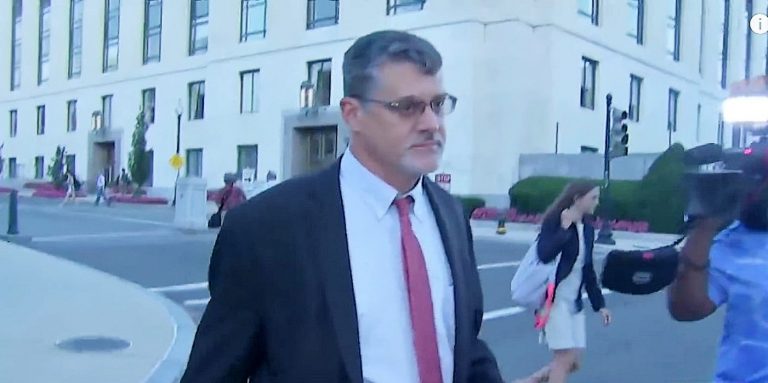
(Luis Cornelio, Headline USA) One of the Wall Street Journal reporters behind the disputed story linking President Donald Trump to Jeffrey Epstein has ties to Fusion GPS, the firm behind the debunked Steele Dossier.
Joe Palazzolo, a self-described “Pulitzer Prize-winning reporter,” previously worked for a news site run by Mary Jacoby, the wife of Fusion GPS founder Glenn Simpson.
Fusion GPS has been under scrutiny for years for creating the Clinton-funded Steele Dossier, which the DOJ used to thwart the first Trump administration.
Palazzolo left MainJustice.com in 2010 to join the Journal.
EXPOSED: The Wall Street Journal’s latest “bombshell” about a Trump-Epstein birthday letter is deeply connected to the discredited Russiagate hoax and Steele Dossier.
Investigative journalist Susan Crabtree reveals that reporter Joe Palazzolo previously worked for Main Justice,… pic.twitter.com/bSvoff63qW
Palazzolo and the Journal have faced scathing backlash for publishing a Thursday article claiming, with dubious evidence, that Trump once wrote a “bawdy” letter to Epstein in 2003.
“The letter bearing Trump’s name, which was reviewed by the Journal, is bawdy—like others in the album,” Palazzolo wrote. “It contains several lines of typewritten text framed by the outline of a naked woman, which appears to be hand-drawn with a heavy marker.”
Trump swiftly denied ever writing the letter. This did not stop the Journal from running the story anyway, without publishing the letter or even allowing Trump to review it.
Trump is now suing over the matter.
RealClearPolitics correspondent Susan Crabtree first flagged the Fusion GPS link on X.
“Glenn Simpson’s wife started Main Justice and hired Joe Palazzolo. Why is this important? So many of the players in the Russiagate story have connections here. We need to fully disclose all these swampy connections,” Crabtree said Friday in an interview on the Benny Show podcast.
“When the Steele Dossier came out, the reporters it was going to all had connections to Glenn Simpson. There’s a family of reporters, all connected through their wives. I know how this swampy thing goes,” she added.
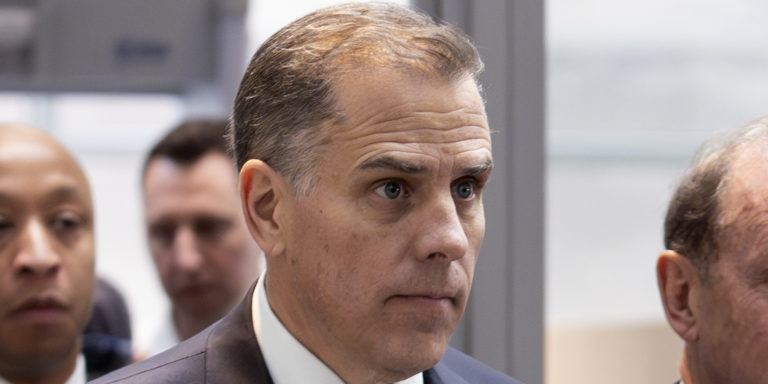
(Luis Cornelio, Headline USA) A federal appeals court panel has rejected Hunter Biden’s attempt to toss out a case that could force him to pay the attorney’s fees to the non-profit Marco Polo.
Hunter had sued Marco Polo, a non-profit that published the contents of the infamous “Laptop from Hell,” but asked the court to toss out the case, citing financial struggles.
Marco Polo appealed the decision and asked the Ninth Circuit Court of Appeals to force Hunter Biden to pay the group’s legal fees.
Hunter tried to get the appeal dismissed, claiming a “lack of jurisdiction”—but a three-judge appellate panel denied the request on Friday.
The next filing in the case is due on Aug. 22.
JUST IN: @HunterBiden fails to get our federal appeal for partial atty fee reimbursement thrown out.@MarcoPolo501c3's next filing is due a month.
Hunter launched the lawsuit in 2023 against Marco Polo founder Garrett Ziegler, accusing him of breaking state and federal laws by creating a searchable database of the laptop’s contents.
Ziegler blasted the lawsuit as “completely frivolous,” but Hunter pressed forward with it anyway.
Shortly after his father left the White House, Hunter asked U.S. District Judge Hernan D. Vera to dismiss the lawsuit, claiming he “has suffered a significant downturn in his income and has significant debt in the millions of dollars range.”
His attorneys added that Biden “has had difficulty in finding a new permanent place to live as well as finding it difficult to earn a living.”
The conversation explored gold’s historical price patterns, the current technical outlook for both gold and silver, investment psychology, bond market dynamics, and how today’s macroeconomic conditions resemble the inflationary environment of the 1970s and early 1980s.
This move marked the seventh major breakout in gold’s history, and more notably, the fourth time gold has reached sustained all-time highs.
After the surge past $3,300 in April 2025, gold entered a sideways trading pattern—a phase Roy-Byrne views as a classic consolidation following a historic breakout.
According to his analysis, these post-breakout consolidations are typical.
Historically, gold often pulls back to retest its long-term moving averages, particularly the 200-day moving average, before resuming a strong upward trajectory.
At the time of the interview, gold remained well above its 200-day moving average of approximately $2,954, suggesting more room for correction without undermining the long-term trend.
Roy-Byrne pointed to past instances, such as in 2009 and 2010, where similar dynamics played out, and he believes that a short-term move down to $3,150 would still be consistent with a bullish setup.
Looking further ahead, Roy-Byrne predicts that gold could resume its upward momentum in 2026, following a consolidation phase lasting another one to two months.
He drew specific comparisons to the 1972 breakout, when gold corrected by 11–12%, moved sideways for about four and a half months, and then launched into a second major rally.
Gold’s behavior today, he argued, is closely mirroring that historical pattern, suggesting the next leg up could be especially powerful.
Silver’s Historic Setup and 1970s Parallels
Silver, too, is showing remarkable alignment with historical precedent—particularly the early 1970s. Roy-Byrne has been tracking silver’s movements against the analog of its behavior in 1972, and he noted the similarities are striking. Just as gold followed a large breakout with a healthy consolidation in the 1970s, silver also experienced a pause before soaring to new highs.
Based on his technical models and historical analogs, Roy-Byrne sees the potential for silver to reach $50 per ounce within the next three or four months.
After such a move, he expects a multi-month consolidation before silver attempts to break through the $50 resistance level.
He also pointed out that silver is moving in lockstep with gold’s breakout pattern, particularly the cup-and-handle formations both metals have developed over multi-year timeframes. These structures, often predictive of explosive upward moves, are reinforcing Roy-Byrne’s view that silver has considerable upside ahead—especially in the current macroeconomic environment.
Investor Psychology and the Hesitation Toward Gold
Roy-Byrne addressed a recurring theme in precious metals investing: why so many investors, particularly in the United States, are hesitant to buy into gold even when technical indicators are overwhelmingly bullish. He attributed this reluctance primarily to a lack of experience and a lack of conviction.
He explained that inexperienced investors tend to second-guess market movements. When gold is not going up, they see no reason to buy it.
When gold has already moved higher, they fear they’ve missed the opportunity and expect a correction. This constant hesitation results in missed opportunities.
Drawing on his own experience, Roy-Byrne noted that early in his career, he too struggled with fear during minor price drops, despite understanding the broader trend.
Over time, he learned that strong market trends often persist well beyond the point at which they appear “overbought.” Investors who lack long-term perspective are often whipsawed by short-term volatility.
He emphasized that building confidence requires understanding both market history and technical behavior, which comes only with time and exposure to multiple cycles.
The Inflationary Blueprint of 1965–1982
Roy-Byrne turned to a macroeconomic perspective, asserting that the current environment bears a strong resemblance to the period between the mid-1960s and early 1980s—a time defined by persistent inflation and a secular bear market in bonds. He pointed to the total real return on bonds, adjusted for inflation using an 80-month moving average, which began rolling over in 2021 or 2022.
This marks only the second such instance in over a century—the first being from 1965 to 1982.
During that earlier period, bonds underperformed and could not serve as a safe haven. Stock market corrections in that era, such as the 37% decline from 1968 to 1970 and the 50% decline from 1973 to 1974, unfolded differently from more recent crashes.
Unlike the sharp mid-crash collapses of 2008 or 1929, these earlier bear markets played out more slowly and often ended with steep declines only after extended periods of weakness.
Roy-Byrne believes this matters greatly because many analysts today are predicting crashes similar to 2008 or 1929, overlooking the structural differences. With bonds no longer offering safety, investors today cannot simply rotate out of equities into fixed income.
Instead, the market is behaving more like it did in the 1970s—favoring commodities and precious metals while punishing overleveraged sectors.
He also emphasized the role of the U.S. government in fueling inflation. With deficits growing and interest rates under pressure, he expects this inflationary cycle to persist for years. According to Roy-Byrne, we are only in the early stages of a long-term monetary transition that will reward holders of real assets like gold and silver.
Ignoring Political Spin: Let the Markets Speak
The conversation turned to the disconnect between government messaging and market behavior. Maharrey cited recent comments from former Fed Governor Kevin Warsh and other officials who claimed that inflation was under control and that further rate cuts were needed. Roy-Byrne dismissed these assertions as political posturing.
He explained that politicians and central bankers often recycle the same narratives, regardless of which party is in power. When inflation becomes undeniable, blame is simply shifted to previous administrations.
Rather than focusing on these surface-level claims, Roy-Byrne urged listeners to watch what markets are doing.
In his view, market behavior speaks louder than official pronouncements.
Gold and copper have already broken out of decade-long technical bases. Bonds are underperforming, and capital is flowing out of fixed income despite official assurances of stability.
Roy-Byrne believes these market signals reflect genuine structural change and that inflation is not only real—it’s accelerating.
The Technical Picture for Silver and the Gold-Silver Ratio
Maharrey raised the topic of the gold-silver ratio, a metric often used to assess the relative value between the two metals. Roy-Byrne admitted he does not pay much attention to the ratio, calling it unreliable and prone to false signals.
He explained that while some investors attempt to time their trades by switching between gold and silver based on this ratio, he prefers to own both metals simultaneously. Rather than using the ratio to trigger trades, he focuses on the individual technical setups of gold and silver.
He did acknowledge that in extreme cases, the ratio might offer some value, but in general, he considers it more of a distraction. Given the volatility and complexity of both metals, he believes that focusing on clear breakout patterns and macroeconomic context provides a more accurate investment framework.
Mining Stocks: Entering a Profitability Window
Turning to mining stocks, Roy-Byrne was optimistic. He noted that the sector is currently benefiting from rising metal prices while energy costs remain relatively low. This combination is ideal for gold and silver producers, whose margins depend on the spread between metal prices and operational costs.
Importantly, he highlighted that gold and silver are not just rising in nominal terms—they are increasing in real terms, relative to inflation.
Using data from the Consumer Price Index, Roy-Byrne discovered that the inflation-adjusted prices of both metals had broken out of long-term bases. These moves are historically linked to strong performance in mining stocks.
However, he cautioned that this window of profitability won’t last forever.
Eventually, inflation will hit miners’ cost structures, reducing margins even if metal prices stay high. Steel, fuel, labor, and equipment costs will all rise, and when that happens, the leverage that miners offer will diminish.
He also discussed the long-term impact of gold and silver ETFs, which debuted in the mid-2000s.
Prior to ETFs, investors had few ways to gain exposure to precious metals, so mining stocks traded at higher valuations.
Today, with ETFs like GLD and SLV widely available, investors can own metals directly—decreasing demand for mining shares and dampening their performance relative to earlier cycles.
Global Investment Trends and the Rise of Precious Metal ETFs
Maharrey pointed out that ETFs are gaining traction globally, particularly in Asia. Roy-Byrne agreed, noting that Chinese gold ETFs have seen significant inflows since late 2024.
Similarly, silver ETFs saw more metal inflows in the first half of 2025 than they did in all of 2024.
These vehicles have opened the door for a broader set of investors—particularly institutions—to access precious metals without needing to store or physically manage them.
Roy-Byrne acknowledged this as a key reason for the growing financialization of gold and silver, even as he personally advocates for owning physical metal for wealth protection.
The ETF boom illustrates a structural shift in how gold and silver are viewed within portfolios.
Increasingly, they are being treated like core assets rather than speculative hedges, which could help sustain demand even as macro conditions evolve.
Final Thoughts and Where to Learn More
To close the episode, Roy-Byrne invited listeners to download his book for free at TheDailyGold.com, where they can also access his premium research and analysis.
He shares frequent insights on X (formerly Twitter) via @TheDailyGold and publishes video recaps and educational content on YouTube under the same brand.
Mike Maharrey concluded by stressing the importance of historical and technical perspectives when evaluating the precious metals market.
In a media environment obsessed with daily headlines, voices like Roy-Byrne’s help investors zoom out, gain clarity, and position themselves for the long-term realities of inflation, monetary instability, and market transformation.
To explore investing in precious metals such as gold or silver, visit MoneyMetals.com.
(Luis Cornelio, Headline USA) Former President Barack Obama and his cabinet officials “manufactured and politicized” intelligence to trigger the years-long Russian collusion investigation into Donald Trump following his 2016 victory, newly released documents show.
This latest release is part of Director of National Intelligence Tulsi Gabbard’s efforts to expose the years-long weaponization of the intelligence community against Trump, his allies, and his administration.
🧵 Americans will finally learn the truth about how in 2016, intelligence was politicized and weaponized by the most powerful people in the Obama Administration to lay the groundwork for what was essentially a years-long coup against President @realDonaldTrump, subverting the… pic.twitter.com/UQKKZ5c4Op
As announced on Friday, Gabbard’s review of internal files concluded that intelligence showed foreign adversaries did not interfere in the election through cyber means. However, these assessments were abruptly discarded shortly before Trump was sworn in as president in 2017.
“The issue I am raising is not a partisan issue. It is one that concerns every American. The information we are releasing today clearly shows there was a treasonous conspiracy in 2016 committed by officials at the highest level of our government,” Gabbard said in a statement.
“Their goal was to subvert the will of the American people and enact what was essentially a years-long coup with the objective of trying to usurp the President from fulfilling the mandate bestowed upon him by the American people,” she added.
The DNI asserted that leading up to the 2016 election, the intelligence community consistently assessed that Russia was “probably not trying … to influence the election by using cyber means.”
On Dec. 7, 2016, talking points for DNI James Clapper stated that foreign foes “did not use cyberattacks on election infrastructure to alter the US Presidential election outcome.”
But just a day later, the White House convened top Obama officials, triggering a sudden shift in the narrative.
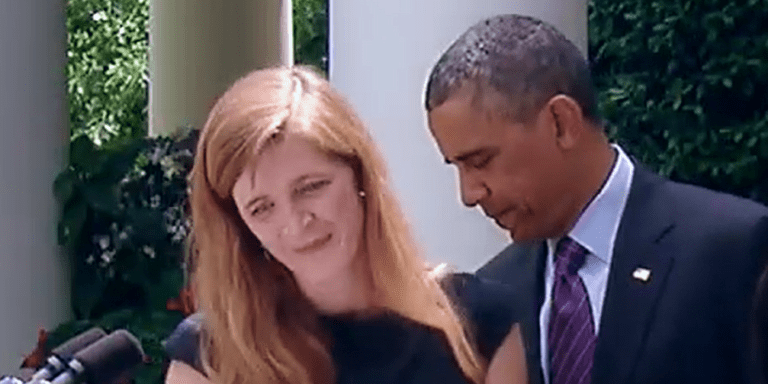
On Dec. 8, James Clapper, John Brennan, Susan Rice, John Kerry, Loretta Lynch and Andrew McCabe met to discuss Russia.
Following that meeting, Clapper’s executive assistant emailed intelligence leaders instructing them to draft a new assessment “per the President’s request” that details the “tools Moscow used and actions it took to influence the 2016 election.”
They didn’t stop there. According to Gabbard, Obama officials then “leaked false statements” to the legacy media, including The Washington Post.
Among those statements were, “Russia has attempted through cyber means to interfere in, if not actively influence, the outcome of an election.”
Like clockwork, a new intelligence assessment was released on Jan. 6, 2017—just two weeks before Trump’s inauguration. This new assessment contradicted everything intelligence agencies had concluded just weeks earlier.
Gabbard condemned the backroom plot and confirmed that her findings had been referred to the DOJ.
“No matter how powerful, every person involved in this conspiracy must be investigated and prosecuted to the fullest extent of the law, to ensure nothing like this ever happens again,” she said.
(Headline USA) Under intense pressure from President Donald Trump’s own supporters, his administration on Friday asked a federal court to unseal secret documents related to Jeffrey Epstein’s sex-trafficking empire.
But even if those records become public, they won’t tell the full story. The Justice Department only called a tiny fraction of the 1,000-plus Epstein victims to testify before a grand jury. Meanwhile, the administration remains dogged by questions about its refusal to release other records in its possession.
Trump is desperately trying to turn the page on a crisis that has consumed his administration since the Justice Department announced last week that it would not release any more evidence about the sex trafficking investigation into Epstein, who was found dead in his cell while awaiting trial in 2019.
Grand juries decide whether there is enough evidence to bring an indictment, or a formal criminal charge, and their proceedings are secret to protect the reputations of people who end up not being charged and to encourage reluctant witnesses to testify.
Grand jury transcripts — which could show the testimony of witnesses and other evidence presented by prosecutors — are rarely released by courts, unless they need to be disclosed in connection with a judicial proceeding. In fact, grand jury secrecy is such a sacrosanct principle under the law that government officials who improperly disclose testimony are subject to prosecution. Witnesses are not bound by those rules.
Even with the Justice Department endorsement, it could take weeks or months of legal wrangling to decide what can be released and how to protect witnesses and other sensitive victim information.
Court have blocked the release of grand jury materials in other high-profile investigations. House Democrats in 2019 sought grand jury testimony from special counsel Robert Mueller’s investigation while Congress was conducting its impeachment inquiry into Trump. But the Justice Department successfully fought for years to keep the material secret.
The administration could release other records right now
The Justice Department’s decision to seek grand jury transcripts gives the administration a reason to point to the courts to explain why more material hasn’t yet been released. But the uproar over the Epstein files was never about the grand jury transcripts — it was about the thousands of other pages in the government’s possession that the administration now says it won’t release.
Facing outrage after the first release of Epstein files flopped in February, Bondi said officials were poring over a “truckload” of previously withheld evidence she said had been handed over by the FBI. But after a monthslong review of evidence in the government’s possession, the Justice Department determined that no “further disclosure would be appropriate or warranted.”
The Justice Department has yet to fully explain why none of that material could be released. It noted in its memo earlier this month that much of the material was placed under seal by a court to protect victims and “only a fraction” of it “would have been aired publicly had Epstein gone to trial.”
Since then, Bondi has largely refused to answer questions from reporters about the matter.
Congress’ Epstein files resolution carries no legal weight
House Republicans may vote next week on a resolution that seeks to appease GOP demands for more transparency on the Epstein case, The resolution calls on the Justice Department to publicly release records, but it carries no legal force.
“The House Republicans are for transparency, and they’re looking for a way to say that they agree with the White House,” House Speaker Mike Johnson said Thursday. “We agree with the president. Everything he said about that, all the credible evidence should come out.”
Democrats, with the support of nine Republicans, have advanced their own legislation that would require the Justice Department to release more information about the case.
(Ken Silva, Headline USA) Last week, Sen. Ron Johnson, R-Wisc., subpoenaed the FBI for a slew of evidence related to the July 13, 2024, Trump shooting—including surveillance footage that might show law enforcement chasing alleged would-be assassin Thomas Crooks.
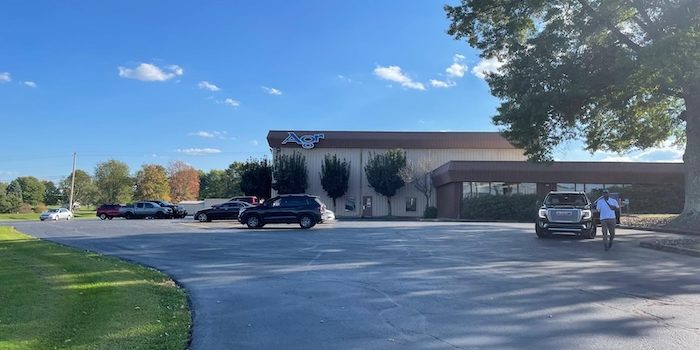
Indeed, Johnson’s subpoena asks for footage taken from a security camera at an ice cream shop that has a clear vantage of the AGR building—where the gunman used as a rooftop perch.
I'm just now reading the subpoena @SenRonJohnson issued for FBI evidence on the Butler rally, and this is very interesting: The bureau has footage from a nearby ice cream shop that has a vantage of behind the AGR building. This footage might show Thomas Crooks and Lord knows who… https://t.co/SPC81fWfbUpic.twitter.com/AowIjRz07R
Whether the footage shows Crooks is unclear. Internet sleuths have noted that the ice cream shop, King Cones Castle, doesn’t have a view of the AC unit that Crooks purportedly used to climb onto the AGR rooftop.
However, the footage “may identify Crooks’ movements in advance of the shooting,” according to a Johnson press release. It also should at least show some of law enforcement’s response to Crooks. Local cops were on traffic duty in that area, and chased the shooter before he opened fire.
Congress TF Report said a local biz cam showed Crooks climb AC unit onto roof in a location that King's Cone did NOT have a view of directly, nor could it see the picnic table Nicol said he saw him at before the climb
— Sgt Jester 33rd Misinformation Battalion (@Jestersghost108) July 19, 2025
According to at least one rallygoer, the King Cones Castle footage might also show a “young man” open-carrying his rifle with a group of people walking behind him around 3:30 p.m. that day. That rallygoer, Bradford Price, sued the Pennsylvania State Police last year for bodycam footage of troopers close to the same area filmed by the King Cones Castle camera. However, the PSP said it didn’t have such footage, and a local judge dismissed Price’s lawsuit.
Along with the King Cones Castle footage, Sen. Johnson seeks a trove of other evidence, including “photos of Thomas Crooks’ range finder, the ballistics vest and explosive devices
recovered from the trunk of Thomas Crooks’ vehicle, the ladder … [and] the gun and backpack recovered from the roof of AGR International Inc., including its contents,” Johnson’s subpoena says.
Additionally, the subpoena demands footage from the Clairton Sportsmen’s Club, where Crooks frequented in the last year of his life. Finally, the subpoena demands Crooks’ internet history, which likely includes terabytes of data from his social media accounts and other online activity—crucial evidence that presumably reveals his motivation, and whether others were involved.
Johnson demands the evidence by Aug. 1. His subpoena comes as the new administration continues to backtrack on transparency promises.
“I had expected the FBI to be more forthcoming with the public and provide my office with the records we have been seeking for months. I am issuing the subpoena to help prompt transparency and I look forward to Director [Kashyap] Patel’s full cooperation,” Johnson said in a press release.
Ken Silva is the editor of Headline USA. Follow him at x.com/jd_cashless.
(Headline USA) An explosion at a Los Angeles law enforcement training facility early Friday that killed three deputies was being investigated as a possible training accident, officials said.
Los Angeles County Sheriff Robert Luna said the deputies were members of the arson and explosives unit, a team that goes through in-depth training and responds to more than 1,000 calls a year.
“They have years of training,” he said. “They are fantastic experts and, unfortunately, I lost three of them today.”
The explosion was reported about 7:30 a.m. at the Biscailuz Training Facility, Los Angeles County Sheriff’s Department spokesperson Nicole Nishida said. It was not immediately known what caused the explosion or what the deputies were doing at the time.
Luna said it took more than four hours to render the scene safe and the deaths are being investigated by the department’s homicide detectives, who are being assisted by the FBI and the Bureau of Alcohol, Tobacco, Firearms and Explosives. No one else was injured in the explosion, he said.
An early line of investigation was looking at a possible training accident, according to a law enforcement official briefed on the matter who was not authorized to discuss it and spoke to The Associated Press on condition of anonymity.
In a post on X, Attorney General Pam Bondi said the explosion “appears to be a horrific incident” and federal agents are at the scene to learn more.
“Please pray for the families of the sheriff’s deputies killed,” Bondi wrote.
Altogether, the three deputies had served in the department for 74 years, Luna said. He said the deaths marked the department’s worst loss of life in a single incident since 1857 and noted that he couldn’t release the deputies’ names because he had yet to speak to one of the families.
“I have met with two of three families thus far. Those were extremely challenging conversations,” Luna said, his voice breaking.
Arson investigators from the Los Angeles Fire Department and members of the Los Angeles Police Department bomb squad were also assisting the investigation at the training facility, Los Angeles Mayor Karen Bass said in a post on X.
California Gov. Gavin Newsom’s office said he’s been briefed and that the Governor’s Office of Emergency Services is in contact with the Sheriff’s Department and closely monitoring the situation. He later posted on X that members of the State Fire Marshal were helping with the investigation at the request of the ATF.
Aerial footage from KABC-TV shows the explosion happened in a parking lot filled with sheriff patrol cars and box trucks. Three covered bodies could be seen near a truck with a ramp attached to a side door. A sheriff’s patrol cruiser parked nearby had its rearview mirror shattered by the blast.
(Kenneth Schrupp, The Center Square) The California High Speed Rail Authority is suing the Trump administration over cancellation of $4 billion in federal funding for the $36.3 billion high rail project connecting two cities in the state’s sparsely-populated Central Valley.
“This is just a heartless attack on the Central Valley that will put real jobs and livelihoods on the line,” said California Gov. Gavin Newsom in a statement. “We’re suing to stop Trump from derailing America’s only high-speed rail actively under construction.”
Newsom’s office claimed the lawsuit comes as “the project enters the track laying phase,” but as recently as June federal authorities noted that “CHSRA has not laid any track.”
CHSRA maintains that it is meeting its obligations, but federal authorities say the state missed a key rolling stock procurement deadlines, and appears on track to fail to meet its obligation to have an early operating segment by 2033.
“Canceling these grants without cause isn’t just wrong, it’s illegal,” said CHRA in a statement. “These are legally binding agreements, and the Authority has met every obligation, as confirmed by repeated federal reviews.”
Federal authorities estimate California has spent $15 billion on the government-run high speed rail project, including $2.5 billion in spent federal funds. The project was first approved by voters in 2008 with a $10 billion bond and a 2020 completion date for a high speed rail line connecting Los Angeles to San Francisco.
While the state says it will complete the 171-mile, $36.3 billion early operating segment connecting Bakersfield and Merced by 2033, the Trump administration cited the program’s continued delays, ongoing $7 billion budget shortfall — from before the withholding of $4 billion in federal funds — and lack of “credible plan to secure additional funds” in its funding cancellation.