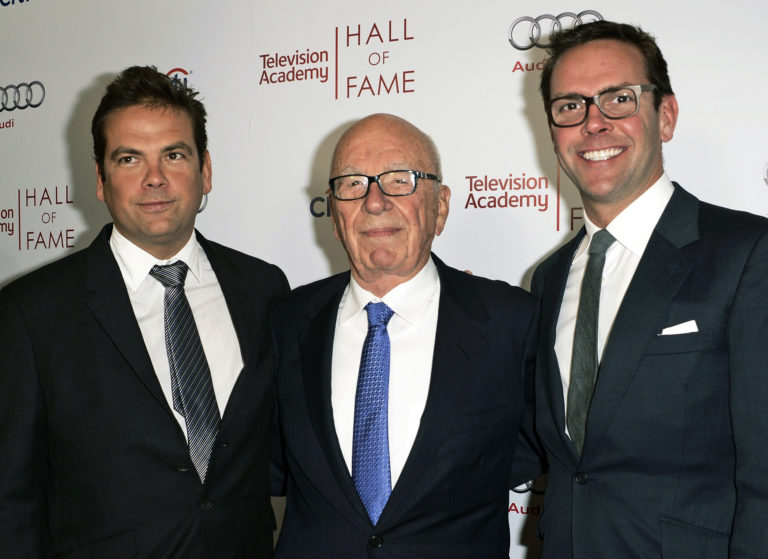
(Headline USA) President Donald Trump is asking a federal court in Florida to force Rupert Murdoch to give a deposition for the president’s lawsuit against The Wall Street Journal within 15 days, citing the media mogul’s age and physical condition.
Trump sued the Journal, owned by Murdoch, in the U.S. District Court of southern Florida on July 18 for its story reporting on the Republican president’s ties to Jeffrey Epstein, the financier and alleged child sex trafficker who died in a New York jail in 2019 before trial.
The president’s motion to the court on Monday noted Murdoch is 94 years old, is believed to have suffered several health scares in recent years, and is presumed to live in New York.
“Taken together, these factors weigh heavily in determining that Murdoch would be unavailable for in-person testimony at trial,” Trump’s request to the court said.
A spokesman for Murdoch’s News Corp. did not immediately return a request for comment. Trump’s motion said that, in a telephone conversation, Murdoch’s lawyer indicated he would oppose the effort.
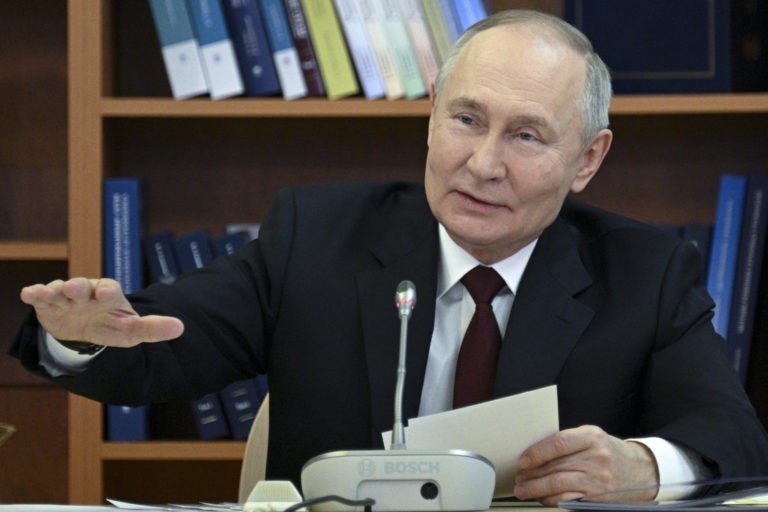
(Dave DeCamp, Antiwar.com) President Trump said on Monday that he was giving Russia a new deadline of “10 or 12 days” to end the war in Ukraine and said he was no longer interested in speaking with Russian President Vladimir Putin.
“I’m going to make a new deadline of about 10 — 10 or 12 days from today,” Trump told reporters while meeting British Prime Minister Keir Starmer in Scotland. “There’s no reason in waiting. … We just don’t see any progress being made.”
On July 14, Trump said Russia had 50 days to end the war, putting the deadline on September 2. At the time, he threatened to impose 100% tariffs on Russia and its major trading partners. The implication is that the US could impose significant tariffs on China and India, which would have a significant impact on the US and global economy.
“So what I’m doing is we’re going to do secondary sanctions, unless we make a deal, and we might make a deal, I don’t know,” the president said on Monday.
Russia has made clear that it’s committed to achieving its war goals despite the ultimatum from Trump and that it wouldn’t settle for a peace deal that doesn’t address its core demands, which include the recognition of the four oblasts Moscow annexed in 2022 as Russian territory and Ukrainian neutrality.
Ukrainian leadership has also made clear that it won’t concede to Russia’s territorial demands as long as the US and NATO continue supporting the war. Last week, the Trump administration approved a series of potential arms deals for Ukraine, and he recently announced a plan for NATO countries to purchase more US weapons to fuel the proxy war.
While Trump has continued supporting Ukraine, he has broken from the Biden administration’s policy of cutting off virtually all high-level contact with Russia and has held several calls with Putin. However, Trump suggested that the communication with Russia’s president might not continue.
“I’m not so interested in talking anymore,” Trump said Monday. “He talks. We have such nice conversations, such respectful and nice conversations, and then people die the following night in a — with a missile going into a town.”
For its part, the Kremlin remains open to dialogue with the US, and there are rumors that Trump and Putin could meet in person in Beijing if the US president attends an event marking the 80th anniversary of the end of World War II in September. Kremlin spokesman Dmitry Peskov said on Monday that there were currently no preparations for a Trump-Putin summit, but noted that it was possible if both leaders were in Beijing at the same time.
“If it happens that the US president decides to visit China on the same dates, then, in theory, such a meeting could take place, as long as both heads of state are in the same city,” Peskov said.
(Headline USA) President Donald Trump said Monday that he ended his friendship with Jeffrey Epstein and threw the now-disgraced financier out of his private club in Florida after Epstein betrayed him more than once by hiring people who had worked for him.
Trump did not say what his employees did or where they worked, and the White House declined further comment. But the White House had previously offered a different explanation for the falling-out. Steven Cheung, the White House communications director, said in a statement last week: “The fact is that the President kicked him out of his club for being a creep.”
🚨 NEW: President Trump says he threw Epstein out of his club because he STOLE WORKERS from him after being asked not to.
Epstein killed himself, authorities claim, in a New York jail cell in 2019 as he awaited trial on sex trafficking charges. Trump and his top allies stoked conspiracy theories about Epstein’s death before Trump returned to power and are now struggling to manage the fallout after the Justice Department said Epstein did in fact die by suicide and that it would not release additional documents about the case.
The president and his allies, some of whom are now in the administration, had promised to release the files.
The case has dogged Trump at home and abroad and even followed Vice President JD Vance during an appearance in his home state of Ohio on Monday. A small group of protesters assembled outside a factory in Canton that Vance toured, holding signs that spelled out “JD Protects Pedophiles” and indicating that “GOP” stands for “Guardians Of Pedophiles.”
The Republican president spoke at his golf property in Turnberry, Scotland, as he sat with British Prime Minister Keir Starmer after the leaders had met and were answering questions from U.S. and U.K. journalists. Asked to explain why the relationship had faltered, Trump said, “That’s such old history, very easy to explain, but I don’t want to waste your time by explaining it.”
He then explained, saying he stopped talking to Epstein after “he did something that was inappropriate.”
“He hired help and I said, ‘Don’t ever do that again,’” Trump said. “He stole people that worked for me. I said, ‘Don’t ever do that again.’ He did it again, and I threw him out of the place, persona non grata.”
“I threw him out and that was it. I’m glad I did, if you want to know the truth,” Trump added.
Trump recently directed Attorney General Pam Bondi to seek the public release of sealed grand jury transcripts in the case. One federal judge has denied that request; a second judge has yet to rule.
Vance on Monday visited the factory to promote Trump’s tax cut and border bill, but also addressed the Epstein matter, saying the president wants “full transparency” in the case.
“The president has been very clear. We’re not shielding anything,” Vance said in response to a reporter’s question. “The president has directed the attorney general to release all credible information and, frankly, to go and find additional credible information related to the Jeffrey Epstein case.”
“Some of that stuff takes time,” Vance said, adding that Trump has been “very clear. He wants full transparency.”
Trump had said back in 2019 that Epstein was a fixture in Palm Beach but that the two had had a falling-out a long time ago and he hadn’t spoken with Epstein for 15 years.
Trump on Monday also denied contributing to a compilation of letters and drawings to mark Epstein’s 50th birthday, first reported on by the Wall Street Journal. The newspaper said the letter believed to be from Trump included a drawing of a woman’s body.
“I don’t do drawings of women, that I can tell you,” Trump said.
(Thérèse Boudreaux, The Center Square) With U.S. House members out for their August recess, senators are scrambling to advance at least some of the 12 annual appropriations bills to fund federal agencies in fiscal year 2026.
Although Republicans originally planned to craft and pass the government funding bills soon after the One Big Beautiful Bill Act became law, the immediate introduction of a $9 billion rescissions bill caused weeks of delay.
Furthermore, Republicans jamming through the rescissions package alienated several Democrats, whose support is needed for the appropriations process to succeed. Rep. Pramila Jayapal, D-Wash., warned that the partisan passage of the rescissions bill “calls into question the future of the broader appropriations process, if the President simply rescinds and Republican members go back on the agreements they made.”
Lawmakers have until Sept. 30 – the end of fiscal year 2025 – to push all 12 appropriations bills through both chambers of Congress, or else risk a government shutdown. But with only two of those bills having passed the House and none having passed the Senate, that deadline looks increasingly unachievable.
House lawmakers return on Sept. 12. This gives lawmakers less than three weeks to pass the bills through both chambers, a likely impossible feat given Democratic rebellion.
As a result, Senate Majority Leader John Thune, R-S.D., is eyeing a short-term funding stopgap – called a Continuing Resolution, or CR – to keep the government open while Congress finishes the appropriations process.
The problem with this strategy is that he’ll also receive pushback from Republicans, who were promised an appropriate appropriations process for fiscal year 2026 in exchange for their votes on multiple CRs in the past.
Congress never passed a fiscal year 2025 budget, instead passing three consecutive CRs to keep government funding on cruise control until Sept. 30. Neither party was happy with the decision, but even some Democratic senators voted for the stopgaps in order to avert government shutdowns.
The Senate is scheduled to begin their August recess next week, but due to the government funding deadline approaching, Thune may hold the chamber until he is able to push through the bill funding military construction and Veterans Affairs department.
In the meantime, senators will vote Monday on some of President Donald Trump’s cabinet nominations for the Department of Defense and the Nuclear Regulatory Commission.
(Dave DeCamp, Antiwar.com) President Trump acknowledged on Monday that there was “real starvation” in the Gaza Strip, comments that came after Israeli Prime Minister Benjamin Netanyahu claimed there was “no starvation” despite the daily malnutrition deaths that have been caused by the US-backed Israeli siege.
“That’s real starvation stuff, I see you. You can’t fake that,” the president told reporters while meeting with British Prime Minister Keir Starmer at a Trump golf course in Scotland.
.@POTUS on Gaza: "We'll be helping with the food … We're also going to make sure that they don't have barriers stopping people … We can save a lot of people. That's real starvation. I see it, and you can't fake that." pic.twitter.com/zcFiVYCxrE
— Rapid Response 47 (@RapidResponse47) July 28, 2025
Trump said the US would become “even more involved” with getting aid into Gaza. However, the current US aid system, the Gaza Humanitarian Foundation (GHF), has created death traps for Palestinians as they are regularly gunned down by the Israeli military near GHF sites.
Earlier in the day, Trump was asked if he agreed with Netanyahu’s claim that there was no starvation in Gaza, and replied, “Based on television, I would say not particularly because those children look very hungry.” In other comments, Trump said Israel has “a lot of responsibility” for the starvation and must work to get more food into Gaza.
The UN and other aid groups that operate in Gaza have been calling for Israel to lift all restrictions on aid deliveries and for a ceasefire, which is required to provide a full humanitarian relief effort for Gaza’s starving population. But both the US and Israel recently quit ceasefire talks with Hamas, and Trump appears to be suggesting that Israel should escalate military operations.
“Hamas doesn’t want to give the hostages. I told Bibi that he will have to now maybe do it in a different way,” Trump said on Monday, adding that a ceasefire is “possible” but “you have to end it.”
While Trump claims Hamas doesn’t want to release the remaining Israeli captives, the group’s long-standing offer is that it would release all of them in exchange for a permanent ceasefire. But Netanyahu doesn’t want to end the genocidal war, and there’s no sign that Trump is willing to pressure him to do so by leveraging US military aid, which Israel relies on to sustain its operations in Gaza.
(José Niño, Headline USA) Police are racing to identify several Black individuals caught on video brutally attacking a White man and woman on the street during the Cincinnati Music Festival.
This incident took place at the intersection of West Fourth Street and Elm Street around 3:00 AM on Sunday during the final night of the Cincinnati Music Festival weekend.
According to a report by Local 12, the attack began with a man being repeatedly hit and kicked in the head by multiple people, sending him to the ground where attackers continued stomping, kicking, and punching him while he lay defenseless.
When the man attempted to stand up, he immediately fell over in apparent disorientation as cars honked their horns for the crowd to move out of the road.
Later in the video, a woman who was checking on the fallen man was suddenly attacked from behind. Another woman grabbed her while a man in the crowd sucker-punched her in the face, causing the woman to fall to the ground with her head slamming onto the concrete. The woman appeared to lose consciousness, with blood streaming from her mouth. Bystanders eventually moved the unconscious woman out of the street.
The identities of the specific perpetrators have not been officially released by police, though authorities reportedly identified four suspects involved in this violent clash, per Fox News.
Additional footage obtained by Local 12 showed the moment before violence, depicting the man in a white shirt confronting the Black mob. Some witnesses reported to local media outlet WXIX that racial slurs were exchanged before the violence began, though it remains unclear who initiated the verbal exchange.
Cincinnati Police Chief Teresa Theetge issued a strong condemnation of the attack, stating she was in “complete disgust waking up to the viral video many of you have now seen.” Chief Theetge emphasized that “the behavior displayed is nothing short of cruel and absolutely unacceptable” and that the investigative team is “working diligently to identify every individual involved in causing harm.”
She clarified that the incident was “a sudden dispute between individuals following a verbal altercation” and was not connected to the Music Festival.
Ken Kober, president of the Cincinnati Fraternal Order of Police, also condemned the violence, declaring that “the violence this video shows downtown is disgusting.” He expressed particular disgust with “those who chose to watch and record instead of calling 911, attempting to defuse the situation or render aid.”
State Representative Cecil Thomas, who represents Ohio’s 25th House District and is a former Cincinnati police officer who served 27 years on the force, released a statement expressing his disgust with the incident. Thomas said the video “turned my stomach and I was angry and totally embarrassed to see such behavior,” particularly because it occurred during “the Music Festival weekend that’s has been historically free of such horrifying violence, not to mention a Reds home game” with many visitors in the city.
On Sunday evening, Assistant Attorney General for Civil Rights Harmeet Dhillon posted on X that “our federal hate-crimes laws apply to ALL Americans” and that her division would “monitor closely how local authorities handle this attack,” adding that federal charges could follow “where race is a motivation.”
Our federal hate crimes laws apply to ALL Americans. We @CivilRights will monitor closely how local authorities handle this attack.
Nobody in our great nation should be the victim of such a crime, and where race is a motivation, federal law may apply. https://t.co/QeADELQMsZ
On Monday, Vice President J.D. Vance, speaking to reporters in Canton, Ohio, denounced the “mob” violence and said those responsible should be “prosecuted to the fullest extent of the law” and that authorities should “throw their a***s in prison.”
As of Monday afternoon, the White House press office and President Trump himself have not issued separate statements, and no federal charges have yet been announced.
José Niño is the deputy editor of Headline USA. Follow him at x.com/JoseAlNino
(Ken Silva, Headline USA) Secret Service agent Myosoty Perez, one of the planners of the July 13, 2024, Trump rally in Butler, Pennsylvania, received the harshest discipline out of everyone involved in that deadly event. She received a 42-day suspension for, among other reasons, failing to properly secure the AGR rooftop that was used as a sniper perch to nearly assassinate President Donald Trump.
According to newly released records, Perez, who was on Trump’s security detail, was also disciplined for talking to a reporter in the aftermath of the Butler event.
The Secret Service disciplinary records, which were released by the Senate Homeland Security Committee earlier this month, say that a reporter called Perez on Aug. 28. The reporter, whose name is redacted, identified herself and said she was working on a story about Butler.
I don't focus too much on the poor lil' DEI site agent Myo Perez, because I think she was put in a position to fail.
But Jesus lady. After all you've been through, why would you openly talk to a reporter on the record? You just answer your phone and start blabbing to the… pic.twitter.com/T1xr4F2AqL
At first, Perez said she couldn’t talk. But when the reporter said she identified Perez as the one responsible for the failures at Butler, Perez spoke in defense of herself.
“Furthermore, when Ms. [REPORTER] continued to ask questions, specifically about the site advance procedures, you again responded to her inquiry by discussing elements of the planning and coordination process,” the disciplinary report says. “You did not have authorization from CMR to speak to the reporter regarding this matter.”
Perez was initially suspended for three days without pay for her infraction. She then successfully appealed to lower that punishment to a one-day suspension.
According to her appeal records, Perez answered her phone because it was from the 202-area code and she thought it was a co-worker. She was caught off guard, and reflexively began to defend herself from the reporter’s accusations, the report found.
“The reporter used dishonorable tactics and goaded you into providing information by making statements blaming you for the events of July 13, 2024 … the information you provided was minimal,” the Secret Service appeal findings say. “However, in your efforts to defend yourself, you did provide elements of the planning and coordination process.”
Perez’s attorney, Larry Berger, provided the following statement to reporter Susan Crabtree in response to the disciplinary actions against his client.
“SA Perez was part of a team of colleagues on site at Butler, who based on consensus plan(s), which included the posting of local police officers at, on, around and in the AGR building, which was reviewed and approved by colleagues on scene who had responsibility to secure the site, and by the highest officials at headquarters who had responsibility for Butler,” he reportedly said.
‼️‼️Larry Berger, Perez's attorney, pushes back on any argument that she was solely responsible for the AGR building not being covered. (I clearly say her supervisors were also responsible – and in a separate post that is now attached states that the counter sniper teams also…
“SA Perez was herself a victim of the failure of HQ personnel to disclose to her threat intelligence prior to Butler. Had her colleagues been apprised of this intelligence, extant agreements would have been modified.”
Perez is reportedly no longer working on Trump’s detail.
Ken Silva is the editor of Headline USA. Follow him at x.com/jd_cashless.
(Sound Money Defense League, Money Metals News Service) Money Metals’ own Jp Cortez appeared on the popular VRIC Media YouTube channel this week alongside Peter Spina from Goldseek and host Jesse Day. Jp gives the latest on Sound Money Defense League’s and Money Metals’ efforts to promote sound money reforms across America – but he also has some warnings about negative developments flowing from a much-hyped “transactional gold” bill in Florida.
A few clumsy activists and policymakers have sparked the imposition of massive new regulations on the precious metals industry in Florida, shoving precious metals dealers, depositories, and their customers under the state’s oppressive and centrally controlled “Money Transmitter” regime. (Jp addresses this particular topic at the 31 minute mark.)
Central Bank Gold Buying Trends:
Jesse Day, VRIC Media: The World Gold Accounts released their Central Bank Gold Reserve survey 2025 last month. Here’s what they wrote. In one part of it, it says, similar to findings from previous surveys, central banks continue to hold favorable expectations.
On gold respondents overwhelmingly 95% believe that Global Central Bank gold reserves will increase over the next 12 months. This is despite gold being at near all time highs. What do you make of this aggressive outlook from central banks and how much of a role do you think central bank buying plays in driving the gold?
Jp Cortez, Money Metals: I think it plays a massive role. Debatably the largest role currently. Central bank gold buying is driving this, this up, this increase in price. I think we’ve seen Jan Nieuwenhuijs, who’s a gold analyst for Money Metals Exchange, has provided in-depth research showing that countries all over the world are actively increasing their holdings, which speaks to how central banks are not price sensitive.
These are strategic purchases being made by the central banks that are going to happen regardless of what the market price is on any given day. Now, we have on the eastern side of the world, countries like China that are quietly stockpiling gold at rates that we have not seen in a long time. They are not having to disclose their holdings either, which makes sense.
If you were stockpiling gold, it wouldn’t really make sense to have to disclose some of this, and that’s why China has not been doing so. But from the perspective of a central bank, this makes complete sense both in countries that are adversaries to the United States and in up-and-coming economies like Poland, like Turkey, to begin to stockpile this metal at accelerated rates.
You’re hedging against geopolitical risks. You’re hedging against sanctions and trade wars. You’re promoting stability. You’re hedging or protecting against inflation, against currency devaluation. The reason for this, of course in 2022, Russia’s invasion of Ukraine and the subsequent sanctions that followed, all of this has driven countries and central banks into trying to get out from under the thumb of the United States government, which has an outsized power or reach over the global monetary system. Combine that with the debt problem and the inflation problem, and you can understand why countries would be actively seeking exits from the US dollar.
Another point is that President Trump is talking about a new tariff every other week, and it seems like the United States will be doing less global trade. Of course, it only makes sense that these countries would then have less functional need to hold US dollars. So all of these issues are kind of, they’re happening at the same time as countries all around the world and even US states. Rediscovering the value of politically neutral inflation free money, which is what gold and silver is and has been for thousands of years.
I think that’s kind of the macro outlook, the micro, on an individual level, people are so desperately seeking alternatives to stores of value because the one that the government has provided and mandated upon us is broken.
You hear these stories in Argentina or Zimbabwe of people using gold, physical gold. You hear stories of internet video games, people going online and playing runescape or playing World of Warcraft to gain video game money because that video game money holds value better than the currency being disseminated by that government.
So as to gold and silver, it obviously makes sense that countries and individuals would coalesce back around the greatest monetary asset that the world has seen over the course of thousands of years.
Jesse Day, VRIC Media: Well Jp, you’ve also been making efforts and scoring wins in terms of restoring gold and silver as constitutional money in the United States with the Sound Money Defense League. Could you update us on the progress you’ve made recently and some of the legislation that’s been passed around the country? A lot of interesting things are happening there, and then I’d just love to get both of your thoughts on how far this could go in terms of gold and silver truly being restored as money in the United States.
Could a new gold standard operate honestly, in a world where governments seem to do nothing but lie to us? We’ll tackle that in a moment. But first, Jp, talk about the progress the Sound Money Defense League has been making.
Jp Cortez, Money Metals: It has been an incredible ride for more than a decade now that we’ve been promoting sound money policies at the state and federal level here in the United States.
This year, 2025, is the greatest sound money year in the history of our organization, and each previous year that has been the case. There has been a continued growth year over year. This year we had more than 32 states in the United States out of 50 that introduced and considered gold and silver legislation.
That’s more than 70% of the United States. That’s actively looking into ways to reintegrate gold and silver back into the states monetary system. Or to remove the disincentives into individual investors, getting into buying, selling, and using precious metals. So we’ve worked to eliminate sales tax on purchases of precious metals all across the country.
We’ve worked to eliminate capital gains tax. When you sell the metal, the state will charge you a tax. We’ve worked to eliminate that.
In Wyoming, we worked with the state to establish a $10 million physical Wyoming gold reserve stored in the state, held on the state’s balance sheet. We’ve done so many policies like this, so it has been an incredible year for sound money, and we expect this trend to continue because.
Inflation isn’t going away and, and these questions about money that haven’t been asked or really considered in decades are starting to become dinnertime dinner table conversations about why isn’t my money holding its value?
Why is it that just a couple years ago, I was able to buy 40% more groceries than I am today?
Why can I no longer afford a home?
The answer to all of these questions is the Federal Reserve. This is intentional policy and states don’t have to sit by and watch as the federal government and the Federal Reserve destroy the currency of our country. So it’s been a very exciting time. We expect this trend to continue, and it’s the success over the last 12 years in passing all of these projects that have created a lot of momentum.
THE DOWNSIDE: Enthusiastic New Activists Float Ill-Conceived Proposals
Honestly, what we’ve seen recently is that this has brought in a lot of new helpers, and unfortunately, some of these helpers might not really have a good sense of how to craft sound money legislation.
In Florida, you may have heard there was recently some news. This supposedly great bill was signed into law in Florida. Ron DeSantis came out, said that gold and silver can be used transactionally. But this is an exercise in making sure that you read the bills because not all sound money bills are built equally. This bill that passed in Florida is a disaster.
I’ve been in this space for more than a decade. I’ve read literally every single piece of legislation that pertains to this that has been even considered. By any state in the country, and I can tell you this is the most catastrophic thing I’ve ever seen enacted by a state. This creates an entirely new regulatory structure that brings everyone in the gold and silver business, the storage business or any related industry under the money services, money transmitter laws — and creates whole new regulation and reporting requirements and all sorts of things.
This is a net negative for sound money. These systems make it easier for the institutions that gold and silver are supposed to protect against and give them an avenue with which to weaponize and, and surveil and, and do more.
So while we have some allies who are maybe a little misguided, on the other hand, for example, I was on an excellent webinar with Catherine Austin Fitts and The Solari Report team just last week, where she was hitting on multiple times the importance of focusing our efforts.
State legislation is so hard, it is incredibly hard to get legislation introduced, much less passed. The legislators that are in place to decide and make decisions based on these issues oftentimes have no background in what they’re trying to govern. So it’s very important that our message be focused on first principles, on doing things that actually functionally help people readopt their own gold standard.
That’s removing taxes, removing friction, removing reporting requirements. Not creating, as Catherine said, the digital system even before you’ve created the analog one.So while there is so much excitement in this space, we also have to be diligent to making sure that we are supporting and backing legislation that actually promotes sound money, not something that is easily weaponized and ripe for capture by the same people who are surveilling on the current financial system.
Jesse Day, VRIC Media: Very well said, and just quickly and then I’ll jump over to Peter Spina here the concept of reintroducing gold and silver as actual transactional currency as they’re attempted to do in Florida, but not very well, as you mentioned, do you think such a world could exist within our lifetimes where gold, where we have some sort of sound money architecture that works in the US because obviously.
The forces in government and the people pulling the levers of power behind them would do anything to stop that from happening. Probably including killing a bunch of people, they couldn’t care less. So how in that sort of environment where the government is just as dishonest and crooked and corrupt as they come at the federal level and the people behind them who we don’t even know about.
How, how is it possible to ever enact some sort of sound, money system within society itself?
Jp Cortez, Money Metals: The good thing is that these systems already exist. While I’m talking about the legislative SNAFU, the fiasco that’s happening there in Florida, on the legislative level, these industries and these companies, if you want to use transactional gold, you can already do that without involving the state in a public-private partnership with only a handful of vendors.
So if individuals wanted to readopt their own gold standard and use this today, they are able to do so without getting the state involved at all. And that might be the most important thing. We don’t need a top-down monetary system where the government has created these machinations and this great infrastructure to make sure that it works well.
We need bottom up money. We need the government to get the hell out of the way. Rather than imposing some complex and likely fraught-with-errors system. So I think that’s the answer.
I personally have not seen any evidence that people even want to use gold and silver transactionally. Gresham’s law is a real thing and the companies that are in this space have to contend with that. I am hopeful that someday if the need comes, if the need ever comes to spend your gold and silver, that infrastructure exists. And fortunately it does, but today there is little need or desire or impetus for doing so when the federal government and the state government and vendors are willing to accept devaluing paper notes as payment rather than wanting your actual real money.
Sound Money Defense League is a non-partisan public policy group working nationally since 2014 to restore gold and silver as sound money – America’s constitutional money. The League, in partnership with Money Metals, also publishes the annual Sound Money Index.
(Money Metals News Service) We get lots of questions from the public about precious metals. Some people are curious about the basics.
Others are skeptical about the case for owning gold and silver. Still, others are longtime customers who have highly specialized inquiries.
Here are three very common questions…
QUESTION: Do you think now is a good time to sell?
ANSWER: Those who have been holding their gold and silver for a long time are probably sitting on some nice gains by now, at least in nominal terms. Everyone has their own needs and desires, of course, but it’s certainly reasonable to take some profits off the table.
That said, don’t forget that selling physical gold and silver – unless held in a retirement account – will be subject to capital gains taxes.
Also, we’ve seen more selling by the public over the past 18 months, particularly as to gold. And we have not yet seen a large influx of new investors come into the precious metals like we saw during the pandemic.
We expect that to happen eventually and probably in conjunction with still-higher prices.
Gold especially has been performing well as a safe haven and as a hedge during recent stock market and bond market tumult.
Gold prices have been propelled higher by an array of geopolitical conflicts and buying by central banks.
Given all the risks present today, maintaining a core gold holding is a must. And if the gold bull continues, history suggests that silver will eventually outperform.
Those that wish to sell can do so at MoneyMetals.com or by calling 1-800-800-1865.
QUESTION: Do you think the government is going to try to confiscate gold again?
ANSWER: We can’t rule out a draconian action by a desperate federal government in the future.
However, our currency is no longer backed by gold, so the “justification” for calling in the gold to permit new currency issuances no longer exists.
It seems more likely that central planners will alter retirement account tax exemptions or take other actions – such as forcing retirement accounts to be invested in U.S. Treasuries, i.e., force Americans to lend money to the federal government.
Fear of government confiscation should never be an excuse not to acquire gold and silver. (Nor is it a valid reason to sink money into supposedly “rare” coins which are sold, dishonestly, as “confiscation proof” by the scammers that plague the precious metals industry.)
The good news is that Money Metals does not report your purchases to the government or anyone else.
QUESTION: Is it safe to send metals through the mail?
ANSWER: Yes. It’s extremely rare for a box to be lost or stolen in transit. Especially when all voids are filled, and when heavier shipments are double-boxed and securely taped at all joints.
When you buy from Money Metals, we insure delivery of your order. When you are shipping metals to us for storage or sale, we recommend you use USPS Registered Mail, which enables packages to be insured for up to $50,000.
For more information about shipping securely, visit MoneyMetals.com and click the “Sell to Us” button on the navigation bar.
(Mike Maharrey, Money Metals News Service) The National Bank of Serbia recently announced that it will hold all its gold reserves within its own borders.
Serbia holds 50.5 tonnes of gold, valued at roughly $6 billion.
The country began repatriating its gold in 2021, “an environment of increased global uncertainty,” according to statements by a bank official during a Q&A session.
“By returning gold to the country, the National Bank of Serbia sought to increase the availability and security of gold reserves in periods of crisis and uncertainty.”
All of Serbia’s gold is now stored in Belgrade, except for 5 tonnes currently held in Swiss vaults. The National Bank of Serbia plans to bring that gold home “as soon as possible,” making Serbia the first Eastern European country to store all its gold within its own borders.
Bank officials say they weighed the pros and cons of repatriating its gold, noting that it is easier to sell and lend gold when it is stored in market hubs. Ultimately, they decided the security of holding their gold at home outweighed that convenience.
The Serbs have also been expanding their gold holdings. The National Bank of Serbia has increased its gold reserves by 36 tonnes since 2019, buying about 17 tonnes from abroad and purchasing 19 tonnes from Zijin Mining Group Co.’s local unit.
Serbia is one of a growing number of central banks that are growing their gold reserves. Central banks globally bought over 1,000 tonnes of gold each of the last three years. To put that into perspective, central bank gold reserves increased by an average of just 473 tonnes annually between 2010 and 2021.
A Bloomberg report noted that the pace of central bank gold accumulation doubled after the U.S. and its Western allies imposed stiff sanctions on Russia after its invasion of Ukraine, “highlighting the political risk of holding dollar and euro-denominated assets.”
The report also pointed out that storing gold domestically also “shields them from this kind of interference.”
The Growing Gold Repatriation Trend
Serbia is one of many countries that have brought gold back home in recent years.
Jan Nieuwenhuijs recently reported that the share of global official gold reserves not stored at the Federal Reserve Bank in New York (FRBNY) and the Bank of England (BOE) in London has reached 78 percent in 2024, from 51 percent in 1972.
In 2019, Poland brought home 100 tons of gold. Hungary and Romania also repatriated some of their gold reserves around that same time. In the summer of 2017, Germany completed a project, returning roughly half of its gold reserves back inside its borders. In 2015, Australia launched efforts to bring half of its reserves home. The Netherlands and Belgium have also initiated repatriation programs.
When Poland brought its gold home, National Bank of Poland Governor Adam Glapiński said that gold “symbolizes the strength of the country.”
There is speculation that other central banks have moved gold out of New York, but a lack of transparency on the part of the New York Fed makes confirmation difficult.
Last year, Fed Chairman Jerome Powell evaded questions about the central bank’s foreign gold holdings posed by Rep. Alex Mooney (R-W.Va). The U.S. central bank has also declined to comply with a Freedom of Information Act request for records about such holdings.
As investigative reporter Ken Silva wrote, Headline USA filed a FOIA request with the Fed for records reflecting how much gold the Federal Reserve Bank of New York currently holds in its vault, as well as records reflecting the ownership stake that each of FRBNY’s central bank/government clients has in that gold following Powell’s evasive response. The FOIA request also sought records about the Fed’s gold holdings before Russia’s February 2022 invasion of Ukraine.
The Fed denied the request.
This gold repatriation trend underscores the importance of holding physical gold free from counterparty risk.
Anxiety has increased given the way the U.S. has weaponized the dollar as a foreign policy tool. This has made many world leaders wary of keeping financial assets outside of their direct control.
According to a World Gold Council survey, a “substantial share” of central banks expressed concern about potential sanctions after the U.S. and other Western countries froze almost half of Russia’s $650 billion gold and forex reserves in the wake of its invasion of Ukraine. According to the WGC, 68 percent of the banks surveyed said they plan to keep their gold reserve within their country’s borders. This was up from 50 percent in 2020.
One anonymously quoted central bank official told Reuters, “We did have it [gold] held in London… but now we’ve transferred it back to our country to hold as a safe haven asset and to keep it safe.”
Invesco’s head of official institutions, Rod Ringrow, told Reuters this reflects a widely held view.
“‘If it’s my gold, then I want it in my country,’ has been the mantra we have seen in the last year or so.”
Mike Maharrey is a journalist and market analyst for Money Metals with over a decade of experience in precious metals. He holds a BS in accounting from the University of Kentucky and a BA in journalism from the University of South Florida.