Pennsylvania Steel Plant Explosion Kills 2

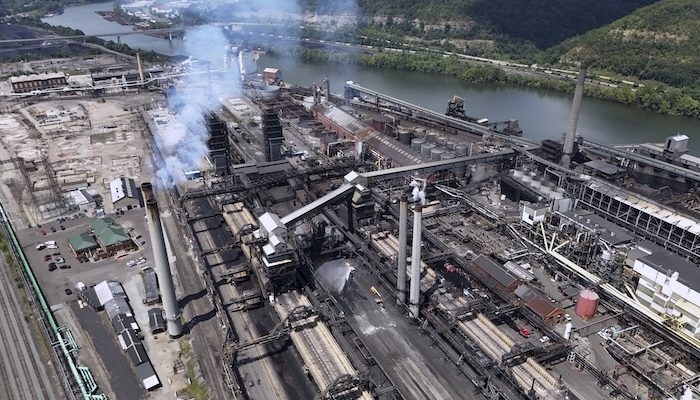
(Headline USAAn explosion rocked a steel plant outside Pittsburgh on Monday, leaving two dead and 10 others injured, including a person who was rescued from the smoldering rubble after hours of being trapped.

The explosion sent black smoke spiraling into the midday sky in the Mon Valley, a region of the state synonymous with steel for more than a century.

Allegheny County Emergency Services said a fire at the plant in Clairton started late Monday morning. Officials said they had not isolated the cause of the blast.

The rumbling from the explosion, and several smaller blasts that followed, jolted the community about 15 miles (24 kilometers) southeast of Pittsburgh.

“It felt like thunder,” Zachary Buday, a construction worker near the scene, told WTAE-TV. “Shook the scaffold, shook my chest, and shook the building.”

Investigating the blast’s cause

At a news conference, Scott Buckiso, U.S. Steel’s chief manufacturing officer, did not give details about the damage or casualties, and said they were still trying to determine what happened. He said the company, now a subsidiary of Japan-based Nippon Steel Corp., is working with authorities.

Allegheny Health Network said it treated seven patients from the plant and discharged five within a few hours. University of Pittsburgh Medical Center said it is treating three patients at UPMC Mercy, the region’s only level one trauma and burn center.

According to the company, the plant has approximately 1,400 workers.

In a statement, the United Steelworkers, which represents many of the Clairton plant’s workers, said it had representatives on the ground at the plant and would work to ensure there is a thorough investigation.

David Masur, executive director of PennEnvironment, an environmental group that has sued U.S. Steel over pollution, said there needed to be “a full, independent investigation into the causes of this latest catastrophe and a re-evaluation as to whether the Clairton plant is fit to keep operating.”

U.S. Steel CEO David B. Burritt said the company would investigate.

It’s not the first explosion at the plant. A maintenance worker was killed in a blast in September 2009. In July 2010, another explosion injured 14 employees and six contractors. According to online OSHA records of workplace fatalities, the last death at the plant was in 2014, when a worker was burned and died after falling into a trench.

After the 2010 explosion, the Occupational Safety and Health Administration fined U.S. Steel and a subcontractor $175,000 for safety violations. U.S. Steel appealed its citations and fines, which were later reduced under a settlement agreement.

In February, a problem with a battery at the plant led to a “buildup of combustible material” that ignited, causing an audible “boom,” officials said. Two workers received first aid treatment but were not seriously injured.

Air quality concerns

The plant, a massive industrial facility along the Monongahela River, is considered the largest coking operation in North America and is one of four major U.S. Steel plants in Pennsylvania.

The plant converts coal to coke, a key component in the steel-making process. To make coke, coal is baked in special ovens for hours at high temperatures to remove impurities that could otherwise weaken steel. The process creates what’s known as coke gas — made up of a lethal mix of methane, carbon dioxide and carbon monoxide.

The county health department initially told residents within 1 mile (1.6 kilometers) of the plant to remain indoors and close all windows and doors, but lifted the advisory later Monday. It said its monitors didn’t detect levels of soot or sulfur dioxide above federal standards.

The US Steel buyout

In June, U.S. Steel and Nippon Steel announced they had finalized a “historic partnership,” a deal that gives the U.S. government a say in some matters and comes a year and a half after the Japanese company first proposed its nearly $15 billion buyout of the iconic American steelmaker.

The pursuit by Nippon Steel for the Pittsburgh-based company was buffeted by national security concerns and presidential politics in a premier battleground state, dragging out the transaction for more than a year after U.S. Steel shareholders approved it.

Adapted from reporting by the Associated Press
Musk Says He Plans to Sue Apple

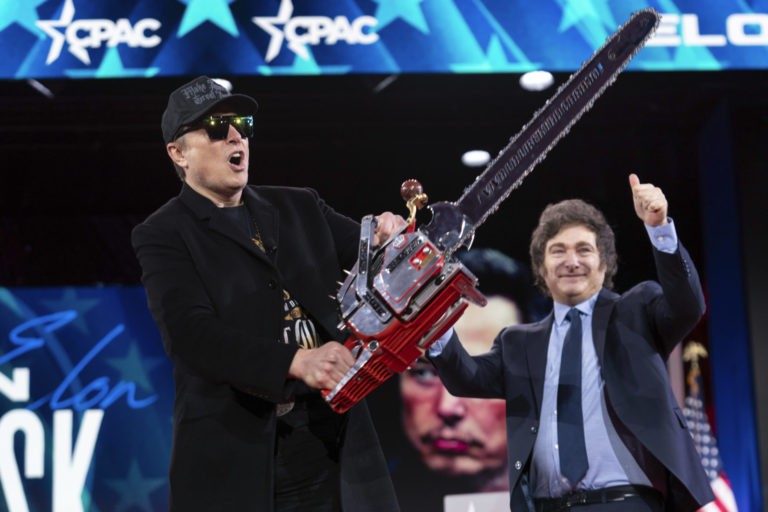
(Headline USABillionaire SpaceX, Tesla and X owner Elon Musk says he plans to sue Apple for not featuring X and its Grok artificial intelligence chatbot app in its top recommended apps in its App Store.

Musk posted the comments on X late Monday, saying, “Hey @Apple App Store, why do you refuse to put either X or Grok in your ‘Must Have’ section when X is the #1 news app in the world and Grok is #5 among all apps? Are you playing politics? What gives? Inquiring minds want to know.”

Grok is owned by Musk’s artificial intelligence startup xAI.

Musk went on to say that “Apple is behaving in a manner that makes it impossible for any AI company besides OpenAI to reach #1 in the App Store, which is an unequivocal antitrust violation. xAI will take immediate legal action.”

He gave no further details.

There was no immediate comment from Apple, which has faced various allegations of antitrust violations in recent years.

A federal judge recently found that Apple violated a court injunction in an antitrust case filed by Fortnite maker Epic Games.

Regulators of the 27-nation European Union fined Apple 500 million euros in April for breaking competition rules by preventing app makers from pointing users to cheaper options outside its App Store.

Last year, the EU fined the U.S. tech giant nearly $2 billion for unfairly favoring its own music streaming service by forbidding rivals like Spotify from telling users how they could pay for cheaper subscriptions outside of iPhone apps.

As of early Tuesday, the top app in Apple’s App Store was TikTok, followed by Tinder, Duolingo, YouTube and Bumble. Open AI’s ChatGPT was ranked 7th.

Adapted from reporting by the Associated Press
Trump Says He’s Placing Washington Police Under Federal Control and Deploying the National Guard

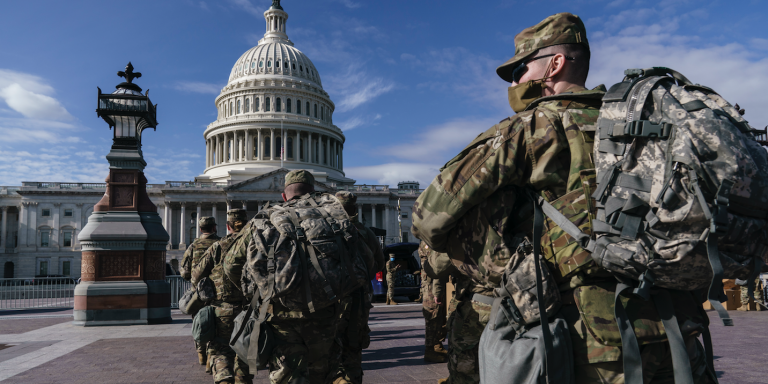
President Donald Trump is promising new steps to tackle homelessness and crime in Washington, prompting the city’s mayor to voice concerns about the potential use of the National Guard to patrol the streets in the nation’s capital.

Trump wrote in a social media post that he would hold a White House news conference on Monday to discuss his plans to make the District of Columbia “safer and more beautiful than it ever was before.”

Ahead of that news conference, Trump said Monday on social media that the nation’s capital would be “LIBERATED today!” He said he would end the “days of ruthlessly killing, or hurting, innocent people.”

For Trump, the effort to take over public safety in Washington reflects a next step in his law enforcement agenda after his aggressive push to stop illegal border crossings. But the move involves at least 500 federal law enforcement officials, raising fundamental questions about how an increasingly emboldened federal government will interact with its state and local counterparts.

Combating crime

The president has used his social media and White House megaphones to message that his administration is tough on crime, yet his ability to shape policy might be limited outside of Washington, which has a unique status as a congressionally established federal district. Nor is it clear how his push would address the root causes of homelessness and crime.

About 500 federal law enforcement officers are being tasked with deploying throughout the nation’s capital as part of the Trump administration’s effort to combat crime, a person familiar with the matter told The Associated Press on Monday.

More than 100 FBI agents and about 40 agents with the Bureau of Alcohol, Tobacco, Firearms and Explosives are among federal law enforcement personnel being assigned to patrols in Washington, the person briefed on the plans said. The Drug Enforcement Administration, Immigration and Customs Enforcement and the Marshals Service are also contributing officers.

The person was not authorized to publicly discuss personnel matters and spoke to the AP on the condition of anonymity. The Justice Department didn’t immediately have a comment Monday morning.

Focusing on homelessness

Trump in a Sunday social media post had emphasized the removal of Washington’s homeless population, though it was unclear where the thousands of people would go.

“The Homeless have to move out, IMMEDIATELY,” Trump wrote Sunday. “We will give you places to stay, but FAR from the Capital. The Criminals, you don’t have to move out. We’re going to put you in jail where you belong.”

Last week, the Republican president directed federal law enforcement agencies to increase their presence in Washington for seven days, with the option “to extend as needed.”

On Friday night, federal agencies including the Secret Service, the FBI and the U.S. Marshals Service assigned more than 120 officers and agents to assist in Washington.

Trump said last week that he was considering ways for the federal government to seize control of Washington, asserting that crime was “ridiculous” and the city was “unsafe,” after the recent assault of a high-profile member of the Department of Government Efficiency.

The National Guard

The moves Trump said he was considering included bringing in the D.C. National Guard.

Mayor Muriel Bowser, a Democrat, questioned the effectiveness of using the Guard to enforce city laws and said the federal government could be far more helpful by funding more prosecutors or filling the 15 vacancies on the D.C. Superior Court, some of which have been open for years.

Bowser cannot activate the National Guard herself, but she can submit a request to the Pentagon.

“I just think that’s not the most efficient use of our Guard,” she said Sunday on MSNBC’s “The Weekend,” acknowledging it is “the president’s call about how to deploy the Guard.”

Bowser was making her first public comments since Trump started posting about crime in Washington last week. She noted that violent crime in Washington has decreased since a rise in 2023. Trump’s weekend posts depicted the district as “one of the most dangerous cities anywhere in the World.”

For Bowser, “Any comparison to a war-torn country is hyperbolic and false.”

Crime statistics

Police statistics show homicides, robberies and burglaries are down this year when compared with this time in 2024. Overall, violent crime is down 26% compared with this time a year ago.

Trump offered no details in Truth Social posts over the weekend about possible new actions to address crime levels he argues are dangerous for citizens, tourists and workers alike. The White House declined to offer additional details about Monday’s announcement.

The police department and the mayor’s office did not respond to questions about what Trump might do next.

The president criticized the district as full of “tents, squalor, filth, and Crime,” and he seems to have been set off by the attack on Edward Coristine, among the most visible figures of the bureaucracy-cutting effort known as DOGE. Police arrested two 15-year-olds in the attempted carjacking and said they were looking for others.

“This has to be the best run place in the country, not the worst run place in the country,” Trump said Wednesday.

He called Bowser “a good person who has tried, but she has been given many chances.”

Trump has repeatedly suggested that the rule of Washington could be returned to federal authorities. Doing so would require a repeal of the Home Rule Act of 1973 in Congress, a step Trump said lawyers are examining. It could face steep pushback.

Bowser acknowledged that the law allows the president to take more control over the city’s police, but only if certain conditions are met.

“None of those conditions exist in our city right now,” she said. “We are not experiencing a spike in crime. In fact, we’re watching our crime numbers go down.”

Adapted from reporting by the Associated Press.


Gold Revaluation & the “Strategic Bitcoin Reserve”

(Clint Siegner, Money Metals News Service) There are hints that at least a few within the federal government are toying with the idea of revaluing U.S. gold reserves.

The 261.5 million ounces of gold reportedly owned by the U.S. Treasury have been held on the books at just $42.22/oz since the last time the value was adjusted in 1973. That gold represents only about $11 billion on the U.S. balance sheet.

The U.S. Treasury could theoretically reap a cash windfall of upwards of $700 billion by assigning the current value to the reserves.

Upon revaluation, the Treasury Department would go to the Federal Reserve Bank and request a credit against the Fed’s gold certificates for the difference between the old value and the new value in U.S. dollars.

Another plan currently in front of Congress is called the Bitcoin Act of 2025. It calls for the gold revaluation windfall to be used to buy Bitcoin and create a “Strategic Bitcoin Reserve.” That would be a dangerous way to use the funds.

First off, it should be understood that revaluation is likely to be highly inflationary. The Fed could create up to three-quarters of a trillion dollars with a few strokes on a keyboard.

Bitcoins vs Gold

Dumping that largesse into the crypto markets will drive BTC higher. Then price inflation will ripple out into the broader markets and economy as some holders cash in on BTC gains and buy other assets, goods, and services. That will be bad news for the vast majority of citizens who do not hold Bitcoin.

It will be difficult to avoid inflationary effects unless the Treasury revalues the gold without asking the Fed to credit it with new dollars.

In any event, the Treasury has no business speculating in crypto or any other markets. There is zero assurance that Bitcoin will succeed and gain widespread adoption and use as anything other than a speculative asset…

It is a technology and, therefore, prone to replacement by something users like better. The technology sector is littered with companies that succeeded for a time, gained huge value, and were ultimately replaced. Yahoo!, Blackberry, and Myspace are good examples. Bitcoin’s value may go higher, but it can also go to zero.

Gold is tangible in nature and a reserve asset held by central banks indirectly to back their currencies. Holders of the currency could redeem their dollars, pounds, etc, for gold from treasury reserves.

The Bitcoin Act provides for a “Strategic Bitcoin Reserve,” but that is simply clever marketing. The bill does not contemplate making dollars redeemable for Bitcoin. Citizens won’t know the purpose for federal ownership of all that crypto.

There is no mention in the bill about the strategy behind the “strategic” reserve. Based on the name, perhaps they want people to daydream about Bitcoin going to millions of dollars each, at which point officials will put it to some beneficial use related to sound money or eliminating debt.

While it is fun to imagine prices that high, it won’t turn out well for most people if the plan is to pay off debt.

The few holders of Bitcoin will prosper as the government builds the reserve, bidding up the price. The fun will be over when officials try to sell $40 trillion worth for the dollars needed to retire the mountain of debt.

In any event, expecting officials to use the “reserve” to reinstitute some form of honest money or pay off debt is a pipe dream. Governments and bankers hate honest money, and they love debt.

After all, officials don’t need to establish a Bitcoin reserve to tackle those problems.

The U.S. already has the largest gold reserves in the world. Those reserves will work perfectly if they want to switch from fiat currency back to a gold-backed dollar or pay off some debt.

If Congress wants to revalue gold and print roughly $750 billion for use in building reserves, the funds should be used to buy more gold. Gold isn’t as risky, and it is well established as a reserve asset. They should leave Bitcoin to the speculators.


Clint Siegner is a Director at Money Metals Exchange, a precious metals dealer recently named “Best in the USA” by an independent global ratings group. A graduate of Linfield College in Oregon, Siegner puts his experience in business management along with his passion for personal liberty, limited government, and honest money into the development of Money Metals’ brand and reach. This includes writing extensively on the bullion markets and their intersection with policy and world affairs.

Tariff Confusion Sends Gold on Round Trip

(Jesse Colombo, Money Metals News Service) What to know about last week’s tariff-driven spike and drop in COMEX gold futures, and what it means for gold’s next move.

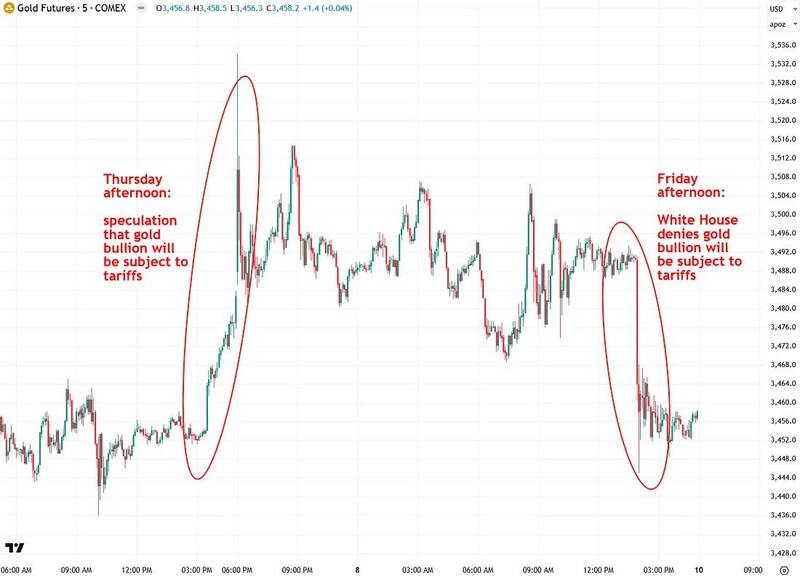
What began as a quiet week for gold took an unexpected turn on Thursday afternoon when speculation emerged that gold bullion imports into the United States would, in fact, be subject to tariffs—despite earlier assurances from the Trump administration that they would not.

This news triggered a sharp spike in COMEX gold futures into Thursday night. However, with no follow-through, I was cautious and waited to see Friday’s close before drawing conclusions and publishing an update on the situation.

My skepticism proved warranted when, on Friday afternoon, the Trump administration announced it would issue a new policy clarifying that gold bar imports should not face tariffs.

The reversal sent COMEX gold futures tumbling in a sharp whipsaw that left many traders puzzled. In this update, I’ll break down what happened, share my assessment, and outline where I believe gold is headed next.

The intraday chart of COMEX gold futures on Thursday and Friday shows the complete round trip triggered by the bungled tariff announcement and its subsequent denial:

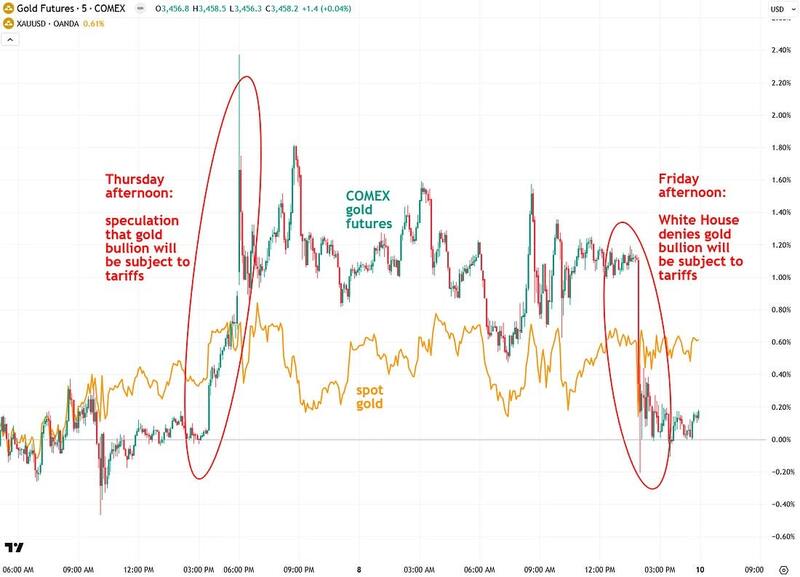
Notably, only COMEX gold futures, which reflect the U.S. domestic gold price, spiked and plunged on the tariff announcement and denial, while the global spot price of gold barely moved:

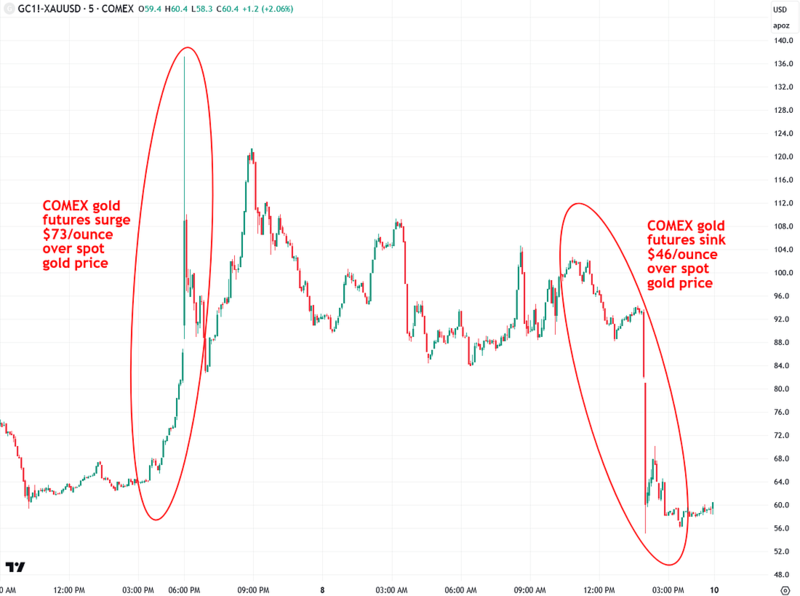
The intraday chart below shows the spread between COMEX gold futures and the spot price of gold. After Thursday’s announcement, futures surged by $73 an ounce over spot, climbing to as much as $137.20 above the spot price before sinking back to roughly where it started by Friday’s close.

This occurred because, had the bullion tariffs been real, the U.S. domestic gold price would have risen above the global price—at least until additional domestic supply entered the market, which could take some time.

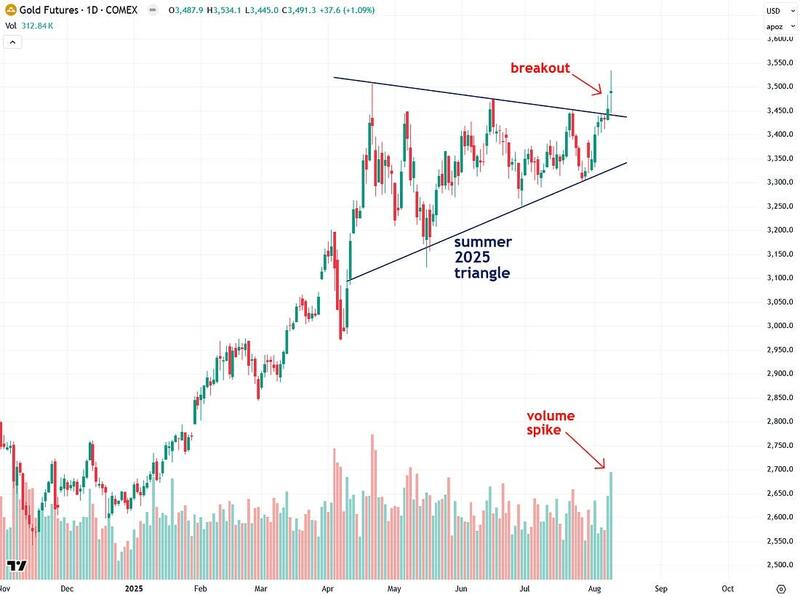
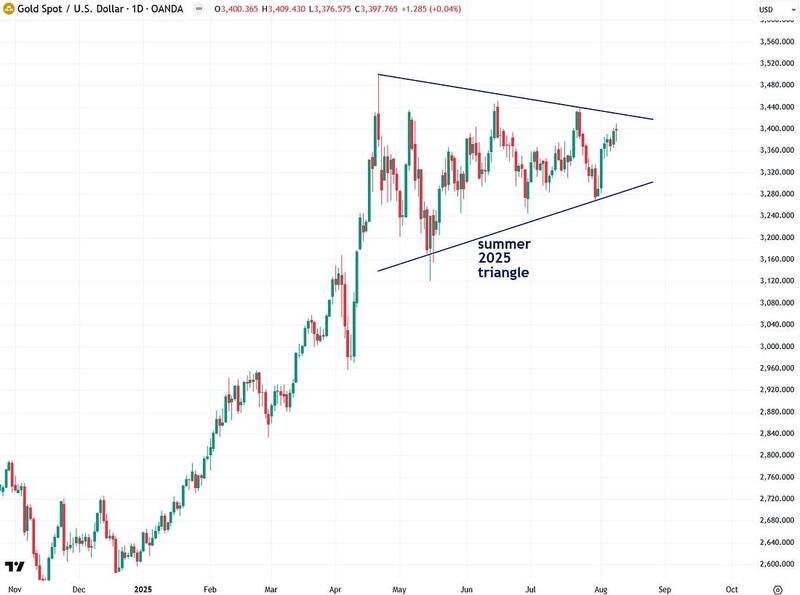
By Friday’s close, the tariff saga still left COMEX gold futures at four-month highs and breaking out of the triangle pattern, with strong trading volume. Ordinarily, that would be a very bullish signal. However, the lack of confirmation from the spot price of gold makes me question its validity, as I will show next.

That said, this breakout may still prove valid, and I am now watching to see if COMEX gold futures can close above the $3,500 resistance level on strong volume, which would lend far more weight to the breakout since horizontal resistance levels are generally more significant than diagonal ones.

A quick look at the spot price of gold in U.S. dollars shows it is also trading within a triangle pattern.

Unlike COMEX futures, however, it has not yet broken out—and I want to see that before feeling confident that gold is experiencing a broad-based global breakout rather than a U.S.-only move driven by tariff-related price distortions.

A major driver of gold’s price is the U.S. dollar, with the two typically moving inversely—dollar weakness tends to boost gold, and vice versa.

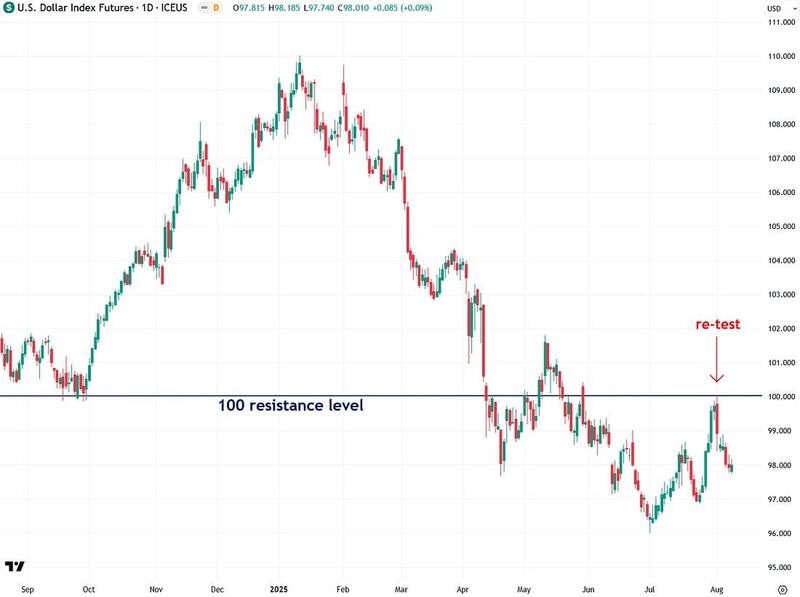
As I’ve been pointing out, the U.S. Dollar Index has broken below the key 100 level, creating a downward bias as long as it stays beneath that now-resistance level.

The dollar also remains highly overvalued relative to other major currencies, increasing the likelihood of further weakness, which would be supportive for gold.

In recent months, the Dollar Index has been trading in a choppy manner amid tariff speculation and mixed economic data showing both strength and weakness. It recently tested the 100 resistance level again, underscoring its significance and why it should be watched closely.

I expect the Dollar Index will soon pick a direction and trend strongly, possibly when low-volume summer trading conditions come to an end in the coming weeks. Whatever direction the dollar takes from here will likely have a major influence on gold’s next move.

Politics aside, analyzing the markets under a Trump presidency is proving extremely challenging. I, along with many others, am growing increasingly frustrated with the constant tariff back-and-forth and other policy speculations—especially the repeated pattern of initial tariff announcements followed by predictable walkbacks. Copper was similarly hit by a tariff announcement and walkback.

Whether you agree with tariffs or not (I lean toward free markets and free trade), the way these announcements and negotiations are handled is chaotic, confusing, and nearly impossible to track. In my view, it’s also a waste of our collective time and energy.

The main question now is whether gold is about to break out from its summer consolidation phase and make a run toward $4,000+ this fall.

If you found this report valuable, click here to subscribe to The Bubble Bubble Report for more content like it.


Jesse Colombo is a financial analyst and investor writing on macro-economics and precious metals markets. Recognized by The Times of London, he has built a reputation for warning about economic bubbles and future financial crises. An advocate for free markets and sound money, Colombo was also named one of LinkedIn’s Top Voices in Economy & Finance. His Substack can be accessed here.

Consumer Borrowing Continues to Sag Signaling Economic Pain on Main Street

(Mike Maharrey, Money Metals News Service) For the second straight month, consumer borrowing was weak, indicating Americans might be close to their credit limits.

Over the last several months, credit card spending has dropped, signaling that Americans may be running out of borrowing power. This is bad news for an economy that depends on consumers buying stuff to stay afloat.

After a one-off surge in April, consumer borrowing tanked in May and was tepid again in June.

Consumer debt grew by just $7.4 billion in June, a 1.8 percent annual change, according to the latest data from the Federal Reserve.

Americans now owe $5.05 trillion in consumer debt.

The Federal Reserve consumer debt figures include credit card debt, student loans, and auto loans, but do not factor in mortgage debt. When you include mortgages, U.S. households are buried under a record level of debt. As of the end of Q1 2025, total household debt stood at $18.2 trillion.

Credit card borrowing plunged in May and dipped again in June. Revolving debt, primarily reflecting credit card balances, shrank by -1.0 percent in June. That follows on the heels of a -3.5 percent decline in May.

Even with the decline, Americans still owe $1.3 trillion in revolving debt.

The double whammy of rising debt and interest rates exacerbates the debt problem. The average annual percentage rate (APR) currently stands at 20.13 percent, with some companies still charging rates as high as 28 percent. The average is only slightly down from the record high of 20.79 percent set last August.

Americans are clearly feeling the pinch. LegalShield’s Consumer Stress Index (CSLI) increased by 4.4 percent in the second quarter and is at the highest level since November 2020, when the economy was shut down during the pandemic.

The source of this stress: debt.

LegalShield spokesperson said, “As consumers take on more credit to keep up with inflation and everyday expenses, many are hitting a breaking point. The increase in legal inquiries tied to foreclosures and personal finance issues suggests that debt-fueled spending is no longer sustainable for a growing number of Americans.” 

LegalShield’s Foreclosure Index surged 13.3 percent in Q2 and now stands nearly 29 percent higher than a year ago.

Late-stage delinquencies on credit card debt surged year over year in Q1. Meanwhile, 4.3 percent of total outstanding household debt is in some stage of delinquency. Serious delinquencies, defined as debts that are 90 or more days past due, rose to 2.8 percent of total debt, a 52 percent increase year on year.

According to CreditGauge, consumer credit delinquencies hit the highest level in five years in 2024.

“The combination of rising mid-to-late-stage credit delinquencies and rising credit balances suggests a growing debt burden that some consumers are increasingly struggling to manage.”

Subprime credit card borrowers are struggling the most, with delinquency rates nudging upward by about 5.6 percent since the Federal Reserve began raising rates to battle price inflation.

Non-revolving credit, primarily reflecting outstanding auto loans, student loans, and loans for other big-ticket durable goods, rose by $8.4 billion, a 2.7 percent increase. This is generally in line with the tepid growth of around 2 percent in non-revolving credit over the last year, as consumers cut back on big-ticket spending to cover the increasing costs of day-to-day necessities.

Before the pandemic, revolving credit growth averaged 5 percent.

Borrowers are also struggling with their non-revolving loans – particularly their student debt.

About 10.2 percent of aggregate student debt was more than 90 days delinquent at the end of H1, and the number is rapidly rising. Since the second quarter of 2024, there has been a 12 percent increase in the number of student loan borrowers seriously delinquent.

A senior fellow at the American Institute told Yahoo Finance the trouble began when the last pandemic-era forbearance programs ended.

“We have a lot of people who had been told over and over again that payments are going to be due, only for the pause to be extended. Now they’re told payments are going to be due, and the pause actually does end. You can imagine a lot of people just really weren’t paying attention.”

This big drop in consumer borrowing reverts to a trend we saw developing last fall. Credit card spending tanked in August 2024 and remained muted in September. They pulled out the plastic again for the holidays, but that might have been a last gasp for the American consumer.

The bottom line is that Americans have blown through the savings they accumulated during the pandemic and have run their credit cards close to the limit. An economy run on Visa and Mastercard simply isn’t sustainable. When Americans finally hit their credit limit, it will have major implications for economic growth.


Mike Maharrey is a journalist and market analyst for Money Metals with over a decade of experience in precious metals. He holds a BS in accounting from the University of Kentucky and a BA in journalism from the University of South Florida.

Weak Treasury Auction Flashes More Warning Lights in the Bond Market

(Mike Maharrey, Money Metals News Service) There were more warning signs in the bond market last week when the U.S. held an auction and the world yawned.

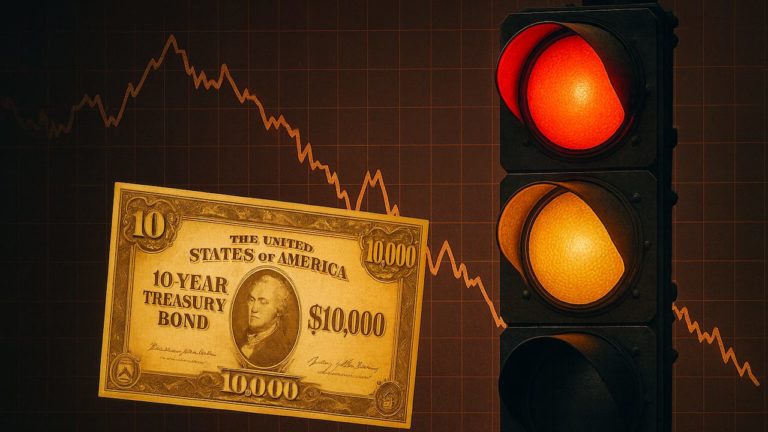
Analysts called the 10-year Treasury auction “soft.” In a nutshell, investors snubbed Uncle Sam, forcing bond yields even higher. In other words, the world is less and less interested in lending the federal government money.

That’s a big problem for a country that depends on borrowers to finance its massive spending problem.

The Nuts and Bolts of the “Weak” Treasury Auction

A Treasury auction begins with an expected yield, which is essentially the market’s forecast for the auction. The “when-issued” interest rate for last week’s 10-year Treasury auction was 4.244 percent.

As it turns out, the final yield was higher – 4.255 percent.

This is known as a “tail.” It means that the government had to sweeten the deal and offer investors a higher yield to entice buyers into the market.

The tail spread is the difference between the highest yield accepted and the “when-issued” (WI) yield right before the auction closes. A large tail signals weak demand, with bidders requiring a higher yield than expected to buy the bonds. This indicates market caution or uncertainty.

This 1.1 basis point tail was the first in about six months.

In simple terms, the government ended up paying a higher interest rate than anticipated to borrow this $42 billion.

To raise the effective yield, the government sold each Treasury for an average $99.60 instead of $100. As one analyst for the Stock Market News put it, “That might not seem like much, but in the bond world, it screams: ‘Please, just take these.’”

The higher yield wasn’t the only bad sign at this auction. The bid-to-cover ratio was the lowest this year. This metric is calculated by dividing the total number of bids received during the auction by the number of securities offered for sale. This reflects the demand for Treasuries, telling us how many times the offered amount could have been sold based on the bids submitted.

In effect, the federal government wanted to borrow $42 billion. It received $98.7 billion in bids. That compares to $112 billion at the least 10-year auction. As Stock Market News explained, this isn’t just about weak raw numbers.

“It’s about momentum. Investors are getting pickier.”

Foreign buyers were once again notably absent from this auction. Overseas investors bought 64.2 percent of the bonds. That was down from 88 percent in April.

Buying from U.S. investors and mutual funds was also weak. Primary dealers – big banks, including JPMorgan and Citigroup, carried the load in this auction. Here’s the catch – they are legally required to participate.

It’s also notable that the Federal Reserve bought $14.25 billion in bonds. Even though the central bank continues to shrink its balance sheet, it still steps into the market to buy Treasuries to replace those that mature, effectively rolling them over. In other words, even when not running quantitative easing operations,  the Fed still has its thumb on the bond market, creating artificial demand and keeping interest rates lower than they otherwise would be.

One has to wonder how long it will be before the Fed has to more aggressively intervene in the market.

After the auction, the yield on the 10-year on the open market moved up 2 basis points to 4.22 percent. The yield on the 30-year bond also spiked, rising four basis points to 4.813 percent.

Ramifications

This isn’t the first sign of trouble in the Treasury market.

Ebbing demand for U.S. debt is a significant issue for a federal government with an out-of-control borrowing problem.

Bond yields spiked late last year even as the Fed was cutting rates. While the central bank dropped interest rates by 100 basis points, long-term Treasury yields spiked up by over 100 basis points.

At the time, WolfStreet noted, “There are rising concerns in the bond market about the ballooning U.S. debt, and about the flood of new supply of Treasury securities that the government will have to sell in order to fund the out-of-whack deficits. Treasury buyers and holders are spread far and wide, but higher yields may be necessary to reel in the mass of new buyers needed, even as the Fed is shedding its Treasury holdings through QT.”

More concerning is the fact that during several periods of geopolitical instability, Treasuries sold off, indicating that U.S. bonds might be losing their status as a go-to safe haven.

Earlier this year, analyst Artis Shepherd called the situation in the Treasury market “red lights blinking.”

“The bond market is sending a message to the U.S. government that its spending is out of control and the reserve currency ‘privilege’ it has abused for the last 80 years is running out.”

Lower demand for debt means higher borrowing costs for Uncle Sam.

Interest on the national debt cost $144.6 billion in June. That brought the total interest expense for the fiscal year to $921 billionup 6 percent over the same period in 2024.

So far, in fiscal 2025, the federal government has spent more on interest on the debt than it has on national defense ($682 billion) or Medicare ($723 billion). The only higher spending category is Social Security ($1.18 trillion).

Uncle Sam paid $1.13 trillion in interest expenses in fiscal 2024. It was the first time interest expense had ever eclipsed $1 trillion. Projections are for interest expense to break that record in fiscal 2025.

This is clearly an untenable situation.

I’ve already mentioned that the Federal Reserve is the only player on the field that can significantly shift this momentum. But to do so would require a return to QE and an expanding Fed balance sheet. And that means more inflation.

Shepherd thinks this is the most likely scenario.

“A rational response to recent events would be for the U.S. government to cut spending, return to a semblance of sound money, and—more generally—begin to scale back the level of its involvement in the lives of everyday Americans. That’s about as likely as the fox guarding the henhouse. More probably—guided by the dominant and ignorant Keynesian model—a new cycle of quantitative easing will arise, forcefully but temporarily driving interest rates down until inflation comes back even stronger. If it continues on this path, the U.S. will dig itself deeper into this hole until it’s buried in it.”


Mike Maharrey is a journalist and market analyst for Money Metals with over a decade of experience in precious metals. He holds a BS in accounting from the University of Kentucky and a BA in journalism from the University of South Florida.

Epstein/Maxwell Grand Jury Transcripts Won’t be Unsealed, Judge Rules

(Headline USATranscripts of the secret grand jury testimony that led to the sex trafficking indictment of Jeffrey Epstein’s accomplice Ghislaine Maxwell won’t be released, a judge decided Monday.

Judge Paul A. Engelmayer said in a written ruling the government had suggested the materials could be released publicly “casually or promiscuously,” which would risk “unraveling the foundations of secrecy upon which the grand jury is premised” and eroding confidence by persons called to testify before future grand juries.

“And it is no answer to argue that releasing the grand jury materials, because they are redundant of the evidence at Maxwell’s trial, would be innocuous,” he added.

The judge noted the Justice Department had requested public disclosure of the entire proceedings before the Maxwell grand jury, minus redactions to protect privacy, even though the government had identified no information of consequence in the grand jury record that’s not already public.

Messages for comment were left with the Justice Department and lawyers for Maxwell and women who accused Maxwell and Epstein of abusing them.

Brad Edwards, a Florida lawyer who has represented nearly two dozen Epstein accusers, said: “We do not disagree with the Court’s ruling. Our only concern was that if materials were released, then maximum protection for the victims was essential. The grand jury materials contain very little in the way of evidentiary value anyway.”

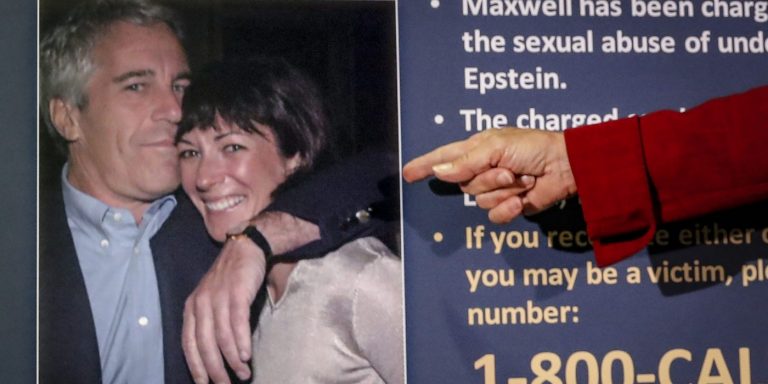
Federal prosecutors had asked to unseal the documents, in an effort to calm a whirlpool of suspicions about what the government knows about Epstein, a well-connected financier who died behind bars while awaiting trial on sex trafficking charges. Maxwell was later convicted of helping him prey on underage girls.

It’s unclear how much the transcripts would’ve revealed since the Justice Department has acknowledged they contained no testimony from witnesses who weren’t members of law enforcement.

Prosecutors have said much of what was discussed behind the grand jury’s closed doors ultimately became public at Maxwell’s 2021 trial, in victims’ civil lawsuits or in public statements from victims and witnesses. The only grand jury witnesses were law enforcement officers.

The decision about the grand jury transcripts doesn’t affect thousands of other pages the government possesses but has declined to release. The Justice Department has said much of the material was court-sealed to protect victims and little of it would’ve come out if Epstein had gone to trial.

Another federal judge is weighing whether to release the transcripts from the grand jury testimony that led to Epstein’s indictment.

A federal judge in Florida declined to release grand jury documents from an investigation there in 2005 and 2007.

Some Epstein victims supported releasing the grand jury transcripts with some redactions. Other accusers said the debate over the material was causing them anguish.

Maxwell, who’s appealing her conviction, opposed unsealing the documents. Her lawyers said she hasn’t seen them but believed they were full of questionable statements she had no opportunity to challenge.

Maxwell recently was interviewed by the Justice Department and was moved from a prison in Florida to a prison camp in Texas. Her attorney says she testified truthfully.

The Epstein saga has again become a national flashpoint six years after authorities said he was found dead in his prison cell. The 66-year-old was facing federal sex trafficking charges involving dozens of young women and teenage girls, some as young as 14.

Meanwhile, the House Oversight Committee has subpoenaed the Justice Department for files in the case. The committee also issued subpoenas to conduct sworn questioning of former President Bill Clinton, former Secretary of State Hillary Clinton and eight former top law enforcement officials.

Adapted from reporting by the Associated Press

Huckabee Cites Allied Bombing of Dresden To Defend Israel’s Gaza Genocide

(Dave DeCamp, Antiwar.com) Amid growing international condemnation of Israel’s annihilation and starvation of Gaza – including from staunch ally Britain—U.S. Ambassador to Israel Mike Huckabee on Friday attempted to defend the genocidal assault on Gaza by invoking one of the most notorious Allied atrocities of World War II.

Appearing on Fox News‘ “Fox & Friends,” Huckabee singled out the United Kingdom after Prime Minister Keir Starmer criticized Israel’s U.S.-backed plan to fully occupy Gaza and ethnically cleanse approximately 1 million Palestinians from parts of the embattled coastal enclave.

“They never get credit for the things they do to try to prevent civilian loss of life,” Huckabee said of Israel, whose 22-month assault and siege of Gaza has left at least 226,600 Palestinians dead, wounded, or missing amid loosened rules of engagement effectively allowing an unlimited number of civilians to be killed while targeting a single Hamas member, no matter how low-ranking.

“You have got the Brits out there complaining about humanitarian aid and the fact that they don’t like the way Israel is prosecuting the war,” Huckabee continued. “I would remind the British to go back and look at their own history. At the end of World War II they weren’t dropping food into Germany, they were dropping massive bombs. Just remember Dresden – over 25,000 civilians were killed in that bombing alone.”

U.S. and British warplanes indiscriminately bombed Dresden with munitions including 4,000-pound “blockbusters” and incendiary explosives over two days in February 1945. The heat generated by the inferno melted human flesh, turning many victims into piles of goop. Men, women, children; the sick and the elderly; refugees and Allied prisoners of war – even the animals in the city zoo—were incinerated together.

Acclaimed author Kurt Vonnegut – an American POW imprisoned in Dresden at the time, whose seminal novel Slaughterhouse-Five was inspired by the firebombing – later described the attack as “carnage unfathomable.” After viewing images of the bombing, then-British Prime Minister Winston Churchill asked: “Are we beasts? Are we taking this too far?”

As the old adage posits, “history is written by the victors,” and no Allied officials were ever held accountable for atrocities committed against their Axis enemies. However, after the war, the Nuremberg trials, Fourth Geneva Convention, and Genocide Convention sought to ensure that horrors like Nazi and Japanese war crimes and what the British described as the “terror bombing” of Germany never happened again.

Huckabee’s comments drew stinging rebuke on social media.

“So Mike Huckabee’s defense of mass civilian death is… referencing more mass civilian death?” one U.S. military veteran said on X.

“Justifying today’s atrocities by pointing to yesterday’s doesn’t make it moral. It makes it monstrous,” he added. “In fact, the lesson of Dresden should be never again, not ‘do it again.’ But here we have a U.S. diplomat cosplaying a foreign country’s mouthpiece for atrocities.”


This article originally appeared at Antiwar.com.

Trump Taps Clark Construction for $200M White House Expansion

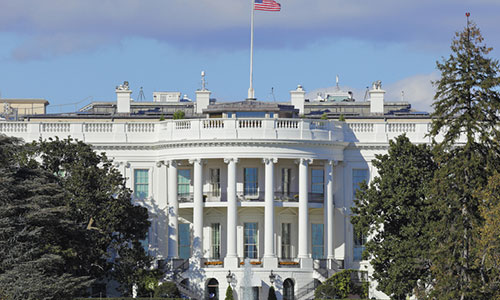
(Shirleen Guerra, The Center Square)  President Donald Trump has announced a new $200 million expansion of the White House, with construction to be handled by Clark Construction, a national firm with offices across Virginia.

The project will add a new State Ballroom to the White House grounds with approximately 90,000 square feet of event space. The White House said the expansion will allow for official gatherings and state functions to be held without setting up large outdoor tents. The ballroom will have seating for up to 650 people, more than triple the capacity of the East Room.

Construction is scheduled to begin in September 2025 and be completed before the end of Trump’s current term. The White House said the project will be privately funded through donations from Trump and other supporters. The U.S. Secret Service and National Park Service will be involved in design planning and security requirements.

Clark Construction will serve as the construction lead on the project. The Center Square contacted the company to confirm its role. Clark Construction confirmed its involvement in the project by phone, but had not provided a public comment at the time of publication.

Clark is based in Bethesda, Md., and operates multiple offices across the country, including four in Virginia: McLean, Richmond, Lorton and Sterling.

McCrery Architects will lead the design, and AECOM will handle engineering. The White House said the ballroom will be constructed where the current East Wing stands and will maintain the classical style of the original structure.

According to the White House, the East Wing was originally built in 1902, with a second story added in 1942. The last major structural overhaul of the White House occurred under President Harry Truman.

The administration said it will continue to provide updates on the project.