Colorado Prison Evacuated as Growing Wildfire Becomes One of the Largest in State History

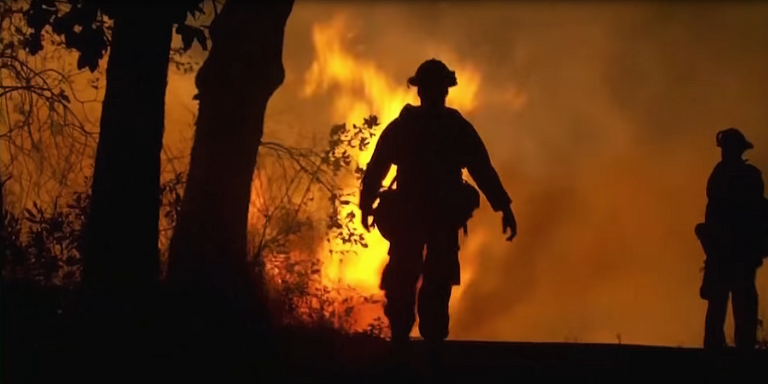
A Colorado prison was evacuated as one of the largest wildfires in state history continued to grow, and officials warned residents of remote areas to be ready to leave Sunday as gusty winds and low humidity fed the flames.

Evacuation orders were already in place for mountain communities as the Lee Fire charred more than 167 square miles across Garfield and Rio Blanco counties, with just 6% containment. No injuries or structural damage has been reported.

All 179 incarcerated people were safely removed from the Rifle Correctional Center on Saturday “out of an abundance of caution,” the Colorado Department of Corrections said in a statement. They were temporarily relocated about 150 miles away to the Buena Vista Correctional Complex, the department said.

The Lee Fire, churning through trees and brush about 250 miles west of Denver, is now the sixth-largest single fire in the state’s history, according to the Colorado Division of Fire Prevention and Control.

More than a thousand firefighters are battling the blaze, working to keep the flames to the west of Colorado 13 and north of County Road 5, officials said.

Health officials issued air quality warnings related to smoke from the Lee Fire and the 23-square-mile Elk Fire burning just to the east.

In Southern California, crews reached 62% containment on the 8-square-mile Canyon Fire that forced evacuations and destroyed seven structures after breaking out Thursday near the Los Angeles County and Ventura County line. Three firefighters have been injured, including a battalion chief who was seriously hurt when his pickup truck rolled over in steep terrain.

The Gifford Fire, California’s largest blaze so far this year, has scorched at least 180 square miles of Santa Barbara and San Luis Obispo counties since erupting on Aug. 1. It was 21% contained on Sunday.

Adapted from reporting by the Associated Press.


Trial to Start on Whether Deployment of National Guard to Los Angeles Violated Federal Law

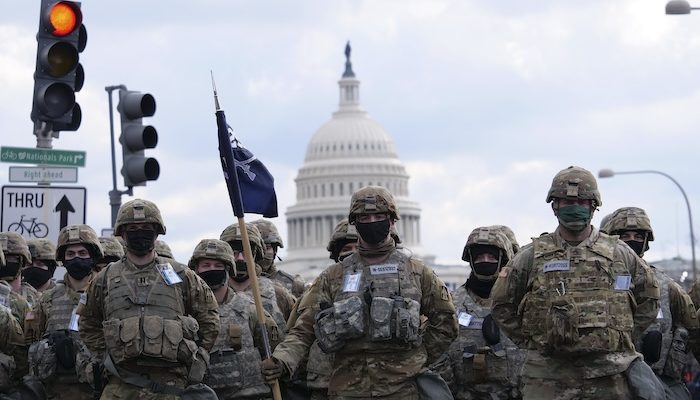
A federal judge in San Francisco will consider evidence and hear arguments on whether the Trump administration violated federal law when it deployed National Guard soldiers and U.S. Marines to Los Angeles following protests over immigration raids this summer.

The Trump administration federalized California National Guard members and sent them to the second largest U.S. city over the objections of Gov. Gavin Newsom and city leaders, after protests erupted June 7 when Immigration and Customs Enforcement officers arrested people at multiple locations.

California is asking Judge Charles Breyer to order the Trump administration to return control of the remaining troops to the state and to stop the federal government from using military troops in California “to execute or assist in the execution of federal law or any civilian law enforcement functions by any federal agent or officer.”

The 1878 Posse Comitatus Act prevents the president from using the military as a domestic police force. The case could set precedent for how Trump can deploy the guard in the future in California or other states.

The Department of Defense ordered the deployment of roughly 4,000 California National Guard troops and 700 Marines. Most of the troops have since left but 250 National Guard members remain, according to the latest figures provided by the Pentagon. The remaining troops are at the Joint Forces Training Base, in Los Alamitos, according to Newsom

Newsom won an early victory from Breyer, who found the Trump administration had violated the Tenth Amendment, which defines power between federal and state governments, and exceeded its authority.

The Trump administration immediately filed an appeal arguing that courts can’t second guess the president’s decisions and secured a temporary halt from the appeals court, allowing control of the California National Guard to stay in federal hands as the lawsuit continues to unfold.

After their deployment, the soldiers accompanied federal immigration officers on immigration raids in Los Angeles and at two marijuana farm sites in Ventura County while Marines mostly stood guard around a federal building in downtown Los Angeles that includes a detention center at the core of protests.

The Trump administration argued the troops were needed to protect federal buildings and personnel in Los Angeles, which has been a battleground in the federal government’s aggressive immigration strategy. Since June, federal agents have rounded up immigrants without legal status to be in the U.S. from Home Depots, car washes, bus stops, and farms. Some U.S. citizens have also been detained.

Ernesto Santacruz Jr., the field office director for the Department of Homeland Security in Los Angeles, said in court documents that the troops were needed because local law enforcement had been slow to respond when a crowd gathered outside the federal building to protest the June 7 immigration arrests.

“The presence of the National Guard and Marines has played an essential role in protecting federal property and personnel from the violent mobs,” Santacruz said.

After opposition from the Trump administration, Breyer issued an order allowing California’s attorneys to take Santacruz’s deposition. They also took a declaration from a military official on the National Guard and Marines role in Los Angeles.

The Trump administration’s attorneys argued in court filings last week the case should be canceled because the claims under the Posse Comitatus Act “fail as a matter of law.” They argued that there is a law that gives the president the authority to call on the National Guard to enforce U.S. laws when federal law enforcement isn’t enough.

Trump federalized members of the California National Guard under Section 12406 of Title 10, which allows the president to call the National Guard into federal service when the country “is invaded,” when “there is a rebellion or danger of a rebellion against the authority of the Government,” or when the president is otherwise unable “to execute the laws of the United States.”

Breyer found the protests in Los Angeles “fall far short of ‘rebellion.’”

“Next week’s trial is not cancelled,” he said in a ruling ordering the three-day bench trial.

Adapted from reporting by the Associated Press.


Russia and Ukraine Hold Fast to Their Demands Ahead of a Planned Putin-Trump Summit

The threats, pressure and ultimatums have come and gone, but Russian President Vladimir Putin has maintained Moscow’s uncompromising demands in the war in Ukraine, raising fears he could use a planned summit with U.S. President Donald Trump in Alaska to coerce Kyiv into accepting an unfavorable deal.

The maximalist demands reflect Putin’s determination to reach the goals he set when he launched the full-scale invasion of Ukraine on Feb. 24, 2022.

Putin sees a possible meeting with Trump as a chance to negotiate a broad deal that would not only cement Russia’s territorial gains but also keep 

Ukraine from joining NATO and hosting any Western troops, allowing Moscow to gradually pull the country back into its orbit.

The Kremlin leader believes time is on his side as the exhausted and outgunned Ukrainian forces are struggling to stem Russian advances in many sectors of the over 1,000-kilometer (over 600-mile) front line while swarms of Russian missiles and drones batter Ukrainian cities.

Ukrainian President Volodymyr Zelenskyy also has stood firm in his positions, agreeing to a ceasefire proposed by Trump while reaffirming the country’s refusal to abandon seeking NATO membership and rejecting acknowledgment of Russia’s annexation of any of its regions.

European leaders, meanwhile, rallied behind Ukraine, saying peace in the war-torn nation can’t be resolved without Kyiv. Zelenskyy thanked European allies in a post on X, writing Sunday: “The end of the war must be fair, and I am grateful to everyone who stands with Ukraine and our people.”

A look at Russian and Ukrainian visions of a peace deal and how a Putin-Trump summit could evolve:

Russia’s position

In a memorandum presented at talks in Istanbul in June, Russia offered Ukraine two options for establishing a 30-day ceasefire. One demanded Ukraine withdraw its forces from Donetsk, Luhansk, Zaporizhzhia and Kherson — the four regions Moscow illegally annexed in September 2022 but never fully captured.

As an alternate condition for a ceasefire, Russia made a “package proposal” for Ukraine to halt mobilization efforts, freeze Western arms deliveries and ban any third-country forces on its soil. Moscow also suggested Ukraine end martial law and hold elections, after which the countries could sign a comprehensive peace treaty.

Once there’s a truce, Moscow wants a deal to include the “international legal recognition” of its annexations of Ukraine’s Crimean Peninsula in 2014 and the four regions in 2022.

Russia says a peace treaty should have Ukraine declare its neutral status between Russia and the West, abandon its bid to join NATO, limit the size of its armed forces and recognize Russian as an official language on par with Ukrainian -– conditions reflecting Putin’s earliest goals.

It also demands Ukraine ban the “glorification and propaganda of Nazism and neo-Nazism” and dissolve nationalist groups. Since the war began, Putin has falsely alleged that neo-Nazi groups were shaping Ukrainian politics under Zelenskyy, who is Jewish. They were fiercely dismissed by Kyiv and its Western allies.

In Russia’s view, a comprehensive peace treaty should see both countries lift all sanctions and restrictions, abandon any claims to compensation for wartime damage, resume trade and communications, and reestablish diplomatic ties.

Asked Thursday whether Moscow has signaled any willingness to compromise to make a meeting with Trump possible, Putin’s foreign affairs adviser Yuri Ushakov responded that there haven’t been any shifts in the Russian position.

Ukraine’s position

The memorandum that Ukraine presented to Moscow in Istanbul emphasized the need for a full and unconditional 30-day ceasefire to set stage for peace negotiations.

It reaffirmed Ukraine’s consistent rejection of Russian demands for neutral status as an attack on its sovereignty, declaring it is free to choose its alliances and adding that its NATO membership will depend on consensus with the alliance.

It emphasized Kyiv’s rejection of any restrictions on the size and other parameters of its armed forces, as well as curbs on the presence of foreign troops on its soil.

Ukraine’s memorandum also opposed recognizing any Russian territorial gains, while describing the current line of contact as a starting point in negotiations.

The document noted the need for international security guarantees to ensure the implementation of peace agreements and prevent further aggression.

Kyiv’s peace proposal also demanded the return of all deported and illegally displaced children and a total prisoner exchange.

It held the door open to gradual lifting of some of the sanctions against Russia if it abides by the agreement.

Trump’s positions

Trump has often spoken admiringly of Putin and even echoed his talking points on the war. He had a harsh confrontation with Zelenskyy in the Oval Office on Feb. 28, but later warmed his tone. As Putin resisted a ceasefire and continued his aerial bombardments, Trump showed exasperation with the Kremlin leader, threatening Moscow with new sanctions.

Although Trump expressed disappointment with Putin, his agreement to meet him without Zelenskyy at the table raised worries in Ukraine and its European allies, who fear it could allow the Russian to get Trump on his side and strong-arm Ukraine into concessions.

Trump said without giving details that “there’ll be some swapping of territories, to the betterment of both” Russia and Ukraine as part of any peace deal that he will discuss with Putin when they meet Friday.

Putin repeatedly warned Ukraine will face tougher conditions for peace if it doesn’t accept Moscow’s demands as Russian troops forge into other regions to build what he described as a “buffer zone.” Some observers suggested Russia could trade those recent gains for the territories of the four annexed by Moscow still under Ukrainian control.

“That is potentially a situation that gives Putin a tremendous amount of leeway as long as he can use that leverage to force the Ukrainians into a deal that they may not like and to sideline the Europeans effectively,” Sam Greene of King’s College London said. “The question is, will Trump sign up to that and will he actually have the leverage to force the Ukrainians and the Europeans to accept it?”

Putin could accept a temporary truce to win Trump’s sympathy as he seeks to achieve broader goals, Greene said.

“He could accept a ceasefire so long as it’s one that leaves him in control, in which there’s no real deterrence against renewed aggression somewhere down the line,” he said. “He understands that his only route to getting there runs via Trump.”

In a possible indication he thinks a ceasefire or peace deal could be close, Putin called the leaders of China, India, South Africa and several ex-Soviet nations in an apparent effort to inform these allies about prospective agreements.

Tatiana Stanovaya of the Carnegie Russia and Eurasia Center argued Putin wouldn’t budge on his goals.

“However these conditions are worded, they amount to the same demand: Ukraine stops resisting, the West halts arms supplies, and Kyiv accepts Russia’s terms, which effectively amount to a de facto capitulation,” she posted on X. “The Russian side can frame this in a dozen different ways, creating the impression that Moscow is open to concessions and serious negotiation. It has been doing so for some time, but the core position remains unchanged: Russia wants Kyiv to surrender.”

She predicted Putin might agree to meet Zelenskyy but noted the Kremlin leader would only accept such a meeting “if there is a prearranged agenda and predetermined outcomes, which remains difficult to imagine.”

“The likely scenario is that this peace effort will fail once again,” she said. 

“This would be a negative outcome for Ukraine, but it would not deliver Ukraine to Putin on a plate either, at least not in the way he wants it. The conflict, alternating between open warfare and periods of simmering tension, appears likely to persist for the foreseeable future.”

Adapted from reporting by the Associated Press.

Net Negative Migration is Harmful to the Economy, Economists Say

(Morgan Sweeney, The Center Square)  Though the economy and immigration were issues that helped President Donald Trump secure the White House, some economists have said that too steep a decline in immigration will prove harmful to the economy.

The Trump administration touted a statistic Monday reported by CNN the day before: The U.S. may see negative net migration in 2025, meaning more people will leave the country than move there. However, economists from both right- and left-leaning policy centers warn that too little immigration drags down GDP growth.

The center-right American Enterprise Institute recently authored a report with the center-left Brookings Institution projecting net migration would land between -525,000 and 115,000 in 2025, but with “zero or net negative migration” being the more likely outcome.

The report considered the president’s deportation efforts, as well as his broader immigration policy, predicting lower legal permanent resident entries than in his first term and factoring in greater vetting for temporary visas, a suspended refugee program, travel bans and terminated humanitarian parole programs.

“All told, given changes at the border and the regular migration system, we expect 2.47 million to 2.76 million fewer people to come to the U.S in 2025 than in 2024,” they wrote. And later, that they “expect around 675,000 to 1,020,000” more immigrants to leave the country than last year.

They project these changes will reduce GDP growth by 0.3-0.4 percentage points.

Chief Economist for the Center on Budget and Policy Priorities Gbenga Ajilore wasn’t surprised by the report’s findings.

“While think tanks may have different ideologies, there are basic facts that a majority of economists believe in, and one is that immigration has a net positive impact on our economy and our communities,” Ajilore said in an email to The Center Square.

Lower immigration means a smaller labor pool – which one might think translates to less people competing for the same amount of jobs, meaning more employment among American citizens. However, it actually means less jobs overall, according to David Bier, director of immigration studies at the libertarian Cato Institute.

“Yes, there are fewer competitors for jobs, but because there are fewer people requesting services and goods in society, then there’s a comparable shrinking in the number of jobs for U.S.-born workers as well,” Bier told The Center Square in an interview.

Giovanni Peri, a professor in international economics at the University of California, Davis, and the founder of the school’s research center on migration policy, along with a colleague, has studied some of the same data that was covered in the AEI-Brookings report. The report anticipates, as does Peri, some of the other negative economic impacts that can result from a smaller labor force.

“We do not expect natives to take [jobs held by immigrants] as the labor market is already tight, especially in manual services… and the native labor force is shrinking,” Peri wrote in an email to The Center Square. “As a consequence, prices in those services will increase.”

For these reasons, in addition to the loss of some highly skilled workers and lower investments, according to Peri, Peri and Georgetown Professor of Economics Anna Maria Mayda predicted an even greater impact on GDP growth of -0.7%.

Director of Immigration Law and Policy Research at the Economic Policy Institute Daniel Costa doubts that net migration will be negative in 2025 but thinks it will be soon.

“I am skeptical that we will see negative net migration in the first year, just based on some of the legal immigration flows… which might take longer for the administration to impact,” Costa told The Center Square. “But I do think we will likely see it in the next years of the administration, especially after the major influx of $170 billion the administration has been gifted from Congress for immigration enforcement.”

The AEI-Brookings report authors believe net migration will start to recover some in 2027 and 2028, “as the adverse economic and political consequences of extreme policy stance become clear.” Bier was less optimistic.

“I wouldn’t think that because we have so much money going into ICE and Border Patrol and almost none of it has been spent at this point,” Bier said. “I think it’s more likely that you’re going to see an escalation over four years.”

Everyday Economics: CPI Takes Center Stage as Tariff-Driven Price Pressures Mount

(Orphe Divounguy, The Center Square) The economy was already slowing, and that was before higher tariffs kicked in last week, raising import taxes to the highest level since the Great Depression.

The latest jobs report showed only 73,000 jobs added in July, falling well short of expectations. But the bigger story lies in the massive downward revisions: May and June job gains were revised down by a combined 258,000. That drags the three-month average to just 35,000 jobs/month – the weakest pace since the onset of the pandemic in 2020. Consumer purchasing power is also shrinking – first because labor demand is falling but also because tariffs are pushing prices higher.

This week’s CPI report will likely confirm this slow but steady upward pressure on prices. This also means the easing of financial conditions we saw in the first 10 days of August could reverse somewhat, with Treasury yields moving back up.

Key Data Releases This Week

Consumer Price Index for July: This is the marquee release that could reshape Fed policy expectations. CPI increased 0.3% in June and is up 2.7% year-over-year. Economists expect the CPI to rise 0.2% in July on a monthly basis and 2.8% year-over-year. Core CPI, which excludes more volatile food and fuel prices, is expected to come in at 0.3% on a monthly basis and 3% year over year. The acceleration is likely driven by tariff effects hitting goods prices.

Thankfully, a slow but steady deceleration in housing costs is helping to offset some of the pressure on core prices. Zillow forecasts the rent components of CPI will continue to moderate, driven by a sharp deceleration in on-market rents over the last few months.

Producer Price Index for July: Producer prices will provide critical upstream inflation signals. Last month, PPI for final demand was unchanged from the previous month. However, goods prices advanced 0.3% while services fell 0.1%. Expect both goods and services to show an uptick this month – a worrying sign for a Fed that is increasingly concerned about an ailing labor market.

Retail Sales for July: Retail sales should also reflect the combination of dwindling job prospects and higher prices. This report could show the first clear signs of demand destruction. Add to those headwinds the fact that more and more households are increasingly crushed by soaring student debt, auto loans, and credit card debt according to the NY Fed Quarterly Household Debt and Credit Report.

Market and Policy Implications

The Fed held rates steady so far this year due primarily to tariff uncertainty, above-target inflation, and economic activity continuing to show modest expansion. However, the economy is now showing major cracks.

Inflation Expectations: A Mixed Picture: While consumer sentiment surveys show elevated near-term inflation expectations – with the median expectation jumping from 5.0% in March to 6.7% in April according to the University of Michigan – market-based measures of inflation expectations remain well anchored. Break-even inflation rates from 5-year and 10-year TIPS have not risen significantly, indicating investors aren’t pricing in sustained higher inflation despite tariff concerns.

Bottom Line

The CPI report on Tuesday will be the key catalyst, with any reading above consensus likely to send Treasury yields higher and stock markets lower as investors recalibrate expectations for both Fed policy and corporate earnings in a lower-growth but higher-cost environment.

JPMorgan now expects four Fed rate cuts starting in September. The bank sees a 25 basis point cut in September followed by three additional cuts in subsequent meetings, suggesting the Fed could prioritize supporting a weakening labor market despite elevated near term inflation pressures.

Trump Sends FBI Agents to Patrol the Streets of DC at Night

(Ken Silva, Headline USA) The Trump administration is reportedly reassigning 120 FBI agents to patrol the streets of Washington DC at night in response to the rampant crime there.

“Most of the agents will be pulled from their regular duties at the F.B.I.’s Washington field office, but it was not immediately clear if agency leaders would need to pull additional personnel from nearby cities,” the New York Times reported Sunday, citing anonymous sources.

The FBI reportedly confirmed that its agents were “participating in the increased federal law enforcement presence in Washington.” The bureau referred further questions to the White House.

The development comes a week after former Department of Government Efficiency employee Edward “Big Balls” Christine was attacked during a suspected carjacking in the Logan Circle neighborhood in the early morning hours

The 19-year-old Coristine, who was accompanied by a woman identified as his significant other, was assaulted by a group described by police as approximately ten juveniles after the group allegedly attempted to steal their vehicle.

Police intervened while the assault was in progress, arresting two Black 15-year-olds from Hyattsville, Maryland, and charging them with unarmed carjacking. Several suspects remain at large.

Coristine sustained visible injuries and required treatment at the scene from emergency medical personnel. Following the attack, a photo of Coristine, bloodied and dazed, was circulated online by a former DOGE colleague who praised his actions protecting his companion. Authorities reported the theft of a black iPhone 16, valued at $1,000, during the incident.

“Local ‘youths’ and gang members, some only 14, 15, and 16 years old, are randomly attacking, mugging, maiming, and shooting innocent citizens,” former president Trump posted on Truth Social in response to the event, threatening federal intervention if city leadership did not “get its act together.”

Ken Silva is the editor of Headline USA. Follow him at x.com/jd_cashless.

Israeli Strike on Tent in Gaza Kills Five Al Jazeera Journalists

(Dave DeCamp, Antiwar.comAn Israeli airstrike on Sunday night targeted a tent outside the gates of the al-Shia Hospital in Gaza City and killed five Al Jazeera journalists, including 28-year-old Anas al-Sharif, a well-known reporter who had a large following on X.

Al Jazeera said that the other four journalists killed in the bombing were correspondent Mohammed Qreiqeh and three cameramen: Ibrahim Zaher, Mohammed Noufal, and Moamen Aliwa. Two other people were also killed in the bombing.

Just minutes before he was killed, al-Sharif said in a post on X that Israel was escalating its bombing of Gaza City. “Relentless bombardment,” he wrote. “For two hours, the Israeli aggression has intensified on Gaza City.

The Israeli military acknowledged that it deliberately targeted al-Sharif, claiming that he was a “Hamas terrorist” who “posed as an Al Jazeera journalist.” Last month, the Committee to Protect Journalistsissued a warning about the Israeli military’s smears against Sharif, saying it was likely a precursor to his assassination.

“We are deeply alarmed by the repeated threats made by Israeli army spokesperson Avichay Adraee against Al Jazeera’s Gaza correspondent Anas al-Sharif and call on the international community to protect him,” said CPJ Regional Director Sara Qudah.

“This is not the first time Al-Sharif has been targeted by the Israeli military, but the danger to his life is now acute. Israel has killed at least six Al Jazeera journalists in Gaza during this war. These latest unfounded accusations represent an effort to manufacture consent to kill al-Sharif,” Qudah added.

In a post on X at the time, al-Sharif responded to the Israeli smears against him. “I reaffirm: I, Anas al-Sharif, am a journalist with no political affiliations. My only mission is to report the truth from the ground — as it is, without bias,” he said. “At a time when a deadly famine is ravaging Gaza, speaking the truth has become, in the eyes of the occupation, a threat.”

Al-Sharif left behind a wife and two young children. “Do not forget Gaza,” al-Sharif said in a statementhe asked to have released if he were killed. “And do not forget me in your sincere prayers for forgiveness and acceptance.”

Israel has frequently targeted Palestinian journalists in Gaza throughout its genocidal war. Gaza’s Government Media Office said that the Sunday night bombing brought the total number of journalists killed in Gaza since October 7, 2023, to 237.

This article originally appeared at Antiwar.com.

Zelensky Rejects Idea of Ceding Territory to Russia

(Dave DeCamp, Antiwar.comUkrainian President Volodymyr Zelensky has rejected the idea of ceding territory to Russia to end the war in Ukraine, as President Trump and Russian President Vladimir Putin are preparing for a summit that will be held this Friday, August 15, in the US state of Alaska.

“Ukrainians will not gift their land to the occupier,” Zelensky said in a video address on Saturday. “We will not reward Russia for what it has perpetrated.”

Zelensky’s comments came after The Wall Street Journal reported that Putin told US envoy Steve Witkoff that he would agree to a full ceasefire if Ukraine withdrew its forces from Donetsk, one of the two oblasts in Ukraine’s eastern Donbas region. Russia controls most of Donetsk and virtually all of Luhansk, the other half of the Donbas region.

Based on another Journal report, Russia is seeking to freeze the lines in Kherson and Zaporizhzhia — a potential climbdown from Moscow’s earlier demand for a full Ukrainian withdrawal from both oblasts.

A European counter-proposal that was presented to US officials on Saturday called for any territorial exchanges to happen in a reciprocal manner, meaning Russia would have to withdraw from some land if Ukraine ceded the territory it still controls in Donetsk. Some European officials said Moscow would have to cede control of Kherson and Zaporizhzhia.

The European proposal also calls for a ceasefire to be implemented immediately before any other steps are taken and says that any territorial concession from Ukraine must include concrete security guarantees, including potential NATO membership, which is a non-starter for Russia.

Much of how the peace process will go depends on how much pressure the US is willing to put on Ukraine to make a deal, since Zelensky’s war effort is reliant on US military support. The idea of a peace deal is popular in Ukraine as a recent poll from Gallup found that 69% of Ukrainians want a negotiated end to the conflict as soon as possible, while only 24% want to keep fighting until “victory.”

This article originally appeared at Antiwar.com.

In 6 Months, ICE Arrests 350 Gang Members in Houston

(The Center Square) In the first six months of the Trump administration, U.S. Immigration and Customs Enforcement officers in Houston arrested 356 illegal foreign nationals who are confirmed gang members.

Combined, they illegally entered the U.S. 1,434 times and were convicted of 1,685 criminal offenses, ICE said.

“Despite attempts by some to undermine the courageous work being done by our officers, the brave men and women of ICE continue to put their lives on the line every day to arrest violent transnational gang members, foreign fugitives and dangerous criminal aliens,” ICE Enforcement and Removal Operations-Houston acting Field Office Director Gabriel Martinez said.

“In just the past couple of years in Houston, transnational gang members were responsible for brutally raping and murdering an innocent 12-year-old girl on her way to the store. Our officers know their efforts can help prevent atrocities like that from ever occurring again and they won’t rest until they’re all gone.”

Overall, ICE ERO-Houston officers arrested confirmed members of more than 40 gangs. The greatest number of gang arrests was 159 from the Paisas gang. The next greatest number was 39 confirmed MS-13 members and 25 Tren de Aragua members, which the Trump administration designated as foreign terrorist organizations. Other arrests were of confirmed Tango Blast, 15th Street Gang, Latin Kings and Surenos-13 gang members.

Of their combined 1,685 criminal convictions, offenses include abduction, homicide, sexual assault, sexual assault of a child, promotion of child pornography, aggravated assault, domestic violence, burglary, alien smuggling, sex trafficking, organized crime, drug trafficking, drug possession, arson, trespassing, unlawful possession of a firearm, illegal entry, illegal reentry, fraud, escape and evading arrest, ICE said.

Of the worst offenders arrested that ICE highlighted, all are men and citizens of El Salvador and Mexico.

One Mexican national and confirmed Surenos-13 gang member, Jonathan Morales-Abundis, 30, was arrested after illegally entering the U.S. 29 times, ICE said. His illegal entries total nearly his age. Despite that, he was only convicted three times for illegal reentry and once for alien smuggling and illegal entry.

Another arrested Surenos-13 gang member was Juan Manuel Cayetano-Vasquez, 48, who illegally entered the U.S. 13 times, ICE said. His convictions include six for drug possession and three for resisting arrest; twice each for domestic violence, assault and identity theft; and once each for false imprisonment, illegal entry, illegal reentry, battery and destroying evidence, ICE said.

An arrested Latin Kings member and Mexican national, Luis Alberto Hernandez, 46, illegally entered the U.S. three times. His rap sheet, according to ICE, includes four convictions for domestic violence, three for illegal reentry, twice for aggravated assault, and once each for drug trafficking, unlawful possession of a firearm, obstructing police, disorderly conduct, drug possession, interfering with a 911 emergency call and child abuse.

Salvadoran nationals arrested include Milton Alexander Magana Fuentes, 31, a child predator and Paisas gang member who illegally entered the U.S. four times, ICE said. His convictions include sexual indecency with a child, failure to register as a sex offender, illegal reentry and illegal entry.

Salvadoran MS-13 gang member arrests include Ronald Alberto Rivas-Aguilar, 28, who illegally entered twice and was convicted of homicide, and Jonathan Josue Valle-Moralez, 31, who was previously deported, ICE said. He was convicted of unlawful possession of a firearm and in March was transferred into U.S. Marshals’ custody to be prosecuted for homicide.

ICE highlighted arrests of Mexican nationals and confirmed Paisas gang members including Luis Fernando Nava-Garcia, 20, who ICE said illegally entered the U.S. 40 times, more than twice the number of years he’s been alive. Yet, he was only convicted twice for illegal reentry.

Other confirmed Paisas gang members arrested include Javier Ivan Montoya-Avila, 34, who illegally entered 26 times. His convictions include burglary, tampering with government records, criminal trespass, illegal reentry and illegal entry, ICE said; Humberto Romero Avila, 45, who illegally entered 10 times. He was deported to Mexico where he was wanted for homicide, ICE said. His convictions include four DWIs, larceny, illegal reentry and illegal entry.

Others Paisas gang member arrests include Jose Angel Martinez, 39, who illegally entered five times. His convictions include sexual indecency with a minor, aggravated assault of a family member, resisting arrest, burglary, drug possession and obstructing police, ICE said; Samuel Valenzuela Martinez, 55, who illegally entered the U.S. five times.

His convictions include six DWIs, three convictions each for assault and illegal entry, and once each for hit-and-run, larceny, cruelty toward a child, evading arrest, fraud and illegal reentry, ICE said; Juan Pablo Hernandez Ramos, 35, a child predator who was deported three times. His convictions include possession with intent to promote child pornography, sexual assault, aggravated assault, illegal entry and illegal reentry, ICE said.

Among those arrested were more than 200 charged/convicted with sex crimes and hundreds of Mexicans removed from Houston with more than a thousand combined criminal convictions, The Center Square reported.

Anti-Vax Gunman Opens Fire at CDC Headquarters, Killing a Cop

(Headline USAA Georgia man who had blamed the COVID-19 vaccine for making him depressed and suicidal has been identified as the shooter who opened fire late Friday on the U.S. Centers for Disease Control and Prevention headquarters, killing a police officer.

The 30-year-old suspect, who died during the incident, had also tried to get into the CDC’s headquarters in Atlanta but was stopped by guards before driving to a pharmacy across the street and opening fire.

The man, identified as Patrick Joseph White, was armed with five guns, including at least one long gun, the official said, speaking on condition of anonymity because they were not authorized to publicly discuss the investigation.

A union representing workers at the CDC said the incident was not random and “compounds months of mistreatment, neglect, and vilification that CDC staff have endured.” It demanded federal officials condemn vaccine misinformation, saying it was putting scientists at risk.

Here’s what to know about the shooting and the continuing investigation:

An attack on a prominent public health institution

Police say White opened fire outside the CDC headquarters in Atlanta on Friday, leaving bullet marks in windows across the sprawling campus. At least four CDC buildings were hit, Director Susan Monarez said on X.

DeKalb County Police Officer David Rose was mortally wounded while responding. Rose, 33, a former Marine who served in Afghanistan, had graduated from the police academy in March.

White was found on the second floor of a building across the street from the CDC campus and died at the scene, Atlanta Police Chief Darin Schierbaum said. He added that “we do not know at this time whether that was from officers or if it was self-inflicted.”

The Georgia Bureau of Investigations said the crime scene was “complex” and the investigation would take “an extended period of time.”

Shooter had fixation on COVID-19 vaccine

White’s father, who contacted police and identified his son as the possible shooter, said White had been upset over the death of his dog and also had become fixated on the COVID-19 vaccine, according to the law enforcement official.

A neighbor of White told The Atlanta Journal-Constitution that White “seemed like a good guy” but spoke with her multiple times about his distrust of COVID-19 vaccines in unrelated conversations.

“He was very unsettled, and he very deeply believed that vaccines hurt him and were hurting other people,” Nancy Hoalst, told the Atlanta newspaper. “He emphatically believed that.”

But Hoalst said she never believed White would be violent: “I had no idea he thought he would take it out on the CDC.”

Adapted from reporting by the Associated Press