Trump takes issue with two comments Biden, son of former President Joe Biden, made in an interview this month with American journalist Andrew Callaghan. He alleged that Epstein introduced the first lady to now-President Donald Trump.
The statements are false, defamatory and “extremely salacious,” Melania Trump’s lawyer, Alejandro Brito, wrote in a letter to Biden. Biden’s remarks were widely disseminated on social media and reported by media outlets around the world, causing the first lady “to suffer overwhelming financial and reputational harm,” he wrote.
Biden made the Epstein comments during a sprawling interview in which he lashed out at “elites” and others in the Democratic Party he says undermined his father before he dropped out of last year’s presidential campaign.
“Epstein introduced Melania to Trump. The connections are, like, so wide and deep,” Biden said in one of the comments Trump disputes. Biden attributed the claim to author Michael Wolff, whom Trump disparaged in June as a “Third Rate Reporter.” He has accused Wolff of making up stories to sell books.
The first lady’s threats echo a favored strategy of her husband, who has aggressively used litigation to go after critics. Public figures like the Trumps face a high bar to succeed in a defamation lawsuit.
The president and first lady have long said they were introduced by Paolo Zampolli, a modeling agent, at a New York Fashion Week party in 1998.
The letter is dated Aug. 6 and was first reported Wednesday by Fox News Digital.
Abbe Lowell, a lawyer who has represented Biden in his criminal cases and to whom Brito’s letter is addressed, did not immediately respond to a request for comment late Wednesday.
(Dave DeCamp, Antiwar.com) IDF Chief of Staff Lt. Gen. Eyal Zamir said on Wednesday that the Israeli military has approved plans for the “conquest” of Gaza as Israel is planning a significant escalation of its genocidal war.
“This morning, we approved plans for the conquest of Gaza, and now we are in Lebanon. At the same time, we are operating in Syria, Yemen, Judea and Samaria (West Bank), and monitoring events in Iran. We are in a multifront war,” Zamir said during a visit to an Israeli occupation outpost in southern Lebanon, according to The Times of Israel.
Zamir has been at odds with Israeli Prime Minister Benjamin Netanyahu over the plans to escalate in Gaza, as the IDF has been warning that it will take heavy casualties and that the remaining Israeli captives in Gaza could be killed in the offensive.
Zamir speaks with Israeli officers at an IDF post in southern Lebanon, August 13, 2025. (IDF photo)
According to Israeli media, the message Netanyahu and his allies have sent to Zamir is that he had better approve the plans to take over Gaza or resign, and Netanyahu favors the total takeover of Gaza even if it means the Israeli captives could be harmed or killed.
Last week, the Israeli cabinet approved plans for the Israeli takeover of Gaza City. It’s unclear from Zamir’s comments if he meant the IDF has finalized plans for the full conquest of the Gaza Strip or if it remains limited to Gaza City.
The Israeli newspaper Haaretz reported that Zamir would soon present his plans for the takeover of Gaza City, which involves forcibly evacuating 1.2 million Palestinian civilians. To pressure civilians to leave, the report says the IDF is prepared to fire artillery into the area.
Other Israeli media reports have said that after civilians are forced to go to southern Gaza, they will be pressured to leave Gaza altogether, as the Israeli government’s ultimate goal is the ethnic cleansing of the Palestinian territory. The Times of Israelreported that the campaign to take over Gaza City is expected to cost $29.2 billion.
President Trump has made clear that he will back Israel no matter what it plans to do in Gaza, despite the fact that Palestinian civilians are now starving to death every day due to the Israeli siege, and the humanitarian situation will only get worse as Israel escalates.
When asked last week if he supports the idea of the full Israeli occupation of Israel, Trump said it was “pretty much up to Israel.” Israel relies on US military aid to sustain its genocidal war in Gaza, meaning it needs US backing to escalate.
(Money Metals News Service) For generations, gold has been more than a metal for Indians — it’s a cherished symbol of prosperity, a key part of wedding traditions, and a store of value passed down through families. From Akshaya Tritiya purchases to wedding dowries, gold holds emotional and financial significance.
For many Indians moving to the United States, one question often arises:
Where can I buy, sell, store, or borrow against gold here?
The answer is Money Metals Exchange — a trusted, family-owned U.S. precious metals dealer that sells gold, buys gold, offers secure storage, and provides gold-backed loans through Money Metals Capital Group (MMCG).
Where to buy gold in USA for Indians
Indians in America can purchase gold from Money Metals Exchange, which offers:
Gold bars, gold coins, and gold rounds in a variety of weights
24K gold jewelry perfect for cultural gifting and weddings
Fractional sizes for more affordable investment options
All products come from trusted sources such as the U.S. Mint, Royal Canadian Mint, and Perth Mint, and are available for secure nationwide delivery. Whether buying for investment or for festivals like Diwali and Dhanteras, Money Metals ensures authenticity and competitive pricing.
Money Metals maintains an A+ rating with the Better Business Bureau (BBB) and has received high ratings across various review websites.
Gold loans in USA for Indian immigrants
Many Indians are familiar with gold loans in India, but may not realize the same service exists in the U.S. Through MMCG, customers can obtain a line of credit that is fast, secure, and affordable — without selling their precious metals.
Loan Types: Gold, silver, platinum, and palladium coins, bars, and rounds are accepted as collateral.
Advance Rate: Borrow up to 75% of the current market value of your collateral.
Minimum Collateral Requirement: At least $20,000 worth of precious metals stored in the Class 3 vaulting facility at Money Metals Depository in Eagle, Idaho.
Minimum Loan Amount: $15,000 (not available in all states).
Funding Speed: Once your collateral is in place, loans can be funded within 48 hours.
Loan Use Restrictions: Funds must be used for business or investment purposes (not for personal, family, or household expenses) and cannot be used immediately to purchase additional precious metals.
Benefits of a Gold Loan vs. Selling Gold for Cash
When financial needs arise, selling gold is not the only option. Taking a gold loan through Money Metals offers clear advantages:
Retain ownership – You get your gold back after repayment, preserving both investment value and sentimental worth.
Quick liquidity – Funding is fast, with underwriting and funding often completed within 48 hours.
No credit score impact – Approval is based on the value of your gold, not the borrower’s credit history.
Potential for future gains – If gold prices rise, you still benefit after reclaiming your gold.
Lower cost than buying back gold – Avoid paying market premiums if you were to sell and later repurchase gold.
No capital gains tax – Borrowing against gold does not trigger a taxable event, unlike selling.
Low interest rates – Because the loan is fully secured by high-quality collateral, rates are comparable to legitimate business lines of credit, far below pawn shop or “hard money” rates.
No prepayment penalties or origination fees – Pay off your loan early without extra charges.
Interest-only monthly payments – Keep payments manageable while maintaining access to your collateral.
Store gold safely in America
The Money Metals Depository provides secure, fully segregated storage for gold holdings. Customers retain full ownership, and each account’s metals are stored separately under advanced security and full insurance coverage. Money Metals offers more protection and insurance at a lower cost for your stored gold than most banks. For peace of mind, clients can request video confirmation of their holdings once per year.
Sell gold coins at best price in USA
Money Metals buys back gold at competitive, transparent rates tied to current market prices. They purchase coins, bars, rounds, and 24K jewelry (gold jewelry and platinum jewelry), providing fast payment and no hidden fees. This nationwide buyback program makes it easy to convert gold into cash when selling is the preferred option.
Indian gold loan options in the United States
For Indians who value the ability to borrow against precious metals, the Money Metals Loan Program via MMCG works much like gold loans back home, but with better terms than typical pawn shops or unregulated lenders. You can store gold with Money Metals, borrow up to 75% of its market value, make interest-only monthly payments, and reclaim your metals once the loan is repaid.
Other products and services from Money Metals
In addition to gold, Money Metals offers:
Silver bars, coins, and rounds (also eligible for loans under the same terms)
Platinum and palladium bullion
Nationwide buying and selling services for all major precious metals
Fractional sizes for both gold and silver products
Why the Indian Community in the U.S. Chooses Money Metals
Cultural understanding of gold’s role in Indian life
Complete solution for buying, selling, storing, and borrowing against gold
Availability of 24K gold jewelry alongside bars, coins, and rounds
Transparent pricing with no hidden charges
Non-commissioned representatives who focus on guiding customers, not upselling products
Low interest rates and high advance rates compared to other lenders
Secure, insured storage with optional video confirmation
Fast, professional loan processing from a family-owned precious metals company
How to Get Started
Visit MoneyMetals.com to explore gold products and loan details.
Call 1-800-800-1865 to speak with a representative.
Open a storage account or transfer your metals to the Money Metals Depository.
Check your eligibility, apply for your gold loan, and receive funding within days.
Gold has always been a bridge between heritage and financial security for Indians. In the United States, Money Metals Exchange and Money Metals Capital Group provide the trusted services you need to protect, grow, and unlock the value of your precious metals — all while keeping ownership of the assets that mean the most to you.
“They call them interdimensional beings. I think that they can actually operate through the time [and] spaces that we currently have,” Luna told Joe Rogan on his podcast.
“I can tell you without getting into classified conversations that there have been incidents where very credible people have reported that there have been movements outside of time and space,” she added.
Mind-blowing conversation between Rep. Anna Paulina Luna and Joe Rogan.
"It's really changing the way we understand the origins of life and the spiritual reality that we know."
While Luna did not share specifics of her investigation, future disclosures are likely as she chairs the congressional Task Force on the Declassification of Federal Secrets.
She has called for releasing unidentified anomalous phenomena (UAP) records, citing President Donald Trump’s executive orders to declassify files such as the Martin Luther King and the JFK assassination files.
“It is time to give Americans the answers they deserve, which is why I am honored to lead this bipartisan task force that seeks truth and transparency,” Luna said in a press statement announcing her appointment as chair of the task force.
“We will also investigate UAPs/USOs, the Epstein client list, COVID-19 origins, and the 9/11 files,” she added. “We will work alongside President Trump and his cabinet members to deliver truth to the American people. From this moment forward, we will restore trust through transparency.”
(Money Metals News Service) In this week’s Money Metals Midweek Memo, host Mike Maharrey draws a sharp parallel between preparing for hurricanes and preparing for financial storms.
Using his own recent investment in hurricane panels as a jumping-off point, he warns that most Americans are dangerously unprepared for economic upheaval—whether it’s inflation, recession, or a currency crisis.
Maharrey explains why gold and silver remain vital safe-haven assets, especially as U.S. Treasuries show signs of losing their traditional role as the world’s financial fallback.
He examines troubling signals from the bond market, persistent inflation pressures, and real-world examples of how nations like Iran and Russia use gold to survive sanctions and economic instability, concluding with a call for individuals to take similar steps to secure their own financial futures.
Hurricane Prep and Financial Readiness
Mike Maharrey opens the episode with a story about installing hurricane panels on his coastal home.
After scrambling for plywood during Hurricane Milton last year, he and his wife decided to take proactive steps. The panels, made from wind-resistant plastic fiber, will turn a full day’s work into an hour’s task during the next storm.
Maharrey uses this as a metaphor for financial preparedness, noting that far too many Americans are unprepared for life’s economic storms.
According to the Federal Reserve, 54% of households have no retirement savings, and U.S. News reports that 42% have no emergency fund. He argues that gold plays the same role in an investment portfolio that hurricane shutters play for a house—it’s protection you buy before disaster strikes. Gold, he reminds listeners, has been money for 5,000+ years and remains a reliable store of value.
The Bond Market’s Fading Safe-Haven Status
For decades, U.S. Treasuries were the default safe haven during financial turmoil, but recent market behavior shows cracks in that reputation. Maharrey points to last week’s 10-year Treasury auction, which produced a 1.1 basis point “tail”—meaning the government had to offer a higher yield than expected to entice buyers.
The bid-to-cover ratio fell sharply compared to the previous auction, and foreign buyers took just 64.2% of the bonds, down from 88% in April.
Mutual funds and individual investors also pulled back, leaving primary dealers—legally required to buy—to absorb the excess.
Even the Federal Reserve stepped in to purchase $14.25 billion despite its stated goal of shrinking its balance sheet.
With the national debt now over $37 trillion and annual interest costs topping $921 billion, Maharrey warns that weak demand for Treasuries will drive yields higher, raising borrowing costs and pressuring the Fed toward more quantitative easing—and more inflation.
Maharrey notes that while core inflation fell from its pandemic highs, it has plateaued for over a year, suggesting the Fed never truly regained control over prices. He argues that underlying inflationary pressures remain in place and that future monetary interventions, such as a return to quantitative easing, will likely reheat price growth.
This persistent inflationary backdrop undermines confidence in fiat currencies and strengthens the case for holding tangible, non-inflationary assets like gold.
Lessons from Iran and Russia: Gold as Economic Lifeline
Maharrey highlights how sanctioned nations have turned to gold as a way to bypass the global financial system.
For all of 2024, imports topped 100 tons, worth $8 billion, and accounting for 11% of the country’s total imports. Gold has been used to settle transactions directly, including a $1.75 billion drone sale to Russia that was partly paid in bullion.
Domestic demand is also surging, with gold coin and bar purchases up 20% and gold jewelry sales up 12% in the second quarter, even as global jewelry demand fell 14%.
In these countries, gold is not merely ornamentation; it is high-purity, investment-grade wealth storage.
Maharrey says these examples demonstrate gold’s resilience when currencies collapse, reserves are frozen, or trust in fiat evaporates.
The Case for Individual Gold Ownership
Just as hurricane panels protect a home before the storm hits, gold and silver protect wealth like an insurance policy before financial crises strike.
He notes that central banks around the world are increasing their gold holdings, and individual investors should take the same lesson to heart.
For those who believe they cannot afford to invest, he points to Money Metals Exchange’s installment plan, which allows customers to start building a gold or silver portfolio for as little as $100 a month, stored securely in the company’s vaults.
By steadily accumulating tangible assets, investors can ensure they are not caught scrambling when the next economic hurricane arrives.
Gold and silver, Maharrey concludes, are not just investments—they are essential financial insurance.
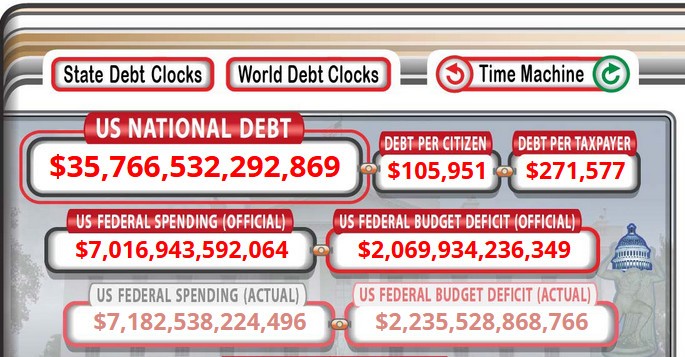
(Brett Rowland, The Center Square) Congress has spent more money than it has collected for the last two decades, allowing the U.S. debt to top $37 trillion for the first time.
Experts expected the U.S. to pass the $37 trillion mark months ago. The Treasury Department marked the milestone in a routine report.
Michael Peterson, CEO of the Peter G. Peterson Foundation, said federal spending remains unsustainable.
“Our national debt is now greater than the economies of the entire Eurozone and China, combined,” he said. “We arenowadding a trillion more to the national debt every 5 months. That’s more than twice as fast as the average rate over the last 25 years.”
Peterson isn’t optimistic about Congress changing course.
“Our growing debt slowly damages our economy and the prospects of the next generation.As the government borrowstrillionaftertrillion, it puts upward pressure on interest rates, adding costs for everyone and reducing private sector investment. Within the federal budget, the debt crowds out important priorities and creates a damaging cycle ofmore borrowing, moreinterest costs, and even more borrowing,”hesaid.
“While the sheer size of our debt is shocking, it’s even more troubling that lawmakers continueto disregardthe damage it does to our economy. The recent budget reconciliation package took our fiscal outlook from horrible to worse, adding more than $4 trillion to deficits over the next decade — or even more if temporary tax cutsare extended, or spending cutsare rolled back.”
Committee for a Responsible Federal Budget Maya MacGuineas called the figure “mind-boggling.”
“The gross national debt hitting $37 trillion isyetanother stunning reminder of the terrible state of federal finances. Spending and revenue are woefully out of balance – tothe tune ofnearly $2 trillion annually and rising – and instead of addressing this imbalance, Congress keeps choosing to make things worse,” she said.
“$37 trillion of debt is a mind-boggling figurethat haslittle precedent. The more economically meaningful figure – debt held by the public as a share of output – is also approaching record levels.Our current debt is 100 percent of the economy – higher thananytime other than justafter World War II – andisrising rapidly.”
MacGuineas said Congress shows no signs of changing course on spending.
“To add insult to injury, we’re on course to spend $1 trillion this year just on interest costs,” she said. “Interest is now the second largest item in the budget, surpassing the entire defense budget as well as Medicare.”
Concord Action Executive Director Carolyn Bourdeaux said the U.S. debtis connectedto the future of SocialSecurity.
“This milestone comesat a timewhen Social Security faces a troubled future. This system is the foundation of older Americans’ dignity and prosperity, but the Old-Age and Survivors Insurance Trust Fund will become insolvent by 2033,” she said. “At that time, we will be forced to make hard choices: massive benefit cuts, major tax increases, or financing the system through even more debt, endangering the economic vitality of this country.”
She added: “The looming shortfalls in Social Securityare intimately connectedwith our nation’s overall deteriorating fiscal outlook, and every year of delay makes the choices more difficult and the trade-offs more punishing.”
MacGuineas said she hoped it would serve as a wake-up call for lawmakers.
“Hopefully this milestone is enough to wakeuppolicymakers to the reality that we need to do something, and we need to do it quickly,” she said.
Trump has said he wants to use tariff revenue to paydownthe national debt, although he’s also suggested other usesfor that money, including rebate checks for Americans.
In March, the Congressional BudgetOffice’ssaid U.S. debt held by the public is on track to reach its highest level ever in 2029 before reaching 156% of gross domestic product in 2055. Gross domestic productis a measurement ofeconomic output.
“Mounting debt would slow economic growth, push up interest payments to foreign holders of U.S. debt, and pose significant risks to the fiscal and economic outlook; it could also cause lawmakers to feel constrained in their policy choices,” the CBO report noted.
A Government Accountability Office reportin Januarywarned that unchecked spending could push public debt to 219% of GDP by 2051 and create a significant economic and national security risk.
“We project that public debt will reach an unprecedented level by 2027,” said Gene Dodaro, U.S. Comptroller General and head of the GAO. “We’re calling on Congress and the Administration to act now to develop and implement a strategy to address this acute challenge. Inaction could result in great difficulties for many Americans and impede policymakers’ flexibility to respond to future economic recessions or unexpected events.”
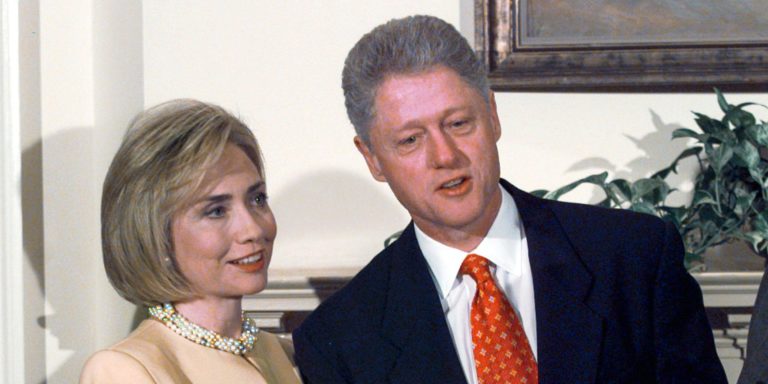
(Ken Silva, Headline USA) A newly unearthed FBI memo shows that agents seemingly had a strong case against then-presidential candidate Hillary Clinton for trading political favors in exchange for donations to the Clinton Foundation when she was Secretary of State—but that top Justice Department officials prevented the bureau from investigating further.
The memo, a timeline of the Clinton Foundation investigation, was reportedly unearthed by top aides to FBI Director Kashyap Patel. It was first reported by Just the News.
According to the memo, the Clinton Foundation caught the interest of certain FBI agents in 2015, after journalist Peter Schweizer published the book Clinton Cash: The Untold Story of How and Why Foreign Governments and Businesses Helped Make Bill and Hillary Rich. In January 2016, FBI offices in New York, Arkansas, and Washington DC were authorized to open an investigation, but were told not to take any further investigative steps until consulting with the Justice Department.
On Feb. 1, 2016, FBI and DOJ officials first met in the Little Rock to discuss the case. A pro-Clinton official was there and refused to recuse himself from the meeting—indicating that the case was compromised from the beginning.
DOJ and FBI officials met about the Clinton Foundation in Little Rock in early 2016. Agents wanted a pro-Clinton official to recuse himself from the meeting, but he refused.
That same month, the DOJ told the FBI offices that it would not support an investigation—“implying this case was just based on open source reporting and fishing through a book,” according to the newly released FBI memo.
However, the FBI had an informant who “possibly” had information about the Clinton Foundation, the memo said. The informant’s info made it all the way up to then-Deputy Director Andrew McCabe, who reiterated that no further steps should be taken without his approval. McCabe did authorize agents to debrief their informants about the matter—but he said not to recruit anymore informants.
Weeks later, the DOJ became more adamant about stifling the investigation. Then-Deputy Attorney General Sally Yates ordered the Eastern District of Arkansas to “shut it down” entirely. The memo doesn’t explain the reason for Yates’s decision.
The DOJ was against the investigation, despite the fact that the FBI had a cooperating witness who recorded conversations with someone associated with the Clinton Foundation, according to the newly released FBI memo.
Wow though — the FBI didn't just have informants giving tips. It had a cooperating witness who recorded conversations with a Clinton Foundation associate. Release the recordings!!! https://t.co/oxep4hkUkwpic.twitter.com/UyHYJku2Ve
Then, the FBI decided to consolidate the entire case into the New York City field office, ostensibly because that’s where the majority of the Clinton Foundation’s activities were.
As the election neared, the Clinton Foundation investigation ground to a halt. After Trump won in stunning fashion, agents started worrying that the statute of limitations was approaching. Still, nothing happened. Trump did say that he wouldn’t be pursuing charges against Clinton.
The last entry in the FBI memo is from August 2017. It says FBI agents were still looking into 19 Clinton Foundation bank accounts obtained by the Little Rock field office during a separate campaign finance investigation. But nothing ever came from the matter.
Some eight years later, the second Trump administration is now investigating whether the Obama administration conspired to tilt the election towards Clinton in 2016. To that end, Director Patel has also released a long-hidden annex to John Durham’s 2023 Special Counsel report, which shows that the Obama administration pressured the FBI to downplay then-presidential candidate Hillary Clinton’s email scandal ahead of the 2016 election.
Patel is running an investigation into whether there was a “grand conspiracy” between intelligence officials and Democratic politicians.
Trump has indicated that Obama won’t be charged because he was operating under presidential immunity, but that other officials could still be open to criminal liability.
Ken Silva is the editor of Headline USA. Follow him at x.com/jd_cashless.
(Headline USA) Police are investigating whether the armed robbery of a Brinks truck on Tuesday outside a Philadelphia-area store is related to four other attacks on armored vehicles in and around the city this summer.
Two armed males got away with between $700,000 and $800,000 in the midday Tuesday heist at an H Mart in Elkins Park, according to Cheltenham Township police. The robbers — one described as armed with an AR-15-style pistol, the other with a handgun — fled with the cash and later abandoned their vehicle nearby, police said. No shots were fired, and no one was injured.
Cheltenham Township Police Lt. Andrew Snyder said it’s the first such robbery in their township, but authorities are looking into whether it may be connected to four robberies of armored cars in and around Philadelphia since June that police and the FBI are investigating as possibly related.
Federal prosecutors announced Wednesday that three people from Philadelphia who were arrested in early August are charged in connection with the $2 million armed robbery of a Brink’s armored vehicle outside a Home Depot on June 21.
A Loomis armored transport vehicle was held up outside an Aldi in a different neighborhood five days later. Then on July 2, a Brinks truck was held up outside a Dollar General at a shopping center. And on July 15, police had a report of two suspects robbing one of the armored vehicles in northeast Philadelphia.
FBI agent Wayne Jacobs told CBS News Philadelphia that law enforcement recovered most of the money stolen in the June 21 heist, as well as a number of long weapons and handguns. Some of the money had been spent on jewelry, clothes and other items, he said.
“If this is the type of activity you’re going to engage in, if you look at the timeline, six weeks from the time of the incident until the time of the arrest,” Jacobs said, “it’s just a matter of time before you’re held accountable for your actions.”
(José Niño,Headline USA) From COVID-19 lockdowns to the Gaza genocide, Jenin Younes has never been afraid to challenge government overreach, no matter which party is in power. As a prominent civil liberties attorney, Younes has built a reputation for defending the First Amendment against the censorship-industrial complex.
In this episode of Headline Geopolitics, she joins José Niño to discuss Israel’s ongoing assault on Gaza and how collective punishment goes against American values.
Younes also talks about the personal impact of the war on her Palestinian family, and whether she sees hope for a real political challenge to Washington’s steadfast support for Israel.
(Dave DeCamp, Antiwar.com) Israeli Prime Minister Benjamin Netanyahu said on Tuesday that he considers himself to be on a “historic and spiritual mission” and that he is “very” connected to the idea of “Greater Israel,” a vision for significant Israeli territorial expansion in the region.
In the modern political context, Greater Israel could refer to Israel taking complete control of Gaza, the West Bank, and the Golan Heights. But for more ideological Zionists, including members of Netanyahu’s government, Greater Israel means Israeli expansion into Jordan, Syria, Lebanon, Iraq, and Saudi Arabia, based on a biblical interpretation.
Netanyahu made the comments to Israel’s i24 when the interviewer gifted him an amulet showing “Greater Israel.” According to The Times of Israel, the amulet was not shown on camera, so it’s unclear how far it depicts Israel’s territory extending. But the Israeli leader was asked if he felt a connection to the expansionist vision and answered, “very much.”
Netanyahu has previously displayed maps that show the West Bank and Gaza as part of Israel, including when addressing the UN just weeks before October 7. Israeli Finance Minister Bezalel Smotrich caused controversy in 2023 when he spoke at an event that displayed a map of Greater Israel that included Jordan.
Smotrich, who has significant power in the current Israeli government, said in an interview for a documentary produced by Arte, a European public service channel, that Israel would take territory in Arab countries “little by little” and said that “it is written that the future of Jerusalem is to expand to Damascus.”
Netanyahu was also asked in the i24 interview if he felt that he was on a mission for the “Jewish people” and said he was “on a mission of generations — there are generations of Jews that dreamt of coming here and generations of Jews who will come after us … So if you’re asking if I have a sense of mission, historically and spiritually, the answer is yes.”