Central Banks Do Not Prevent Financial Crises or Control Inflation

(Daniel Lacalle, Money Metals News Service) Central banks have become the dominating force in financial markets.

Easing and tightening decisions move all assets from bonds to private equity. Their role is supposed to be to control inflation, provide price stability, and ensure normal market functions.

However, there is little evidence of any success in achieving their goals.

The era of central bank dominance has been characterised by boom-and-bust cycles, financial crises, policy incentives to increase government spending and debt, and persistent inflation.

Recently developed economies’ central banks have taken an increasingly interventionist role.

The creation and proliferation of central banks over the past century promised greater financial stability.

Nevertheless, as history and current events continually show, central banks have not prevented financial crises. The frequency and severity of these crises have fluctuated but have not declined since central banks became the leading figure in financial market regulation and monetary interventions.

Instead, central banking has introduced new fragilities and changed the nature, but not the recurrence, of financial turmoil.

Empirical evidence dispels the myth that central banks ended the era of frequent financial crises. Regardless of central bank oversight, a credit boom preceded one in three banking crises.

Who created those credit booms?

Central banks, through the manipulation of interest rates.

According to Laeven and Valencia’s comprehensive database, there were 147 banking crises between 1970 and 2011 alone, in an era of near-universal central bank dominance. Financial crises remain a persistent global phenomenon, occurring in cycles that coincide with episodes of credit expansion.

Central banks have often prolonged boom periods with low rates and elevated asset purchases and created abrupt bust moments after making mistakes about inflation and credit risks.

According to Reinhart and Rogoff’s work, the rate of crises has not dramatically changed with central banking. Instead, the forms of crises evolved.

Twin crises (banking and currency) remain common, and the severity, measured in output loss or fiscal costs, has often increased, especially as financial institutions and governments grew intertwined with monetary authorities.

The Great Financial Crisis of 2008, the Eurozone sovereign debt crisis, and the 2021–2022 inflationary burst rank among the events with the highest costs in history, contradicting the view that central banks have neutralised the risk or costliness of crises.

Central banks act as “lenders of last resort” and regulators. However, with each subsequent crisis, the solution is always the same: larger and more aggressive asset purchase programmes and negative real rates. This means that central banks have gradually moved from lenders of last resort to lenders of first resort, a role that has amplified vulnerabilities.

Due to the globalisation of modern central banking and financial innovations, crises tend to be larger in scale and more complex, impacting most nations. The profound involvement of central banks in markets means their policies, such as emergency liquidity or asset purchases, mask systemic risks, leading to delayed but more dramatic failures.

In many advanced economies, recent waves of crises were triggered by debt accumulation and market distortions engineered by central banks, often under the guise of maintaining stability.

The IMF and World Bank both note that about half of debt accumulation episodes in emerging markets since 1970 involved financial crises, and episodes associated with crises are marked by higher debt growth, weaker economic outcomes, and depleted reserves—regardless of central banking.

Major crises in recent decades have highlighted that central banks do not prevent systemic disruption. Often, their interventions have only delayed the reckoning but made underlying imbalances, particularly government debt, worse.

Central banks do not prevent financial crises. They reshape them, often making their consequences more far-reaching, while shifting the costs onto the public through inflation and debt monetisation.

The Growing Priority: Supporting Government Over Managing Inflation

As I argued recently, central banks are increasingly prioritising government debt distribution over combating inflation.

Central banks have one priority: keeping the government debt bubble alive. Central banks constantly inject liquidity to stabilise sovereign issuers rather than uphold price stability.

In 2025 alone, global debt maturities will reach nearly $2.78 trillion, and central banks are expected to continue easing monetary policies, even as inflation proves persistent.

Central banks use their enormous power to disguise the insolvency of sovereign issuers and make their debt pricier, which leads to the subsequent excessive risk-taking and asset price inflation.

Furthermore, the idea that low rates and asset purchases are tools that help governments reduce their fiscal imbalances and conduct budget prudence is negated by reality. Artificially low rates and asset purchases justify persistent deficits and high debt.

Central banks are enabling inflation and financial instability when they should be restraining it. By ignoring monetary aggregates and the risks created by rising government intervention in the economy and currency issuance through debt instruments, central banks are enabling the slow-motion nationalisation of the economy.

The misguided central bank monetary expansion and negative rate policy of 2020, perpetuated well into 2022 despite soaring inflation, is a clear example. Governments benefited in the period of expansion with enormous debt purchases that enabled an ill-advised increase in government spending and debt.

Meanwhile, citizens and small businesses suffered from high inflation.

Thus, when central banks finally acknowledged the inflation problem they helped create, they kept loose policies prioritising liquidity, which fuelled more government irresponsibility, and the rate hike damaged the finances of families and small businesses that previously suffered the inflation burst.

Governments weren’t concerned about rate hikes because they increased taxes.

The Federal Reserve’s response to increasing government deficits has consistently favoured greater government intervention and rising debt levels, even at the expense of higher inflation, which has undermined its independence and credibility.

Independence vanished when central banks abandoned or ignored price stability, blaming inflation on various absurdities instead of government spending and money supply growth.

The Bank of England, for example, keeps cutting rates and easing policy with rising inflation.

Central banks tend to ease monetary policy when governments increase spending and taxes. However, policymakers claim to be data-dependent and strict when governments reduce taxes and spending.

Why?

Central banks have transitioned from being independent monetary authorities safeguarding the currency’s purchasing power and controlling inflation to facilitating the distribution of rising government debt and disguising rising issuer insolvency.

Modern central banking has shown that no single authority should set interest rates and liquidity. They have consistently erred on the side of rising government size in the economy and made erroneous estimates of inflation and job growth.

The reason for this is straightforward: as the size of government in the economy and sovereign debt, which is often considered the safest asset, increases, the central bank’s role becomes increasingly important for maintaining market stability.

Many central banks state that they don’t interfere with fiscal policy and remain independent… except when someone dares to cut taxes and political spending. As such, central banks are not a limit to risk-taking, rising government spending, and budget irresponsibility, but rather a tool that enables market and government excess.

Originally Published on Mises Wire.


Daniel Lacalle, PhD, economist and fund manager, is the author of the bestselling books Freedom or Equality (2020), Escape from the Central Bank Trap (2017), The Energy World Is Flat​ (2015), and Life in the Financial Markets (2014). He is a professor of global economy at IE Business School in Madrid.

Newsmax Staffer Brutally Murdered in D.C. Area

(Ben Sellers, Headline USA) Even as President Donald Trump’s federal takeover of Washington, D.C., has yielded strong results in bringing down violent crime, the murder of a beloved local makeup artist—allegedly by her own son—over the weekend shook the conservative mediasphere.

Newsmax’s Travis Renee Baldwin, 57, was shot and killed Sunday morning at her apartment in Arlington, Va., just across the Potomac River from D.C., by her son, 27-year-old Logan Chrisinger, the New York Post reported.

Chrisinger remained at the scene and has since been charged with first-degree murder, aggravated malicious wounding and using a firearm in the commission of a felony. He is being held without bond at the Arlington County Detention Facility.

No details as to the motive were immediately available, although some reports indicated that Chrisinger may have lived in the apartment with his mother.

Baldwin, a native of nearby Winchester, Va., had worked at Newsmax for more than three years, according to “The Record” host Greta Van Susteren, who offered tribute to her friend and colleague Tuesday in a post on X.

“[S]he did my make up Friday for the show and of course I never dreamed that would be the last time I would see her,” Van Susteren wrote.

Baldwin previously worked for ABC and for the ESPN show “Pardon the Interruption.”

Other conservative figures, such as Amber Duke, a Newsmax personality and senior editor at the Daily Caller, also paid tribute on social media.

“She was a kind, generous, funny woman who always brightened the day of anyone who sat in her chair,” Duke wrote. “Fridays at Newsmax were something I looked forward to because I knew we’d get to gossip, talk about our upcoming travel plans, our pets, and any good wines we were drinking.”

Newsmax White House producer Marisela Ramirez said Baldwin was selfless and playful.

“Renee had a giving heart and a gypsy spirit but really she was a quiet warrior, supporting her family and carrying the weight of a household on her shoulders—without complaints,’ Ramirez wrote.

Ben Sellers is a freelance writer and former editor of Headline USA. Follow him at x.com/realbensellers.

Think Tank, Election Attorney Support Trump’s Vow to End Mail-in Voting

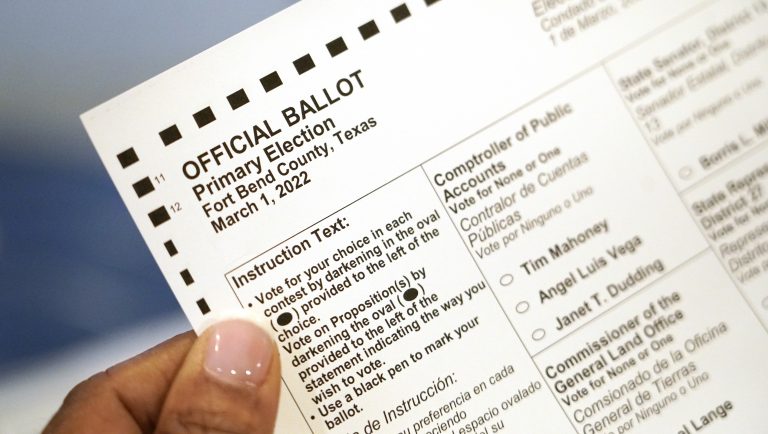
(Tate Miller, The Center Square) While most Democrats are opposed, President Donald Trump’s vow to end mail-in voting, which he says is ripe for fraud, has been met with approval from both an election attorney as well as the America First Policy Institute.

“President Trump should be applauded for leading the charge to ensure that every American’s vote matters and is not undermined by corruption,” the America First Policy Institute (AFPI) told The Center Square by email.

“This is not just a policy fight,” AFPI said. “This is a fight for the survival of our republic.”

AFPI is a non-profit and non-partisan research institute aiming to “advance policies that put the American people first,” according to its website.

Election attorney and founder of law firm OGC Law, LLC Greg Teufel told The Center Square that “eliminating mail-in balloting would go a long way toward restoring confidence in our election procedures.”

“Mail-in voting has long been recognized as the most vulnerable type of voting for election fraud,” Teufel said.

“Because ballots are not completed in front of election officials, coercion, bribery, and voting on behalf of people of limited competence is all possible,” Teufel told The Center Square.

AFPI likewise told The Center Square that “President Trump is right in saying that our elections will never be secure so long as we have widespread use of mail-in ballots.”

“With rare exception, mass mail-in voting is a recipe for fraud and chaos,” AFPI said. “Other nations recognize this, and many abandoned this broken system decades ago.”

“The United States of America is the greatest nation in the world, and our electoral system should set the global standard for security and transparency,” AFPI said.

AFPI listed to The Center Square examples of the issues of mail-in voting.

For instance, “in some states, one now can apply to be on the voter rolls as a ‘permanent absentee voter,’ which means one automatically gets an absentee ballot application every election,” AFPI said.

Additionally, “reliance solely on mail-in voting may lead to the disenfranchisement of America’s eligible citizen class and could also lead to fraud through ballot trafficking,” AFPI told The Center Square.

“Mass mail-in voting presents vulnerabilities with the chain of custody of a ballot and increases the prevalence of error in states that do not maintain clean voter rolls,” AFPI said.

The Center for Election Innovation and Research did not respond to multiple requests for comment.

Trump posted on his Truth Social account Monday: “I am going to lead a movement to get rid of MAIL-IN BALLOTS.”

“ELECTIONS CAN NEVER BE HONEST WITH MAIL IN BALLOTS/VOTING, and everybody, IN PARTICULAR THE DEMOCRATS, KNOWS THIS,” Trump said.

The president further said that “while we’re at it,” he will get rid of “Highly ‘Inaccurate,’ Very Expensive, and Seriously Controversial VOTING MACHINES, which cost Ten Times more than accurate and sophisticated Watermark Paper, which is faster, and leaves NO DOUBT, at the end of the evening, as to who WON, and who LOST, the Election.”

Trump said the efforts to protect elections will be brought about by an executive order “to help bring honesty to the 2026 Midterm Elections.”

Trump Administration Deploys Three US Navy Destroyers and 4,000 Troops Near Venezuela

(Dave DeCamp, Antiwar.com) The US is deploying three Navy destroyers off the coast of Venezuela in a move aimed at pressuring President Nicolas Maduro, signaling what appears to be another push for regime change.

One US official told Reuters that a total of 4,000 US sailors and Marines are expected to be committed to the Trump administration’s efforts in the southern Caribbean region.

US officials say the deployment is an effort to “combat threats from Latin American drug cartels,” as the US has made the unsubstantiated claim that Maduro is the leader of a cartel. The accusation goes back to the first Trump administration, when then-Attorney General Bill Barr indicted the Venezuelan leader over claims of “narco-terrorism.” The claim was made over alleged cocaine trafficking, even though data showed at the time that the vast majority of cocaine coming into the US went through the Eastern Pacific, rather than Venezuela’s Caribbean waters.

White House Press Secretary Karolin Leavitt was asked on Tuesday about the deployments near Venezuela and if the US was considering putting “boots on the ground” in the country.

Leavitt replied, “President Trump has been very clear and consistent; he is prepared to use every element of American power to stop drugs from flooding into our country, and to bring those responsible to justice. The Maduro regime is not the legitimate government of Venezuela. It is a narco-terror cartel, and Maduro, it is the view of this administration, is not a legitimate president. He is a fugitive head of this cartel, he has been indicted in the United States for trafficking drugs into the country.”

The Trump administration has taken other steps that signal another attempt at regime change in Venezuela, including increasing the bounty on Maduro from $25 million to $50 million and labeling cartels “Specially Designated Global Terrorists,” including Cartel de los Soles, a term used to describe an alleged network of Venezuelan officials involved in drug trafficking that doesn’t actually exist as an organization.

The US designated the so-called Cartel de los Soles over claims that it supports the Venezuelan gang Tren de Aragua (TDA) and Mexico’s Sinaloa Cartel. However, a recently declassified US intelligence memo said it was unlikely that Maduro’s government cooperates with or directs TDA, and Mexican President Claudia Sheinbaum has denied that there’s any evidence linking Maduro to Sinaloa.

The memo from the Office of the Director of Intelligence, dated April 7, 2025, said that while some members of the Venezuelan government may tolerate or cooperate with TDA, Maduro and his top officials view the group as a threat. “The Maduro regime probably does not have a policy of cooperating with TDA and is not directing TDA movement to and operations in the United States,” the memo states.

Earlier this month, Sheinbaum told reporters that the US announcement about Maduro’s alleged ties to Sinaola was the first she heard about it. “On Mexico’s part, there is no investigation that has to do with that,” she said. “As we always say, if they have some evidence, show it. We do not have any proof.”

Maduro said on Monday that in response to threats from the Trump administration, he will deploy millions of members of a pro-government militia across the country. “This week, I will activate a special plan with more than 4.5 million militiamen to ensure coverage of the entire national territory — militias that are prepared, activated, and armed,” he said.

While the Trump administration has taken steps to add pressure on Maduro, it also recently reversed a ban on Chevron pumping oil in Venezuela, and Venezuelan oil is now on its way to the US.

This article originally appeared at Antiwar.com. 


US Troops Won’t be Sent to Help Defend Ukraine, Trump Says

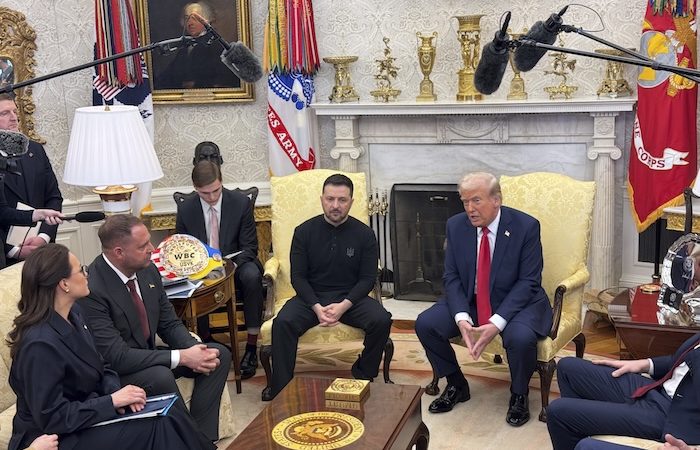
(Headline USA)  President Donald Trump on Tuesday offered his assurances that U.S. troops would not be sent to help defend Ukraine against Russia after seeming to leave open the possibility the day before.

Trump also said in a morning TV interview that Ukraine’s hopes of joining NATO and regaining the Crimean Peninsula from Russia are “impossible.”

The Republican president, Ukrainian President Volodymyr Zelenskyy and other European leaders held hours of talks at the White House on Monday aimed at bringing an end to Russia’s war against Ukraine. While answering questions from journalists, Trump did not rule out sending U.S. troops to participate in a European-led effort to defend Ukraine as part of security guarantees sought by Zelenskyy.

Trump said after his meeting in Alaska last week with Russian President Vladimir Putin that Putin was open to the idea of security guarantees for Ukraine.

But asked Tuesday on Fox News Channel’s “Fox & Friends” what assurances he could provide going forward and beyond his term that American troops would not be part of defending Ukraine’s border, Trump said, “Well, you have my assurance, and I’m president.”

Trump would have no control over the U.S. military after his term ends in January 2029.

White House press secretary Karoline Leavitt later on Tuesday emphasized that “U.S. boots will not be on the ground” as part of any potential peacekeeping mission.

The president also said in the interview that he is optimistic that a deal can be reached to end the Russian invasion, but he underscored that Ukraine will have to set aside its hope of getting back Crimea, which was seized by Russian forces in 2014, and its long-held aspirations of joining the NATO military alliance.

“Both of those things are impossible,” Trump said.

Putin, as part of any potential deal to pull his forces out of Ukraine, is looking for the withdrawal of Ukrainian troops from the Donetsk and Luhansk regions, as well as recognition of Crimea as Russian territory.

Trump on Monday said that he was arranging for direct talks between Putin and Zelenskyy.

But the Kremlin has not yet said whether Putin, who has resisted previous calls by Trump and others for direct negotiations on ending the war, is committed to a face-to-face meeting with the Ukrainian leader.

Asked whether Putin has promised Trump that he’ll meet directly with the Ukrainian leader, Leavitt responded affirmatively. “He has,” Leavitt said of Putin.

Trump, early on Monday during talks with Zelenskyy and European leaders, said that he was pressing for three-way talks among Zelenskyy, Putin and himself.

But after speaking to Putin later in the day, Trump said that he was arranging first for a face-to-face between Zelenskyy and Putin and that three-way talks would follow if necessary.

“It was an idea that evolved in the course of the president’s conversations with both President Putin, President Zelensky and the European leaders yesterday,” Leavitt explained.

But when discussing a phone call held after the meeting between Trump and the Russian leader, Putin’s foreign affairs adviser Yuri Ushakov gave no indication that either a bilateral or a trilateral meeting with Ukraine had been agreed.

Trump said he believed Putin’s course of action would become clear in the coming weeks.

“I think Putin is tired of it,” Trump said. “I think they’re all tired of it. But you never know. We’re going to find out about President Putin in the next couple of weeks. That I can tell you.”

Adapted from reporting by the Associated Press.

Nebraska Announces Plan for Immigration Detention Center Dubbed the ‘Cornhusker Clink’

(Headline USANebraska announced plans Tuesday for an immigration detention center in the remote southwest corner of the state as President Donald Trump’s administration races to expand the infrastructure necessary for increasing deportations.

The facility will be dubbed the “Cornhusker Clink,” a play on Nebraska’s nickname of the Cornhusker State and an old slang term for jail. The alliterative name follows in the vein of the previously announced “Alligator Alcatraz” and “Deportation Depot” detention centers in Florida and the “Speedway Slammer” in Indiana.

Republican Gov. Jim Pillen said he and Department of Homeland Security Secretary Kristi Noem had agreed to use an existing minimum security prison work camp in McCook — a remote city of about 7,000 people in the middle of the wide-open prairies between Denver and Omaha — to house people awaiting deportation and being held for other immigration proceedings. It’s expected to be a Midwest hub for detainees from several states.

“This is about keeping Nebraskans – and Americans across our country – safe,” Pillen said in a statement.

The facility can accommodate 200 people with plans to expand to 300. McCook is about 210 miles (338 kilometers) west of Lincoln, the state capital.

“If you are in America illegally, you could find yourself in Nebraska’s Cornhusker Clink. Avoid arrest and self deport now using the CBP Home App,” Noem said in a separate statement.

Noem’s agency posted a picture on social media showing ears of corn wearing U.S. Immigration and Customs Enforcement hats, standing in front of a prison fence.

The governor said later at a news conference in McCook that the center will have the advantage of being located at an existing facility and near a regional airport. He told reporters he didn’t know if the center would house women as well as men or if children could be held there. He said he first learned the federal government was interested in the facility on Friday.

Pillen also announced he would order the Nebraska National Guard to provide administrative and logistical support to Nebraska-based immigration agents. About 20 soldiers will be involved. And he said the Nebraska State Patrol would allow six troopers to help federal immigration agents make arrests.

Adding detention facilities to hold growing number of immigrants arrested

The Trump administration is adding new detention facilities across the country to hold the growing number of immigrants it has arrested and accused of being in the country illegally. ICE centers were holding more than 56,000 immigrants in June, the most since 2019.

The new and planned facilities include the remote detention center in the Florida Everglades known as “Alligator Alcatraz,” which opened last month. It’s designed to hold up to 3,000 detainees in temporary tent structures. When Trump toured it, he suggested it could be a model for future lockups nationwide.

Florida Gov. Ron DeSantis announced last week that his administration is preparing to open a second facility, dubbed “Deportation Depot,” at a state prison in north Florida. It’s expected to have 1,300 immigration beds, though that capacity could be expanded to 2,000, state officials said.

Also last week, officials in the rural Tennessee town of Mason voted to approve agreements to turn a former prison into an immigration detention facility operated by a private company, despite loud objections from residents and activists during a contentious public meeting.

And the Trump administration announced plans earlier this month for a 1,000-bed detention center in Indiana that would be dubbed “Speedway Slammer,” prompting a backlash in the Midwestern state that hosts the Indianapolis 500 auto race.

Corrections director Rob Jeffreys said the 186 inmates currently at the McCook work camp will be transferred to other state facilities over the next 45 to 60 days. The repurposed facility will be run by the state but will be paid for by the federal government. He said it’s already set up and accredited to hold prisoners, so detainees won’t be housed in tents or other temporary quarters.

Adapted from reporting by the Associated Press.

Bret Baier Breaks Silence After Georgetown Traffic Stop Amid Trump’s D.C. Crackdown

(Luis Cornelio, Headline USA) Fox News anchor Bret Baier clarified on X what transpired during a traffic stop in D.C. that sparked speculation he had been caught up in President Donald Trump’s takeover of the nation’s capital.

Baier said Tuesday he was stopped after unknowingly picking up his ringing phone while driving his wife’s vehicle right next to a Metropolitan Police officer in Georgetown.

The incident, captured on video by a bystander, quickly went viral as it nearly coincided with heightened National Guard and military presence in Washington.

“I picked up my ringing phone as I drove past an officer while driving my wife’s car in Georgetown,” Baier said. “He pointed to have me pull over- I did.  He was very professional. I had to dig for the registration card. Got a ticket and left. I didn’t know there was paparazzi.”

The video shows an MPD officer asking Baier for documents at the corner of Water St. NW and Senator Charles H. Percy Plaza. He was fined and subsequently allowed to leave.

Trump last week ordered the federal government to take control of the MPD, attempting to undo lax policies enacted by the local government.

The capital’s streets have since been filled with military and federal agents cracking down on lawlessness and illegal immigrants.

Local Residents Blast Obama Presidential Center as a ‘Monstrosity’

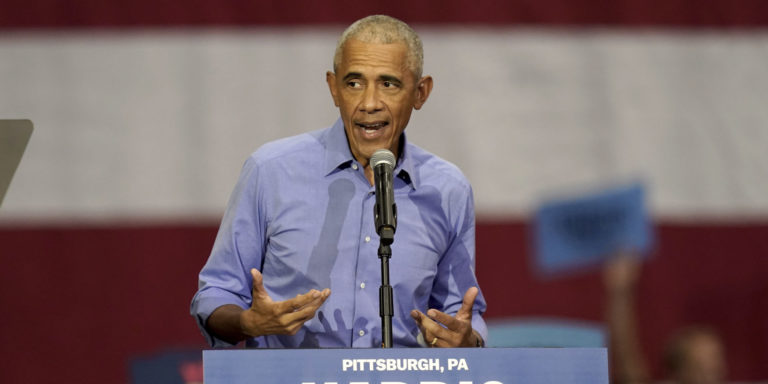
(Luis Cornelio, Headline USA) Former President Barack Obama seems unable to catch a break.

Weeks after being referred for criminal investigation by DNI Tulsi Gabbard, Obama’s presidential center is now under scrutiny from Chicago residents, who are calling the construction a “monstrosity” or a giant “rock.”

The building is currently being constructed in Chicago’s historic Jackson Park, spanning 19.3 acres and rising 225 feet tall. The center features a Brutalist cement design with few windows.

“This is a monument to one man’s ego,” said former Trump advisor and Chicagoan Steve Cortes in remarks to the Daily Mail. “Look at the Reagan Library. It’s beautiful. This? There are almost no windows. What are they hiding? And this Brutalist cement look in a city known for its incredible architecture.”

Local politician Jeanette Taylor said she feared the building would displace residents and drive up prices.

“Every time large development comes to communities, they displace the very people they say they want to improve it for,” she said. “This was no different, and we’re living what is actually happening. We’re going to see rents go higher and we’re going to see families displaced.”

Resident and lawyer Ken Woodward slammed the building’s appearance as out of place.

“It looks like this big piece of rock that just landed here out of nowhere in what used to be a really nice landscape of trees and flowers,” Woodard told the Mail. “It’s a monstrosity.”

He added, “It’s over budget, it’s taking way too long to finish and it’s going to drive up prices and bring headaches and problems for everyone who lives here. It feels like a washing away of the neighborhood and culture that used to be here.”

South Side native and activist Tyrone Muhammad reportedly began sounding the alarm about the presidential center in 2020, calling it the “Tower of Babel.”

“There’s a lot of babbling going on with the Obama Center that never seems to get to anywhere. It’s disconnected from the community it says it wants to serve. There’s this ongoing battle around it that involves policies that never serve or effect change for the community,” he added.

A spokesperson for the Obama Center ignored pointed questions about the activists’ criticism, telling the Mail instead:

“Sitting on nearly 20 acres in Jackson Park, the Obama Presidential Center will be a tremendous global destination and public community asset, with a playground, restaurant, branch of the Chicago Public Library, fruit and vegetable garden and sledding hill to name a few elements. We are proud that members of the community played key roles in building the center, and we are looking forward to hiring local residents for hundreds of good jobs when the Center opens.”

DOJ Promises Release of Some Epstein Records this Week

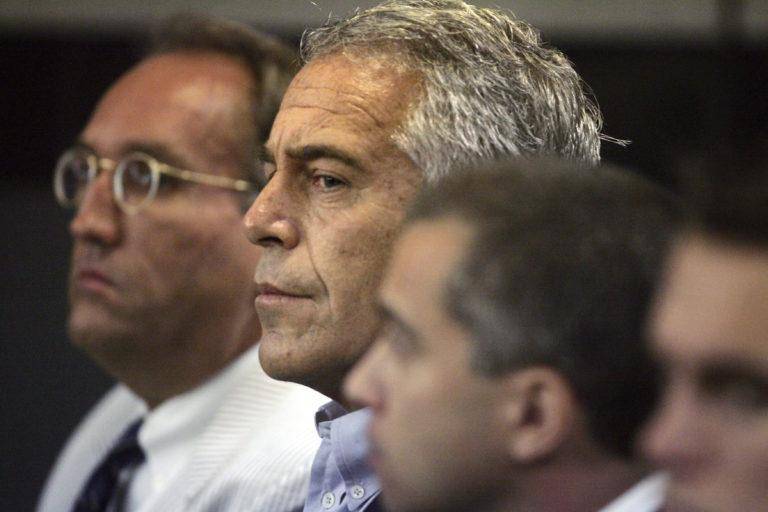
(Thérèse Boudreaux, The Center Square) The U.S. Department of Justice will comply with a subpoena for records related to convicted sex offender Jeffrey Epstein as part of a congressional investigation, Republicans announced.

Earlier this month, House Committee on Oversight and Government Reform Chairman James Comer, R-Ky., issued subpoenas to multiple high-profile Democrats – including the Clintons and former U.S. attorney generals – as well as the DOJ, which was supposed to produce Epstein-related records by Tuesday. The DOJ informed Comer that it will begin providing the records by Friday.

“There are many records in DOJ’s custody, and it will take the Department time to produce all the records and ensure the identification of victims and any child sexual abuse material are redacted,” Comer said. “I appreciate the Trump Administration’s commitment to transparency and efforts to provide the American people with information about this matter.”

Interest in Epstein’s crimes resurfaced after U.S. Attorney General Pam Bondi said his alleged client list was “sitting on [her] desk,” only for the administration to backtrack and claim that no such list existed.

Epstein died awaiting trial in 2019, while his associate Ghislaine Maxwell is serving a 20-year sentence that she recently appealed to the U.S. Supreme Court. The Trump administration recently attempted to unseal grand jury records from Epstein and Maxwell’s trials, but two federal judges denied the requests

Democrats have jumped at the chance to implicate President Donald Trump, claiming the administration’s actions are insincere. Lawmakers on both sides of the aisle are demanding for the immediate release of all Epstein-related records, and Democrats even tried to force a vote to make them public.

As a result, House Speaker Mike Johnson, R-La., sent lawmakers home early for their August recess, saying Republican leaders are not going to let Democrats use the issue as “a political battering ram.” 

Congress is facing a full plate when it returns in September. Besides pushing for a vote to release the Epstein records, lawmakers must also confirm the rest of Trump’s civilian cabinet nominees and rapidly pass the 12 annual appropriations bills funding federal agencies for fiscal year 2026.

So far, none of the bills have passed both chambers. Two have passed the House only, while the Senate passed a three-bill minibus right before recessing.

DNI Gabbard Announces Consequences for Russiagate Architects

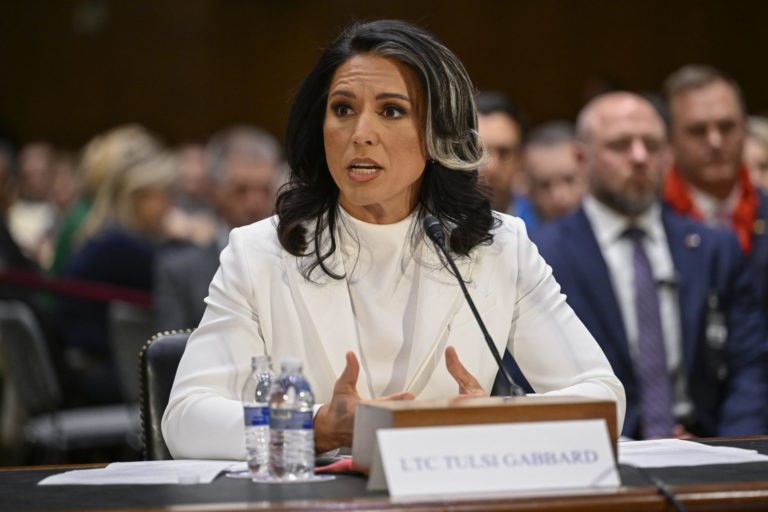
(Luis Cornelio, Headline USA) Director of National Intelligence Tulsi Gabbard announced Tuesday that she revoked the security clearances of Obama-era officials involved in manufacturing intelligence to falsely claim Russia affected the 2016 election to help Donald Trump.

Gabbard made the announcement in an X post, directly targeting 37 individuals accused of politicizing, fabricating and leaking intelligence to smear and undermine Trump during his first term. She described these acts as “intentional egregious violations of tradecraft standards.”

“Being entrusted with a security clearance is a privilege, not a right,” Gabbard wrote. “Those in the Intelligence Community who betray their oath to the Constitution and put their own interests ahead of the interests of the American people have broken the sacred trust they promised to uphold.”

She added, “In doing so, they undermine our national security, the safety and security of the American people and the foundational principles of our democratic republic.”

As noted by Fox News, some of the targeted individuals are Brett M. Holmgren, former Assistant Secretary of State for Intelligence and Research; Richard H. Ledgett, former NSA Deputy Director; Stephanie O’Sullivan, former Principal Deputy Director of National Intelligence; and Luke R. Hartig, former Senior Director for Counterterrorism at the National Security Council, and Yael Eisenstat, a former CIA officer and White House advisor.

Gabbard said the revocation was made at Trump’s request.

The move comes just weeks after Gabbard released bombshell evidence alleging that the intelligence community, including former DNI James Clapper and former CIA Director John Brennan, rushed an intelligence assessment to claim Russia sought to help Trump win the 2016 election.

This was done at the orders of former President Barack Obama, Gabbard said.

The matter has since been referred to the DOJ, which formed a task force for further investigation.