Tech Giants Face Scrutiny Over Suspicious H-1B Job Advertisement Practices

(José Niño, Headline USA) Critics are questioning whether some of the nation’s largest tech companies are using newspaper job advertisements to circumvent federal requirements designed to protect American workers in the immigration process.

The controversy centers on classified advertisements placed in the San Francisco Chronicle and other newspapers as part of the federally mandated PERM labor certification process, which companies must complete when seeking green cards for H-1B visa holders. The PERM process requires companies to show that there are no Americans for a job before they outsource to foreigners.

According to a report by Newsweek, recent advertisements by OpenAI, Instacart, and Udemy have drawn attention for directing job applicants to submit resumes to immigration or global mobility departments rather than standard human resources channels.

In one case, OpenAI posted an ad for a software engineer position that instructed candidates to contact the company’s “global mobility team,” while Udemy’s listing for a director of marketing analytics and data science position directed applicants to “[email protected].” Instacart followed suit by publishing ads with similar application steps. 

An anonymous website called Jobs.Now, which tracks H-1B related job postings, has alleged that these advertising practices effectively discourage American applicants by suggesting the positions are intended for foreign workers. 

The group argues that routing applications through immigration departments creates a separate recruitment process that operates outside normal hiring procedures, potentially reducing the number of qualified American candidates who apply.

Although employers are not required to advertise jobs to U.S. workers before hiring H-1B candidates, different rules apply under the PERM process, which is used by businesses when sponsoring a worker for a green card.

At this stage, companies must demonstrate to the Department of Labor that no qualified American worker is available and that the H-1B employee is essential to the role.

The allegations of suspicious ad practices come at a time when unemployment among college graduates has been rising and the technology sector has implemented significant layoffs. The controversy also emerges amid ongoing political debate over skilled worker immigration policies, with the Trump administration announcing a proposal to eliminate the visa lottery system, as Headline USA has previously reported

The Department of Justice previously reached settlements with Facebook in 2021 and Apple in 2023 over similar allegations of discriminatory job advertising practices in their PERM processes. Those cases resulted in financial penalties and requirements for the companies to change their recruitment procedures.

None of the companies mentioned have responded to requests for comment about their current advertising practices. The Justice Department has not indicated whether it is investigating the current allegations, though Jobs.Now says some users have contacted federal employment rights officials about their concerns.

José Niño is the deputy editor of Headline USA. Follow him at x.com/JoseAlNino 

 

Mexico Says There’s No Agreement with DEA for New Border Enforcement Collaboration

(Headline USA) Mexico President Claudia Sheinbaum denied her administration had an agreement with the U.S. Drug Enforcement Administration Tuesday, hours after the U.S. agency announced “a major new initiative” to collaborate in the fight against drug cartels.

Sheinbaum was referring to “Project Portero,” an effort announced Monday by the DEA, calling it a “flagship operation” against smuggling routes that move drugs, guns and money across the border.

“The DEA put out a statement yesterday saying that there is an agreement with the Mexican government for an operation called Portero,” Sheinbaum said during her morning news briefing. “There is no agreement with the DEA. The DEA puts out this statement, based on what we don’t know. We have not reached any agreement, none of the security institutions (have) with the DEA.”

The U.S. embassy in Mexico and the DEA did not immediately respond to requests for comment.

Sheinbaum said the only thing happening was a workshop in Texas attended by four members of Mexico’s police force.

The DEA statement mentioned that workshop, saying it had brought Mexican investigators to one of its intelligence centers to train with U.S. prosecutors, law enforcement, defense officials and members of the intelligence community.

The visibly annoyed president made her comments just days after generally positive exchanges between the two governments following another extension to ward off threatened U.S. tariffs and another shipment of 26 drug cartel figures to the U.S. from Mexico.

Mexico had seemed to be repairing the security relationship with the United States after six years of tension under Sheinbaum’s predecessor, Andrés Manuel López Obrador, who had reined in DEA agents operating in Mexico and accused the agency of wholesale fabrication when it arrested Mexico’s former defense secretary.

Sheinbaum’s administration had taken a more aggressive stance toward pursuing Mexico’s drug cartels and sent dozens of cartel figures sought by U.S. prosecutors to the United States.

Sheinbaum did say that members of her administration had been working for months with U.S. counterparts on a broader security agreement that was practically finished. She said that agreement was based on four principles her administration has stressed for months: sovereignty, mutual trust, territorial respect and coordination without subordination.

The thing that seemed to have her bristling Tuesday was the DEA sending out a statement without proper coordination.

Sheinbaum said she asked the DEA to respect Mexico, to follow agreed-upon protocols for such announcements, and emphasized that Mexico only signs agreements with the U.S. government, not with individual agencies.

The DEA statement included a comment from agency administrator Terry Cole, who was recently tapped to lead the Trump administration takeover of the Washington D.C. police.

“Project Portero and this new training program show how we will fight — by planning and operating side by side with our Mexican partners, and by bringing the full strength of the U.S. government to bear,” Cole said in the Monday statement.

Adapted from reporting by the Associated Press.

Senate Pledges Economic Support for Russia-Ukraine Deal as Govt Funding Talks Stall

(Thérèse Boudreaux, The Center Square) As Republicans and Democrats remain deadlocked over how to fund the government for fiscal 2026 and prevent a shutdown, Senate leaders remain united on one front: Providing funding for Ukraine.

As President Donald Trump met with European leaders Monday – including Ukrainian President Volodymyr Zelenskyy – Senate Majority Leader John Thune, R-S.D., pledged his chamber’s willingness to provide economic assistance for Russia-Ukraine negotiations.

“President Trump should be commended for his dogged determination to bring peace to Ukraine and for his courage to engage with all parties in a way his predecessor refused to do,” Thune posted on X. “As peace talks continue today in Washington, the U.S. Senate stands ready to provide President Trump any economic leverage needed to keep Russia at the table to negotiate a just and lasting peace in Ukraine.”

While including a less flattering description of the president, Senate Minority Leader Chuck Schumer, D-N.Y., indicated his support for the beleaguered country as well, calling Russian President Vladimir Putin an “authoritarian thug” and urging Trump to “[stand] with Ukraine and our allies.”

Since Russia invaded Ukraine on Feb. 24, 2022, Congress has passed five major bills that cumulatively allocated over $128 billion to the Ukrainian government, including roughly $70 billion in military support. While no U.S. lawmaker has openly sided with Russia, some fiscal conservatives have objected to the high amount.

Thune’s offer to provide “economic leverage” comes as Congress nears the Sept. 30 government funding deadline without a clear bipartisan strategy in place. If lawmakers do not pass all 12 annual appropriations bills providing money for federal agencies through both chambers of Congress, they risk a government shutdown.

So far, only two of those bills have passed the House, while a three-bill minibus is the only 2026 appropriations legislation that has passed the Senate. Any appropriations bills passed in one chamber must be approved by the other chamber.

Even though Republicans control both chambers, they need Democrats’ help to finish the process when lawmakers return from their August recess in September. But Schumer has threatened to force a government shutdown unless Republicans “work across the aisle with Democrats to responsibly fund the government,” meaning that they must refuse to include any of Trump’s proposed budget cuts.

Given that lawmakers will only have a few weeks to synchronize and pass the rest of the fiscal year 2026 government funding bills, they most likely will pass a short-term Continuing Resolution. 

A CR would keep government funding on cruise control until all appropriations bills are finalized. If the minibus (or other appropriations bills) pass both chambers by the Sept. 30 deadline, the CR would apply to the remaining federal agencies. 

If lawmakers opt for the stopgap, Congress will have punted on funding the government properly for the fourth time in a row. Lawmakers never passed a fiscal year 2025 budget, instead passing three consecutive CRs to keep government funding on cruise control until Sept. 30.

Trump Signs Bill Studying Cancer Among Military Pilots

(Zachery Schmidt, The Center Square) President Donald Trump has signed into law the Aviator Cancer Examination Study Act, which seeks to address cancer rates among former and current military aircrew members. 

According to a US Air Force study, these individuals experienced higher rates of melanoma, thyroid cancer and prostate cancer. 

Building upon this study, the ACES Act requires the secretary of veterans affairs to investigate cancer and mortality rates for aircrew members who have served in the Navy, Air Force and Marine Corps. 

The specific cancers the study will look into are melanoma, thyroid cancer, prostate cancer and others. The ACES Act is designed to help understand the link between certain types of cancers and military services. 

U.S. Sens. Mark Kelly, D-Arizona, and Tom Cotton, R-Arkansas, who are both veterans, introduced this bill. 

Kelly, a former Navy pilot, said, “Veteran aviators and aircrews deserve answers about the correlation between their job and cancer risks.”

“Getting this across the finish line has been a bipartisan effort from the start, and I’m proud to see this bill become law so we can deliver real answers and accountability for those who served,” he said.

Cotton, who was an Army infantry officer, said he was “grateful” to the president for making the ACES Act “the law of the land.”

“We owe it to past, present, and future aviators in the armed forces to study the prevalence of cancer among this group of veterans,” he explained.

In addition to having bipartisan support, many veteran groups and advocacy groups supported the ACES Act. 

Jose Ramos, the Wounded Warrior Project’s vice president for government and community relations, said his organization was “proud to support” this piece of legislation.

He called the ACES Act a “critical step toward ensuring that veterans receive timely diagnoses, specialized screenings and the care they have earned.”

Theo Lawson, the assistant director of legislative programs for the military nonprofit Fleet Reserve Association, said this bill is a vital piece of legislation. 

Lawson said the bill “directs critical research into cancer risks among military aircrew, ensuring better care and support for our aviators who have served our nation.”


Triple Fatal U-turn Questions Tie Immigration, Florida, California

(Alan Wooten, The Center Square) Questions from a triple fatality on the Florida Turnpike about 50 miles north of West Palm Beach are centered on Harjinder Singh’s citizenship status, a work permit, and where he obtained a commercial driver’s license.

The U.S. Department of Homeland Security and the office of California Gov. Gavin Newsom do not agree on eligibility. Not in dispute are the charges and arrest detainer.

The Florida Department of Highway Safety and Motor Vehicles said Singh, driving an 18-wheeler, tried to U-turn on the Florida Turnpike through a point in the divided highway marked “official use only.” The speed limit at mile marker 171 is 70 mph.

Homeland Security’s link to video from Breaking911, shot from inside the truck, shows the graphic collision that followed.

A Chrysler Town & Country minivan slams into the trailer that suddenly blocked its lanes. All three inside the minivan were killed – a 30-year-old man from Florida City driving, and a 37-year-old woman from Pompano Beach and a 54-year-old man from Miami.

Singh was not injured. He is facing three counts of vehicular homicide.

Homeland Security says Singh does not have a legal right to be in the United States and obtained a commercial driver’s license in California. The Florida Highway Patrol said he crossed the Mexico border into California in 2018.

On Monday, the U.S. Marshals Service said Singh, 28, was arrested in Stockton, Calif., on Saturday. He and a passenger in the truck flew to Sacramento on Wednesday, the day after the crash. The warrant for his arrest was issued Thursday.

“The actions taken by the defendant while operating a commercial tractor-trailer are both shocking and criminal,” said Dave Kerner, executive director of the Florida Highway Safety and Motor Vehicles Department. “Three people lost their lives as a result of his recklessness, and countless friends and family members will experience the pain of their loss forever. Harjinder Singh is in custody on state vehicular homicide charges and immigration violations. He will no longer be able to damage and destroy the lives of Floridians and visitors. At the conclusion of his state charges, he will be deported.”

San Joaquin County Sheriff Patrick Withrow, according to ABC10 in Sacramento, said Singh was illegally in the country. He also said Senate Bill 54 in California “does not allow me to honor the ICE hold.”

“Three innocent people were killed in Florida because Gavin Newsom’s California Department of Motor Vehicles issued an illegal alien a commercial driver’s license – this state of governance is asinine,” said Tricia McLaughlin, the assistant secretary for Homeland Security. “How many more innocent people must die before Gavin Newsom stops playing games with the safety of the American public? We pray for the victims and their families.”

SB54 is colloquially known as the California Values Act, passed in 2017, and prevents local lawmen from using resources to help federal immigration agencies. Newsom was lieutenant governor from 2011-19 while Democrat Jerry Brown was governor, then won election to governor in the 2018 midterms.

Trump Says He’s Willing To Support European Troops in Ukraine ‘by Air’ as Part of Potential Security Guarantee

(Dave DeCamp, Antiwar.com) President Trump said on Tuesday that he may be willing to provide air support for European troops on the ground in Ukraine as part of a potential security guarantee, an arrangement that would be unacceptable to Russia.

“When it comes to security, they’re willing to put people on the ground,” Trump told Fox News, referring to European countries. “We’re willing to help them with things, especially, probably, if you talk about by air, because no one has the kind of stuff we have, really, they don’t.”

The president also assured that US troops wouldn’t be deployed to Ukraine. A day earlier, he wouldn’t rule out the idea of putting American boots on the ground in Ukraine.

A group of European countries, led by France and the UK, which calls itself the “Coalition of the Willing,” is pushing for an arrangement where they would deploy forces to Ukraine as part of a potential peace deal. British Prime Minister Keir Starmer hosted a virtual meeting of the group on Tuesday.

Starmer’s office said in a press release on the meeting that the British leader “outlined that Coalition of the Willing planning teams would meet with their US counterparts in the coming days to further strengthen plans to deliver robust security guarantees and prepare for the deployment of a reassurance force if the hostilities ended.”

A day earlier, Russia re-stated its opposition to the idea. “We reiterate our repeatedly expressed position that we deny any scenarios that envisage the deployment of a military contingent to Ukraine with the participation of Nato states, which could lead to an uncontrollable escalation of the conflict with unpredictable consequences,” said Russian Foreign Ministry spokeswoman Maria Zakharova.

Axios reported on Tuesday that Trump had agreed with the Europeans that they should provide Ukraine with NATO “Article 5-like” security guarantees without bringing Ukraine into the alliance and that Secretary of State Marco Rubio will lead the talks on potential security guarantees.

The Axios report also said that Russian President Vladimir Putin told Trump during the Alaska summit that he was willing to discuss the principle of security guarantees for Ukraine and mentioned China as one of the potential guarantors.

Putin could have been referring to an arrangement included in a draft peace deal in April 2022 under which Ukraine would be a neutral state but would receive security guarantees from several countries, including the US, Britain, China, and Russia. Although all the details weren’t worked out, Russia wanted a deal where all security guarantors would have to agree unanimously on any action, meaning any signatory would have a veto.

This article originally appeared at Antiwar.com. 


Rep. Greene: US Should Let Gaza Children in for Medical Treatment, Prosecute Israeli Child Predators

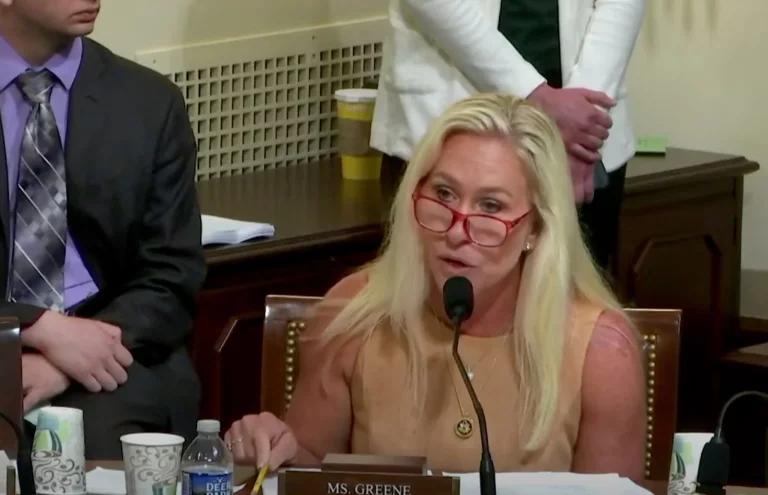
(Dave DeCamp, Antiwar.com) Rep. Marjorie Taylor Greene (R-GA) said in a post on X on Tuesday that the US should allow wounded children from Gaza to enter the US for medical treatment and should also prosecute Israeli child sex predators.

The Georgia representative was referring to a recent State Department decision to block visas for Palestinians from Gaza in response to outrage from pro-Trump activist Laura Loomer over wounded Palestinian children arriving for medical treatment, and the case of Tom Alexandrovich, a senior Israeli cybersecurity official who was arrested in a sting operation in Nevada for attempting to lure a child for sexual purposes but was allowed to go back to Israel.

“We need to be the America that allows war torn children to come here for life saving surgeries and the America that never releases a foreign child sex predator that our great LEO’s caught,” Greene wrote. “But in this circumstance those war torn children are from Gaza and this foreign child sex predator is from Israel and works directly for Netanyahu.”

In recent weeks, Greene has been outspoken in her opposition to US military aid to Israel, and she has become the first Republican in Congress to label Israel’s actions in Gaza a genocide. She has also pushed back strongly against attempts by the pro-Israel lobby AIPAC to smear her.

“Let me guess,” Greene wrote on Tuesday. “Would it be antisemitic to drag Netanyahu’s Cyber Executive Director back and prosecute this pos to the full extent of the law and at the same time let Palestinian kids who had their limbs and bodies blown apart receive surgeries in America?”

The Palestinian children who were shown arriving in the US in videos shared by Loomer were brought to the country by the charity group HEAL Palestine, which pays for their expenses. Under the program, the children leave the US once they have fully recovered from their medical treatment.

“I’m not saying bring in refugees or use tax payer dollars, not at all, but when did America’s heart grow so cold to refuse innocent children privately funded surgeries and then they return home after they recover? Wouldn’t we allow Israeli children if they were the ones needing surgery? Or war torn children from any other country?” Greene said.

The congresswoman also said that the “most concerning question” was why the US would allow an Israeli child predator to leave the country despite the evidence against him. “Would we do that with a Mexican child sex predator? Chinese child sex predator? Any other country’s child sex predator? I know God does not discriminate in his love for children. Why would we?” she asked.

In 2020, a CBS News investigation found that many Jewish American pedophiles flee to Israel, where they receive citizenship under the “Law of Return.”

This article originally appeared at Antiwar.com. 

Data Discrepancy Highlights Difficulty of Tracking Chinese Gold Reserves

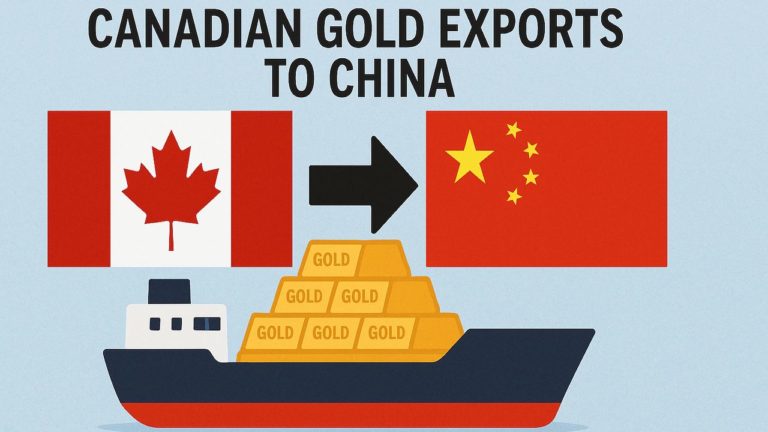
(Mike Maharrey, Money Metals News Service) According to Canadian customs data, coal, canola, and petroleum rank as the country’s top exports to China. But Chinese records tell a different story. Based on China’s data, gold is the top Canadian import.

This discrepancy underscores the difficulty in tracking Chinese gold reserves.

Based on Chinese data, the value of imported Canadian gold was 10 times higher than reported by Canadian export reports.

The difference is rooted in the way the two countries report imports and exports. According to a report by the Globe and Mail, Canada does not track exports once they leave the country’s shores and cannot account for a product changing hands along the way. On the other hand, Chinese customs require importers to report the origin of all products.

“This means that when Canada sells gold to bullion markets in London and New York, those exports are counted here as sales to Britain and the United States. But when China buys that same Canadian gold from those same markets, it considers the imports to be from Canada.”

Canadian statistics show $1.9 billion in direct gold exports to China. But based on Chinese customs reports, the country imported $25 billion in Canadian gold.

The Globe and Mail article notes, “Gold investors appear to be unloading their supplies of Canadian bullion in response to China’s continuing buying spree.”

Philippe Rheault spent two decades in China with the Canadian foreign service. He said it appears most Canadian gold is entering China from Hong Kong, Switzerland, and England. And Rheault said he wouldn’t be surprised if China is understating the amount of gold imported from Canada.

How Much Gold Does China Have?

That leads to an important question. Exactly how much gold does China have?

The answer is we don’t know.

As the discrepancy between Canadian and Chinese data reveals, it’s hard to get a handle on it. But it’s almost certainly more than the Chinese reveal.

The People’s Bank of China reported a 6-tonne increase in its official gold reserves in the second quarter of 2025, bringing its official holdings to 2,296 tonnes. That makes up about 6.5 percent of its total reserves.

But as analyst Jan Nieuwenhuijs has reported, the People’s Bank of China is secretly buying large amounts of gold off the books. According to data parsed by the renowned Money Metals researcher, the Chinese central bank is currently sitting on more than 5,000 tonnes of monetary gold located in Beijing – more than TWICE what has been publicly admitted.

Nieuwenhuijs estimates that the Chinese central bank covertly bought 570 tonnes of gold last year, encouraging gold’s ascent in global international reserves by 4 percent, the largest gain in four decades.

Mining Association of Canada president and CEO Pierre Gratton said his country should follow China’s example.

“Given the incredible rise in gold’s value, China once again appears to be out-maneuvering the West, much as it has with other mineral commodities. It’s ironic and unfortunate that Canada, as a major gold producer, isn’t itself increasing its gold holdings in these turbulent times.”


Mike Maharrey is a journalist and market analyst for Money Metals with over a decade of experience in precious metals. He holds a BS in accounting from the University of Kentucky and a BA in journalism from the University of South Florida.

Iran’s Proposed Inflation Fix Is as Old as Time

(Mike Maharrey, Money Metals News Service) Iran has found a solution to its inflation problem. Just lop some zeros off the currency.

A parliamentary economics committee recently approved a bill to re-denominate the rial. The new currency would retain the name, but one new rial would equal 10,000 old rials.

Imagine if the U.S. government chopped a couple of zeros off a $100 bill, turning it into a $1 bill.

It’s like that.

According to Iranian officials, the move would “simplify financial calculations” and lower the cost of printing currency.

Of course, this won’t change anything for the Iranian people, other than to make the math a little easier. As an Iranian economist told the Financial Times, the scheme “is neither an effective monetary policy nor a mechanism to control inflation. It is simply a formal adjustment to the currency unit for accounting purposes.

But it will make government people feel better because it might create the illusion of a stable currency – at least for a minute.

The rial has lost significant value in the wake of aggressive international sanctions and the government’s decision to inflate to keep the economy limping along. The annual inflation rate is running between 30 and 40 percent.

The Iranian government finances its massive deficits by borrowing money from the country’s central bank. When the bank funds these loans, it uses money created out of thin air. The U.S. central bank employs a similar (albeit less direct) scheme to fund federal government deficits. Through quantitative easing programs (QE), the Fed buys U.S. debt on the open market with money created out of thin air. While less direct than loans to the government, the process has the same inflationary effect.

Iran isn’t the first country to revalue its currency. Israel, Turkey, Romania, and Zambia have all lopped zeros off their currencies in recent years.

Good Old Monetary Debasement

How did Iran get to the point that it needs to “revalue” its currency? It’s a story that is almost as old as money itself. The government devalued the currency for its own purposes. It’s good old monetary debasement, and it’s been going on for thousands of years.

When you or I run out of money, we’ve got to figure out a way to earn more or do without some stuff. But when governments run low on cash, they can create more money and pay for whatever they want.

When money was primarily in the form of gold and silver coins, this monetary debasement took the form of coin clipping. Governments would remove small amounts of metal from each coin and then use it to make new coins. Each coin retained the same face value, but it got lighter over time.

Governments would also lower the purity of their coins, gradually adding other common metals to minimize gold and silver content.

When paper currency began to circulate, debasement became easier. The government could just arbitrarily revalue the currency’s relationship to gold. For instance, if an ounce of gold was valued at $30, the government could bump that up to $40 an ounce, enabling the government to issue more paper.

Today, debasement is even easier. The government doesn’t even need paper or a printing press. It can create new money with a few clicks of a mouse.

It’s easy to look at Iran with a critical eye and call them big dummies for lopping zeros off their money. However, the U.S. has pulled similar shenanigans. The federal government was just a little more sophisticated in its approach.

In 1933, President Franklin D. Roosevelt revalued the country’s gold.

Under the classical gold standard, the dollar was fixed at $20.67 per ounce of gold. This limited the government’s ability to expand the money supply. In 1933, Roosevelt issued Executive Order 6102, requiring Americans to turn their gold over to the government. In effect, this increased the country’s gold reserves, allowing the printing of more money.

But it wasn’t enough.

In 1934, the government raised the official price of gold from $20.67 per ounce to $35 per ounce. In effect, this was a 40 percent devaluation of the dollar in gold terms. This allowed Roosevelt and Friends to massively expand the dollar supply without running afoul of the gold-baking requirements.

In 1965, President Lyndon B. Johnson signed the Coinage Act, removing all the silver from dimes, quarters, and half-dollars. Instead, the government mints coins from “composites, with faces of the same alloy used in our 5-cent piece that is bonded to a core of pure copper.”

Today, you will sometimes hear coins minted before 1965 referred to as “junk silver.”

In reality, we should call modern American coins junk.

When Johnson signed the Coinage Act, he insisted that removing silver would have no impact on the value of U.S. coinage.

“[The] Treasury has a lot of silver on hand, and it can be, and it will be used to keep the price of silver in line with its value in our present silver coin,” he said.

Just a few years later, President Richard Nixon closed the “gold window,” severing the last connection between the dollar and gold. This gave the government free rein to create money without restraint.

Nixon made a claim similar to Johnson’s, asserting, “Let me lay to rest the bugaboo of what is called devaluation,” and promised, “Your dollar will be worth just as much as it is today.

Psych.

The sad reality is that governments will continue to debase your money because money creation is the lifeblood of big government. And governments will always look for ways to pull the wool over your eyes and make you forget that your purchasing power is declining by the day.

Don’t be fooled.

Hold real money – gold and silver. The government can print it or inflate it away.


Mike Maharrey is a journalist and market analyst for Money Metals with over a decade of experience in precious metals. He holds a BS in accounting from the University of Kentucky and a BA in journalism from the University of South Florida.

EXCLUSIVE: Butler 911 Had Report of ‘Something’ on Water Tower ‘Before’ Trump Shooting

(Ken Silva, Headline USA) In the immediate aftermath of the July 13, 2024, Trump assassination attempt, there were widespread rumors of a possible second shooter on the water tower near the Butler Farm Show rally site.

Those rumors were false. There was no water tower shooter.

Indeed, this reporter visited the Butler Farm Show, and the water tower is much closer to the rally site than what appeared on television—meaning that any potential shooter up there would have been clearly visible to the cameras, the rallygoers, and to the people in the neighborhood next to it. Also, investigators found that the ladder to the water tower was never lowered.

Perhaps most importantly, the bullet trajectories don’t match. Researchers who still subscribe to a two-shooter theory have abandoned the possibility of the water tower altogether. They say any second shooter would have had to have come from the tree line below the water tower.

However, with all that said, someone did call 911 to report seeing “something” on top of the water tower before the shooting began, according to new documents obtained by Headline USA.

The new documents are from the Butler County ESU’s operational deployment report, which the unit’s commander, Ed Lenz, drafted after the incident. Lenz wrote that at 6:55 p.m., he received info from Butler City’s 911 dispatch.

“911 relayed info from Butler City—they had a report of something on top of the water tower before this began,” Lenz wrote.

Lenz’s comments match bodycam footage from around that same time, when an officer can be heard over the radio saying that someone “said they saw something on top of the water tower before this all started.”

However, until now it wasn’t known that the report came from a 911 caller—and not just someone who claimed in the heat of the moment to have seen something.

In any event, Butler ESU flew a drone above the water tower about an hour after receiving the report. They didn’t find anyone or anything there, they said.

Headline USA will continue to investigate the matter and try to obtain more records about this mysterious 911 call.

Ken Silva is the editor of Headline USA. Follow him at x.com/jd_cashless.