


The Compelling Investment Case for Platinum

(Mike Maharrey, Money Metals News Service) Gold is soaring, hitting multiple new record highs. Silver is surging, having gained nearly 40 percent this year. But another metal is outperforming them both.

Platinum.

The metal is up just over 51 percent since the beginning of the year. Most of that gain has occurred since early June.

Investors are taking notice.

According to the World Platinum Investment Council (WPIC), global platinum coin and bar investment surged by a staggering 660 percent in the second quarter. This was driven by a dramatic 55 percent increase in platinum coin and bar demand in China.

Meanwhile, platinum jewelry demand grew by 32 percent in Q2, hitting the highest level since 2015 in H1.

This comes within a market that is already facing supply constraints.

The majority of platinum demand comes from the automobile sector. It is an important component in automobile catalytic converters. Auto demand for the metal hit a 7-year high in Q1. There was a contraction in automotive demand during the second quarter due to tariff worries, but automotive sector platinum demand only dropped by 2 percent.

Platinum is also used in electronics, medical technology, and the chemical industry.

Demand for the metal in hydrogen-based applications is rapidly increasing and is expected to grow by 19 percent this year. The recent budget bill passed by Congress included the continuation of the clean hydrogen production tax credit.

The global platinum market charted its third straight significant structural deficit last year, and we should expect these supply shortfalls to continue into the foreseeable future, according to WPIC.

Platinum demand outpaced supply by 995,000 ounces last year. That was 46 percent higher than forecast.

The WPIC expects a market deficit of around 848,000 ounces in 2025.

Above-ground stocks of platinum fell by 23 percent last year and are expected to drop another 25 percent this year. This represents less than four months of demand.

The supply deficit isn’t likely to ease soon. The WPIC notes that the metal is historically price-inelastic in the short term, meaning supply and demand don’t quickly respond to price increases.

“Despite this rally, we do not anticipate any meaningful supply or demand response in the near term. Our May 2025 Platinum Quarterly forecast a -4 percent year-on-year reduction in both total platinum supply and demand in 2025, and this view remains unchanged.”

WPIC Director of Research Edward Sterck said he didn’t think a recession would put a dent in the supply shortfall.

“The current deficit represents about 15 percent of annual global demand. I don’t see the economy weakening enough to impact 15 percent of global demand. A bigger contraction in the economy probably leads to a weaker U.S. dollar and a stronger gold price, and that will be beneficial for platinum in a play-through effect.”

Given the supply constraints, WPIC CEO Trevor Raymond said the investment case for platinum remains “compelling.”

“Platinum’s sustained, significant discount relative to gold continues to add to its appeal. This is especially true in China, where both jewelry demand and bar and coin demand are forecast to show exceptionally strong growth this year. The success of Shanghai Platinum Week, which achieved record-breaking attendance and is increasingly drawing an international audience, demonstrates heightened interest in platinum, both as an investment asset and as a critical mineral across multiple value chains.”

Before 2011, platinum was generally more expensive than gold. In 2015, this historical trend reversed with the spread between gold and platinum growing wider.

Platinum hit an all-time high of $2,213 an ounce in March 2008. This was higher than the record price gold hit in 2011.

It remains to be seen whether platinum will regain the price parity with gold we saw before the mid-2010s, but given the supply and demand dynamics, it is reasonable to be bullish on platinum in the near to mid-term.


Mike Maharrey is a journalist and market analyst for Money Metals with over a decade of experience in precious metals. He holds a BS in accounting from the University of Kentucky and a BA in journalism from the University of South Florida.
Secret Files Suggest Saudi 9/11 Support Began Years Earlier

(José Niño, Headline USA) Newly declassified FBI and CIA records have cast fresh doubt on the official account of the September 11 attacks, revealing what federal investigators call an “advance team” of Saudi government employees who began aiding hijackers years before the tragedy.

The FBI and CIA documents, which were obtained by independent journalist Catherine Herridge reveal that two Saudi government employees “may have served as an advance team” for the September 11 hijackers, fundamentally challenging the official timeline by pushing potential Saudi involvement back to December 1998, nearly three years before the attacks that killed almost 3,000 Americans.

The explosive revelations emerged from Operation Encore, the FBI’s secret investigation into Saudi government connections to 9/11. Intelligence reports identify Adel al-Sadhan and Mutaeb al-Sudairy as Saudi Ministry of Islamic Affairs officials who arrived in Southern California in December 1998, thirteen months before the first hijackers landed in Los Angeles.

William Evanina, former FBI veteran and Director of the National Counterintelligence and Security Center who investigated 9/11, told Herridge in an exclusive interview on her Catherine Herridge Reports platform that the documents and videos make it “pretty clear that they were here for that particular reason.” The critical question remains “at whose behest” they operated, whether “from the Saudi government or were they working for Al-Qaeda directly and just happened to be Saudi employees.”

The most compelling evidence includes video footage from June 1999 showing the Saudi operatives conducting surveillance of Washington D.C. landmarks later identified as potential al-Qaeda targets. The footage captures the White House and U.S. Capitol with what investigators describe as specific intent focusing on “not only the visualization of multiple sides of the building, but also the security detail.” Evanina noted this was “clearly not a tourist video.”

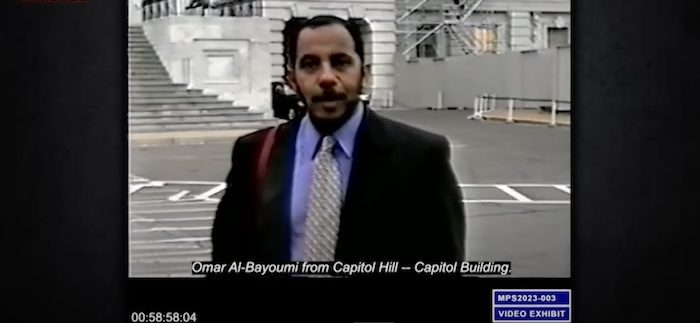
British authorities discovered these videos during a raid on Omar al-Bayoumi’s Birmingham apartment just 10 days after 9/11. Al-Bayoumi, described by Evanina as “the fixer, the facilitator, the leader” of the surveillance cell, wrote letters to Saudi government officials referencing “complete cooperation and advanced coordination” in place.

The declassified records reveal a sophisticated support network involving multiple Saudi officials. Fahad al-Thumairy, connected to the King Fahd Mosque in Los Angeles and identified as a “reputed Islamic fundamentalist,” worked alongside American cleric Anwar al-Awlaki, who later became a major al-Qaeda leader before being killed in a CIA drone strike. The FBI assessed there was a “50/50” chance al-Awlaki had advance knowledge of 9/11.

Particularly significant is a February 2000 “welcome party” video, which accountability group 9/11 Justice highlighted in an April 27, 2025 press release, for two hijackers in San Diego. The footage shows al-Bayoumi instructing the videographer not to film one side of the room, but when the camera accidentally captures that area, it reveals Muhammad al-Qahtani, identified in court records as a Saudi government religious official. Evanina called this “another direct tie to an actual employee of the Saudi government in the welcoming party for two soon-to-be hijackers.”

The declassified documents indicate that al-Sadhan and al-Sudairy lived at the same San Diego address where hijackers would later stay. Investigators developed evidence showing the hijackers traveled from Arizona to Virginia in April 2001, passing through Oklahoma and Missouri where the same Saudi operatives had been assigned. 

Evanina believes these locations served as “check-in spots where they had to check in with trusted people who helped facilitate their arrival.”

A 130-page FBI report concluded that Saudi government officials knowingly provided a support network, stating that their involvement “would logically be supposed to have the knowledge or concurrence of the KSA government.” The report describes a “militant network that was created, funded, directed and supported by the KSA and its affiliated organizations and diplomatic personnel within the U.S.”

These revelations carry significant implications for ongoing litigation by 9/11 families against Saudi Arabia. The documents emerged following President Biden’s executive order directing declassification after families threatened to boycott memorial events without transparency.

Evanina emphasized that the hijackers “did not speak English” and “had never been to the United States before,” making a support network “critically needed” for such a “sophisticated plot.” He called the current moment a “once in a lifetime opportunity” for the FBI, CIA and administration to work with 9/11 families and “deal directly with the Saudi government for access to these individuals.”

The documents were obtained in fall 2001 but never provided to the 9/11 Commission, raising questions about what other evidence remains classified. Saudi Arabia continues to deny any government involvement in the attacks despite mounting circumstantial evidence of official complicity in the deadliest terrorist attack on American soil.

José Niño is the deputy editor of Headline USA. Follow him at x.com/JoseAlNino 

It’s Zombie Inflation

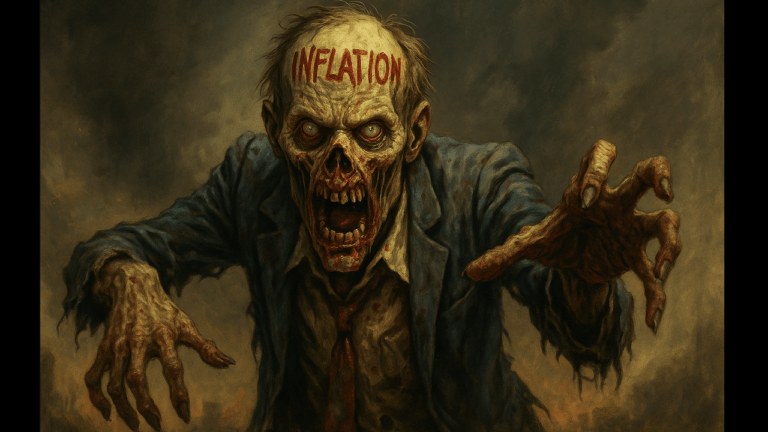
(Mike Maharrey, Money Metals News Service) Maybe we should call it Zombie Inflation.

Every time the mainstream declares price inflation dead and buried, new data comes out and rains on the funeral.

However, if you understand the root cause of inflation, the CPI data comes as no surprise.

And it isn’t fundamentally about tariffs.

The inflation machine has been running for more than a year, and the Federal Reserve is poised to crank it up a notch or two.

August CPI By the Numbers

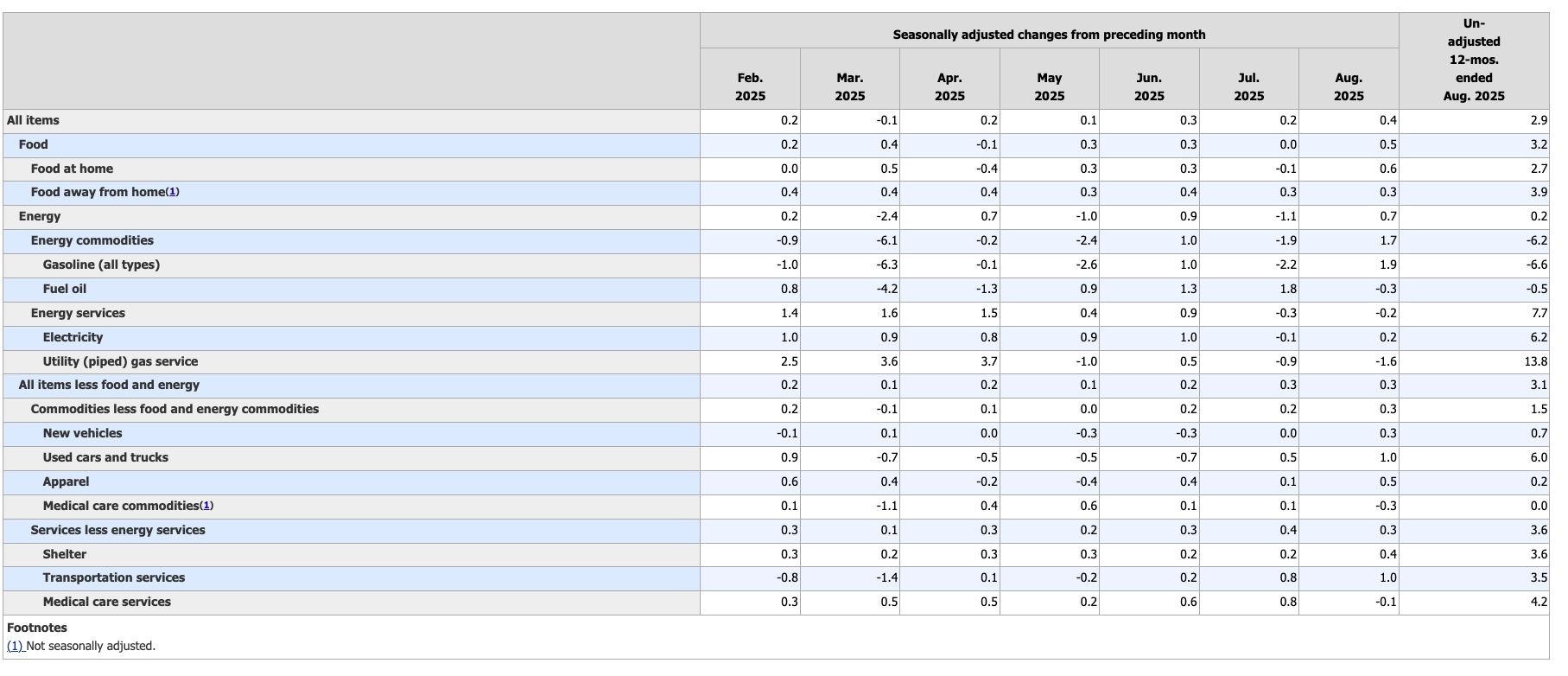
The headline annual CPI came in at 2.9 percent, according to BLS data. That was up from 2.7 percent in July and the highest print since January.  The reading was in line with expectations.

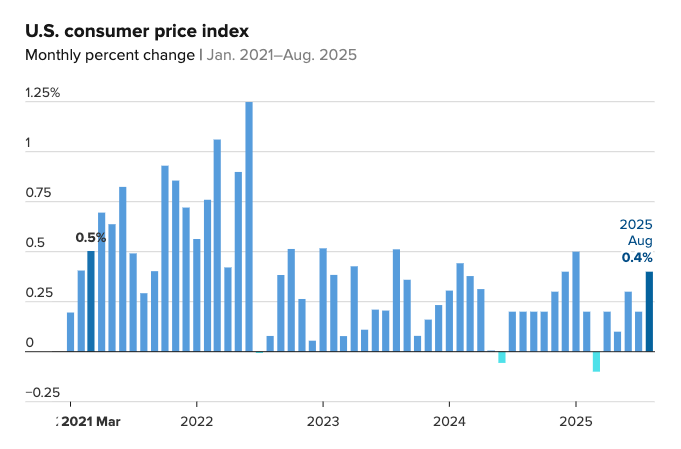
On a monthly basis, prices rose by a healthy 0.4 percent. That was up from 0.2 percent in July and above the 0.3 percent projection.

If you annualize that monthly number, we’re talking about 4.8 percent CPI.

Stripping out the more volatile food and energy prices (if only we could do that in real life), core CPI rose 3.1 percent on an annual basis. Month-on-month, core CPI was up 0.3 percent, the same as July.

Over the last three months, core CPI has increased by 0.2, 0.3, and 0.3 percent, annualizing to 3.2 percent. Core CPI has been mired in this range for months.

When you look at the CPI in graphical form, it’s clear that inflation has been bouncing in the same range since around mid-2022.

Note that none of these numbers is anywhere near the Fed’s mythical 2 percent target.

As you parse the data, keep in mind that the CPI doesn’t tell the entire story of inflation.

The government revised the CPI formula in the 1990s so that it understated the actual rise in prices. Based on the formula used in the 1970s, CPI is closer to double the official numbers. So, if the BLS used the old formula, we’d be looking at CPI closer to 6 percent. And using an honest formula, it would probably be worse than that.

The recent massive revisions to the BLS employment data have also cast some doubt on the veracity of government number-crunching.

However, this is the formula the government uses, and it drives decision-making.

Looking more deeply at the data, we find the energy prices have started creeping up. The energy index rose 0.7 percent, driven by a 1.9 percent increase in gasoline prices.

Food prices are also creeping higher, with the index up 0.5 percent. All six major grocery store food group indexes increased in August.

Service prices were up 0.3 percent month-on-month and 3.6 percent annually. This is significant because you can’t blame tariffs for rising service prices.

The Real Inflation Story

The mainstream mantra has been that tariffs are going to boost price inflation. But the data doesn’t really bear this out. There have been some price increases on tariff-sensitive goods, but the unabated increase in shelter and service costs reveals something else at play. Even CNBC suddenly affirmed that tariffs don’t cause inflation.

“Historically, tariffs have been looked at as temporary boosts to the prices of goods but not a longer-term inflation driver.”

The problem is that people misunderstand inflation. Rising prices aren’t “inflation” as the term is properly defined. Inflation is an increase in the supply of money and credit. Rising prices are one symptom of this monetary inflation.

The fact of the matter is that inflation has been increasing for more than a year.

And it appears the Federal Reserve is ready to crank up the inflation machine higher. According to CNBC, “market pricing indicates a 100 percent certainty that the Fed will lower its benchmark interest rate” at the September meeting.

That’s because there is significant softness in the labor market. Based on the BLS data, the economy only created 22,000 jobs in August. Meanwhile, the BLS has erased nearly 1 million jobs from the data through revisions. Initial jobless claims surged to 263,000 last week, a 4-year high.

This signals economic contraction.

And what do we call low economic growth and high price inflation?

Stagflation.

This puts the Fed between a rock and a hard place. In fact, it has faced this Catch-22 for months. It needs to cut to support the debt-riddled bubble economy. But it also needs higher rates to keep price inflation under control.

Obviously, it can’t do both.

It looks like the central bank will choose inflation.

As already mentioned, it made that choice months ago when it stopped raising rates. The fact is, the central bank never did enough to rein in inflation.

No matter how you choose to parse the CPI data, inflation is already increasing, and a rate cut will accelerate that trend.

After the last Fed meeting, Chairman Jerome Powell called the current monetary policy “modestly restrictive.”

This characterization is debatable.

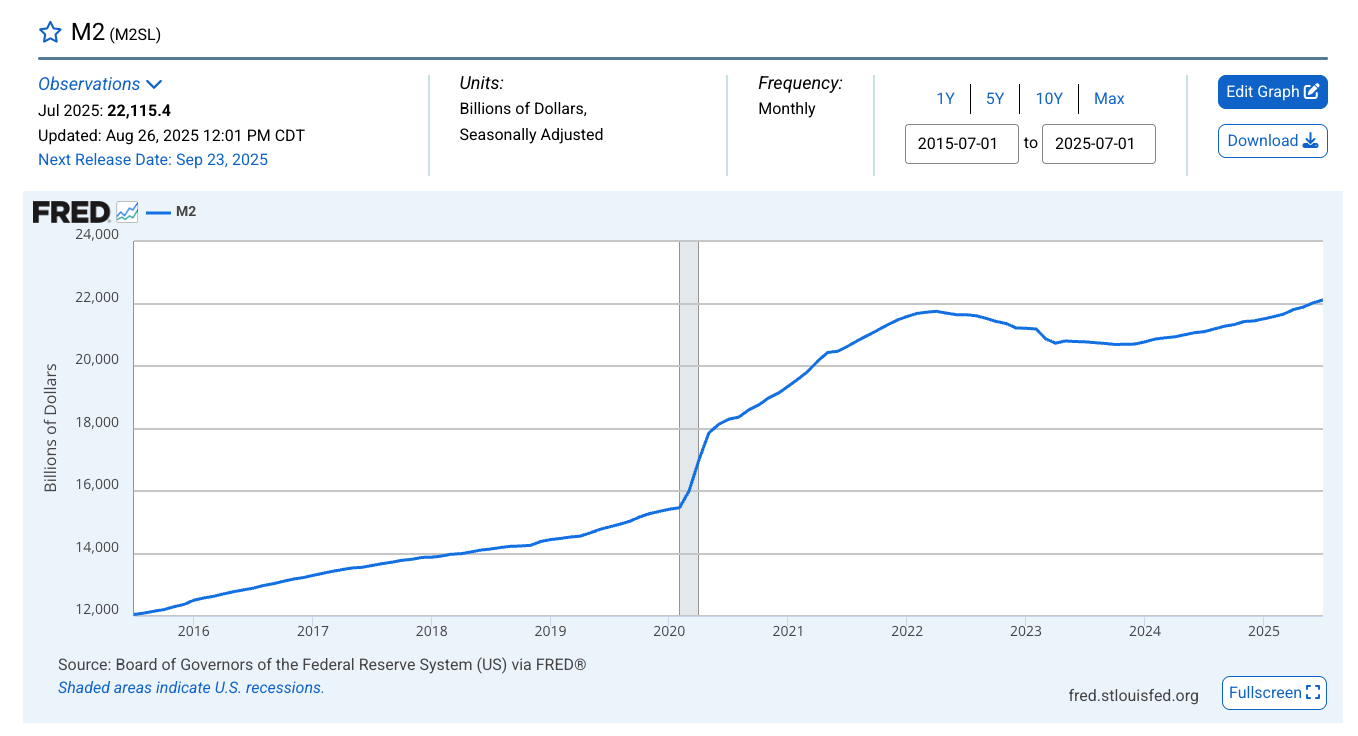
As of the end of June, the money supply had expanded by more than $600 billion since its low point in mid-2023.

As of June, the M2 money supply stood at $22.1 trillion and is above the peak reached during the pandemic.

We can’t overstate this fact: this IS inflation.

During the Fed’s inflation fight, the M2 money supply contracted. This is exactly what needs to happen to wring out inflation from the economy. The money supply bottomed a little over a year ago at $20.60 trillion.

That sounds like an impressive inflation fight, until you realize that the money supply would need to fall by at least another $3 trillion to get back to the trend of 2019. Clearly, that’s not the trajectory.

And now the Fed is going to push up the throttle on inflation.

You would be wise to prepare for more currency devaluation.


Mike Maharrey is a journalist and market analyst for Money Metals with over a decade of experience in precious metals. He holds a BS in accounting from the University of Kentucky and a BA in journalism from the University of South Florida.
Pope Leo Makes His First Call to Catholic Parish in Gaza City

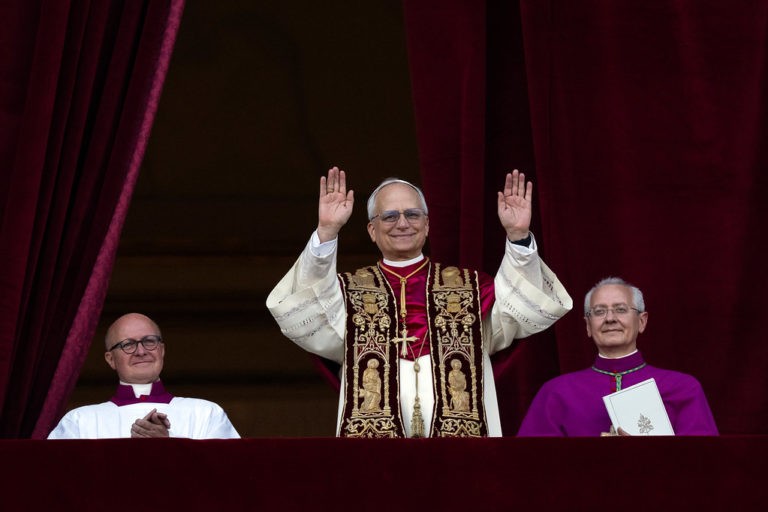
(Dave DeCamp, Antiwar.comFather Gabriel Romanelli, a priest at the Holy Family Catholic Church in Gaza City, said that he spoke with Pope Leo XIV on Tuesday, the first known time that the US-born pontiff called the parish, which was a regular practice of the late Pope Francis.

“We told him we are well, even if the situation remains difficult,” Romanelli said, according to Vatican News. “The Pope gave us his blessing and prayed for us and for peace. He follows everything closely and is committed to ending the war.”

The call from Leo comes after the Latin and Greek Orthodox Patriarchates of Jerusalem said in a joint statement that Christian clergy and nuns based at both the Holy Family Church and the nearby St. Porphyrius Orthodox Church would remain to help displaced people sheltering at the facilities despite Israel’s plans to forcibly displace the civilian population of Gaza City. The Israeli military has since ordered the full evacuation of the city.

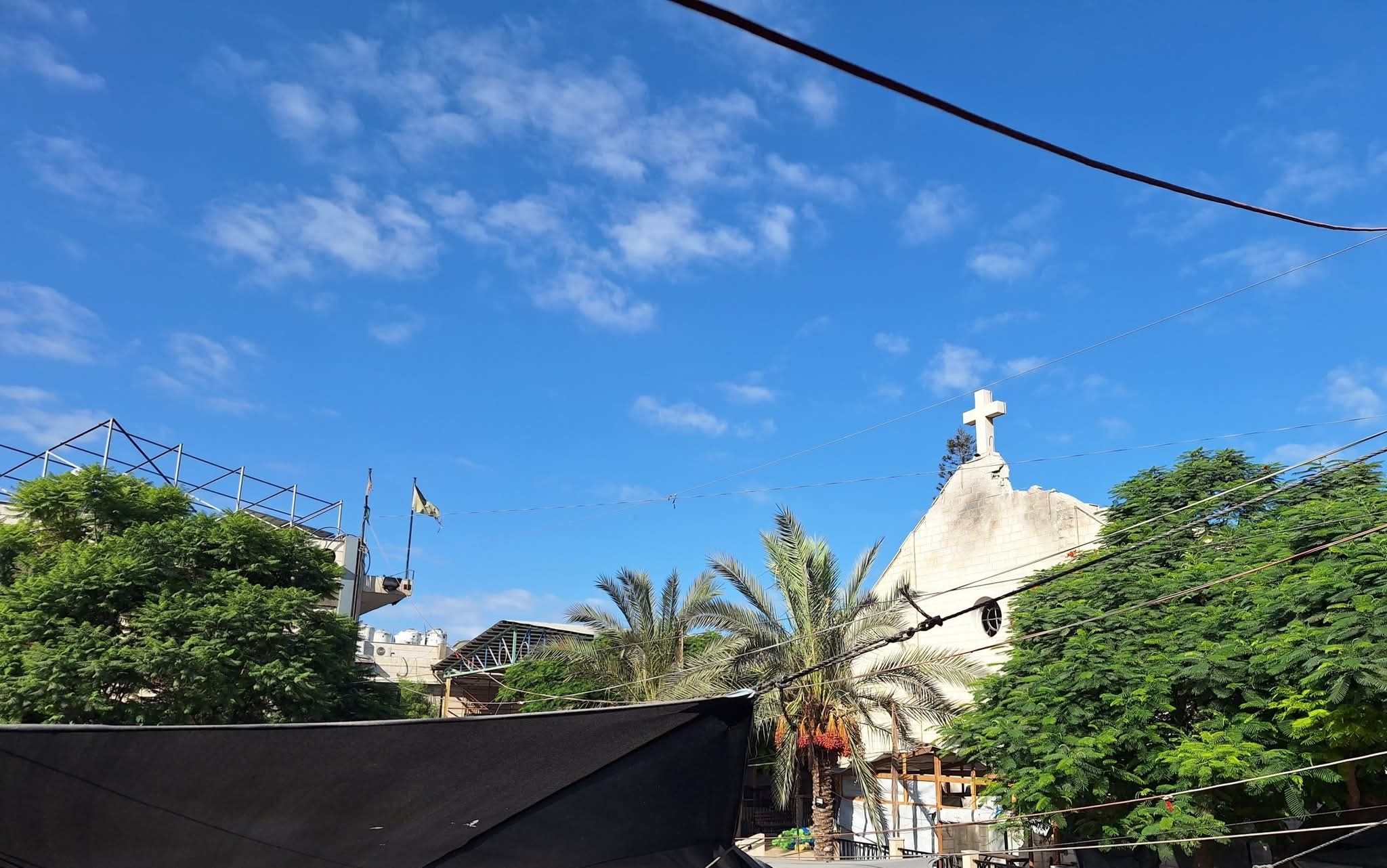
A photo of the Holy Family Catholic Church in Gaza City from Father Romanelli’s X account

The Vatican News report said that there are currently 450 displaced people, including the elderly, the sick, and children, sheltering at the Holy Family Church. “Most of the population does not want to leave,” Romanelli said. “Everywhere there is danger, but many want to remain in the city. We try to accompany them and help as we can.”

Romanelli, who is from Argentina, was injured by the Israeli tank shelling that hit the Holy Family Church in July, an attack that killed three Christians and was strongly condemned by Pope Leo. Despite his injuries, Romanelli presided over Mass at the Holy Family Church later that same day for the repose of the souls of those killed.

Romanelli said that despite the hardships, the parish recently celebrated a wedding and welcomed the birth of a baby boy. “In the midst of so much pain, God blesses us with signs of life and joy,” he said. “We continue to pray for peace, for the whole of Gaza, for the Middle East, and for the world. May the Lord, through the intercession of the Blessed Virgin Mary, grant us the miracle of peace.”

This article originally appeared at Antiwar.com.


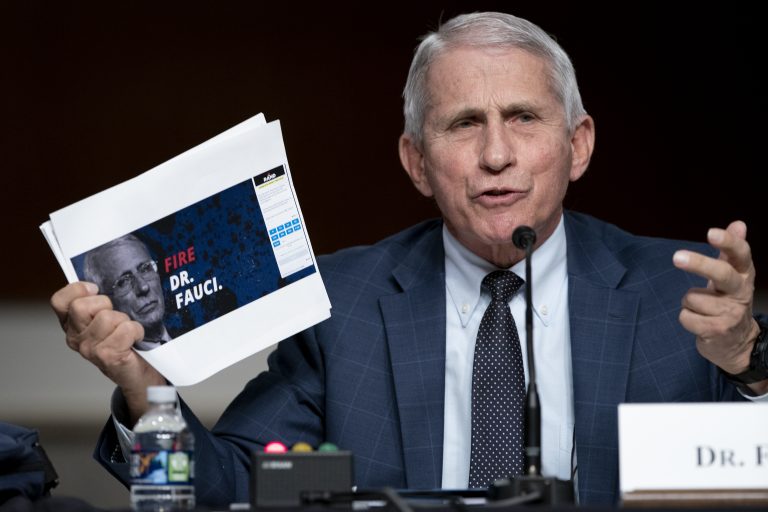
Fauci Ordered Staff to ‘Delete’ Emails, Contradicting Sworn Testimony

(Luis Cornelio, Headline USA) Disgraced former COVID czar Anthony Fauci directed colleagues to delete potentially damning emails after reading them, newly unearthed records show.

The emails—dated February and July 2020—directly contradict Fauci’s sworn testimony about deleting communications, which is a federal crime.

The files were released Wednesday by Sen. Rand Paul, chairman of the Senate Homeland Security Committee, who is now demanding Fauci testify before Congress.

Fauci’s orders to delete emails are shocking, as nearly all government correspondence is subject to Freedom of Information Act requests.

In 2024, he told the Select Subcommittee on the Coronavirus Pandemic that he never hindered FOIA probes.

Lying under oath is a federal offense, though it remains unclear if Fauci will ever face consequences.

Former President Joe Biden granted him an unconditional pardon covering 11 years of potential offenses, one of the most sweeping pardons in U.S. history.

Paul rebuked Fauci for the apparent false statements in a letter demanding his testimony.

“These documents suggest your direct involvement in efforts to conceal information related to the Committee’s investigation and appear to contradict your previous testimony before Congress,” the Republican senator wrote.

One released email shows Fauci calling Sen. Paul “full of s..t.” in a message sent by his former chief of staff Greg Folkers.

Folkers had forwarded Fauci a tweet citing his remarks about New York’s death rates compared to other countries. Fauci replied: “Please delete this e-mail after you read it.”

In another exchange with then-NIH director Francis Collins, Fauci wrote the same instruction: “Please delete this e-mail after you read it.”

Paul gave Fauci a series of dates to testify and ordered him to turn over all relevant communications.

It is unclear when or if Fauci will respond, though any potential obstruction would not be covered by Biden’s pardon.


Leaked Memo Reveals Pentagon Support Requested for Upcoming Chicago Immigration Raids

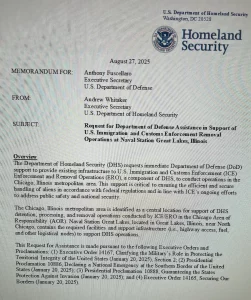
(José Niño, Headline USA)  The Department of Homeland Security has formally requested immediate military assistance from the Pentagon to support upcoming ICE operations in Chicago, according to a leaked “For Official Use Only” memo obtained by journalist Ken Klippenstein. 

The memo requests “immediate Department of Defense support” for ICE’s Enforcement and Removal Operations (ERO) “to address public safety and national security.” It indicates that active-duty troops, rather than the Illinois National Guard, would be providing this support.  

Specifically, the document asks for “support infrastructure,” such as highway access, fuel, and “other logistical nodes…” The planned staging ground is Naval Station Great Lakes in North Chicago, about 30 miles from downtown.  

Dated August 27, the request was written by DHS Executive Secretary Andrew Whitaker and sent to his Defense Department counterpart, Anthony Fuscellaro. Whitaker, a former Ralph Lauren Brand Ambassador and longtime Trump political operative, is behind the push.  

The request opens with:  

The Department of Homeland Security (DHS) requests immediate Department of Defense (DoD) support to provide existing infrastructure to U.S. Immigration and Customs Enforcement (ICE) Enforcement and Removal Operations (ERO), a component of DHS, to conduct operations in the Chicago, Illinois metropolitan area. This support is critical to ensuring the efficient and secure handling of aliens in accordance with federal regulations and in line with ICE’s ongoing efforts to address public safety and national security.

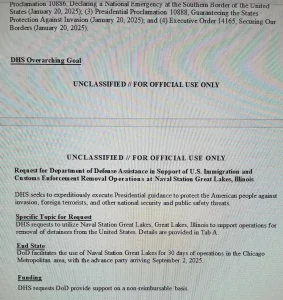
Screenshots of the leaked memo show that it cites multiple Trump-era executive orders declaring immigration at the southern border an “invasion” and a “national emergency.”  

One section reads, “DHS seeks to expeditiously execute Presidential guidance to protect the American people against invasion, foreign terrorists, and other national security and public safety threats.”  

Earlier this week, asked whether he would send the National Guard into Chicago, President Trump simply said, “We’re going in,” adding: “I didn’t say when.” This document suggests the timeline is already set — with operations already underway and extending for a month.  

“DoD facilitates the use of Naval Station Great Lakes 30 days of operations in the Chicago Metropolitan area, with the advance party arriving September 2, 2025.”  

Despite this, the Illinois National Guard maintains no official orders have been issued. “No units have been activated and we do not have an order or preparatory command for any mission,” deputy public affairs director William Grove recently said to Axios.  

Sources also revealed to Klippenstein that Customs and Border Protection is being folded into the operation. Meanwhile, Governor JB Pritzker and Chicago Mayor Brandon Johnson voiced strong opposition during a press conference.  

Johnson stressed that Chicago does “not want or need military occupation in our city.”  

Pritzker warned, “We know before anything has happened here, that the Trump plan is to use any excuse to deploy armed military personnel to Chicago. If someone flings a sandwich at an ICE agent, Trump will try and go on TV and declare an emergency in Chicago.”  

That remark referred to a Washington, DC incident where a man threw a sandwich at a federal immigration officer. He was charged with a felony, but a grand jury later refused to indict.  

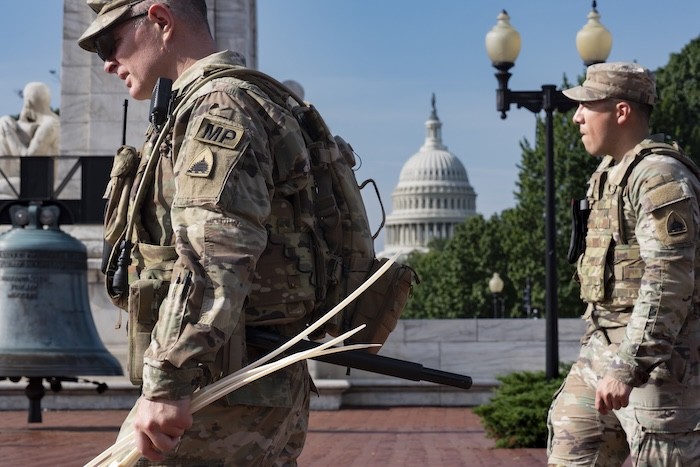
Resistance isn’t just coming from politicians. Some National Guard soldiers have already voiced objections to similar deployments in Los Angeles and DC, even through official military media channels. In Illinois, troops are also expressing discontent.  

“The National Guard has a sacred mission. We are part of the communities that we serve. We are the neighbors who show up when the flood hits, when the storms tear through the towns and when our country is in crisis,” said Illinois Guard member Demi Palecek.  

José Niño is the deputy editor of Headline USA. Follow him at x.com/JoseAlNino 

UPDATE: ATF Says Report that Kirk’s Ammo Has ‘Transgender and Anti-Fascist’ Markings is Unconfirmed

UPDATE: The original headline of this story stated that the killer’s ammo had “transgender and anti-fascist” markings — something reported by both the Wall Street Journal and Steven Crowder. The ATF has since reportedly said that the initial reports have yet to be confirmed. See here

(Ken Silva, Headline USA) Authorities continue to search for the sniper who assassinated conservative activist Charlie Kirk with one bullet and then slipped away amid the mayhem.

Kirk was killed with a gunshot from a distant rooftop at the Utah Valley University campus, where he was speaking on Wednesday, authorities said. Federal, state and local authorities were working what they called “multiple active crime scenes.” As the search stretched into a second day, they provided little information about the shooter’s identity, motive, location or evidence and were reviewing grainy security videos of a mysterious person in dark clothing.

Two people were detained Wednesday, but neither was determined to be connected to the shooting and both were released.

At a press conference, Utah Department of Public Safety commissioner Beau Mason said the first person, George Zinn, was booked in the county jail for obstruction of justice. Zinn apparently made a scene after the shooting that may have distracted law enforcement and allowed the killer to escape unnoticed.

The second person taken into custody, Zachariah Qureshi, was initially described by FBI Director Kashyap Patel as a suspect. However, Utah Gov. Spencer Cox clarified at the press conference that Qureshi was a person of interest rather than a suspect. Mason further said Thursday morning that neither men were considered suspects.

Also at the press conference, UVU Police Chief Jeff Long said he had six officers working the event, plus some plainclothes officers in the crowd. Those officers coordinated with Kirk’s security team ahead of the event, he said.

Long declined to say whether the sniper’s rifle was recovered. On Thursday morning, conservative pundit Steven Crowder said he was leaked an email from an ATF officer, which said that a “an older model imported Mauser .30-06 caliber bolt action rifle wrapped in a towel in a wooded area near the campus.”

“The location of the firearm appears to match the suspects route of travel,” the purported ATF email said. “The spent cartridge was still chambered in addition to three unspent rounds at the top fed magazine. All cartridges have engraved wording on them, expressing transgender and anti-fascist ideology.”

Observers were quick to jump to the conclusion that the shooter was transgender and/or Antifa. However, a sophisticated operator would, of course, put those markings on the ammo to confuse investigators and the public.

The Associated Press contributed to this report.

Ken Silva is the editor of Headline USA. Follow him at x.com/jd_cashless.

Silver’s Turn in the Spotlight

(Money Metals News Service) In the latest Money Metals Midweek Memo, host Mike Maharrey analyzed the ongoing bull markets in gold and silver, highlighting record highs, historical ratios, supply deficits, and why silver may now be poised for an even stronger run than gold.

Gold’s Relentless Bull Run

Gold continues to push higher, marking fresh records in the past week. Just seven days ago, gold was priced at $3,562 per ounce.

By the end of the week, it closed at $3,639, a gain of 2.2 percent.

At its peak, the metal reached $3,680 an ounce.

While some worry that gold is overbought, technical analyst Jesse Columbo argues this is a classic sign of a strong bull market rather than a bubble. He dismisses the naysayers, pointing out that most failed to predict the rally over the last two years yet are quick to call for a correction today.

Mike Maharrey acknowledged that consolidations are inevitable, but he stressed that the fundamentals remain firmly in place. Gold’s bull market, he suggested, is far from over.

Silver’s Quiet but Explosive Momentum

While gold has been in the spotlight, silver is quietly staging its own remarkable performance. The metal is up nearly 40 percent this year, reaching levels not seen since 2011. It has already broken through the $40 per ounce resistance level and found support at around $41.

Analysts suggest that silver is now poised for a run toward its historic highs of $50 an ounce, first hit in the 1980s and revisited in 2011.

Silver’s move may be late compared to gold’s, but it is no less impressive. With gold setting record after record, silver is now following suit and looks ready to outperform in the next stage of the bull market.

The Gold-Silver Ratio

A key indicator that points to silver’s potential is the gold-silver ratio. The ratio currently sits above 88-to-1, far above the modern average of around 60-to-1.

Historically, whenever the spread grows this wide, silver rallies quickly to close the gap.

In 2020, for example, the ratio peaked at 123-to-1 before plunging to 60-to-1, propelling silver 80 percent higher in less than 20 weeks.

During the financial crisis of 2008–2011, the ratio dropped to 30-to-1 as silver surged to its 2011 record high.

By this measure, silver remains on sale compared to gold, with history suggesting a strong run is likely ahead.

Structural Supply Deficits

One of the biggest drivers of silver’s rise is an ongoing supply shortfall.

In 2024 alone, demand outstripped supply by 148.9 million ounces.

Over the past four years, the total deficit reached 678 million ounces, equivalent to ten months of global mining output.

Mining cannot quickly adjust to higher prices. Infrastructure and exploration timelines mean production responds slowly, leaving industrial users and jewelers no choice but to tap above-ground stocks. This pushes prices upward as available supply tightens further.

Industrial and Green Energy Demand

Silver demand has been fueled by its unique role in electronics and renewable energy. Its unmatched conductivity makes it essential for wiring, computing, and the growing artificial intelligence sector.

At the same time, solar energy production continues to drive record-setting demand, supported by government subsidies that ensure growth even in economic downturns.

Industrial demand has now set records for four consecutive years, and analysts expect the trend to continue.

Investor Behavior in the United States

Despite the rally, U.S. investors have been largely absent from the silver market. Retail demand for bars and coins has dropped by about 30 percent this year, even as Asian and European buyers remain active.

Futures positioning has also weakened, with net managed money longs falling a third below summer highs.

Maharrey criticized the tendency of Americans to sell silver for rapidly declining dollars, calling it short-sighted in the face of persistent inflation. He warned that once U.S. investors return to the market, silver could see another powerful surge.

Expert Perspectives

Money Metals CEO Stefan Gleason recently identified $40 per ounce as a key threshold for silver. He predicted that prices could challenge the $50 level by next year and, if broken, move significantly higher.

The long-term cup-and-handle formation in silver charts supports the case for a major breakout, with technical patterns pointing to explosive upside once the barrier falls.

Metals Focus echoed this outlook, projecting that liquidity constraints in London and strong investment demand will continue to support silver prices well into 2026.

Expected Federal Reserve rate cuts, concerns over U.S. debt, and global economic headwinds are all expected to provide additional momentum.

Junk Silver as an Entry Point

Maharrey concluded the episode by recommending junk silver as an attractive way to enter the market. Pre-1965 dimes, quarters, and half dollars contain 90 percent silver, making them far more valuable than their face value suggests.

A 1964 quarter, for example, carries a melt value of about $7.39.

Premiums on junk silver once soared as high as $15 over spot, but today they have fallen below $1. This makes junk silver one of the best low-cost options for investors seeking real money outside the fiat system.

Maharrey noted that Lyndon B. Johnson’s 1965 Coinage Act stripped silver from U.S. coins, a move he compared to the Roman practice of debasing currency.

He also reminded listeners of Richard Nixon’s broken promise when he closed the gold window in 1971, insisting the dollar would not be devalued—a claim history has proved false.

Final Takeaway

Silver remains historically undervalued compared to gold, supported by persistent deficits, industrial demand, tight liquidity, and untapped investor interest in the United States.

Maharrey closed by urging listeners to protect their wealth with tangible assets, warning that tomorrow’s dollars will always buy less than today’s.

Charlie Kirk’s Murder Met w/ Liberal Media Hatred, Vitriol

(Luis Cornelio, Headline USA) The leftist media wasted no time smearing Charlie Kirk, the influential conservative leader, even after he was viciously murdered at a Utah event on Wednesday.

Some of the largest media outlets claimed Kirk had it coming, went after his supporters and branded him a liar or “controversial,” as exposed by the Media Research Center.

MSNBC led the charge, with guest Matthew Dowd suggesting live on air that Kirk brought the attack on himself.

“[He is] constantly sort of pushing this sort of hate speech, aimed at certain groups,” Dowd claimed. “And I always go back to, hateful thoughts lead to hateful words, which often then to hateful actions.”

Dowd’s insinuation drew a rare rebuke from MSNBC President Rebecca Kutler, who called the remarks “inappropriate, insensitive and unacceptable.”

“We apologize for his statements, as has he. There is no place for violence in America, political or otherwise,” she said.

Kutler, however, spared host Katie Tur, who disgustingly labeled Kirk a “divisive figure, polarizing, lightning rod. Whatever term you want to use.”

Within minutes of the shooting, Tur even speculated — without evidence — that President Trump and his administration might use Kirk’s death “as a justification for something.”

Political journalist AG Gankarski was suspended from Florida Politics after texting Rep. Randy Fine, R-Fla., asking if Kirk’s death had changed his stance on gun control. Fine had learned of Kirk’s passing just minutes before.

“I am repulsed that you would even think to ask a political question when all anyone should be doing is praying for his survival. Never contact me again,” Fine replied.

The New York Times piled on, with Clay Risen’s obituary branding Kirk a serial liar.

“He was so vocal in his willingness to spread unsupported claims and outright lies — he said that the drug hydroxychloroquine was ‘100 percent effective’ in treating the virus, which it is not — that Twitter temporarily barred him in early March 2020,” Risen bafflingly wrote.

The Guardian ran a fundraising pitch on its coverage of Kirk’s death, a wildly inappropriate time to ask readers for money. Worse still, the plea was about fighting Trump and allies.

“I hope you appreciated this article,” read the pitch written by editor in chief Betsy Reed. “Before you move on, I wanted to ask whether you could support the Guardian’s journalism as we face the unprecedented challenges of covering the second Trump administration.”

It added: “The Guardian is clear: we have no interest in being Donald Trump’s – or any politician’s friend.”

Guardian spokesperson Matt Mittenthal later claimed no Kirk-related articles would include fundraising pitches. It remains unclear how much money the outlet received before pulling the ad.

These are only a handful of examples from a long, and growing, list of vile coverage surrounding Kirk’s death. He leaves behind one of the most influential legacies in the conservative movement.

BREAKING: Conservative Activist Charlie Kirk Assassinated

UPDATE: This story originally reported that Charlie Kirk was in critical condition, but it has been updated to reflect that he has reportedly died.

(Headline USACharlie Kirk, the CEO and co-founder of the conservative youth organization Turning Point USA, was assassinated Wednesday at a college event, according to Just the News. A suspect was in custody, but soon determined not to be the shooter, according to the New York Times.

Videos posted to social media from Utah Valley University show Kirk speaking into a handheld microphone while sitting under a white tent emblazoned with the slogans “The American Comeback” and “Prove Me Wrong.” A single shot rings out and Kirk can be seen reaching up with his right hand as a large volume of blood gushes from the left side of his neck. Stunned spectators are heard gasping and screaming before people start to run away. The AP was able to confirm the videos were taken at Sorensen Center courtyard on the Utah Valley University campus.

“We are confirming that he was shot and we are praying for Charlie,” said Aubrey Laitsch, public relations manager for Turning Point USA.

Kirk, 31, was speaking at a debate hosted by his nonprofit political organization. The event had been met with divided opinions on campus. An online petition calling for university administrators to bar Kirk from appearing received nearly 1,000 signatures. The university issued a statement last week citing First Amendment rights and affirming its “commitment to free speech, intellectual inquiry, and constructive dialogue.”

Last week, Kirk posted on X images of news clips showing his visit to Utah colleges was sparking controversy. He wrote, “What’s going on in Utah?”

President Donald Trump and a host of Republican and Democratic elected officials decried the shooting and offered prayers for Kirk on social media.

“We must all pray for Charlie Kirk, who has been shot. A great guy from top to bottom. GOD BLESS HIM!” Trump posted on Truth Social.

The shooting comes amid a spike in political violence in the United States across all parts of the ideological spectrum. The attacks include the assassination of a Minnesota state lawmaker and her husband at their house in June, the firebombing of a Colorado parade to demand Hamas release hostages, and a fire set at the house of Pennsylvania’s governor, who is Jewish, in April. The most notorious of these events is the shooting of Trump during a campaign rally last year.

Former Utah congressman Jason Chaffetz, a Republican who was at the event, said in an interview on Fox News Channel that he heard one shot and saw Kirk go back.

“It seemed like it was a close shot,” Chaffetz said, who seemed shaken as he spoke.

He said there was a light police presence at the event and Kirk had some security but not enough.

“Utah is one of the safest places on the planet,” he said. “And so we just don’t have these types of things.”

Turning Point was founded in suburban Chicago in 2012 by Kirk, then 18, and William Montgomery, a tea party activist, to proselytize on college campuses for low taxes and limited government. It was not an immediate success.

But Kirk’s zeal for confronting liberals in academia eventually won over an influential set of conservative financiers.

Despite early misgivings, Turning Point enthusiastically backed Trump after he clinched the GOP nomination in 2016. Kirk served as a personal aide to Donald Trump Jr., the president’s eldest son, during the general election campaign.

Soon, Kirk was a regular presence on cable TV, where he leaned into the culture wars and heaped praise on the then-president. Trump and his son were equally effusive and often spoke at Turning Point conferences.

Adapted from reporting by the Associated Press