

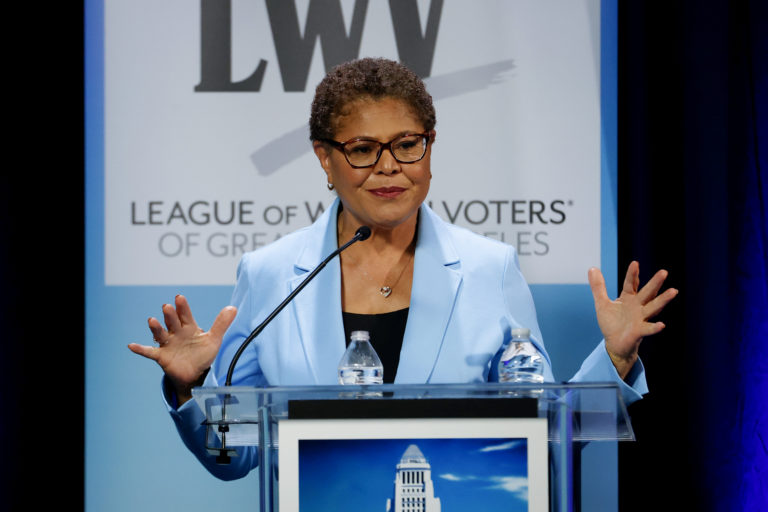
LA Mayor Karen Bass Defies Trump’s Order Honoring Kirk

(Luis CornelioHeadline USA) Los Angeles Mayor Karen Bass ordered city flags to remain at full staff, snubbing proclamations from President Donald Trump and Illinois Gov. JB Pritzker.

A memo from the Los Angeles Fire Department, circulated on social media by journalist Anthony Cabassa, confirmed flags would stay raised each day.

“Flags shall remain to full staff each day and should not be lowered to half-staff unless directed by the Mayor,” the memo read.

Her order came just days after Trump directed U.S. flags be lowered to half-staff in honor of conservative activist Charlie Kirk, who was viciously murdered while addressing supporters on Monday.

Trump’s proclamation read: “As a mark of respect for the memory of Charlie Kirk, by the authority vested in me as President of the United States by the Constitution and the laws of the United States of America, I hereby order that the flag of the United States shall be flown at half-staff at the White House and upon all public buildings and grounds, at all military posts and naval stations, and on all naval vessels of the Federal Government in the District of Columbia and throughout the United States and its Territories and possessions until sunset, September 14, 2025.”

Pritzker issued a similar proclamation to honor victims of political violence, while avoiding any direct mention of Kirk.

Bass’s move stands in sharp contrast to how she mourned Cuban dictator Raul Castro’s passing in 2016 when she served in Congress.

“As Cuba begins nine days of mourning, I wish to express my condolences to the Cuban people and the family of Fidel Castro,” she wrote at the time. “The passing of the Comandante en Jefe is a great loss to the people of Cuba. I hope together, our two nations will continue on the new path of support and collaboration with one another, and continue in the new direction of diplomacy.”

Shortly after Kirk was shot, Bass claimed she was “absolutely disgusted” by the attack, saying, “Political violence in all forms is unacceptable and reprehensible. We must all reject it.”

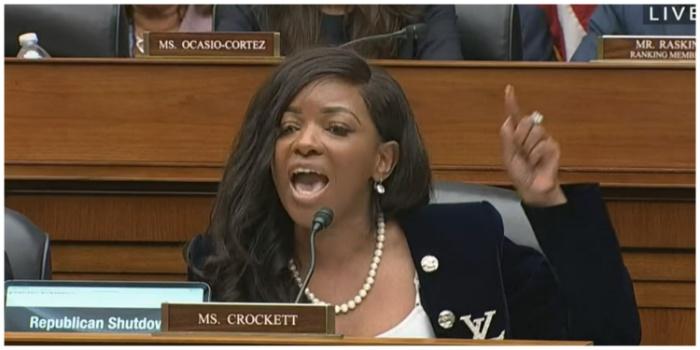
Jasmine Crockett Calls ICE ‘Slave Patrols’

(Luis CornelioHeadline USA) Rep. Jasmine Crockett, D-Texas, on Sunday compared President Donald Trump’s ICE to slave patrols, the armed groups that enforced slavery in the South.

The controversial Democrat made the comparison during an interview on MSNBC’s Velshi, while attacking Trump’s law-and-order agenda.

“As somebody who understands history, when I see ICE, I see slave patrols,” she claimed. “Now, I never lived through the slave patrol period. But if you know the history of policing in this country, then you understand that they were born out of slave patrols.”

Slave patrols consisted of armed white men chasing down runaway slaves, punishing them and returning them to their owners.

The left has long claimed that modern policing in America is rooted in this system and that its prejudice and racism continues today.

Crockett also lashed out at the Supreme Court’s decision to pause a lower court’s injunction against the Trump administration’s methods of locating and identifying illegal aliens.

She said that “it’s almost like you can just go grab them up.”

“That is what they’re saying. And that is the problem. We all should have a problem with that,” she added. “But when you don’t want to teach American history, that includes black history, then you lose out on the benefit of understanding that we have been down this road before and it was not good, and we fixed it once, and it is a shame that we are relitigating this and we are going to have to fix it again.”


The Cost of Living Is Falling Fast… Relative to Gold

(Clint Siegner, Money Metals News Service) Americans are feeling the pinch when it comes to price inflation. Rising prices are a political football with politicians on both sides of the aisle eager to pin blame on the other party.

Both sides are correct. Politicians, along with the central bank they created and continue to endorse, are fully responsible for the affordability crisis and the fading American dream.

Few young people can afford to buy a home. Simply paying rent and buying groceries is out of reach for some. Politicians may try to leverage this growing frustration, but their solutions have not helped.

Most Americans don’t understand the root of the problem. Prices are not going higher. Instead, the U.S. dollar (like other fiat currencies) is going down the drain.

If more people understood the yardstick that we use for prices – the dollar – was being debased, it would change the way they invest and save.

The best way to illustrate what is happening with prices is to use a different yardstick. Take a look at what has happened to prices measured against gold.

Housing is a good place to start.

According to the U.S. Census, the average home price in 2000 was $119,600. The average gold price for that year was $279/oz. That means it took roughly 429 ounces of gold to buy a home.

In 1970, it took 665 ounces of gold to buy the average house.

Today, the median home price is $410,000, while gold is currently priced at roughly $3,660/oz.

It now takes just 112 ounces of gold to buy a home. Home prices have fallen dramatically over the past 55 years, if you measure with a more reliable yardstick.

How would home affordability look for young people if they began saving for down payments using gold rather than dollars?

Let’s take a look at groceries. The typical U.S. household spent $1,140/year on groceries in 1970. That would have been the equivalent of 32 ozs of gold.

In 2000, the annual cost of groceries was $2,900.00 or about 10-½ ounces in gold equivalent.

Last year, the average household spent $6,053 on groceries, while the average gold price was $2,389/oz. The price of groceries relative to gold had fallen to just 2-½ ounces.

What happened to the cost of healthcare since 1970 is also interesting. Households spent $356 on average that year, not quite 10 ounces in gold equivalent.

Thirty years later, the average cost of healthcare in dollars had risen to $2,129. But it fell to about 7-½ ounces of gold.

In 2024, households spent an average of $6,168. That is just 2-½ ounces of gold equivalent.

The trend is similar for virtually all items included in Americans’ cost of living. Costs are exploding in terms of dollars, but they are collapsing relative to gold.

It is, unfortunately, next to impossible for most Americans to completely avoid being caught by the decline of the dollar.

After all, wages are paid in dollars, and people need dollars to pay the bills.

Unless politicians are talking about a return to honest money – dollars which are redeemable in gold – they aren’t offering a genuine solution to the problem.

In the meantime, Americans should do what they can to implement a personal gold standard. That is to say, put excess savings into gold (and silver) rather than dollars and avoid investments in fixed dollar assets – such as CDs or bonds.


Clint Siegner is a Director at Money Metals Exchange, a precious metals dealer recently named “Best in the USA” by an independent global ratings group. A graduate of Linfield College in Oregon, Siegner puts his experience in business management along with his passion for personal liberty, limited government, and honest money into the development of Money Metals’ brand and reach. This includes writing extensively on the bullion markets and their intersection with policy and world affairs.

How Will Fed Rate Cuts Impact Gold and Silver?

(Mike Maharrey, Money Metals News Service) The Federal Reserve is expected to cut interest rates by at least a quarter percent this week, dropping its federal funds rate to between 4 and 4.25 percent. What will that mean for gold and silver?

The metals have already gotten a boost from rate cut expectations, so there won’t likely be much effect from the cut itself. That has already been built into the price. The messaging coming out of the FOMC meeting will primarily drive market reaction after the meeting. If Powell hints that more cuts are in the pipeline, gold and silver will likely rally further. But if Powell & Company suddenly turn more hawkish and hint that future cuts will be limited, that could put a drag on prices.

But what about the longer term? How will this apparent pivot to looser monetary policy impact the gold and silver market moving forward?

In a nutshell, an environment of lower rates will generally be viewed as positive for the metals.

Gold, Silver, and Real Interest Rates

Gold and silver are non-yielding assets. This means they don’t generally generate income from interest, dividends, or rental payments. Gold and silver’s value is derived from price appreciation alone.

When interest rates are higher, there is an opportunity cost to holding gold or silver when you could own bonds that generate interest income or stocks that pay dividends. However, when real interest rates fall or turn negative, those income-producing alternatives lose their comparative advantage.  In such an environment, the relative cost of holding precious gold and silver diminishes, making the metals more attractive as safe-haven and wealth-preservation assets.

What do we mean by “real” interest rates?

The real interest rate is simply the stated rate you see on the news adjusted for price inflation.

To calculate the real interest rate, you take the quoted nominal rate and subtract CPI.

For example, let’s say a 10-year Treasury bond is yielding 4 percent. That seems like a pretty good return. But if the CPI is running at 3.5 percent, the real interest rate on that bond is only 0.5 percent (4-3.5=0.5).

Note that in a low-interest-rate environment or if price inflation is particularly high, real interest rates can go negative.

If that same 10-year Treasury is only yielding 3 percent and the CPI is 5 percent, your real interest rate is -2 percent. That means you will lose money in real terms if you buy and hold that bond (Assuming everything remains static).

If you take CPI data at face value, the current real rate is between 1.6 and 1.25 percent (That’s the Fed funds rate minus the current CPI of 2.9 percent).

If the Federal Reserve cuts its rate by 25 basis points, as expected, the average real rate will fall below 1 percent. Two or three more cuts will result in a negative real rate. And if price inflation continues to increase, negative rates will manifest even faster.

Keep in mind that the true price inflation rate is higher than the CPI indicates. The government revised the CPI formula in the 1990s so that it understates the actual rise in prices. Based on the formula used in the 1970s, CPI is closer to double the official numbers. So, given the current BLS estimate of 2.9 percent, under the old formula, you’d be looking at CPI closer to 6 percent. In other words, real rates may well already be negative.

And that means there is no opportunity cost to holding gold or silver.

This is extremely bullish for precious metals. It explains why their prices have rallied every time the Fed has hinted at cutting. And it’s one of the reasons many analysts believe the gold and silver rally has plenty of legs left.

The truth is (although they would never say it out loud), the central bankers over at the Federal Reserve prefer negative real rates because it softens the government’s massive debt burden.

As an investor, it’s crucial to pay attention to real rates. If you fail to grasp the concept of real interest rates, you can easily get fooled by media headlines. They will tout higher interest rates even when real rates are negative.

The Inflation Factor

It’s also important to remember that looser monetary policy is inherently inflationary. The whole point of rate cuts is to stimulate borrowing and spending (In other words, the move is to incentivize more debt). In a fractional reserve banking system, bank loans create new money. This is, by definition, inflation.

While the perception is that monetary policy is currently tight, it isn’t. The money supply has been increasing for well over a year. Again, this is, by definition, inflation. So, we are already in an inflationary environment, and the central bank is poised to crank up the inflation machine even higher.

This is yet another reason cuts are bullish for gold and silver. Gold, in particular, is an inflation hedge. It protects your wealth against this perpetual dollar devaluation.


Mike Maharrey is a journalist and market analyst for Money Metals with over a decade of experience in precious metals. He holds a BS in accounting from the University of Kentucky and a BA in journalism from the University of South Florida.

Poland Announces Plan to Further Expand Gold Reserves

(Mike Maharrey, Money Metals News Service) Last week, the National Bank of Poland announced plans to boost its gold holdings to 30 percent of its total reserve assets.

The Polish central bank has already significantly increased its gold reserves.

The National Bank of Poland was the biggest central bank gold buyer in 2024 and stayed on top with continued purchases through the first eight months of 2025, adding another 67 tonnes.

Last year, National Bank of Poland Governor Adam Glapiński indicated the central bank planned to increase its gold holdings to 20 percent of its reserves.

“This makes Poland a more credible country; we have a better standing in all ratings, we are a very serious partner, and we will continue to buy gold.”

According to the World Gold Council, Poland currently holds just over 515 tonnes of gold, making up 22 percent of its total reserves. That’s more than the European Central Bank. To put the country’s gold reserves in context, in 1996, the NBP only held 14 tonnes of gold.

When he announced plans to further expand Poland’s gold reserves last week, Glapiński called gold “the only safe investment for state reserves,” in these “difficult times of global turmoil and the search for a new financial order.”

In an interview earlier this year, Glapiński said that it is not directly linked to any national economic policies, is a safe haven during crises, and retains its real value over the long term.

“It is a symbol of stability that enhances our credibility in the eyes of investors and foreign partners.”

According to the NBP’s website, gold is not a liability and carries no counterparty risk. Furthermore, its physical characteristics ensure durability and near indestructibility.

When he announced the initial plan to expand its gold reserves in 2021, Glapiński said holding gold was a matter of financial security and stability. 

“Gold will retain its value even when someone cuts off the power to the global financial system, destroying traditional assets based on electronic accounting records. Of course, we do not assume that this will happen. But as the saying goes – forewarned is always insured.

“And the central bank is required to be prepared for even the most unfavorable circumstances. That is why we see a special place for gold in our foreign exchange management process.”

Glapiński also pointed out that “Gold is free from credit risk and cannot be devalued by any country’s economic policy. Besides, it is extremely durable, virtually indestructible.” 

Poland has also brought some of its gold home. In 2019, the Polish central bank covertly moved 100 tonnes of gold from London vaults to a facility in Warsaw.

Poland isn’t alone in boosting its gold holdings.

On net, central banks globally increased their official gold holdings by 1,044.6 tonnes in 2024. It was the 15th consecutive year of expanding gold reserves.

Last year was the third-largest expansion of central bank gold reserves on record, coming in just 6.2 tonnes lower than in 2023 and 91 tonnes lower than the all-time high set in 2022. (1,136 tonnes). 2022 was the highest level of net purchases on record, dating back to 1950, including since the suspension of dollar convertibility into gold in 1971.

To put that into context, central bank gold reserves increased by an average of just 473 tonnes annually between 2010 and 2021.


Mike Maharrey is a journalist and market analyst for Money Metals with over a decade of experience in precious metals. He holds a BS in accounting from the University of Kentucky and a BA in journalism from the University of South Florida.

House Bill Would Give Secretary of State Power to Revoke US Passport for ‘Aiding’ Terrorism

(Kyle Anzalone, Antiwar.comCongressman Brian Mast has introduced new legislation that will give Secretary of State Marco Rubio authority to revoke passports of US citizens for “aiding” terrorism. Civil liberty organizations are alarmed that the new bill could lead to government “thought policing.”

A provision tucked away in HR 5300, is a provision that will allow the Secretary of State to revoke the passports of Americans who are determined by the Secretary to be aiding terrorism. “The Secretary of State shall refuse to issue a passport to any individual who,” section 226 of the bill says, “the Secretary determines has knowingly aided, assisted, abetted, or otherwise provided material support to an organization the Secretary has designated as a foreign terrorist organization.”

Seth Stern, the director of advocacy at Freedom of the Press Foundation, told The Intercept, “Marco Rubio has claimed the power to designate people terrorist supporters based solely on what they think and say, even if what they say doesn’t include a word about a terrorist organization or terrorism.”

He went on to say the bill could allow for “thought policing at the hands of one individual.”

Since becoming Secretary of State, Marco Rubio has used his power to attempt to expel multiple people in America legally who had engaged in pro-Palestinian speech and activism. One graduate student, Rümeysa Öztürk, was detained for writing an op-ed in a school newspaper.

Mast, who once wore an Israeli military uniform in the Capitol, has called for expelling “terrorist sympathizers” from the country. Republicans frequently conflate support for Palestinians or opposition to spending military aid to Israel as pro-terrorist rhetoric.

The House is taking additional steps to punish people for holding a pro-Palestinian position. The massive military funding bill, the NDAA, that passed by the House last week, includes a ban on any Pentagon contractors from participating in the Boycott, Divestment, and Sanctions (BDS) movement.

This article originally appeared at Antiwar.com. 

Prada Unveils Tranny Mannequin as Part of Woke ‘Adaptive Clothing’ Push

(Ben Sellers, Headline USA) The devil isn’t the only one who wears Prada now. The luxury leather-goods store, once known for its minimalist simplicity, is venturing into new territory by pandering to transgender customers.

A video from independent New York City videographer NJEG Media showed that Prada’s Fifth Avenue boutique now features what appears to be a trannequin its storefront window.

A 2020 post on the Prada website credited German artist Thomas Demand with the conceptual design of its windows, although it is unclear whether the mannequins fell under his purview or if he still had the contract for the work.

Nonetheless, the inclusive models may be part of a broader trend in haute couture toward “adaptive fashion.”

According to June Adaptive, a blog catering to the rare niche of fashion fanatics with disabilities, the latest clothing trends incorporate many of the elements of modern wokeness and futuristic dystopian trends.

That naturally includes clothes designed by artificial intelligence, as well as those emphasizing “sustainability and inclusivity.”

The blog specifically notes under “inclusivity” that the target is gender-fluid wearers.

“Clothing with adjustable fits and seamless designs will become more prevalent, offering wearers greater comfort and flexibility,” the blog says. “Additionally, adaptive fashion lines will continue to expand, catering to diverse needs such as wheelchair-friendly styles and easy-on, easy-off features, ensuring that fashion is accessible to all individuals regardless of ability.”

Saturday Night Live, the go-to trendsetter for wokesters in the Big Apple, presented such emerging trends as a parody in 2017, when it ran a spoof commercial on Levi’s Wokes, featuring the uni-fly.

But not everyone got the memo that it was a comedy show.

Other trends that June Adaptive foresees are more clothes using magnet or Velcro fasteners to “make dressing significantly easier for individuals with dexterity or mobility limitations.”

The push comes as some fashion companies, like American Eagle, are trying to bring sexy back to the clothing industry. AE ruffled snowflakes recently with its Sydney Sweeney ad campaign, which many left-wing critics accused of invoking Naziesque eugenics rhetoric.

On the other hand, some suggested that Prada’s new trans mannequin might not be woke enough.

“Did you just assume its gender,” asked X user @MayflowerType.

Ben Sellers is a freelance writer and former editor of Headline USA. Follow him at x.com/realbensellers.

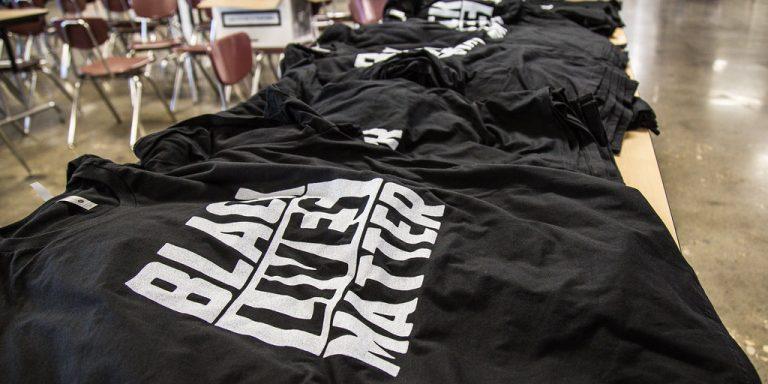
BLM Grifter Pleads Guilty to Fraud, Spending Donations on Herself

(Luis CornelioHeadline USA) A radical leftist activist accused of defrauding her own organization plans to plead guilty to federal fraud charges.

Monica Cannon-Grant—the founder of Violence in Boston and a staunch proponent of defunding the police—filed court documents requesting a change of plea hearing, Boston25 and WCVB reported Friday.

The filing did not clarify whether she secured a plea deal with prosecutors or was simply pleading guilty to the accusations. Her trial had been scheduled for Oct. 14.

She was accused of using nonprofit funds—out of a total budget of $1 million—from 2017 to 2021 for personal expenses.

The charges, announced in 2022, amounted to a staggering 27-count superseding indictment.

The expenditures included car and insurance payments, high-end salon visits, luxury dinners, and a Maryland vacation.

She also allegedly pocketed $54,000 in taxpayer-funded pandemic relief, much of which she spent on herself.

Her husband, Clark Grant, was also indicted.

Grant’s charges came on top of charges announced by the Biden administration in 2023, including three counts of wire fraud conspiracy, 17 counts of wire fraud, one count of conspiracy and one count of making false statements to a mortgage lender.

If found guilty on all counts, she faces a maximum sentence of 74 years in prison.

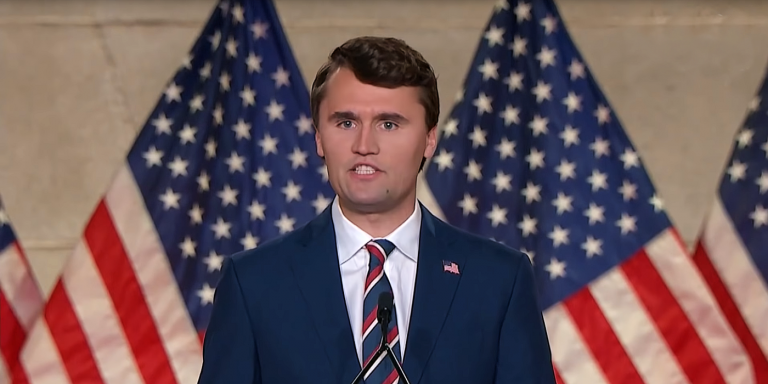
Report: Charlie Kirk’s Support for Israel Was Wavering before His Death

(José Niño, Headline USA)  An insider close to Donald Trump told The Grayzone that Turning Point USA founder Charlie Kirk’s break with Israel and Prime Minister Benjamin Netanyahu triggered an intense backlash from Netanyahu’s allies, leaving Kirk both angry and afraid. 

According to this anonymous source, unease over Israeli influence expanded inside the Trump administration after officials reportedly uncovered an Israeli spying operation. Neither the source nor Grayzone provided any actual evidence of Israeli involvement in Kirk’s death.

The insider said Kirk turned down Netanyahu’s offer earlier this year to channel major new funding into TPUSA, suspecting the Israeli leader wanted to purchase his silence as Kirk began calling for freedom to criticize Israel. 

By the summer, the relationship had soured. Kirk, once one of Israel’s most reliable conservative advocates, now viewed Netanyahu as a “bully” intent on controlling Trump’s staff and securing the loyalty of party leaders with the help of donors like Miriam Adelson.

The insider recalled a tense meeting in June, when Kirk warned Trump not to launch a military strike against Iran for Israeli interests. “Charlie was the only person who did that,” the source said. Trump “barked at him” and quickly ended the exchange. For Kirk, the moment suggested the president had fallen under foreign influence.

But if that’s the case, Kirk didn’t show it publicly. On Twitter, he expressed support for Trump’s bombing, calling it “a surgical strike, operated perfectly.”

By July, Kirk believed he was being targeted. Wealthy Netanyahu supporters, whom Kirk described as Jewish “leaders” and “stakeholders,” flooded him with calls, threats, and dire warnings. “He [Kirk] was afraid of them,” the source stressed.  

Kirk’s unease coincided with growing dissent inside TPUSA over Israel. For years, he had courted pro-Israel donors and rewarded their loyalty with staunchly pro-Israel messaging, anti-Palestinian rhetoric, and the suppression of dissenters. 

Yet as Israeli bombings in Gaza provoked unprecedented anger among younger conservatives, Kirk began openly questioning Tel Aviv. He even speculated whether Jeffrey Epstein was connected to Mossad and whether Israel allowed the October 7 attacks to advance strategic aims—echoing charges promoted by his sharpest critic, Nick Fuentes.

At TPUSA’s Student Action Summit in July, that skepticism erupted on stage. Speakers including Tucker Carlson, Megyn Kelly, comedian Dave Smith, and others mocked influential Zionist donors and accused Israel of manipulating U.S. policy. The fallout was immediate; Kirk’s phone lit up with furious demands from Netanyahu’s allies. “He was being told what you’re not allowed to do, and it was driving him crazy,” the Trump insider said.

Candace Owens, who shifted her own views on Israel after October 7, confirmed the pressure campaign. “He was going through a lot,” she said. “They wanted him to lose everything for changing or even slightly modifying an opinion.”  

In an August interview with Kelly, Kirk admitted he felt under siege. “It’s all of the sudden: ‘oh, Charlie: he’s no longer with us.’ Wait a second—what does ‘with us’ mean, exactly? I’m an American, okay? I represent this country,” he declared. Citing dozens of hostile messages, he added, “I have less ability… to criticize the Israeli government than actual Israelis do. And that’s really, really weird.”

His last recorded comments came days before his assassination in Utah last Wednesday. On Ben Shapiro’s show, Kirk asked why the media narrative around Israel should escape scrutiny when conservatives had already challenged mainstream coverage of COVID, Ukraine, and immigration. 

Additionally, Infowars host Harrison Smith tweeted about a month before Kirk’s assassination that he was afraid of being killed by Israel.

According to the Trump insider, Kirk’s resentment toward Netanyahu had begun rippling through Trump’s circle. The same source even claimed White House staff discovered Israeli surveillance devices on Secret Service vehicles, a detail The Grayzone could not independently confirm.  

Kirk was killed by a sniper as he spoke at Utah State University. A 22-year-old suspect has since confessed, though the motive remains unknown. Netanyahu, denying any involvement, emphasized Kirk’s long pro-Israel record in an interview on Newsmax and offered public tributes. 

José Niño is the deputy editor of Headline USA. Follow him at x.com/JoseAlNino 

Charlotte Train Stabber’s Half-Brother Murdered a White Person, Too

(José Niño, Headline USA) While public attention focuses on DeCarlos Brown Jr.’s federal charges in the brutal stabbing of Ukrainian refugee Iryna Zarutska on Charlotte’s light rail system, the violent criminal history of his half-brother Stacey Dejon Brown has received considerably less scrutiny. .

Stacey Dejon Brown, now 32, is currently serving a 27-year prison sentence for the October 2012 murder of 65-year-old Robert Heym. The crime bears striking similarities to his half-brother’s recent attack, particularly in its use of Charlotte’s public transportation system as both a means of approach and escape. 

Brown used the Charlotte light rail to reach Conway Avenue, where he and co-defendant Roderick Crawford attempted to rob Heym at gunpoint, per a report by WSOC-TV 9. When the elderly man resisted, Brown shot him in the face with a sawed-off shotgun.

The parallels between the half-brothers’ crimes extend beyond their use of public transit. Both attacks involved vulnerable victims, unprovoked violence, and suspects with extensive criminal histories who had been repeatedly released by the justice system despite clear warning signs. 

Stacey Brown’s criminal activity began years before the murder that would ultimately land him in prison. In July 2012, months before killing Heym, he used bricks to break into vehicles in a parking garage. The day before the murder, he participated in another armed robbery, shooting a man in the back as the victim attempted to flee.

Court records reveal that Stacey Brown pleaded guilty to multiple charges on April 24, 2014, before Judge Hugh B. Lewis. His sentence of 324 to 438 months reflected the severity of his crimes: second-degree murder, two counts of robbery with a dangerous weapon, assault with a deadly weapon with intent to kill, and breaking or entering a motor vehicle.

For his part, DeCarlos Brown Jr., 34, faces federal charges that could result in the death penalty for the August 22 stabbing of Zarutska, per a press release by the U.S. Attorney’s Office, Western District of North Carolina.

His criminal record includes 14 prior arrests and a five-year prison sentence for armed robbery completed in 2020. Family members described his deteriorating mental health after his release from prison, including a diagnosis of schizophrenia and increasingly violent behavior.

Charlotte officials have acknowledged the breakdown in public safety protocols. Mayor Vi Lyles called Zarutska’s murder “a tragic failure by the courts and magistrates,” noting that police officers arrest individuals only to see them quickly released. 

The Charlotte Area Transit System has announced immediate security changes, including redeploying personnel for stronger presence on Blue Line platforms and adding nearly 30 additional security staff.

José Niño is the deputy editor of Headline USA. Follow him at x.com/JoseAlNino