Exclusive: Laws Exacerbate Firearm Instructors Shortage

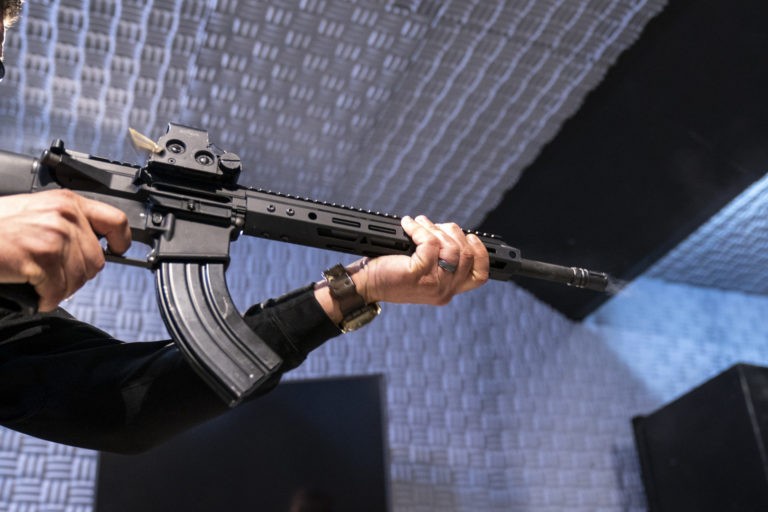
(Elyse S. Apel, The Center Square) A shortage of firearms instructors is continuing to cause chaos for many Colorado citizens, especially in light of recent gun laws for concealed carry licenses.

This is according to Kirk Evans, an attorney specializing in self-defense law and president of U.S. LawShield, who spoke exclusively with The Center Square.

“There are only about 190 verified renewal course instructors in 63 counties. Several counties do not have a verified instructor,” Evans said. “Due to the new requirements to obtain or renew a concealed handgun permit, a shortage of verified firearms instructors in every county, and verification not being the same in every county, many gun owners and instructors are confused and running into problems.”

With some estimates putting the total number of concealed handgun permit holders in Colorado at 650,000, that means that shortage is having a real impact on citizens in the state.

In Colorado, a concealed handgun permit is required to conceal carry a weapon. To obtain that permit, applicants are required to complete a firearms safety training course from a certified instructor. With the permit only lasting five years, that means approximately 132,500 permit holders need to take the new renewal course every year.

“This means that 190 instructors need to teach almost 700 people per year, on average, but many times that in highly populated counties,” Evans said.

An instructor shortage isn’t the only issue, though. Colorado recently enacted a number of controversial gun laws, some of which are already facing legal challenges. On July 1, one of those new laws took effect and changed the permit requirements to also require a live-fire exercise during the training course.

“Of the 190 instructors, only a fraction of them have gun range privileges,” Evans explained. “Those privileges allow them to conduct the live-fire exercises, which are now required to receive a permit.”

There are many other limiting factors, according to Evans.

“Geography is the biggest hurdle. Several counties have either no verified instructors or a small number of part-time instructors who only teach a few classes every year,” he said. “Range availability is also a difficulty. If your job requires you to work weekends, but the range in your town only offers classes on Saturdays, it doesn’t matter how many instructors there are in the state.”

In Colorado, county sheriffs are responsible for issuing concealed handgun permits. Evans highlighted the discrepancies between counties, which is leading to confusion across the state.

“Sheriff department websites are required to have a list of instructors they have verified to teach residents of their counties, and a recent survey found about 38 counties that are non-compliant. If you live in one of these counties, you have no idea who is qualified to teach you,” he said. “Verification for the new renewal course looks different depending on where you live. For example, in Denver, the instructor can be an instructor recognized in any county. But another county may require the instructor to be verified in that particular county.”

This is already leading to situations where applicants are being forced to retake courses, which can cost upward of $150 to $200.

Evans said this is causing a great burden on the citizens of Colorado.

“All gun owners should have the opportunity to reasonably and efficiently comply with any legal hurdles that might be imposed upon them by their state government,” he said. “It is extremely unfair to place an added burden on gun owners, and then turn that added burden into a complex maze and collection of traps for folks who are simply trying to follow the law.”

Evans said the Colorado legislature needs to take action. He proposed a couple different solutions, including creating a statewide list of verified instructors, adding an extended renewal period for current concealed handgun permit holders or allowing the holders to renew in any county in the state. Those are a few of the steps that could be taken to clarify the process for law-abiding Coloradans.

“In our experience, people who apply for CHPs and renewals are people who want to do the right thing and comply with the law,” Evans explained. “We shouldn’t make it difficult for these gun owners to do that.”
More than 150,000 Apply to Work with ICE, CBP Offering Incentives to Join

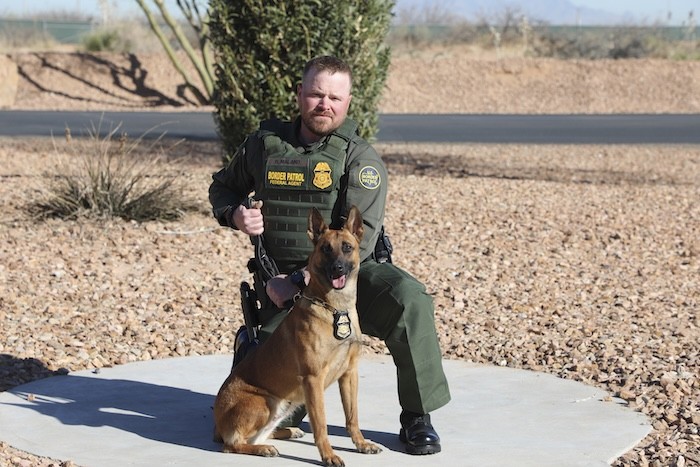
(Bethany Blankley, The Center Square) More than 150,000 people have applied to work with U.S. Immigration and Customs Enforcement (ICE) as recruitment efforts continue nationwide, encouraging Americans to join Trump administration federal law enforcement agencies.

“ICE has received more than 150,000 applications from patriotic Americans who want to defend the homeland by removing the worst of the worst criminal illegal aliens from the U.S.,” Department of Homeland Security Secretary Kristi Noem said. “We have already issued more than 18,000 tentative job offers. Americans are answering their country’s call to serve and help remove murderers, pedophiles, rapists, terrorists, and gang members from our country.”

ICE is offering a robust package of federal law enforcement incentives to those seeking to join its ranks. These include a maximum $50,000 signing bonus; student loan repayment and forgiveness options; 25% Law Enforcement Availability Pay for HSI Special Agents; overtime for ICE Enforcement Removal Operations deportation officers; and enhanced retirement benefits.

U.S. Customs and Border Protection is also “actively seeking dedicated individuals to join its ranks and contribute to safeguarding the nation’s borders, enforcing legitimate trade and travel, and protecting the American people.”

It’s also offering competitive salaries, locality pay, comprehensive health insurance and enhanced retirement benefits, opportunities for overtime and premium pay, and substantial hiring incentives.

Newly appointed Border Patrol agents may qualify for recruitment incentives of up to $30,000; CBP officers may be eligible for incentives equal to 15% or 25% of their salary, depending on duty locations, CBP says. Air and marine interdiction agents assigned to Caribbean locations may also receive a 25% recruitment incentive.

CBP says it’s using several methods to streamline and expedite the hiring process. This includes a direct-hire authority “to rapidly hire highly qualified personnel for specific roles” in order “to make tentative job offers at recruitment events and process applications more efficiently,” it says. This applies to specialized positions like criminal investigators or Air Interdiction Agents, it says.

CBP is also expediting hiring veterans, including disabled veterans; military spouses who relocate “under Permanent Change of Station orders or whose spouse is 100% disabled or died on active duty may be eligible for specific hiring paths;” as well as those with disabilities, recent graduates and student interns through a “pathways” program.

CBP job openings are varied, including trade enforcement, criminal investigations, and a range of administrative, professional, and technical jobs like cybersecurity, intelligence research and others. Interested applicants are encouraged to connect with a recruiter, attend a recruitment event or visit CBP’s careers website.

So far under the Trump administration this year, Border Patrol applications are the highest in recorded U.S. history, The Center Square reported.

Applications to join the Secret Service, Department of Defense, branches of the U.S. military and U.S. Coast Guard have also all surged under the Trump administration, The Center Square reported.

Indictment Dismissed against Saudi Migrant Who Claimed DOJ Tried to Frame Her for New Orleans Attack

(Ken Silva, Headline USA) A judge has granted the Justice Department’s motion to dismiss the indictment against Saudi national Sitameriam Nurai Ibrahim, who was arrested in April for sending threats to the DOJ.

After her arrest, Ibrahim was released on an unsecured $50,000 bond. The DOJ returned an indictment against her in May, but in April prosecutors moved to dismiss it without prejudice—meaning they can charge her again if they want. A judge granted their motion on Tuesday. No other public information about the matter is available.

Ibrahim was ordered to be removed from the country more than 20 years ago in 2002. When President Joe Biden took power in 2021, she appealed the removal order—but her appeal was denied after days after President Donald Trump won the election last November. Ibrahim then submitted a corruption complaint last December to the DOJ’s Office for Immigration Review (EOIR), but that was denied, too.

It was after her corruption complaint was denied that Ibrahim sent threats to the DOJ, according to an April 18 criminal complaint against her.

On Feb. 19, Ibrahim allegedly wrote an email to the DOJ, stating: “I have reached a point of exhaustion with my efforts to seek justice, as it seems that such as concept no longer holds any genuine value in today’s system.”

Three days later, Ibrahim’s rhetoric turned violent.

“Big fucking mistake. All yall gone die now,” she allegedly wrote. “I’m sending my killers your way bitch office of professionalism unit. Ima have em spread out bombs all across your EOIR offices. Everyone one of your immigration judges will be dead.”

Federal agents interviewed Ibrahim at her apartment on March 18. There, she told them the reason for her threats.

“Ibrahim stated, ‘I sent all that stuff after I was so sick about something I saw in the media about an 11-year-old girl getting bullied about her immigration status then committed suicide,’” the criminal complaint against her stated.

“She was also asked who she was referring to in her threat to send people to the DOJ to spread out bombs. Ibrahim mentioned she doesn’t know anybody and stated she made the threat because she was really upset because they tried to set her up to take blame for the New Orleans attack.”

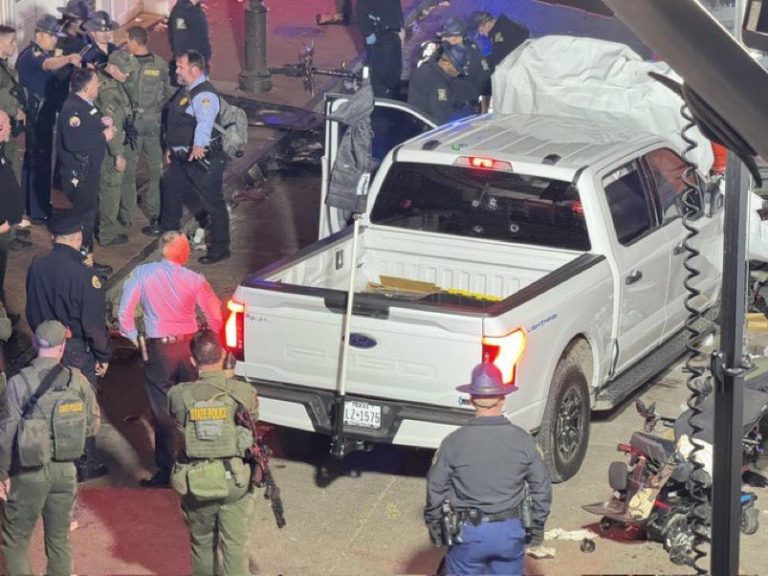
The criminal complaint against the Saudi national, Sitameriam Nurai Ibrahim, doesn’t reveal any more details about her statements on the New Orleans attack, which occurred on New Year’s Day when U.S. Army veteran Shamsud-Din Jabbar allegedly drove his truck with an ISIS flag into a crowd of people in the famed French Quarter of New Orleans, killing more than a dozen of them.

The FBI continues to say that Jabbar acted alone. However, last month an ISIS official was reportedly detained in Iraq on the grounds that he may have incited the attack.

Iraqi officials have not released the man’s name only saying that he is an Iraqi citizen. The officials said the man will be put on trial in accordance with the country’s anti-terrorism law, adding that Iraq is committed to international cooperation in fighting terrorism.

Ken Silva is the editor of Headline USA. Follow him at x.com/jd_cashless.

Revealed: Biden’s FBI Went After Conservative Organizations in J6 Witch-Hunt

(Luis CornelioHeadline USA) Newly released documents exposed the FBI, under the Biden administration, for targeting the bank records of more than a dozen Republican and conservative organizations as part of its Jan. 6 probe.

The evidence, released by the Senate Judiciary Committee on Tuesday, revealed exactly how Biden’s FBI weaponized the bureau against political enemies, in a broad probe kept hidden until now.

Among the targeted organizations were Turning Point USA, founded by the late conservative activist Charlie Kirk and the Republican Attorneys General Association, along with several other PACs and entities tied to President Donald Trump.

Some of these groups had no clear ties to Jan. 6, raising questions about the purpose of the subpoenas. Other groups targeted included MyPillow, Women for America First, the Conservative Partnership Institute, the America First Policy Institute and even Citizens United.

Individuals targeted included former New York City Mayor Rudy Giuliani, former Trump campaign manager Brad Parscale, longtime Trump aide Dan Scavino, Gary Coby, Nick Luna and Jeffrey Clark.

The documents are part of the so-called Arctic Frost investigation, which targeted Trump following the Jan. 6, 2021 protest and served as the foundation for Special Counsel Jack Smith’s appointment.

Senate Judiciary Committee Chairman Chuck Grassley scolded the Biden administration for sweeping up several reputable conservative organizations in the controversial probe.

“In other words, Arctic Frost wasn’t just a case to politically investigate Trump,” Grassley said Tuesday. “It was a vehicle by which partisan FBI agents and Department of Justice prosecutors could achieve their partisan ends and improperly investigate the entire Republican political apparatus.”

The documents’ release comes as the Trump campaign highlights efforts to undo the politicization carried out by the Biden administration. Criminal charges have yet to be filed, though dozens of government officials tied to these probes have since been removed from their posts.

Audio Exposes FBI Lied About 2022 Arrest of Peter Navarro

(Luis CornelioHeadline USA) The Biden administration has been caught in yet another lie.

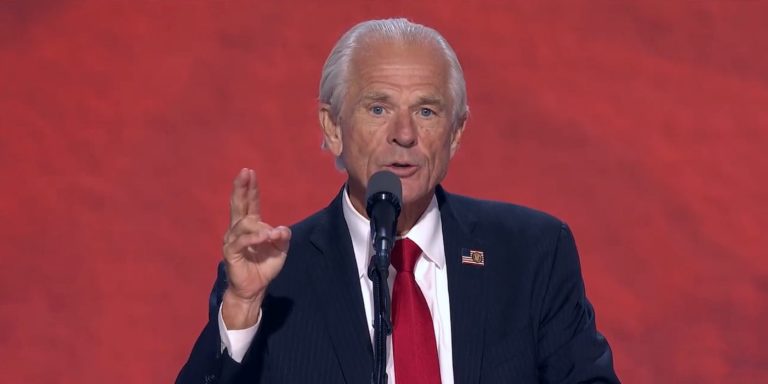
Newly released audio of former Trump adviser Peter Navarro undermines the FBI’s explanation of his aggressive arrest in 2022.

Navarro was taken into custody just days after two FBI agents attempted to serve him a subpoena related to a contempt of Congress investigation.

At the time, the FBI claimed Navarro was “combative” at his home on May 26, 2022. FBI agents used that excuse to justify a dramatic airport arrest instead of allowing him to voluntarily surrender on June 3, 2022.

Navarro’s arrest at Reagan National Airport was so unusual that even Obama-appointed Judge Amit Mehta raised concerns.

“It is curious … at a minimum why the government treated Mr. Navarro’s arrest in the way it did,” Mehta said.  “It is a federal crime, but it is not a violent crime.”

But the newly released audio, published by the Senate Judiciary Committee on Tuesday, directly contradicts the FBI’s version of events. The Daily Caller was first to report on the audio.

“Do you have any idea what this is about or are you just doing this for the FBI?” Navarro can be heard asking.

FBI Agent Walter Giardina then said he wanted to ask a “couple of questions.”

Navarro swiftly refused.

“I’m not answering any questions, you have the subpoena, you can get the fuck out of here now, ok?” he said. “Just get the fuck out of here. You go next door, this is intimidation by Merrick Garland, by the FBI. You guys ought to be ashamed of yourselves.”

“Have a great day,” Giardina replied.

Despite the controversy, a jury deep-blue D.C. convicted Navarro on two counts of contempt of Congress  in 2024. He went on to serve four months in federal prison.

The circumstances of his conviction remain hotly debated. Only two years earlier, Navarro had held a near–cabinet-level role as Trump’s Director for Trade and Manufacturing Policy.

Navarro is now appealing his conviction and challenging the DOJ’s abrupt reversal on defending its own prosecution. He has predicted his case could head the Supreme Court.

Driver Rams Car into FBI Building Gate in Pittsburgh, Leaving Behind an American Flag

UPDATE: The FBI announced that it has a suspect in custody.

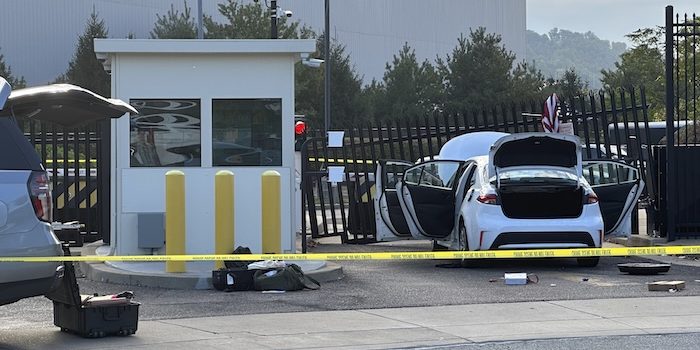
(Headline USAA driver rammed a car into a security gate at the FBI building in Pittsburgh early Wednesday, then removed an American flag from the back seat and threw it over the gate before leaving, authorities said.

The car crashed into the gate at about 2:40 a.m., the FBI said, and authorities were searching for the man. Investigators, including a bomb squad, were at the scene. No explosives were found, the FBI said.

“We look at this as an act of terror against the FBI,” Christopher Giordano, assistant special agent in charge of the FBI in Pittsburgh, told reporters. “This was a targeted attack on this building. Thankfully no one was hurt, but we are going to exhaust every ability we have under the federal law to find, apprehend and prosecute this subject to the fullest extent.”

Giordano said he had no information on a motive. He said the FBI was familiar with the man, a former member of the military.

“He did come here to the FBI field office a few weeks ago to make a complaint that didn’t make a whole lot of sense,” Giordano said.

Giordano said the car appeared to have some sort of message on one of the side windows, but did not elaborate.

Adapted from reporting by the Associated Press


WaPo Columnist Fired Over Performance Issues, Not Just Kirk Comments

(Luis CornelioHeadline USA) The Washington Post fired embattled columnist Karen Attiah over “documented performance problems”, according to her termination letter, even as she claimed the move was retaliation for her comments about Charlie Kirk.

Attiah announced her ouster in a Substack post Monday, insisting she was targeted for speaking “out against political violence, racial double standards, and America’s apathy toward guns.”

She also resurfaced a Bluesky post where she attributed a fabricated quote to Kirk, falsely claiming he once said: “Black women do not have the brain processing power to be taken seriously. You have to go steal a white person’s slot.”

Several left-leaning outlets ran  headlines claiming she was fired solely because of her comments about Kirk.

But her termination letter shows the Kirk remarks were only the final straw on top of a pattern of problems..

“The poor judgment exhibited by your public comments regarding Charlie Kirk arise against the backdrop of documented performance concerns, which have been raised with you,” the letter stated.

“Given these concerns, and in light of your recent unacceptable Bluesky posts, we cannot tolerate the risk your performance poses to The Post,” it added.

While the letter did not the exact performance issues, it undermines Attiah’s media narrative that she was targeted simply for speaking out against violence.

She did not immediately respond to Headline USA’s request for comment sent via her online course website.

Exclusive: NFL Stadium Deals Often Have Large ‘Hidden Costs’

(Jon Syf, The Center Square) The Chicago Bears and Denver Broncos used the opening of a new National Football League season as a platform to announce each intended to build a new stadium for which the teams would pay.

But the reality for taxpayers in each state and NFL city is that the “hidden costs” as described by journalist and author Neil DeMause, are the numbers taxpayers should be following.

Those include tax captures, new taxes, property tax and rent deals, land purchase cost breaks, tax-increment financing, site infrastructure costs and stadium naming rights.

“Every team owner knows that you have to find a rock to hide the subsidies under,” DeMause told The Center Square.

DeMause cowrote the book “Field of Schemes” and operates a stadium funding blog with the same name where he regularly covers the topic.

He compared the earlier stages of the Bears’ proposal to move to Arlington Park and the Broncos’ proposal to move to Burnham Yard to the Washington Commanders’ proposal to move to federal land at the site of the former RFK Stadium. The Commanders’ leadership and D.C. Mayor Muriel Bowser said the team would pay for the stadium but the fine print showed something different.

DeMause said the team’s claim “was true as far as it went but left out $7 billion or so in other tax breaks and free land and other goodies that the team was getting.”

Teams often announce deals with limited details to begin to establish a narrative and goodwill, University of Colorado Denver Associate Professor Geoffrey Propheter told The Center Square.

In the case of the Broncos’ announcement, Propheter’s takeaway is that it simply was a note that the Broncos prefer to move to Burnham Yard over Douglas County or Aurora, comparing the announcement to Michael Scott in “The Office” shouting “I declare bankruptcy” and thinking that will somehow impact reality.

“It is very lean on details, which makes it really hard to offer much in the way of policy wonky analysis,” Propheter said, adding that there is speculation about a TIF district but no confirmation that funding mechanism will be used.

Propheter is an expert in public finance and stadium finances who has studied stadiums, property tax, housing and more.

He said that teams start with narrower announcements to lead the narrative on a stadium development, create a scope for discussion of the public policy and determine what will and won’t be discussed in each time frame.

“It anchors all future expectations and frames all future policy debates,” Propheter said. “That is control you want to have. You don’t want to lose the narrative before you ever had a chance to have it.

The Bears have already gone through a cycle of new stadium announcements, purchasing the former race course at Arlington Park, announcing plans there, andn telling the public that Chicago was then the preferred new stadium location. Now it’s a circle back to state that Arlington Park is the preferred location if state lawmakers create a property tax exception at the property, calling it “property tax certainty and a fair contribution toward essential infrastructure.”

In response, Illinois Gov. J.B. Pritzker said that he had not spoken to the Bears in weeks but that he would ask the team to pay off what is reported to be $534 million in debt for the city of Chicago related to Soldier Field renovations in 2003.

“We need the Bears to pay off what’s owed on the existing stadium,” Pritzker said. “So that’s going to be a really important feature of whatever happens going forward.

“If they want a PILOT bill or some other help, we’re gonna make that a prerequisite for something like that happening.”

PILOT is an acronym for payment in lieu of taxes.

Propheter said that a promise from Broncos’ ownership of no new taxes would be created to pay for a new stadium and development doesn’t mean team ownership will be paying for the project or that taxpayer funds won’t be used.

“Go to the extreme just to illustrate the silliness of this reasoning and, if Denver had a $1 billion budget, they could turn around and give that entire billion dollars to the Broncos or, pick any corporation or business that you want … you take the entire revenue stream that is used for public services and you give it to someone, then you’re like, ‘At least we didn’t raise your taxes,’” Propheter said.

Propheter said that stadiums like SoFi Stadium in Inglewood, Calif., that are privately financed without TIF are “super rare” even with the development having a 50% sales tax capture in the surrounding development along with ticket and hotel/motel tax collections.

Early indications from local politicians in Denver are that more taxpayer money could be involved in the Broncos’ project, including for infrastructure and TIF. But details on how or where a TIF would be drawn at Burnham Yard and if the actual stadium would be included in the TIF has not been publicly released.

Propheter called TIF districts “a way for teams to basically keep their own property taxes.” In Denver, it will be important to find out who will own the land and stadium, how long those rights are for and which side will pay for future renovations.

“We already know there’s taxpayer money involved and this idea that TIF money is not tax money or new tax money … now I have to spend the next couple years trying to convince people that it is tax money because it is money you could have used for other purposes and now you have to find other money for those purposes, or you could cut them I suppose,” Propheter said.

Utah Campus Where Charlie Kirk was Shot Provided Less Security than Other Venues as he Toured Nation

(Headline USA)  Less than two weeks before Charlie Kirk’s assassination in Utah, a sheriff’s department in central California conducted three days of reconnaissance to prepare for a speech by the conservative firebrand at a local church in politically friendly territory.

Officials researched potential escape routes and identified local activists opposed to Kirk. On the day of the indoor event in Visalia, which drew 2,000 people, some 60 law enforcement officials monitored Kirk’s movements to and from the church, even deploying a drone to secure surrounding rooftops, said Tulare County Sheriff Mike Boudreaux.

“The very nature of Charlie Kirk coming in requires you take special attention to the nuances of what could possibly happen,” Boudreaux said. 

“He’s a high profile name and personality. Not only do we have to provide for the safety of people attending, we have to provide for the safety of him.”

By contrast, Kirk’s outdoor event at Utah Valley University last week was out in the open, but with far less security. Six campus police officers — about a quarter of the force — worked the event, which drew 3,000 people, Jeff Long, the campus police chief, said last week. The department hasn’t said whether they inspected nearby rooftops; the suspect shot and killed Kirk from atop a building hundreds of feet away.

As he crisscrossed the country to spread his conservative ideals at college campuses, Kirk preferred to be as close to students as possible, allowing him to strike up conversations with passersby. His level of protection varied greatly — campus police often took the lead on overall security, while Kirk’s private detail focused on up-close protection.

His assassination at Utah Valley has drawn even more attention to the role that campus police departments play in protecting high-profile and divisive political figures who regularly make college visits. Security experts have questioned everything from the number of officers deployed to the decision to hold the event outside, where Kirk ended up in the direct line of sniper fire.

The university’s security plan is not part of the Utah Department of Public Safety’s investigation into the shooting, department Commissioner Beau Mason said.

Utah House Speaker Mike Schultz, a Republican, said lawmakers may order a review of security measures at Utah Valley following the assassination.

When Kirk spoke at Illinois State University in April, more than a dozen campus police officers patrolled the 700-person crowd, and more officers watched cameras trained on nearby buildings from an operations center. The same month, University of Wyoming police assigned about 15 officers to an indoor Kirk appearance.

In other cases, arrangements were similar to last week’s debate in Utah. At an outdoor Michigan State University event, a student organizer with the campus Turning Point USA chapter said there were eight to 10 campus officers. Kirk was founder of Turning Point USA, one of the nation’s largest political organizations with chapters on high school and college campuses.

Kirk’s own security team of around six people was present at each event.

Security experts told The Associated Press they expect to see more events held indoors to protect against similar attacks, as outdoor events greatly increase vulnerability. College campuses are generally open and accessible, making them extremely susceptible to shootings, said Don Aviv, CEO of the security firm Interfor International.

Without monitoring rooftop access and blocking shooter sightlines, Aviv said, “it doesn’t matter how many armed personnel you have ringing the speaker, you would not have been able to protect against a long gun.”

Kirk requested to speak outside at Utah Valley so that he could engage with students, spokeswoman Ellen Treanor told the Salt Lake Tribune. When he visited campus in 2019, he spoke in a ballroom.

The desire by Kirk’s team to make him as accessible as possible complicated security planning, said Aaron Woodruff, police chief at Illinois State University.

“It makes it hard to protect somebody when you have people on all sides of him,” Woodruff said.

Woodruff ran a security plan past Kirk’s team by phone and then did a walk-through on site. Security cameras trained on nearby buildings allowed officials to monitor rooftops and surrounding areas, Woodruff said.

The up-close nature of Kirk’s interactions appealed to his followers, said Alex Bitzan, the TPUSA chapter president at Michigan State, who helped organize an April event held on a campus lawn.

“People are drawn to the open conversation. People are drawn to the fact that he’s unscripted,” Bitzan said. “When you’re outside in public like that, I don’t see what would solve what happened last Wednesday.”

Daniel Schoenherr, a photographer who covered the Michigan State event for the campus newspaper, recalled police on foot and at least two or three campus police cars nearby. Access to the event was easy. Schoenherr estimated that more than 1,000 people were there, many of them non-students. Kirk’s personal security focused on the immediate crowd.

“If someone was to throw a brick at Kirk — that wouldn’t happen. There was a lot of personal security close by,” Schoenherr said.

The attempted assassination of President Donald Trump last year in Butler, Pennsylvania, should have raised concerns about the vulnerability of sniper attacks from nearby rooftops, said James Hamilton, who founded the FBI’s close protection school.

“Butler told people it’s not that hard to get a rifle, get up on a roof and shoot,” Hamilton said.

Private sector security has to make compromises based on clients’ desires, said Hamilton, who said it would have been much safer to hold Kirk’s events indoors.

A Utah Valley spokesperson did not respond to emailed questions seeking information about security planning, public safety officer assignments and whether rooftops were inspected.

“This is a police chief’s nightmare,” Long, the campus police chief, said last week. “You try to get your bases covered, and unfortunately today we didn’t, and because of that we had this tragic incident.”

For a University of Wyoming event in April, campus police reached out to Texas A&M and other universities Kirk had recently visited to better understand how they handled security, said campus Police Chief Josh Holland.

His officers checked the locks on building doors that would have allowed access to roof spaces. There were no metal detectors, Holland said, but the 1,800 attendees were prohibited from bringing bags into the venue at the university’s arts and sciences building. At Utah Valley, students were allowed to bring bags.

Adapted from reporting by the Associated Press.


Trump Files $15B Defamation Lawsuit against The New York Times

(Headline USAPresident Donald Trump has added The New York Times to the list of media companies he’s challenged in court, filing a $15 billion defamation lawsuit that targets four of its journalists in a book and three articles published within a two-month period before the last election.

In a Truth Social post announcing the lawsuit early Tuesday, Trump called the Times “one of the worst and most degenerate newspapers in the nation’s history” and a virtual mouthpiece for Democrats. The lawsuit was filed in U.S. District Court in Florida.

The Times called the lawsuit meritless and an attempt to discourage independent reporting. “The New York Times will not be deterred by intimidation tactics,” spokesman Charlie Stadtlander said.

It follows lawsuits Trump has filed against ABC News and CBS News’ “60 Minutes,” both of which were settled out of court by the news organizations’ parent companies. Trump also filed a lawsuit against The Wall Street Journal and media mogul Rupert Murdoch in July after the newspaper published a story reporting on his ties to wealthy financier and convicted sex offender Jeffrey Epstein.

The lawsuit names a book and an article written by Times reporters Russ Buettner and Susanne Craig that focuses on Trump’s finances and his pre-presidency starring role in television’s “The Apprentice.”

Trump sparred with a pair of reporters on Tuesday before he and first lady Melania Trump departed for a state visit to the United Kingdom. He told one of the journalists he has a “lot of hate” in his heart.

Trump said in the lawsuit they “maliciously peddled the fact-free narrative” that television producer Mark Burnett turned Trump into a celebrity — “even though at and prior to the time of publications defendants knew that President Trump was already a mega-celebrity and an enormous success in business.” The 85-page lawsuit also attacks claims the reporters made about Trump’s early business dealings and his father, Fred.

Trump also cites an article by Peter Baker last Oct. 20 headlined “For Trump, a Lifetime of Scandals Heads Toward a Moment of Judgment.” He also filed a lawsuit against Michael S. Schmidt for a piece two days later featuring an interview with Trump’s first-term chief of staff, John Kelly, headlined “As Election Nears, Kelly Warns Trump Would Rule Like a Dictator.”

In the lawsuit, Trump claimed The Times “could not accept President Trump’s win in 2016 and could not fathom his winning again in a landslide.” It wasn’t a part of the case, but Trump attacked the newspaper’s “deranged” editorial endorsement of opponent Kamala Harris last year.

“The ‘Times’ has engaged in a decades long method of lying about your Favorite President (ME!), my family, business, the America First Movement, MAGA and our Nation as a whole,” Trump said on Truth Social. “I am PROUD to hold this once-respected ‘rag’ responsible.”

None of Trump’s media lawsuits have made it to court, but in court papers, he claimed the settlements with ABC and CBS as part of his “successful undertaking to restore integrity to journalism.”

The president has also been involved in a lawsuit by The Associated Press over restricting the news organization’s access to cover him in retaliation for its decision not to follow his executive order to change the name of the Gulf of Mexico to the Gulf of America.

An expert on libel law said Trump’s case is frivolous, but serves a larger purpose.

“The complaint is full of bluster but short on any allegations of specific false statements of fact that would meet the rigorous standards for defamation claims brought by public figures,” said Katie Fallow, deputy litigation director at Columbia University’s Knight First Amendment Institute. “Trump’s new lawsuit appears designed not to vindicate any genuine reputational harm, but to impose crushing legal costs on media organizations and create a chilling effect that will deter future critical coverage of Trump’s conduct and business dealings.”

The Times’ Stadtlander said that the news organization “will continue to pursue the facts without fear or favor and stand up for journalists’ First Amendment right to ask questions on behalf of the American people.”

Penguin Random House, publisher of Buettner and Craig’s book, “Lucky Loser: How Donald Trump Squandered His Father’s Fortune and Created the Illusion of Success,” said it stands by the book and its authors.

Answering questions from the news media Tuesday as he departed the White House for a trip to London, Trump seemed miffed when an Australian Broadcasting Corp. reporter asked about his level of business activity since his return to office. Trump replied, “You’re hurting Australia very much right now, and they want to get along with me.”

He said Australian Prime Minister Anthony Albanese would be visiting him at the White House soon and “I’m going to tell him about you. You set a very bad tone.”

When the reporter continued to ask questions in a loud voice, Trump hushed him by saying, “quiet,” and turned to Jonathan Karl of ABC News for a “nicer tone.”

But Trump also lit into Karl, too. The two men have known each other for many years.

Karl asked about Attorney General Pam Bondi’s comments that she will go after hate speech after the killing of influential conservative activist Charlie Kirk. Karl said even some of the president’s allies consider hate speech to be free speech and, therefore, protected by the Constitution.

Trump responded by telling Karl the administration would “probably go after people like you, because you treat me so unfairly, it’s hate. You have a lot of hate in your heart.”

Adapted from reporting by the Associated Press.