Kim Says North Korea Open to Talks with US If Demand for Denuclearization Dropped

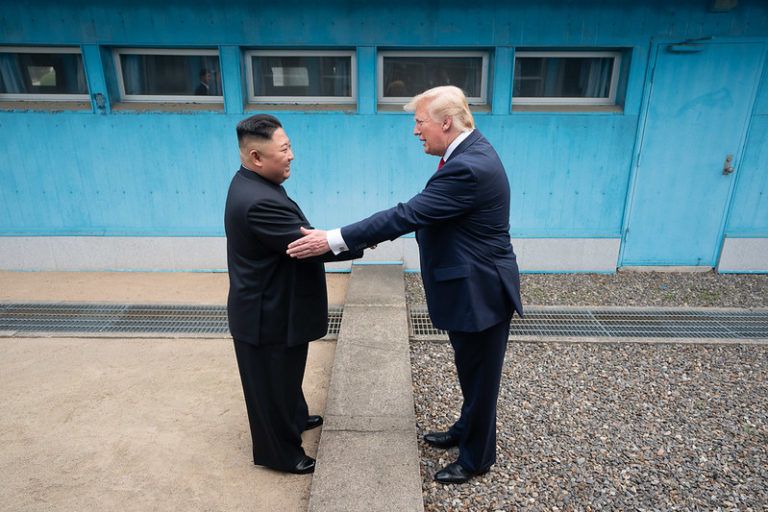
(Kyle Anzalone, Libertarian Institute) North Korean Supreme Leader Kim Jong-un says he still has “fond memories” of President Donald Trump, and is open to negotiations with Washington under certain conditions. 

“If the United States drops the absurd obsession with denuclearising us and accepts reality, and wants genuine peaceful coexistence, there is no reason for us not to sit down with the United States,” Kim said on Sunday. “Personally, I still have fond memories of US President Trump.”

The remarks came after the US, South Korea, and Japan wrapped up war games near the Korean Peninsula. The trilateral military drills included preparing for nuclear warfare. Pyongyang condemns the war games for “undermining regional stability and escalating military tension.”

Trump has suggested meeting with Kim, and also noted the two had developed a positive relationship during his first administration. 

In July, Kim’s sister Kim Yo-jong said that North Korea was no longer interested in talks with South Korea and would only engage with the US. Korean President Lee Jae Myung met with the President earlier this month and appealed to the President to facilitate talks with Pyongyang. 

Lee said that South Korea was willing to accept North Korea as a nuclear weapons state in the short term. Lee’s proposal involves making a deal for Pyongyang to halt development of new nuclear warheads, while retaining the goal of denuclearization in the long term. 

The South Korean leader argued that a new approach was needed as sanctions and isolating North Korea had proven ineffective. Lee estimates Pyongyang is adding 15 to 20 nuclear weapons to its arsenal every year. 

This article originally appeared at The Libertarian Institute.

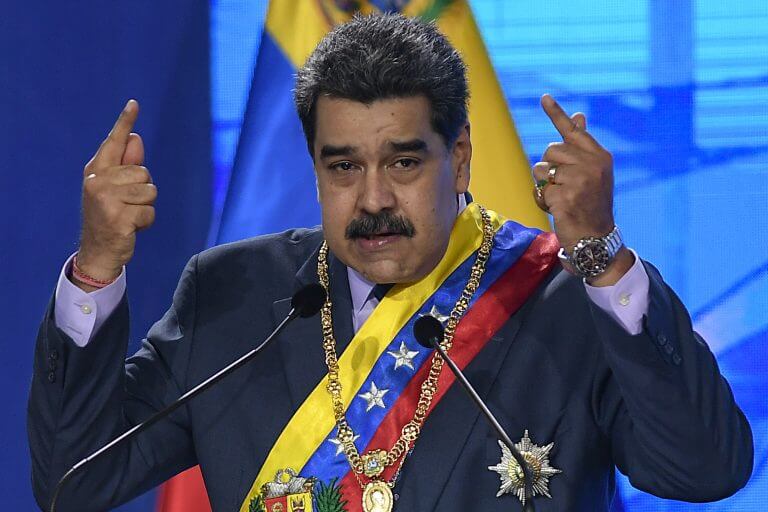
Venezuela Confirms Maduro Sent Letter to President Trump Seeking Talks

(Dave DeCamp, Antiwar.com) Venezuela has confirmed that Venezuelan President Nicolas Maduro sent a letter to President Donald Trump earlier this month, in which he urged talks to resolve the tensions between Caracas and Washington.

Venezuelan Vice President Delcy Rodriguez posted the full letter on Telegram after Reuters reported on Maduro’s outreach to Trump. She said the letter was delivered to an intermediary on September 6, four days after the US launched its first airstrike against a boat near Venezuela.

In the letter, Maduro disputed the claim that his government was linked to cartels and gangs and the idea that Venezuela was a major hub for drug trafficking, citing UN data that says just 5% of the cocaine produced in neighboring Colombia goes through Venezuela.

Maduro said that “all drugs seized along the 2,200-kilometer border with Colombia are intercepted and destroyed. It is noteworthy that this year, we have already neutralized and destroyed more than 70% of the small amount of drugs attempting to cross the border.”

Maduro also disputed claims that Venezuela was not willing to accept its citizens that the US was trying to deport, saying that the issue was resolved in talks with US envoy Ric Grenell, who met with Maduro in Caracas on January 31, 2025, and returned home with six Americans who were detained in Venezuela.

President Trump revived the claims about Venezuela’s lack of cooperation with deportations on Saturday, warning in a post on Truth Social that if the country doesn’t accept “prisoners” and people from “insane asylums” that entered the US, there would be “incalculable” costs. But Reuters reported that despite the tension between the US and Venezuela, twice-weekly deportation flights moving illegal migrants to Venezuela from the US have continued uninterrupted.

Maduro closed the letter, making an appeal to President Trump to pursue peace and dialogue. “I respectfully invite you, President, to promote peace through constructive dialogue and mutual understanding throughout the hemisphere. These and other conversations will always be open for a direct and frank conversation with your special envoy, Ric Grenell, to overcome media noise and fake news,” he said.

This article originally appeared at Antiwar.com. 

Iryna’s Law Passes State Senate

(David Beasley, The Center Square) Proposed legislation drafted in response to a stabbing death last month on a Charlotte light rail train would make it more difficult for accused violent criminals to be released without posting cash bail.

Irnya’s Law, known also as House Bill 307, passed the Senate 28-8 on Monday evening. It is named for Iryna Zarutska, a 23-year-old from the Ukraine killed Aug. 22.

The House of Representatives takes up the proposal on Tuesday.

DeCarlos Brown Jr., 34, is accused of first-degree murder. He had a history of mental health issues and a long criminal history including armed robbery.

Brown was aboard the train in part because of a “written promise to appear” in a nonviolent misdemeanor case involving misuse of the 911 emergency call system.

HB307 eliminates written promises to appear that allow defendants to avoid cash bail, said Sen. Danny Britt, R-Robeson. He presented the bill to the Senate Judiciary Committee earlier in the day, where is passed on for the floor vote.

If a judicial official does determine that pretrial release is appropriate, cash bond or house arrest with monitoring through an electronic device would be the only options for first or second offenders or those convicted of three or more or more Class 1 misdemeanors or higher within the past 10 years.

The bill also creates requirements for judges to order mental health evaluations of defendants if they been charged with a violent offense and had been involuntarily committed to a mental health facility within the previous three years. The judge would be required to order a mental health evaluation for any defendant if there is cause to believe that they are suffering from a mental health crisis, Britt said.

The legislation also provides funding for 10 additional assistant district attorneys in Mecklenburg County, where Charlotte is located.

“We had a rather short window to do what we did in this bill,” Britt told the committee. “We believe that this does make North Carolina safer and does help to promote law and order. “

The legislation now goes to the Senate Rules Committee, with a floor afterward possible.

The committee also approved the Regulatory Reform Act of 2025, known as House Bill 926, which reforms licensing regulations within some of the 186 professions in North Carolina.

BREAKING: Failed Trump Assassin Tries to Stab Himself in Neck w/ Pen after Jury Finds Him Guilty

(Headline USA) It took just over an hour Tuesday for a jury to find Ryan Routh guilty of trying to assassinate Donald Trump at his Palm Beach golf course last September. And when it did, Routh tried stabbing himself in the neck with a pen, according to reporters in the courtroom.

“As the verdict was read … Routh tried to stab himself in the neck with a pen. Then four Marshals dragged him out of the courtroom, took his coat off, shackled him at the waste and ankles, and then they brought him back into the courtroom,” Fox News reporter Danamarie McNicholl said moments after the incident.

“When Routh was brought back into the courtroom, that’s when the daughter stood up, started yelling and screaming. She said to her father: ‘Don’t do anything. I’m going to get you out of here!’ She also screamed many expletives.”

Earlier in the day, Routh took 55 minutes of his allotted one hour and 45 minutes, while prosecutors took almost all of their time in closing remarks to the jury, which then received the case for deliberations.

“It’s hard for me to believe that a crime occurred if the trigger was never pulled,” Routh said. He pointed out that he could see Trump as he was on the path toward the sixth-hole green at the golf course. And he noted that he could have also shot the Secret Service agent who confronted him if he had intended to harm anyone.

U.S. District Judge Aileen Cannon had warned Routh not to go off track in making his closing remarks. She sent the jury out of the courtroom twice Tuesday morning to remind him of her warning.

Prosecutors have said Routh spent weeks plotting to kill Trump before aiming a rifle through shrubbery as the Republican played golf on Sept. 15, 2024, at his West Palm Beach country club.

“There’s no doubt, no reasonable doubt, no doubt whatsoever,” Assistant U.S. Attorney Christopher Browne told the jury Tuesday. “If the evidence in this case has shown one thing and one thing only it’s that Ryan Wesley Routh wanted Donald Trump dead.”

Routh, 59, had pleaded not guilty to charges of attempting to assassinate a major presidential candidate, assaulting a federal officer and several firearm violations.

Routh rested his case Monday morning after questioning just three witnesses — a firearms expert and two character witnesses — for a total of about three hours. In contrast, prosecutors spent seven days questioning 38 witnesses.

Cannon signed off on Routh’s request to represent himself following two hearings in July. The U.S. Supreme Court has held that criminal defendants have a right to represent themselves in court proceedings, as long as they can show a judge they are competent to waive their right to be defended by an attorney. Routh’s former defense attorneys have served as standby counsel since Routh took over his own defense and have been present during trial the past two weeks.

Recounting what happened at the golf course, a Secret Service agent testified earlier in the trial that he spotted Routh before Trump came into view. Routh aimed his rifle at the agent, who opened fire, causing Routh to drop his weapon and flee without firing a shot, the agent said.

Law enforcement obtained help from a witness who testified that he saw a person fleeing the area after hearing gunshots. The witness was then flown in a police helicopter to a nearby interstate where Routh was arrested, and the witness said he confirmed it was the person he had seen.

Just nine weeks earlier, Trump had survived an attempt on his life while campaigning in Butler, Pennsylvania. That gunman had fired eight shots, with one bullet grazing Trump’s ear. The gunman was then fatally shot by a Secret Service counter sniper.

Routh was a North Carolina construction worker who in recent years had moved to Hawaii. A self-styled mercenary leader, Routh spoke out to anyone who would listen about his dangerous, sometimes violent plans to insert himself into conflicts around the world, witnesses have told The Associated Press.

Adapted from reporting by the Associated Press


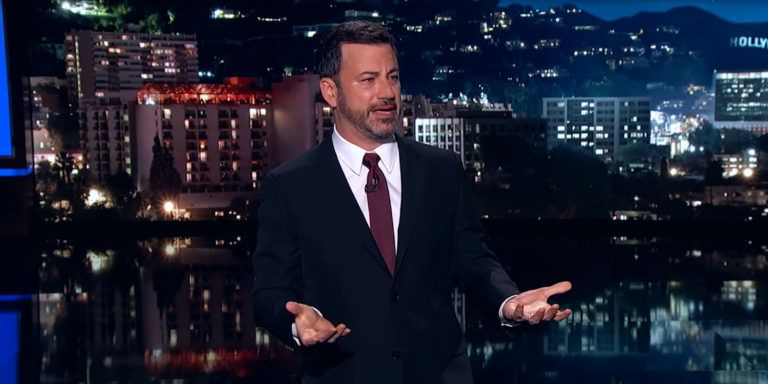
Mamdani to Attend Town Hall after ABC Brings Back Jimmy Kimmel Live

(The Center Square) Democratic nominee for mayor of New York City Zohran Mamdani says he will attend a town hall debate hosted by an ABC affiliate station, after a short-lived protest over its parent company’s decision to pull the Jimmy Kimmel Live! show.

Mamdani, a Queens assemblyman who holds a double-digit lead over other competitors in the race, announced early Monday that he won’t be participating in Wednesday’s WABC-TV Town Hall “in an act of protest against the Trump administration’s dangerous crackdowns on free expression.”

“I am withdrawing not as an indictment of the local affiliate or the hardworking journalists, but rather in response to the corporate leaders who have put their bottom line ahead of their responsibility in upholding the freedom of the press,” Mamdani said in a statement.

The self-declared Democratic Socialist also criticized what he called “cowardice” by ABC and its parent companies, Nexstar Media Group and Sinclair. He also blasted “so-called leaders like Andrew Cuomo and Eric Adams” for “looking to the White House for their path to their future ambition.”

“The message that it sends to each and every American across this country is a message that the First Amendment is no longer a right that can be counted on, but rather that it is the government which will determine what should and should not be discussed, what can and cannot be spoken,” Mamdani said.

But the network announced Monday afternoon that Kimmel’s show will resume next week, and Mamdani said that evening that he has reached out to ABC to reschedule the town hall.

“Last week, Disney/ABC caved to Trump administration pressure. Millions of Americans helped them find their backbone,” he posted on social media. “Whether you watch Jimmy Kimmel or not, today’s decision is a victory for free speech.”

ABC pulled the plug on Kimmel on Wednesday, only hours after Federal Communications Commission chairman Brendan Carr threatened the network and its stations over comments that the late-night host made earlier in the week about the assassination of conservative commentator Brendan Kirk.

The network’s decision triggered a backlash over its potential impact on free speech rights, with Democrats, left-leaning groups and even some Republicans complaining of corporate capitulation in the face of Trump administration threats.

Mamdani is currently leading polls in a crowded race featuring incumbent Mayor Eric Adams and former Gov. Andrew Cuomo, both running as Independent candidates, and Curtis Sliwa on the Republican ticket.

He has been endorsed by some of the state’s top Democrats, including Gov. Kathy Hochul and State Senate Majority Leader Andrea Stewart-Cousins, but others have been slow to throw their support behind the front-runner in the mayoral race, who has been criticized for some of his left-wing proposals, including free college, bus service and city-owned grocery stores.

Despite widespread media coverage of Mamdani’s short-lived protest, it drew little criticism from his political rivals in an otherwise busy Monday news cycle.

Cuomo’s campaign manager Rich Azzopardi ridiculed Mandani’s decision to pull out of the town hall in a series of social media posts that accused his campaign of “refusing to talk to local reporters because of the actions of their parent company.”

Indian Gold Imports Hit 9-Month High in August With Resilient Demand

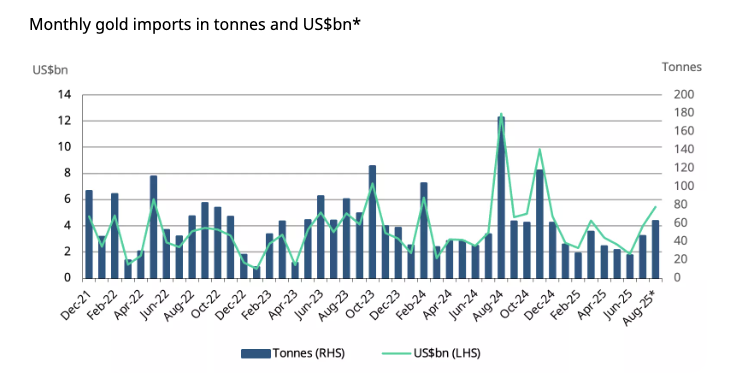
(Mike Maharrey, Money Metals News Service) After rebounding in July, Indian gold imports hit a 9-month high in August, reflecting resilient demand.

India ranks as the world’s second-largest gold market.

August imports totaled $5.2 billion, a 37 percent month-on-month increase. The World Gold Council estimates India imported between 60 and 65 tonnes of gold. That was up from between 42 and 48 tonnes in July.

According to the World Gold Council, the surge in gold imports reflects “seasonal buying interest despite elevated prices.”

Gold prices rose sharply last month and accelerated through the first half of September, hitting a fresh set of all-time highs. According to the World Gold Council, the most recent gold rally is being driven by “a weaker U.S. dollar, elevated geopolitical tensions, and strong inflows into global gold ETFs.”

“The continued momentum in September was supported by positive investor positioning – evidenced by rising futures net longs and sustained ETF inflows. Lower U.S. Treasury yields, amid growing expectations of a Fed rate cut and concerns around the Fed’s independence, have provided additional tailwinds.”

A weaker rupee has magnified domestic gold price gains. Priced in the Indian currency, gold was up 7 percent month-on-month as of mid-September. Since the beginning of the year, gold has surged by 44 percent in rupee terms.

This higher price has created headwinds for demand, especially in the jewelry sector, but there has been renewed interest in the yellow metal in recent weeks. This is reflected by narrowing domestic price discounts. We even saw a brief period with a marginal premium in late August.

The World Gold Council notes, “This marks a noteworthy change, as domestic gold prices had been trading at a near-sustained discount since December.

Gold demand is picking up as India moves into a festive season. This is traditionally considered an auspicious time to buy gold.

World Gold Council analysts say early-season buying has primarily manifested in demand for gold bars and coins.

“Investment interest is reportedly outpacing jewelry purchases, as consumers are drawn in by the renewed uptrend in prices and expectations of further increases.”

Anecdotal evidence suggests bullion dealers have stepped up purchases to beef up inventory in anticipation of strong seasonal demand.

Gold demand could also get a boost from a reduction in the Goods and Services Tax that went into effect on Sept. 22.

A surge of inflows of gold into Indian ETFs also reflects strong investment demand.

Cumulative net inflows totaled ₹21.9 billion (US$250 million), up 74 percent month-on-month. It was the second-highest level of monthly gold inflows this year.

The total assets under management (AUM) by Indian gold ETFs reached record highs of ₹724 billion (US$8.3 billion), with holdings increasing by 2.1 tonnes to 70 tonnes.

According to the World Gold Council, “The increase is likely driven by the sustained demand for safe-haven assets by investors seeking stability amid weak domestic equities and persistent global trade and geopolitical risks. Initial observations point to a continuation of this momentum, with strong positive net inflows during the first two weeks of September.

There was also a drop-off in ETF redemptions, indicating that investors are adopting a longer-term perspective, choosing to stay invested rather than cashing out, despite the recent price gains.”

There were 164,000 new ETF accounts established in August. That pushed the total number of active folios to 8.03 million, a 24 percent increase since the beginning of the year.

A gold ETF is backed by a trust company that holds metal owned and stored by the trust. In most cases, investing in an ETF does not entitle you to any amount of physical gold. You own a share of the ETF, not gold itself. ETFs are a convenient way for investors to play the gold market, but owning ETF shares is not the same as holding physical gold.

Indian gold jewelry demand has also picked up, but the WGC characterizes it as “uneven.”

“High-value, wedding-related purchases have begun and are holding steady, while high prices have dampened lower-ticket daily-wear and discretionary buying, prompting a shift to lower carat products. Large retailers are reporting higher footfalls, supported by aggressive marketing and promotional campaigns, along with plans for new store openings. Smaller retailers, in contrast, continue to face muted demand.”

Indians have a longstanding love affair with gold.

The yellow metal is deeply interwoven into the country’s marriage ceremonies, along with its religious and cultural rituals. Festival seasons typically boost gold demand.

Indians have long valued the yellow metal as a store of wealth, especially in poorer rural regions. Around two-thirds of India’s gold demand comes from beyond the urban centers, where large numbers of people operate outside the tax system. Many Indians use gold jewelry not only as an adornment but as a way to preserve wealth.

In the West, gold is generally viewed as a luxury item.

Not in India. Even poor Indians buy gold.

According to a 2018 ICE360 survey, one in every two households in India had purchased gold within the last five years. Overall, 87 percent of Indian households own some gold. Even households at the lowest income levels in India hold some of the yellow metal. According to the survey, more than 75 percent of families in the bottom 10 percent of income managed to buy some gold.

The yellow metal was a lifeline for Indians buffeted by the economic storm caused by the government’s response to COVID-19. After the Indian government locked down the country, banks tightened credit to mitigate the default risk. Unable to secure traditional loans, Indians used gold to secure financing. As Indians endured a second wave of lockdowns, many Indians resorted to selling gold outright to make ends meet.


Mike Maharrey is a journalist and market analyst for Money Metals with over a decade of experience in precious metals. He holds a BS in accounting from the University of Kentucky and a BA in journalism from the University of South Florida.


CNBC Finally Notices Gold But Gives Bad Investment Advice

(Mike Maharrey, Money Metals News Service) I’d like to congratulate CNBC on finally noticing gold!

It only had to trade above $3,700 an ounce to get the big network’s attention.

While I have to give CNBC credit for finally recognizing that gold might be a good investment (after all, it’s only up 82.9 percent since January 1, 2024), I’m not particularly impressed with their reporter’s gold investing advice.

The CNBC report by Jessica Dickler notes that gold has notched nearly 3-dozen record closes and is up around 40 percent this year. You’d think she’d have taken notice a little sooner. I’m just saying. (To be fair, I did find a very similar article by Dickler published on Sept. 6, but nothing earlier than that.)

I’m using a bit of hyperbole when I suggest that CNBC hasn’t reported on gold at all. But the fact is, the network hasn’t paid nearly as much attention to the meteoric run by the yellow metal as one might expect. And this is true of all of the mainstream financial networks. When they do report on gold, it’s generally begrudgingly, and the stories almost always include bearish sentiment, reminding viewers that the metal is probably oversold and will probably go down soon.

To Dickler’s credit, she acknowledges the bullish fundamentals, noting that, “As a safe-haven investment, gold tends to perform well in low-interest-rate environments and during periods of political and financial uncertainty.

There has certainly been plenty of political and financial uncertainty. And with the Federal Reserve pivoting toward a lower interest rate environment, even the mainstream can’t ignore the appeal of gold. It doesn’t take a degree in economics to understand that falling nominal interest rates and stubborn price inflation will drive real rates lower – perhaps even negative.

Dickler also quotes a Wells Fargo analyst who said he expects “ongoing gold purchases by global central banks and heightened geopolitical strife to support demand growth for precious metals.

Not So Great Advice

So far, so good.

However, in my view, Dickler goes off the rails with her advice on how to invest in gold.

“Most experts recommend getting investment exposure to gold through an exchange-traded fund that tracks the price of physical gold, as part of a well-diversified portfolio, rather than buying actual gold coins or bars.”

She’s right. “Experts” tend to recommend ETFs instead of physical gold. Of course, most experts also think putting a handful of politically connected PhDs in charge of running the financial system and setting the price of money is a good idea, too, so we might want to take the advice of “most experts” with a grain of salt.

In fact, there’s nothing wrong with investing in ETFs, but it’s important to understand that you don’t actually own any gold.

A gold ETF is backed by a trust company that holds metal owned and stored by the trust. In most cases, investing in an ETF does not entitle you to any amount of physical gold. You own a share of the ETF, not gold itself.

So, why would anybody invest in an ETF instead of physical metal?

Convenience.

ETFs are relatively liquid. You can buy or sell an ETF with a couple of mouse clicks. You don’t have to worry about transporting or storing metal. In a nutshell, it allows investors to play the gold market without buying full ounces of metal at the spot price.

Since you are just buying a number in a computer, you can easily trade your ETF shares for another stock or cash whenever you want, even multiple times on the same day. Many speculative investors take advantage of this liquidity.

However, while a gold ETF is a convenient way to play the price of gold on the market, you must remember this key fact – you don’t actually possess any gold.

You own paper.

And you don’t know for sure the fund holds all of the gold advertised. This is especially true when the fund sees sudden inflows. In such a scenario, there have been documented cases of difficulties or delays in obtaining physical metal.

SPDR claims it backs its entire $52 billion market capitalization in physical bullion. It probably does. But good luck proving it. You can’t go inspect the gold in their vault. And they certainly won’t give you any of the metal you’re indirectly invested in if you call them to ask for it.

The fund managers say they have gold, and you’re taking their word for it.

So, while investing in an ETF may be more convenient than dealing with physical bullion, you are introducing significant counterparty risk.

On the other hand, owning physical gold comes with very little counterparty risk. If you buy gold coins or gold bars and store them in a safe at home, there isn’t another party involved. You know exactly how much gold you have and where it is. There is no other party to default, commit fraud, or make a mistake.

If you store your physical gold in a depository — either in segregated or allocated form — you maintain direct ownership of the metal.  While it’s true you are relying on a third party, your metals always remain your property.

Dickler quotes an expert who asserts that “it’s much more inefficient to own physical gold” due to higher transaction costs and storage considerations.

In fact, ETFs deal with the same considerations and pass the costs on to the investor. So, when you invest in a gold-backed fund, you’re still paying these costs. Instead of billing you directly, fund managers deduct the costs from the fund’s assets on an ongoing basis. The ETF sells gold periodically to pay the fees, causing the fund’s net asset value (NAV) to slowly decline relative to the spot price of gold over time. You won’t get a separate storage or handling bill, but the costs are very real — they’re just embedded in the ETF’s price and performance.

So, if you hold the ETF long-term, your return will lag slightly behind the raw movement of gold prices due to the ongoing storage and management costs.

The bottom line is that there are plenty of legitimate reasons to invest in ETFs, but they are not a substitute for owning physical gold.


Mike Maharrey is a journalist and market analyst for Money Metals with over a decade of experience in precious metals. He holds a BS in accounting from the University of Kentucky and a BA in journalism from the University of South Florida.

Report: Elon Musk’s Father Sexually Molested His Stepdaughter

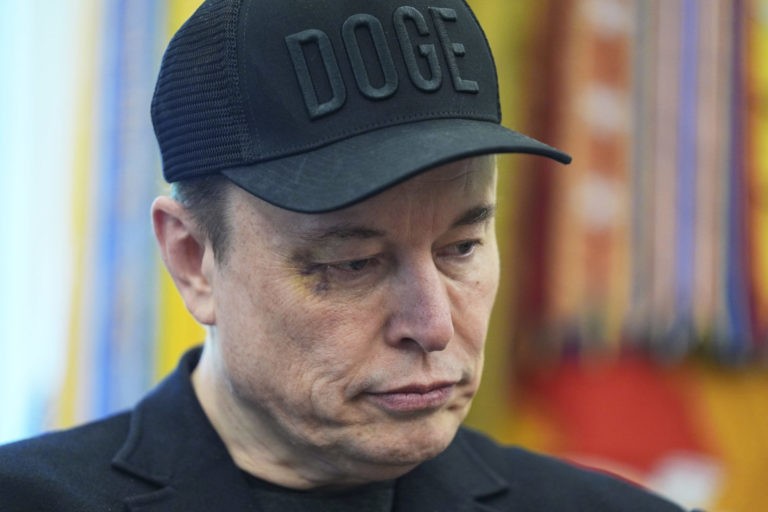
(Ken Silva, Headline USA) The New York Times reported horrific allegations of child abuse against billionaire Elon Musk’s father, Errol Musk, on Tuesday, including that Errol molested his stepdaughter when she was four years old, sniffed her dirty underwear when she was 14, and got her pregnant as an adult.

Errol, who denied the abuse allegations but admitted to having children with her, was also accused of molesting his five-year-old son.

According to the Times, the first accusation occurred in 1993, when the unnamed stepdaughter told relatives that Errol touched her at the family house. The family members said they concated authorities in South Africa about the matter.

A decade later, she reportedly caught him sniffing her underwear in California. As a result, “a restraining order was issued against Errol Musk,” the Times reported, citing anonymous sources.

The alleged abuse, along with her brother’s death, may have contributed to the stepdaughter becoming a drug addict.

“She spent time in jail on charges that she stole jewelry from Errol Musk and Ms. Bezuidenhout to pay for drugs,” the Times reported.

The stepdaughter’s mother, Heide-Mari Bezuidenhout, had divorced Errol, but reconnected with him in 2009—brining the stepdaughter, who was then 21, back into his orbit. Errol admitted to getting the stepdaughter pregnant.

“One thing led to another — you can call it God’s plan or nature’s plan,” he reportedly told The Sunday Times in 2018.

The stepdaughter also said she has one child with Errol, while Errol told the Times it was “none of your business” how many children they had together.

Errol was also accused of abusing one of those children in 2022, when the child was five.

“He said, ‘dad gropes his behind,’” Bezuidenhout, the boy’s grandmother, texted a relative around 2023, according to the Times. “He screamed, ‘no dad.’”

Errol denied the allegations.

“There was no evidence because this is nonsense,” he told the newspaper.

Meanwhile, Elon has reportedly supported his stepfamily through thick and thin.

 “Elon has always been there,” the stepdaughter reportedly said.

Ken Silva is the editor of Headline USA. Follow him at x.com/jd_cashless.

Israeli Officials Press U.S. Lawmakers to Prohibit Boycotts

(José Niño, Headline USA) Israeli leaders have called on a record number of American state legislators to enact strict laws targeting the Boycott, Divestment, and Sanctions movement during a landmark conference in Jerusalem.  

Israeli Foreign Minister Gideon Sa’ar directly lobbied 250 American state legislators visiting Jerusalem this week to enact laws targeting the Boycott, Divestment, and Sanctions movement in their home states, according to a report by The Middle East Eye.

The fully funded conference, which brought together five lawmakers from each of the 50 states from Sunday to Thursday, represented the largest delegation of American elected officials to ever visit Israel. The Israeli government covered all expenses, including roundtrip flights, accommodations, meals, and programming for the bipartisan group of Democratic and Republican legislators.

During his address to the delegation, Sa’ar characterized the BDS movement as part of “a coordinated global effort to eliminate the State of Israel” and described Israel’s opponents as engaging in “propaganda, political, legal and economic warfare.” He explicitly told the lawmakers that “the best answer against BDS, until this day has been anti-BDS legislation by your states” while urging them to strengthen their efforts by declaring that “the boycotters must be boycotted,” per a report by The Idaho Statesman

The conference occurred during a particularly sensitive period, coinciding with Secretary of State Marco Rubio’s visit to Israel and following controversial Israeli strikes in Qatar. The timing also came shortly after a UN report concluded that Israel had carried out four of the five genocidal acts defined by the 1948 Genocide Convention.

Sa’ar’s lobbying effort builds on existing momentum across American states. As of 2025, 38 states have enacted laws, executive orders, or resolutions designed to discourage boycotts of Israel. These measures typically require government contractors to certify they are not boycotting Israel or mandate public pension funds divest from companies participating in BDS activities.

The first state anti-BDS law passed in Illinois in 2015, with dozens of other states following suit using template legislation developed by pro-Israel organizations including the Israel Allies Foundation, AIPAC, and various Jewish federations.

The BDS movement, launched in 2005, calls for economic pressure on Israel until it “ends its occupation, treats Palestinian citizens equally, and honors the internationally recognized right of Palestinian refugees and their descendants to return to the homes they were expelled from or fled during Israel’s creation.” The movement encompasses boycotts of Israeli products and companies, divestment from businesses operating in Israeli settlements, and sanctions against Israel. 

José Niño is the deputy editor of Headline USA. Follow him at x.com/JoseAlNino 

US Officials Say Regime Change in Venezuela Is the Real Goal of Military Action in the Caribbean

(Dave DeCamp, Antiwar.comUS officials have told The New York Times that the real goal of the US military buildup in the Caribbean, and the bombing of boats in the region, is regime change in Venezuela.

The policy is being largely driven by Secretary of State Marco Rubio, who has long wanted to remove Venezuelan President Nicolas Maduro from power. Back in 2019, when the first Trump administration attempted to back a coup against Maduro, Rubio posted a photo on Twitter of former Libyan leader Muammar Gaddafi in the moment he was being brutally murdered in an apparent threat to the Venezuelan leader.

The Trump administration claims that Maduro is the leader of a drug cartel, but has not produced any evidence for the charge. Maduro and other Venezuelan officials have forcefully rejected the accusation and have pointed to data that shows the majority of the cocaine that is produced in Colombia doesn’t go through Venezuela.

President Trump has also framed the military campaign in the region as a response to overdose deaths in the US due to fentanyl, but fentanyl isn’t produced in Venezuela, and it does not go through the country on its way to the US.

The Times report, which was published over the weekend, reads: “Several current and former military officials, diplomats, and intelligence officers say that while fighting drugs is the pretext for the recent US attacks, the real goal is to drive Mr. Maduro from power, one way or another.”

The US began bombing boats allegedly running drugs in the Caribbean on September 2. According to numbers released by President Trump, at least 17 people have been extrajudicially executed by the US military since the campaign began. US officials have said the Trump administration is considering direct strikes on Venezuelan territory, which could lead to a full-blown war with the country.

One US official speaking to Axios last month suggested that the US military buildup in the region could lead to a “Noriega part 2,” referring to the 1989 US invasion of Panama that led to the ouster of Manuel Noriega. Other US officials hope that the pressure and $50 million bounty on Maduro leads to his assassination.

This article originally appeared at Antiwar.com.