(Stefan Gleason, Money Metals News Service) With gold and silver pulling back from their all-time highs over the last few days, the naysayers on Wall Street – who totally missed the huge rally in both metals since Labor Day – have boldly declared the top is in.
They further claim the dollar “debasement trade” has ended… and the U.S. dollar is set to strengthen.
We believe this is wishful thinking by the “paper bugs” who always seem to find a new excuse to bash gold and silver – and ridicule those who buy it.
As we’re now 25 years into a secular bull run that has seen precious metals outperform U.S. stock indexes, you’d think these Wall Street sharpies would have finally changed their tune.
But the mainstream financial industry in America has a dollar-centric frame of reference – and they generally compare the dollar to other fiat currencies. Versus those other currencies, sometimes the Federal Reserve note dollar strengthens, sometimes it weakens.
It’s better to view gold versus fiat currencies as a whole. They are ALL being debased – just at varying rates.
Twenty years ago, the Dollar Index (DXY) was trading at 80; today it’s trading at 99.
When using this “dollar” frame of reference, the dollar appears “stronger” than most of its fiat currency peers. But that’s ridiculous.
In reality, the purchasing power of the dollar has dramatically declined over that same 20-year period. In 2005, gold was trading around $500, and DXY was roughly 80. Today, gold is $4,000+ while the DXY is 99.
That means gold is up over 8-fold measured in those supposedly “stronger” dollars.
Put another way, the dollar has declined 88% versus gold over the last 20 years. Talk about dollar debasement!
Folks are buying gold – including central bankers – in order to reduce exposure to fiat currencies.
But most investors in the Western world are still massively underexposed to real money, and dangerously overexposed to paper money. This will change.
Stefan Gleason is President and CEO of Money Metals Exchange, the company recently named “Best Overall Online Precious Metals Dealer” by Investopedia. A graduate of the University of Florida, Gleason is a seasoned business leader, investor, political strategist, and grassroots activist. Gleason has frequently appeared on national television networks such as CNN, FoxNews, and CNBC and in hundreds of publications such as the Wall Street Journal, TheStreet, and Seeking Alpha.
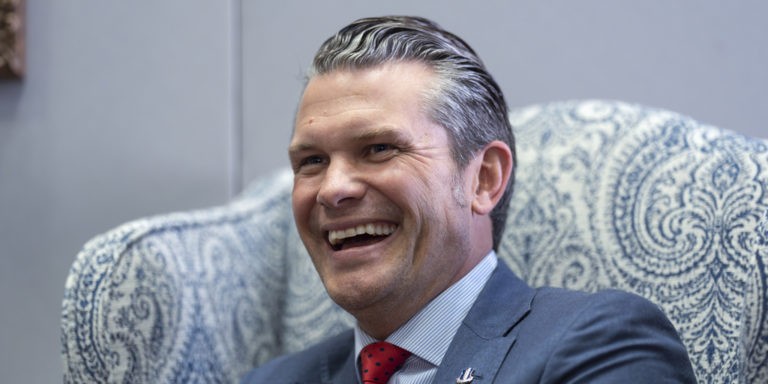
(Luis Cornelio, Headline USA) The legacy media has effectively declared that bearing a Nazi tattoo is acceptable, so long as the person wearing it is a Democrat. This is a stark contrast to the countless headlines devoted to attacking War Secretary Pete Hegseth over a similar, yet false, accusation.
The hypocritical coverage has been on full display in the tattoo scandal of Graham Platner, the leftist darling running for the Democratic nomination to challenge Maine GOP Sen. Susan Collins.
Platner came under fire after being busted with a skull-and-crossbones tattoo, the same symbol used by Adolf Hitler’s paramilitary police, the Schutzstaffel.
In remarks to the media, Platner said he got the tattoo in 2007 in Croatia, but moved to cover it just this week.
A recently surfaced video shows Maine Democratic U.S. Senate candidate Graham Platner with a chest tattoo of the SS Totenkopf, the skull-and-crossbones emblem used by Nazi “Death’s Head” units.
Platner has stated he got the tattoo while drunk as a young Marine on shore leave in… pic.twitter.com/euH926eTgA
“I am not a secret Nazi,” he insisted in a leftist podcast. He added that he was unaware of the tattoo’s ties to Nazi Germany until recently.
“I absolutely would not have gone through life having this on my chest if I knew that — and to insinuate that I did is disgusting,” he said, as quoted by the leftist New York Times.
The media quickly accepted Platner’s excuse and widely ignored the scandal. This contrasted sharply with their treatment of Hegseth, whose Jerusalem cross chest tattoo they falsely linked to white supremacist groups.
In the following video compilation by the Media Research Center, outlets can be seen pushing the baseless claim against Hegseth.
Leftist media logic:
If a Republican cabinet official has Christian tattoos, he's a white supremacist.
But when a Democratic Senate candidate has a Nazi tattoo, it isn't newsworthy. pic.twitter.com/ZztcswooEU
In fact, the Jerusalem cross is one of the most widely recognized Christian symbols, featuring a large Greek cross with smaller crosses in each corner.
The five parts of the cross have been given different meanings throughout history, all of which focused on Christ, according to the National Catholic Register.
Interpretations range from the cross representing the Gospels and Christ to symbolizing the wounds on Christ’s feet and hands when he was crucified.
The Jerusalem cross is so prominent that it’s inlaid in the chancel floor of the Washington National Cathedral, where [the late Jimmy] Carter’s body was placed during his funeral on Thursday.
The disturbing footage shows Will Flanagan, the one-term mayor of Fall River, walking down a Massachusetts street, unaware that he was being chased by who police later identified as Corree Gonzales.
Gonzales then quietly runs up to Flanagan and stabs him several times in the neck.
Despite the near-fatal injuries, Flanagan managed to stand and beg for help from nearby bystanders.
First responders and police rushed to the scene within minutes, WCVB reported.
Witness Karen Cange told WCVB that she saw an individual “mumbling some words” before he “came out, brushed up against the guy, stabbed him on the face and the neck.”
Cange said Flanagan was “bleeding everywhere.”
Flanagan, elected mayor of Fall River in 2009 and recalled in 2014, now owns the marijuana business Cosmopolitan Dispensary.
Gonzales—a homeless man with a lengthy criminal record and mental illness—allegedly assaulted several police officers who attempted to arrest him on Tuesday.
He has since pleaded guilty but could face charges in connection with the stabbing pending a mental evaluation.
(Luis Cornelio, Headline USA) DNC mouthpiece Harry Sisson attempted to corner conservative personality Jack Posobiec by daring him to name and date when a “high-ranking Democrat” compared President Donald Trump to Adolf Hitler.
The attempt, made during a Tuesday panel on Piers Morgan’s Uncensored, was quickly countered by Posobiec and fellow panelist Isabel Brown, who pulled receipts of Democrats likening Trump to Hitler. The exchange has since gone viral.
“Is Kamala Harris a high-ranking Democrat when she was the party nominee?” Posobiec asked sarcastically.
“When did Kamala Harris call Donald Trump Hitler?” Sisson retorted.
Brown, a Daily Wire podcast host, fired back: “On October of 2024, Kamala Harris said on the campaign trail, ‘Donald Trump vowed to be a dictator on day one. His former chief of staff said he wanted generals like Hitler. Donald Trump openly admires dictators, including Adolf Hitler.’”
Faced with the evidence, Sisson repeatedly interrupted: “Wait, wait, wait! Just relax. Guys, take a breather! … guys, guys, guys, relax!”
Harry Sisson: "I dare you to name one high-ranking Democrat who compared Trump to Hitler"
Posobiec: "You mean like when Kamala Harris did in October 2024 when you were campaigning for her?" pic.twitter.com/WUsPhfdMoi
Even Piers Morgan brought up another example, citing twice-failed presidential candidate Hillary Clinton.
“Hillary Clinton literally compared Trump’s rally in Ohio last week to Nazi leader Adolf Hitler’s speeches,” Morgan said, referencing a 2023 report.
Clinton has made multiple such comparisons. In 2024, she likened Trump’s Madison Square Garden rally to a 1939 Nazi rally. In 2023, she compared his potential return to the White House to Hitler’s election in Germany.
Hillary Clinton reappears on MSNBC to once again say Trump is Hitler:
"The world has been here before. People did not take the kind of threats that we saw in the 1930s as seriously as they should…"
Sisson himself shared a video on X of then-President Joe Biden accusing Trump of lifting “Hitler’s language,” commenting, “He’s absolutely right.”
BOOM! President Biden just responded to Donald Trump calling for a “unified reich” in his campaign ad saying “That’s Hitler’s language, not America’s!” He is absolutely right. Donald Trump is a disgrace to the country. pic.twitter.com/o3zNzhC1VF
In separate tweets, Sisson echoed similar rhetoric. Responding to a Lincoln Project video comparing Trump to Hitler, he wrote, “The similarities are striking. We have to make the right decision in 2024 and reelect President Biden.”
WOW! The Lincoln Project just released this new ad on how Donald Trump is using similar tactics to Hitler to rise to power. The similarities are striking. We have to make the right decision in 2024 and reelect President Biden. pic.twitter.com/mhGkhQnXoR
(Money Metals News Service) In this Money Metals Midweek Memo, host Mike Maharrey cautions listeners against confusing market symptoms with the underlying illness. He opens with a reminder to focus on what drives prices, not just the prices themselves.
Both metals had run well ahead of trend, registering classic overbought conditions. A pullback from that state is normal in a bull market and does not, by itself, upend the larger thesis.
The broader backdrop explains why a routine correction can look dramatic. Private credit has swelled to roughly $1.7 trillion, and household debt sits at a record $18.4 trillion, with credit-card and auto delinquencies now above pre-pandemic levels. Tightening money meets stretched balance sheets.
Policy sits at the center of those pressures. The FY2025 deficit reached $1.78 trillion, about 5.9% of GDP, even as revenues rose 6.4% year over year. Tariffs helped near-term receipts—$22 billion for the year, up 142%, and $30 billion in September alone, up 295%—but not enough to change the fiscal math.
Monetary settings frame the next act. The Fed’s balance sheet grew from just over $0.9 trillion before 2008 to just under $9 trillion during the pandemic. Quantitative tightening has trimmed about $2.4 trillion, and Chair Jerome Powell has hinted runoff could end in the coming months, signaling a slower drain on liquidity.
Executive Summary
Maharrey argues the selloff looks less like a change in view on gold and silver and more like a dash for cash. When liquidity gets scarce, investors sell what is liquid and profitable first, and the metals fit that description.
That interpretation lines up with recent warnings. Jamie Dimon talks about “cockroaches” in credit, implying that early blowups rarely arrive alone. Danielle DiMartino Booth points to lax underwriting during the zero-rate era and reads the metals drop as forced selling, not a fundamental rejection. Bank of England Governor Andrew Bailey hears echoes of 2007, linking opacity and leverage to the way stress spreads.
If those signals are right, the policy response becomes easier to anticipate. With outlays heavy and debt service rising, the Fed is boxed in. Ending QT, cutting rates, and later revisiting QE would ease Treasury funding strains while prolonging financial repression. Over time, that path tends to support gold and silver even if it makes the journey bumpier.
Key Themes And Takeaways
Corrections are part of healthy uptrends. Overbought conditions made a pause likely, and the presence of a pullback says more about positioning than about long-term value.
Stress in private credit is the tell that turns a technical event into a macro signal. Years of easy money produced weak standards and high leverage. As funding costs rise, those weaknesses show up first where transparency is lowest, and the scramble for cash begins.
Policy drift points the same way. Powell’s hint that QT could end in the coming months, together with prospects for rate cuts, implies lower nominal and real yields. Historically, that mix has favored gold and silver once the immediate liquidity squeeze passes.
Fiscal gravity ties it together. A $1.78 trillion deficit at roughly 5.9 percent of GDP—despite higher revenues and a tariff surge—keeps the Treasury market hungry for support. That need keeps the Fed close at hand.
Evidence And Data Highlights
The cracks appear first where leverage is high and transparency is low. Dimon’s “cockroaches” warning followed visible blowups in private credit, a market that swelled to about $1.7 trillion during years of ultra-easy money. Early failures are signals, not outliers, when the same incentives ran through the system.
That history explains today’s selling pressure. When capital is cheap, underwriting drifts because the penalty for being wrong is delayed. DiMartino Booth ties current stress to ZIRP-era laxity and argues that the metals selloff reflects investors raising cash quickly, not abandoning gold or silver as stores of value.
Bailey’s comparison to 2007 supplies the mechanism rather than melodrama. Then, as now, opacity and leverage turned toxic when liquidity thinned. As the cost of money rises, weak credits crack first, margin calls arrive next, and investors liquidate their best collateral to meet them.
Household data rhyme with the market tape and confirm that liquidity is tight beyond Wall Street. Total liabilities stand at a record $18.4 trillion. Credit-card and auto delinquencies now exceed pre-COVID levels. Revolving credit flattening—and in places contracting—suggests consumers have run into their own limits.
Monetary settings complete the sequence and point to what comes after the squeeze. The Fed’s balance sheet climbed from just over $0.9 trillion pre-crisis to just under $9 trillion at the pandemic peak, then rolled off about $2.4 trillion. Powell’s signal that runoff may end soon implies the drain on bank reserves will slow, easing the most immediate pressure even before any new easing begins.
Taken together, the chain is coherent. Credit strain triggers a dash for cash. Consumer stress corroborates the pinch. The Fed edges toward easier settings to stabilize funding. Gold and silver get hit first as liquid winners, then typically recover as real yields fall and liquidity returns.
What It Means For Investors
Volatility is not the thesis. Liquidity squeezes can hit metals hard and fast, then fade as policy adjusts and cash demands ease. The speed of the decline reflects positioning, not necessarily a change in value.
An end to QT reduces the amount of Treasuries the private market must absorb, supports prices, and leans on yields. Rate cuts push real rates lower. A later return to QE would add outright liquidity. Together, those forces tend to be constructive for gold and silver once the rush for cash subsides.
Stagflation risk lingers in the background. Low growth with sticky inflation suits a debt-heavy world that prefers gradual devaluation to austerity. Metals hedge that reality over multi-year horizons.
Tactics should reflect conviction and cash flow. Using pullbacks to scale in keeps discipline while avoiding the need to time lows. Quarter-ounce sovereign gold and low-premium silver—rounds or junk—offer flexible sizing without committing to full ounces.
What To Watch Next
Listen for the Fed’s calendar on ending QT and the pace of any cuts. The timeline shapes liquidity, term premia, and auction dynamics in the Treasury market.
Track private-credit stress signals, from downgrades to fund gates and defaults. If those build, dash-for-cash pressure can reappear even if policy guidance turns easier.
Watch consumer delinquencies and the path of M2. Those series reveal whether the liquidity tide is going out or coming in across the real economy.
Follow bullion flows between New York and London, shifts in lease rates, and good-delivery availability. Tightness in those channels often precedes renewed price strength.
Bottom Line
The episode’s message is straightforward. The selloff looks like liquidity stress, not a rejection of gold and silver.
The likely policy arc—stop QT, cut rates, and eventually consider QE—keeps real yields low and, over time, supports the case for holding metal.
Keep your eye on the ball: real rates, balance-sheet policy, credit stress, and structural deficits.
Where To Act
If you plan to use the dip, speak with a Money Metals specialist at 1-800-800-1865. You can buy online at MoneyMetals.com, arrange secure vault storage, and access metal-backed loans through the depository.
(Luis Cornelio, Headline USA) An MSNBC panel on Morning Joe reached a new level of absurdity after suggesting that Abigail Spanberger, the Democratic nominee for Virginia governor, is struggling at the polls because she’s a woman.
Here’s a reality check: Spanberger’s Republican opponent is Virginia’s lieutenant governor, Winsome Earle-Sears, a woman, and even more notably, a first-generation American black woman.
Earle-Sears was born in Jamaica and rose through the ranks of Virginia politics before winning statewide office in 2021. Throughout the race, Earle-Sears, not Spanberger, has faced repeated racial smears from left-wing activists and pundits.
Critics quickly flooded X with sarcastic reminders of Earle-Sears’s gender, with the GOP candidate herself writing, “Who wants to tell them?”
The criticism targeted the panel composed of Morning Joe co-hosts Jonathan Lemire and Mika Brzezinski and MSNBC contributors Al Sharpton and Molly Jong-Fast. The leftist group was discussing supposed “electability” challenges for women candidates.
“There is some misogyny that is in the electorate that needs to be confronted,” Sharpton said during the segment.
Brzezinski echoed that sentiment, urging Democratic women to “fight, fight.”
She claimed, “It really is incredible when you have Abigail Spanberger, Mikie Sherrill, her background, all the different jobs that she has held in the military and also like Elissa Slotkin, I mean, my god, these women are incredible, and to them I would say fight, fight, fight because we need them. We need them!”
Lemire also claimed concerns about women candidates, given Democratic losses in 2016 and 2024 “does fall into the same misogynic trap.”
Brzezinski closed the segment by lamenting, “Other countries have no problem electing women!”
Their comments came as Earle-Sears continued narrowing Spanberger’s lead in polls ahead of Virginia’s November 2025 election.
(José Niño, Headline USA) Anthony Fauci may be gone, but his controversial experiments continue.
The Trump administration, despite its stated intentions to scale back taxpayer-funded animal experiments, is moving forward with a new infusion of millions of dollars for a controversial bat virus laboratory in Colorado, according to a report by The Washington Times.
The lab, under construction at Colorado State University (CSU) in Fort Collins, is designed to host a breeding colony for bats to be used in researching dangerous pathogens such as Ebola, Nipah, and coronaviruses. Besides conducting some of its own research, the facility will also supply bats to other domestic labs for similar studies.
Last year, the future of this project was put in question after its original bat supplier, EcoHealth Alliance, was banned from receiving federal contracts due to its role in funding the Wuhan laboratory, which officials believe played a role in the coronavirus pandemic.
However, the National Institutes of Health (NIH) under President Trump provided the lab with an additional $2.2 million on September 15. This funding will support studies involving Nipah virus, SARS-CoV-2, and two closely related coronavirus variants, BANAL-52 and BANAL-236, TheWashington Times reported.
CSU defended the project, stating, “The establishment of this resource will lead to a better understanding of how bats host highly pathogenic viruses without disease and may shed light on events that increase spillover risks to humans… this information could lead to mitigation strategies to prevent future virus spillover and uncover new strategies for therapeutic treatment of coronavirus and Nipah virus diseases.”
Criticism has been swift from several lawmakers. Sen. Joni Ernst, R-Iowa, remarked, “When I disbarred EcoHealth from receiving taxpayer funds for sketchy research in China, that was not an invitation for the NIH to conduct the same shady experiments in our own backyard… it’s like a bad sequel. Same plot. Same cast of characters, but a bigger budget!” She vowed to work to stop what she called “batty experiments once and for all.”
NIH’s current director, Jay Bhattacharya, had himself voiced strong reservations about the lab last year. “I don’t understand how do you prevent a pandemic with this research,” Bhattacharya said in remarks to the Fort Collins community, expressing concern about the potential global impacts and lack of local transparency. He noted, “Why is it that only a small group of people gets to decide what risks the entire world gets to take?”
Others, like Justin Goodman of White Coat Waste Project, noted the abrupt policy reversal by NIH leadership: “When he [Bhattacharya] became NIH Director, we were counting on him to shut it down — but instead his agency is forking over millions more… it’s a recipe for disaster. Taxpayers need another Fauci bat virus lab on U.S. soil like they need a hole in the head.”
CSU has emphasized that strict biosafety protocols will be in place, including restricted access, required protective equipment, and comprehensive decontamination procedures. The school stated it has severed ties with EcoHealth Alliance and does not plan to conduct gain-of-function research that could increase the risk of viral transmission to humans.
Before the September grant, the lab had already received $9 million in federal funding, drawing further scrutiny from Congress.
José Niño is the deputy editor of Headline USA. Follow him at x.com/JoseAlNino
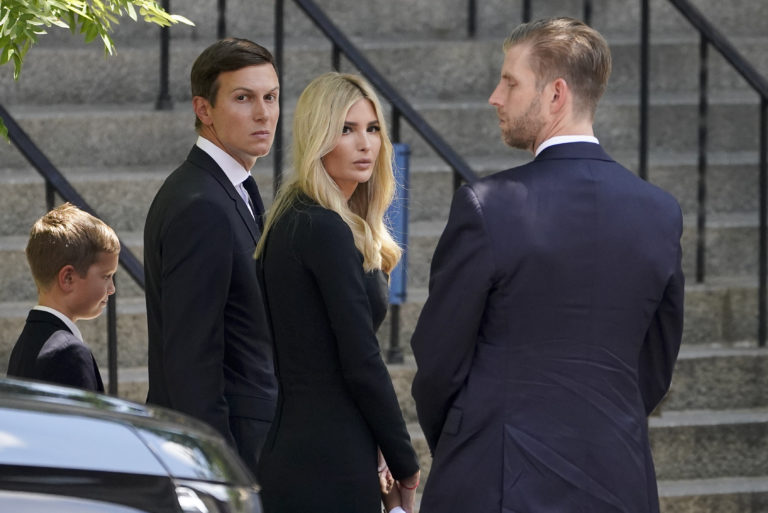
(José Niño, Headline USA) Touring Gaza left Jared Kushner with an image of devastation so complete he compared it to a nuclear blast but insisted the Israeli campaign was a legitimate war.
Jared Kushner told CBS News that Gaza looked as though “a nuclear bomb had been set off” when he toured the territory last week, yet he firmly rejected any suggestion that Israel’s military campaign constituted genocide.
In an interview with “60 Minutes” correspondent Lesley Stahl that aired Sunday, Kushner and fellow Trump envoy Steve Witkoff described the devastation they witnessed while defending Israel’s conduct during the war.
“It looked almost like a nuclear bomb had been set off in that area,” Kushner said. “And then you see these people moving back. And I asked the IDF, ‘Where are they going?’ Like, I’m looking around. These are all ruins. And they said, ‘Well, they’re going back to the areas where their destroyed home was, onto their plot, and they’re gonna pitch a tent.’ And it’s very sad, because you think to yourself, they really have nowhere else to go.”
Kushner says Gaza looks like a “nuclear bomb” hit it — while he and envoy Witkoff insist it’s not genocide. pic.twitter.com/BfS0VUwQCJ
When Stahl pressed him on whether the destruction amounted to genocide, Kushner quickly dismissed the characterization.
“Would you say now, having been there, that it was genocide?” Stahl asked.
“No, no,” Kushner insisted.
“Absolutely not, no,” Witkoff added. “There was a war being fought.”
Later in the interview, Kushner offered a stark assessment of the regional balance of power, framing the devastation in Gaza as evidence of Israel’s strength rather than humanitarian catastrophe.
Stahl asked the envoys what Israel should do to restore its international standing in light of rising antisemitism.
“I think what Israel should just do is focus on showing people that if you’re partners with Israel you can benefit,” Kushner said to CBS during the 60 Minutes interview. “And if you are against Israel, they’re a tough– they’re a tough opponent. You look at after October 7th, Hezbollah now is mostly destroyed. Iran is weaker than they’ve ever been.
And Gaza is mostly destroyed. And it’s not just the buildings. You have all the terror infrastructure. Underneath Gaza, I mean, you had tens of billions of dollars of aid that went into Gaza, and their democratically elected government, Hamas, used that to build over 450 miles of terror tunnels.”
The interview also touched on divisions within the Republican coalition over support for Israel. Stahl noted that some leaders in the MAGA movement have begun questioning American backing for Israeli military operations.
“Jared, even the president’s [MAGA] base … that’s beginning to fracture. You have some people—leaders—who aren’t supporting Israel?” Stahl said.
“It’s okay,” Kushner responded. “Look– MAGA– I always think a political party is a collection of tribes. And I think the very strong– majority of President Trump’s– MAGA base does support Israel. But again, most people are against war, and people don’t like what’s happened over the last couple years.”
Stahl raised questions about potential conflicts of interest stemming from the envoys’ extensive business dealings with Gulf states, investments worth billions of dollars that have continued even as they conduct diplomatic negotiations.
“So, you have both done a lot of business with the Gulf states — billions and billions of dollars worth of business. And you’ve done some of the business while this negotiation has gone on and that has raised some issues of conflict. I mean, some blurring of a line between, you know, what you’re doing in terms of foreign policy and benefiting financially from what’s going on,” Stahl said.
Kushner rejected any suggestion of impropriety.
“So first of all, Lesley, nobody’s pointed out any instances where Steve or I have– pursued any policies or done anything that have not been in the interest of America.,” Kushner said.
He reframed the concern as an asset rather than a liability.
“What people call conflicts of interests, Steve and I call experience and trusted relationships that we have throughout the world,” Kushner said.
“If Steve and I didn’t have these deep relationships, the deal that we were able to help get done, that freed these hostages would not have occurred,” he added.
José Niño is the deputy editor of Headline USA. Follow him at x.com/JoseAlNino
(Headline USA) His U.S. Senate campaign under fire, Maine Democrat Graham Platner said Wednesday that a tattoo on his chest has been covered to no longer reflect an image widely recognized as a Nazi symbol.
The first-time political candidate said he got the skull and crossbones tattoo in 2007, when he was in his 20s and in the Marine Corps. It happened during a night of drinking while he was on leave in Croatia, he said, adding he was unaware until recently that the image has been associated with Nazi police.
The revelation that the tattoo had been hastily covered up is just the latest bizarre twist that the high-stakes Senate race had taken in just the past 10 days. The unfolding drama has so far included a sweep of old internet posts, a drunken video of Platner in his underwear, and now the urgently edited tattoo.
Amid the frenzy, another Democratic candidate released his own shirtless photo to show off his arm tattoo of former President Barack Obama’s presidential campaign logo.
A Senate race intensifies quickly
Platner launched his campaign in August, but the intensity of the race ratcheted up last Monday when Gov. Janet Mills announced her entry into a race Democrats feel they must have if they are going to reclaim a Senate majority. Her entry had the backing of Senate Minority Leader Chuck Schumer, D-N.Y., who is looking to unseat longtime incumbent Republican Sen. Susan Collins.
We just sat down with Graham Platner to talk about his previous online comments, and the now-infamous tattoo. He gave us a first look at the cover-up tattoo he had done just last night, and spoke candidly about the controversies surrounding him now. That's tonight at 5. @WGMEpic.twitter.com/YIfV39D5Bd
Shortly after Mills jumped in, news began trickling out from Platner’s past.
Platner pushed back, saying the onslaught demonstrated that he wasn’t the preferred candidate of establishment Democrats. Platner also accused his political opponents of attempting to “destroy my life” and vowed that he wasn’t going to be scared off from the campaign.
“All this is doing is galvanizing my commitment to this project,” he said.
Platner’s campaign initially said he would remove the tattoo, yet Platner said he later chose to cover it up with another tattoo due to the limited options where he lives in rural Maine.
“Going to a tattoo removal place is going to take a while,” he said. “I wanted this thing off my body.”
The initial tattoo image resembled a specific symbol of Hitler’s paramilitary Schutzstaffel, or SS, which was responsible for the systematic murders of millions of Jews and others in Europe during World War II.
A Celtic knot and a dog-like creature
The new tattoo, completed late Tuesday, now is a Celtic knot with a dog-like creature splayed in the middle of it. The animal has four gangly legs and an elongated head with a curly tongue spiraling out. The image is mostly filled in with black ink, but the Celtic knot is green.
In a moment unlikely to be replicated in any campaign, let alone a contest for a U.S. Senate seat, Platner agreed to take his shirt off during an interview with WGME-TV, a Maine outlet based in Portland, on Wednesday to show off the new design.
The oyster farmer is mounting a progressive campaign against Republican Susan Collins, who has held the Senate seat for 30 years. The crowded Democratic primary field includes two-term Gov. Janet Mills.
Platner said he had never been questioned about the tattoo’s connections to Nazi symbols in the 20 years he has had it. He said that after serving three tours as a Marine, he later went to enlist in the Army, which requires an examination for tattoos of hate symbols.
“I also passed a full background check to receive a security clearance to join the Ambassador to Afghanistan’s security detail,” Platner said.
Other controversial statements surface in old Reddit posts
Questions about the tattoo come after the recent discovery of Platner’s now-deleted online statements that included dismissing military sexual assaults, questioning Black patrons’ gratuity habits and criticizing police officers and rural Americans. More old Reddit posts surfaced Wednesday, with The Advocate reporting that Platner used homophobic slurs and made anti-LGBTQ+ jokes between 2018 and 2021.
Platner has apologized for those comments, saying they were made after he left the Army in 2012, when he was struggling with post-traumatic stress disorder and depression.
He has resisted calls to drop out of the race and has the backing of Sen. Bernie Sanders, a Vermont independent who has described Platner as a stronger candidate for the seat than Mills. Another primary rival, Jordan Wood, a onetime chief of staff to former U.S. Rep. Katie Porter, D-Calif., said Wednesday that Platner should drop out because “Democrats need to be able to condemn Trump’s actions with moral clarity” and Platner “no longer can.”
Platner said he was not ashamed to confront his past comments and actions because it reflects the lessons he needed to take to get where he is today.
“I don’t look at this as a liability,” he told the AP. “I look at this as is a life that I have lived, a journey that has been difficult, that has been full of struggle, that has also gotten me to where I am today. And I’m very proud of who I am.”
Platner planned a town hall Wednesday in Ogunquit, Maine.
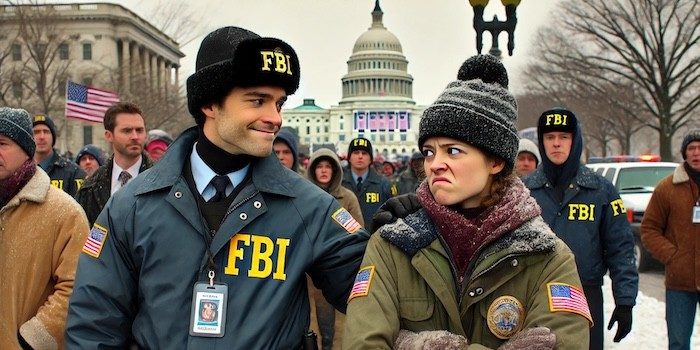
(Ken Silva, Headline USA) On Feb. 28, FBI agent Benjamin Spinale reportedly pulled his gun on a young man named Nico Vazquez, who was riding his dirt bike down the street in Stafford County, Virginia.
When Vazquez told his father what had happened, they returned to the area to obtain the name of the street, so they could report Spinale to the local police. But while they were doing so, they were pulled over by a Stafford County deputy. According to NBC Washington, Spinale, who was off duty and in plain clothes at the time, escalated the situation by drawing his weapon and pointing it at the Vazquezes.
That’s when a local Good Samaritan named Jason Chamberlain became involved. Deputies reportedly called Chamberlain a hero for helping them. But for reasons that are still unclear, Spinale wound up shooting and killing him, according to NBC Washington.
“Police said while they were interacting with the young man’s family, Chamberlain got involved and the off-duty agent shot him,” NBC Washington reported on Monday.
FBI agent kills man under suspicious circumstances, gets slap on wrist. Same agent previously pulled his gun on a puppy. pic.twitter.com/UPFmBOKT2Q
Spinale was reportedly charged with two misdemeanor counts of brandishing a firearm, but was not charged for killing Chamberlain.
According to NBC Washington, the incident with the Vazquezes wasn’t the first time the FBI agent brandished a firearm.
“Prosecutors told the court that, in October, a man opened his front door early one morning to pick up a package from his porch. The family’s Labrador retriever puppy ran through the open door and onto the street. Doorbell camera video shows the puppy approaching Spinale, who was walking his two beagles, prosecutors said,” NBC reported.
“Video shows Spinale pulling a gun from his right hip and pointing it at the puppy and the homeowner, who tried to deescalate the situation, prosecutors said. Spinale’s defense attorney claimed the puppy was acting aggressively.”
In yet another incident, Spinale allegedly pulled his gun on three teenagers driving down the road. Spinale’s attorney reportedly said he only flashed his badge, and didn’t pull his gun. Either way, electronic recording devices reportedly found that the teenagers were only going 23 mph in a 25 mph zone.
For all that, Spinale’s punishment is reportedly that he now can’t have a personal firearm. But he’s still allowed to have one for work, and the FBI hasn’t responded to NBC Washington’s inquiries about whether he’s still working for the bureau.
According to court records, Spinale was involved in investigating protestors from the Jan. 6, 2021, Capitol Hill uprising. His name is on the arrest warrant affidavit for Jan. 6er Kyle Fitzsimons, who was sentenced in July 2023 to 87 months in prison for assaulting law enforcement officers and committing several misdemeanors.