Texas Lawmaker Introduces Agricultural Visa Reform

(Andrew Rice, The Center Square) A Texas lawmaker introduced legislation to reform the H-2A visa program for agricultural workers.

U.S. Rep. Monica De La Cruz, R-Texas, introduced the Bracero Program 2.0 Act, a bill to make wage reforms and technical upgrades to the H-2a temporary agricultural visa program.

The H-2A visa program is a federally administered work visa system that allows agricultural employers to hire immigrant workers for temporary or seasonal jobs when there are not enough U.S. workers available.

According to data from the U.S. Department of Agriculture, 42% of farmworkers in the United States do not have U.S. work authorization. There is no limit to the number of workers who can be approved each year on the H-2A program.

The Bracero Program was initially implemented in 1942 as an agreement between Mexico and the United States to address farmworker shortages during World War II. The program brought in roughly four million temporary agricultural workers from Mexico before it ended in 1964.

De La Cruz’s legislation proposes centralizing the H-2A application process into a single electronic portal that will post advertisements for open positions and allow applicants to submit documents. The electronic portal would be administered by the Departments of Labor and Homeland Security. The bill also recommends extending H-2A worker contracts to 12 months from the previous less than 10 month period.

“For decades, the Bracero program created new opportunities for millions and provided critical support for Texas agriculture,” De La Cruz said. “I am leading efforts to revive the Bracero spirit by reforming H-2A visas.”

Florida, California, Georgia, Washington and North Carolina are among the top five states where employers recruit H-2A workers.

De La Cruz’s legislation also proposes requiring employers to pay H-2A workers two dollars more than the state’s hourly minimum wage.

The Trump administration recently proposed a rule that would change wage calculation for H-2A workers by requiring employers to pay based on state-level Bureau of Labor Statistics data.

The administration said this would stabilize the rate of pay for H-2A workers rather than having it fluctuate rapidly from year to year.

“This continuity is essential for minimizing the likelihood of shortages, price volatility, and disruptions throughout the supply chain, which can affect customers and businesses alike,” the administration wrote in its rule.

De La Cruz’s legislation also proposes expanding eligibility for H-2A work visas by allowing greenhouse and indoor farm workers to apply for the program. The program would also give greater flexibility to workers who change employers by allowing them to remain on a single visa.

Rosemary Jenks, policy director at the Immigration Accountability Project, said she is skeptical of expanding work visa programs in agricultural fields.

“We should as a country incentivize growers to invest in capital, to invest in the machines that can pick the crops rather than relying on an imported slave class to pick them,” Jenks said.

The future of De La Cruz’s legislation is uncertain as the Trump administration continues to make changes with various visa systems including the H-1B and H-2A programs. 

“This will provide solutions desperately needed for hard-working immigrants,” De La Cruz said. “With workforce shortages challenging our communities, the Bracero Program 2.0 will bring stability and certainty for south Texas.”
US Bombs Boat It Claims Was Carrying Drugs in the Pacific Ocean, Marking Expansion of Campaign

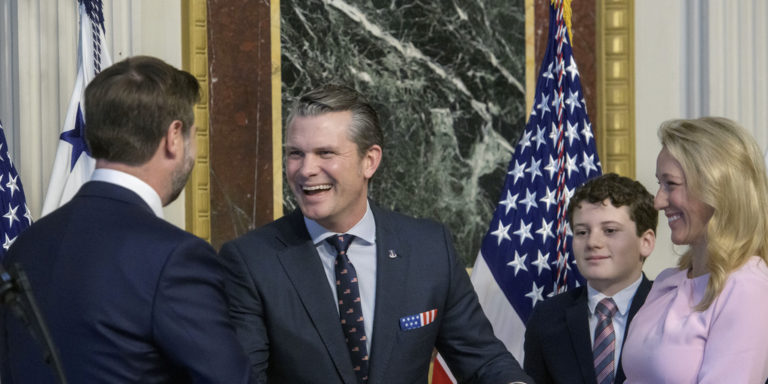
(Dave DeCamp, Antiwar.com) The US military has carried out its eighth known strike on a boat it claimed, without providing evidence, was carrying drugs, but this time the vessel was bombed in the eastern Pacific Ocean, according to US War Secretary Pete Hegseth.

The previous seven boats were targeted in the Caribbean, and striking one in the Pacific marks an expansion of the US military campaign. US War Secretary Pete Hegseth claimed the strike killed two “narco-terrorists,” a term the administration uses to justify the extrajudicial executions at sea for an alleged crime that does not receive the death penalty in the US.

“Yesterday, at the direction of President Trump, the Department of War conducted a lethal kinetic strike on a vessel being operated by a Designated Terrorist Organization and conducting narco-trafficking in the Eastern Pacific,” Hegseth wrote on X.

“The vessel was known by our intelligence to be involved in illicit narcotics smuggling, was transiting along a known narco-trafficking transit route, and carrying narcotics. There were two narco-terrorists aboard the vessel during the strike, which was conducted in international waters. Both terrorists were killed and no US forces were harmed in this strike,” he added.

Hegseth didn’t say where exactly the boat was targeted, but a US official speaking to The New York Times said it was hit while off the coast of Colombia.

At least 34 people have been killed in the US bombing campaign since it started on September 2, according to numbers released by the administration. In several cases, family members have insisted that the victims were not drug traffickers, and Colombian President Gustavo Petro has accused the US of murder over a strike that killed a Colombian fisherman, he said had “no ties to the drug trade.”

Sen. Rand Paul (R-KY) has been very critical of the US bombing campaign, saying earlier this week that the strikes “go against all of our tradition.”

“When you kill someone, you should know, if you’re not at war, not in a declared war, you really need to know someone’s name at least,” Paul said. “You have to accuse them of something. You have to present evidence. So all of these people have been blown up without us knowing their name, without any evidence of a crime.”

US officials have been clear that the ultimate goal of the US military campaign in the Caribbean, which has involved a substantial buildup of US forces, is to carry out regime change in Venezuela. President Trump confirmed last week that he has authorized the CIA to take covert action inside Venezuela and that the US is considering attacks on Venezuelan territory.

This article originally appeared at Antiwar.com. 


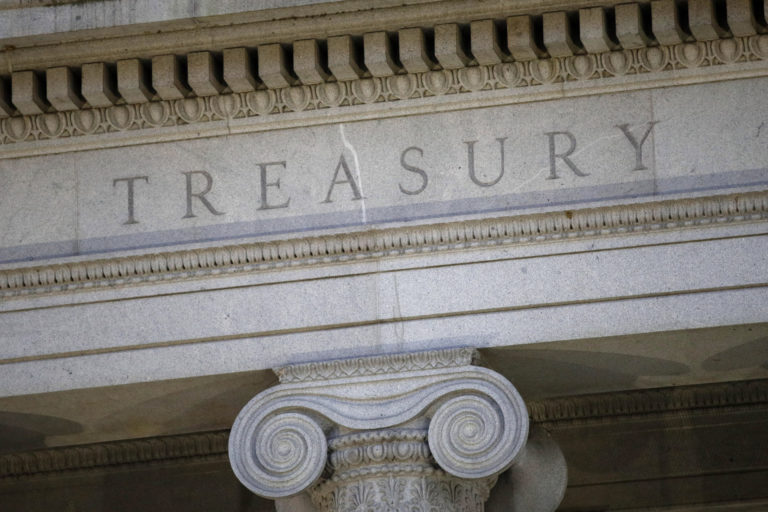
Treasury Sanctions Russian Oil Companies, Calls for Ceasefire

(Andrew Rice, The Center Square) The U.S. Treasury Department announced sanctions against two Russian oil companies on Wednesday. 

The department cited Russia’s “lack of serious commitment” to ending the war in Ukraine, according to a news release. 

“Now is the time to stop the killing and for an immediate ceasefire,” Treasury Secretary Scott Bessent said. “Treasury is prepared to take further action if necessary to support President Trump’s efforts to end yet another war.”

The U.S. is targeting Open Joint Stock Company Rosneft Oil Company and Lukoil OAO in its sanction efforts, as well as 34 subsidiaries of the two oil companies. 

The sanctions prohibit transactions for individuals or organizations within the United States between the Russian oil companies or their subsidiaries.

Over the summer, Trump levied tariffs against India, a Russian ally, over the nation’s purchase of Russian energy and oil. Trump cited the war in Ukraine as his reason for targeting India. 

“The ultimate goal of sanctions is not to punish but to bring about a positive change in behavior,” the Treasury Department press release reads.

Former Fed Advisor: Recent Gold and Silver Selloff Reflect Rot in the Financial System

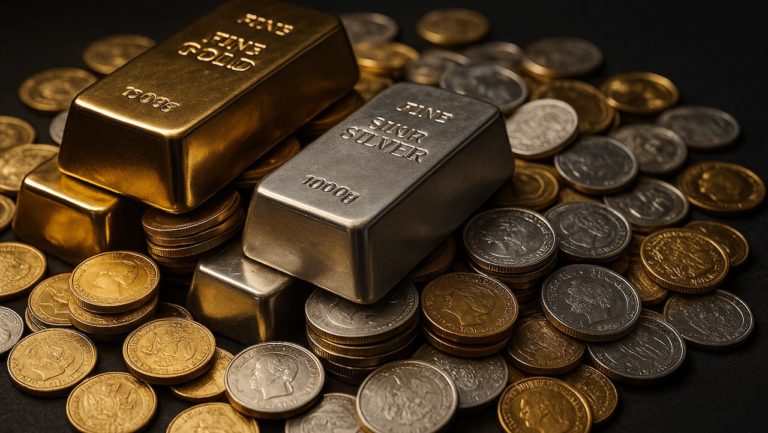
(Mike Maharrey, Money Metals News Service) A former Federal Reserve advisor said the recent selloff in gold and silver wasn’t just nervous investors booking profits on oversold assets. She thinks it signals deeper structural rot in the financial system.

After peaking near $4,400 an ounce, gold was hammered lower, falling to close to $4,000 before stabilizing at around $4,100.

Silver dropped even more substantially in percentage terms, plunging from over $54 to the $48 range.

The correction wasn’t unexpected. Both metals were overbought, and bull markets don’t go up in a straight line. Corrections are healthy in an upward-trending market.

However, in an interview with Kitco News, Danielle DiMartino Booth said she thinks more than just profit-taking drove the recent gold and silver selloff. The former advisor to ex-Dallas Fed President Richard Fisher said it reflects an increasing lack of liquidity in the financial system, and it will ultimately force the Federal Reserve to loosen monetary policy more quickly than anybody expects.

“It certainly looks like the system is running out of sufficient liquidity, and that the Fed is going to be forced to pull over to the sidelines.”

In fact, the central bank has already pulled the car off the road. It cut rates at the last meeting, despite signs of persistent inflation. And in another signal that we are entering an era of even looser monetary policy, Federal Reserve Chairman Jerome Powell hinted that balance sheet reduction is about to come to an end.

These moves make little sense given the inflation data. But when you factor in the massive level of debt in the economy, it becomes clear why the Fed is easing.

This once again reveals the Catch-22 the central bank finds itself in.

JPMorgan Chase CEO Jamie Dimon also recently warned of liquidity problems after his company took a $170 million charge-off in the wake of the bankruptcy of subprime auto lender Tricolor. He also noted the meltdown of First Brands Group, an auto parts maker that collapsed after it failed to refinance $6 billion in debt the company ran up borrowing money to acquire other companies.

Dimon said these cases reflect more general stress in the private lending sector and among regional banks. “When you see one cockroach, there are probably more,” Dimon said during an earnings call. “Everyone should be forewarned on this one.”

Booth said she thinks the recent gold and silver selloff also hinted at tight liquidity. She said investors weren’t unloading gold and silver just because they wanted to book some profits. They sold out of necessity in a “dash for cash.”

She noted that the last time we saw a big selloff in metals like this was in the early days of the pandemic.

I think that’s what we’re witnessing right now. I think we’re witnessing a repeat of what we saw in March of 2020,” she said, noting that investors who receive margin calls often must raise cash quickly. If they can’t take out a short-term loan or interest rates are too high, they are forced to sell their most profitable and liquid assets. That is often gold and silver.

“People tend to, if they get margin calls, if liquidity becomes an issue, they tend to sell their winners.”

Booth said the resulting volatility is not a sign of a healthy market.

“You never want to see gold behave like a meme stock.”

The private credit market has grown exponentially in recent years and now carries some $1.7 trillion in debt. Booth pointed out that artificially low interest rates, courtesy of the Fed, coupled with lax underwriting standards, drove this explosive growth.

In other words, the central bank’s interest rate policy incentivized a lot of bad debt.

Booth said she sees a significant risk of contagion in the private credit market.

“If we are seeing these blowups in the private credit market… they are indicative more so of banks not necessarily having proper due diligence and sound enough underwriting standards when the money was flowing freely.”

This is precisely why Dimon is worried about “cockroaches.”

If the lending standards have been… laxer than they should have been, then we’re going to find, as Jamie Dimon would suggest, more cockroaches,” Booth said.

Bank of England Governor Andrew Bailey also recently expressed concern about private credit in recent testimony before parliament, saying “alarm bells” are ringing in the sector. He noted parallels between the current state of U.S. private credit and the subprime mortgage sector back in 2006 and 2007.

Baily said when he broached the issue, industry analysts claimed “everything was fine in their world, apart from the role of the rating agencies,” noting that this echoed the confusion over the quality of debt in subprime debt securitizations almost two decades ago.

“I said, ‘Well, we’re not playing that movie again, are we?’ If you were involved before the financial crisis and during it, alarm bells start going off at that point.”

Both the Fed and the IMF have warned about systemic risk posed by the situation.

Booth also pointed out the rapid rise in consumer debt. According to the New York Fed, household debt has ballooned to a record $18.4 trillion. American consumers owe $1.3 trillion in revolving (credit card) debt alone. Meanwhile, credit card and auto loan delinquencies are starting to rise. 401(k) hardship withdrawals have risen to a two-year high,

Analyst Greg Weldon describes this as a “debt black hole.” Debt is the most powerful force in the financial system right now, and it’s sucking everything around into it.

Even in late 2007, pretty much everybody in the mainstream claimed there weren’t any significant problems and the issues in the subprime mortgage market were “contained.”

Of course, they weren’t.

It remains to be seen whether the private credit market will devolve into a 2008-style meltdown. But we know from experience that loose monetary policy creates all kinds of malinvestments in the markets and that they eventually have to unwind. We still haven’t reckoned with the carnage caused by more than a decade of zero percent interest rates in the wake of the 2008 financial crisis, much less the monetary malfeasance perpetrated during the pandemic.

And it’s pretty clear that the markets are trying to tell us something. There is a lot of stress in the system. We’ll have to watch carefully to see how it all plays out.

And keep in mind, looser Fed monetary policy means an expanding money supply, which is, by definition, inflation.


Mike Maharrey is a journalist and market analyst for Money Metals with over a decade of experience in precious metals. He holds a BS in accounting from the University of Kentucky and a BA in journalism from the University of South Florida.

Saxo Bank: Gold No Longer Overbought But Still Under-Owned

(Mike Maharrey, Money Metals News Service) After the big selloff in gold and silver, a Saxo Bank analyst says the metals are no longer overbought, but they are still under-owned.

After peaking near $4,400 an ounce, gold got hammered lower on Tuesday and Wednesday, falling to close to $4,000 before stabilizing at around $4,100. Silver dropped even more substantially in percentage terms, plunging from over $54 to the $48 range.

Saxo Bank Head of Commodity Strategy Ole Hansen said that after all the much-needed correction, gold and silver are no longer overbought.

From a technical standpoint, an asset is overbought when the price runs up extremely fast relative to the recent trend. Technical analysts use various metrics to determine whether an asset is overbought. Those metrics have unwound.

However, looking at the bigger picture, Hansen said the metals are still under-owned in portfolios and the structural drivers behind the precious metals rally remain intact.

That means the bulls likely have more legs.

Hansen said the “forceful correction” wasn’t unexpected, calling it “a natural reset after a powerful nine-week rally that saw gold gain 31 percent and silver 45 percent.

“The risk of correction in gold and silver has been steadily rising in recent days, though exceptionally strong pre-Diwali demand helped support prices. However, a very technical extended rally combined with renewed ‘risk-on’ tone across stock markets, a firmer dollar, and not least the start of Diwali—which typically signals softer physical demand from Asia—have made traders increasingly cautious, more focused on protecting gains than chasing new highs.”

It remains unclear exactly what triggered the recent selloff. There is a saying in investing – bull markets climb a wall of worry. Given the rapid price rally, it is likely that nervousness gripped the market. Hansen said gold’s recent failure to break through $4,380 resistance “probably helped change the mindset” from greed to fear.

He summarized what happened.

“What followed was a classic rush towards an exit too narrow to cope with the sudden burst of selling from technical focused leveraged traders and recent buyers finding themselves underwater. The latest price action once again underlined the importance of liquidity differences between gold and silver, with the latter seeing liquidity that is roughly nine times lower than gold’s. These disparities magnify both rallies and corrections: a surge in buying quickly runs into limited supply, and any shift toward profit-taking produces outsized percentage moves.”

He noted that gold and silver recovered modestly in Asian trading after the big selloff on Tuesday, before resuming their slide during the day on Wednesday, indicating that Western investors were driving the correction.

Hansen said Saxo Bank maintains its bullish outlook for both gold and silver in the coming year.

“Following a much-needed correction/consolidation, traders will likely pause for thought before concluding the developments that drove the historic rallies this year have not gone away and will likely continue to offer support to metals that are no longer overbought but remain under-owned in portfolios.”

In a seismic shift, Morgan Stanley CIO Michael Wilson recently came out with an investment strategy that includes a 20 percent allocation to gold, and the idea has started to gain traction on mainstream financial networks.

Pushing precious metals allocations to 20 percent will require a lot of additional buying. Currently, investors with “significant” allocations to gold don’t generally hold more than 5 percent in their portfolio.

This leaves plenty of room for additional investment demand.

And in the silver market, a shortage of metal drove recent price gains. While some of this pressure was relieved by moving silver from New York to London, this didn’t alleviate the fundamental problem – demand exceeds supply. There isn’t enough metal. And you can’t print silver.


Mike Maharrey is a journalist and market analyst for Money Metals with over a decade of experience in precious metals. He holds a BS in accounting from the University of Kentucky and a BA in journalism from the University of South Florida.

Headline Geopolitics: Keith Knight on Trump’s Foreign Policy and the Myth of Foreign Aid

(José Niño, Headline USA) In this Headline Geopolitics episode, José Niño interviews Keith Knight, Managing Editor of the Libertarian Institute. Knight discusses the Trump administration’s foreign policy, the rise of libertarian non-interventionism, and why foreign aid is counterproductive to peace and prosperity.

Watch the full episode here: https://youtu.be/v8IeLo_0WSY?si=khnGqIKdtjPxcm9S

Follow Keith Knight’s work below:
Twitter: https://x.com/an_capitalist
Website: https://libertarianinstitute.org

José Niño is the deputy editor of Headline USA. Follow him at x.com/JoseAlNino

Trump Suggests US Strikes on Alleged Drug Shipments on ‘Land’ Are Coming Soon

(Dave DeCamp, Antiwar.com) President Trump on Wednesday suggested that US strikes on alleged drug shipments “on land” could be coming soon amid the US bombing campaign targeting boats in Latin America.

Trump has made similar comments before, and according to multiple media reports, the US is preparing to bomb Venezuela with the goal of ousting Venezuelan President Nicolas Maduro and is using cracking down on drug trafficking as a pretext.

The president claimed to reporters at the White House that he had “legal authority” to launch the strikes, but Congress hasn’t authorized the bombing campaign, which the Constitution requires for launching a war. Trump said he may notify Congress of the plans to launch strikes on land targets, but didn’t say he would seek authorization.

“We will hit them very hard when they come in by land. And they haven’t experienced that yet, but now we’re totally prepared to do that. We’ll probably go back to Congress and explain exactly what we’re doing when [they] come to the land,” the president said.

The president previously told Congress that he believes the US is now in an “armed conflict” with drug cartels. Trump has framed the airstrikes as self-defense, pointing to the large numbers of drug overdoses in the US, but they are primarily caused by fentanyl and other synthetic opioids, which don’t come from Venezuela, something Sen. Rand Paul (R-KY), who has been very critical of the campaign, has pointed out.

“There is no fentanyl made in Venezuela. Not just a little bit, there’s none being made. These are outboard boats that, in order for them to get to Miami, would have to stop and refuel 20 times,” Paul told British journalist Piers Morgan this week.

“It’s all likely going to Trinidad and Tobago. There are a lot of reasons to be worried about this. Number one is the broader principle of when can you kill people indiscriminately when there’s war. That’s why when we declare war is supposed to be done by Congress. It’s not supposed to be done willy nilly. When there’s war you just kill people in the war zone, there are rules of engagement,” Paul added.

Since September 2, the US has bombed at least seven boats in the Caribbean and one in the eastern Pacific near Colombia, extrajudicially executing 34 people at sea, according to numbers released by the Trump administration, without providing evidence to back up its claims about the targets. Sources told The Washington Post on Wednesday that any US airstrikes in Venezuela would likely first target alleged trafficker encampments or clandestine airstrips, but regime change remains the ultimate goal.

“There really is no turning back unless Maduro is essentially not in power,” a person familiar with the administration’s deliberations told the Post.

The US has built up a significant force in the Caribbean and has flown heavy bombers and special operations forces helicopters near Venezuela, which officials say is part of a psychological campaign against Maduro. Leaks about the US preparing to launch airstrikes in Venezuela and Trump signing off on covert CIA operations inside the country are also part of the psyops aimed at Maduro and the Venezuelan people.

The US is hoping that by raising the bounty on Maduro’s head to $50 million and increasing the military pressure, someone in his inner circle will turn on him or he will step down voluntarily. But that is unlikely to happen, and the US continues to move toward a full-blown war with Venezuela.

This article originally appeared at Antiwar.com.

FBI Arrests 34 in NBA, Poker Gambling Probe Involving Crime Families

(Jon Styf, The Center Square) Thirty-one people including Miami Heat player Terry Rozier and Portland Trail Blazers coach Chauncey Billups were arrested along with 32 others on Thursday morning in a wide-ranging sports wagering and underground poker fraud case.

The defendants, including 13 members and associates of New York-based crime families, are accused of using insider National Basketball Association information to win player prop bets along with using technology to rig poker games.

Federal Bureau of Investigation Director Kash Patel and United States Attorney Joseph Nocella, Jr. announced the charges on Thursday along with local law enforcement and the Department of Homeland Security.

“Your winning streak has ending,” Nocella said. “Your luck has run out.”

The insider non-public NBA information included knowledge of when specific players would miss future games and leave games early due to illness or injury, authorities said, and claimed that former NBA player Jontay Porter was threatened for information based on prior gambling debts.

The games involved the Charlotte Hornets, Portland Trail Blazers, LA Lakers and Toronto Raptors between December 2022 and March 2024.

The bettors would wager on players scoring fewer points or getting less rebounds and assists than expected when the players left a game early.

One example was Rozier, who was accused of leaving a game on March 23, 2023, so that $200,000 in bets placed on his performance would win.

“We’re talking about tens of millions of dollars in fraud,” Patel said.

The poker games were one using sophisticated technology including hidden cameras in poker chips, X-ray tables, cameras and lighting in the room and altered shuffling machines.

Information was relayed from that technology to players at the table in order to help them win with one bettor losing $1.8 million in a rigged game, accordng to New York Police Commissioner Jessica Tisch.

There were three overlapping defendants in the poker and NBA cases, including former Cleveland Cavaliers player Damon Jones.

Man Who Sold Failed Trump Assassin His Rifle Avoids Jail Time

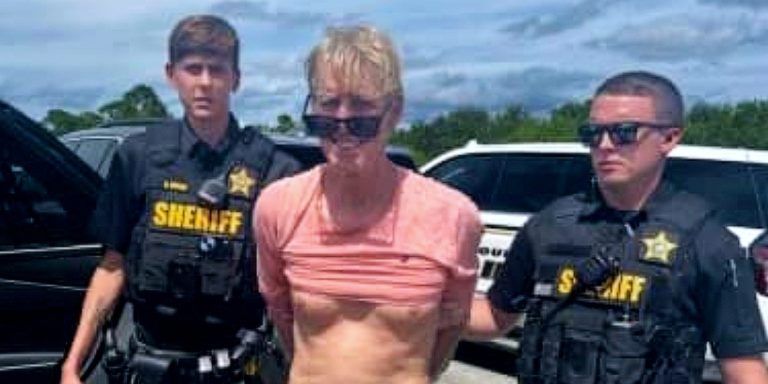
(Ken Silva, Headline USA) GREENSBORO, NC—The man who sold the rifle that Ryan Routh used in his September 2024 attempt on Donald Trump’s life has avoided jail time. On Thursday, Judge Catherine Eagles ordered Ronnie Jay Oxendine to serve two years of supervised probation and pay a $7,500 fine instead.

Oxendine’s sentence was much more lenient than that of Tina Brown Cooper, who put Routh in touch with Oxendine. Cooper was sentenced to 21 months in prison earlier this month. Neither of them knew what Routh was planning.

Even though Oxendine’s crime was more severe than Cooper’s, he received a lesser sentence because he cooperated with government and served as a key witness who helped convict Routh last month. Cooper, by contrast, sought to cover up her crime after she saw what Routh did in the news, telling Oxendine to “not admit to anything.” When Cooper was interviewed by FBI agents, she initially denied concealing her links to Routh until agents showed her the text messages from her phone.

In fact, because he cooperated with the FBI, Oxendine wasn’t even charged with the crime of selling the rifle to Routh, who was a known convicted felon. Instead, he was charged with having a sawed-off shotgun, which he provided to the FBI when agents visited his property.

On Thursday, Oxendine’s lawyer, Alan Doorasamy Jr., said the FBI didn’t even need a search warrant to find the sawed-off shotgun. Oxendine seems to have called the FBI himself when he heard about Routh’s crime (Cooper told this reporter earlier this month that he ratted on her). And when agents visited his 40-acre farm, he showed them his collection of some 300 guns stored in his safe.

The sawed-off shotgun wasn’t among the collection. Oxendine kept it in a shed away from his house. Doorasamy said the FBI wouldn’t have found the shotgun if he didn’t provide it voluntarily. Doorasamy also said Oxendine only obtained the gun because one of his renters left it on his property. Oxendine kept it in his shed to guard his farm against wild animals, his lawyer said.

The defense attorney added that his client is a “man of integrity.” He said he normally doesn’t socialize with clients, but he had lunch and dinner every day while they were in Florida to participate in Routh’s trial.

During his time with his client, Doorasamy said he learned that Oxendine is a Lumbee Indian whose father moved him to a farm because he suffered discrimination in the city when growing up.

“He’s faced discrimination and other issues,” the lawyer said.

Federal prosecutor Eric Iverson didn’t say much, other than to agree with the defense’s request for probation. While Doorasamy wanted unsupervised probation and for the fine to be waived for his client, Iverson said supervised probation was more appropriate.

Judge Eagles agreed, also denying the request to waive the fine.

Oxendine is still in possession of his collection of 300 firearms, but isn’t in control of them, his lawyer said. They’re apparently off his property, and Doorasamy said they’re looking for an auctioneer to sell them as soon as possible.

Case History

In July 2024, Routh contacted Cooper about procuring a rifle. Routh told Cooper, who was his employee at his roofing business in the early 2000s, that the rifle was for his son, Oran Routh. Cooper did know that Routh was a felon who wasn’t allowed to possess firearms.

Cooper, who hadn’t spoken to Routh since 2022, declined to help him at first. But then she agreed to introduce him to her current boss, Oxendine.

When they all showed up to his business on Aug. 2, 2024, Oxendine was surprised to see Routh, whom he thought was living in Hawaii.

“I haven’t seen you since you tried to blow up the police station,” Oxendine told Routh—referring to a standoff he had with Greensboro police in the early 2000s (Routh had been caught with a stick of dynamite from a construction site, and Judge Schroeder said Thursday that the failed assassin’s threats against the police weren’t taken seriously).

Despite his surprise, Oxendine sold Routh an SKS-style rifle for $350 in cash. Cooper collected $100 for arranging the sale.

Later that day, Routh asked Cooper to inquire about the location of the rifle’s serial numbers so he could obliterate them.

Cooper and Oxendine were charged earlier this year. Cooper pled guilty to one count of firearms trafficking.

Routh is set to be sentenced on Dec. 18.

Ken Silva is the editor of Headline USA. Follow him at x.com/jd_cashless.

Wall Street’s Dollar-Centric Thinking Is a Financial Killer

(Stefan Gleason, Money Metals News Service) With gold and silver pulling back from their all-time highs over the last few days, the naysayers on Wall Street – who totally missed the huge rally in both metals since Labor Day – have boldly declared the top is in.

They further claim the dollar “debasement trade” has ended… and the U.S. dollar is set to strengthen.

We believe this is wishful thinking by the “paper bugs” who always seem to find a new excuse to bash gold and silver – and ridicule those who buy it.

As we’re now 25 years into a secular bull run that has seen precious metals outperform U.S. stock indexes, you’d think these Wall Street sharpies would have finally changed their tune.

But the mainstream financial industry in America has a dollar-centric frame of reference – and they generally compare the dollar to other fiat currencies. Versus those other currencies, sometimes the Federal Reserve note dollar strengthens, sometimes it weakens.

It’s better to view gold versus fiat currencies as a whole. They are ALL being debased – just at varying rates.

Twenty years ago, the Dollar Index (DXY) was trading at 80; today it’s trading at 99.

When using this “dollar” frame of reference, the dollar appears “stronger” than most of its fiat currency peers. But that’s ridiculous.

In reality, the purchasing power of the dollar has dramatically declined over that same 20-year period. In 2005, gold was trading around $500, and DXY was roughly 80. Today, gold is $4,000+ while the DXY is 99.

That means gold is up over 8-fold measured in those supposedly “stronger” dollars.

Put another way, the dollar has declined 88% versus gold over the last 20 years. Talk about dollar debasement!

Folks are buying gold – including central bankers – in order to reduce exposure to fiat currencies.

But most investors in the Western world are still massively underexposed to real money, and dangerously overexposed to paper money. This will change.


Stefan Gleason is President and CEO of Money Metals Exchange, the company recently named “Best Overall Online Precious Metals Dealer” by Investopedia. A graduate of the University of Florida, Gleason is a seasoned business leader, investor, political strategist, and grassroots activist. Gleason has frequently appeared on national television networks such as CNN, FoxNews, and CNBC and in hundreds of publications such as the Wall Street Journal, TheStreet, and Seeking Alpha.