Big Tech Gets Hammered by Both Sides in House Antitrust Hearing

0

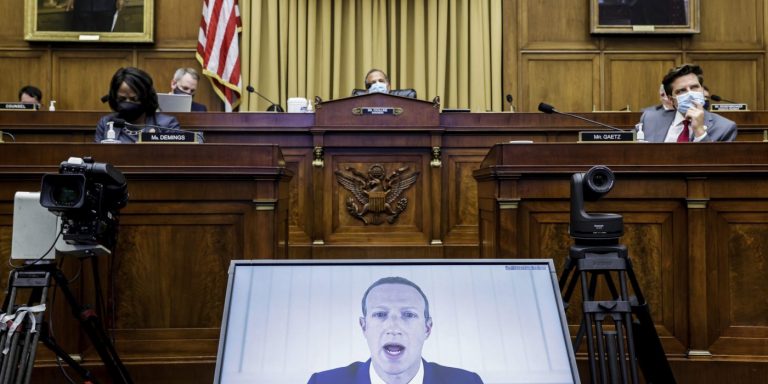
(Headline USA) Fending off accusations of stifling competition and engaging in unfair practices such as systemic bias, four Big Tech CEOs attempted to defend their companies before Congress as a House panel capped its yearlong investigation of market dominance in the industry.

The powerful CEOs—Facebook’s Mark Zuckerberg, Amazon’s Jeff Bezos, Sundar Pichai of Google and Tim Cook of Apple—faced intense grilling by lawmakers on both sides of the aisle on Wednesday.

Frequently stalling, evading and deflecting, the executives—all of whom testified remotely via video conference—struggled to answer pointed questions about their business practices.

They also confronted a range of other concerns about alleged political bias, their effect on U.S. democracy and their role in China.

“I’ll just cut to the chase,” said ranking GOP committee member Jim Jordan of Ohio. “Big Tech’s out to get conservatives. That’s not a suspicion. That’s not a hunch. That’s a fact.”

Some provided firsthand evidence of politically motivated censorship on the heels of a report from Breitbart that Google’s suppression of search results had cut 99.7 percent of its traffic.

Among the toughest questions that members of the Democrat majority posed for Google and Amazon involved accusations that they used their dominant platforms to scoop up data about competitors in a way that gave them an unfair advantage.

Bezos said in his first testimony to Congress that he couldn’t guarantee that the company had not accessed seller data to make competing products, an allegation that the company and its executives have previously denied.

Regulators in the U.S. and Europe have scrutinized Amazon’s relationship with the businesses that sell on its site and whether the online shopping giant has been using data from the sellers to create its own private-label products.

“We have a policy against using seller specific data to aid our private label business,” Bezos said in a response to a question from Rep. Pramila Jayapal, D-Wash. “But I can’t guarantee to you that that policy hasn’t been violated.”

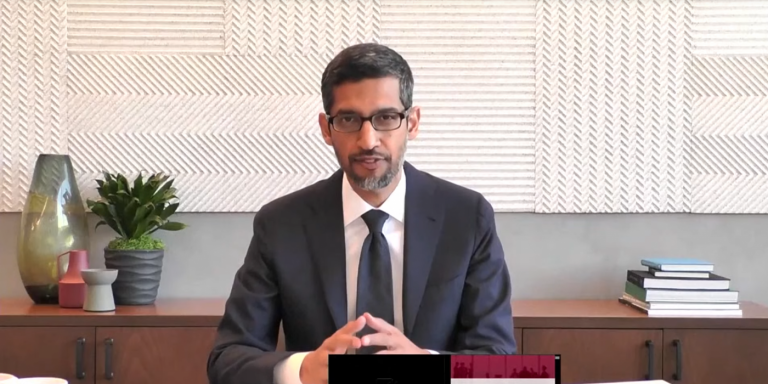
Pichai’s opening remarks touted Google’s value to mom-and-pop businesses in Bristol, Rhode Island and Pewaukee, Wisconsin, in the home districts of the antitrust panel’s Democratic chairman, Rhode Island Rep. David Cicilline, and its ranking Republican, Rep. James Sensenbrenner of Wisconsin.

But the Google executive struggled as Cicilline accused the company of leveraging its dominant search engine to steal ideas and information from other websites and manipulating its results to drive people to its own digital services to boost its profits.

Pichai repeatedly dodged Cicilline’s attacks by asserting that Google tries to provide the most helpful and relevant information to the hundreds of millions of people who use its search engine each day in an effort to keep them coming back instead of defecting to a rival service, such as Microsoft’s Bing.

In a tweet before the hearing, President Donald Trump challenged Congress to crack down on the companies, which he has accused, without evidence, of bias against him and conservatives in general.

“If Congress doesn’t bring fairness to Big Tech, which they should have done years ago, I will do it myself with Executive Orders,” Trump tweeted.

Trump previously issued an executive order to roll back long-held legal protections for online platforms afforded under the Communications Decency Act of the 1990s.

However, Congress has yet to pass meaningful legislation to address concerns over the companies’ partisan curation of user posts and other acts of election meddling, both overt and covert, while hiding behind their own left-leaning “community guidelines.”

In its bipartisan investigation, the Judiciary subcommittee collected testimony from mid-level executives of the four firms, competitors and legal experts, and pored over more than a million internal documents from the companies.

A key question: whether existing competition policies and century-old antitrust laws are adequate for overseeing the tech giants, or if new legislation and enforcement funding are needed.

Cicilline has called the four companies monopolies, although he says breaking them up should be a last resort.

While forced breakups may appear unlikely, the wide scrutiny of Big Tech points toward possible new restrictions on its power.

Cicilline also said that in the wake of the coronavirus pandemic, “these giants stand to profit” and become even more powerful as millions shift more of their work and commerce online.

The companies face legal and political offensives on multiplying fronts, from Congress, the Trump administration, federal and state regulators and European watchdogs. The Justice Department and the Federal Trade Commission have been investigating the four companies’ practices.

Adapted from reporting by the Associated Press

Brennan Complains that CIA Blocked Access While Writing Trump-Bashing Book

Corrupt Obama-era CIA Director John Brennan complained in his upcoming memoir that President Donald Trump successfully blocked him from accessing classified records while he was writing the book.

Intelligence agency employees are typically granted access to classified material they worked on while the federal government reviews their manuscripts.

The Trump administration, however, denied Brennan that access, which was “unprecedented,” according to Mark Zaid, an attorney who represented the anonymous Ukraine whistleblower.

Zaid claimed that denying Brennan access is “demonstrative, once again, of a vindictive, political president whose actions have nothing to do with national security decisions.”

But the White House argued that Trump’s decision to block Brennan’s access had everything to do with national security, since Brennan’s “erratic behavior” is a legitimate concern to the administration.

Moreover, “classified information should be solely for the benefit of the government and the American people,” said a White House spokesperson, and not for the benefit of a corrupt official who tried to undermine Trump’s campaign and discredit his election.

Brennan, who was CIA Director from 2013 to 2017, was a key figure in the Democrats’ Russia-Gate hoax.

He irresponsibly and loudly pushed the theory that Trump had colluded with Russia to steal the 2016 election despite the lack of evidence supporting such an accusation.

And according to Real Clear Investigations, Brennan pushed the conspiracy knowing full well that he didn’t have the evidence to back it up.

It was Brennan who pushed the Russia-Gate hoax to the FBI for investigation, breaking with CIA tradition by intruding into domestic politics.

He also made it seem like the hoax was more legitimate than it really was, providing the FBI with false information so that the agency would take up the case.

Even when some FBI officials began to question the veracity of his claims, Brennan insisted to everyone—even to then-President Barack Obama—that the hoax was true.

Brennan has also tried to discredit U.S. Attorney John Durham’s investigation into the origins of the Russia-Gate hoax, likely because he was at its forefront.

But Attorney General William Barr has insisted that no one and nothing will hamper Durham’s progress—not even the 2020 presidential election.

“I’ve made it clear that we’re not going to tolerate interference,” Barr told the House Judiciary Committee on Tuesday. 

Portland Mayor Demands Sit-Down w/ DHS after Refusing to Meet Last Week

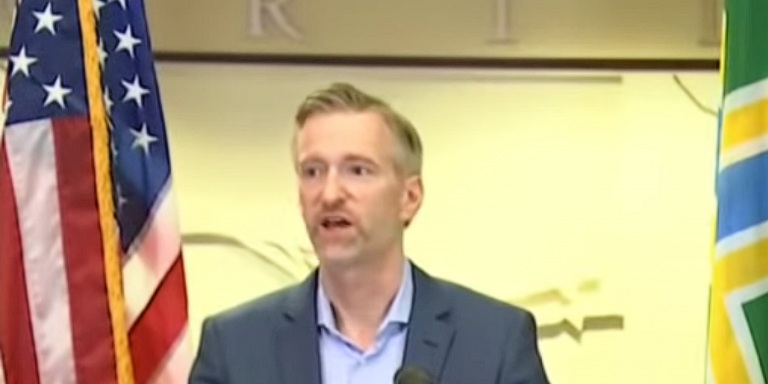
Several days after insisting that he would not meet with Trump administration officials, Portland Mayor Ted Wheeler demanded a meeting with the Department of Homeland Security over the deteriorating conditions across the city.

On July 16, however, Wheeler made it clear that he would not sit down with DHS leadership to discuss federal officers’ presence in the city, even if they offered to do so: 

And just last week, Wheeler told CNN that he has “no reason” to reach out to acting DHS Secretary Chad Wolf.

“My demands are clear,” Wheeler said, “I want them to leave.”

The Trump administration have told Wheeler and other city officials that federal officers will not leave the city until the violent attacks against the federal courthouse and against local police officers stopped. 

“It is not a solution to tell federal officers to leave when there continues to be attacks on federal property and personnel. We are not leaving the building unprotected to be destroyed by people intent on doing so,” U.S. Attorney Billy Williams told a telephonic news conference this week.

DHS might even send additional agents to the area, according to the Washington Post.

The U.S. Marshals Service has also identified “up to 100 personnel to send to Oregon in case they were needed to relieve or supplement deputies permanently stationed in the district,” according to Drew Wade, a spokesman for the service.

“They may also be used to rotate with personnel already sent there to support district operations during the civil unrest mission to insure the function and safety of judicial proceedings,” Wade added.

Breitbart Says It Has Virtually Disappeared from Google Search Results Since 2016

As representatives from Google and other top tech companies prepared to take heat from an antitrust hearing in the House Judiciary Committee on Wednesday, Breitbart offered new ammo for some of the conservative House members to use while grilling CEO Sundar Pichai.

The widely read conservative site outlined several ways that the leading search engine had engaged in systemic anti-Right censorship since the 2016 election of Republican President Donald Trump.

The charges confirmed prior complaints from watchdog organizations like Project Veritas, but provided concrete evidence that might make the broadly generalized under-oath denials tech companies have made in past congressional hearings more difficult to pull off.

Breitbart noted that there were a variety ways in which the company—which also includes video site YouTube under its corporate umbrella—engaged in discriminatory practices, but it focused on the suppression of political searches as they related to its own site.

Using the SISTRIX Visibility Index, it revealed a massive drop-off of 99.7 percent since 2016.

“On April 4, 2016, Breitbart ranked in the top ten search positions (i.e., on the first page of Google search results) for 355 key search terms,” said the article.

“[B]ut now, as of July 20, 2020, Breitbart ranks in the top ten search positions for only one search term,” it continued.

Within the top 100 search results, it reported a drop from 16,820 results to only 55.

After three Google updates, “unless a user types ‘Breitbart’ into the search bar (and even then), they are highly unlikely to get any Breitbart content search results,” said the article.

As for other search terms, Google had wiped Breitbart from the results entirely.

“Breitbart search results for ‘Joe Biden’ and other Biden-related search terms have gone to zero,” it said. “Even if you specifically search for Breitbart News headlines, you are unlikely to find them in Google search.”

According to an anonymous expert in search-engine optimization, the drop-off appeared to be unprecedented.

“I’ve never experienced such a wholesale removal of rank and visibility on specific concepts on a site as I have seen being applied to Breitbart,” said the expert.

While Google and other top tech sites, such as Twitter and Facebook, often have tried to blame the suppression on non-human algorithmic calculations, such as page traffic, the data made such claims implausible.

It clearly showed that some form of human intervention, such as a blacklist or shadow ban of certain terms, was the true culprit.

“Removal is the key, not dropping in rank, which would be an organic devaluing,” said the expert. “These ranks are just simply gone, overnight, while other topics have been untouched.”

The suppression of information on one side posed the risk of having a very real effect when it comes to interfering with the upcoming election, said psychologist Robert Epstein, a former Hillary Clinton supporter who has spoken out publicly on the alarmingly illiberal practice.

“In 2020—if all these [big tech] companies are supporting the same candidate—there are 15 million votes on the line that can be shifted without people’s knowledge, and without leaving a paper trail for authorities to trace,” Epstein testified before the Senate Judiciary Committee last year.

Republicans have been blunt in their criticism as the censorship efforts in Silicon Valley have become more brazen of late.

“I’ll just cut to the chase, Big Tech’s out to get conservatives,” Rep. Jim Jordan said during Wednesday’s anti-trust hearing. “That’s not a suspicion. That’s not a hunch. That’s a fact.”

After Twitter began implementing questionable fact-checks on some of his tweets, President Trump announced an executive order in May saying that he would hold online platforms that engaged in partisan censorship accountable under the Communications Decency Act.

But one of the first tests of the new order failed when an activist judge dismissed a libel lawsuit by Rep. Devin Nunes, R-Calif., that named Twitter as a defendant for permitting several parody accounts that misrepresented him and his family.

According to Epstein, the full scope of the corporations’ anti-conservative suppression efforts was likely incalculable, not only due to their misleading denials, but to the subversiveness of the tactics themselves.

“The methods that they’re using are invisible, they’re subliminal, they’re more powerful than most any effects I’ve ever seen in the behavioral sciences, he said. “And I’ve been in the behavioral sciences for almost 40 years.”

Oregon Governor Says Federal Agents Will Start Leaving Portland

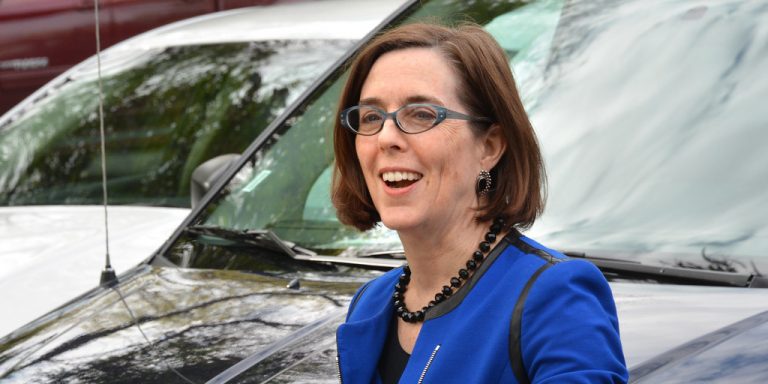
(Headline USA) Federal agents who have clashed with protesters in Portland, Oregon, will begin a “phased withdrawal” from the city, Gov. Kate Brown said Wednesday.

Acting Homeland Security Secretary Chad Wolf said in a statement the plan negotiated with Brown over the last 24 hours includes a “robust presence” of Oregon State Police in the downtown of the state’s largest city.

“State and local law enforcement will begin securing properties and streets, especially those surrounding federal properties, that have been under nightly attack for the past two months,” Wolf said.

Agents with the U.S. Customs and Border Protection and U.S. Immigration and Customs Enforcement will begin leaving the city’s downtown area on Thursday, Brown said. Federal Protective Service agents — who are always posted at the Mark O. Hatfield Federal Courthouse — will work alongside state police to guard the exterior of the courthouse and a limited number of other federal agents will remain inside the courthouse, she said.

Wolf said that although federal agents will leave the downtown area, they will maintain a presence in Portland “until we are assured that the Hatfield Federal Courthouse and other federal properties will no longer be attacked and that the seat of justice in Portland will remain secure.” If conditions in Portland “improve significantly,” then the U.S. government will reassess its staffing levels in the city, he said.

Portland Mayor Ted Wheeler applauded the end of what he called “an illegal occupation” in a lengthy Twitter post, saying the news came on the same day that the City Council would vote on whether to refer a major police reform initiative to voters in November.

“The federal occupation of our community has brought a new kind of fear to our streets. Federal agents nearly killed a demonstrator, and their presence has led to increased violence and vandalism in our downtown core,” he said. “The work of reform deserves our community’s full and complete attention, and I know that Portlanders will stay engaged.”

Before departing Wednesday for a trip to Texas, President Donald Trump insisted federal troops would not leave Portland until local authorities “secured their city.”

“Either they’re gonna clean up Portland soon, or the federal government is going up, and we’re gonna do it for them,” he said.

The announcement was an abrupt about-face from just two days earlier, when the U.S. government said it might send more federal agents to Portland instead.

The U.S. Marshals Service and Department of Homeland Security had been weighing this week whether to send in more agents. The marshals were taking steps to identify up to 100 additional personnel who could go in case they were needed to relieve or supplement the deputy marshals who work in Oregon, spokesman Drew Wade said.

Brown, who worked with Vice President Mike Pence on the withdrawal, cautioned Wednesday that the departure of the Border Protection and immigration agents may not immediately resolve the conflict at the courthouse. Protests have roiled Portland for more than two months since the death of George Floyd, a Black man who died after being pinned at the neck by a white Minneapolis police officer.

Like many other protests nationwide, they sought to highlight and call for an end to racial injustice, but they had increasingly focused on federal property even before the U.S. agents arrived.

“I have grown increasingly concerned at the nightly confrontation between local community members and federal officers. We need to recognize that the protests in Portland are not solely about the federal presence,” Brown said.

Many protesters want to see the Portland Police Bureau defunded and are angry that officers used tear gas on protesters multiple times before the federal government arrived and tensions escalated further. Brown said the departure of the federal agents was a chance to address that anger and begin to make improvements in community policing.

“I will work with community leaders and elected officials to take bolder action to reform our police practices — including those of the Portland Police Bureau. We need to get this right,” she said.

The nightly Portland protests often spiral into violence as demonstrators target the U.S. courthouse with rocks, fireworks and laser pointers. Federal agents respond with tear gas, so-called less-lethal ammunition and arrests.

Protesters have tried almost every night to tear down a fence erected to protect the building, set fires in the street and hurled fireworks, Molotov cocktails and bricks, rocks and bottles at the agents inside. Authorities this week reinforced the fence by putting concrete highway barriers around it.

Demonstrators near the courthouse Wednesday were met before dawn with tear gas, pepper balls and impact munitions fired by agents, the Oregonian newspaper reported.

Adapted from reporting by Associated Press.

School ‘Counselor’ Among Riotous Thugs Who Beat Up Wisc. State Senator

(Associated Press) Prosecutors charged two Madison women Wednesday with attacking a Wisconsin state senator during a chaotic night of violence outside the state Capitol last month.

Kerida O’Reilly, 33, and Samantha Hamer, 26, were each charged with one count of being a party to substantial battery, a felony punishable by up to $10,000 in fines and three-and-a-half years in prison, online court records show.

Both women were arrested Monday after they turned themselves in to police.

They were scheduled to make initial court appearances on Wednesday afternoon.

Online court records didn’t list an attorney for either of them.

Investigators believe the women attacked Democrat Tim Carpenter during June 23 protest outside the state Capitol, one of a series of protests in downtown Madison that took place after the death of George Floyd in Minneapolis on Memorial Day.

The protest that night was sparked by the arrest of a black man who shouted at downtown restaurant customers through a megaphone while carrying a baseball bat.

Protesters also toppled two statues outside the Capitol and threw a Molotov cocktail into a government building.

Paramedics treated Carpenter, but he decided against going to the hospital.

O’Reilly is a physical therapist and Hamer is a social worker with the Mount Horeb School District, the Milwaukee Journal Sentinel reported.

Hamer was listed on the district’s website as a resource for high school students and their families who need help dealing with emotional distress and other issues.

The district placed Hamer on leave on Monday.

Police Agencies Pull Out of DNC After Officials Neuter Them

(Associated Press) More than 100 police agencies are withdrawing from agreements to send personnel to bolster security at next month’s Democratic National Convention in Milwaukee, in part because they’re concerned about a recent directive ordering police in the city to stop using tear gas to control crowds.

A citizen oversight commission last week directed Milwaukee’s police chief to publicly account for why the department used tear gas during protests in late May and early June after the killing of George Floyd in Minneapolis and to change Milwaukee’s police policies to ban the use of tear gas and pepper spray. The Milwaukee Fire and Police Commission said in its order that Police Chief Alfonso Morales could be fired if he fails to comply.

That order came amid intense scrutiny of police tactics at protests in Portland, Oregon, and elsewhere.

Since the Milwaukee order was issued, more than 100 law enforcement agencies in Wisconsin and across the country decided against coming to Milwaukee, Morales told WTMJ-TV on Tuesday.

They were concerned with directives placed on the police department, including not allowing tear gas or pepper spray, he said.

Morales did not say which agencies would not be coming or how many officers were still expected. The original plan was to have 1,000 officers on hand from outside agencies to assist with security. Morales said utilizing the National Guard or enlisting federal assistance was under consideration.

The convention, scheduled for Aug. 17-Aug. 20 at the Wisconsin Center in downtown Milwaukee, has been scaled down to a mostly virtual event, with only about 300 people expected to attend in-person. Most of the speeches will be delivered online from other locations, though former Vice President Joe Biden has said he will be in Milwaukee to accept the nomination. Despite the event’s smaller scale, police are preparing for potentially large protests in and around the venue.

A spokeswoman for the convention did not immediately return a message seeking comment Tuesday. The Milwaukee police oversight commission also did not return a message seeking comment.

Fond du Lac Police Chief William Lamb told the Milwaukee Journal Sentinel that the agreements were collapsing, saying he expects other agencies in the state to also withdraw. Lamb chairs the Wisconsin Police Executive Group, which is made up of police chiefs from cities with populations of more than 20,000 people.

Lamb sent a letter to Milwaukee police on July 6 outlining his organization’s concerns about limiting the use of tear gas and pepper spray. West Allis police first sent a letter to Morales with concerns in mid-June after Milwaukee’s Common Council temporarily halted the purchase of those chemicals.

“Our concern is that in the event protests turn non-peaceful, such a policy would remove tools from officers that may otherwise be legal and justifiable to utilize in specific situations,” West Allis Deputy Chief Robert Fletcher told the Journal Sentinel in an email.

Waukesha’s police chief said he was consulting with the city attorney’s office on how to withdraw from the agreement, which had promised about two dozen Waukesha officers.

Not all police departments withdrew because of the tear gas order. The Madison Police Department notified Milwaukee early this month that “an accelerating COVID-19 pandemic coupled with ongoing protests in Madison” had strained its resources, making it impossible to commit resources to the convention, the Wisconsin State Journal reported.

Madison originally committed to providing 100 officers to Milwaukee for what was to have been a 10-day convention before it got shortened and postponed until August.

Trump Dismisses Virus Aid for Democrat-Run Cities

(Associated Press) President Donald Trump on Wednesday dismissed Democratic demands to include aid for cash-strapped cities in a new coronavirus relief package and lashed out at Republicans, saying they should “go back to school” if they reject money for a new FBI building in downtown Washington, D.C.

Trump, speaking alongside Treasury Secretary Steven Mnuchin at the White House, signaled his interest in preventing an eviction crisis as a federal moratorium expires Friday on millions of apartment units. But he and his top emissary to Congress portrayed an otherwise dismal outlook as negotiations drag ahead of looming deadlines.

“It’s a shame to reward badly run radical left Democrats with all of this money they’re looking for,” Trump said at the White House, complaining about the “big bailout money” for cities.

Trump was publicly critical of his GOP allies over the $1.7 billion for FBI headquarters that’s included in the bill, but which Senate Majority Leader Mitch McConnell later said he opposes as not related to virus relief. The president wants to keep the building that sits across the street from his signature Trump International Hotel, which could face competition if the FBI moves and another hotel is developed there.

At the White House on Wednesday, Trump said the FBI building should remain in Washington, near the Justice Department. He added: “It’s the best piece of property in Washington. I’m very good at real estate. So I said, we’ll build a new FBI building. Let’s build a new FBI building, either a renovation of existing or even better would be a new building.”

“Republicans should go back to school and learn,” he said. “You need a new building.”

Trump’s comments came a day after he dismissed the GOP’s COVID-19 package as “semi-irrelevant.”

“We want to take care of the people,” Trump said. “We want to stop the evictions.”

As top White House negotiators returned for a third day of talks, stark differences remain between the $3 trillion proposal from Democrats and $1 trillion counteroffer from Republicans as millions of Americans’ jobless benefits, school reopenings and eviction protections hang in the balance.

“As of now, we’re very far apart,” Mnuchin said Wednesday.

House Speaker Nancy Pelosi holds sway because Republicans are so deeply divided over the prospect of big government spending that McConnell is left with a severely weakened hand.

Striking any agreement with Congress by Friday’s deadline for expiring aid will be daunting. But the outcome will be a test for the president and the parties heading into the November election as the health crisis and devastating economic fallout continue.

Key to the debate is the $600 weekly unemployment benefit bump that is expiring for millions of jobless Americans. Republicans want to slash it to $200 a week as an incentive to push people back to work. Democrats have shown flickers of willingness to curb the federal aid but held firm in first-round talks.

Wider disputes include funds for cash-strapped states and cities. Democrats proposed nearly $1 trillion to avert municipal layoffs, but Republicans prefer providing them with flexibility in previously approved aid.

Democrats proposed extending a federal eviction moratorium on millions of rental units that is expiring Friday. Trump hasn’t specified what he’s willing to do on that.

With the virus death toll climbing and 4.2 million infections nationwide, both parties are eager for relief.

But McConnell acknowledged Tuesday the limits with Republicans split: “We’ve done the best we can.”

McConnell insisted he would accept no package without a liability shield against COVID-19 lawsuits, his top priority from the start.

Pelosi called it “liability on steroids” — a sweeping ban on injury lawsuits — and she said McConnell “sounded like a person who had no interest in having an agreement.”

McConnell is coming to the negotiating table with half the GOP senators expected to oppose any virus relief deal, and the Democrats swiftly rebuffed his demand, telling the White House negotiators to ask if he was serious.

The two bills are widely seen as starting points in talks as schools to prepare for fall, virus testing and billions of dollars to shore up American households and small businesses facing potential ruin as the virus rages and stay-home orders resume

Republicans seek $16 billion for virus testing; Democrats want $75 billion.

For school reopenings, Democrats want four times the $105 billion that Republicans propose.

While McConnell insisted on the liability shield, Democrats want tougher federal workplace safety oversight.

An area of common ground is agreement on a new round of $1,200 direct payments to Americans earning $75,000 or less.

But Democrats also add a “heroes’ pay” bonus for front-line workers, money for food stamps and other assistance.

At a closed-door meeting Tuesday, several GOP senators vigorously questioned the White House team and warned against caving to liberal demands, said two Republicans who spoke on condition of anonymity to discuss the closed-door meeting. Senators predicted the price tag will balloon past $1 trillion.

“It’s a mess,” said Sen. Josh Hawley, R-Mo. “I don’t know what we’re trying to accomplish.”

US to Bring 6,400 Troops Home from Germany; Move 5,600 More

(Associated Press) Spurred on by President Donald Trump’s demand to pull troops out of Germany, the U.S. will bring about 6,400 forces home and shift about 5,600 to other countries in Europe, U.S. defense leaders said Wednesday, detailing a Pentagon plan that will cost billions of dollars and take years to complete.

The decision fulfills Trump’s announced desire to withdraw troops from Germany, largely due to its failure to spend enough on defense. A number of forces will go to Italy, and a major move would shift U.S. European Command headquarters and Special Operations Command Europe from Stuttgart, Germany, to Belgium.

Defense Secretary Mark Esper said some moves will begin in months and will leave about 24,000 troops in Germany. He said that while the decision was “accelerated” by Trump’s orders, the moves also promote larger strategic goals to deter Russia, reassure European allies and shift forces further east into the Black Sea and Baltic regions.

Trump, however, reasserted his very narrow reason Wednesday, telling reporters, “We’re reducing the force because they’re not paying their bills. It’s very simple. They’re delinquent.”

He added that he might rethink the decision to pull troops out of Germany “if they start paying their bills.”

Trump has repeatedly accused Germany of failing to pay bills, which is a misstatement of the issue. NATO nations have pledged to dedicate 2% of their gross domestic product to defense spending by 2024, and Germany is still short of that goal, at about 1.4%.

Esper said the military moves will cost in the “single digit” billions of dollars. Much of it will require congressional approval to add or reallocate funds, something that may be difficult since many lawmakers have expressed opposition to some of the moves. And it’s also unclear if the plan would survive if Trump is not reelected in November.

Members of Trump’s own political party have criticized the troop moves as a gift to Russia and a threat to U.S. national security. Twenty-two Republicans on the House Armed Services Committee sent a letter to Trump saying a reduced U.S. commitment to Europe’s defense would encourage Russian aggression.

Sen. Mitt Romney, R-Utah, on Wednesday called the plan a “grave error,” saying it’s a slap in Germany’s face that will do lasting harm to American interests.

NATO Secretary General Jens Stoltenberg, meanwhile, welcomed the U.S. move and said Washington has been consulting allies on the matter recently. Trump’s announcement on the withdrawal in June blindsided the alliance.

Germany’s Defense Ministry refused to comment on the moves, saying the plans needed to be discussed internally first. Chancellor Angela Merkel has defended Germany’s defense spending, saying that it has increased and that the country will continue to work toward the 2% benchmark.

Following the announcement, a lawmaker with the opposition Left Party, which has its roots in the former East German communist party and has long urged the withdrawal of American troops, said the plan was “far from sufficient.”

“Wars are waged all over the world through the U.S. bases in Germany, including drone attacks that violate international law,” said Tobias Pflueger, deputy party leader with the Left.

The Pentagon announcement is closely tied to the plan to increase the U.S. troop presence in Poland, a shift long desired by Warsaw and Polish President Andrzej Duda.

Officials said the troops moves will require construction at bases in the U.S. to accommodate the additional forces. They said that in the future other units would rotate in and out of Europe.

Germany is a hub for U.S. operations in the Middle East and Africa. The decision to keep nearly half the forces in Europe is a clear move by the Pentagon to assuage allies by avoiding the complete withdrawal of 12,000 troops out of the region. And by spreading forces into the east, it sends a message to Russia that the U.S. is not reducing its commitment to the region and remains ready to protect Eastern Europe from Moscow’s aggression.

Sen. Jim Inhofe, the Republican chairman of the Senate Armed Services Committee, has voiced support for the plan while also acknowledging it will take “months to plan and years to execute.”

Trump announced last month that he wanted to cut the number of active duty U.S. troops in Germany from roughly 36,000 to less than 25,000. Shifting forces out of the country had long been rumored and is in line with Pentagon efforts to put more troops in the Indo-Pacific. But Trump’s comments indicated the move was tied more directly to his anger over the NATO spending issue.

Trump has branded Germany “delinquent” for failing to meet the NATO goal set in 2014, and has asserted that the Germans have long shortchanged the U.S. on trade and defense.

At a Rose Garden event last month with Duda, Trump said some of the troops from Germany would go to Poland. On Wednesday, officials suggested that Poland may get some additional rotational forces that would go in and out of Europe.

Under an agreement announced last year, the U.S. said it was sending about 1,000 more troops to Poland, and progress is being made to prepare for those moves. Under that agreement, the U.S. will add a division headquarters, a combat training center, an unmanned aircraft squadron and structure to support a rotational Army brigade.

Overall, the U.S. has about 47,000 troops and civilian personnel in Germany. Most of the 36,000 on active duty are in a handful of larger Army and Air Force bases including Ramstein Air Base, a regional hub. There also are 2,600 National Guard and Reserve forces and almost 12,000 civilians there.

After Trump’s meeting with Duda, Esper in early July made a rare overseas trip to NATO to reassure allies that Washington is still committed to the region and that he will consult with them on troop movements. Because of the coronavirus threat, international travel has been significantly limited.

Biden Seen w/ Notes About Kamala Shortly After Politico ‘Accidentally’ Publishes VP ‘Pick’

Politico was forced to issue an apology on Tuesday after it “accidentally” published a story that said presidential candidate Joe Biden had chosen Sen. Kamala Harris, D-Calif., as his running mate. 

“Joe Biden chose Kamala Harris to become his running mate for the 2020 election on Aug. 1, two weeks before the Democratic National Convention, after keeping his choice close to the chest for months,” Politico wrote in the now-deleted report.

The report even quoted Biden, in which he called Harris a “worthy opponent and a worthy running mate.”

“She will bring her experience as a prosecutor, household name recognition, and skill as a debater to the ticket,” Politico added.

Brad Dayspring, Politico’s vice president of marketing and communication, claimed that a pre-write had been accidentally published, and that the quote from Biden was not actually a quote at all.

“For a brief period yesterday afternoon, placeholder text was mistakenly published to the site,” Dayspring told The Hill. “Our standard practice is to use ‘lorem ipsum’ as placeholder text. In this instance, that did not happen. We regret the error and any confusion that it caused.”

But just a few hours later, a photographer for the Associated Press captured an image of Biden’s note pad before he began taking questions from reporters at a campaign event. On the note pad was a line that said Harris’s name, and below that: “Do not hold grudges,” “Campaigned with me & Jill,” is “talented,” and has been “a great help to [the campaign].”

Biden’s campaign did not comment on his notes, but reiterated that the former vice president will not announce his running mate until the first week of August.

Harris has been seen by some Democrats as a frontrunner for the position, but it is also well-known that she’s been digging up dirt and planting negative stories about her opponents in various publications.