Prosecutor Decides No Charges Warranted Against Officer Who Shot Michael Brown — for THIRD TIME

0

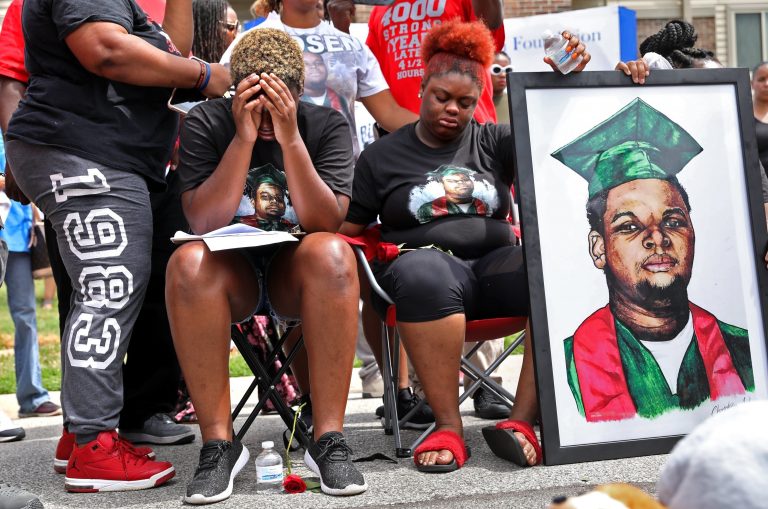
(Headline USA) St. Louis County’s prosecutor announced Thursday that he will not charge the former police officer who fatally shot Michael Brown in Ferguson, Missouri, a dramatic decision that could reopen old wounds amid a renewed and intense national conversation about alleged racial injustice.

Prosecuting Attorney Wesley Bell’s decision marked the third time prosecutors investigated and opted not to charge Darren Wilson, the white officer who fatally shot Brown, a black 18-year-old, on Aug. 9, 2014. A St. Louis County grand jury declined to indict Wilson in November 2014, and the U.S. Department of Justice under then-Attorney General Eric Holder also declined to charge him in March 2015.

Civil rights leaders and Brown’s parents had hoped that Bell, the county’s first black prosecutor who took office in January 2019, would see things differently.

“My heart breaks” for Brown’s parents, a somber Bell said during a news conference. “I know this is not the result they were looking for and that their pain will continue forever.”

Describing the announcement as “one of the most difficult things I’ve had to do,” Bell said that his office conducted a five-month, unannounced, review of witness statements, forensic reports and other evidence.

“The question for this office was a simple one: Could we prove beyond a reasonable doubt that when Darren Wilson shot Michael Brown he committed murder or manslaughter under Missouri law? After an independent and in-depth review of the evidence, we cannot prove that he did,” Bell said.

But, he said — without providing evidence: “Our investigation does not exonerate Darren Wilson.”

Wilson’s attorney, Jim Towey, said it was clear after three investigations that Wilson did nothing wrong.

“We all had the same conclusion: There was no crime,” Towey said.

“I am just hoping that everybody gets to have some closure, particularly the Brown family,” he said.

The shooting touched off months of unrest in Ferguson and made the St. Louis suburb synonymous with a national debate about police treatment of minorities. The Ferguson unrest helped solidify the national, Marxist Black Lives Matter movement that began after Trayvon Martin, a black 17-year-old, was shot to death by a neighborhood watch volunteer in Florida in 2012.

The issue has taken on new life since George Floyd’s death in Minneapolis in May after a white police officer pressed his knee into the handcuffed black man’s neck for nearly eight minutes. Ferguson is among the cities around the world that has seen protests since Floyd’s death.

“This is a time for us to reflect on Michael’s life, to support Michael’s family and to honor a transformative movement that will forever be linked to his name,” Bell said.

Brittany Packnett Cunningham, a Ferguson protester and educator who has become a national voice in the Black Lives Matter movement, said she is pained “that there is still a gaping wound” for Brown’s family. She said she knows that the system must change.

“I’m not disappointed — I’m fed up and ever more committed, truth be told,” Cunningham said.

The Rev. Darryl Gray, a leading St. Louis activist, agreed — but without providing evidence or explanation — that the system is at fault, not Bell’s investigation.

“What came out of this is a recognition that the system is set up to protect police officers. We now need to begin to address the legislation the police hide behind,” Gray said.

Bell — who ran as a reform-minded prosecutor promising to eliminate cash bail for nonviolent offenders and to increase the use of programs that allow defendants to avoid jail time — faced no restrictions in re-examining Brown’s death. Wilson was never charged and tried, so double jeopardy was not an issue. There is no statute of limitations on filing murder charges.

As the news conference drew to a close, an activist who said he is a friend of Brown’s father erupted in anger.

“It’s over! One term!” Tory Russell, 36, of St. Louis, screamed at the prosecuting attorney. Police officers gently led him from the room.

Russell later told The Associated Press that he had just spoken with Michael Brown Sr. “He is hurting, and he’s not accepting of this.”

The shooting happened after Wilson told Brown and a friend to get out of the street as they walked down the middle of Canfield Drive. A scuffle between Wilson and Brown ensued, ending with the fatal shot. Wilson said Brown, who was not armed, came at him menacingly, forcing him to fire his gun in self-defense.

Brown’s body remained in the street for four hours, angering his family and nearby residents.

Bell’s predecessor, longtime prosecutor Bob McCulloch, was accused by critics of swaying the grand jury to its decision not to indict Wilson — an accusation he emphatically denied. Wilson resigned days after McCulloch’s Nov. 24, 2014, announcement that the grand jury would not indict the officer.

The Justice Department, under President Obama’s “wingman” Eric Holder, also declined to charge Wilson, but issued a scathing report citing racial bias in Ferguson’s police and courts. A consent agreement calls for sweeping reforms that are still being implemented.

Bell, a former Ferguson councilman, upset McCulloch, a staunch law-and-order prosecutor, in the 2018 Democratic primary and ran unopposed that November.

Adapted from reporting by Associated Press.
SELLERS: History Must Teach Race-Baiters the Danger of Overplaying Hand

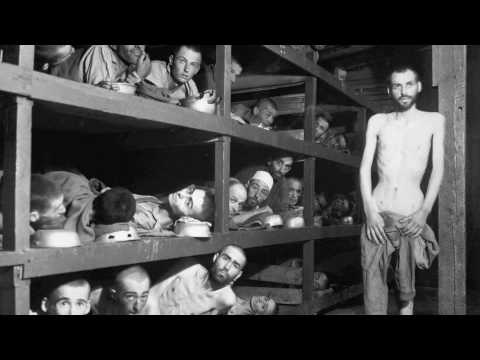
I squandered the opportunity as a freshman in high school to hear Auschwitz survivor and Nobel Peace Prize laureate Elie Wiesel speak.

He had been in town for a conference at the University of Virginia, and through some strings my school had secured a visit the night before.

We all were required to read his Holocaust memoir Night in advance of the talk, although we were not required to actually attend the event.

Being 14 at the time—and regarding Wiesel’s harrowing account as indicative of the Bill Clinton-era political correctness sweeping the the nation’s educational institutions—I neither read the book nor attended the talk.

But I would go on to read it, probably in preparation for the test, and soon regretted my impetuous judgement.

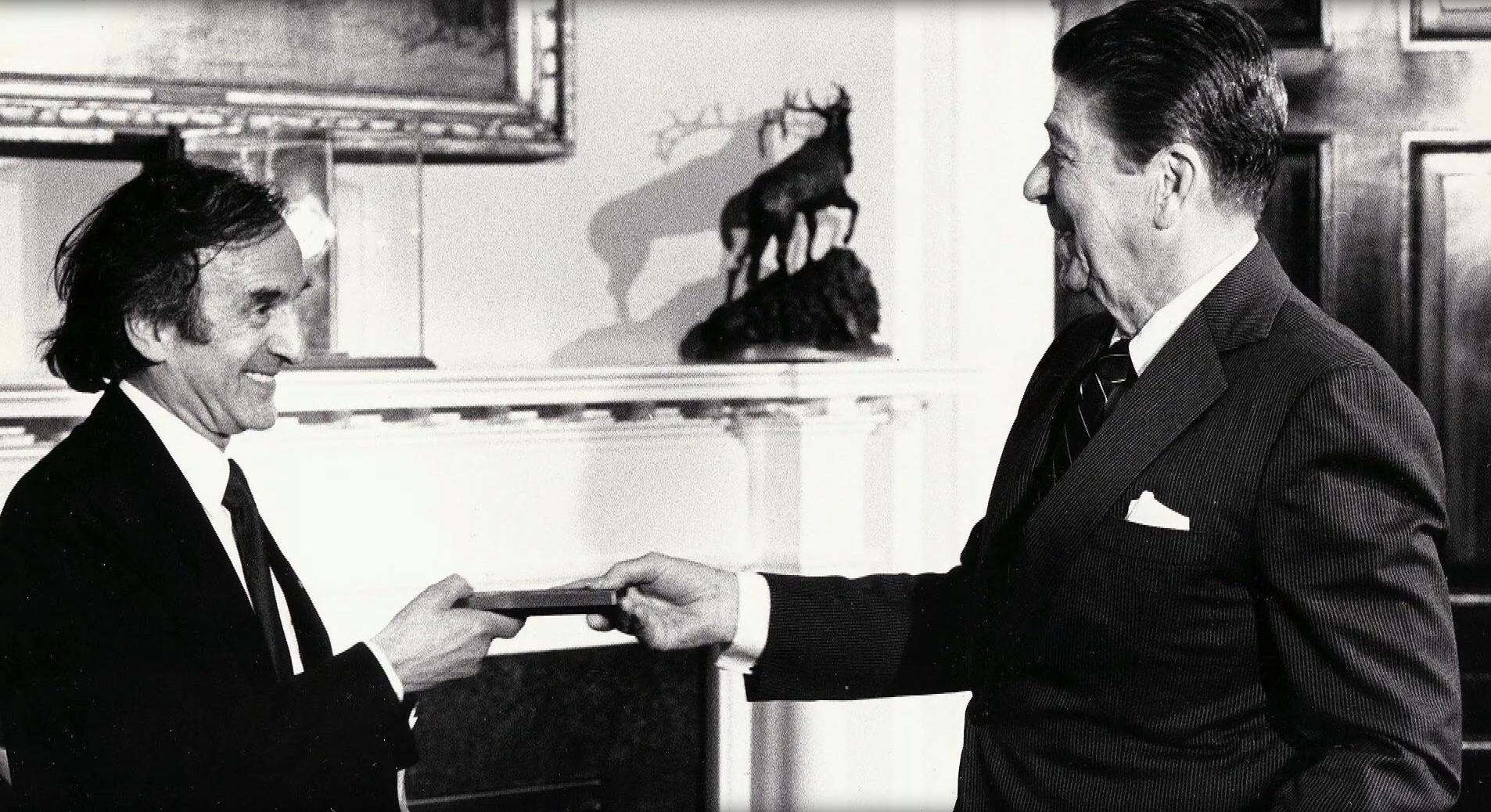
Elie Wiesel and Ronald Reagan
Elie Wiesel (left) is honored by President Ronald Reagan / IMAGE: Encyclopedia Brittanica via YouTube

When I became a high-school English teacher myself, I grew well-acquainted with Night—which had, in the intervening years, become a staple of most school curricula.

Less than an hour’s drive from Washington, DC, we visited the National Holocaust Museum as part of our study of the book.

And I will never forget the experience I had there with one boy, “Tyler,” in my very first year.

He was a challenging student, and I made him something of a project using the stick-and-carrot disciplinary approach.

Through detentions, parent conferences and the like, I had sensed a few breakthroughs, but my effort was hardly yielding the desired return on investment.

During our field trip, as I scrambled to coordinate chaperoned tours of the museum for a hundred rowdy sophomores, I noticed Tyler in the lobby, gazing with intrigue at a cluster of concentration-camp survivors who were there to help humanize the dusty annals of history.

“Tyler,” I said. “You know those are actual survivors of the Holocaust. I’m sure they would love it if you went over and asked them a question.”

Much to my delight, the usually reticent pupil did exactly that. A sense of something like pride and vindication welled up within me.

Afterward, he wandered off, undoubtedly inspired by their poignant account of the atrocity to seek out further resources—or so I figured.

Eventually, I caught back up with Tyler.

“Well, what did you say,” I queried.

“I asked them where the vending machines were,” he replied.

A Night and Day Comparison…

I am often reminded of my own teenage ignorance, and of my former student’s, when hearing demagogues invoke Nazism in their current political rhetoric.

It has become so overused that the phenomenon has its own term in the meme-driven Internet era: Godwin’s law.

Most recently, it has been deployed to describe everything from the authoritarian mask dictates in blue states (evoking, for some, the compulsory “Jewish badges” under German law), to the dispatching of federal peacekeeping forces during recent anti-Trump riots.

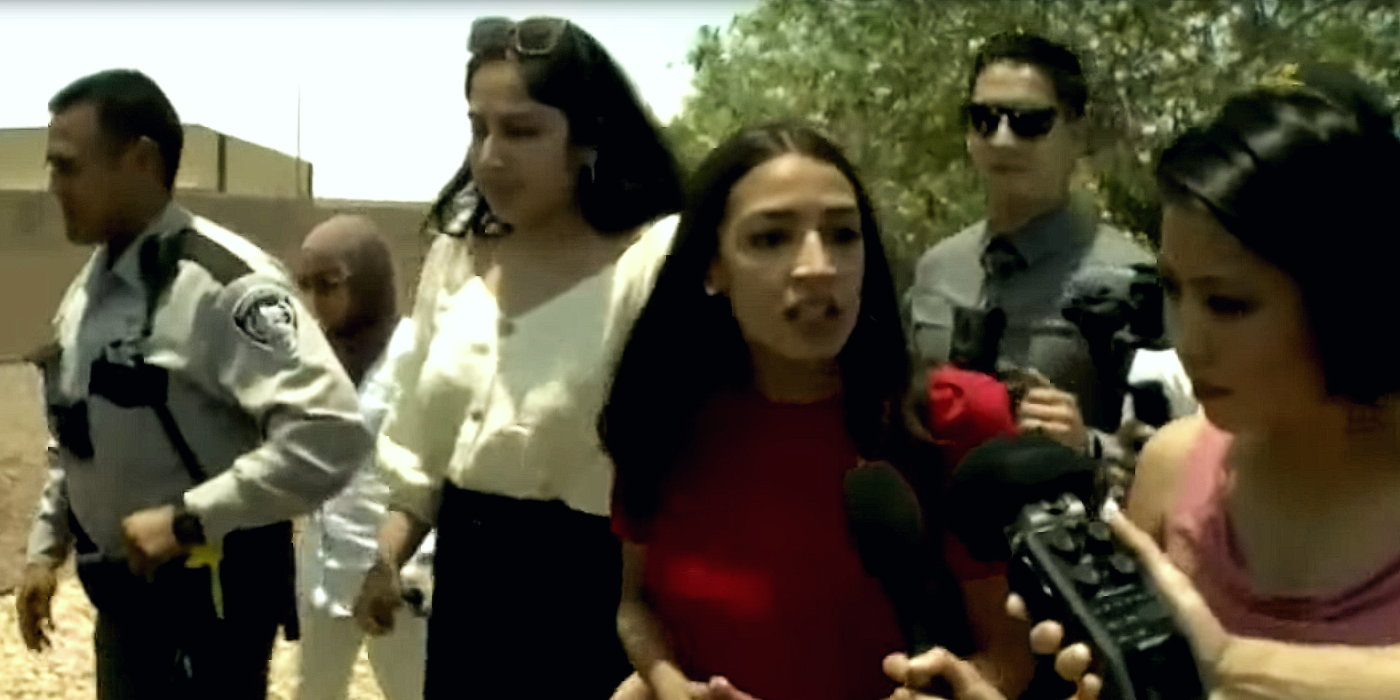
Politicians—including Rep. Alexandria Ocasio–Cortez, D-NY—also notoriously used concentration-camp comparisons last year to describe the conditions at detention centers where many U.S. immigrants await asylum hearings, often after turning themselves in to border authorities.

Alexandria Ocasio-Cortez
Rep. Alexandria Ocasio–Cortez creates a public spectacle while touring border detention facilities. / IMAGE: Global News via Youtube

This, of course, begs a key distinction between the two situations: one detention was forced, and the other is voluntary.

While Jews fled Europe (if they were wise enough to heed early warnings), the opposite is true of America’s “concentration camps.”

The alleged victims in the latter case are asking to be put into them, with hopes that their temporary displacement will be the gateway to a better quality of life in the long term.

The Arbiters of Truth?

False equivalences like this are but one of the dangers posed by spuriously invoking Nazi rhetoric in our increasingly heated national dialogue.

Without offering the proper context or specificity for such comparisons, they will perpetuate a poor and misinformed understanding of the atrocities themselves.

The limited information taught about the Holocaust already has begun to winnow as its few remaining survivors succumb to the onward march of time.

A point will come in the not-so-distant future when our only firsthand accounts will be the written narratives they leave behind.

But like our national monuments—and certain “controversial” literary works—those may also be obliterated with one fell swoop in the ever-shifting Zeitgeist of the “moment.”

Gen. Robert E. Lee statue in Charlottesville
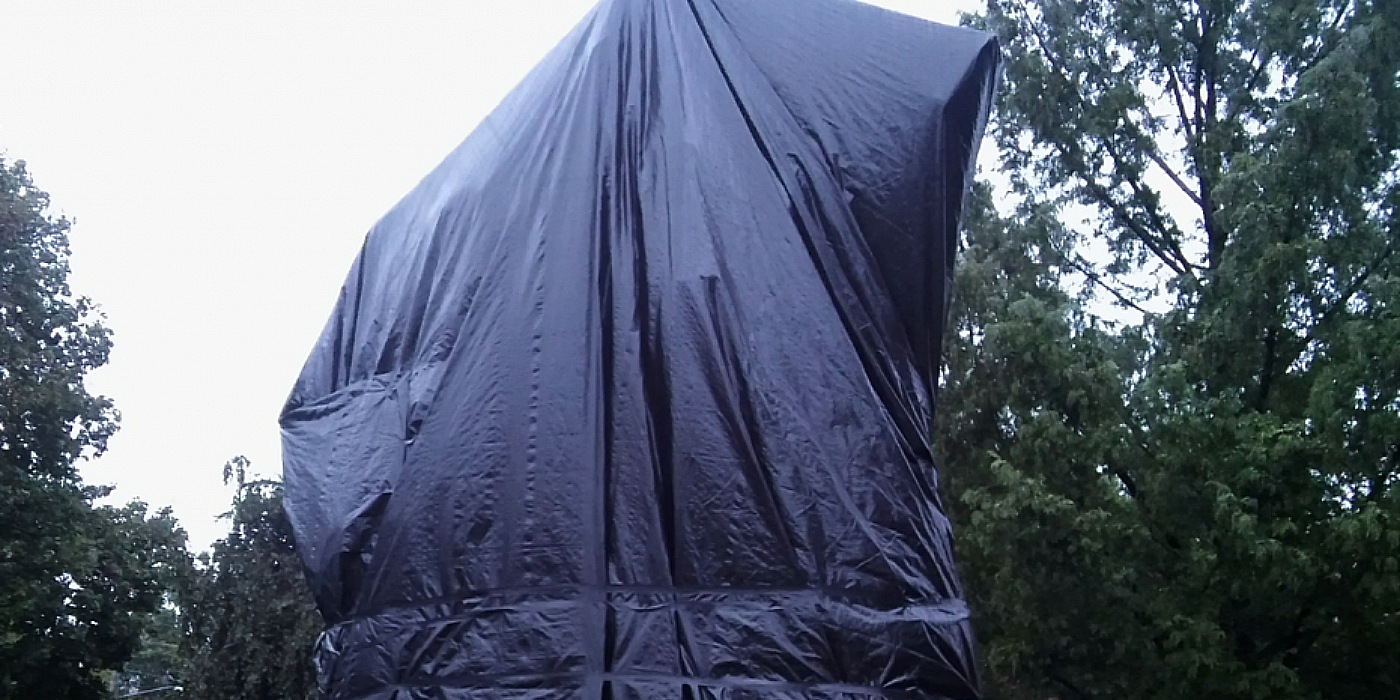
Charlottesville radicals covered a statue of Gen. Robert E. Lee with a tarp after losing the legal battle to remove the monument. / PHOTO: Ben Sellers, Headline USA

The concern over misinformation in the modern era was recently underscored by a report that a group of Holocaust survivors, the Conference on Jewish Material Claims Against Germany, had asked Facebook to remove pages and posts that promoted Holocaust denial.

As Facebook CEO Mark Zuckerberg readily admitted on Wednesday, however, during a House Judiciary hearing, forcing social-media sites—or any sort of private, for-profit entities—to become the arbiters of acceptable speech is, itself, deeply problematic and troubling.

In one sense, the only way to preserve freedom is allowing those who wish to make preposterous claims to do so, and then—as Rep. Jim Sensebrenner, R-Wisc., observed—allowing the other side, armed with facts and evidence, to thoroughly discredit them.

Without allowing the fictions to thrive unfettered in public forums, though, it is the facts that ultimately risk extinction.

The Turnstile of History

Another danger lies in the normalization of rhetoric that links any event one might disagree with to an occurrence of historical extremism and violence.

This holds true not only for specious comparisons to the Holocaust, but also in the current discussion of slavery, racism and lynchings.

With their casual use of these to justify in-kind acts of destruction, presumably well-intentioned activists pose a considerable risk of overplaying their hand.

It was during my teaching of To Kill a Mockingbird—a book now under fire for its use of the n-word by a white, Alabama-born author—that I cautioned students not to underestimate the pejorative slur’s extraordinary power.

I encouraged them to read it aloud and speak it in our academic discussions, not because it was OK to use—far from it—but to experience viscerally the ugliness and discomfort that it caused: to be confronted by it.

Sadly, in contemporary discussions of both the Holocaust and racism, the routine invocation of these horrors as a means of shutting down all debate—and quelling free thought by relegating it to the realm of “hate speech”—endangers our ability to recognize truly pernicious examples of hate or evil that may, once again, take root at any moment.

Lee Monument in Richmond
Protesters gather outside the Robert E. Lee monument in Richmond. / IMAGE: CBS News

Just as the Jim Crow laws of the early 20th century arrived as a backlash to the overcorrections of the Reconstruction period, and the rise of Nazism arose from Germany’s post-World-War-I degradation, our own “long-overdue reckoning” on race, if not mitigated by common sense and compromise, may likewise come full-circle—or even recede to worse ground than that from which it started.

Historically speaking, the odds of a pendulum swing the other way are far greater than the odds that mob-imposed social justice will prevail in the long run.

When it does, those who have become inured to the race-baiting attacks against any form of dissent may fail to see the warning signs or to respond accordingly.

Some might call it the “cry wolf” or “Chicken Little” effect.

That same disinterested ennui that led my former student to conflate Dachau and Doritos will only become more pronounced as later generations develop more distance from the mistakes of the past.

I like to think that Tyler is now wiser with experience—an adult who looks back, as I do on my own youthful folly, with a resolve to grow from his mistakes.

As a nation and a world, though, we seem to be stuck in a holding pattern of rejecting the lessons that our history provides us, of overreacting to everything and learning nothing in the process.

Ben Sellers is an assistant editor at Headline USA.
Follow him on Parler: @Sellers and on YouTube: tinyurl.com/sellers-youtube.

Newly Released Ghislaine Docs Put Bill Clinton at Epstein’s Orgy Island

(Headline USA) Newly unsealed court documents provide a fresh glimpse into a fierce civil court fight between Jeffrey Epstein‘s ex-girlfriend, Ghislaine Maxwell, and one of the women who accused the couple of sexual abuse.

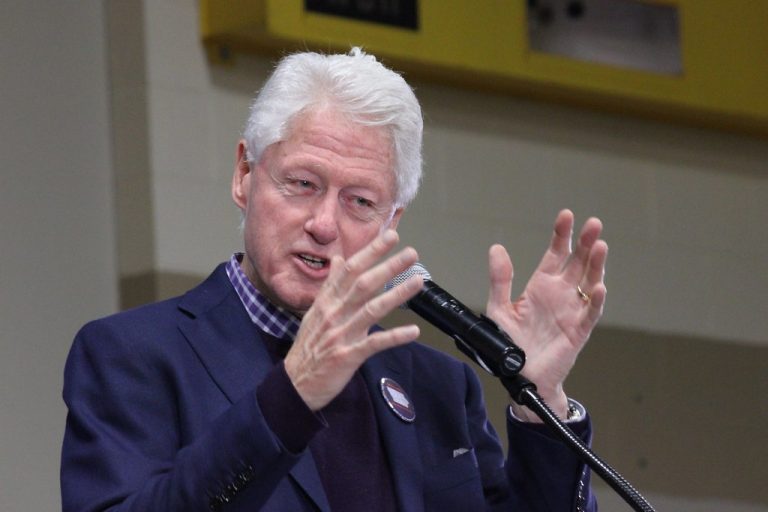
The documents released Thursday were from a now-settled defamation lawsuit filed by one of Epstein’s alleged victims, Virginia Roberts Giuffre. One of the documents transcribes a discussion from almost 10 years ago between Giuffre and her lawyer, in which she states that former President Bill Clinton visited the island, according to Fox News.

Fox News reports:

At one point in the conversation, the subject turned to Epstein’s powerful friends. Jack Scarola, one of Giuffre’s lawyers, asked her if she had any recollection of Epstein telling her that Bill Clinton owed him “favors.”

“Yes I do,” she responded, according to the documents. “It was a laugh, though. He would laugh it off. You know, I remember asking Jeffrey [a] ‘What’s Bill Clinton doing here?’ kind of thing, and he laughed it off and said, ‘Well, he owes me a favor.’ He never told me what favors they were. I never knew. I didn’t know if he was serious. It was just a joke.”

The lawyer asked her to clarify what she was referring to when she mentioned Clinton, and she said the former president was on the island. She said Maxwell was also there, as well as a person named “Emmy” and two young girls.

“And were all of you staying at Jeffrey’s house on the island, including Bill Clinton?” Scarola asked.

“That’s correct,” she responded. “He had about four or five different villas on his island separate from the main house, and we stayed in the villas.”

Giuffre claimed in the suit and other litigation that Maxwell recruited her in 2000 to be a sexual servant to Epstein. She said the couple subsequently pressured her into having sex with numerous rich or notable men, including Britain’s Prince Andrew, U.S. politicians, wealthy entrepreneurs, a famous scientist and fashion designer.

Maxwell, and all of the accused men, have denied those allegations for years. Giuffre has never accused Clinton of behaving inappropriately, and a spokeswoman for the former president has denied he ever visited there.

Among the newly released documents were emails Maxwell and Epstein exchanged in January 2015, when Giuffre’s allegations were getting a new round of media attention.

One email, sent from Epstein’s email address but written in Maxwell’s voice, appeared to be a draft a statement or set of talking points for Maxwell to use in defending herself. It said she had been the target of “false allegations of impropriety and offensive behavior that I abhor and have never ever been party to.”

Responding to a Maxwell email a few days later, Epstein wrote: “You have done nothing wrong and I (would) urge you to start acting like it.” He suggested she go outside and hold her head high, “not as an (escaping) convict.”

Epstein allegedly killed himself last summer while awaiting trial on sex trafficking charges. Maxwell was recently arrested on federal charges that she recruited at least three girls, including one as young as 14, for Epstein to sexually abuse in the 1990s. Prosecutors said she also joined in the abuse.

Maxwell is jailed awaiting trial in New York.

Many of the documents unsealed by the court Thursday had been available publicly before.

They included a deposition in which Giuffre described the alleged abuse, and also answered questions about errors she’d made previously in telling her story, including originally telling a court she was 15 when she met Epstein, when records showed she was at least a year older.

Giuffre over the years has told her story to the FBI, but no charges were brought based on her allegations and she is not one of the three alleged victims in the current criminal case against Maxwell.

Two documents that were not released as scheduled Thursday were depositions Maxwell gave in the civil lawsuit in 2016.

U.S. District Judge Loretta A. Preska had ordered them released, but Maxwell’s lawyers appealed her ruling to the 2nd U.S. Circuit Court of Appeals.

Her lawyers said they should be blocked since she now faces criminal charges.

Adapted from reporting by Associated Press.
Reported COVID Deaths in Ore. Include Guy Who Fell Off a Ladder

0

(Ben Straka, Freedom Foundation) Emails obtained by the Freedom Foundation from the Oregon Health Authority (OHA) indicate the state’s total count of COVID-19 deaths is overstated in more ways than one.

The issue came to light after, back in June, Malheur County announced its “first COVID-19 death,” a man in his 70s whose positive test for the virus came back postmortem. While certainly tragic, though, it wasn’t a COVID-19 death — at least not in the way most people would think of it.

That’s because the man apparently died from falling off a ladder.

The local uproar caused by calling this accident a “COVID-19 death” was enough to prompt Oregon Rep. Mark Owens (R-Crane), whose district includes Malheur County, to reach out to OHA officials for clarification.

The OHA’s response indicates the agency is overstating Oregon’s total number of COVID-19 deaths in two ways:

  1. Counting all deaths of individuals who have previously tested positive for COVID-19 as “COVID-19 deaths,” even in situations where the virus was not the actual cause of death.
  1. Counting deaths of “probable” cases, or cases in which the individual who died was suspected to have COVID-19 but did not have a positive test.

 OHA’s Methodology for Counting COVID-19 Deaths

In a June 16 response to Owens’s inquiry, OHA Senior Policy Advisor Matthew Green stated that OHA’s methodology is to “record whether an illness is associated with a death, even if perhaps it is not the cause. Thus, the numbers we publish technically mean that there was a death of a person who had a COVID-19 infection.”

Green went on to explain that:

“Falling off a ladder or being in a car crash are fairly obvious cases where the infection might not be the cause of death. However, it gets more complicated if a person had, say, a heart ailment. Was the ailment or the infection the true cause? As I said, public health agencies leave that to the individual’s doctors and simply record it as a COVID-19-related death.”

Despite the matter-of-fact tone about what “public health agencies” do, however, not all states inflate their COVID-19 fatality statistics.

The Colorado Department of Health and Environment revised its methodology in May, lowering its COVID-19 death count at the time from 1,150 to 878.

More recently, the Freedom Foundation exposed a similar practice of overreporting COVID-19 deaths in Washington — the news of which ruffled the feathers of the state’s governor while simultaneously causing his own Department of Health to change the way it counts COVID-19 deaths.

OHA’s methodology is similar to what the Freedom Foundation uncovered in Washington. According to Green’s email, the current technical definition of a COVID-19 death in Oregon is:

“For community: death of a confirmed or probable COVID-19 case within 60 days of the earliest available date among exposure to a confirmed case, onset of symptoms, or date of specimen collection for the first positive test; or someone with a COVID-19-specific ICD-10 code listed as a primary or contributing cause of death on a death certificate

For hospitalized: death from any cause in a hospitalized person during admission or in the 60 days following discharge AND a COVID-19 positive laboratory diagnostic test at any time since 14 days prior to hospitalization.”

The definition suggests there are time limitations placed on what is considered a death “with COVID-19” (i.e., if enough time has passed since an individual had COVID-19, his or her death won’t necessarily be counted as a COVID-19 death).

But even if such time limitations are followed in practice, the case of the Malheur County man, who tested positive for COVID-19 after he died of an unrelated accident, shows that deaths unrelated to COVID-19 are still counted under OHA’s methodology.

Even within the definition’s parameters, the OHA’s methodology clearly has problems. Including the deaths of any individuals who have tested positive for the virus — and even some who haven’t — as “COVID-19 deaths” risks seriously inflating the state’s total number of fatalities from the virus. In Washington, for example, a similar methodology inflated the state’s total number of COVID-19 deaths by as much as 13 percent.

And Green’s email suggests there are other cases like the one in Malheur County.

The spread of COVID-19 is undoubtedly difficult to track. However, at a time of extreme worry and the imposition of heavy social and economic restrictions, the public should at least be provided with as much clarity as possible when it comes to the impact of COVID-19 in Oregon.

Removing accidents and other deaths clearly not caused by COVID-19 from the state’s COVID-19 webpage should be an easy fix.

Not doing so only serves to muddy the waters and erode public trust in Gov. Brown and the OHA’s response to the pandemic.

While the information obtained from the OHA confirms that COVID-19 deaths in Oregon are being overreported, the extent of the overreporting remains unclear. The Freedom Foundation reached out to OHA to confirm how many of the reported COVID-19 deaths in Oregon could be properly attributed to COVID-19 but received only unhelpful responses.

One inquiry was forwarded to the agency’s public records coordinator, who reclassified the questions as a “public records request” that she subsequently denied. Another received a response that didn’t provide any specifics, but confirmed the OHA’s practice of counting presumptive cases and any associated with a positive test as a COVID-19 death, even if the individual’s death certificate did not list the virus as the cause.

Finally, the Freedom Foundation’s inquiry to Mr. Green — who, interestingly enough, formerly worked for the Washington Department of Health and served as a city council member in the Freedom Foundation’s home city of Olympia — went unacknowledged.

It’s unfortunate, given that his old employer is now taking steps to remove deaths improperly attributed to COVID-19. One would hope he might convince OHA to follow suit…Original Source

NFL Players Could Be Fined For Attending Indoor Church Services

NFL players could be fined or they could lose contract guarantees if they attend indoor church services that violate social distancing policies, according to Pro Football Talk.

The NFL and the players’ union reached an agreement on the restrictions players must abide by during the upcoming season.

One such restriction specifically prohibits players from going to busy indoor events, such as night clubs, bars, house parties, concerts, professional sporting events and church services that allow attendance above 25% of capacity. 

If players are found in violation of these rules, they could be fined.

Moreover, if they test positive for the coronavirus after engaging in these prohibited activities, the NFL will not pay them for the games they miss, and future guarantees in their contracts would be voided.

It’s unclear how the NFL plans to enforce these restrictions. Players could be monitored by security officials, or they could rely on contacts within the community to track their players’ whereabouts, Pro Football Talk reported.

One source said that players should immediately “delete social media” to avoid getting in trouble.

The new restrictions, however, say nothing about mass protests and do not prohibit NFL players from participating in social-justice-related activities.

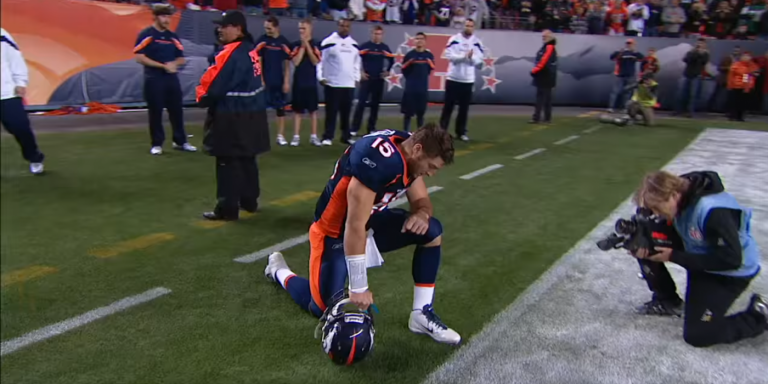
This shouldn’t come as a surprise, since NFL Commissioner Roger Goodell submitted to the demands of activist players last month, apologizing to failed quarterback Colin Kaepernick and others who knelt during the national anthem. 

“We were wrong for not listening to NFL players earlier,” Goodell said. “We will be reaching out to players who have raised their voices and others on how we can improve.”

Goodell also endorsed the Black Lives Matter movement and announced that the NFL would be establishing a diversity council to raise awareness about racial issues. Kaepernick has been invited to be a member of this council, Goodell said.

McCloskeys’ Lawyer Moves to Dismiss Case Due to ‘Impropriety’ By Soros Prosecutor

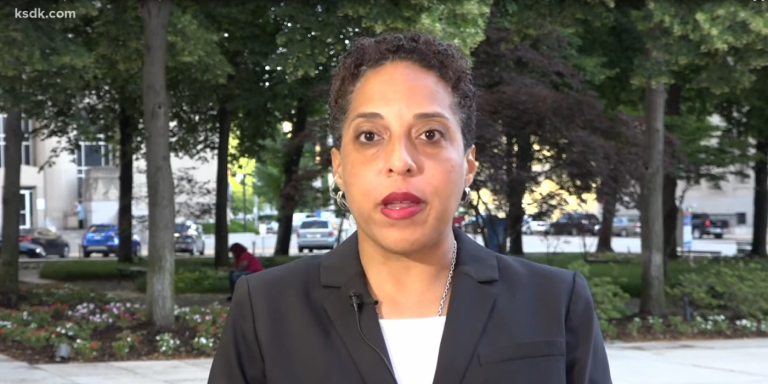
The attorney for a St. Louis couple who brandished firearms at protesters trespassing on their property filed a motion this week to dismiss the felony charges brought by Soros-funded St. Louis Circuit Attorney Kim Gardner.

Attorney Joel Schwartz, who is representing Mark and Patricia McCloskey, accused Gardner of using her case against the McCloskeys as part of her reelection campaign — which has been boosted by liberal billionaire George Soros — after it was revealed that she sent campaign emails stating the couple had “pointed guns at peaceful citizens.”

“Here, a reasonable person with access to all the facts would find that there was at least the appearance of impropriety, in that Ms. Gardner’s decision may have been affected by her personal, political, financial, and professional interests, and that her neutrality, judgement, and ability to administer the law in an objective manner may have been compromised,” Schwartz wrote in the filing, according to a local news outlet.

Several of Gardner’s reelection emails included references to the McCloskeys. 

“You might be familiar with the story of the couple who brandished guns during a peaceful protest outside of their mansion,” one of Gardner’s email said.

“Instead of fighting for the millions of Americans affected by the pandemic, including 31,000 Missourians, President Trump and the Governor are fighting for the two who pointed guns at peaceful citizens during the Black Lives Matter protests,” it said.

These emails included a link to a donation page in which she vows to “hold those accountable who are perpetuating a system of police brutality.”

This isn’t the only example of “impropriety” the McCloskeys’ attorneys have found.

Another recent investigation found that Gardner deliberately tampered with available evidence in order to press felony charges against the McCloskeys.

The evidence includes Patricia McCloskey’s gun, which was deemed inoperable when she confronted the violent protesters who were trespassing on private property.

But Circuit Attorney Kim Gardner ordered the city’s crime lab to reassemble the gun into working order after confiscating the firearm so that she could score a conviction against the McCloskeys.

Missouri law requires the state to prove that firearms are “readily capable of lethal use.”

Because Patricia McCloskey’s gun was inoperable at the time of its “use,” Gardner would not have been able to score a conviction based on the felony charges brought against her.

But because the city’s crime lab reassembled the gun, Gardner is able to claim that the gun was, in fact, operable at the time and press charges that could carry a sentence of up to four years in prison.

Gardner has also failed to disclose several trips that were paid by liberal activist groups, according to an investigation by KMOV4.

Elected officials in St. Louis are required by law to disclose travel and whether it was funded by public or private dollars.

But Gardner did not disclose any of the trips she took in 2018 or 2019 that were sponsored by a liberal organization called Fair and Just Prosecution, which has lauded her efforts to prosecute the McCloskeys.

It is not clear how many of these funded trips Gardner took. But sources who work inside her office told KOMV4 that she traveled enough that it became a problem.

She was often unreachable, which made it difficult to make decisions about budgets, grants, and personnel issues like hiring and firing, the outlet reported.

Gardner, however, refused to apologize for failing to report these trips, and claimed that accusations of wrongdoing are “insulting.”

“Circuit Attorney Gardner refuses to apologize for seeking reasonably opportunities to further her knowledge and access prosecutors from throughout the nation for best practice.

The suggestion that she would be persuaded to follow an alternative that is not focused on addressing the root causes of crime for a few plane tickets and hotel rooms is insulting,” Gardner’s office said in a statement.

Because of Gardner’s carelessness, she is already being challenged in the Democratic primary by Mary Pat Carl, who previously worked as the city’s lead homicide prosecutor.

Bill Hall, a professor of political science at Webster University in suburban St. Louis, said the ongoing battles she’s picked with fellow city officials, and her inability to live up to her campaign promise to crack down on violent crime, are hurting her reelection chances.

“She has to answer for the things that she has done for the past 3½ years, and I think that’s where people are disappointed,” Carl said.

“She said in 2016 she would be committed to tackling violent crime,” he added. “It’s grown worse. There’s no plan.”

Associated Press contributed to this article.

FBI Downplays Damning IG Reports on Significant Errors in Spying Requests

0

(Headline USA) The FBI claimed Thursday that errors in more than two dozen applications for surveillance warrants were not as severe as the Justice Department inspector general made them out to be.

But the denial, following the December report’s disclosure of more than a dozen significant errors that undermine the bureau’s credibility, is unlikely to sway either Democrats or Republicans, both of whom have criticized the agency’s process for conducting secret surveillance in national security investigations.

The IG report focused specifically on the surveillance of Trump campaign officials during the 2016 election as part of the “Crossfire Hurricane” investigation.

In fact, the DOJ watchdog has issued a series of critical reports on the topic over the last year, identifying important errors and omissions in applications the FBI submitted to wiretap campaign advisers in the Russia collusion investigation.

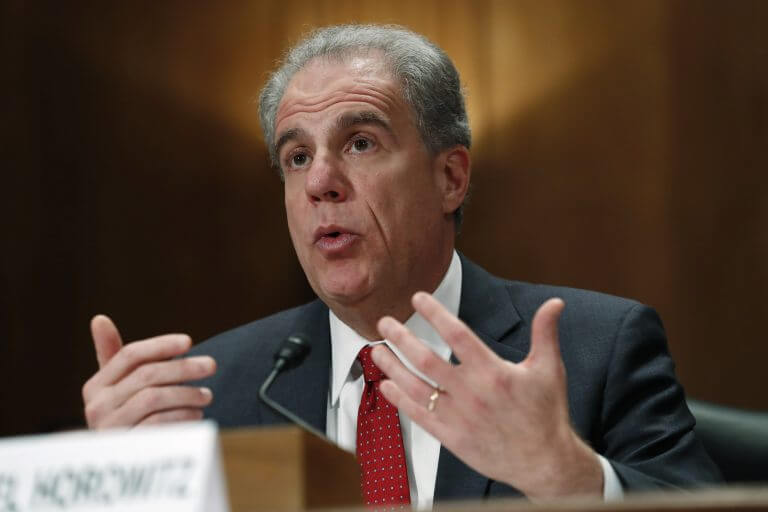
In March, Inspector General Michael Horowitz said his office had conducted an audit of 29 unrelated wiretap applications and found problems in all 29, including apparent errors or inadequately supported facts in 25 of them.

But the FBI said that its own review of the 29 applications found only two material errors, and neither is believed to have affected a judge’s decision that there was probable cause for the surveillance.

The FBI claimed that out of nearly 7,000 facts in the applications, there were roughly 200 nonmaterial errors, such as typos and date inaccuracies.

The FBI also said that each of the applications was submitted before FBI Director Chris Wray announced more than 40 changes aimed at improving the process and fixing problems identified by the inspector general.

Wray’s announcement about the reforms, however, came in direct response to the damning IG reports.

The statement comes amid an effort by the FBI to shore up the accuracy of applications submitted to the secretive Foreign Intelligence Surveillance Court, which processes requests to eavesdrop on American soil in national security investigations.

A December report from the watchdog office found significant errors and omissions during applications submitted to eavesdrop on former Trump campaign associate Carter Page, and said the FBI had failed to update the court when it received new information that undercut the premise for the surveillance.

After that report was issued, Horowitz announced a broader review of how the FBI uses its spy powers under the Foreign Intelligence Surveillance Act, often known by the acronym FISA.

“The FBI considers FISA an indispensable tool to protect the United States against national security threats and is dedicated to the continued, ongoing improvement of the FISA process to ensure all factual assertions contained in FISA applications are accurate and complete,” the FBI said in a statement.

Adapted from reporting by the Associated Press

Nevada Sheriff Tells Local Library It’s On Its Own Because of Support for BLM

After the community library released a public statement in support of the Black Lives Matter movement, a Nevada sheriff warned threatened to stop responding to any 911 calls placed from the library. 

The Douglas County Public Library updated its diversity statement earlier this month to include its support for BLM. 

“We resolutely assert and believe that all forms of racism, hatred, inequality, and injustice don’t belong in our society,” the statement read.

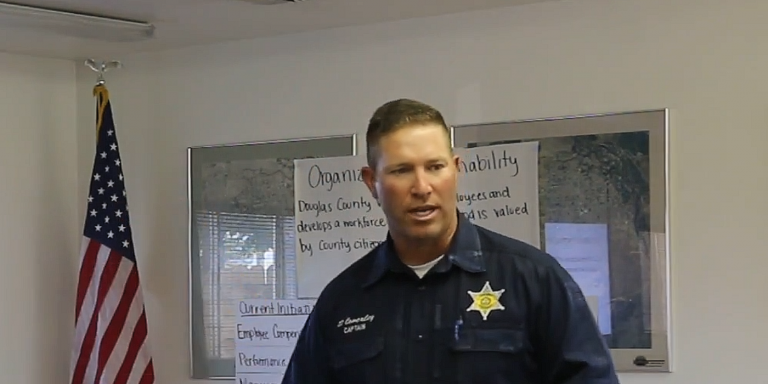
In response, Douglas County Sheriff Daniel Coverley urged the library to rescind its support of a movement that would have his entire department defunded, and a movement that has caused “violence, property damage, and the closing of local businesses.”

“Due to your support of Black Lives Matter and the obvious lack of support or trust with the Douglas County Sheriff’s Office, please do not feel the need to call 911 for help. I wish you good luck with disturbances and lewd behavior,” Coverley said in a statement, according to the Washington Post.

The director of the library, Amy Dodson, said the library’s statement was not intended as a jab at the police department. 

“It simply was meant to state our inclusivity at the library, that we are open and welcoming to everyone and we treat everyone equally,” Dodson insisted.

The sheriff’s department later clarified that it would respond to 911 calls placed from the library, but Coverley reiterated that the library’s support of BLM creates a problem for officers who are already working in a high-stress environment.

“This has been a difficult time to be a law enforcement professional and can be disheartening when we perceive that our office may be under attack,” he said on Tuesday. “My response was rooted in my belief that these issues need to be openly discussed in a way that values diversity and law enforcement.”

Dodson and Coverley met, according to the Post, and released a joint statement in which Dodson called the altercation “an unfortunate circumstance of misunderstanding.”

“The library respects and supports the work of the Douglas County Sheriff’s Office and appreciates everything they do to keep our community safe,” she added.

US Gov’t Drops Effort to Silence Trump Ex-Lawyer Michael Cohen

0

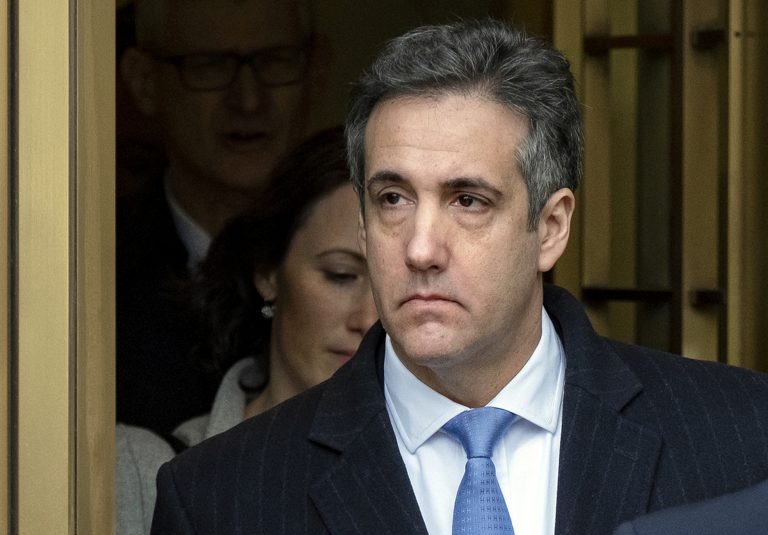
(Associated Press) The U.S. government dropped its effort to silence President Donald Trump’s former personal lawyer on Thursday, saying it will no longer demand that Michael Cohen not speak with the media in the weeks before his book critical of his former boss is released.

An agreement between lawyers for the government and Cohen attorney Danya Perry lifting the media ban that had prevented Cohen from speaking publicly awaited a signature by a federal judge.

Cohen is completing the last two years of a three-year prison sentence at home after pleading guilty to campaign finance charges and lying to Congress.

He was released from prison in May amid coronavirus fears in U.S. prisons, only to be returned earlier this month after making it known that he planned to publish a book critical of the president.

He said in court papers that the book titled “Disloyal: The True Story of Michael Cohen, Former Personal Attorney to President Donald J. Trump” would be published before the November election.

Cohen, 53, had sued federal prison officials and U.S. Attorney General William Barr, saying he was ordered back to prison because of the book.

U.S. Judge Alvin K. Hellerstein last week ordered him released, saying the government’s action was retaliatory and a violation of his First Amendment rights.

Probation authorities had told Hellerstein in court documents that Cohen was sent back to prison because he refused to sign a form banning him from publishing the book or communicating with the media or public.

The Bureau of Prisons has said any assertion that the reimprisonment of Cohen “was a retaliatory action is patently false.”

He was released to home confinement on Friday after being held behind bars since July 9.

Cohen’s book is anticipated in part for what it might divulge about the circumstances that led him to plead guilty to campaign finance charges and blame Trump for directing him to commit the crimes.

The charges stemmed from his efforts to arrange payouts during the 2016 presidential race to keep the porn actress Stormy Daniels and model Karen McDougal from making public claims of extramarital affairs with Trump.

Trump has denied the affairs.

In a written declaration, Cohen said his book “will provide graphic and unflattering details about the President’s behavior behind closed doors.”

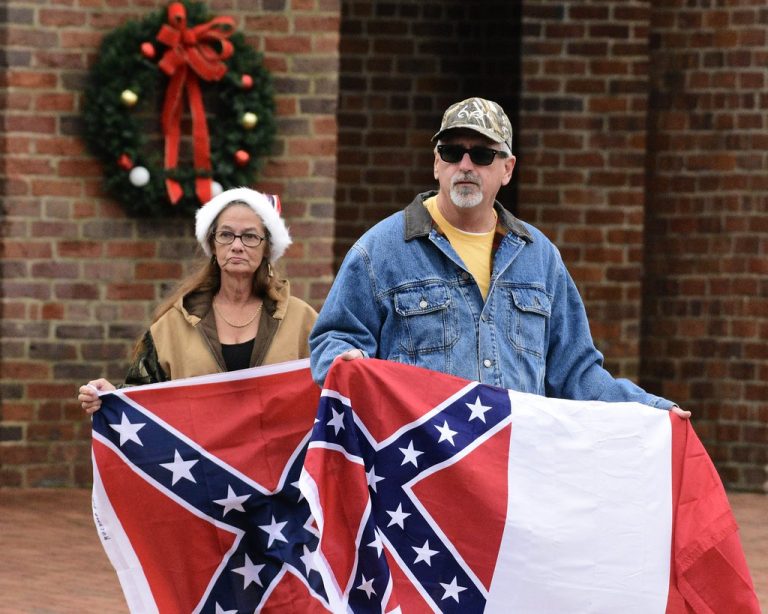
Appeals Court Upholds Denial of Confederate Group from Christmas Parade

(Associated Press) A group that was denied permission to march in a Louisiana city’s Christmas parade when it insisted on carrying Confederate battle flags lost its latest appeal Thursday in a federal court.

Three judges of the 5th U.S. Circuit Court of Appeals rejected an appeal by the Louisiana Division of the Sons of Confederate Veterans.

They upheld a lower court ruling that there was no constitutional violation in the denial of the permit because permitting decisions were made by a private, nonprofit group — not a government entity.

The decision comes amid nationwide demonstrations and calls for racial justice following the police custody death of George Floyd in Minneapolis.

And it is the result of a dispute that began months after other killings that raised the national consciousness: The permit for the annual parade in the northwest Louisiana city of Natchitoches was denied in 2015, months after white supremacist Dylann Roof killed nine Black worshipers at a South Carolina church.

Pictures on social media of Roof posing with Confederate battle flags led to renewed opposition to public displays of Confederate iconography around the nation.

When the case was argued at the 5th Circuit in February, judges’ questions made clear they were concerned that the denial of a permit by the city would be a violation of freedom of speech.

The city’s mayor had expressed concern that the display of Confederate flags during the parade would offend black residents.

But the case hinged on the role of the Historic District Business Association — a defendant in the Confederate group’s lawsuit, along with Natchitoches officials.

That group, which ran the parade under an agreement with the city, denied the permit.

U.S. District Judge Dee Drell dismissed the Confederate group’s lawsuit last year.

The 5th Circuit panel upheld Drell’s decision, finding “the City was not involved in the decision to deny the SCV the right to participate in the parade.”

The panel consisted of judges Jennifer Walker Elrod, Catharina Haynes and Leslie Southwick.