Biden-tied Relative Dies After Delaware Cops Summoned

(Luis CornelioHeadline USA) The wife of former First Lady Jill Biden’s ex-husband was found dead Sunday after Delaware police were called to address a domestic dispute, TMZ reported Tuesday. 

New Castle County Police found Linda Stevenson unresponsive in the living room shortly after 11 p.m. local time.  

She had been married to Bill Stevenson, Jill’s first husband, for nearly 40 years. 

Bill gained national attention during the 2020 presidential election after he spoke out about how former President Joe Biden allegedly snatched Jill from him in 1974.  

Bill and Jill were married for five years, from 1970 to 1975. 

According to TMZ, officers with the New Castle County Police administered life-saving measures to no avail. 

The outlet reported that detectives from the agency’s Division Criminal Investigations Unit are probing the circumstances surrounding Linda’s death. 

No one has been charged with any wrongdoing. 

Linda’s remains are set to undergo an autopsy by the Delaware Division of Forensic Science. 

As reported by the outlet, dispatch calls appear to mention cardiac arrest. 

In 2020, as Joe ran for president, Bill said that Jill was unfaithful to him with Joe, who was his friend. 

“I was betrayed by the Bidens,” Bill claimed in remarks to Inside Edition. “Joe was my friend. Jill was my wife.” 

Jill spoke of her marriage with Bill in her memoir, claiming: “I truly believed we were destined for each other…looking back it may seem like a mistake of youth.”

Georgia Judge Tosses Racketeering Charges Against ‘Cop City’ Protesters

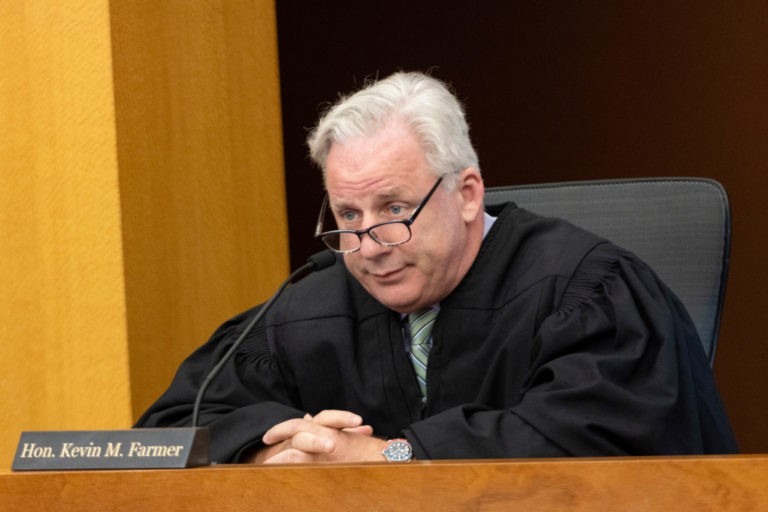
(Headline USA) A Georgia judge on Tuesday tossed racketeering charges against dozens of defendants accused of a yearslong conspiracy to halt the construction of a police and firefighter training facility that critics call “Cop City.”

Fulton County Judge Kevin Farmer said in the order that Republican Attorney General Chris Carr didn’t have the authority to secure the 2023 indictments under Georgia’s Racketeer Influenced and Corrupt Organizations law, The Atlanta Journal-Constitution reported. Farmer said he needed permission from Gov. Brian Kemp.

Carr’s office said in a statement that they plan to appeal.

“We strongly disagree with this decision and will continue to vigorously pursue this domestic terrorism case to ensure that justice is served,” his office said.

The 61 defendants in what experts call the largest criminal racketeering case filed against protesters in U.S. history faced such allegations as throwing Molotov cocktails at police officers and providing protesters with food. Each defendant faced up to 20 years in prison on the racketeering charges.

Five of them have also been indicted on charges of domestic terrorism and first-degree arson related a night in 2023 when masked activists burned a police car in downtown Atlanta and threw rocks at a skyscraper home to the Atlanta Police Foundation. Farmer has said Carr also didn’t have the authority to pursue the arson charge but that the domestic terrorism charge can likely stand.

Amanda Clark Palmer, an attorney for one of the protesters, praised the judge’s decision, saying “the prosecution did not follow the law when filing these charges,” according to The Atlanta Journal-Constitution.

“We are relieved the dismissal order has been entered but our relief is not complete yet as we wait to see whether the Attorney General will appeal,” Clark Palmer said in a statement.

The long-brewing controversy over the training center came to a head in January 2023 after state troopers who were part of a sweep of the South River Forest killed a 26-year-old activist, known as “Tortuguita,” who authorities said had fired at them while inside a tent near the construction site. A prosecutor found the troopers’ actions “objectively reasonable.” Tortuguita’s family filed a lawsuit, saying his hands were in the air and that troopers used excessive force when they initially fired pepper balls into the tent.

Protests erupted, with masked vandals sometimes attacking police vehicles and construction equipment to stall the project and intimidate contractors into backing out. Opponents also pursued such civic paths to halt the facility as packing City Council meetings and leading a large-scale referendum effort that got tied up in the courts.

Carr, who is running for governor, had pursued the case. Kemp hailed it as an important step to combat “out-of-state radicals that threaten the safety of our citizens and law enforcement.”

Critics had called the indictment a politically motivated, heavy-handed attempt to quash the movement against the 85-acre (34-hectare) project that ultimately cost more than $115 million.

Adapted from reporting by the Associated Press

Trans Nashville Shooter Purposely Targeted White School, Writings Suggest

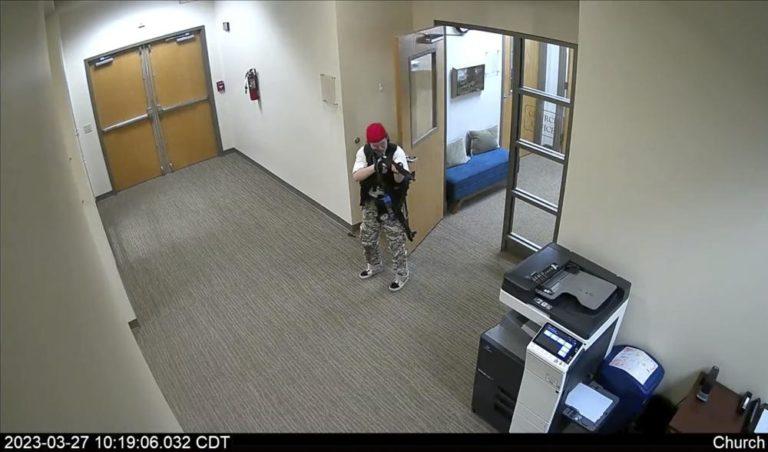
(Ken Silva, Headline USA) In the aftermath of the heinous March 2023 Christian school mass shooting in Nashville, the FBI declined to release the “manifesto” of the gunman, Audrey Hale—a 28-year-old woman who was identifying as a man at the time of the attack.

In June, the FBI settled a lawsuit with a local media outlet, agreeing to release Hale’s writings. A new batch of documents released last week show why the Biden administration may have wanted to keep them secret. According to the writings, Hale targeted the Covenant School, where she was once a student, at least in part because it had predominately white students.

“[Predominantly] black school (black people I love),” Hale wrote. “Black community in despair [and] suffering (I don’t want to cause that) = don’t want to harm them = dread … Black friends [and] black community will hate me.”

She added that attacking black students could “likely … influence [racist] white shooters in future.”

Hale was severely mentally ill, having been receiving treatment from Vanderbilt University Medical Center since 2001.

At one point, law enforcement reportedly was looking into whether Vanderbilt University Medical Center should face criminal liability for failing to report Hale’s warning signs.

However, the MNPD issued a 50-page investigative case summary on the shooting in early April without recommending charges.

According to that report, Hale left behind “a series of notebooks, art composition books, and media files created by Hale documenting her planning and preparation for the attack, the events in her life that motivated her to commit the attack, and her hopes regarding the outcome of the attack,” police determined. Hale, who once attended Covenant, was killed by police.

The evidence held by law enforcement on Hale includes more than 100 gigabytes of data, which includes over 900 pages of her writings.

Ken Silva is the editor of Headline USA. Follow him at x.com/jd_cashless.

Why Did Gold and Silver Tank on Monday?

(Mike Maharrey, Money Metals News Service) Why did gold and silver sell off on Monday? If I’ve been asked that question once, I’ve been asked 50 times.

The more relevant question is why gold and silver have been surging for two years.

However, I do understand why people are asking about the selloff. It was significant.

On Friday, silver surged to a record of over $80 an ounce. And then on Monday, it dropped about 9 percent back to $72. Gold also tanked, dropping from $4,500 and through the $4,400 support level and all the way to around $4,330.

People freaked. I know this because I saw the social media comments and got several emails and text messages.

I think a lot of people who follow precious metals have been browbeaten into perpetual pessimism.

The steep selloff was notable. However, look at the bigger picture. Just three months ago, silver was below $50, and the naysayers were saying it would never break out above that resistance level. And a year ago, silver was under $30. This time last year, gold was barely above $2,600.

I’m not so sure the negativity is warranted – at least not yet.

Keep in mind, corrections — even big ones — are normal and healthy in a bull market. The important thing is to keep your eye on the fundamentals. Did anything significant change on Monday to drive gold and silver down? Did somebody suddenly create a bunch of silver out of thin air? Did the government end its inflationary policies? Did the dollar suddenly become a trusted store of value?

If the answer is no, it was probably just a correction.

What Sparked the Correction?

With silver and gold both surging significantly higher over the past couple of weeks, a correction was inevitable. When an asset price quickly rises, at some point, it will ultimately become oversold. Investors book profits, and the price corrects.

But there was a policy change that sparked the recent selloff.

On Friday, the Chicago Mercantile Exchange (CME) raised its reserve requirements for futures contracts. In effect, this means investors are now required to post more cash up front to hedge against defaults.

The CME is one of the world’s largest trading floors for commodities.

The CME said it was raising margin requirements “per the normal review of market volatility.”

In practice, futures positions are typically leveraged, meaning the trader doesn’t pay the full contract value up front. They post what is known as a performance bond or margin.

When CME raises the margin requirements, every leveraged trader must either deposit more cash or eligible collateral into his account or reduce or close his positions to get within the new requirements. If a leveraged trader is long silver (meaning he is betting the price will go up) and doesn’t want to (or can’t) add cash, he must sell the contract. When a lot of traders do so at the same time, the futures price drops.

Spot and futures prices are tightly linked through arbitrage/hedging. When future prices dump, spot prices typically follow because dealers, ETFs, and hedgers reprice off the futures curve, allowing spreads to adjust quickly.

The CME’s move was amplified by profit-taking, especially as prices began to fall.

U.S. Market Driving the Selloff

It’s interesting to note that after the big drop on Monday, both gold and silver recovered in overnight trading. Early Monday morning, gold was back above $4,400, and silver was knocking on the door of $77. However, as soon as the U.S. market opened, both metals gave up some of those overnight gains. This indicates that there is plenty of bullish sentiment in Asian and European markets, and bearishness is predominantly in North America.

There will almost certainly be additional corrections as we move into 2026. There will likely be even bigger selloffs. It’s important to always keep your eyes on the fundamentals. Don’t let corrections spook you. They actually present good buying opportunities.


Mike Maharrey is a journalist and market analyst for Money Metals with over a decade of experience in precious metals. He holds a BS in accounting from the University of Kentucky and a BA in journalism from the University of South Florida.

Trump Administration Says It’s Freezing Child Care Funds to Minnesota After Series of Fraud Schemes

(Headline USA) President Donald Trump’s administration announced on Tuesday that it’s freezing child care funds to Minnesota and demanding an audit of some day care centers after a series of fraud schemes involving government programs in recent years.

Deputy Secretary of Health and Human Services Jim O’Neill said on the social platform X that the move is in response to “blatant fraud that appears to be rampant in Minnesota and across the country.”

Minnesota Gov. Tim Walz pushed back on X, saying fraudsters are a serious issue that the state has spent years cracking down on but that this move is part of “Trump’s long game.”

“He’s politicizing the issue to defund programs that help Minnesotans,” Walz said.

O’Neill referenced a right-wing influencer who posted a video Friday claiming he found that day care centers operated by Somali residents in Minneapolis had committed up to $100 million in fraud. O’Neill said he has demanded Walz submit an audit of these centers that includes attendance records, licenses, complaints, investigations and inspections.

“We have turned off the money spigot and we are finding the fraud,” O’Neill said.

The announcement comes one day after U.S. Homeland Security officials were in Minneapolis conducting a fraud investigation by going to unidentified businesses and questioning workers.

There have been years of investigations that included a $300 million pandemic food fraud scheme revolving around the nonprofit Feeding Our Future, for which 57 defendants in Minnesota have been convicted. Prosecutors said the organization was at the center of the country’s largest COVID-19-related fraud scam, when defendants exploited a state-run, federally funded program meant to provide food for children.

A federal prosecutor alleged earlier this month that half or more of the roughly $18 billion in federal funds that supported 14 programs in Minnesota since 2018 may have been stolen. Most of the defendants in the child nutrition, housing services and autism program schemes are Somali Americans, according to the U.S. Attorney’s Office for Minnesota.

O’Neill, who is serving as acting director of the Centers for Disease Control and Prevention, also said in the social media post Tuesday that payments across the U.S. through the Administration for Children and Families, an agency within the U.S. Health and Human Services Department, will now require “justification and a receipt or photo evidence” before money is sent. They have also launched a fraud-reporting hotline and email address.

The Administration for Children and Families provides $185 million in child care funds annually to Minnesota, according to Assistant Secretary Alex Adams.

“That money should be helping 19,000 American children, including toddlers and infants,” he said in a video posted on X. “Any dollar stolen by fraudsters is stolen from those children.”

Adams said he spoke Monday with the director of Minnesota’s child care services office and she wasn’t able to say “with confidence whether those allegations of fraud are isolated or whether there’s fraud stretching statewide.”

Trump has criticized Walz’s administration over the fraud cases, capitalizing on them to target the Somalia diaspora in the state, which has the largest Somali population in the U.S.

Walz, the 2024 Democratic vice presidential nominee, has said an audit due by late January should give a better picture of the extent of the fraud. He said his administration is taking aggressive action to prevent additional fraud. He has long defended how his administration responded.

Adapted from reporting by the Associated Press

Derailed Train in Kentucky Causes a Chemical Leak and Sparks a Fire

(Headline USA) A derailed CSX train leaked a flammable chemical and sparked a fire in a rural part of southern Kentucky on Tuesday, prompting authorities to issue a shelter-in-place order that was later lifted for nearby residents.

No injuries were reported after 31 rail cars derailed at about 6:15 a.m. CST in Todd County, CSX said in a statement. The derailment caused a leak of molten sulfur from one rail car and sparked a fire that was extinguished by late Tuesday morning, the company said.

Crews at the scene were working “as safely and quickly as possible” to clean up the site, it said.

“We appreciate the swift response and coordination of local first responders and emergency management officials,” the company said. “Our primary focus continues to be the health and safety of onsite personnel, the surrounding community and mitigating any potential risk to the environment.”

The chemical substance that leaked can be toxic when it is on fire, the company said. But air quality testing at the derailment site indicated that “everything is good now” and the shelter-in-place order was lifted, said Ash Groves, emergency management director for Todd County.

Todd County authorities had issued a half-mile shelter-in-place order around the impacted site as a precaution.

The derailment occurred about 1 mile (1.6 kilometers) west of downtown Trenton — about 55 miles (88.5 kilometers) northwest of Nashville, Tennessee.

Adapted from reporting by the Associated Press

Unreleased ‘Epstein Files’ Now Numbered at 5.2 Million

(Ken Silva, Headline USA) The Justice Department said Wednesday that it may need a “few more weeks” to release all of its records on the late sex offender Jeffrey Epstein after suddenly discovering more than 1 million potentially relevant documents.

That number has now increased to 5.2 million, according to the New York Times.

The Times reported Tuesday that the DOJ is seeking to enlist some 400 lawyers to review the outstanding pages, which must be released pursuant to congressional legislation passed earlier this year. The DOJ was supposed to release all its files on Epstein by Dec. 19.

The DOJ review should take until at least Jan. 20, the Times reported, citing anonymous source. Lawyers are allowed to redact information that could potentially jeopardize national security, victim privacy or efforts at further prosecutions, as per the The Epstein Files Transparency Act.

The newly discovered files mark the latest development in a case that’s mired the new Trump administration since the beginning of the year.

In March, Attorney General Pam Bondi told Fox News that a “truckload of evidence” had been delivered to her after she ordered the Justice Department to “deliver the full and complete Epstein files to my office” — a directive she said she made after learning from an unidentified source that the FBI in New York was “in possession of thousands of pages of documents.”

In July, the FBI and Justice Department indicated in an unsigned memo that they had undertaken an “exhaustive review” and had determined that no additional evidence should be released — an extraordinary about face from the Trump administration, which for months had pledged maximum transparency. The memo did not raise the possibility that additional evidence existed that officials were unaware of or had not reviewed.

According to Bloomberg, FBI agents have received more than $851,344 in overtime for working on the Epstein files.

The FBI also has police officers guarding the complex where the files are being held—likely in electronic form. According to Bloomberg, the FBI police were sent to the Central Records Complex in Winchester, Virginia, in response to online chatter about citizens possibly getting ambitious and burgling them.

The Associated Press contributed to this report.

Ken Silva is the editor of Headline USA. Follow him at x.com/jd_cashless.

Leaked Emails Reveal Clintons’ Ties to Epstein Deeper Than Previously Disclosed

(José Niño, Headline USA) Newly authenticated emails from Jeffrey Epstein’s personal accounts reveal the convicted sex offender and his associate Ghislaine Maxwell maintained significantly closer ties to the Clinton Foundation and its personnel than Bill and Hillary Clinton have publicly disclosed, according to a recent report by Dropsite News.

The revelations come as the Clintons face mounting pressure from House Oversight Committee Chair James Comer, who has threatened contempt proceedings after the couple declined to testify about their relationship with Epstein this week.

Since Epstein’s 2019 arrest, which ultimately led to his death in federal custody, both Clintons have worked to minimize their association with the financier. Through spokesmen, Bill Clinton has maintained he traveled aboard Epstein’s private Boeing 727—infamously nicknamed the “Lolita Express”—only during a 2002 humanitarian mission to Africa, knew nothing of Epstein’s criminal activities, never visited his properties, and severed contact by 2005.

However, leaked messages from Epstein’s Yahoo account, vetted and published by Distributed Denial of Secrets and overlapping with a dataset previously authenticated by Bloomberg, tell a different story. The correspondence spanning 2005 through 2007 shows Maxwell and Epstein maintaining direct coordination with Clinton Foundation personnel, meeting members of the Clintons’ inner circle, and providing lavish gifts to senior Clinton aides.

Among the most striking revelations involves Doug Band, a longtime Clinton confidant and architect of the Clinton Global Initiative. Despite Band’s 2020 claim to Vanity Fair that he developed “bad vibes” from Epstein during their 2002 Africa trip and subsequently worked to push him from Clinton’s orbit, the emails reveal a different reality.

According to Dropsite News, in December 2005, Maxwell purchased an Audemars Piguet luxury watch for Band at Epstein’s direction, paying $35,000 for the timepiece. “Good..make sure he gets it for xmas,” Epstein wrote to Maxwell after learning of the purchase. When Maxwell asked whose name should appear on the gift card, Epstein replied simply: “us.”

Months later, in April 2006, Band requested use of Maxwell’s private jet to attend the NCAA basketball finals in Indianapolis when commercial flights proved unavailable. Though Band ultimately declined and arranged his own charter, Epstein remained eager to provide the favor, telling Maxwell, “we should pay…at least offer.”

The emails also document Maxwell’s November 2006 trip to Mumbai, where she “met up w/ clinton” alongside other Clinton-world figures including Sandy Berger, a former national security official, and Band himself. The group was there while Bill Clinton met with Prime Minister Manmohan Singh and attended United Nations and Clinton Foundation events.

The following day, Maxwell messaged Epstein about visiting “a tsunami village,” corresponding with Clinton’s documented trip to Thazhanguda village in Tamil Nadu to tour reconstruction efforts following the devastating 2004 tsunami.

Foundation staff also reached out directly to Epstein. In January 2006, Tascha Alvarez, Assistant Director of Foreign Policy at the Clinton Foundation, contacted Epstein’s attorney requesting a meeting between Epstein and two Rwandan students he was financially supporting at City College of New York.

That same year, Epstein donated $25,000 to the Clinton Foundation, per the New York Times. Epstein’s lawyers have claimed he was part of the original group that created the Clinton Global Initiative, though this remains disputed. Maxwell made similar remarks in her interview with the Justice Department earlier this year.

Ironically, as Hillary Clinton’s 2008 presidential campaign gained momentum, Epstein himself grew concerned about unwanted attention. In May 2007—four months before signing his controversial plea deal to avoid federal sex trafficking charges—Epstein predicted to Maxwell that Clinton’s opponents would “attack her ‘friends’ in any way they can.”

Referencing media scrutiny of another Clinton associate, Indian technology executive Vinod Gupta, Epstein warned Maxwell: “you can see the papers are starting on hillary ‘friends’ Vin gupta. I think you are better off, not having your name associated.”

The warning proved prescient. Years later, after Epstein’s crimes became public, both he and Maxwell would become toxic liabilities for the Clintons. In a July 2025 Justice Department interview, Maxwell attempted to distance Epstein from the former president, telling Deputy Attorney General Todd Blanche that “President Clinton was my friend, not Epstein’s.”

Yet a 2003 handwritten note from Clinton in Epstein’s 50th birthday book suggests genuine friendship, with Clinton praising Epstein’s “childlike curiosity” and “the solace of friends.”

The Clinton Foundation did not respond to requests for comment. Band also declined to comment.

José Niño is the deputy editor of Headline USA. Follow him at x.com/JoseAlNino 

‘Systemic Fraud:’ HUD Secretary Condemns $5.8 Billion in ‘Questionable’ Payments

(Thérèse Boudreaux, The Center Square) The Trump administration says it will crack down on housing assistance fraud after a report from the Department of Housing and Human Development flagged billions in potentially fraudulent payments made since fiscal year 2024.

“A massive abuse of taxpayer dollars not only occurred under President Biden’s watch, but was effectively incentivized by his administration’s failure to implement strong financial controls resulting in billions’ worth of potential improper payments,” HUD Secretary Scott Turner stated in a Monday press release.

“HUD will continue investigating the shocking results and will take appropriate action to hold bad actors accountable,” he added.

Out of its $70 billion budget, HUD made nearly $5.8 billion in “questionable” payments, HUD’s analysis found.

About $1.5 billion of that sum was uncovered in the Tenant Based Rental Assistance program, while $4.3 billion was allocated through the Project Based Rental Assistance — meaning that potentially fraudulent payments made up over 25% of PBRA spending.

Additionally, after evaluating four million tenant records, more than 200,000 tenants had “eligibility issues.” About $150 million went to 9,472 tenants who had non-conforming Social Security numbers.

Roughly $77 million went to 30,000 deceased tenants, who remained actively enrolled in rental assistance programs or received assistance after they died.

Irving Dennis, HUD’s Principal Deputy Chief Financial Officer, wrote in the report that he noticed “a deterioration in HUD’s internal controls and governance under the Biden administration.”

“This review revealed a decline in internal controls, poor record keeping, instances where individuals may have exceeded their authority or had conflicting roles, and the removal of an effective governance structure for oversight,” Dennis said.

Although the second Trump administration has made federal spending transparency one of its major focuses, it has also signed off to massive deficit-increasing legislation like the One Big Beautiful Bill Act.

The national debt also jumped twice in 2025, topping $37 trillion in August and $38 trillion only months later.


Tariffs to Transgender Athletes: SCOTUS Cases to Watch in 2026

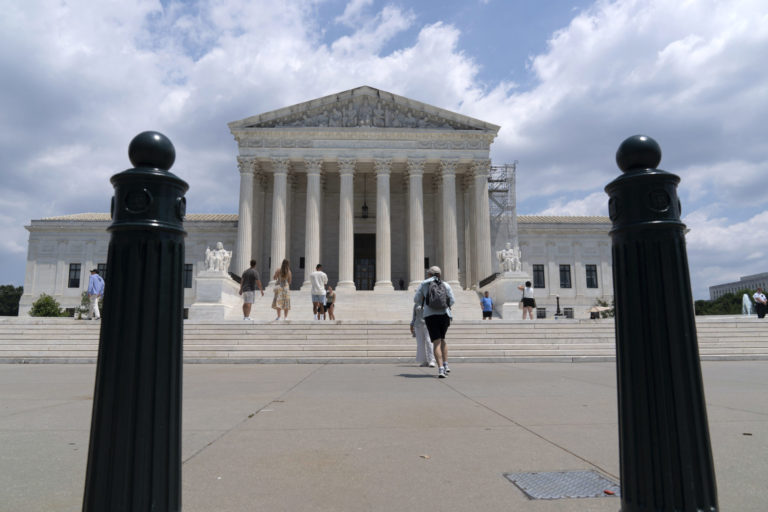
(Andrew Rice, The Center Square) The U.S. Supreme Court will head into 2026 with numerous high profile decisions to issue. Transgender athletes, birthright citizenship, presidential firing power, tariffs and redistricting are several issues that hang in the balance of the high court’s decision making.

The Center Square compiled many of the key cases that could have widespread ramifications depending on how the court rules.

Tariffs

A central focus of President Donald Trump’s economic policy – the ability to levy tariffs against foreign nations – will be tested before the nation’s highest court in Learning Resources, Inc. v. Trump.

Twelve states and five small businesses challenged Trump’s authority to impose tariffs under the 1977 International Emergency Economic Powers Act, a law that never mentions the word “tariff” and has never been used to impose tariffs. Trump argues that the law grants him emergency powers as president to act in times of crisis.

Justices on the court appeared divided over the issue during oral arguments on Nov. 5. Trump has repeatedly signified the importance of a favorable decision from the court.

“With a Victory, we have tremendous, but fair, Financial and National Security,” Trump wrote on social media. “Without it, we are virtually defenseless against other Countries who have, for years, taken advantage of us.”

Trump has levied tariffs against dozens of nations including China, India, Brazil and South Korea. In some instances, Trump has negotiated deals with other countries for less severe tariff rates.

The average tariff rate is 17%, according to the Tax Policy Center. If all of Trump’s proposed tariff rates go into effect, the rate will increase to 21%.

Redistricting

Over the last year, states across the country have made significant redistricting pushes in preparation for the 2026 midterm elections. Texas, California, North Carolina and Ohio are just a few states where redistricting efforts have thus far succeeded.

However, the Supreme Court’s decision in Louisiana v. Callais could decide the legality of state redistricting efforts. The case centers around a 2022 Louisiana Congressional districts map that created two majority-Black districts in the state.

Civil rights advocates said the case shows Louisiana’s extreme racial polarization and left Black voters with less electoral opportunity than white voters. However, after a shift in arguments, state leaders said drawing a majority-Black district diminishes white voters’ influence and makes assumptions about how people vote.

The case now goes to the heart of implied protections granted by the 14th and 15th Amendments. If the Supreme Court rules in favor of the state, a new map will have to be drawn in Louisiana, one that is not bound by section 2 of the Voting Rights Act.

Birthright Citizenship

The court will also hear a challenge to interpretations of the 14th Amendment in Trump v. Barbara, where it is expected to decide a case involving birthright citizenship.

Trump v. Barbara challenges Trump’s executive order that denies birthright citizenship to children born after Feb. 19, 2025, whose parents are either illegally present in or temporary residents of the United States.

The court could undo the understanding that birthright citizenship was granted under the 14th Amendment.

The Trump administration argues an individual’s parents must also have citizenship for their child to be considered a U.S. citizen.

“Parental status is what matters and whether they are under the protection and therefore within the allegiance of the sovereign,” said Illan Wurman, a law professor at the University of Minnesota.

The Supreme Court is expected to hear oral arguments for Trump v. Barbara in early 2026. A date has yet to be set for the case to be heard.

Transgender Athletes

The high court will also hear two consequential cases over whether transgender individuals can participate in girls and women’s sports.

Little v. Hecox, out of Idaho, and B.P.J. v. West Virginia, focuses on whether limiting participation in girls and women’s sports teams based on biological sex violates the equal protection clause of the 14th Amendment.

B.P.J. v West Virginia challenges the state’s “Save Women’s Sports Act,” which limits participation in sports based on biological sex. Challengers said the law violated Title IX discrimination protections. In Idaho, challengers are applying similar legal arguments to the state’s “Fairness in Women’s Sports Act.”

The Supreme Court will hear oral arguments in both cases on Jan. 13.

Gun Rights

After a monumental 2022 decision that expanded the right to carry guns in public, the Supreme Court is set to revisit more challenges to gun laws in the country.

The high court has agreed to decide U.S. v. Hemani and Wolford v. Lopez, two separate cases that could significantly expand access to guns in the United States.

United States v. Hemani challenges whether federal statutes barring a person who “is an unlawful user of or addicted to any controlled substance” violates the Second Amendment.

The Trump administration petitioned the high court to hear the case after a lower court struck down the law barring people who use drugs such as marijuana from possessing firearms.

Wolford v. Lopez tasks the court with deciding whether states can regulate where individuals can carry guns. A Hawaii law bans guns in places like beaches, bars and restaurants that serve alcohol, and gas stations.

The Supreme Court will hear oral arguments in Wolford v. Lopez on Jan. 20.

Presidential Firing Power

One case many legal minds and individuals in Washington, D.C., are keeping a close eye on is Trump v. Slaughter, a case determining whether the president has authority to fire members of federal executive boards.

If the court upholds the president’s authority, it could undo an almost 90-year-old precedent that prevented President Franklin Delano Roosevelt from firing members of federal boards like the FTC.

The court allowed Trump to fire Rebecca Slaughter, a commissioner on the FTC. This decision came after years of court cases widening the president’s authority to fire members of federal boards.

“The court said that where a multi-member commission exercises substantial executive power, the president has the plenary power to remove that official,” said Kannon Shanmugam, a Supreme Court and appellate litigator.

The Supreme Court heard oral arguments in Trump v. Slaughter Dec. 8 and will issue a decision by July.

Climate Change Lawsuits

The high court’s first oral arguments of 2026 will be in Chevron Inc., v. Plaquemines Parish, a case that questions to what extent a state court can litigate against an oil company for its production of oil even if it obtained federal permits to produce the oil. A Plaquemines Parish jury in April ordered Chevron to pay $744 million in damages for its role in the degradation of the state’s coastal wetlands.

O.H. Skinner, executive director of Alliance for Consumers, told the Center Square these types of cases seek to score large settlements from the energy industry and stop oil production.

“The case arises from a broader campaign of woke lawfare in which activists and municipal governments seek to use courtrooms to determine what companies are allowed to produce and what consumers can buy,” Skinner said.

As the year changes to 2026, these significant cases and many more will be decided through the remainder of the Supreme Court’s consequential term.