Despite Lack of Federal Indictment, Jan. 5/6 Pipe Bomb Suspect to Remain in Jail

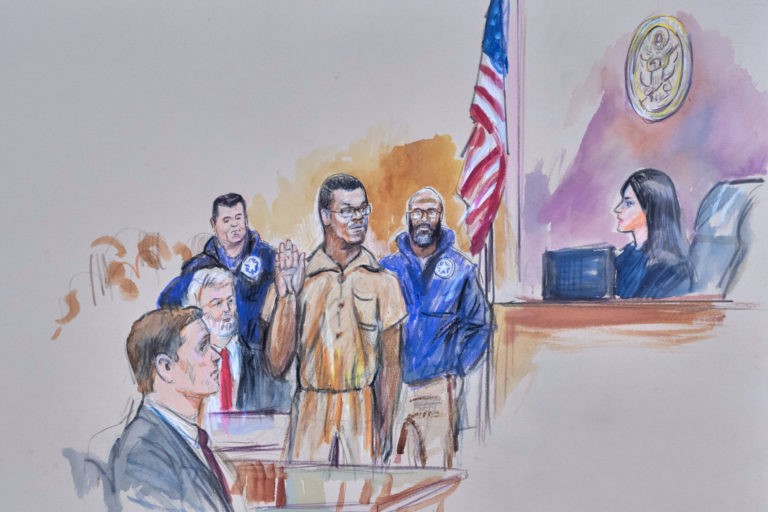
(Ken Silva, Headline USA) US District Judge Matthew Sharbaugh ruled Friday that Brian Cole Jr., who’s accused of planting two pipe bombs near the RNC and DNC headquarters the night before the Jan. 6, 2021, Capitol Hill protest, is to remain in jail—despite the fact that Cole has not been federally indicted.

Judge Sharbaugh’s decision stems from a controversy over the fact that the FBI arrested Cole on Dec. 4, but prosecutors didn’t secure an indictment before the DC federal grand jury closed for the holidays starting on Dec. 19.

Cole had a detention hearing on Tuesday. The day before, the Justice Department indicted Cole in the local DC Superior Court. But Cole’s lawyers said the local indictment was invalid because it circumvented the federal grand jury process. The lawyers argued that their client be released as a result.

Judge Sharbaugh denied their request on Friday. Despite the lack of federal indictment, probable cause still exists to keep Cole detained, he said.

“The facts proffered to the Court in connection with the detention hearing, including the government’s description of Mr. Cole’s own reported statements to law enforcement during his post-arrest interview, provide an ample basis to conclude, at least for present purposes, that there is probable cause to believe Mr. Cole … maliciously attempted to damage or destroy, by means of fire and explosive materials, real or personal property affecting interstate commerce (namely, the DNC and RNC headquarters),” the judge’s order said.

Meanwhile, the federal grand jury is set to reopen this Tuesday, and prosecutors have indicated that they will present the Cole case for indictment that day.

Cole is set to have a status hearing next Friday.

Cole was arrested on the morning of Dec. 4 at his Woodbridge, Virginia, house in what law enforcement officials described as a major breakthrough in their nearly five-year-old investigation. During a search of Cole’s home and car after his arrest, prosecutors say, investigators found shopping bags of bomb-making components. He at first denied having manufactured or placed the pipe bombs, but later confessed during an hour-long interview.

At Tuesday’s detention hearing, prosecutors urged the judge to keep Cole confined as he awaits trial. They said he’s a danger to the community, given his interest in explosives. Cole allegedly wiped his phone of data 934 times, showing that he has a pattern of hiding and destroying evidence, they added.

Cole’s attorneys begged to differ. They said he’s autistic and has OCD, and that the devices he allegedly built were duds. The defense lawyers said they have an expert witness who will testify that the so-called bombs “cannot explode and are not viable.”

Pipe Bomb Case History

As Headline USA revealed in March 2024, the FBI had a suspect identified by Jan. 10, 2021 in the pipe bomb case, but didn’t make an arrest at the time.

FBI records released in September revealed that agents didn’t interview the woman who discovered a pipe bomb near the RNC around 12:40 p.m. on Jan. 6 until days later. That woman, former counterterrorism analyst and then-Commerce Department worker Karlin Younger, said she found the bomb while doing laundry.

Meanwhile, former Vice President Kamala Harris continues to be tight-lipped on the subject, despite the fact that her motorcade drove past the DNC pipe bomb on Jan. 6. Harris left the Capitol at 11:21 a.m. arrived to the DNC at 11:25 a.m., but the nearby pipe bomb wasn’t discovered until 1:07 p.m. by a plainclothes Capitol Police officer.

The bizarre circumstances have driven many to suspect that it may have been a false-flag attempt overseen by the feds themselves to divert law enforcement from the Capitol right as the Jan. 6 protest was turning violent.

Rep. Morgan Griffith, R-Va., has said that it may be impossible to successfully prosecute the pipe bomber.

“Here’s what a good criminal defense attorney’s going to say: If you identified the individual who’s believed to place the bomb, then hours go by, and you had a search by the Secret Service at the DNC and the dog didn’t find the explosive—so clearly, the device [the defense attorney’s] client might have left there wasn’t the device that was determined to be the pipe bomb, because it wasn’t picked up by the bomb-sniffing dog,” Griffith argued in March 2024.

Ken Silva is the editor of Headline USA. Follow him at x.com/jd_cashless.
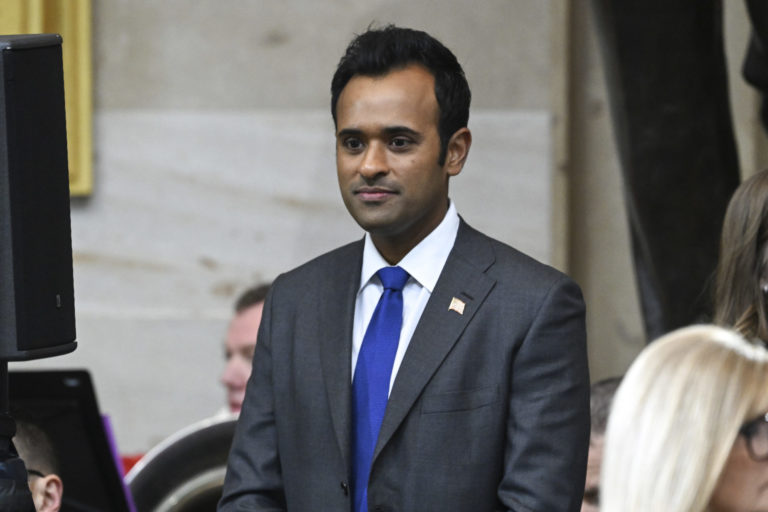
Lawsuit Accuses Vivek Ramaswamy of Shady Business Practices

(José Niño, Headline USA) A federal lawsuit filed in district court alleges that executives at Strive Asset Management, the investment firm founded by Vivek Ramaswamy, pressured a female employee to engage in conduct she believed would violate securities law, retaliated when she refused, and ultimately terminated her employment after she declined an alleged sexual relationship with a senior executive.

According to court documents, the employee was allegedly coerced into using sales materials that “improperly promised future investment returns” and instructed to begin selling products before obtaining mandatory securities licenses.

The filing further alleges that both Ramaswamy and company co-founder Anson Frericks “unlawfully engaged in securities sales activities despite the fact that neither has a securities license,” with Ramaswamy specifically accused of conducting improper securities marketing through his Twitter account.

Per a report by Allen Analysis, the complaint further contends that Strive used social media platforms as vehicles to market investment products in ways the plaintiff believed constituted unlawful securities solicitation, including impermissible performance representations.

These accusations represent more than isolated incidents. Forbes reported that two previous employees filed remarkably similar lawsuits in 2023. Joyce Rosely, formerly co-head of institutional sales, filed in New Jersey courts last August, while John Phillips brought his case in Kansas that June. Both accused Ramaswamy and Frericks of aggressively pushing workers to violate securities law while misrepresenting the company’s financial condition.

Christopher Lenzo, attorney for Rosely, characterized the operation bluntly: “Strive was founded, in retrospect, largely as a PR mechanism for the presidential campaign of Ramaswamy. Not a lot of thought was given to running it as an investment firm,” according to InvestmentNews.

The legal troubles extend beyond employment disputes. A separate federal RICO lawsuit filed in Georgia’s Northern District names Ramaswamy as part of an alleged network of investors who participated in a coordinated scheme to sabotage competitor GloriFi, steal its intellectual property, and replicate its business model through Strive.

That complaint alleges an organized effort to seize or neutralize a company after defendants reviewed confidential materials under non-disclosure agreements.

Strive reportedly declined to comment.

“Strive intends to vigorously defend itself,” the company told Yahoo News. “Beyond that, it is our policy not to comment on active litigation.”

José Niño is the deputy editor of Headline USA. Follow him at x.com/JoseAlNino 


U.S. House Contests to Decide Control of Congress in 2026

(The Center Square) The 2026 midterm elections promise to bring fierce competition as Democrats and Republicans battle for control of Congress.

All 435 seats in the U.S. House of Representatives are up for election in 2026. However, analysts predict only 66 have at least a slight chance of becoming close races.

The U.S. House of Representatives is currently split 220-213 in favor of Republicans, with two vacancies.

The Cook Political Report rates 17 of the 66 races as being true political toss-ups. These include competitions in Arizona, California, Pennsylvania and Washington.

The general Midterm election is Nov. 3, 2026.

Here is a look at some of those competitions before primary elections.

Arizona

The first Congressional district in Arizona is shaping up to be a competitive race in 2026, with incumbent Republican Rep. David Schweikert running for governor.

A crowded field has emerged from those looking to fill Schweikert’s seat. Schweikert narrowly defeated Democrat Amish Shah in 2024 by a margin of about 16,500 votes, just under 4%.

Shah is running for the Congressional seat again, alongside 23 other candidates who expressed interest in running for the seat. An expression of interest is not a formal declaration of candidacy and does not mean a candidate will appear on the ballot for a particular election.

Gina Swoboda, chair of Arizona’s Republican Party, also filed an expression of interest in the congressional race. Swoboda earned an endorsement from President Donald Trump when she entered the race.

“I am deeply honored to have the endorsement of President Trump as we embark on a campaign that will be centered around the common-sense conservative principles of economic growth and prosperity, strong and secure borders, and protecting taxpayers,” Swoboda wrote in a statement.

Arizona faces another competitive race as incumbent Republican Rep. Juan Ciscomani looks to retain his seat in District 6. Nine Democrats have filed statements of interest to challenge Ciscomani for the seat. In 2024, the district went for Trump as president and Democrat Ruben Gallego for U.S. Senate.

Arizona’s primary election is Aug. 4.

California

Following the passage of Proposition 50, several candidates are vulnerable to toss-up races in California. Congressional District 13 was already seen as a swing district before approval of the redistricting measure.

In 2024, Democrat Rep. Adam Gray was elected to Congress by a margin of less than 200 votes, unseating Republican John Duarte.

Kevin Lincoln II, a Republican and former mayor of Stockton, Calif., is also running in District 13 after switching from a run in District 9 due to the passage of Proposition 50. Lincoln has received endorsements from Trump and U.S. House Speaker Mike Johnson.

In the 2024 election, Lincoln lost to incumbent Democrat Josh Harder in California’s 9th Congressional District.

District 22 in California will see incumbent Republican David Valadao trying to retain the seat after the passage of Proposition 50. Democrats Jasmeet Bains, a state assemblywoman, and Randy Villegas, a school board trustee, have announced their candidacy in the area.

“I will fight for my community every day, and work with anyone, to ensure that economic opportunity reaches every part of our community, and that families have access to the essential government programs that keep children fed and healthcare accessible,” Villegas said.

California’s 48th Congressional district will also see incumbent U.S. Rep. David Issa, a Republican, face a slew of Democratic challengers for control of the redrawn district.

Ammar Campa-Najjar, a Democrat who lost to Issa in 2020, is running again.

“Ammar is uniquely positioned to flip this must-win seat from red to blue,” his campaign website reads.

California’s primary election is June 2.

Pennsylvania

Districts 7 and 10 in Pennsylvania are likely to see fierce competition between Democrats and Republicans in 2026.

In 2024, Republican Ryan Mackenzie flipped the seat red. Pennsylvania Gov. Josh Shapiro endorsed firefighter union head Bob Brooks, a Democrat.

“Ryan is keeping his promise to the people of the 7th Congressional District by supporting policies that grow our economy, protect taxpayers, address affordability, address illegal immigration, improve our nation’s safety, and preserve services for those who truly need them,” Mackenzie’s website reads.

District 10 will also see incumbent Republican Rep. Scott Perry defending his seat. Perry first won election to Congress in 2018. Perry narrowly defeated Democrat Janelle Stelson in 2024, retaining the seat.

Stelson is running again for the seat in Pennsylvania’s 10th district.

Pennsylvania’s primary is May 19.

Washington

In Washington’s third congressional district, Republican John Braun is looking to challenge incumbent Democrat Rep. Marie Gluesenkamp Perez.

Perez first won the seat in 2022, after defeating Republican Joe Kent. She again defeated Kent in 2024.

Braun is a fourth-term state senator and Senate minority leader in Washington.

Washington’s primary election is Aug. 4.

First Negotiated Medicare Drug Prices Go Into Effect Jan. 1

(The Center Square) Negotiated lower Medicare costs for 10 popular prescription drugs went into effect Thursday.

How much those savings will be passed on to Medicare Part D and applicable Advantage plan enrollees is unclear, however, as drug pricing and reimbursement is notoriously complex and opaque, though lawmakers have pushed for more transparency in recent years.

In 2022, the Inflation Reduction Act authorized and required Health and Human Services for the first time to negotiate the maximum price drug manufacturers can charge Medicare plans for 10 popular drugs each year, starting in 2026.

Earlier in 2025, the Centers for Medicare and Medicaid Services announced its first set of Medicare-negotiated “maximum fair prices” for 10 selected drugs, with negotiated prices ranging from 38% to 79% below their list prices. A drug’s list price is the manufacturer’s sticker price, though it is rarely what insurers or patients actually pay and is mainly used as a starting point for negotiations.

Those drugs are Eliquis, Enbrel, Entresto, Farxiga, Imbruvica, Januvia, Jardiance, NovoLog/Fiasp, Stelara and Xarelto, and they’re used to prevent blood clots or treat diabetes, autoimmune diseases, blood cancers and heart failure.

The 2023 list price for the blood thinner Eliquis, by far the most popular of the negotiated drugs with close to 4 million Part D enrollees having used the drug that year, was $521 for a 30-day supply. Starting Thursday, the maximum its maker Bristol Myers Squibb can charge is $231, a 56% reduction from the list price, for the applicable Medicare plans.

Of the negotiated drugs, Januvia, which is used to treat diabetes, saw the greatest reduction in its list price, dropping from $527 to $113 for a month’s supply.

The list prices for Fiasp and Novolog, insulins manufactured by Danish pharmaceutical company Novo Nordisk, were slashed 76%, from $495 to $119 per month.

Imbruvica, which was used by 17,000 Part D enrollees in 2023 to treat certain blood cancers, was reduced the least, from $14,934 to $9,319 per month, or 38%.

Any savings for Part D and Advantage enrollees depend largely on which plan they’re enrolled in, as not all plans are the same. Private insurers like Aetna, Blue Cross Blue Shield and Humana offer different Part D and Advantage plans, with varying levels of coverage. Advantage plans that include prescription drug coverage and all Part D plans are required by law to cover the 10 negotiated drugs for as long as they remain in the program.

The Medicare Drug Price Negotiation Program was created to reduce Medicare spending on prescription drugs and enhance the program’s long-term sustainability.

WATCH: TCS Investigating Potential Child Care Center Fraud in WA

(The Center Square) Daycare centers that receive hundreds of thousands in taxpayer subsides did not appear to have any children when The Center Square visited the facilities this week and were either openly hostile or told journalists that they were hoping to have children in their care, but did not have an application available or anyone to talk with about enrolling a child.

The focus on Washington’s taxpayer subsidized daycares comes at the time federal authorities are conducting what they call a “massive” investigation into fraud in Somali-run facilities in Minnesota.

According to fiscal.wa.gov, a home-based daycare on 6th Avenue SW called Eyow Childcare Inc., received $158,931 in taxpayer subsidies and grants from July to November of 2025.

When The Center Square returned to that home for a second time on Tuesday, the homeowner immediately called police, and was videotaped as she refused to respond to questions posed by independent journalist Jonathan Choe.

Three Federal Way Police officers arrived within seconds but told the woman reporters were allowed to be on the sidewalk and urged her “to calm down.”

An officer did enter the home and indicated there were three children in the home but did not verify if those children were daycare attendants.

Brightstar Early Learning on S. 317th received $141,686 in taxpayer subsidies from July to November of 2025.

When The Center Square stopped by on Monday, a woman refused to answer questions about whether or not there is a daycare inside.

“What are you looking for?” she asked.

 “Do you have a daycare here?” asked TCS.

“What are you looking for?” the woman again asked.

Do you have children that you take care of here?” we asked again.

That’s when the woman pulled out her iPhone and began filming The Center Square.

“Do you have a daycare that operates here?”

“I don’t have to answer. Where do you come from?” she said, before closing and locking the front door.

Another Federal Way daycare called Wonder Kidz located on 19th Ave. S. received $258,199 between July and November 2025.

The Center Square did not visit that home.

Other locations not visited by The Center Square that have received much larger taxpayer contributions include include the Asal Family Daycare in Seattle’s Rainier Beach neighborhood receiving more than $690,000 in subsidies and grants in the five months from July to November this year.

People who answered the door at a Federal Way home on SW 326th on Tuesday called Halimo Daycare said they currently had no children but were hoping to get some soon.

A Facebook post from the city of Federal Way shows an Oct. 29, 2025, ribbon cutting ceremony for the daycare, indicating it was one of three newly opening centers receiving grant funding.

“The City of Federal Way provided funds to Imagine Institute, a national organization that works with the Department of Children, Youth and Families (DCYF) in the State of Washington, to provide training and resources to help potential childcare providers open spaces in cities like Federal Way,” wrote Federal Way Communications Manager Ben Miller via email.

“The total contract was worth $80,000 and signed in 2024. The majority of the funds provided 480 hours of training to three different childcare providers in our city that included hands-on learning and mentorship.”

Miller indicated some of the money was also used to buy materials and furniture.

He said it was one time funding, but did not respond to further questions about the expected operational date for the center.

Of the 25 home-based daycare providers within a one-mile radius in Federal Way, 12 of the providers listed on Child Care Aware of Washington are identified as Somali and accept multiple state subsidies.

The Center Square spoke with Washington State Republican Party Chair and state Rep. Jim Walsh, R-Aberdeen, about the potential fraud allegations and how state lawmakers may respond.

“The far left has been using childcare as a focus-group talking point for the last few years,” he said indicated it “ends up being a grift. And when they talk about wanting to support childcare, this is something that clearly resonates with people. But they have treated it like a grifting enterprise similar to the carbon tax, where money allocated for a good purpose, in this case, subsidizing childcare for working families, ends up not actually doing what it purports to do.”

Walsh said the full picture of potential fraud in Washington isn’t yet known, but he noted parallels to what has been happening in Minnesota.

“The story is still emerging here in Washington, but there are structural similarities. So it may be a little premature to say that the depth and breadth of the grift here is as bad as Minnesota, but it’s troubling,” he said.

Other independent journalists, including Cam Higby and Kristen Magnuson, are also working to uncover potential fraud. Posts on X and Facebook regarding the issue, along with comments, indicate a desire for any misuse of taxpayer funds to be exposed.

Some comments on The Center Square posts on X have suggested that the daycares visited were empty due to the holiday period, while another daycare provider told TCS they are extra busy during the two-week holiday period because many parents are still working, but schools are closed.

Walsh said the legislative solution to ending this type of potential fraud is simple.

“The solution would be to require the same kind of reporting by non-governmental organizations that political campaigns have to make currently through the PDC, or Public Disclosure Commission,” Walsh said. “So, if an NGO is receiving money from a state agency, often the State Department of Commerce or other agencies, if they are receiving grant money from these state bureaucratic agencies, they have to make the same disclosures that a political campaign has to make about how it brings in money and how it spends money.”

The Department of Children, Youth & Families, which distributes funding for childcare subsidies to providers, told The Center Square that it would investigate any of the questionable locations TCS visited this week.

“I am working to gather how much has been provided for child care subsidies,” DCYF Director of External Communications Nancy Guitierrez told The Center Square.

She pointed out a website where information on subsidy participation is noted for each daycare, though the subsidies they are receiving are not indicated.

DCYF put out a news release on Wednesday regarding media coverage that states, in part, “The safety of children and the people caring for them is a top priority for DCYF. Video recording in public spaces is not illegal, however, if an interaction appears threatening in nature or puts children at risk, please call law enforcement.”

State Department Investigated Would-be Trump Assassin before His Attack

(Ken Silva, Headline USA) The State Department released records about Ryan Routh on Wednesday, showing that he was under investigation prior to his Sept. 15, 2024, assassination attempt against Donald Trump.

As has been widely reported, Routh went to Ukraine shortly after Russia invaded in early 2022, and he worked on recruiting foreign fighters—including Afghans and Syrians—to the Ukrainian warfighting effort. Routh was reported to numerous government agencies, including the State Department, over his activities.

The State Department documents released Wednesday include a Nov. 7, 2023, email from its Political-Military Unit Chief in the Kyiv Embassy, asking a research librarian for a copy of a March 2023 New York Times article detailing Routh’s efforts. The librarian responded the same day with a copy of the article, in which Routh reportedly told the Times that he “planned to move [Afghan soldiers], in some cases illegally, from Pakistan and Iran to Ukraine.”

It’s not clear what the Political-Military Unit Chief did with that article. The next State Department email related to the Routh investigation didn’t come until more than nine months later, when another department official asked for a “Clearance Request: Directed Disclosure letter for Ryan Routh” on Aug. 27, 2024. That email is entirely redacted, again making it unclear what exactly the department was investigating.

When Routh tried killing Trump less than three weeks later—a Secret Service agent spotted him in the bushes with a rifle at Trump’s Palm Beach golf course—an apparent State Department security contractor expressed what many online observers were thinking: Was Routh a government asset?

“Nothing says ‘groomed by the Feds’ as a nut that is repeatedly ‘not jailed’ for serious crimes and is an avid ‘ActBlue’ donor,” said a State Department Worldwide Protective Service security specialist, whose name is redacted—referring to Routh’s criminal history and his donations to the pro-Democrat Political Action Committee. “I wonder if Vegas has odds on him committing Arkancide in jail?”

Additionally, the State Department responded to the assassination attempt by circulating an email with the subject line “Summary of DTCC Investigation of Ryan Routh.” Yet again, the entire body of the email is redacted.

DTCC is the acronym for Directorate of Defense Trade Controls, which investigates violations of the Arms Export Control Act and the International Traffic in Arms Regulations.

According to that agency’s website, “When DTCC identifies potential criminal violations of the AECA and ITAR, the office works closely with law enforcement to respond. In particular, DTCC has close working relationships with Homeland Security Investigations (part of the Department of Homeland Security) and the Federal Bureau of Investigation.”

While it’s unclear what Routh was specifically being investigated for, the Wall Street Journal reported in September 2024 that he was first reported to Customs and Border Protection in June 2022, and then the State Department, FBI and Interpol in 2023.

Chelsea Walsh, a nurse who knew Routh in Ukraine, first reported him to CBP in 2022. She again reported him to the FBI and Interpol in 2023, after she heard that was attempting to recruit Syrian refugees to fight in Ukraine.

However, those reports may not have been the impetus for an investigation. Routh himself wrote to the State Department in October 2023, seeking to collaborate on his efforts to recruit foreign fighters.

“Dear Bridget Brink, I, Ryan Routh, would like to respectfully ask why we cannot work one on one to pursue the Afghan soldier project?” Routh wrote to Brink, the U.S. ambassador to Ukraine at the time.

According to Just the News, CBP interviewed Routh when he retured to the U.S. from a trip in 2023. Routh told agents that he had been recruiting as many as 100 foreign fighters from Taiwan, Afghanistan and Moldova to join Ukraine’s war against Russia. Routh was then referred to the DHS’s investigatory arm, Homeland Security Investigations, but no further action was taken.

In September 2024, HSI Director Katrina Berger defended her agency’s decision to ignore Routh.

“Based on information I read, there wouldn’t be any reason to take him immediately into custody. He didn’t make threats to the President or the former President, for instance,” she said at a congressional hearing.

Routh was convicted in September of trying to kill Trump. He faces sentencing in February.

Ken Silva is the editor of Headline USA. Follow him at x.com/jd_cashless.
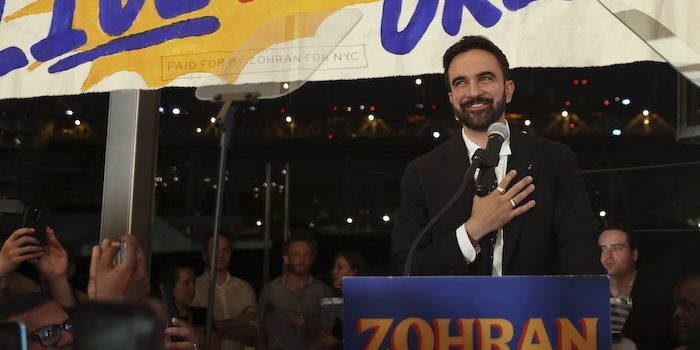
NYC Mayor Zohran Mamdani Sworn In On a Quran

(Headline USAIncoming Mayor Zohran Mamdani took his midnight oath of office on a centuries-old Quran, marking the first time a mayor of New York City uses Islam’s holy text to be sworn in and underscoring a series of historic firsts for the city.

The 34-year-old Democrat became mayor in a long-closed subway station beneath City Hall, the first Muslim, first South Asian and first African-born person to hold that position.

These milestones — as well as the historical Quran — reflect the changing demographics the nation’s most populous city. Most of Mamdani’s predecessors were sworn in on a Bible, although the oath to uphold the federal, state and city constitutions does not require the use of any religious text.

And while he has focused heavily on the issue of affordability during his campaign, Mamdani was outspoken about his Muslim faith. He frequently appeared at mosques across the five boroughs as he built a base of support that included many first-time South Asian and Muslim voters.

The decision to use a Quran has drawn fresh criticism from some conservatives. U.S. Sen. Tommy Tuberville of Alabama wrote on social media, “The enemy is inside the gates,” in response to a news article about Mamdani’s inauguration.

Following the inauguration, the Quran will go on public display at the New York Public Library

Adapted from reporting by the Associated Press


DOJ Sues Virginia Over Tuition for Illegal Immigrants

(The Center Square) The U.S. Department of Justice filed a lawsuit this week against Virginia, alleging the state unlawfully grants in-state college tuition rates to students who are not legally present in the United States.

The government is seeking a permanent injunction against certain provisions of the Virginia Education Code, which it claims conflict with federal immigration law.

The DOJ argues this policy allows illegal immigrants to access benefits denied to many U.S. citizens, calling the practice “not only wrong but illegal”.

“Federal law prohibits States from providing aliens who are not lawfully present in the United States with any postsecondary education benefit that is denied to U.S. citizens,” the lawsuit states. “There are no exceptions. Virginia violates it nonetheless.”

Congress passed the Illegal Immigration Reform and Immigrant Responsibility Act in 1996. According to the suit, the law was intended “to promote immigrant self-sufficiency, reduce immigrant reliance on public assistance, and ensure that public benefits are not incentives to enter illegally.”

“This Department of Justice will not tolerate American students being treated like second-class citizens in their own country,” Attorney General Pamela Bondi said in a press release. 

Under the current classification, illegal immigrants can pay nearly $40,000 less than Americans who reside in another state, the lawsuit states.

For example, in the 2025-2026 school year, the University of Virginia charged in-state students $23,897 in undergraduate tuition, while out-of-state students paid $62,923, according to U.S. News & World Report.

The lawsuit is part of a broader effort by the Trump administration to challenge state laws that allow individuals without legal status to receive in-state tuition benefits.

In February, President Donald Trump signed an executive order directing federal agencies to ensure that “no taxpayer-funded benefits go to unqualified aliens.”

The order also called on agencies to prevent states from using public funds to subsidize individuals without legal status and to avoid policies that interfere with deportation efforts.

“Virginia permits unlawfully present aliens who satisfy the statute’s criteria to receive in-state tuition rates, while denying that same benefit to United States citizens who reside outside the Commonwealth,” the lawsuit states.

The lawsuit was filed in the U.S. District Court for the Eastern District of Virginia, Richmond Division.

Oversight Committee Calls Walz to Testify on Suspected Minnesota Fraud

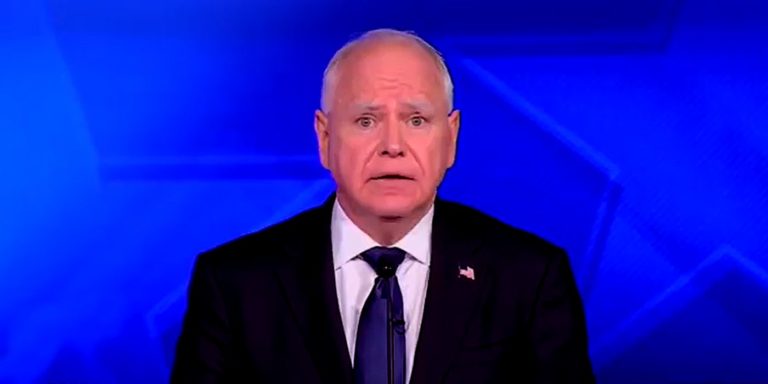
(The Center Square) The U.S. House Oversight Committee called on Democratic Minnesota Gov. Tim Walz to testify regarding alleged fraud throughout the state.

Oversight Committee Chair Rep. James Comer, R-Ky., called on Walz and Minnesota Attorney General Keith Ellison to testify at a hearing scheduled for Feb. 10.

“American taxpayers demand and deserve accountability for the theft of their hard-earned money,” Comer said. “Congress has a duty to conduct rigorous oversight of this heist and enact stronger safeguards to prevent fraud in taxpayer-funded programs, as well as strong sanctions to hold offenders accountable.”

Fraud allegations first surfaced in November when reports stated millions of taxpayers’ dollars were stolen from the state’s welfare system and sent to a Somali-based terror group.

The allegations intensified last week when independent journalist Nick Shirley posted a video that claimed to reveal $110 million in fraud at Minnesota child care centers.

The committee will also convene a hearing Jan. 7 with Minnesota Reps. Kristin Robbins, Walter Hudson and Marion Rarick – Republicans in the state House of Representatives.

Comer said these state lawmakers issued warnings about the alleged fraud in Minnesota but were ignored by the Walz administration.

“Minnesota Governor Tim Walz and Attorney General Keith Ellison have either been asleep at the wheel or complicit in a massive fraud involving taxpayer dollars in Minnesota’s social services programs,” Comer said. “American taxpayers demand and deserve accountability for the theft of their hard-earned money.”

The U.S. Department of Health and Human Services announced Tuesday that it has frozen the sending of taxpayer dollars to Minnesota day care centers. The department sends $185 million each year to child care centers in Minnesota.

“This misconduct cannot be swept aside, and Congress will not stop until taxpayers get the answers and accountability they deserve,” said Comer.

North Korea Tests Nuclear-Capable Cruise Missile

(Kyle Anzalone, Libertarian Institute) North Korea’s state media announced that Supreme Leader Kim Jong Un oversaw the test of a strategic, long-range cruise missile. 

“A long-range strategic cruise missile launching drill was staged in the West Sea of Korea on December 28,” a statement published by KCNA on Monday said. “The launching drill was aimed at checking the counter-offensive response posture and combat capability of long-range missile sub-units, making missile soldiers well versed in maneuver and procedures of fulfilling firing missions and inspecting the reliability of the relevant strategic weapon system.”

The outlet added that Kim Jong Un attended the drill. He said the test launch was “practical verification and clear demonstration of the absolute reliability and combat readiness of our strategic counterattack capability.”

While President Donald Trump has made some offers to meet with Kim, Pyongyang says it is unwilling to engage in talks unless Washington drops its demand for denuclearization. US officials have restated Washington’s long-standing position that any deal with Pyongyang requires North Korea to give up its nuclear weapons. 

Pyongyang said its unwillingness to denuclearize is a result of Washington’s aggressive policy. Since Trump returned to office, the US has redeployed fighter jets closer to the DMZ and conducted joint strategic war games with Japan and South Korea.

This article originally appeared at The Libertarian Institute.