Pro-Maduro Protestors in NYC Got $20 Million from Big-Tech Plutocrat

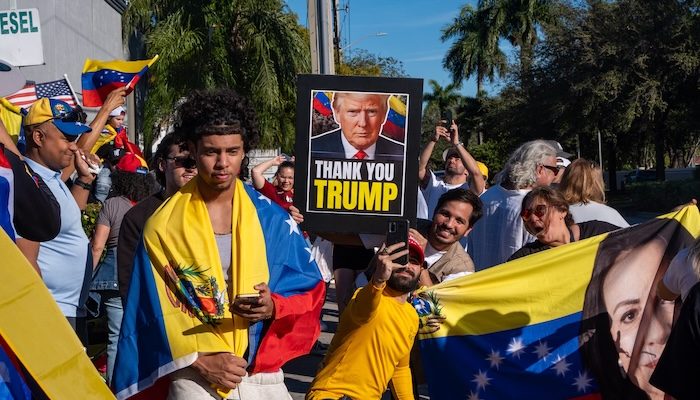
(Ben Sellers, Headline USA) Between the Soviet-style “block party” during the inauguration of New York Mayor Zohran Mamdani and the Times Square protests opposing the arrest of Venezuelan dictator Nicolas Maduro, it may seem to some as if the Big Apple is on the verge of a socialist revolution.

But investigative journalists have revealed the Marxist upswell to be more astroturfed than organic, with a large infusion of cash coming from a former Silicon Valley tech-bro.

Within 10 minutes of the arrival of U.S. special forces in Venezuela early Saturday morning, a Marxist propaganda outfit had published images of the bombing, according to a Fox News analysis.

It was promptly reposted at 1:35 a.m. by Manolo De Los Santos, the executive director of the New York-based activist group The People’s Forum.

Less than an hour later, word had spread of an “emergency day of action” planned for the very same afternoon, giving the organizers less than 12 hours to prepare and promote the protest.

Fortunately for them, much of the infrastructure already was in place, courtesy of benefactors like Neville Roy Singham.

Singham, who founded the IT consulting firm Thoughtworks, sold the company in 2017 for $785 million, according to an investigation by the Free Press. That same year, he became the primary funder of The People’s Forum.

The group has maintained a regular presence at far-left pop-up protests, including pro-Hamas protests in the aftermath of the terrorist group’s Oct. 7, 2023 massacre of some 1,200 Israeli residents.

Additionally, Singham’s wife, Jodie Evans, is cofounder of the leftist group Code Pink.

Investigations — including one by the House China Committee — have linked the Shanghai-based power couple to organized efforts by the CCP to sow chaos and push propaganda in the U.S.

“China is teaching the West that the world is better off with a dual system of both free-market adjustments and long-term planning,” Singham said in a 2008 Fortune magazine profile, in which he also praised Venezuela under former dictator Hugo Chavez as a “phenomenally democratic place.”

According to a 2025 investigation by the House Ways and Means Committee, The People’s Forum has received more than $20 million from Singham between 2017 and 2022, raising questions about its compliance with the Foreign Agents Registration Act.

“Using tax-exempt status to spread foreign propaganda while acting as a foreign agent is unacceptable and illegal,” committee chairman Jason Smith wrote in a letter to De Los Santos.

“The evidence presented in this letter makes it abundantly clear that The People’s Forum has been directly funded, as you admit, and influenced by Mr. Singham’s CCP affiliations,” Smith added.

During Saturday’s Times Square protest, independent YouTube journalist Nate Friedman confronted De Los Santos about his multimillionaire benefactor but was promptly ignored.

Ben Sellers is a freelance writer and former editor of Headline USA. Follow him at x.com/realbensellers.

Maduro’s Case to Revive a Debate Over Immunity for Foreign Leaders Tested in Noriega Trial

(Headline USAWhen deposed Venezuelan leader Nicolás Maduro makes his first appearance in a New York courtroom Monday to face U.S. drug charges, he will likely follow the path taken by another Latin American strongman toppled by U.S. forces: Panama’s Manuel Noriega.

Maduro was captured Saturday, 36 years to the day after Noriega was removed by American forces. And as was the case with the Panamanian leader, lawyers for Maduro are expected to contest the legality of his arrest, arguing that he is immune from prosecution as a sovereign head of foreign state, which is a bedrock principle of international and U.S. law.

It’s an argument that is unlikely to succeed and was largely settled as a matter of law in Noriega’s trial, legal experts said. Although Trump’s ordering of the operation in Venezuela raises constitutional concerns because it wasn’t authorized by Congress, now that Maduro is in the U.S., courts will likely bless his prosecution because, like Noriega, the U.S. doesn’t recognize him as Venezuela’s legitimate leader.

“There’s no claim to sovereign immunity if we don’t recognize him as head of state,” said Dick Gregorie, a retired federal prosecutor who indicted Noriega and later went on to investigate corruption inside Maduro’s government. “Several U.S. administrations, both Republican and Democrat, have called his election fraudulent and withheld U.S. recognition. Sadly, for Maduro, it means he’s stuck with it.”

Noriega died in 2017 after nearly three decades in prison, first in the U.S., then France and finally Panama. In his first trial, his lawyers argued that his arrest as a result of a U.S. invasion was so “shocking to the conscience” that it rendered the government’s case an illegal violation of his due process rights.

Justice Department opinion allows ‘forcible abductions’ abroad

In ordering Noriega’s removal, the White House relied on a 1989 legal opinion by then-Assistant Attorney General Bill Barr, issued six months before the invasion. That opinion said the U.N. Charter’s prohibition on the use of force in international relations does not bar the U.S. from carrying out “forcible abductions” abroad to enforce domestic laws.

Supreme Court decisions dating to the 1800s also have upheld America’s jurisdiction to prosecute foreigners regardless of whether their presence in the United States was lawfully secured.

Barr’s opinion is likely to feature in Maduro’s prosecution as well, experts said.

Drawing parallels to the Noriega case, Barr on Sunday pushed aside criticisms that the U.S. was pursuing a change of government in Venezuela instead of enforcing domestic laws. As attorney general during the first Trump administration, Barr oversaw Maduro’s indictment.

“Going after them and dismantling them inherently involves regime change,” Barr said in a “Fox News Sunday” interview. “The object here is not just to get Maduro. We indicted a whole slew of his lieutenants. It’s to clean that place out of this criminal organization.”

Key differences between Noriega and Maduro in court

There are differences between the two cases.

Noriega never held the title of president during his six-year de facto rule, leaving a string of puppets to fill that role. By contrast, Maduro claims to have won a popular mandate three times. Although the results of his 2024 reelection are disputed, a number of governments — China, Russia and Egypt among them — recognized his victory.

“Before you ever get to guilt or innocence, there are serious questions about whether a U.S. court can proceed at all,” said David Oscar Markus, a defense lawyer in Miami who has handled several high-profile criminal cases, including some involving Venezuela. “Maduro has a much stronger sovereign immunity defense than did Noriega, who was not actually the sitting president of Panama at the time.”

For U.S. courts, however, the only opinion that matters is that of the State Department, which considers Maduro a fugitive and has for months been offering a $50 million reward for his arrest.

The first Trump administration closed the U.S. Embassy in Caracas, the capital of Venezuela, and broke diplomatic relations with Maduro’s government in 2019 after he cruised to reelection by outlawing most rival candidates. The administration then recognized the opposition head of the National Assembly as the country’s legitimate leader.

The Biden administration mostly stuck to that policy, allowing an opposition-appointed board to run Citgo, a subsidiary of Venezuela’s state-owned oil company, even as the U.S. engaged in direct talks with Maduro’s government that were aimed at paving the way for free elections.

“Courts are so deferential to the executive in matters of foreign policy that I find it difficult for the judiciary to engage in this sort of hairsplitting,” said Clark Neily, a senior vice president for criminal justice at the Cato Institute in Washington.

US sanctions are a hurdle for Maduro’s defense

Another challenge that Maduro faces is hiring a lawyer. He and his wife, Cilia Flores, who also was captured, have been under U.S. sanctions for years, making it illegal for any American to take money from them without first securing a license from the Treasury Department.

The government in Caracas now led by Maduro’s vice president, Delcy Rodríguez, may want to foot the bill, but it is similarly restricted from doing business in the United States.

The U.S. has indicted other foreign leaders on corruption and drug trafficking charges while in office. Among the most noteworthy is Juan Orlando Hernández, former president of Honduras, who was convicted in 2024 for drug trafficking and weapons charges and sentenced to 45 years in prison.

Trump pardoned Hernández in November, a move that drew criticism from even some Republicans who viewed it as undercutting the White House’s aggressive counternarcotics strategy centered against Maduro.

The U.S. had requested Hernández’s extradition from Honduras a few weeks after he left office. After the arrest of Noriega, who had been a CIA asset before becoming a drug-running dictator, the Justice Department implemented a new policy requiring the attorney general to personally sign off on charging of any sitting foreign president, due to its implications for U.S. foreign policy.

Maduro may have a slightly stronger argument that he is entitled to a more limited form of immunity for official acts he undertook as at least a de facto leader since that question would not turn on whether he is a recognized head of state by the U.S.

But even that defense faces significant challenges, said Curtis Bradley, a University of Chicago Law School professor who previously served as a counselor of international law at the State Department.

The indictment accuses Maduro and five other co-defendants, including Flores and his lawmaker son, of facilitating the shipment of thousands of tons of cocaine into the U.S. by providing law enforcement cover, logistical support and partnering with “some of the most violent and prolific drug traffickers and narco-terrorists in the world.”

“The government will argue that running a big narco-trafficking operation … should not count as an official act,” Bradley said.

Adapted from reporting by the Associated Press



Minnesota Gov’t Spied on Fraud Whistleblowers

(Luis CornelioHeadline USA) The Minnesota government reportedly retaliated against whistleblowers who exposed a massive state fraud scheme.

The whistleblowers said they were denied vacations and promotions and that their official work was spied on, state Rep. Kristin Robbins told the New York Post. 

Robbins, who chairs the state’s Fraud Prevention and State Oversight Committee and is running for governor, said she based her remarks on whistleblower testimony. 

They said they were “electronically surveilled” shortly after stories about alleged Somali daycare fraud went viral, the Post reported. 

They are sounding the alarm about alleged fraud in child daycares, adult daycare centers and autism centers. 

“The group of whistleblowers that I interact with claim that they’ve been denied vacations, promotions, and that it’s hurt their careers,” Robbins said, as quoted by the Post. 

“As recently as a couple of weeks ago they told me that every time [fraud] flares up [in the news] they can tell — two of them their job is in the IT world — can tell that they’re being surveilled on the computers in the department’s chat function for words like ‘fraud’ or ‘reporting’ and there’s sort of a chilling effect of knowing that they are looking for people who are talking about fraud,” Robbins added. 

The Republican lawmaker said the allegations are extensive. 

“It’s a really large group. When I meet with them it’s electronic and they’re all behind a screen and they have one person who is unidentified who then relays questions to the group,” she added. 

Robbins said whistleblowers often call from blocked numbers. 

“I just know to pick up when it’s a blocked number now. They’re very protective of themselves,” Robbins continued.  

One whistleblower, Faye Bernstein, a former compliance officer at the Department of Human Services, was fired after reporting fraud in 2019, according to the Post and Fox9. 

Scott Stillman, another DHS whistleblower, told local outlet MPR News that the daycare fraud was widespread in 2018. 

Will Smith Accused of Sexual Harassment in New Lawsuit 

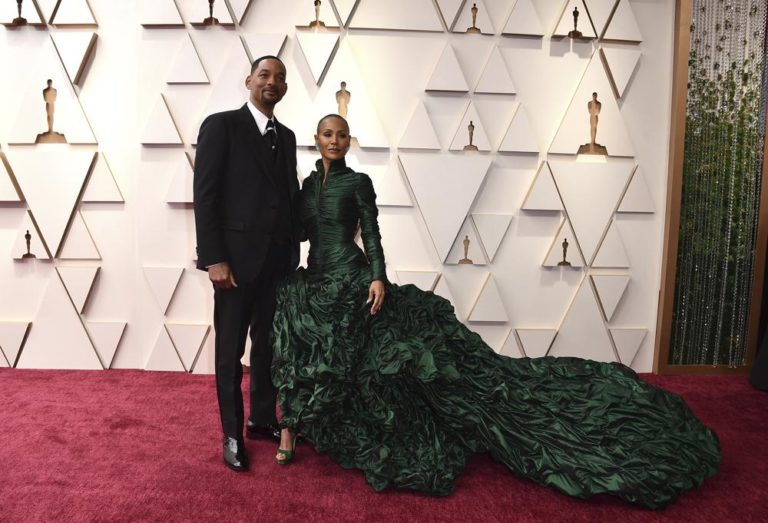
(Luis CornelioHeadline USAA professional violinist has accused actor-turned-podcast host Will Smith of sexual harassment in a Los Angeles lawsuit, according to court documents reported Thursday by Fox News. 

The accuser, Brian King Joseph, said Smith “deliberately” groomed and primed him for “further sexual exploitation,” according to the suit. The lawsuit named Smith and his company, Treyball Studios Management, Inc. 

Joseph had performed with Smith in December 2024 and later joined Smith on the “Based on a True Story: 2025 Tour.” 

According to the lawsuit, their “relationship grew even closer” after Smith offered Joseph a chance to play on tracks for the actor’s upcoming album. 

“Smith and Plaintiff began spending additional time alone, with Smith even telling Plaintiff that ‘You and I have such a special connection, that I don’t have with anyone else,’ and other similar expressions indicating his closeness to Plaintiff,” the document alleged, as quoted by Fox News. 

The complaint described a bizarre incident in a hotel room booked during Smith’s tour, though it was not immediately clear whether Smith himself was present. 

Joseph said he discovered a note saying the purported intruder would be back by 5:30 p.m. He also found items he did not recognize. 

“Among the remaining belongings were wipes, a beer bottle, a red backpack, a bottle of HIV medication with another individual’s name, an earring, and hospital discharge paperwork belonging to a person unbeknownst to Plaintiff,’ the document alleged. 

Joseph reported the incident to hotel security and demanded a refund, the suit said. 

“Rather than being protected against further assault, and for attempting to understanding Plaintiff’s complaint, Plaintiff was shamed by Defendant and told that he was being terminated,” the document added. 

According to Fox, a Smith official, Tim Miller, disputed the claims, saying, “‘I don’t know, you tell me, because everyone is telling me that what happened to you is a lie, nothing happened, and you made the whole thing up. So, tell me, why did you lie and make this up?’” 

Smith then hired another violinist to replace Joseph, the suit alleged. “This hiring strongly suggested that Defendant’s stated reason for the termination was pretextual,” the complaint said. 

“The facts strongly suggest that Defendant Willard Carroll Smith II was deliberately grooming and priming Mr. Joseph for further sexual exploitation. The sequence of events, Smith’s prior statements to Plaintiff, and the circumstances of the hotel intrusion all point to a pattern of predatory behavior rather than an isolated incident,” the suit added. 

In remarks to TMZ, Smith’s lawyer Allen B. Grodsky described Joseph’s allegations as “false, baseless, and reckless.”  

He added, “They are categorically denied, and we will use all legal means available to address these claims and to ensure that the truth is brought to light.” 

Trump Threatens Venezuela’s Acting President With Fate Worse Than Maduro’s

(Dave DeCamp, Antiwar.comPresident Trump on Sunday threatened that Venezuela’s new acting president, Vice President Delcy Rodriguez, would have a fate worse than Nicolas Maduro’s if she doesn’t do the bidding of the US.

“If she doesn’t do what’s right, she is going to pay a very big price, probably bigger than Maduro,” Trump told The Atlantic a day after his military abducted Maduro from the Venezuelan capital of Caracas and flew him to New York, where he is now in a jail cell in Brooklyn.

Trump claimed on Saturday that Rodriguez was willing to work with the US and outlined his plan to “run” Venezuela to ensure US companies get access to the country’s oil. But later in the day, Rodriguez strongly denounced the US attack on her country, calling it “an atrocity that violates international law” and vowing that Venezuela “will never again be a colony of any empire.”

The Venezuelan military has also struck a defiant tone after the US attack, with Venezuelan Defense Minister Vladimir Padrino Lopez calling it a “cowardly kidnapping” that occurred “after cold-bloodedly assassinating a large part of the president’s security detail, soldiers, and innocent civilians.”

During his press conference on Saturday, Trump threatened that he’d be willing to launch a “second wave” of attacks on Venezuela if he deems it necessary.

Secretary of State Marco Rubio, a key driver of the US attack on Venezuela, said that he would wait to see what Rodriguez does. “We’re going to make decisions based on their actions and their deeds in the days and weeks to come,” he told The New York Times.

The Times also reported that several weeks ago, the US had settled on Rodriguez as an acceptable candidate to replace Maduro, at least temporarily, despite her being a long-time ally of the Venezuelan leader. The report said the US was pushing for Maduro to voluntarily flee to Turkey before launching the attack, which killed at least 80 people, including military personnel and civilians.

One of the motives for the US taking military action to kidnap Maduro was the Venezuelan leader’s public dancing and calls for peace with the US, as Trump officials took his behavior as mocking the US threat, according to the Times report.

For now, Trump has declined to back Maria Corina Machado, a Venezuelan opposition leader who just won the Nobel Peace Prize and was very supportive of the US president’s attack on her country. Trump said that Machado didn’t have enough “respect” inside Venezuela.

Maduro Arrives to the US to Face Charges

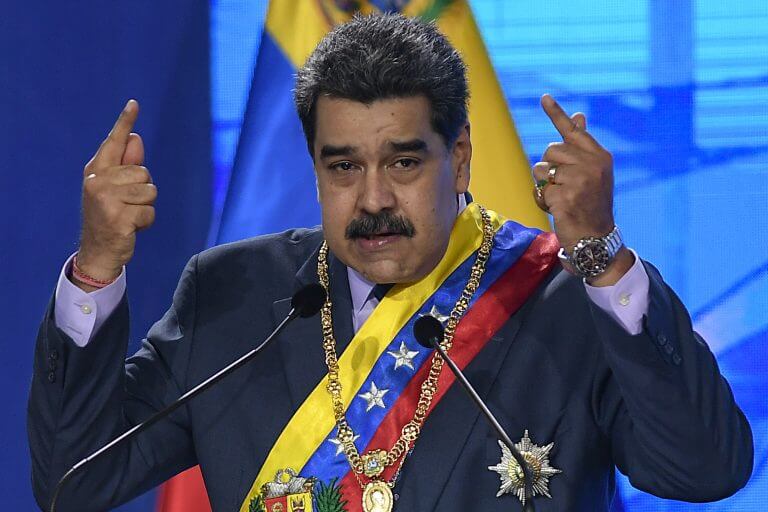
(Headline USADeposed Venezuelan leader Nicolás Maduro arrived in the United States to face criminal charges after being captured in an audacious nighttime military operation that President Donald Trump said would set the U.S. up to “run” the South American country and tap its vast oil reserves to sell to other nations.

Maduro landed late Saturday afternoon at a small airport in New York following the middle-of-the-night operation that extracted him and his wife, Cilia Flores, from their home in a military base in the capital, Caracas — an act that Maduro’s government called “imperialist.” The couple faces U.S. charges of participating in a narco-terrorism conspiracy.

The dramatic action capped an intensive Trump administration pressure campaign on Venezuela’s autocratic leader and months of secret planning, resulting in the most assertive American action to achieve regime change since the 2003 invasion of Iraq. Legal experts raised questions about the lawfulness of the operation, which was done without congressional approval. Venezuela’s vice president, Delcy Rodriguez, meanwhile, demanded that the United States free Maduro and called him the country’s rightful leader as her nation’s high court named her interim president.

Some Venezuelan civilians and members of the military were killed, said Rodríguez, who didn’t give a number. Trump said some U.S. forces were injured, but none was killed.

Speaking to reporters hours after Maduro’s capture, Trump revealed his plans to exploit the leadership void to “fix” the country’s oil infrastructure and sell “large amounts” of oil to other countries.

After arriving at a small airport in New York City’s northern suburbs, Maduro was flown by helicopter to Manhattan, where a convoy of law enforcement vehicles, including an armored car, was waiting to whisk him to a nearby U.S. Drug Enforcement Administration office.

A video posted on social media by a White House account showed Maduro, smiling, as he was escorted through that office by two DEA agents grasping his arms.

Adapted from reporting by the Associated Press

 

9th Circuit Rules Against Ban on Open Carry of Firearms in Most California Counties

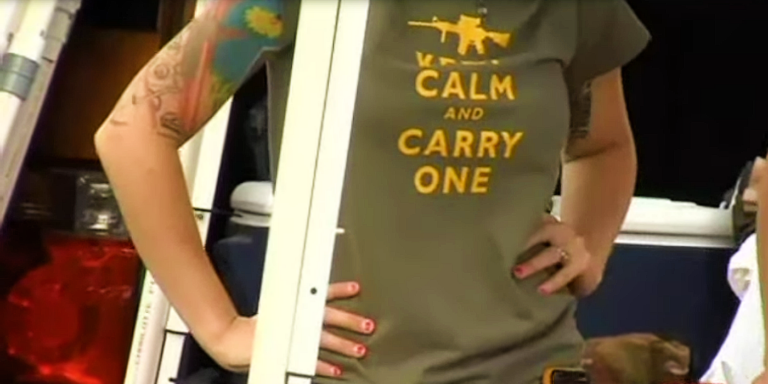
(The Center Square) The U.S. Court of Appeals for the 9th Circuit Friday ruled against California’s ban on open carry of firearms in most counties.

The San Francisco-based court’s ruling declared the ban unconstitutional in counties with a population exceeding 200,000. Those counties make up 95% of the state.

According to the written ruling, the panel of three 9th Circuit judges found the ban “is inconsistent with the Second Amendment’s right to bear arms as applied to the states through the Fourteenth Amendment.” The ruling came in the lawsuit that gun owner Mark Baird filed against California Attorney General Rob Bonta. It partially affirmed and partially reversed a 2023 ruling by Judge Kimberly J. Mueller of the U.S. District Court for Eastern California.

The Center Square reached out Friday to the state Attorney General’s Office, which said, “We are committed to defending California’s commonsense gun laws. We are reviewing the opinion and considering all options.”

The 9th Circuit panel, which consisted of judges N. Randy Smith, Kenneth K. Lee and Lawrence VanDyke, said they applied the standard set forth in a 2022 U.S. Supreme Court case, New York State Rifle & Pistol Association v. Bruen. They noted open carry is part of the nation’s history and tradition.

“It was clearly protected at the time of the Founding and at the time of the adoption of the Fourteenth Amendment,” the judges wrote in their ruling. “There is no record of any law restricting open carry at the Founding, let alone a distinctly similar historical regulation.”

California failed to present evidence of “a relevant historical tradition of firearm regulation with respect to California’s urban open-carry ban,” according to the ruling.

The judges said they found Bruen applied to counties with populations exceeding 200,000. But they said they concluded Baird, the plaintiff, waived his “as-applied challenge by not contesting the district court’s dismissal” in regard to counties with fewer than 200,000 people. They said they affirm the district court’s rejection of Baird’s challenge to the open-carry licensing scheme in the less populated counties, which may issue open-carry permits.

One of the judges, Smith, partially concurred and partially dissented with the majority opinion. He said the restrictions on open carry in more populous counties is constitutional.

“My colleagues got this case half right,” Smith wrote. “The majority opinion correctly holds that California’s open carry licensing scheme is facially constitutional under Bruen. However, my colleagues misread Bruen to prohibit California’s other restrictions on open carry.”

“We should have affirmed the district court,” Smith said, referring to the entire lower court ruling.

Dan Bongino Has His Last Day at the FBI

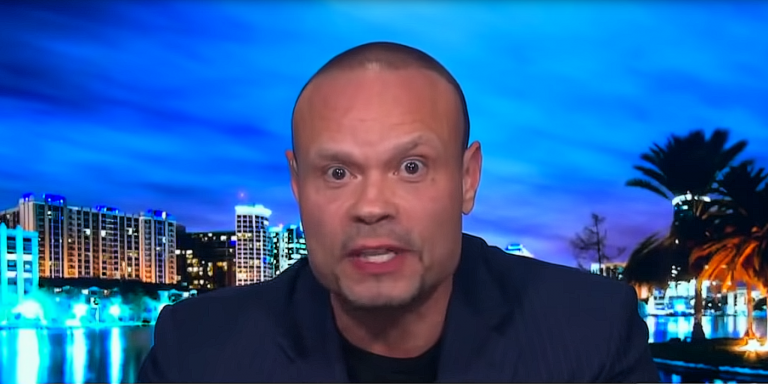
(Ken Silva, Headline USA) After a roughly 10-month stint that left many of his supporters disappointed, Dan Bongino had his last day as FBI deputy director on Saturday.

“It was a busy last day on the job. This will be my last post on this account. Tomorrow I return to civilian life,” Bongino announced on Twitter/X. “It’s been an incredible year thanks to the leadership and decisiveness of President Trump. It was the honor of a lifetime to work with Director Patel, and to serve you, the American people. See you on the other side.”

Bongino has been rumored to be on his way out since former Missouri Attorney General Andrew Bailey was appointed as “co-deputy director” in August—the first time there have been co-deputy directors at the FBI in its entire history.

Salon reported last month that “Bongino’s office has been empty for ‘close to two weeks,’ indicating he has already left the agency.”

Bongino’s indicated that he’ll return to the media when he leaves the bureau. If so, he’ll have a lot of explaining to do for his failures.

In May, he falsely claimed that the FBI had video proving that deceased multimillionaire sex trafficker Jeffrey Epstein killed himself. However, the DOJ Inspector General had already released a report stating that no such video footage exists—and indeed, the video released by the FBI this year didn’t even show Epstein’s cell.

Bongino also defended the FBI’s investigation into the July 2024 Trump assassination attempt, insisting that the would-be assassin acted alone and that the FBI acted properly by releasing his body for cremation and hosing down the AGR rooftop the day after the event. Bongino told the widow of the firefighter who died in the attempt, Helen Comperatore, that the FBI would be releasing more information on the event—but the bureau never did.

Most recently, Bongino has touted the arrest of an autistic black man in the Jan. 6 pipe bombs case, flip-flopping on his earlier remarks as a podcaster that the incident was an inside job.

Ken Silva is the editor of Headline USA. Follow him at x.com/jd_cashless.

Secret Service Aims to Hire 4,000 More Agents, Officers and Other Staff

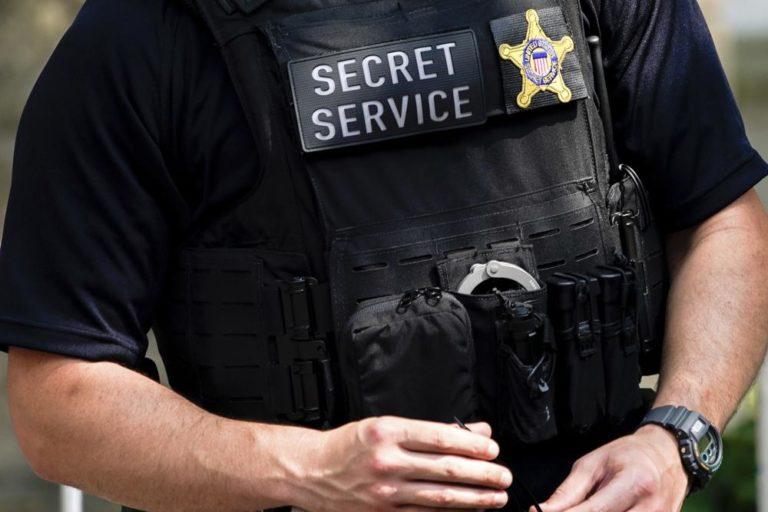
(Ken Silva, Headline USA) On the heels of two major assassination attempts and a slew of other scandals, the Secret Service is aiming to hire 4,000 new employees by 2028, according to the Washington Post.

The Post reported Sunday that the service aims to expand its special agent ranks from about 3,500 to about 5,000, hire hundreds of officers to its uniformed division, and add “additional support staff.”

Such a plan would increase the size of the agency by about 20% and bring it to more than 10,000 employees for the first time in its history.

“The agency faces serious obstacles, however, including a shortage of qualified candidates; competition with other law enforcement agencies, especially in immigration enforcement; and bottlenecks in hiring and training, according to former service officials,” the Post reported.

The Post, which won a Pulitzer Prize for its coverage of the July 2024 Trump shooting in Butler, Pennsylvania, ran a retrospective on New Year’s Eve 2024 that pointed the finger at bureaucratic and resourcing problems for the Secret Service’s failures.

According to that Post article, the Secret Service had a goal in 2021 to increase its workforce from 7,896 that year to 9,595 in 2025. But as of 2024, the agency’s staff had actually shrunk to roughly 7,700 due to high attrition rates. And while its budget ballooned from $2.3 billion in 2017 to $3.1 billion in 2024, so too did its responsibilities. The Post reported at the time that there was a “30 percent increase in security details” during that same time—though it didn’t explain how that increase translated in terms of costs.

“Since 2015, agents with more than a decade on the job have resigned at alarming rates rather than stay until their 20-year retirement mark,” the newspaper continued. “In 2015, veteran agents with 11 to 15 years of experience made up nearly one-third of the Secret Service agent workforce … They now make up just 8 percent.”

Meanwhile, talks of downsizing the Secret Service’s responsibilities have been abandoned. In late 2024, Congress recommended that the agency should solely focus on protection instead of money-laundering, forgery and other investigations. But Congress never followed up on that recommendation, and Secret Service Deputy Director Matthew Quinn reportedly said “that was out of the question,” according to the Post.

“Investigations are the lifeblood of this organization,” he reportedly said.

Ken Silva is the editor of Headline USA. Follow him at x.com/jd_cashless.

Congress Faces Govt. Shutdown, Healthcare Bills, Epstein on Return

(The Center Square) Congress faces a mountain of political challenges when it resumes session next week, including a potential government shutdown, a health care affordability crisis, and the ongoing release of the Epstein files.

U.S. lawmakers left town for the holidays after passing only three of the 12 appropriations bills funding federal agencies in fiscal year 2026.

Most sectors of government are still running off of fiscal year 2024 funding, as Congress resorted to passing four consecutive Continuing Resolutions keeping funding levels static, rather than complete the regular-order appropriations process.

With the current CR expiring Jan. 30, lawmakers have less than a month to finish the remaining nine bills or pass yet another CR, otherwise, the government will partially shut down.

There is little appetite on the Hill for a shutdown, as the most recent lasted a record-long 43 days. The government ran out of funding Oct. 1, 2025, when Democrats refused to vote for the fourth CR due because it failed to include an extension of the enhanced Obamacare subsidies.

After six weeks of holding out, enough Democrats voted to reopen the government by passing the CR, additionally passing three of the appropriations bills in the form of a minibus.

Progress, however, stopped there. Senate Majority Leader John Thune, R-S.D., does intend to hold a vote on a five-bill appropriations minibus as soon as lawmakers return, but he’s already receiving pushback over certain earmarks.

Over in the House, Speaker Mike Johnson, R-La., will have to handle the still raging fight over health care policy, including the now-expired enhancement of Obamacare Premium Tax Credits that many lawmakers want to reinstate.

Even if such legislation passes the lower chamber,  it will almost certainly fail in the Senate, which already tanked a proposal to extend the subsidies. And given Democrats’ opposition to House Republicans’ alternative policies, any health care bill that does not include the subsidies will also fail to break the Senate filibuster.

On top of meeting the tight government funding deadline and addressing rising health care prices, the Republican majority must also continue doing damage control with the Epstein files.

The Department of Justice says it still has up to a million more files to release related to the now-deceased sex trafficker Jeffery Epstein after Congress mandated it make all Epstein-related files public. Some of the files seem to implicate President Donald Trump, though the DOJ says the allegations are “unfounded.”

Both parties will likely continue using the files, which also reference high-profile Democrats like former president Bill Clinton, as a political football going into the new year.