Foreign Flags Fly in Florida after Maduro’s Ouster

(Headline USA) Foreign flags are flying in Florida—and Republicans are celebrating it.

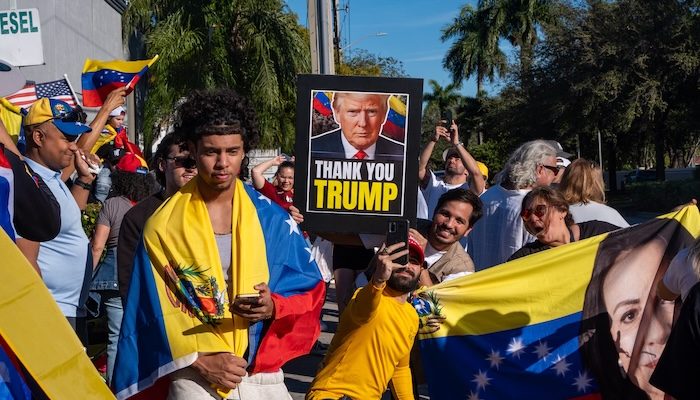
Revelers chanted “liberty” and draped Venezuelan flags over their shoulders in South Florida on Saturday to celebrate the U.S. military operation to capture Nicolás Maduro and remove him from the country — a stunning outcome they had longed for but left them wondering what comes next in their troubled homeland.

For some Venezuelan natives, the military action — culminating months of stepped-up U.S. pressure — brought their dreams of reuniting with loved ones closer to reality after years of heartbreaking separations.

People gathered for a rally in Doral — the Miami suburb where President Donald Trump has a golf resort and where roughly half the population is of Venezuelan descent — as word spread that Venezuela’s now-deposed president had been captured and flown out of the country.

Outside El Arepazo restaurant, a hub of the Venezuelan culture of Doral, one man held a piece of cardboard with “Libertad” scrawled with a black marker. It was a sentiment expressed by other native Venezuelans hoping for a new beginning for their home country as they chanted “Liberty! Liberty! Liberty!”

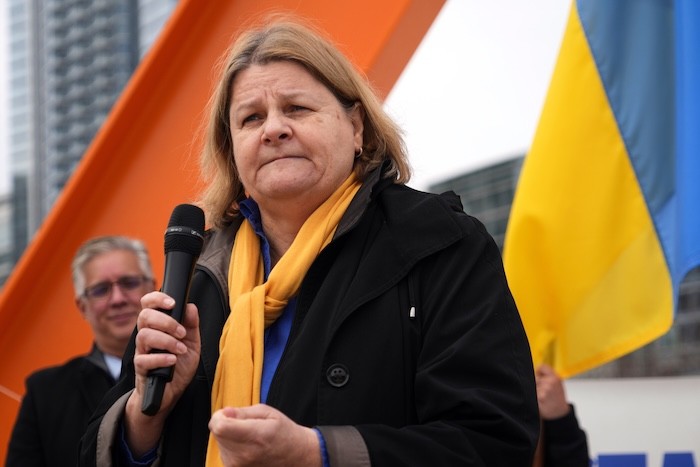
“We’re like everybody — it’s a combination of feelings, of course,” said Alejandra Arrieta, who came to the U.S. in 1997. “There’s fears. There’s excitement. There’s so many years that we’ve been waiting for this. Something had to happen in Venezuela. We all need the freedom.”

Some Venezuelan exiles feel hopeful after US actions

For David Nuñez, the regime change offered hope for a long-awaited reunion with loved ones.

Nuñez said he fled to the United States six years ago after being persecuted in Venezuela for his political activism and has not seen his daughters — ages 8 and 17 — since then.

“The most important thing is that we’re going to be able to be with our families soon,” Nuñez said. “At least for me, I haven’t seen my daughters in six years so I have a lot of mixed feelings. I’ve cried a lot. I’m really happy because I know that I’m going to be able to return to Venezuela very soon.”

Trump insisted Saturday that the U.S. government would run the country at least temporarily and was already doing so. The action marked the culmination of an escalating Trump administration pressure campaign on the oil-rich South American nation as well as weeks of planning that tracked Maduro’s behavioral habits.

After Trump’s press conference about U.S. actions in Venezuela, people still gathered outside of the Doral restaurant sang, danced and waved flags. A percussionist drummed along with the singing crowd.

People started gathering outside the restaurant once the news broke. Cooks were told to stay and prepare more food for anticipated high demand. Hundreds showed up, and the crowd kept growing as the day went on.

Some say Maduro’s ouster was long awaited

Alexa Perez said she has waited year for this moment.

“Thanks, President Trump. This is our second liberty. This our independence day from today on,” Perez said.

She married a week ago and said the news was the “best wedding gift” possible.

Her husband, Aldo Amenta, said they were scared, excited and confused at first and felt better when they learned their family members were safe.

“We’re really happy and excited that the doors are open for Venezuela, for all of our people who deserve a chance,” Amenta said.

Perez responded positively to apparent U.S. plans to run Venezuela at least temporarily and tap its vast oil reserves to sell to other nations, saying her homeland has not received anything from Russia, Iran and China.

“We are very poor, we have no hospital, we have no rights for our people,” Perez said. “So I think this is going to be a great transition. Because once you know how the U.S. works, you know that everything can work better.”

The Venezuelan diaspora grew over decades

About 8 million people have fled the country since 2014, settling first in neighboring countries in Latin America and the Caribbean. After the COVID-19 pandemic, they increasingly set their sights on the United States, walking through the jungle in Colombia and Panama or flying to the U.S. on humanitarian parole with a financial sponsor.

In South Florida, deep-seated concerns in the Venezuelan community about Trump’s tough immigration policies gave way to celebrations after Maduro was deposed in the American military operation early Saturday.

In Doral, upper-middle-class professionals and entrepreneurs came to invest in property and businesses when socialist Hugo Chávez won the presidency in the late 1990s. They were followed by political opponents and entrepreneurs who set up small businesses. In recent years, more lower-income Venezuelans have come for work in service industries.

They are doctors, lawyers, beauticians, construction workers and house cleaners. Some are naturalized U.S. citizens or live in the country illegally with U.S.-born children. Others overstay tourist visas, seek asylum or have some form of temporary status.

‘Not a guarantee, but a possibility, for recovery’

Niurka Meléndez, who fled from Venezuela in 2015, said Saturday she’s hopeful that Maduro’s ouster will improve life in her homeland. Meléndez immigrated to New York City, where she co-founded the group Venezuelans and Immigrants Aid, which strives to empower the lives of immigrants. She became a steadfast advocate for change in her home country, where she said her countrymen faced a humanitarian crisis.

Now, she hopes those hardships will fade away.

“For us, it’s just the start of the justice we need to see,” Meléndez said in a phone interview.

Her homeland had reached a “breaking point” due to forced displacements, repression, hunger and fear, she said. Now there’s a need for international humanitarian support to help in Venezuela’s recovery.

“Removing an authoritarian system responsible for these crimes creates the possibility, not a guarantee, but a possibility, for recovery,” she said. “A future without criminal control over institutions is the minimum condition for rebuilding a country based on justice, rule of law, and democratic safeguards.”

Adapted from reporting by the Associated Press
 

US Attack on Venezuela Killed at Least 40, Including Civilians

(Dave DeCamp, Antiwar.comThe US attack on Venezuela early Saturday morning that resulted in the capture of Venezuelan President Nicolas Maduro and his wife killed at least 40 people, including military personnel and civilians, The New York Times has reported, citing an unnamed senior Venezuelan official.

Venezuelan Vice President Delcy Rodriguez had said that the US attack killed civilians and military personnel, but didn’t give a number. The Venezuelan official speaking to the Times didn’t provide a breakdown of the number of civilians and military personnel killed.

According to the Times report, at least one US airstrike hit a civilian target, a three-story apartment building in Catia La Mar, a coastal area west of the Caracas airport, knocking out an exterior wall and killing an 80-year-old woman named Rosa Gonzalez. Another woman was severely injured by the strike, which destroyed several apartments, and she is in critical condition.

President Trump suggested in an interview on Saturday morning that there were some injuries among US troops during the attack. So far, there’s been no official word from the US military on casualties. Gen. Dan Caine, the chairman of the Joint Chiefs of Staff, said at a press conference that a US helicopter was hit during the operation but was able to fly out of Caracas.

Caine said the US assault involved more than 150 aircraft and strikes on Venezuelan military facilities and air defenses to “ensure the safe passage of the helicopters into the target area” where they captured Maduro. He said that US intelligence assets had been watching the movement of Maduro and that the operation was planned for months amid a major US military buildup in the Caribbean and threats of war.

Trump said at the press conference that the US was able to cut most of the power to the Venezuelan capital city. “The lights of Caracas were largely turned off, due to a certain expertise that we have,” he said.

Maduro and his wife, Cilia Flores, have been indicted by the US government over allegations of drug trafficking and claims that they violated US gun laws, and they have been flown to New York to face charges.

“If this action were constitutionally sound, the Attorney General wouldn’t be tweeting that they’ve arrested the President of a sovereign country and his wife for possessing guns in violation of a 1934 U.S. firearm law,” Rep. Thomas Massie (R-KY) wrote on X.

While drugs were used as the pretext for the attack, Trump has said the US now plans to “run” Venezuela until a government acceptable to the US is installed and to ensure that American companies get access to Venezuela’s oil. Trump made clear that he’s considering sending troops into Venezuela as part of an occupation force, claiming that he’s “not afraid of boots on the ground.”

Trump has also claimed that the US was speaking with Rodriguez and that the Venezuelan vice president was willing to work with the US, though she strongly condemned the US invasion and has called for Maduro to be released. Rodriguez also said that Venezuela “will never again be a colony of any empire.”

Venezuela’s Supreme Court has ordered Rodriguez to assume the duties as the acting president of Venezuela, saying she will “assume and exercise, as acting president, all the powers, duties, and faculties inherent to the office of president of the Bolivarian Republic of Venezuela, in order to guarantee administrative continuity and the comprehensive defense of the nation.”

While Maduro was removed, his government remains intact, and Trump has threatened that he’s willing to launch a “second wave” of attacks if necessary.

Democrats Slam Venezuelan Strikes, Maduro Capture

(The Center Square) Democratic lawmakers criticized President Donald Trump’s announcement of land strikes against Venezuela and leader Nicolas Maduro’s capture.

In a post to social media, Trump announced the U.S. carried out a “large scale strike” against Venezuela, capturing Maduro and his wife.

The two are in U.S. custody and charged with “narco-terrorism conspiracy, cocaine importation conspiracy, possession of machine guns and destructive devices, and conspiracy to possess machine guns and destructive devices against the U.S.,” according to Attorney General Pam Bondi.

U.S. Rep. Alexandria Ocasio-Cortez, D-N.Y., criticized the Trump administration’s strikes, saying “it’s not about the drugs.” She said the actions are designed to provoke a regime change and get oil from Venezuela.

“It’s about oil and regime change,” Ocasio-Cortez said. “And they need a trial now to pretend that it isn’t. Especially to distract from Epstein [and] skyrocketing healthcare costs.”

However, Rep. Debbie Wasserman Shultz, D-Fla., called the strikes and capture of Maduro “welcome news for my friends and neighbors who fled his violent, lawless, and disastrous rules.”

Wasserman Shultz said she hopes the U.S. action will bring “true democracy and liberation.” She said she is concerned that congressional leaders were not informed about the actions against Venezuela and the capture of Maduro.

“I’ll demand answers as to why Congress and the American people were bypassed in this effort,” Wasserman Shultz wrote on social media. “The absence of congressional involvement prior to this action risks the continuation of the illegitimate Venezuelan regime.”

U.S. Sen. Chris Murphy, D-Conn., sharply criticized the administration’s actions and called it an “illegal war.” He said the strikes against Venezuela and capture of Maduro are about “satisfying Trump’s vanity.”

“Maduro’s illegitimate election does not give the president the power to invade without congressional approval, nor does it create a national security justification,” Murphy wrote on social media. “That contention is laughable.”

Senate Majority Leader John Thune, R-S.D., supported the strikes and capture. He said Maduro and other cartel leaders have trafficked drugs into the United States for years.

Thune said he spoke with Secretary of State Marco Rubio about the attack.

“President Trump’s decisive action to disrupt the unacceptable status quo and apprehend Maduro, through the execution of a valid Department of Justice warrant, is an important first step to bring him to justice for the drug crimes for which he has been indicted in the United States,” Thune wrote in a post on social media.

Congressional Republicans Support Venezuela Strikes, Maduro Capture

(The Center Square) Republican leaders in the U.S. House of Representatives and Senate are reacting to President Donald Trump’s announcement of the capture of Venezuelan leader Nicolas Maduro and his wife, Cilia Flores.

In a post to social media, Trump announced the U.S. carried out a “large scale strike” against Venezuela, capturing Maduro and his wife.

The two are in U.S. custody and charged with “narco-terrorism conspiracy, cocaine importation conspiracy, possession of machine guns and destructive devices, and conspiracy to possess machine guns and destructive devices against the U.S.,” according to Attorney General Pam Bondi.

U.S. Sen. Tom Cotton, R-Ark., praised Trump’s decision-making and called Maduro an illegitimate dictator. He said the Venezuelan leader was running a “vast drug-trafficking operation.”

Cotton also said he was briefed on Maduro’s capture by U.S. Secretary of State Marco Rubio. He said Rubio confirmed Maduro was in U.S. custody.

“The interim government in Venezuela must now decide whether to continue the drug trafficking and colluding with adversaries like Iran and Cuba or whether to act like a normal nation and return to the civilized world,” Cotton said. “I urge them to choose wisely.”

Similarly, U.S. Sen. Marsha Blackburn, R-Tenn., said she fully supports Trump’s actions in Venezuela.

“Nicolas Maduro will face justice on American soil,” Blackburn said. “I fully support the Trump administration for doing what is needed to protect American lives.”

House Republican chair Rep. Lisa McClain, R-Mich., also emphatically backed President Trump’s decision-making in a post on social media.

“President Trump has cracked down on drug trafficking harder than any President in history,” McClain wrote. “Maduro is a narco-terrorist. Period. His illegitimate regime floods our country with deadly drugs and Americans pay the price. President Trump didn’t look the other way; he acted. That’s what leadership looks like, and it’s how you protect the American people.”

Trial to Begin for Cop Charged in Delayed Response to Uvalde School Shooting

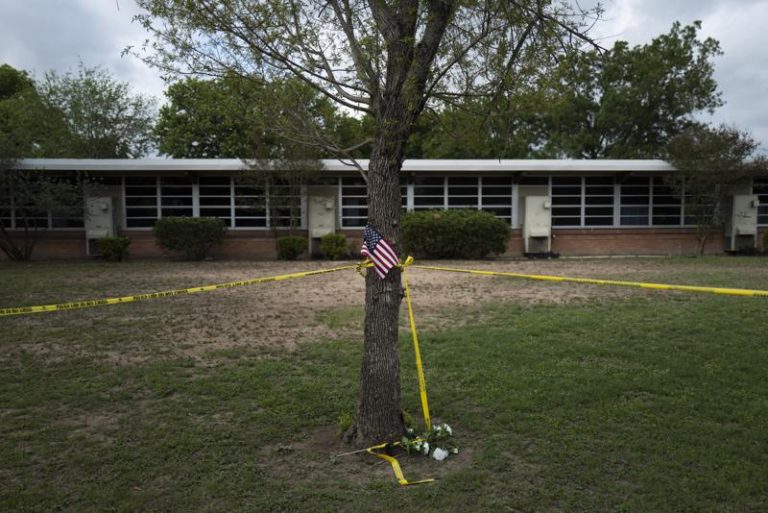
(Headline USAFamilies who lost loved ones in the 2022 attack on an elementary school in Uvalde, Texas, have sought for nearly four years to hold accountable the police who waited more than an hour to confront the shooter while children and teachers lay dead or wounded in classrooms.

Now one of the first officers on the scene is about to stand trial on multiple charges of child abandonment and endangerment. Former Uvalde schools police officer Adrian Gonzales is accused of ignoring his training in a crisis with deadly consequences. His attorney insists he was focused on helping children escape from the building.

The trial that starts Monday offers potentially one of the last chances to see police answer for the long delay. The families have pinned their hopes on the jury after their gun-control efforts were rejected by lawmakers, and their lawsuits remain unresolved. A few parents ran for political office to seek change, with mixed results.

The proceedings will provide a rare example of an officer being criminally charged with not doing more to stop a crime and protect lives.

Jesse Rizo’s niece was one of 19 children and two teachers killed by the teenage gunman in one of the deadliest school shootings in U.S. history. Nine-year-old Jackie Cazares still had a pulse when rescuers finally reached her, Rizo said.

“It really bothers us a lot that maybe she could have lived,” he said.

Only two of the 376 officers from local, state and federal agencies on the scene have been charged — a fact that haunts Velma Lisa Duran, whose sister, Irma Garcia, was one of the teachers gunned down.

“What about the other 374?” Duran asked through tears. “They all waited and allowed children and teachers to die.”

The charges reflect the dead and wounded children, but not her sister’s death or that of the other teacher who was killed.

“Where is the justice in that?” Duran asked. “Did she not exist?”

Prosecutors will likely face a high bar to win a conviction. Juries are often reluctant to convict law enforcement officers for inaction, as seen after the Parkland, Florida, school massacre in 2018.

Sheriff’s deputy Scot Peterson was charged with failing to confront the shooter in that attack. It was the first such prosecution in the U.S. for an on-campus shooting, and Peterson was acquitted by a jury in 2023.

The attack, the delay and the indictments

Police and Texas Gov. Greg Abbott initially said swift law enforcement action killed Uvalde gunman Salvador Ramos and saved lives. But that version quickly unraveled as families described begging police to go into the building and 911 calls emerged from students pleading for help.

The reality was that 77 minutes passed from the time officers first arrived until a tactical team breached the classroom and killed Ramos.

Multiple reports from state and federal officials cataloged cascading problems in law enforcement training, communication, leadership and technology, and they questioned whether officers prioritized their own lives over those of the children and teachers.

Gonzales was charged two years later in an indictment that alleged he placed children in “imminent danger” of injury or death by failing to engage, distract or delay the gunman and by not following his active shooter training.

The indictment said he did not advance toward the gunfire despite hearing shots and being told where the shooter was.

The only other officer to be charged is former Uvalde schools Police Chief Pete Arredondo. His trial on similar charges has not yet been set.

Uvalde County District Attorney Christina Mitchell did not respond to requests from The Associated Press for comment on the indictments or whether a grand jury considered charging other officers.

According to a report by state lawmakers, Gonzales was among the first officers in the building. They heard gunfire and retreated without firing a shot after Ramos shot at them.

Gonzales told investigators he later helped break windows to remove students from other classrooms.

“He was focused on getting children out of that building,” said Gonzales’ attorney, Nico LaHood, a former district attorney and prosecutor in San Antonio. “He knows where his heart was and what he tried to do for those children.”

The trial was moved from Uvalde to Corpus Christi, 200 miles away, after defense attorneys and prosecutors agreed a change of venue would be the best way to find an impartial jury.

A divided community

In Uvalde, a city of about 15,000 people, the Robb Elementary building is still standing, but it’s empty. A memorial of 21 white crosses and flowers sits in front of the school sign. Another memorial is displayed at a downtown water fountain plaza. Murals of the victims cover walls on buildings around town.

Craig Garnett, owner and publisher of the Uvalde Leader-News newspaper, said people who were not directly affected by the attack “have found it pretty easy to move forward.”

Garnett also believes getting the trial out of Uvalde was a good move for the city.

“The community was terribly divided in the aftermath,” he said. If the trial were held there, “you would have so many opportunities to inflame things.”

Some victims’ parents sought political office but with little success.

Javier Cazares, Jackie’s father, ran unsuccessfully in 2022 for the Uvalde County Commission as a write-in candidate on a platform that called for more rigorous police training. Kimberly Mata-Rubio, whose daughter Lexi was killed, made a bid for mayor in her memory in 2023 but lost.

Rizo, who won a seat on the school board in 2024, agreed that many Uvalde residents have moved on from May 24, 2022. He finds that maddening.

“I hear, ‘They tried the best they could’ and ‘Do you blame them? Would you have taken a bullet?’” Rizo said. “It angers me and frustrates me.”

Uvalde has a strong tradition of supporting law enforcement. Two of the people killed came from law enforcement families.

Mata-Rubio’s husband was a sheriff’s deputy who went to the school after the attack started. The other teacher killed, Eva Mireles, was married to one of the first officers to enter the building.

Families pursued multiple paths for justice

The families have sought justice through multiple legal paths. Federal and state lawsuits have been filed against law enforcement, a gun manufacturer, a video game company and the Meta social media company over the shooting. Those cases are still pending.

The families reached a $2 million settlement with the city that promised higher standards and better training for police.

Relatives also lobbied state and federal lawmakers for stricter gun control laws that never advanced. But earlier this year, Texas lawmakers passed the Uvalde Strong Act, which sets new requirements for active shooter training and shooting response plans for police and schools.

Duran wants accountability not just for her sister but also for a beloved brother-in-law who died two days after the shooting.

Irma’s husband, Joe, was watching a television report on the shooting when he heard that authorities missed their chance to end the attack quickly. He immediately fell to the floor with an apparent heart attack, Duran said.

The conviction of a single officer out of almost 400 would bring little in the way of justice, Duran said.

“The only justice is going to be when they take their final breath,” she said. “And then God will judge them.”

Adapted from reporting by the Associated Press


Trump: We Are in Venezuela Now, and We Are Going to Stay

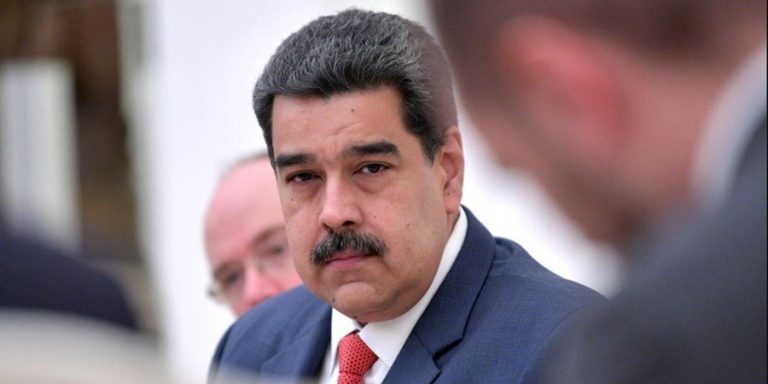
(Kyle Anzalone, Antiwar.comFollowing a military operation that captured President Nicolas Maduro, President Donald Trump said the US would run Venezuela until an acceptable government is set up.

“We are going to run [Venezuela] until such time as we can do a safe, proper, and judicious transition. We don’t want to be involved with having somebody else get in and we have the same situation that we had,” the President said on Saturday. “We are there now, and we are going to stay until the proper transition takes place.”

Trump went on to say that the US is prepared to attack Venezuela again. “We are ready to stage a second, much larger attack if we need to do so.” He continued, “All political and military figures in Venezuela should understand what happened to Maduro can happen to them, and it will happen to them if they aren’t fair.”

The President did not name a new leader of Venezuela. However, María Corina Machado said, “Today we are prepared to enforce our mandate and take power.” Machado is a Venezuelan opposition figure who won the Nobel Peace Prize in 2025. She has endorsed US sanctions and military action against Venezuela.

Trump did say he had not spoken with Machado, adding that she doesn’t have the respect needed to lead the country.

Vice President Delcy Rodriguez said following the attack that she had activated Maduro’s military plans. “The first thing President Maduro told the people of Venezuela was ‘people to the streets,’ activated as militia, activating all the Nation’s comprehensive defense plans,” the vice president said. “No one will undermine the historic legacy of our Liberator father, Simon Bolivar. The people of Venezuela, in perfect national unity, must mobilize to defend their natural resources and what is most sacred: their right to independence and to the future.”

Trump claimed his administration spoke with Rodriguez, who agreed to work with the US.

When asked by the press, Trump refused to give a timeline on how long American control over Venezuela would last. The President said Secretary of State Marco Rubio and Secretary of War Pete Hegseth would act as the viceroys of Venezuela.

Trump added that he was willing to deploy American troops to occupy the South American nation. “We’re not afraid of boots on the ground,” the President explained. He claimed Washington would pay for the occupation of Venezuela with profits from the country’s oil.

Trump said no Americans were killed and no military equipment was lost in the operation that captured Maduro early Saturday. Caracas has not reported on the Venezuelan casualties from the American raid and strikes.

Trump said he ordered the attack on Venezuela because Maduro was trafficking narcotics to the US, hosting Washington’s adversaries, and stealing American oil. Venezuela is not a major drug trafficking hub and is not listed by the Drug Enforcement Agency as responsible for fentanyl entering the US.

The President and Rubio suggested a similar operation could take place in Cuba.

This article originally appeared at Antiwar.com.


How the US Captured Venezuelan Leader Nicolás Maduro

(Headline USAAfter months of growing military pressure on Venezuelan President Nicolás Maduro, President Donald Trump ordered a brazen operation into the South American country to capture its leader and whisk him to the United States where his administration plans to put him on trial.

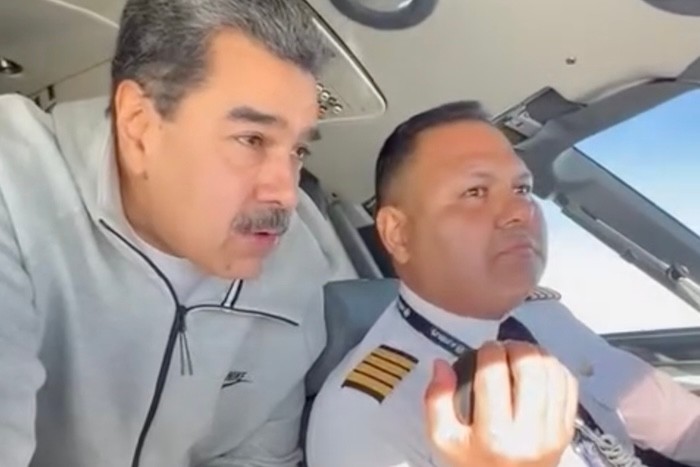
In a Saturday morning interview on “Fox and Friends Weekend,” Trump laid out the details of the overnight strike, after which he said Maduro and his wife, Cilia Flores, were flown by helicopter to a U.S. warship.

Maduro was in a ‘fortress,’ Trump says

Trump described Maduro as being “highly guarded” in a presidential palace that was “like a fortress,” although the Venezuelan leader was not able to get to a safe room.

American forces were armed with “massive blowtorches,” which they would have used to cut through steel walls had Maduro locked himself in the room, Trump said.

“It had what they call a safety space, where it’s solid steel all around,” Trump said. “He didn’t get that space closed. He was trying to get into it, but he got bum-rushed right so fast that he didn’t get into that. We were prepared.”

Part of that preparation, Trump said, included practicing maneuvers on a replica building.

“They actually built a house which was identical to the one they went into with all the same, all that steel all over the place,” Trump said.

‘We turned off all the lights’

Trump said that the U.S. operation took place in darkness, although he did not detail how that had happened. He said the U.S. turned off “almost all of the lights in Caracas,” the capital of Venezuela.

“This thing was so organized,” he said. “And they go into a dark space with machine guns facing them all over the place.”

At least seven explosions were heard in Caracas. The attack lasted less than 30 minutes.

Venezuela’s vice president, Delcy Rodríguez, who under that country’s law takes power, said some Venezuelan civilians and members of the military were killed.

Trump says ‘a couple of guys injured’

Trump said a few U.S. members of the operation were injured but he believed no one was killed.

“A couple of guys were hit, but they came back and they’re supposed to be in pretty good shape,” he said.

The Republican president said the U.S. had lost no aircraft, but that a helicopter was “hit pretty hard.”

“We had to do it because it’s a war,” he added.

The weather was a factor

Trump said U.S. forces held off on conducting the operation for days, waiting for cloud cover to pass because the “weather has to be perfect.”

“We waited four days,” he said. “We were going to do this four days ago, three days ago, two days ago. And then all of a sudden it opened up and we said, go. And I’ll tell you, it’s, it was just amazing.”

Where is Maduro now?

Trump said that Maduro and Flores were flown by helicopter to a U.S. warship and would go on to New York to face charges. The Justice Department released an indictment accusing the pair of having an alleged role in a narco-terrorism conspiracy.

Months of escalating actions

The raid was a dramatic escalation from a series of strikes the U.S. military has carried out on what Trump has said were drug carrying boats in the Caribbean Sea and eastern Pacific Ocean since early September. There had been 35 known strikes that killed at least 115 people.

On Dec. 29, Trump said the U.S. struck a facility where boats accused of carrying drugs “load up.” The CIA was behind the drone strike at a docking area believed to have been used by Venezuelan drug cartels. It was the first known direct operation on Venezuelan soil since the U.S. began its strikes in September.

Adapted from reporting by the Associated Press
 

Helicopter Crashes Into Arizona Mountains, Killing 4

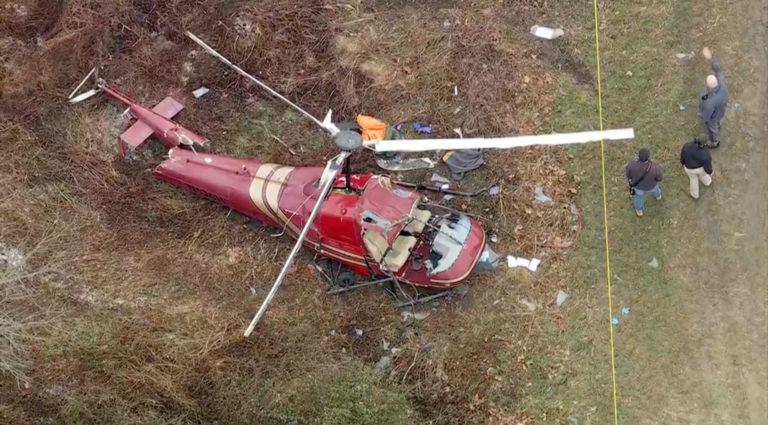
(Headline USAA private helicopter crashed Friday in a mountainous area of Arizona, killing all four people aboard, officials said.

Those killed were the 59-year-old pilot, two 21-year-old women and a 22-year-old woman, the Pinal County Sheriff’s Office said in a post on the social platform X. Their names have not been released.

The crash took place around 11 a.m. near Telegraph Canyon, about 64 miles (103 kilometers) east of Phoenix, the sheriff’s office said. It may have been caused when the helicopter hit a “recreational slackline” that was more than half a mile (more than a kilometer) long and strung across the mountains, the office said.

“An eyewitness who called 911 reported seeing the helicopter strike a portion of the line before falling to the bottom of the canyon,” the sheriff’s office said.

The Federal Aviation Administration and the National Transportation Safety Board are investigating.

The helicopter had taken off from an airport in the town of Queen Creek, about 29 miles (47 kilometers) west of the canyon. It took crews several hours to travel by foot to the remote area where the helicopter crashed.

Flights were temporarily restricted over the area due to safety reasons, according to the sheriff’s office.

“Our prayers are with the victims and their families,” the sheriff’s office said.

Adapted from reporting by the Associated Press
 

Judge Who Aided Illegal Immigrant Resigns Under Threat of GOP Impeachment

(Headline USAEmbattled Wisconsin Judge Hannah Dugan, who was convicted of obstruction last month for helping an illegal immigrant evade federal officers, has sent her resignation letter to the governor.

The letter was sent Saturday. Republicans had been making plans to impeach her ever since her Dec. 19 conviction. A spokesperson for Gov. Tony Evers said his office received Dugan’s letter, and he would work to fill the vacancy without delay.

Dugan wrote that over the past decade she handled thousands of cases with “a commitment to treat all persons with dignity and respect, to act justly, deliberately and consistently, and to maintain a courtroom with the decorum and safety the public deserves.”

But she said the case against her is too big of a distraction.

“As you know, I am the subject of unprecedented federal legal proceedings, which are far from concluded but which present immense and complex challenges that threaten the independence of our judiciary. I am pursuing this fight for myself and for our independent judiciary,” Dugan said in her letter.

Last April, federal prosecutors accused Dugan of distracting federal officers trying to arrest a Mexican illegal immigrant outside her courtroom and leading the man out through a private door. A federal jury convicted her of felony obstruction.

The case against Dugan was highlighted by President Donald Trump as he pressed ahead with his sweeping illegal immigration crackdown.

Republican Wisconsin Assembly Speaker Robin Vos praised Dugan’s decision.

“I’m glad Dugan did the right thing by resigning and followed the clear direction from the Wisconsin Constitution,” Vos said.

Democrat Ann Jacobs, who is chair of the Wisconsin Elections Commission board, said she agreed with Dugan that Milwaukee should have a permanent judge in place while this fight plays out.

“Despite her situation, she is ever the champion of justice, wanting to remove the judiciary from a political battle over her fate. I’m sure this is terribly hard for her but she is true to her faith and her principles,” Jacobs said in a post on X.

On April 18, immigration officers went to the Milwaukee County courthouse after learning 31-year-old Eduardo Flores-Ruiz had reentered the country illegally and was scheduled to appear before Dugan for a hearing in a state battery case.

Dugan confronted agents outside her courtroom and directed them to the office of her boss, Milwaukee County Chief Judge Carl Ashley, because she told them their administrative warrant wasn’t sufficient grounds to arrest Flores-Ruiz.

After the agents left, she led Flores-Ruiz and his attorney out a private jury door. Agents spotted Flores-Ruiz in the corridor, followed him outside and arrested him after a foot chase. The U.S. Department of Homeland Security announced in November he had been deported.

Adapted from reporting by the Associated Press


US BOMBS CARACAS, CAPTURES VENEZUELAN PRESIDENT NICOLAS MADURO

(Headline USAThe United States hit Venezuela with a “large-scale strike” early Saturday and said its president had been captured and flown out of the country after months of intense pressure on Nicolás Maduro’s government — an extraordinary nighttime operation announced by President Donald Trump on social media hours after the attack.

The legal authority for the strike — and whether Trump consulted Congress beforehand — was not immediately clear. The stunning American military action, which plucked a nation’s sitting leader from office, echoed the U.S. invasion of Panama that led to the surrender and seizure of its leader, Manuel Antonio Noriega, in 1990 — exactly 36 years ago Saturday.

U.S. Attorney General Pam Bondi said Maduro and his wife, Cilia Flores, would face charges after an indictment in New York. Bondi vowed in a social media post that the couple would “soon face the full wrath of American justice on American soil in American courts.”

Maduro and other Venezuelan officials were indicted in 2020 on “narco-terrorism” conspiracy charges, but it was not previously known that his wife had been and it wasn’t clear if Bondi was referring to a new indictment. The details of the allegations against Flores were not immediately known.

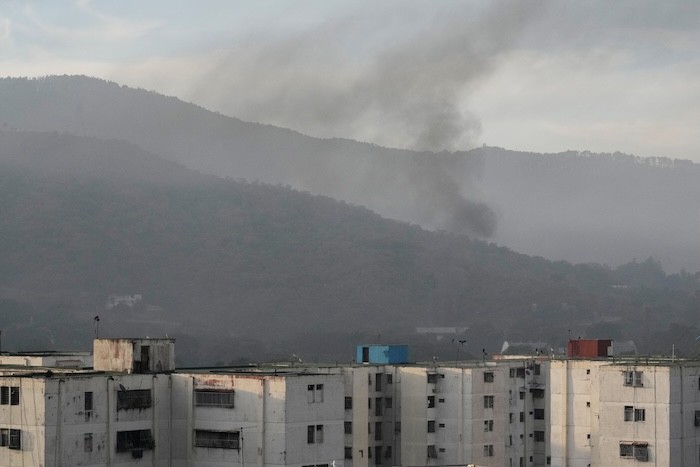
Early Saturday, multiple explosions rang out and low-flying aircraft swept through the Venezuelan capital, as Maduro’s government accused the United States of attacking civilian and military installations, calling it an “imperialist attack” and urging citizens to take to the streets.

With Maduro’s whereabouts not known, the vice president, Delcy Rodríguez, would take power under Venezuelan law. There was no confirmation that had happened, though she did issue a statement after the strike.

“We do not know the whereabouts of President Nicolás Maduro and First Lady Cilia Flores,” Rodriguez said. “We demand proof of life.”

Maduro, Trump said, “has been, along with his wife, captured and flown out of the Country. This operation was done in conjunction with U.S. Law Enforcement.” He set a news conference for later Saturday morning.

The attack itself lasted less than 30 minutes and the explosions — at least seven blasts — sent people rushing into the streets, while others took to social media to report what they’d seen and heard. It was not known if there were any deaths or injuries on either side or if more actions lay ahead, though Trump said in his post that the strikes were carried out “successfully.”

Sen. Mike Lee, R-Utah, posted on X that Secretary of State Marco Rubio had briefed him on the strike and said that Maduro “has been arrested by U.S. personnel to stand trial on criminal charges in the United States.”

The White House did not immediately respond to queries on where Maduro and his wife were being flown to.

Maduro last appeared on state television Friday while meeting with a delegation of Chinese officials in Caracas.

The strike came after the Trump administration spent months increasing pressure on the Venezuelan leader, including a major buildup of American forces in the waters off South America and attacks on boats in the eastern Pacific and Caribbean accused of carrying drugs. Last week, the CIA was behind a drone strike at a docking area believed to have been used by Venezuelan drug cartels — the first known direct operation on Venezuelan soil since the U.S. began strikes in September.

As of Friday, the number of known boat strikes was 35 and the number of people killed at least 115, according to the Trump administration. Trump said that the U.S. is engaged in an “armed conflict” with drug cartels and has justified the boat strikes as a necessary to stem the flow of drugs into the U.S.

Maduro has decried the U.S. military operations as a thinly veiled effort to oust him from power.

Some streets in Caracas fill up

Venezuela’s government responded to the attack with a call to action: “People to the streets!”

Armed people and uniformed members of a civilian militia headed into the streets of a Caracas neighborhood long considered a stronghold of the ruling party. As daylight broke, some people rallied and yelled “Bring back Maduro!” while holding posters of the leader.

In other areas of the city, the streets remained empty hours after the attack. Parts of the city remained without power, but vehicles moved freely.

Video obtained from Caracas and an unidentified coastal city showed tracers and smoke clouding the landscape as repeated muted explosions illuminated the night sky. Other footage showed cars passing on a highway as blasts illuminated the hills behind them. The videos were verified by The Associated Press.

Smoke was seen rising from the hangar of a military base in Caracas, while another military installation in the capital was without power.

“The whole ground shook. This is horrible. We heard explosions and planes,” said Carmen Hidalgo, a 21-year-old office worker, her voice trembling. She was walking briskly with two relatives in Caracas, returning from a birthday party. “We felt like the air was hitting us.”

The Venezuelan government’s statement said that Maduro had “ordered all national defense plans to be implemented” and declared a state of emergency that gives him the power to suspend people’s rights and expand the role of the armed forces.

The website of the U.S. Embassy in Venezuela, a post that has been closed since 2019, issued a warning to American citizens in the country, saying it was “aware of reports of explosions in and around Caracas.”

“U.S. citizens in Venezuela should shelter in place,” the warning said.

Reaction begins to emerge

Inquiries to the Pentagon and U.S. Southern Command since Trump’s social media post went unanswered. The FAA warned all commercial and private U.S. pilots that the airspace over Venezuela and the small island nation of Curacao, just off the coast of the country, was off limits “due to safety-of-flight risks associated with ongoing military activity.”

The Armed Services committees in both houses of Congress, which have jurisdiction over military matters, have not been notified by the administration of any actions, according to a person familiar with the matter and granted anonymity to discuss it.

Lawmakers from both political parties in Congress have raised deep reservations and flat out objections to the U.S. attacks on boats suspected of drug smuggling on boats near the Venezuelan coast and Congress has not specifically approved an authorization for the use of military force for such operations in the region.

Deputy Secretary of State Christopher Landau said the military action and seizure of Maduro marks “a new dawn for Venezuela,” saying that “the tyrant is gone.” He posted on X hours after the strike. His boss, Rubio, reposted a post from July that said Maduro “is NOT the President of Venezuela and his regime is NOT the legitimate government.”

Cuba, a supporter of the Maduro government and a longtime adversary of the United States, called for the international community to respond to what president Miguel Díaz-Canel Bermúdez called “the criminal attack.”

“Our zone of peace is being brutally assaulted,” he said on X. Iran’s Foreign Ministry also condemned the strikes.

President Javier Milei of Argentina praised the claim by his close ally, Trump, that Maduro had been captured with a political slogan he often deploys to celebrate right-wing advances: “Long live freedom, dammit!”

Adapted from reporting by the Associated Press