Central Bank Gold Buying Momentum Continued in November

(Mike Maharrey, Money Metals News Service) Central bank gold buying picked up in September and gained momentum in October. That momentum carried into November with gold reserves continuing to climb.

Officially, central banks globally added 45 tonnes of gold to their reserves in November. That was down slightly from 53 tonnes the previous month but elevated compared to earlier in 2025.
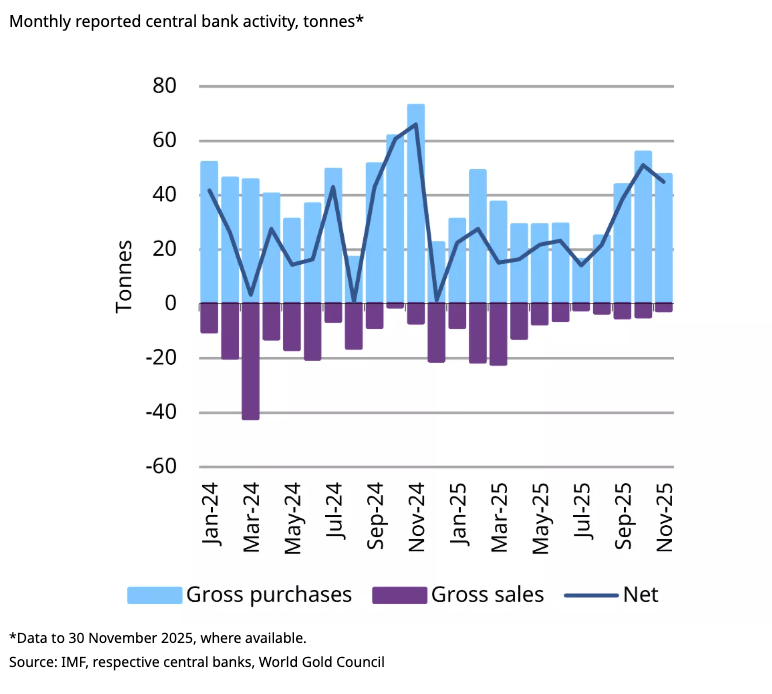
October and November central bank gold buying built on a strong third quarter, with official reported purchases coming in at a net 220 tonnes. That was up 28 percent from Q2 and 6 percent above the five-year third-quarter average.

The World Gold Council said the pickup in central bank gold demand in Q3 “is evidence that central banks continue to add gold strategically, despite facing higher prices.”

For the second straight month, Poland ranked as the biggest buyer, adding another 12 tonnes of gold to its reserves. That increased the country’s official gold holding to 543 tonnes, representing 28 percent of its total reserves based on gold prices at the end of November.

In September, the National Bank of Poland announced plans to boost its gold holdings to 30 percent of its total reserve assets.

When he announced plans to further expand Poland’s gold reserves, National Bank of Poland Governor Adam Glapiński called gold “the only safe investment for state reserves,” in these “difficult times of global turmoil and the search for a new financial order.”

In an interview earlier this year, Glapiński emphasized that gold is not directly linked to any national economic policies, is a safe haven during crises, and retains its real value over the long term.

“It is a symbol of stability that enhances our credibility in the eyes of investors and foreign partners.”

To date, Poland ranks as the top central bank gold purchaser with a 95-tonne increase to its reserves.

For the third straight month, Brazil expanded its gold holdings in November, adding 11 tonnes to its reserves. Over those three months, Brazil grew its gold holdings by 43 tonnes. The Brazilian central bank now officially owns 172 tonnes of gold, representing about 6 percent of its reserves.

Uzbekistan’s central bank continued to expand its gold reserves for the second straight month, reporting a 10-tonne increase in November after a 9-tonne purchase in October. The Uzbeks were sellers in September.

It is not uncommon for banks that buy from domestic production – such as Uzbekistan and Kazakhstan – to flip-flop between buying and selling.

The National Bank of Kazakhstan was also in a buying mood, expanding its reserves by 8 tonnes.

The Czech National Bank has been growing its gold reserves at a slow and steady pace. It added another 2 tonnes in November, its 33rd straight month of gold accumulation. The Czech Republic now holds 71 tonnes of gold. Czech officials say they plan to increase gold reserves to 100 tonnes by 2028.

China has reported an increase in its official reserves for 13 straight months, adding another tonne in November. The People’s Bank of China has increased its official holdings by 401 tonnes in that span.

Total official Chinese gold reserves are now over 2,300 tonnes, making up around 7 percent of its total reserves.

Notice the emphasis on “official.”

China is among the central banks that are likely to hold significantly more gold than they publicly disclose. As Jan Nieuwenhuijs has reported, the People’s Bank of China is secretly buying large amounts of gold off the books. According to data parsed by the renowned Money Metals researcher, the Chinese central bank is currently sitting on more than 5,000 tonnes of monetary gold located in Beijing – more than TWICE what has been publicly admitted.

Mainstream reporting has finally picked up on this.

The National Bank of the Kyrgyz Republic (2 tonnes) and the Bank of Indonesia (1 tonne) were the other significant buyers.

The Bank of Tanzania reported the purchase of 15 tonnes of refined monetary gold in the first year of its Domestic Gold Purchase Program. The stated goal is to strengthen the country’s foreign reserves.

Jordan and Qatar were the only notable sellers in November.

Overall, central bank gold buying slowed somewhat in 2025 (the big jump in the last three months notwithstanding). Final numbers for the year will come out next month.

Higher prices have undoubtedly incentivized some central banks to slow the pace of gold accumulation. However, the World Gold Council said the pickup in central bank gold demand in Q3 and the first two months of Q4 “is evidence that central banks continue to add gold strategically, despite facing higher prices.”

Despite the modest slowdown in gold accumulation, the World Gold Council remains bullish.

“We maintain our view that central banks will continue to add gold to their reserves. Our Central Bank Gold Reserves Survey 2025 shows that respondents overwhelmingly (95 percent) expect global central bank gold reserves to increase over the next 12 months, while 43 percent believe that their own gold reserves will also increase over the same period. Notably, none of the respondents anticipate a decline in their gold reserves.”

You can read more details about that central bank survey HERE.

On net, central banks officially increased their gold holdings by 1,044.6 tonnes in 2024. It was the 15th consecutive year of expanding gold reserves.

Last year was the third-largest expansion of central bank gold reserves on record, coming in just 6.2 tonnes lower than in 2023 and 91 tonnes lower than the all-time high set in 2022 (1,136 tonnes). 2022 was the highest level of net purchases on record, dating back to 1950, including since the suspension of dollar convertibility into gold in 1971.

To put that into context, central bank gold reserves increased by an average of just 473 tonnes annually between 2010 and 2021.

World Gold Council analysts said, “Central banks are likely to continue their buying spree,” calling central bank purchases “surprisingly resilient” given the rapid price increase.

The WGC has also noted that “diversification” with “a reduction of U.S. assets” is one of the factors driving central bank gold buying. In other words, de-dollarization.

“We don’t see an end to this narrative unless there is a material shift in geopolitical tensions. The IMF has downgraded growth prospects in the U.S. more than in other major economies, citing policy uncertainty. This suggests that other countries may have leverage in negotiations, although these typically last months and years, not weeks. Hence, we don’t expect any near-term resolutions.”


Mike Maharrey is a journalist and market analyst for Money Metals with over a decade of experience in precious metals. He holds a BS in accounting from the University of Kentucky and a BA in journalism from the University of South Florida.


De-Dollarization Alert: Zambia Now Accepting Yuan for Mining Tax Payments

(Mike Maharrey, Money Metals News Service) In yet another sign of growing global de-dollarization, Chinese mining companies in Zambia are now paying royalties and taxes in yuan.

As Bloomberg put it, this is the “latest sign of the growing acceptance of the currency on the [African] continent.

Zambia ranks as Africa’s second-largest copper producer.

According to the Bank of Zambia, the government began accepting tax payments in yuan in October.

“A large portion of copper exports go to China, and the Chinese mining firms already receive some, if not all, of their payments for their exports to China in renminbi. The Bank of Zambia has the diversification and building-up of its reserves as a key objective, and purchasing renminbi enables the bank to actualize this objective.”

A Zambian central bank official also said holding part of its foreign reserves in yuan would enable the country to service its Chinese debt in “a more cost-effective manner.

Zambia is the first African country to confirm the acceptance of the yuan for mining-tax payments. Previously, taxes were paid in U.S. dollars.

In 2018, the Bank of Zambia imposed rules requiring foreign mining companies operating in the country to pay royalties in dollars. In 2020, it expanded the rules to cover all mining-tax payments. The goal was to increase its dollar reserves.

The move is part of a broader Chinese strategy to internationalize the yuan and raise the currency’s status on the global stage.

China ranks as the world’s top creditor. As Bloomberg explained it, “China is leveraging its position as the world’s largest creditor to help broaden usage of the yuan, offering overseas borrowers the chance to benefit from economically depressed interest rates at home by ditching the dollar.

Last year, Kenya converted dollar loans owed to China to yuan-denominated debt. Ethiopia is reportedly in talks to follow suit, and Zambian officials said they would also consider a similar move.

Kenyan officials said converting Chinese railway loans from dollars to yuan will slash its debt-servicing costs by $215 million annually.

The Chinese are taking a loss as Chinese interest rates are well below those associated with the dollar. However, analysts say the Chinese are willing to stomach the losses to boost the yuan.

If the borrowers pay less, then the lender gets less,” Carnegie Endowment for International Peace senior fellow Michael Pettis told Bloomberg. “The benefit for China in exchange for less revenue is that the renminbi becomes a more internationally used currency.

Analysts also told Bloomberg the approach makes it easier for borrowers to purchase Chinese goods with yuan, “elevating the currency’s role in trade settlement and financing.”

Chipping Away at the Dollar

The dollar is in no danger of losing its status as the primary global reserve currency, but de-dollarization is chipping away at its dominance. It’s clear we’re moving toward a “multipolar” world where several currencies, along with gold, are making up a growing share of global reserves.

Central banks worldwide are diversifying away from dollars and buying gold. We’ve seen central bank gold buying eclipse 1,000 tonnes for three straight years. To put that into context, central bank gold reserves increased by an average of just 473 tonnes annually between 2010 and 2021.

We’ve also seen declining dollar reserves.

As of the end of last year, dollars made up 57.8 percent of global reserves. That is the lowest level since 1994, representing a 7.3 percent decline over the last decade. In 2002, dollars accounted for about 72 percent of total reserves.

Why are so many countries spurning the dollar?

Many are concerned about the weaponization of the U.S. currency. In an article published by the Atlantic Council, Kimberly Donovan and Maia Nikoladze point out that “central banks that are worried about getting sanctioned, want to protect themselves from a potential global financial crisis, or both have been stacking up gold at record levels.

There are also growing worries about the U.S. government’s fiscal irresponsibility. In October, the national debt pushed above $38 trillion, and there is no sign that the borrowing and spending will slow down anytime soon. At some point, people become wary of loaning their fast-spending, drunk uncle more money.

Even a modest de-dollarization spells trouble for the federal government and the U.S. economy.

In a nutshell, the United States needs the world to need dollars.

The U.S. depends on a global demand for dollars supported by its reserve status to underpin its massive government. The only reason Uncle Sam can borrow, spend, and run massive budget deficits to the extent that it does is the dollar’s role as the world’s reserve currency. It creates a built-in global demand for dollars and dollar-denominated assets. This absorbs the Federal Reserve’s money creation and helps maintain dollar strength despite the Federal Reserve’s inflationary policies.

If the world needs fewer dollars, they will begin to return to the U.S., causing a dollar glut. This will increase inflationary pressure domestically as the value of the U.S. currency further depreciates. In the worst-case scenario, the dollar could collapse completely, leading to hyperinflation.


Mike Maharrey is a journalist and market analyst for Money Metals with over a decade of experience in precious metals. He holds a BS in accounting from the University of Kentucky and a BA in journalism from the University of South Florida.

Trump Critic George Conway Launches Bid for Congress

(The Center Square) Political pundit and Trump critic George Conway has joined a crowded field of Democrats seeking to replace outgoing Rep. Jerry Nadler in New York’s 12th Congressional District.

Conway, 62, a lawyer and former Republican consultant, announced his candidacy on Tuesday in a video that stressed his knowledge of Beltway politics and his efforts to push back against the Trump administration’s divisive policies.

“We have a corrupt president, a mendacious president, a criminal president whose masked agents are disappearing people from our streets, who’s breaking international law, and he’s running our federal government like a mob protection racket,” Conway said in the video. “I know how to fight these people. They will stop at nothing to rig the system for themselves. I’ve been fighting Trump for years, and nothing will stop me.”

His campaign announcement, on the five-year anniversary of the Jan. 6 attack on the U.S. Capitol, featured video clips of demonstrators breaking windows, prying open doors and climbing into the building where Congress was certifying the results of the 2020 presidential election.

Conway has been a frequent critic of President Donald Trump’s policies since his first presidency. He co-founded the Lincoln Project, an anti-Trump political action committee that has funded TV ads and initiatives criticizing the president. He’s also the ex-husband of Kellyanne Conway, who served as Trump’s senior advisor during his first presidency.

Nadler, 78, is serving out his 17th term in Congress. He announced in September that he won’t seek reelection next year, suggesting that a younger Democratic lawmaker in his seat “can maybe do better, can maybe help us more.”

Conway joins a crowded field of contenders already running for the deep blue 12th congressional district seat, which includes Manhattan’s Upper West Side, Upper East Side and midtown. Most are running on the message that it’s time for younger leaders to rebuild the Democratic party. To date, a dozen candidates have filed to run in the Democratic primary, according to Federal Election Commission filings.

Democrat Jack Schlossberg, the grandson of former President John F. Kennedy, jumped into the race in November. Nonprofit founder Liam Elkind, 26, entered the race for Nadler’s congressional seat in August. Other candidates include New York State Assembly member Micah Lasher, 43, Alex Bores, 35, journalist and lawyer Jami Floyd, 51. Several other Democrats are considering a run.

New York’s 12th district is one of several competitive races on the state’s ballot in next year’s midterm elections. New York City Comptroller Brad Lander is running for New York’s 10th Congressional District, setting up a Democratic primary clash with incumbent Rep. Dan Goldman Meanwhile, Rep. Nydia Velázquez decision not to seek reelection next year is expected to spark a scramble to fill the 7th Congressional District.

Sheriff of Charlotte Metro Area Accused of Threat on State Lawmaker

(The Center Square) Threats to a state lawmaker, extortion, corruption and “willful misconduct and maladministration in office” are charges filed Monday in Superior Court by a state representative and four former employees of a sheriff in North Carolina’s largest metropolitan area.

Mecklenburg County Sheriff Garry McFadden, on the same day he agreed to testify before a General Assembly oversight panel, is expected to be probed by the State Bureau of Investigation upon request by District Attorney Spencer Merriweather. Rep. Carla Cunningham, D-Mecklenburg, said the sheriff, in a July 26 call, told the lawmaker “people of Mecklenburg County ‘would come after’ her” if she went through with how she planned to vote on a veto override.

The petition filed requests McFadden’s removal from office. He’s not given statements about the pending litigation. His appearance before the Oversight Committee of the state House of Representatives is scheduled for Jan. 29.

“Based on McFadden’s tone and manner of delivery,” the petition says, “Rep. Cunningham understood McFadden to be making a prediction that Rep. Cunningham would become physically unsafe, not that she would (for example) lose the support of her constituents or face highly motivated political opposition.”

The override vote referenced was on The Criminal Illegal Alien Enforcement Act, known also as House Bill 318. Cunningham was the lone Democrat to vote for the legislation and on the override. Under the new immigration law, local law enforcement cannot release a suspect until 48 hours after ICE is notified.

McFadden’s history has shown sympathy toward people illegally in the country, and a stated desire to refuse cooperation with U.S. Immigration and Customs Enforcement. McFadden on his first day in office ended the ICE cooperation program known as 287(g).

Marcia Crenshaw Hill, Kevin Canty, Juan Delgado and Bryan Adams – respective former sergeant, chief deputy, captain and major with the Sheriff’s Office under McFadden – are petitioners alongside Cunningham. Together, in addition to the threat against a state legislator, they say McFadden is responsible for mismanagement of the county jail, retaliation tactics on former employees and whistleblowers, misuse of resources, weaponization of internal affairs and workplace favoritism.

The petition points out the timing of McFadden’s call being less than two weeks after Minnesota Speaker of the House Melissa Hortman and her husband were killed in their home on June 14. Murder charges are filed and political motivation is suspected.

Cunningham said the threats, as delivered, “constituted attempted bribery and corruption” as defined in the state statute entitled “Bribery, Economic Threats Made to Influence Legislation.”

Charlotte’s estimated population is 944,742. The Queen City is 14th largest in the nation, second among the eight South Atlantic states, and 7th in the 16-state South as defined by the U.S. Census Bureau. The population of Mecklenburg County on July 1 is projected to be 1,198,460 by the Office of State Budget and Management.

While some publications have labeled Cunningham as “embattled” for not toeing the line of Democrats, arguably, it is Charlotte with a significant reputational downfall and ongoing trouble in the last five months.

On Aug. 22, Iryna Zarutska was killed aboard a light rail train in the city. Two weeks later, a video of the stabbing was released by the Charlotte-Mecklenburg Police Department, sparking national outcries as far away as second-term Republican President Donald Trump.

When the suspect’s revolving door pattern history in the justice system was mixed into the conversation, three congressional lawmakers sought the removal of the magistrate who last let him go free on merely a promise to appear in court. Weeks later, state lawmakers passed legislation – Iryna’s Law – ending cashless bail and subsequently ending the unwritten moratorium on the death penalty.

In November, enhanced immigration enforcement – including more than 400 arrests – was carried out in Charlotte by the U.S. Customs and Border Patrol and ICE. Democrats among the city’s leadership, including Mayor Vi Lyles, publicly denounced the action while Homeland Security said those arrested had criminal records inclusive of domestic violence, battery, aggravated assault, assault with a dangerous weapon, assault on a police officer, breaking and entering, larceny, driving while intoxicated, and hit-and-run.

On New Year’s Eve, teenager Christian Sturdivant in the Mint Hill suburb was apprehended by the FBI and charged with planned attacks on a local grocery store and fast-food restaurant inspired by the Islamic militant organization known as ISIS. That’s the Islamist extremist group that broke away from al-Qaida and bears responsibility for the 9/11 attacks on America.

Among the former employees’ accusations, Crenshaw Hill said she was stabbed by an inmate and subsequently fired in a disagreement of whether she entered a cell with or without other officers, per departmental policy. Canty said disliked members of the Sheriff’s Office, or ones McFadden felt were disloyal, would be investigated.

Delgado said the sheriff made promises to inmates in violation of policy. Adams says unqualified people got positions in order to become informants to McFadden.

The petition says 81 deputies are needed for a single shift at the Mecklenburg County Detention Center and the number “the last few years” are frequently 30 to 40 or less. From a staff of 1,300 three years ago, petitioners say it is less than 800 today and “many officers left because of the intolerable work environment created by McFadden.”

Deaths at the jail in August and December of last year raised to 20 the number of inmates to die there since December 2018 when McFadden took office. For context, it’s double the number of predecessors Irwin Carmichael and Chipp Bailey.

Cunningham is seeking reelection for her District 106 seat. She’s challenged in the Super Tuesday primary by Vermanno Bowman and Rev. Dr. Rodney Sadler, the latter of which on Monday just before the filing of the petition was endorsed by first-term Democratic Gov. Josh Stein.

Trump Lays Out ‘Roadmap for Victory’ During GOP House Retreat

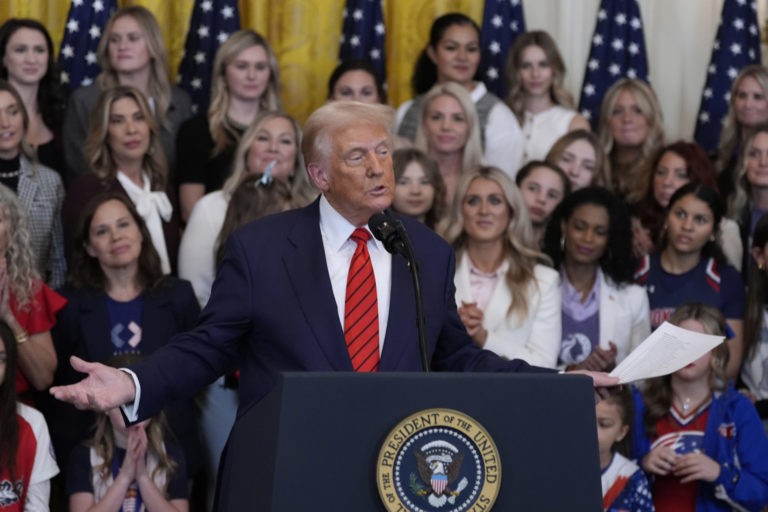
(The Center Square) As the country is about to embark on a pivotal election year, President Donald Trump addressed the GOP U.S. House of Representatives retreat.

During a nearly 90-minute speech held at the newly renamed, Trump-Kennedy Center, the president laid out what he calls a “roadmap to victory for the House GOP.

He spotlighted election reform, his administration’s success on the border, health care and energy among issues for the Republicans to run on as they begin to hit the campaign trail ahead of this year’s midterm elections, when each House seat is on the ballot.

The president began his speech remarking on the sudden death of Rep. Doug LaMalfa, R-Calif., announced Tuesday morning, narrowing the GOP majority in the House to five seats.

Trump briefly noted the fifth anniversary of the Jan. 6, 2021, Capitol riots, accusing the media and Democrats of failing to mention that the president told supporters on Jan. 6 to “walk or march peacefully and patriotically to the Capitol.”

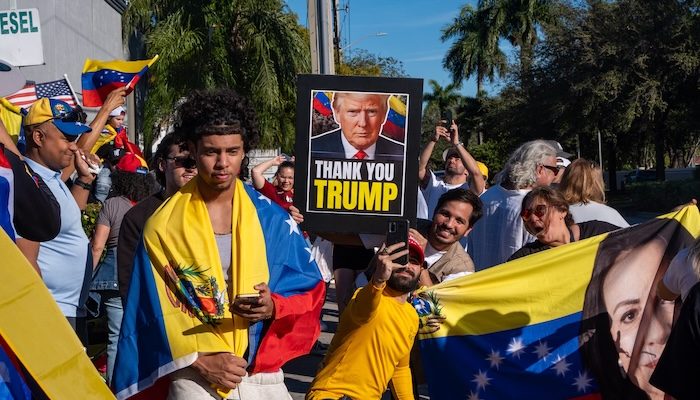
He also highlighted Saturday’s early morning strike and raid in Venezuela, underscoring its success, while noting the organized protests that followed.

The president spent some time discussing the autopen scandal surrounding former President Joe Biden, which segued into the elections, pressing the representatives to pass the SAVE Act, requiring ID to vote. The president suggested renaming it the Save America Act.

“If you would put that up for a vote, it’s got my total endorsement, and all it is common sense things about the election, and they’ll fight it like crazy because they cheat. That’s the only way they can win,” the president told the members.

Trump touted his immigration and border policies, telling the members: “We can’t let them forget that we did such a great job on the border.”

The president touched on his decision to declare a crime emergency in Washington, D.C., leading him to label the shooting of two National Guard members the evening before Thanksgiving a “terrorist attack” – despite no official terrorism charges.

Trump warned the members that if Republicans don’t win, the country is “going to go to hell…So we can’t play games.”

He highlighted his administration’s efforts to lower drug prices, stressing the resistance he faced from European leaders, defending his use of tariffs. Trump says the prior high drug costs were “subsidizing the entire world.”

Trump told the members that they need to focus on health care.

“One thing on health care, it’s never been our issue. It should be our issue,” said the president.

Trump told the members that Republicans “have all the policy,” but that they have to “stay together.”

“If you look at what we’re trying to solve, the health care problem, we’re trying to get better health care at a lower price,” the president told the members.

“You work on favorite nations, you work on borders, you work on all the things we talked about, but now you take the health care issue away from them, and they want to fight it. You know why? They’re all owned by the insurance companies and cannot fight it successfully,” Trump claimed.

However, he cautioned the members to be flexible on the health care issue, citing the Hyde Act.

He instructed the members to approve a plan that would allow the money to go directly to the American people, enabling them to buy their own health care instead of letting it go directly to insurance companies, whom he called “big fat cats.”

He suggested the money “goes into a health care account,” adding “there are numerous things you can do, but you have to let no money for the insurance companies.”

He also stressed that members tout lower energy costs while out on the campaign trail, pointing to lower costs at the gas pumps since the president took office a year ago.

In closing, he told the members that it is essential for them to stick together, noting it as a strength for Democrats.

“We have great, solid, commonsense policy. They have horrendous policy. What they do is they stick together. They never have a no vote,” he told them. “You have so many good nuggets. You have to use them. If you have to sell them.”

MTG Posts about Burgers, Appropriation Bill on Final Day in Office

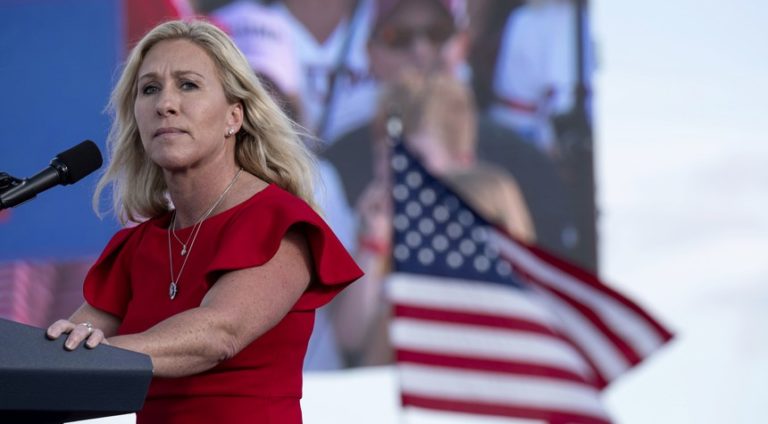
(The Center Square) U.S. Rep. Marjorie Taylor Greene spent her last day in Congress criticizing an upcoming appropriations bill and posting to social media about her lunch in her home state of Georgia.

Fifteen months since going on stage at the Republican National Convention supportive of Donald Trump, Greene announced in November that she was leaving office. She cited conflicts with the president she helped elect over the Epstein files and concerns about health care.

On Monday, she said a provision in an appropriations bill that would update warnings on pesticides and limit lawsuits against chemical companies “has no place in Republican bills.”

U.S. Rep. Thomas Massie, R-Ky., also posted about the provision on social media and later said it was removed from the bill.

Greene indicated she was in Rome – Georgia, not Italy – on her personal social media page in a post saying she had a “double steakburger and beef tallow fries” at a local franchise restaurant that sponsored a billboard about the late Charlie Kirk.

“Stand up. Speak out. Stay bold,” Greene posted.

Greene spent her final weekend in office denouncing Saturday’s U.S. military action on Venezuela, which led to the arrest of Nicolás Maduro and his wife on drug charges. She appeared on NBC’s Meet the Press on Sunday.

“If U.S. military action and regime change in Venezuela was really about saving American lives from deadly drugs then why hasn’t the Trump administration taken action against Mexican cartels?” Greene said on social media. “And if prosecuting narco-terrorists is a high priority then why did President Trump pardon the former Honduran President Juan Orlando Hernandez who was convicted and sentenced for 45 years for trafficking hundreds of tons of cocaine into America?”

Greene was first elected in 2020 and reelected in 2022 and 2024 to represent Georgia’s 14th district. A special election will be called by Gov. Brian Kemp in the next 10 days, per Georgia law. Until then, the position will remain empty, trimming the Republican majority in the House of Representatives to 219-213 with her seat becoming the third vacancy.

Twenty Republicans, two Democrats and one unaffiliated candidate have filed paperwork with the Federal Elections Commission as candidates for the position.

After Trump Threat, Venezuela’s Acting President Calls for Cooperation

(Dave DeCamp, Antiwar.comVenezuela’s acting president, Vice President Delcy Rodriguez, issued a statement on Sunday calling for cooperation with the US after President Trump threatened her with a fate worse than President Nicolas Maduro’s if she did not do the US’s bidding.

“Venezuela reaffirms its commitment to peace and peaceful coexistence. Our country aspires to live without external threats, in an environment of respect and international cooperation,” Rodriguez said in a statement on Telegram that was published in English.

“We prioritize moving towards balanced and respectful international relations between the United States and Venezuela, and between Venezuela and other countries in the region, premised on sovereign equality and non-interference,” Rodriguez added.

She invited the US to “collaborate with us on an agenda of cooperation oriented towards shared development within the framework of international law to strengthen lasting community coexistence,” and added a plea to President Trump, telling him “our peoples and our region deserve peace and dialogue, not war.”

Throughout the US military buildup in the Caribbean, which led to the US attack on Caracas, Maduro had been calling for peace and cooperation with the US and continued to accept deportation flights from the US despite the US’s escalations. According to a report from The New York Times, he also offered US companies access to Venezuela’s oil and other natural resources as a way to avoid war, but the deal was rejected by the Trump administration.

“He’s offered everything; you’re right. You know why? Because he doesn’t want to fuck around with the United States,” President Trump said back in October. In an interview on Fox News, the morning Maduro was abducted by US forces, Trump said, “Maduro wanted to negotiate at the end, but I said no, too late.”

Now, Trump is demanding that Rodriguez comply with his demand for the US to “run” Venezuela and ensure US oil companies get oil assets inside the country. If not, Trump has threatened to launch a second wave of attacks on the country.

On Monday, Rodriguez held a meeting of high-level Venezuelan officials and appointed a commission with the task of freeing Maduro and his wife, Cilia Flores, who appeared before a US judge in New York on Monday and said they were innocent.

This article originally appeared at Antiwar.com.


Indian-Owned Minnesota Hotel Refusing Services to DHS Agents

(Luis CornelioHeadline USA) The Trump administration accused Hilton Hotels of refusing to provide lodging to DHS agents conducting immigration-related work, according to statements posted on X Monday.

According to The Federalist CEO Sean Davis, the particular hotel that denied DHS is the Hampton Inn Lakeville, which is owned by four Indian partners: Parmjit Singh, Amanpreet Hundal, Karandeep Nagra, and Mohinderjeet Kaur.

DHS posted screenshots of email correspondence that appeared to show communication between Hilton representatives and an individual whose name and email address were redacted. 

The exchange began with a representative from Hampton Inn Lakeville in Minneapolis informing the government official that the hotel would not allow immigration agents on the property. 

“We have noticed an influx of GOV reservations made today that have been for DHS, and we are not allowing any ICE or immigration agents to stay at our property,” the email stated. “If you are with DHS or immigration, let us know as we will have to cancel your reservation.” 

The message added, “Please pass on this info to your coworkers that we are not allowing any immigration agents to house on our property.” 

A follow-up email stated that the reservation had been canceled after a “further investigation online” and that there would be another email detailing the cancellation. 

DHS’s official X page rebuked the cancellation, accusing Hilton of launching a “coordinated campaign in Minneapolis to REFUSE service to DHS law enforcement.” 

The agency said that when agents use their government emails, “Hilton Hotels maliciously CANCELLED their reservations.” 

“This is UNACCEPTABLE,” DHS wrote. “Why is Hilton Hotels siding with murderers and rapists to deliberately undermine and impede DHS law enforcement from their mission to enforce our nation’s immigration laws?” 

JD Vance’s Attacker ID’ed as Trans

(Luis CornelioHeadline USA) The unhinged suspect accused of attacking Vice President JD Vance’s Cincinnati home has been identified as a transgender-identifying individual. 

William D DeFoor, who was born biologically male but identifies as a woman, was identified in a report on his upbringing published by the Daily Mail. 

DeFoor, who now goes by the name Julia, allegedly smashed four windows at Vance’s home and faces multiple state charges, including obstructing official business, criminal damaging or endangering, criminal trespass and vandalism. 

The Daily Mail reported that DeFoor previously went by “Davis” while attending a $27,000-per-year Catholic high school before transitioning.

According to the outlet, DeFoor “grew up in the affluent Hyde Park neighborhood in a $1.3 million home with his surgeon father, William, and pediatrician mother, Catherine DeFoor, both registered Democrats, and two younger siblings, Libby and Alex.” 

DeFoor’s father works as a pediatric urologist at Cincinnati Children’s Hospital, while his wife is a general pediatrician with St. Elizabeth Physicians in Kentucky. 

“The DeFoor family appears close, with both William and Catherine having just last year paid visits to their youngest children’s universities, social media posts show,” the outlet added. “The accused home attacker does not appear to have graduated from a traditional four-year university despite having excelled as a high schooler at The Summit Country Day School, a prestigious private school in Cincinnati.” 

The Mail further reported that DeFoor appears to have created a Facebook account under the name “Julia DeFoor” about a month before the alleged attack.  

Headline USA independently verified the existence of a Facebook page under that name but could not confirm that it was created by the suspect now in custody. 

The account lists Cincinnati State Technical and Community College as the page holder’s school. A photo posted Dec. 15 shows a white individual smiling for the camera. 

DeFoor is scheduled to appear in court on Tuesday. 

Eric Swalwell Threatens to Revoke Driver’s Licenses of Masked ICE Agents in CA

(José Niño, Headline USA) During a Wednesday appearance on MS NOW, Rep. Eric Swalwell, D-CA, issued a stark warning to federal immigration enforcement personnel: reveal your identity or lose your ability to drive legally in the state.

The congressman, currently vying for California’s governorship in the November election, announced he would leverage the state’s licensing authority to crack down on Immigration and Customs Enforcement agents who wear face coverings during operations.

“If the president is going to send ICE agents to chase immigrants through the fields where they work, what I’m going to do is make them take off their masks and show their faces, show their identification, and if they commit crimes, that they’re going to be charged with crimes,” Swalwell declared.

He continued: “If the governor has the ability to issue driver’s licenses to people in California, if you’re going to wear a mask and not identify yourself, you’re not going to be eligible to drive a vehicle in California.”

The proposal emerges amid ongoing legal battles over California’s attempt to prohibit law enforcement officers from concealing their faces. Just the News reported that Governor Gavin Newsom signed legislation last September that would have banned such practices, with the law scheduled to take effect this Thursday. However, the Trump administration filed suit against the measure, securing a temporary hold on its implementation.

The Department of Homeland Security has flatly refused to comply with California’s mandate. Republican critics maintain that federal immigration agents require facial concealment to protect against doxxing and potential retaliation. Constitutional scholars have also questioned whether states possess the authority to regulate federal law enforcement operations.

Swalwell faces a crowded field of prominent Democrats competing to succeed the term-limited Newsom. Former Health and Human Services Secretary Xavier Becerra and former Representative Katie Porter are both seeking their party’s nomination. On the Republican side, Riverside County Sheriff Chad Bianco has emerged as the leading candidate.

José Niño is the deputy editor of Headline USA. Follow him at x.com/JoseAlNino