Trump Declares National Emergency to Protect Stolen Venezuela Funds

(Kyle Anzalone, Antiwar.com) President Donald Trump invoked the National Emergencies Act to ensure he controls the funds generated from selling stolen Venezuelan oil. 

“The attachment or the imposition of other judicial process against the Foreign Government Deposit Funds will substantially interfere with our critical efforts to ensure economic and political stability in Venezuela,” the executive action signed by Trump on Friday stated. “The failure of these critical efforts would jeopardize major foreign policy objectives of the United States.”

After ordering the kidnapping of Venezuelan President Nicolas Maduro on January 3, Trump claimed that the US was controlling the country. The White House policy calls for taking the South American country’s oil, selling it, and using the money to run Venezuela. 

Additionally, the US has seized five oil tankers carrying Venezuelan oil in recent weeks.

A senior US official told Axios that the US would be running Venezuela’s oil industry “indefinitely.”

Trump’s plan for controlling Venezuela’s oil is already facing challenges. On Friday, major oil executives met with Trump in the White House and failed to make significant commitments to the President’s plan to rebuild Venezuela’s oil infrastructure.

It’s uninvestable,” ExxonMobil CEO Darren Woods told White House officials after hearing Trump’s proposal to invest in the country.“There are a number of legal and commercial frameworks that would have to be established to even understand what kind of returns we would get on the investment.”

This article originally appeared at Antiwar.com.  


Headline Geopolitics: Alfred de Zayas on the Death of International Law

(José Niño, Headline USA) In this Headline Geopolitics episode, José Niño interviews Alfred de Zayas, a veteran international lawyer and former UN human rights expert, to examine the unraveling of international law in the post–Cold War era.

De Zayas explains how legal norms meant to restrain power have been transformed into instruments of power, particularly under U.S. hegemony. The conversation spans Ukraine, Gaza, Iran, and Venezuela, probing selective enforcement, sanctions as economic warfare, humanitarian law’s collapse, and the use of “legality” to justify regime change.

🎧 Watch the full interview here:


Follow Alfred de Zayas here:

Twitter: https://x.com/Alfreddezayas

YouTube: https://www.youtube.com/@Alfred_de_Zayas_Maurice/videos

Website: https://dezayasalfred.wordpress.com/

José Niño is the deputy editor of Headline USA. Follow him at x.com/JoseAlNino

U-Haul Drives Through Crowd of Protestors

(Headline USALos Angeles police responded Sunday after somebody drove a U-Haul box truck down a street crowded with marchers demonstrating in support of the Iranian people, causing protesters to scramble out of the way and then run after the speeding vehicle to try to attack the driver.

The U-Haul truck, with a window and side mirrors shattered, was stopped several blocks away and surrounded by police cars. ABC7 news helicopter footage showed officers keeping the crowd at bay as demonstrators swarmed the truck, throwing punches at the driver and thrusting flagpoles through the driver’s side window.

The driver, a man who was not identified, was detained “pending further investigation,” police said in a statement Sunday evening.

The police statement said one person was hit by the truck but nobody was seriously hurt. Two people were evaluated by paramedics and both declined treatment, the Los Angeles Fire Department said.

A banner attached on the truck said “No Shah. No Regime. USA: Don’t Repeat 1953. No Mullah,” an apparent reference to a U.S.-backed coup that year that toppled then Prime Minister Mohammad Mossadegh.

The August 1953 coup stemmed from U.S. fears over the Soviet Union increasingly wanting a piece of Iran as Communists agitated within the country. The ground had been laid partially by the British, who wanted to wrest back access to the Iranian oil industry, which had been nationalized earlier by Mossadegh.

The coup toppled Mossadegh and cemented the power of Shah Mohammad Reza Pahlavi. It also lit the fuse for the 1979 Islamic Revolution, which saw the fatally ill shah flee Iran and Ayatollah Ruhollah Khomeini usher in the theocracy that still governs the country.

A huge crowd of demonstrators, some waving the flag of Iran before the Islamic Revolution, had gathered Sunday afternoon along Veteran Avenue in LA’s Westwood neighborhood to protest against the Iranian theocracy. Police eventually issued a dispersal order, and by 5 p.m. only about a hundred protesters were still in the area, ABC7 reported.

Activists say a crackdown on nationwide protests in Iran has killed more than 530 people. Protesters flooded the streets in Iran’s capital of Tehran and its second-largest city again Sunday.

Los Angeles is home to the largest Iranian community outside of Iran.

Adapted from reporting by the Associated Press


Trump: We Are Going to Be Doing Something With Greenland

(Kyle Anzalone, Antiwar.comPresident Donald Trump threatened that he was willing to take control of Greenland the “hard way.”

“I’m not talking about money for Greenland yet. I might talk about that. But right now we are going to do something on Greenland, whether they like it or not,” the President said Friday. “I would like to make a deal. You know, the easy way. But if we don’t do it the easy way, we’re going to do it the hard way.”

Trump’s plan to take over Greenland will face several challenges. Greenland is a colony of Denmark, a NATO ally. Copenhagen says it will not give the US control of its colony. Last week, Danish Prime Minister Mette Frederiksen condemned “unacceptable pressure” by the Trump administration to acquire Greenland, warning it would destroy NATO.

“If the United States were to choose to attack another NATO country, then everything would come to an end,” Frederiksen said. “The international community as we know it, democratic rules of the game, NATO, the world’s strongest defensive alliance – all of that would collapse if one NATO country chose to attack another.”

Additionally, Greenland’s government opposes becoming an American colony. “We don’t want to be Americans, we don’t want to be Danes, we want to be Greenlanders,” Greenland Prime Minister Jens-Frederik Nielsen said Friday.

During Trump’s remarks to the press, he challenged Denmark’s claim to Greenland. “You know, the fact that they had a boat land there 500 years ago doesn’t mean that they own the land pure.” The President added, “We had lots of boats go there also.”

Trump claimed the US needed to seize Greenland to prevent China and Russia from taking control of the Danish colony. “If we don’t do it, Russia or China will take over Greenland. And we’re not going to have Russia or China as a neighbor,” the President said.

This article originally appeared at Antiwar.com.

U.S. Supreme Court to Hear Anti-Oil Cases with Energy Costs on the Line

(The Center Square) Energy advocates have been warning against green energy demands driving up prices across the country. As anti-oil and gas activists seek legal pathways to straddle the energy industry, U.S. companies are making less effective products at higher prices to comply with demands while customers suffer, industry insiders argue.

On Monday, justices in the U.S. Supreme Court will hear arguments in Plaquemines Parish v. Chevron. The legal battle centers around whether Chevron can move a case to federal court when federal government contracts are involved.

Plaquemines Parish, in Louisiana, originally sought damages from multiple oil and gas companies for allegedly engaging in oil and gas production on the coast without securing proper permits or violating preexisting permits.

Some of the violations date back to the World War II-era, when the federal government had production contracts with energy companies now owned by Chevron. The parish argues these contracts did not detail the methods by which companies were to obtain the oil and gas, leaving them liable for violating state permitting laws.

Louisiana’s coastal parishes have filed more than 40 similar lawsuits, claiming that oil and gas companies are responsible for coastal land loss in Louisiana. As the first case to reach a jury, Plaquemines Parish won a verdict of $744.6 million in damages against Chevron, which appealed.

Jason Isaac, founder of the American Energy Institute, told The Center Square a Supreme Court ruling in favor of Plaquemines Parish could be “devastating” for American energy companies.

“It’s essentially a tax on energy,” Isaac said. “This could be bad for consumers, it could be really bad for American energy independence and American energy dominance.”

He said the case is an attempt to pin the loss of coastal wetlands and certain weather events to a particular company over a period of several decades.

“They’re trying to make the claim that they can go back and look at every single bit of emissions and attribute certain weather events to that,” Isaac said.

A separate case, Suncor Energy v. Boulder County Commissioners, has also caught the attention of the nation’s highest court. The case focuses on whether state and local governments can file public nuisance lawsuits against oil and gas companies for global climate change effects.

“Public nuisance can’t be used for global problems. It can be used for local problems,” O.H. Skinner, executive director of Alliance for Consumers, told The Center Square.

The U.S. Supreme Court distributed the case for its Dec. 12 conference but did not decide whether to deny it or pick it up. The court relisted the case for its Jan. 9 conference and may decide whether to take it on Monday.

Isaac said the only reason the high court is still considering another energy case is because lower courts have yet to hear its merits.

“Courts recognize that cities can’t use local lawsuits to control global climate policy or rewrite federal energy law,” Isaac said. “Boulder’s longevity reflects delay and avoidance, not legal strength.”

While not all are being heard before the Supreme Court, similar litigation against energy companies is occurring throughout the country. Wrongful death lawsuits, state nuisance laws and near-total plastic bans are seeing fierce litigation.

Isaac said the cases stem from political desires to affect lasting change in the U.S. energy industry. He said Democrat-backed organizations will offer to cover attorneys and legal fees in law firms across the country to pursue litigation against large energy companies.

“They’re essentially a private firm becoming a de-facto government agency going after legitimate businesses here in the United States,” Isaac said. “The implications of these cases are to the tunes of billions of dollars.

Some companies and independent producers have experienced uncertainty due to fears associated with energy procurement lawsuits. Isaac said American Energy Institute’s member companies have settled certain lawsuits to avoid expensive court proceedings.

“That increases the cost that gets passed on to the consumer in the end,” Isaac said.

Increased consumer prices lead to less effective appliances in the home, Skinner told The Center Square. As executive director of the Alliance for Consumers, he said rules imposed on manufacturers to be climate friendly results in a less effective product.

“If you keep telling somebody that they have to use less water, less heat, less electricity, things take longer and they don’t do as well,” Skinner said.

As climate litigation is pursued across the country, Isaac and Skinner said they are concerned about increasing regulations that straddle companies from making the most efficient product.

“I don’t think people are recognizing that they’re truly getting hammered with their electric utility bills because these companies and states continue to mandate so-called green energy,” Isaac said.

Military Tells Trump It Needs More Time to Prepare for War w/ Iran

(Kyle Anzalone, Antiwar.comSenior Department of War officials have told President Donald Trump they need more time to consolidate American troops deployed to the Middle East before the US launches an attack on Iran.

According to The Telegraph, “Trump has been warned that the US military needs more time to prepare for strikes against Iran.” Military commanders in the Middle East stated they need to “consolidate US military positions and prepare defences” in anticipation of an Iranian retaliatory attack.

Parliament Speaker Mohammad Baqer Qalibaf said that if it attacks Iran, the Islamic Republic will strike Israel and US bases in the Middle East.

Trump has threatened Iran several times in recent weeks. “If Iran [shoots] and violently kills peaceful protesters, which is their custom, the United States of America will come to their rescue. We are locked and loaded and ready to go,” Trump said earlier this month.

Demonstrations began in Iran two weeks ago, and some protests have escalated into riots. Some groups report that 200 people have been killed during the demonstrations, including over 40 members of Iranian security forces.

Iranian authorities have reportedly used live ammunition to break up protests, and Tehran has cut off internet service in an attempt to quell the movement.

Israel Hayom spoke with American officials who said the White House is preparing a range of actions against Iran, including using Starlink to provide protesters with internet access, a cyber attack, new sanctions, and kinetic military action.

The Telegraph reports that potential targets of US strikes include non-military targets in Tehran and Iranian security forces.

At the end of last year, Israeli Prime Minister Benjamin Netanyahu traveled to the US to lobby Trump to restart the war with Iran. In June, Israel launched a surprise attack on Iran that ignited a 12-day war.

During the conflict, Trump ordered American bombers to strike three Iranian nuclear sites. The Islamic Republic responded by striking a US military base in Qatar. The Iranian response was viewed as symbolic, and a ceasefire between the US, Israel, and Iran was reached shortly after.

This article originally appeared at Antiwar.com.

Trump’s Motorcade in Florida Rerouted Due to ‘Suspicious Object’

(Headline USAPresident Donald Trump’s motorcade took a different route than usual to the airport as he was departing Florida on Sunday due to a “suspicious object,” according to the White House.

The object, which the White House did not describe, was discovered during security sweeps in advance of Trump’s arrival at Palm Beach International Airport.

“A further investigation was warranted and the presidential motorcade route was adjusted accordingly,” White House press secretary Karoline Leavitt said in a statement Sunday.

The president, when asked about the package by reporters, said, “I know nothing about it.”

Trump left his Palm Beach, Florida, club, Mar-a-Lago, around 6:20 p.m. for the roughly 10-minute drive to the airport, but took a circular route around the city to get there.

During the drive, police officers on motorcycles created a moving blockade for the motorcade, at one point almost colliding with the vans that accompanied Trump.

Air Force One was parked on the opposite side of the airport from where it is usually located and the lights outside the plane were turned off.

Anthony Guglielmi, the spokesman for U.S. Secret Service, said the secondary route was taken just as a precaution and that “that is standard protocol.”

Adapted from reporting by the Associated Press

Federal Reserve Chair is Under Criminal Investigation

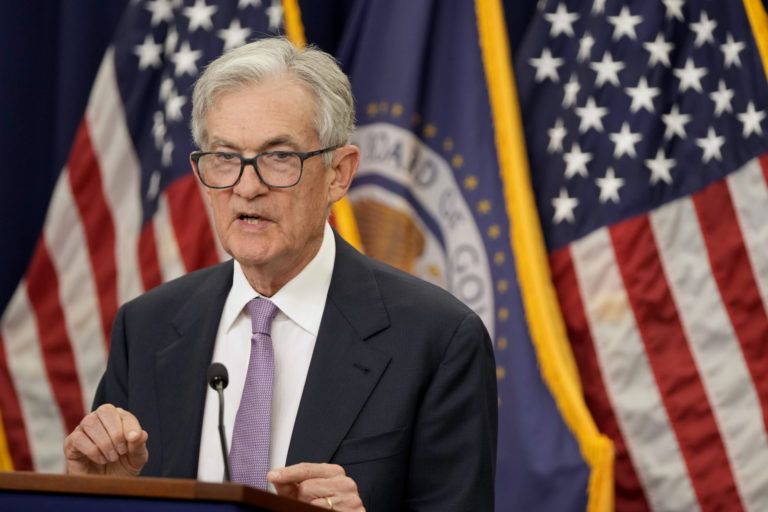
(Headline USAFederal Reserve Chair Jerome Powell said Sunday the Department of Justice has served the central bank with subpoenas and threatened it with a criminal indictment over his testimony this summer about the Fed’s building renovations.

The subpoenas relate to Powell’s testimony before the Senate Banking Committee in June, the Fed chair said, regarding the Fed’s $2.5 billion renovation of two office buildings, a project that President Donald Trump has criticized as excessive.

Powell on Sunday issued a video statement in which he characterized the threat of criminal charges as simple “pretexts” to undermine the Fed’s independence when it comes to setting interest rates.

“The threat of criminal charges is a consequence of the Federal Reserve setting interest rates based on our best assessment of what will serve the public, rather than following the preferences of the President,” Powell said. “This is about whether the Fed will be able to continue to set interest rates based on evidence and economic conditions — or whether instead monetary policy will be directed by political pressure or intimidation.”

In a brief interview with NBC News Sunday, Trump insisted he didn’t know about the investigation into Powell. When asked if the investigation is intended to pressure Powell on rates, Trump said, “No. I wouldn’t even think of doing it that way.”

Powell’s term as chair ends in May, and Trump administration officials have signaled that he could name a potential replacement this month. Trump has also sought to fire Fed governor Lisa Cook, who is under investigation for mortgage fraud. Cook has sued to keep her job and courts have ruled she can remain in her seat while the case plays out. The Supreme Court will hear arguments in that case Jan. 21.

At the Senate Banking Committee hearing in June, Chairman Tim Scott, a Republican from South Carolina, said the Fed’s building renovation included “rooftop terraces, custom elevators that open into VIP dining rooms, white marble finishes, and even a private art collection.”

Powell disputed those details in his testimony, saying “there’s no new marble. … there are no special elevators” and added that some of the controversial items are “not in the current plan.” In July, Russell Vought, director of the Office of Management and Budget, said in a letter to Powell that his testimony about changes to the building plans “raises serious questions about the project’s compliance” with previous plans approved by a planning commission.

Still, later that month, Trump visited the building site and, while standing next to Powell, overstated the cost of the renovation. Later that day, Trump, speaking to reporters, downplayed any concerns with the renovation. He said, “they have to get it done” and added, “Look, there’s always Monday morning quarterbacks. I don’t want to be that. I want to help them get it finished.”

When asked if it was a firing offense, Trump said, “I don’t want to put that in this category.”

The Justice Department in a statement Sunday said it can’t comment on any particular case, but added that Attorney General Pam Bondi “has instructed her US Attorneys to prioritize investigating any abuse of tax payer dollars.”

Timothy Lauer, a spokesperson for U.S. Attorney Jeanine Pirro’s office, said they don’t comment on ongoing investigations.

Adapted from reporting by the Associated Press


Five Battleground Governor’s Races for 2026

(The Center Square) – Voters from 36 states across the country will return to the polls to elect their next governors in 2026.

Several governors races are expected to see fierce competition between parties as they battle for control of their states. In other states, like California, primary challenges are likely to determine who will be elected to state leadership.

Out of 36 governors races in 2026, the Cook Political Report ranks five as “toss ups” where “either party has a good chance of winning.”

Here are those races.

Arizona

Incumbent Democratic Gov. Katie Hobbs is seeking reelection in a race that appears to be hotly contested.

Karrin Robson, a former candidate for Arizona governor, and Arizona U.S. Reps. Andy Biggs and David Schweikert will face off in a three-way primary election for the Republican nomination. Both Biggs and Robson received endorsements from President Donald Trump in the race for governor.

Robson has run on implementing principles of Trump’s Department of Government Efficiency to reduce government spending in Arizona.

“While Katie Hobbs misplaces hundreds of millions of taxpayer funds and grows the government, Karrin will shrink it,” Robson’s website reads. “She will streamline operations, prioritize responsible spending, and hold every agency accountable.”

Biggs has focused on border security throughout his campaign so far, with a focus on implementing Trump’s immigration agenda.

Hobbs has made affordability a focus of her campaign, touting her record over the past four years of reducing budget deficits in the state and providing tax cuts to middle class families. She also highlighted her work to order National Guard troops to the southern border.

Arizona’s primary election to determine who Hobbs will face off against in the general election is set for Aug. 4.

Michigan

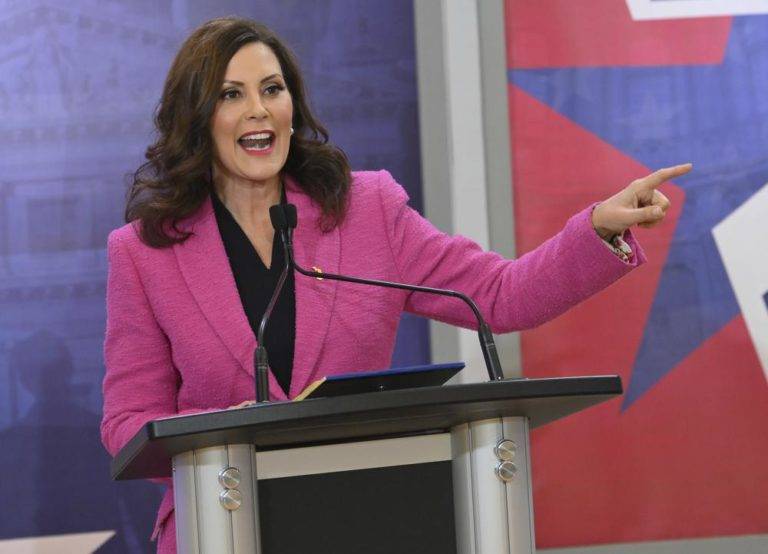
Democratic Gov. Gretchen Whitmer is term-limited and a crowded group looks to succeed her.

Secretary of State Jocelyn Benson and Lt. Gov. Garlin Gilchrest, are looking to win the Democratic nomination for the Great Lakes State. They are joined by Democrats Marni Sawicki, former mayor of Cape Coral, Fla., and Chris Swanson, sheriff of Genesee County.

U.S. Rep. John James, former Michigan attorney general Mike Cox and Tom Leonard, former speaker of the Michigan House of Representatives, are vying for the Republican nomination to be Michigan’s governor.

Benson, seen as a frontrunner for the Democratic nomination according to recent polling data, has focused her campaign on highlighting past achievements as the secretary of state. She has highlighted past achievements in voter security, reducing government bureaucracy, and reducing costs.

“As Secretary of State, Jocelyn has overseen the highest turnout, most secure elections in Michigan’s history by making it easier to vote and harder to cheat,” Benson’s campaign website reads.

As frontrunner for the Republican nomination, James has focused his campaign on lowering taxes and healthcare expenses.

“John will audit wasteful DEI programs, eliminate foreign influence in our institutions, and rebuild trust in government,” James’ website reads.

Michigan will hold its primary election on Aug. 4.

Wisconsin

Democratic Gov. Tony Evers announced in July he is retiring from politics. Evers’ retirement has left a field open for others hoping to fill his post.

Lt. Gov. Sara Rodriguez, former lieutenant Gov. Mandela Barnes, state Rep. Francesca Hong and Milwaukee County executive David Crowley are among a crowded field seeking the Democratic nomination.

In a less crowded race, Republicans in Wisconsin are looking to take back the governor’s mansion as U.S. Rep. Tom Tiffany, Washington County executive Josh Schoemann and Andy Manske have declared campaigns for candidacy.

Barnes has highlighted past issues from his campaign that he plans to focus on as governor. He focused on using public funding to lower energy costs in the state and expanded voting opportunities.

As Republicans look to retake the Wisconsin governorship, frontrunner Tiffany has touted his past legislative experience and pushed for an end to sanctuary jurisdiction laws in Wisconsin.

Wisconsin will hold its partisan primary elections on Aug. 11.

Georgia

Term-limited Gov. Brian Kemp will end his two-term run as the governor of Georgia and hand the reins off to another candidate in the Peach State.

On the federal level, Georgia is considered a swing state with two Democratic U.S. senators and the state’s preferring Joe Biden in 2020 but Trump in 2024. However, on the state level, Republicans have consistently had the advantage.

Several members of Kemp’s cabinet have declared their candidacy for the seat. Attorney General Chris Carr, Lt. Gov. Burt Jones and Secretary of State Brad Raffensberger are each vying for the Republican nomination.

President Donald Trump offered Jones his “Complete and Total Endorsement” for governor in August 2025, giving a boost to the lieutenant governor’s bid.

“We’re fighting for election integrity, lower taxes, and to secure Georgia values,” Jones wrote in a post on social media.

Democrats in Georgia are hopeful to capitalize on their wins in the U.S. Senate by flipping the governor’s mansion.

Former Republican Lt. Gov. Geoff Duncan, former mayor of Atlanta Keisha Lance Bottoms and Mike Thurmond have all declared candidacy for the Democratic governor nomination.

Lance Bottoms has focused on expanding Medicaid as a key component of her campaign for governor.

“Keisha will work to eliminate income taxes for teachers, crack down on corporate landlords that are buying up houses and making it harder for families to buy a home or afford rent, and she will invest in education so our children have better pathways to success through career training or college,” Lance Bottom’s website reads.

Georgia’s primary election is set for May 19.

Nevada

Incumbent Republican Gov. Joe Lombardo is running for a second term in Nevada. With less competition compared to other battleground states, Attorney General Aaron Ford looks to be the Democrat poised to take on Lombardo.

In 2024, Trump won Nevada as the first Republican president to do so since 2004.

Ford has received endorsements from both Democrat U.S. Sens. Catherine Cortez Masto and Jacky Rosen in his bid for governor.

Trump has endorsed Lombardo is his reelection campaign.

“As governor, he is fighting tirelessly to Grow the Economy, Cut Taxes and Regulations, Ensure NO TAX ON TIPS, Advance MADE IN THE U.S.A., Unleash American Energy DOMINANCE,” Trump wrote on social media. “Joe Lombardo is SMART, STRONG, AND TOUGH.”

One Year In, a ‘Ho-Hum’ Jobs Report

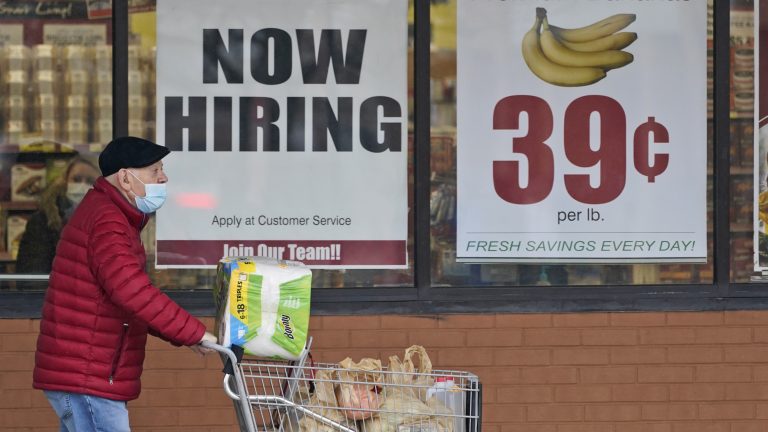
(The Center Square) December’s jobs data changed little from November, rounding out an underwhelming year for the U.S. labor market.

Initial estimates put job gains at 50,000, though if December is like every other month this year, that number will be revised downward in the coming months.

By comparison, last December saw an increase roughly 6.5 times greater, with 323,000 jobs added from the previous month. Payrolls rose by an estimated 269,000 from November to December 2023, while pre-pandemic December 2019 posted nonfarm employment growth of 127,000 jobs.

Bruce Yandle, an adjunct fellow at George Mason University’s market-oriented Mercatus Center, described it as “ho-hum.”

“We have about the same level of total employment here in December as we had in January, when the year was starting. And so in a sense, when you look at the report and stare at it… it looks like the world is flat,” Yandle told The Center Square.

The year started off stronger than it finished, with monthly job creation exceeding 100,000 January through April. But May added fewer than 20,000 jobs, and payrolls shrunk by 13,000 from May to June. The rest of the year was inconsistent — modest gains mixed with outright losses.

The latest Job Openings and Labor Turnover Survey provided a sobering glimpse into the realities of the current job market, according to Dave Hebert, a senior research fellow at the American Institute for Economic Research. The JOLTS report reflected a low-hire, low-fire market.

“We’ve been told that a lot of new jobs are going to be coming,” Hebert said. “The claim was that by Q4 of 2025, the economy would be humming.”

GDP growth did accelerate, however, from 3.8% to 4.3% in the third quarter, though fourth quarter growth has yet to be released. But GDP growth is of limited practical value if it doesn’t translate into more jobs.

“We don’t eat GDP growth rates. People work,” Hebert said.

A cooling labor market and strong economic growth might seem incongruous, but Yandle pointed to third-quarter productivity gains of 4.9% as an explanation.

“We’ve had zero growth in employment for a year, and we’ve had 4.9% growth in productivity. Zero plus 4.9 is 4.9,” Yandle said.

Yandle and others, including Stanford University economics professor Nicholas Bloom, have said the productivity gains without corresponding labor growth can likely be attributed in part to the proliferation of artificial intelligence. Otherwise, many economists believe the economic uncertainty caused by the continually shifting tariff policy is stifling the labor market.

Though unemployment has remained relatively low, finishing 2025 at 4.4%, job growth has remained subdued.

“We’re just not seeing that job growth that I think everyone wants,” Hebert said.