Silver Now Ranks as the Second-Most Valuable Asset in the World

(Mike Maharrey, Money Metals News Service) Silver was up nearly 148 percent in 2025, and the price has continued to climb in the new year, trading over $90 an ounce.

With the rapid gain, silver now ranks as the second-most valuable asset in the world with a market cap of $5.35 trillion.

The only asset more valuable than silver is gold, with a market cap of $32.5 trillion.

Last week, silver blew past AI chip giant NVIDIA (market cap of $4.53 trillion). It has also surpassed stock market tech darlings Apple, Microsoft, Amazon, and Alphabet.

Several dynamics have converged to drive silver higher, including spillover effects from the gold bull market, steady industrial demand, surging investment demand, inflation, and geopolitical uncertainty. However, one factor is the key driver – there isn’t enough metal.

This has created a significant silver squeeze that continues to pressure prices higher.

The root of the problem is simple: there isn’t enough metal to meet demand.

Silver demand has outstripped supply for four straight years, and the Silver Institute projects that 2025 will be the fifth. The structural market deficit came in at 148.9 million ounces in 2024. That drove the four-year market shortfall to 678 million ounces. Including the projected 2025 shortfall, the market deficit will likely be well over 800 million ounces, an entire year of mining output.

With metal in short supply, silver users must source metal from existing above-ground stocks. People holding those stocks are reluctant to let their silver go, driving prices persistently higher.

Refiners are scrambling to keep up with demand.

Dillon Gage is a silver refinery in Texas. Company president Terry Hanlon said they are running three shifts, seven days a week.

“We can’t keep up.”

Former U.S. Mint president called the converging supply and demand dynamics a “perfect storm.”

“We have been in a long-term supply deficit, and it is just getting worse.”

Growing ETF demand also reflects a surge in interest in silver. Individual investors have poured a record $921million into silver-backed funds over the past 390 days, according to data from Vanda Research.

This underscores another problem. There is far more paper silver than actual metal.

According to analyst Faysal Amin, published by FXStreet, the current paper‑to‑physical ratio stands near 356:1. In other words, for every ounce of physical silver in the world, there are 356 paper ounces.

Some speculate that silver is in a bubble. It’s fair to worry that the metal might be oversold, and the market is certainly benefiting from “fear of missing out.” However, the scarcity of metal isn’t going to abate any time soon, leaving plenty of reasons to remain bullish on the metal.


Mike Maharrey is a journalist and market analyst for Money Metals with over a decade of experience in precious metals. He holds a BS in accounting from the University of Kentucky and a BA in journalism from the University of South Florida.

DOJ Investigating Anti-ICE Protest at St. Paul Church

(Elyse Apel, The Center Square) Video posted by Black Lives Matter Minnesota, one of the organizers for the event, shows anti-ICE protestors disrupting a service at Cities Church in St. Paul. Protesters chanted “ICE out” and “Justice for Renee Good” while the service was in progress.

Another video, which has gone viral on social media, showed a protester confronting members of the congregation calling them “pretend Christians” and “comfortable white people.” Reports allege that the protestors discovered one of the church’s pastors works for U.S Immigration and Customs Enforcement, calling the protest a “clandestine mission.”

This is just the latest development following the killing of 37-year-old Renee Nicole Good by an ICE officer on Jan. 7. Good had driven into a roadway where agents were conducting enhanced immigration enforcement.

Tricia McLaughlin, assistant secretary of Homeland Security, said Good’s vehicle was “attempting to run over our law enforcement officers.” She also said the officer feared for his life and fired defensive shots.

Homeland Security Secretary Kristie Noem called Good’s actions an “act of domestic terrorism.”

City and state leaders have denied this version of events though, stating that ICE’s presence in the community is creating chaos and harm. Since the shooting, Minneapolis-Saint Paul has faced widespread protests, school closures, and violence.

Trump administration officials said the federal government is investigating Sunday’s protests, calling it a “heinous act.”

“There are already two prosecutors from my office on their way to Minneapolis, and they’ll be there this morning. We have an FBI team assembled and local prosecutors as well,” said Harmeet Dhillon, the assistant attorney general for the DOJ’s Civil Rights Division, on Monday morning.

“This is going to get the highest attention from the Department of Justice, because there is no more sacred right in our Constitution than the right to assemble and pray to God, and there are federal laws that protect that right,” Dhillon added. “What happened here was a shameful exercise of virtue signaling, disruption, fear, terror.”

U.S. Attorney General Pam Bondi said that federal officials will act to prosecute federal crimes, especially if state officials refuse to take action.

Church officials and Republicans have also been responding to the protest, which quickly captured national attention far beyond Minnesota.

Alex Plechash, chairman of the Republican Party of Minnesota, called out Democrats following the protest.

“When government closed churches, Democrats cheered,” Plechash said. “When mobs disrupt worship, Democrats look the other way. Governor Tim Walz and Senator Klobuchar: condemn this now!”

So far, Democrats both in Minnesota and nationally have been largely silent regarding the church protest.

Trump Invites Putin To Join the Gaza ‘Board of Peace’

(Alan Mosley, Antiwar.com) Russia and Israel are the latest governments asked to join President Donald Trump’s expanding “Board of Peace,” the body he says will implement his plan for Gaza and mediate conflicts worldwide. Kremlin spokesman Dmitry Peskov confirmed on Monday that Russian President Vladimir Putin has received an invitation even as Russia’s nearly four‑year war on Ukraine continues. Israel has also been invited but the office of Prime Minister Benjamin Netanyahu offered no comment on whether it will participate.

The “Board of Peace” is a three‑tier structure created to supervise Gaza’s demilitarization and reconstruction under a 20‑point plan Trump unveiled last September. It would be chaired by the former president and would elevate U.S. and European figures such as Secretary of State Marco Rubio and former British prime minister Tony Blair, while relegating Palestinian representatives to the municipal level. Legal scholars and human rights advocates say this design marginalizes Palestinians and entrenches Western and Israeli interests.

Peskov said Moscow was seeking to “clarify all the nuances” of Trump’s offer. Putin has lauded Trump’s attempts to broker ceasefires, but the invitation arrives as Russian forces fight in Ukraine and as Moscow’s relations with Israel deteriorate over the Gaza assault. News agencies have reported that Belarusian President Alexander Lukashenko is also on the invite list, highlighting the eclectic mix of states Trump hopes to enlist.

Netanyahu’s office subsequently said that the announcement of the Gaza Executive Board – the body subordinate to the Board of Peace – was not coordinated with Israel and ran contrary to government policy. The Prime Minister’s Office objected to the board’s composition, yet a source told Haaretz the public rebuke was largely performative and that Netanyahu had been aware of the planning. The report added that a U.S. official responded that the Gaza initiative is Washington’s project and that Netanyahu “can’t really go against us”.

Far‑right Israeli Finance Minister Bezalel Smotrich has taken the opposition further. Speaking to settlers in the West Bank, he thanked Trump for securing hostage releases but said the plan for Gaza “is bad for the state of Israel” and must be shelved. Smotrich urged Netanyahu to dismantle the U.S.-led Civil Military Coordination Centre in Kiryat Gat, established to coordinate post‑war planning, arguing that foreign staff from countries like Egypt and Britain undermined Israel’s security. He demanded that Hamas be given only a brief ultimatum to disarm before Israeli forces storm the Strip and impose direct control, rejecting any role for Turkish or Qatari officials.

This rejection, along with the proposed board lacking any Palestinian representation, has received criticism from Jerusalem. The White House says the plan has now moved into its second phase, yet Hamas points out that Israel has not fulfilled earlier commitments such as opening the Rafah crossing and allowing temporary housing, while Israel argues that Hamas still has not returned the remains of an Israeli soldier.

Peskov’s acknowledgement of Russia’s invitation, coupled with Smotrich’s call to shut the coordination center, illustrates how Trump’s initiative has become a lightning rod. Critics argue that recruiting leaders enmeshed in wars from Ukraine to the Middle East while sidelining Gazans themselves risks entrenching conflicts rather than resolving them. As bombardment and blockade continue in the enclave, the idea of a peace panel dominated by foreign and pro‑Israeli interests underscores the chasm between diplomatic spectacle and the lived reality of Palestinian

This article originally appeared at Antiwar.com.  

SCOTUS to Hear Fed Firing Case Wednesday

(Andrew Rice, The Center Square) The U.S. Supreme Court will hear arguments on Wednesday to decide whether President Donald Trump can fire Lisa Cook, a member of the Federal Reserve Board of Governors.

In Trump v. Cook, justices of the Supreme Court will review a decision from a lower court judge that reinstated Cook after Trump fired her.

President Joe Biden appointed Cook to a 14-year term on the Federal Reserve’s board of governors in 2023. Members on the board are appointed by the president and confirmed by the U.S. Senate to serve the terms.

Trump accused Cook of committing mortgage fraud before she joined the Federal Reserve. He said Cook listed homes in both Michigan and Georgia as her “primary residence” for the next year.

“At a minimum, the conduct at issue exhibits the sort of gross negligence in financial transactions that calls into question your competence and trustworthiness as a financial regulator,” Trump wrote in a letter to Cook in August 2025.

According to the Federal Reserve Act, members of the board of governors can only be fired by the president “for cause.” Cook sued, asking the court to be reinstated.

Judge Jia Cobb, a U.S. District Court judge for the District of Columbia, issued a temporary order to reinstate Cook as the litigation continued. Cobb argued Cook has similar rights to a lower-level civil servant or teacher and is entitled to notice and a hearing before being fired.

“This theory is untenable and would wreak havoc on sensitive presidential decision-making,” the Trump administration wrote in a petition to the Supreme Court. “The statutory text at issue here imposes only the former, requiring ‘cause’ but saying nothing about notice of a hearing.”

Cobb also argued that Cook’s firing needed to be based on an action she committed while in office at the Federal Reserve.

“The most relevant sources of preexisting law are the federal statutes governing presidential removals of other executive officers – statutes that limited removals to instances of inefficiency, neglect or malfeasance in office,” lawyers for Cook wrote.

It is unclear whether justices on the Supreme Court will weigh in on the merits of Cook’s case, instead, they are more likely to decide whether the lower court’s pause is justified. However, the justices have already heard oral arguments in Trump v. Slaughter, a case challenging Trump’s removal of Rebecca Slaughter, a member of the Federal Trade Commission.

If the court upholds the president’s authority, it could undo an almost 90-year-old precedent that prevented President Franklin Delano Roosevelt from firing members of federal boards like the FTC.

“The court said that where a multi-member commission exercises substantial executive power, the president has the plenary power to remove that official,” said Kannon Shanmugam, a Supreme Court and appellate litigator.

The Supreme Court heard oral arguments in Trump v. Slaughter on Dec. 8 and will issue a decision in the case by July.

Trump v. Cook represents another test of the president’s relationship with the Federal Reserve. Over the last several months, Trump has publicly criticized Federal Reserve Chair Jerome Powell over his decision not to lower interest rates.

“‘Too Late’ MUST NOW LOWER THE RATE. No Inflation! Let people buy, and refinance, their homes!,” the president wrote on social media.

The Federal Reserve lowered interest rates three times in 2025. The relationship between the president and Powell intensified recently as the U.S. Department of Justice launched an investigation into the chair.

“The threat of criminal charges is a consequence of the Federal Reserve setting interest rates based on our best assessment of what will serve the public, rather than following the preferences of the President,” Powell said in a video posted Jan. 11 announcing the investigation.

After hearing oral arguments on Wednesday, the Supreme Court will decide whether the order to keep Cook on the board will remain in place by July.


DOJ Claims ‘Substantial Progress’ Made on Epstein Files, but No New Releases

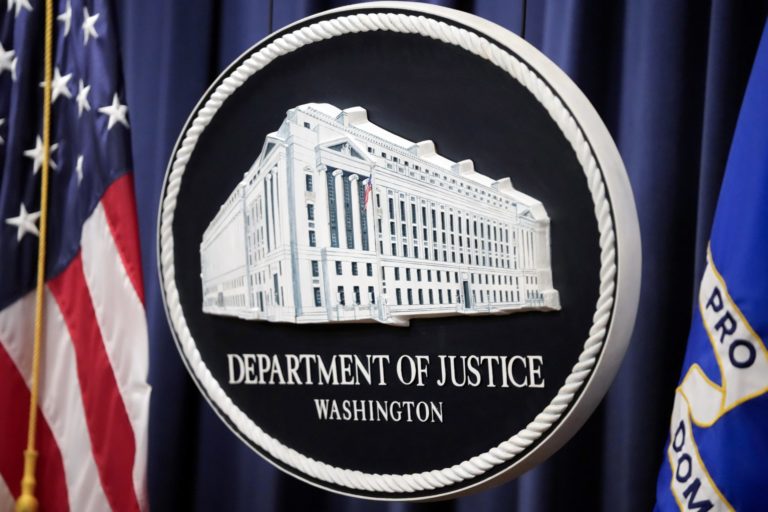
(Thérèse Boudreaux, The Center Square) Four weeks after the congressionally-mandated release deadline, the Department of Justice says it is making “substantial progress” in its review of the millions of remaining unclassified Epstein files.

Since 2026 began, however, the agency hasn’t released any more files related to the deceased convicted sex trafficker.

According to DOJ’s own analyses, at least 2 million more files have yet to be released. So far, the DOJ has published 12,285 documents, about 125,575 pages of material.

The agency argued in a Thursday court filing that its violation of the Dec. 19 deadline imposed by the Epstein Files Transparency Act is due to the number of redactions it is making. More than 500 reviewers are tasked with this job, the DOJ revealed.

“The Department has made substantial progress and remains focused on releasing materials under the Act promptly while protecting victim privacy,” the DOJ said. “Compliance with the Act is a substantial undertaking, principally because, for a substantial number of documents, careful, manual review is necessary to ensure that victim-identifying information is redacted before materials are released.”

It added, “This is a time-intensive process due to the voluminous materials, the idiosyncratic nature of many of the materials, and the need to protect victim identifying information.”

U.S. lawmakers have criticized both the ongoing delay in releasing the files and the excessive redactions the DOJ has made. The Epstein Files Transparency Act expressly forbids the DOJ from redacting relevant information unless it could potentially jeopardize victim privacy, national security, or prosecution efforts.

But, as revealed on social media by political commentator Ed Krassenstein, the DOJ apparently violated that edict in at least one of the documents. One of the uncovered redactions included information on how Epstein attempted to pay off witnesses of his sex trafficking operations and destroy evidence of his crimes.

Lawmakers on both sides of the aisle are threatening to hold Attorney General Pam Bondi in contempt of Congress.

Most recently, Reps. Ro Khanna, D-Calif., and Thomas Massie, R-Ky., who sponsored the Epstein Files Transparency Act, requested a court-appointed, independent monitor to ensure the DOJ fully complies with the law’s transparency requirements.

U.S. Supreme Court to Hear Second Amendment Case Tuesday

(Andrew Rice, The Center Square) The U.S. Supreme Court will hear oral arguments on Tuesday in a case over whether states can prevent concealed carry holders on private property that is open to the public.

Wolford v. Lopez challenges a Hawaii law that prevents concealed carry permit holders from bringing handguns to beaches, bars, restaurants that serve alcohol and gas stations without the owners permission.

The Hawaii law stems from the Supreme Court’s decision in New York State Rifle & Pistol Association v. Bruen, where justices struck down a New York law requiring concealed carry holders to display the need to defend themselves.

“The Second and Fourteenth Amendments protect an individual’s right to carry a handgun for self-defense outside the home,” Justice Clarence Thomas wrote in the court’s 2022 decision.

Thomas further elaborated that gun restrictions should only be upheld if they are consistent with the “historical tradition” of the United States.

In 2023, Hawaii implemented a law making it a misdemeanor for concealed carry holders to bring a gun on private property. The misdemeanor carries a sentence of up to a year in prison.

Hawaii residents with concealed-carry permits challenged the state’s law. The residents, alongside a gun-rights group, argued that the government has no imperative to prohibit citizens from carrying concealed weapons in public spaces.

“There is no comparable historical – or even modern-day – tradition of allowing the government to create a no-carry default rule for private property open to the public,” lawyers for the residents wrote to the Supreme Court.

Lawyers for the gun-rights group also pointed to the disproportionate effect Hawaii’s law will have on rural areas with parks and beaches.

“These bans are applicable to hundreds of thousands of acres of public land throughout Hawaii, even though the State allows hunting with firearms in many areas of these parks and forests,” lawyers wrote in a petition to the court.

In a brief to the Supreme Court, Hawaii Attorney General Anne Lopez said the state instituted its law to protect citizens from hosting armed individuals on private property. Lopez points to a longstanding history of limiting the right of Hawaiian citizens to carry weapons in public spaces.

“Property owners in Hawai’i could assume that – unless they made express arrangements to the contrary – firearms would not be carried onto their property, even if it was open to the public,” Lopez wrote in a brief to the nation’s highest court.

Lawyers for Hawaii also argue that the Second Amendment, at the time of the nation’s founding, did not include the right to enter private property with a weapon.

“The Founders recognized a property owner’s right to exclude,” the lawyers wrote. “Accordingly, at the Founding, a person had no right to enter private property with a gun unless he had the owner’s express consent or an implied license based on local law or custom.”

In lower court litigation, Hawaii pointed to a 1771 New Jersey law and an 1865 Louisiana law that explicitly required consent before entering a private property of any kind with a gun. Lower courts upheld Hawaii’s arguments on the basis of these laws.

“The overall purpose of all the laws was plainly to protect a property owner’s right to exclude firearms,” lawyers for Hawaii wrote. “Variation in the specific reasons why owners might wish to preclude guns – from preventing unwanted hunting to promoting safety, comfort or self-defense – does not undermine the basic fact that laws that vindicate the fundamental right to exclude are well within the tradition of American firearm regulation.”

Lawyers for the concealed-carry holders argued Hawaii relied on faulty evidence to assert other laws were similar to the state’s ban. They argued certain public spaces, like beaches and public parks, would not be considered in the original bans, which fundamentally alters the state’s argument.

“Under that approach, ‘the original understanding of the Second Amendment,’” the lawyers wrote, referencing a lower court judge’s opinion, “‘Would not apply to any new types of public spaces that would develop in the future.’”

Gun rights and gun control advocates will be watching as justices on the Supreme Court prepare to hear arguments in a consequential Second Amendment case on Tuesday.

Unidentified Afghans Let into US during Biden Administration

(The Center Square) Amid a scathing committee hearing on the vetting process of Afghan parolees under the Biden administration, nearly $6 billion in continual funding for refugees is poised to be voted on in Congress.

The Senate Judiciary Committee hosted a hearing last week on the Biden administration’s vetting practices surrounding nearly 100,000 Afghan evacuees admitted to the U.S. following the 2021 pullout of American forces from Afghanistan, under Operation Allies Welcome.

U.S. Sen. John Cornyn, R-Texas, says the Biden administration gave an “easy pass” to hundreds of thousands of noncitizens, including the Afghan evacuees, that he argues would “not be eligible to come, but for this discretionary issuance.”

Officials testifying during the hearing admitted that many of the parolees were admitted into the U.S. without critical biographic data, including a person’s name and date of birth. They noted that 1,300 Afghan nationals were admitted into the country before any biometrics, fingerprints, or photographs were required to run background checks on the individuals.

Officials admitted that several agencies lost track of the evacuees once they were resettled in the country, across over 176 communities, and that the government hasn’t been able to locate many of them.

Cornyn highlighted that “18,000 of them were known or suspected terrorists” with the National Counter Terrorism Center identifying “2,000 individuals with ties to terrorist organizations and is actively working with the FBI on their cases.”

U.S. Sen. Josh Hawley, R-Mo., pointed out that “Congress appropriated one and a half billion dollars for this operation on the part of the Biden admittance of all these refugees and parolees.”

The senator claimed that “tens of millions of dollars, went to pro terrorist organizations in this country that were supposed to help monitor these refugees and move them along the parole system, but in fact, took the money and did who knows what with it.”

Hawley highlighted the recent allegations of fraud surrounding the Somali community in Minnesota and how it parallels those of Afghan refugees.

“No, we’re going to find that it happened in this case, in this instance, in multiple states, tens of millions of taxpayer dollars going to organizations that support Hamas, that support terrorism, that have praised the attacks of Oct. 7, that have consistently defended, apologized for and justified terrorist attacks around the nation, around the world, that got money from our own government in order to participate in this boondoggle,” Hawley lamented.

Congress is poised to vote on continued funding for the refugee program, which skyrocketed under the Biden administration as part of the Refugee and Entrant Assistant programs.

The funding rose from less than $2 billion in fiscal year 2021, the last year of President Donald Trump’s first term, to nearly $9 billion the next fiscal year – the first year of former President Joe Biden’s administration.

Despite the government admitting many of the refugees were unvetted, taxpayers could remain on the hook for billions of dollars, as many of these refugees continue to qualify for over a dozen taxpayer-funded benefits.

As part of Operations Allies Welcome, the Biden administration admitted nearly 200,000 Afghan evacuees between 2021 and 2023.

The influx of Afghan refugees contributed significantly to the substantial increase in refugee funding.

The benefits refugees are eligible to receive include: Supplemental Security Income (SSI), Supplemental Nutrition Assistance Program (SNAP), Women, Infants and Children (WIC), HUD Public Housing and Section 8 housing vouchers, emergency Medicaid, Affordable Care Act health plans and subsidies, full-scope Medicaid, Children’s Health Insurance Program (CHIP), federal student aid and Pell grants, REAL ID, Workforce Innovation and Opportunity Act services, refugee resettlement programs through the Office of Refugee Resettlement and Temporary Assistance for Needy Families (TANF), according to the National Immigration Law Center.

For those who didn’t qualify for SSI or TANF, refugees were eligible for up to 12 months of Refugee Cash Assistance (RCA) through the ORR.

In addition, many refugees qualified for employment assistance through Refugee Support Services, which included: childcare, transportation, “employability services,” job training and preparation, job search assistance, placement and retention, English language training, translation and interpreter services and case management, according to the Administration for Children and Families Office of Refugee Resettlement.

The ORR also noted that “some clients may be eligible for specialized programs such as health services, technical assistance for small business start-ups and financial savings.”

Many refugees also qualified for “immigration-related legal assistance” to assist them “on their pathway to obtaining a permanent status.”

Congressionally-appropriated spending on refugee and migrant assistance programs rose sharply under the Biden administration, totaling roughly $30 billion over those four years.

In particular, lawmakers significantly increased appropriations for the Refugee and Entrant Assistance programs – housed in the U.S. Department of Health and Human Services – which provide benefits to eligible refugees.

In fiscal year 2021, the last year of Trump’s first term, Congress appropriated $1.91 billion for REA programs. That number shot up to $8.92 billion the following year, coinciding with the influx of Afghan refugees and record-high border crossings.

Total federal assistance for refugee programs in fiscal year 2023, however, reached $10 billion, as an OpenTheBooks investigation highlighted.

Approximately $6.42 billion of that amount came from the annual HHS appropriations bill, while lawmakers added an additional $2.4 billion of “emergency” designated spending on REA programs in a supplemental appropriations bill. The remaining $1.53 billion, tucked into another supplemental appropriations bill, went to the Department of State for “migration and refugee assistance.”

Spending on REA programs decreased slightly in the last fiscal year of Biden’s term, with the fiscal year 2024 appropriations bill and another supplemental emergency appropriations bill together allocating more than $8.6 billion.

Despite the multitude of costly taxpayer services provided to refugees, some groups in particular, including Afghans, continue to have higher rates of poverty, many continuing to rely on taxpayer-funded programs.

The Migration Policy Institute reported that Afghan refugees “are less likely to be proficient in English, have lower educational attainment, and lower labor force participation” compared to other immigrants in the U.S. Additionally, “compared to both the native born and the overall foreign-born population, they are much more likely to be living in poverty.”

The institute highlighted the “relatively low labor force participation rate” among Afghan immigrants ages 16 and older, showing that in 2022, 61% were in the civilian labor force, compared to 67% for other immigrant populations and 63% for U.S.-born individuals.

The funding is part of a set of appropriations bills up for vote that fund federal agencies in fiscal year 2026, including a bill for Labor, Health and Human Services, and Education, which allocates $5.69 billion for refugee assistance services.


Trump: It’s Time to Look for New Leadership in Iran

(Kyle Anzalone, Antiwar.com“It’s time to look for new leadership in Iran,” Trump told POLITICO on Saturday. The remarks came after the President decided not to attack Iran on Wednesday. Trump was considering strikes on Iran after the Islamic Republic cracked down on protesters.

The President made multiple statements encouraging the demonstrators and threatening the Iranian government. Trump has also said he would attack the Islamic Republic for rebuilding its nuclear program and missile facilities.

While Trump elected not to attack Iran last week, US officials say strikes are still an option. According to sources speaking with Axios, a decision point could come within weeks.

The US currently has a significantly smaller military presence in the Middle East than it did during the Israeli war against Iran in June. One reason Trump backed away from attacking Iran was the concern that the strikes would not successfully remove the government.

Additionally, the US lacks missile defense systems in the region to protect American forces and Israel from retaliatory strikes.

However, the US is ramping up its military footprint in the Middle East as the USS Abraham Lincoln is set to arrive in the region later this week.

Advocates for regime change in Iran often call for installing Reza Pahlavi in Tehran. Pahlavi is the son of the former Shah of Iran, who was deposed by the Islamic Revolution. Trump dismissed the idea of Pahlavi taking power, suggesting he lacked popular support in Iran.

This article originally appeared at Antiwar.com.

Wilbur Wood, Ironman Knuckleballer for the White Sox, Is Dead at 84

THE NEW YORK TIMES – Wilbur Wood, the Chicago White Sox knuckleballer who started more games and pitched more innings in a season than any pitcher in the last 100 years, died on Saturday in Burlington, Mass. He was 84.

His death, in a hospital, was confirmed by his wife, Janet.

Because he threw the knuckleball, which is thrown far slower than a major league fastball, there was less strain on his arm, and his managers could and did put him in the starting lineup again and again.

Wood, a left-hander, led the league in innings pitched twice and games started four times. In 1972, he threw 376⅔ innings, the most by any pitcher since 1917. He started 49 times that season, the most since 1908. Neither mark has been matched since.

In more recent times, even the most durable pitchers have not thrown more than 230 or so innings or started more than 35 games in a season.

Wood was not just an ironman pitcher, but also an accomplished one, tallying four 20-win seasons.

Wilbur Forrester Wood was born on Oct. 22, 1941, in Cambridge, Mass., the son of Wilbur Sr., who worked in wholesale food, and Svea (Swenson) Wood. In high school, he played quarterback on the football team and also played ice hockey, in addition to baseball.

The Boston Red Sox signed him in 1960, but he struggled to establish himself in the major leagues, and they released him in 1964. He spent a season as a reliever with the Pittsburgh Pirates before the White Sox acquired him.

Wood had thrown the knuckleball a bit when he was young, though as a professional he had pitched conventionally. The White Sox at the time had one of the greatest knuckleballers, Hoyt Wilhelm …

READ MORE [subscription may be required]

WILBUR WOOD

Raised in Belmont, Massachusetts, Wood played several sports in high school and was signed by his hometown Boston Red Sox in 1960. He pitched sparingly for them over parts of four seasons before being traded to the Pittsburgh Pirates in 1964.

Seldom-used by the team in 1965, he spent all of 1966 in the minor leagues before being traded to the White Sox.

Wood, who had previously relied on a fastball and curveball, refined the knuckleball with the help of veteran knuckleball specialist Hoyt Wilhelm. He spent the next four seasons as a relief pitcher for Chicago. In 1968, he set a record (broken the next year) with 88 games pitched and was named the Sporting News American League (AL) Fireman of the Year.

The White Sox tried to trade Wood before the 1971 season, but an injury to starting pitcher Joe Horlen caused them to put him in the starting rotation. That season, pitching coach Johnny Sain suggested that Wood pitch with only two days’ rest between starts, since knuckleball specialists do not put as much stress on their arms as other pitchers.

Wood proceeded to lead the AL in games started from 1972 through 1975, starting a career-high 49 games in 1972. That season, he also recorded a career-high 376+2⁄3 innings pitched (IP), breaking the live-ball era record of 376 IP set by Mickey Lolich of the Detroit Tigers just one season prior.

He won 20 or more games for four consecutive seasons, leading the AL in 1972 and 1973 with 24 wins. In 1973, Wood also matched the 1916 record of Walter Johnson of a pitcher to win and lose 20 or more games in a season. Wood was an All-Star in 1971, 1972, and 1974.

After making 43 starts in 1975, Wood made only seven in 1976. A line drive off the bat of Ron LeFlore fractured Wood’s kneecap in a game against the Detroit Tigers. Despite months of rehabilitation, Wood was “gun-shy” upon his return in 1977 and posted the worst earned run average among qualifying AL pitchers in 1978 (5.20). He retired after the season.

Wood’s 90 wins from 1971–74 were the most by a major league pitcher during that span. A lifelong New England resident, Wood held a number of jobs in the Boston area after his retirement from baseball …

READ MORE [free to read at Wikipedia, the free encyclopedia]

‘Liars!!’ Cellular Carrier War Heats Up, Accusations Fly

(Mark E. Johnson, Contributor) When companies compete for your business, that’s a usually good thing. Service improves and prices goes down in an effort to win your dollar. 

Unless, of course, they’re lying to you. 

In between ads featuring cowboys driving pickup trucks and emus selling insurance, viewers of this weekend’s NFL playoff games were treated to an ad for AT&T featuring actor Luke Wilson saying, ‘T-Mobile is the master of breaking promises.’ Wilson holds up a replica newspaper headlined ‘T-MOBILE – MOST CHALLENGED FOR DECEPTIVE ADS’

The campaign is an apparent counterattack, as previous T-Mobile attack ads have gone after the integrity America’s first and oldest telecom, AT&T 

“A slightly petty and therefore entertaining battle is brewing in the US, one that has led inevitably to the filing of a lawsuit” wrote industry news site telecoms.com in October. 

T-Mobile hosts a discussion page where consumers can add fuel to the fire. One user posted an online screed against mobile service leader Verizon: 

“I left verizon brought 4 lines 4 devices and was told I get two new devices with only paying llocal tax and activation.  Now after I switched it’s lie after lie now you need to pay a deposit.  That’s wasn’t what I was told I was told get 2 free phones.   I left a good company for this stuff only to be lied to every time I turn around. 2 different stores 5 reps and I was told all I had to do was switch.  I feel very mislead .? I feel lied too. I don’t think this is a very reputable company.” 

Other social media users say it’s AT&T that’s the problem, so much so that there’s a Facebook page devoted entirely to the  subject. On the public Facebook group “AT&T Sucks,” users vent the spleens over the carrier’s alleged pitfalls: 

  • “Have you seen the AT&T commercial where they accuse TMobile of lying and deceptive practices? I just about spit my drink across the room. Hey Pot! Kettle calling! AT&T sucks!!”
  • “These guys always talks about TMobile, but between ATT and Spectrum, they are at a tie with being the worst with customer service.”
  • “their word don’t mean shit.”

A 2024 settlement imposed by the Attorney General of California essentially put all these cellular carriers in the same scammy boat: 

“California Attorney General Rob Bonta today, alongside a bipartisan, multistate coalition, announced a $10.25 million settlement with major U.S wireless carriers after an industry-wide investigation of misleading advertising practices. The settlement, which is subject to court approval, resolves the allegations that the carriers violated the Unfair Competition Law and False Advertising Law by engaging in deceptive and misleading advertising. Today’s settlement provides strong, industry-wide injunctive relief that applies to all major wireless carriers and includes a payment of $10.25 million to the states, with $1.2 million going to California.”  

According to AG Bonta… 

“We have all heard and seen advertisements announcing too good to be true cell phone deals, offering wireless devices for free or ‘unlimited’ data. Turns out, many of those deals are indeed too good to be true.

“Wireless carriers have exploited the fact that cell phones are now essential to our day-to-day lives … I am proud that this settlement requires industry-wide changes to the deceptive advertising practices which have become commonplace in the marketing of cell phones.”

The settlement requires that all cell service advertising be “truthful, accurate, and non-misleading.” In addition, carriers must comply with numerous specific requirements: 

  • Unlimited Claims: Whenever a Wireless Carrier makes an “unlimited” data claim, they are required to clearly and conspicuously explain all material restrictions on data speed, including any thresholds at which unlimited data speeds may be slowed. Wireless carriers are prohibited from claiming that plans which set numerical caps on the quantity of data available are unlimited.  
  • Switch-and-Save Offers: Whenever a Wireless Carrier makes an offer to pay a consumer’s cost to switch carriers, the Wireless Carrier must clearly and conspicuously explain all requirements a consumer must fulfill to take advantage of the offer.
  • Discounted Services Claims: Whenever a Wireless Carrier makes a cost-comparison or discounted services offer, they must make comparisons between services that are similar rather than making misleading apples-to-oranges comparisons. Similarly, if a Wireless Carrier intends to provide a discount or a savings after-the-fact in the form of cash, credit, or a rebate, they must explain how the consumer will receive the funds and how long the consumer must wait to receive the funds.
  • Free or Discounted Device Claims: Whenever a Wireless Carrier offers consumers a “free” device as part of a plan, they must explain everything a customer must do to obtain the “free” device, including any fees they must pay or other devices they are required to purchase. Wireless Carriers are also prohibited from increasing the price of the underlying service or other relevant devices to make up for the cost of the “free” device.
  • Device Lease Claims: Whenever a Wireless Carrier offers a device on lease as opposed to for purchase, they must make that fact clear to a consumer. Wireless Carriers are prohibited from characterizing leases as purchases.
  • Employee Training: The Wireless Carriers are required to train all employees responsible for advertising and all customer service representatives on the provisions of this settlement to ensure on-the-ground compliance.
  • Complaint Representatives: The Wireless Carriers are required to designate a dedicated employee to work with the attorneys general to resolve complaints from everyday consumers.

The bottom line for consumers – age-old adage caveat emptor (‘let the buyer beware’) seems to apply now more than ever in the competitive, cutthroat, and confusing world of cellular service. Shop carefully. 

Keep reading for some ways you may be able to reduce your cell phone bill, possibly in time for your next billing cycle. 

Cut your cell phone bill up to 50% with these 4 tips

Cell phone bills continue to rise each year. Here’s several ways to cut your bill down.

By Brett Holzhauer, CNBC.com, Oct 2 2025

  1. Consider switching to a low-cost carrier

You don’t have stick with big names like Verizon or AT&T. 

Mobile virtual network operators such as Mint Mobile or Consumer Cellular don’t have their own networks. They are middlemen, purchasing data in bulk from the large carriers and reselling it to consumers. 

JD Power said the average low-cost carrier bill is $77, about half of the large carriers.

To get the cheapest plan possible, and try to utilize Wi-Fi networks so you can avoid using your cell data.

  1. Bundle with friends and family

If you’re not sharing data with family members, consider creating a group plan, or joining one.

The more people involved, the cheaper it gets. A single line on Verizon under the “Start Unlimited” plan is $70 per person. A plan with four people will run $35 per person. 

  1. Use the right credit card

Many credit cards offer cash back or travel rewards when you pay for your bill with their card:

  • Citi Double Cash® Card: Earn 2% cash back on your cell phone bill, 1% on all eligible purchases and an additional 1% after you pay your credit card bill. 
  • Ink Business Cash® Card: Earn 5% cash back on the first $25,000 spent in covered purchases including phone services each account anniversary year (then 1%). 
  • Capital One Venture Rewards Card: 2X miles on all eligible purchases.
  1. Analyze your current plan

Next time you receive your statement, take a look at your plan. You may be overpaying for services you don’t need.

For example, you could be paying for unlimited talk, text and data when a cheaper pro-rated option available. Or, if you are paying for a pro-rated plan, and you’re consistently going over each month, an unlimited plan may be a more cost-effective strategy …

READ MORE [free to read]

Mark E. Johnson writes about taxes, finance, health, and other consumer topics for national publishers. He is the former editor of HeadlineHealth.com.