Ukrainian Vouches for Would-be Trump Assassin: ‘I Owe Ryan My Life’

(Ken Silva, Headline USA) A Kyiv resident who knew convicted would-be Trump assassin Ryan Routh from their time in Ukraine has vouched for Routh’s character—supporting his request for a lenient sentence.

In a letter filed Tuesday to Judge Aileen Cannon, Mariia Riznyk said Routh saved her life in early 2022.

Riznyk explained that Routh—who traveled to Ukraine shortly after the Russian invasion in early 2022—found a second vehicle for her team for a mission in which she and other volunteers delivered more than 100 drones to Ukrainian fighters on the front lines.

Instead of pilling into the first vehicle, Riznyk rode in the second one.

“Later that same day, the vehicle I was originally supposed to be in was targeted (volunteers, too, are hunted in this war). Three volunteers ended up in the hospital with severe injuries; the driver underwent eight complex surgeries and is still undergoing rehabilitation,” she said.

“Thanks to Ryan’s foresight, I remained unharmed and was able to complete the mission,” she said.

“I owe Ryan my life,” the letter said.

The letter comes ahead of Routh’s sentencing, which is set for Feb. 4. The Justice Department seeks life in prison for the convicted attempted assassin, while Routh’s lawyers want 20 years.

“A term of 20 years, followed by the required 7-year mandatory sentence required by Count two would be sufficient to meet the need for punishment, provide the defendant with correctional treatment and provide for mental health treatment in a custodial setting,” Routh’s lawyer said in a filing earlier this month. “Defendant would be in custody into his eighties and would not pose any threat to cause harm to the public.”

On Sept. 15, 2024, a Secret Service agent spotted Routh hiding in the bushes with an SKS-style rifle at Trump’s Palm Beach golf course. The agent shot at Routh five times—missing but causing him to flee the scene. Routh was caught some 45 minutes later on the I-95. During the traffic stop, a woman named Norka Pardo was driving with her 6-year-old girl, Mia Rosalie Monreal, and she crashed into the backed-up traffic.

Monreal suffered debilitating brain injuries as a result. Months later, doctors were still trying to restart her brain, according to the mother.

“She was not responding, she’s not waking up at all, so they have to kind of help her out and give her medication to help her brain restart,” the mother told local media last January. “She’s kind of opening her eyes, closing to fall asleep, opening her eyes but there was no response.”

Ken Silva is the editor of Headline USA. Follow him at x.com/jd_cashless.

House to Vote on Last Four Govt. Funding Bills Costing $1.2 Trillion

(Thérèse Boudreaux, The Center Square) Ten days before the government funding deadline, congressional appropriators released the last four fiscal year 2026 spending bills for the U.S. House to vote on.

The 771-page funding package includes a total of $1.2 trillion for the departments of Defense; Labor, Health and Human Services, and Education; Transportation and Housing and Urban Development; and Homeland Security.

“At a time when many believed completing the FY26 process was out of reach, we’ve shown that challenges are opportunities,” House Appropriations Committee Chairman Tom Cole, R-Okla., said in a Tuesday statement. “It’s time to get it across the finish line.”

The bulk of the cost lies in the Defense appropriations bill, which allocates $839 billion for military personnel, research, equipment, and other activities.

It also directs $13 billion toward President Donald Trump’s “Golden Dome” project, establishes a network of commercial factories able to rapidly transition to military equipment production, and gives military servicemembers a 3.8% pay raise.

The Transportation-HUD bill includes $102 billion, with $25 billion of that going to transportation and border security. When combined with money from separate highway and airport trust funds, the Federal Aviation Administration will receive $22 billion this fiscal year, while the Federal Highway Administration will get $64 billion.

The remaining $77 billion is authorized for HUD, supporting rental assistance programs, public housing funds, homelessness assistance, and mortgage insurance, among other things.

One of the thornier appropriations bills, the $221 billion Labor-HHS-Education bill, includes funding for bipartisan funding priorities like early childhood education assistance, Pell Grants, rural health and job training programs, and biomedical research.

And while Republicans score some wins, like $500 million for charter schools, fiscal hawks are sure to oppose the more than $5 billion meant for migrant and refugee assistance programs. While the amount is lower than was appropriated for the previous two years, it is still three times higher than funding levels during Trump’s first term.

Democrats, on the other hand, have issues with the $64 billion Homeland Security bill, which many believe does not do enough to restrict the authority of Immigrations and Customs Enforcement officers.

The most recent debates over whether ICE has overstepped its authority ignited after an ICE agent fatally shot a Minnesota woman who was allegedly trying to run over law enforcement officers with her vehicle.

“I will not vote to fund DHS & ICE while they are putting Americans in danger, recklessly violating laws and decency, and refusing to be held accountable for or allow any oversight of their actions,” Sen. Cory Book, D-N.J., said. “Congress must provide checks and balances to an Administration out of control.”

But with a partial government looming if the bills aren’t passed, House Appropriations Committee Ranking Member Rosa DeLauro, D-Conn., encouraged Democrats to “review the bill and determine what is best for their constituents and communities.”

“I understand that many of my Democratic colleagues may be dissatisfied with any bill that funds ICE. I share their frustration with the out-of-control agency,” DeLauro added.

Only three of the twelve appropriations bills are currently law, but three more await Trump’s signature and the Senate will send two others to his desk next week.

House leadership are hoping to advance the remaining four out of the chamber by Friday so that the Senate can pass all six once it returns next week.

Reports: Walz, Frey, Ellison Among Those Issued Subpoenas by U.S. Justice

(J.D. Davidson, The Center Square) High-ranking Minnesota elected officials on Tuesday were served subpoenas by the U.S. Department of Justice, according to multiple reports.

Gov. Tim Walz, Attorney General Keith Ellison, Minneapolis Mayor Jacob Frey, St. Paul Mayor Kaohly Her and other officials are required to appear before a federal grand jury investigating conspiracy to impede U.S. Immigration and Customs Enforcement officers.

TCS was unsuccessful prior to publication getting comment from the Justice Department.

The news comes as protests of ICE operations, some with violent action, have increased and schools have closured throughout the Twin Cities after an ICE officer killed Renee Nicole Good, 37, on Jan. 7. A second shooting, this one not fatal, happened on Wednesday of last week.

Homeland Security said each officer shot in self-defense.

Tricia McLaughlin, assistant secretary of Homeland Security, said Good’s vehicle was “attempting to run over our law enforcement officers” and that an officer fired after fearing for his life. Homeland Security Secretary Kristi Noem called the incident an “act of domestic terrorism.”

City and state leaders disagree. They say ICE’s presence in the community has created chaos and harm.

The Twin Cities have also been embroiled in allegations of widespread welfare fraud.

A week ago, Ellison filed a joint suit with Frey and Her against the Homeland Security over ICE operations to halt what he described as an unlawful and unprecedented surge of ICE agents into the state.

Ellison labeled ICE operations as a politically motivated “federal invasion.” He said the operation violates the Constitution, federal law, the 10th Amendment, and the Administrative Procedures Act.

Ex-Obama Official Could be Ousted from Goldman Sachs over Epstein Relationship

(Ken Silva, Headline USA) The Wall Street Journal reported Tuesday that the top legal advisor to Goldman Sachs CEO David Solomon could be ousted over her relationship to deceased sex criminal Jeffrey Epstein.

The advisor, Goldman Sachs general counsel Kathryn Ruemmler, was Obama’s White House counsel from 2011 to 2014 before moving to Goldman Sachs. Ruemmler reportedly first met Epstein after he called her to ask if she would be interested in representing Bill Gates and the Bill & Melinda Gates Foundation.

Their relationship grew closer from there. At one point, Ruemmler was an executor of Epstein’s will.

They also gossiped over politics, emails show. In 2018, for instance, Epstein was insulting Trump in emails to Ruemmler. Ruemmler sent a message to Epstein calling Trump “so gross.” A portion of that message was redacted, but Epstein replied, “worse in real life and upclose.”

After those and other emails were made public, Goldman Sachs officials supported Ruemmler. But according to the Journal, others at the investment firm—particularly women—are furious with her.

“In 2024, Solomon organized a dinner at his Manhattan apartment to address the lack of senior women in the highest ranks of the bank, which then had more than 44,000 employees. Some of the women who attended told the Journal at the time that they were appalled that Solomon had Ruemmler help organize the event,” the newspaper reported.

“Solomon later complained in a separate gathering with high-ranking women that Ruemmler had garnered that kind of reaction. He said he couldn’t believe there were senior women at the firm who would bristle at Ruemmler, explaining she was a top adviser and an important resource for the firm, according to people who were present.”

The discontent reportedly has Solomon preparing to oust her.

“John Rogers, the powerful Goldman executive who brought Ruemmler into the bank, recently told a few close associates he was formulating a contingency plan in which she would leave later this year, according to people familiar with the matter,” the Journal reported Tuesday. “The idea would be to give Ruemmler as graceful an exit as possible by distancing it from the Epstein revelations.”

Rogers said in a statement that the Journal’s report is “completely untrue.” Solomon also issued a statement of support.

“Kathy is an excellent general counsel and we benefit from her advice every day,” he told the Journal. “Kathy has always had the support of the entire leadership team and the Board and is widely respected and admired at the firm.”

Ruemmler, for her part, told the Journal that “it was my job to engage with people and companies that had serious legal and public relations problems. Many were under criminal investigation, and many had been convicted of crimes.” She added that she regrets knowing Epstein.

Ken Silva is the editor of Headline USA. Follow him at x.com/jd_cashless.

Entitlement Fraud Costs Taxpayers Billions … or Trillions, Dwarfing Minnesota

(Mark Stricherz, The Center Square)  Since 2020, fraudsters have scammed at least $36 billion and as much as $3 trillion in tax money from federal entitlement programs, dwarfing the amount federal prosecutors claim was stolen in Minnesota’s federal food aid scandal known as Feeding Our Future, an investigation by The Center Square found.

The Center Square reviewed all the statements about entitlement fraud cases issued by the U.S. Department of Justice from 2020 to last year, which did not include many of the cases prosecuted by U.S. Attorney’s offices in the various districts and any state prosecutions.

Public safety net programs such as Social Security, Medicare, and Medicaid lost billions of dollars to scams each year, according to a review of 2,500 DOJ statements, press releases, and fact sheets. The amount ranged from $2.7 billion in 2022 to $14.5 billion in 2025.  

Fraud experts said, if anything, the $36 billion figure is too low. 

“The number doesn’t surprise me,” said Linda Miller, president and co-founder of the Program Integrity Alliance, an independent 501(c)(3) nonprofit, nonpartisan organization that seeks to strengthen government integrity through data, evidence, and public-sector innovation. “That’s fraud that has been identified and investigated, so it represents a fraction of the actual fraud that has occurred or is occurring. Fraud is deceptive, and most agencies lack the tools to proactively prevent it, meaning the actual amount of fraud is much higher.” 

Entitlement fraud has been in the news since November when the Manhattan Institute published an article about mostly Somali residents indicted for defrauding at least $250 million in federal food aid programs with allegations that some of the money went to fund terrorists in al-Shabaab.

Matt Weidinger, a senior fellow at the conservative-leaning American Enterprise Institute, said in an interview that “(w)hatever the fraud that has been uncovered (in Minnesota) is doubtless a fraction of the fraud occurring nationwide.”

He cited a 2024 U.S. Government Accountability Office report concluding that, based on data from 2018 to 2022, the federal government is defrauded of $233 billion to $521 billion annually. While the report examined federal spending overall, Weidinger noted that “entitlement programs constitute the bulk of federal spending and presumably fraud, too.”

The public assistance that suffered the most from the fraud was Medicare and Medicaid, according to a review of Justice Department announcements. In the first half of last year alone, the agency announced that it had identified and investigated approximately $14 billion in fraud in the two federal health care programs, as well as Tricare, the health care program primarily for active-duty military, retirees, and their families.

The figure is more than twice the $6 billion in fraud to federal health programs that the Justice Department identified in September 2020.

The U.S. Sentencing Commission, an independent federal judicial body, concluded that from 2020 to 2024, health care fraud offenses increased by nearly 20 percent. The figures exclude improper payments, an unintentional form of government losses.

While government officials and experts agree that fraud in Minnesota is substantial, the $250 million figure found in the indictments would barely rank among the ten largest alleged scams from 2020 to last year. Since the Feeding Our Future scandal was announced on September 21, 2022, six other alleged frauds have been larger, with some having nearly as many defendants.

Last month alone, the Justice Department announced two developments in scams centered in Maricopa County, Arizona.

On Dec. 22, Gary Cox, CEO of Power Mobility Doctor Rx, was sentenced to fifteen years in prison and forced to pay $452 million in restitution for defrauding Medicare of $1 billion. According to the Justice Department, Cox and 78 co-conspirators targeted hundreds of thousands of Medicare beneficiaries and convinced them to sign up for medically unneeded pain creams and orthotic braces through misleading mailers, television ads and from offshore call centers.

On Dec. 12, Alexandra Gehrke and her husband, Jeffrey King, agreed to pay $309 million in restitution for defrauding Medicare, Medicaid and Tricare of $900 million from 2022 to 2024. Known as the “glam-flam couple,” they administered unnecessary wound grafts that were ordered because of illegal kickbacks and applied to elderly and terminally ill patients. Each has been sentenced to more than a dozen years behind bars.

Earlier, two medical professionals were convicted of defrauding federal medical entitlement programs.

On March 6, Dehshid Nourian, a Texas pharmacist, forfeited $405 million in assets for defrauding and laundering money from federal workers. According to the Justice Department, Nourian and two other men defrauded the Department of Labor through the submission of fraudulent claims for prescription compound creams to injured federal workers. He was sentenced to 17 years and six months in prison.

In September 2021, Dr. Francisco Patino of Wayne County, Michigan, was convicted of submitting more than $250 million of false and fraudulent claims submitted to Medicaid, Medicare, and other health insurance programs.

According to the Justice Department, Patino excessively prescribed highly addictive opioids to his patients at his medical clinic in Livonia, prescriptions that forced his patients to receive lucrative spinal injections. If patients refused, Patino would take away their opioid prescriptions, prosecutors alleged. While another 21 defendants were sentenced in the conspiracy, Patino received the stiffest sentence—16.5 years in prison.

In December 2022, Minal Patel of Atlanta, owner of LabSolutions LLC, was convicted of defrauding Medicare of $463 million. According to the Justice Department, Patel conspired with patient brokers, telemedicine companies, and call centers to target Medicare beneficiaries with calls falsely stating that Medicare covered expensive cancer genetic tests. In August 2023, Patel was sentenced to 27 years in prison.

In September 2022, Biogen Inc., a Cambridge, Mass-based biopharmaceutical firm, reached a $900 million settlement for defrauding Medicare and Medicaid.  According to a whistleblower’s complaint, from January 2009 to March 2014 Biogen gave speaker honoraria, training fees, consulting fees and meals to medical professionals who spoke or attended the company’s programs to convince them to prescribe three of its drugs to treat multiple sclerosis. Biogen denied the accusations, but said it settled the case to focus on its business pursuits.

As large as those entitlement frauds were, even they scratch the surface of the nearly 300 cases the Justice Department announced from 2020 to last year. Most were announcements of convictions, guilty pleas, and sentencing. They involved not only doctors and medical firms, but also universities, hospitals, corporations, bookkeepers, accountants and state agencies.  

Fraud experts reject the notion that scams are the natural byproduct of government contracts and oversight.

In a 2023 article, Miller wrote that cabinet officials and agency leaders should be held responsible for the fraud under their watch. 

“Fraud is unfortunately not an issue many agency leaders prioritize,” she said in an interview, “and the number of programs that have scaled up their preventative tools and capabilities is woefully small.”

On Dec. 18, Joe Thompson, then the acting U.S. Attorney for Minnesota, said scam artists have defrauded the state’s fourteen Medicaid programs of more than $9 billion. Governor Tim Walz, a Democrat, disputes the figure, though in October he announced that the state would delay fourteen Medicaid payments run by the state’s Department of Human Services.  

Since the fall, the Trump administration has seized on entitlement fraud in Minnesota, a state where Democrats occupy all the statewide elected offices and hold a narrow majority in the state senate. On Sept. 21, 2022, the Justice Department announced it indicted 47 defendants for committing $250 million of alleged fraud in a federally funded child nutrition program run by the nonprofit organization Feeding Our Future.  

Minnesota’s office of the legislative auditor released two detailed reports on fraud, on the federal-state childcare assistance program in 2019, and two federal food aid programs in 2024, both of which found fault with state agencies failing to detect scams earlier. Yet the chicanery did not become national news until this fall.  

On Nov. 19,  an article by the Manhattan Institute alleged that the defendants, nearly all of whom were Somali, were sending some of the stolen entitlement money to Al Shabaab, an Islamic terrorist group fighting the government in a decades-long civil war in one of the poorest countries on earth. Two days later, President Trump announced on TruthSocial that he was terminating temporary protected status for Somalis in Minnesota, a designation given to them because the Horn of Africa nation suffered from not only civil war but also famine. 

The think tank’s accusations of diversions of the money to terrorists have not been proven, but the scandal hit a fever pitch after conservative populist influencer Nick Shirley on Dec. 26 posted a YouTube video of Somali-run daycare centers in Minnesota devoid of children. The video received more than 100 million views. 

On Jan. 5, the Trump administration froze federal subsidies for childcare, social services, and cash support for poor families in five states, all controlled by Democrats, including Minnesota. 

On Jan. 8, Vice President J.D. Vance announced the administration would create a new assistant attorney general for fraud detection — a position based in the White House.

While the job, which will be subject to U.S. Senate confirmation, was national in scope, Vance said the official will “focus primarily” on Minnesota’s fraud scandals.


SCOTUS Declines to Hear Felony Firearm Cases

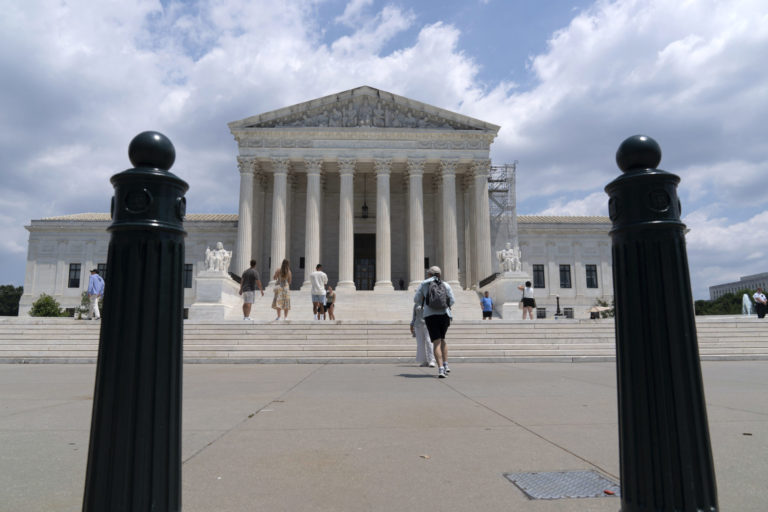
(Andrew Rice, The Center Square) The U.S. Supreme Court on Tuesday declined to take up two cases over whether individuals with felony records can be permanently disarmed under the Second Amendment.

The court declined to hear Zherka v. Bondi and Duarte v. U.S. Each challenge targets laws banning individuals with felony convictions from possessing firearms.

Selim Zherka and Steven Duarte both petitioned the government to possess firearms despite previous non-violent felony convictions. Both Zherka and Duarte were convicted on fraud charges and have been denied the opportunity to possess firearms.

“The government should have had to identify a historical tradition of disarming people like Duarte, whose prior convictions were all for non-violent crimes and whom the government had never claimed was violent towards others,” lawyers for Duarte wrote in a brief to the court.

Lawyers for the government argued founding-era principles supported the death penalty for crimes such as counterfeiting, squatting, theft and smuggling. They argued firearm dispossession is a lesser threat to these crimes. 

“Founding-era laws imposing capital punishment for serious crimes support the lesser restriction of disarmament in analogous circumstances,” lawyers wrote.

Justices on the court, however, have yet decide whether they will hear Vincent v. Bondi, a similar case on firearm possession and fraud. 

Melynda Vincent, a social worker and nonprofit founder, was convicted of federal bank fraud in 2008 for attempting to pass a fraudulent check. While nonviolent, the felony prohibits Vincent from possessing firearms. 

In Vincent v. Bondi, Melynda argued the prohibition violated her Second Amendment rights. She sought to have the law declared unconstitutional and for an injunction to prevent the U.S. attorney general from enforcing it against her. 

After denials in lower court, Vincent sought relief from the U.S. Supreme Court. 

“Text, history, and tradition show that the government cannot permanently disarm Ms. Vincent – a single mother, social worker, adjunct college professor, and nonprofit founder with two college degrees – soley because of one seventeen-year-old conviction for passing a bad check,” Vincent’s lawyers wrote in a petition to the Supreme Court.

The government disputed Vincent’s claims of a permanent ban from the possession of firearms. In a petition to the court, lawyers for the Trump administration said the government reinstated a process for convicted felons to gain their rights to possess firearms, leaving Vincent’s challenge on a faulty basis. 

Even still, lawyers for the government argued the ban on firearm possession for felons aligns with the history and tradition of the Second Amendment. 

“American colonies imposed that penalty even for non-violent crimes such as counterfeiting, squatting on Indian land, burning timber intended for house frames, horse theft, and smuggling tobacco,” lawyers for the government wrote in a brief to the court.

If the court were to pick up Vincent’s petition, it could have downstream effects on the arguments in Duarte’s and Zherka’s cases. 

Trump Urges Arrests After Church Protest in St. Paul

(Elyse Apel, The Center Square) President Donald Trump called for for protestors to be “thrown in jail” following a protest which disrupted a Sunday morning service in St. Paul.

Trump’s words join the national outcry that was sparked by the protest, which quickly captured attention far beyond Minnesota.

“Just watched footage of the church raid in Minnesota by the agitators and insurrectionists. These people are professionals,” Trump posted on social media Tuesday morning. “They are troublemakers who should be thrown in jail, or thrown out of the country.”

The U.S. Department of Justice is investigating the protest organized in part by members of Black Lives Matter Minnesota.

Video posted by the group shows protesters chanting “ICE out” and “justice for Renee Good” during the service at Cities Church. Another video circulating on social media shows a protester calling congregants “pretend Christians” and “comfortable white people.”

Caleb Phillips, a congregant at the church, told The Center Square in an exclusive interview that the protestors were seated throughout the congregation before the service began.

“The entire congregation came alive. Individuals who are planted from front to back throughout the entire place stood up,” Phillips said. “It felt like we were surrounded, because they were all throughout the congregation.”

Reports allege the protesters discovered one of the church’s pastors works for U.S. Immigration and Customs Enforcement, calling the protest a “clandestine mission.”

The protest comes in the wake of the Jan. 7 killing of 37-year-old Renee Nicole Good during an encounter with ICE officers conducting enhanced immigration enforcement.

Tricia McLaughlin, assistant secretary of Homeland Security, said Good’s vehicle was “attempting to run over our law enforcement officers” and that an officer fired after fearing for his life. Homeland Security Secretary Kristi Noem called the incident an “act of domestic terrorism.”

City and state leaders have disputed that account, saying ICE’s presence in the community has created chaos and harm. Since the shooting, Minneapolis and St. Paul have experienced widespread protests, school closures and violence.

The Twin Cities have also been embroiled in allegations of widespread welfare fraud, only adding to the tension.

Federal officials said Sunday’s protest will receive significant federal attention, as the DOJ and the FBI work together to pursue charges for federal crimes.

Some of those crimes could include civil rights violations or violations of the Freedom of Access to Clinic Entrances Act of 1994, which prohibits obstruction or threats at abortion clinics and places of worship.

“There are already two prosecutors from my office on their way to Minneapolis,” said Harmeet Dhillon, assistant attorney general for the DOJ’s Civil Rights Division, on Monday. “There is no more sacred right in our Constitution than the right to assemble and pray to God.”

Church officials and Republicans have been responding to the protest. So far, Democrats both in Minnesota and nationally have been largely silent regarding the church protest.

Tuesday morning, Trump specifically called out Gov. Tim Walz, a Democrat and the former Democrat candidate for vice president.

“The first to go should be Walz, and Fake Sleazebag, Ilhan Omar, who is supposedly worth over $30 Million Dollars, even though she’s never had anything but a Government job,” Trump posted to social media. “Investigate these Corrupt Politicians, and do it now!”

Dhillon has promised there will be serious repercussions for those involved in the protest.

“Come next Sunday, nobody should think in the United States that they’re going to be able to get away with this,” she said. “The fullest force of the federal government is going to come down and prevent this from happening and put these people away for a long, long time.”


Trump Refuses To Rule Out Military Option for Greenland

(Will Porter, Antiwar.com) President Donald Trump declined to rule out the use of force to take control of Greenland, soon after several European allies dispatched troops to the territory in an apparent warning to Washington.

Asked by NBC News whether he would use military force to seize Greenland during a brief interview on Monday, the US leader simply replied “No comment.” He previously hinted at a military option, saying last week that the United States would take the territory “one way or another.”

Further ratcheting up tensions over the issue, Trump additionally said he no longer felt “an obligation to think purely of peace” with regard to Greenland, according to a letter he penned to Norwegian Prime Minister Jonas Gahr Store and obtained by Bloomberg. The president went on to blame the Nordic state for failing to award him with a Nobel Peace Prize, adding that “The World is not secure unless we have Complete and Total Control of Greenland.”

After Trump vowed to impose a 10% tariff on eight European states opposed to any US takeover of Greenland – the UK, Denmark, Norway, Sweden, France, Germany, the Netherlands, and Finland – the nations in question deployed a small contingent of troops to the Danish-controlled territory for a round of military drills. On Monday, Copenhagen reportedly sent additional forces to Greenland, with around 100 stationed in the capital city of Nuuk and a similar number deployed to Kangerlussuaq, a town not far from Greenland’s west coast.

The US president has insisted that Greenland is vital to American national security, claiming without evidence that Russia and China also seek to control the territory. He has also argued US control of the country is needed for the proposed “Golden Dome” missile defense shield.

Trump’s escalating rhetoric has stoked outrage in Denmark, which has ruled Greenland since the 18th century, with some 10,000 Danes turning out to protest a US takeover on Saturday.  Danish Prime Minister Mette Frederiksen previously condemned “unacceptable pressure” by the Trump administration, and warned that any US military intervention to seize Greenland could destroy the NATO alliance.

In Washington, lawmakers in both major parties have decried the president’s push to “acquire” the territory, with some openly protesting the move, while others have quietly sought to reassure Greenland, Denmark and other US allies.

Delaware Senator Chris Coons, a Democrat who arranged a bipartisan trip to Greenland last week, told the Associated Press that he was seeking to “bring the temperature down a bit,” adding that “When the most powerful military nation on earth threatens your territory through its president over and over and over again, you start to take it seriously.”

Republican Senators Lisa Murkowski (Alaska) and Thom Tillis (North Carolina) were part of the delegation organized by Coons, while other GOP lawmakers met with Denmark’s top diplomat and his counterpart from Greenland to discuss security last week.

Tillis previously slammed the plans to take Greenland as “nonsense” and “a distraction,” adding that “the amateurs who said it was a good idea should lose their jobs.”

The US has a small permanent military presence in Greenland through the Pituffik Space Base, a Space Force installation operated under a Cold War-era agreement with Denmark. According to the Pentagon, the facility “supports missile warning, missile defense and space surveillance missions.


This article originally appeared at Antiwar.com.  


Trump Threatens 200% Tariffs as France Declines To Join Board of Peace

(Alan Mosley, Antiwar.com) President Donald Trump has threatened to hit French wine and champagne with a 200 percent tariff after France signaled it would not join his proposed “Board of Peace” for Gaza. “I’ll put a 200 percent tariff on his wines and champagnes, and he’ll join, but he doesn’t have to join,” he told reporters. France’s agriculture minister Annie Genevard called the threat “blackmail” and said it was shocking because it sought to force compliance. A senior French official said Paris does not intend to join the board because its charter extends beyond Gaza and could undermine the United Nations.

According to a Bloomberg report, nations seeking a permanent seat must pledge at least $1 billion, and the board’s charter says the three‑year term doesn’t apply to members that contribute more than $1 billion in the first year. Sources say more than ten countries have already signed on, though it’s still unclear which nations are being asked to pay the fee or which have actually agreed to do so.

The Trump administration unveiled the Board of Peace last week as part of its blueprint to oversee the Gaza cease-fire and reconstruction. The Board would supervise Gaza’s demilitarization and reconstruction under a 20‑point plan announced by the White House. It is structured as a three‑tier panel chaired by Trump and would elevate U.S. and European figures such as Secretary of State Marco Rubio and former British prime minister Tony Blair, while Palestinians would be relegated to municipal positions. Moscow confirmed that President Vladimir Putin had been invited and was seeking clarification. Israel has also received an invitation but has not publicly committed. Critics argue that including states engaged in active conflicts while excluding Palestinian leaders undermines the board’s credibility and risks entrenching Western and Israeli interests.

Trump’s tariff threat is part of a pattern. Earlier this month he wrote to Norway’s prime minister to complain about being passed over for the Nobel Peace Prize, saying he would no longer feel obliged to “think purely of peace” and that the world is not secure unless the United States controls Greenland. He argued Denmark could not defend the island and, when several European nations objected to his plans, slapped a 10 percent tariff on their exports and warned the levy would rise if they did not relent.

Using trade pressure to coerce partners risks economic blowback. A 200 percent tariff would effectively price French wine out of the U.S. market and could prompt retaliatory measures. European ministers have warned they will not be blackmailed and have discussed deploying anti‑coercion tools. France’s refusal to join the board therefore pits Washington’s unilateralism against a Europe intent on protecting multilateral institutions. As trade threats mount and crises from Gaza to Greenland remain unresolved, Trump’s “Board of Peace” faces skepticism even before its first meeting.

The Board of Peace is slated to be formally constituted at a signing ceremony in Davos as early as Thursday, and the official list of member states could be released in the coming days. The Board is expected to convene voting meetings at least once a year, with decisions being made by a majority vote, one for each participating nation. However, both the agenda, and veto power, will rest with the Board’s chairman, who will have “the final authority regarding the meaning, interpretation, and application of this Charter.” President Trump, serving as the chairman, has boasted on social media that it will be “the greatest and most prestigious board ever assembled.”

This article originally appeared at Antiwar.com.  

Money Metals Still FLUSH With Silver Inventory, No Order Restrictions

(Stefan Gleason, Money Metals News Service) The silver market continues to be a sight to behold, with prices touching $95 today, more than triple the price of just one year ago.

Volatility is increasing, and upward momentum in both gold and silver remains strong. And so does retail demand in the United States.

Money Metals continues to staff up while expanding operating hours to handle record-level volumes — on both the buy and sell side. As of today, we’ve hired 55 employees since just before Christmas to handle the dramatically expanded activity in all areas of our operation.

Our inventory position remains exceptionally strong – even as most of Money Metals’ competitors are out of stock or quote long minting delays on many (if not most) silver products.

That said, we still have multi-day processing delays with respect to our shipping, receiving, and depository — these delays are communicated over the phone and in various places on the website so that there are no surprises. We remain confident we can maintain reasonable service levels – especially in comparison to the operational struggles we see building across our industry.

Meanwhile, Money Metals has not followed other dealers in cracking down on small customers by imposing order minimums and/or jacking up order sizes required to receive free shipping. There is no guarantee we will not be forced to take steps at some point, depending on market conditions. This would be a last resort, however, given how much we value smaller customers generally… as well as first-time precious metals investors.

Thank you for your business, your patience, and your trust! We will not let you down.

Stefan Gleason, Money Metals CEO


Stefan Gleason is President and CEO of Money Metals Exchange, the company recently named “Best Overall Online Precious Metals Dealer” by Investopedia. A graduate of the University of Florida, Gleason is a seasoned business leader, investor, political strategist, and grassroots activist. Gleason has frequently appeared on national television networks such as CNN, FoxNews, and CNBC and in hundreds of publications such as the Wall Street Journal, TheStreet, and Seeking Alpha.