Lawmakers Discuss Next Steps after Maxwell Pleads the Fifth in Deposition

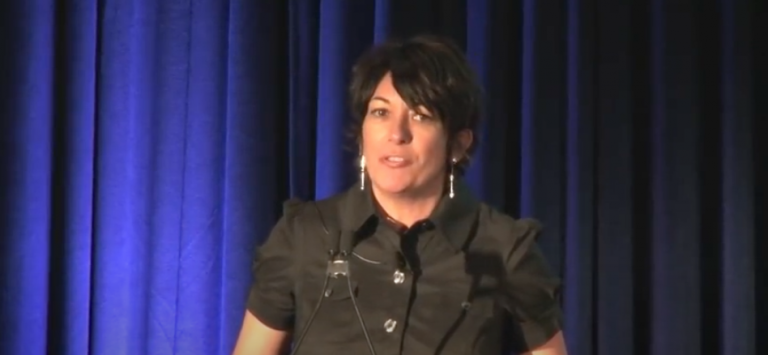
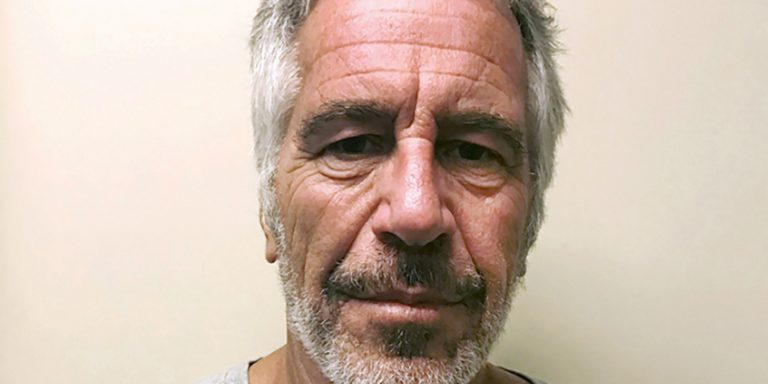
(Thérèse Boudreaux, The Center Square) Ghislaine Maxwell, close associate of convicted sex offender Jeffrey Epstein, refused to answer the House Oversight Committee’s questions in her virtual deposition Monday.

With Maxwell invoking her Fifth Amendment right to any and all questions, the deposition ended early, vexing both Democratic and Republican lawmakers.

“This is obviously very disappointing. We had many questions to ask about the crimes she and Epstein committed, as well as questions about potential co-conspirators,” committee Chairman James Comer, R-Ky., told reporters.

The Oversight committee’s investigation will continue, Comer said, with five more depositions scheduled in the coming weeks and possible more to come.

Those deposed include billionaire businessman Les Wexner, former Secretary of State Hillary Clinton, former president Bill Clinton, Epstein’s accountant Richard Kahn, and Epstein’s legal advisor Darren Indyke.

Epstein was found dead in his jail cell while awaiting trial in 2019, while Maxwell is serving a 20-year prison sentence. Maxwell had already indicated that, unless granted clemency by the president, she would plead the Fifth during the Feb. 9 deposition.

“She is already serving a 20 year sentence for trafficking minors. What more could she possibly be hiding?,” Rep. Nancy Mace, R-S.C., posted on social media after the fruitless deposition. “The answer is obvious. She is protecting powerful people who were involved in abusing children. We are not backing down.”

Rep. Ro Khanna, D-Calif., who cosponsored the Epstein Files Transparency Act, said he was frustrated that Maxwell took a blanket Fifth Amendment right since some questions – such as who Epstein’s co-conspirators were – would not incriminate her.

“She’s pleading the Fifth about things that don’t implicate her but may implicate many of the other powerful people in the Epstein class that committed these crimes,” Khanna told reporters.

Democrats have called on President Donald Trump to officially rule out pardoning Maxwell, arguing that his neglecting to do so has incentivized Maxwell to withhold information.

“She is telling Donald Trump through her deposition that she is trying to buy her clemency,” Rep. Melanie Stansbury, D-N.M., said. “This was an effort to try to essentially secure her pardon by keeping her mouth shut. And we will not allow this silence to stand.”

In the over 3 million files on Epstein that the Department of Justice released on orders from Congress, dozens of high-profile figures are mentioned, including Trump; Bill Clinton; Wexner; billionaires Elon Musk, Richard Branson, and Bill Gates; current Secretary of Commerce Howard Lutnick, former Harvard University president Larry Summers, and others.

The DOJ has warned that many of the files contain false or unverified content, but that it has released them anyway due to transparency requirements.


Epstein Files Reveal 330 Gallon Sulfuric Acid Purchase on Same Day FBI Opened Sex Trafficking Probe

(José Niño, Headline USA) Newly released government documents show Jeffrey Epstein ordered 330 gallons of sulfuric acid for his private island on the same day federal investigators launched a sex trafficking case against him, according to records released under the Epstein Files Transparency Act, signed into law November 19, 2025.

Journalist Dominic Michael Tripi highlighted the finding on social media, writing “NEW: Newly released Epstein documents reveal Jeffrey Epstein purchased 330 gallons of sulphuric acid on the exact same date the FBI initiated a wide-ranging sex trafficking case against him.”

The Department of Justice released approximately 3.5 million pages of Epstein-related records, with the final batch published January 30, 2026.

The document in question, catalogued as EFTA01223564, is a wire transfer request from LSJE LLC, a U.S. Virgin Islands entity tied to Epstein. It authorized a payment of $4,373.17 to Gemini Seawater Systems for six 55-gallon drums of sulfuric acid, delivered to Little St. James Island, Epstein’s private island, according to a report by Express

Some sources cite the purchase date as June 12, 2018, while others, including reporting tied to document EFTA00164551 by The India Herald, report the wire transfer date as December 6, 2018, the same day the FBI reportedly opened its renewed child sex trafficking investigation against Epstein and Ghislaine Maxwell. 

The document itself provides an explanation for the purchase. The request form reads the acid was for “materials for conductivity probes; replacement pH and cable — RO Plant.” RO stands for Reverse Osmosis, a standard water desalination technology. Gemini Seawater Systems specializes in seawater desalination, and sulfuric acid is a routine chemical used in such systems to prevent calcium carbonate buildup on membranes.

Epstein’s purchase of the acid has led to online speculation that he did so to destroy evidence or remains.

The document can be found here

José Niño is the deputy editor of Headline USA. Follow him at x.com/JoseAlNino 

Judge Slashes Sentence of Convicted Rapist She Portrays as a Victim 

(Luis CornelioHeadline USA) A Kentucky judge sparked outrage after slashing in half a jury’s recommended 65-year sentence for a convicted felon who robbed, kidnapped and sexually assaulted a woman. 

Jefferson County Judge Tracy Davis reduced the sentence of Christopher Thompson on Feb. 2 despite the jury’s recommendation. 

Davis’s sentence effectively spared the 24-year-old from what would have amounted to a life sentence. 

Backlash intensified after Thompson openly mocked the proceedings, the victim and her family in court, as seen in a report published by Wave 3. 

“I don’t have sympathy for you, the victim, the victim’s family,” Thompson told the judge. 

“We don’t need your sympathy,” Davis replied. 

Doubling down, Thompson added, “I don’t care.” 

A Kentucky jury convicted Thompson in December of abducting a woman he did not know in 2023, forcing her to perform oral sex, robbing her and later sodomizing her again before releasing her. 

DNA evidence was collected from the victim’s body following the attack and matched Thompson, as reported by Wave 3. 

Jurors were so disturbed by Thompson’s actions that they recommended a 65-year sentence. Thompson was 24 at the time of sentencing. 

Davis dismissed that recommendation, claiming Thompson “fell through the cracks” as a teenager. 

“Unfortunately, he fell through the cracks and ended up before this court as an 18 or 19-year-old,” Davis claimed. 

Thompson’s criminal history tells a different story as his rap sheet includes assault, theft, robbery, truancy, “in addition to convictions for felony gun possession, fleeing police, probation violations and additional violent offenses. 

According to Wave 3, Thompson is also facing a pending charge for assaulting a corrections officer. 

Despite that record, Davis insisted Thompson was not beyond rehabilitation. 

“This court does not believe that Mr. Thompson, if given the resources that he can get while incarcerated, is beyond being rehabilitated,” Davis added. 

Canadian Bank Ups 2026 Gold Forecast to $6,000

(Mike Maharrey, Money Metals News Service) Despite the recent selloff, Canadian Imperial Bank of Commerce (CIBC) remains bullish, forecasting $6,000 gold and $100 silver in 2026.

The Canadian bank significantly upped its gold price forecast from $4,500 in October. CIBC analysts extended their bullish forecast into 2027, projecting an average price of $6,500 next year.

As for silver, the Canadian bank anticipates the average price will peak at $105 this year and then rise to $120 in 2027.

CIBC analysts cited geopolitical uncertainty and safe-haven demand as factors driving gold and silver prices higher, along with the ongoing devaluation of the dollar.

“Dollar debasement is likely to persist as the central banks and investors react to heightened uncertainty by quietly allocating away from U.S. treasuries. We believe further pressure on the dollar will come from rate cuts and continued tension between the Fed and the White House.”

President Trump recently announced Kevin Warsh as his choice for Fed chair. Many analysts believe he will be more hawkish than some other potential nominees; however, he will likely be constrained by realities on the ground. The U.S. economy simply can’t function in a higher interest rate environment due to the massive Debt Black Hole.

CIBC analysts aren’t buying the sales pitch on Warsh, calling him a “dove in hawk’s clothing.”

“Mr. Warsh is seemingly more aligned with a dovish stance than last week’s negative market reaction would imply.”

CIBC analysts note that Warsh may try to shrink the Fed balance sheet so it can cut rates.

“He has argued for tighter Fed balance sheets, which he asserts would tamp inflation and allow for lower rates for Main Street. More recently, he has indicated support for Trump’s government efficiency drive, noting it could temper inflation and allow for lowering of rates.”

It seems unlikely that Warsh will be able to walk that tightrope given falling demand for U.S. Treasuries. Somebody will have to take up the slack to support the U.S. government’s borrow and spend problem. The Fed is the buyer of last resort.

In fact, the Fed has already ended quantitative tightening and announced a modest round of quantitative easing (although it didn’t use that term) at its December meeting.

CIBC analysts bluntly summed up their view of a Warsh Fed chairmanship.

“Regardless, we believe it is unlikely that any candidate would do anything but guide the Federal Reserve Board to lower rates in 2026.”

Even beyond the weakening dollar, CIBC analysts expect a broader “fiat currency debasement trade” to support the price of gold in the coming year. Their grasp of the problems inherent in fiat systems is surprising, coming from a mainstream financial institution.

“With the decades-long de facto safe-haven asset, U.S. Treasuries, no longer considered ‘risk-free,’ investors and central banks are looking for alternatives. The pickings are slim. Most Western economies are facing near-record debt-to-GDP ratios, and most are looking to inflate rather than constrain their way out of the dilemma. Investor confidence in fiat currencies has eroded, and gold has seen much of this flight to safety.”


Mike Maharrey is a journalist and market analyst for Money Metals with over a decade of experience in precious metals. He holds a BS in accounting from the University of Kentucky and a BA in journalism from the University of South Florida.


War Department Cuts Ties with Harvard, Others Under Review

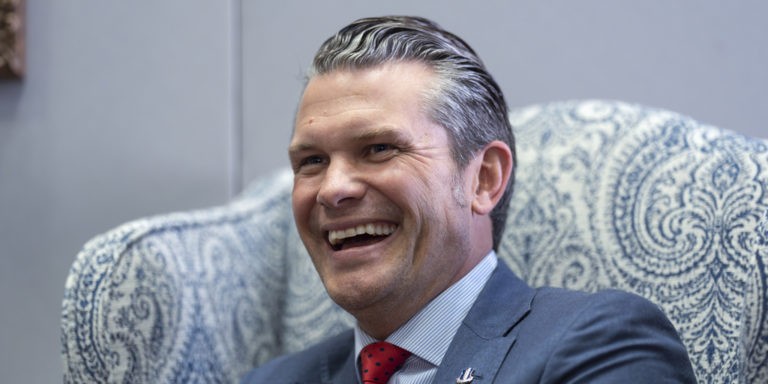
(Brett Rowland, The Center Square) ​​Secretary of War Pete Hegseth cut the military’s academic ties with Harvard and called for a sweeping review of all graduate programs with universities, including those in the Ivy League, in the coming weeks.

Hegseth said the money the Department of War pays Harvard for professional military education, or PME, is “not worth it.” He said taxpayers deserve better.

“At the War Department, we will strive to maximize taxpayer value in building lethality to establish deterrence. It’s that simple,” Hegseth said in a video posted to social media. “That no longer includes spending millions of dollars on expensive universities that actively undercut our mission and undercut our country.”

The Center Square asked the Department of War on Monday how much it spends each year at Harvard and on PME in general. The department, which hasn’t passed an audit in more than eight years, declined to comment beyond the Secretary’s remarks.

Hegseth tore into Harvard, saying it and other Ivy League schools lack diversity of viewpoints and aren’t helping educate the next generation of leaders.

“For too long, this department has sent our best and brightest officers to Harvard, hoping the university would better understand and appreciate our warrior class,” Hegseth said. “Instead, too many of our officers came back looking too much like Harvard – heads full of globalist and radical ideologies that do not improve our fighting ranks.”

Hegseth attended Princeton and later Harvard’s Kennedy School, where he received a master’s degree in public policy.

The Center Square reached out to Harvard about the secretary’s decision, but the university did not immediately respond.

Hegseth said the War Department will discontinue graduate-level professional military education, fellowships and certificate programs at Harvard starting with the 2026-2027 school year. Hegseth said that military personnel already enrolled will be able to finish their courses.

Hegseth also ordered a wider review of all existing graduate programs at all universities, including other Ivy League schools. The other Ivy League schools are Brown University, Columbia University, Cornell University, Dartmouth College, University of Pennsylvania, Princeton University and Yale University.

“The goal is to determine whether or not they actually deliver cost-effective, strategic education for future senior leaders,” compared to public universities and other military graduate programs, Hegseth said.

The War Department also declined to say if the results of Hegseth’s review would be shared publicly.

Last month, President Donald Trump proposed a $1.5 trillion Department of War budget, sayings tariffs could fund the 60% increase, proposed $2,000 rebate checks and help address federal debt.

The Committee for a Responsible Federal Budget estimated this plan would raise defense spending by $5 trillion over ten years, or $5.8 trillion with interest, adding tariff revenue wouldn’t cover the spending. The analysis said military spending would far exceed expected tariff revenue.

In December, the Department of War failed its eighth consecutive audit. The Department of War previously told Congress it would be able to successfully account for all of its spending and assets by 2028.

Demand for Gold in Tech and Industry Was Steady in 2025

(Mike Maharrey, Money Metals News Service) Fundamentally, gold is money, but it does have other practical uses, contrary to what some ignorant commentators might tell you.

Gold demand in the tech and industrial sectors was generally flat at 222.8 tonnes in 2025. This was down about 1.5 percent from 226.2 tonnes the previous year.

The vast majority of industrial gold demand comes from its use in electronics. Gold has excellent electrical conductivity, and unlike silver, it doesn’t corrode. It is also malleable, making it excellent for tiny, precise connections.

In 2025, 270.4 tonnes of gold were used in the electronics sector. That was virtually unchanged from 2024.

AI is rapidly changing the world of computing, and it is also disrupting the broader electronics sector. According to the World Gold Council, high-speed computing accelerated the use of bonding wire and contact and interconnect materials, supporting gold demand. However, on the other side of the coin, the AI boom has generated “some tension and divergence with other parts of the electronics sector” as manufacturing capacity has been redirected to meet AI-related demand.

World Gold Council analysts say this has crowded out the manufacturing of some electronic components, driving up prices.

“This contributed to volatility in the consumer electronics space, which faced a slow recovery and tariff uncertainties early in 2025, and availability issues and rapidly rising component prices in the latter half of the year. This scenario may also impact demand into 2026.”

For instance, while smartphone shipments increased by 2 percent last year, sales are expected to fall this year due to memory shortages and rising prices.

From a regional perspective, gold demand for electronics was solid in East Asia, supported by a strong AI supply chain and localization strategies. However, fabrication in Western markets declined, creating headwinds for the overall market.

The use of gold in wireless applications grew in Q4, driven by a resurgence in orders for power amplifiers and Wi-Fi chips. Meanwhile, the light-emitting diode (LED) sector charted a modest decline in Q4 gold volumes as traditional mass-market applications, including general lighting and standard displays, remained weak.

There were some emerging areas of gold demand in the electronics sector last year, including aggressive deployment of compound semiconductor technologies across AI, aerospace, electric and hybrid vehicle systems, and sensing technologies in wearables and smartphones. According to the World Gold Council, “This shift, which signals the start of a new technology-driven growth phase for the wireless industry, should provide greater resilience against fluctuations in the traditional consumer electronics market moving forward.”

There was also a surge in gold demand from the Low Earth Orbit Satellite (LEOS) communication sector to be incorporated into High Density Interconnect (HDI) boards.

Higher prices are expected to create headwinds for gold in tech moving forward. According to the WGC, “The rising gold price continues to pressure component manufacturers; fieldwork suggests increased R&D into thrifting and substitution of gold across all sectors.

Demand for gold in other industrial applications and dentistry fell by 7 percent year-on-year in Q4. Demand for plating salts in China dropped sharply due to the sluggish domestic economy and retail store closures that undermined demand for gold-plated products.

Gold used in the dental sector also fell by 6 percent year-on-year in Q4 as alternative materials continued to dominate the market.

The use of gold in tech and industry contributed to a record year in 2025, with total gold demand exceeding 5,000 tonnes for the first time.

Far from “Useless”

Warren Buffett once said, “Gold gets dug out of the ground in Africa or someplace. Then we melt it down, dig another hole, bury it again, and pay people to stand around guarding it. It has no utility. Anyone watching from Mars would be scratching their head.

I even once heard a commentator on a major financial network claim gold is a “useless rock.”

As you can see by the substantial demand for gold in technology and electronics, this is just silly.

In fact, gold is one of the most useful metals in the world. Due to its utility, coupled with its scarcity, gold is also one of the most valuable metals in the world.

In the first place, gold is strikingly beautiful. It has captured people’s eyes for thousands of years. That’s why people all over the world love to wear gold. About 44 percent of gold demand is for jewelry production. About 1,550 tons of gold were used in jewelry fabrication last year.

But gold isn’t just pretty. As already mentioned, the metal’s inherent physical and chemical properties make it useful in many industrial and technological applications.

This is why we see gold increasingly used in the tech sector. In fact, gold would probably be used even more if it weren’t so rare and expensive.

Gold is also important in the medical field. Its inherent stability and unique optical properties make it perfect for use in diagnostic testing. The World Gold Council said that gold is “at the heart of the hundreds of millions of Rapid Diagnostic Tests (RDTs) that are used globally every year.

“This well-established and critically important technology has changed the face of disease diagnosis in the developing world over the last decade.”

Gold nanoparticles are used in testing for malaria, HIV, hepatitis, and other illnesses.

Gold has even been used in some exotic applications. In 2018, a team of Chinese researchers partially restored the sight of blind mice by replacing their deteriorated photoreceptors – sensory structures inside the eye that respond to light – with nanowires made of gold and titanium.

The point is that gold is far from useless.

But fundamentally, gold is money. And everybody wants to have money — especially real money.


Mike Maharrey is a journalist and market analyst for Money Metals with over a decade of experience in precious metals. He holds a BS in accounting from the University of Kentucky and a BA in journalism from the University of South Florida.

FBI Held Tabletop Exercise in Summer 2020, Previewing Disputed Election

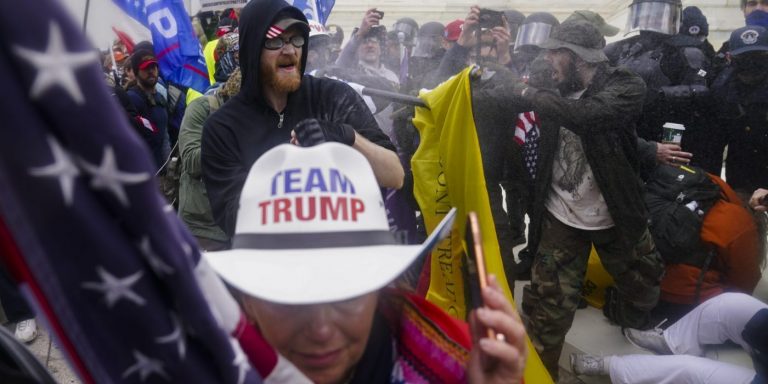
(Ken Silva, Headline USA) The FBI held a tabletop exercise in June 2020 that previewed that year’s disputed election and ensuing chaos during the Jan. 6, 2021, election certification process, according to newly released FBI records.

Dubbed an “alternative futures exercise,” the FBI’s Boston field office studied possible domestic extremist threats “following a disputed outcome of the 2020 US Presidential election.”

“This exercise began with a brainstorming session to identify several drivers that would likely shape this situation,” stated a Sept. 2020 FBI intelligence report, first reported by Just the News. “An additional brainstorming exercise was held to identify the two key drivers determined to be the most powerful for shaping the situation.”

The study, which was conducted by FBI intelligence analysts, found that domestic extremists had a high willingness to take action, but that their capabilities were lacking.

Along with forewarnings about the upcoming election, the FBI memo also included intelligence about the violent protests of summer 2020. According to the memo, an FBI informant said “anarchist extremist”—a term agents use for Antifa-style activists—were placing weapons along protest routes.

“These weapons were hidden behind fences, garbage cans, and other objects in case of a police confrontation,” the FBI memo said.

Rep. Barry Loudermilk told Just the News that the FBI memo disproved the notion that the Jan. 6 protest-turned-riot blindsided the bureau.

“This document is evidence that Wray’s FBI predicted, as early as September 2020, that an attack on the Capitol was possible,” he reportedly said. “It also suggests that the FBI infiltrate online chat forums and build a network of Confidential Human Sources (CHS) prior to January 6. It further outlines how the FBI should pursue heavy-handed prosecutions for minor offenses, which Biden’s DOJ carried out quite effectively after the attack.”

“We now know, through CHS reports and other intelligence, that the FBI had enough information to not only predict an attack on the Capitol, but to prepare for one,” he added. “So why did the FBI not take steps to protect the U.S. Capitol?”

The FBI wasn’t the only organization to hold a tabletop exercise previewing election chaos. The Transition Integrity Project, an alliance of Never-Trumpers, also wargamed a series of four scenarios to ensure that Joe Biden would take power in the event of a contested 2020 race.

According to TIP’s original 22-page report, the planning for a riot at the U.S. Capitol may have begun in June 2020, the same month the FBI held its exercise. In TIP’s case, that’s when John Podesta — along with RINO ex-Republican National Committee chair Michael Steele and around 70 high-level military, intelligence and political power players —  began anticipating the certification process. TIP wrote that the coup “may well be a street fight, not a legal battle.”

Ken Silva is the editor of Headline USA. Follow him at x.com/jd_cashless.

Rep. Jasmine Crockett’s Campaign Responds to AI Video Scandal

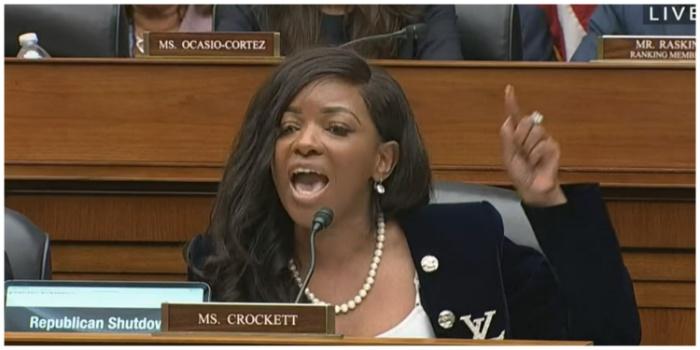
(Luis CornelioHeadline USA) Rep. Jasmine Crockett’s Senate campaign on Monday did not deny using artificial intelligence to depict Texans in a recent digital ad. 

Crockett, seeking the Democratic nomination for Senate, came under scrutiny after her campaign appeared to use AI-generated images instead of real people. Rather than addressing the accusation, Crockett’s campaign issued a meandering response that dismissed criticism while sidestepping whether AI was used at all. 

“Our new ad was created through hundreds of hours of real craft and collaboration between creatives and union labor,” the campaign said, according to Chron.com. “This ad is a deliberate and meaningful attempt to connect with new voters and energize the electorate.” 

The statement notably avoided any denial that the people depicted were artificial. The campaign instead attacked critics, adding: “While online and out-of-state ‘critics’ pull at strings, our ad remains positive, focuses on the real threat to Texas, and is resonating with the people.” 

The ad, released Sunday, used a comic-book theme and portrayed Crockett as a superhero while casting former President Donald Trump as a villain. 

“The system is broken. Our communities are being terrorized. People are hurting. But Texas has a warrior who is fighting back,” a voiceover said as Crockett appeared onscreen. 

Moments later, Crockett walked alongside several individuals before delivering her approval line. The video then zoomed out to show what appeared to be more than 100 people standing behind her, figures critics online said may not have been real. 

Among those criticizing the ad was left-wing activist and media influencer Keith Edwards, who in an X post said that the image showed signs of AI editing. 

“The final shot in Jasmine Crockett’s new ad doesn’t feature Texas voters — it’s an image generated by Google’s AI, Gemini,” Edwards claimed. “The image contains a SynthID watermark, an invisible digital identifier used by Google to verify content created by its AI.” 

The criticism surfaced as Crockett runs for the Democratic nomination for U.S. Senate ahead of the March 3 primary. She aims to unseat GOP Sen. John Cornyn and currently represents Texas’s 30th Congressional District. 

Democratic Groups Took Hundreds of Thousands from ICE Contractor

(José Niño, Headline USA) Two Democratic campaign organizations collected hundreds of thousands of dollars from a private prison company that contracts directly with Immigration and Customs Enforcement, even as the party’s leaders escalated their attacks on federal immigration operations.

The Democratic Governors Association and the Democratic Lieutenant Governors Association together received a six-figure sum from CoreCivic, a Tennessee-based private prison firm and ICE contractor, according to a POLITICO review of campaign finance records. The two organizations confirmed the contributions but responded differently. The DGA kept the funds while the DLGA announced it would donate them to a pro-immigration group.

The Daily Caller noted that the report landed as Democratic elected officials across the country sharpened their criticism of ICE following the fatal January shootings of Renee Good and Alex Pretti by federal immigration enforcement officers in Minneapolis.

A November 2023 email from a DLGA staffer to CoreCivic, obtained by Politico, requested a $50,000 donation from the ICE contractor for the 2024 election cycle.

DLGA spokesperson Christina Freundlich told Politico the organization will be “donating any 2024-2025 contributions from CoreCivic to the National Immigration Law Center,” a group that describes itself as advancing the rights and opportunities of low-income immigrants. Freundlich added the DLGA will “no longer accept” CoreCivic contributions from here on out.

The DGA took a different position, however. A spokesperson justified keeping the money, telling Politico “We strongly condemn the Trump administration’s appalling immigration tactics, and the only way to stop them is by electing more Democrats.” The spokesperson added that “every contribution to the DGA helps elect Democratic governors and none of them have any impact on policy decisions made by governors.”

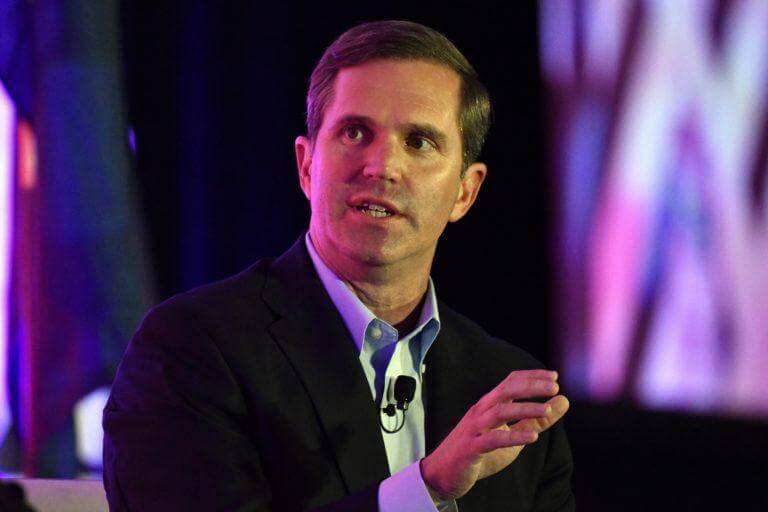
Gov. Andy Beshear, D-Ky., the DGA’s chair and a reported 2028 presidential prospect, directed Politico to the same DGA statement. Beshear has been among the loudest Democratic critics of federal immigration enforcement.

“They are operating with aggressive tactics that are not appropriate for law enforcement, they are not following our Constitution and giving people their rights,” Beshear told CNN after Border Patrol agents killed Pretti.

“I’ve never seen a government agency push a group of law enforcement to be as aggressive and use the words of aggressiveness that I have with what is being pushed out there on ICE,” Beshear said, according to the Kentucky Lantern.

CoreCivic announced contracts with ICE in September 2025 to utilize 3,593 detention beds at two facilities. “Once fully activated, we expect to generate total annual revenue at the two facilities combined of nearly $200 million,” the company stated in a press release.

CoreCivic Senior Director Ryan Gustin told the Daily Caller News Foundation the company “engages in the political process to include being corporate members of national organizations that represent elected officials around the country and across the political spectrum.”

According to OpenSecrets, CoreCivic gave $62,000 combined to Republican congressional candidates in 2024 while contributing just $2,500 to a single Democratic federal candidate.

José Niño is the deputy editor of Headline USA. Follow him at x.com/JoseAlNino

Nike Under Federal Investigation for Anti-White Discrimination

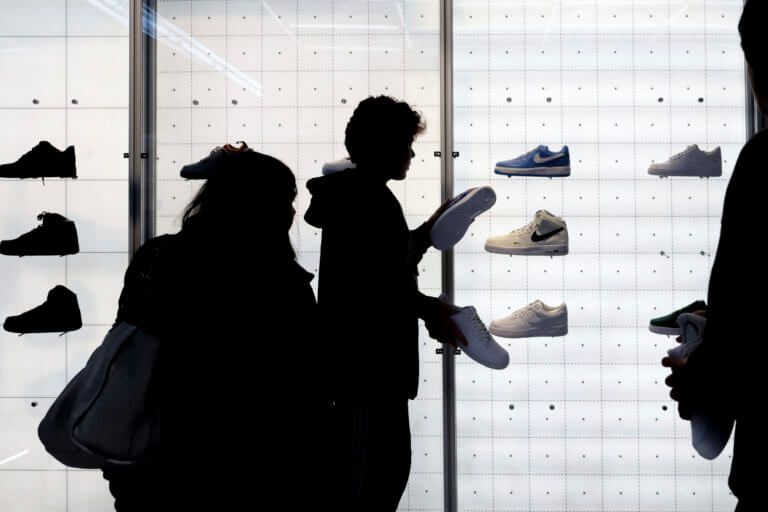
(José Niño, Headline USA)  The nation’s top workplace discrimination watchdog made Nike its biggest corporate target yet in the Trump administration’s sweeping campaign against corporate diversity programs, according to a report by The Wall Street Journal

The Equal Employment Opportunity Commission announced last Wednesday that it opened an investigation into whether Nike discriminated against white workers in hiring decisions, layoffs, and workforce practices stretching back to 2018. The agency filed a subpoena enforcement action against the sportswear giant in a federal Missouri court.

Nike denied violating any anti-discrimination laws and pushed back sharply against the move. “This feels like a surprising and unusual escalation,” a company spokesperson told the Wall Street Journal, adding that Nike had been cooperating with the inquiry. “We have shared thousands of pages of information and detailed written responses to the EEOC’s inquiry and are in the process of providing additional information.”

The EEOC’s Republican chair, Andrea Lucas, has been among the most aggressive supporters of President Trump’s push against what the White House calls illegal DEI programs. Last year, Lucas launched investigations into the diversity programs of 20 law firms and recently took to social media urging white men to report any harm they suffered from corporate diversity efforts, per a report by the Journal.

Many employers had expanded those efforts following George Floyd’s murder in 2020. Investigators are examining whether Nike’s diversity, equity, and inclusion programs produced what the EEOC describes as a pattern of disparate treatment against white employees.

The probe examines how Nike selects workers for layoffs, how it tracks racial and ethnic data, and whether 16 programs allegedly provided race-restricted mentoring and career development opportunities.

The investigation had remained confidential until last Wednesday. Labor and employment attorney Christopher DeGroff, who tracks the EEOC closely, told the Wall Street Journal that making the subpoena public was itself unusual. “That’s usually an administrative matter related to a confidential process,” he said. “At the investigative stage, no finding has been made.”

America First Legal, a conservative nonprofit co-founded by Trump adviser Stephen Miller, filed one of the complaints against Nike that triggered the investigation, according to the WSJ. The group alleged Nike used numerical quotas in hiring, training, and promotion that excluded white, straight men. America First Legal filed similar complaints against Disney, Starbucks, and Salesforce.

Nike had already been navigating discrimination lawsuits from former employees in 2018 and 2019 alleging racial and gender-based bias when the company launched its diversity push. Following George Floyd’s death, Nike hired a new chief diversity officer and pledged $40 million over four years to support social justice organizations.

The broader corporate retreat from diversity commitments accelerated after the Supreme Court struck down affirmative action in higher education admissions in 2023, prompting companies to scale back racial justice programs as demand for chief diversity officers collapsed across corporate America.

José Niño is the deputy editor of Headline USA. Follow him at x.com/JoseAlNino