House Passes Bill Banning Some Semi-Automatic Guns

(Headline USA) The House passed legislation Friday to ban certain semi-automatic guns, the first vote of its kind in years.

Once banned in the U.S., the high-powered firearms are now widely available again. But Congress allowed the restrictions first put in place in 1994 on the manufacture and sales of the weapons to expire a decade later, unable to muster the political support to continue the unconstitutional ban.

Speaker Nancy Pelosi pushed the vote toward passage in the Democratic-run House, saying the earlier ban “saved lives.”

President Joe Biden hailed the House vote, saying, “The majority of the American people agree with this common sense action.” He urged the Senate to “move quickly to get this bill to my desk.”

However, it is likely to stall in the 50-50 Senate. The House legislation is shunned by Republicans, who dismissed it as an election-year strategy by Democrats. Almost all Republicans voted against the House bill, which passed 217-213.

The bill comes as Democrats claim intensifying concerns about gun violence and shootings during Biden’s presidency.

Voters seem to be taking such election-year votes seriously as Congress splits along party lines and lawmakers are forced to go on the record with their views.

Biden was instrumental in helping the first semi-automatic ban as a senator in 1994.

Republicans stood firmly against limits on Second Amendment rights.

“It’s a gun grab, pure and simple,” said Rep. Guy Reschenthaler, R-Pa.

Said Rep. Andrew Clyde, R-Ga., “An armed America is a safe and free America.”

Democrats argued that the ban on the weapons makes sense, portraying Republicans as extreme and out of step with Americans.

Rep. Jim McGovern, D-Mass., said the weapons ban is not about taking away Americans’ Second Amendment rights but ensuring that children also have the right “to not get shot in school.”

In one exchange, two Ohio lawmakers squared off. “Your freedom stops where mine begins, and that of my constituents begins,” Democratic Rep. Marcy Kaptur told Republican Rep. Jim Jordan. “Schools, shopping malls, grocery stores, Independence Day parades shouldn’t be scenes of mass carnage and bloodshed.”

Jordan replied by inviting her to his congressional district to debate him on the Second Amendment, saying he believed most of his constituents “probably agree with me and agree with the United States Constitution.”

The bill would make it unlawful to import, sell or manufacture a long list of semi-automatic weapons. Judiciary Committee Chairman Rep. Jerry Nadler, D-N.Y., said it includes an exemption that allows for the possession of existing semi-automatic guns.

Reps. Chris Jacobs of New York and Brian Fitzpatrick of Pennsylvania were the only Republicans to vote for the measure. The Democratic lawmakers voting no were Reps. Kurt Schrader of Oregon, Henry Cuellar of Texas, Jared Golden of Maine, Ron Kind of Wisconsin and Vicente Gonzalez of Texas.

Jason Quimet, executive director of the NRA Institute for Legislative Action, said in a statement following the vote that “barely a month after” the Supreme Court expanded gun rights “gun control advocates in Congress are spearheading an assault upon the freedoms and civil liberties of law-abiding Americans.”

He said the bill potentially bans millions of firearms “in blatant opposition to the Supreme Court’s rulings” that have established gun ownership as an individual right and expanded on it.

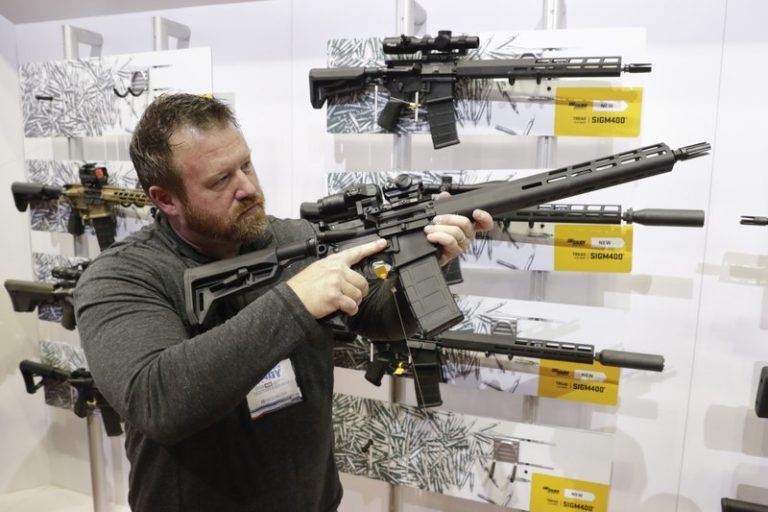
Among the semi-automatic weapons banned would be some 200-plus types of semi-automatic rifles, including AR-15s, and pistols. The restrictions would not apply to many other models.

Democrats had tried to link the weapons ban to a broader package of public safety measures that would have increased federal funding for law enforcement. It’s something centrist Democrats in tough re-election campaigns wanted to shield them from political attacks by their Republican opponents they are soft on crime.

Pelosi said the House will revisit the public safety bills in August when lawmakers are expected to return briefly to Washington to handle other remaining legislation, including Biden’s priority inflation-fighting package of health care and climate change strategies making its way in the Senate.

Congress passed a modest gun violence prevention package just last month in the aftermath of the tragic shooting of 19 school children and two teachers in Uvalde. That bipartisan bill was the first of its kind after years of failed efforts to confront the gun lobby, including after a similar 2012 mass tragedy at Sandy Hook Elementary School in Newtown, Conn.

That law provides for expanded background checks on young adults buying firearms, allowing authorities to access certain juvenile records. It also closes the so-called “boyfriend loophole” by denying gun purchases for those convicted of domestic abuse outside of marriages.

The new law also frees up federal funding to the states, including for “red flag” laws that enable authorities to remove guns from those who would harm themselves or others.

But even that modest effort at halting gun violence came at time of grave uncertainty in the U.S. over restrictions on firearms as the more conservative Supreme Court is tackling gun rights and other issues.

Biden signed the measure two days after the Supreme Court’s ruling striking down a New York law that restricted people’s ability to carry concealed weapons.

Adapted from reporting by the Associated Press
Trump Endorses Dixon for Michigan GOP Governor Primary

(Headline USA) Former President Donald Trump on Friday endorsed Tudor Dixon in Michigan’s crowded Republican primary for governor, just days before voters choose an opponent to face Gov. Gretchen Whitmer.

“She’s pro-God, pro-Gun, and pro-Freedom, and she won’t be stopped!” Trump said in a statement announcing his backing.

Trump’s endorsement came shortly after his former education secretary, Betsy DeVos, urged him to join her in backing Dixon.

Dixon, a conservative commentator, also has the backing of Michigan’s Right to Life, former Gov. John Engler and some of the state’s top legislative leaders. She also has financial support from a pair of super PACs with ties to DeVos, who is from Michigan.

Dixon has said she will fight to keep drag queens out of schools, and she opposes abortion, except to save the life of the mother. Dixon held a fundraiser at Trump’s Mar-a-Lago property in Florida earlier this year, where the former president called her “special.”

Dixon’s opponents include businessman Kevin Rinke, chiropractor Garrett Soldano and real estate broker Ryan Kelley, who was charged with misdemeanors for his actions on January 6, 2021.

Trump’s endorsement has sometimes been a difference-maker, and he’s frequently trumped the power of his backing. But he’s also suffered some high-profile setbacks with some of his choices.

Trump lost Michigan by about 154,000 votes in 2020, and multiple audits and courts — as well as an investigation by the Republican-led state Senate — have upheld that outcome. But all of the GOP governor candidates say there was fraud, and all but Rinke have said they believe the election was stolen from Trump.

Rinke and the Democratic Governors Association have both spent large sums of money running TV ads attacking Dixon in the lead-up to the primary.

Rinke’s TV ad claims Dixon is backed by the “RINO establishment’s leading never-Trumpers,” using the derisive acronym for “Republican in name only.”

The Democratic Governors Association’s $2 million ad buy pushes claims that Dixon’s budget plan would force widespread police officer layoffs; she has said that’s false.

“Obviously, they’re desperate to get me out of this. They don’t want me running against Gretchen,” Dixon told The Associated Press after the final GOP gubernatorial debate on Wednesday.

DeVos, in her letter Friday to Trump, said they should work together to elect Dixon, calling her “the only one that who can stand toe to toe with `that woman from Michigan,’” a term Trump used for Whitmer rather than calling her by name in 2020.

Whoever emerges from the Aug. 2 primary will face a tough battle against Whitmer, who has nearly $15 million set aside, more than all five Republicans combined.

Adapted from reporting by the Associated Press

Russia Intends to Dissolve Ukraine From World Map

(Headline USA) The U.S. ambassador to the United Nations said on July 29 that there should no longer be any doubt that Russia intends to dismantle Ukraine “and dissolve it from the world map entirely.”

Linda Thomas-Greenfield told the U.N. Security Council that the United States is seeing growing signs that Russia is laying the groundwork to attempt to annex Ukrainian regions.

Among them are all of the eastern Ukrainian regions of Donetsk and Luhansk and the southern Kherson and Zaporizhzhia regions.

She also said that Russians want to install “illegitimate proxy officials in Russian-held areas, with the goal of holding sham referenda or decree to join Russia.”

Russia’s deputy U.N. ambassador Dmitry Polyansky told the Security Council on July 29 that “the de-Nazification and demilitarization of Ukraine will be carried out in full.”

“There must no longer be a threat from this stage to Donbas, nor to Russia, nor to the [‘] liberated [‘] Ukrainian territories where for the first time in several years people are finally able to feel that they can live the way they want,” he said.

Polyansky also warned Western nations supplying long-range artillery and MLRS surface-to-surface rockets that they were shifting “the provisional security line” further toward the west, “and in so doing clarifying even further the aims and objectives of our special [‘] military operation. [‘]”

Thomas-Greenfield cited evidence of mounting atrocities.

Among them are the reported bombings of schools and hospitals, “killing of aid workers and journalists, targeting of civilians attempting to flee, brutal execution-style murder of those going about their daily business in Bucha.”

Bucha is the suburb of Ukraine’s capital Kyiv where local authorities said hundreds of people were killed during its occupation by Russian forces.

She said there is evidence Russian forces “have interrogated, detained forcibly, deported estimated hundreds of thousands of Ukrainian citizens, including children — tearing them from their homes and sending them to remote regions in the east.”

Nearly 2 million Ukrainian refugees have been sent to Russia, according to both Ukrainian and Russian officials.

Ukraine portrays these journeys as forced transfers to enemy soil, which is considered a war crime. Russia calls them humanitarian evacuations of war victims who already speak Russian and are grateful for a new home.

A recent AP investigation based on dozens of interviews has found that many refugees are indeed forced to embark on a trip to Russia, subjected along the way to human rights abuses, stripped of documents and left confused and lost about where they are.

Those who leave go through a series of what are known as filtration points, where treatment ranges from interrogation and strip searches to being yanked aside and never seen again.

“The United Nations has information that officials from Russia’s presidential administration are overseeing and coordinating filtration operations,” Thomas-Greenfield told the council.

Addressing Western ambassadors, Polyansky said: “The aims of our special [‘] military operation [‘] will be achieved either way, however much fuel you pour into the fire in the form of weapons.”

Adapted from reporting by the Associated Press
Family of Woman Who Fell From Patrol Car Demands Answers

(Headline USA) The parents of a Georgia woman who died after she fell from a moving patrol car following her arrest demanded answers about their daughter’s death on July 29.

Brianna Grier, 28, suffered significant injuries on July 15 and died on July 21 at an Atlanta hospital.

The Georgia Bureau of Investigation said this week that the deputies who put Grier in the back of a patrol car to take her to the Hancock County Sheriff’s Office failed to close the rear passenger-side door before driving away.

“[We are] trying to get answers of what really happened. That’s all we want to know. We ain’t trying to start no problem,” Marvin Grier, Brianna’s father, said during a news conference.

He was joined by Brianna’s mother and sister, Mary and Lottie Grier.

Grier was arrested after Hancock County sheriff’s deputies were called to a home in Sparta, the GBI has said.

The deputies put Grier in the back of a patrol car, but she was not wearing a seatbelt, her hands were cuffed in front of her and the rear passenger-side door was never closed, according to GBI investigators.

The GBI has not said why deputies were called to the home or why Grier was arrested.

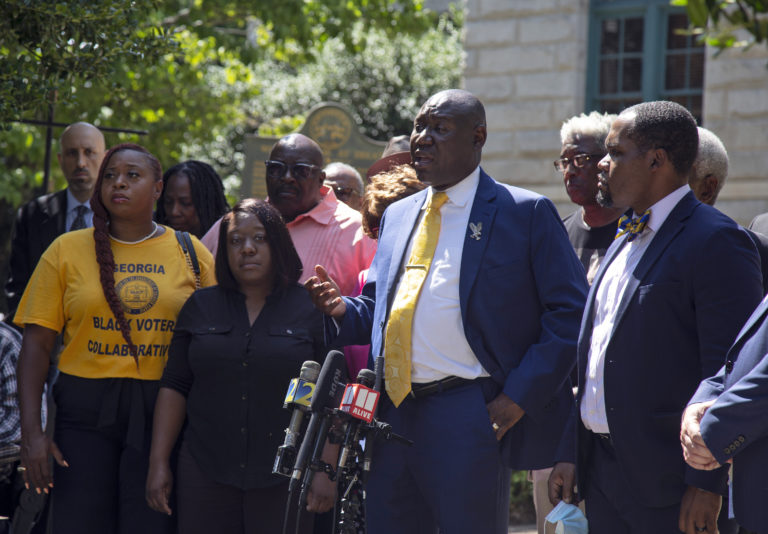
Civil rights attorney Ben Crump, who is representing her family, said Grier was taken into custody after a mental health crisis and assured the family that justice will be served.

“We won’t let them sweep your baby daughter’s death under the rug,” Crump said at the news conference on July 29 in downtown Decatur, a suburb of Atlanta.

Crump said his team will investigate what failures caused Grier to fall out of the car while it was moving and suffer a fatal brain injury that led to her being in a coma until she died six days later.

GBI agents have met with the Grier family multiple times since July 15 and have also had several conversations with them to provide updates on the investigation, spokeswoman Nelly Miles said in an email on July 29.

The agency plans to release body camera footage after agents review it with the family, she said.

Adapted from reporting by the Associated Press
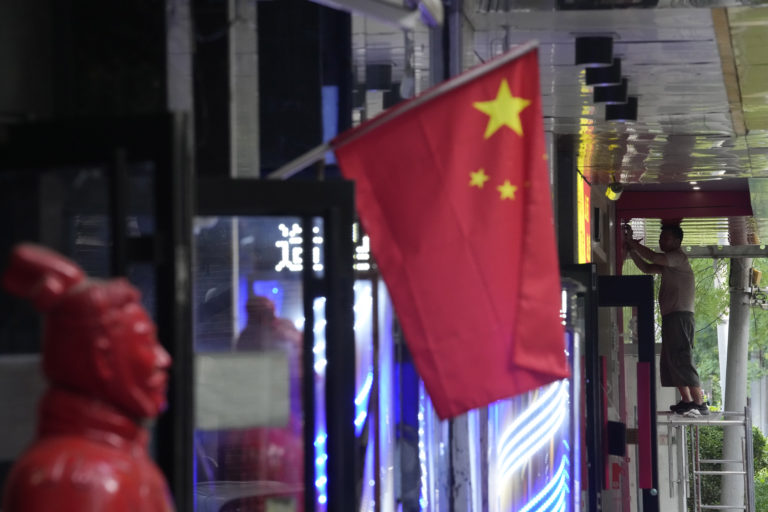
China Backs Away From Growth Goal, Sticks to Virus Controls

(Headline USA) China’s leaders effectively acknowledged the struggling economy won’t hit its official 5.5% growth target this year and said on July 28 they will try to prop up sagging consumer demand but will stick to strict anti-COVID-19 tactics that disrupted manufacturing and trade.

The announcement after a Communist Party planning meeting reflected the high-cost President Xi Jinping’s government has been willing to incur to stop the virus in a politically sensitive year when Xi is widely expected to try to extend his term in power.

The party promised to “strive to achieve the best results” in the second half.

It didn’t directly address the growth goal but dropped references in earlier statements about targets, effectively acknowledging the economy will fall short after growing just 2.5% over a year ago in the first half.

“Policymakers implicitly walked back from the original growth target,” said Larry Hu of Macquarie Group in a report.

“It means that they no longer view 5.5%, or even 5%, as achievable for this year.”

Party leaders promised to “actively act in expanding demand” and to make up for lack of consumer and business spending.

Retails sales, a major driver of growth, were off 0.7% from a year earlier in the first half after plunging 11% in April following the temporary shutdown of Shanghai and some other major cities to fight virus outbreaks.

The statement from July 28 affirmed support for the anti-COVID-19 strategy despite its rising economic cost and social disruption.

“We should resolutely and conscientiously implement the policies and measures for the prevention and control of COVID-19,” the statement said.

“We should do a good job in tracking virus mutations and developing new vaccines and drugs.”

Forecasters don’t expect Beijing to ease anti-virus controls until at least after a ruling party congress in October or November, when Xi is expected to try to break with tradition and award himself a third five-year term as party leader.

China rebounded quickly from the pandemic in 2020, but activity weakened as the government tightened controls on use of debt by its vast real estate industry, which supports millions of jobs.

Economic growth slid due to a slump in construction and housing sales.

Repeated shutdowns and uncertainty about business conditions have devastated entrepreneurs who generate most of China’s new wealth and jobs. Small retailers and restaurants have closed. Others say they are struggling to stay afloat.

Adapted from reporting by the Associated Press
1st Trader Joe’s Union Approved at Mass. Store

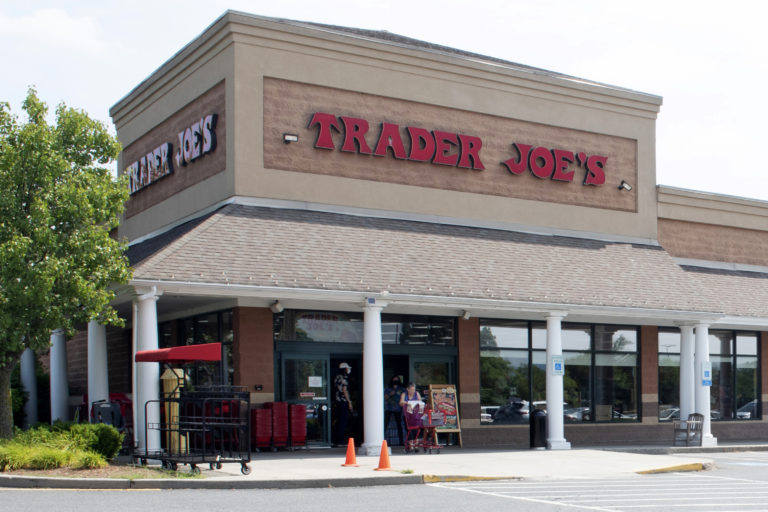
(Headline USA) Employees at a Trader Joe’s supermarket in Mass. became the latest workers at a major company to approve a labor union on July 28.

The store in Hadley, about 80 miles west of Boston, is the first Trader Joe’s with an employees union, although workers at two other company locations have initiated unionization efforts.

The union vote, counted by National Labor Relations Board agents in front of witnesses from management and employees, passed 45-31 with one void.

Eighty-one store workers — called crew members or merchants in company lingo — were eligible to vote.

The union, Trader Joe’s United, said in a Twitter post “We won!”

“This victory is historic, but not a surprise,” the tweet said.

“Since the moment we announced our campaign, a majority of the crew have enthusiastically supported our union, and despite the company’s best efforts to bust us, our majority has never wavered.”

The company has seven days to file an objection. A company spokesperson did not indicate whether there would be one.

Trader Joe’s already has among the best package of pay, benefits and working conditions in the grocery store business, the spokesperson said.

“We are prepared to immediately begin discussions with union representatives for the employees at this store to negotiate a contract,” the statement from Nakia Rohde said.

“We are willing to use any current union contract for a multi-state grocery company with stores in the area, selected by the union representatives, as a template to negotiate a new structure for the employees in this store; including pay, retirement, healthcare and working conditions such as scheduling and job flexibility.”

Organizers at the store launched the effort in May in an open letter to company CEO Dan Bane citing concerns about pay, benefits and safety.

Now that the union has been approved, the next step is putting together a negotiating committee to hammer out a contract with the California-based company, which has about 530 stores nationwide.

“We must embrace this challenge head on, together, and negotiate a contract that reflects the values Trader Joe’s has long claimed to espouse,” the union said in its tweet.

Trader Joe’s United is an independent union and not affiliated with a larger existing union, although organizers have received administrative and legal help from established unions, 18-year Trader Joe’s employee Maeg Yosef said.

Workers from at least two other Trader Joe’s locations have initiated unionization efforts.

Employees at a Minneapolis location have a union vote scheduled for Aug. 11 and 12, while the United Food and Commercial Workers Local 7 on July 26 filed a union election petition with the National Labor Relations Board on behalf of crew members at a Boulder, Colo. store.

The Trader Joe’s workers are part of a nationwide wave of employees at major companies who have or are attempting to unionize in an effort to secure a bigger say in their work conditions and compensation.

Workers at multiple Starbucks coffee shop locations across the country, as well as employees at Amazon, Apple and REI are among those who have joined unions in the past year.

During the first nine months of the 2022 fiscal year, from Oct. 1 until June 30, union representation petitions filed at the National Labor Relations Board have increased 58% compared to the first three quarters of the previous fiscal year, the agency said this month.

Adapted from reporting by the Associated Press
Governments Ramp Up Demands For User Info, Twitter Warns

(Headline USA) Twitter warned on July 28 that governments around the globe are asking the company to remove content or snoop on private details of user accounts at an alarming rate.

The social media company revealed in a new report that it fielded a record number of legal demands — nearly 60,000 during a six-month period last year — from local, state or national governments that wanted Twitter to remove content from accounts or reveal confidential information such as direct messages or user locations.

“We’re seeing governments become more aggressive in how they try to use legal tactics to unmask the people using our service, collect information about account owners and also using legal demands as a way to try and silence people,” Yoel Roth, the head of Twitter’s safety and integrity, said in a conversation broadcast on the site on July 28.

The U.S. makes up the majority of demands for account information, accounting for 20% of the requests. India follows closely behind. Twitter says it complied fully with roughly 40% of all asks for information on user accounts.

Japan, which is also a frequent requestor for account information, makes the most requests of Twitter to take down content from accounts.

Japan made more than 23,000 requests — half of all requests — for content to be removed. Russia followed closely behind on its takedown asks.

Meta, which owns Facebook and Instagram, also reported an increase in government asks for private user data during the same timeframe.

Twitter also reported a huge spike in requests from governments that targeted verified journalists and news outlets during the last half of 2021.

Governments also made a record number of legal demands on 349 accounts of verified journalists or news outlets around the globe between July and December of last year — a 103% increase.

Twitter did not provide a breakdown of which countries made those requests on journalists’ accounts or how many of the asks they complied with.

Governments are using social media companies to silence critics and censor journalists, Rob Mahoney, the executive director of the Committee to Protect Journalists, said in an emailed statement to The Associated Press.

“This surge in government demands for content takedowns and information on journalists is part of a global trend of increasing censorship and manipulation of information,” Mahoney said.

“Social media platforms are vital for reporters and they must do more to resist government attempts to silence critical voices.”

Adapted from reporting by the Associated Press
MURDOCK: Jan. 6 Show Trial Can’t Conceal This Major Exculpatory Detail

0

(Deroy Murdock, Headline USA) The Stalinist Jan. 6 Committee rages on.

​During former President Donald ​Trump’s first two impeachments, his supporters cross-examined​ witnesses​ and ​provide​d​ exculpatory evidence​. But today’s proceedings ​do not try to be fair to Trump or even curious about his side of the story.​ Instead, they are designed to blame him for a supposed coup and ​kneecap​ him before 2024.

Now, the Washington Post reports, the Justice Department has launched a criminal probe regarding Trump’s role in the Jan. 6 chaos and, more broadly, his refusal to roll over and play dead amid ​widespread doubts about the integrity of the November 2020 general election.

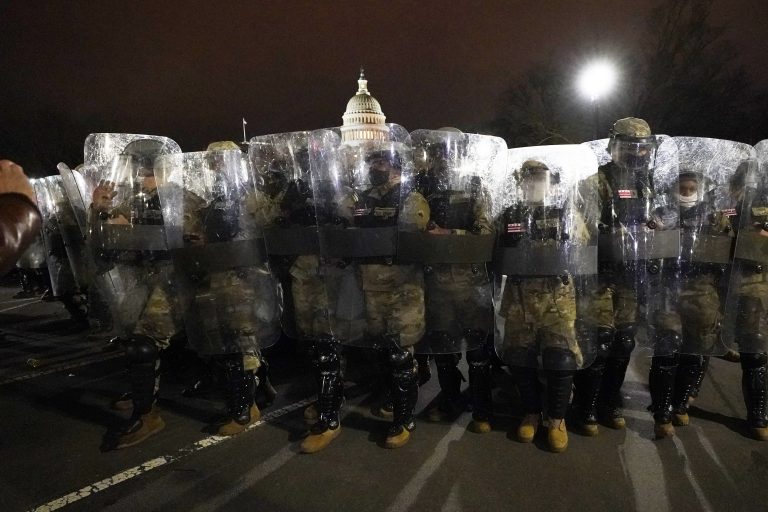
Totally ignored is the thoroughly documented fact that Trump authorized up to 20,000 National Guard troops to keep Washington tranquil on Jan. 6.​ Doing so before ​his alleged putsch would be as ​self-torpedoing as a jewel thief ​who alerted the police ​while ​walking to the Smithsonian to ​swipe the Hope Diamond.

​Rep. Liz Cheney of Wyoming told Fox News’s Bret Baier that Trump “never issued any order to deploy the National Guard to protect the Capitol.” Cheney, queen of the NeverTrumpers, is playing word games.

Such an order would have violated 18 U.S. Code § 1385. The Posse Comitatus Act of 1878 bars the U.S. armed forces from civilian law enforcement. The president may authorize National Guard troops, but governors (or D.C.’s mayor) must request them before the GIs roll.

​“DJT [Trump] authorized the use of the military to support local and federal law enforcement on 6 Jan.,” then-Acting Secretary of Defense Christopher Miller told me. “He directed that I provide whatever support was requested. Absolutely true statement.”

Trump told Miller he would need between 10,000 and 20,000 guardsmen.

“He then reiterated that I should provide any military support requested,” Miller said.

Then-Pentagon chief of staff Kash Patel confirmed the figure.

​“10-20k troops were authorized for use around the country in the Oval Office prior to Jan. 6. Hard fact,” Patel told me.

“I was there with SECDEF, Chairman of the Joint Chiefs, and others,” Patel added. “DoD spoke to Capitol Police (who report to Nancy Pelosi) before Jan. 6 multiple times, and they repeatedly rejected any National Guard assistance, as did D.C. Mayor Muriel Bowser.”

Official records back Miller and Patel.

• Referring to Miller and Gen. Mark Milley, chairman of the Joint Chiefs of Staff, Pentagon timelines state that on Jan. 3 at 5:30 p.m.: “A/SD and CJCS meet with the President. President concurs in activation of the DCNG to support law enforcement.”

• “Later that afternoon Mr. Miller and Gen. Milley met with President Trump, who concurred in the activation of DCNG to support law enforcement,” reads page 77 of the Senate Staff Reporton Jan. 6.

“He was looking at the broad threats against the United States and he brought this up on his own,” Miller told the Epoch Times. “We did not bring it up.”

• Meanwhile, Pelosi rejected Trump’s troop offer. USCP’s official timeline says the Pentagon asked on Jan. 2 if “USCP is considering a request for National Guard soldiers for Jan. 6, 2021, event.” The next day, USCP Deputy Chief Sean Gallagher replied that “a request for National Guard support is not forthcoming at this time after consultation with COP [Chief of Capitol Police Steven] Sund.”

​For her part, D.C. Mayor Muriel Bowser fretted that National Guardsmen might stir “confusion among residents and visitors.” So, she blocked them from D.C.

She wrote the Pentagon and DOJ on Jan. 5: “To be clear, the District of Columbia is not requesting other federal law enforcement personnel and discourages any additional deployment without immediate notification to, and consultation with [D.C.’s Metro Police Department] if such plans are underway.”

Democrats want desperately to keep Americans unaware of this fact:

​The rioters would have been hindered or halted if the National Guard troops whom President Trump authorized were in position. Unfortunately, Pelosi’s head was elsewhere, and Bowser wanted the Guardsmen to stand down.

So, they did.

Manhattan-based political commentor Deroy Murdock is a Fox News Contributor.

W. Va. AG Leading Fight against Leftist Gov’t Overreach from EPA, SEC

(Mark Pellin, Headline USA) When the Supreme Court ruled earlier this year that the Environmental Protection Agency couldn’t unilaterally usurp authority given to Congress in its quest to implement a radical green-energy agenda, it set a precedent that could prove critical in the ongoing fight against egregious government overreach.

With a 6-3 decision, the court ruled in West Virginia v. The Environmental Protection Agency that Congress and not government bureaucrats had the constitutional authority to regulate carbon dioxide emissions from power plants, a move crafted as part of the Biden administration’s go-green transition away from coal energy.

“This was a win for every state, not just West Virginia,” the state’s attorney general, Patrick Morrisey, told Headline USA in an exclusive interview.

“Regardless of where you live, however you feel about climate change, whether you’re a Republican or a Democrat, the court’s decision said it’s important to play by the rules,” said Morrisey, who led the challenge. 

“This is about maintaining the separation of powers,” he said. “Don’t try to use government bureaucracy and an agency like the EPA to bypass Congress’ role under the Constitution.”

While the court’s decision carried national implications, its root started on a decidedly local level for Morrisey, who saw the crippling impacts that excessive government regulations and social-engineering environmental policies were taking on his state.

“I ran for office because I was deeply concerned about what I saw happening with the Obama administration’s overreach,” Morrisey said. “I thought the AG needed more people with a regulatory background to win those battles.”

The voters agreed and under Morrisey the state brought action against President Barack Obama’s so-called Clean Power Plan, which recklessly targeted the coal industry with sweeping mandates from the EPA to shift energy production away from coal-fired plants.

“There was nothing that gave them the authority to do what they were doing, which was sidestepping Congress to exercise regulatory power they didn’t have,” Morrisey said.

The case was shot down three times at the D.C. district court level, before winning a stay from the Supreme Court in 2016. It took on renewed ramifications when the Biden administration’s EPA essentially declared it had unchecked regulatory authority.

In deciding that it didn’t, the court relied on the so-called major question doctrine, that is when it comes to issues that have major economic, social or political importance, it shouldn’t be assumed that government agencies have the authority to make policy decisions that should rest with Congress or with its explicit approval.

“A decision of such magnitude and consequence rests with Congress itself, or an agency acting pursuant to a clear delegation from that representative body,” Chief Justice John Roberts wrote for the court majority in West Virginia v. the EPA.

“This has always really been about a fundamental question of who decides the major issues of the day,” Morrisey said. “Should it be unelected and unaccountable bureaucrats, or should it be the people’s representatives in Congress?”

With that major question firmly in mind, Morrisey and other attorneys general are turning their attention to a likely looming battle with the Securities and Exchange Commission.

The SEC in March announced a radical initiative that would force companies to comply with climate change disclosure requirements that show their contributions and detriments or risks associated with global warming.

The new rules would force companies to disclose so-called ESG — environmental, social and governance — information to shareholders and the SEC. The disclosures encompass everything from diversity among company leadership and their approach to climate change, to political contributions by board members and employees and a company’s receptiveness to social change, giving new meaning and purpose to a financial equity analyst’s role.

“This is the worst type of government mission creep,” Morrisey said of the SEC’s ESG plans.

“It’s another effort by the Biden administration to use these agencies, like the EPA, and in this case the SEC to push political agendas and preferred policies.

“But this doesn’t have anything to do with climate change,” Morrisey said. “Congress created the SEC to protect investors and financial markets, not create environmental and social policy.”

If the SEC ESG battle runs its predicted course, the case is likely to land in familiar stomping grounds for Morrisey, before the Supreme Court, where advocates could use a good precedent.

“I think this falls right into the major questions category,” Morrisey said. “You again have an administration trying to short-circuit the law to impose its political agenda.” 

DOJ Grilled on Plotting False Flag Ops, Gov. Whitmer Kidnapping

(Mark Pellin, Headline USA) As demands grow for the FBI to explain why it’s reportedly pressuring agents to improperly reclassify cases to inflate the number of alleged incidents of “domestic terrorism,” it now appears that the same FBI has been creating and facilitating undercover ops to that same end.

One of the most high-profile examples came under fire when Rep. Dan Bishop, R-N.C., demanded answers and accountability for the role that internal scheming by the FBI and Justice Department played in the alleged kidnapping plots of two governors.

Calling it “one of the biggest domestic terror ops in decades” that looks increasingly like a hoax facilitated by government agents, Bishop during an oversight hearing asked Justice officials if that case was “representative of the DOJ’s domestic terrorism efforts?”

The government’s case against so-called “domestic terrorists” who allegedly tried to kidnap Michigan leftist Gov. Gretchen Whitmer crumbled when a jury found two of the defendants innocent and couldn’t reach a verdict for the other two.

Justice Department officials announced the Whitmer case during the height of the 2020 presidential campaign. Trump opponents and a leftist media were quick to use it to scare voters with smear warnings of right-wing militias, domestic terrorists, tied to Trump.

It was a blatant case of weaponizing the DOJ for political purposes, critics claimed, and the not-guilty verdict a jury delivered has amplified those concerns, along with the Biden administration’s emphasis of linking domestic terrorism to Republicans and conservative movements with warnings of white nationalists and Nazis.

That same narrative was used to drive the Whitmer case, which subsequent evidence showed was being steered by the FBI and DOJ.

“The FBI did not discover an existing scheme and collect evidence and take down plotters,” Bishop said during the Congressional hearing.

“Instead, the FBI appears to have contrived the plot, used its informants to draw people into the plot and provided logistical and financial support to what was in effect was a FBI operation.”

The FBI followed a similar pattern involving an alleged plot to kidnap Virginia Gov. Ralph Northam.

“Is that the kind of conduct the DOJ and FBI are engaged in pursuing domestic terrorism matters?” Bishop asked.

Matthew Olsen, an assistant attorney general for the DOJ’s National Security Division, dodged an answer, claiming he couldn’t discuss ongoing investigations.

Bishop could and did, blistering a DOJ run amok.

“Every step of the way, the Whitmer plot was directed and encouraged by government agents,” Bishop informed. “It required approval at the highest levels of the DOJ.

“What we still don’t know – Who approved this op? Who oversaw it?”

The cost of the operations is still another major unknown, with Bishop presenting an incomplete list of what the FBI used for the Whitmer op that included “a $54k payday for informant; $20k payday for 2nd informant; New electronics & tires for informant; Travel, food, alcohol expenses; 12+ informants, 2 undercover agents; A how-to bombmaking video; Gov’t drones & planes.”

When Bishop asked about the politically-charged timing of the case, which was used in large part to benefit the Biden presidential campaign, the DOJ’s Olsen again refused to comment.