Biden Slammed for Ignoring CDC Guidance as His COVID Reappears

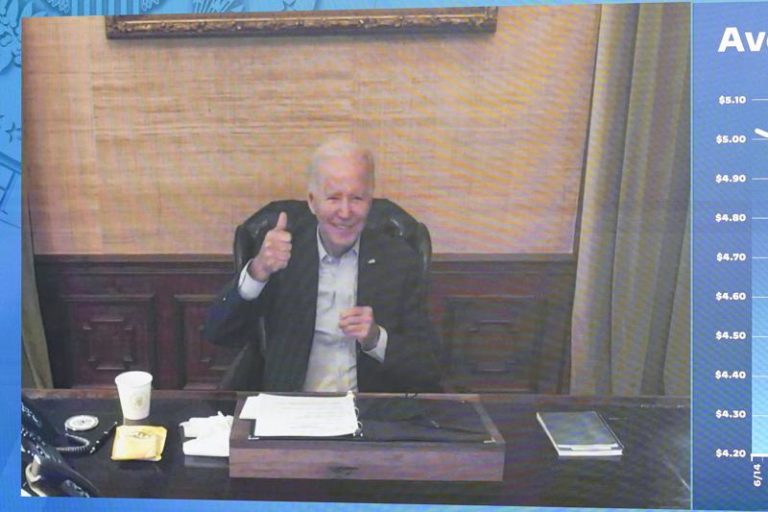
(Ben Sellers, Headline USA) Less than a day after receiving two negative COVID tests, President Joe Biden was flouting the guidance of his own Centers for Disease Control and Prevention authorities.

Those included quarantining for a full week after the first sign of symptoms and continuing to wear a mask for 10 days afterward when in public settings both indoor and outdoor.

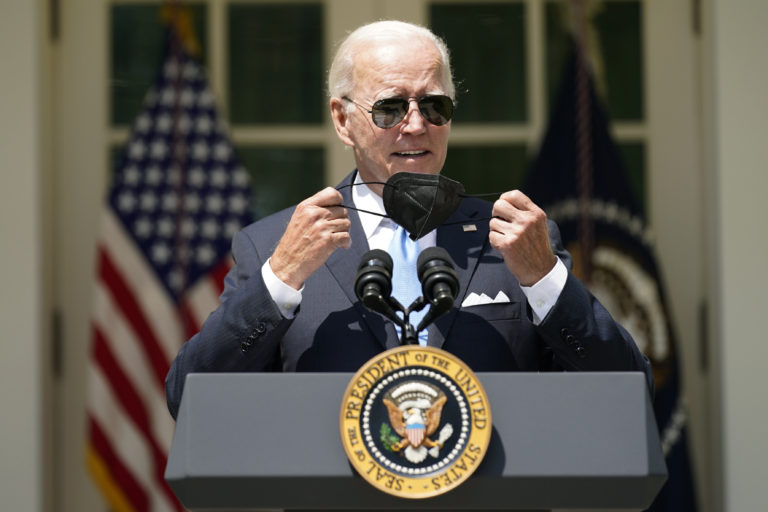
However, Biden appeared at a news conference outside the White House on Wednesday, July 27, crowing about his clean bill of health, which was, in retrospect, reminiscent of former President George W. Bush’s “Mission Accomplished” banner celebrating the end of the Iraq war that would go on for years afterward.

Biden’s apparent victory over his own personal health, along with Senate votes on two federal spending measures—a scaled-down version of his formerly $4 trillion Build Back Better bill and a bipartisan bill backing the semiconductor industry—prompted the left-leaning Politico to declare on Friday that the deeply unpopular president was “back in the game,” according to Fox News.

“After enduring a brutal year dominated by economic angst, legislative setbacks and sinking approval ratings, the president is suddenly on the verge of a turnaround that, the White House believes, could salvage his summer—and alter the trajectory of his presidency,” claimed Politico.

Conservative media scoffed at the assertion, which likely was issued at the behest of Biden White House officials.

Even former Obama advisor Van Jones noted that one good week was not going to give Democrats their much coveted reset following a year and a half of failures.

“[T]his is a successful presidency,” Jones claimed in a CNN panel on Friday, according to the Daily Caller. “You just have to [erase the] last six months of nonsense that takes away from it.”

On Thursday, Biden again disregarded the masking guidance during a forum with Treasury Secretary Janet Yellen.

On Saturday, however, news broke that the president had again tested positive for COVID and would be returning to isolation.

Reporters, including some of the sycophantic flunkies at Politico and the Associated Press, were among those fastest to express their indignation over the double standard, RedState noted.

In fairness, Biden reportedly showed no additional symptoms of COVID. The current BA.5 variant appears to be considerably less virulent than past versions and may be more akin to a bad cold than to the pandemic conditions that Democrats used to shut down major portions of the economy during former President Donald Trump’s final year in his prior presidential term.

In fact, the spread of such variants may help develop natural immunity that, along with an array of antivirals and other treatments, have contributed to the effective neutralization of the COVID threat for much of the population.

Nonetheless, the CDC’s guidance continues to recommend that most U.S. locations currently require masking in public, citing high risk of spread.

The Biden administration also continues to punish holdouts for its federal government vaccine mandates, including military servicemembers, despite scientific evidence showing the vaccines have no effect at preventing COVID variants and may pose unknown health risks that have yet to be fully studied.

The courts also have largely sided against Biden’s vaccine mandates, saying that his health agencies lacked the authority to impose them.

Biden himself was twice vaccinated with the Pfizer mRNSA shot and twice boosted prior to his recent bout of the virus. In an example of yet another semantic game played by the constantly gaslighting administration, he continued to claim that his good health was attributable to the experimental jabs.

“You can live without fear by doing what I did,” Biden claimed Wednesday. “Get boosted, get tested and get treatment.”

Several Democrats who were in proximity of Biden prior to his exposure, including Sen. Dick Durbin, D-Ill., have since tested positive, potentially waylaying the vote needed to formalize Biden’s new spending bill.

Although longtime holdout Sen. Joe Manchin, D-W.Va., has agreed to the compromise with Sentate Majority Leader Chuck Schumer, D-N.Y., the bill—which Democrats hope to pass with no Republican support in the evenly split Senate using the reconciliation process—needs all 50 senators in the Democratic caucus to be on board.

Ben Sellers is the editor of Headline USA. Follow him at truthsocial.com/@bensellers.

Economist: Inflation Hurts Rural Residents More Than Those in Urban Areas

(Headline USA) Inflation is affecting all Illinoisans, but more so in rural areas of the state because of high fuel and energy prices.

The price of gas and diesel has negatively affected the farming community, but also the people who have to drive long distances to work, school or the grocery store.

A recent analysis from Iowa State University found that it costs rural households $2,500 more a year to pay for gasoline than it did two years ago.

The Federal Reserve’s preferred inflation gauge accelerated more than expected in June, according to new data released on July 29, a worrisome sign as central bankers try to combat higher prices with the steepest interest rate hikes in decades.

William Polley, an economics professor at Western Illinois University-Quad Cities, said this is a tricky situation for the Federal Reserve this time around.

“That is a challenge this time that is a little bit different compared to the 1970s, and the fact that it is energy and food, does affect people in rural areas quite a bit, maybe disproportionately compared to urban areas,” Polley said.

According to Illinois Policy, because of inflation, Illinoisans are paying $522 more for the same grocery items they bought last year.

Food prices have risen by over 12% from June 2021 to June 2022, hitting many Illinois families hard.

Economists worry that some in rural Illinois will begin taking out home equity lines of credit because the value of their homes has increased, a strategy that could backfire if home prices fall back down and the homeowner’s mortgage is underwater.

This winter could be difficult for rural residents who heat their homes with petroleum or propane as those prices have escalated as well.

Polley said he doesn’t think that the country is in a recession right now, despite two consecutive quarters of declining GDP, which is the definition of a recession.

“I do think that a recession beginning by the end of the year is definitely in the realm of possibility,” Polley said.

He adds that job losses would follow, a lagging indicator that the country is in a recession.

Adapted from reporting by the Center Square

Va. School Board Members Back Firing of Teacher Over Pronoun Dispute

(Headline USA) Eight school board members from five school divisions filed a brief with the Va. Supreme Court in support of West Point Public Schools after the district fired a teacher who refused to use a student’s preferred pronouns.

High school French teacher Peter Vlaming lost his job for refusing to use male pronouns to refer to a biologically female student who requested he uses male pronouns.

The school board claimed his refusal to use male pronouns was transgender discrimination based on gender identity.

Vlaming filed a lawsuit to get his job back.

According to his attorneys, Vlaming consistently used the student’s preferred name but did not feel comfortable using male pronouns. Rather, the teacher avoided using pronouns altogether.

In the lawsuit, Vlaming’s lawyers argued the school violated the First Amendment and Virginia law by trying to compel speech.

“This isn’t just about a pronoun, it’s about what that pronoun means,” ADF Senior Counsel Tyson Langhofer said at the time of the initial lawsuit.

“This was never about anything Peter said or did; only about what the school was demanding he [says]. Nobody should be forced to contradict his core beliefs just to keep a job.”

Now with the case in front of the Virginia Supreme Court, several outside groups and individuals have signed onto an amicus brief in defense of the school system.

Eight school board members in five localities are backing the school: three in Falls Church, two in Arlington, one in Fairfax, one in Charlottesville and one in Stafford. A superintendent in Richmond also signed onto the brief.

In her statement, Narissa S. Rahaman, the executive director of Equality Virginia, which led the brief, said that [‘] transgender [‘] and [‘] non-binary students [‘] “face physical abuse, bullying, and extreme emotional harm at higher rates, which impact their well-being and education.”

“The West Point School Board’s antidiscrimination and anti-harassment policies aim to counteract and prevent those harms,” Rahaman added.

“We know that transgender students thrive when they are supported by an inclusive school environment, which includes using their correct pronouns.”

Last year, a Loudoun County school teacher who criticized a proposed transgender policy during a public hearing settled with the school district after being put on administrative leave for his comments.

The teacher, Tanner Cross, was allowed to keep his job, per the settlement agreement. Cross was also represented by ADF.

Adapted from reporting by the Center Square

Ted Cruz to Headline School Choice Event in Nev.

(Headline USA) Texas Republican Ted Cruz is coming to Las Vegas.

The Club for Growth announced on July 29 that Cruz would speak at the second annual School Freedom Forum on Aug. 10.

The convention will likely be part victory lap and part call to action for school choice supporters.

Several states have enacted laws in 2022 that have expanded the ways parents can direct their tax dollars to their child’s preferred educational circumstances, including neighboring Ariz.

Gov. Doug Ducey signed into law an expansion of the state’s Empowerment Scholarship Accounts to all students in the state.

Meanwhile, Club for Growth said in its release that parental concerns over learning loss from months of remote learning, “liberal agendas being pushed in school districts,” and an increasing number of failing public schools had left parents fed up.

“During the pandemic, parents got an inside look about what is happening in our schools, and they didn’t like what they saw,” Club for Growth President David McIntosh said.

“School freedom has become the new centerpiece for principled conservatives, and we are honored to host conservative champion Senator Ted Cruz to discuss one of the most pressing issues facing our country.”

Cruz called school choice the civil rights issue of the 21st century.

“Promoting school freedom is one of the most important things conservatives can do to improve the lives of families across the country,” he said.

“The status quo is unacceptable. Every child deserves access to an excellent education. Parents need to be in charge of their own children’s education, not power-hungry education bureaucrats.”

Though school choice has increased in popularity after the COVID-19 pandemic, it remains a target for supporters of education unions and public schools because they claim it siphons tax dollars they say are meant for the public districts.

Adapted from reporting by the Center Square

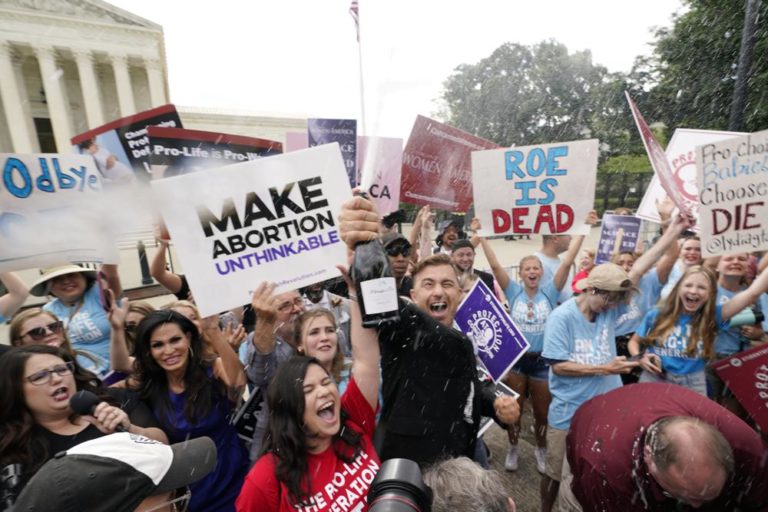
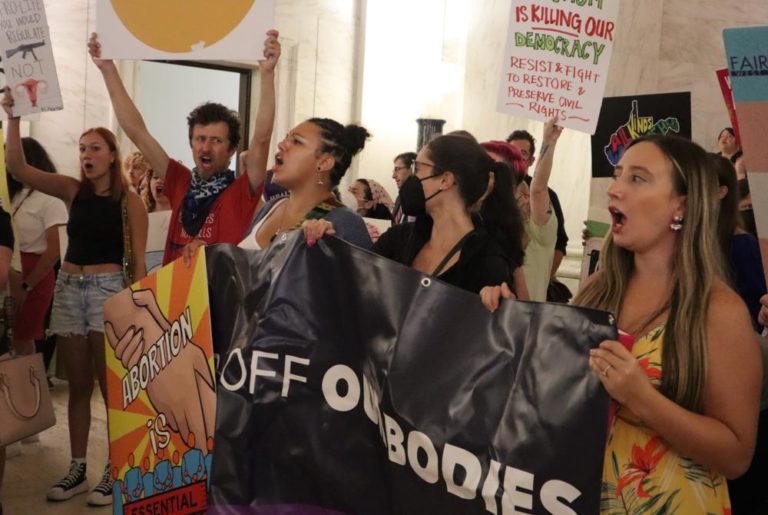
Abortion Opponents Continue Their Efforts After the Overturn of Roe v. Wade

(Headline USA) Now that Roe v. Wade has been toppled, abortion opponents are taking a multifaceted approach in their quest to end abortions nationwide, targeting their strategies to the dynamics of each state as they attempt to create new laws and defend bans in courts.

One anti-abortion group has proposed model legislation that would ban all abortions except to prevent the death of a pregnant woman.

Others hope to get more conservatives elected in November to advance an anti-abortion agenda.

“For Republicans, the post-Roe world will be significantly different, from a legal perspective,” said Jonathan Turley, a professor at George Washington University Law School.

“For the last 50 years, Republicans have been on the offense by chipping away on the edges of Roe. Now they are going to be playing defense in all 50 states.”

The U.S. Supreme Court’s decision overturning Roe v. Wade said abortion is not a right under the Constitution, creating an opening for states pushing to get more restrictions on the books.

Most recently, lawmakers in W. Va. and Ind. have pushed ahead with new restrictions, with varying success.

James Bopp Jr., general counsel for National Right to Life, has worked on model legislation for states, but said with few legislatures in session “the process of adopting new laws is really just beginning.”

It recommends banning all abortions except to prevent the death of a pregnant woman, though it provides a language for states that want to make exceptions in cases of rape or incest.

It also recommends criminal penalties for any person, including a doctor, who knowingly or intentionally causes or aids an “unlawful abortion.”

The model law would not criminalize a woman who gets an abortion.

A memo attached to the model language suggests anyone who aids and abets or conspires to cause an “unlawful abortion” also could be prosecuted, including those who provide instructions on how to self-administer or get an abortion deemed unlawful under the law.

That person would have to know the woman was seeking an abortion and intentionally help her to get one.

“General providing of information is protected by the First Amendment,” Bopp said.

It also has language that allows for prosecution of a person — other than a pharmacist or drug manufacturer — who knows a woman plans to use an abortion-inducing drug to cause an unlawful abortion, and intentionally delivers the drug or advertises such a drug for sale.

Conservatives also see new courtroom battles on the horizon.

Jonathan Mitchell, the former Texas solicitor general who is now a private practice attorney, came up with some of the key components of a Texas law that bans abortions after the fetal cardiac activity is detected.

His innovation was to make violations enforceable through lawsuits filed by citizens, rather than the government.

Mitchell, who represents Texas and S. D. in abortion lawsuits and has helped lawmakers in multiple states develop abortion bans and restrictions, said future legal fights could center around those who pay for abortions for people living in states with bans that are not being enforced due to court injunctions.

“Abortion is still a criminal offense in every state with a trigger law or pre-Roe ban, regardless of whether a state-court injunction is in effect,” Mitchell said in an email to AP.

He said an injunction doesn’t actually block a law as many believe, but temporarily keeps it from being enforced.

He said employers or those who help fund abortions in states such as Utah, Ky., La., or W. Va. are violating the law and could be prosecuted.

He said if bans exist but are on hold, abortion providers could be prosecuted retroactively.

“And the mere risk of potential lawsuits may be enough to deter abortion providers from offering abortions to out-of-state residents, especially when these lawsuits can be brought,” he wrote, “not only against the physician but everyone else involved.”

Melissa Murray, a professor at New York University School of Law, said the question of whether those who pay for out-of-state abortions could be charged is “uncharted ground.”

Employers and funds could argue they’re exercising their free speech rights, she said in an email.

“That said, a state could argue that (the groups) are facilitating the violation of a criminal law — essentially, they’re functioning as accomplices.”

The fear of prosecution has already led to victories of sorts for people who oppose abortion.

Some clinics have shut down over the confusion, reopened, then shut down again.

It has also led doctors to withhold emergency treatment until it became clear that a fetus was dead or a woman’s life was at stake.

Erin Hawley, a lawyer at the conservative Alliance Defending Freedom and the wife of Republican U.S. Sen. Josh Hawley of Mo., expects continuing litigation over medication abortions.

She pointed to a court battle underway in Miss., where drugmaker GenBioPro is suing the state over its provisions that make it harder to get a prescription for mifepristone, a drug that can induce abortion.

The state’s policies are at odds with U.S. Food and Drug Administration regulations, which courts have generally found take precedence over state law.

But Hawley said that might not apply here.

“It’s always a big deal for a federal agency or law to trump state law,” Hawley said.

Some states are taking different approaches.

In La., the State Bond Commission voted last week to withhold a $39 million line of credit for a New Orleans sewer and water project to “send a message” after city and local officials said they would not enforce that state’s abortion ban.

The law is currently blocked by a court and not enforceable anyway.

Texas sued the federal government in mid-July after the Biden administration issued guidance that stated hospitals are required to provide abortions if necessary to save a mother’s life.

Next week, Kan. voters will consider the first statewide referendum on abortion since Roe was overturned.

If approved, it could make Kan. the fifth state to declare its constitution doesn’t grant the right to abortion and would open the door for the Legislature to further restrict or ban abortion.

Bopp said while court battles and midterm elections are the current focus, abortion opponents would eventually like to see federal and state constitutional amendments that would explicitly protect the unborn, though he acknowledged that would be a challenge.

“A constitutional amendment has been one of our goals. But this requires a hell of a consensus,” he said.

Adapted from reporting by the Associated Press

Ind. Senate Narrowly Passes Near-Total Abortion Ban

(Headline USA) Ind. state senators narrowly passed a near-total abortion ban on July 30 during a rare weekend session, sending the bill to the House after a contentious week of arguments over whether to allow exceptions for rape and incest.

The Republican-controlled Senate voted 26-20 after about three hours of debate, passing the bill with the minimum 26 votes needed to send it on to the House, which Republicans also control.

The bill would prohibit abortions from the time a fertilized egg implants in a uterus. Exceptions would be allowed in cases of rape and incest, but a patient seeking an abortion for either reason would have to sign a notarized affidavit attesting to the attack.

Indiana is one of the first Republican-controlled states to debate tighter abortion laws since the U.S. Supreme Court last month overturned the precedent establishing a national right to an abortion.

But the GOP splintered after the rape and incest exceptions remained in the bill on July 28 when an amendment failed that would have stripped out those exceptions.

Ten Republican senators voted against the legislation on July 30, including a handful who support abortion.

One of them was Republican Sen. Vaneta Becker of Evansville.

“Women deserve to have us protect their lives and free will. Senate Bill 1 destroys both. Shame on us for doing this,” she said.

“We are considering dictating medical decisions with blinders and ignorant of the astounding, unintended consequences we are creating.”

Republican Sen. Mike Young, whose amendment calling for no exceptions except for the life of the mother previously failed, said he voted against the bill not because he agrees with its opponents but because he has qualms with some aspects of the legislation he hopes are addressed.

Young said one provision that concerns him states that a doctor can perform an abortion if he believes a woman’s life is in danger but it doesn’t require the doctor to inform that woman that her life is in danger.

“She may never know the reasons why,” he said.

“I just think it’s important when a person makes the most important decision of their life they ought to know if their life is in danger, and what are the reasons why it’s in danger.”

GOP Sen. Sue Glick of LaGrange, who authored the abortion bill, said during the debate she doesn’t expect the legislation approved by the Senate to be the final version the legislature passes.

She called the Senate bill “an expression of where we believe the state of Indiana is right now.”

The legislation’s passage “is a huge step forward in protecting the life of the unborn children in our state,” Glick said in a statement after the bill’s approval.

“We have put together a bill that would not criminalize women and would protect the unborn whose voices have been silenced for the past 50 years under Roe v Wade,” she added.

Ten of the Senate’s 11 Democrats voted against the bill, with the 11th member absent for Saturday’s debate.

Democratic Sen. Tim Lanane of Anderson condemned the bill.

“This is the government, the male-dominated government of the state of Indiana, saying to the women of this state, you lose your choice,” he said.

“We’ve told you — papa state, big state government — is going to tell you what you will do with your body. And I don’t think we’re ready for that.”

The bill now heads to the House, where proposed changes could come as soon as next week — the second week of lawmakers’ three-week special session.

Lawmakers must adjourn their session by Aug. 14.

House Speaker Todd Huston on July 29 declined to discuss specifics of the Senate bill, but he said he supports the rape and incest exceptions.

Gov. Eric Holcomb said earlier this summer that he had no “red lines” on what anti-abortion measures lawmakers might consider.

But on July 12 Holcomb sidestepped taking a stance on how far the Republican-dominated Legislature should go in restricting abortions in its special session.

Adapted from reporting by the Associated Press

Oversight Committee Launches Investigation into Nursing Home COVID Deaths

0

(Headline USA) Republicans on the Select Subcommittee on the Coronavirus Crisis and the House Oversight Committee have joined forces in an investigation over the thousands of nursing home deaths in New York state during COVID, saying New York Democrats ignored previous inquiries.

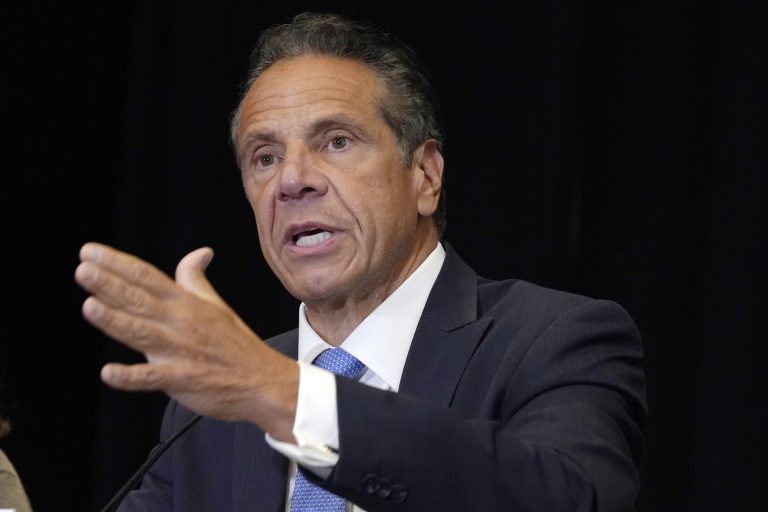
According to The Center Square, the controversy began in 2020 when thousands of New York nursing home residents died during the pandemic, drawing extra scrutiny to then-Gov. Andrew Cuomo’s policy of sending elderly patients recovering from COVID-19 into nursing homes.

Afterward, Cuomo came under fire over allegations that he intentionally hid nursing home deaths. New York State Comptroller Thomas DiNapoli released an audit earlier this year saying New York’s Health Department “failed to account for more than approximately 4,100 lives in nursing homes due to COVID-19.”

“While the Department’s duty is to act solely to promote public health, we determined that, rather than providing accurate and reliable information during a public health emergency, the Department instead conformed its presentation to the Executive’s narrative, often presenting data in a manner that misled the public,” the audit said.

Lawmakers sent a letter to New York Gov. Kathy Hochul demanding records of key information, including how many total deaths there were and what directives were issued by the governor’s office “regarding hospital discharges to nursing homes or any and all other types of assisted living facilities…”

“We owe it to the thousands of families who lost loved ones in New York nursing homes to hold Governor Cuomo accountable for his reckless policies that likely contributed to their deaths,” Oversight Committee Ranking Member James Comer said.

“It’s past time New York officials provide Congress all information and data about former Governor Cuomo’s deadly order. We need answers and accountability now.”

The Republicans say they previously sent inquiries to Cuomo’s office to no avail.

“Every family deserves answers and accountability for Corrupt Cuomo’s order that resulted in the deaths of thousands of seniors in New York’s nursing homes. For the sake of families who needlessly lost loved ones, I am providing critical oversight of all data on Cuomo’s deadly order,” House Republican Conference Chairwoman Elise Stefanik said.

“We must know how much Kathy Hochul knew about Cuomo’s criminal nursing home coverup and have accountability for the senseless loss of lives.”

Hochul’s office did not respond to a request for comment in time for publication.

Biden Tests Positive for COVID-19 Again, Returns to Isolation

0

(Headline USA) President Joe Biden tested positive for COVID-19 again, slightly more than three days after he was cleared to exit isolation, the White House said, in a rare case of “rebound” following treatment with an anti-viral drug.

White House physician Dr. Kevin O’Connor said in a letter that Biden “has experienced no reemergence of symptoms, and continues to feel quite well.” O’Connor said “there is no reason to reinitiate treatment at this time.”

In accordance with Centers for Disease Control and Prevention guidelines, Biden will reenter isolation for at least five days.

He will isolate at the White House until he tests negative. The agency says most rebound cases remain mild and that severe disease during that period has not been reported.

Just as when Biden first tested positive, the White House sought to show he was still working. The president sent out a picture of himself masked and tieless on Twitter, which showed him signing a declaration that added individual assistance for flood survivors in Kentucky.

The president also took time on Saturday to have a FaceTime conversation with people camping outside the U.S. Capitol who are seeking health benefits for military veterans exposed to toxic substances from burn pits during their service, according to White House chief of staff Ron Klain.

A bill to provide expanded benefits failed to clear the Senate on Wednesday. Veterans Affairs Secretary Denis McDonough brought discussed the bill with the president via Skype.

Word of Biden’s positive test came just two hours after the White House announced a presidential visit to Michigan this coming Tuesday to highlight the passage of a bill to promote domestic high-tech manufacturing.

Biden had also been scheduled to visit his home in Wilmington, Delaware, on Sunday morning, where first lady Jill Biden has been staying while the president was positive. Both trips have been canceled as Biden has returned to isolation.

Biden, 79, was treated with the anti-viral drug Paxlovid after he first tested positive on July 21. He tested negative for the virus on this past Tuesday and Wednesday. He was then cleared to leave isolation while wearing a mask indoors.

Adapted from reporting by the Associated Press.

Biden expected to sign $280 billion CHIPS Act

0

(Headline USA) President Joe Biden is expected to sign the CHIPS Act, a $280 billion spending bill meant to incentivize American manufacturers to produce semiconductor chips in the U.S.

Critics say the measure contains no accountability requirements for companies that receive the taxpayer dollars, will increase the national debt and 40-year-high inflation, and won’t strengthen national security.

The bill passed the U.S. Senate by a vote of 64-33 with 17 Republicans joining Democrats in approving it. It passed in the House by a vote of 243 to 187, with 24 Republicans joining 219 Democrats despite Republican leadership opposing the bill, The Center Square reported.

Biden expressed his support, tweeting, “Semiconductor chips are the building blocks of the modern economy—they power our smartphones and cars. And for years, manufacturing was sent overseas. For the sake of American jobs and our economy, we must make these at home. The CHIPS for America Act will get that done.”

Democrat Senate Majority Leader Chuck Schumer said the bill will “take aim at the national semiconductor chip shortage, lower costs for American consumers, and boost scientific innovation and jobs.”

Key provisions of the bill include $52.7 billion in taxpayer funded subsidies for chip manufacturing in the U.S., a 25% tax credit for semiconductor manufacturing, $1.5 billion earmarked for technology development for U.S. firms that claim to be dependent on foreign telecommunications, $10 billion appropriated to the Department of Commerce to develop 20 regional technology hubs, and directives to grow the federal government by expanding federal agencies.

The Congressional Budget Office says the bill appropriates “about $200 billion over the 2022-2031 period, primarily for research activities.”

One section of the bill directs the U.S. Department of Energy to finance research facilities and infrastructure that will cost $5.9 billion. CBO estimates this will increase direct spending by $3.1 billion over the 2022-2031 period.

Another section authorizes the National Aeronautics and Space Administration to enter into enhanced-use lease agreements through 2032, which will increase direct spending by $80 million over the 2022-2031 period, CBO says.

Texas Republican Sen. John Cornyn, who joined Democrats in voting for the measure, said it would “help kick start domestic production of these semiconductors in a way that will prevent a vulnerability of our supply chain since 90 percent of those advanced semiconductors currently come from Asia.”

He also said “it could create roughly 185,000 jobs every year as these new facilities are constructed. Long-term, it could bring another 280,000 jobs online. Once these foundries are operational, they will supply made-in-America semiconductors that can be used on everything from smartphones, to cars, to airplanes, to missile defense systems.”

The bill also will enable the U.S. to “compete with,” “beat,” and “out-innovate” China, he said.

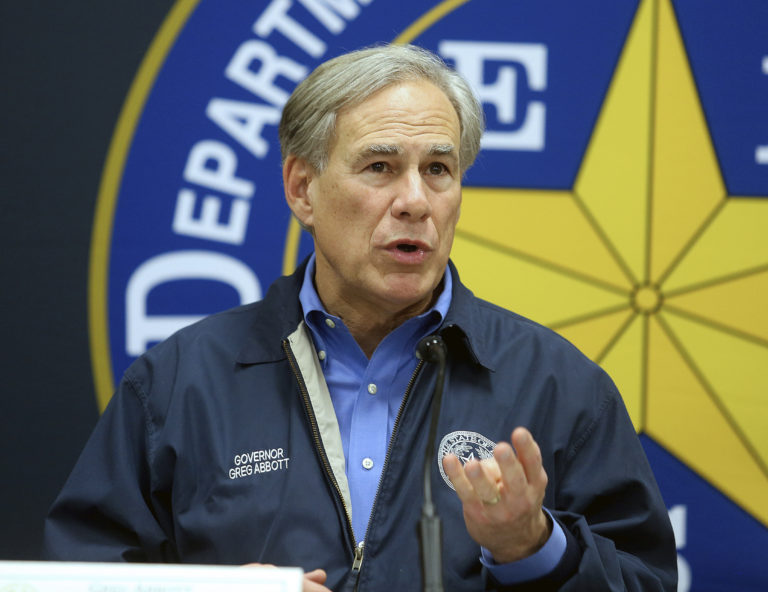
Texas Gov. Greg Abbott also praised the bill’s passage, saying it will help expand production in Texas, which he says is “a beacon of innovation and has remained the nation’s leading exporter of semiconductors and other electronic components for eleven years in a row.”

But Florida Sen. Rick Scott, who urged his colleagues in the Senate and House to vote against the bill, argues it’s a “pro-China” bill that “will weaken America’s standing on the world stage.”

With the U.S. now $30 trillion in debt, “spending another $280 billion that we don’t have,” he said, “sets a dangerous precedent for massive, taxpayer-funded corporate welfare to the world’s most profitable corporations without any accountability or guarantee of return on investment for the American people.

“Even worse, the bill lacks basic safeguards and would allow corporations to use American tax dollars to build factories in Communist China and expand their share of the Chinese semiconductor market.”

There’s no requirement in the bill for manufacturers to build a certain number of plants in the U.S., he added, or require them to not outsource American jobs overseas. The bill includes no chip quota production requirements for manufacturers and instead “works like a blank check with virtually no accountability measures to protect the massive taxpayer spending it authorizes and no ROI requirements.”

It doesn’t improve U.S. national security and instead is a “huge spending bill funded with Americans’ tax dollars that gives corporations and Communist China everything they want while leaving American workers and American families with little in return,” he said.

Alito: U.S. Seeing Growing Hostility to Religious Freedom

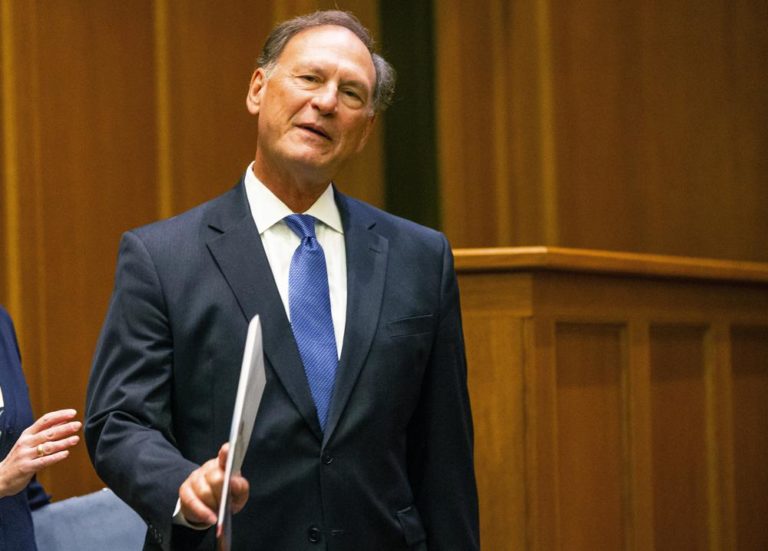
(Headline USA) Associate U.S. Supreme Court Justice Samuel Alito said there’s a “growing hostility to religion” in a keynote address he gave highlighting the unique protection of religion in the U.S. Constitution, The Center Square reported.

“The problem that looms is not just indifference to religion, it’s not just ignorance about religion,” he said at a 2022 Notre Dame Religious Liberty Summit in Rome last week.

“There’s also growing hostility to religion or at least the traditional religious beliefs that are contrary to the new moral code that is ascendant in some sectors,” he said during his 37-minute remarks released on Thursday.

He said he wondered “what historians may say centuries from now about the contribution of the United States to world civilization. One thing I hope they will say is that our country, after a lot of fits and starts, and ups and downs, eventually showed the world that it is possible to have a stable and successful society in which people of diverse faiths live and work together harmoniously and productively while still retaining their own beliefs. This has been truly a historic accomplishment.”

But “no human achievement is ever permanent,” he added, and “we can’t … assume that the religious liberty enjoyed today …will always endure. Religious liberty is fragile.”

“Religious liberty is under attack because it is dangerous to those who want to hold complete power,” he said.

While some academics and politicians argue religion doesn’t deserve special protection, Alito argues it does. Hostility to religion in the U.S. threatens religious liberty, which in turn threatens other fundamental rights it protects.

The First Amendment to the U.S. Constitution protects the free exercise of religion, he reiterated, which “very often involves speech, a spoken or written prayer, the recitation of Scripture, a homily, a religious book or article. These are all forms of speech. They are also forms of religious exercise.”

“If this sort of speech can be suppressed or punished, what is to stop the state from crushing other forms of expression?” he asked.

Alito pointed to attacks on the right to worship and assemble in the U.S. in an era where the Supreme Court was tasked with ruling on cases brought by pastors, priests and rabbis who faced jail time if they didn’t close their churches and synagogues because of governor-ordered lockdowns. The Supreme Court consistently ruled that orders shutting down religious worship were unconstitutional.

California Gov. Gavin Newsom and the Ninth Circuit received specific chastisement from the high court, which ruled that Newsom’s mandates prohibiting religious assembly and worship were unconstitutional. As a result, the state of California and counties were forced to settle lawsuits, paying out millions of dollars to entities they had threatened with imprisonment and exorbitant fines.

After winning several of these religious freedom cases, Liberty Counsel founder and chairman Mat Staver said, “Governor Gavin Newsom’s COVID restrictions intentionally discriminated against churches while providing preferential treatment to many secular businesses and gatherings. The Supreme Court intervened multiple times to provide relief. California may never again place discriminatory restrictions on churches and places of worship.”

Pastor Rob McCoy of Calvary Chapel-God Speak in Thousand Oaks, California, argues the government doesn’t have the authority to shut down houses of worship at all. The rulings and settlements related to cases other than his implied that if restrictions were equally imposed on secular entities and houses of worship, the case for discrimination would be moot. Religious freedom isn’t about unequal treatment between a church and Walmart, for example, he argues, because the First Amendment specifically protects the free exercise of religion, not the free exercise to shop.

McCoy told The Center Square at the time of his ongoing legal battles, during which he faced imprisonment for preaching and defying lockdowns, that more people were coming to his church because it remained open. They came, he said, “because their freedoms have been taken. Their streams of liberty dried up and they went upstream to find the source of liberty – Jesus.” Because liberty, he argues, “is not man’s idea. Liberty is God’s idea.”

Pointing to the rights protected in the First Amendment, Alito said, “We consider the relationship between freedom of speech and freedom of assembly. A religious service in a church, synagogue, mosque, or temple is a form of assembly. If a government can ban those assemblies, will it hesitate to outlaw others?”

In a society where “religious liberty is allowed,” Alito said, “it will be harder for the state to restrict other speech and other assemblies.”