Georgia Police Department Requires Training in Gender Ideology

(Johnny Edwards, The Center Square) The Georgia police department that fired an officer for asking a biological male to stay out of a women’s restroom will begin putting all its officers through sensitivity training this month. The mandatory “LGBTQIA+” class will push several tenets of transgender ideology that remain in dispute, The Center Square has learned.

In training costing taxpayers tens of thousands of dollars in work hours, DeKalb County Police officers will be told that biological sex isn’t fixed, but rather “assigned at birth.” They’ll hear that sex is actually on a spectrum – a controversial concept espoused by left-wing gender activists.

And “gender pronouns matter,” says a PowerPoint being shown to officers. Some people should be referred to as “they/them.” Refusing to use that language is like saying, “I would rather hurt you repeatedly than change the way I speak about you.”

Officers will also be directed that if they encounter a transgender person, it’s a major no-no to ask their real name. They’ll be told male crime suspects should be given the option to have “female” checked when entering their information on an official police report.

That’s all within class materials for the DeKalb County Police Department’s new “LGBTQIA+ Awareness & Sensitivity Training,” which The Center Square obtained through a request filed under the Georgia Open Records Act.

One of the nation’s foremost opponents of extreme gender ideology, evolutionary biologist Colin Wright, reviewed the course materials and called them “shocking.”

Wright, a Manhattan Institute fellow and editor-in-chief of the Substack “Reality’s Last Stand,” said the training goes beyond teaching officers to be respectful and follow procedure. Wright said he recognized several hallmarks of trans activism, including quasi-religious metaphysical concepts that the training presses officers to buy into.

“I don’t think we should be indoctrinating our officers to really highly-politicized world views, especially if the individual officers don’t themselves ascribe to this view,” he said. “It’s a form of speech policing – compelled speech on behalf of the government or the specific police department.”

The new one-hour classes don’t start until later this month, so it’s unclear how instructors will present the material. Department leaders refused to grant interviews.

The department’s chief of staff told The Center Square by email that the course will be offered about eight times per month until all sworn personnel have taken it, which could take until December. The department numbered just under 600 officers at the end of last year, so based on officers’ average hourly pay plus benefits, putting them all through the class will cost taxpayers around $25,000 to $30,000.

DeKalb County joins dozens of police departments across the nation requiring some form of LGBTQ training. Among the major cities whose police departments already have it: Atlanta, Chicago, Los Angeles, Houston, New Orleans, New York, Philadelphia and Washington, D.C., according to online records and media reports. In California, all police departments must train officers and 911 dispatchers on sexual orientation and gender identity minority groups, as mandated by state law since 2018.

Greg Miraglia, a veteran law enforcement officer who conducts police trainings on LGBTQ awareness in California, said concepts such as sex-assigned-at-birth and sex as a spectrum are commonly incorporated into curricula. The website for his nonprofit, Out To Protect, lists 88 law enforcement agencies that have participated in LGBT awareness training, spanning through Colorado, Texas, Maine, Alabama, Virginia, and the Carolinas, among others.

“What we tell officers in our training is, look, your religious values, your personal morals and beliefs are absolutely yours. And you are entitled to them and we respect them,” Miraglia said. “But you swore an oath to support and defend the Constitution of the United States, which includes the 14th Amendment. And that requires, as a law enforcement officer, that you provide equal protection under the law.”

DeKalb County Police Chief Greg Padrick wouldn’t discuss any of this, declining to schedule an interview or make available the staffers who developed the class materials or will be teaching it. Instead, the department sent a written statement through spokeswoman Officer Elise Wells.

The sensitivity class “reflects our proactive approach to modern law enforcement training and our responsibility to ensure officers understand the communities they serve. Agencies across the country incorporate similar topics into professional development as part of best practices in policing,” the emailed statement says, in part.

Steve Gaynor, secretary and spokesman for the police union covering DeKalb, the Georgia Fraternal Order of Police, said after reviewing the PowerPoint, “I don’t see the training as being that bad.”

He said it could be something needed to protect the county government in case of any future lawsuits. “I think DeKalb is just going along with it to check the box,” Gaynor said.

The new training follows an incident in October where a DeKalb County reserve police officer faced a complaint – along with heat from the Atlanta media – for telling a transgender biological male to stay out of the women’s restroom at a public library.

The Center Square obtained the Internal Affairs investigation and reported last month that when the officer confronted the library patron, he was acting on a complaint from an upset mother who was in the restroom with two children at the time. The mom reportedly told a security guard, “How can we allow men to go into a women’s restroom?”

In DeKalb County though, transgender rights outweigh such questions. The Democrat-led metro Atlanta county passed an ordinance in 2023 forbidding discrimination based on “perceived gender-related identity.” The DeKalb library system allows patrons to use whichever bathroom “aligns with their gender identity.”

The department fired the officer, 28-year veteran Glen Weaver, 70, in December over the incident, also citing other policy violations such as not activating his bodycam or properly obtaining department permission to work at the library.

The training documents say nothing about to handle a complaint from a woman about a man in her restroom. The purpose is “to provide DeKalb County Police officers with the knowledge and skills to effectively interact with the LGBTQ+ community,” the PowerPoint says. There’s instruction on legal rights and protections, securing a crime scene, identifying hate crimes, and supporting victims.

Wright, the evolutionary biologist, said there’s also misinformation and pseudoscience.

What’s clear – the training makes assertions that are scientifically and politically under debate.

One red flag Wright noted: the course uses the “Genderbread Person” diagram, which has shown up in elementary schools throughout the U.S. and Canada. The diagram asserts that biological sex isn’t binary, but on a spectrum, just like sexual orientation and gender expression. DeKalb’s presentation also has a video featuring Katie Couric.

“This is a document that is designed for indoctrinating children,” Wright said. “It’s a little cartoon poster of a gingerbread person, and now we’re making police officers watch a 2½ minute video on this.”

Miraglia, of Out To Protect, said he uses the Genderbread Person in police training, too.

“It’s a good model to help people understand the differences in identity between sexual orientation, gender identity, sex assigned at birth, and gender expression,” he said.

On its assertion that biological sex is a spectrum, “I think you’ll find that there’s a lot of science around that,” Miraglia said. “Intersex people are born with variations of genitalia, though it’s rare. It’s 1½ to 2 percent, somewhere in there … If you want to get in the weeds with it, you can research what the American Psychological Association and American Psychiatric Association and American Medical Association have said.”

Wright says sex is binary. Not only is intersex a fraction of 1% of the human species, “it’s not like a new variation of a third sex. It’s some sort of genetic anomaly,” he said.

“What makes someone male or female is if they have the biological function to produce either small gametes, what we call sperm, or large gametes, which we call ovum,” Wright said.

The DeKalb County training materials follow a contrary line of thinking, setting up scenarios to put natal men into jail cells with women. There are detailed instructions for deciding which side of the jail, male or female, an inmate should go into.

“If a male has had a sex change to reflect female genitalia they will enter on the female side,” the training says. “If a female has had a sex change to reflect male genitalia they will enter on the male side.”

At one point, the presentation says when writing citations or police reports officers should use whatever name is listed on a person’s government ID. But then it goes on to say that suspects, victims and witnesses can be asked which gender, male or female, they would like to have recorded on official reports.

On another slide, on a list of words “NOT to use,” it says, “Never ask ‘what is your real name?'”

“When we’re talking about criminal data, it’s important to get correct data,” Wright said. “What if the criminal wasn’t apprehended but is on the loose, and you’re reporting that you’re searching for a woman who’s 6 feet tall? If it’s just a man, I think that matters and could endanger the community.”

Following the library incident, the county’s top elected official, CEO Lorraine Cochran-Johnson, called the matter a “teachable moment” in a statement to one TV station. Police spokesman Blaine Clark was quoted in another media report, saying the department would “continue expanding our training programs to ensure our officers are equipped to serve every individual with fairness, empathy, and professionalism.”

However, in its written statement to The Center Square, DeKalb PD said the new training isn’t related to any publicized incidents but is “part of the Department’s ongoing evaluation of training needs.”

The Georgia Peace Officer Standards & Training Council, which certifies officers and sets statewide standards, approved DeKalb County’s new class for official training credit months before the library incident, in April, according to an email from Executive Director Chris Harvey.

Harvey said he would only answer additional questions from The Center Square in writing. In response to a list of questions about the contents of DeKalb’s lesson plans, the executive director emailed a statement saying the council “is not empowered to render any verdict on specific practices” unless they violate state law or council rules.

“Any political or ideological views within a law enforcement agency are determined by its leadership and the locally elected officials who oversee that agency,” the statement said. “Review and approval of any local law enforcement training material by POST does not equal an endorsement of any ideological views included in said training, nor does it reflect the official views of any state government entity.”

DeKalb County Commissioner Ted Terry, who has advocated for the police department to expand its community inclusion strategy, said the goal of the class is better communication with diverse people who may be experiencing crime or crisis.

“I’m not sure if it’s pushing or forcing anyone to believe something,” Terry said. “I think the whole point of these trainings is for awareness, so that the officers are equipped to deal with all the types of individuals that they might encounter during the job.”

U.S. House Introduces Bill to Require National Debt Transparency

(Andrew Rice, The Center Square) Lawmakers introduced a bill to require greater transparency on the national debt and GDP.

Reps. Lloyd Smucker, R-Penn., and Jared Golden, D-Maine, introduced the Debt-to-GDP Transparency and Stabilization Act on Wednesday. The legislation would require the president to submit reports in his annual budget requests that detail the effects of his budget on the country’s national debt and GDP.

“Our national debt is the greatest threat to our country,” said Rep. Smucker. “I’m hopeful this legislation will help correct our fiscal trajectory and ensure our nation’s long-term economic prosperity.”

The legislation would also require congressional budget resolutions to report the effect of policies on the national debt and GDP.

The United States’ national debt is more than $38 trillion at the time of publication. The national debt is expected to reach 175% of U.S. GDP by 2056, according to the Congressional Budget Office.

The U.S. House Committee on the Budget passed similar legislation in its last Congress. The legislation never made it to a vote on the floor of the House.

“It’s essential that the national debt is front of mind for lawmakers when making decisions about the federal budget,” said Rep. Golden. “Equipping Congress with more information about bills’ impact on the debt will enable more informed lawmaking.”

The Committee for a Responsible Federal Budget praised the bill’s introduction. Maya MacGuineas, president of the CRFB, said passage of the bill would help lawmakers and the public understand budget processes.

“The public deserves to know the size and scope of planned debt and deficits,” MacGuineas said.

The National Taxpayers Union also offered support and praise of the introduced legislation.

“Our country is barreling toward a fiscal crisis and we need to leverage every tool in the toolbox to identify, report, and tackle the problem before it’s too late,” said Thomas Aiello, Vice President of Federal Affairs at NTU.

Reps. Don Bacon, R-Neb.; Ben Cline, R-Va.; Don Davis, D-N.C., Marie Glusenkamp-Perez, D-Wash.; Glenn Grothman, R-Wis.; Dan Mueser, R-Penn.; Jimmy Pannetta, D-Calif,; Scott Peters, R-Calif.; Tom Suozzi, D-N.Y. and Rudy Yakym, R-Ind., also cosponsored the legislation.

It is unclear whether the legislation with move further than it did during the last Congress. The government has remained in a partial shutdown since Feb. 14, after lawmakers did not agree on proposals to fund the U.S. Department of Homeland Security.

Delayed funding measures will likely slow down budget proposals and requests for the upcoming fiscal year. Congress has until Sept. 30 to finalize appropriations in fiscal year 2027.

“Lawmakers on both sides of the aisle recognize the urgency of addressing the debt crisis,” Smucker said. “Tackling our national debt must be a priority. This legislation increases transparency and creates accountability in Washington to deliver real, tangible solutions.”

South Korean Central Bank Plans to Invest in Gold ETFs

(Mike Maharrey, Money Metals News Service) South Korea plans to boost its gold holdings for the first time since 2013. However, it will take an unusual approach. According to an announcement, the Bank of Korea will incorporate overseas-listed gold ETFs into its foreign reserve portfolio.

Bank of Korea official Heung-Soon Jung announced plans for additional gold purchases last fall.

The Korean central bank holds around 104 tonnes of physical gold, making up around 4 percent of its total reserves. The country holds all its physical gold in London.

As the World Gold Council noted, using ETFs to gain exposure to gold is “uncommon,” and none of the respondents in its Central Bank Gold Reserves Survey had opted for this approach.

A gold ETF is backed by a trust company that holds metal owned and stored by the trust. In most cases, investing in an ETF does not entitle you to any amount of physical gold. You own a share of the ETF, not gold itself. ETFs are a convenient way for investors to play the gold market, but owning ETF shares is not the same as holding physical gold.

According to a report published by Seoul Economics Daily, the central bank chose ETFs due to their liquidity.

“The BOK had previously determined that gold has lower liquidity and convertibility compared to other assets such as bonds and stocks, and lacks cash flows from interest or dividends, making it less efficient for asset management. … In contrast, physical gold ETFs track the price of physical gold while being immediately tradable in the market, offering high liquidity and no storage cost burden. The assessment is that they align with foreign exchange reserve management principles as they can be quickly converted to cash during periods of heightened foreign exchange market volatility.”

But while the central bank will gain the advantage of ease and liquidity, it is introducing counterparty risk, which is one of the characteristics that make gold a safe reserve asset.

What exactly is counterparty risk?

In simple terms, it is the possibility that the party on the other side of a transaction might not fulfill its obligation. For instance, if I loan you $200, there is always a chance that you won’t pay me back.

When you invest in a gold ETF, there is no guarantee it has enough gold to back the fund. That introduces a significant level of counterparty risk.

South Korean officials are not unaware of counterparty risk. Worries about the dollar were part of the decision to add more gold to the country’s reserves. When he announced plans to increase gold reserves last fall, Jung specifically categorized gold as a reserve alternative to the greenback.

“Given gold’s role as an inflation hedge and its potential as an alternative investment to the U.S. dollar, it’s evident that gold should be considered as one of the viable assets from a medium- to long-term perspective.”

Central banks globally have been on a gold-buying spree for over four years.

Last year was the fourth-largest expansion of central bank gold reserves on record, with reserves growing by 863 tonnes. The all-time high was set in 2022 (1,136 tonnes). It was the highest level of net purchases on record, dating back to 1950, including since the suspension of dollar convertibility into gold in 1971.

To put these numbers into perspective, central bank gold buying averaged 473 tonnes annually between 2010 and 2021.


Mike Maharrey is a journalist and market analyst for Money Metals with over a decade of experience in precious metals. He holds a BS in accounting from the University of Kentucky and a BA in journalism from the University of South Florida.

Senate Fails to Halt Trump’s War on Iran

(Dave DeCamp, Antiwar.comThe Senate on Wednesday voted against advancing a War Powers Resolution aimed at halting further US military action against Iran without authorization from Congress amid the major US-Israeli bombing campaign in the country.

The resolution, introduced by Senators Tim Kaine (D-VA) and Rand Paul (R-KY), failed in a vote of 47-53, with Paul being the only Republican to support the measure. Sen. John Fetterman (D-PA) was the only Democrat to oppose the bill, as he has come out strongly in favor of the war.

The resolution was defeated even as the Trump administration is making it clear it intends to escalate the conflict and hasn’t ruled out the possibility of putting troops on the ground inside Iran. Kaine made the point that the vote will put US lawmakers on record on where they stand on the war.

“Nobody gets to hide and give the president an easy pass or an end-run around the Constitution,” Kaine said. “Everybody’s got to declare whether they’re for this war or against it.”

The House debated its own War Powers Resolution on Wednesday, but a vote isn’t expected until Thursday. “Under our Constitution, the power to initiate war rests solely with Congress,” Rep. Thomas Massie (R-KY), a co-sponsor of the bill, said on X. “Congress owes our service members a clearly defined mission, so that when they accomplish it, they can come home.”

The House bill may have a better chance of passing since other Republicans have signaled they will join Massie in dissenting against President Trump on the war.

“De facto war is still war, and not unprecedented. The Korean War was never authorized by Congress and they too pretended it wasn’t a war,” Rep. Warren Davidson (R-OH) wrote on X. “This passive approach is commonly cited as a laughable example of Constitutional avoidance and contributed to passage of the War Powers Act.”

This article originally appeared at Antiwar.com.

Alleged Pedophile Killer Wins GOP Sheriff’s Nomination

(Headline USAAn Arkansas man accused of killing his teenage daughter’s alleged abuser won the Republican nomination for local sheriff while waiting to stand trial for murder in his rural county, where he ran on a message of seeing the failures of law enforcement.

Aaron Spencer defeated Lonoke County Sheriff John Staley in Tuesday’s primary elections, according to unofficial results posted by the Arkansas secretary of state. He would not be able to serve if he is convicted of killing Michael Fosler, 67, who at the time was out on bond after being charged with numerous sexual offenses against Spencer’s then-13-year-old daughter.

Spencer’s attorneys do not deny that he shot and killed Fosler but maintain he acted within the law to protect his child from a predator.

Spencer won more than 53% of the vote with all precincts reporting, according to unofficial results. Staley, whose department arrested Spencer in 2024, conceded the loss.

Spencer said in a statement that his message of accountability resonated with voters.

“Tonight, the people of Lonoke County stood up and chose transparency and accountability,” Spencer said. “This wasn’t a campaign about me. It was about every family who called for help and got nothing. That betrayal ends tonight.”

He is now set to face Democrat Brian Mitchell Sr. in the heavily Republican county in November.

Spencer has pleaded not guilty and is out on bond while awaiting trial, which was originally scheduled to start in January. The trial was delayed after the presiding judge was removed from the case. A new date has not been set.

Court documents show that on the night of the October 2024 shooting, Spencer woke up to find his daughter missing from her bedroom and went searching for her in his truck. He found the girl in the passenger seat of a vehicle Fosler was driving. Spencer eventually forced Fosler’s truck off the highway and, after an altercation, called 911 to report he had shot the man, records show.

Prosecutors argue Spencer had planned to kill Fosler even before that night and that he could have called police while pursuing Fosler.

Spencer’s attorney, Erin Cassinelli, wrote in an email to The Associated Press that the election results have no bearing on the facts of the case.

“Aaron Spencer did exactly what the law allows and exactly what any father would do: he protected his daughter and himself from harm,” Cassinelli said. “At some point, those responsible for this prosecution will have to reckon with that.”

Spencer pledged in a Facebook post last month that if elected he would establish a dedicated team to combat sex crimes against children.

Adapted from reporting by the Associated Press.

War, Market Volatility, and Gold’s Long-Term Drivers

(Money Metals News Service) In a recent episode of the Money Metals Midweek Memo, host Mike Maharrey discussed volatility in the gold and silver markets amid escalating geopolitical tensions and broader financial market turmoil. Maharrey opened by criticizing mainstream financial media coverage of a recent selloff that occurred as markets reacted to a conflict involving Iran.

He pointed to a CNBC headline claiming that “the momentum trades of 2026 are breaking with gold, silver, and South Korea down big.” Maharrey argued that the headline ignored the larger context. Stocks, Bitcoin, and even U.S. Treasuries declined during the same trading session, indicating a broad-based market selloff rather than a specific collapse in precious metals.

According to Maharrey, gold and silver often decline alongside other assets during the early stages of market stress because investors liquidate positions to cover margin calls and other losses. These temporary declines should not be interpreted as evidence that the precious metals bull market has ended.

Gold and Silver Hold Strong Despite Volatility

Despite the sudden drop, Maharrey noted that precious metals remain historically strong. Gold closed just above $5,100 per ounce after the selloff, roughly the same level seen on February 20. Silver briefly dipped below $80 before recovering and closing back above that level.

The decline largely erased gains from the previous day when markets first reacted to the outbreak of hostilities. Gold briefly traded above $5,300 per ounce during that initial safe haven surge before reversing as broader market forces took hold.

Inflation Concerns and Interest Rate Expectations

Market psychology also played a role in the selloff. Rising oil prices raised concerns about renewed inflation, which in turn led some investors to believe the Federal Reserve might keep interest rates higher for longer.

Because gold is widely viewed as a non-yielding asset, some traders assume that higher interest rates reduce the appeal of holding precious metals. Maharrey argued that this interpretation reflects a misunderstanding of inflation itself.

Historically, inflation referred to an expansion in the supply of money and credit rather than simply rising consumer prices. By that definition, Maharrey said inflation has already been increasing for months due to monetary expansion, government borrowing, and structural debt pressures within the U.S. economy.

The Debt Black Hole and Federal Reserve Policy

Maharrey emphasized that the Federal Reserve faces a structural dilemma driven by what he described as a debt black hole. The modern U.S. economy carries so much debt that it struggles to function under normal interest rate conditions.

Because of this, he believes the Federal Reserve will ultimately be forced to loosen monetary policy and cut interest rates regardless of short-term inflation concerns. Even if geopolitical developments temporarily delay policy changes, Maharrey argued that the underlying debt burden will eventually push policymakers toward monetary easing.

How War Historically Impacts Gold Prices

The episode also explored how gold historically performs during wartime. Maharrey explained that gold often experiences its strongest gains before hostilities begin rather than during the conflict itself.

He cited the buildup to Operation Desert Shield in 1989 as an example. During the deployment of forces to the Middle East, gold gained roughly 15 percent to 20 percent. When the United States launched Operation Desert Storm, prices briefly surged another 10 percent before later giving up those gains after the short conflict ended.

A similar pattern occurred during the 2003 invasion of Iraq and during Russia’s invasion of Ukraine in February 2022. In the Ukraine conflict, gold surged above $2,000 per ounce at the onset of the war but later retreated after the Federal Reserve began raising interest rates on March 16, 2022. By October 2022, gold had fallen below $1,650 per ounce.

Over longer periods, Maharrey said gold’s largest price movements are driven primarily by monetary policy rather than battlefield developments.

Between 2001 and 2011, during the wars in Afghanistan and Iraq, gold surged from roughly $250 per ounce to more than $1,900. Maharrey argued that the rally was fueled primarily by Federal Reserve monetary easing, the 0 percent interest rate environment, and quantitative easing programs following the 2008 financial crisis.

War Spending and Economic Consequences

Maharrey warned that prolonged conflict can intensify economic pressures by increasing government borrowing and spending. He quoted James Madison, who warned that war produces armies, debts, and taxes that can threaten public liberty and expand executive power.

If the current conflict with Iran becomes prolonged, Maharrey suggested it could produce economic consequences similar to those seen during the Vietnam era. War spending combined with domestic programs during the 1960s contributed to the stagflation that dominated the 1970s.

Given the current level of government debt and structural economic weakness, Maharrey argued that the modern economy may be even more vulnerable to similar pressures.

Growing Institutional Interest in Precious Metals

The episode concluded with a critique of mainstream financial advisers who dismiss gold as an investment. Maharrey referenced comments from finance professor Peter Rakuti, who told USA Today that he remains skeptical that gold is ever a good investment.

Maharrey contrasted that perspective with a recent recommendation from Morgan Stanley CIO Michael Wilson. Wilson suggested that investors consider shifting away from the traditional 60 percent stocks and 40 percent bonds portfolio structure and instead adopt a portfolio that includes a 20 percent allocation to precious metals.

According to Maharrey, even modest increases in precious metals allocations could significantly increase demand. Most investors currently hold little or no exposure to gold and silver, and any shift toward higher allocations could create substantial new buying pressure in the market.

He concluded that investors should focus on underlying economic fundamentals rather than short-term headlines when evaluating the outlook for gold and silver.

Rep. Gonzales Admits to Fiery Affair

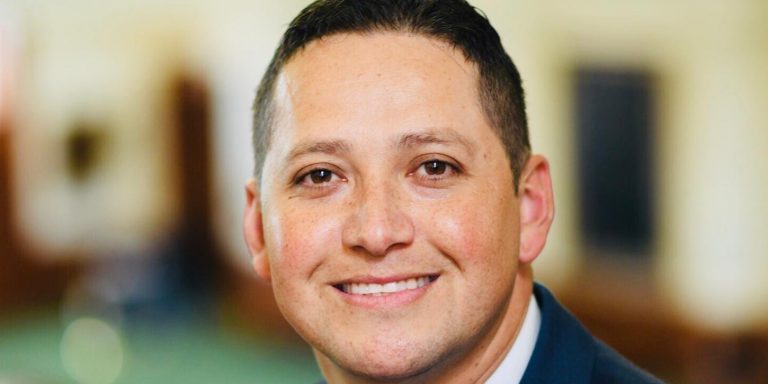
(Headline USARepublican Rep. Tony Gonzales of Texas acknowledged for the first time Wednesday having an affair with an aide who later died after setting herself on fire, a revelation that came on the same day the House Ethics Committee announced it was initiating an investigation into the congressman.

Gonzales, appearing on the “Joe Pags Show,” was asked if he had a relationship with the aide, Regina Ann Santos-Aviles.

“I made a mistake and I had a lapse in judgment, and there was a lack of faith, and I take full responsibility for those actions,” Gonzales said.

Gonzales went on to say he reconciled with his wife and has asked God to forgive him. He also said he looked forward to the Ethics Committee investigation. Under House ethics rules, a lawmaker may not engage in a sexual relationship with any employee of the House under their supervision.

The top Republican and Democratic members on the committee said in a joint statement that an investigative panel would look into whether Gonzales engaged in sexual misconduct toward an employee in his office and whether he discriminated unfairly by dispensing special favors or privileges.

The congressman, now in his third term, has said he would not step down in response to the allegations, telling reporters at the Capitol recently that there will be opportunities for all the details and facts to come out.

“What you’ve seen is not all the facts,” Gonzales said.

In his interview broadcast Wednesday, Gonzales said Santos-Aviles was thriving at work and he was shocked when he learned of her death. He said he had not spoken to her since June 2024 and she died in September 2025.

“I had absolutely nothing to do with her tragic passing, and in fact, I was shocked just as much as everyone else,” Gonzales said.

Gonzales was also asked if he can still be effective for his congressional district as some members of his own party are calling for his resignation.

“I absolutely can, and I am,” he said.

Gonzales, a father of six, first won his seat in 2020 after retiring from a 20-year career in the Navy that included time in Iraq and Afghanistan. On Tuesday, he was forced into a May runoff against Brandon Herrera, a gun manufacturer and YouTube gun-rights influencer who narrowly lost to Gonzales in the 2024 primary.

The San Antonio Express-News reported that it had obtained text messages in which Santos-Aviles wrote to a colleague that she had an affair with the congressman.

The AP has not independently obtained copies of the messages. A lawyer for Adrian Aviles, Santos-Aviles’ husband, has said the husband found out about the affair before his wife’s death.

Santos-Aviles, 35, died after setting herself on fire in the backyard of her home in Uvalde, Texas. The Bexar County Medical Examiner’s Office later ruled her death a suicide.

Adapted from reporting by the Associated Press


Anti-Trump Tech Billionaire Hoffman Sent Epstein ‘Ice Cream’ Note After Island Visit 

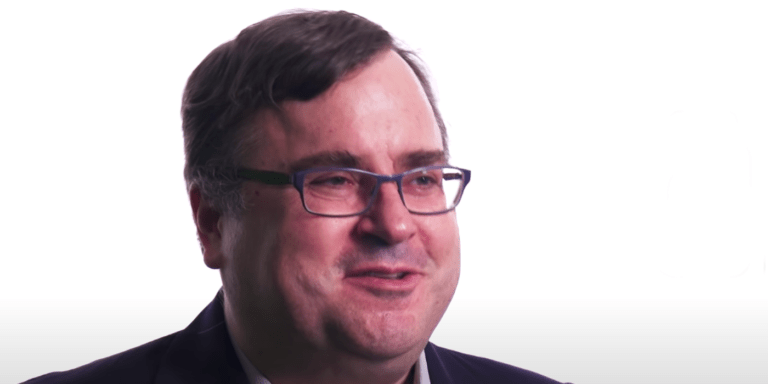
(Luis CornelioHeadline USA) Reid Hoffman once shared his “ice cream” with the late convicted sex offender Jeffrey Epstein — “either for yourself or for ‘the girls,’” according to newly unearthed emails. 

Hoffman, the billionaire LinkedIn co-founder and prominent Democratic donor, is under fire as hundreds of pages from the DOJ-released Epstein files containing his communications with Epstein have resurfaced. 

He is mentioned more than 2,600 times across these files, which include the controversial 2014 ice cream email, many of the communications occurring years after Epstein pleaded guilty to sex offenses. 

The documents, reported on Wednesday by Bloomberg, contradict Hoffman’s long-standing claim that his relationship with Epstein was limited to fundraising. They reveal a closer and more personal connection. 

Hoffman even visited Epstein’s private island and the sex offender’s Manhattan home. After these visits, he sent the infamous ice cream note referencing “‘the girls.’” 

A spokesperson for Hoffman now claims that the “girls” referenced in the email were adult members of Epstein’s entourage who had adopted the nickname themselves. No evidence has been provided to support this explanation. 

Forbes also reported that Hoffman met Epstein five years after Epstein pleaded guilty to procuring a minor for prostitution. The two repeatedly exchanged gifts, with Hoffman introducing Epstein to Silicon Valley figures, as noted by the outlet. 

Hoffman introduced Epstein to Mark Zuckerberg, Peter Thiel and Elon Musk, all of whom later reportedly dined with Epstein. 

Hoffman is a long-time opponent of President Donald Trump, having donated more than $35 million to mostly Democratic candidates. His ties to Epstein have prompted Trump to call Hoffman a “sleazebag” and demand an investigation. 

Attorney General Pam Bondi has confirmed that she ordered the U.S. Attorney’s Office for the Southern District of New York to investigate Epstein’s ties to Hoffman, as well as to disgraced former President Bill Clinton, former Treasury Secretary Larry Summers and JPMorgan Chase. 

In a statement to the New York Post, Hoffman attempted to shift the focus to Trump and his administration: 

“The victims deserve justice, not delays or distractions. I welcome all the work that is being done by the press and those online to look into any and all Epstein connections to expose those who committed crimes. The Trump Administration must release all of the files and prosecute all of those responsible. No exceptions. No excuses.” 

Anti-White Tweets Surface for Democrat Candidate for U.S. Senate in Texas

(Luis CornelioHeadline USA) Texas state Rep. James Talarico may have won the Democratic primary for U.S. Senate against Rep. Jasmine Crockett, but he still has one more fight ahead: his old tweets, which have complicated his recent pitch as a moderate Democrat. 

Talarico, recently crowned the victor of the Democratic primary, has drawn widespread condemnation on social media after old posts referencing race and other progressive talking points resurfaced. 

In May 2020, Talarico accused all white individuals of benefiting from white privilege and spreading racism, which he described as a virus. 

“White skin gives me and every white American immunity from the virus,” he wrote. “But we spread it wherever we go—through our words, our actions, and our systems. We don’t have to be showing symptoms—like a white hood or a Confederate flag—to be contagious.” 

In another 2021 tweet, Talarico suggested white Americans were susceptible to radicalization. 

“As a white man, I’m susceptible to the same radicalization,” he added. “Thankfully, I was exposed to diversity at a young age and explicitly taught the values of equality, inclusion, and justice. But not every young white boy is so lucky.” 

Also in 2021, Talarico boasted that his office was the first in the history of the Texas Legislature to adopt pronouns on official business cards. 

“It’s a small way to tell trans Texas: you are welcome here,” he wrote. 

The resurfacing of the tweets comes as Talarico, with help from the media, has tried to present himself as a moderate Democrat. 

He defeated Crockett, the controversial member of Congress who will soon find herself unemployed after giving up her House seat to run for the Democratic nomination for U.S. Senate. 

Talarico will now face the Republican nominee, who will be decided in a May runoff between Sen. John Cornyn and Texas Attorney General Ken Paxton. 

Headline USA reached out to Talarico’s campaign for comment in an email sent before midnight, but did not immediately receive a response. 

Hegseth Claims That Mastermind of Iran’s Trump Assassination Plot Has Been Killed

(Ken Silva, Headline USA) Department of War Secretary Pete Hegseth claimed Wednesday morning that the leader of an Iranian unit that attempted to assassinate President Donald Trump has been “hunted down and killed.” To date, the U.S. government has produced no solid evidence that Iran made any such attempt.

“Iran tried to kill President Trump. President Trump got the last laugh,” Hegseth said at a press conference.

According to Israeli journalist Amit Segal, the Iranian killed was Rahman Mokadam, the head of the Islamic Revolutionary Guard Corps’ special operations division. Segal also said that it was Israel who killed Mokadam, and that Israel informed Trump about the matter earlier Wednesday.

No other details about Mokadam or his role in the purported Iranian assassination plots have been reported in the U.S. or Israeli press.

There were two assassination attempts against Trump in 2024. One occurred on July 13, 2024, in Butler, Pennsylvania, when 20-year-old Thomas Crooks allegedly shot him in the ear from a rooftop during a campaign rally. The other occurred about two months later at Trump’s Palm Beach golf course, where North Carolina man Ryan Routh was spotted by Secret Service hiding in the bushes with an SKS-style rifle a mere few hundred yards away from Trump.

There’s no evidence that either attempt was sponsored by Iran.

The FBI did arrest a Pakistani national named Asif Merchant on July 12, 2024—the day before Trump was shot—for murder-for-hire in an alleged plot to assassinate U.S. officials, including possibly Trump.

However, Merchant’s actions can hardly be called an assassination attempt. Rather, the available evidence suggests that Merchant was the target of a highly controlled FBI sting operation, and that he never posed a threat to Trump.

Indeed, the U.S. was monitoring Merchant before he even entered the U.S. in April 2024, and officials let him into the country to track him and see where he’d go.

Moreover, an FBI informant drove Merchant around while he was here, and introduced him to two undercover agents posing as “hitmen.” Merchant allegedly paid those two agents $5,000 as a downpayment for his plot—which also included staging a protest and stealing documents—and he was arrested as he was attempting to leave the country.

Merchant’s trial is currently underway and is expected to last through mid-March.

The FBI did accuse one other man of being involved in an Iranian plot against Trump in a criminal complaint filed in November 2024. In that case, there’s arguably even less evidence of a credible threat to Trump.

Indeed, the defendants in that case—Farhad Shakeri, 51, of Iran; Carlisle Rivera, also known as Pop, 49, of Brooklyn, New York; and Jonathon Loadholt, 36, of Staten Island, New York—were not accused of conspiring to kill any politicians, let alone Trump. Rather, they were charged with plotting to kill a U.S. journalist of Iranian origin.

While Shakeri is one of the defendants, the government’s criminal complaint shows that he appears to have been snitching to the FBI in recent months. According to the charging papers, Shakeri participated in phone interviews with the FBI from Iran on September 30, October 8, October 17, October 28 and November 7—ostensibly trading information in exchange for a sentence reduction for an unidentified individual.

In one of those interviews, Shakeri—who was deported from the United States in 2008 after serving fourteen years in prison for robbery—told the FBI that an Iranian Revolutionary Guard Corps official was pushing him to assassinate Trump.

Shakeri further told the FBI that the IRGC official told him on October 7 that he had to provide a plan to kill Trump within seven days. Shakeri said he was unable to do so, and so Iran decided to pause its plans to kill Trump until after the election—which would have made it easier to kill him if he lost.

The FBI admitted in the charging papers that Shakeri is a liar, but said his claims about Trump “appear to be truthful.” Nevertheless, when the Justice Department secured indictments in the case a month after the criminal complaint was filed, there was no mention of the allegation against Trump.

Loadholt and Rivera both pled guilty to conspiring against the journalist, while Shakeri remains at-large in Iran.

Ken Silva is the editor of Headline USA. Follow him at x.com/jd_cashless.