‘Radiant’ Mother from Kentucky was Among 6 Killed in Air Crash in Iraq

(Headline USA)  A woman raising two children was among the six U.S. service members killed last week when a military refueling plane involved in the war with Iran crashed in western Iraq.

Tech Sgt. Ashley B. Pruitt, 34, hailed from a large family in Bardstown, Kentucky, and was “very, very” proud of her military career, her husband Gregory Pruitt said Sunday.

“I’ll give you something brief: in a word, radiant,” he said in a phone interview, trying to hold back tears. “If there was a light in the room, she was it.”

Survivors include the couple’s 3-year-old daughter and Sgt. Pruitt’s stepson.

Pruitt joined the military nine years ago and had previously deployed overseas three times. She had nearly 900 combat flight hours and two associate degrees from the Community College of the Air Force.

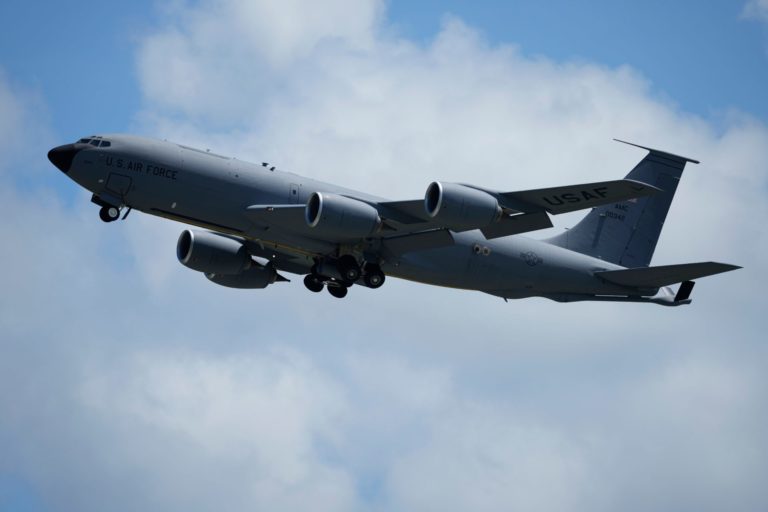
Most recently, she had served with the 99th Air Refueling Squadron from Sumpter Smith Joint National Guard Base in Birmingham, Alabama. She was an assistant flight chief of operations and was an instructor in operating the boom on the KC-135, which refuels other planes in midair so they can fly longer distances and sustain operations without landing.

The aircraft was supporting operations against Iran on Thursday in “friendly” airspace when an unspecified incident involving another aircraft occurred, according to U.S. Central Command. The other plane landed safely, U.S. military officials said. The crash is being investigated.

The U.S. military identified the crash victims late Saturday. Three were connected to the Sumpter Smith base and the 6th Air Refueling Wing at MacDill Air Force Base in Tampa, Florida, and the other three were out of an Ohio Air National Guard base in Columbus.

“To lose a member of the Air Force family is excruciatingly painful, especially to those who know them as son, daughter, brother, sister, spouse, mom, or dad,” U.S. Air Force Col. Ed Szczepanik, commander of the 6th Air Refueling Wing, said in a news release. 

“To lose them at the same time is unimaginable.”

Maj. Gen. Matthew S. Woodruff, the Ohio adjutant general, called the three from Columbus “remarkable Airmen whose service and commitment embodied the very best of our Ohio National Guard.”

The Congressional Research Service says the Air Force last year had 376 KC-135s, including 151 on active duty, 163 in the Air National Guard and 62 in the Air Force Reserve. It has been in service for more than 60 years.

Capt. Seth R. Koval, 38, was an instructor pilot for the KC-135R Stratotanker with 19 years of service, according to the Ohio National Guard.

A resident of Stoutsville, Ohio, he was an aircraft commander with the 121st Air Refueling Wing out of Rickenbacker Air National Guard Base in Columbus. The military said he had trained pilots in air refueling, aeromedical, cargo and passenger operations.

“He grew up dreaming about becoming a pilot and to stand beside him as he made his dreams come true was an honor,” Koval’s wife, Heather, said in a family statement posted on Facebook.

Koval’s wife described him as an amazing husband, father, son, brother, friend and airman who was a loving, generous “fixer of all things.” The most important thing about him was that Jesus was his lord and savior, she said.

“I will see him in the smile of our son and carry him with me in every moment,” she wrote.

Koval was from Mooresville, Indiana, according to the U.S. government. He had a bachelor’s degree in aviation operations from Purdue University and deployed five times in the past 12 years. Koval had more than 2,000 flight hours, including 443 in combat, the Ohio Guard said. He was promoted to captain in 2022.

Capt. Curtis J. Angst, 30, was in the military for a decade after getting a bachelor’s degree in aerospace engineering from the University of Cincinnati. He enlisted in the Ohio Air National Guard in 2015, with deployments in 2015 and this year.

“He was doing what he loved most — flying and serving alongside the men and women he cared so deeply about,” his family said in a statement posted on Facebook by his wife, Mary.

Angst’s family said his life was defined by service, generosity and “a genuine love for people.” They described his passion for travel, the outdoors and music, and said he made others feel welcome and valued with “his constant smile and instantly recognizable laugh.”

“Those who knew Curtis remember his steady kindness and the joy he carried with him everywhere he went,” the family said.

Angst was a KC-135R pilot with the 166th Air Refueling Squadron and lived in Columbus. A statement about his death from the federal government indicated he was from Wilmington, Ohio. He had 880 flight hours, including 67 combat hours. He was promoted to captain in November.

Maj. John A. “Alex” Klinner, 33, had just been promoted to major in January and had been deployed less than a week when the crash occurred, his brother-in-law said.

The pilot left behind three small children: 7-month-old twins and a 2-year-old son, according to his brother-in-law, James Harrill.

Klinner was a graduate of Auburn University and an eight-year U.S. Air Force veteran from Birmingham, Alabama. He had just moved with his family into a new home, his wife Libby Klinner said in an Instagram post mourning his death.

He was the chief of squadron standards and evaluations at the Birmingham air base.

An outdoorsman who enjoyed hiking, Klinner was also ready to help others. When Harrill last saw him in January, Klinner had shoveled Harrill’s vehicle out of the snow during a family wedding.

“Alex was one of those guys that had this steady command about him,” said Harrill, of Atlanta, who helped set up a GoFundMe site for Klinner’s family. “He was literally one of the most kindest, giving people.”

Libby Klinner said in a post that her heart is broken for their children, who will grow up not knowing their father.

“They won’t get to see firsthand the way he would jump up to help in any way he could,” she wrote. “They won’t see how goofy and funny he was. They won’t witness his selflessness, the way he thought about everyone else before himself. They won’t get to feel the deep love he had for them.”

He deployed four times since 2019 and had put in 362 combat hours and 181 combat support hours.

Tech Sgt. Tyler Simmons, 28, served with the Ohio Air National Guard’s 166th Air Refueling Squadron as a boom operator, according to his Air Force biography.

His mother, Cheryl Simmons, said Saturday that she was making funeral plans for her son, who lived in Columbus.

In a statement obtained by WCMH-TV in Columbus, Tyler Simmons’ family said they were saddened beyond measure.

“Tyler’s smile could light up any room, his strong presence would fill it. His parents, grandparents, family and friends are grief stricken for the loss of life,” they said.

Simmons joined the Air Force in 2017 and earned an associate degree from the Community College of the Air Force. He became a refueling specialist in 2022 and was made a technical sergeant in 2023. He deployed three times in the past decade and had 230 combat hours.

Capt. Ariana G. Savino, 31, was a pilot with the 99th Air Refueling Squadron, serving as its chief of current operations. She was responsible for the flying hour program and managing daily flight scheduling, among other duties.

Savino, from Covington, Washington, was a product of the Air Force Reserve Officer Training Corps program at Central Washington University, earning an active duty commission in 2017.

She served at bases in Georgia and Mississippi and had more than 300 combat hours. She was made captain in 2021.


Adapted from reporting by the Associated Press

U.S. Government Debt Black Hole Got Bigger in February

(Mike Maharrey, Money Metals News Service) I could almost put this story on a monthly repeat.

The federal government ran another big budget deficit in February, as the national debt nudges close to $39 trillion.

According to the Monthly Treasury Statement, the Trump administration spent $307.5 billion more than it took in last month. This was almost identical to the February 2025 deficit, despite an increase in revenue.

The February shortfall drove the fiscal 2026 budget deficit to over $1 trillion in just five months.

For context, the biggest deficit run by the Obama administration was $1.41 trillion in 2009.

The relentless monthly budget deficits keep pushing the national debt higher. After eclipsing $38 trillion in October, it has ballooned to $38.9 trillion today.

The good news is the 2026 deficit is down about 12 percent from the same period last year, thanks to a big boost in revenue, primarily generated by tariffs.

The bad news is that federal spending is still out of control.

Uncle Sam took in $313.12 billion last month. That was up 5.6 percent from February ’25.

Through the first five months of fiscal 2026, the federal government has collected $1.89 trillion, 10.8 percent more than the same period in fiscal 2025.

So far in fiscal 2026, the federal government has collected $151 billion in customs duties. That’s up about 294 percent from a year earlier.

That gravy train may be coming to the end of the tracks. After averaging around $30 billion per month at the peak, tariff collection dipped to $26.6 billion in February.

It remains unclear how the recent Supreme Court opinion declaring Trump’s unilateral tariffs unconstitutional will impact collections – but it probably won’t be positive.

Houston: We Have a Spending Problem!

Meanwhile, the Trump administration continues to spend money hand over fist.

The government blew through another $620.62 billion last month. That was up 2.8 percent over the same period last year.

In total, Uncle Sam has spent $3.1 trillion through the first five months of fiscal 2026. That’s up about 2 percent over the same period in fiscal ‘25.

A 2 percent increase in spending might not sound significant. But weren’t we told there would be spending cuts?

In fact, there were some cuts.

The increased spending comes despite cuts to the EPA and the Department of Education budget that are now showing up in the data. Lower disaster spending also helped moderate spending levels through the first two months of fiscal ’26.

Looking at the big picture, the spending trajectory is up. Even with all the hype about DOGE and some lip service to cutting spending during the early days of the Trump administration, the U.S. government spent just over $7 trillion last year. That’s an average of $583.3 billion per month or $19.2 billion per day.

And now there’s a war.

Despite some non-specific talk about “spending cuts,” there seems to be little to no commitment to dealing with the runaway spending substantially.

The Big Beautiful Bill trimmed some spending but increased it in other areas. Furthermore, those “cuts” were from projected spending increases. Actual expenditures will still go up, just not as fast as originally planned. The bottom line is that even with the Big Beautiful Bill, spending will increase on an absolute basis. We’re seeing it now.

And all that waste uncovered by DOGE? Virtually none of it was removed from the budget.

This is par for the course. It’s a lot easier to talk about spending cuts than it is to actually cut spending.

You might recall that President Biden promised that the [pretend] spending cuts would save “hundreds of billions” with the debt ceiling deal (aka the [misnamed] Fiscal Responsibility Act).

That never happened.

Supporters of the Big Beautiful Bill expect economic growth stimulated by tax cuts to boost revenue and narrow the deficit. However, history casts significant doubt on this claim.

The ugly truth is the government isn’t committed to cutting spending in any meaningful way, and it always finds new reasons to spend even more, whether for “crises” at home or wars overseas.

The Interest Problem

Uncle Sam must pay interest on the nearly $39 trillion debt. Interest expense has grown into the second-largest spending category in the federal budget behind only Social Security.

In February, the Treasury forked out $93.48 billion on interest expense alone. That pushed interest expense to $520 billion through the first five months of fiscal 2026. That was up 8.8 percent compared to the same period in fiscal ’25.

Interest on the national debt cost $1.2 trillion in fiscal 2025. That was up 7.3 percent over 2024.

Net interest (interest expense – interest receipts) was $79 billion in February.

Through the first five months of the fiscal year, the federal government spent more on interest on the debt than it did on national defense ($412 billion) or Medicare ($478 billion). The only higher spending category is Social Security ($678 billion).

Much of the debt currently on the books was financed at very low rates before the Federal Reserve started its hiking cycle. Every month, some of that super-low-yielding paper matures and must be replaced by bonds yielding much higher rates. And even after the Federal Reserve cut rates, Treasury yields have pushed upward as demand for U.S. debt sags.

When people say the spending is unsustainable, it feels like an understatement. However, very few people in the political class seem the least bit interested in tackling the problem. The bad news is that at some point, the problem is going to tackle them.


Mike Maharrey is a journalist and market analyst for Money Metals with over a decade of experience in precious metals. He holds a BS in accounting from the University of Kentucky and a BA in journalism from the University of South Florida.

A Comedy or a Tragedy? Treasure Hunter Freed from Prison

(Mike Maharrey, Money Metals News Service) He was sentenced to 2 years in prison.

He served 10.

Why?

Because he either got royally screwed by the system, or he has epic-level self-discipline.

Tommy G. Thompson is the main character in a story that is either a comedy or a tragedy.

And we’ll probably never know which it was.

Thompson was a treasure hunter. He studied oceanic engineering. According to his attorney and long-time friend Keith Golden, Thompson had always been fascinated with the ocean. He wanted to pursue deep-sea oceanic research but couldn’t scrape together the funding. A friend suggested he take up treasure hunting.

That turned out to be a lucrative and life-altering decision.

With the backing of about 250 investors, Thompson decided to try to find the S.S. Central America.

The ship went down during a 1857 hurricane off the coast of South Carolina. The steamer was carrying 30,000 pounds of California Gold Rush gold. The cargo included gold coins, primarily $20 double eagles minted in San Francisco, along with gold bars, and bags of nuggets and gold dust.

Much of the gold was destined for East Coast banks.

In 1857, the gold was worth about $2 million. With gold over $5,000 an ounce, the melt value alone would be somewhere in the neighborhood of $2.2 billion.

The loss of the ship’s cargo exacerbated the financial panic of 1857.

At the time, the U.S. had a hard money system. Banks issued notes backed by gold reserves held in the banks. The notes had value because they could be redeemed for gold. But because it was a fractional-reserve system, the banks didn’t have to hold enough gold to redeem every note issued. This made the system susceptible to bank runs.

The banking system was already strained in 1856. Much of the gold on the S.S. South America was intended to boost bank reserves. News of the disaster spread quickly, reinforcing existing worries that banks might not be able to redeem notes, adding fuel to an already blossoming bank panic.

In 1988, Thompson found the S.S. America 7,000 feet below the surface of the Atlantic Ocean.

Thompson’s team recovered around 3 tonnes of gold, including 40,000 coins and more than 500 gold bars. The haul was valued at between $100 and $150 million based on the gold price in the 1980s and early 1990s.

And then the legal problems started.

Some of his investors claimed Thompson never paid them their share of the $50 million raised from the sale of some of the treasure, and in 2005, they sued.

Instead of facing his accusers, Thompson went into hiding in Florida, and in 2012, a federal judge in Ohio issued a warrant for his arrest when he failed to appear at a court hearing.

Three years later, U.S. Marshals tracked Thompson down in a Boca Raton hotel. They were staying at the Hilton under fake names and paying in cash.

In 2015, Thompson pleaded guilty to the failure-to-appear charge and agreed to forfeit $450,000 in cash seized at the hotel.

But Thompson’s legal problems were far from over.

About 500 coins recovered from the ship were (and still are) missing. Thompson claims the coins were part of his payment and that he turned them over to a trustee in Belize in 2009. He insisted he had no idea where the coins went after that. As for the $50 million raised in the sale, he said it was used to pay off bank loans and legal fees.

The court didn’t believe that he didn’t know where the 500 coins were, so the judge slapped him with a contempt charge.

Keep in mind, contempt charges are open-ended. Federal contempt charges typically have an 18-month limit. However, a federal appellate court held that the contempt charge could continue because his refusal to come clean about the whereabouts of the coins breached his plea agreement.

In a plea for release in 2020, Thompson told the court, “Your honor, I don’t know if we’ve gone over this road before or not, but I don’t know the whereabouts of the gold. I feel like I don’t have the keys to my freedom.”

The investors dropped their lawsuit in 2018. However, the contempt charge wasn’t terminated until 2024.

And then Thompson still had to serve the 2-year sentence for the original failure-to-appear charge.

Thompson finally walked out of prison last week, more than 10 years later.

Rep. Abraham Hamadeh (R-Ariz.) advocated Thompson’s release for nearly a year after learning about the case.

Hamadeh told the New York Times that Thompson “was imprisoned for over 10 years without proper due process on a civil case,” adding that his “vast experience could be crucial in future deep-sea explorations.

“I am glad he is finally a free man.”

The question is whether or not Thompson is a rich free man.

You see, this story is either a tragedy or a comedy.

The 500 coins in question are worth about $2.5 million today. If Thompson knows where they are and has had the self-discipline to sit on the information for more than a decade, he’s earned his reward. He’s getting the last laugh.

But if he sincerely doesn’t know where the coins went, he lost 10 years of his life for nothing.

That would be a tragedy.


Mike Maharrey is a journalist and market analyst for Money Metals with over a decade of experience in precious metals. He holds a BS in accounting from the University of Kentucky and a BA in journalism from the University of South Florida.

Trump Administration Quietly Cuts Farmworker Wages

(José Niño, Headline USA) When Donald Trump’s top officials promised that mass deportations would deliver “higher wages with better benefits” and a “100 percent American work force,” farmers across the country watched with a mixture of hope and dread. The agricultural sector had struggled for years to find enough hands to harvest crops as workers aged out and fewer young Americans showed interest in backbreaking field labor.

But reality collided with rhetoric. According to a New York Times report, the administration has quietly acknowledged that immigration raids and border enforcement have worsened labor shortages rather than solved them. The Labor Department admitted in a regulatory filing that “the near total cessation of the inflow of illegal aliens combined with the lack of an available legal work force results in significant disruptions to production costs and threatening the stability of domestic food production and prices for U.S. consumers.”

Instead of waiting for American workers to fill the gap, officials made it cheaper for farmers to hire immigrants on temporary H-2A visas. Agriculture Secretary Brooke L. Rollins defended the shift by stating the administration was enacting “real reforms to ease regulatory burdens and lower labor costs.”

The numbers tell a stark story. A new survey by the California Farm Bureau and Michigan State University found that only 0.4 percent of farmers lost workers directly to immigration raids. However, more than 14 percent reported that enforcement anxiety caused worker shortages. Among labor intensive crops like fruits and vegetables, nearly 20 percent of farmers experienced the same problem.

Under the revised H-2A rules, wages for guest farmworkers dropped by between $1 and $7 per hour depending on the state. Farm owners can now also count housing as part of worker compensation packages.

The United Farm Workers of America filed a lawsuit challenging the rule. Union president Teresa Romero warned that “these actions are going to displace domestic farmworkers who have been working in the fields and putting food on dinner tables for decades, and bring a work force that is even more vulnerable to abuse.”

Immigration restrictionists share similar concerns. Mark Krikorian of the Center for Immigration Studies argued that the changes will likely encourage more foreign migration and discourage agricultural automation. Both outcomes contradict the administration’s stated objectives.

The program has exploded in recent decades, growing from roughly 50,000 certified positions in 2005 to nearly 400,000 in fiscal year 2025. These temporary workers now constitute 15 percent of all crop workers. Government estimates indicate that about 40 percent of crop workers are illegal aliens while roughly a third are American citizens.

José Niño is the deputy editor of Headline USA. Follow him at x.com/JoseAlNino 

Obama Center Seeks Volunteer Labor While Paying Valerie Jarrett $740K 

(Luis CornelioHeadline USA) Former President Barack Obama may be worth more than $70 million. Still, his soon-to-open Obama Presidential Center in Chicago is turning to unpaid volunteers to handle day-to-day operations. 

The Obama Foundation is recruiting between 75 and 100 so-called ambassadors to greet visitors, give directions and share information about the center — all while paying CEO Valerie Jarrett $740,000 a year. 

Jarrett reportedly earned the same six-figure salary in 2022 and 2023, with other top officials also drawing generous six-figure paychecks, according to a Fox News report. 

Jarrett said in a Tuesday statement that volunteers will “bring the vision to life” at the Center — presumably without a paycheck: 

“The Obama Presidential Center is a place where the world meets the best of the city of Chicago, and our volunteers will help bring that vision to life every day. As Ambassadors, they will create a welcoming and inclusive experience for visitors while representing the strength, resilience, and leadership of this community. Together, we are building something that inspires service, connection, and action far beyond our walls.” 

The foundation told Fox News that the “volunteers will complement about 300 full- and part-time employees at the long-delayed center, which the organization is promoting as a $3.1 billion economic catalyst for the Windy City’s South Side.”  

Foundation filings with the IRS show total salaries and benefits soared from $18.5 million in 2018 to $43.7 million in 2024 as staff numbers rose to 337 and annual revenue approached $210 million, according to Fox News. 

The Obama Presidential Center is set to open on “Juneteenth,” after years of delays and design criticism.  

Report: Longtime Oil Exec Worked for CIA, Helped Oust Maduro

(Ken Silva, Headline USA) The Wall Street Journal published a story Sunday about a longtime Chevron executive secretly working for the CIA—including by providing intel in the leadup to the ouster of Venezuelan President Nicolas Maduro.

According to the Journal, the former Chevron executive, Ali Moshiri, worked for the CIA as an informant since Hugo Chávez was in charge of the Venezuelan government. Moshiri stepped down from executive leadership at Chevron in 2017, but remained a consultant until 2024. He’s now a consultant for Venezuela’s state-run oil company, PdVSA.

The Journal reported that Mosrhi’s input with the CIA helped shape the decision to replace Maduro with his vice president, Delcy Rodriguez, rather than ousting the entire government. Moshri reportedly advised that the opposition in Venezuela, led by María Corina Machado, did not have the popular support required to run the country.

“Moshiri told the agency that if the U.S. government tried to oust the entire Maduro regime and install the democratic opposition led by María Corina Machado it would have another quagmire like Iraq on its hands,” the Journal said, citing anonymous sources.

Moshri reportedly has had a deep relationship with President Rodriguez since Chavez died in 2013. The two brokered a deal at the time in which Chevron signed a $2 billion loan deal with PdVSA.

Trump initially canceled Chevron’s license in Venezuela when he took office last year, but the company is now back in business.

“Chevron is poised to take a key role in developing Venezuela’s oil reserves, which are the largest in the world by some estimates. It is the only major U.S. oil company positioned to quickly increase output there and has said it aims to increase its Venezuelan oil production by up to 50% within the next 18 to 24 months,” the Journal reported. 

“Chevron and the few remaining Western companies there saw Rodríguez as someone they could do business with,” the Journal added.

Moshri declined to comment on his CIA connections, while Chevron said that it didn’t have anything to do with Maduro’s capture.

“Between spring of 2025 and the removal of Maduro, Chevron did not authorize anyone working for, or on behalf of, the company to engage with the CIA related to Venezuela’s leadership, including assessments of government officials or opposition leaders,” the company said.

Ken Silva is the editor of Headline USA. Follow him at x.com/jd_cashless.

Trump Says He May Bomb Iran’s Kharg Island Again ‘For Fun’

(Dave DeCamp, Antiwar.comPresident Trump said on Saturday that the US may bomb Iran’s Kharg Island again “for fun” and urged other countries to help the US open the Strait of Hormuz.

The president made the comments a day after the US military struck the Persian Gulf island, where most of Iran’s oil exports move through. So far, the US has spared the oil infrastructure on the island as it fears Iranian retaliatory attacks against oil infrastructure across the Gulf.

“We totally demolished Kharg Island, but we may hit it a few more times just for fun,” Trump said. “We’ve totally decimated it. Except, as you know, I didn’t do anything having to do with the energy lines, because having to rebuild that would take years.”

In posts on Truth Social, Trump issued a contradictory message, claiming that other countries are sending ships to help open the Strait of Hormuz while also asking them to do so, as his administration scrambles to deal with rising oil and gas prices. He also claimed Iran’s military capability has been “100%” destroyed, but acknowledged it still has the ability to attack ships in the strait.

“Many Countries, especially those who are affected by Iran’s attempted closure of the Hormuz Strait, will be sending War Ships, in conjunction with the United States of America, to keep the Strait open and safe. We have already destroyed 100% of Iran’s Military capability, but it’s easy for them to send a drone or two, drop a mine, or deliver a close range missile somewhere along, or in, this Waterway, no matter how badly defeated they are,” the president wrote.

“Hopefully China, France, Japan, South Korea, the UK, and others, that are affected by this artificial constraint, will send Ships to the area so that the Hormuz Strait will no longer be a threat by a Nation that has been totally decapitated,” Trump added.

A few hours later, the president made a similar post. “The United States of America has beaten and completely decimated Iran, both Militarily, Economically, and in every other way, but the Countries of the World that receive Oil through the Hormuz Strait must take care of that passage, and we will help — A LOT!” he said.

For its part, Iran has said that the strait is closed unless ships have permission from Tehran. Iranian Foreign Minister Abbas Araghchi said that the strait is “open to everyone, except American ships and those of its allies,” and two Indian-flagged ships safely passed through the waterway on Saturday.

This article originally appeared at Antiwar.com.

Dems Exempt Themselves from New Gun Ban

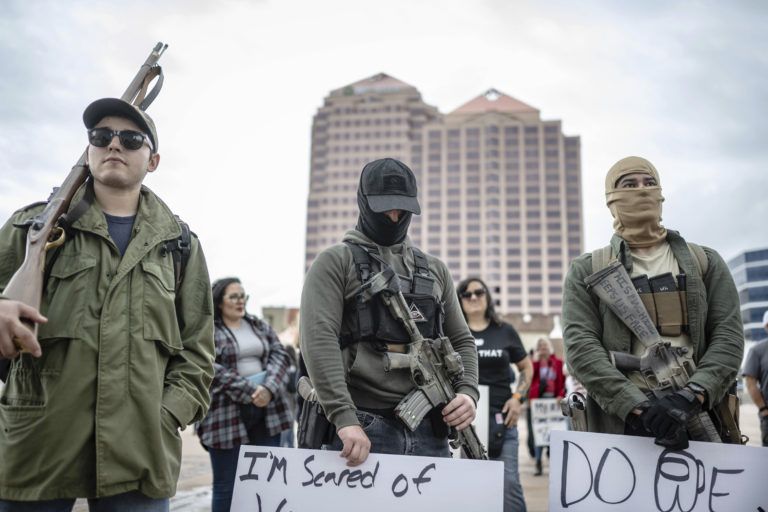
(Luis CornelioHeadline USA) Virginia residents who leave their firearms inside their vehicles may face hefty fines under a new anti-gun law — but do not expect Virginia Democrats to face such penalties.

The bill, HB 110, places restrictions on gun owners in Virginia if they leave firearms visible inside their vehicles, except for members of the Virginia legislature, who exempted themselves from the measure.

The bill passed both the Senate and House of Delegates on Saturday and now heads to Virginia Gov. Abigael Spanberger’s desk, where it is expected to be signed into law.

An amendment to the bill reviewed by Headline USA states that provisions of the law “shall not apply to any member of the General Assembly who leaves a handgun in an unattended motor vehicle pursuant … when such vehicle is parked in any parking structure reserved for members of the General Assembly.”

The bill’s sponsor, Virginia state Sen. Amy J. Lauder, did not respond to Headline USA’s request for comment or clarification.

The measure is part of Democrats’ sweeping slate of anti-gun laws passed after the 2025 elections, which saw the party expand its majority from 51–49 to 64–36 and elect a Democratic governor.

Other bills, such as HB 217, ban certain semi-automatic firearms, including some rifles, pistols and shotguns, and prohibit the sale of magazines exceeding 15 rounds, according to the National Rifle Association.

HB 1524 outlaws carrying and transporting many types of common firearms on public property, while HB 1525 bans the purchase and possession of certain firearms by some adults under the age of 21.

Critics have described the measures as among the most aggressive anti-gun laws passed in recent years.

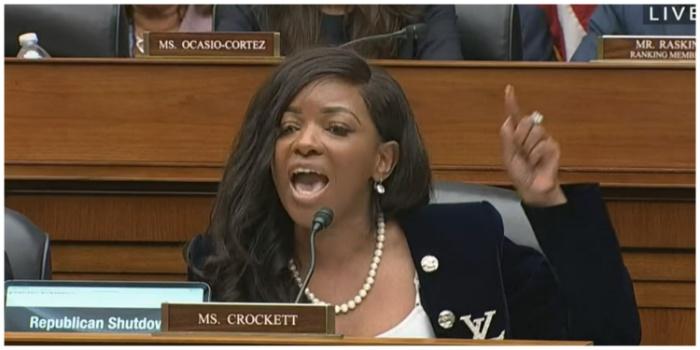
Police Fatally Shoot Rep. Jasmine Crockett’s Security Guard

(Luis CornelioHeadline USA) One of Rep. Jasmine Crockett’s security guards was killed by the Austin Police Department following a chaotic standoff in a Texas children’s hospital parking lot, officers announced Wednesday morning. 

The now-deceased suspect, Diamon-Mazairre Robinson, had an outstanding federal arrest warrant for impersonating a law enforcement officer, according to CBS News Texas. 

Austin police said at a press conference outside the hospital that Robinson barricaded himself in a vehicle in the parking lot around 11 p.m. Tuesday night on the 1900 block of Medical District Drive.

Officers used tear gas to force him out of the vehicle. At that point, Robinson exited the vehicle and pointed a gun at officers nearby, prompting them to open fire. 

“He had a gun. He pointed the gun toward the officers. Officers shot and fired,” an Austin officer stated, adding that Robinson was pronounced dead at the scene. 

Robinson, also known as “Mike King,” was the founder of Off Duty Police Services, a company that places North Texas police officers in off-duty security jobs. 

Some officers who worked with the company told CBS News Texas that Robinson had identified himself as a “detective with U.S. Capitol Police,” an impersonation that CBS News Texas reported may have led to the federal arrest warrant. 

Robinson also reportedly drove a replica undercover police vehicle and used license plates stolen from cars outside a military recruiting office. 

Authorities believe Robinson may have circumvented background checks for his security role with Crockett’s campaign by using his “King” identity. 

Headline USA confirmed that Crockett’s Senate campaign paid King $340 for “security services” on March 25. 

He was spotted near Crockett at several campaign events, including during her run for the Democratic nomination for U.S. Senate, according to the outlet.

His criminal record also included at least seven theft arrests in Dallas, Duncanville, Irving and Dallas County between 2009 and 2012. 

According to CBS News Texas, the cases resulted in fines under $2,500 and probation sentences ranging from one to five years, including a separate 10-year probation term. 

Headline USA reached out to the Austin Police on Sunday afternoon for comment, but an officer directed the outlet to the media department, which was closed at the time.

Illegal Alien Voted in Elections for Nearly 20 Years Before FBI Arrested Him

(José Niño, Headline USA) A Mauritanian national living illegally in the United States voted in every presidential election from 2008 through 2024 despite being under an active deportation order since 2000, according to an FBI affidavit filed in federal court.

Mahady Sacko entered the United States in March 1998 through Miami. Immigration authorities placed him in removal proceedings the following year, and an immigration judge in Philadelphia ordered him deported back to Mauritania on June 14, 2000. Sacko was present in court for that decision. He appealed, but the Board of Immigration Appeals dismissed his case and upheld the deportation order in November 2002. Sacko never left the country.

In January 2007, Immigration and Customs Enforcement arrested Sacko in Philadelphia. But he did not have a valid Mauritanian passport, and ICE could not obtain one for him. Unable to carry out the deportation, authorities placed Sacko on immigration supervision and required him to check in with ICE regularly. According to the affidavit, which was first published by CourtWatch, Sacko reported to immigration officials on at least 19 occasions between 2011 and last September.

While living under immigration supervision, Sacko registered to vote in Pennsylvania on January 24, 2005, falsely declaring himself a U.S. citizen. Voting records obtained by investigators from the Philadelphia City Commissioners and the Pennsylvania Department of State revealed that Sacko then voted in the 2008, 2012, 2016, 2020, and 2024 presidential elections. He also voted in the 2016 and 2020 primaries. Each time, Sacko falsely claimed to be an American citizen.

FBI Special Agent Mickel McGann stated in the affidavit, “Under both federal and state law, only U.S. citizens are allowed to vote in Pennsylvania. In this case, MAHADY SACKO was not a U.S. citizen, lied about being a U.S. citizen in order to register to vote, and therefore cast a fraudulent ballot under both federal and state law during the November 5, 2024, election for federal office.”

Investigators obtained multiple voter registration forms signed by Sacko, including paper applications and registrations through PennDOT and voter registration drives. In each instance, Sacko falsely certified his citizenship. Agents compared the signatures on these forms to other official documents, including vehicle registrations from 2013 and 2021 and driver’s license applications from 2021 and 2025. They found the signatures matched.

The investigation began last April, when federal agents received a tip that Sacko had illegally voted in a federal election. The registration information on file for Sacko matched his actual biographical details, including his date of birth, the last four digits of his social security number, his driver’s license number, his phone number, and his home address.

Special Agent McGann concluded, “Based on the above facts, there is probable cause to believe MAHADY SACKO is not a United States citizen, falsely represented himself to be a United States citizen, and fraudulently voted on November 5, 2024, in an election for federal office.”

United States Magistrate Judge Elizabeth T. Hey authorized the criminal complaint and arrest warrant on February 27, 2026. Sacko faces up to five years in prison if convicted.

The FBI affidavit can be found here

José Niño is the deputy editor of Headline USA. Follow him at x.com/JoseAlNino