(Headline USA) Hillary Clinton and her daughter, Chelsea Clinton, attended a recent Broadway performance of Some Like It Hot last week only to discover that someone left “two human turds” right next to them, according to reports.
“The house crew dealt with it very appropriately and quickly, and Hillary and Chelsea remained in the theater for the second act,” a source told Page Six of the debacle.
According to the house manager of the theater, this isn’t the first time human feces has been found in the aisleways. This was “actually the fourth time it had happened,” the manager reportedly said.
“There is someone who is either s***ting in the aisle, or surreptitiously dumping defecation that they smuggled into the theater,” said the source.
However, a second source disputed that this has been a repeat offense.
“It was an elderly person and it’s rather sad, but yes, the house staff worked quickly to help resolve the situation and Act II started as scheduled,” another source explained.
Twitter was quick to make light of the mishap.
“Can anyone provide a convincing alibi for Amber Heard?” wrote one user, referring to last year’s defamation trial featuring Heard and Johnny Depp, who accused the former of deliberately defecating in his bed.
“And it improved the smell of the area,” another user joked.
Another user wrote: “A contribution to the Clinton foundation.”
Conservative commentator Matt Walsh joked that the offender was President Joe Biden:
He's the current President of the United States. Not just a "fan." Have some respect. https://t.co/sSKe8N5tUL
Flames have engulfed the entire front part of the Fountain of Life Center on Burlington Columbus Road in Florence Township. The roof collapsed about 20 minutes ago. Fire crews are trucking in water as they battle to get this fire under control. @CBSPhiladelphiahttps://t.co/Vuz50ujHGipic.twitter.com/cQoLE9pYXo
No injuries were reported in the fire, which started at about 6 p.m. Monday. The cause wasn’t immediately known.
“It’s a devastating loss,” Russell Hodgins, a senior pastor, told Philadelphia’s KYW-TV. He said his grandparents helped build it.
“The church is not brick and mortar, the church is really the body of believers,” Hodgins told the station. “God will help us through this, and I believe the church will be stronger than ever.”
The center describes itself on its website as a multipurpose, 120,000-square-foot facility with a preschool, basketball courts, and a fitness center. The school and recreation building survived the fire, according to news reports.
At press time, one congregant, identifying herself as Gia, had taken up a collection via GoFundMe seeking to raise $10,000 for the church’s rebuilding effort.
“This beloved community could use your help to rebuild,” she wrote.
“I know it will take a lot to rebuild what was started in 1969 but we know God is with us,” she continued. “No amount is too small. With your help, we will be able to build back better and stronger, along with the strong faith of this church and community.”
(Molly Bruns, Headline USA) The University of Helsinki announced that their theology faculty will award environmental activist Greta Thunberg a honorary doctorate degree in June.
Thunberg is one of 30 people around the world to receive the honor. All of the other awardees are highly credentialed professionals in scientific fields, high-level government officials or tenured professors in related fields.
In the statement released by the university announcing the winners, Thunberg is simply credited as “activist.” She is not granted any other titles; none of her other alleged achievements are listed.
Thunberg, 20, did not publicly respond to news of the award. Thunberg’s coronation doctorate was one of eight being given by the University’s “Faculty of Theology,” appropriate critics contended given climate alarmism’s status of new religion for the far-Left.
Though the young activist is not known for any significant achievements, she recently published a book that was lauded as “anti-capitalist” and “anti-technology.”
The reception for the book was lukewarm, and even drew some criticism for the irresponsibility of printing thousands of pages on poor, dead trees.
What's the carbon footprint of the book, dearie? Or is what you're doing so important that such niceties simply don't apply? https://t.co/NBLuKpTIm5
“How many trees did it take to print these books? Did you offset it by planting more? Did you use sustainable beetjuice ink to print the words? Why didn’t you just keep it digital? Wouldn’t that have been better for the planet? So many questions…” one user replied.
Thunberg also found herself in the hot seat after Twitter users caught her deleting tweets predicting the end of the world in 2023.
In the now-deleted 2018 tweet she claimed that the world would “cease to exist” in 2023 unless everyone stopped using fossil fuels. Thunberg has made many other world-ending predictions, such as claiming that “we are in the beginning of a mass extinction” in the viral speech that made her famous.
Despite her constant diatribes against productive forms of energy, Thunberg did admit that it may be necessary for Europe to adopt nuclear energy in the midst of the continent’s energy shortage.
Thunberg railed against nuclear energy for years, despite it being a largely bipartisan win, with Republicans preferring it as a safe, cost-effective solution to rising energy prices and even some Democrats increasingly seeing it as a clean source of energy that may reduce climate change.
(Headline USA) President Joe Biden on Monday signed into law legislation nullifying the recent overhaul of the District of Columbia criminal code, but the fight between Congress and local lawmakers is continuing.
The signature merely marks the end of a raucous first chapter in a saga that has left district lawmakers bitterly nursing their political bruises and harboring fresh resentments against national Democrats for their betrayal as some fear a 2024 reckoning about the Left’s support for pro-criminal measures that have led to an epidemic of urban violence over the past three years.
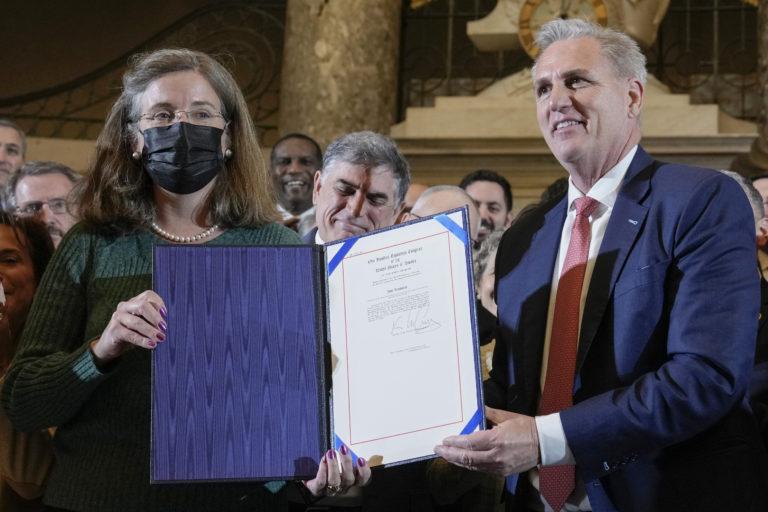
House Speaker Kevin McCarthy, R-Calif., hailed the bipartisan move in a statement, calling it the end of what he labeled a “soft-on-crime criminal code rewrite that treated violent criminals like victims and discarded the views of law enforcement.”
Although Congress plays a unique role, carved out by the U.S. Constitution, in overseeing the capital city’s affairs, McCarthy also put other blue-run cities with woke, George Soros-backed officials on notice that reforms would soon be at their doorstep.
“This is just the beginning,” McCarthy, R-Calif., said earlier this month in a celebratory signing ceremony after the vote to cancel the new criminal code passed the Senate with significant Democratic support. “It is a message for the entire nation.”
D.C. Council members fretted that McCarthy and company might further rein in their municipal extremism, as well.
“I’m afraid that we’re going to see more of this for the remainder of this Congress,” D.C. Council Chairman Phil Mendelson said. “Does this raise a concern that there are going to be other issues? Yes.”
When congressional passage of the measure appeared inevitable and Biden indicated he would sign it, the D.C. Council withdrew the measure. But the move did not spare Biden a politically charged decision on whether to endorse the congressional action.
Biden did not issue a statement accompanying the signing Monday. But he tweeted earlier this month that while he supported a constitutionally prohibited D.C. statehood initiative being pushed by radical progressives, “I don’t support some of the changes D.C. Council put forward over the mayor’s objections—such as lowering penalties for carjackings.”
I support D.C. Statehood and home-rule – but I don’t support some of the changes D.C. Council put forward over the Mayor’s objections – such as lowering penalties for carjackings.
If the Senate votes to overturn what D.C. Council did – I’ll sign it.
Under terms of Washington’s Home Rule authority, the House Committee on Oversight and Accountability essentially vets all new D.C. laws and frequently alters or limits them through budget riders. But the criminal code rewrite is the first law to be completely overturned since 1991.
House Oversight Committee Chairman Rep. James Comer, R-Ky., has pledged that his committee “stands ready to conduct robust oversight of America’s capital city.”
EThe Oversight Committee recently sent letters summoning Mendelson, D.C. Councilmember Charles Allen and D.C. Chief Financial Officer Glen Lee to testify at a March 29 hearing concerning “general oversight of the District of Columbia, including crime, safety, and city management.”
Other House Republicans have already identified areas of concern. Rep. Andrew Clyde of Georgia has introduced a resolution to block an anti-police law known as the Comprehensive Policing and Justice Reform Amendment Act.
Most aspects of that law were passed by the D.C. Council on an emergency basis in 2020, amid nationwide race riots over George Floyd’s death in Minneapolis while in police custody.
The law, made permanent in December 2022, bans the use of chokeholds by police officers, makes police disciplinary files available to the public, weakens the bargaining power of the police union and limits the use of tear gas to disperse protestors.
“Now that Congress has effectively used its constitutional authority to strike down the D.C. Council’s dangerous Revised Criminal Code Act, we must now move to swiftly block this anti-police measure to ensure our nation’s capital city is safe for all Americans,” Clyde said in a statement.
Clyde has publicly stated that his ultimate goal is to completely end Washington’s Home Rule authority.
The position was echoed by former President Donald Trump, who repeatedly dealt with the Left’s weaponization of selective police enforcement during his first term in office, forcing him at times to threaten use of the U.S. military and National Guard.
Trump publicly stated earlier this month that the “federal government should take over control and management of Washington D.C.”
— The Columbia Bugle 🇺🇸 (@ColumbiaBugle) March 5, 2023
Meanwhile, Oversight Committee member Rep. Marjorie Taylor Greene, R-Ga., has targeted the D.C. Jail for congressional scrutiny following widespread reports of the mistreatment of Jan. 6 political dissidents, some of whom were detained there indefinitely in the aftermath of the 2021 uprising.
Greene has demanded access to the jail and is also seeking a complete overview of the conditions.
Other aspects of D.C. legislation remain ripe targets, such as the District’s draconian gun control laws or the decision to essentially decriminalize most psychedelics—a move that was approved by D.C. voters in a referendum.
That has help fuel a surge in homelessness, with the city being forced recently to clear out one of its “Brandonville” camps just blocks from the White House.
Most local politicians and activists hoped they could count on Democratic control of both the Senate and the White House as a shield. But those hopes rapidly melted away in a storm of political dynamics that amounted to a humiliating setback for the D.C. Council.
For now, the council maintains that the city’s criminal code is dangerously obsolete and desperately in need of reform. But after seeing the initial law turned into a national political issue, there appears to be little appetite to try again in the short term.
Mendelson said that changing the aspects that drew criticism, such as the lowering of maximum penalties for crimes like carjacking, would simply lead to other objections from a Republican House that he said is openly looking for a fight.
“I don’t plan on installing a hotline to Republican leadership in the House and the Senate and calling them every week and asking them for permission to move forward,” Mendelson whined.
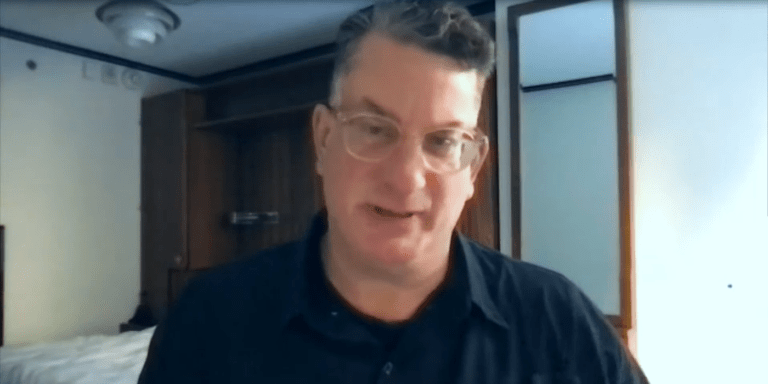
(Ken Silva, Headline USA) After the FBI raided journalist James Gordon Meek’s home last October, Rolling Stone magazine published a story suggesting that Meek may have been targeted by the DOJ over his reporting.
But the story was apparently false. Meek was charged on Feb. 1 with transporting child pornography.
NPR published a story today dissecting how Rolling Stone blundered yet another major story. In NPR’s report, a name that appeared often during the Trump administration resurfaced: attorney Mark Zaid.
A self-described advocate for whistleblowers, Zaid has worked on a wide variety of politically charged matters, including the first Trump impeachment. His clients have included Facebook’s dubious pro-censorship whistleblower, Frances Haugen; the brother of impeacher-turned-war profiteer Alexander Vindman; and a slew of CIA agents who’ve made numerous unfounded claims about having so-called “Havana Syndrome.”
According to NPR, Zaid also played a role in the latest Rolling Stone reporting scandal.
NPR reported that Zaid called a Rolling Stone editor to advocate for Meek as the magazine was preparing its story about the accused pedophile.
Zaid reportedly confirmed to NPR that he made the call, telling the outlet that “Meek was a longtime friend and client on Freedom of Information issues.”
“Zaid says he was representing Meek on any possible prosecution or investigation of his potential possession of classified material,” NPR reported.
NPR did not provide any more details about Zaid’s reported advocacy for accused pedophile Meek. After Zaid’s call to the Rolling Stone editor, the magazine published a story stripped of any reference to Meek’s possible possession of child pornography.
“In the hours leading up to publication, [the editor] changed [the] draft to remove all suggestions that the [DOJ] investigation was not related to Meek’s reporting. He left in the finding that federal agents had allegedly found ‘classified information’ on Meek’s devices,” NPR reported.
The editor who Zaid spoke with also reportedly made the decision to use a generic photo rather than one of Meek.
The reporter and editor who worked on the Rolling Stone piece did not respond to NPR’s requests for comment.
Meanwhile, Meek has been denied bail and awaits trial.
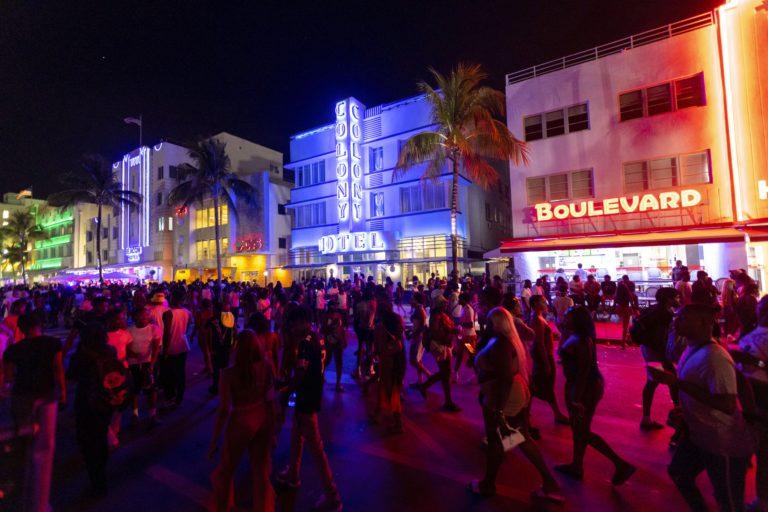
(Headline USA) For the third year in a row, Miami Beach finds itself struggling with spring break violence, including two fatal shootings and unruly crowds, despite a massive police presence and activities designed to give people alternatives to drinking alcohol and roaming the streets.
The party-all-the-time vibe in the South Beach section of the popular barrier-island city has already led officials to ban alcohol sales at larger clubs after 2 a.m.
Police are stationed everywhere, including in mobile towers that give officers a birds-eye view of the streets. Art, music, yoga and volleyball tournaments were added this year to give people something to do, at least during the day.
Yet the violence and street chaos continues at night. All night.
The city imposed an overnight curfew that ended Monday morning but decided at a City Commission meeting not to enact a second curfew next weekend, when the Ultra Music Festival will draw thousands of people to South Beach.
It’s the third weekend of spring break when the worst chaos occurs, said Commissioner Kristen Rosen Gonzalez.
“Ultra weekend is not the problem,” she said.
Commissioner Ricky Arriola agreed, saying there may need to be metal detectors, security fences or other measures installed next year in certain sections of Miami Beach. He noted that dozens of businesses and their workers depend on the crowds the Ultra event bring in.
“A curfew is not a long-term solution,” he said. “We’re taking it out on law-abiding businesses.”
The panel did decide, as it did last year, to force liquor stores in the South Beach area to close early at 6 p.m. during next weekend. Officials did point out the city manager still has emergency authority to order a 72-hour curfew despite the commission’s reluctance.
Mayor Dan Gelber wants the violence and disorder to stop.
“The volume of people in our city, the unruly nature of too many and the presence of guns has created a peril that cannot go unchecked,” Gelber said in a video statement issued Sunday. “It is clear that even an unprecedented police presence could not prevent these incidents from occurring.”
Gelber added: “We don’t ask for spring break in our city. We don’t want spring break in our city.”
Miami Beach police reported at least 322 arrests on a variety of charges between Feb. 27 and Sunday. Gelber said more than 70 firearms were confiscated in that time.
This has been happening despite police officers working up to 14-hour shifts six days a week, according to a city emergency declaration.
The latest shooting happened at around 3:30 a.m. Sunday on Ocean Drive in South Beach, police said. A male was shot and died later at a hospital, and officers chased down a suspect on foot, police said on Twitter. Their identities were not released, nor were any possible charges.
Grainy security footage being shared on social media shows a man pulling a gun from underneath his T-shirt and firing multiple shots, striking another man as crowds quickly scattered.
HAPPENED: Terrifying video shows execution-style Miami Beach shooting
“Next thing I know, I started hearing about two shots. I got low and got scared,” Travis Turner, a bystander from Michigan, told WSVN-TV.
On Friday night, one male victim was killed and another was seriously injured in a shooting that sent panicked crowds scrambling from restaurants and clubs into the streets. Police detained one person at the scene and found four firearms, but no other details have been made available.
David Wallack, owner of Mango’s Tropical Cafe, said nightclubs are being unfairly blamed for the shootings, and city officials need to work more closely with business owners to prevent violence in the future.
“What was going on out in the streets was not customers of businesses,” Wallack said.
“The majority of all those people in the street, they’re bringing their own stuff to the party,” he continued. “They don’t have the money to pay $20 a drink.”
Tolga Bugdaci, 21, who was visiting South Beach from Dusseldorf, Germany, said he’s not surprised the city decided to enact a curfew over the past weekend.
“I can understand it, but it doesn’t necessarily have to be this way,” Bugdaci said, adding that he did not witness either shooting.
“We woke up to it, and everything was yellow on the street,” he said. “It was crazy, we had never experienced anything like this before. It was a different world to us.”
Under the now-expired curfew, people had to leave businesses before midnight, although hotels can operate later only in service to their guests.
Restaurants could stay open only for delivery and the curfew won’t apply to residents, people going to and from work, emergency services and hotel guests. Some roads will be closed off and arriving hotel guests may have to show proof of their reservations.
Last year, the city imposed a midnight curfew following two shootings, also on Ocean Drive. The year before that, authorities made about 1,000 arrests and confiscated dozens of guns during a rowdy spring break that led Miami Beach officials to take steps aimed at calming the annual festivities.
For some business owners, the crowds have become impossible to manage. Vice Mayor Steven Meiner said there will be a debate in the coming months about how to prepare better for next spring break.
“I don’t view any other option at this point other than to do metal detectors. I’m not going to through next year and have dead people on our streets,” he said. “I don’t understand how we can’t make a secure perimeter around this. We’re going through the same thing year after year.”
(Bethany Blankley, The Center Square) The attorneys general of 25 states have filed a petition with the U.S. Supreme Court asking it to protect a federal law that’s been used to prosecute those who “encourage” or “induce” illegal immigration.
The coalition, led by Montana Attorney General Austin Knudsen, is urging the Supreme Court to reverse a Ninth Circuit Court of Appeals ruling that struck down a part of 8 U.S. Code, which the federal government has used to prosecute illegal immigration-related cases.
At issue is whether the federal prohibition on “encouraging” or “inducing” unlawful immigration for commercial advantage or private financial gain violates the First Amendment of the U.S. Constitution.
Helaman Hansen’s business involved advising foreign nationals who were illegally in the U.S. on how to obtain U.S. citizenship for a fee. He was convicted and sentenced for violating federal law, including on two counts of encouraging or inducing illegal immigration for private financial gain under 8 U.S.C. § 1324(a)(1)(A)(iv) (the “encouragement provision”) and (B)(i).
The encouragement provision of 8 U.S.C. makes it a felony to “encourage[] or induce[] an alien to come to, enter, or reside in the United States, knowing or in reckless disregard that such coming to, entry, or residence is or will be in violation of law.”
Violating it carries a maximum penalty of five years in prison, which can be increased to a maximum of 10 years when the violation is committed “for the purpose of commercial advantage or private financial gain.”
In its ruling, the Ninth Circuit applied what’s known as the “overbreadth doctrine,” which allows a federal court to strike down a statute if it believes it would violate the First Amendment in a substantial number of other cases. In this case, the court held that enforcing these provisions “chills free speech.”
Prior to Hansen’s ruling, in United States v. Sineneng–Smith, the Supreme Court unanimously reversed a Ninth Circuit decision that struck down the same provisions. It did so on procedural grounds, not on the merits of the case. Hansen’s case brings before the court the constitutional issue.
The Ninth Circuit used a “strained textual analysis of 8 U.S.C. § 1324(a)(1)(A)(iv)’s criminal prohibition on encouraging or inducing noncitizens to unlawfully enter or reside in the United States,” the AGs argue, which “invalidated that law on the grounds that it is unconstitutionally overbroad.”
If it isn’t overturned, they argue, the Ninth Circuit’s ruling “will impede the enforcement of criminal immigration laws nationwide, leading to significant adverse consequences for the Amici States.”
The Ninth Circuit’s “strained analysis,” the AGs argue, “greatly expands this doctrine’s reach.”
Not only does it violate separation of powers between federal and state governments, they argue, it also impedes the states’ ability to enforce their own criminal laws against encouraging or inducing unlawful conduct.
State criminal laws would be vulnerable to broad constitutional challenges, the AGs argue, undermining the states’ constitutional power to create and enforce their respective criminal codes, which could aid violent criminals from avoiding prosecution.
The brief points to laws in all 50 states prohibiting individuals from “encouraging” or “inducing” certain crimes, arguing the terminology has long been understood in criminal law. The Ninth Circuit’s decision “threatens widespread uncertainty in the states’ ability to enforce their criminal laws that use these terms,” they maintain.
In Montana, for example, laws governing solicitation, prostitution, and sexual abuse of children would be impacted.
In Texas, capital felony or felony of the first degree and smuggling of persons, including concealing, harboring or shielding victims from detection, would be impacted, the brief cites as examples.
The ACLU, counsel for the Office of the Federal Defender for the Eastern District of California, argues the case is about “whether the First Amendment permits criminal punishment of speech that merely encourages a noncitizen to remain in the United States, without any requirement of intent to further illegal conduct, and when remaining in the United States unlawfully is itself not a crime.”
However, 8 U.S.C. § 1325, which governs “improper entry by an alien” into the U.S. states, makes it a crime to unlawfully enter the United States, punishable with a fine and imprisonment; 8 U.S.C. § 1326 governs the “reentry of removed aliens,” specifying felony charges that can carry between 10 and 20 years in prison.
The ACLU maintains 8 U.S.C.’s encouragement provision violates the First Amendment “because it criminalizes a wide swathe of constitutionally protected speech.”
It alleges if it stands, it would make it a crime “for a grandmother to say she doesn’t want her undocumented grandchild to leave her,” for a doctor to advise a patient with an expiring student visa about medical treatment, for a “priest to inform a noncitizen parishioner whose employment authorization is ending” about resources, and for an attorney to counsel “an out-of-status noncitizen” about how to obtain lawful permanent resident status.
Among other requirements, the AGs argue the overbreadth claim “should require a showing more than a hypothetical danger of chilling protected speech.”
The Inflation Reduction Act that was signed by President Joe Biden in August 2022 authorizes the spending.
“These funds are yet another stepping stone in the long march towards justice and an inclusive, equitable USDA,” Agriculture Secretary Tom Vilsack said in a media release.
“Through this program and a neutral, comprehensive financial assistance process, USDA will acknowledge wrongs of the past and open up avenues that provide farmers, ranchers and forest landowners who have experienced discrimination by USDA the opportunity to be heard,” he added.
But the USDA isn’t ready to say just who will get the money.
“Future details concerning the application period for farmers, ranchers, and forest landowners seeking financial assistance through this new program will be announced once the national administrator and vendors for the four regional hubs are selected and prepared to begin the application process,” a department spokesperson told the Center Square in an email.
The USDA said it would like to start making payments to eligible farmers by the end of 2023.
“Whether this is the best way to go about facilitating minority farm owners and operators to be successful is not clear to me,” said Vincent Smith a professor in the Department of Agricultural Economics and Economics at Montana State University. “Is this the best use of funds? Whether it is the most efficient way to go or it is an administration symbolically saying we are trying to help minorities is a completely different question.”
Smith said it is “unequivocal” that access to many USDA programs with funds has had a much lower participation rate involving minorities.
Antony Davies, an associate professor of economics at Duquense University, said it was unclear why the USDA was involved in a discrimination program.
“What I don’t understand is why the USDA is having to determine who suffered this discrimination,” Davies said. “We have laws regarding discrimination in lending. And we have a legal system that is designed to, and is expert in, determining whether the law has been broken, who has been harmed, and the magnitude of that harm.”
Smith said the legal system can get expensive.
“There are always other avenues, the question is how expensive are those avenues for those who have been disadvantaged,” Smith said. “These are not people who have deep pockets. The legal system can take care of X, Y, Z, but in practice, access to effective representation requires substantial funds.”
The $2.2 billion program was announced in October.
The USDA stated advocates for the program claim that the USDA denied loans and credit to minority farmers for decades that led to a large loss of landownership, specifically among black farmers.
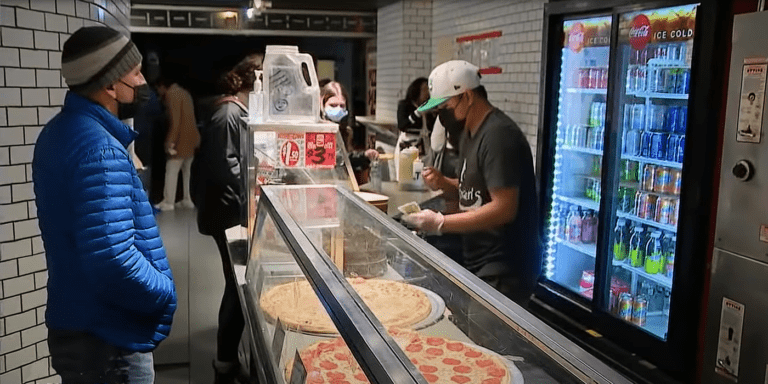
The iconic pizza chain, 2 Bros. Pizza, announced recently that it has been forced to up the price of its slices to $1.50 to cover for increased costs.
“Over the past few years, we had done everything in our power to keep the cheese slices at $1 while refusing to compromise on our quality,” co-owner Eli Halali said Monday. “We were no longer able to break even.”
According to Halali, the primary driver of the cost increase is skyrocketing cheese prices.
“The biggest issue in recent months was cheese prices stabilizing at a higher average than where they’ve been for the last decade,” Halali explained.
He also noted that cheese costs account for 40% of the company’s food expenditures.
Eli Halali’s brother, Oren, noted that, while cheese is the main driver, the prices of pretty much every other ingredient have also gone up.
“Inflation is affecting every single ingredient, every single item we use,” he said in a 2021 interview. “Flour, cheese, tomatoes, gloves, paper goods, paper plates, napkins. Everything. Labor is definitely up, as well.”
Some customers, however, remain unhappy about the jacked-up pricing.
“Man, this pisses me off!” said James DeCamp, a native New Yorker and New School student.
“I usually get three slices, but now I’m only getting two,” he continued. “… Everywhere else is doing the exact same thing. I’ve been watching the price go up by two and three times over the past year. This sucks.”
Costs across the board have rocketed upward since President Joe Biden took the reins of the U.S. economy in 2021, though the president and his administration have gone to great lengths to downplay the extremity of the situation.
Yet, as Americans are increasingly squeezed by the high cost of living, Biden and Democrats in Congress are rolling out record-high budgets that would cause the national debt to surpass $50 trillion within a decade.
“Just last week, Biden put forward a $6.8 trillion budget that’s even more full of reckless taxes and spending than his last terrible proposal,” said Sen. Rick Scott, R-Fla., in a March 17 statement.
“Credit card debt is up and savings are down as families struggle to make ends meet,” he continued. “… The president needs to WAKE UP and realize that the pain he is causing for hardworking Americans won’t end until he ends his addiction to reckless government spending.”
Trump’s legal team contended that the investigation into Trump, which began with an FBI raid of Trump’s Mar-a-Lago home, has been politically-charged from the beginning.
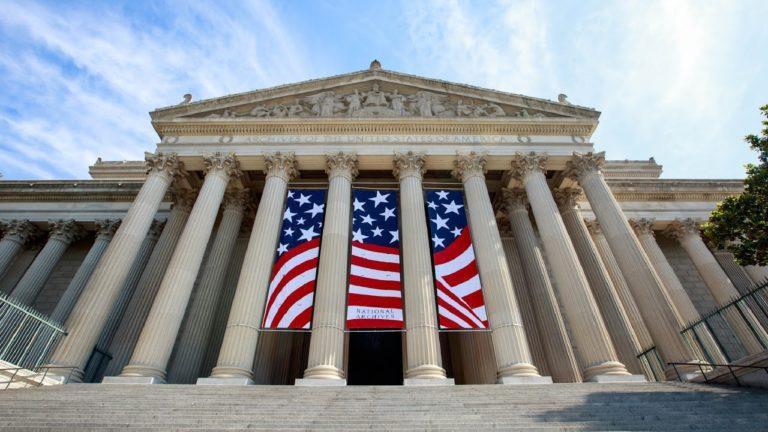
To gather evidence supporting such claims, attorney James Trusty–one of the attorneys representing Trump in the ongoing special counsel investigation, filed a Freedom of Information Act request with the National Archives earlier this week.
The lawyers specifically requested that NARA turn over its records and communications regarding the handling of the Trump case.
“This request covers records located at any office within NARA, including its Office of General Counsel, each of its field and regional offices, the Clinton Presidential Library and Museum, the George W. Bush Presidential Center, and the Obama Presidential Library,” the request stated.
Trump’s lawyers said NARA will be exposed as “rotten,” having inappropriately “criminal tools” to prosecute Trump.
His legal team also demanded information regarding the specific personnel who have handled the case internally, asking for information to be disclosed to “everyone who has touched this case.”
According to Trusty, he and his colleagues demanded that the National Archives provide “documents that will expose NARA’s completely different treatment of President Trump from every other president.”
The investigation, he argued, has been orchestrated by “highly-politicized bureaucrats who worked in tandem with DOJ” in order to “criminalize a dispute that never has had criminal implications.”
Trusty said that if the National Archives gives an honest response to the inquiry, it will be revealed that officials partook in a partisan conspiracy to undermine Trump under the guise of an objective investigation.
“We’re confident that a substantive response to our demands from NARA will firmly establish a different and politicized treatment of President Trump.”