Biden Agrees to Declassify COVID-Origin Intel w/ Major Loophole

(Mark Pellin, Headline USA) After a relentless and concentrated effort to keep intelligence on the coronavirus origins under tight wraps, President Joe Biden on Monday agreed to declassify a trove of deep state COVID secrets, at least to the extent his regime operative’s deem appropriate.

Biden’s acquiescence came in response to Congress unanimously passing legislation that forced his hand, directing the president to “declassify any and all information relating to potential links between the Wuhan Institute of Virology and the origin” of the coronavirus.

Biden had previously shown a reluctance to sign the COVID-19 Origin Act, sponsored by Sen. Josh Hawley, R-Mo., even after it drew bipartisan approval from Congress. Hawley on Monday said Biden’s change of heart was a long-overdue step in the right direction.

“Today President Biden finally signed my bill to declassify what the government knows about Covid origins,” Hawley tweeted. “Let the people see for themselves!”

While Biden suddenly agreed that “We need to get to the bottom of COVID-19’s origins to help ensure we can better prevent future pandemics,” he also left the regime some wiggle room.

“My Administration will continue to review all classified information relating to COVID–19’s origins, including potential links to the Wuhan Institute of Virology,” Biden said, adding that certain parts might have to be redacted to protect the public.

“In implementing this legislation, my Administration will declassify and share as much of that information as possible, consistent with my constitutional authority to protect against the disclosure of information that would harm national security,” Biden said.

Regime operatives weren’t the only ones concerned about what information on COVID origins could be publicly disclosed. Officials with the Chinese Communist Party sent a letter to Hawley earlier this month expressing their “grave concern regarding” his legislation, Fox News reported.

The CCP officials declared that any attempt to declassify and release information potentially linking a Wuhan lab leak to COVID’s origins was an act of “political manipulation” and accused Hawley of “undermining international solidarity” in fighting the coronavirus.

“When China is this upset about a proposal you know you’re on the right track,” Hawley said in response to the letter.

Tucker Carlson Roasts MSM for Defending White House Spox Accused of Racism

(Mark Pellin, Headline USA) Fox News host Tucker Carlson led the pack in castigating the Biden regime’s mainstream media collaborators for their concentrated attack Monday against a black reporter who accused White House press secretary Karine Jean-Pierre of racism.

Simon Ateba, a correspondent for Today News Africa, derailed a press briefing that featured the cast of popular sitcom Ted Lasso. Ateba, who has consistently been ignored and overlooked during press briefings, got into a shouting match with Jean-Pierre when she again refused to answer his questions.

“You’re making a mockery of the First Amendment. It’s been seven months and you have not called on me,” Abeta admonished Jean-Pierre. “You’ve been discriminating against me and discrimination against some people in the briefing. And I’m saying that’s not right. This is not China. This is not Russia.”

As the insurrectionist spox shut down Abeta and had him booted from the briefing, a contingent of fake news media piled on the black reporter from Africa and rushed to the defense of Jean-Pierre.

It was a display that played out in real-time, showcasing “what a complete sham, what a fraudulent, grotesque perversion of reality the White House briefings have become,” Carlson said. “The other shills in the room don’t the side of their fellow journalist but take the side of the lady at the front to whom they are actually beholden and try to shut down Simon Ateba.”

Reuters correspondent Jeff Mason scolded Abeta for interrupting the briefing with his questions and complaints. 

“If you have grievances, you should bring them to her later…The press corps is tired of dealing with this,” Mason bleated.

“Decorum, please,” admonished NBC White House stooge Kelly O’Donnell, while CNN’s Brian Karem told Abeta to “mind your manners when you’re in here.”

“If you have a problem you bring it up afterwards, but you are impinging on everybody in here who is only trying to do their job,” he said.

Abeta shot back with a telling rejoinder.

“Understand you get questions all the time, and you don’t understand how it feels to sit here for eight months and get discriminated against,” he said.

Carlson blasted a compliant media for carrying the administration’s water at the expense of the public being left in the dark.

“Your job is not to suck-up to power,” Carlson said. “It’s to serve your viewers and readers by getting to the truth.”

RedState’s Bonchie joined Carlson in condemning the media’s regime-enabling behavior and disregard for a fellow correspondent’s First Amendment rights, calling out Associated Press reporter Zeke Miller’s sniveling apology to Jean-Pierre.

“I mean, really, imagine being that much of a lackey for state power, that you’d watch the press secretary throw a reporter out of the room and then apologize on ‘behalf of the press corps’ to her and not your colleague who was just abused,” he wrote.

Abeta expressed similar disdain for his AP brethren.

“The entire scene was an embarrassment. You would think the White Press Corps would stand up for freedom of speech and try to force the White House to be fair,” Bonchie wrote. “Unfortunately, that outfit is run by far-left hacks, and while it played defender of the truth during the Trump administration, it’s now just another Democrat mouthpiece.”

‘Jugging’ Part of New Crime Wave Ignored by Leftist Prosecutors

(Mark Pellin, Headline USA) As soft-on-crime, partisan prosecutors like Manhattan DA Alvin Bragg focus attention and resources on the political persecution of Donald Trump and advancing so-called criminal justice reform, real criminals are redoubling their efforts to make Americans more fearful and less safe.

An emerging trend of old-school street crimes making a resurgence with new twists, combined with tech-savvy innovations, has increasingly made everyday activities a safety and security risk, Fox News Digital reported.

“What’s old is new. It’s like pickpockets. They’ve been around forever, but they’re coming up with new ways to be able to engage folks to steal property,”  said Kevin Coffey, a travel risk trainer and consultant who was a 35-year veteran of the Los Angeles Police Department.

The catch-and-release criminal justice system fostered by activist DAs, funded in large part by billionaire, radical leftist George Soros, makes the risk of being caught a non-factor for criminals and gangs looking to make a quick buck.

“Most of them want an easy way to grab a purse, a wallet or a phone. They don’t want to engage in violence. They want to grab something and run,” Coffey said.

One of the more prevalent trends making a resurgence is so-called “jugging,” when thieves stake out parking lots of malls, stores and banks, robbing unsuspecting victims while they’re distracted fumbling with keys or bags.

While jugging incidents are typically for quick scores with no injuries, they can quickly turn deadly, law enforcement warned. A “jugging” in Houston left a woman paralyzed as a result of the violent robbery of cash that she had withdrawn from a bank. Two teens were arrested Monday in connection to the incident.

Similar cases have spiked over the last few months in four major regions, “including northwest states like Idaho and Washington, in and around southern states like Texas, as well as northeastern and southeastern states like Florida and New York,” Fox reported.

In tandem with “jugging” cases, law enforcement has seen increases in so-called “tap and glue” crimes and “slider” cases.

Criminals stuff glue or cardboard into ATM machines to facilitate the “tap and glue” scheme, Coffey said, and pose as innocent bystanders to offer “advice” to frustrated customers, suggesting to use the machine’s tap feature.

“If you get your cash and leave without ending the transaction, the thief that’s using the ATM next to you and pretending to be a regular customer shifts over to your ATM when your back is turned, withdraws the max and disappears,” Coffey said.

The resurgence of “sliders” also uses distraction and disorientation as a means to a nefarious end.

“A woman pulls up to the gas pump, sometimes she has her credit card out of her wallet, and the purse is on the passenger seat and her back is to the car. She didn’t hit the lock button, so the passenger door is unlocked,” Coffey said, setting the stage for a typical “slide.”

A pair of criminals pull alongside the target car, one “slides” to the far passenger side, grabbing the target’s purse as the car moves away from the scene before anybody notices what happened.

Coffey said “always be aware of your surroundings,” is a good advice to follow in response to the wave of street crime.

“It’s situational awareness,” Coffey said. “Whenever someone approaches, be asking yourself why? Why are they engaging me? Are they trying to divert attention to pickpocket me or do they actually want to have a conversation?” 

Court Rules COVID Censorship Case against Fauci, Biden Admin. Can Proceed

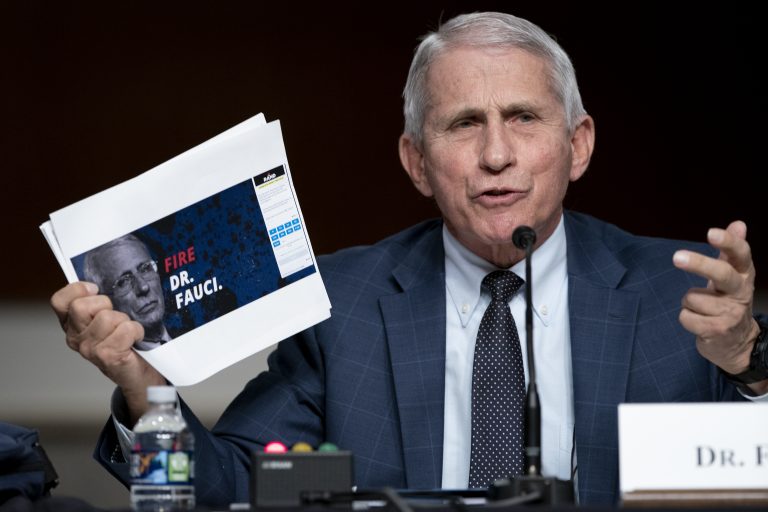
(Mark Pellin, Headline USA) In what was hailed as a victory for free speech and a blow against tyranny, a U.S. District court on Monday rejected in large part a filing to dismiss a case against several top-ranking Biden administration officials, including former COVID Czar Anthony Fauci, for colluding with Big Tech to censor narratives critical of the regime’s pandemic response.

The case, originally filed by the attorneys general from Missouri and Louisiana, has already produced depositions making it “clear that when Dr. Fauci speaks, social media censors,” said former Missouri Attorney General Eric Schmitt, who was elected to the U.S. Senate in November.

Schmitt’s replacement, Andrew Bailey, announced the latest court win rejecting the Biden administration’s push to have the case dismissed.

“The Court has DENIED Joe Biden’s motion to dismiss our case against the federal government for their vast censorship enterprise,” Bailey tweeted. “Missouri will continue to lead the way in the fight to defend our most fundamental freedoms.”

U.S. District Judge Terry A. Doughty granted the plaintiffs claims for injunctive relief directly against Biden, but only against Biden and only for injunctive relief, Red State reported. The order does not pertain to declaratory relief, which Red State reported includes:

1. Declare that Defendants’ conduct violates the First Amendment of the U.S. Constitution and analogous provisions of Missouri’s, Louisiana’s, and other States’ Constitutions;

2. Declare that Defendants’ conduct is ultra vires and exceeds their statutory authority;

3. Declare that Defendants’ conduct violates the Administrative Procedure Act and is unlawful, and vacate and set aside such conduct

The court’s latest decision means that discovery in the case can continue, which doesn’t favor the regime and its agents who worked furiously with Big Tech to suppress and censor COVID dissent on social media.

Fauci’s deposition had already revealed that his daughter, unknown until the time, had been employed by Twitter throughout the pandemic. Fauci also repeatedly ducked and dodged on answering questions about his and the Biden administration’s involvement with EcoHealth Alliance and the funding of virus and gain-of-function lab research in Wuhan, China.

Fauci claimed “I don’t recall” as a response 174 times during one deposition, “including when asked about emails that he sent, interviews that he gave, and other important information,” Schmitt wrote at the time.

“I encourage everyone to read the deposition transcript and see exactly how Dr. Fauci operates, and exactly how the COVID tyranny that ruined lives and destroyed businesses was born,” Schmitt wrote.

House GOP Leaders Demand Records on Impending Trump Arrest

(Ken Silva, Headline USA) Reps. Jim Jordan, R-Ohio, James Comer, R-Ky., and Bryan Steil, R-Wisc., have sent a letter to Manhattan DA Alvin Bragg, demanding a slew of records related to his potential indictment of former President Donald Trump.

The letter comes a day before Trump is expected to be arrested over an alleged bribery scheme and hush money paid to porn star Stormy Daniels.

Jordan, Comer and Steil—who chair the Judiciary, Oversight and House Administration committees, respectively—demanded to know why the Soros-funded DA is pursuing charges after the DOJ already dropped the matter.

“The New York County District Attorney’s Office has been investigating President Trump since at least 2018, looking for some legal theory on which to bring charges. The facts surrounding the impending indictment have ‘been known for years.’ Michael Cohen, President Trump’s disgraced former lawyer, pleaded guilty over four years ago to charges based on the same facts at issue in the impending indictment,” the representatives said.

“By July 2019, however, federal prosecutors determined that no additional people would be charged alongside Cohen. Now, in the words of one legal scholar, you are attempting to ‘shoehorn’ the same case with identical facts into a new prosecution, resurrecting a so-called ‘zombie’ case against President Trump.”

Jordan, Comer and Steil seek numerous records from Bragg, including all documents and communications between or among the New York County District Attorney’s Office and the DOJ or other federal law enforcement agencies to its Trump investigation. They also want all documents and communications referring or relating to the New York County District Attorney Office’s receipt and use of federal funds.

The congressman said they have an interest in a local prosecution of Trump for several reasons. They said Bragg’s “politically motivated prosecution … “requires congressional scrutiny about how public safety funds appropriated by Congress are implemented by local law-enforcement agencies.”

“In addition, your apparent decision to pursue criminal charges where federal authorities declined to do so requires oversight to inform potential legislative reforms about the delineation of prosecutorial authority between federal and local officials,” they said.

“Finally, because the circumstances of this matter stem, in part, from Special Counsel Mueller’s investigation, Congress may consider legislative reforms to the authorities of special counsels and their relationships with other prosecuting entities.”

Ken Silva is a staff writer at Headline USA. Follow him at twitter.com/jd_cashless.

Biden Uses First Veto to Protect ESG Activists

(Dmytro “Henry” Aleksandrov, Headline USA) Joe Biden issued his first veto on Monday, blocking a measure by Congress to a Labor Department rule that allows retirement plans to consider environmental, social and governance factors when making investment decisions.

The Democrat-controlled Senate passed the GOP-led effort last week, with the White House saying the measure would likely get a veto from Biden, according to Just The News.

“There is extensive evidence showing that environmental, social and governance factors can have a material impact on markets, industries and businesses,” Biden said after he issued the veto.

“But the Republican-led resolution would force retirement managers to ignore these relevant risk factors, disregarding the principles of free markets and jeopardizing the life savings of working families and retirees.”

The Senate’s 50-46 vote Wednesday came one day after the House voted 216-204 to pass the measure.

As expected, politicians who supported the measure didn’t approve of the veto, saying that the Labor Department rule would enable poor industry practices and hurt Americans.

“President Biden’s decision to veto makes it clear that he prioritizes a woke political agenda above bringing relief to families who are needlessly suffering under his economy. Misguided ESG policies meant to force a transition to green energy will raise the cost of gasoline, natural gas, and heating oil for decades to come.” State Financial Officers Foundation CEO Derek Kreifels said.

“These same measures will also impact the food supply chain, adding burdensome costs to farmers and ranchers that will inevitably be passed to consumers,” he added. “Allowing retirement plans to include ESG considerations takes financial decisions out of the hands of the American people and puts progressives in charge.”

House Majority Leader Steve Scalise, R-La., told Breitbart that blue-collar workers are going to be hurt the most.

“If you’re a worker, a blue-collar worker who just wants to retire and enjoy the highest yield from your 401(k) so that you can have the best retirement possible, then you should be able to have confidence that when you’re investing your retirement funds that the government is helping encourage you to get the highest rate of return, not the lowest rate of return,” Scalise said.

“And ESG hurts blue-collar workers the hardest because it takes money out of their retirement accounts.”

Sen. Joe Manchin, D-W.Va., also criticized Biden.

“Despite a clear and bipartisan rejection of the rule from Congress, President Biden is choosing to put his Administration’s progressive agenda above the well-being of the American people,” he said.

“This ESG rule will weaken our energy, national and economic security while jeopardizing the hard-earned retirement savings of 150 million West Virginians and Americans.”

COMMENT: GOP Headed for Showdown on Social Security and Medicare

(A.B. Stoddard, RealClear Wire) In the prospective 2024 nominating contest, some GOP wannabes are serving up straight talk about the need to fix Medicare and Social Security, even though Donald Trump banished entitlement reform from Republican doctrine in 2016. These fiscally sober, and actually conservative, Republicans aren’t likely to win the nomination, and they’re making Trump giddy. But they could also put House Republicans and Ron DeSantis in a jam.

Nikki Haley, who announced her candidacy last month, and likely contenders Mike Pence and Mike Pompeo, have all said the looming insolvency of these programs – which take up 30% of the federal budget – must be addressed.

House Republicans vowing to find $130 billion in spending cuts had initially placed entitlements squarely on the negotiating table, but removed them after Trump and President Biden united against reform. Biden taunted congressional Republicans at his State of the Union, saying it was their “dream” to cut both popular programs, which was met with boos. Trump has released a video warning congressional Republicans not to cut “one penny” from either safety net program in their negotiations over the debt ceiling. After both events, House Speaker Kevin McCarthy made it explicit: In their hunt for savings they will look elsewhere and leave both programs alone.

“Clean” increases in the debt ceiling passed during Trump’s presidency, while the debt increased by 39%. House Freedom Caucus members, who rode the Tea Party wave and sought drastic spending cuts for years, went all in on the Trump spending bender. One of those Freedom Caucus members who went on to serve as both budget director and then chief of staff to Trump – Mick Mulvaney – told The Dispatch, “The truth of the matter is that the first two years of the Trump administration, when the Republicans had the House and the Senate, we raised spending faster than the last couple of years of the Obama administration.”

Current Freedom Caucus members, who have relocated their fiscal rectitude, have insisted House Speaker Kevin McCarthy pledge not to bring up a clean debt ceiling increase for a vote because there is a dire need to curb spending now.

Since a debt crisis cannot be avoided without curbing mandatory spending, some Republicans are still willing to acknowledge the third rail, and Haley did so last week. “It’s unrealistic to say you’re not going to touch entitlements,” she said, proposing a new system for younger generations while leaving the program intact for current recipients. Pence has warned about a debt crisis coming in the next 25 years that is “driven by entitlements” and said, “The truth is we’ve got to have that conversation.” Pompeo recently told RCP that “the next Republican president has to be more serious than previous Republican presidents have ever been about getting our fiscal house in order,” and that entitlements must be put “on a sustainable trajectory.”

Trump would like nothing better than to be the only person in the primary field opposing reforms to Social Security and Medicare – to claim to be their sole defender against some establishment cabal threatening benefits to the elderly. Even though those Republicans are not recommending any near-term cuts or changes, Trump has never let facts or the truth get in his way.

What is true: We are headed for a debt crisis; Social Security and Medicare need reform; and Democrats are not interested in addressing debt reduction. Also true: The pre-Trump Republican Party used to be committed to limited government and debt reduction. Even now, Trump will not brook debate of even reasonable, modest, and interim fixes which could extend solvency.

At the Conservative Political Action Conference earlier this month, Trump said some Republicans wanted to raise the retirement age to 70, 75, or 80 and planned to “cut Medicare to a level that it will no longer be recognizable.”

And since DeSantis remains the biggest threat to Trump winning the nomination, the Florida governor’s past support for entitlement reforms is now Trump’s favorite subject. While serving in the House, DeSantis voted for several budget resolutions that would have made changes to the programs, including phasing in the eligibility age to 70.

DeSantis is trying to fend off Trump and recently said on Fox News: “We’re not going to mess with Social Security as Republicans. I think that’s pretty clear.” But Trump claims DeSantis wants to “cut” the programs and called him “a wheelchair-over-the-cliff kind of guy, just like his hero, failed politician Paul Ryan.” Trump was referring to ads Democrats ran against the former House Speaker’s plans to privatize the programs a decade ago, in which someone who resembled Ryan was seen pushing an old woman in a wheelchair off a cliff.

Sen. Mike Rounds, who is at work on such reforms as a member of the Senate working group on entitlements, said it was “very unfortunate,” that Trump attacked DeSantis over the issue.

“We need an adult as president who is going to take on the tough challenges, the tough problems, and be prepared to share with the American people how serious it is. That we use facts. And not scare tactics,” he told Politico.

Yet Rounds may not get that leader in DeSantis either. The governor may bend on entitlement reform, just like he did on support for Ukraine, abandoning policies he believes in to win the nomination.

House Republicans are already divided among themselves over their coming budget battle with the Biden administration. And there is no consensus about what to do next spring – rally behind Trump for the nomination, or follow the lead of House Freedom Caucus member Rep. Chip Roy and endorse DeSantis and his record of support for privatizing entitlement programs?

What all Republicans can count on is that Trump will distort and demagogue whatever any other candidate says anyway. And it’s more than likely granny will vote for him.

NYC Wasted $253M Worth of COVID Supplies

(Adam Andrzejewski, RealClear Wire) After states and cities engaged in frenzied buying and stockpiling of COVID-19 supplies in the early days of the pandemic, some are now realizing they have an overabundance of supplies. New York City has already disposed of $14.1 million worth of extra supplies, with plans to dispose of $13.7 million more soon, according to the New York Post.

NYC was one of the earliest and most aggressive COVID preppers, with then-Mayor Bill DeBlasio championing a litany of initiatives early on to slow the spread. Now, excess perishable supplies such as chemical COVID tests and hand sanitizer are being destroyed en masse by the city.

This isn’t the first time New York has had problems dealing with excess COVID supplies. Last summer, it was exposed that New York State had 700,000 gallons of hand sanitizer worth $4.3 million sitting unused in warehouses.

In addition to disposing of $28 million in supplies, NYC is also auctioning off expensive equipment such as ventilators for pennies on the dollar. So far, NYC has auctioned off $225 million worth of equipment for only $500,000. That includes a $12 million loss on ventilators.

NYC is defending its aggressive purchasing, with a Department of Citywide Administrative Services spokesperson telling the Post, “Supplies were purchased to meet potential worst-case scenarios, and fortunately the city had ample supplies, helping us save lives and beat back the surge, instead of falling short.”

While it’s true uncertainty abounded in the early days of the pandemic, the vast majority of states and municipalities were able to feel adequately prepared without wasting millions on equipment and supplies that were never used. Now, taxpayers are paying the price for the city’s poor planning.

How Gov’t Lost 15 Million Acres of Public Land in the U.S.

(Saul Zimet, FEE) Leave it to the United States Government to lose track of almost three states worth of public land. Only an institution with so little incentive and ability to allocate resources for the betterment of human wellbeing could instantiate such a catastrophic waste of potential.

The following is a story of an engineer named Eric Siegfried, a Montana man who caught public officials in almost unimaginable levels of incompetence and waste. It is also a cautionary tale about the way extreme misallocations of resources are the predictable outcome of America’s current form of land use governance, which systematically severs control over certain resources from anyone equipped to use them rationally and effectively.

The Engineer Who Caught the Government’s Mistake

Multiple articles in the New York Times have recently reported on the findings of a group of private hunters and wilderness enthusiasts who have brought attention to millions of acres that nobody previously knew existed. A Times article published in February reported that, “Across America, 15 million acres of state and federal land is surrounded by private land, with no legal entry by road or trail. If this so-called landlocked land was one contiguous piece, it would form the largest national park in the country, nearly the size of Vermont, New Hampshire and Connecticut combined.” And, “Most of these inaccessible public lands are in the West, and, until recently, their existence was largely unknown.”

The land was only discovered, according to another recent Times article, because of a smartphone app called OnX. “OnX was born when Eric Siegfried, a mechanical engineer and part-time hunting guide in Montana, decided to make a Google Maps for the wilderness,” the Times reports.

Unlike Google maps, OnX is optimized for use in forests and other wild areas, displaying property lines, wind patterns, fire histories, and other data useful to outdoorsmen but not to ordinary civilians.

Times contributor Ben Ryder Howe writes, “Property data is often inaccurate and outdated, and early in the development of OnX Mr. Siegfried found himself asking, ‘Why is there no nationwide picture of land ownership, of public and private property boundaries, of who owns what?’” And so, according to Howe, “By collating state and county data and putting it on a microchip, Mr. Siegfried turned the project in the scrapbooking room into a company that just received more than $87 million from investors and that understands the American landscape arguably better than the government does.”

The Importance of Efficient Land Use

Howe points out that, “In answering the question of who owns what, OnX helped bring to light how much public land — often highly coveted — is not reachable by the public.”

Land is highly coveted because it is a form of capital which, if allocated properly, can vastly enrich its owners and other participants in the market.

There are countless ways that individuals, or society generally, could utilize 15 million acres of land. People could live on it, thus increasing housing affordability and expanding the range of available options of where to live. People could convert its raw materials into transportable resources such as lumber or oil, thus improving commodity abundance and lowering the threshold at which the poor could afford to have their needs met. People could employ unique characteristics of its ecosystems to conduct scientific research. Or the land could be preserved in its current state, if its environmental, recreational, and/or aesthetic properties are deemed more valuable. Manifold possible uses exist, many of which can probably only be imagined by the innovators of the future.

It is impossible to know a priori which combination of potential uses are the best allocation of such an enormous supply of capital. But one thing is clear: When so much wealth and potential are on the line, the difference between efficient and inefficient resource allocation is the difference between countless livelihoods saved or destroyed. When housing prices, or food prices, or gas prices, are increased or decreased by the availability or unavailability of a few million acres worth of resources, it can make or break the health and safety of anyone whose current standards of living are near the margin of viability. And even for those well enough above the margin to be unconcerned about basic necessities, changes in the cost of living can still make or break their access to important commodities and opportunities such as a higher education, the ability to start a small business, or any other ambition they might have that requires significant investment.

So how could such a massive amount of potential wealth have been unaccounted for and untapped for so long, and what should happen to it now that it has been discovered?

Prices versus Pricelessness

It is commonly understood, even by avowed socialists as well as arguably Karl Marx himself, that socialist economies are generally less conducive to economic growth than market economies, hence the latter often being dubbed “capitalist.” One primary reason for this is that markets result in a mechanism of resource allocation that maximizes efficiency like no socialist, communist, or fascist economy has ever been capable of. And that mechanism is known as the price system.

The price system is merely the logical consequence of resources being controlled by individuals rather than collectives, and exchanged voluntarily rather than by force. These are the characteristics of a market economy, and they result in consumers and producers having extremely precise knowledge, communicated via prices, of exactly how useful each resource is for a wide range of potential uses, given the nature and scarcity of the resource relative to alternatives. And this precise knowledge allows budgeting, financing, shopping for the best among many available products, and so on to be subject to highly accurate calculations.

This crucial difference between market and non-market economies was first clearly articulated by the economist Ludwig von Mises in his 1920 essay, “Economic Calculation in the Socialist Commonwealth.” In it, Mises offered the following example:

“Picture the building of a new railroad. Should it be built at all, and if so, which out of a number of conceivable roads should be built? In a competitive and monetary economy, this question would be answered by monetary calculation. The new road will render less expensive the transport of some goods, and it may be possible to calculate whether this reduction of expense transcends that involved in the building and upkeep of the next line. That can only be calculated in money. It is not possible to attain the desired end merely by counterbalancing the various physical expenses and physical savings. Where one cannot express hours of labor, iron, coal, all kinds of building material, machines and other things necessary for the construction and upkeep of the railroad in a common unit it is not possible to make calculations at all.”

This point was expanded on by Mises’s disciple, the Nobel Prize winning economist Friedrich Hayek, who gives another instructive example in his seminal 1945 essay “The Use of Knowledge in Society”:

“Assume that somewhere in the world a new opportunity for the use of some raw material, say, tin, has arisen, or that one of the sources of supply of tin has been eliminated. … All that the users of tin need to know is that some of the tin they used to consume is now more profitably employed elsewhere and that, in consequence, they must economize tin. There is no need for the great majority of them even to know where the more urgent need has arisen, or in favor of what other needs they ought to husband the supply. If only some of them know directly of the new demand, and switch resources over to it, and if the people who are aware of the new gap thus created in turn fill it from still other sources, the effect will rapidly spread throughout the whole economic system and influence not only all the uses of tin but also those of its substitutes and the substitutes of these substitutes, the supply of all the things made of tin, and their substitutes, and so on; and all this without the great majority of those instrumental in bringing about these substitutions knowing anything at all about the original cause of these changes.”

Public versus Private Ownership

Now think of the price system, or lack of one, in the context of Siegfried’s discovery.

When land is privately owned, the price system facilitates numerical comparisons between different possible uses of each plot of land (or useful subdivision thereof), such as people living on it, or excavating it for minerals, or growing crops on it, or conserving its current state—or countless other possibilities.

There is no way of knowing with certainty which is the best use of each plot of land, given the virtually infinite variables such as what alternative resources could be used for each of the possible uses of the land, how scarce and applicable to alternate uses each of those resources are, and so on. And of course, even the price system can’t account for all the variables, given that every event in the world comes with externalities, millions of uncertainties and butterfly effects that constantly shape our perception of the future into reality. But the price system accounts for more of the variables, and does so with more accuracy, than any other system because prices reflect each individual’s specific preferences and needs down to the cent whereas all other systems reflect either randomness or the preferences of some authoritarian subset of the population that has managed to dictate resource allocations according to their preferences while excluding the preferences of others.

(It is worth noting that the assumptions people make about the relative significance of one set of externalities over another tend to be totally unjustified. For example, there is a common assumption that the negative environmental externalities of industrial development such as logging or oil drilling outweigh the positive economic externalities. But it can just as easily be the case that when commodity prices are reduced by such supply increases, the resulting poverty alleviation and wealth creation generates positive externalities, such as more education and technological and scientific research, that outweigh the negative externalities.)

Private land is more likely than land governed any other way to be used for its optimal purpose, because its owner is free to sell it to the highest bidder, and the bidder with the most valuable idea of how to use it will typically be willing to pay the most for it. By contrast, “public” land is doomed to be allocated comparatively suboptimally. Because no individual is free to sell it to the highest bidder, it is instead trapped in its current use by whatever regulatory mire is preventing individuals from optimizing it.

Only in such a mire could the 15 million acres discovered by Eric Siegfried have been so tragically wasted. Individual property owners would almost certainly be too aware of their major assets to lose track of 15 million acres of real estate, because they themselves would be the ones to reap the rewards or punishments of the quality of their capital allocation choices.

Those acres, being “public” and thus illegal for individuals to settle, develop, or cultivate, were of so little use to anyone that nobody even bothered to do the basic research or exploration required to learn of their existence before it was discovered by accident. And all while there are millions of people without basic necessities, such as a peaceful place to sleep or grow food.

This arbitrary and incompetent allocation of 15 million acres should come as no surprise given the economics of public versus private ownership that have been well understood in the context of socialism and capitalism for more than a century. To solve the problem of rampant resource misallocation, the resources should be privatized so that individuals can start freely investing and innovating to make the most out of that which may otherwise be worthless enough to have abandoned completely.


Blacks, Hispanics Driving Trump’s Early 2024 POTUS Lead

(Dmytro “Henry” Aleksandrov, Headline USA) Donald Trump leads in double digits in national 2024 Republican primary surveys because non-white people support him more than Florida Gov. Ron DeSantis.

Despite the leftists’ constant portrayal of Trump as a racist, he was up an average of 55% to 26% over DeSantis among Republican and right-leaning independent non-white voters in an average of the two polls: CNN/SSRS and Quinnipiac University. The combined sample size of non-white voters for both polls is about 200 people — large enough to know that Trump actually has an advantage when it comes to non-white voters, according to CNN.

The percentage difference among white Republican voters was well within the margin of error: 38% for Trump and 37% for DeSantis.

CNN reported that the reason why Trump is so popular among non-white right-leaning voters is that, just like in the 2016 primary, he appealed to his base, Republicans whose households pull in less than $50,000 a year. In the CNN poll, Trump led this group of voters by 22 points over DeSantis but trailed him by 13 points among those Republican voters who make at least $50,000 a year. This means that there is a 35-point swing between these two income brackets.

Republican non-white voters are far more likely than white Republicans to have a household income that is less than $50,000 per year, according to CNN. Compared to 28% of white Republican voters who earn less than $50,000 per year, there are almost 50% of non-white Republican voters — 45% — that do earn less than that, a CNN poll stated.

There’s also another factor that would increase Trump’s chances of winning the Republican primary that is tightly connected to his already existing support among non-white voters – non-white people are becoming a larger part of the party. During the 2016 Republican primary season, there were 13% of non-white Republican voters. Today, the number of Republican non-white voters is closer to 18%.