Starbucks Manager Who Was Fired for Being White Awarded $25.6M

(Headline USA) Jurors in federal court have awarded $25.6 million to a former Starbucks regional manager who alleged that she and other white employees were unfairly punished after the high-profile arrests of two black men at a Philadelphia location in 2018.

Shannon Phillips won $600,000 in compensatory damages and $25 million in punitive damages on Monday after a jury in New Jersey found that race was a determinative factor in Phillips’ firing, in violation of federal and state anti-discrimination laws, Law360 reports.

In April 2018, a Philadelphia store manager called police on two black men who were sitting in the coffee shop without ordering anything. Phillips, then regional manager of operations in Philadelphia, southern New Jersey, and elsewhere, was not involved with arrests but lost her job less than a month later after objecting to another white manager being placed on leave amid the uproar, according to her lawsuit.

The company’s rationale for suspending the district manager, who was not responsible for the store where the arrests took place, was an allegation that black store managers were being paid less than white managers, according to the lawsuit. Phillips said that argument made no sense since district managers had no input on employee salaries.

The lawsuit alleged Starbucks was instead taking steps to “punish white employees” who worked in the area “in an effort to convince the community that it had properly responded to the incident.”

During closing arguments on Friday, Phillips’ lawyer Laura Mattiacci told jurors that the company was looking for a “sacrificial lamb” to calm the outrage and show that it was taking action, Law360 reported. Picking a black employee for such a purpose “would have blown up in their faces,” she said.

Starbucks denied Phillips’ allegations, saying the company needed someone with a track record of “strength and resolution” during a crisis and replaced her with a regional manager who had such experience, including navigating the aftermath of the 2013 Boston Marathon bombings, Law360 reported.

“A peacetime leader is very different from a wartime leader,” Starbucks attorney Richard Harris said during his closing arguments, Law360 reported. “These were turbulent times. Starbucks needed someone to show strength and resolution.”

Phillips’ attorney, however, cited earlier testimony from a black district manager, who was responsible for the store where the arrests took place, who described Phillips as someone beloved by her peers and worked around the clock after the arrests.

Phillips broke into tears and hugged one of her lawyers after the verdict was read, Law360 reported. In an email, Mattiacci confirmed the award amount and said the judge will consider awarding back pay and future pay, as well as attorney’s fees. Mattiacci told the New Jersey Law Journal that she will seek about $3 million for lost pay, and roughly $1 million on her fee application. Starbucks declined comment Tuesday.

In the April 2018 incident, Rashon Nelson and Donte Robinson were arrested in a Starbucks coffee shop near tony Rittenhouse Square in Philadelphia shortly after the manager called police to report that two men were refusing to either make a purchase or leave the premises. They were later released without charges.

Video of the arrest prompted national outcry and led the current CEO of Starbucks to personally apologize to the men. The company later reached a settlement with both men for an undisclosed sum and an offer of free college education. The company also changed store policies and closed locations across the country for an afternoon for so-called racial-bias indoctrination.

The two men also reached a deal with the city of Philadelphia for a symbolic $1 each and a promise from officials to set up a $200,000 program for young entrepreneurs. The Philadelphia Police Department adopted a new policy on how to deal with people accused of trespassing on private property — warning businesses against misusing the authority of police officers.

Adapted from reporting by the Associated Press

Trans Agenda Shill Bud Light Loses Sales Crown to Modelo

(Headline USA) After more than two decades as America’s best-selling beer, Bud Light has slipped into second place.

It’s a milestone in the months-long sales decline Bud Light has experienced since early April, when it jumped into bed with transgender huckster Dylan Mulvaney, sparking what has become an effective boycott from conservatives. Bud Light has also faced backlash from Mulvaney’s fans, who think the brand didn’t do enough to support him.

Modelo Especial, a Mexican lager, overtook Bud Light in U.S. retail dollar sales in the month ending June 3, according to Nielsen data analyzed by Bump Williams Consulting. Modelo controlled 8.4% of U.S. grocery, convenience and liquor store sales; Bud Light fell to 7.3%.

Dave William, Bump Williams’ vice president of analytics and insights, said Bud Light has been the top-selling U.S. beer since 2001, and it could still retain that crown this year. He noted that Bud Light’s year-to-date market share of 9% is still outpacing Modelo’s, at 8%. And Bud Light’s sales volumes are higher.

But Modelo appears to have the advantage, with its dollar sales increasing by double-digit percentages every week. The launch of a new light beer, Modelo Oro, in May is also boosting awareness of the brand.

Sales in bars and restaurants, which are harder to track, aren’t included in the retail numbers, and Bud Light far outpaced Modelo in those venues prior to April. But David Steinman, the vice president and executive editor of Beer Marketer’s Insights, said Modelo’s bar and restaurant sales have been growing quickly, and it’s believed that Bud Light took an even steeper sales hit in bars and restaurants than in groceries.

Bud Light’s U.S. retail sales were down 24% the week ending June 3, while Modelo Especial sales were up 12%, according to Dave Williams.

Scott Scanlon, an executive vice president at the consulting firm Circana who follows the alcohol market, said Mexican imports like Modelo and Corona have been the biggest bright spots in the otherwise stagnant U.S. beer market for years.

“Modelo was going to become the No. 1 beer brand. It was destiny because the growth numbers we are seeing and have been seeing are astonishing,” Scanlon said. “The only question was time.”

Scanlon said the pandemic accelerated Modelo’s U.S. sales, since it sees more of its sales from retail stores than from bars and restaurants. And Bud Light’s missteps further accelerated its rise, most noticeably the backlash from its partnering with Mulvaney.

Grupo Modelo, the Mexican brewer, is owned by Anheuser-Busch InBev, the same parent company of Bud Light. Constellation Brands, a Rochester, New York-based company, has been licensed to sell Modelo in the U.S. since 2013 as part of an agreement with antitrust regulators after InBev bought Grupo Modelo.

Constellation said Wednesday it has nearly doubled its marketing spending on Modelo over the past five years and continues to see a “runway for growth” in the U.S. But Bud Light will try to counter that.

Last month, InBev said it will triple its marketing spending in the U.S. this summer, with a focus on sports and music festivals. Bud Light also continues to be a high-profile sponsor of LGBTQ+ “Pride” events.

Messages seeking comment were left Wednesday with Anheuser-Busch.

Adapted from reporting by the Associated Press
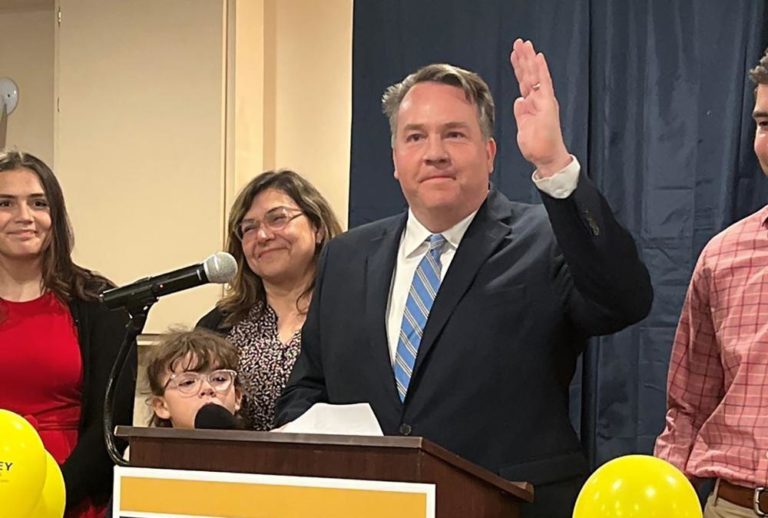
Rep. Alex Mooney Aims to Block Fed’s Digital Currency Scheme

(Jp Cortez, Sound Money Defense League) In recent days, sound money champion Congressman Alex Mooney, R-W.Va., introduced H.R. 3712, the Digital Dollar Pilot Prevention Act—legislation that would block the Fed from unilaterally pursuing any form of central bank digital currency (CBDC) scheme.

“Congress cannot give an inch when it comes to CBDCs. CBDCs would threaten the liberties of law-abiding Americans and are being used by authoritarian countries right now to crack down on dissent,” said Rep. Mooney.

H.R. 3712 is the latest in a growing backlash to central planners’ designs to further centralize government control of currencies, including creating a greater ability to track all financial transactions, disallowing certain types of purchases, and even outright “turning off” a targeted individual’s access to money.

Mooney’s bill defines “central bank digital currency” as “a form of digital money or monetary value, denominated in the national unit of account, that is a direct liability of the Federal Reserve.”

The bill continues, “Unless authorized by an Act of Congress enacted after the date of the enactment of this act, the Board of Governors of the Federal Reserve System and the Federal reserve banks may not establish, carry out, or approve a program intended to test the practicability of issuing a central bank digital currency, including by partnering or coordinating with a private sector entity to carry out such a program.”

H.R. 3712 has already attracted support, with more than a dozen original cosponsors and several endorsements from pro-liberty groups.

“Spending time and taxpayer resources on research or pilot programs would be an end-around on Congressional intent, authorization, or jurisdiction,” said David McIntosh, president of Club for Growth. “The Federal Reserve should be focused on fulfilling its formal mandate of taming Bidenflation, not mimicking China.”

Meanwhile, the opposition to central bank digital currencies is actually somewhat bipartisan.

Republican Presidential hopefuls Ron DeSantis and Vivek Ramaswamy, along with Democrat Robert F. Kennedy Jr., have spoken out about the dangers of a centralized government-run digital currency.

Sen. Ted Cruz, R-Texas, and Rep. Tom Emmer, R-Minn., have also come out against CBDCs, with the latter claiming that Democrats quietly support anti-CBDC legislation as well.

DeSantis recently signed legislation banning any involvement with a digital dollar as to the State of Florida, including any CBDC being viewed as money within the meaning of Florida’s Uniform Commercial Code. Several other states are now considering similar measures to pump the brakes on a potential FedCoin.

Under a CBDC scheme, a time-stamped ledger of every single transaction by every single individual and/or firm would create existential threats to privacy. Centralizing the financial history of every U.S. citizen poses other dangers as well.

It’s easy to imagine how this level of data collection could be weaponized against individuals who step outside of government-favored opinions and activities.

Donate to a cause the political class has bashed as dangerous? There goes access to your life savings. Buy or sell a product not approved by the powers that be? Your assets are frozen with the click of a mouse.

CBDCs enable what amounts to a government-granted allowance.

Mooney said, “CBDCs are not about innovation–they are about control.”

By contrast, returning to a monetary standard based in gold would help restore the freedom and privacy of the individual. And gold has historically been a stable and trusted store of wealth, largely outside the clutches of central planners.

Sound money is subject to—and determined by—market forces, serves as a natural check against unrestrained currency creation, and protects purchasing power over time.

To be sure, the Federal Reserve note system is broken. But doubling down on this failed experiment in fiat currency by adding more government tracking and control will bring about even greater destruction.

Gold-Backed Scholarship Offers Deserving Students Opportunity to Save on College

(Sound Money Defense League) A major U.S. precious-metals dealer is teaming up with the preeminent sound money policy group to help students pay for the ever-increasing expenses associated with higher education.

Money Metals Exchange has again joined the Sound Money Defense League in offering the Sound Money Scholarship — the only known gold-backed scholarship of the modern era.

Beginning in 2016, these organizations have set aside 100 ounces of physical gold (currently worth more than $190,000) to reward outstanding students who display a thorough understanding of economics, monetary policy, and sound money.

The Sound Money Scholarship is open to high school seniors, undergraduate, and graduate students with an interest in economics, specifically the free-market tradition.

Applicants are not required to be economics majors to be eligible to receive a scholarship, but they do need to be able to articulate cogent thoughts in response to an essay prompt on a monetary topic.

“While inflation and extravagant federal budget deficits increasingly place our society at risk, it has never been more important to encourage the next generation of leaders to consider how best we can get America back on the path to sound money,” said Stefan Gleason, president of Money Metals.

Money Metals and the Sound Money Defense League also announced this year’s blue-ribbon panel of judges:

Thomas Hogan, PhD, is a Senior Fellow at the American Institute for Economic Research. He was formerly the Chief Economist for the U.S. Senate Committee on Banking, Housing, & Urban Affairs.

Peter St. Onge, PhD, is an economist at the Heritage Foundation, a Fellow at the Mises Institute, and a former MBA professor in Taiwan. He makes daily videos about economics and Freedom.

Judge Andrew Napolitano is a Former Fox News Analyst, a best-selling author and commentator, and the host of “Judging Freedom” podcast.

Robert Wright, PhD, is a Senior Research Fellow at the American Institute for Economic Research. He is the co-author or co-editor of over two dozen major books, book series, and edited collections.

In prior years, the Sound Money Scholarship has received entries from students attending more than 150 different schools across 44 states, Puerto Rico, Washington D.C., six countries, and three continents.

The deadline to submit applications is October 31, 2023.

For more information, please visit moneymetals.com/scholarship or email [email protected].

Contact: Jp Cortez

Phone: 404-948-8935

E-mail: [email protected]

The Sound Money Defense League is a non-partisan public policy group working nationally to restore sound money at the state and federal level.

Money Metals Exchange is a national precious metals company recently named “Best in the USA” by an independent global ratings group and serves almost 500,000 investors in physical gold, silver, platinum, and palladium. The company also operates the largest precious metals depository in the western United States and a collateral lending group. For more information, please visit https://www.moneymetals.com/

CNN, MSBNC Censor Trump’s ‘Dangerous’ Post-Arraignment Speech

(Headline USA) CNN and MSNBC refused to air former President Donald Trump’s speech following his court hearing on Tuesday, claiming it could have been “potentially dangerous” for viewers.

Trump addressed his supporters after appearing in a Miami court to face a federal grand jury’s indictment. Trump slammed the “sham” indictment, which included 37 charges for alleged mishandling of classified information, as “election interference” by the Biden administration and “the most heinous abuse of power in the history of our country.”

He also blasted special counsel Jack Smith as a biased, “deranged lunatic,” and accused President Joe Biden of having his “top political opponent arrested and charged.”

While Trump delivered the speech, CNN’s Jake Tapper announced on air that the network would not be showing it live, claiming it could be “dangerous” for the network to do so.

“We’re not carrying his remarks live because, frankly, he says a lot of things that are not true and sometimes potentially dangerous,” Tapper said.

Likewise, MSNBC host Rachel Maddow announced Trump’s speech would not be made available to viewers.

“We are prepared for his pre-fundraiser remarks tonight to again, essentially, be a Trump campaign speech. Because of that, we do not intend to carry these remarks live,” she said.

“As we have said before in these circumstances, there is a cost to us as a news organization to knowingly broadcast untrue things. We are here to bring you the news. It hurts our ability to do that if we live broadcast what we fully expect in advance to be a litany of lies and false accusations, no matter who says them.”

Maddow admitted this had been a thought-through decision, but said MSNBC might change course if Trump said anything “newsworthy.”

CNN’s Oliver Darcy admitted in his morning newsletter that the network’s decision to censor Trump’s speech was only possible because of CEO Chris Licht’s recent ousting. He noted that, under Licht, CNN aired most of Trump’s remarks because Licht viewed them as an important part of the story.

FBI Official in Whitmer Kidnap Case, J6 and Mar-a-Lago Raid Surprisingly Defends Trump

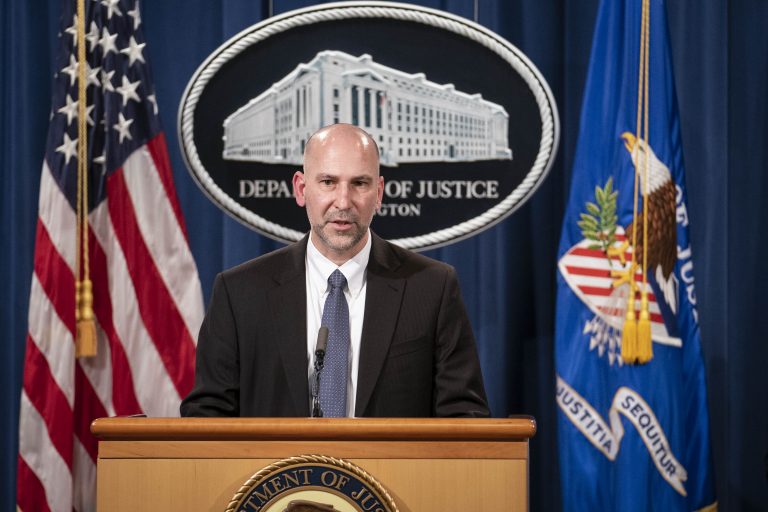
(Ken Silva, Headline USA) A recently retired senior FBI official has recently criticized how the DOJ handled the Donald Trump classified documents case.

The criticism is coming from a seemingly unlikely source: Steven D’Antuono.

As the former special agent in charge of the Detroit field office, D’Antuono oversaw the FBI’s controversial investigation into militias that were allegedly plotting to kidnap Michigan Gov. Gretchen Whitmer—a case that was later revealed to be heavily driven by undercover agents and informants.

After arrests were made in that case in October 2020, D’Antuono was promoted to lead the Washington DC field office, where he was in charge for the J6 Capitol Hill protests.

Then, before retiring last November, he helped spearhead the FBI’s investigation into Trump’s mishandling of classified documents—which ultimately led to the former President’s arrest this week.

On that last case, D’Antuono disagreed with the DOJ about its tactics, according to June 9 letter from House Judiciary Committee Chairman Jim Jordan, R-Ohio, to Attorney General Merrick Garland.

Jordan, who recently interviewed D’Antuono, said the retired FBI official had four main objections to the DOJ.

First, he said it was abnormal for the Washington DC field office to be raiding Trump’s Florida property instead of the Miami field office.

“Mr. D’Antuono stated that he had ‘absolutely no idea’ why this decision was made and questioned why the Miami Field Office was not taking the lead on this matter,” Jordan said in his letter.

Second, the DOJ did not assign a U.S. Attorney’s Office to the Trump case, according to D’Antuono.

“Mr. D’Antuono indicated that he ‘never got a good answer’ and was told that the National Security Division would be handling this matter—with Jay Bratt, who leads the Department’s counterintelligence division, as ‘the lead prosecutor on the case,’” Jordan said.

“Mr. Bratt is the same Department lawyer who allegedly improperly pressured a lawyer representing an employee of President Trump.”

Third, D’Antuono said the FBI failed to seek consent to search Trump’s property.

“Based upon his over-20-year tenure at the FBI, Mr. D’Antuono testified that he believed that the FBI, prior to resorting to a search warrant, should have sought consent to search the premises,” Jordan said. “He testified that this outcome would have been ‘the best thing for all parties’ involved—‘for the FBI, for former President Trump, and for the country.’”

Finally, D’Antuono said the FBI refused to wait for Trump’s attorney to be present before executing the search.

“Mr. D’Antuono testified that the FBI sought to exclude President Trump’s attorney from the search, a move with which Mr. D’Antuono disagreed,” Jordan said.

In light of D’Antuono’s criticisms, Jordan requested a slew of documents from Garland’s DOJ—including all records related to meetings between the FBI and DOJ about the Mar-a-Lago raid. Jordan asked for those records by the end of Friday.

Political commentators had varying reactions to D’Antuono’s disclosures. Some welcomed the apparent whistleblower with open arms, while others said his previous actions are unforgiveable.

“Why are Republicans trying to lionize this clown?” asked independent reporter Christina Urso, who is working on a documentary about the Whitmer case.

 Revolver News suggested that he may have a guilty conscious for his past transgressions.

“Why would such a hatchet man, so intimately involved with the most scandalous abuses of Trump and his followers by the FBI, all of a sudden come clean and publicly object to the Mar-a-Lago raid that was the basis for the expected indictments against Trump?” Revolver asked.

“One possibility is that D’Antuono simply was in over his head in the types of nefarious operations he became involved with, and simply doesn’t have the mettle to carry some of those dark secrets with him,” Revolver wrote.

“Perhaps he is rightfully worried that the DOJ and FBI’s complicity in the Jan. 6 Fedsurrection, as well as the Michigan Fednapping plot and now the efforts to indict Trump will catch up with him. Whatever the reasons, we predict that we haven’t heard the last of Mr. D’Antuono.”

Ken Silva is a staff writer at Headline USA. Follow him at twitter.com/jd_cashless.

U.S. to Provide Ukraine With Poisonous Depleted Uranium

(Ken Silva, Headline USA) The Wall Street Journal reported Tuesday that the U.S. will provide Ukrainians with depleted uranium ammunition—a move that Russia previously warned would be equivalent to using dirty nuclear bombs.

U.S. officials previously declined to say whether they were providing Ukraine with depleted uranium, which is toxic and has been linked to cancer and birth defects. But amidst Ukraine’s “counter-offensive” against Russia, the Pentagon is apparently pulling out all stops to regain territory.

Top Biden administration officials reportedly said that the goal is to enable Ukraine to make as much progress as possible on the battlefield, to put Kyiv in the strong negotiating position if peace talks are eventually held.

“The Pentagon has urged that the Abrams tanks the U.S. is providing Ukraine be armed with depleted-uranium rounds, which are regularly used by the U.S. Army and are highly effective against Russian tanks,” the WSJ reported. “Fired at a high rate of speed, the rounds are capable of penetrating the frontal armor of a Russian tank from a distance.”

In January, Russia warned that it will treat the use of uranium-coated weaponry as akin to deploying “dirty nuclear bombs against Russia.”

“We are aware that the Leopard 2 tank, as well as the Bradley and Marder infantry fighting vehicles, are armed with sub-caliber armor-piercing shells with uranium cores, the use of which leads to contamination of the area, as it happened in Yugoslavia and Iraq,” Konstantin Gavrilov, the head of the Russian delegation in Vienna, reportedly said.

“If Kyiv is supplied with such shells for NATO heavy military equipment, we will consider it to be the use of dirty nuclear bombs against Russia with all the ensuing consequences.”

Depleted uranium-coated ammo was first used in combat in Iraq, where an estimated 1 million rounds were shot during the first Gulf War. They were again used in the 2003 invasion of Iraq, as well as in 2015 in Syria.

The U.S. Department of Defense says depleted uranium can possibly have deleterious effects such as kidney damage, but claims that “no human cancer of any type has been seen as a result of exposure to either natural or depleted uranium.” However, the DOD’s claim has been strongly disputed in scientific studies and other by organizations—including the Italian government, which has found higher cancer rates among its troops deployed to the Balkans in the 1990s.

Historian Wendy Painting’s biography of Oklahoma City bomber and Gulf War veteran Timothy McVeigh chronicled the disastrous consequences depleted uranium had on McVeigh, his cohorts and the citizens caught up in that war.

“The Allies’ use of depleted uranium on tank armor and artillery shells and their bombing or Iraqi weapons facilities had released even more chemicals in the atmosphere. McVeigh’s division was among the thousands of U.S. troops exposed to [depleted uranium], whose effects, after one hour of exposure, scientists equated to fifty chest x-rays,” wrote Painting in her book, Aberration in the Heartland of the Real: The Secret Lives of Timothy McVeigh.

“A British Atomic Energy Authority report leaked to the Independent in November 1991, said that when coalitions troops existed the Gulf, they left enough [depleted uranium] behind to cause at least 500,000 cancer-related deaths.”

Painting also described the gruesome outcome of a U.S. solider who fell victim to a depleted uranium-covered bullet in a “friendly fire” incident. The solider was a gunner on a M1A1 Abrams tank hit with a sabot round, or ‘Silver Bullet,’ coated with depleted uranium.

“The sabot ignited a fire in Applegate’s tank that burned for two days. Army officials thought his body had been sucked through a three-inch vacuum created by the round,” Painting wrote.

“‘The coffin didn’t weigh anything. I wondered if Tony was really in there,’” the soldier’s widow said, according to Painting. “The only portion of his body in the casket turned out to be a charred hipbone.”

According to Painting, the Clinton administration publicly acknowledged in June 1993 that the depleted uranium used on U.S. tanks and artillery shells may have contributed to the growing number of Gulf War veterans displaying symptoms related to “Gulf War Syndrome”—a term used to describe the raft of negative health symptoms experienced by military veterans from both sides of that war.

Ken Silva is a staff writer at Headline USA. Follow him at twitter.com/jd_cashless.

Report Estimates 300M Jobs Will Be Taken by AI

(Molly Bruns, Headline USA) A recent report from Goldman Sachs estimated that 300 million jobs may be completely or partially taken over by artificial intelligence, as automated robots and other machines eliminate the need for human workers.

“If generative AI delivers on its promised capabilities, the labor market could face significant disruption,” the report read. “Using data on occupational tasks in both the US and Europe, we find that roughly two-thirds of current jobs are exposed to some degree of AI automation, and that generative AI could substitute up to one-fourth of current work.”

Several notable names in tech have come forward with warnings about the consequences of developing artificial intelligence, asserting that it may pose even greater threats to not just the labor market, but all of humanity.

Google CEO Eric Schmidt advised governments to step in while the technology was still in the early stages of development to keep it from falling into the wrong hands.

“Existential risk is defined as many, many, many, many people harmed or killed,” Schmidt said at The Wall Street Journal’s CEO Council Summit in London. “There are scenarios not today, but reasonably soon, where these systems will be able to find zero-day exploits in cyber issues, or discover new kinds of biology.”

Microsoft co-founder Bill Gates warned that AI could invade and conquer search engines such as Google if AI took on menial tasks such as shopping, searching and even reading.

“Whoever wins the personal agent, that’s the big thing, because you will never go to a search site again, you will never go to a productivity site, you’ll never go to Amazon again,” Gates said during a Goldman Sachs event on AI.

Both Republican and Democrat politicians called for increased regulations on artificial intelligence technology, and called on big tech executives to do their part in containing the threat as well.

“I think we do have a role to play. In the long run, I think what we could do is set up, you know, an agency here,” said Sen. Michael Bennet, D-Colo.

“They can negotiate on behalf of the American people, so we can actually have a negotiation about privacy. In the near term, I think it’s going to be important for tech to police itself.”

Rep. Massie Says He Won’t Support GOP Resolution to Fine Schiff $16M

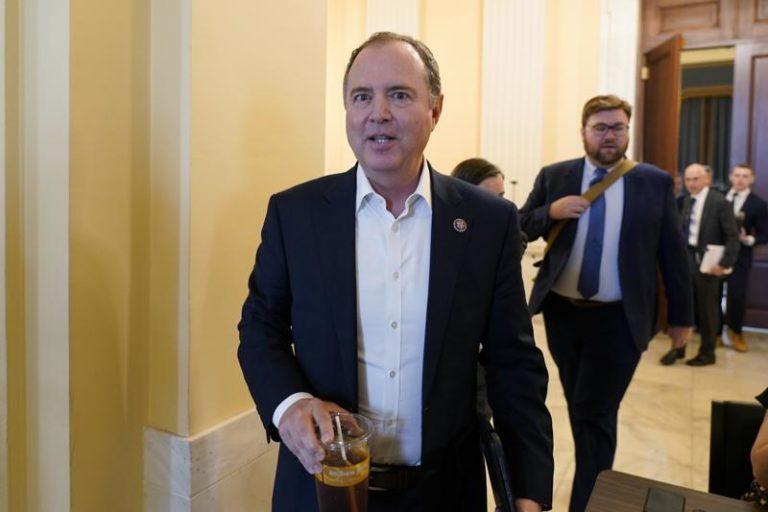
(Headline USA) Rep. Thomas Massie, R-Ky., said this week that he would not support a GOP resolution to fine Rep. Adam Schiff, D-Calif., $16 million for his role in the Russia-Gate hoax. 

The resolution, introduced by Rep. Anna Paulina Luna, R-Fla., would force Schiff to pay half of the estimated total cost of the Russian collusion investigation. Massie argued that such a resolution would violate the Constitution, no matter how egregiously Schiff behaved.

“Adam Schiff acted unethically but if a resolution to fine him $16 million comes to the floor I will vote to table it. (vote against it),” Massie tweeted on Wednesday. “In fact, I’m still litigating a federal lawsuit against Pelosi over a salary reduction she imposed on me for my refusal to wear a mask.”

The Constitution allows the House to make its own rules, “but we can’t violate other (later) provisions of the Constitution,” Massie continued. “A $16 million fine is a violation of the 27th and 8th Amendments.”

The 27th Amendment prohibits any law that increases or decreases the salary of members of Congress from taking effect until after the next election has occurred. The 8th Amendment prohibits cruel and unusual punishments, including “excessive fines.”

The House is set to hold a procedural vote on Wednesday to decide whether to move forward with the resolution. House Majority Leader Steve Scalise, R-La., told reporters that the GOP is “split” on it.

The resolution argues Schiff’s false claims of Russian collusion did irreparable damage to the country, including financial damage since tens of millions of taxpayer dollars went toward funding the subsequent investigations.

“The GOP Conference agrees that Adam Schiff has betrayed the trust of the American people, purposely abused positions of extreme authority, lied continuously, and as such, must be held to account,” Luna said. “Accordingly, the resolution requires Rep. Schiff to pay a $16 million dollar fine, half of the cost American taxpayers were forced to pay for the Russia hoax investigation.”

Vivek Ramaswamy Challenges GOP Candidates to Commit to Trump Pardon

(Headline USA) GOP presidential candidate Vivek Ramaswamy challenged his opponents this week to commit to pardoning former President Donald Trump if elected.

Ramaswamy said during a Monday press conference that he would pardon Trump of the 37 charges brought against him by a federal grand jury this weekend and slammed the case as a political hitjob.

“The use of police force by a sitting U.S. President against his chief political rival in the midst of a presidential election sets a dangerous precedent in our country,” Ramaswamy said in a press release.

“There are now two standards of justice depending on your political viewpoints. That’s the single greatest threat to our constitutional republic today.”

The candidate then sent a letter to every one of the campaigns challenging President Joe Biden for the White House and urged them to sign a pledge to pardon Trump.

“If President Trump is prosecuted in a manner that effectively prevents him from running, this will permanently damage public trust in our electoral process and our justice system,” the letter reads. “Whoever among us is elected, our job of reuniting the nation will become daunting – if not impossible.”

When asked last week whether he would pardon Trump if elected, former Vice President Mike Pence declined to answer the question, calling it a “hypothetical.”

“I don’t want to speak about hypotheticals,” Pence said during a CNN town hall. “I’m not sure I’m going to be elected president of the United States. I believe we have a fighting chance. I really believe we do.”

Earlier this week, Ramaswamy filed a Freedom of Information Act request seeking communications between the White House and Justice Department regarding Trump’s indictment.

“The existence, timing, and content of the indictment all necessitate both this request and, one would hope, a completely open and forthright response,” the FOIA request read.