Hawaii House to Reconsider Ending Sales Tax on Sound Money

(Money Metals New Service) Representatives in the Ahola State have reintroduced legislation to end the sales tax on purchases of gold and silver.

Introduced by Representatives Diamond Garcia, David Alcos, Lauren Matsumoto, Elijah Pierick, and Gene Ward, House Bill 1724 removes general excise tax on purchases of gold and silver coins and bullion in Hawaii. This measure was considered in 2021, and passed out of multiple House committees before running into a deadline at the end of the session.

Under current law, Hawaii citizens are discouraged from insuring their savings against the devaluation of the dollar because they are penalized with taxation for doing so. Passage of this measure would remove disincentives to holding gold and silver for this purpose. HB 1724 is important for a few reasons:

  • Levying taxes on precious metals is inappropriate.  Precious metals are inherently held for resale, making the application of taxes on the purchase of precious metals inappropriate.
  • Studies have shown that taxing precious metals is an inefficient form of revenue collection. The results of one study involving Michigan show that any tax proceeds a state collects on precious metals are likely surpassed by the state revenue lost from conventions, businesses, and economic activity that are driven out of the state.
  • Taxing gold and silver harms in-state businesses. It’s a competitive marketplace, so buyers will take their business online, thereby undermining Hawaii jobs. Levying taxes on precious metals harms in-state businesses.

In total, 43 states have reduced or eliminated taxes on the purchase of monetary metals.

  • Taxing precious metals is unfair to certain savers and investors. Gold and silver are held as forms of savings and investment. Hawaii does not tax the purchase of stocks, bonds, ETFs, currencies, and other financial instruments.
  • Taxing precious metals is harmful to citizens attempting to protect their assets. Purchasers of precious metals aren’t fat-cat investors. Most who buy precious metals do so in small increments as a way of saving money. Precious metals investors are purchasing precious metals as a way to preserve their wealth against the damages of inflation. Inflation harms the poorest among us, including pensioners, Hawaiians on fixed incomes, wage earners, savers, and more.

The national backlash against inflation caused by federal spending, debt, and money printing is growing. State legislators this year have already introduced an unprecedented number of bills to remove government impediments to buying, saving, and using gold and silver.

The Aloha State is currently ranked tied for 45th in the 2024 Sound Money Index. By passing HB 1724, Hawaii can vastly improve its Sound Money Index ranking, as well as become the 44th state to end sales taxes on precious metals.

More than a dozen states have introduced pro-sound money legislation in 2024 so far, including Alaska, Indiana, Iowa, Georgia, Kansas, Kentucky, Missouri, New Hampshire, New Jersey, Oklahoma, Vermont, West Virginia, and Wisconsin.
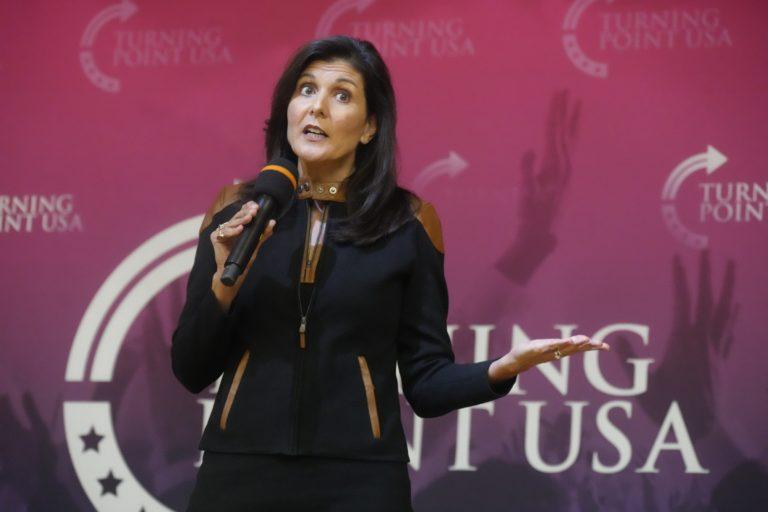
Cheating Nikki? New Witnesses Allege That Neocon Presidential Candidate Had Multiple Affairs

(Ken Silva, Headline USA) The Daily Mail published an exclusive story Friday, resurfacing allegations that GOP presidential candidate and virulent neocon Nikki Haley had multiple affairs before she became governor of South Carolina.

The allegations that Haley cheated on her husband were made by two of her alleged ex-lovers, Will Folks and Larry Marchant, who both outlined their allegations in affidavits in 2010. Haley’s alleged affairs were reported on at the time, but the Daily Mail’s Friday exclusive marked the first time the affidavits were published by a major media outlet.

According to Folks’s affidavit, he and Haley “engaged in an inappropriate physical relationship that included numerous instances of inappropriate sexual contact.”

“Representative Haley and I shared our first kiss while sitting in her parked car outside of MacDougal’s restaurant and bar in downtown Columbia, SC,” Folks wrote in the October 2010 affidavit.

“This kiss took place in early 2007 following an evening with friends at the nearby Liberty Taproom. After this first kiss, Rep. Haley drove us to the parking lot behind the neighborhood center at Emily Douglas Park where we parked for approximately forty-five minutes. There we slid back the seats of her Cadillac SUV so that Rep. Haley could climb on top of me,” he added.

Marchant’s affidavit said he had dinner, drinks and sex with Haley in her hotel room at a Salt Lake City conference in June 2008.

“After a night together of dinner and drinks with other participants of the conference, Rep. Haley and I returned to the hotel together. We went back to her room where we had sexual intercourse and I spent the remainder of the evening. I left her room at approximately 6:00 am,” Marchant said.

“I came forward publicly on this matter only after being contacted by the press and after hearing Rep. Haley claim that she had been One Hundred Percent faithful to her husband in response to the Folk’s allegations when I knew her statements were absolutely false.”

As for the Daily Mail’s new witnesses—identified by the outlet only as “multiple GOP insiders”—they said Haley’s affairs were an open secret.

One South Carolina GOP insider told the Daily Mail they knew about Haley’s alleged affair with Marchant at the time.

“She was in [Marchant’s] office all the time, she’d be there at 11 or midnight, the two of them would be drinking,” the former associate of Haley reportedly said.

Another witness, one of Haley’s former campaign staffers, told the Daily Mail he had no doubt about the nature of her relationship with Folks and Marchant.

“When she was having the affairs, she and her husband were having a lot of problems and were on the verge of divorce,” the ex-staffer reportedly said. “There’s no question she and Will were having an affair.”

The Daily Mail claimed to have four sources in total who corroborated allegations of Haley’s infidelity.

Haley has denied having the affairs in the past, but she reportedly didn’t respond to requests for comment before the Daily Mail published its scoop.

Ken Silva is a staff writer at Headline USA. Follow him at twitter.com/jd_cashless.

Which Countries Have the Most Gold?

(Money Metals News Service) Central banks around the world have aggressively added gold to their reserves over the last several years.

In 2022, central bank gold buying came in at 1,136 tons. It was the highest level of net purchases on record dating back to 1950, including since the suspension of dollar convertibility into gold in 1971. It was the 13th straight year of net central bank gold purchases.

Gold buying continued through 2023, and based on preliminary figures, the World Gold Council said it’s “all but certain that central banks are on course for another colossal year of buying,” after a record-setting 2022.

The strength of buying has, to some degree, exceeded our expectations. While we were confident that central banks would remain net purchasers in 2023, we thought it unlikely that it would match last year’s record buying volume. Should buying continue to be strong in Q4, the full-year total could get closer than we anticipated. Nevertheless, the historically high level of buying in Q4 2022 may be difficult to top.

According to the World Gold Council, two main drivers motivate central bank gold buying — its performance during times of crisis and its role as a long-term store of value.

It’s hardly surprising then that in a year scarred by geopolitical uncertainty and rampant inflation, central banks opted to continue adding gold to their coffers and at an accelerated pace.

National Bank of Poland Governor Adam Glapiński summed up the reason many central banks hold gold.

Gold is the ‘most reserve’ of reserve assets: it diversifies the geopolitical risk and is a kind of anchor of trust, especially in times of tension and crises.

He called holding gold a matter of financial security and stability.

Gold will retain its value even when someone cuts off the power to the global financial system, destroying traditional assets based on electronic accounting records. Of course, we do not assume that this will happen. But as the saying goes – forewarned is always insured. And the central bank is required to be prepared for even the most unfavorable circumstances. That is why we see a special place for gold in our foreign exchange management process.

Through November of 2023, the following central banks had added the most gold to their reserves, according to data from the World Gold Council.

  • China (78 tons)
  • Poland (56.6 tons)
  • Turkey (39.2 tons)
  • Uzbekistan (6.5 tons)
  • Czech Republic (5.5 tons)

The only significant seller was Kazakhstan.

Here are the top 20 gold gold-holding countries in the world based on the most recent data from the World Gold Council.

Two interesting things to note. First, Poland entered the top 20 for the first time. Second, nearly every country say gold increase as a percent of total reserves thanks to the price going up in nearly every global currency,

  1. The United States — 8,133.5 tons — 69.6% of total reserves
  2. Germany — 3,352.6 tons –68.7% of total reserves
  3. Italy — 2,451.8 tons — 65.5% of total reserves
  4. France — 2,436.9 tons — 67.1% of total reserves
  5. Russia — 2,332.7 tons — 25.7% of total reserves
  6. China — 2,226.4 tons — 4.3% of total reserves
  7. Switzerland — 1,040.0 tons — 8.4% of total reserves
  8. Japan — 846.0 tons — 4.4% of total reserves
  9. India — 803.6 tons — 8.6% of total reserves
  10. The Netherlands — 612.5 tons — 57.9% of total reserves
  11. Turkey — 522.5 tons — 30.8% of total reserves
  12. Taiwan — 422.4 tons — 4.7 % of total reserves
  13. Portugal — 382.6 tons — 72.9% of total reserves
  14. Uzbekistan — 362 tons — 72.1% of total reserves
  15. Poland – 358.7 tons – 12.6% of total reserves
  16. Saudi Arabia — 323.1 tons — 4.7% of total reserves
  17. The United Kingdom — 310.3 tons — 11.6% of total reserves
  18. Kazakhstan – 304.3 tons – 58.5% of total reserves
  19. Lebanon — 286.8 tons — 53.9 percent of total reserves
  20. Spain — 281.6 tons — 18.2% of total reserves

The International Monetary Fund (IMF) holds 2,814.0 tons of gold. It would rank third in the world if it were a country. The European Central Bank holds 506.5 tons of gold, ranking it 13th among countries.

Venezuela holds the largest percentage of its total reserves in gold at 84.5%.

March for Life Returns to D.C. w/ New Sense of Purpose Post-‘Dobbs’

(Headline USA) More than a year after a generational victory for their movement, proponents of preborn infants’ right to life are rallying in the nation’s capital on Friday with an eye on presidential elections that could be heavily influenced by abortion politics.

Thousands of rallygoers are expected on the National Mall for an hour of speeches and a march past the U.S. Capitol and the Supreme Court. But snow and frigid temperatures have been gripping the Washington metropolitan area, which could affect turnout for the march.

Friday’s March for Life is the second such event since the June 2022 Supreme Court ruling that ended the federal protection for abortion rights enshrined in Roe v. Wade.

Last year’s march was understandably triumphant, with organizers relishing a state-by-state fight in legislatures around the country.

That fight rages on, with mixed results. The ruling in Dobbs v. Jackson Women’s Health Organization reverted abortion lawmaking back to the states, and 14 states are now enforcing bans on abortion throughout pregnancy. Two more have such bans on hold because of court rulings. And another two have heartbeat laws that take effect when cardiac activity can be detected, about six weeks into pregnancy.

But abortion restrictions have also lost at the ballot box in Ohio, Kansas and Kentucky. And total bans have produced high-profile causes for abortion lovers to rally around.

With little else to run on, movement organizers now expect abortion to be a major Democratic rallying cry in President Joe Biden’s reelection campaign.

“The pro-abortion forces, that’s one of the major things they’re going to run on,” said Susan Swift, president of Pro-Life Legal and a veteran anti-abortion activist. “That’s one of the only things that seems to animate their base.”

Biden campaign officials openly state that they plan to make Biden synonymous with the fight to preserve abortion.

Vice President Kamala Harris has led the charge on the issue for the White House. She will hold the first event in Wisconsin on Monday, which would have been the 51st anniversary of Roe v. Wade, the lawsuit that led to the landmark 1973 U.S. Supreme Court decision establishing a constitutional right to abortion.

Adapted from reporting by the Associated Press

Fed. Agency that Oversees Election Security Loses 4th Leader Since 2019

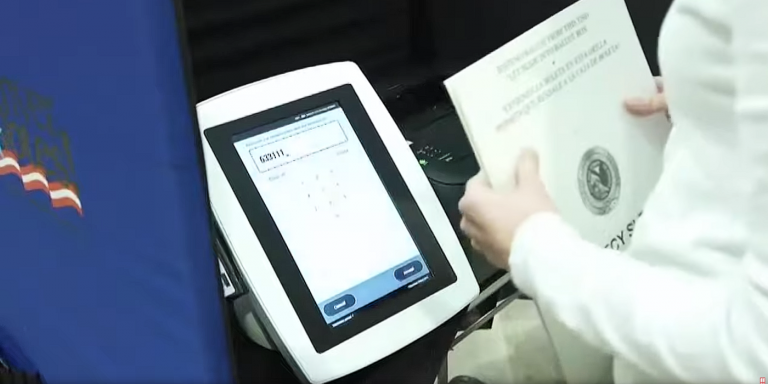
(Headline USA) The federal agency that develops standards for voting equipment and provides a wide range of assistance to state and local election officials is searching for its fourth leader since 2019.

The departure of Election Assistance Commission executive director Steven Frid, confirmed by the agency on Tuesday, comes just as voting begins in the U.S. presidential election.

Frid held the position for less than a year and was the agency’s third executive director in three years. The EAC’s chief information officer will serve as acting executive director while a search for a permanent replacement is underway, the EAC commissioners said in a statement.

“The EAC Commissioners and staff remain committed to carrying out the mission and vision of the agency and continuing to serve election officials and voters, especially as we move into a critical election year in 2024,” the agency said.

The executive director, along with the general counsel, are the agency’s top two staff positions and have experienced heavy turnover since 2019.

The officials who held those roles at the time were not rehired when their contracts expired, and the agency hired replacements in 2020. By February, both replacements had left for other agencies.

The positions were staffed on a temporary basis until Frid was appointed to replace the interim executive director a year ago. He had previously worked as security director of the Department of Education’s federal student aid office, according to the EAC. He also had worked for the U.S. Secret Service, the U.S. Coast Guard and the Office of Personnel Management.

The EAC now heads into a major election year without an executive director or general counsel. Frid could not immediately be reached for comment. His departure was first reported by the news outlet Votebeat.

The bipartisan commission was established by the Help America Vote Act of 2002 to modernize voting technology following the “hanging chad” debacle in Florida during the 2000 presidential election.

The agency’s mission includes assisting election officials nationwide and helping them meet requirements of the 2002 law. It also adopts voluntary voting system guidelines, helps certify voting systems and maintains national mail voter registration forms.

Since the 2016 election, the agency also oversees federal money set aside by Congress to bolster election security.

Adapted from reporting by the Associated Press

Ohio Tranny Candidate OK to Run, Despite Omitting ‘Deadname’ on Forms

(Headline USA) A transgender candidate vying for a seat in the Republican-majority Ohio House was cleared to run Thursday after the certification had been called into question for omitting the candidate’s given birth name on qualifying petitions, as required by a state elections law.

The Mercer County Board of Elections chose not take up a vote on disqualifying Arienne Childrey, a Democrat from Auglaize County, for not disclosing Childrey’s prior masculine name on petition paperwork.

Childrey, who legally changed names in 2020, purportedly would have provided the so-called deadname if the first-time candidate and founder of a transgender activist group had known about the law.

“I would have filled out whatever was necessary, because at the end of the day, while it would have been a hit to my pride, there is something much more important than my pride, and that’s fighting for this community,” Childrey said.

The Ohio law, unfamiliar even to many state elections officials, mandates that candidates disclose any name changes in the past five years on their petition paperwork, with exemptions for changes caused by marriage. But the law isn’t listed in the 33-page candidate requirement guide and there is no space on the petition paperwork to list any former names.

All four transgender candidates for the Legislature this year have run into issues with the name-change law, which has been in place in some form for decades but is rarely used—typically in the context of candidates wishing to use a nickname.

Despite the claims of ignorance about the esoteric law, the controversy comes as transgender and LGBT activists, in some cases well funded by leftist billionaires and foundations seeking to meddle in local politics, are attempting to test the boundaries of state and local governments in red states throughout the country.

Many have pushed back by attempting to close loopholes in areas such as access to school locker rooms and bathrooms for members of the opposite sex. A Virginia teacher won a major free-speech victory recently in the state supreme court after the school district had sought to mandate that he call a transgender student by the student’s preferred pronouns instead of the biological ones.

Earlier this month, Ohio’s Mercer County Board of Elections received a protest to Childrey’s ballot certification from county Republican Party Chairman Robert J. Hibner. Because the ballot is for the upcoming March 19 primary, the board ruled Hibner’s protest invalid, as Hibner is from the opposing political party.

The board did not immediately respond to questions regarding the elections law itself and what role it played in Thursday’s decision to keep Childrey on the ballot.

If Childrey were to win the Democratic primary, it would likely be a matchup in November’s general election against incumbent Rep. Angie King, a Republican lawmaker who has voted for bans on transgender surgery for minors.

Childrey told the Associated Press Thursday that it’s “nice to take a deep breath” while preparing to plunge into campaigning.

“Hopefully people will see that this is a marginalized community in Ohio, and yet we’re still standing,” Childrey said.

Last week, Republican Secretary of State Frank LaRose said his office is open to putting the rule on the candidate guide but not to tweaking the law and it’s up to candidates to ensure they comply with Ohio election law.

But RINO Gov. Mike DeWine said Tuesday that the law should be amended and county boards should stop disqualifying transgender candidates on these grounds. DeWine did not say how it might be amended.

“We shouldn’t be denying ballot access for that reason,” the governor told Cleveland.com’s editorial board. “It certainly should be fixed.”

DeWine recently vetoed a proposed ban on transgender surgery for minors, but the state House overrode that veto. The Senate is expected to do the same next week.

Childrey is one of four transgender individuals campaigning for the state Legislature.

Vanessa Joy, a real estate photographer from Stark County running for the Ohio House who legally changed names in 2022, was disqualified earlier this month for omitting a deadname from petition paperwork.

Joy appealed the disqualification but was denied. Joy, who said the current law is a barrier to transgender individuals who want to seek office but do not want to disclose their deadname, is now working with legal counsel and the Ohio Democratic Party to try to change the law.

Ari Faber, a trans candidate for the Ohio state Senate, was cleared to run but must use a feminine “deadname” on all paperwork since it has not been legally changed.

Bobbie Arnold, a contractor from West Alexandria running as a Democrat for the Ohio House, had a possible disqualification dismissed Tuesday by the Montgomery County Board of Elections and will be on the ballot in the March primary.

However, under the state law, if Arnold or Childrey were to win their elections, they could still be removed from office for not disclosing their deadname. Both are consulting with legal counsel about that part of the law.

Arnold hopes that between Joy’s work to change the law and DeWine’s call for candidates to stay on the ballot, that won’t be an issue come November.

For now, like Childrey, Arnold is excited to start campaigning.

“It’s important for the overall well-being of our society that every voice has an opportunity to be heard,” said Arnold, who went to Childrey’s hearing to show support. “And that’s something that we’re not experiencing right now in Ohio.”

In light of the outcomes of Childrey and Arnold’s cases, Joy appealed again Thursday to the Stark County Board of Elections.

Adapted from reporting by the Associated Press

Hunter Biden Agrees to Private Deposition after House GOP Asks Nicely

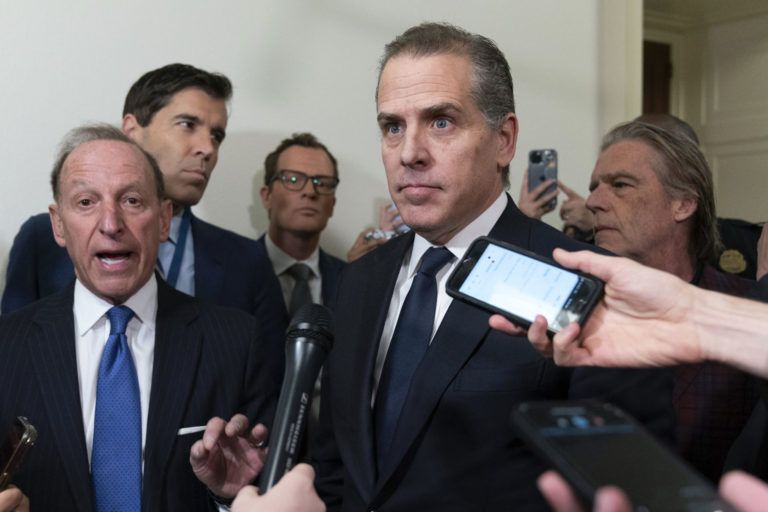
(Headline USA) Hunter Biden has agreed to appear before House Republicans for a private deposition next month, ending months of defiance from the president’s son, who had insisted on testifying publicly.

The House Oversight Committee announced Thursday that the two parties have agreed for Hunter Biden to sit for a deposition on Feb. 28.

“The president’s son is a key witness in this investigation and he’s gonna be able to come in now and sit down and answer questions in a substantive, orderly manner,” Rep. James Comer, chair of the Oversight Committee, told reporters. Comer added that Hunter Biden will be able to testify publicly sometime after his deposition.

News of the agreement was confirmed by Hunter Biden’s legal team Thursday night. Republicans had been set to advance a contempt of Congress resolution against him to the House floor this week but called it off Tuesday to give the attorneys additional time to negotiate.

As legal scholar Jonathan Turley speculated in a blog post Thursday, the upper hand likely goes once again to President Joe Biden’s degenerate son, who managed to secure a concession by averting the contempt charge after twice openly making a mockery of the proceedings: once by defying a subpoena, and later by disrupting the hearing to present himself at an unwelcome moment.

Forcing the legislative body to act on his terms, Turley noted, was evocative of the 53-year-old recovering drug-addict’s previous demands on a journalist, who was rebuffed when asking him a challenging question by his insistence that she “say it nicer to me.”

While it is likely that Hunter’s testimony will amount to little more than him pleading the Fifth Amendment against self-incrimination, Comer is hoping to continue building his methodical case for impeachment, with the clock ticking ahead of the November election, and given 81-year-old President Joe Biden’s advanced age.

If they had voted on the contempt resolution, the referral would have been sent to the Justice Department where the U.S. attorney for the District of Columbia would have had to decide whether to prosecute Hunter Biden.

Given the Justice Department’s long history of running interference for the Biden family—and Hunter in particular—it is highly unlikely that it would have done so under the circumstances, creating something of a minor constitutional crisis with the erratic and unstable Hunter at its center.

“There is no fairness or decency in what these Republicans are doing,” the president’s son said in remarks outside the Capitol in December. “They have lied over and over about every aspect of my personal and professional life—so much so that their lies have become the false facts believed by too many people.”

But Hunter Biden and his legal team appeared to shift gears late last week when they sent a letter to Comer and Rep. Jim Jordan, the chair of the House Judiciary Committee, indicating a willingness for the first time to come in for a private deposition.

Abbe Lowell, Hunter Biden’s attorney, wrote in a letter Friday that his client’s cooperation is dependent on the committee issuing a new subpoena, which they will now do given the updated deposition date. They had argued that the two subpoenas sent in last year were not legitimate because they were issued before the full House authorized the impeachment inquiry into President Joe Biden.

The impeachment inquiry into the president, which began in September, has focused heavily on Hunter Biden and his international business affairs, questioning whether the president profited from that work.

Meanwhile, Hunter Biden is currently facing criminal charges in two states from the special counsel investigation. He’s charged with firearm counts in Delaware, alleging he broke laws against drug users having guns in 2018, a period when he has acknowledged struggling with addiction. Special counsel David Weiss filed additional charges last month, alleging he failed to pay about $1.4 million in taxes over three years.

He has pleaded not guilty in both cases.

Adapted from reporting by the Associated Press

DOJ Seeks Prison Time for 74-Year-Old Trump White House Official Peter Navarro

(Ken Silva, Headline USA) The Justice Department is seeking to imprison former Trump White House official Peter Navarro for refusing to comply with a congressional subpoena from the politically driven Jan. 6 Commission.

Navarro, who is 74 years old, was convicted of two misdemeanor contempt of Congress charges last September and is set to be sentenced next Thursday.

His case, along with that of former White House adviser Steve Bannon’s, marked the first time in roughly four decades that any such cases had been prosecuted by the DOJ, despite recent examples including Lois Lerner, Eric Holder and Hillary Clinton, all of whom brazenly disregarded congressional subpoenas during the Obama administration. Bannon was convicted of two counts and was sentenced to four months behind bars, though he has been free pending appeal.

In a sentencing memorandum filed Thursday, the DOJ sought a prison sentence as well as a $500,000 fine for Navarro. In the memo, the DOJ said Navarro “thumbed his nose at Congressional authority.”

“The Committee sought documents and testimony from the Defendant pertinent to a matter of national importance—the circumstances that led to the violent attack on the Capitol on January 6, 2021, and the disruption of the peaceful transfer of power,” prosecutors argued.

“But the Defendant, like the rioters at the Capitol, put politics, not country, first, and stonewalled Congress’s investigation. The Defendant chose allegiance to former President Donald Trump over the rule of law even after being apprised that executive privilege would not excuse his default.”

Navarro filed his own sentencing memorandum Thursday, too, asking a judge for six months probation.

In that memo, Navarro said he didn’t flagrantly violate the law, but instead invoked executive privilege as his reason for not complying with the subpoena. Navarro noted that the courts are still reviewing the legal question of whether his actions were legal.

“Yes, the subpoena which initiated this prosecution arose following the events of January 6, 2021. But, contrary to the government’s misleading opening statement, his trial was not about January 6, 2021, and his sentence should not reflect any relationship with the events of that day. Rather, as this Court recognized, Dr. Navarro’s conviction reflects the application of antiquated, questionable precedent in this District,” he said.

“History is replete those to have refused to comply with congressional subpoenas, and Dr. Navarro’s sentence should not be disproportionate from those similarly situated individuals. Moreover, and considering the numerous novel issues and open questions with which this Court was confronted, Dr. Navarro should be granted release pending appeal while he seeks appellate review.”

Navarro added that he suffers from debilitating health issues that cannot be treated while incarcerated.

“As stated herein, Dr. Navarro’s actions do not stem from a disrespect for the law, nor do they stem from any belief that he is above the law,” he added.

“Rather, Dr. Navarro acted because he reasonably believed he was duty-bound to assert executive privilege on former President Trump’s behalf.”

Ken Silva is a staff writer at Headline USA. Follow him at twitter.com/jd_cashless.

NJ Governor Vetoes Popular Gold and Silver Sales Tax Exemption Bill

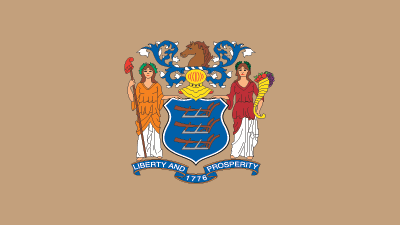
(Money Metals News Service) – New Jersey Governor Phil Murphy has unilaterally killed a bill that would have exempted the sales tax on purchases of gold and silver.

A5294/S1825 had passed out of both committees and both chambers of the New Jersey legislature without a single “no” vote. This popular bill had more than a dozen cosponsors and had unanimous approval in each legislative chamber. Despite this, Gov. Murphy chose not to enact the bill into law.

Alabama, Tennessee, Virginia, Mississippi, and Ohio have all recently enacted legislation to exempt gold and silver from state sales tax, or extend their existing exemption on the metals. In total, 43 states have ended sales tax on gold and silver – including all three of New Jersey’s neighboring states.

New legislation to end this tax has already been reintroduced: A2812/S721.

Discriminatory tax policies that discourage precious metals ownership reduce the likelihood that citizens will take steps to insulate themselves from the inflation and financial turmoil that flows from the Federal Reserve System.

Because of dramatically rising federal debt along with the excessive issuance of Federal Reserve note dollars (or their electronic equivalent), savers have been losing significant purchasing power as inflation across America. However, holding some savings in gold and silver – the only money actually mentioned in the United States Constitution – is one way to protect one’s purchasing power.

Ending the sales tax on precious metals purchases is good policy for several reasons:

  • Levying sales taxes on precious metals makes no sense because they held for resale. Sales taxes are typically levied on final consumer goods. Computers, shirts, and shoes carry sales taxes because the consumer is “consuming” the good. Precious metals are inherently held for resale, not “consumption,” making the imposition of sales taxes on precious metals illogical from the start.
  • Studies have shown that taxing precious metals is an inefficient form of revenue collection. The results of a Michigan study, for example, demonstrated that any sales tax proceeds a state collects on precious metals may be surpassed by the state revenue lost from conventions, businesses, and economic activity that are driven out of the state.

The harm is exacerbated when you consider that ALL of New Jersey’s neighbors (Delaware, New York, Pennsylvania) have already stopped taxing gold and silver. Mississippi ended this practice in 2023. Tennessee ended this tax in 2022, and Arkansas eliminated this tax in their state in 2021.

  • Taxing gold and silver harms in-state businesses. It’s a competitive marketplace, so buyers will take their business to neighboring states (which have all eliminated or reduced sales tax on precious metals), thereby undermining New Jersey jobs. Levying sales tax on precious metals harms in-state businesses who will lose business to out-of-state precious metals dealers. Investors can easily avoid paying $129.19 in sales taxes, for example, on a $1,950 purchase of a one-ounce gold bar.
  • Gold and silver are the only money mentioned in the U.S. Constitution. Article 1, Section 10 states that “no state shall make any Thing but Gold and Silver a tender in payment of debts.” Exchange on form of U.S. money for another should not be taxed.
  • Other types of savings or investment do not carry a sales tax. Gold and silver are held as forms of savings and investment. New Jersey does not assess a sales tax on the purchase of stocks, bonds, ETFs, real estate, currencies, and other financial instruments.
  • Taxing precious metals is harmful to smalltime savers. Purchasers of precious metals aren’t usually fat-cat investors. Most who buy precious metals do so in small increments as a way of saving money. Precious metals investors are purchasing precious metals as a way to preserve their wealth against the damages of inflation. Inflation harms the poorest among us, including pensioners, New Jerseyans on fixed incomes, wage earners, savers, and more.

More than a dozen states have introduced pro-sound money legislation in 2024 so far, including Alaska, Indiana, Iowa, Georgia, Kansas, Kentucky, Missouri, New Hampshire, New Jersey, Oklahoma, Vermont, West Virginia, and Wisconsin.

Ex-DeSantis Spokesman Now Supports Trump After Iowa

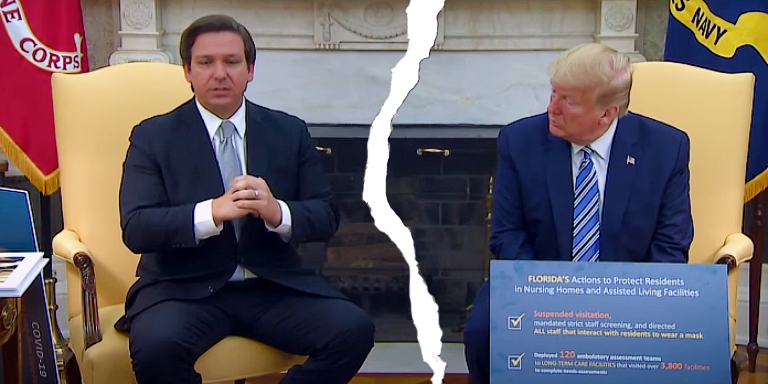
(Dmytro “Henry” Aleksandrov, Headline USA) Steve Cortes, the former national spokesman for the pro-Ron DeSantis super PAC “Never Back Down,” endorsed Donald Trump for president in his op-ed titled “Only Trump Can Save America.”

The reason why Cortes changed his mind was because of the Iowa caucuses, which resulted in Trump’s incredibly easy victory.

“I believed that Republican voters were ready for a new post-Trump chapter of the America First movement. I now believe I was wrong. Those of us who backed Ron DeSantis – or the other Republican candidates – should read the room. Former President Trump winnowed the field effortlessly and then crushed the remaining three candidates in Iowa. He leads in the polls everywhere else,” he wrote.

Cortes then added that conservatives should unite and vote for Trump to defeat the leftists.

“It is time to coalesce and unite behind the clear preference of the GOP grassroots, Donald John Trump,” he wrote.

Cortes then wrote that conservatives need to save the country, even if that means they won’t be able to vote for the candidate they initially planned to vote for.

“We do not have the luxury of further internal strife and instead must gird for an epic battle this autumn against our opponents who are inflicting daily damage upon America. Any further time, capital and effort spent attacking the frontrunner, especially with Democratic Party-like talking points, only dilutes the power of our cause as we head toward November,” he wrote.

Later on in his op-ed, Cortes emphasized once again that conservatives who voted for DeSantis or other candidates should vote for Trump, citing his clear lead in the polls and Trump’s ability to effortlessly narrow down the field of contenders.

“It is time to unify behind former President Trump as he leads the battle against the ruling class and the oligarchs intent on destroying the American way of life. I implore all patriotic populists to join as I pledge to do all I can to work for Trump’s cause, just as I proudly did in 2016 and 2020,” he wrote.