Fed Chair Powell Channels Ben Bernanke, Assures Us Everything Is Fine!

(Mike Maharrey, Money Metals News Service) I have written that the commercial real estate market could be the next thing to pop in this bubble economy and that could lead to the next major financial crisis.

But you don’t need to worry. Federal Reserve Chairman Jerome Powell assured us that everything is fine.

During a 60 Minutes interview aired Sunday, Feb. 4, Powell conceded some smaller and regional banks with “concentrated exposures” in commercial real estate “are challenged.”  But he said he wasn’t concerned about these problems spreading into the broader banking system as the subprime crisis did in 2008.

“I don’t think there’s much risk of a repeat of 2008,” he said, adding, “I do think it’s a manageable problem.”

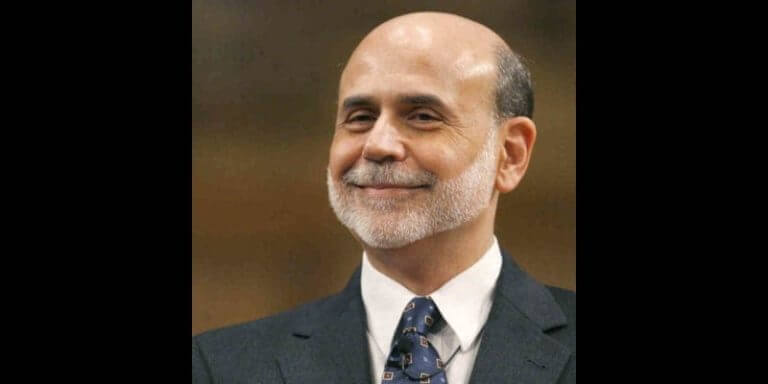
Powell sounds a lot like former Federal Reserve Chairman Ben Bernanke who insisted in 2007 that problems in the subprime mortgage sector were “contained.”

On March 28, 2007, Bernanke told Congress everything was fine. 

The ongoing tightening of lending standards, although an appropriate market response, will reduce somewhat the effective demand for housing, and foreclosed properties will add to the inventories of unsold homes,” Bernanke said. “At this juncture, however, the impact on the broader economy and financial markets of the problems in the subprime market seems likely to be contained.

He repeated this mantra on May 17 during a financial conference.

We believe the effect of the troubles in the subprime sector on the broader housing market will be limited and we do not expect significant spillovers from the subprime market to the rest of the economy or to the financial system.

Bernanke’s remarks were reflected in the August 2007 FOMC statement.

Financial markets have been volatile in recent weeks, credit conditions have become tighter for some households and businesses, and the housing correction is ongoing. Nevertheless, the economy seems likely to continue to expand at a moderate pace over the coming quarters, supported by solid growth in employment and incomes and a robust global economy.

Sounds a lot like Powell and Company today, doesn’t it? Of course, we all know what happened in the year after Bernanke’s assurances.

I sure do hope Powell’s promises aren’t equally empty.

Biden Gov’t Agency Financing AI-Powered Censorship Complex, Committee Finds

(Ken Silva, Headline USA) Instead of using agencies such as the FBI to pressure social media companies to censor politically inconvenient content, the Biden administration is financing the creation of artificial intelligence programs that would automate such censorship efforts, according to a new report from the House Weaponization Subcommittee.

Citing non-public documents and other records, the subcommittee’s Tuesday report found that the National Science Foundation launched a $21 million initiative to create censorship programs powered by artificial intelligence.

According to the report, the NSF launched an initiative in March 2021 called “Track F: Trust & Authenticity in Communication Systems”—a bureaucratic term that amounts to censorship.

“The euphemistic ‘trust and authenticity in communication systems,’ in fact, means combatting so-called ‘misinformation,’ i.e., censorship. In an early draft solicitation, NSF indicated that Track F projects will ‘address issues of trust and authenticity in communication systems, including predicting, preventing, detecting, correcting, and mitigating the spread of inaccurate information that harms people and society,’” the report said.

“As NSF’s Track F program manager, Michael Pozmantier, explained more plainly in a June 2021 email, Track F is the NSF ‘Accelerator track focused on combatting mis/disinformation.’”

In September 2021, the NSF publicly awarded 12 Track F teams $750,000 apiece (a total of $9 million) to develop their project ideas.

According to the report, one research team, led by researchers at the University of Michigan, used the $750,000 it received from NSF to examine how AI could help Big Tech handle and outsource the “responsibility of censorship” on social media.

The subcommittee said that the University of Michigan intended to use the federal funding to develop its tool “WiseDex,” which could use AI technology to assess the veracity of content on social media and assist large social media platforms with what content should be removed or otherwise censored.

Another recipient, researchers at the University of Wisconsin-Madison, received $5.75 million to develop a tool to “empower efforts by journalists, developers, and citizens to fact-check” “delegitimizing information” about “election integrity and vaccine efficacy” on social media, the report said.

“Like Michigan’s WiseDex, the University of Wisconsin-Madison’s CourseCorrect project harnessed AI and machine learning techniques to address misinformation on social media,” the report said.

“Unlike WiseDex, the University of Wisconsin-Madison researchers made clear that their project was specifically focused on ‘address[ing] two democratic and public health crises facing the U.S.: skepticism regarding the integrity of U.S. elections and hesitancy related to COVID-19 vaccines.’”

Massachusetts Institute of Technology also received $750,000 to develop “effective interventions” to educate Americans—specifically, those that the MIT researchers alleged “may be more vulnerable to misinformation campaigns,” the report added.

“In particular, the MIT team believed that conservatives, minorities, and veterans were uniquely incapable of assessing the veracity of content online,” the report said.

The report gave several other examples of NSF-funded censorship initiatives, and the subcommittee had a hearing about the matter Tuesday.

The subcommittee’s work follows a similar report by Headline USA on the issue of government-funded censorship. In December, this publication reported that the Department of Homeland Security is funding a group that uses targeted advertising to drive internet traffic towards DHS-approved social media influencers.

Ken Silva is a staff writer at Headline USA. Follow him at twitter.com/jd_cashless.

What the Postponed Fed Pivot Means for Gold…

(Brien Lundin, Money Metals News Service) As we predicted, Jerome Powell threw a bucket of cold water on gold and the rest of the markets, and we’re now experiencing sell-offs as expectations reset.

Gold – along with just about every other investment sector – continues to sell off in the wake of last week’s Fed meeting.

It wasn’t so bad after the Fed’s policy statement was released, nor during much of Chairman Powell’s subsequent press conference.

But then came a question as to the timing of the first rate cut, to which Powell replied:

“Based on the meeting today, I would tell you that I don’t think it’s likely that the committee will reach a level of confidence by the time of the March meeting to identify March as the time to do that (a rate cut).”

And so the sell-off began.

Then, in an interview on “60 Minutes” Sunday evening, he repeated that statement even more forcefully:

“We’ve said that we want to be more confident that inflation is moving down to (the Fed’s target rate of) 2%. I think it’s not likely that this committee will reach that level of confidence in time for the March meeting….”

And so the sell-off continued on Monday.

If you’ve been reading these newsletters, this isn’t coming as a surprise to you. Before the Fed meeting concluded, I wrote that…

“…Jerome Powell is probably going to push back on the idea that the first rate cut will come as soon as March, and this will be bearish for gold in the near term.”

Bearish it has been, but perhaps not as bad as one might have expected, given the forcefulness of Powell’s statements. Gold’s lost about $30 since the Fed meeting, and even posted a nice gain last Thursday.

It could’ve been worse, considering how obsessed investors have been over the March meeting.

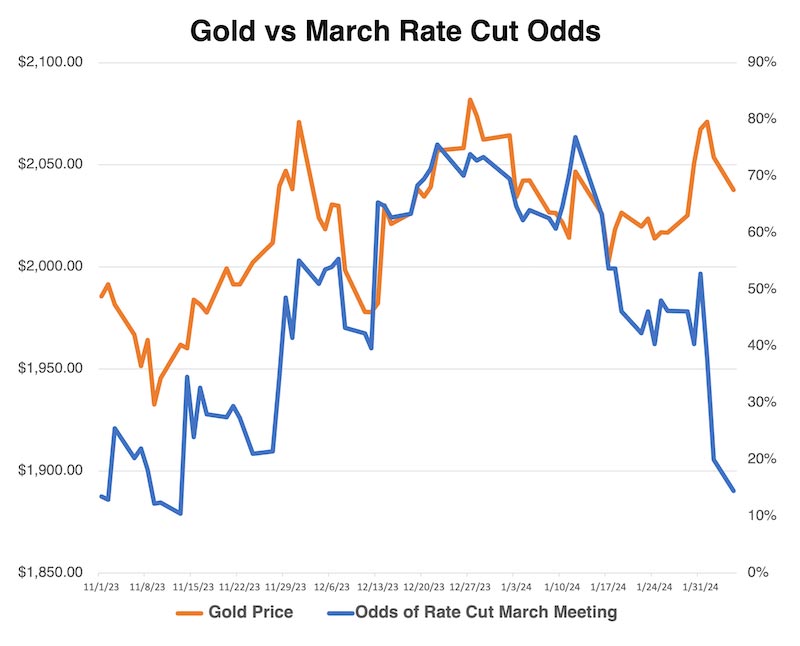
Gold vs March Rate Cut Odds (Chart)

As you can see, over the last few months gold has risen and fallen along with investor expectations that the Fed pivot would begin in March.

The correlation weakened a little last week as U.S. retaliatory strikes on Iranian-sponsored militia groups sparked some gold-buying, but the connection remains the same.

And again, the reaction in gold could have been much worse, as fed funds futures odds for a March cut have plummeted from 53% just before the Fed policy statement last week to only 14.5% as I write.

A Meaningless Exercise

All of this short-term hand wringing and insane focus on every word uttered by any Fed official is ridiculous, to be sure.

I only report on it because gold is, unfortunately, caught up in all of it.

And not in a good way: The obsession with Fed policy has resulted in the weird calculation of current markets that high inflation is actually bearish for gold. It is so, the logic goes, because hotter inflation numbers will lead the Fed toward more-hawkish stances.

Never mind the relationship that has held throughout thousands of years of human history, that gold protects against the ravages of monetary inflation.

Asset values today aren’t established by thoughtful, longer-term investment decisions, but rather by bets on what’s going to move the next day, hour or even minute.

In this bizarro world where every market is dependent upon the flow of liquidity from the Fed like suckling piglets at their mother’s teats, a tilt in the direction of tighter monetary policy means everything gets sold, and vice versa.

No matter whether the policy tilt, tighter or looser, will actually accomplish anything. Because a shift in FOMC mindset will move all markets, the greatest gains go to the quickest actors.

It’s the greatest fool phenomenon in action, of course, but we don’t have to acquiesce and join the parade of fools. The record shows that things even out over the longer term.

Gold, for example, was derided for its lackluster performance during the inflationary spike of last year. What critics failed to understand, however, was that gold soared during the tsunami of monetary and fiscal accommodation that followed the emergence of the Covid pandemic.

Being perhaps the most sensitive of predictive markets, gold anticipated the inflationary wave that was to come.

As I’ve noted, the fact that gold managed to gain over $300 an ounce during what was arguably the harshest rate hiking cycle in the Fed’s history argues for an exceptional performance once the cycle turns toward rate cutting.

Whether that cycle begins in March or May will matter little in the long run. We know it’s coming… and we know we’ll want to be in gold, silver and mining stocks once it begins.

S.F. Mayor Pivots Rightward, Gets Tough on Drugs as Re-Election Looms

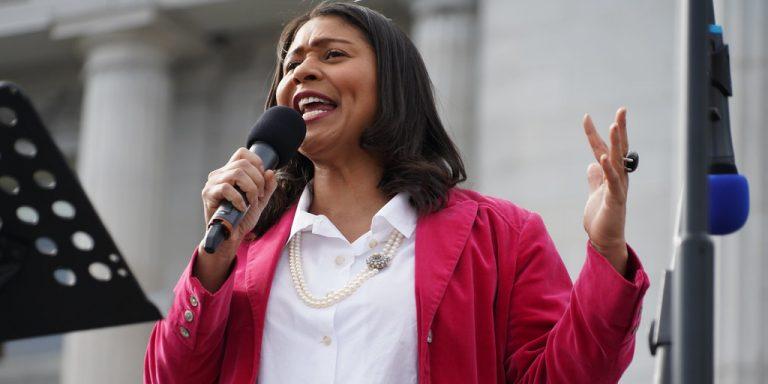
(Headline USA) After allowing soft-on-crime policies to bring one of America’s most beautiful cities to brink of ruin, San Francisco Mayor London Breed, like several other mayors in blue-run cities, has begun embracing a more conservative style of governance.

And while the lack of strong primary competition might otherwise compel the city’s mostly Democrat population to stay home on Super Tuesday, a pair of controversial ballot initiatives could nonetheless drive them to the polls.

Breed, who faces re-election herself in November, is currently pushing two public-safety proposals on the March 5 ballot, including one that would require single adults on welfare be screened and treated for illegal drug addiction or else lose cash assistance.

She also supports a ballot measure that would grant police more crime-fighting powers, such as the use of drones and surveillance cameras.

San Francisco is in a struggle to redefine itself after the pandemic left it in economic tatters and a subsequent shift toward embracing woke policies on criminal justice highlighted its longstanding problems with homelessness, drugs and violent crime.

Opponents say both ballot measures are wildly out of step with San Francisco’s support for privacy and civil liberties, and will only hurt the marginalized communities the city prides itself on helping.

But Breed, the first black woman to lead San Francisco, said at a January campaign stop that residents from poorer, black and immigrant neighborhoods are pleading for more police.

Recovery advocates are likewise demanding change as more than 800 people died of accidental overdose last year—a record fueled by the abundance of cheap and potent fentanyl.

“They said San Francisco makes it too easy for people to access and to use drugs on the streets of the city and we need to do something a lot more aggressive,” Breed said at Footprint, an athletic apparel and shoe store that has been repeatedly burglarized.

While Breed’s name isn’t on the presidential primary ballots going out now—San Francisco uses a method where residents rank mayoral candidates by preference a single time in November—the two measures she’s pushing are.

They serve as an opening salvo for her reelection campaign as she faces off against moderates who say her approach to the city’s problems has been weak.

Breed claimed that the once skyrocketing rates of “smash-and-grab” retail theft and carjackings have declined recently, thanks in large part to strategic operations by city police.

Similarly, police have stepped up enforcement of drug laws, including by issuing citations to people using drugs in public as a way to disrupt the behavior and an opportunity to persuade the person cited to seek help.

But those efforts still have a long way to go to restore the City by the Bay to its former glory, and rehabilitate the public perception of it as a dangerous cesspool of criminality.

If approved by voters, Proposition F would offer another way to compel treatment, by allowing the city to screen single adults on local welfare for substance abuse.

People found to be abusing illegal drugs would be required to enroll in treatment if they want to receive cash assistance from the city, which maxes out at just over $700 a month.

A crackdown on drugs is reminiscent of the war on drugs that former California Gov. Ronald Reagan turned into one of his signature policies as president during the 1980s.

But the city which had lured legions of hippies to the Haight district during its 1967 “summer of love” just a little more than a decade earlier reviled the Reagan-era crackdown, and the backlash might have helped fuel its transformation into a city notorious for its progressive politics.

While San Francisco has a relatively small black population per capita, with many of its black residents confined to specific regions such as the Tenderloin and Dogpatch, pro-drug activists claimed that minorities would be disproportionately impacted by the sudden enforcement of drug laws.

“There are more ethical ways to address the issue aside from punitive measures, and that’s the proper way to take care of a community, to show true support,” said Chris Ballard, co-executive director of Coleman Advocates, which supports black and Latino youth in San Francisco.

Yet Trent Rhorer, executive director of the San Francisco Human Services Agency, which provides cash assistance and employment services to low-income residents without dependent children, said the current situation is in conflict with the agency’s mission: to improve lives.

“To give someone who’s addicted to fentanyl $700 a month, I don’t think it helps improve their lives,” he said. “In fact, I think it does the opposite.”

Compelling treatment during an election year has become more acceptable in Democratic California, despite angst over the potential loss of civil liberties, as visible signs of homelessness and mental illness, fentanyl addiction, and unsafe street behavior surge.

Last year, several counties rolled out an initiative for humanitarian insane asylums to fast-track people with untreated schizophrenia and related disorders into care. That initiative was spearheaded by Democrat Gov. Gavin Newsom while he, too, was trying to pivot toward the center.

Newsom, a former mayor of San Francisco, nearly was recalled by California voters during a 2021 drive, largely in reaction to his mishandling of the pandemic. But thanks to his political pragmatism, he now is regarded as a top prospect to replace President Joe Biden if and when the 81-year-old drops out of his re-election race.

In March voters will take up a statewide mental health proposition that some say will increase involuntary treatment.

Rhorer said the welfare program for single adults—which serves about 9,000 people per year—already asks applicants about substance abuse, with about 20% self-reporting an issue.

A data check with the Department of Public Health revealed that almost one-third of recipients have been diagnosed with a substance-use disorder, he said.

The ballot measure would replace that question with a more rigorous screening test that would be verified by an addiction specialist. If substance abuse is found, Rhorer said, the specialist and applicant would agree on treatment options that include residential care, a 12-step program, individual counseling and replacement medication.

There is no requirement that the person be sober, only that they make good-faith efforts to attend their program, with the hope that “at one point a light bulb will go off,” Rhorer said.

The measure calls for the city to pay the rent of those accepted into the program for 30 days or longer to avoid eviction. About 30% of the people who fatally overdosed in 2023 were homeless, and more were living in subsidized city housing.

Besides authorizing drones, cameras and other modern technologies, Proposition E would reduce paperwork so police have more time to patrol. It would also allow police to pursue more suspects by vehicle, and not just in cases of a violent felony or immediate threat to public safety—a policy store owner Michael Hsu learned of the hard way.

Hsu has had his Footprint store broken into multiple times since he took over in 2020, most recently on Jan. 1. Police arrived as the suspects were leaving but could not pursue them because no lives were at risk.

Hsu, who lost about $20,000 in merchandise and damage, called that discouraging. “You’re sending the wrong message to these criminals,” he said.

Adapted from reporting by the Associated Press

Here’s What the Government Thinks about Conspiracy Theorists

(Ken Silva, Headline USA) The Heritage Foundation’s Oversight Project recently released a government report, which apparently was used as a training manual for federal employees to learn about conspiracy theories.

The April 2021 report, written by the Office of Secure Transportation, mixed a verity of absurd conspiracies with legitimate political issues—warning that citizens could be motivated by them to attack U.S. nuclear sites and other infrastructure.

Examples of outlandish conspiracies throughout the report included flat earth, the belief that Queen Elizabeth was a lizard person, and alien abductions.

The report interspersed those more outlandish theories with more plausible ones, as well as outright truths.

For instance, vaccine skepticism was included in the same paragraph as the belief in flat earth.

“Many conspiracists who view the world through the satanic interpretation of the NWO may reject scientific information such as Global Warming, health information, vaccines, astronautical explanations of the universe, and anything pertaining to evolution,” the report said.

“In recent years, social media has seen a resurgence in “Flat Earthers,” conspiracy theorists who believe the world is flat, spins like a disc, and is contained within a dome, like a snow globe.”

The report further listed the Great Reset as a conspiracy theory, when groups like the World Economic Forum actively embrace the Great Reset—the notion that institutions such as private ownership of housing and transportation needs to be eliminated to fight climate change.

Other legitimate views the report classified as conspiracies included the belief that a global banking cartel is influencing world affairs, the government wants to disarm its citizens and the United Nations wants to erode national sovereignty.

Moreover, the report listed the belief in “false flag” terrorist attacks as the hallmark of a conspiracy theorist—which is humorous, considering that U.S. and NATO officials accused Russia of committing a false flag when its Nord Stream oil pipelines exploded in late 2022.

And of course, the report wouldn’t be complete without mentioning the Jan. 6, 2021, Capitol Hill uprising, which was featured prominently in the document.

“The False Flag narrative is also associated with the events of January 6th, 2021,” the report said. “Supporters of former President Donald Trump allege the rioters at the U.S. Capitol Building are from the leftist ANTIFA movement posing as Trump supporters.”

Ken Silva is a staff writer at Headline USA. Follow him at twitter.com/jd_cashless.

Disney Seeks Order to Keep Trade Secrets Confidential in Anti-DeSantis Lawsuit

(Headline USA) Disney asked a state court judge on Friday for a protective order allowing it to designate documents and depositions as confidential and requiring parties handling them to sign a nondisclosure agreement.

The entertainment giant wants to keep confidential any trade secrets or proprietary information that come out of its state court fight with Gov. Ron DeSantis’s appointees over who controls the governing district at Walt Disney World.

The litigation is likely going to involve the disclosure of trade secrets, as well as technical, financial and personal information, which could result in “significant harm” if they were made public, Disney said in its request. The request was unopposed by the DeSantis appointees.

Disney supporters had run the district, which provides municipal services such as firefighting, planning and mosquito control, for more than five decades after the state legislature created it in 1967 as part of a sweetheart deal to give the company extra incentive to invest in the state.

But legislation passed by the Republican-controlled Legislature and signed by DeSantis transferred control of the district’s board from Disney supporters to DeSantis appointees last year.

Disney claimed it was in retaliation for the company publicly opposing the state’s anti-grooming law, which restricted teachers in grades 3 and below from incorporating sexuality into their classroom curricula.

Before control of the district changed hands from Disney allies to DeSantis appointees early last year, the Disney supporters on its board signed agreements with Disney shifting control over design and construction at Disney World to the company. The new DeSantis appointees claimed the “eleventh-hour deals” neutered their powers, and the district sued the company in state court in Orlando to have the contracts voided.

Disney has filed counterclaims that include asking the state court to declare the agreements valid and enforceable. Separately, Disney had a filed a federal lawsuit against DeSantis and his appointees claiming the company’s free speech rights were violated.

A federal judge in Tallahassee last week dismissed that lawsuit, saying Disney lacked standing in its claims against DeSantis and that its claim against the DeSantis appointees lacked merit.

Disney is appealing the ruling.

Adapted from reporting by the Associated Press

Philly Sheriff Caught Making Up Flattering Headlines in Sham Campaign

(Luis Cornelio, Headline USA) Philadelphia Sheriff Rochelle Bilal, a Democrat, came under fire after promoting made-up flattering headlines on her campaign website, the Philadelphia Inquirer revealed on Monday. 

The Inquirer released a damning report revealing Bilal’s touting of fabricated headlines, purportedly from articles by the Inquirer itself, NBC10, CBS3 and WHYY. These misleading headlines sharply contrasted with the corruption scandals rocking her first term in office.

Allegations surfaced that Bilal attempted to use taxpayer funds to double her salary, and her office faced criticism for purportedly losing firearms and other shady financial dealings. However, visitors to Bilal’s campaign website were greeted with astonishing—yet fake—headlines, aiming to highlight her alleged “record of accomplishment during her time in office.”

These positive headlines included false achievements such as dismantling “massive” drug operations, arresting suspected individuals, spearheading mental health initiatives and deploying bulletproof vests.

The Inquirer discovered that several outlets cited by Bilal had no records of such reports.

NBC10 spokesperson Diana Torralvo clarified that while they ran a story similar to one of the headlines featured on Balil’s website, it occurred in 2016, well before Bilal assumed the role of sheriff.

“We have one video similar to the Sheriff’s Office’s headline about the Sheriff’s Office handing out free gun locks,” Torralvo said. “However, that story was done in 2016, before Rochelle Bilal was in office.”

When questioned about the headlines, Bilal promptly removed the misleading headlines. Campaign manager Teresa Lundy, when asked for information, responded, “I wouldn’t know that information.”

The campaign issued a disclaimer on Feb. 2, stating: “While we endeavor to keep the information up-to-date and correct, we make no representations or warranties of any kind, express or implied, about the completeness, accuracy, reliability, suitability or availability with respect to the website or the information provided.”

Ultimately, the campaign admitted that it may have used an AI chatbot to come up with the headlines. ”

“Our campaign provided the outside consultant talking points which were then provided to the AI service,” the campaign claimed. “It is now clear that the artificial intelligence service generated fake news articles to support the initiatives that were part of the AI prompt.”

Philadelphia residents first elected Bilal as sheriff in 2020 and then again in 2023. Her current term ends in 2028. The Office of the Sheriff for the City and County of Philadelphia’s website hails Bilal as the first black woman elected as sheriff.

The Office of the Sheriff for the City and County of Philadelphia’s website described Billal as the first black woman elected as sheriff.

During her first term, Bilal faced a lawsuit from her chief financial officer and two staffers, accusing her of financial impropriety and sexual harassment, as reported by the Inquirer. 

The scandals continued the newspaper added, with one of her deputies caught in an FBI gun-trafficking probe, and her second-in-command facing fines from the Philadelphia Board of Ethics for “moonlighting” as a defense lawyer.

Tucker Carlson Spotted In Moscow to Allegedly Interview Putin

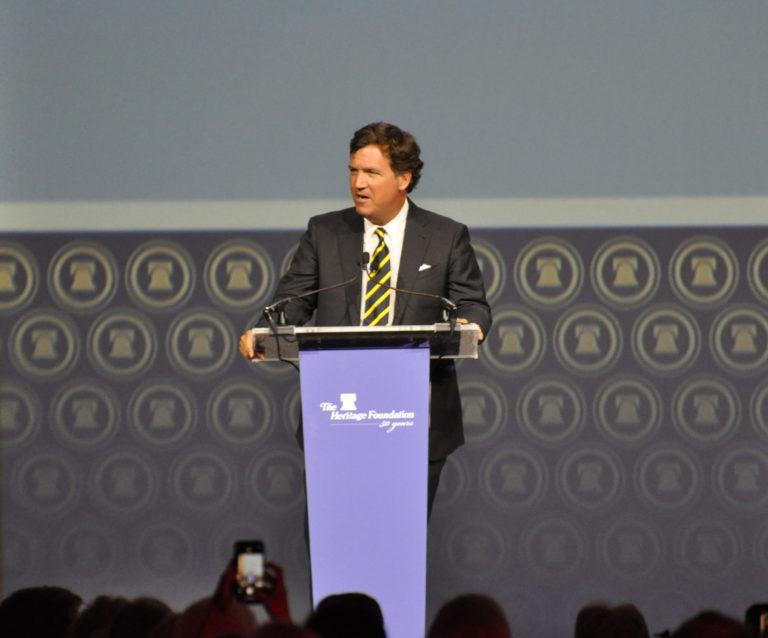
(Dmytro “Henry” Aleksandrov, Headline USA) In recent days, Tucker Carlson has been spotted visiting Moscow, Russia, allegedly because he plans to interview Vladimir Putin.

On Feb. 1, 2024, Carlson arrived in the capital of Russia, according to the Telegram news channel Mash. The Moscow Times reported that the news outlet has links to Russia’s security services.

In addition to that, photos of Carlson attending a concert at the Bolshoi Theater (“Big Theater” in Russian) were posted over the weekend by the pro-Kremlin propaganda newspaper Izvestia (“News” in Russian).

On Feb. 5, 2024, a reporter from Izvestia caught up with Carlson to ask him about his trip to Russia.

“I just wanted to see Moscow. I read so much about it. So I wanted to talk to people and look around and then see how it’s doing. It’s doing very well,” Carlson said after spending only less than a week in the country’s capital.

When the reporter asked Carlson if he plans to interview Putin, Carson said “We’ll see.”

The same day, the Kremlin declined to comment on whether Carlson would interview Putin or not, telling reporters that it had “nothing to announce at this moment.”

“We’ll inform you if we decide to plan anything,” Kremlin spokesman Dmitry Peskov said.

In September 2023, Carlson said that he planned to interview Putin, but the United States government “stopped” him from doing so, adding that everybody deserves a right to be heard, including Putin.

Carlson never expressed such a strong desire to interview any of the Ukrainian officials, including Ukrainian President Volodymyr Zelensky, which is not surprising, considering that he has spoken favorably about Putin both before and after the invasion of Ukraine, while also criticizing Ukraine, in general, and Zelensky, in particular.

Back in November 2019, Tucker, who was still working for Fox News, openly said that he supports Russia.

“Why shouldn’t I root for Russia? Which by the way I am,” he said.

Carlson then tried to correct himself by saying that he was “just joking” and “mocking the obsession with Russia,” even though, as other people previously pointed out, he said during the segment that he was “serious.”

Next month, Carlson only doubled down on his pro-Russia rhetoric.

“I should say for the record I’m totally opposed to these sanctions and I don’t think that we should be at war with Russia. And I think we should probably take the side of Russia if we have to choose between Russia and Ukraine,” he said.

Biden Admin Gives $200K for App that Teaches Men How to Sound Like Women

(Dmytro “Henry” Aleksandrov, Headline USA) The National Institutes of Health approved a research grant in November of last year for over $200,000 to create an app that would help men who think that they are women to sound more like them.

According to the College Fix, the grant was approved in November 2023 by the NIH’s Deafness and Other Communication Disorders department. The grant will be run by Vesna Dominika Novak, a “transgender” associate professor at the University of Cincinnati.

From December 2023 to November 2024, the NIH approved $213,878 in funding, which would allow Novak’s team to create a smartphone app that would train men who “identify” as “transgender women” to speak like women, the project details revealed.

“Transgender and gender diverse people exhibit a significantly lower quality of life than the general public. One reason for this is voice dysphoria: distress because a person’s voice does not match their gender identity… Reducing this voice-gender incongruence can improve quality of life, but is difficult to achieve,” the abstract of the grant said.

It also explained that creating software would be one way of “helping” these people to live in their made-up realities.

“One way to provide more accessible GAVT [gender-affirming voice and communication training] would be through a smartphone- or computer-based software that delivers voice information, suggests exercises and provides feedback on exercise performance.”

Going to speech therapists is “time-consuming [and] costly” and that there aren’t enough who specialize in GAVT, the abstract also said, adding that, once the app is completed, it will include “visual-acoustic biofeedback” to tell the user how their voice sounds and then suggest on how to make it more feminine.

Forty men who think that they are “transgender” will use the researchers’ “prototype” app and meet online every week for the study, the grant said. In addition to using the “prototype” app, these men will also be prescribed “homework” by the researchers during the week with ranging levels of difficulty.

“Self-reported amount of daily practice (primary outcome) as well as self-reported self-efficacy and intrinsic motivation scores will be compared between groups. Upon completion, the project will result in the first GAVT software that combines visual-acoustic biofeedback of pitch and resonance with structured exercises – highly requested but currently unavailable features of such software,” the abstract said.

Chutkan Drops Hint of Monthslong Delay in Trump Trial

(Luis Cornelio, Headline USA) U.S. District Judge Tanya Chutkan implied on Monday that the 2020 criminal case against former President Donald Trump might face a delay until just before the 2024 election, Politico reported. 

Chutkan, a Jamaican-born judge, indicated that her plans to be out of the country later in the year might be interrupted if the rescheduled Trump trial, currently in the appeals process, coincides with her stay abroad.

“I hope not to be in the country on August 5,” Chutkan stated during a conference in an unrelated case, as reported by Politico. She clarified that she would stay in the U.S. only because “I’m in trial in another matter that has not yet returned to my calendar.” 

Chutkan appeared to reference the case led by Special Counsel Jack Smith against Trump, focusing on alleged unlawful efforts to question the results of the 2020 presidential election. 

Despite Smith’s efforts to maintain a March 4 trial date, the former president argued that this date directly hinders his presidential candidacy since Super Tuesday, where multiple states select their presidential nominees, is scheduled for March 5.

While Trump appeals the indictment, Chutkan postponed the March 4 trial on Feb. 2 and instructed Smith to stop filing evidence while the higher courts hear the former president’s defense.

Trump appealed the criminal prosecution based on allegations of presidential immunity, asserting that his attempts to question the results were part of his official duties as the sitting president.

In December, Chutkan rejected Trump’s defense, prompting an appeal. However, later that month, Smith filed a failed emergency motion with the Supreme Court, requesting the justices to bypass the appeals process and determine whether Trump is shielded from criminal prosecution.

The justices rejected Smith’s plea, and while it might hear the case later, it remains on appeal at the U.S. Court of Appeals for the District of Columbia Circuit.