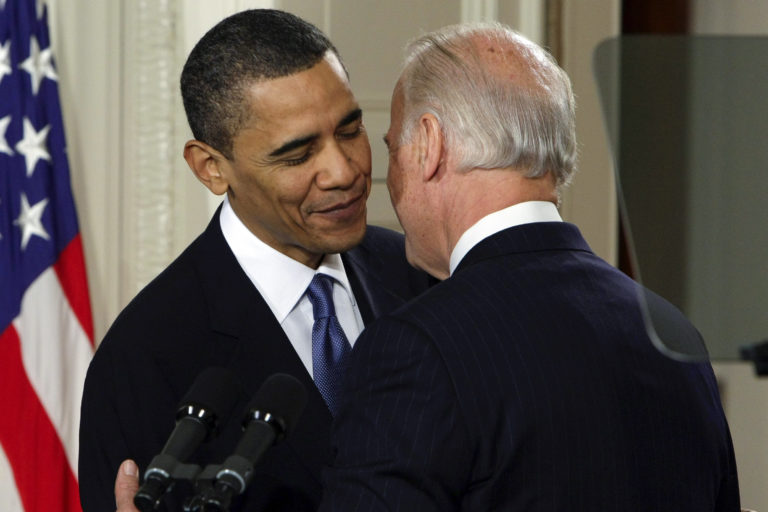
(Headline USA) Special counsel Robert Hur’s report regarding President Joe Biden’s alleged mishandling of classified information this week revealed Biden almost resigned from his position as vice president during the Obama administration over disagreements with the former president’s policies during the Afghanistan war.
Notes Biden made in a notebook that was a part of the special counsel’s investigation revealed Biden’s sharp disagreements with then-President Barack Obama.
After Obama approved sending troops to Afghanistan in 2009, Biden wrote that he repeatedly pushed back on the decision, calling it a “strategic blunder” that would “bring the administration down.”
He even threatened to step down in protest, he wrote.
“Tomorrow the President is going to make a fateful decision regarding Afghanistan—as I sat looking out the window at the sea—thinking I should resign in protest over what will bring his administration down,” the note said. “Although I obviously wasn’t there I feel like this is what it must have felt like for Kennedy then Johnson in the early days of VTN [Vietnam].”
Biden claimed he felt “guilty and boxed in myself. Guilty for not having been more successful w/ the President—and staying. Boxed in by knowing or at least feeling that my resignation would only harden his position and leave him with one less voice.”
The notes eventually became a part of a memo Biden sent to Obama in an attempt to change his mind.
In an interview with Hur’s investigation team, Biden said he sent the memo “because I was trying to change the president’s mind, and I wanted to let him know I was ready to speak out … and to really, quite frankly, save his a**.”
That memo was one of the classified documents found in Biden’s Delaware residence last year.
Hur concluded in his report that although Biden mishandled classified information, he had a “strong motive” to hold onto some of the documents as they helped preserve the record that he opposed Obama’s Afghanistan decision.
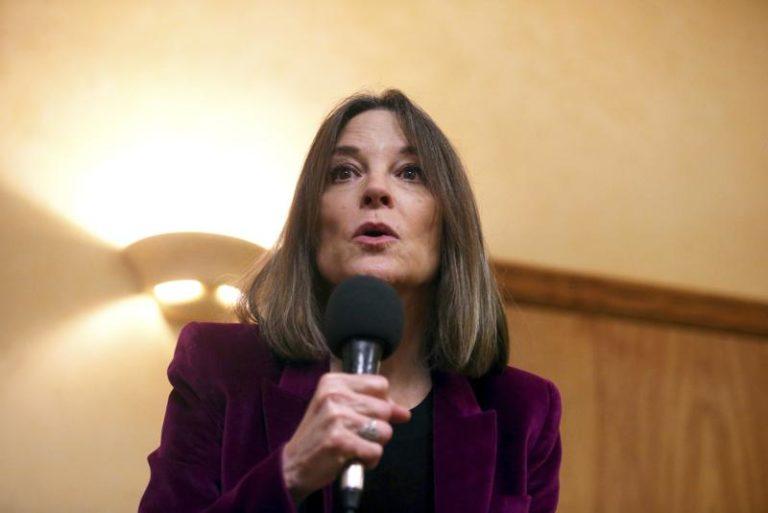
“I appreciate greatly all the incredible people who accompanied me on our political journey over the last ten months,” Williamson said in an email to her supporters. “While the level of our failure is obvious to all, a level of success is real nonetheless.”
She stated that she will not let her regrets hold her back, and looks forward to new opportunities, according to CNN.
Her announcement immediately followed President Joe Biden’s primary victories in South Carolina and Nevada.
Biden also beat Williamson in New Hampshire’s primary election via a write-in campaign, as he was not on the ballot in the state.
On Sunday, Williamson accused the DNC of election interference in order to help Biden take the incumbent seat, according to the Las Vegas Review–Journal.
“The DNC was very overt this year about seeing its role as ensuring Joe Biden’s nomination,” Williamson said. “I think this has been unfortunate for the Democratic Party and for democracy itself, suppressing the kind of robust conversation that democracy requires.”
She made similar accusations in March 2023, immediately after she declared her candidacy in the primaries.
In December, she called out Massachusetts Democrat Chair Steve Kerrigan for purportedly attempting to maintain Biden’s status as primary nominee, as he and other local officials left Democrat challengers off of the state’s primary ballot.
“Dem Chair Steve Kerrigan’s misplaced attempt at protecting Joe Biden robs Massachusetts Democrats of their voice and choice in the upcoming election,” Williamson tweeted. “This action is a flagrant violation of DNC rules and process.”
@stevekerrigan Dem Chair Steve Kerrigan’s misplaced attempt at protecting Joe Biden robs Massachusetts Democrats of their voice and choice in the upcoming election.
This action is a flagrant violation of DNC rules and process. 2/4
Biden may yet be the Democratic primary candidate, despite the a damning report by special counsel Robert Hur alleging Biden could not even recall his time as vice president during an interview over his mishandling of classified documents.
Hur cited Biden’s memory problems as the justification for a decision not to attempt to prosecute the sitting president, although it is unlikely that Attorney General Merrick Garland would have supported any other recommendation.
Still, a growing number of political pundits and thought-leaders—including former GOP candidate Vivek Ramaswamy—have speculated that the DNC will oust Biden in favor of a more competitive option, such as former first lady Michelle Obama.
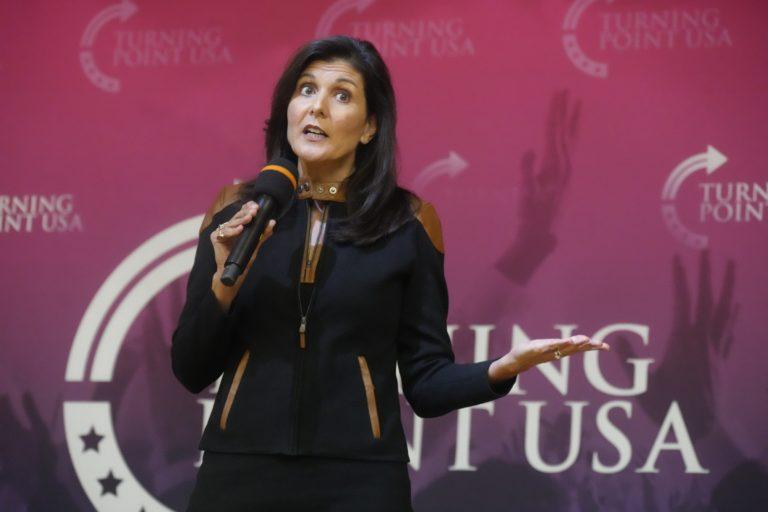
Although the official WEF website removed a post listing its 2011 participants, a copy of it, confirming Haley’s involvement, was previously archived.
Haley, who often touts her Indian descent, was among 190 globalist elites invited by Klaus Schwab’s organization to participate in the program during her first year as governor of South Carolina. She would later go on to serve as United Nations ambassador during the Trump administration.
Haley was joined in her cohort by former George W. Bush press secretary Dana Perino, now a prominent Fox News personality.
Perino raised eyebrows last year by joining Hillary Clinton onstage at the Clinton Global Initiative’s annual meeting, where she offered kind words for the failed 2016 presidential candidate.
Haley likewise has praised Clinton as an “inspiration,” and she has been an outspoken supporter of the war in Ukraine, which began with a 2014 color revolution in Kiev just one year after Clinton resigned her post as secretary of State for the Obama administration.
Nonetheless, she has been unable to make a dent in Trump’s numbers, getting overrun in Iowa, New Hampshire and Nevada so far.
Haley lost to Trump 51% to 19.1 in Iowa and 54.3% to 43.2 in New Hampshire. During Tuesday’s Nevada primary, which did not include Trump on the ballot, she lost by a more than two-to-one margin to the more appealing “none of these choices” option.
Trump is also expected to dominate in Haley’s home state when the South Carolina primary takes place on Saturday, Feb. 24.
The WEF—which hosts its annual gathering in Davos, Switzerland, each January—has come under intense scrutiny for its promotion of what many consider to be a “New World Order” that will seek to supplant national sovereignty (if it hasn’t already done so).
It has actively sought to manipulate—and sometimes engineer—global crises such as the COVID-19 pandemic and Ukraine war in order to assert greater control over the privacy and individual autonomy of its unwitting subjects.
Among the proposals for which the WEF has advocated: a universal biometric ID that would link to a person’s health information, financial accounts and more, effectively imposing a China-like social-credit score on the masses.
The Young Global Leaders program—which seeks to train and/or indoctrinate up-and-coming influencers from at least 65 countries in the fields of business, politics, media, entertainment and more—has led to perception problems in the past for other public figures trying to establish their conservative bona fides.
For instance, Tulsi Gabbard, the political commentator and supposedly red-pilled former Democrat congresswoman, was once a Young Global Leader, as was Rep. Dan Crenshaw, R-Texas.
Businessman Vivek Ramaswamy, who ran against Haley and Trump in the recent GOP primary before dropping out to endorse Trump, was reportedly invited to join a cohort. However, according to Ramaswamy, he “explicitly rejected their ridiculous award” and later sued the WEF to force them to remove his name from a list of participants.
Rep. Elise Stefanik, R-N.Y., considered to be the frontrunner in Trump’s vice-presidential sweepstakes, was also listed on the WEF site, according to Free Press International. Headline USA was unable to independently verify the claim.
None of those named in the story currently appear on a list of WEF alumni.
Headline USA’s Ben Sellers contributed to this report.
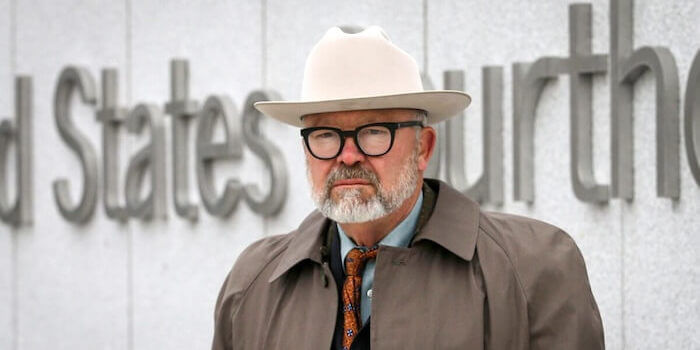
(Ken Silva, Headline USA) Utah attorney Jesse Trentadue sued the FBI on Friday for records about a CIA asset who helped fund the Oklahoma City bombing, as well as for records about a neo-Nazi bank-robbery gang also involved in the attack—the deadliest domestic terrorism event in U.S. history.
Trentadue has been suing the U.S. government for OKC bomb-related records for nearly 30 years, ever since his brother was murdered in a federal penitentiary. The complex story of how the death of Trentadue’s brother relates to the OKC bombing can be read in this Mother Jones article.
Trentadue’s latest lawsuit comes nearly a decade after he filed Freedom of Information Act requests for records on the CIA asset, Roger Moore (not the James Bond actor), and the bank-robbery gang, the Aryan Republican Army.
“It has now been 8-1/2 years since Plaintiff submitted his FOIA Request to the FBI and he has not received a single document,” he said in his lawsuit.
According to Trentadue, the FBI could be hiding one of the biggest scandals in its history.
Indeed, the FBI’s interest in withholding records about Moore, who is now dead, could be because he was an FBI informant and CIA asset.
Roger Moore and the CIA
According to Trentadue’s lawsuit, Moore was an FBI informant as part of the bureau’s 1980s- and early 90s-era Operation Punchout, which was designed to identify and apprehend surplus dealers that bought and sold government property stolen from Department of Defense facilities in Utah.
It was in the early 90s when Moore met OKC bomber Timothy McVeigh. The two would become business partners of sorts, embarking on the national gun show circuit in 1993.
In late 1994, McVeigh enlisted his accomplice, Terry Nichols—who helped build McVeigh’s truck bomb but was not in Oklahoma City when the April 19, 1995, attack occurred—to rob Moore.
Motivated by threats to his family, Nichols followed McVeigh’s orders and robbed Moore of some $60,000 in guns, gold bars and other precious metals. Investigators would later determine that the proceeds of this robbery helped fund McVeigh’s terroristic activities.
Moore would serve as a government witness against Nichols, who was convicted and is now serving the rest of his life behind bars at the Florence supermax prison in Colorado. But what wasn’t publicly known at the time was that Moore was a CIA asset.
Indeed, Moore was involved with a paramilitary group called the Civilian Military Assistance, which the CIA used as a proxy to skirt congressional restrictions on supporting the Contras in Nicaragua in the 1980s. Furthermore, Moore build patrol boats for use by the US Navy in the Vietnam War, as well as speedboats for the CIA, according to Aberration in the Heartland of the Real—historian Wendy Painting’s PhD thesis-turned-book about McVeigh.
Moore’s shadowy intelligence connections have had researchers asking for years whether he was actually involved in the bombing, as opposed to being a hapless victim of McVeigh and Nichols’s robbery.
“Moore was also exchanging cryptic messages with McVeigh months later [after the robbery], suggesting that the two men still trusted and confided in each other,” wrote investigator Roger Charles in Oklahoma City: What the Investigation Missed, and Why it Matters.
“Was the Moore robbery intended as a fundraiser for the bombing? Or was the robbery a scam orchestrated by Moore as well as McVeigh, either to defraud the insurance company or to create some plausible distance between them as they plotted an antigovernment revolution?”
Furthering this suspicion is a 2007 sworn declaration from Nichols himself, which Trentadue attached as an exhibit in his Friday lawsuit.
For years, Nichols has directly accused Moore of being a coconspirator in the bombing, which killed 168 people, including 19 children.
At one point, Nichols told the FBI in the mid-2000s that they could find a box of explosives that had been hidden under his home since before he was arrested in 1995. Nichols told FBI investigators that they would find Moore’s fingerprints on those explosives.
“Those explosives components are an important piece of evidence clearly linking Moore to McVeigh and the bombing,” Nichols said in his declaration.
The FBI indeed found the explosives at Nichols’s house, but they didn’t find Moore’s fingerprints. According to investigator Charles, the FBI found fingerprint traces on the box Nichols was talking about, but they did not test them for almost three years—at which point the prints were unreadable.
“I never imagined that once these explosives were seized by the FBI, Moore’s involvement would remain hidden to this day,” Nichols wrote in his sworn declaration.
A more complete history of Moore and his connections to the OKC bombing can be read here.
As for the Aryan Republican Army—the other subject of Trentadue’s newly filed lawsuit—Headline USA has reported extensively on its involvement with OKC.
Aryan Republican Army
Led by Richard Lee Guthrie and a colorful character named Peter Langan—who now goes by the first name Donna, and who recently became the first federal inmate in history to receive a sex change—the ARA was the most prolific gang of bank robbers in the 90s. The neo-Nazis used the proceeds of their robberies to fund groups like the Aryan Nations.
When Guthrie and Langan were arrested for their bank robberies in 1996, observers couldn’t help but wonder if the ARA was somehow linked to the OKC bombing.
Members of the ARA bank-robber gang were arrested in early 1996. PHOTO: FBI
After all, the FBI was still hunting for “John Doe 2,” a mysterious accomplice seen by dozens of witnesses with McVeigh on the morning of the attack. Moreover, the Aryan robbers’ mission was to use the proceeds of their heists to fund right-wing terrorist attacks—and someone must have been funding McVeigh, who had been a member of the KKK, as he roamed across America throughout the early ‘90s.
Intrigue about the ARA heightened even further when it was revealed that McVeigh had placed a phone call days before the April 19 attack to Elohim City—a white supremacist compound in the Ozarks that ARA members had used as a hideout.
The link was so obvious that national outlets such as The Washington Post questioned it when covering Langan’s trial.
“One of the enduring mysteries of the Oklahoma City bombing investigation is why, two weeks before the blast, Tim McVeigh placed a 1-minute 46-second phone call to Elohim City. Whom was he calling?” the Post asked in February 1997.
However, the Post failed to pursue that lead, concluding in the same article that “there is no proof that McVeigh knew the Aryan robbers.”
But in the years after the OKC bombing and the 1997 ARA bank-robbery trial, evidence would continue to mount that the two were connected.
In 2001, then-Indiana State University criminologist Mark Hamm published a book making the case that the ARA helped carry out the bombing. Hamm’s In Bad Company: America’s Terrorist Underground detailed the movements of McVeigh and the ARA throughout 1993 and ’94, showing that the bomber was often in Arizona, Kansas and Oklahoma at the same time as Langan, Guthrie and the other ARA members.
“It is highly improbable—if not statistically impossible—for nine men with such violent predispositions and such deep connections within the white power movement … to randomly come together at the same time in the same geographical area,” Hamm concluded, referring to McVeigh, Nichols, Guthrie, Langan and five other Aryan members.
Hamm also identified a plausible reason for why the FBI hasn’t prosecuted ARA members for their role in the OKC bombing: Langan, it turns out, was a Secret Service informant who went rogue. As Hamm noted, revealing that its own informant participated in the attack would have cost many people in the federal government their jobs—at the very least.
Even more shocking, Trentadue later uncovered evidence that the ARA may even have been an FBI front group. Trentadue obtained an email from former FBI agent Don Jarrett—who investigated right-wing terrorism in the 1990s—saying that the Aryan robbers were thoroughly infiltrated by FBI informants.
In his Friday lawsuit, Trentadue expressed his belief that the ARA was indeed an FBI front group.
“Timothy McVeigh participated in some of those robberies and is reported to have used money obtained from these crimes to help fund the bombing of the Murrah Federal Building in Oklahoma City on April 19, 1995. Members of the ARA also assisted McVeigh in carrying out the bombing of the Murrah Federal Building,” he said.
“The ARA was actually a front group created by the FBI in which the Bureau had embedded at least one informant.”
Former FBI agents who investigated the OKC bombing have also linked the ARA to McVeigh. Danny Coulson, who headed the FBI’s hostage rescue team and worked on the OKC case, recently said that McVeigh had, in fact, visited the ARA’s hideout at Elohim City—debunking the Post’s earlier claim that there was “no proof” linking the two. Coulson has publicly called for the case to be reopened.
Other Trentadue Litigation
Meanwhile, Trentadue still has another lawsuit against the FBI for records about the OKC bombing.
That lawsuit, which has been ongoing for decades, seeks surveillance footage of the blast. The FBI has denied that such footage exists, but Trentadue has evidence to the contrary—including a Secret Service investigative memo that describes the surveillance footage.
Trentadue’s lawsuit went to trial in 2014.
There, he was to have FBI informant-turned-whistleblower John Matthews testify on his behalf about how the bureau was monitoring McVeigh in the lead-up to the attack. However, Matthews changed his mind about testifying the night before he was supposed to take the stand, leading to Trentadue alleging that the FBI engaged in witness tampering and threatened Matthews.
Trentadue’s allegations have been subject of a court-appointed investigation for the last nearly eight years. The investigation has been conducted behind closed doors, with gag orders on all parties.
(Headline USA) Google on Thursday introduced a free artificial intelligence app that will enable people to rely on technology instead of their own brains to write, interpret what they’re reading and deal with a variety of other task in their lives.
With the advent of the Gemini app—named after an AI project unveiled late last year— Google will cast aside the Bard chatbot that it introduced a year ago in an effort to catch up with ChatGPT, the chatbot unleashed by the Microsoft-backed startup OpenAI in late 2022.
Google is immediately releasing a standalone Gemini app for smartphones running on its Android software.
In a few weeks, Google will put Gemini’s features into its existing search app for iPhones, where Apple would prefer people rely on its Siri voice assistant for handling various tasks.
Although the Google voice assistant that has been available for years will stick around, company executives say they expect Gemini to become the main way users apply the technology to help them think, plan and create.
It marks Google’s next foray down a new and potentially perilous avenue while remaining focused on its founding goal “to organize the world’s information and make it universally accessible and useful.”
“We think this is one of the most profound ways we are going to advance our mission,” Sissie Hsiao, a Google general manager overseeing Gemini, told reporters ahead of Thursday’s announcement.
The Gemini app initially will be released in the U.S. in English before expanding to the Asia-Pacific region next week, with versions in Japanese and Korean.
Besides the free version of Gemini, Google will be selling an advanced service accessible through the new app for $20 a month.
The Mountain View, California, company says it is such a sophisticated form of AI that will it be able to tutor students, provide computer programming tips to engineers, dream up ideas for projects and then create the content for the suggestions a user likes best.
The Gemini Advanced option, which will be powered by an AI technology dubbed “Ultra 1.0,” will seek to build upon the nearly 100 million worldwide subscribers that Google says it has attracted so far—most of whom pay $2 to $10 per month for additional storage to back up photos, documents and other digital material.
The Gemini Advanced subscription will include 2 terabytes of storage that Google currently sells for $10 per month, meaning the company believes the AI technology is worth an additional $10 per month.
Google is offering a free two-month trial of Gemini Advanced to encourage people to try it out.
The rollout of the Gemini apps underscores the building moment to bring more AI to smartphones—devices that accompany people everywhere—as part of a trend Google began last fall when it released its latest Pixel smartphones and Samsung embraced last month with its latest Galaxy smartphones.
It also is likely to escalate the high-stakes AI showdown pitting Google against Microsoft, two of the world’s most powerful companies jockeying to get the upper hand with a technology that could reshape work, entertainment and perhaps humanity itself.
The battle already has contributed to a $2 trillion increase in the combined market value of Microsoft and Google’s corporate parent, Alphabet Inc., since the end of 2022.
In a blog post, Google CEO Sundar Pichai predicted the technology underlying Gemini Advanced will be able to outthink even the smartest people when tackling many complex topics.
“Ultra 1.0 is the first to outperform human experts on (massive multitask language understanding), which uses a combination of 57 subjects—including math, physics, history, law, medicine and ethics—to test knowledge and problem-solving abilities,” Pichai wrote.
But Microsoft CEO Satya Nadella made a point Wednesday of touting the capabilities of the ChatGPT-4 chatbot—a product released nearly a year ago after being trained by OpenAI on large-language models, or LLMs.
“We have the best model, today even,” Nadella asserted during an event in Mumbai, India. He then seemingly anticipated Gemini’s next-generation release, adding, “We’re waiting for the competition to arrive. It’ll arrive, I’m sure. But the fact is, that we have the most leading LLM out there.”
The introduction of increasingly sophisticated AI is amplifying fears that the technology will malfunction and misbehave on its own, or be manipulated by people for sinister purposes such as spreading misinformation in politics or to torment their enemies.
That potential has already led to the passage of rules designed to police the use of AI in Europe, and spurred similar efforts in the U.S. and other countries.
Google says the next generation of Gemini products has undergone extensive testing to ensure they are safe and were built to adhere to its AI principles, which include being socially beneficial, avoiding unfair biases and being accountable to people.
(Mike Gleason, Money Metals News Service) As Federal Reserve chairman Jay Powell expresses indecision over interest rates, metals markets are also exhibiting uncertainty.
Gold continues to hold up relatively well, but none of the precious metals are showing signs that they are quite ready yet to launch higher.
Mainstream investor sentiment toward metals is in the dumps. Exchange-traded instruments linked to gold have seen net investor outflows for several months in a row. And demand for retail bullion has continued to be soft, except among regular long-term accumulators and true bargain hunters.
The speculators and momentum chasers are going all-in on stocks, Bitcoin, and other intangible assets that are now very expensive.
Hard assets are looking very cheap by comparison. Eventually, the tables will turn and sentiment will shift. Value investors who buy low now will have the opportunity to sell high down the road.
On Sunday, Fed Chairman Jerome Powell gave an interview to 60 Minutes. He left the central bank’s next policy move up in the air, downplayed the risk of bank failures, and noted that the U.S. government is on an unsustainable fiscal path. He also admitted the Fed has gotten some important things wrong under his leadership.
Scott Pelley: Was the Fed too slow to recognize inflation in 2021?
Jerome Powell: So, in hindsight, it would’ve been better to have tightened policy earlier. We thought that the economy was so dynamic that it would fix itself fairly quickly, and we thought that inflation would go away fairly quickly without an intervention by us. And so in the fourth quarter of ’21, it became clear that inflation was not transitory in the sense that I mentioned.
Scott Pelley: You seem confident in the banks, and yet the Silicon Valley Bank, second-largest failure in U.S. history. Did the Fed miss that?
Jerome Powell: So yes, we did, and we forthrightly saw that we needed to do better. So we’ve spent a lot of time working on ways to make supervision more effective and also to adapt regulation to a modern context in which a bank run can happen so much faster than it could have even 20 years ago.
Powell admitted that bank runs can happen much quicker in the age of social media, online banking, and exotic financial instruments that are leveraged onto bank balance sheets. But he says not to worry, because this time the Fed has everything under control. Unlike last time and the time before.
Powell does perhaps deserve some credit for owning up to the Fed’s recent forecasting fails. But he wasn’t pressed by interviewer Scott Pelley to explain why central bankers should continue to be entrusted with the power to set interest rates and create currency out of thin air.
They have a lousy track record of anticipating major adverse moves in the economy and banking system. But even if the world’s most brilliant economists ran the Fed, they still wouldn’t know more than the market itself.
And they still wouldn’t be able to fix broken U.S. fiscal policy. Powell laments that the government is borrowing too much but insists that it’s not his role to do anything about it.
Scott Pelley: How do you assess the national debt?
Jerome Powell: We mostly try very hard not to comment on fiscal policy and instruct Congress on how to do their job when actually they have oversight over us.
Scott Pelley: But is the national debt a danger to the economy in your review?
Jerome Powell: In the long run, the US is on an unsustainable fiscal path. The US Federal Government’s on an unsustainable fiscal path, and that just means that the debt is growing faster than the economy.
Neither Congress nor the Biden administration feel any particular urgency to get the deficit under control. That’s because they know they have a buyer of last resort for any new debt that’s issued – that being the Federal Reserve.
If Treasury Secretary Janet Yellen called Jerome Powell to tell him the government needed an emergency cash infusion to avert default, Powell would of course provide it.
So, despite the Fed chairman’s vague and passive calls for fiscal responsibility, he will continue to enable politicians to spend and borrow recklessly – and everyone in Washington knows it.
Elected officials won’t change their ways until the incentives and constraints change. They have little incentive to stick their necks out and oppose programs that have fervent supporters and backing from big donors.
One of the few members of Congress who does is Thomas Massie of Kentucky. He gets called all sorts of nasty names in the media and by his own colleagues for saying no to politically sacred spending. Most recently he was branded an “anti-Semite” for opposing aid to Israel.
It’s just not worth it for most politicians to endure the attacks and risk their careers for the sake of trying to contain spending.
Under a classical gold standard, Congress would face an external constraint on how much it could spend. Any debt it issued would be represented in promises to pay in gold.The gold supply cannot be expanded at will like the supply of fiat currency.
Of course, gold standards have their critics and their flaws as well. But ever since President Richard Nixon ended the ability of foreign governments to convert dollars into gold, federal finances have been on a dangerous trajectory.
Those who long for a return to sound fiscal policy should understand that it begins with sound money.
(Mike Maharrey, Money Metals News Service) With gold prices skyrocketing in their local currency, Egyptians are turning to silver to protect their savings and wealth from skyrocketing price inflation.
According to a Reuters report, surging prices and a weakening currency have driven the price of gold in Egyptian pounds to record high levels, pricing many Egyptians out of the market. In order to protect their wealth from currency devaluation, many are turning to silver as a more affordable alternative.
The Reuters report called the trend “a measure of an economic crisis.”
Price inflation in Egypt is running as high as 30 percent. Meanwhile, the Egyptian central bank has allowed the pound to devalue by 50 percent in dollar terms, with more devaluation expected.
As of Jan. 30, the price of gold had risen more than 120 percent on an annual basis as demand for gold coins and bars increased by 58 percent.
An Egyptian silver dealer called silver “the new gold.”
A woman told Reuters that silver was an affordable alternative to gold.
A small 18-carat earring weighing less than a gram is more than 3,000 pounds. I can’t afford that as a gift anymore so I bought a silver necklace for around 1,900. It’s not the same, I know, but it still has value.
And like gold, silver also historically protects wealth from currency depreciation. The price of silver in Egyptian pounds has more than doubled in the past year.
Although about half of global demand is for industrial and technological uses, at its core, silver is a monetary metal. While the price is more volatile in the short run, silver tends to track up and down with gold over time. In fact, silver often outperforms gold in a gold bull market. This was the case during the pandemic. As gold pushed above $2,000 an ounce, a 39 percent gain, silver rallied to nearly $30 an ounce, a 147 percent increase.
The bottom line is if you are bullish on gold, you should be bullish on silver as well. If history is any indication, Egyptians pivoting to silver as a hedge against inflation and currency devaluation are making a wise move.
Silver Is Undervalued
Silver is currently significantly undervalued compared to gold. The gold:silver ratio of nearly 90:1 is evidence of this. That means it takes almost 90 ounces of silver to buy one ounce of gold. This is a historically wide spread.
The average gold:silver ratio in the modern era has generally ranged between 40:1 and 60:1. When the ratio widens far beyond that range, as it has in recent years, it typically returns toward that mean.
For instance, the ratio fell to 30:1 in 2011 and below 20:1 in 1979. More recently, the ratio closed from over 100:1 to 64:1 during the pandemic.
Silver also appears to be underpriced given the supply and demand dynamics. The Silver Institute projects silver demand will reach the second-highest level on record in 2024. This will likely lead to the third straight annual market deficit with demand outstripping supply, further cutting into silver reserves.
Silver isn’t priced for that.
With silver significantly underpriced, and gold set up for a bull run when the Fed returns to its inflationary policies, Egyptians seem to be making a smart choice. And it might not be a bad idea for Americans as well.
(Mike Maharrey, Money Metals News Service) On Sunday, the San Francisco 49ers will take on the Kansas City Chiefs. The winner will take home the silver!
No… I’m not inferring that the winner will get a second-place prize. I’m referring to the Lombardi Trophy. It’s made of silver.
So, what is that thing worth anyway?
Not as much as you might think despite being formed out of a precious metal.
Each Lombardi Trophy (There are many out there) is valued at about $10,000, according to The Sporting News, although it costs around $50,000 to produce.
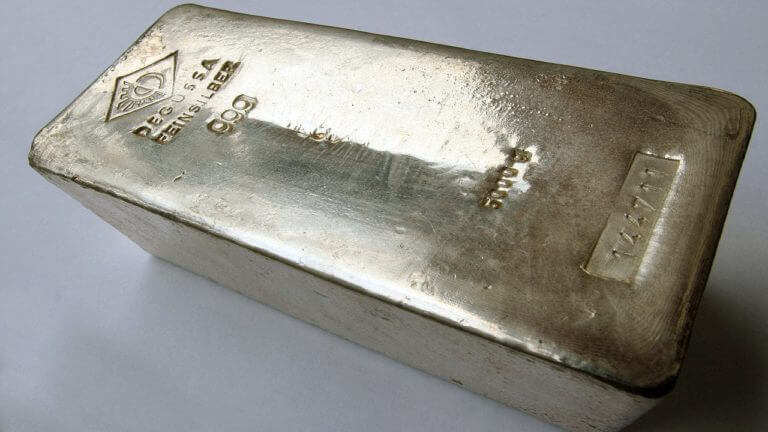
As I mentioned, the trophy is formed out of silver, but it isn’t pure silver like an American Silver Eagle coin. The Lombardi is fabricated out of sterling silver.
Sterling is an alloy of silver containing 92.5 percent by weight of silver and 7.5 percent by weight of other metals (alloy), usually copper.
The Lombardi Trophy measures 20.75 inches high and weighs seven pounds. That means given the current price of silver at $22.58 per ounce (73 cents per gram) the metal melt value of the trophy would be around $2,318.
Interestingly, the football on top of the Lombardi trophy is the same size as a regulation NFL football.
As I already mentioned, there are quite a few Lombardies out there. Tiffany & Co. produces a new Super Bowl trophy each year. Also, players and coaches can order their own replicas.
According to The Sporting News, Tiffany & Co. VP Oscar Riedener sketched out the design for the trophy on a napkin for NFL commissioner Pete Rozelle back in 1966.
It takes four months to make the Lombardi Trophy. Workers at Tiffany and Co. fabricate it at a workshop in Cumberland, Rhode Island.
Sterling silver must be heated to over 1,000 degrees to mold it into the trophy’s distinctive shape.
Winning a Lombardi would certainly be cool, but if you want to win a more valuable trophy and a lot more silver, you should take up ice hockey.
The Stanley Cup has an estimated value of $600,000. The cup itself is pure silver and the base is made of sterling. The Stanley Cup weighs in at 34.5 pounds.
And how can you win the most valuable trophy in sports?
Play soccer.
The FIFA World Cup trophy is formed from solid 18-karat gold with a weight of over 11 pounds. The melt value of the gold itself comes in at well over $100,000, but the estimated value of the trophy is over $20 million.
Monetary value aside, we can certainly debate which trophy is the greatest in sports. It’s the Stanley Cup. Sure, I may be a tad biased. I’m a hockey player. So? Fight me! But I think we can all agree that trophies made of precious metals are valuable just because precious metals are valuable!
(Headline USA) The same sub-prime lending practices that resulted in the 2008 “great recession” are making a comeback courtesy of the woke Justice Department.
With the inflationary Biden economy, Federal Reserve rate hikes and market shortages related to factors including the pandemic and illegal immigration, home-ownership has become increasingly prohibitive for lower-income Americans.
Yet, amid this sea of of red flags, leftist bureaucrats are bullying financial institutions into risky lending that may create the perfect storm for another economic meltdown driven by bank failures.
The DOJ alleged Monday that First National Bank of Pennsylvania discriminated against black and Latino homebuyers in North Carolina for a period of at least four years, according to a press release.
It is the latest in a long list of banks that have faced accusations of redlining, i.e. using a prospective borrower’s neighborhood or ZIP code as a factor in loan approvals. The term now applies more broadly to any discriminatory lending practices that allegedly target lower-income minorities.
The DOJ is demanding $13.5 million from FNB to settle the redlining charges, of which the bulk will go into a fund to help subsidize higher-risk loans for black and Latino borrowers in Charlotte and Winston–Salem, two housing markets where the DOJ has claimed discrimination.
In its complaint, the DOJ alleged that FNB closed branches in majority-minority neighborhoods, failed to provide mortgage services to black and Latino potential borrowers, and ignored entire neighborhoods for potential lending.
The DOJ claimed that lenders of similar size and scope to First National did two to four times as much lending to minority borrowers between 2017 and 2021—a period overlapping roughly with the presidency of Republican Donald Trump, who rolled back many of the prior regulations that were dragging down the U.S. economy.
The case comes from when FNB bought Yadkin Bank, a regional bank in the Carolinas, in 2017. While FNB said the same loan practices occurred at Yadkin before the acquisition, the DOJ said that any bank that buys another bank should be held accountable for the acquired bank’s actions.
“The playing field isn’t level, and that is not what we want for the people of North Carolina,” said Josh Stein, North Carolina’s Democratic attorney general, who is currently vying for the Democrat nomination for governor.
Stein, who is white, faces primary challenges from four black candidates. If nominated, he stands a good chance of running against the state’s lieutenant governor, Mark Robinson, an outspoken black conservative who is considered by many to be a rising GOP star.
While an assist from the federal government in establishing a slush fund for minority home-buyers may be a political boon to Stein, however, the chilling effect on actuaries and lenders at privately owned banks resembles, to some extent, the Obama-era Operation Choke Point.
Under then-Attorney General Eric Holder, the DOJ pressured banks into abiding by their political agenda on matters such as gun rights and climate change by threatening to investigate or otherwise punish them for noncompliance. A similar strategy has since undergirded the controversial ESG movement, in which woke investors threaten to withdraw their funds in companies that reject their radical values.
The FNB case marks the 13th redlining settlement that the Biden administration has brought against banks since 2021. Under current Attorney General Merrick Garland, the DOJ has created a Redlining Taskforce that has accused banks of racial discrimination in an unprecedented and financially lucrative way.
It brought the largest redlining lawsuit in history in 2023 against Los Angeles-based City National Bank, which was also accused by the DOJ of not giving high-risk loans to black and Latino communities over a similar time period, from 2017 to 2020.
The taskforce has accumulated $122 million in redlining settlements since it was created, the DOJ said.
“Modern-day redlining is a stain on our economy and underscores the need to keep pushing for equal economic opportunity and racial justice in our country,” claimed Assistant Attorney General Kristen Clarke, in the DOJ’s Civil Rights Division.
In a statement, FNB spokesperson Jennifer Reel said the company disagreed with the DOJ’s findings, believing it was fully compliant with federal and state lending laws. However, it felt compelled to settle the case in order to put the matter behind them.
“We cooperated fully to reach an agreement in this inherited matter as a good faith effort to avoid prolonged litigation,” Reel said.
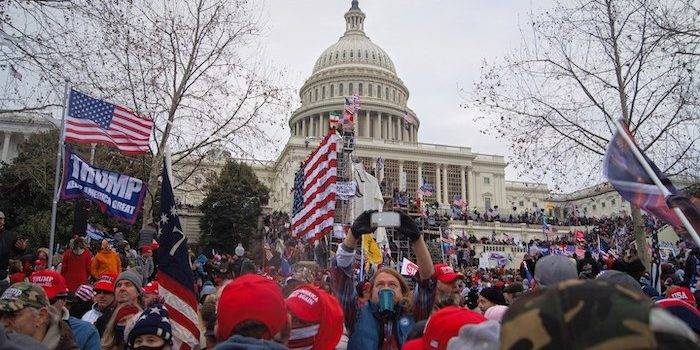
(Ken Silva, Headline USA) New footage of the Jan. 6, 2021, Capitol Hill uprising has been released, showing a man firing a pistol twice into the air. That man, who’s been identified as John Emanuel Banuelos, has yet to be charged for his actions.
The footage was released Thursday by former West Virginia lawmaker and current congressional candidate Derrick Evans, who pled guilty to disorderly conduct and trespassing on Capitol grounds in March 2022.
According to Evans, Banuelos’s gunshots “started it all.” He contended that Capitol Police began firing teargas into the crowd right after the gunshots at 2:30 p.m. on Jan. 6. All hell broke loose soon thereafter.
Other Jan. 6 researchers argued with Evans that the gunshots were fired after the rioting had already begun.
Either way, all agreed that Evans’s footage was incredible. Observers wondered how footage of gunshots could be kept from the public for more than three years.
Perhaps even more incredible is the fact that Banuelos has yet to be charged for his role in Jan. 6.
Banuelos was first in the public spotlight in February 2022, when news broke that he had been arrested in relation to a fatal stabbing of a 19-year-old in a Utah park in July 2021.
When he was arrested, he reportedly told police about his activities on Jan. 6.
“Man, should I just tell the FBI to come get me or what …?” Banuelos, 39, asked detectives, according to a transcript of the interview obtained by KSL.com through a public records request.
“Do you have a warrant?” one detective asked.
“Probably,” he said. “I was in the D.C. riots.”
“On Jan. 6?” the other detective asked. “Did you go inside the Capitol?”
“Yeah, I went inside and I’m the one with the video with the gun right here,” Banuelos said.
Sedition Hunters, the group that is helping the FBI hunt down Jan. 6 prosecutors, has a file on Banuelos. One of the most interesting videos of him is from what appears to be the night before the rally, when he reveals his history of mental-health problems.
“Now I’ve got a purpose … Democrats just give you free stuff and they don’t tell you you’re crazy. How many hospitals have I been to? How many mental hospitals? Because I thought I had a problem … Now I’ve got to reprogram my brain and be humble … I’m willing to play my role. Are you willing to play yours?” he said in the video.