Evidence of Foreign Nationals Accessing Dominion Voting Machines Leaked to Public

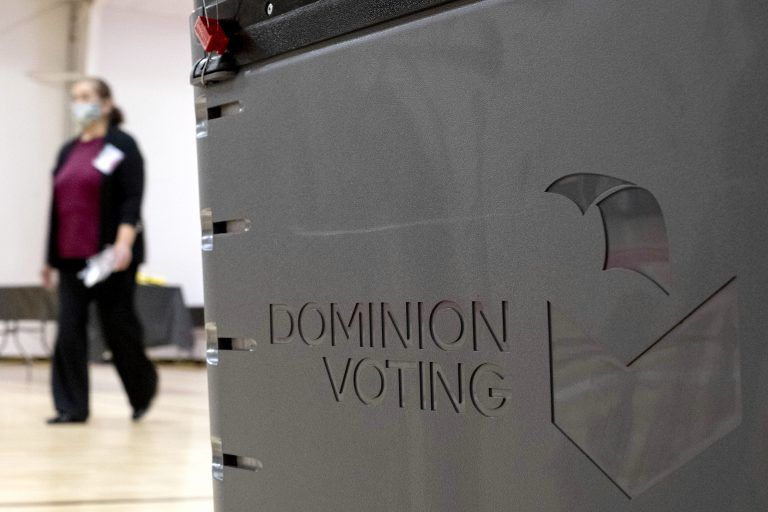
(Ken Silva, Headline USA) A defamation lawsuit between Dominion Voting Systems and former Overstock.com CEO and Donald Trump supporter Patrick Byrne has descended into chaos after one of Byrne’s attorneys leaked evidence that foreign nationals remotely accessed voting machines used in Michigan in the 2020 elections.

The leaked evidence has been floating around social media for about the last week. The evidence includes emails between Dominion workers about voting machines being accessed remotely from people in Kosovo and elsewhere.

It wasn’t clear whether the emails were authentic at first, but Dominion apparently confirmed the evidence when it notified the presiding judge about the leak in a filing on Friday. The attorney who leaked the evidence, Stephanie Lambert, has also now been arrested over the matter.

According to Dominion, Byrne gave a trove of confidential discovery material to his attorney, Lambert, who then leaked it to law enforcement and others.

“But Lambert’s misconduct does not end there,” Dominion added. “Not only did Lambert follow her client’s instruction to share Dominion’s documents with an unknown number of individuals, she also filed dozens of them publicly in an unrelated proceeding (to which Dominion is not a party), and they have now been viewed by tens of thousands of users on social media.”

According to Dominion, the evidence leaked doesn’t show any criminality. Dominion blasted “Lambert’s xenophobic conclusion is that any email from non-US-based Dominion personnel is conclusive evidence of criminal activity.”

Far from running from Dominion’s allegations, Byrne and Lambert have both admitted to leaking the discovery materials. They said the materials contain evidence of criminality, meaning that they’re not protected by any protective order.

In a response to Dominion filed Monday, Lambert defended her actions.

“Mr. Byrne came into possession of email communications produced by Dominion during discovery (some written in Serbian and foreign languages) with and from top level Dominion employees directing and tasking foreign nationals to remotely access voting machines utilized in the United States during the November 3, 2020 election,” Lambert said.

“The remote access by these foreign nationals occurred while the states were still counting votes, determining a final tally, and prior to certification of the results. The email communications further established that background checks of the Serbian Dominion employees did not place; the United States had no knowledge or oversight of these Serbian individuals including whether or not they had prior Serbian military experience,” she said.

But despite Lambert’s explanation, she was arrested Monday following a hearing  over possible sanctions against her for disseminating confidential emails from Dominion.

The U.S. Marshals office said Lambert was arrested on “local charges.” A Michigan judge earlier this month issued a bench warrant for Lambert after she missed a hearing in her case, in which she’s charged with four felonies for accessing voting machines in a search for evidence of a conspiracy theory against Trump. Lambert had earlier, unsuccessfully, sued to overturn Trump’s loss in Michigan.

Meanwhile, the evidence leaked by Lambert continues to spread.

Sheriff Dar Leaf of Barry County, Michigan, wrote to Judiciary Committee Chair Jim Jordan, R-Ohio, about the matter on Sunday, offering to provide him with Lambert’s evidence. Leaf is investigating Dominion, and Lambert gave him records from the Dominion/Byrne lawsuit.

“I am presenting you with this letter and an initial tranche of evidence so that you will review it, and be compelled to investigate this matter and call those responsible for this breach of our Constitution to give testimony concerning these criminal acts and breach of our national security,” Leaf told Jordan, who has yet to publicly comment on the matter.

Headline USA will continue to cover this story as it develops.

The Associated Press contributed to this report.

Ken Silva is a staff writer at Headline USA. Follow him at twitter.com/jd_cashless.
The Fed’s Bank Bailout Program Is Closed! Now What?

(Mike Maharrey, Money Metals News Service) The Federal Reserve’s bank bailout program shut down on March 11. So, what next? The Fed created the Bank Term Funding Program (BTFP) after the collapse of Silicon Valley Bank and Signature Bank last March. The program was set up so banks could easily access cash “to help assure banks have the ability to meet the needs of all their depositors.”

The bailout was a sweetheart deal for banks, and it effectively papered over the banking crisis caused by rising interest rates.

How Did This Bank Bailout Work?

Through the BTFP, banks, savings associations, credit unions, and other eligible depository institutions were able to take out short-term loans (up to one year) using U.S. Treasuries, agency debt, mortgage-backed securities, and other qualifying assets as collateral.

Instead of valuing these collateral assets at their market value, banks were able to borrow against them “at par” (Face value).

Why was this a sweetheart deal?

Well, imagine that a flood damaged your house. Do you think a bank would loan you money based on the value of your home before the flood without any repairs?

Of course not.

In fact, the bank probably wouldn’t loan you money using a damaged house as collateral at all.

Banks don’t accept collateral that is worth less than the amount of the loan. But that’s exactly what the Fed did for struggling banks with significantly devalued loan portfolios due to rising interest rates.

Rising rates and a tanking bond portfolio were the icebergs that sank Silicon Valley Bank.

SVB went under because it tried to sell its undervalued bonds to raise cash. The plan was to sell the longer-term, lower-interest-rate bonds and reinvest the money into shorter-duration bonds with a higher yield. Instead, the sale dented the bank’s balance sheet with a $1.8 billion loss driving worried depositors to pull funds out of the bank.

The BTFP gave banks facing similar problems an alternative. They could quickly raise capital against their bond portfolios without realizing big losses in an outright sale. It gave banks a way out, or at least the opportunity to kick the can down the road for a year.

As one would expect, the balance in the BTFP surged initially as banks tapped into the bailout. But borrowing never stopped.

In the first week, banks borrowed $11.9 billion from the program, along with more than $300 billion from the already-established Fed Discount Window. By April 5, the balance in the BTFP rose to just over $79 billion. By June, banks had borrowed around $100 billion. Borrowing plateaued before taking off again in November. The balance in the BTFP grew by nearly $58 billion between the end of November and late January, peaking at $167.8 billion.

Why did the program see a sudden surge in borrowing late last fall? 

Well, the Fed inadvertently provided a second sweetheart deal through the BTFP by offering loans at a lower interest rate than the Federal Reserve was paying on reserves it held on behalf of banks. This created a profitable arbitrage opportunity.

For example, the Fed charged a 4.93 percent interest rate on a BTFP loan as of Jan. 23. At the same time, the central bank was paying 5.4 percent on reserves. This allowed banks to earn nearly 50 basis points by borrowing money from the bailout and then depositing it in their reserve account at the Fed. 

As you can see from the chart, BTFP borrowing suddenly stopped after the Fed closed this loophole in late January.

In fact, the balance in the BTFP dropped for several weeks, but then suddenly jumped again during the last week of the program’s operation. Banks borrowed over $3.4 billion during that final week. Given there was no arbitrage opportunity, this last-minute surge of borrowing was almost certainly driven by troubled banks taking advantage of one last opportunity for a bailout.

What Happens Without the Bailout?

There is some speculation that the end of the BTFP could lead to another wave of bank failures.

A recent Fortune article said the end of this “emergency funding crutch” couldn’t have come at a worse time for small banks.

A year after the failure of Silicon Valley Bank, nothing in the banking system has fundamentally changed. Unrealized losses on U.S. banks’ books dropped in the fourth quarter of 2023, but they still came in at $478 billion, a historically high level. Interest rates remain high. And with sticky price inflation, it seems likely that the Federal Reserve will have to keep rates higher for longer.

Meanwhile, the commercial real estate (CRE) market is a ticking time bomb.

The CRE sector faces the triple whammy of falling prices, falling demand, and rising interest rates. The post-pandemic rise of telecommuting and work-at-home programs crushed demand for office space. Vacancy rates in commercial buildings have soared.

Small and midsized regional banks hold a significant share of commercial real estate debt. They carry more than 4.4 times the exposure to CRE loans than major “too big to fail” banks. According to an analysis by Citigroup, regional and local banks hold 70 percent of all commercial real estate loans.

The Fortune article said for banks with high CRE exposure, “the timing couldn’t have been worse” for the end of the BTFP.

“A wave of maturities for 10-year loans signed after the Great Recession is on the horizon. Some $930 billion of U.S. commercial real estate debt, or around 20% of the estimated $4.7 trillion in total CRE mortgage debt outstanding, will mature in 2024, according to Mortgage Bankers Association estimates. That means banks will have to refinance, extend, or pay off these loans.

“The situation is so bad that Scott Rechler, cofounder and CEO of the real estate giant RXR, told Fortune that CRE’s issues, coupled with banks’ ongoing problems, could reduce the number of banks in the U.S. by ‘500 or more’ over the next two years as lenders fail and industry consolidation continues.”

Troubled banks still have an option – the Federal Reserve’s discount window. This is considered a “lender of last resort” for the banking system. However, banks are generally reluctant to utilize the program because it sends a clear signal that the bank is in trouble. It also lacks the sweetheart deal the BTFP offered.

According to the Fortune article, the end of the BTFP isn’t likely to send the banking sector into freefall.

“But it is more bad news on top of an already ugly landscape for an industry that’s hurting nationwide.”

Keep an eye on the banking sector moving forward. A financial crisis may have been bubbling under the surface for the last year. The Fed managed to plug one hole in the dam with this bailout program. But with the BTFP a thing of the past, we could start to see more leaks and cracks. It will be especially interesting to see what happens as the loans come due. (Banks had one year to pay back BTFP loans.)


Mike Maharrey is a journalist and market analyst for MoneyMetals.com with over a decade of experience in precious metals. He holds a BS in accounting from the University of Kentucky and a BA in journalism from the University of South Florida.

Fla. Judge Drops the Boom on Corrupt Special Counsel w/ 2-Page Ultimatum

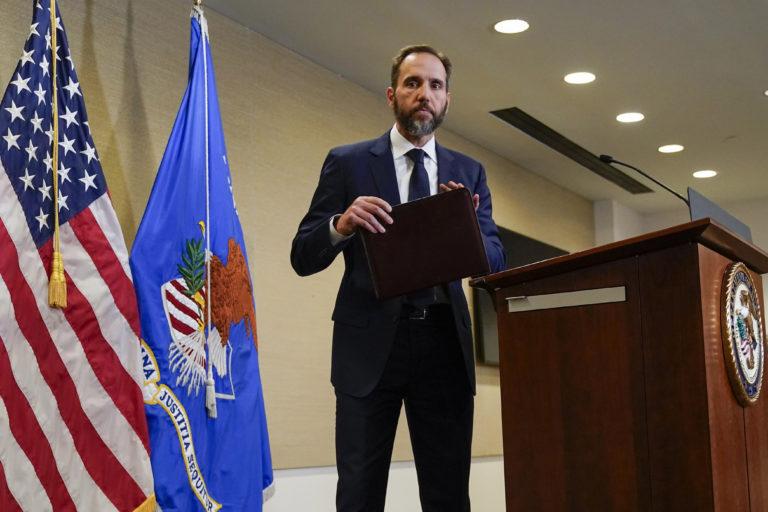
(Ben Sellers, Headline USA) In an explosive two-page order late Monday ostensibly linked to jury instructions, Florida Judge Aileen Cannon gave dubiously appointed Justice Department special counsel Jack Smith a Hobson’s choice:

To assure that former President Donald Trump is afforded due process under the extraordinary and unprecedented circumstances for which Smith is attempting to prosecute him, either a jury must be able to have access to all of the classified documents that Trump is accused of mishandling, and thus to adjudicate whether he went beyond the scope of the Presidential Records Act; or, alternatively, according to the act itself, the discretion to make the determination as to what records are personal must fall on Trump himself.

“Although there is no formal means in the PRA by which a president is to make that categorization, an outgoing president’s decision to exclude what he/she considers to be personal records from presidential records transmitted to the National Archives and Records Administration constitutes a president’s categorization of those records as personal under the PRA,” Cannon wrote.

Cannon’s ruling was largely consistent with what Trump has long argued in his defense, and immediately triggered the anti-Trump partisans such as Andrew Weissmann, the former Mueller investigation stooge turned cable-news pundit, who unsurprisingly offered no pretense of impartiality.

Weissmann was left so stunned that he was at a loss for English words and resigned to speaking in Yiddish and legalese during a panel discussion on MSNBC.

“I have sort of two ‘M words’ for you: meshuggeneh, which is what this is because the choice that was given by Judge Cannon to the parties is to ask Jack Smith, ‘So please draft a jury instruction assuming that the Earth is flat.’ And the second one is ‘Please draft a jury instruction assuming that the Earth is square,'” Weissmann claimed.

“And so the second ‘M-word’ is mandamus,” he continued. “Mandamus is the ability to, um—it’s not an appeal, it’s, it’s for extraordinary actions by a district court that so clearly violate the law that you can appeal it right then and there.”

Weissmann clung to the hope that Cannon might be overruled at the next level above her, and that it would remain stalled there long enough to continue draining Trump’s financial resources and pulling him away from the campaign trail.

“It’s a very tough standard,” he said of the writ of mandamus. “But at this point, what she did today is so nutty, um, and so against, uh, … I really think, to the extent that you think she is engaging in partisanship, which I do, um, there really has to be a time that you take her up on it and you do this mandamus to get to the 11th Circuit.”

Some—including Weissmann—already speculated, however, that what seemed like a defeat last week in Cannon’s court for Trump may, in fact, have been part of a game of 3-d chess designed to keep the case at her level and prevent a later appeal from the prosecution by effectively putting the ball in Smith’s court.

Among those who predicted that Cannon would seek a dismissal on the basis of “selective prosecution” after last week’s hearing was investigative journalist Julie Kelly.

“Cannon won’t dismiss the case based on the motions debated today–vagueness of Espionage Act and protection under the Presidential Records Act,” Kelly tweeted on Thursday as part of a lengthy thread. “But it’s very likely she will dismiss the case based on selective prosecution, a motion still pending before her.”

On Monday night, Kelly further elaborated on her analysis that Cannon’s broader effort appeared to be forcing the DOJ prosecutors to define what constituted violations of the Espionage Act.

It is a matter of central importance considering presidents Bill Clinton and Joe Biden, as well as Secretary of State Hillary Clinton, were all let off the hook for similar cases that involved mishandling of classified information—in some cases under circumstances far more egregious than Trump’s.

Smith is notorious for cases that are distinctly partisan and in which he is known for aggressivly overreaching beyond the scope of what the law permits to try to test the legal boundaries of what he can get away with.

He was previously smacked down by the U.S. Supreme Court in a bribery case involving former Virginia Gov. Bob McDonnell, but not before the negative headlines helped to flip Virginia blue for the next several election cycles.

Former Attorney General Ed Meese notably argued in a filing with the Supreme Court in December that current Attorney General Merrick Garland lacked the authority to appoint Smith as special counsel since he did not come from within the DOJ and was never vetted or confirmed by the U.S. Senate.

Ben Sellers is the editor of Headline USA. Follow him at twitter.com/realbensellers.

Trump Demands Appeal of ‘Odor of Mendacity’ Lingering in Georgia Case

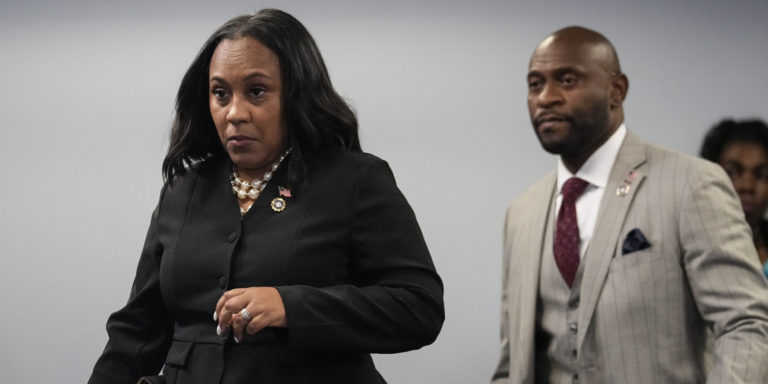
(Luis Cornelio, Headline USA) Former President Donald Trump’s defense team in Fulton County has filed a motion demanding an “immediate review” of the judge’s contentious ruling against disqualifying Fani Willis and dismissing the case entirely, following bombshell revelations. 

The Trump defense’s action follows Judge Scott McAfee’s ruling that Willis’s sexual affair with special prosecutor Nathan Wade created an “odor of mendacity” that tainted the case.

Although McAfee delivered a scathing rebuke of Willis’s actions, he stopped short of dismissing the case or disqualifying her.

McAfee asserted that either Willis or Wade needed to withdraw from the case due to the appearance of impropriety, leading to Wade’s resignation from the case. However, Trump contends that Wade’s resignation isn’t sufficient, insisting that the “odor of mendacity” persists.

Steve Sadow, lead defense counsel for the former president and presidential front-runner, stated on Monday that Trump and other co-defendants are urging scrutiny of the decision. 

“President Trump and seven defendants have jointly filed a motion requesting the Court to grant a certificate of immediate review of its Order denying dismissal of the case and disqualification of Fulton County DA Willis,” wrote the defense team on behalf of Trump in the motion. 

They further elaborated, “The motion further notes that the Court found Georgia case law lacks controlling precedent for the standard for disqualification of a prosecuting attorney for forensic misconduct. For these reasons among others, the Court’s Order is ripe for pretrial appellate review.” 

If McAfee agrees, Georgia’s Court of Appeals will decide whether to review McAfee’s decision about Willis’s resignation or the case’s dismissal.

Media outlets reported that Trump and his co-defendants currently lack the ability to appeal McAfee’s decision. 

The case originated from Willis’s decision to press charges against Trump and 18 other co-defendants in what she described as an illegal attempt to challenge the election results in Georgia. 

The case became embroiled in controversy after revelations emerged that Willis had taken several vacations funded by Wade while both were leading the criminal case against Trump. 

WATCH: Jill Biden Runs Interference Seconds Before Joe Kisses Sultry Blonde

(Luis Cornelio, Headline USA) Video footage from the White House captured First Lady Jill Biden intervening in what appeared to be a tender moment between President Joe Biden and a guest shortly after he signed an executive order.

The video, filmed during a reception celebrating Women’s History Month, shows the president engaging in conversation with an unidentified blonde woman. Then, Jill Biden swiftly intervened. 

As Biden held the woman’s hand, their eyes locked. Jill Biden hurried over to intervene, gesturing for her husband to move to the left. The first lady grabbed the president’s arm and tried to guide him, but Biden, appearing both defiant and confused, turned the opposite way, following the blonde woman off the stage.

Second Gentleman Doug Emhoff was also present, trailing Joe Biden as he left the stage and continued talking with the unidentified woman. 

Biden signed an executive order on Monday mandating federal agencies to improve funding opportunities for women’s health as part of the White House’s Initiative on Women’s Health Research.

 “I’m directing the most comprehensive set of executive action ever taken to improve women’s health – ever taken,” Biden asserted during the signing speech. “And I’m making sure that women’s health is integrated and prioritized across the entire federal government.”

While the outrage over his decree that he would be rerouting federal funding toward abortion (using the more euphemistic “women’s health” to conceal the order’s true purpose) might otherwise have garnered some attention, it was his lustful encounter with the mystery blonde at the signing that instead got tongues wagging.

As Biden signed the executive order, a group of women, including the unidentified woman, stood behind him. 

Jill Biden, Vice President Kamala Harris, former California First Lady Maria Shriver, Jennifer Klein (the director of the White House’s Gender Policy Council), Shalanda Young (the director of the Office of Management and Budget) and Dr. Carolyn M. Mazure, Ph.D. (the director of the White House Initiative on Women’s Health Research), were also in attendance. 

“These directives will ensure women’s health is integrated and prioritized across the federal research portfolio and budget, and will galvanize new research on a wide range of topics, including women’s midlife health,” a White House fact sheet stated regarding the executive order. 

Google Sued for Discrimination by Deaf, Black Employee They Used to Promote Diversity

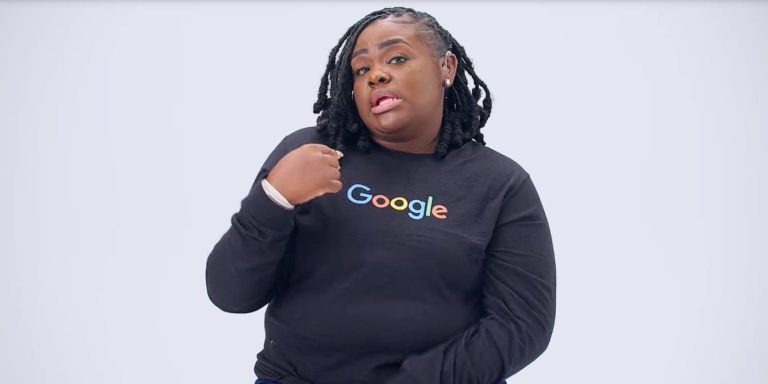
(Matthew Doarnberger, Headline USA) A former Google employee who is black and deaf has filed a lawsuit against the tech giant, claiming was denied the necessary accommodations to adequately perform her job, Newsmax reported.

The employee, Jalon Hall, said Google used her as a “poster child” for their commitment to diversity since she was the first deaf, black woman hired in the company’s history.

Despite Google’s championing of Hall after her hiring, she now makes the claim that the necessities required to meet the standards of her job were not provided.

Specifically, the managers at Google decided that having a sign-language interpreter threatened the confidentiality of the team’s work.

“I was thinking, ‘What did I get myself into? Do they not believe I’m deaf? I need my interpreter all day. Why are you robbing me of the chance of doing my job?'” Hall told Wired.

Without access to an interpreter, Hall struggled to meet the standard set by Google for her position. This involved reviewing a total of 75 videos within an eight-hour work day.

“I felt humiliated, realizing that I would not grow in my career,” she said.

She eventually sued Google in December after filing three complaints with the human resources department over racial and disability discrimination.

Hall was initially contacted by a recruiter at Google back in 2020 about joining a new in-house content moderation team called Wolverine. The recruiter informed her that a sign-language interpreter would be provided, along with other accommodations for her deafness.

Hall said that, following her hiring, Google often touted her as a symbol of diversity on their social-media sites.

“Google is using me to make them look inclusive for the deaf community and the overall disability community, in reality, they need to do better,” she told Wired.

Google responded to Hall’s lawsuit by saying that the case should be thrown out on procedural grounds, but the company did not deny the claims that she has made.

REPORT: Biden Bragged Obama ‘Would Be Jealous’ of His Accomplishments

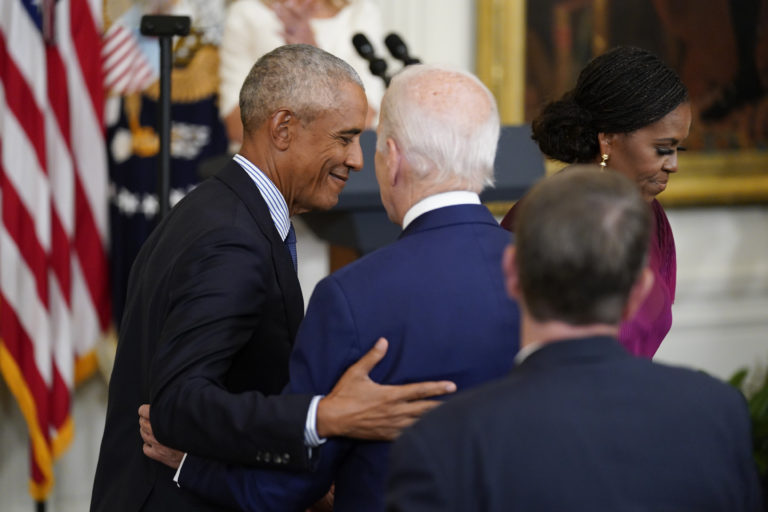
(Headline USA) President Joe Biden reportedly bragged behind closed doors that he has been more successful than his former boss, President Barack Obama.

At one point, Biden claimed “Obama would be jealous” of legislation he has passed in his first term in office, according to Axios.

The comment, if true, may underscore the tension between Obama and Biden that has existed for years, according to sources.

Biden, for example, still feels that Obama’s administration did not value his insight on foreign policy and Congress when he was vice president. And Obama notably declined to endorse Biden during the 2020 Democratic primary process.

“The Obama people thought Biden would suck as president,” one former Biden aide told Axios. “They didn’t think he’d be organized enough to execute.”

Another White House official admitted that many in Biden’s administration who once served in the Obama administration still feel that way.

“We do have too many Obama people who don’t care about Joe Biden. It’s about them,” the official said.

A transcript of Biden’s interview with special counsel Robert Hur confirmed the relationship between the two politicians was especially rocky in the 2016 election, when Obama supported Hillary Clinton instead of Biden.

“A lot of people … were encouraging me to run in this period, except the president,” Biden told Hur. “He just thought that [Clinton] had a better shot of winning the presidency than I did.”

Biden has since told staff that he believes he would have beat former President Donald Trump in 2016 if he had run.

White House spokesman Andrew Bates denied any feud between the pair, claiming Biden regularly speaks with Obama.

“President Biden does not make such comments in private. As President Biden has said, President Obama is family to him,” Bates told Axios. “[He] talks to both former President Obama and [former] President [Bill] Clinton often.”

Obama is expected to stump for Biden on the campaign trail ahead of November’s election, as is former first lady Michelle Obama.

By most accounts, Biden’s presidency has been a series of abject failures, unless seen as part of a long-term plan that is the extension of Obama’s own legacy.

If, in fact, Biden’s economic failures, foreign policy fiascos and open border are all part of a transitional phase designed to create a sense of crisis that will open the Overton window for the sort of radical change that Obama failed to achieve in his presidency, one could argue that the two had performed brilliantly in their effort, thus far, to reshape the United States into a Marxist regime.

That would hinge on their ability to fend off former President Donald Trump, however, and complete the third and final act, which would be an absolute overhaul of America’s constitutional republic and abolition of individual liberties.

Google Interfered w/ Elections at Least 41 Times over Last 16 Years

(Dmytro “Henry” Aleksandrov, Headline USA) Media Research Center revealed that Google has “interfered” with major elections in the United States 41 times over the last 16 years.

“[Google’s] impact has surged dramatically, making it evermore harmful to democracy,” MRC Free Speech America vice president Dan Schneider and editor Gabriela Pariseau wrote.

The company pushed back by saying that it has a “clear business incentive” to keep both political sides happy and that safeguards ensure non-biased and accurate search results, according to Fox News.

The most recent example was recorded after Google AI Gemini “refused to answer questions damaging” to Joe Biden, MRC Free Speech America, a division of the conservative MRC, said.

“[From 2008 through February 2024,] Google has utilized its power to help push to electoral victory the most liberal candidates, regardless of party, while targeting their opponents for censorship,” the group said.

Favoring Barack Obama over John McCain in 2008 and over Mitt Romney in 2012 and refusing to correct a “Google bomb” that “smeared” then-leading GOP primary candidate for president Rick Santorum were examples of the interference.

Other examples included using its algorithm to exclude autofill results that were potentially damaging to Hillary Clinton in 2016 but “not doing the same for then-candidates Donald Trump or Bernie Sanders” and working with partners to help likely pro-Clinton Latino voters go to the polls that same year.

In addition to that, the organization discovered that Google was disabling Tulsi Gabbard’s Ads account just as she became the most searched candidate following the first Democratic Party primary debate in 2020, suppressing news critical of Biden, concealing most Republican campaign websites for the 12 competitive Senate races in 2022 and helping Biden in 2024 by “burying in its search results the campaign websites of every one of his significant opponents.”

“Utilizing the many tools in its arsenal, Google aided those who most closely aligned with its leftist values from election cycle to election cycle since as far back as the 2008 presidential election. Meanwhile, it targeted for censorship those candidates who posed the most serious threat,” Schneider and Pariseau said.

REPORT: Biden Berated, Screamed at Aides after Being Told He Was Losing to Trump

(Headline USA) President Joe Biden reportedly berated and screamed at aides after being told he was losing to former President Donald Trump in the polls, according to NBC News.

The 81-year-old has allegedly grown more and more frustrated and anxious about his reelection bid as Trump’s lead in key swing states continues to grow. 

In one instance, after losing 100,000 Democratic primary votes in Michigan to the “uncommitted” option, Biden was “seething” and began shouting and swearing at campaign staffers who told him his continued support for Israel in its war against Hamas affected his numbers.

Since then, Biden has taken a hardline stance against Israel on several occasions, even dispatching Senate Majority Leader Chuck Schumer to meddle in the country’s elections as Democrats attempt to pin blame on Israeli Prime Minister Benjamin Netanyahu for Biden’s indecisiveness and taciturn support for Hamas.

The risky move, however, may backfire by further alienating Jewish voters, who see as clearly as Muslim voters that Biden is trying to play it up the middle for his own political protection.

The war began shortly after Biden unfroze billions of dollars in Iranian assets, which the rogue regime likely used to help funnel resources to Hamas terrorists for their Oct. 7 massacre in Israel, breaking a two-year ceasefire with the barbaric sneak attack.

After reports of Biden’s blowup began to leak, White House spokesman Andrew Bates insisted that the recent acrimony toward Netanyahu had nothing to do with Biden’s domestic woes.

“President Biden makes national security decisions based on the country’s national security needs alone—no other factor,” he claimed.

However, longtime Democrat strategist James Carville seemed to contradict that thinking in a February interview with former White House press secretary Jen Psaki.

“”They’re going to have to tell Bibi Netanyahu, ‘We’re not going to lose our election because you’re scared to go to jail,'” Carville said a day before the Michigan primary.

In addition to lashing out at Israel, Biden has also told staffers he feels “cocooned,” and that he wants to speak more with voters. However, his handlers continue to place significant constraints on his campaigning in order to “minimize the chances of a flub,” NBC News reported.

When asked whether Biden’s campaign intended to allow him to do more in-person campaigning, a source familiar with the matter said, “The president and his advisers have all been eager for him to be out there more and planned for that to take place at the start of the election year, as has been the norm for past incumbents seeking re-election.”

Meanwhile, others in his party are growing frustrated with his sagging poll numbers.

“Biden stood up in front of the whole world and said, ‘I’m ready. I’m the guy who can take down Donald Trump,’ so, he godd**n well better do it,” said Rep. Adam Smith, D-Wash.

“We don’t have time for him to be worried about whether or not people are saying things right or the poll numbers are where they should be,” Smith added. “I want focused energy and not defensive anger.”

Kamala Hangs w/ Rapper Fat Joe for Marijuana Roundtable

(Luis Cornelio, Headline USA) Vice President Kamala Harris linked up with rapper and activist Fat Joe, born Joseph Antonio Cartagena, to discuss easing penalties for marijuana use. This move comes despite Harris’s prior history of prosecuting such offenses during her time as a California prosecutor.

On a Monday roundtable at the White House, Harris highlighted concerns about federal penalties for the illegal consumption of marijuana, emphasizing that criminal justice reform has fallen short of delivering on the promise of “equal justice” under the law.

“I say that with full knowledge of how this system has worked, including my experience as a prosecutor,” she asserted. “The president and I have addressed inequities through implementation of long-overdue criminal justice reform.” 

She further added: “Nobody should have to go to jail for smoking weed.” However, despite Harris’s apparent shift in stance, she faced intense criticism for prosecuting low-level marijuana users during her tenure as a California prosecutor.

During her time as the district attorney for San Francisco from 2004 to 2011, Harris oversaw the conviction of over 1,900 marijuana cases.  

While this number was lower than that of her predecessor, it still raised questions about potential hypocrisy in Harris’s advocacy for criminal justice reforms during her unsuccessful bid for the Democratic presidential nomination in 2019. 

Following her role as district attorney, Harris served as the attorney general for California from 2011 to 2017. Notably, in 2016, Californians voted to legalize the use of marijuana, yet Harris remained neutral on the measure.

Also present at the Monday roundtable was Kentucky Gov. Andy Beshear, a Democrat known for pro-criminal justice reforms, particularly on marijuana offenses. 

Praising Beshear’s progressive policies on marijuana, Harris remarked, “I would like to just publicly applaud and thank you for being so forward-leaning around having the courage to challenge certain traditions and critically evaluate whether what we have been doing is smart and what can we do to be smarter.” 

This is not the first time Harris and Fat Joe, a criminal justice reform activist, have collaborated for an event, as both previously met during a college tour by Harris at Florida International University in September 2023.

The White House itself has a history with marijuana, with instances of its presence being reported on at least several occasions in 2022.

Tellingly, the emergence of reports on marijuana followed the discovery of a cocaine baggie in the White House, with the Secret Service unable to identify the culprit.