What Voters Should Know About the Campaign to Unseat Thomas Massie

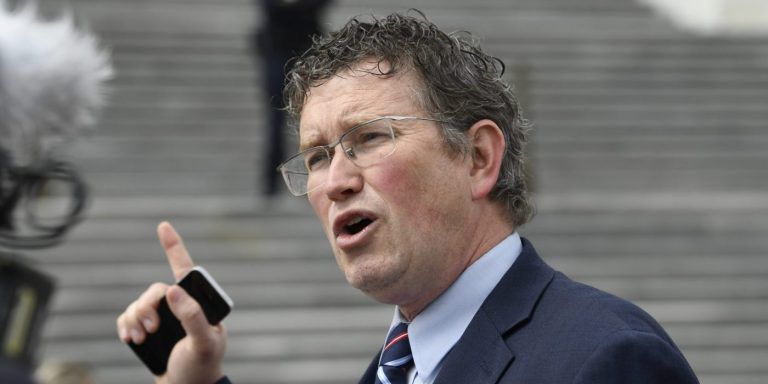
(José Niño, Headline USA) Ed Gallrein, a former Navy captain with President Donald Trump’s endorsement, is running against Rep. Thomas Massie, R-Ky., Republican primary on Tuesday, but he has refused to appear at any debates and has disclosed almost nothing about himself apart from his claimed affiliation with SEAL Team Six.

Ken Klippenstein’s Substack has released an investigative report that scrutinizes Gallrein’s campaign approach, his remarks in public settings, and a chapter from his life after the military that he has never brought up while campaigning.

Gallrein skipped every scheduled debate, leaving Massie to show up by himself each time. He has sat for only a handful of interviews. His campaign promotes endorsements from military officers whose identities are blacked out. Asked about the Iran War’s impact on gas prices, Gallrein responded to a local NBC affiliate that “the president is playing five-dimensional chess,” according to Klippenstein’s reporting.

The next day on the Mark Levin Show, he upgraded his description of Trump’s war management to “nine-dimensional chess.” At the heart of Gallrein’s appeal is an anecdote he shares about a visit to the Oval Office, during which he claims Trump had a leather binder holding his entire classified career record.

“He knows everything about me. He knows what I did for you in uniform. He knows what I’ll do for you in Washington. I’ll be your champion,” Gallrein declared to a crowd at the Maywood Country Club, as reported by Klippenstein.

Across several public appearances that Klippenstein documented, Gallrein has cited classification rules when questioned about his history, asserting that he is barred from discussing operations or specifics of his service. He has also referred to civilians as “sheep” and special operators as “sheep dogs.” “SEALs are sheep dogs. We don’t care what letter jacket the adversary wears. If they’re bad people and they mean, mean harm to our sheeps, we’re on it,” Gallrein stated on a podcast called USA Cares.

Klippenstein’s investigation also uncovers a moment from Gallrein’s career after leaving the Navy. Following his retirement, Gallrein took a position as a Safety and Security Specialist at the Department of Energy’s Y-12 National Security Complex in Oak Ridge, Tennessee, a facility handling sensitive nuclear work. The department terminated him in May 2013.

Gallrein submitted a whistleblower complaint claiming he faced retaliation for flagging problems with security training programs, but officials rejected the complaint. The ruling noted that Gallrein had raised his concerns with a fellow subcontractor employee instead of reporting them to a DOE official or following his employer’s required chain of command. Gallrein has avoided any mention of this incident throughout his campaign.

Massie, the sitting congressman, has built a track record of bucking his party’s leadership on multiple fronts. He opposed Trump’s “Big Beautiful Bill,” joined forces with Rep. Ro Khanna, D-Calif., to demand the release of the Epstein files, and has emerged as one of Congress’s loudest critics of the Iran War. Trump has branded Massie “the worst Republican Congressman in History” and thrown his support behind Gallrein.

José Niño is the deputy editor of Headline USA. Follow him at x.com/JoseAlNino 
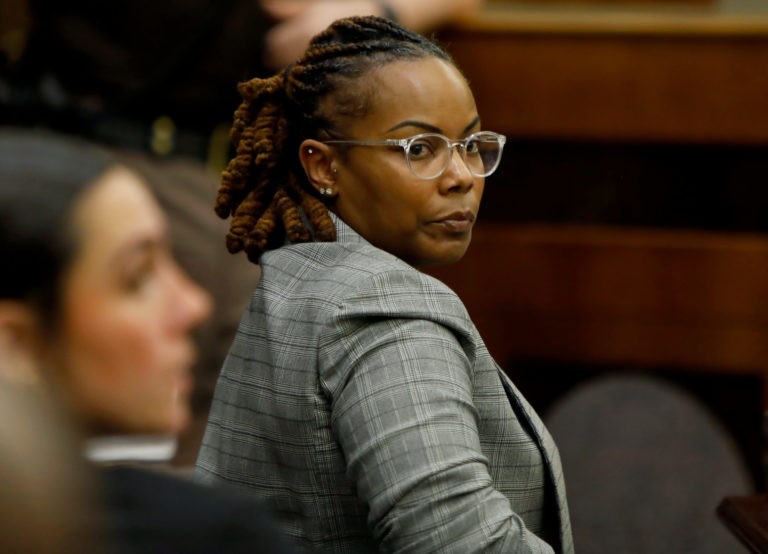
Trial Begins for Former Virginia Assistant Principal After 6-year-old Student Shot Teacher

(Headline USA) Jury selection began Monday in the trial of a former assistant principal in Virginia accused of ignoring warnings that a 6-year-old student brought a loaded gun to school that was later used to shoot his first grade teacher.

Ebony Parker is charged with eight counts of felony child neglect, one for each of the bullets in the gun brought into Richneck Elementary schoolteacher Abby Zwerner ‘s classroom in Newport News in January 2023, prosecutors have said. Each count carries a maximum penalty of five years in prison upon conviction.

The charges allege Parker “did commit a willful act or omission in the care of such students, in a manner so gross, wanton and culpable as to show a reckless disregard for human life,” according to court documents.

Parker’s attorneys were in court Monday morning and could not be reached for comment about her defense. But her attorneys in a civil trial last year argued that the shooting was “unforeseeable.” They argued Parker did not have a legal duty to protect Zwerner and told the jury in that case “the law requires you to examine people’s decisions at the time they make them.”

Criminal charges against school officials after a school shooting are quite rare, experts say. The shooting sent shock waves through this military shipbuilding community and the country at large, with many wondering how a child so young could gain access to a gun and shoot his teacher.

Last November, a jury awarded $10 million to Zwerner, siding with her claims in a lawsuit that Parker ignored repeated warnings that the child had a gun.

Zwerner was shot as she sat at a reading table in her classroom. She spent nearly two weeks in the hospital, required six surgeries and does not have the full use of her left hand. A bullet narrowly missed her heart and remains in her chest.

Parker was the only defendant in the lawsuit. A judge previously dismissed the district’s superintendent and the school principal as defendants.

The lawsuit said Parker had a duty to protect Zwerner and others from harm after being told about the gun. Zwerner’s attorneys said Parker failed to act in the hours before the shooting after several school staff members told her that the student had a gun in his backpack.

Zwerner testified she first heard about the gun from a reading specialist who had been tipped off by students. The shooting occurred a few hours later. Despite her injuries, Zwerner was able to hustle her students out of the classroom. She eventually passed out in the school office.

Zwerner is scheduled to testify in the criminal case, according to court records.

The student’s mother was sentenced to nearly four years in prison for felony child neglect and federal weapons charges. Her son told authorities he climbed to the top of a dresser to retrieve the gun from his mother’s purse.

Adapted from reporting by the Associated Press

Gold Demand in Tech and Industry Up Modestly in Q1

(Mike Maharrey, Money Metals News Service) Gold primarily functions as a financial asset; however, it has other practical uses, despite the ignorant assertion by some that it is a “useless metal.”

In the first quarter, 81.6 tonnes of gold were used in tech and industrial applications. That was a 1 percent increase from the first quarter last year.

The electronics sector uses the most gold, gobbling up 69.3 tonnes in Q1, a 3 percent year-on-year increase.

Meanwhile, gold used in other industrial applications fell 8 percent to 10.4 tonnes.

The World Gold Council described gold usage in the electronics sector as “on a two-speed setting.” There is sluggishness in consumer electronics demand due to higher prices. That is being balanced by surging demand in AI applications.

“Rapidly expanding AI infrastructure boosted demand for high-reliability and high-performance chips – technical specifications override cost considerations in these applications. Meanwhile, manufacturers in the price-sensitive consumer electronics market continued their efforts to reduce or replace gold in the face of record-breaking prices.”

Gold demand for electronics grew by 5 percent in mainland China due to the expansion of its domestic supply chain.

South Korea also reported unexpectedly strong demand (up 7 percent) with high memory output and strong fab utilization rates.

Gold demand in the Taiwanese electronics sector surged by 9 percent thanks to a big boost in AI-related demand.

The U.S. also saw solid growth in demand (6 percent) on the strength of domestic AI buildouts and EV demand.

Japan (-1 percent) and Europe (-3 percent) lagged due to weak manufacturing growth and stagnant consumer demand.

According to the World Gold Council, ongoing technical upgrades are increasing gold usage in devices.

“For example, AI servers and automotive power modules require more gold to dissipate large amounts of generated heat and to guarantee reliability and longevity. As a result, the growing share of advanced applications is strengthening and diversifying demand while increasing the sector’s resilience to demand fluctuations in traditional consumer electronics.”

Gold demand in the memory and semiconductor sectors rose sharply in Q1. According to the World Gold Council, AI server shipments are driving strong demand for DRAM and NAND. Significantly higher memory requirements per server, coupled with the increasing adoption of AI-enabled PCs and mobile devices, are juicing gold demand.

The use of gold in wireless and compound semiconductors also grew in Q1 with the rollout of Wi-Fi 7 and the expansion of power amps. The automotive sector and AI data centers are using more advanced power modules, supporting gold demand.

Demand for gold in the LED sector fell modestly by 1 percent in Q1. Price pressures and structural shifts in traditional markets such as general lighting were offset by growth in “high-end applications” such as micro-LED, automotive lighting, and UV LED.

According to WGC analysts, there seems to be a rotation in tech gold demand, with many older applications using less metal, with innovations taking up the slack.

“While traditional gold wire faces substitution pressures in lower-end applications, the AI boom continues to ramp up the need for high-purity gold in advanced applications. Overall, this is more than offsetting the decline in legacy uses, reinforcing gold’s critical role in the growing high-performance semiconductor manufacturing space.”

Meanwhile, gold is essentially being phased out of dentistry with the evolution of ceramic technology. Gold used in dentistry fell below 2 tonnes for the first time in the first quarter.

Useless? Really?

Warren Buffett once said, “Gold gets dug out of the ground in Africa or someplace. Then we melt it down, dig another hole, bury it again, and pay people to stand around guarding it. It has no utility. Anyone watching from Mars would be scratching their head.

I even once heard a commentator on a major financial network claim gold is a “useless rock.”

As you can see by the substantial demand for gold in technology and electronics, this is just silly.

In fact, gold is one of the most useful metals in the world. Due to its utility, coupled with its scarcity, gold is also one of the most valuable metals in the world.

In the first place, gold is strikingly beautiful. It has captured people’s eyes for thousands of years. That’s why people all over the world love to wear gold. About 44 percent of gold demand is for jewelry production. About 300 tonnes of gold were used in jewelry fabrication in Q1.

But gold isn’t just pretty. As already mentioned, the metal’s inherent physical and chemical properties make it useful in many industrial and technological applications.

This is why we see gold increasingly used in the tech sector. In fact, gold would probably be used even more if it weren’t so rare and expensive.

Gold is also important in the medical field. Its inherent stability and unique optical properties make it perfect for use in diagnostic testing. The World Gold Council said that gold is “at the heart of the hundreds of millions of Rapid Diagnostic Tests (RDTs) that are used globally every year.

“This well-established and critically important technology has changed the face of disease diagnosis in the developing world over the last decade.”

Gold nanoparticles are used in testing for malaria, HIV, hepatitis, and other illnesses.

Gold has even been used in some exotic applications. In 2018, a team of Chinese researchers partially restored the sight of blind mice by replacing their deteriorated photoreceptors – sensory structures inside the eye that respond to light – with nanowires made of gold and titanium.

Meanwhile, gold serves as an integral part of U.S. efforts to land people on the moon.

The point is that gold is far from useless.


Mike Maharrey is a journalist and market analyst for Money Metals with over a decade of experience in precious metals. He holds a BS in accounting from the University of Kentucky and a BA in journalism from the University of South Florida.

Ghana Central Bank Seeks to Increase Domestic Gold Buying to Boost Reserves

(Mike Maharrey, Money Metals News Service) Earlier this year, the Ghanaian government announced a scheme to buy 127 tonnes of gold from “artisanal” and small-scale mining (ASM) operations to boost reserves and stem smuggling. Now the government is asking large-scale miners in the country to sell 30 percent of their annual output to the Bank of Ghana to boost gold reserves. That’s up from the 20 percent required by an agreement hammered out between miners and the Ghana Chamber of Mines in 2022.

Bank of Ghana gold management program head Paul Bleboo announced the new plan last week.

“This time, we intend to negotiate for 30 percent of annual production [from industrial miners] … with the entire 30 percent to be delivered in doré form.”

Doré is semi-refined ore containing 80 to 90 percent gold.

According to Bleboo, miners fell short of the 20 percent commitment by about half last year, as industrial miners delivered roughly 10 tonnes against declared production of about 100 tonnes.

Miners are required to sell to the central bank at a “less than 1 percent” discount. Bleboo said the discount was “necessary,” reflecting refining, freight, and purity costs. He said it should be “treated as the cost of building reserves.”

However, Ghana Chamber of Mines CEO Kenneth Ashigbey said negotiations regarding pricing and discounts are “not straightforward,” adding that they have not reached any agreement with the central bank

Ghana ranks as Africa’s top gold producer and the world’s sixth largest. In 2024, the country produced around 4.9 million ounces of the yellow metal, and early data indicate production set a record of over 6 million ounces last year.

Based on the most recent data available from the Ghanaian central bank, the country’s gold reserves had climbed to 19.2 tonnes as of February. According to a CNBC report, the expanding gold reserves have helped “stabilize the Ghanaian cedi and rebuild external buffers as the economy recovers from its worst crisis in a generation.”

Ghana has targeted reserves of up to 157 tons, the equivalent of 15 months of import cover, by 2028.

Ghana’s efforts to expand its gold holdings are part of a broader global trend toward larger gold reserves, and many countries seek to diversify away from the dollar.

While central bank gold buying moderated in 2025, it remained far above the recent historical average. Official net full-year buying came in at 863.3 tonnes. That was down 21 percent year-on-year, charting the lowest level since 2021.

However, while central bank gold purchases declined last year, they were still well above the 2010-2021 annual average of 473 tonnes.

Last year was the fourth-largest expansion of central bank gold reserves on record. The all-time high was set in 2022 (1,136 tonnes). It was the highest level of net purchases on record, dating back to 1950, including since the suspension of dollar convertibility into gold in 1971.


Mike Maharrey is a journalist and market analyst for Money Metals with over a decade of experience in precious metals. He holds a BS in accounting from the University of Kentucky and a BA in journalism from the University of South Florida.

US Officials Work on Creating Pretexts To Attack Cuba

(Dave DeCamp, Antiwar.comUS officials are working to create pretexts for a potential war on Cuba, as President Trump has made clear that the island nation is in his administration’s crosshairs.

Late last week, US media outlets reported that the Department of Justice is taking steps to indict former Cuban President Raúl Castro, the brother of long-time leader Fidel Castro.

The reports said that the US may indict him over the downing of a plane belonging to a Cuban exile organization in 1996, which killed four people. The potential indictment comes as President Trump is overseeing a bombing campaign against alleged drug-running boats in the region, which has killed nearly 200 people, who were all civilians.

If the US indicts Castro, the administration could follow a similar playbook as it did with the attack on Venezuela, which was carried out to abduct Venezuelan President Nicolas Maduro.

A report from Axios on Sunday also presented a new potential pretext: Cuba’s alleged acquisition of military drones. The report, which cited unnamed US officials and purported “classified intelligence,” said that Cuba has more than 300 drones and that it’s seeking more amid the ramped-up US oil embargo and threats of US military action.

The report, which acknowledged the drone claims could be used as a “pretext for US military action,” said Cuba has been discussing the possibility of using the drones to attack “the US base at Guantanamo Bay, US military vessels and possibly Key West, Florida, 90 miles north of Havana.”

Buried in the Axios report is an acknowledgment that US officials “don’t believe Cuba is an imminent threat, or actively planning to attack American interests,” but that US intelligence assesses the “island’s military officials have been discussing drone warfare plans in case hostilities erupt as relations with the US continue to deteriorate.”

President Trump has repeatedly threatened war against Cuba, saying back in March that he may “have the honor of taking Cuba.” The US and Cuba have been engaged in talks, which included a visit from CIA Director John Ratcliffe last week, but it’s unclear what sort of agreement the administration would accept, as Secretary of State Marco Rubio, who is leading the policy, has made clear he wants regime change.

This article originally appeared at Antiwar.com.

Do Midterm Redistricting Efforts Favor Republicans?

(The Center Square) The U.S. Supreme Court slapped down an appeal from Virginia Democrats Friday to uphold their redrawn map of congressional districts, preserving what appears to be a Republican advantage heading into midterm elections.

The high court did not include a reason along with its order.

With multiple states pursuing redistricting efforts to favor one party over the other, Republicans could stand to gain about a dozen seats come November.

A nationwide push

President Donald Trump has been pushing red states to redistrict in Republicans’ favor since reenteringoffice, as the president’s party traditionally loses congressional seats during midterm elections. At least one chamber in Congress has flipped in eight of the last 10 midterm elections going back to 1986. Twice, both chambers flipped.

Robert Strong, an emeritus professor of politics at Washington and Lee University and a contributor to The Conversation, noted that all presidents “since Harry S. Truman, whose job approval was below 50% in the month before a midterm election, lost seats in the House.” Trump is well below that threshold, polling at about 36% according to several polls, including the latest from The Economist.

Republicans currently hold a slim majority in the House of Representatives, and the entire chamber is up for reelection in November.

Trump and others have said that Democrats have redistricted to their advantage in blue states, and so Republicans should use their majorities in red states to do the same.

Federal law requires that states redraw their congressional maps every 10 years following the national census, but they can redistrict more frequently if they choose to. More states have pursued mid-decade redistricting ahead of the 2026 midterms — spurred both by Trump’s calls for favorable Republican maps and by Democratic countermeasures — than at any point since the 1800s, according to the National Conference of State Legislatures.

States with new maps

So far, California, Florida, Missouri, North Carolina, Ohio, Tennessee, Texas and Utah have implemented redrawn congressional maps, resulting in 16 potential new seats for Republicans and six for Democrats. But with Trump’s approval rating so low, energy prices ao high, and the historic midterm advantage for the party not in power, will that result in Republicans maintaining the majority in Congress?

California passed Proposition 50 in November, hoping to gain five more Democratic seats among its 52 representatives in the House. Utah only has four seats total, all of which are currently held by Republicans, but redistricting efforts there aim to gain one Democrat in November.

Texas and Florida represent the biggest gains for Republicans, should the party hold all of its other seats in the states, with their redrawn maps potentially yielding nine new seats in districts redrawn to favor Republicans. Cumulatively, the maps for Missouri, North Carolina, Ohio and Tennessee have been redrawn to favor five more Republican districts.

And after several court rulings clearing the way for other efforts, Alabama and Louisiana will likely follow, adding two more potential seats for Republicans. South Carolina kicked off a special session Friday, mandated by the governor via executive order, where state lawmakers will decide if they will pursue a new map for November or lay the matter to rest for now. The state is currently represented by six Republicans and one Democrat in the House; a new map would potentially convert all the state’s districts to Republican-leaning.

Failed or stalled efforts

A number of blue states, like Colorado, Illinois, New York and Washington, have decided they will not pursue redistricting for 2026 but may pursue it for 2028. Georgia has done the same, as voting is already underway there.

Virginia turned out to be a disappointment for Democrats, whose referendum for a constitutional amendment to redraw the state’s congressional map passed 52% to 48%. The language of the amendment echoed California’s, which said the new maps would only be in effect until the 2030 census to “restore fairness” in the upcoming elections.

The Virginia Supreme Court nullified the referendum, saying it did not meet constitutional requirements, and the Supreme Court denied Democrats’ request for an appeal on Friday.

Virginia is currently represented by six Democrats and five Republicans in the House. The new map would have redrawn districts into 10 potential Democratic districts and one Republican.

WATCH: 2 Navy Jets Collide during Air Show

(Headline USAAll four crew members ejected safely after two Navy jets collided and crashed Sunday during an air show at the Mountain Home Air Force Base in western Idaho, officials said.

The collision involved two U.S. Navy EA18-G Growlers from the Electronic Attack Squadron 129 in Whidbey Island, Washington, said Cmdr. Amelia Umayam, spokesperson for Naval Air Forces, U.S. Pacific Fleet.

The aircraft were performing an aerial demonstration when the crash occurred, Umayam said in a statement. The four crew members from both jets safely ejected and the crash was under investigation, she said.

The crew members were in stable condition, base officials said.

Nobody at the military base was hurt, said Kim Sykes, marketing director with Silver Wings of Idaho, which helped to plan the air show.

“Everyone is safe and I think that’s the most important thing,” Sykes said.

Planes fell to the ground together

The base said in a social media post that it was locked down immediately following the crash. The remainder of the air show was canceled.

Videos posted online by spectators showed four parachutes opening in the sky as the aircraft plummet to the ground near the base about 50 miles south of Boise.

The EA-18G Growler is a variant of the F/A-18 Super Hornet fighter jet with sophisticated electronic warfare systems.

Shane Ogden said he was filming the two jets as they came close together. A video he captured shows the two aircraft appear to make contact and then spin in tandem as the crew members eject and their parachutes open. The planes then fall together, exploding into a fireball upon impact as the crew members drift to the ground nearby.

“I was just filming thinking they were going to split apart and that happened and I filmed the rest,” Ogden said in a text message. He said he left soon after the crash because he did not want to get in the way of emergency responders.

Organizers said the popular air show that includes flying demonstrations and parachute jumps is a celebration of aviation history and a look at modern military capabilities. The U.S. Air Force Thunderbirds demonstration squadron headlined the show both days.

The National Weather Service reported good visibility and winds gusting up to 29 mph around the time of the crash.

Little room for error

It was remarkable both crews were able to eject from their planes, and aviation safety expert Jeff Guzzetti said that may have been possible because of the way the planes collided and appeared to remain stuck together in midair before falling to Earth. Crews usually don’t have a chance to eject in a midair collision, he said.

“It’s really striking to see,” Guzzetti said. “It looks like they struck each other in a very unique fashion to cause them to remain intact and kind of stick to each other and that very well could have saved them.”

“It appears to be a pilot issue to me. It doesn’t look like it was a mechanical malfunction,” he added. “Rendezvousing with another airplane in formation flight is challenging, and it has to be done just right to prevent exactly this kind of thing.”

Aviation safety expert John Cox, who is CEO of Safety Operating Systems, said the pilots who perform at air shows are among the best, but there is little room for error.

“Air show flying is demanding. It has very little tolerance,” Cox said. “The people who do it are very good and it’s a small margin for error. I’m glad everybody was able to get out.”

This year’s Gunfighter Skies event was the first at the base since 2018, when a hang glider pilot died in a crash during an air show performance.

In 2003, a Thunderbirds aircraft crashed while attempting a maneuver. The pilot, who was not hurt, was able to steer the plane away from the crowd and eject less than a second before it hit the ground.

The air show industry has been working to improve safety for years at the roughly 200 events held each year in the U.S. The last fatal crash at an air show came in 2022 when two vintage military planes collided at an event in Dallas and killed six people.

John Cudahy, president and CEO of the International Council of Air Shows, said that there used to be an average of about two deaths a year at a U.S. air show. But over the past decade, the average has been closer to one death per year, he said. There were no air show deaths in 2025 or 2024, and a spectator hasn’t been killed at an air show in the U.S. since 1952.

“Safety wise we’ve enjoyed really an unprecedented term of few accidents,” Cudahy said.

Investigators may be able to quickly get an idea of what happened in Sunday’s crash because the crews of both planes survived and will be able to tell investigators what they saw and experienced before the collision. The Navy will lead the investigation, so there won’t be as much information shared publicly as in civilian crashes.

The Iran war has led to the cancellation of some air shows this year at bases where military units are flying missions related to the conflict.

Adapted from reporting by the Associated Press

3 Teens Arrested for Committing 10 Shootings Around Texas

(Headline USAThree young people were in custody following at least 10 random weekend shootings in Austin, Texas, that left four people injured, city officials said.

Driving around the city in stolen vehicles, at least two of the suspects fired at two fire stations, apartment buildings and houses during a string of robberies and shootings from Saturday afternoon to Sunday morning, Austin Police Chief Lisa Davis said Sunday.

Two boys, ages 15 and 17, were apprehended after they were pulled over in a stolen car and attempted to run. A third person who had been in the car also ran and was detained Sunday night at a gas station in Manor, about 15 miles (24 kilometers) northeast of Austin. Police said the person was a juvenile, but did not provide an age or any other details.

Davis said earlier that the firearm that was used in the shootings had earlier been stolen by the 15-year old, and that the 17-year old was wanted for a separate firearm theft.

The city ordered residents of a large part of the southern area of Texas’ capital city to shelter in place Sunday while they were searching for the suspects. With two suspects in custody, the order was later lifted.

Four victims were taken to hospitals, including one with critical injuries, officials said.

The suspects stole at least four vehicles as they traveled around the city, Davis said.

“We don’t have any specific motive that has been identified. In fact, these actions appear to be random,” Mayor Kirk Watson said.

Adapted from reporting by the Associated Press

Trump Undecided on $14 Billion Arms Package for Taiwan After Talks With Xi

(Dave DeCamp, Antiwar.comPresident Trump has said he’s undecided on moving forward with a massive $14 billion package of arms deals for Taiwan following his visit to Beijing and talks with Chinese President Xi Jinping.

“I’ll make a determination over the next fairly short period. I’m gonna make a determination,” Trump told reporters on Air Force One as he was heading back to the US, according to POLITICO.

The president said he needed to speak with the person “running Taiwan,” though a US president hasn’t spoken with Taiwan’s leader since Washington severed formal diplomatic relations with Taipei in 1979 as part of a normalization deal with Beijing. Back in 2016, Trump became the first president-elect to hold a call with Taiwan’s president.

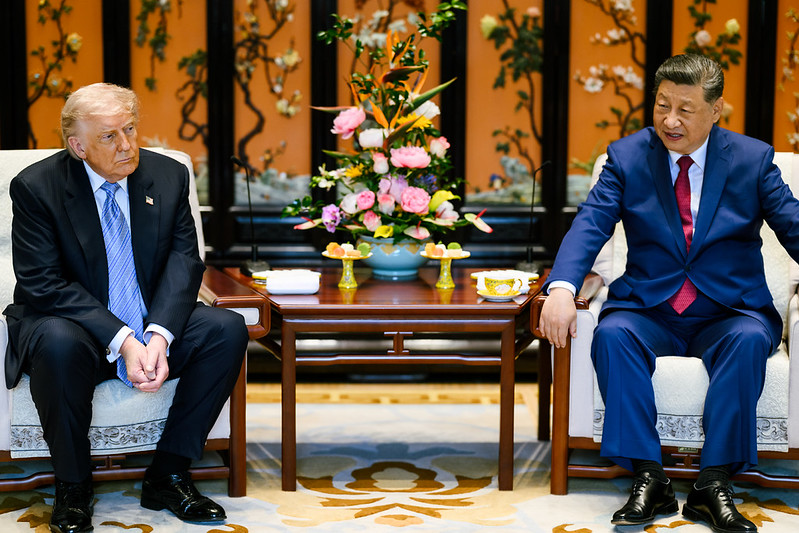
Trump and Xi in Beijing on May 14, 2026 (White House photo)

The Trump administration approved a massive $11 billion package of arms deals for Taiwan in December 2025, more than was approved for the island during the entire Biden administration. US officials have already put together another package worth $14 billion, which includes Patriot missile defense systems and advanced surface-to-air missiles, according to the Financial Times.

Trump is under pressure from Democrats in Congress to move forward with the new arms package, and he has been criticized for discussing weapons sales to Taiwan with Xi since the “Six Assurances” the US gave to Taiwan in 1982 under the Reagan Administration said that the US had “not agreed” to consult with Beijing on arms sales to the island.

“He brought that up,” Trump told reporters when asked about discussing the arms sales with Xi. “He talked about that to me, obviously. So what am I going to do, say ‘I don’t want to talk to you about it because I have an agreement that was signed in 1982?’”

For its part, Beijing often points to the 1982 joint comminique between the US and China that states the US government “does not seek to carry out a long-term policy of arms sales to Taiwan, that its arms sales to Taiwan will not exceed, either in qualitative or in quantitative terms, the level of those supplied in recent years since the establishment of diplomatic relations between the United States and China, and that it intends gradually to reduce its sale of arms to Taiwan, leading, over a period of time, to a final resolution.”

The Six Assurances the US gave to Taiwan do not take back the pledge to reduce and eventually end arms sales to Taiwan, but do say that the US “has not agreed to set a date for ending arms sales to Taiwan.”

China has made clear that it strongly opposes the continued US arms sales to Taiwan, which have increased in recent years, and it responded to the $11 billion package that moved forward in December by launching major military drills around Taiwan that simulated a blockade.

Xi also issued a strong warning to Trump regarding Taiwan during the talks in Beijing, saying it is the “most important issue in China-US relations” and that if it’s mishandled, the US and China will have “clashes and even conflicts, putting the entire relationship in great jeopardy.”

Trump told reporters that Xi “feels very strongly” about Taiwan and “doesn’t want to see a movement for independence.” The US president added that he “didn’t make a comment on it. I heard him out. I have a lot of respect for him.”

Tim Walz Enabled ‘Culture of Tolerance’ w/ Minnesota Fraud, Report Finds

(Luis CornelioHeadline USA) A new investigative report gives a scathing review of Gov. Tim Walz’s handling of Minnesota’s fraud scandal — reporting that his administration allowed the fraud to run rampant.

The Minnesota House Fraud Prevention and State Agency Oversight Committee released its final 84-page report Tuesday, saying Walz led through a “culture of tolerance” that enabled serial fraudsters to steal billions in public funds.

According to the report, several officials within Walz’s office, the state Department of Human Services, and the Attorney General’s Office knew “that large-scale fraud” was likely occurring in the Child Care Assistance Program by 2019 and in the Minnesota Department by 2020.

Worse, the Walz administration “ignored and consciously downplayed shocking levels of fraud across” several programs, including Medicaid waiver programs, Emergency Medical Transportation, Integrated Community Supports, sober homes, Adult Day Care, Assisting Living Services and others, as reported by Fox News.

“Governor Walz created a culture that enabled fraud by failing to hold anyone in his administration accountable, despite years of credible whistleblower and OLA reports and actual federal criminal indictments and convictions,” the report stated.

“Instead of addressing the problem directly early in 2019 in the wake of the OLA reports on CCAP fraud, he downplayed or ignored the evidence and closed the criminal investigation unit that was having the greatest impact,” the report continued.

The report also stated that Walz attempted to shift blame to others rather than take responsibility.

In total, the fraud reportedly cost taxpayers $300 million in federal meal program fraud and as much as $9 billion in Medicare fraud.

The ongoing fraud scandal has increasingly been viewed as a major factor behind Walz’s decision not to pursue reelection in 2026, despite previously planning another run. The embattled Minnesota governor has nevertheless remained a rumored contender for the Democratic Party’s 2028 presidential nomination.