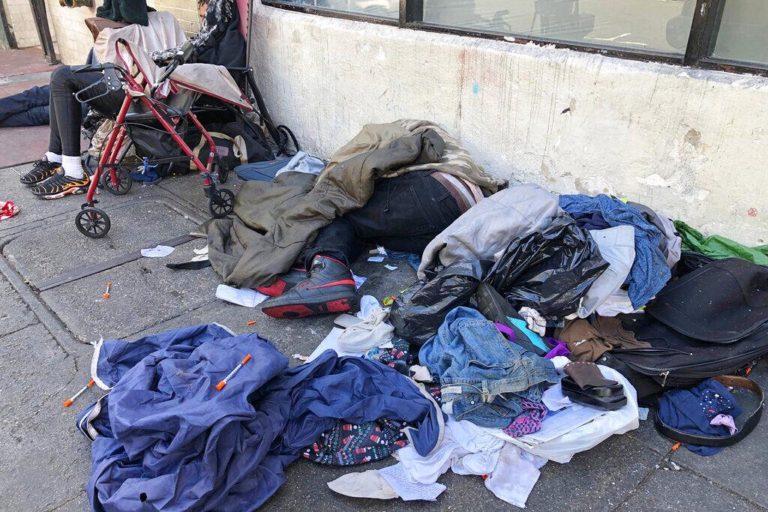
Woman Used Her Address to Illegally Register Skid Row Homeless to Vote: DOJ

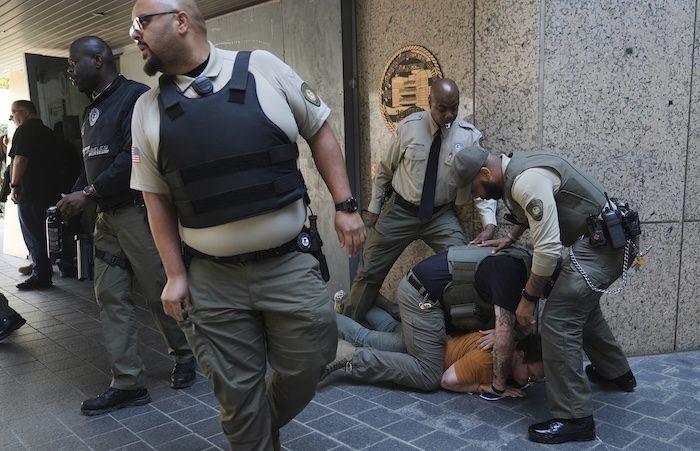
(Luis CornelioHeadline USA) Federal prosecutors announced Monday that they dismantled a voter fraud scheme in California in which a woman allegedly paid individuals to register to vote and used her home address to register some of them, including homeless people in Los Angeles’s Skid Row.

The alleged fraudster, 64-year-old Brenda Lee Brown Armstrong, is set to enter a guilty plea in the coming weeks to one felony count of paying another person to register to vote, according to prosecutors.

She faces a maximum sentence of five years in prison.

The DOJ said Armstrong worked as a “petition circulator” and was paid by entities and individuals to collect voter signatures for initiatives like referendums and recall efforts in local elections.

She was paid for each signature she collected, though the amount varied depending on the initiative.

According to prosecutors, Armstrong exploited Skid Row, the infamous homeless encampment in Los Angeles, to recruit individuals willing to exchange their personal information for money.

She reportedly paid the targeted individuals as low as $2 or $3.

While she was only paid for signatures, Armstrong allegedly began registering some of the homeless individuals to vote so they could sign her petitions.

The DOJ added that Armstrong provided her personal home address “on several occasions” for individuals who did not have a permanent residence.

Using her address allowed those individuals to complete voter registration requirements, prosecutors said. In California, all registered voters receive vote-by-mail ballots, though it is unclear whether Armstrong voted for the measures.

Assistant Attorney General Harmeet Dhillon praised the prosecution, saying: “False registrations undermine Americans’ faith in elections – even more so when payoffs are involved.”

“This Justice Department is committed to ensuring that all U.S. elections are fair and free from illegal meddling – so that all Americans can accept the results with confidence,” Dhillon added.

The case was investigated by the FBI and the U.S. Attorney’s Office for the Central District of California.

No political affiliation was revealed.
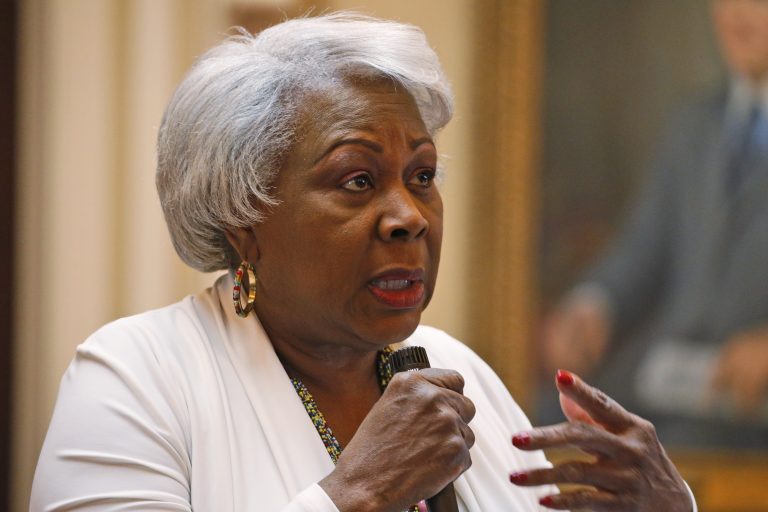
Raided Top Va. Democrat Struggles to Raise Money for Legal Defense Fund

(Luis CornelioHeadline USA) Virginia Senate President Pro Tempore L. Louise Lucas may be one of the most powerful Democrats in the state, but that influence has not translated into fundraising success.

Virginia Senate President Pro Tempore L. Louise Lucas has struggled to raise even 10% of a $100,000 legal defense fund after the FBI raided her office and a business she currently owns.

The FBI raid sent shockwaves through Virginia political circles, even as the specifics of the court-ordered search warrants remained unknown.

Lucas has since turned to a familiar playbook used by Democrats subjected to federal scrutiny: claims of government weaponization.

She announced the defense fund on Friday, but as of Monday evening, it had raised just $9,706.

“I have spent my entire life looking for good trouble, from being a youth leader in the civil rights movement after my school was closed during massive resistance all the way until today,” Lucas wrote via X. “I’ve learned to never back down and I will always lead ten toes down fighting for you.”

Lucas added: “For those who can chip in to help my friends have set up a legal defense fund to help me stand up for my good name. You can use this link if you would like to support it.”

The locations raided by the FBI included her office, The Cannabis Outlet — both in Portsmouth — and The CBD Shoppe in Norfolk, according to several news outlets.

Other reports suggest the probe could be tied to public corruption. Neither Lucas nor any of her staff members have been accused of any wrongdoing.

Lucas has been a vocal advocate for the legalization of marijuana for more than three decades and has served in the Senate since 1992.

Judge Allows Gun and Notebook as Evidence at Mangione’s Trial in UnitedHealthcare CEO’s Killing

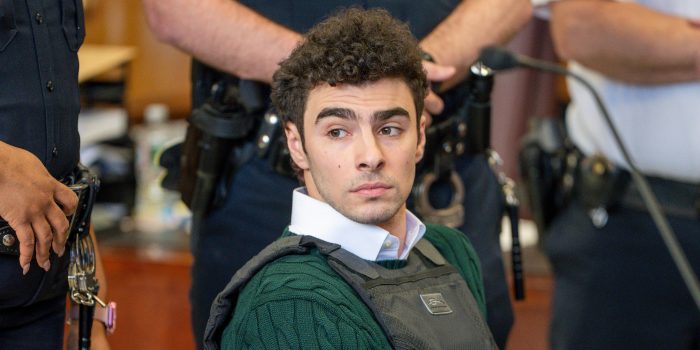
(Headline USA) A gun and notebook that prosecutors say link Luigi Mangione to the killing of UnitedHealthcare CEO Brian Thompson can be used as evidence at his murder trial, a judge ruled Monday, rejecting a defense argument that they were seized illegally.

Judge Gregory Carro’s decision, five months after he held a hearing to examine how police came upon the items, is a major win for prosecutors, enabling them to show jurors a possible murder weapon and motive. That mirrors an earlier ruling in Mangione’s federal case.

But Carro also excluded items officers pulled from Mangione’s backpack before his arrest at a McDonald’s restaurant in Altoona, Pennsylvania. He said the loaded gun magazine, cellphone, passport, wallet and computer chip resulted from an “improper warrantless search.” He also excluded some statements he made to police before he was handcuffed.

The judge did allow items found as officers inventoried the backpack’s contents later at a police station — including a 3D-printed pistol prosecutors say matches the one used to kill Thompson, and a notebook that describes wanting to “wack” a health insurance executive. Carro said such inventory searches are an exception to the U.S. Constitution’s protections against unreasonable searches and seizures. Police obtained a search warrant hours later.

Mangione was arrested on Dec. 9, 2024, five days after Thompson was killed outside a Manhattan hotel. Altoona is about 230 miles (370 kilometers) west of Manhattan.

Mangione, 28, didn’t speak as Carro summarized his decision. About two dozen of his supporters, some wearing “Free Luigi” T-shirts, crowded the courtroom’s gallery.

Mangione’s state murder trial is set to begin on Sept. 8, and his federal trial, which involves stalking charges, on Oct. 13. The federal judge ruled all of backpack’s contents into evidence.

Mangione has pleaded not guilty to all the charges, and could spend his life in prison if convicted in either case.

Mangione’s lawyers argued that the searches were illegal because officers had no warrant when they looked through the backpack.

Prosecutors argued that the initial search at the McDonald’s was legal because it was conducted in conjunction with an arrest and because officers followed Altoona police protocols requiring them to check for dangerous items. But Carro said New York law applies, and that officers had eliminated the justification for an immediate safety search by moving the backpack outside Mangione’s “grabbable area” as other restaurant customers passed nearby.

Citing body-worn camera video, Carro also ruled out some statements Mangione made when he was effectively in custody but not yet apprised of his right to remain silent.

Mangione told police early on he didn’t want to talk, but officers engaged him for almost 20 minutes before getting him to admit that he had given them a fake name and phony New Jersey driver’s license. An NYPD lieutenant testified in December that the shooter had used the same name — Mark Rosario — to buy a bus ticket to New York and stay at a Manhattan hostel.

Surveillance video showed a masked gunman shooting Thompson from behind on Dec. 4, 2024, as the executive walked to his company’s annual investor conference. Police say “delay,” “deny” and “depose” were written on the ammunition, mimicking a phrase used to describe how insurers avoid paying claims.

Mangione was not yet under arrest, let alone subject to a judicial search warrant, when officers initially responded to a 911 call about a man who looked like the suspect in Thompson’s killing. They began searching his backpack, but stopped after finding the gun magazine wrapped in a pair of underwear. They also found the notebook, Carro noted, but did not open it or see the writings at that point.

“It’s him, dude. It’s him, 100%,” Altoona Police Officer Stephen Fox said on body-worn camera video before telling his colleague to pause the search and resume at the station. “Let’s just take it back,” he said.

That momentary decision likely preserved the prosecution’s ability to use the gun and notebook as evidence at trial. Carro said evidence logged in the subsequent inventory search, including apparent to-do lists and getaway plans, is admissible.

Prosecutors have quoted extensively from Mangione’s handwritten diary in court filings, noting his praise for Unabomber Ted Kaczynski and his musings about rebelling against “the deadly, greed fueled health insurance cartel.”

Adapted from reporting by the Associated Press

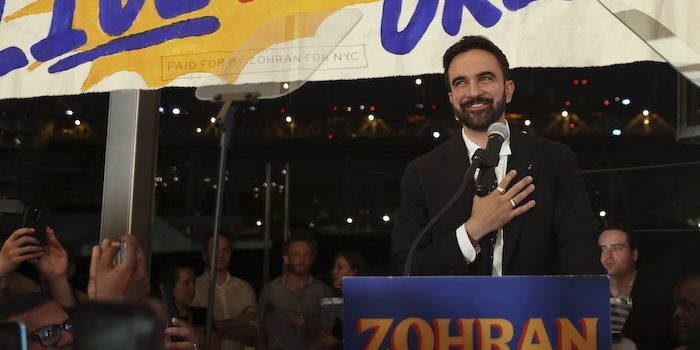
Mamdani Touts First City-Owned Grocery Store

(Chris Wade, The Center Square) New York City Mayor Zohran Mamdani on Monday announced the site of the latest city-owned grocery store as the democratic socialist looks to make good on a key campaign pledge.

The 20,000-square-foot store, located in the Bronx’s Hunts Point neighborhood, is part of a $70 million plan that includes opening stores in the city’s five boroughs. The plan calls for hiring a private operator to run the store under the city’s pricing rules. The South Bronx store will be part of a new affordable housing development rising from the site of a former juvenile detention facility.

He said the store, when it opens next year, will help “level the playing field” for shoppers who are struggling to make ends meet in one of the city’s poorest neighborhoods.

“Seventy-seven percent of households in surrounding neighborhoods cannot afford basic needs,” Mamdani said in remarks Monday. “More than 50% of households have relied on public assistance in the last 12 months alone. And when nearby families go shopping for groceries, there are not enough affordable options nearby.”

Mamdani’s push to open city-run grocery stores fulfills a campaign promise for the democratic socialist, whose lefty agenda also includes plans for universal childcare, tuition-free community colleges, and free bus service. Many of those plans have been put on hold as the new mayor grapples with a record budget shortfall.

Under the mayor’s plans, which still require City Council approval, the grocery stores wouldn’t pay rent or property taxes, allowing them to keep their overhead costs down and pass on savings to shoppers, according to the Mamdani administration.

Allowing New York City to get into the grocery store business has plenty of detractors, including the United Bodegas of America, which says it will hurt small businesses and the city’s economy.

John Catsimatidis, CEO of New York City grocery chain Gristedes, has threatened to pull out of the market if Mamdani moves ahead with the plans, saying he couldn’t compete with city-run supermarkets.

In his remarks Monday, Mandani turned a quote from the late Republican President Ronald Reagan upside down to make his argument for the taxpayer-funded bodegas.

“He famously said, the nine most terrifying words in the English language are, ‘I’m from the government and I’m here to help.’ It’s a good quote, but I disagree. I think nine more terrifying words are actually, ‘I worked all day and can’t feed my family,'” Mamdani said.

“We are going to use the power of government to lower prices and make it easier for New Yorkers to put food on the table,” Mamdani said.

China to Buy $17B in US Ag Products, 200 Boeing Jets

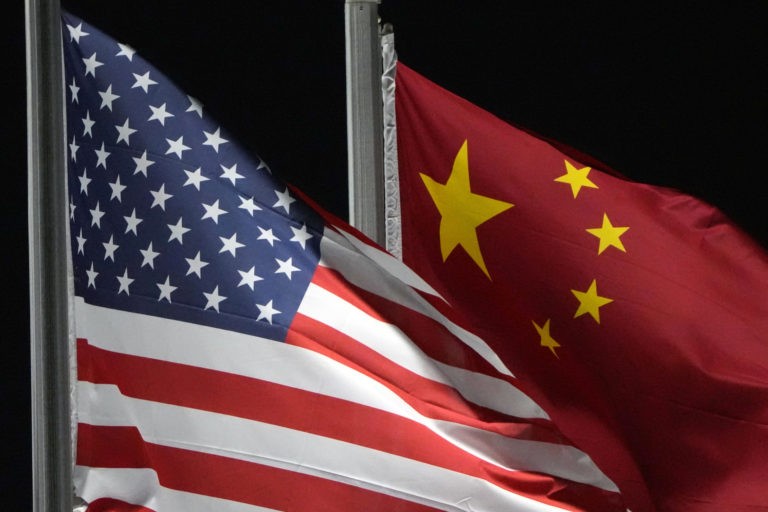
(Brett Rowland, The Center Square) China agreed to buy at least $17 billion annually in U.S. agricultural products through 2028 as part of a broader package of trade agreements announced during President Donald Trump’s visit to Beijing.

The agreements also included what the White House described as the first major Chinese order for Boeing aircraft in nearly a decade, expanded Chinese market access for U.S. beef and poultry, new cooperation on rare earth minerals critical to advanced manufacturing and the creation of two government-to-government trade bodies aimed at managing bilateral commerce and investment.

The agreements could provide significant relief to U.S. farmers and manufacturers that have struggled with disrupted export markets, supply-chain uncertainty and tariffs. Still, several of the largest announcements – including aircraft purchases and some industrial agreements – were described in detail by the White House but not publicly confirmed by Beijing.

China’s agricultural purchases build on an October 2025 agreement in which Beijing pledged to buy 25 million metric tons of U.S. soybeans annually. The new agreement covers a broader range of products, including beef, grains and dairy, according to the White House, though U.S. Trade Representative Jamieson Greer said Sunday the final breakdown had not yet been completed.

The agricultural agreements come as U.S. exports to China have declined sharply in recent years. U.S. agricultural exports to China fell from a record $41 billion in 2022 to roughly $27 billion in 2024, according to the American Farm Bureau Federation, as China increasingly shifted toward Brazil and Argentina.

Brazil accounts for about 70% of China’s soybean imports, compared to roughly 23% for the United States – a significant reversal from 2010, when the two countries controlled nearly equal shares of the Chinese soybean market.

The White House also said China agreed to buy 200 Boeing aircraft, which would mark the first major order from Chinese airlines in nearly a decade. Boeing confirmed what it described as an “initial commitment” for 200 aircraft.

“This included an initial commitment for 200 aircraft and we expect further agreements will follow after this initial tranche,” a Boeing spokesperson said.

Trump said aboard Air Force One that the order could eventually rise to 750 aircraft. Boeing did not reference that figure in its statement, and China’s official summary of the summit did not mention the aircraft agreement.

China’s Foreign Ministry summary also omitted mention of the agricultural package and a separate engine agreement Trump said had been reached with GE Aerospace. GE Aerospace did not respond to questions from The Center Square.

Beijing’s official statement focused primarily on the broader diplomatic relationship between the two countries. Chinese President Xi Jinping called for a “constructive China-U.S. relationship of strategic stability” and said the Taiwan issue must be handled with “extra caution.”

Greer said Sunday on CBS News’ “Face the Nation” that details of several agreements were still being finalized.

The summit came as American farmers have grown increasingly concerned about export markets and financial pressures. Chapter 12 farm bankruptcies – a form of bankruptcy protection designed for family farmers – rose 46% in 2025 to 315 filings, marking the second consecutive annual increase, according to the American Farm Bureau Federation.

At an April 22 House Ways and Means Committee hearing, lawmakers from major agricultural states pressed Greer about export access and trade policy.

U.S. Rep. Derrick Van Orden, R-Wis., said soybean farmers in his district “want their markets back” rather than additional government assistance.

“Farmers don’t want a handout,” Rep. Randy Feenstra, R-Iowa, said. “They just want open markets.”

Democrats criticized the summit from a different perspective. Rep. Ro Khanna, D-Calif., ranking member of the House Select Committee on the Chinese Communist Party, said Trump appeared disconnected from the economic concerns of workers and farmers.

“I would have thought he would mix it up with some of the farmers and factory workers and manufacturers that he’s been campaigning saying he would protect for the last decade,” Khanna said on CBS News. “And I’m saddened for them that he really was there with the global elite making deals with China.”

The summit also produced agreements involving rare earth minerals used in electronics, advanced manufacturing and defense systems. According to the White House, China agreed to help ease supply-chain shortages involving yttrium, scandium, neodymium and indium.

Trump and Xi also agreed that Xi would visit Washington later this year. The White House said the two leaders pledged support for one another as hosts of the Group of 20 summit in Miami and the Asia-Pacific Economic Cooperation summit in China later this year.

Greer declined to specify what the United States offered in exchange for China’s agreements, describing the arrangements as balanced trades intended to expand mutually beneficial commerce rather than unilateral concessions.

He also said the administration expects to present Trump with options stemming from ongoing Section 301 trade investigations before the existing 10% global tariff expires July 24, though he declined to indicate whether additional tariffs would follow.

The Beijing summit did not resolve broader uncertainty surrounding U.S. tariff policy. Trump said tariffs “never came up” during meetings with Chinese officials, even as federal courts continue weighing the legality of his 10% global import duty and the administration prepares a separate round of tariffs under another legal authority that could take effect later this summer.

Minnesota Prosecutor Charges Second ICE Agent Wake of Operation Metro Surge

(Elyse Apel, The Center Square) A Minnesota prosecutor announced Monday criminal charges against an Immigration and Customs Enforcement officer in connection with the non-fatal January shooting of a Minneapolis man.

Hennepin County Attorney Mary Moriarty said ICE officer Christian Castro is being charged with four counts of second-degree assault and one count of falsely reporting a crime stemming from the Jan. 14 shooting of Julio Cesar Sosa-Celis, who Moriarty said was “here lawfully.”

A warrant has been issued for Castro’s arrest.

Moriarty said the case reflects her office’s position that federal status does not shield officers from state prosecution.

“Mr. Castro is an ICE agent, but his federal badge does not make him immune from state charges for his criminal conduct in Minnesota,” she said. “There is no such thing as absolute immunity for federal officers who commit crimes in this state or any other.”

According to prosecutors, a federal officer shot Sosa-Celis in the thigh after he and another officer pursued a different man to the apartment duplex where he and Sosa-Celis lived.

Last month, Minneapolis released security camera footage of the incident captured from a distance.

“A violent crime did occur that night, but it was Mr. Castro who committed it,” Moriarty said. “He shot through the door of a home with many people, including children, inside, while fortunately missing several others.”

Federal authorities had initially accused both men of assaulting an officer with a broom handle and snow shovel during the incident. Those charges were later dismissed by a federal judge and federal officials have yet to announce any of their own charges in the incident.

The Department of Homeland Security did not immediately respond to an email from The Center Square requesting comment.

This comes as the state is pursuing more than a dozen additional investigations as part of Minnesota’s effort to scrutinize federal law enforcement.

Moriarty said the situation reflects an unusual set of circumstances.

“There’s no modern precedent for what happened to the people here in Minnesota,” she said.

In March, Moriarty announced the launch of a public portal seeking photos and videos to help identify potentially unlawful behavior. Her office is currently reviewing at least 17 cases, including an incident in which Border Patrol official Greg Bovino allegedly threw a smoke canister at protesters.

Bovino was later relieved of his role in the Twin Cities operation.

In total, Operation Metro Surge brought thousands of federal agents to the Twin Cities earlier this year and sparked sustained protests, particularly following the January shootings.

“There are many victims whose stories need to be told. We will investigate and pursue charges where appropriate,” Moriarty said in March. “If you saw or experienced unlawful conduct by federal agents, please submit any photo or video evidence.”

A spokesperson for the U.S. Department of Homeland Security previously told The Center Square that such investigations are unwarranted and argued that federal agents are protected when acting within the scope of their duties.

“This does nothing to make Minnesota safer. Enforcing federal immigration laws is a clear federal responsibility under Article I, Article II and the Supremacy Clause,” the spokesperson said. “Federal officials acting in the course of their duties are immune from liability under state law.”

Federal officials, including White House border czar Tom Homan, have defended the larger effort, saying agents apprehended more than 4,000 individuals, including violent offenders and gang members.

This is the second prosecution Moriarty has filed against a federal immigration agent for actions during Operation Metro Surge. The first was announced in April against ICE agent Gregory Donnell Morgan Jr., who was charged with two counts of second-degree assault.

UPDATE: The 2 Suspects and Security Guard in a Shooting at a San Diego Mosque are Dead, a Police Source Says

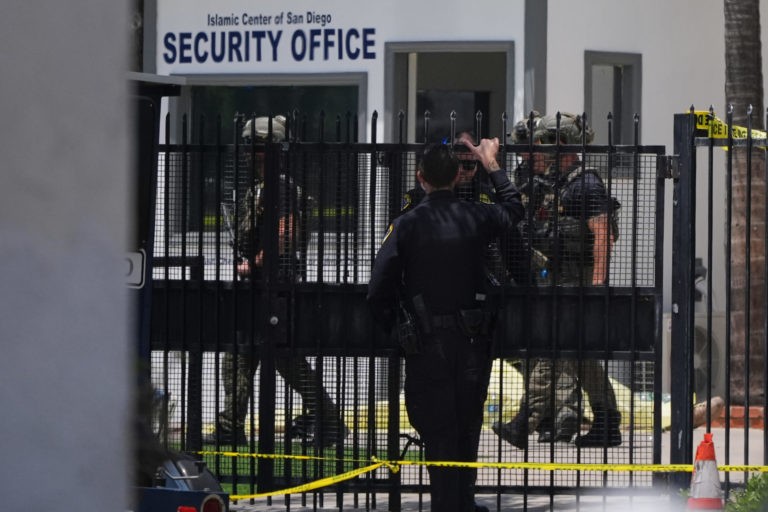
(Headline USA) The two suspects in a Monday shooting at the Islamic Center of San Diego are dead.

That’s according to a police source who spoke on condition of anonymity because the person was not authorized to discuss further details.

Authorities earlier said they believe multiple people have been shot at the Islamic Center about 9 miles (14 km) north of downtown San Diego. They have not released more details.

The Islamic Center is the largest mosque in San Diego County, according to its website. The campus includes the Al Rashid School, which the website says offers courses in Arabic language, Islamic studies and the Quran.

Aerial TV footage showed more than a dozen children holding hands and being walked out of the parking lot of the center that is surrounded by scores of police vehicles. The white mosque is in a neighborhood of homes, apartments and strip malls with Middle Eastern restaurants and markets.

Gov. Gavin Newsom’s office said he was being briefed.

“We are grateful to the first responders on the scene working to protect the community and urge everyone to follow guidance from local authorities,” his office posted on the social platform X.

The Islamic Center’s website says its mission is to not only serve the Muslim population but also “work with the larger community to serve the less fortunate, to educate, and to better our nation.” Five daily prayers are held there, and the mosque works with other organizations and people of all faiths on social causes.

Update: Authorities say two teenage suspects opened fire at an Islamic center in San Diego on Monday, killing three men before killing themselves. The case is being investigated as a hate crime, police say.

Among those killed was a security guard for the mosque, said San Diego Police Chief Scott Wahl.

Adapted from reporting by the Associated Press.

Federal Court Rejects Elon Musk’s Claims Against OpenAI, Saying He Filed His Lawsuit Too Late

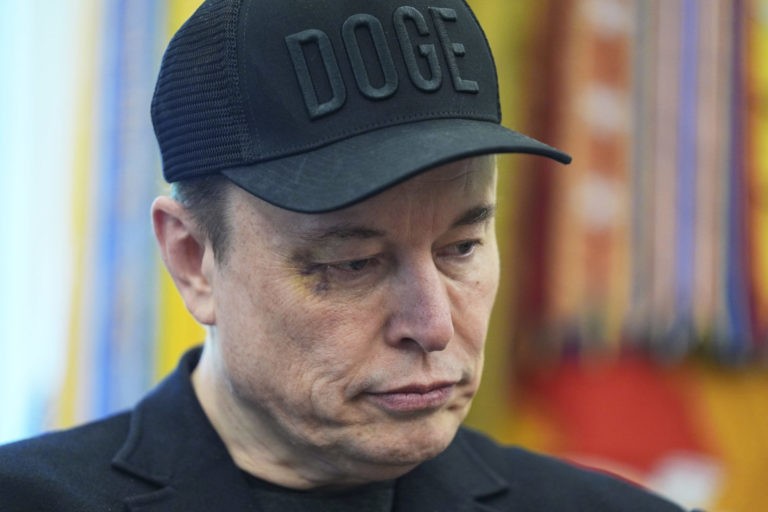
(Headline USA) A federal court on Monday dismissed claims filed against OpenAI and its top executives by Elon Musk, who accused them of betraying a shared vision for it to remain a nonprofit dedicated to guiding artificial intelligence’s development for the good of humanity.

Musk, the world’s richest man, was a co-founder of OpenAI, which launched in 2015 and went on to create ChatGPT. After investing $38 million in its first years, Musk accused OpenAI CEO Sam Altman and his top deputy of shifting into a moneymaking mode behind his back.

The nine-person jury found that Musk waited too long to file his lawsuit and missed the deadline for the statute of limitations. The jury had deliberated only two hours.

The jury served in an advisory role, but Judge Yvonne Gonzalez Rogers accepted the verdict Monday as the court’s own and dismissed Musk’s claims.

The three-week trial in Oakland, California shed light on the bitter falling-out between the two Silicon Valley titans and the beginnings of OpenAI, now a company valued at $852 billion and moving toward potentially one of the largest initial public offerings in history.

Altman and OpenAI claimed there was never a promise to keep OpenAI a nonprofit forever. In fact, they argued, Musk knew this and filed his lawsuit because he couldn’t have unilateral control over the fast-growing AI developer.

Musk was seeking damages to be paid to the altruistic efforts of OpenAI’s charitable arm as well as Altman’s ouster from OpenAI’s board. Musk’s decision to stop funding the company contributed to a bitter rift between the former allies. Musk says he was responding to deceptive conduct that OpenAI’s board picked up on when it fired Altman as CEO in 2023 before he got his job back days later.

Musk did not immediately respond to a request for comment.

The three-week trial saw testimony from Musk, Altman and his top lieutenant Greg Brockman, along with Microsoft CEO Satya Nadella and a slew of others in the tech titans’ orbit. Musk told jurors on his first of three days on the stand that, fundamentally, “I think they’re going to try to make this lawsuit … very complicated, but it’s actually very simple,” Musk said. “Which is that it’s not OK to steal a charity.”

Musk’s lawsuit claimed that, in addition to “breach of charitable trust,” Altman and Brockman unjustly enriched themselves from the windfall as the ChatGPT maker soared in valuation. Brockman revealed during the trial that his stake in OpenAI is worth about $30 billion.

OpenAI has brushed off Musk’s allegations as an unfounded case of sour grapes aimed at undercutting its rapid growth and bolstering Musk’s own xAI, which he launched in 2023 as a competitor. During cross-examination, Musk was sometimes combative with OpenAI lawyer William Savitt.

“Your questions are not simple,” Musk said at one point. “They are designed to trick me essentially.”

Jurors also heard from witnesses including OpenAI ex-board members Helen Toner and Tasha McCauley, who spoke about the decision to fire Altman in 2023. They were ousted from the board themselves when Altman returned to his role a few days later.

Altman and Musk both vied to be OpenAI’s CEO in its early years. In his testimony, Altman said he had concerns about Musk’s attempts to gain more control over OpenAI, which was aiming to safely build a better-than-human form of AI called artificial general intelligence.

“Part of the reason we started OpenAI is we didn’t think AGI could be under the control of any one person, no matter how good their intents are,” Altman said.

Near the end of his testimony, Altman said that before things turned sour, he had thought very highly of Musk.

“I felt like he had abandoned us, not come through on his promises, put the company in a very difficult place, jeopardized the mission, didn’t really care about the things I thought he cared about,” Altman said. “It’s been an extremely painful thing for me … to have someone that I respected so much not acknowledge that and continue to publicly attack us.”

Adapted from reporting by the Associated Press

Supreme Court Takes Up Georgia Title IX Case

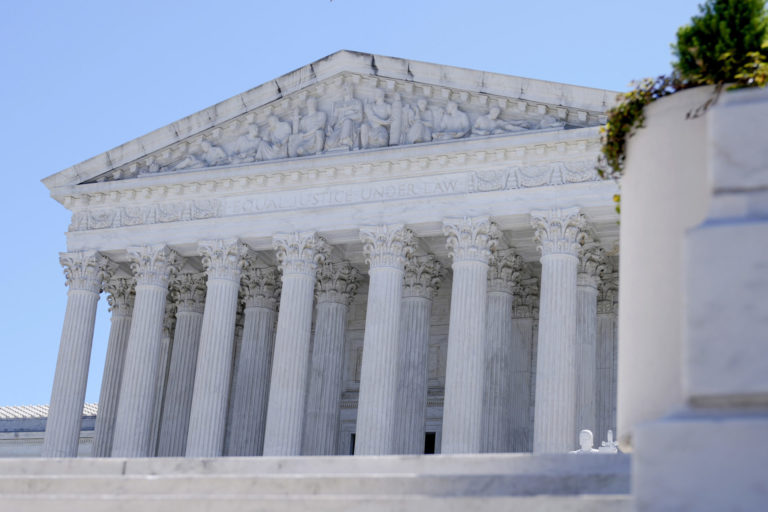
(Andrew Rice, The Center Square) The U.S. Supreme Court has agreed to take up a case regarding alleged sex discrimination in Georgia public schools, the high court announced Monday. 

The case, Crowther v. Board of Regents of University System of Georgia, focuses on two alleged instances of sex discrimination in the Georgia school system.

In one case, MaChelle Joseph, a former Georgia Institute of Technology women’s basketball coach, claims she was not given similar resources as the men’s team. In the second case, Thomas Crowther, an art professor at Augusta University, argues that the school conducted an improper investigation into sexual harassment claims before firing him. 

Both individuals claim the schools engaged in Title IX employment discrimination in each process. A lower court argued that employees cannot automatically sue for sex discrimination employment claims. 

The court said employees had a right to file lawsuits under Title VII, the federal law that protects from employment discrimination, which predates Title IX. 

“The judiciary should surely not expand Title IX’s judicially created cause of action where it would displace the actual comprehensive scheme for employment discrimination that Congress expressly created under Title VII,” lawyers for Georgia’s board of regents wrote to the high court. 

However, Joseph and Crowther argue this interpretation disadvantages employees at public institutions. Lawyers for the two employees said Title VII and Title IX can both address sex discrimination issues.  

“Congress expressly considered and rejected a provision that would have made Title VII an exclusive remedy,” lawyers for Joseph and Crowther wrote.

Across the country, courts of appeal are deeply divided on this issue. Some believe Title IX protections should be extended, while others oppose it. 

Justices on the high court will likely hear arguments in the fall to resolve the lower court split over employment discrimination provisions. 

CBP Seizes More than 100 Million Lethal Doses of Fentanyl at SW Border in Six Months

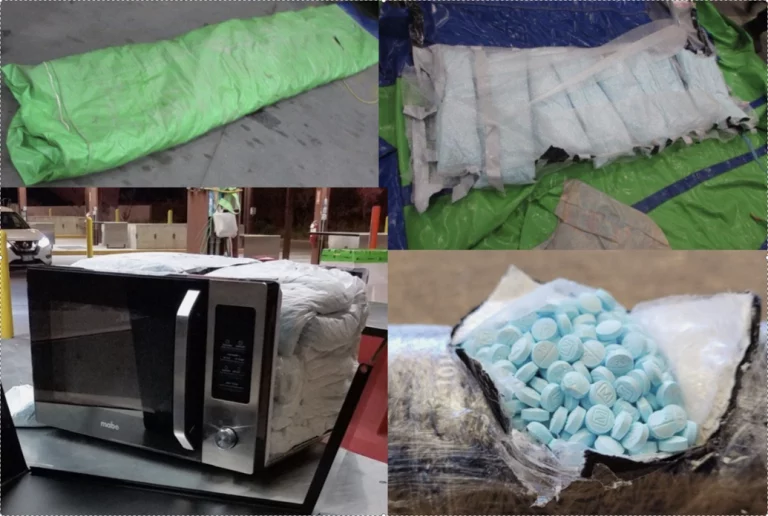
(Bethany Blankley, The Center Square) A record more than 100 million lethal doses of fentanyl have been seized at the southwest border in the past six months.

The seizures were made by U.S. Customs and Border Protection agents working out of 54 ports of entry (POE) in California, Arizona, New Mexico and Texas. The seizures were made in the first six months of fiscal 2026, which began Oct. 1.

The total excludes seizures made by Border Patrol agents and other federal agents as well as state and local law enforcement officers in the same period, from Oct. 1 through April 30.

If seizures were included from other agencies, the total would be significantly higher.

“As the nation’s border security agency, CBP is on the frontline against foreign terrorist organizations that threaten the safety and well-being of Americans,” CBP Commissioner Rodney Scott said. “CBP is uniquely positioned to detect, identify, and seize illicit drugs like fentanyl before they enter our communities.”

Law enforcement across the southwest border have identified new drug smuggling trends. One is larger quantities of methamphetamine and cocaine pouring in, The Center Square reported.

This is the case at ports of entry and between ports of entry along the southwest border. CBP OFO seizures of meth and cocaine at POEs in just six months have already surpassed the volume seized in the previous year, CBP says.

In the first six months of fiscal 2026, CBP officers seized 152,000 pounds of methamphetamine at POEs, surpassing all of fiscal 2025.

They also seized more than 28,000 pounds of cocaine at POEs, already surpassing fiscal year 2025 by 6,000 pounds, according to CBP data.

Another trend is a shift from smuggling fentanyl pills to powder.

“Fentanyl powder contains more doses by weight than individual tablets,” CBP explains. “Doses vary depending on many factors. For powder, doses can vary based on purity and potency, so they are calculated using averages from seized material. One kilogram of powder can be pressed into roughly 75,000 typical fentanyl tablets. CBP assumes one pill is considered one dose.”

Fentanyl powder is “easier to conceal, more concentrated, and can be mixed with other drugs, increasing its danger to the public. Fentanyl powder can be hidden in everyday items, mailed in small packages, or transported in bulk shipments,” CBP explains.

CBP OFO agents are seizing more illicit drugs due to several factors. The cartels have shifted operations and are adapting methods to bring in large volumes of drugs instead of people due to changing federal immigration and border policies, law enforcement officers have explained to The Center Square.

Under the Biden administration, policies were implemented to facilitate illegal entry into the country. This included creating and expanding parole, asylum and refugee programs to release inadmissible and largely unvetted foreign nationals into the country. Federal employees from multiple agencies were pulled away from their jobs to process them into the country, reducing the number of agents in the field, including those dedicated to drug interdiction.

A record high of at least 14 million illegal border crossers were encountered/apprehended, including those who evaded capture, during the Biden administration, The Center Square exclusively reported. The number is believed to be significantly higher. It’s unknown how many people and how much illicit drugs were smuggled into the country during the Biden administration.

The Trump administration halted and reversed these policies, resulting in historic low illegal crossings. The administration and Congress allocated record funding to expand enhanced technological capabilities and hire more CBP and Border Patrol agents. With historic low illegal crossings, more officers in the field focusing on interdiction and adapting to smuggling trends, greater volumes of illicit drugs are being seized.

“In the last year, the U.S. experienced a dramatic shift in illegal migration trends, allowing CBP to pivot hundreds of officers and resources to enforcement efforts. This milestone is a direct result of these ongoing efforts. These interdictions highlight officers’ unparalleled skill, judgment, and experience in detecting illicit fentanyl,” CBP said.

Interdictions are often conducted under hazardous conditions, requiring specialized training for officers and canines and protective measures to safely handle dangerous substances, CBP adds.

CBP OFO officers are responsible for border security at 328 ports of entry nationwide. They include air POEs at international airports, land POEs at the northern and southwest borders and sea POEs at commercial seaports and cruise terminals.

Texas has the most POEs in the country and at the southwest border of 32. California has the second greatest number of 19. Also at the southwest border, Arizona has 10 and New Mexico has three, which are all located in El Paso, Texas. The CBP El Paso Sector includes all of New Mexico.