Harvard Univ. Promotes Eco-Terrorism, Screens ‘How to Blow Up a Pipeline’ Film

(Dmytro “Henry” Aleksandrov, Headline USA) Harvard Law School was recently criticized after it was revealed that the far-left “institution of higher learning” plans to host a movie screening of ‘How To Blow Up A Pipeline,’ a film that promotes eco-terrorism.

The Daily Wire reported that the film, directed by Harvard alumnus Daniel Goldhaber, will be aired by the law school’s film society. The book is based on Andreas Malm’s book of the same name and tells the story of a group of young people blowing up a pipeline as an activism tactic.

The film’s website also included a “Take Action” page with a map of U.S. oil and gas pipelines.

However, it was discovered that Harvard will go beyond simply showing the movie to the students. Harvard Law School professor Jon Hanson will be moderating a Q&A with the film’s director during the event and encouraging attendance by all students who are “interested in environmental activism.”

Hanson’s website, the Systemic Justice Project, described the film’s plot as “the story of a group of activists who execute a daring plan to blow up a pipeline.”

Back in April 2023, the FBI issued a terrorist alert due to fears that the movie would inspire eco-terrorism, with another 23 law enforcement entities following suit.

“The consensus amongst law enforcement and the private oil sector is that this film may motivate attacks or disruptions on critical infrastructure throughout the country,” the Bureau of Alcohol, Tobacco and Firearms, wrote in a March 21, 2023, bulletin.

Sen. Ted Cruz, R–Texas, responded to the news in his social media post by criticizing both the university for screening the film and the Biden administration for not doing anything to prevent the spreading of the ideas of the pro-terrorism film from happening.

“Harvard promoting domestic eco-terrorism. If a Republican were teaching how to blow up an abortion center they would (rightly) be in jail. Of course, the Biden DOJ will do… nothing,” he wrote.

Princeton Univ. Alumni, LGBT Activist Arrested for Having Child Porn

(Dmytro “Henry” Aleksandrov, Headline USA) The Mercer County Prosecutor’s Office revealed that LGBT activist and Princeton University alumni volunteer Roy “Trey” Farmer was arrested on March 22, 2024, on child pornography charges near his alma mater’s campus.

Farmer, an alumnus of Princeton who is not an employee of the school but is still involved as an alumni volunteer, has reportedly been charged with one count of possession of child sexual abuse material, a third-degree felony, according to Breitbart.

On March 22, 2024, Farmer was arrested at a condo he owns near the university, across from the main entrance of the campus.

The nonprofit organization National Center for Missing and Exploited Children sent a tip to the Mercer County Prosecutor’s Internet Crimes Against Children unit back in January 2024, telling the office that someone in the county uploaded content that appeared to be child sexual abuse material, the news source reported.

The prosecutor’s office alleged that the child pornography was traced back to Farmer. The office added that they also executed a search warrant on Farmer’s condo and seized “multiple items of evidentiary value.”

Even though Farmer graduated from the university back in 1993, he was reportedly involved with several groups at Princeton, among which were the Princeton University Glee Club Foundation, for which he serves as president, and the Queer Princeton Alumni.

In addition to that, according to the now-deleted biography of Farmer on Queer Princeton Alumni’s website, the 53-year-old has also previously served on the boards of the Classic Chamber Concerts, Istanbul State Opera and Ballet, London Symphony Orchestra, Naples Music Club, Opera Naples and the StayInMay Festival, the news source added.

The reason why the webpage is not available anymore may be because of Farmer’s arrest.

“We couldn’t find the page you were looking for. This is either because: There is an error in the URL entered into your web browser [or] The page you are looking for has been moved or deleted,” the website said.

Woke DEI Gaming Co. Blames Backlash on ‘Far-Right’

(Dmytro “Henry” Aleksandrov, Headline USA) A video game company that was rightfully blamed for pushing DEI in the latest video games dismissed the concerns of gamers by saying that the backlash from their projects was started by the “far-right.”

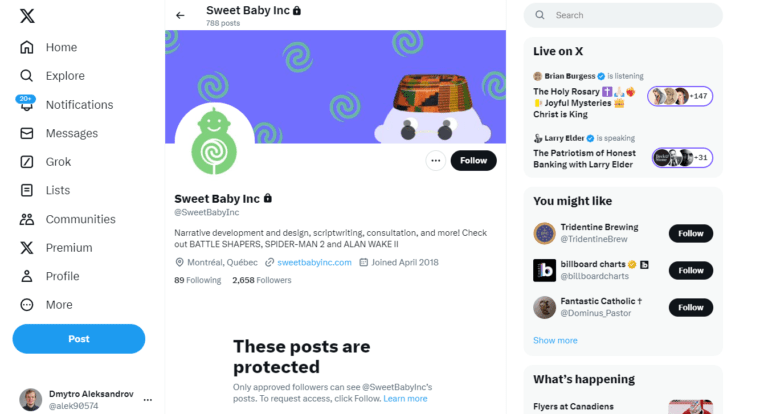
The company, Sweet Baby Inc., has dominated headlines in tech circles after a community of gamers created a group on Steam, a platform where gamers can buy video games, to highlight which games should be avoided based on the fact that the now-infamous company was involved in their creation, Blaze Media reported.

Marvel’s Spider-Man 2, God of War: Ragnarok and Alan Wake 2 were among the latest video games that suffered from the company’s injection of DEI.

Even though the company essentially destroyed these games, the cofounder of Sweet Baby Inc. David Bedard still denied that the company was responsible for its actions by saying that the backlash from the gamers was part of a “far-right” harassment campaign.

“For the past 4 months, my company (Sweet Baby Inc) has been targeted by a far-right harassment campaign/conspiracy theory… More than the frustrations caused by the harassment, and the precautions we’re putting in place as a result of that, the toughness comes from the fact that this entire campaign is based on misinformation,” he wrote on LinkedIn.

However, despite the claims that the criticism is just a “far-right” attack, the company’s website says otherwise. On the website, Sweet Baby Inc. notes that the company’s consultation process includes a “multitude of perspectives” while bringing in “diverse voices to solve diverse problems.” The company also said that it provides “Cultural Consultation, Sensitivity And Inclusivity Reading, Risk and Opportunities Assessment and more.”

In addition to bragging about its ability to “assemble and lead” teams of “new and marginalized voices,” the company also said that it provides resources for “new and marginalized talent” with the potential to “change [the] industry if given the proper support.”

Aside from gamers, other people criticized the company, with a recent UFC middleweight champion Sean Strickland saying that the entire video game industry is incredibly woke.

“Well, you guys, the video game industry is a leftist cesspool. I am the definition of what these people hate,” he said.

NBC Reporters Worried About GOP Backlash After Ronna McDaniel’s Firing

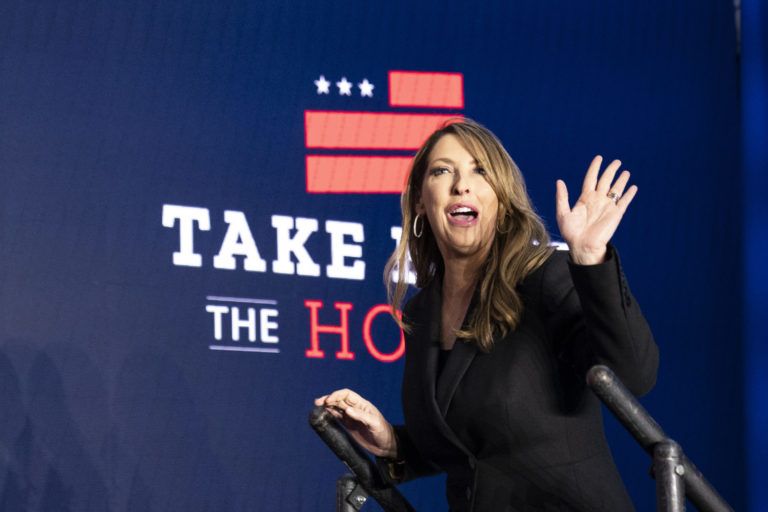
(Headline USA) NBC journalists reportedly are worried that the network’s decision to hire and then fire former Republican National Committee head Ronna McDaniel will hurt their standing with GOP sources.

NBC announced on Tuesday that it fired McDaniel less than a week after hiring her as a paid contributor. The decision came after swift backlash from on-air talent at both NBC and its sister network, MSNBC.

“I want to personally apologize to our team members who felt we let them down,” NBCUniversal News Group Chairman Cesar Conde wrote in a memo to staff. “While this was a collective recommendation by some members of our leadership team, I approved it and take full responsibility for it.”

While several NBC and MSNBC hosts publicly cheered McDaniel’s firing, reporters for the outlet raised concerns that it could further alienate them from Republicans, noting they’ve already received “angry texts” from GOP sources.

According to Semafor, the firing “threatens to undo years of [NBC News] repositioning itself as friendly to Republican officials and viewers,” with some staffers saying “they believe the move will only continue to strengthen complaints by Republicans that the network doesn’t want to hear their perspectives.”

One NBC News journalist claimed that “political reporters here didn’t take part in the backlash, nor did they get to give input on the hire. But they’ll be the ones who have to pick up the pieces with sources who are now dismayed with the organization.”

McDaniel’s firing has also exacerbated tensions between NBC News and MSNBC leadership. Senior NBC figures were reportedly upset with how the situation had been handled, while MSNBC employees expressed frustration with NBC for hiring her in the first place.

“And I just have to say, when somebody does the right thing, I feel like it should be acknowledged as publicly as we acknowledged our outrage,” MSNBC host Joy Reid said after McDaniel was fired. “I know how I feel about it. I’m grateful to Cesar for actually making the right decision. I think it was the right decision.”

New Jersey Dem To Introduce Bill Banning Menendez, Trump From Classified Info

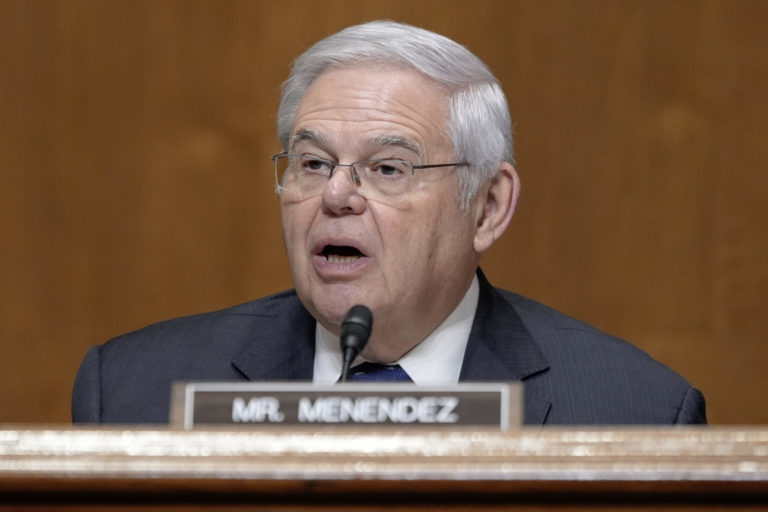
(Headline USA) A New Jersey Democrat said this week she will introduce a bill to bar Sen. Bob Menendez, D-N.J., from accessing classified information.

Menendez is accused by federal prosecutors of bribery and acting as a foreign agent for Egypt and Qatar.

He announced last week that he will not seek reelection as a Democrat, though he floated the idea of running as an independent. And he has not resigned, even though half of his Democratic Senate colleagues and the entire New Jersey House delegation, except for his son, Democratic Rep. Robert Menendez Jr., have called on him to step down.

“As a Navy veteran and former prosecutor, I have zero tolerance for any betrayal of the public trust,” Rep. Mikie Sherrill, D-N.J., who has called for Menendez to step down, said in a statement.

Her bill would restrict individuals who have been charged with certain crimes from gaining access to classified documents. Those crimes would include acting as a foreign agent, compromising U.S. national security, unlawful disclosure or improper handling of classified information, unlawful retention of national defense information, and obstructing an official proceeding.

The bill is general enough that it would also prevent former President Donald Trump from accessing classified information, since he has been charged with unlawful retention of classified information.

“Nobody is entitled or legally obligated to classified briefings — certainly not Trump, even if he is the Republican nominee for president,” Sherill claimed. “This legislation … [will] ensure sensitive information doesn’t get into the wrong hands.”  

Sherill continued blasting Trump, accusing the former president of “disclosing secrets to adversaries, trying to hide and destroy information, not being clear on what he’s held and is now under indictment for these infractions. And yet our intelligence community is supposed to start briefing him?”

In fact, Sherrill’s bill would apply to the president, the vice president, members of Congress, members of the military, and employees of other key agencies that receive classified information.

Chris Christie Rules Out Third Party Bid for the White House

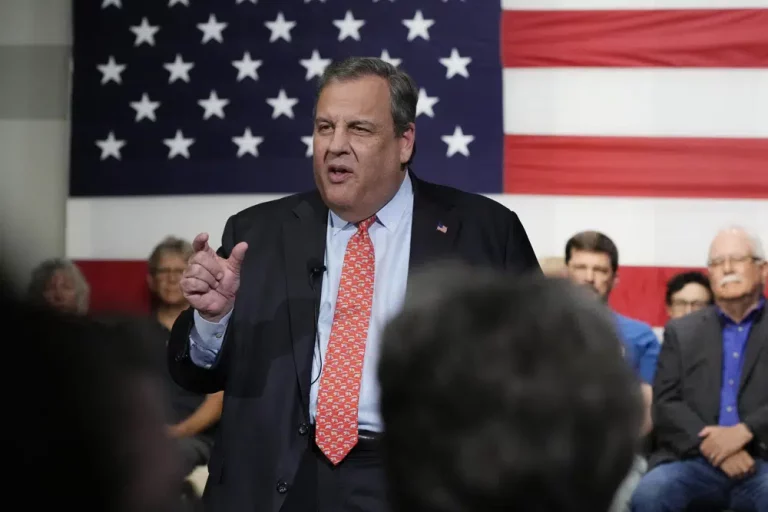
(Headline USA) Former New Jersey Gov. Chris Christie ruled out a third-party bid for the White House this week, shutting down speculation that he might join the unity ticket proposed by No Labels.

Christie dropped out of the 2024 GOP primary earlier this year but refused to endorse anyone else in the race. He also left the door open to a potential independent bid, saying he would strongly consider it if he saw a path to clinch 270 electoral votes.

However, on Wednesday Christie said he does not see any such path.

“I appreciate the encouragement I’ve gotten to pursue a third party candidacy,” Christie said in a statement on X. “I believe we need a country that once again feels like everyone has a stake in what we’re doing and leadership that strives to bring people together, instead of using anger to divide us.”

Christie also said he would not want to run as an independent and inadvertently help former President Donald Trump, the GOP’s presumptive 2024 nominee.

“While I believe this is a conversation that needs to be had with the American people, I also believe that if there is not a pathway to win and if my candidacy in any way, shape or form would help Donald Trump become president again, then it is not the way forward,” he claimed.

Former GOP presidential candidate Nikki Haley also ruled out a No Labels bid after dropping out of the primary, saying she would not want to run with a Democrat on the ticket.

“I’m a Republican,” she said. “If I were to do No Labels, that would require a Democrat. I can’t do what I wanted to express with the Democrats. And so I don’t think I can do it right. If I ran for No Labels, that would mean it’s about me. It’s not about me. It’s about the direction I think the country should go.”

Haley also declined to endorse Trump, claiming the former president needs to “earn” her support.

“At its best, politics is about bringing people into your cause, not turning them away, and our conservative cause badly needs more people. This is now his time for choosing,” she said.

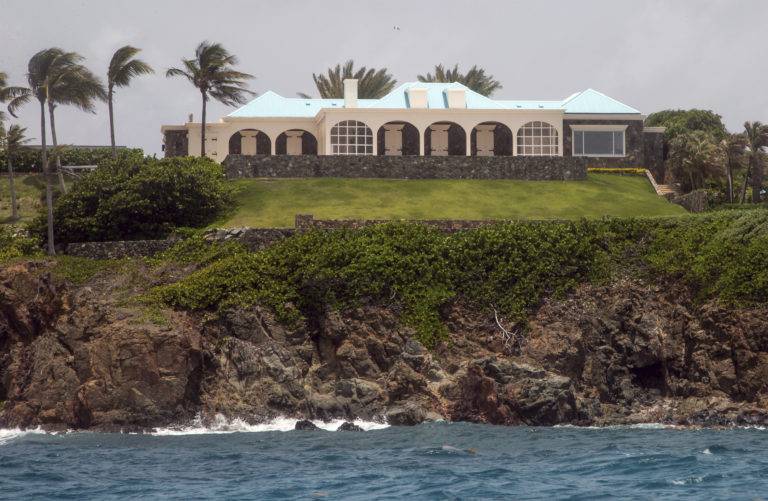
Report: Phone Location Data Reveals Visitors to Epstein Island

(Ken Silva, Headline USA) Tech publication Wired published an extraordinary article Thursday about mobile devices that visited multimillionaire financier and sex trafficker Jeffrey Epstein’s notorious Caribbean island, Little St. James.

According to Wired, the mobile device data was collected by Near Intelligence, a location data broker that does business with the U.S. military and a variety of other clients. Wired reported that the data can be found by a simple Google search.

“The coordinates that Near Intelligence collected and left exposed online pinpoint locations to within a few centimeters of space … The data pinpointed their movements as they were transported to Epstein’s dock on Little St. James, revealing the exact routes taken to the island,” Wired reported.

Wired said it reviewed 11,279 coordinates, pointing to 166 locations throughout the US where Near Intelligence infers that visitors to Little St. James likely lived and worked.

“The cache also points to cities in Ukraine, the Cayman Islands, and Australia, among others,” Wired reported.

“The tracking continued after they arrived. From inside Epstein’s enigmatic waterfront temple to the pristine beaches, pools, and cabanas scattered across his 71-acres of prime archipelagic real estate, the data compiled by Near captures the movements of scores of people who sojourned at Little St. James as early as July 2016,” the publication added.

“The recorded surveillance concludes on July 6, 2019—the day of Epstein’s final arrest.”

The article did not identify any of the owners of the devices that were tracked to Epstein’s island.

The Justice Department reportedly declined to comment on the matter, including about whether it did business with Near Intelligence.

In an email to WIRED, Kathleen Wailes, speaking on behalf of Near Intelligence—which has rebranded as Azira—acknowledged that the firm deliberately collected the data on Epstein’s island for its own purposes. Wailes declined multiple invitations to discuss how the data was collected, Wired reported.

Epstein and his longtime girlfriend Ghislaine Maxwell were accused of flying underage girls by private jet to his private island in the U.S. Virgin Islands for sexual exploitation. There, it’s widely thought that they used the underage girls to entice and blackmail a variety of politicians, businessmen and other powerbrokers.

Epstein faced criminal charges in Florida in 2006 but was able to get a more lenient plea deal that saved him from a long prison sentence. He was sentenced to 18 months but served more than a year in a Florida state prison.

In 2019, Epstein died while awaiting trial in New York after prosecutors concluded they were not bound to the terms of Epstein’s 2006 deal.

Authorities said he committee suicide by hanging himself in his jail cell, but that ruling has been widely scrutinized because of the circumstances related to his death and the potential number of high-profile co-conspirators he could have implicated.

Ken Silva is a staff writer at Headline USA. Follow him at twitter.com/jd_cashless.

Judge Sentences FTX Fraudster Bankman-Fried

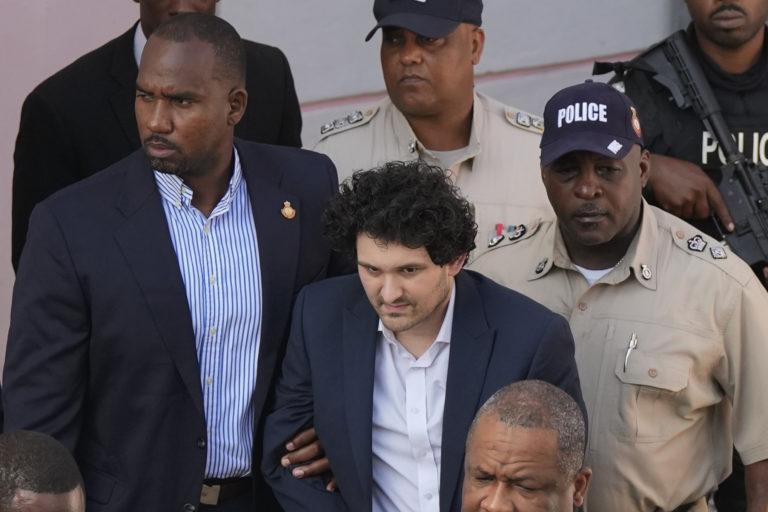
(Headline USA) Crypto entrepreneur Sam Bankman-Fried was sentenced Thursday to 25 years in prison for a massive fraud on hundreds of thousands of customers that unraveled with the collapse of FTX, once one of the world’s most popular platforms for exchanging digital currency.

U.S. District Judge Lewis A. Kaplan delivered a blistering analysis of Bankman-Fried and his crimes before announcing a sentence that was half of what prosecutors sought and less than a quarter of the 105 years recommended by the court’s Probation officers.

“There is absolutely no doubt that Mr. Bankman-Fried’s name right now is pretty much mud around the world,” Kaplan said of the 32-year-old man who once seemed atop the cryptocurrency world before his businesses collapsed in November 2022, leaving customers, investors and lenders short over $11 billion, which the judge ordered him to forfeit.

He was convicted in November of fraud and conspiracy — a dramatic fall from a crest of success that included a Super Bowl advertisement and celebrity endorsements from stars like quarterback Tom Brady, basketball star Stephen Curry and comedian Larry David.

Kaplan imposed the sentence in the same Manhattan courtroom where, four months ago, Bankman-Fried testified that his intention had been to revolutionize the emerging cryptocurrency market with his innovative and altruistic ideas, not to steal. The judge said Bankman-Fried repeatedly committed perjury when he told lies from the witness stand.

Kaplan said the sentence reflected “that there is a risk that this man will be in position to do something very bad in the future. And it’s not a trivial risk at all.” He added that it was “for the purpose of disabling him to the extent that can appropriately be done for a significant period of time.”

Kaplan said he also would advise the Federal Bureau of Prisons to send Bankman-Fried to a medium-security prison near San Francisco because his notoriety, his association with vast wealth, his autism and social awkwardness are likely to make him especially vulnerable at a high-security facility.

Assistant U.S. Attorney Nicolas Roos had recommended a prison sentence of 40 to 50 years, saying it was the only way to ensure “the defendant doesn’t do it again.”

“The defendant victimized tens of thousands of people and companies, across several continents, over a period of multiple years. He stole money from customers who entrusted it to him; he lied to investors; he sent fabricated documents to lenders; he pumped millions of dollars in illegal donations into our political system; and he bribed foreign officials. Each of these crimes is worthy of a lengthy sentence,” prosecutors had said in a court filing.

Prosecutors said Bankman-Fried misappropriated billions of dollars to fuel his quest for influence and dominance in the new industry, and had illegally used money from FTX depositors to cover his expenses, which included purchasing luxury properties in the Caribbean, bribes to Chinese officials and private planes.

Kaplan agreed with prosecutors Thursday that Bankman-Fried should not get leniency just because some investors and customers might get some of their losses back. He called the argument “logically flawed” and “speculative.” He said customers lost about $8 billion, investors lost $1.7 billion and lenders were shorted by $1.3 billion.

Given a chance to speak, Bankman-Fried stood and apologized in a rambling statement, saying: “A lot of people feel really let down. And they were very let down. And I’m sorry about that. I’m sorry about what happened at every stage.”

He added, “My useful life is probably over. It’s been over for a while now, from before my arrest.”

Bankman-Fried, wearing his khaki-colored prison uniform and chained at the ankles, seemed to briefly get emotional as he spoke for about 20 minutes, expressing regret about “a lot of mistakes” but casting some of the blame onto others. His trademark messy and bushy hair had returned from the trimmer look he displayed at trial.

The judge later criticized those remarks, saying he expressed “never a word of remorse for the commission of terrible crimes.”

Defense lawyer Marc Mukasey said his client was misunderstood.

“Sam was not a ruthless financial serial killer who set out every morning to hurt people,” Mukasey said. “Sam Bankman-Fried doesn’t make decisions with malice in his heart. He makes decisions with math in his head.”

Bankman-Fried’s attorneys, friends and family had urged leniency, saying he was unlikely to re-offend again. They also said FTX’s investors have largely recovered their funds — a claim disputed by bankruptcy lawyers, FTX and its creditors.

“Mr. Bankman-Fried continues to live a life of delusion,” wrote John Ray, the CEO of FTX who has been cleaning up the bankrupt company. “The ‘business’ he left on November 11, 2022 was neither solvent nor safe.”

Two weeks ago, Mukasey attacked a probation office recommendation of 105 years in prison, saying a sentence of that length would be “grotesque” and “barbaric.”

He urged the judge to sentence Bankman-Fried to a term of five to 6 1/2 years in prison, which Mukasey said was a fair reading of federal sentencing guidelines.

Bankman-Fried was worth billions of dollars on paper as the co-founder and CEO of FTX, which was the second-largest cryptocurrency exchange in the world at one time.

FTX allowed investors to buy dozens of virtual currencies, from Bitcoin to more obscure ones like Shiba Inu Coin. Flush with billions of dollars of investors’ cash, Bankman-Fried took out a Super Bowl advertisement to promote his business and bought the naming rights to an arena in Miami.

But the collapse of cryptocurrency prices in 2022 took its toll on FTX, and ultimately led to its downfall. FTX’s hedge fund affiliate, known as Alameda Research, had bought billions of dollars of various crypto investments that lost considerable amounts of value in 2022. Bankman-Fried tried to plug the holes in Alameda’s balance sheet with FTX customer funds.

Three other people from Bankman-Fried’s inner circle pleaded guilty to related crimes and testified at his trial.

The biggest name among the three was Caroline Ellison, once the girlfriend of Bankman-Fried. Ellison described Bankman-Fried as a calculating individual who knew that he was likely committing crimes when he directed the use of customer funds. Two other onetime friends of Bankman-Fried, Gary Wang and Nishad Singh, also testified they felt they were directed by Bankman-Fried to commit fraud.

Adapted from reporting by the Associated Press

Gold and Silver: A Hedge Against Currency Risk

(Mike Maharrey, Money Metals News Service) Holding fiat currency is risky business and that’s not going to change any time soon. Currency risk is one of the factors driving the recent rally in gold and silver. It’s no coincidence that the recent gold and silver rally started as the U.S. ramped up threats to seize Russian dollar assets.

However, using the dollar as a foreign policy hammer is just one of many threats to the stability of the U.S. currency, and these currency risks are inherent in all fiat currencies.

Fiat Currencies are Inherently Risky

Risk is inherent to any fiat money system because governments and central banks always cave to the temptation to inflate the currency. This leads to constant devaluation of the money manifesting in price inflation. It also causes economic distortions, incentivizes debt, and fuels boom-bust cycles.

Because fiat money has no physical backing, central banks can create money without limits to enable government spending.

They can’t resist.

Government and central bank money creation enables politicians to spend more than they otherwise could on both domestic programs and foreign adventures. Spending is political power. Nobody wants higher taxes, but virtually everybody wants more government programs to address this or that problem. By delivering these programs, whether the government can afford them or not, politicians buy votes.

In other words, political systems provide virtually no incentives for fiscal restraint. Politics encourages politicians to spend and kick the debt problem down the road for somebody else to worry about.

And since central banks (essentially an arm of the government) can create more money – they will. 

This becomes even more evident during an “emergency.” A crisis provides an excuse to throw all caution to the wind. The Covid-19 pandemic provides a perfect example. In just two years, the Federal Reserve created nearly $5 trillion out of thin air and monetized virtually all of the government debt issued during that time. Other central banks around the world followed suit.

As long as governments have access to a money printing press, they will use it. That means fiat systems will always feature currency risk.

Spending Leads to Debt

The spending incentives in a fiat monetary system lead to a secondary risk – unsustainable government debt.

Governments can kick the spending can down the road by borrowing more and more money. This is especially true of the United States because it issues the world reserve currency. That creates a global demand for dollars, allowing the Fed to print plenty of money to sustain the debt. 

But every house of cards eventually falls. 

That risk is currently exacerbated because government spending has blown through the roof.

Governments used the pandemic as an excuse to effectively hand out blank checks. Spending has come down since governments around the world shut down the economy, but it hasn’t returned to pre-Covid levels.

And it never will.

As economist Robert Higgs explained in his book Crisis and Levithan, there is a ratchet effect when it comes to government spending. A crisis provides the excuse to put spending on steroids. After the emergency passes, spending falls, but it never drops all the way back to pre-crisis levels. When the next crisis comes, the process repeats, with overall spending ratcheting upward each time.

In the United States, government spending now averages over half a trillion dollars every single month.

So far in fiscal 2024, the Biden administration has already blown through $2.12 trillion.

Spending is up 14.5 percent compared to the first five months of fiscal 2023. The U.S. now spends about twice what it takes in through taxes. And this is despite the [pretend] spending cuts and promises from the Biden administration that it would save “hundreds of billions” with the debt ceiling deal (aka the [misnamed] Fiscal Responsibility Act).

This underscores the point: no matter what you hear about spending cuts, the federal government always finds new reasons to spend more money.

Government spending creates more debt. More debt means more money creation. And as already discussed, money creation poses a risk to the stability of any currency.

The U.S. national debt currently sits at just over $34.5 trillion. But Uncle Sam isn’t the only one with a spending problem.

According to ZeroHedge, global government debt has risen to a record $82 trillion. That’s up by $20 trillion since Covid.

BMO Capital Markets recently raised its price projection for gold. One of the reasons BMO analysts cited for their bullishness for precious metals is because they provide “a hedge against rising currency risks worldwide.” As they noted, politicians aren’t going to suddenly become fiscally responsible.

“Given no politician is likely to be elected by promising to spend less in a year loaded with elections across key democracies, there is certainly a chance that later in the year we may see further currency concerns supporting precious metal performance as a new era of elevated fiscal spending across global economies gathers traction.”

This is one of the reasons central banks are buying gold.

Central bank net gold purchases totaled 1,037 tons in 2023. That fell just 45 tons short of 2022’s multi-decade record.

China was the biggest buyer in 2023. The People’s Bank of China officially reported a 225-ton increase in its gold reserves.

One of the stated reasons many central banks give for their recent gold buying spree is the desire to “diversify” their reserves. This is central bank-speak for minimizing their exposure to the dollar (and other fiat currencies) due to irresponsible fiscal policy in America, along with the U.S. government using its privilege as the issuer of the reserve currency to further its foreign policy aims.

As Bank of Poland President Adam Glapiński said, “Gold will retain its value even when someone cuts off the power to the global financial system, destroying traditional assets based on electronic accounting records.”

The World Gold Council said risk management was one of the key reasons some countries are turning to gold.

“Last year central banks placed great emphasis on gold’s value in crisis response, diversification attributes, and store-of-value credentials. A few months into 2024 the world seems no less uncertain meaning those reasons for owning gold are as relevant as ever.”

One thing is certain: the value of the dollar (and all fiat currencies) will continue to fall. Even in the best of times, the Federal Reserve decreases your purchasing power by 2 percent annually as a matter of policy.

And these aren’t the best of times.

Despite the Fed’s best efforts to rein in price inflation, it remains sticky. Nevertheless, one of the factors driving the recent rally in gold and silver is anticipation of the end of the inflation fight. In other words, the markets are excited because the Fed may soon stop fighting inflation and go back to creating it.

Currency risk is one of the main reasons you want to hold real money – gold and silver. It can’t be printed and intentionally devalued by irresponsible governments. It is the ultimate hedge against currency risk.


Mike Maharrey is a journalist and market analyst for MoneyMetals.com with over a decade of experience in precious metals. He holds a BS in accounting from the University of Kentucky and a BA in journalism from the University of South Florida.


How Money Metals Exchange is Challenging the System

(Money Metals News Service) In this episode of Money Metals’ Midweek Memo, host Mike Maharrey discusses the perceived ineffectiveness of the prevailing political strategy in the United States, which revolves around the notion of “voting the bums out” to solve issues.

Maharrey argues that this approach doesn’t lead to significant change because the system itself is broken, likening it to attempting to repair a car by merely changing its driver. He asserts that despite efforts to elect better officials, the country invariably ends up with similar problems: deeper debt, more regulations, and a general decline in liberty.

Mike suggests people start looking toward Money Metals Exchange and the Sound Money Defense League as the best options for real economic change.

Money Metals Exchange versus The Federal Reserve

Mike Maharrey expresses critical views on the Federal Reserve’s impact on the economy and its role in perpetuating economic issues through its policies. He suggests that the Federal Reserve’s actions have long-term damaging effects on the economic system, essentially “breaking” it, and implies that the Fed’s approach to monetary policy is problematic.

Maharrey argues that true monetary reform is unlikely to come from the Federal Reserve itself and emphasizes the need for a system backed by tangible assets like gold and silver to foster economic stability.

He critiques the Fed’s strategy of manipulating interest rates and its quantitative easing measures, pointing out that these actions contribute to financial instability and inflation, rather than resolving underlying economic challenges.

Maharrey’s commentary suggests a skepticism of the Federal Reserve’s ability to guide the economy towards genuine prosperity, advocating instead for a return to sound money principles as a solution to the systemic issues he identifies.

The Sound Money Defense League: A Grassroots Organization Supporting Sound Money Policies

Maharrey shifts the conversation to sound money, emphasizing the importance of a system backed by tangible assets like gold and silver. He criticizes the Federal Reserve’s role in perpetuating economic issues through its policies, arguing that true monetary reform is unlikely to come from federal action but rather from initiatives at the state level.

Mike Maharrey highlights the vital role of Money Metals Exchange in supporting sound money principles, emphasizing its collaboration with the Sound Money Defense League and Money Metals Exchange to push for legislative changes that advocate for gold and silver as legitimate currency.

By providing logistical support, Money Metals Exchange significantly contributes to the advocacy efforts aimed at reducing financial barriers to owning and transacting in precious metals.

Mike Maharrey speaks highly of JP Cortez and the Sound Money Defense League, highlighting their pivotal role in promoting and implementing sound money policies at the state level. Maharrey discusses the organization’s successes in pushing for legislation that supports the use of gold and silver as money, such as repealing taxes on gold and silver transactions. This is part of a broader strategy to treat these precious metals not merely as commodities but as legitimate forms of currency.

He mentions specific instances where the Sound Money Defense League, with Jp Cortez at the helm, has been instrumental in achieving legislative victories.

For example, Maharrey points out that the organization played a key role in Wisconsin’s recent repeal of its sales tax on gold and silver, marking a significant step toward recognizing these metals as legal tender. This accomplishment is part of a series of efforts across various states to eliminate financial barriers to owning and transacting with gold and silver, thereby promoting sound money principles.

Maharrey also emphasizes the power of grassroots advocacy, noting how the Sound Money Defense League leverages public support to influence state legislators. He shares anecdotes about legislators receiving overwhelming contact from constituents advocating for sound money bills, driven by mobilization efforts from the organization. In some cases, this pressure has led to legislators changing their stance on relevant legislation, underscoring the impact of concerted advocacy efforts.

Overall, Maharrey portrays JP Cortez, the Sound Money Defense League, and Money Metals Exchange as critical figures in the movement toward a financial system that embraces gold and silver as real money. Their work is framed as both strategic and impactful, with a focus on changing legislation and public policy at the state level to support sound money principles.

Maharrey encourages listeners to participate in grassroots advocacy for sound money policies with the help of Money Metals Exchange and the Sound Money Defense League, emphasizing the potential impact of collective action at the state level.

He argues that even small steps, such as making calls to state representatives, can have a significant impact due to the lower level of political engagement at the state level compared to the national level.

Buy Gold and Support Sound Money Policies with Money Metals Exchange

Maharrey encourages listeners to buy gold and silver through Money Metals Exchange, framing it as an action that supports sound money while also serving as a wise investment. He underscores the availability of precious metal specialists at Money Metals Exchange who can guide individuals in integrating gold and silver into their investment portfolios, aligning personal financial health with the broader movement towards a more stable and principled monetary system.

Supporting Money Metals Exchange helps advance sound money change in the U.S. by promoting the use of gold and silver as legitimate forms of currency and investment. This is achieved through several key actions.

Money Metals Exchange and Sound Money Highlights:

  • Legislative Advocacy: Money Metals Exchange collaborates closely with the Sound Money Defense League, a leading organization advocating for sound money policies at the state level. Through this partnership, they push for legislative changes that recognize gold and silver as real money, thus encouraging policies that reduce financial barriers to owning and transacting in precious metals. Their combined efforts have led to significant legislative victories, such as the repeal of sales taxes on gold and silver in various states, which marks a step toward treating these metals as currencies rather than commodities.
  • Educational Outreach: By providing resources and information on the importance of sound money, Money Metals Exchange educates the public on the benefits of a monetary system backed by tangible assets. This raises awareness about the flaws in the current fiat currency system and the Federal Reserve’s policies, fostering a greater understanding of sound money principles among the public. Additionally, Money Metals Exchange and the Sound Money Defense League offer a scholarship for students.
  • Economic Empowerment: Money Metals Exchange offers individuals the opportunity to invest in gold and silver, thus empowering them financially. By encouraging the acquisition of precious metals, they not only support personal financial health but also promote a broader movement towards a more stable and principled monetary system. This aligns personal financial interests with the advocacy for sound money policies.
  • Grassroots Mobilization: The organization leverages public support to influence state legislators through grassroots advocacy. This mobilization effort underscores the impact of collective action at the state level, demonstrating that even small steps like contacting state representatives can lead to significant policy changes. Such advocacy efforts are crucial in building momentum for sound money policies across the country.

In summary, supporting Money Metals Exchange contributes to the sound money movement by advocating for legislative changes, educating the public, empowering individuals financially, and mobilizing grassroots efforts. These actions collectively help shift the U.S. towards a financial system that embraces gold and silver as real money, challenging the status quo and promoting economic stability and liberty.

Summary

The episode concludes with Maharrey advocating for the acquisition of gold and silver as a practical step towards supporting sound money, alongside engaging in political activism to push for policy changes that recognize precious metals as legal tender.

This episode encapsulates a critique of the current political and economic systems, advocating for a grassroots approach to enact change through sound money policies. Maharrey’s message is empowering, suggesting that individuals can contribute to significant reform through targeted action at the state level and by personally embracing gold and silver as part of their financial strategy.

Maharrey positions Money Metals Exchange as both a resource for those looking to invest in gold and silver and as a strategic partner in the broader movement toward establishing sound money policies. He sees engagement with Money Metals Exchange as a means to both personal financial health and the promotion of a more stable and principled monetary system.