Columbia Univ. Urges Canceling Final Exams

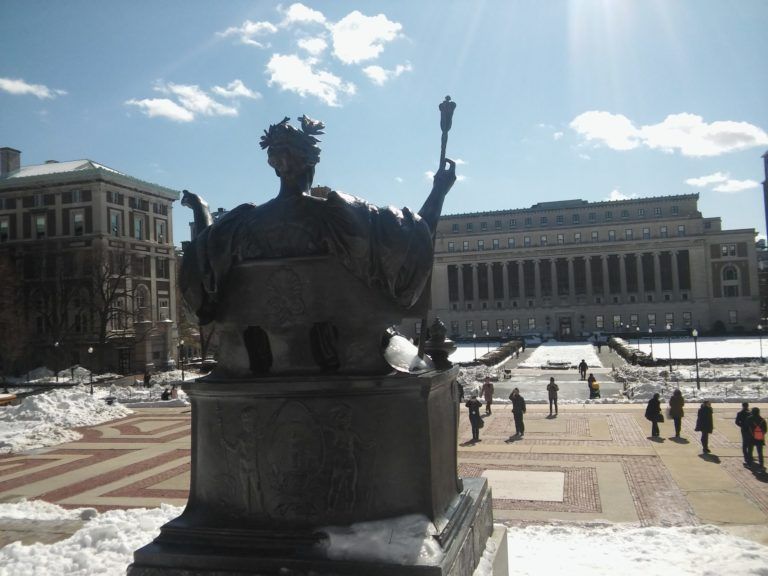
(Dmytro “Henry” Aleksandrov, Headline USA) Columbia University announced on May 1, 2024, that professors should either make final exams optional or cancel them because the pro-Hamas supporters swarmed the college campus.

University Provost Angela Olinto sent an email to students and faculty, in which she wrote that all classes would be moved online for the rest of the semester and urged professors to consider making final exams optional or cancel them entirely, the Columbia Spectator reported.

Professors are “encouraged to provide accommodations in their final assessments” such as “modifying the final’s weight… making the final exam optional, or canceling the final exam,” and must provide an “asynchronous option to accommodate students who have left campus and returned to homes that may be in different time zones,” Olinto wrote.

She then acknowledged that this situation was caused by the pro-terrorist protesters and added that the safety of the “community” is the university’s “highest priority.”

“Given the evolving campus situation, we are working hard to provide support and accommodation to our students, particularly those who are in residence on our Morningside campus. Again, the safety of our community is our highest priority as we strive to support our students’ learning and all the required academic operations,” Olinto wrote.

The Spectator also reported that all exams for Columbia College, the School of Engineering and Applied Science, the School of General Studies and the Graduate School of Arts and Sciences that were previously scheduled for May 3, 2024, have been moved to May 10, 2024, and all papers, projects and other final semester coursework has been reassigned to a date in-between May 6, 2024, and May 10, 2024.

The announcement did not include Columbia’s School of Professional Studies and graduate programs in the School of the Arts.

The announcement came after Columbia University was taken over by pro-Palestine radicals who started setting up tents all over the university, attacking Jewish students and occupying buildings on campus like Hamilton Hall, which prompted the indoctrination center to call in the NYPD to break up the group and the encampment outside.

Ex-Woke Brittney Griner Sobs in Mea Culpa Tour Following Russian Release

(Luis Cornelio, Headline USA) Basketball player Brittney Griner has broken her silence regarding her time spent incarcerated in a Russian jail after being busted for possessing marijuana. 

Griner admitted to grappling with thoughts of suicide and expressed remorse for her stint in jail, which concluded with an exchange involving Russian arms dealer Viktor Bout, infamously dubbed the “Merchant of Death.”

The former basketball star, infamous for her previous anti-American activism, made these remarks during an hour-long interview on ABC News’s 20/20 with host Robin Roberts.

“You said that you felt that you let down yourself, your family, your teams—so how did you work through what you called this guilt that you were feeling,” Roberts asked Griner.

Seemingly taken aback by the question, Griner took a deep breath and rested her arm on her chin. 

“I don’t think I really… gotten through all the way that… I let down everybody in my family,” Griner replied, visibly emotional. “I’m still trying to take through that part.” 

Later in the interview, Roberts brought up the subject of Griner contemplating suicide. 

Responding to the query, Griner admitted, “Yeah… I didn’t think I could get through what I needed to get through.” 

Griner garnered national attention after being jailed at a Russian airport in February 2020 for possessing a marijuana-laced electronic cigarette, thus violating Russian law. At the time, she was competing in the Russian Premier League.

Subsequently, she was sentenced to nine years in prison, a term she would serve for only 10 months as President Joe Biden negotiated her release in exchange for Bout. 

Bout had been serving a 25-year sentence in federal prison for his conspiracy to kill Americans, including government officials and civilians. 

The conspiracies involved selling millions of dollars worth of weapons to terrorist groups, who then utilized these weapons in attacks against Americans, the Obama DOJ said in 2011.

The exchange between the U.S. and Russia sparked controversy, particularly as Griner had previously protested against the U.S. National Anthem by kneeling during its rendition. 

Such acts are often employed to protest allegations of systemic racism within the U.S. “Do you still want to boycott America?” controversial podcast host Alex Stein asked Griner at an airport.

Upon her return from Russia, Griner made a 180 degree reversal, stating she would no longer protest the national anthem.

Griner is currently promoting her forthcoming book, Coming Home. Her 20/20 interview is set to premier on Friday.

Biden Condemns ‘Violent’ Student Protests but Refuses to Send National Guard

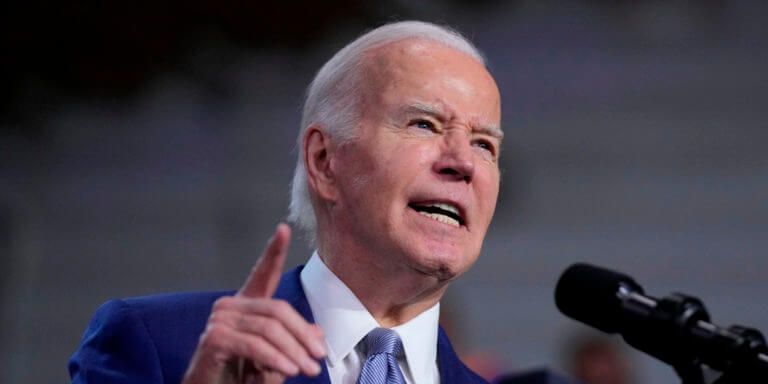
(Headline USA) During his first public remarks regarding the anti-Israel student protests on college campuses across the country, President Joe Biden on Thursday called for order but said he would not send in the National Guard, CBS News reported

“We are not an authoritarian nation where we silence people or squash dissent,” Biden said at the White House.

“The American people are heard. In fact, peaceful protest is in the best tradition of how Americans respond to consequential issues,” he continued. “But neither are we a lawless country. We’re a civil society and order must prevail.”

When asked by a reporter whether he intended to send the National Guard to assist local law enforcement and campus police in removing the student encampments, Biden replied, “No.”

Biden instead hinted his support for local law enforcement taking action against student encampments.

“Violent protest is not protected. It’s against the law when violence occurs,” he said before rattling off a laundry list of other actions, some of which were legal and some illegal.

“Destroying property is not a peaceful protest. It’s against the law. Vandalism. Trespassing. Breaking windows. Shutting down campuses. Forcing the cancellation of classes and graduations. None of this is a peaceful protest,” he continued. “Threatening people. Intimidating people. Instilling fear in people is not peaceful protest. It’s against the law.”

Several Republicans have called on the president to send in the National Guard to restore order on college campuses, arguing that the federal government had a responsibility to enforce civil rights laws being violated by student protesters.

“Eisenhower sent the 101st to Little Rock,” Sen. Josh Hawley, R-Mo., tweeted last week, referring to former President Dwight Eisenhower’s decision to call in the 101st Airborne Division to Little Rock, Ark., in 1957 to ensure the safety of nine African-American students enrolled at Central High School. “It’s time for Biden to call out the National Guard at our universities to protect Jewish Americans.”

However, the optics of doing so under the circumstances more likely would call to mind the May 1970 Kent State University protest in Ohio, during which guardsmen killed four students and wounded several others.

During the 2020 George Floyd riots, former President Donald Trump likewise was reluctant to send the Guard without the specific request of state and local officials, out of concern that such a move would be seen as overly militaristic and antithetical to the First Amendment.

NYC Mayor Demands Columbia Univ. Help Cover Cost of NYPD Raid

(Headline USA) New York City Mayor Eric Adams called on Columbia University to pay up and help cover the cost of the New York Police Department’s efforts to shut down illegal student encampments this week.

Radical student protesters were finally removed from Columbia’s campus on Tuesday night after they took over the school’s iconic lawn and the Hamilton Hall academic building.

Footage of the NYPD’s late-night raid showed officers positioning a ramp against the building so officers could enter through second-floor windows after the protesters sealed themselves inside.

Hundreds of cops were involved in the raid and several were injured during clashes with protesters who turned violent, according to the department.

At least part of the cost of the raid included covering overtime for the officers involved, Adams’s office explained.

That’s a bill that Columbia should have to help pay, the mayor added.

“We believe that they, too, should contribute to the cost,” he told Fox5.

“One way to prevent the costs from escalating is to have a zero tolerance,” he continued. “As soon as the tents go up, it comes down. Do not allow this to continue to expand. That is what we saw at Columbia University, and that is what we saw at CUNY as well.”

School officials were reluctant initially to allow the NYPD on campus, letting the protestors occupy and vandalize the building for an extended period before finally relenting.

Columbia officials have now requested assistance from the NYPD in clearing out the student encampment, and have also asked officers to stay on campus through May 17 to prevent unrest ahead of commencement.

Several New York City council members expressed support for Adams’s position.

“Columbia created this mess, and Columbia—not New Yorkers—should pay to clean it up,” nine council members, led by Queens Republican Joann Ariola, Minority Leader Joe Borelli, and Queens Democrat Bob Holden wrote in a letter to university officials.

“New York City has very real problems that must be prioritized,” the councilors added. “Babysitting spoiled students, activist professors, and professional protesters on an Ivy League campus is not one of them.”

Biden Slams U.S. Allies Japan, India as ‘Xenophobic’

(Headline USA) President Joe Biden this week accused the tiny island nation of Japan of being “xenophobic” for not accepting more immigrants.

The 81-year-old made the comment about the key U.S. ally at a fundraiser in Washington, D.C. on Wednesday while defending his immigration policies, NBC News reported.

“You know, one of the reasons why our economy is growing is because of you and many others. Why? Because we welcome immigrants,” he told the audience.

“Why is China stalling so badly economically? Why is Japan having trouble? Why is Russia? Why is India?” he continued. “Because they’re xenophobic.”

Biden went on to claim that these countries “don’t want immigrants.”

It wasn’t the first time Biden has made such claims. He previously accused Japan of xenophobia during the administration of the late conservative prime minister Shinzo Abe.

Several Japanese lawmakers expressed frustration with Biden’s comments.

“I hope that President Biden will solve the problem in New York before he says things like this,” said Mizuho Umemura, a member of Japan’s conservative Nippon Ishin no Kai Party. “Depending on the presidential election, there could be a 180-degree change in policy, and there is no need for Japan to follow suit.”

Fellow House of Councilors member and leader of the right-wing populist Sansei Party Sohei Kamiya agreed: “It’s not that we’re xenophobic, we are being cautious after seeing your failures,” he said to Biden. “You are meddling too much in our internal affairs.”

Biden’s conservative critics closer to home echoed similar sentiments.

One popular Twitter memer underscored the point by juxtaposing split-screen pictures of the filthy urban decay in Biden’s immigrant-friendly America versus the exceedingly clean and culturally proud Japan.

The White House scrambled to explain away Biden’s remarks during a press conference on Thursday, arguing the president was just trying to extol the benefits of immigration.

“The broader case that he was trying to make, when it comes to who we are as a nation, we are a nation of immigrants. That is in our DNA,” said White House press secretary Karine Jean-Pierre, who has often touted her own immigrant status.

“Obviously, we have a strong relationship with India, with Japan—and the president, if you just look at the last three years, has certainly focused on those diplomatic relationships,” she claimed.

However, reporters remained skeptical of the embattled press secretary and continued to seek clarification from her as to whether Biden intended to direct a pejorative remark at one of America’s top allies, lumping them in with several geopolitical adversaries.

It comes just weeks after Biden hosted Japanese Prime Minister Fumio Kishida for a state dinner at the White House, suggesting that perhaps the two did not see eye to eye in their private negotiations and that the vindictive Democrat was seeking to exact his revenge with the diplomatic gaffe.

Adults Win in Lawsuit that Used Kids to Sue Gov’t over Climate Change

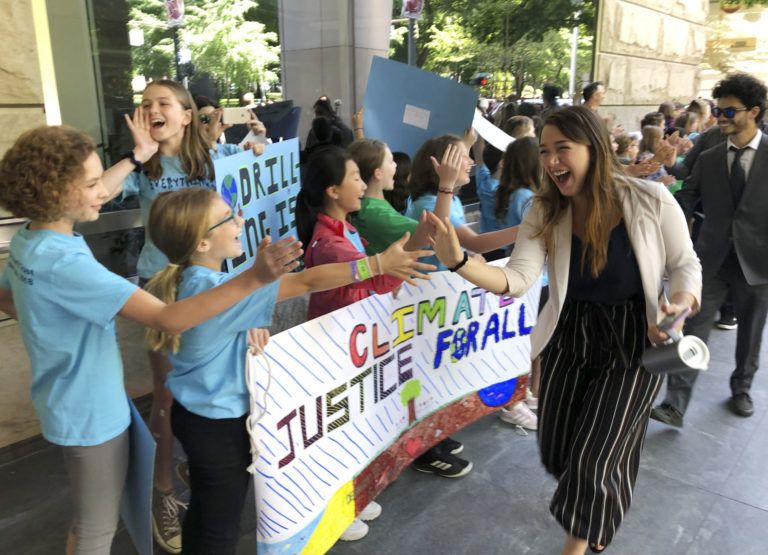
(Headline USA) A federal appeals court panel on Wednesday rejected a long-running lawsuit brought by young Oregon-based climate activists who argued that the U.S. government’s role in climate change violated their constitutional rights.

The 9th U.S. Circuit Court of Appeals previously ordered the case dismissed in 2020, saying that the job of determining the nation’s climate policies should fall to politicians, not judges. But U.S. District Judge Ann Aiken in Eugene, Oregon, instead allowed the activists to amend their lawsuit and last year ruled the case could go to trial.

Acting on a request from the Biden administration, a three-judge 9th Circuit panel issued an order Wednesday requiring Aiken to dismiss the case, and she did. Julia Olson, an attorney with Our Children’s Trust, the nonprofit law firm representing the activists, said they were considering asking the 9th Circuit to rehear the matter with a larger slate of judges.

“I have been pleading for my government to hear our case since I was 10 years old, and I am now nearly 19,” one of the activists, Avery McRae, said in a news release issued by the law firm.

“A functioning democracy would not make a child beg for their rights to be protected in the courts, just to be ignored nearly a decade later,” she whined. “I am fed up with the continuous attempts to squash this case and silence our voices.”

The case—called Juliana v. United States after one of the plaintiffs, Kelsey Juliana—has been closely watched since it was filed in 2015.

The 21 plaintiffs, who were between the ages of 8 and 18 at the time, claimed they had a constitutional right to a climate that sustains life.

The U.S. government’s actions encouraging a fossil fuel economy, despite scientific warnings about global warming, is unconstitutional, they argued.

The lawsuit was challenged repeatedly by the Obama, Trump and Biden administrations, whose lawyers argued it sought to direct federal environmental and energy policies through the courts instead of through the political process.

However, many suspected that the activists may have, in fact, been working in tandem with the Obama and Biden administrations as part of a “friendly suit” operation that ultimately would impose stricter regulatory standards.

The reason for the dismissal may relate to the prospect that it would ultimately fail at the U.S. Supreme Court level, causing the entire operation to backfire, or that a 2024 Republican victory by Donald Trump could lead the Justice Department to challenge it in earnest at the lower court levels.

At one point in 2018, a trial was halted by Supreme Court Chief Justice John Roberts just days before it was to begin.

Another climate lawsuit brought by young people was successful: Early this year the Montana Supreme Court upheld a landmark decision requiring regulators to consider the effects of greenhouse gas emissions before issuing permits for fossil fuel development.

That case was also brought by Our Children’s Trust, which has filed climate lawsuits in every state on behalf of young plaintiffs since 2010.

Adapted from reporting by the Associated Press

Ariz. Repeals 1864 Abortion Law w/ GOP Assist, but Dems Will Campaign on It Anyway

0

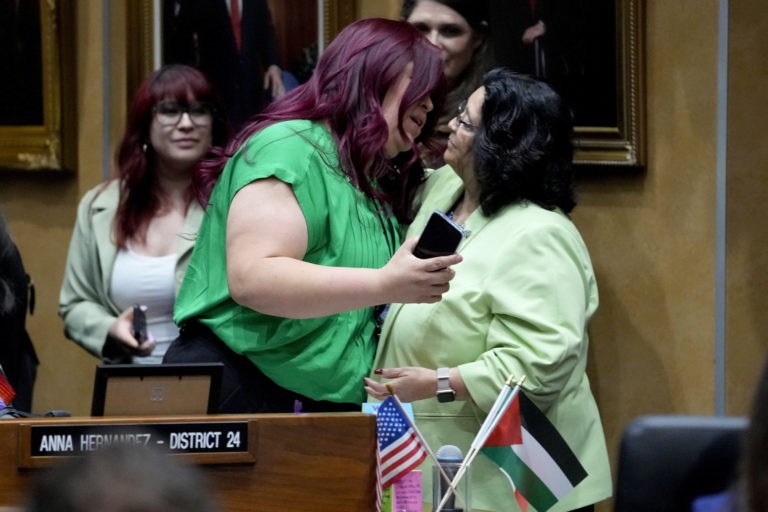
(Headline USA) The Arizona Legislature approved a repeal of a long-dormant ban on nearly all abortions Wednesday, sending the bill to Democratic Gov. Katie Hobbs, who was expected to sign it.

Two Republicans joined with Democrats in the Senate on the 16-14 vote in favor of repealing the Civil War-era law that the state’s highest court recently allowed to take effect. It narrowly cleared the House last week.

The 1864 measure—which predates Arizona’s statehood—provides no exceptions for rape or incest, and it only carves out exceptions for cases in which the pregnant mother’s life is at stake. Anyone who assists in an abortion can be sentenced to two to five years in prison.

Voting on the bill stretched more than an hour on Wednesday, amid impassioned speeches.

“This is about the Civil War-era ban that criminalizes doctors and makes virtually all abortions illegal,” said Democratic state Sen. Eva Burch. “We’re here to repeal a bad law. I don’t want us honoring laws about women written during a time when women were forbidden from voting because their voices were considered inferior to men.”

Burch made public on the Senate floor in March that she had a non-viable pregnancy and was going to have an abortion. She warned supporters of reproductive rights on Wednesday that they could not yet rest easy, even after the repeal is signed.

“They are going to use every tool in the toolbox to try to do whatever it is they can to interfere with the repeal of this ban,” she said.

There were numerous disruptions from people in Senate gallery, as Republican state Sen. Shawnna Bolick explained her vote in favor of repeal, joining with Democrats.

Bolick appeared to argue that a repeal would guard against extreme ballot initiatives from abortion advocates. She is married to state Supreme Court Justice Clint Bolick, who voted to allow a 1864 law on abortion to be enforced again.

“I want to protect our state constitution from unlimited abortions,” the senator said. “I am here to protect more babies. I vote aye.”

Hobbs said in a statement that she looked forward to quickly signing the repeal, with a ceremony scheduled for Thursday.

“Arizona women should not have to live in a state where politicians make decisions that should be between a woman and her doctor,” Hobbs said. “While this repeal is essential for protecting women’s lives, it is just the beginning of our fight to protect reproductive healthcare.”

The law may still be active until the fall—and consequently, Democrats fully intend to wage a scaremongering campaign designed to dupe low-information female voters into thinking that their baby-killing freedoms remain in jeopardy.

“Republicans know that they are on the wrong side of this issue,” Arizona Democratic Party Chair Yolanda Bejarano told the Associated Press. “They are seeing the writing on the wall, and we are going to make sure that we vote out every extremist Republican in Arizona.”

Part of the effort by Democrats involves leveraging former President Donald Trump’s recent stance opposing federal pro-life legislation while voicing support for individual states’ ability to self-determine their abortion laws.

Leftists simultaneously claim that Republicans are losing the debate over the issue due to their intra-party disagreements, while also distorting Trump’s position to suggest he personally threatens to undermine abortion access if re-elected in November.

“Across the country, women are living in a state of chaos and cruelty caused by Donald Trump,” Vice President Kamala Harris claimed in a statement on Wednesday.

“While Arizona Democrats have worked to clean up the devastating mess created by Trump and his extremist allies, the state’s existing ban, with no exception for rape or incest, remains in effect,” she added deceptively.

Trump, for his part, made the decision to articulate his position after long hedging on the issue after coming to view it as a growing political liability.

“A lot of bad things will happen beyond the abortion issue if you don’t win elections, with your taxes and everything else,” he told a rally Wednesday in Michigan.

Indeed, despite having little else to run on, Democrats have seen some success with using abortion to appeal to single-issue voters while also deploying massive ballot-harvesting operations and other suspicious activities that helped them outperform in the past several election cycles.

However, conservative critics fear that his decision to leave the issue at the state level will play right into the Left’s hands as they scramble to get abortion referendums on the ballot that will mobilize voters who otherwise have little enthusiasm for reelecting President Joe Biden.

In Arizona, abortion supporters are collecting signatures for a ballot measure allowing abortions until a fetus could survive outside the womb, typically around 24 weeks, with exceptions—to save the parent’s life, or to protect her physical or mental health—that would grimly allow a woman to murder a fully formed infant if she claimed the idea of motherhood was causing her emotional anguish.

Republican lawmakers, in turn, are considering putting one or more competing abortion proposals on the November ballot.

Arizona’s law took effect after a ruling from the state Supreme Court lifted a prior injunction at the behest of former pro-life state Attorney General Mark Brnovich in the aftermath of the federal overturning of Roe v. Wade.

The court ruling, which came just days after Trump outlined his position, seemed almost a direct response in defiance of the presumptive GOP nominee—a rare rift between Trump and his loyal conservative base.

While many celebrated the decision, the revival of the 19th-century law immediately put Republicans on the defensive in Arizona, one of a handful of closely watched battleground states that will decide the next president.

If the repeal bill is signed, a 2022 statute banning the procedure after 15 weeks of pregnancy will become Arizona’s prevailing abortion law.

Still, the repeal wouldn’t take effect until 90 days after the end of the legislative session, likely in June or July.

Within hours after the vote, efforts were already under way to prevent the older abortion ban from taking effect before the repeal becomes a reality.

“Without an emergency clause that would allow the repeal to take effect immediately, the people of Arizona may still be subjected to the near-total abortion ban for a period of time this year,” Arizona state Attorney General Kris Mayes said. “Rest assured, my office is exploring every option available to prevent this outrageous 160-year-old law from ever taking effect.”

Planned Parenthood Arizona announced it filed a motion Wednesday afternoon asking the state Supreme Court to prevent a pause in abortion until the Legislature’s repeal takes effect.

Planned Parenthood officials have also said they will reinforce networks that help patients travel out of state to access abortion in places like New Mexico and California.

Adapted from reporting by the Associated Press

The Militia Used as an FBI Front Group in 2020 is Again Proliferating on Facebook

(Ken Silva, Headline USA) The tech publication Wired reported Thursday that the Three Percenter, or III%er, militia is again proliferating on Facebook ahead of the 2024 presidential election.

The Three Percenters are a national network of militias, the name being a reference to the fact that only about 3% of colonists took up arms against King George in the American Revolution. The Three Percenters were involved in both the Whitmer kidnap plot and the Jan. 6, 2021, Capitol Hill uprising.

However, what Wired didn’t mention in its report is that the Three Percenters were heavily infiltrated by the FBI. In fact, the FBI used the Three Percenters as a front group in the Whitmer plot—going so far as to have its informants run fake III%er Facebook groups.

The FBI’s creation of Three Percenter Facebook pages was revealed during the first Whitmer trial in 2022.

Defense attorney Christopher Gibbons, who represented militia “ringleader” Adam Fox, said during the trial that FBI informant Steve Robeson created the Facebook page of the Michigan Three Percenters.

According to Gibbons, Robeson announced on the Three Percenters’ Facebook page that Fox had become the leader of the Michigan branch in June 2020. It was around that time that Fox became active with the Wolverine Watchmen, the group associated with the alleged plot to kidnap Whitmer.

Fox was made administrator of the Michigan Three Percenters’ Facebook page created by the FBI informants, Gibbons said.

“He got that Facebook page courtesy of the federal government,” the attorney said.

After being made administrator of the Facebook page, Gibbons said, Fox received a message from another FBI informant named “Mark.” Fox then attended a militia training event in Munith, Michigan, on June 28, 2020, Gibbons said.

The alleged plot escalated from there, until Fox was arrested along with Barry Croft, Daniel Harris, Brandon Caserta, Ty Garbin, and Kaleb Franks in October 2020.

After the arrests, Facebook CEO Mark Zuckerberg bragged about alerting the FBI to the Whitmer plot—apparently unaware that his company was alerting the FBI to its own informants.

More recently, The Intercept reported that FBI informant Jenny Plunk was also involved in creating the fake Michigan Three Percenters.

“FBI informant, Jenny Plunk, created a private Facebook group called ‘Michigan Patriot III%ers.’ (The FBI classifies Three Percenters as a domestic terrorism threat.),” The Intercept reported in March.

“The Facebook group’s first members were Plunk and Robeson, both on the FBI’s payroll, and Fox and his girlfriend, Amanda Keller.”

But none of that is mentioned in Wired’s article, which instead fearmongered over an apparent resurgence in extremism.

“After lying low for several years in the aftermath of the US Capitol riot on January 6, militia extremists have been quietly reorganizing, ramping up recruitment and rhetoric on Facebook—with apparently little concern that Meta will enforce its ban against them,” Wired reported.

Ken Silva is a staff writer at Headline USA. Follow him at twitter.com/jd_cashless.

Maharrey on Bryan Hyde Show: Monetary Policy & the Future of the Dollar

(Money Metals News Service) In a recent episode of The Bryan Hyde Show, Bryan Hyde interviewed Mike Maharrey, an analyst and writer associated with Money Metals Exchange and the Tenth Amendment Center. Maharrey brought his expertise in macroeconomics and constitutional principles to discuss pressing issues in monetary policy and the shifting global economic landscape.

The Federal Reserve and Inflation

Maharrey started by shedding light on the Federal Reserve’s monetary policy, which he sees as driving the inflationary trends diminishing the dollar’s purchasing power. He described how the Federal Reserve’s quantitative easing and other monetary policies have created an environment where more dollars in circulation lead to rising prices across the board. 

He emphasized that monetary inflation is the primary cause of price inflation, and external factors like corporate greed, geopolitical events, and pandemics have had less of an impact than the Federal Reserve and U.S. government’s actions.

Maharrey critiqued the focus on short-term economic news and trends, urging listeners to instead pay attention to the long-term economic trajectory. 

Tracing the roots of inflationary trends back to the 2008 financial crisis and even further to Alan Greenspan’s policies in the 1990s, he highlighted how the Federal Reserve’s actions have contributed to a cycle of boom and bust. 

The resulting monetary inflation has impacted all aspects of the economy, from grocery prices to real estate.

Sustainability of Current Monetary Policy

Maharrey was clear in his view that the current monetary system is unsustainable. He used vivid metaphors to illustrate the point: the system is like a can being kicked down the road, but eventually, the road will end. 

Although he refrained from predicting the exact timing, he emphasized that the long-term effects of current policies will inevitably lead to a significant economic crisis.

Potential Responses and Shifting Global Power

Looking ahead, Maharrey discussed how a potential economic crisis could lead to a global shift in economic power away from the U.S. dollar. He pointed to the growing influence of BRICS countries (Brazil, Russia, India, China, South Africa) and other nations exploring ways to reduce their dependence on the dollar. 

He noted that as the U.S. government continues its borrowing and spending, countries like China are moving away from U.S. debt and increasing their gold reserves.

He also raised concerns about potential government responses, suggesting that global governments might seek to tighten their control over money through central bank digital currencies (CBDCs). 

Maharrey sees CBDCs as a potential tool for government overreach, offering unprecedented control over individuals’ financial transactions.

Key questions and answers from the interview between Bryan Hyde and Mike Maharrey are as follows:

Can you describe the different roles you play in your work?

Maharrey explains that he wears multiple hats. He primarily works as a news editor and analyst at Money Metals Exchange, where he focuses on macroeconomic trends. He also contributes to the Tenth Amendment Center, which aims to educate people about constitutional principles and advocates for decentralization.

What is causing the dollar to lose purchasing power and how did we get here?

Maharrey attributes the loss in purchasing power to monetary inflation caused by the Federal Reserve’s policies. He emphasizes that the Federal Reserve has been injecting money into the economy through quantitative easing since 2008. 

He traces the inflationary trend back further to the 1990s, highlighting that more dollars in circulation reduce their value, leading to rising prices.

Is the current monetary policy sustainable, or will it eventually hit a point of crisis?

Maharrey believes the current monetary system is unsustainable and will inevitably lead to a financial crisis. While he doesn’t predict the timing, he compares the situation to kicking a can down the road—eventually, the road will end, and the economy will face a significant downturn.

How might global powers respond to a financial crisis, and what impact will that have?

Maharrey predicts that a financial crisis will shift global power away from the U.S. dollar. He highlights the growing influence of the BRICS countries, which aim to reduce their reliance on the dollar. 

He also warns of governments using central bank digital currencies (CBDCs) to exercise unprecedented control over financial transactions.

Are we likely to see a global shift towards a unified digital currency similar to Bretton Woods?

Maharrey doubts the feasibility of a unified global currency due to political divisions but sees a shift toward distinct economic blocs. He envisions a future where no single currency dominates, unlike the dollar today.

Conclusion

In concluding the interview, Maharrey predicted that while a unified global currency system is unlikely, the future could see the emergence of distinct economic blocs, leading to a shift in global economic power. 

Bryan Hyde expressed interest in further discussions with Maharrey on potential alternatives for individuals to protect their financial futures in the face of these economic changes.

Overall, Maharrey’s insights underscored the complex interplay between monetary policy and global economics, leaving listeners with much to consider about the future of the dollar and the global economy.

As Biden Spending Sprees Continue, Fed Says No Rate Cuts in Sight

(Headline USA) On the heels of a newly passed $95 billion aid package for Ukraine and other foreign nations, as well as more rounds of controversial student-loan “amnesty” announced by the Biden administration, the root cause of inflation—unfettered federal spending and borrowing—has yet to be addressed in any meaningful way, putting the nation in considerable economic turmoil for the foreseeable future.

But with President Joe Biden and Congress refusing to exercise any constraint of their own, the Federal Reserve has said its economy-crushing guardrails, in the form of burdensome and prohibitively high interest rates, will remain in place to ensure that the problem of currency devaluation does not become even worse than it is already.

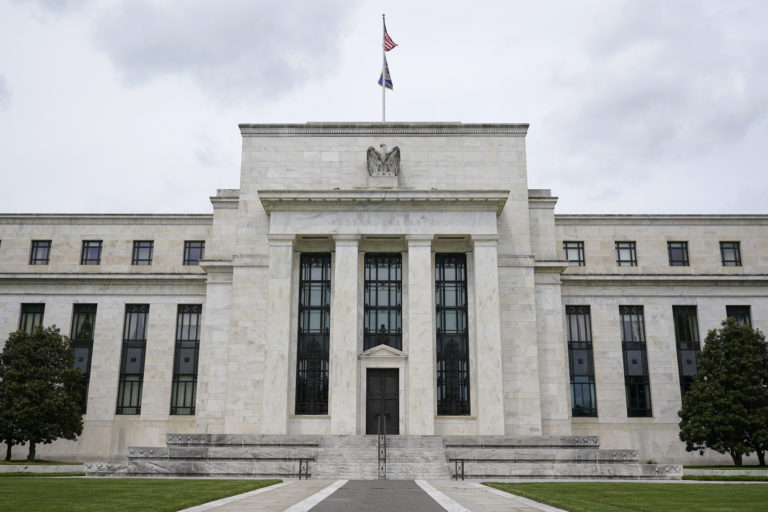
The Fed on Wednesday emphasized that inflation has remained stubbornly high in recent months and said it doesn’t plan to cut interest rates until it has “greater confidence” that price increases are slowing sustainably to its 2% target.

The central bank issued its decision in a statement after its latest meeting, at which it kept its key rate at a two-decade high of roughly 5.3%.

Several hotter-than-projected reports on prices and economic growth have recently undercut previous claims that inflation was steadily easing. The combination of high interest rates and persistent inflation has also emerged as a potential threat to Biden’s re-election bid.

“In recent months, inflation has shown a lack of further progress toward our 2% objective,” Fed Chair Jerome Powell said at a news conference. “It is likely that gaining greater confidence will take longer than previously expected.”

Powell did strike a note of optimism about inflation. Despite the recent setbacks, he said, “My expectation is that over the course of this year, we will see inflation move back down.”

Powell’s prediction, of course, hinges significantly on the extrinsic political factors at play. It is widely suspected that even the anticipation of a Trump presidency could provide a much-needed jolt to the economy.

But when it comes to inflationary spending, consumer confidence has little to do with the underlying matter at hand—and indeed, it may be a contributing factor if people are too eager to accept higher prices as the new normal in a free-market system.

Powell’s comments were “a signal that the [Fed] is a lot less confident that they know how policies are going to unfold over the course of this year,” said Jonathan Pingle, an economist at UBS. “We were all sort of hoping for an update on the committee’s path forward. And instead what we got was, ‘We’re really not confident enough to tell you what our path forward is going to be.’ ”

Meanwhile, the stock market was beginning to come to grips with the reality that the Biden economy was going nowhere anytime soon. But with the market facing a recent correction period after its first-quarter boom, some found a measure of solace in Powell’s latest message.

Wall Street traders initially cheered the prospect that the Fed would cut rates at some point this year—as well as his comment that the Fed wasn’t considering reverting to rate increases to attack inflation.

“I think it’s unlikely that the next policy rate move will be a hike,” he said.

Later, though, stock prices erased their gains and finished the day essentially unchanged from where they were before Powell’s news conference.

Still, Powell sketched out a series of potential scenarios for the months ahead. He said that if hiring stayed strong and “inflation is moving sideways,” that “would be a case in which it would be appropriate to hold off on rate cuts.”

But if inflation continued to cool—or if unemployment rose unexpectedly—Powell said the Fed would likely be able to reduce its benchmark rate.

The unemployment factor is one that is within the Biden administration’s power to control. Thus far, it has benefited from artificially high employment numbers throughout the Democrat leader’s presidency—a factor that came as no surprise during the COVID pandemic recovery but has proven a conundrum to some in its aftermath.

The unemployment rate has remained below 4% for more than two years, the longest such streak since the 1960s. However, the job increases have been largely limited to only a handful of sectors, including government hires and the government-subsidized healthcare industry.

Hospitality (i.e. restaurant work) and construction have also seen some growth, likely due to the uptick in illegal immigration, which has brought in cheap labor willing to undercut the wage demands of American workers—while also receiving generous subsidies from the U.S. government.

Thus, Biden has essentially been spending taxpayers’ money to keep the unemployment rate low—a perverse distortion of its usual measure as a reflection of economic health and correlation with the gross domestic product.

Were Biden to begin enforcing border security or, alternatively, limit government spending on illegals, the short-term effect of that might be a more realistic reflection of the unemployment figure, but it could potentially help spur the desired rate cuts.

Those cuts would, over time, bring down the cost of mortgages, auto loans and other consumer and business borrowing.

The central bank’s overarching message Wednesday—that more evidence is needed that inflation is slowing to the Fed’s target level before the policymakers would begin cutting rates—reflected an abrupt shift. As recently as their last meeting on March 20, the officials had projected three rate reductions in 2024, likely starting in June.

But given the persistence of elevated inflation, financial markets now expect just one rate cut this year, in November, according to futures prices tracked by CME FedWatch.

The Fed’s warier outlook stems from three months of data that pointed to chronic inflation pressures and robust consumer spending. Inflation has cooled from a peak of 7.1%—according to the Fed’s preferred measure, although consumer prices have risen in many areas by more than 50% and have stubbornly refused to come back down.

Average prices remain well above their pre-pandemic levels, and the costs of services ranging from apartment rents and health care to restaurant meals and auto insurance continue to surge. With the presidential election six months away, many Americans have expressed discontent with the economy, notably over the pace of price increases.

Although still nowhere near the near-zero level it was when Biden assumed office, the rate of increase has now slowed to 2.7%, and the cost of some goods has actually returned to normal as supply chains have reopened.

However, concerns are growing over energy production—another Biden policy foible that may potentially skyrocket in coming months and increase production and distribution costs across the board.

While economic growth reached just a 1.6% annual pace in the first three months of this year, consumer spending grew at a robust pace, likely due to the elevated costs of everyday necessities.

Yet, Powell downplayed any concerns that the Bidenflationary economy might be at risk of sliding into “stagflation”—a toxic combination of weak growth, high unemployment and elevated inflation that afflicted the United States during the 1970s.

“I was around for stagflation, and it was 10% unemployment, it was high-single-digit inflation and very slow growth,” Powell said, neglecting to mention that the Fed has since changed its way of measuring inflation to make the current metric seem less severe.

“Right now, we have 3% growth—which is pretty solid growth, I would say, by any measure,” he continued. “And we have inflation running under 3%. … I don’t see the ‘stag’ or the ‘flation,’ actually.”

On Wednesday, the Fed announced that it would slow the pace at which it’s unwinding one of its biggest COVID-era policies: Its purchase of several trillion dollars in Treasury securities and mortgage-backed bonds, an effort to stabilize financial markets and keep longer-term rates low.

The Fed is now allowing $95 billion of those securities to mature each month, without replacing them. Its holdings have fallen to about $7.4 trillion, down from $8.9 trillion in June 2022, when it began reducing them. On Wednesday, the Fed said it would, in June, reduce its holdings at a slower pace.

Instead of allowing $60 billion in Treasuries to roll off each month, it will allow just $25 billion. At the same time, it will continue letting $35 billion in mortgage-backed bonds mature each month.

By cutting back its holdings, the Fed could contribute to keeping longer-term rates, including mortgage rates, higher than they would be otherwise. That’s because as it reduces its bond holdings, other buyers will have to buy the securities instead, and rates might have to rise to attract the needed buyers.

Adapted from reporting by the Associated Press