GOP Politician Sues Air Force for Disclosing Her Sexual Assault to DNC Operative

(Ken Silva, Headline USA) Republican 2022 congressional candidate and combat veteran Jennifer-Ruth Green has sued the Air Force for leaking sensitive records about a sexual assault she suffered in Iraq, alleging that the illegal disclosure cost her the tightly contested race for Indiana’s first congressional district.

As detailed in Green’s lawsuit, which she filed last Thursday in federal court, she was in the Air Force full time for seven years before working in the Indiana Air National Guard from 2015 to 2023. She currently serves in the Nevada Air National Guard as the executive officer to the assistant adjutant general (air) of Nevada.

Green won the Republican primary in May 2022, and looked to be a strong candidate to win a district historically dominated by Democrats.

But weeks before the election on Oct. 7, 2022, Politico reported on confidential records that documented an instance in which Green was sexually assaulted by an Iraqi serviceman while she was on assignment in Iraq.

Those records were provided to Politico by the Due Diligence Group and its co-founder, Abraham Payton—paid opposition researchers for the Democratic Congressional Campaign Committee and the Democratic Senatorial Campaign Committee. Due Diligence and Payton, in turn, had obtained the records from the Air Force through an illegal disclosure.

Green ended up earning 47.2% of the vote in Indiana’s heavily Democratic first congressional district in 2022—the best a Republican candidate performed there since 1946.

But if her campaign hadn’t been sent into chaos by the illegal Air Force disclosure, she may have won her race, she argued in her lawsuit.

“The Air Force’s disclosure, and Payton and Due Diligence Group’s subsequent leak, of Green’s confidential records forced Green to speak publicly about her sexual assault to the media during a politically charged, partisan congressional election,” she stated in her lawsuit.

“Green was even accused of leaking the records herself for political gain during the final weeks of the campaign, which, given that Green had diligently kept the matter of her sexual assault private for a decade, was a monstrous and obviously false accusation,” she said.

“When the Politico article was released, Green was required to turn her attention away from her campaign and dedicate time speaking publicly about one of the worst moments in her life—all because the Air Force unlawfully disclosed her confidential service record.”

Green alleged that the Air Force violated the Privacy Act. She seeks damages.

The Air Force has yet to respond to the lawsuit.

Ken Silva is a staff writer at Headline USA. Follow him at twitter.com/jd_cashless.

Biden’s Asylum Scheme: This Move Grants 350K Illegals Free Rein

(Luis Cornelio, Headline USA) A Sunday report by the New York Post has revealed that the Biden administration has quietly terminated the asylum cases of 350,000 illegal aliens, effectively allowing them to remain in the United States without supervision or facing deportation proceedings.

The termination of these asylum cases means that these individuals lack a legal basis to stay in the U.S. Yet, they are not subject to deportation as would typically be expected.

According to the Post, these cases are “terminated without a decision on the merits of their asylum claim” and are subsequently removed from the system.  

This maneuver permits these illegal aliens to roam the country indefinitely without fear of being deported, effectively slipping through the cracks of immigration enforcement, the Post wrote.

Andrew Arthur, a former immigration judge and current resident fellow in law and policy at the Center for Immigration Studies, condemned the Biden administration’s actions as a covert amnesty plot disguised as prosecutorial discretion. 

“This is just a massive amnesty under the guise of prosecutorial discretion,” Arthur told the Post. “You’re basically allowing people who don’t have a right to be in the United States to be here indefinitely.” 

Even more concerning was a plea from an unnamed ICE officer to the Post: “Please let everyone know what’s really going on.” 

This secretive amnesty plot originates from a memo issued by ICE Principal Legal Advisor Kerry E. Doyle in 2022, instructing immigration officials to dismiss asylum cases for individuals deemed non-national security threats. 

As a result, while the Biden administration ordered the deportation of 36,000 individuals and granted asylum to 32,000, it dismissed the cases of 102,550 individuals. 

By 2023, the number of dismissed cases had risen to 149,000, and as of the fiscal year 2024, it stands at 114,000. 

Immigration lawyer Hector Quiroga emphasized the dire consequences of having a case dismissed, stating, “If the case gets dismissed, you’re basically back to nothing.” 

Media Cartel: Explosive Biden Scandals News Outlets Won’t Touch

(Luis Cornelio, Headline USA) Leftist media outlets are shielding President Joe Biden’s re-election efforts by refusing to cover five politically damning scandals, instead focusing on the leftist-led trial and conviction of former President Donald Trump. 

The Media Research Center (MRC), a media watchdog group, has identified five troubling stories that ABC, CBS and NBC have ignored.  

Their findings, published on Monday, while not surprising, are deeply concerning. 

According to the MRC, none of these outlets reported that President Biden’s indicted son, Hunter Biden, used the Sandy Hook Memorial to arrange a meeting between his father and CEFC executive Liu Yadong. 

“My father will be in New York also and he wants me to attend the Sandyhook [sic] memorial service with him and I would like him to meet you along with my uncle [Jim Biden] and then you and I can talk let me know if that works,” the first son wrote in a text released by the House Ways and Means Committee. 

The meeting, first reported by the New York Post on May 27, contradicts the president’s claims that he never discussed business with his son. Conversations, text messages and photos on Hunter Biden’s controversial laptop suggest otherwise. 

Another scandal involves the release of congressional records indicating that Hunter Biden “indisputably” lied under oath. ABC, NBC and CBS have provided zero coverage of this development. 

Citing the New York Post, the MRC reported that the Ways and Means Committee released over 100 pages of evidence suggesting Hunter Biden lied under oath during his deposition on Feb. 28, 2024. 

IRS whistleblowers Gary Shapley and Joseph Ziegler testified to congressional investigators that Hunter Biden lied at least three times. 

Adding to the controversy, Hunter Biden falsely claimed that he never introduced Joe Biden to Burisma executives. However, records show that the president and his son had dinner with them in 2014 and 2015. 

“ABC, CBS, NBC evening and morning show coverage: 0 seconds,” noted the MRC. 

Further complicating matters for the Biden campaign, Joe Biden’s brother, Jim Biden, had business ties with officials from the Qatari government, raising concerns about foreign connections implicating the Biden family and, by extension, the president himself. 

These left-leaning media outlets have shown little interest in investigating these connections. 

Another scandal involves the CIA blocking investigators from interviewing Hunter Biden’s associate, Kevin Morris, as part of their criminal investigation into Hunter Biden’s tax affairs and his failure to pay taxes on time. 

According to the MRC, “ABC, CBS, NBC evening and morning show coverage: 0 seconds.”

Rep. MTG to ‘Mr.’ Fauci: You Belong in Prison

(Ken Silva, Headline USA) Monday’s much anticipated House congressional hearing with Dr. Anthony Fauci started off with members from both parties treating the former director of the National Institute of Allergy and Infectious Diseases relatively lightly—for example, the Republican committee chairman, Rep. Brad Wenstrup, R-Ohio, thanked him for helping push the COVID-19 vaccine.

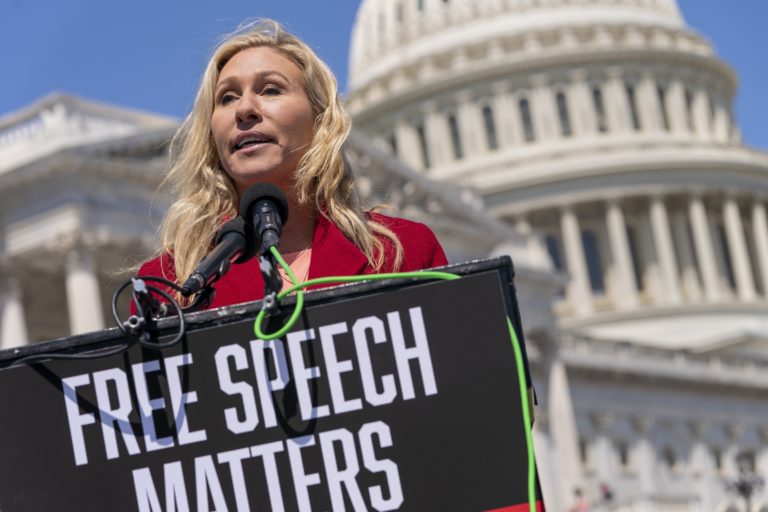
But Rep. Marjorie Taylor Greene, R-Ga., sent the hearing into a frenzy when she called for Fauci’s imprisonment and refused to call him a doctor—becoming the first member of that committee to express the view held by millions of Americans.

Greene began her time by referencing Fauci’s infamous comments in which he claimed to be an avatar for science. She then held up posters of the dogs that were tortured during experiments Fauci funded as NIAID head.

“As a dog owner, this is disgusting and evil. Americans don’t pay their taxes for animals to be tortured like this. The type of science you represent is abhorrent and needs to stop,” she said.

At one point, Democrats interrupted and tried to force her to address Fauci as a doctor.

“The gentle lady should recognize the doctor as a doctor,” Wenstrup said.

But Greene was undeterred by the Dems and her own committee’s GOP leader.

“That man does not deserve to have a license. It should be revoked and he should be in prison,” she said.

Greene continued, recounting Fauci’s support for mask mandates, lockdowns, vaccine mandates and other restrictions of liberty. She said Fauci’s “repulsive, evil science” led to “children all over America [being] forced to wear mask, muzzled in school, then forced to learn at home.”

“You should be prosecuted for crimes against humanity. You belong in prison, Dr. Fauci,” she closed—the one time she called him a doctor.

Ken Silva is a staff writer at Headline USA. Follow him at twitter.com/jd_cashless.

Investing in a World of Uncertainty

(Clint Siegner, Money Metals News Service) The rapidly eroding confidence in our institutions gets plenty of news coverage. We expect it will be a dominant theme for investors in the years ahead.

Investing success may require correctly answering the question about what to own in a world where free market forces are taking a back seat to crooked politicians and incompetent central planners.

The guilty verdict against Donald Trump is currently the biggest news story. It would be a mistake to ignore the impact an event like this has on investor psychology.

Kevin O’Leary, of Shark Tank fame, summed it up this way:

“The American brand has been dragged through the mud, sunk to the level of a banana republic where rulers take their political enemies out to the jungle to disappear.”

The rule of law is what makes the U.S. much more investable than Zimbabwe. Unfortunately, the Trump story isn’t the only thing shaking confidence. It isn’t even the only one from last week.

On Thursday, Chuck Schumer and 22 other Democrat legislators sent a letter imploring the Department of Justice to investigate and prosecute anticompetitive behavior in the oil and gas industry.

The editorial board at the Wall Street Journal says the evidence supporting allegations of price collusion is flimsy. The Federal Trade Commission is looking to scapegoat the industry for higher fuel prices. Chuck Schumer, Joe Biden, and Democrats generally are certainly eager to avoid the blame.

Regulators always tend to be captured and ineffective, but they now seem to have stopped paying anything more than lip service to the notion of impartiality.

Recent events have been an eye-opener for Americans and they are more nervous by the day.

That has implications for investing.

In decades past, large-cap oil and gas stocks performed as a solid investment and a good hedge against inflation.

Today, investors have other factors to consider before buying shares.

They have to wonder whether or not the company can avoid price controls and/or a politically motivated prosecution by the Department of Justice.

The stories keep coming, and the bull market in uncertainty is beginning to roar.

Picking winners and losers from the universe of conventional assets – stocks, bonds, and money markets – will be a challenge. Oil stocks are a great example. It might make sense to own them, but you definitely can’t ignore the politics.

This is one reason gold and silver bullion have gotten more attention from investors, and it is why even more inflows of investment into the monetary metals are probably coming.


Clint Siegner is a Director at Money Metals Exchange, the national precious metals company named 2015 “Dealer of the Year” in the United States by an independent global ratings group. A graduate of Linfield College in Oregon, Siegner puts his experience in business management along with his passion for personal liberty, limited government, and honest money into the development of Money Metals’ brand and reach. This includes writing extensively on the bullion markets and their intersection with policy and world affairs.

How the Federal Reserve Drives the Boom-Bust Cycle

(Mike Maharrey, Money Metals News Service) The Federal Reserve was sold as a way to “provide the nation with a safer, more flexible, and more stable monetary and financial system.”

That’s not what the central bank does.

In fact, the Fed destabilizes the monetary system by constantly interjecting itself into it, tinkering with interest rates, and creating money out of thin air to support government borrowing and spending. This leads to a broader destabilization of the economy manifested in booms and busts.

When most people talk about the economy, they tend to focus on government policies such as taxation and regulation. For instance, Republicans blame President Biden for inflation. Meanwhile, Democrats blame “deregulation” for the 2008 financial crisis. While government policies certainly have an impact on the trajectory of the economy, this partisan analysis ignores the biggest player on the stage — the Federal Reserve.

You can’t grasp the economic big-picture without understanding how the Fed’s monetary policy drives the boom-bust cycle.

The effects of other government policies happen within the Fed’s monetary framework. Money-printing and interest rate manipulations fuel booms and the inevitable attempt to return to “normalcy” precipitates busts.

In simplest terms, easy money blows up bubbles. Bubbles pop and set off a crisis.

Rinse. Wash. Repeat.

The Boom

When the economy slows or enters into a recession, central banks like the Federal Reserve drive interest rates down and launch quantitative easing (QE) programs to “stimulate” the economy.

Low interest rates encourage borrowing and spending. This flood of cheap money suddenly available allows consumers to easily borrow money and consume more — thus the stimulus. It also incentivizes corporations and government entities to borrow and spend. Coupled with quantitative easing, a central bank can pump billions of dollars of new money into the economy through these artificially low interest rates.

Quantitative easing compounds this effect.

QE is a fancy term for printing lots of money. Of course, the Fed doesn’t have a printing press in the basement of the Eccles Building running off dollar bills, but it generates the same practical effect. The Federal Reserve digitally creates money out of thin air and uses the new dollars to buy securities and government bonds, thereby putting “cash” directly into circulation. QE not only boosts the amount of money in the economy, it also has a secondary function. As the Federal Reserve buys U.S. Treasury bonds, it monetizes government debt. In effect, it creates artificial demand for Treasury bonds. This allows the government to borrow and spend more than it otherwise could.

The central bank can also buy financial instruments like mortgage-backed securities as it did during QE1 in 2008 and during the pandemic. This effectively serves as a bank bailout. Big banks get to remove these worthless assets from their balance sheets and shift them to the Fed’s. Theoretically, this makes the banks more solvent and encourages them to lend more money to ease the credit crunch that occurs when banks become financially shaky.

This monetary policy results in a temporary boom. All of that new money has to go somewhere. It could result in rising consumer prices (a symptom of inflation), but generally, it pumps up the price of assets such as real estate and stock markets, creating a fake wealth effect. People feel wealthier because they see the value of their assets rapidly increasing. With plenty of debt-driven spending and rapidly increasing asset prices, the economy grows, sometimes at a staggeringly fast rate.

This process also creates inequality. The first receivers of this new money — generally bankers and politically connected individuals and institutions — get the most direct benefit from the newly minted dollars. Their decisions on where to spend the money create artificially high demand in the chosen industries or asset classes. Think of the housing market in the years leading up to ’08, or tech companies during the dot-com boom. This amplifies distortions in the capital structure. The first receivers also get to spend the new money before the inflationary effects take hold and prices rise. Those who receive the money later on down the line, say through pay raises, don’t get the same benefits as the first users. Price inflation eats up their gains.

Meanwhile, surging economic growth, shrinking unemployment, and rising stock markets driven by money creation give the illusion of a healthy economy. However, the monetary policy hides the economic rot at the foundation.

To sustain an economic expansion, you need capital goods — factories, machines, and natural resources. Capital goods are produced through savings and investment. When central banks juice consumption without a healthy underlying capital structure, it will eventually become impossible to maintain. You can print all the dollars you want, but you can’t print stuff. At some point, the credit-driven expansion will outstrip the available stock of capital. At that point, the house of cards begins to collapse.

Imagine you plan to build a giant brick wall. With interest rates low and credit readily available, you borrow all the money you need to complete the job. But two-thirds of the way through, a brick shortage develops. You may have plenty of money, but you’ve got no bricks. You can’t finish your project.

This scenario provides a simplified picture of what happens in the economy during a Fed-fueled economic expansion. Flush with cash, investors begin all kinds of projects they will never be able to complete. Eventually, the malinvestments become apparent. The boom teeters and then collapses into a bust.

The Bust

Of course, the Fed helps this process along as well.

Once the apparent recovery takes hold, the Fed generally tries to tighten its monetary policy to keep price inflation under control. It ends QE programs and begins to nudge interest rates back up. When the recovery appears to be in full swing, the central bank may even shift to quantitative tightening — shrinking its balance sheet. During the boom, governments, consumers, and companies pile up enormous amounts of debt. Rising interest rates increase the cost of servicing that debt. They also discourage new borrowing. Easy money dries up. This speeds up the onset of the next recession and the cycle repeats itself.

To understand this, we can look back at the past three boom-bust cycles.

In October 1987, the stock markets crashed. The following year, inflation rose above 5 percent, prompting then-Fed Chairman Alan Greenspan to raise interest rates above nine percent in early 1989. This led to a mild recession in the early 1990s. Greenspan pushed rates below 3 percent in late 1992, then began to slowly nudge them upward in 1994. But the Fed never got rates anywhere near the pre-recession level. With the economy plugging along, rates peaked at 6 percent in 1995. From there, Greenspan held rates in the five-to-six percent range through 2001.

As the New York Times put it, “Greenspan makes a winning bet in the mid-1990s, resisting pressure to raise interest rates as unemployment declines. He argues that increased productivity, including the fruits of the computer revolution, have increased the pace of sustainable growth. Indeed, the Fed finds itself debating whether there is such a thing as not enough inflation, and a new Fed governor named Janet L. Yellen plays an important role in convincing Mr. Greenspan that a little inflation helped to lubricate economic growth.”

In December 1996, the dot-com boom was in full swing. Greenspan warned of “irrational exuberance” in the markets, even as he fed it with artificially low — for the time — interest rates.

Again from the NYT:

“The Fed decides that popping bubbles is not part of its job description, leading critics to charge that Mr. Greenspan’s monetary policies spawned an era of booms and busts, culminating in the 2008 financial crisis.”

And then the dot-com bubble popped in the spring of 2001.

In response, Greenspan slashed rates, eventually dropping them all the way down to 1 percent in June 2003. This set the stage for the 2008 financial crisis.

The Fed began nudging rates higher in the summer of 2004. By February 2005, we were already seeing ripples of trouble in the over-inflated housing market, but the Federal Reserve continued nudging rates up. Of course, mortgage rates moved upward along with the federal funds rate. More homeowners began to default. In late 2007, the bottom fell out and in late 2008, the entire system imploded, kicking off the Great Recession.

By December 2008, Federal Reserve Chairman Ben Bernanke had dropped rates to .25 percent — effectively zero — and he launched the first of what would become three rounds of quantitative easing. The Fed held rates at that historically low level for seven years.

Janet Yellen nudged rates up for the first time in 2015, followed up with one hike in 2016. It wasn’t until 2017 that the central bank began to normalize in earnest, hiking rates seven times over the next two years. After the last hike in December 2018, the Fed funds rate stood at 2.5 percent. The Federal Reserve also began to unwind quantitative easing in 2018 by shedding assets from its balance sheet.

This set blew up a new bubble. By 2017, the economy was loaded up with government, corporate, and consumer debt. The stock markets were juiced to record levels. We also saw other asset bubbles in high-yield bonds, housing (again), and commercial real estate, along with a lot of other assets you don’t hear as much about — such as art and comic books.

In the fall of 2018, the impact of rate hikes and quantitative tightening began to ripple through the economy. The stock market tanked. It was the first sign that the cycle was about to turn from boom to bust. Federal Reserve Chair Jerome Powell rode to the rescue, signaling that interest rate normalization was over and announcing the end of quantitative tightening. It looked like we were lurching toward the next bust when the pandemic bailed the Fed out. The Fed cut rates three times in 2019, trying to keep the boom on life support.

Then, in an odd twist of fate, COVID-19 bailed the Fed out.

The government shutdowns in 2020 gave the central bank an excuse to put loose monetary policy on steroids. It quickly slashed rates to zero and launched a massive quantitative easing program that pumped nearly $5 trillion in newly printed money into the economy in less than two years. 

The unprecedented intervention into the financial system reinflated the bubbles that were leaking air before the pandemic. After the initial crash, as the government shut things down, stock markets soared. Stimulus checks kept Americans spending, even though production crashed. In effect, pandemic policies created post-2008 boom 2.0.

But there was a dark side. With soo much new money flowing into the economy soo quickly, price inflation reared its ugly head, forcing the central bank to raise rates and begin shrinking its balance sheet much sooner than it wanted to.

The Fed still hasn’t done enough to slay the price inflation dragon it released during the pandemic, but it has raised rates high enough to perpetuate the next bust.

It’s just a matter of time. 

When the economy crashes, the Fed will almost certainly do what it always does — try to manufacture a new boom with more artificially low interest rates and money printing. That means more inflation. 

Wash. 

Rinse.

Repeat.

But at some point, the Fed will push things too far and it won’t be able to undo the bust. What happens next isn’t clear, but it won’t be pretty.


Mike Maharrey is a journalist and market analyst for MoneyMetals.com with over a decade of experience in precious metals. He holds a BS in accounting from the University of Kentucky and a BA in journalism from the University of South Florida.


You Are Paying More and Getting Less!

(Mike Maharrey, Money Metals News Service) You are paying more and getting less thanks to persistent price inflation. Politicians and talking heads on financial news networks often point to “strong” retail sales data to support the claim that the economy is doing great.

“You see! The economy is rolling right along! Americans are out there spending!”

Retail sales were up 2.67 percent on an annual basis in April. If you didn’t know better, you might get the impression that American consumers bought over two-and-a-half percent more stuff than last year. That sounds pretty good, doesn’t it?

But retail sales don’t tell the whole story because the data isn’t adjusted for price inflation. In reality, Americans are forking out more money than they were last year, but they’re actually buying less stuff. 

According to the CPI data, prices were up 3.4 percent on an annual basis in April. That accounts for the entire increase in retail sales and then some.

Retail sales data always reflects rising and falling prices, along with the volume of stuff consumers buy.

When price inflation is high, retail sales tick higher, unless consumers cut back spending enough to offset rising prices. During deflationary periods (falling prices), retail sales fall, all things being equal, unless people up their volume of purchases enough to offset falling prices. 

In other words, just because dollar widget sales increase doesn’t mean people bought more widgets. It could be that they bought fewer widgets but paid a lot more for them. Conversely, falling sales could reflect price drops and don’t necessarily mean people purchased fewer widgets.

An example using simple numbers clarifies this concept. 

Let’s say a widget costs $10. If consumers bought 100 widgets, retail sales would be $1,000. Now let’s say the cost of a widget increased to $12. If people still bought 100 widgets, retail sales would increase to $1,200. Headlines would trumpet a great retail sales report and a “robust” economy. But people weren’t better off. They purchased the same number of widgets; they just paid more for them.

When you put recent retail sales data into this context, it’s logical to conclude that American consumers haven’t been spending more because they’re confident about the economy. They’re not better off because they’re getting more stuff. They’re just shelling out a lot more money for the same amount of stuff they were getting before — and in some cases even less stuff.

American consumers have been spending more because they have to. This is an involuntary spending spree. American consumers are spending hand-over-fist in an effort to keep up with surging prices.

And based on the latest data with retail sales rising even slower than price inflation, it appears they’re tapped out and cutting back on the amount of stuff they’re buying to boot.

Even More Bad News

The news is even worse when you consider how consumers have kept up with surging price inflation.

As prices skyrocketed last year, Americans blew through their savings to make ends meet. Aggregate savings peaked at $2.1 trillion in August 2021. As of June 2023, the San Francisco Fed estimated that aggregate savings had dropped to $190 billion.

In other words, Americans ran through $1.9 trillion in savings in just two years. 

Then they turned to credit cards.

Consumer debt topped $5 trillion for the first time ever in January.

Credit card spending cratered in March.

As of the end of April, Americans owed over $1 trillion in credit card debt alone.

Of course, credit card spending is unsustainable. They have this nasty thing called a limit, and it appears American consumers might be bumping up against it.

This could indicate that Americans have reached their limit and are having to drastically cut back on the amount of goods and services they’re consuming. This could also account for the tepid first-quarter GDP growth. 

So, just because you see strong retail sales numbers, don’t assume it means the economy is great. As with most things, you have to dig a little deeper and keep things in context.


Mike Maharrey is a journalist and market analyst for MoneyMetals.com with over a decade of experience in precious metals. He holds a BS in accounting from the University of Kentucky and a BA in journalism from the University of South Florida.

Failing WaPo Announces Major Newsroom Shakeup, Ousts Its Exec. Editor

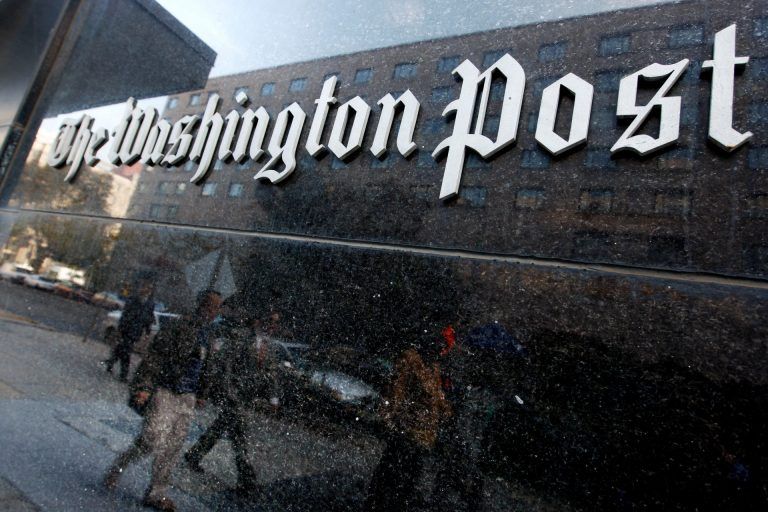
(Headline USA) The Washington Post said Sunday that its executive editor, Sally Buzbee, has stepped down after three years at the top of one of journalism’s most storied brands.

She will be replaced by Matt Murray, former editor in chief of the Wall Street Journal, through this fall’s presidential election. Following that, Robert Winnett, deputy editor of the Telegraph Media Group, will take over as editor as the newsroom restructures its operations.

No reason was given for Buzbee’s departure. She wasn’t quoted in the news release announcing that she was leaving, and did not immediately return a message seeking comment.

However, the Post, once considered the pinnacle of prestigious journalism, has lost much of its credibility since being bought out by billionaire Jeff Bezos, who prioritized diversity initiatives over its storied hard-hitting journalism.

Meanwhile, the paper suffered a serious case of Trump Derangement Syndrome.

Upon assuming the role, Buzbee was roundly criticized due to her past history as an overtly biased head of the Associated Press’s Washington bureau.

She notoriously went on to hire writers like New York Times “cry-bully” castaway Taylor Lorenz, who notably attacked fellow members of her prior newsroom over their efforts to be fair and balanced.

The Post also announced that it was launching a new division in its newsroom dedicated to reaching audiences who want to pay for and consume news in a different way.

Marty Kady, who oversaw Politico‘s paid magazine subscription service before taking a role with the failed Messenger, will be directing its new “professional products” division, with Murray overseeing the effort at the executive level.

Buzbee replaced a renowned predecessor, Martin Baron, in May 2021, becoming the first woman to serve as executive editor of the Washington Post. And like Jill Abramson, the first woman to be top editor at the New York Times, her tenure was short: Abramson had her job from 2011 to 2014.

It has been a miserable few years financially for the mainstream media, including for the Post, which has bled subscribers to the point where new publisher, Will Lewis, told employees last month that the newspaper lost $77 million last year.

“To speak candidly, we are in a hole, and have been for some time,” Lewis said, according to the Post.

Whether the reason relates to the Post‘s own failure to live up to its reputation, to changing consumer habits, the Biden economy, or some combination thereof remains to be seen.

Lewis was named late last year to replace Fred Ryan as Post publisher. He has worked at both the Wall Street Journal and The Telegraph in England, the places he turned to to find the new executives.

In an email to employees late Sunday, Lewis said the new department will focus on more video storytelling, will embrace artificial intelligence and flexible payment methods. It will begin this fall, he said.

In an earlier meeting, “we highlighted the need to move away from the traditional one-size-fits-all approach in the news media industry and focus on creating news for a broader range of readers and customers.”

It augurs a change to the traditional structure of the Post. In his memo, Lewis mentioned “three newsrooms.”

Winnett will not take on the title of executive editor, but he will be responsible for the “core coverage areas” of politics, investigations, business, technology, sports and features. He has run The Telegraph’s news operations since 2013, the Post said.

Murray will take over as leader of the newly-created department starting Nov. 6, the Post said. No one will have the title of executive editor: Murray, Winnett and David Shipley, the editorial page editor who will lead the “opinions newsroom,” will each report directly to Lewis, the Post said.

“By creating three strong journalism functions—core, service/social and opinions—we are taking a definitive step away from the ‘one size fits all’ approach and moving towards meeting our audiences where they are,” Lewis said.

Adapted from reporting by the Associated Press

DOJ Hides Biden Deposition Audio, Cites ‘Fake’ Concerns as Cover

(Luis Cornelio, Headline USA)  The Biden-led DOJ has come up with a questionable explanation for why it refuses to release the audio of President Joe Biden’s deposition, related to Special Counsel Robert Hur’s investigation into his mishandling of classified documents. 

In a Friday filing, the DOJ claimed that the threat of “deepfakes”—AI-generated fake audio or video—justifies withholding the audio, despite significant public and congressional interest.

DOJ fears it would be too difficult to refute deepfake audio if a copy of the deposition were released, according to the filings first reported by Politico. 

“If the audio recording is released here, it is easy to foresee that it could be improperly altered, and that the altered file could be passed off as an authentic recording and widely distributed,” DOJ’s Associate Deputy Attorney General Bradley Weinsheimer claimed in the filing. 

Weinsheimer further argued, “The passage of time and advancements in audio, artificial intelligence, and ‘deep fake’ technologies only amplify concerns about malicious manipulation of audio files.” 

He also claimed that releasing the recording would “make it far more likely that malicious actors could pass off a deepfake as the authentic recording.”  

Organizations leading the push to release the audio include Judicial Watch, the Heritage Foundation and CNN. 

This new excuse follows the White House counsel’s office refusal to release the audio to House Republicans, who are leading an impeachment inquiry into Biden. 

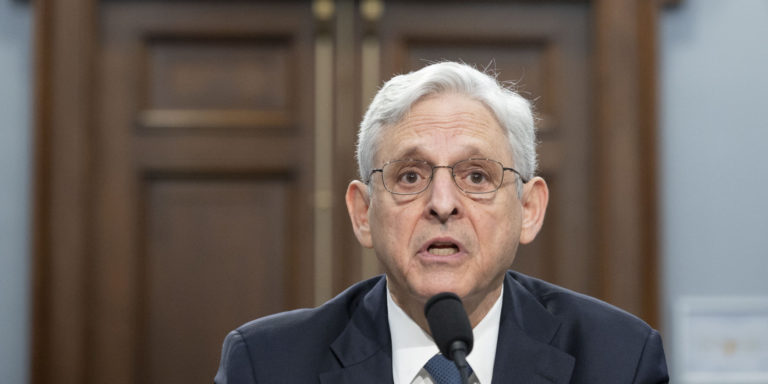
Attorney General Merrick Garland wrote in a letter to Biden in May, “The Committees’ needs are plainly insufficient to outweigh the deleterious effects that productions of the recordings would have on the integrity and effectiveness of similar law enforcement investigations in the future.” 

Critics argue that the audio recording could offer a clearer picture of Biden’s mental acuty and knowledge about the classified documents, which the administration seems determined to keep hidden. 

Trump Lawyer Lambasts Stephanopoulos Over Biden’s Influence in Trial

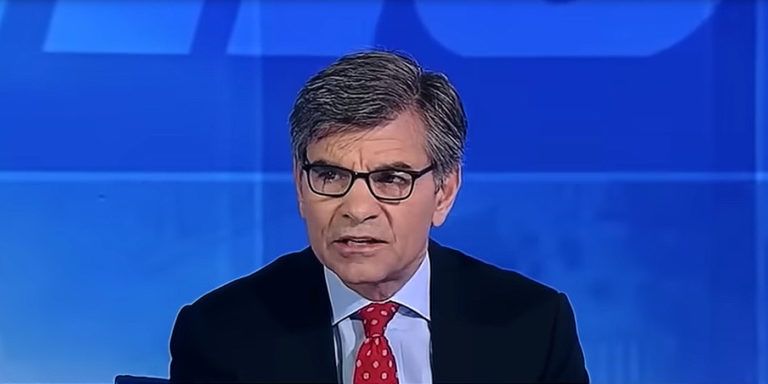
(Luis Cornelio, Headline USA) Donald Trump’s attorney, Will Scharf, confronted ABC News anchor George Stephanopoulos regarding the partisanship influencing the trials against the former president, including his recent conviction.  

The heated exchange centered on whether politics played a role in the Manhattan trial of Trump. 

“Of course, the attorney general of Manhattan has nothing to do with the Department of Justice,” Stephanopoulos claimed, incorrectly referring to Alvin Bragg’s title. 

Scharf quickly interjected: “I vehemently disagree that the district attorney in New York was not politically motivated here, and I vehemently disagree that President Biden and his political allies aren’t up to their necks in this prosecution.” 

Stephanopoulos countered, “There’s no evidence here of that sir. … I’m not going to let you continue to say that — there’s zero evidence of that.” 

Despite Stephanopoulos’s claims, Alvin Bragg, the Manhattan district attorney, ran for office on the pledge to prosecute Trump if elected. He also highlighted his experience in suing the Trump administration during his campaign. 

When Stephanopoulos suggested Scharf had praised the jury instructions, Scharf responded, “I think: Hope for the best, plan for the worst, George. But I think when you look at the totality of the circumstances in this case.” 

He added, “This is a prosecution that should have never been brought. This was a case tried in front of a judge that clearly should have recused. I think we have a lot of fair complaints with the way this trial was conducted and I think ultimately, President Trump will be vindicated on appeal.”