Democrats ‘Biden-Proof’ Campaigns amid Potential 2024 Defeat, Tanking Polls

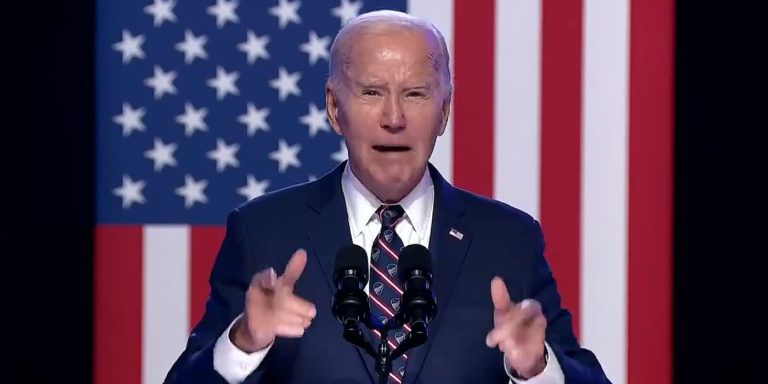
(Luis Cornelio, Headline USA) Democrats in key congressional races are strategically distancing themselves from President Joe Biden, their increasingly unpopular 81-year-old leader. 

According to a Tuesday report by Axios, several Democratic lawmakers are avoiding any association with Biden in their campaign strategies, as numerous polls suggest Biden could be headed for a potential single-term presidency.

There is “more distancing now as his numbers continue to tank,” a House Democrat facing a tough re-election told the news outlet.

Another Democrat hinted at a growing trend, saying there is “always an element where you run your own race,” but “now it’s even more pronounced.” 

Axios reported, “Democratic incumbents, candidates and operatives told Axios many Democrats in tight congressional races are maintaining their independence from Biden without publicly rejecting him.” 

This new strategy—described by Axios as “Biden-proof”—comes as Biden’s administration faces severe criticism for the chaos at the southern border, rampant inflation and escalating global conflicts. 

Last month, 15 House Democrats criticized Biden for his lack of decisive action in stopping the out-of-control illegal immigration at the border. 

The lawmakers urged Biden to “immediately take further action to restore order at the Southern border and fix our broken immigration system.” 

Despite their pleas, the Biden administration has been accused of exploiting an asylum program by canceling the cases of hundreds of thousands of illegal aliens, allowing them to remain in the U.S. without consequences. 

According to the New York Post, the Biden administration has canceled the asylum cases of 350,000 illegal aliens, effectively giving them free rein to stay in the country. 

Adding to Biden’s woes, several polls from FiveThirtyEight indicate that Trump is leading the 2024 general election race by an average of at least one point, showcasing the growing dissatisfaction with Biden’s leadership.

State Dept. Allegedly Seizes Biden Critic’s Passport En Route to Russian Conference

(Jacob Bruns, Headline USA) The United States government  allegedly seized the passport of a prominent Biden administration critic as he traveled to attend an international conference in Russia where Biden rape accuser Tara Reade is also reportedly expected to be in attendance.

Scott Ritter—a retired U.S. Marine and former United Nations weapons inspector who has, in the past, been critical of President Joe Biden’s foreign policy—was en route to the St. Petersburg International Economic Forum in Russia when feds stripped him of his passport as he tried to board a flight in New York, the Gateway Pundit reported.

Some conflicting online reports Monday indicated that Judge Andrew Napolitano, once a well known Fox News personality, had also been removed from the plane, although those appeared to have been taken down after the fact.

Ritter reportedly said that Napolitano had cancelled the flight for unrelated reasons.

According to Ritter’s account of the situation, he received no explanation as to why the search and seizure took place.

“I was boarding the flight. Three [police] officers pulled me aside,” he said, noting that they took his property for no apparent reason.

“They took my passport. When asked why, they said ‘orders of the State Department.’ They had no further information for me.”

The officials reportedly kept Ritter’s passport, also on behalf of the State Department.

The theme for this year’s International Economic Forum meeting is “The Foundations of a Multipolar World – The Formation of New Areas of Growth.”

The forum, which seems to be Russia’s answer to the World Economic Forum, will grapple with important geopolitical affairs such as the role of the emerging BRICS alliance, and the cultivation of essential resources including oil, rare-earth metals and water. It also features an accompanying cultural festival.

Although the U.S. is not technically at war with Russia and there is no formal travel ban, recent reports have indicated that President Joe Biden authorized Ukrainian forces to use U.S. weapons in strikes in Russian territory, in what would surely be considered an escalation of hostilities and a deepening of America’s involvement in the ongoing conflict.

It was not immediately clear, however, that it was Ritter’s wellbeing administration officials were most concerned with safeguardling.

Ritter has long been an outspoken critic of Biden’s foreign policy. In 2022, he called Biden “a war criminal” due to his actions in Ukraine.

According to a since-deleted social-media post Ritter, Biden helped Ukraine promote anti-Russian propaganda in order to cover up for Ukrainian war crimes.

“Congratulations America,” he wrote, “we’ve created yet another Presidential war criminal!”

But the bad blood between the two goes back even farther. In 1998, while Biden was in the Senate, Ritter testified before the Senate in his capacity as UN weapons inspector.

At that hearing, Biden chastised him for allegedly failing to do his job well.

“Do you think you should be the one to decide when to pull the trigger,” Biden asked facetiously at the time.

Congress Under Fire over ‘Ridiculous’ Reimbursement Program

Correction: An earlier version of this story mistakenly said Rep. Matt Gaetz was the largest beneficiary based on reporting from the Post that relied on old data. The Post subsequently issued a correction, although viewers using an archive site to circumvent the paywall may not have seen the updated version. 

(Luis Cornelio, Headline USA) Taxpayers reimbursed lawmakers roughly $5.2 million for so-called food and lodging expenses despite already paying them $174,000 annually, plus benefits, reported The Washington Post on Tuesday.

This multi-million-dollar reimbursement program was initiated in 2022 after the House Select Committee on the Modernization of Congress allowed itself to charge American taxpayers for D.C. housing costs while lawmakers maintained their homes in their districts. 

Lawmakers are not required to provide proof of purchase for these reimbursements, creating a “ridiculous loophole” that makes it “very difficult to tell whether or not it’s a legitimate payment and whether it’s proper,” said Public Citizen lobbyist Craig Holman. 

As reported by The Post, 319 out of 435 lawmakers were reimbursed for their expenses, including 153 Democrats and 166 Republicans. 

Taxpayers reimbursed $19,000 over 11 months to embattled Rep. Eric Swalwell, D-Calif., despite owning a $1.2 million home in Washington, D.C.

Swalwell was also reimbursed $2,838 for lodging in May 2023 alone.  

When pressed about the specifics of the reimbursement, a spokesperson for Swalwell promised that everything “he does is allowable.” 

Rep. Jack Bergman, R-Mich., was reimbursed the most from of the program, according to the Post.

Rep. Matt Gaetz, R-Fla., was the second largest beneficiary, receiving approximately $30,000 in reimbursements and over $10,000 for food in 2023 alone.  

“Rep. Gaetz has always complied with House rules regarding congressional reimbursements,” a Gaetz spokesperson told The Post. 

“In 2023, Rep. Gaetz dedicated significant time to his work on the Weaponization Subcommittee, requiring his presence to be in Washington, D.C., on days often when there were no votes, which incurred additional reimbursement expenses to conduct depositions,” the spokesperson added 

Rep. Nancy Mace, R-S.C., also benefited from the program, receiving $19,395 in reimbursements, despite co-owning a $1.6 million home on Capitol Hill. Her reimbursements were issued over nine months, averaging $2,000 a month, according to The Post.

Whistleblower Regains Security Clearance and Quits FBI in Historic Victory

(Ken Silva, Headline USA) FBI whistleblower Marcus Allen—who had his security clearance revoked for expressing “conspiratorial views” that the federal government may have provoked the Jan. 6, 2021, Capitol Hill uprising—has had his security clearance restored in an historic victory against the bureau.

Separately, Allen reached a settlement with the FBI that fully restores the 27 months of back pay and benefits wrongly withheld from him since his February 2022 suspension, according to a press release from the whistleblower group representing him, Empower Oversight.

Additionally, Allen quit the FBI on Monday.

Allen was suspended more than two years ago for questioning FBI Director Chris Wray’s representations to Congress that his bureau didn’t have informants within the groups that participated in Jan. 6.

Allen and Empower Oversight alleged that he was suspended in retaliation for making a protected disclosure.

Allen and Empower Oversight claimed total vindication. But they said action is needed to ensure that future whistleblowers don’t wind up in a similar situation.

“While I feel vindicated now in getting back my security clearance, it is sad that in the country I fought for as a Marine, the FBI was allowed to lie about my loyalty to the U.S. for two years. Unless there is accountability, it will keep happening to others. Better oversight and changes to security clearance laws are key to stop abuses suffered by whistleblowers like me,” Allen said.

Empower Oversight President Tristan Leavitt made similar remarks.

“It’s clear from the evidence and the FBI’s capitulation there was absolutely no truth to their accusations. We couldn’t be happier for Marcus and his family. They have seen the worst side of our federal government and have come out on the other side,” he said.

Empower Oversight also said it believes Allen’s win against the FBI is unprecedented.

According to a DOJ-IG report released last month, 106 FBI employees have had their clearances suspended for 6 months or longer over the last five years. Some of these employees presumably had their clearances suspended for legitimate reasons, but multiple FBI agents have claimed political retaliation.

The report specifically referenced the case of Allen, showing how his indefinite suspension left him in limbo.

“In that case, [Allen] was suspended without pay for approximately 15 months before the FBI issued a decision revoking his security clearance and it then took another 4 months for the FBI to provide the employee with the information that the FBI used to support its revocation decision,” the DOJ-IG said.

“The employee has been suspended without pay for more than 2 years.”

The DOJ’s practice of indefinitely suspending security clearances is illegal, according to legal pundits, as well as the inspector general. The DOJ is required to have an appeal process for employees to contest a suspended security clearance as retaliatory, but it does not.

“This lack of a DOJ appeal process for employees who allege their suspension of more than 1 year is retaliatory,” the DOJ-IG said.

Ken Silva is a staff writer at Headline USA. Follow him at twitter.com/jd_cashless.

Leftist Activist Can’t Name Single Trump Crime, Immediately Gets Mocked

(Luis Cornelio, Headline USA) A left-wing commentator was left flustered and unable to name a single crime committed by former President Donald Trump during a live segment on Piers Morgan Uncensored. 

The Monday segment featured Canadian businessman Kevin O’Leary, criminal defense lawyer Mark Geragos, Daily Wire commentator Michael J. Knowles and leftist activist Francesca Fiorentini. 

The show took a dramatic turn when Knowles challenged Fiorentini to list the crimes for which Trump had been found guilty in a criminal trial led by Manhattan District Attorney Alvin Bragg. 

“My fellow panelist here is celebrating that the rule of law has been vindicated and overturned 248 years of American legal tradition. I would challenge her to see if she could possibly articulate how and what crime Trump committed?” Knowles asked, highlighting that even Bragg has failed to clearly describe Trump’s alleged illegal actions. 

Morgan then asked Fiorentini to answer Knowles’s question, to which she replied incoherently. 

“It was… it was… financial crimes, it was white-collar crime. That’s exactly what they charged him with, he was convicted on.” 

Morgan quickly interjected, “What was it?” Knowles pressed further, “Which was it?” 

Still unable to specify any crime, Fiorentini stammered, “It’s New York State law… I don’t even… He just got convicted on 34 counts.” 

Morgan again asked, “Francesa, what was the crime?” 

Fiorentini then descended into vague left-wing talking points, failing to provide a clear answer. 

“You’re not allowed to… to use your own financial, like your own money to pay off somebody and then he wrote, he logged it as something different,” she incoherently claimed. 

“He logged it as a regular payment but it was actually paying off this porn star to keep quiet, which, if he hadn’t running for president would not have manner but he was,” Fiorentini added, “so, it impacted campaign finance laws in New York State” 

Fiorentini’s remarks made little sense as the presidents hold federal office. Even more, the Federal Election Commission and federal prosecutors refused to file complaints against Trump.

Tellingly, Bragg’s predecessor, Cyrus Vance Jr., also declined to prosecute Trump over the same dubious claims.

Merrick Garland Refuses to Provide DOJ Communications w/ Local Trump Prosecutors

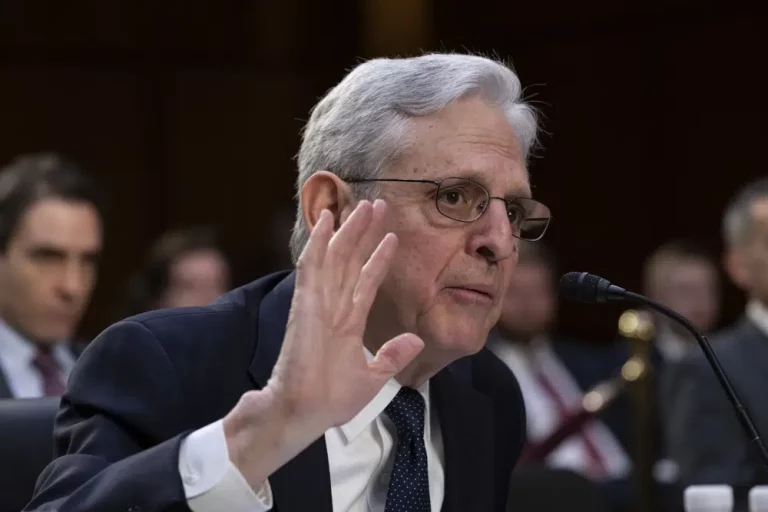
(Ken Silva, Headline USA) Attorney General Merrick Garland has refused to provide communications between the Justice Department and Manhattan DA Alvin Bragg, New York AG Letitia James and Fulton County DA Fani Willis about their cases against former President Donald Trump.

Garland’s refusal came Tuesday at a congressional hearing, in response to questions from Rep. Matt Gaetz, R-Fla. GOP legislators have been calling for communications between the DOJ and local Trump prosecutors since they started charging the presidential frontrunner last year.

According to Republicans, there is reason to believe that the DOJ has been the leader of the coordinated political attacks on Trump. Namely, Republicans have alleged that one of the DOJ’s top ranking officials, Matthew Colangelo, transferred to aid the Manhattan DA’s office specifically to help coordinate a federal effort against Trump.

Garland has called such accusations unfounded conspiracy theories, but Gaetz noted Tuesday that he’s fueling conspiracies by not being transparent about the matter.

“You come in here and lodge this attack that it’s a conspiracy theory that there’s a coordinated lawfare effort against Trump. And we say, ‘Fine, then just give us the documents, and if it’s a conspiracy theory that will be evident,’” Gaetz said.

“But when you say, ‘Well, we’ll take your request and work it through the DOJ’s accommodations process,’ you’re actually advancing the very dangerous conspiracy theory you’re worried about.”

The lawyers prosecuting Trump have resisted public transparency at every turn.

For example, Willis has called congressional oversight of her case  “illegitimate” and “disgusting.”

Willis’s case against Trump was derailed earlier this year after it was revealed she had been involved in an improper romantic relationship with the prosecutor she assigned to the case and likely was embezzling taxpayer money for lavish vacation trips that she and her lover, lead prosecutor Nathan Wade, would then write off as business expenses.

The Court of Appeals for the state of Georgia has agreed to consider whether Willis should be disqualified from the case as a result.

Ken Silva is a staff writer at Headline USA. Follow him at twitter.com/jd_cashless.

Central Bank Gold Buying Rebounds After March Slowdown

(Mike Maharrey, Money Metals News Service) After a weak March, central bank gold buying rebounded in April with global net purchases of 33 tons, according to the latest data compiled by the World Gold Council.

Net central bank gold buying in March was downwardly revised to 3 tons with the late reporting of a 12-ton sale by the Phillippines. Uzbekistan, Thailand, and Jordan also reported large decreases in gold reserves in March.

But with minimal selling and a large number of purchases in April, the March slowdown in net central bank gold buying appears to have been an anomaly.

Eight central banks added a ton or more of gold to their reserves in April.

The Central Bank of Turkey was the biggest buyer in April, adding another 8 tons of gold to its reserves. The Turkish central bank has bought gold for 11 straight months after liquidating 160 tons of gold in the spring of 2023. Turkey has increased its gold holding by 38 tons so far in 2024.

According to the World Gold Council, the big gold sale last year was a specific response to local market dynamics and didn’t appear to reflect a change in the Turkish central bank’s long-term gold strategy. The Turkish central bank sold gold into the local market to satisfy demand after the government imposed import quotas in an attempt to improve its current account balance. The country is running a significant trade deficit.

India continued its gold buying spree in April, adding another 6 tons of gold to its reserves. The Reserve Bank of India has been buying gold since 2017. Over that period, the RBI has increased its gold holding by over 260 tons. 

An Indian economist told the Times of India that the push to accumulate gold was based on both political and economic reasons. He said that the “reliability” of the U.S. dollar has “diminished.” He noted the “noticeable decline” in the confidence in U.S. dollar assets. Another economist told the Times, “It makes a lot of sense (to invest in gold), given the increased volatility in the FX market, elevated interest rates in the U.S., and, of course, also as the central banks in each economy would like to diversify the asset classes in which they are parking their reserves.”

India recently transported 100 tons of its gold from the UK back into India.

The National Bank of Kazakhstan also added 6 tons of gold to its holdings in April. Kazakhstan began increasing its gold reserves again in February after several months of selling. Kazak central bank tends to shift back and forth between buying and selling.

It appears that Poland is expanding its gold reserves again. The Polish central bank added 1 ton of gold to its holdings in March and followed up with a 5-ton purchase in April.

Poland was the second-biggest gold buyer in 2023. The Polish central bank bought 130 tons of gold, increasing its gold holdings by 57 percent, to 359 tons. 

In 2021, Bank of Poland President Adam Glapiński announced a plan to expand the country’s gold reserves by 100 tons. The central bank reached that goal in September of ’23 and kept buying.

When he announced the plan to expand its gold reserves, Glapiński said holding gold was a matter of financial security and stability.

Gold will retain its value even when someone cuts off the power to the global financial system, destroying traditional assets based on electronic accounting records. Of course, we do not assume that this will happen. But as the saying goes – forewarned is always insured.

And the central bank is required to be prepared for even the most unfavorable circumstances. That is why we see a special place for gold in our foreign exchange management process.

The People’s Bank of China reported a significant slowdown in its gold buying in April, expanding its reserves by just under 2 tons. Nevertheless, it was the 18th month of expanding Chinese gold holdings. China has added over 300 tons of gold to its reserve since it resumed reporting gold purchases in October 2022. 

The People’s Bank of China increased its stash by 1,448 between 2002 and 2019, and then suddenly went dark until it resumed reporting in the fall of 2022. There is speculation that the Chinese were still adding gold to their holdings off the books during those silent years.

In fact, China may hold far more gold than it officially reports. As Jim Rickards pointed out on Mises Daily back in 2015, many analysts believe that China keeps several thousand tons of gold “off the books” in a separate entity called the State Administration of Foreign Exchange (SAFE).

Several other central banks added gold in April:

  • Singapore – 4 tons
  • Russia – 3 tons
  • Czech Republic – 2 tons

Uzbekistan and Jordan were the two notable sellers, decreasing their gold holdings by a ton each.

It is not uncommon for banks that buy from domestic production – such as Uzbekistan and Kazakhstan – to switch between buying and selling.

The World Gold Council said strong April buying likely indicates the slowdown in March was an anomaly.

“Despite the slowdown in March, the preliminary pick-up in net purchases in April may suggest that central banks have thus far shaken off the rally in the gold price and continue with their strategic buying plans.”

Earlier this year, the World Gold Council said the continuation of gold buying supports its expectation that “2024 will be another solid year of central bank gold demand.”

“Last year central banks placed great emphasis on gold’s value in crisis response, diversification attributes, and store-of-value credentials. A few months into 2024 the world seems no less uncertain meaning those reasons for owning gold are as relevant as ever.”

Last year, central bank gold buying fell just 45 tons short of 2022’s multi-decade record.

According to the World Gold Council, central banks net gold purchases totaled 1,037 tons in 2023. It was the second straight year central banks added more than 1,000 tons to their total reserves.

Central bank gold buying in 2023 built on the prior record year. Total central bank gold buying in 2022 came in at 1,136 tons. It was the highest level of net purchases on record dating back to 1950, including since the suspension of dollar convertibility into gold in 1971.

China was the biggest buyer in 2023.

Analysts at ANZ Bank recently said they expect central bank gold buying to remain hot for at least the next six years. According to these analysts, “Depleted trust in the U.S. fixed-income assets and the rise of non-reserve currencies are other themes that could support central bank gold buying.”


Mike Maharrey is a journalist and market analyst for MoneyMetals.com with over a decade of experience in precious metals. He holds a BS in accounting from the University of Kentucky and a BA in journalism from the University of South Florida.

This Silver Bull Still Has Strong Legs!

(Mike Maharrey, Money Metals News Service) Last month, silver cracked the key resistance of $30 an ounce level for the first time in over a decade. It’s been quite a bull run for silver, and Chen Lin thinks it has plenty of legs left.

Lin is the founder of Lin Asset Management, and during a recent interview with Kitco News, he focused on two factors that could see silver push toward record levels.

As Lin noted, the last time silver broke $30 (2011), after a minor consolidation, it quickly ran up to $50 an ounce.

Lin focused on two factors in place that could quickly drive the price of silver higher.

The first is the movement of silver from West to East, similar to the trend we’ve seen in gold.

Lin points out that silver stocks at the Shanghai Futures Exchange have fallen to a 10-year low. 

Meanwhile, investment demand for silver in China exploded recently with the silver premium in the Shanghai market running about 10 percent over New York.

We saw a similar phenomenon for gold in China late in 2023, right before the big price rally in the yellow metal.

“That means massive silver will be going from the West to the East, just like gold and we should see a continued sharp rally in the silver price.”

Lin said Chinese investors are turning to gold and silver as a way to cope with negative real interest rates and sagging equity prices.

“Since the second half of last year, the Chinese buyer has been buying gold. We see the gold premium of Shanghai over New York, which means gold has been getting into China – smuggled into China. People smuggle gold into China right now as we are speaking. They have been consistent over the past year. Silver just got started. … I expect this to last for a very long time.”

China isn’t the only Asian country with a growing appetite for silver. India imported more silver through the first four months of 2024 than it did in the entirety of last year due to higher solar panel demand and investor optimism. 

A second factor is a global silver supply squeeze.

Silver demand outstripped supply for the third straight year in 2023, leading to a significant structural supply deficit of 184.3 million ounces. This came on the heels of a 2022 production shortfall that the Silver Institute called “possibly the most significant deficit on record.” It also noted that “the combined shortfalls of the previous two years comfortably offset the cumulative surpluses of the last 11 years.”

This silver supply shortage has continued into 2024.

Lin noted that the silver supply gap is as big or bigger than the one that occurred in the 1950s.

“If you recall what happened in 1960s, we ran out of silver, so we stopped minting the silver coin.” 

Lin was referring to the removal of silver from U.S. quarters, dimes, and half dollars in 1965.

The current supply squeeze won’t likely abate any time soon. A boom in industrial demand driven by the solar sector is pushing overall demand higher at a rapid rate.

According to Lin’s data, two years ago, the solar industry silver offtake was around 100 million ounces. In 2023, the sector consumed about 200 million ounces. Lin projects demand approaching 300 million ounces in 2024. 

Chinese silver industrial demand rose by a remarkable 44 percent to 261.2 million ounces last year, primarily due to growth in demand for green applications.

According to a research paper by scientists at the University of New South Wales, solar manufacturers will likely require over 20 percent of the current annual silver supply by 2027. By 2050, solar panel production will use approximately 85–98 percent of the current global silver reserves.

Lin pointed out that Microsoft just went solar. The company needs a tremendous amount of power to run its rapidly expanding AI business. This could drive the silver deficit to as much as 500 million ounces, a number Lin called “scary.”

“If everybody follows Microsoft’s lead and turns to solar, we will have a much bigger deficit.”

As Lin describes it, we’re heading into a period of high demand and short supply that could quickly push the price of silver even higher. Lin projects we could see silver surpass the record of $50 an ounce very quickly. And even if we don’t see record prices in the coming months, the outlook for silver is positive.


Mike Maharrey is a journalist and market analyst for MoneyMetals.com with over a decade of experience in precious metals. He holds a BS in accounting from the University of Kentucky and a BA in journalism from the University of South Florida.

Bipartisan Media Coalition Sues to Fight DOJ’s ‘Deepfake’ Excuse for Hiding Biden Audio

(Headline USA) Once again, leftist in the deep state may be projecting the very tactics they intend to use against former President Donald Trump as a pretext for dodging accountability in a parallel matter involving President Joe Biden.

Suspicions swirled last week that the Biden campaign, or some surrogates colluding with it, may use artificial intelligence technology to fake a recording of Trump using the “n-word” after a long debunked rumor to that effect resurfaced.

But now, after failing to convince the public that the tape falls under the purview of normal executive privilege due to the justifications that the Biden administration itself made against Trump’s executive privilege arguments, Attorney General Merrick Garland and company are rolling out another novel legal argument with no basis in the law to excuse their illegal behavior.

Releasing the audio recording of special counsel Robert Hur’s interview with President Joe Biden could spur deepfakes and disinformation that trick Americans, the Justice Department claimed, as if that were justification for keeping the real information from the public.

The recording famously provided the basis for exonerating Biden from his classified documents scandal, one that was arguably far more damning than the one for which Garland authorized the raid on Mar-a-Lago and possible assassination of Trump.

Highlighting the two-tiered system of justice, Hur said in his report that no jury would convict Biden because he was not mentally lucid enough in the interview to show he understood the implications of his felony mishandling of classified information, which spanned several decades, dating back to when he was a U.S. senator.

Sensitive documents—some of which reportedly impact ongoing national security concerns—were kept in locations including Biden’s garage and an office space that his drug-addict son Hunter and multiple Chinese business partners had access to. Biden also committed another felony by volunteering to share the information with a biographer who did not have the appropriate security clearance.

Hur’s report, however, described the 81-year-old Democrat’s memory as “hazy,” “poor” and having “significant limitations.” It noted that Biden could not recall such milestones as when his son Beau died or when he served as vice president.

A senior Justice Department official raised the AI concerns in a court filing on Friday that sought to convince a judge to prevent the release of the recording.

A conservative group that’s suing to force the release of the recording called the argument a “red herring.”

Mike Howell of the Heritage Foundation accused the Justice Department of trying to protect Biden from potential embarrassment.

“They don’t want to release this audio at all,” said Howell, executive director of the group’s oversight project. “They are doing the kitchen sink approach and they are absolutely freaked out they don’t have any good legal argument to stand on.”

The Justice Department declined to comment Monday beyond its filing.

It has previously argued witnesses might be less likely to cooperate if they know their interviews might become public. It has also said that Republican efforts to force the audio’s release could make it harder to protect sensitive law enforcement files.

Sen. Mark Warner, D-Va., the Democratic chair of the Senate Intelligence Committee, told the Associated Press that he was concerned that the audio might be manipulated by bad actors using AI. Nevertheless, the senator said, it should be made public.

“You’ve got to release the audio,” Warner said, though it would need some “watermarking components, so that if it was altered” journalists and others “could cry foul.”

The Justice Department’s concerns about deepfakes came in a court papers filed in response to legal action brought under the Freedom of Information Act by a coalition of media outlets and other groups, including the Heritage Foundation and the Citizens for Responsibility and Ethics in Washington, one of the far-left lawfare groups that previously attempted to block Trump from appearing on the ballot in several states.

The bipartisan appeal for transparency underscores the anti-democratic nature of the DOJ’s actions, while suggesting also that both sides remain convinced that the recordings will somehow validate their political arguments for or against Biden.

Yet, there are a growing number of left-wing groups that are also seeking to have Biden, 81, removed as the nominee and replaced with a more viable candidate in light of his poor approval numbers and advanced age, among other things.

An attorney for the media coalition, which includes  the Associated Press, said Monday that the public has the right to hear the recording and weigh whether the special counsel “accurately described” Biden’s interview.

“The government stands the Freedom of Information Act on its head by telling the Court that the public can’t be trusted with that information,” the attorney, Chuck Tobin, wrote in an email.

Bradley Weinsheimer, an associate deputy attorney general for the Justice Department, acknowledged “malicious actors” could easily utilize unrelated audio recordings of Hur and Biden to create a fake version of the interview.

However, he claimed, releasing the actual audio would make it harder for the public to distinguish deepfakes from the real one.

“If the audio recording is released, the public would know the audio recording is available and malicious actors could create an audio deepfake in which a fake voice of President Biden can be programed to say anything that the creator of the deepfake wishes,” Weinsheimer wrote.

Experts in identifying AI-manipulated content said the Justice Department had legitimate concerns in seeking to limit AI’s dangers, but its arguments could have far-reaching consequences.

“If we were to go with this strategy, then it is going to be hard to release any type of content out there, even if it is original,” said Alon Yamin, co-founder of Copyleaks, an AI-content detection service that primarily focuses on text and code.

Nikhel Sus, deputy chief counsel at Citizens for Responsibility and Ethics in Washington, said he has never seen the government raise concerns about AI in litigation over access to government records.

He said he suspected such arguments could become more common.

“Knowing how the Department of Justice works, this brief has to get reviewed by several levels of attorneys,” Sus said. “The fact that they put this in a brief signifies that the Department stands behind it as a legal argument, so we can anticipate that we will see the same argument in future cases.”

Adapted from reporting by the Associated Press

Trump Is ‘OK’ w/ Merchan Sending Him to Jail

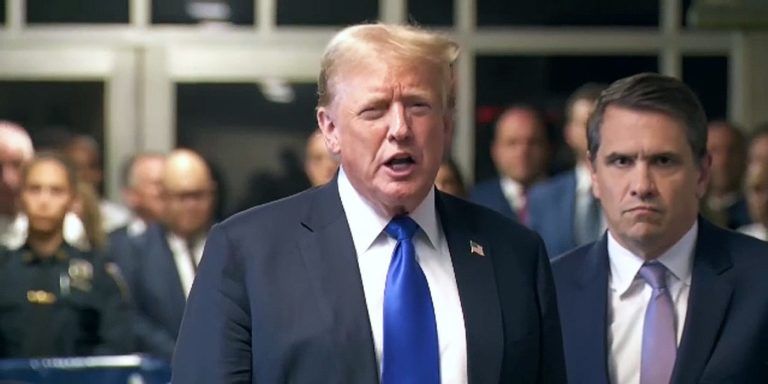
(Dmytro “Henry” Aleksandrov, Headline USA) In a June 2, 2024, morning interview, Donald Trump was asked about the possibility of being sentenced to jail time when he faces Judge Juan Merchan on July 11, 2024, for his arraignment.

“I’m okay with it,” Trump responded. 

During the interview with Rachel Campos-Duffy, Pete Hegseth and Will Cain, Trump was asked by Hegseth about the timing of the arraignment, which is only four days before the Republican National Convention is scheduled to begin in Milwaukee, Wisc., where Trump will be officially nominated to be the party’s presidential candidate, the Post Millennial reported.

“That’s part of the game,” Trump said.

Hegseth also said that it has been suggested that Trump could “appeal directly to the Supreme Court due to the special nature of this case,” while adding that “when it comes to the legal maze that [Trump is] still facing… the judge could decide to say ‘hey, house arrest, or even jail.'”

“I’m okay with it. I saw one of my lawyers on television the other day saying ‘Oh no, you don’t want to do that to the president.’ You don’t beg for anything, that’s just the way it is,” Trump responded.

The news source reported that Trump was convicted on 34 class E felony counts of the falsification of business records in a New York City courtroom on May 30, 2024, for having recorded payments to his then-attorney Michael Cohen as legal fees in bookkeeping records.

According to corrupt Manhattan DA Alvin Bragg, that was election interference, adding that Trump would not have won the 2016 election without the payments made by Cohen to Stormy Daniels.

Each count could bring a sentence of four years in prison, with Democratic New York City Mayor Eric Adams saying that the far-left city’s incarceration facilities have already started considering how to imprison Trump, who brings with him a Secret Service detail.