Facebook is Accused of Fostering Ethnic Enclaves at Headquarters

(José Niño, Headline USA) A terminated software engineer is accusing Facebook parent company Meta of allowing Chinese migrants to take over entire departments while American employees face systematic exclusion and layoffs, Neil Munro of Breitbart News reported.

Jeremy Bernier, who graduated from Virginia Tech in 2012, lost his software engineering job at the company and has gone public with allegations of widespread discrimination. “At Meta, 90% of my coworkers were Chinese, and non-Chinese were routinely excluded, disadvantaged, and targeted for layoffs,” Bernier said. He continued that “6 out of the 7 layoffs I observed targeted non-Chinese despite non-Chinese being the vast minority. Certain org[anizations] like ads and MRS [Meta Recommendation Systems for prioritizing Facebook posts] are notorious for being Chinese dominated.”

The former employee shared his account through multiple social media posts. “On Wednesdays and Fridays I’d often be the only non-Chinese person on my team in the office, and they’d all get lunch together without inviting me,” Bernier recounted.

He expressed frustration at the broader pattern he witnessed. “I think Americans would be outraged if they knew that their own citizens were getting marginalized and laid off at their own companies, while Chinese promote themselves up, conquer entire orgs, and reap millions [in pay and bonuses],” Bernier said. “Americans are practically non-existent in the most coveted, high paying tech jobs in the world at American companies in America.”

Kevin Lynn, who founded the advocacy organization U.S. TechWorkers, provided context for why corporations permit such arrangements. “Tribalism is a [C-Suite] tool that tamps down potential [internal executive] competitors because it changes incentives. If you’re either leading a tribe or you’re part of a tribe, you know you’re secure. Your position isn’t merit-based — it’s based on your race, your ethnicity, who you’re friends with, family, that kind of thing.”

According to Lynn, this dynamic stifles creativity and progress. “Innovation, inventiveness, novel ideas take a backseat to tribalism,” he explained, noting that “When 40 percent or more of your coworkers are from another country, from another culture, and prefer to speak another language, there’s not going to be any trust, any ability to bond to build something [innovative].”

The Trump administration has taken aim at workforce visa programs that channel foreign nationals into American corporations. Vice President JD Vance and other officials have criticized these initiatives for displacing domestic workers, per a report by Breitbart. Facebook previously paid a $14 million settlement in 2021 following extensive documentation of bias against American job candidates, as Breitbart previously reported.

Bernier offered nuance in his criticism. “Just to be clear, most Chinese are very kind so don’t take this as an attack,” he stated. However, he described the broader workplace atmosphere as brutal. “Meta was easily the most toxic company I’ve worked for. There’s a reason the Chinese call it ‘Squid Game’. Others refer to it as ‘Hunger Games’ or ‘Lord of the Flies’. I think they’re all accurate.”

Meta offered no response to Bernier’s claims.

José Niño is the deputy editor of Headline USA. Follow him at x.com/JoseAlNino 
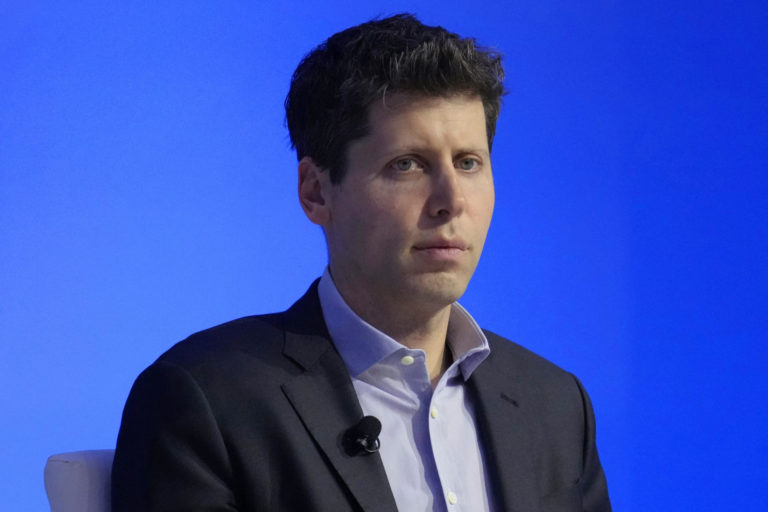
Florida Sues OpenAI and CEO Sam Altman, Claiming Company Concealed Serious Risks of ChatGPT

(Headline USA) The state of Florida filed a lawsuit against OpenAI and CEO Sam Altman on Monday, claiming the company knowingly released and aggressively marketed ChatGPT to the public while concealing serious risks.

Florida Attorney General James Uthmeier said during a news conference that the company suppressed internal safety warnings and deceived users about the true nature and dangers of the product.

“Today, we announced the first-in-the-nation state-led lawsuit against OpenAI and its CEO, Sam Altman,” Uthmeier said. “OpenAI and Altman ignored internal and external safety warnings, put children at great risk, and allowed a dangerous product to reach millions of Floridians.”

The civil complaint filed in Florida circuit court references two separate shootings where the alleged gunmen were reported to have asked ChatGPT questions while planning their crimes. OpenAI said in a statement that its models repeatedly encouraged the individuals to seek real-world support, including from mental health professionals. The company also said it has cooperated with law enforcement in both cases.

“ChatGPT is a general-purpose tool used by hundreds of millions of people every day for legitimate purposes,” an OpenAI statement said. “We work continuously to strengthen our safeguards to detect harmful intent, limit misuse, and respond appropriately when safety risks arise.”

In April, Uthmeier opened a criminal investigation into OpenAI over whether ChatGPT offered advice to a gunman who killed two people and wounded six others last year at Florida State University. And in another case, prosecutors have said the man charged with killing two University of South Florida doctoral students had asked ChatGPT what would happen if a human body was put in a garbage bag and thrown in a dumpster, days before they went missing.

Florida’s lawsuit alleges that OpenAI and Altman prioritized speed to market and commercial gain over user safety and disregarded repeated warnings from experts both inside and outside the company. The lawsuit claims the company deployed a product that facilitates and encourages harm, including self-harm and violence, while falsely assuring users it was safe.

The complaint also alleges that ChatGPT collects data from minors without meaningful parental oversight, as well as causes behavioral addiction and cognitive harm. The company has also actively downplayed dangerous errors, the suit said.

Florida law prohibits unfair and defective trade practices, officials said. The complaint alleges that OpenAI’s conduct causes ongoing harm to Floridians and demands accountability.

Adapted from reporting by the Associated Press

Local Officials Rebel Against Blue State Agendas

(José Niño, Headline USA) Democratic governors in Maryland and Virginia are confronting open defiance from local law enforcement officials who refuse to implement key pieces of their progressive agendas on immigration and gun control, Just the News reported.

Most of Maryland’s elected sheriffs launched a federal legal challenge against the Community Trust Act, a measure championed by Gov. Wes Moore, D-Md., that curbs collaboration between local police agencies and federal immigration enforcement. The sheriffs argue the legislation hampers their ability to work alongside U.S. Immigration and Customs Enforcement and puts them in an impossible position between state requirements and federal duties.

The lawsuit includes 17 sheriffs who claim the measure has essentially converted Maryland into a sanctuary jurisdiction by blocking coordination with ICE. Dale Wilcox, executive director and general counsel of the Federation for American Immigration Reform, stated to WBAL, “This law is a dangerous mandate that has effectively turned Maryland into a sanctuary state by prohibiting these sheriffs from working with federal immigration authorities. They have knee-capped these sheriffs.”

Harford County Sheriff Jeff Ganford condemned the legislation in stark terms. “It is an intentional state-mandated obstruction of public safety,” Ganford said. “This law deliberately ties the hands of our dedicated local deputies.”

The Moore administration has portrayed the Community Trust Act as a measure designed to strengthen relationships between immigrant populations and local police forces. Officials from the governor’s office indicated Maryland would maintain cooperation with federal authorities as needed but would not allow local officers to serve in immigration enforcement capacities.

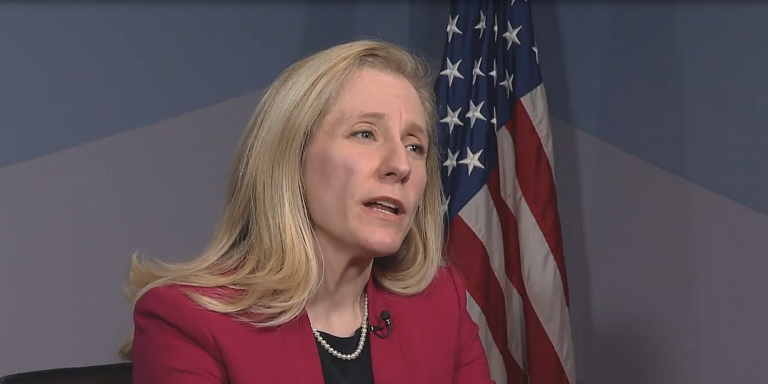
Across the border in Gov. Abigail Spanberger, D-Va,, ran into her own clash with county prosecutors after enacting one of the most comprehensive firearms restriction packages the state has seen in years. The new law bans the sale, transfer, and production of specified semi automatic weapons and high capacity magazines, reflecting the Democratic majority’s agenda to strengthen gun regulations.

Spanberger’s office declared she believes that “firearms designed to inflict maximum casualties do not belong on Virginia streets.”

County prosecutors in Spotsylvania, Powhatan, Pulaski, and Smyth publicly declared they will not pursue cases under Virginia’s incoming assault weapons prohibition, set to become law on July 1, on grounds that it fails constitutional scrutiny. 

Spotsylvania County Commonwealth’s Attorney Ryan Mehaffey explained to local reporters, “The case law is clear to me. You look at the Miller decision, you look at the Bruen decision, you look at the Heller decision. Whatever statute is passed by the General Assembly, however well-meaning it may be, it’s going to be incapable of superseding the supreme law of the land, which are the constitutional protections of the people.”

Second Amendment advocacy groups have initiated court proceedings aimed at halting the weapons ban before its effective date.

Delegate Joshua Cole of Fredericksburg criticized the prosecutors for their position. “When we pass a law, it is their constitutional responsibility to enforce those laws,” he said.

José Niño is the deputy editor of Headline USA. Follow him at x.com/JoseAlNino 
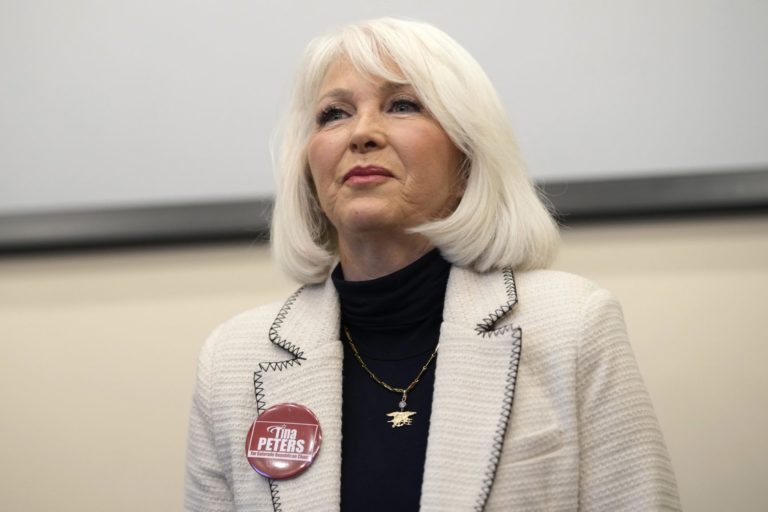
Colorado Elections Clerk Set to be Released from Prison Monday Based on Her Sentence Commutation

(Headline USA) Former Colorado elections clerkTina Peters is scheduled to be released from prison Monday after serving less than a quarter of a nine-year sentence for her alleged role in a scheme to copy her county’s election system.

Gov. Jared Polis, a Democrat, commuted Peters’ sentence last month following pressure from President Donald Trump.

The Colorado Department of Corrections would not confirm the time of Peters’ release, and a representative for her attorney said Peters would not speak to the media when she is freed.

Peters was the first local election official to be charged with breaching security after the 2020 election. She snuck in an outside computer expert affiliated with My Pillow Chief Executive Mike Lindell and the person copied the county’s Dominion Voting Systems computer server as it was updated in 2021.

Peters then joined Lindell onstage at a “cybersymposium” that promised to reveal proof that the election was rigged. Video and photos of the computer system upgrade, including passwords, were posted online. 

Peters was convicted in 2024 of attempting to influence a public servant, conspiracy to commit criminal impersonation, violation of duty and other crimes by jurors in Mesa County, a Republican stronghold that supported Trump. An appeals court upheld her conviction in April, but ordered Peters to be resentenced because it said the judge who sent her to prison wrongly punished her for speaking out about election fraud.

Trump had championed Peters’ case, but because the 70-year-old was convicted under state law, he did not have the power to pardon her. Instead, the president pressured Polis to do so. The Trump administration also announced plans to dismantle the National Center for Atmospheric Research in Colorado and relocated the U.S. Space Command to Alabama.

Polis commuted Peters’ sentence on May 15. In a letter, he wrote that although Peters was convicted of serious crimes and deserved to spend time in prison, the sentence was “extremely unusual and lengthy” for a first-time non-violent offender.

Colorado Secretary of State Jena Griswold, a Democrat, called the move a “dark day for democracy” and said it amounted to ”selling out our state’s justice system for Trump.”

Adapted from reporting by the Associated Press

Alaska Ends All Taxes on Gold and Silver, Reaffirms Their Monetary Status

(Sound Money Defense League, Money Metals News Service) Today, Alaska enacted a bill that removes local sales taxes from purchases of gold and silver and reaffirms that the metals are constitutional money recognized by the state.

Representative Kevin McCabe (R – Big Lake) and Senator Mike Cronk (R – Tok/Northway) sponsored Alaska House Bill 1 and Senate Bill 162 and secured broad support from both in-state activists and national groups such as Sound Money Defense League and Money Metals Exchange.

Forty-five states have already fully or partially eliminated the state sales tax on the purchase of precious metals, including Alaska. However, local government bodies in Alaska could (and did) still impose sales tax on precious metals purchases if they choose. This bill prohibits local taxes on the precious metals content of gold and silver.

This measure also reaffirms Alaska’s recognition of gold and silver as money, as outlined in Article I, Section 10 of the U.S. Constitution, which says “No state shall… make any Thing but gold and silver Coin a Tender in Payment of Debts.”

HB 1 and SB 162 also call for a Legislative Budget and Audit Committee study on the possibility of accepting forms of specie (i.e., gold or silver) for the payment of debts, including public charges, taxes, and other money owed to the state.

Upon enactment of the bill, Rep. McCabe said, “HB 1 is about restoring sound money principles, protecting individual financial freedom, and reaffirming the constitutional role of gold and silver as money. This bill gives Alaskans additional economic choice while ensuring that money itself is not unfairly taxed as a commodity.”

He continued, “I especially appreciate Sound Money Defense League for standing with us from day one, helping build state and national support for the bill, providing expert testimony, and working alongside Alaskans throughout the process to help get this legislation across the finish line.”

The Sound Money Defense League worked to secure the introduction of the tax repeal measures, testified in support of the measures at hearings, and helped generate overwhelming grassroots support in favor of the bills.

Executive director of the Sound Money Defense League, Jp Cortez, traveled to Juneau several times to testify at multiple committee hearings on this measure. He said, “Alaska’s action today is yet another major victory for the national sound money movement. Alaska has a rich gold-related history, and I’m proud to have worked with lawmakers to pass pro-sound money legislation in the Frontier State.”

Only 5 states (Maine, Washington, New Mexico, Vermont, and Hawaii) and the District of Columbia still unjustly tax citizens acquiring gold and silver in an attempt to protect their savings against the serial devaluation of the Federal Reserve Note.

Eliminating sales taxes on the monetary metals is good public policy for many reasons:

  • Levying sales taxes on precious metals is inappropriate. Sales taxes are typically levied on final consumer goods. Computers, shirts, and shoes carry sales taxes because the consumer is “consuming” the good. Precious metals are inherently held for resale, not “consumption,” making the application of sales taxes on precious metals inappropriate.
  • Studies have shown that taxing precious metals is an inefficient form of revenue collection. The results of one study involving Michigan show that any sales tax proceeds a state collects on precious metals are likely surpassed by the state revenue lost from conventions, businesses, and economic activity that are driven out of the state.
  • Taxing gold and silver harms in-state businesses. It’s a competitive marketplace, so buyers will take their business to neighboring states, thereby undermining in-state jobs. Investors can easily avoid paying $300 in sales taxes, for example, on a $5000 purchase of a one-ounce gold bar.
  • Taxing precious metals is unfair to certain savers and investors. Gold and silver are held as forms of savings and investment. Alaska already does not tax the purchase of stocks, bonds, ETFs, currencies, and other financial instruments.
  • Taxing precious metals is harmful to citizens attempting to protect their assets. Purchasers of precious metals aren’t fat-cat investors. Most who buy precious metals do so in small increments as a way of saving money. Precious metals investors are purchasing precious metals as a way to preserve their wealth against the damage of inflation. Inflation harms the poorest among us, including pensioners, Alaskans on fixed incomes, wage earners, savers, and more.

Alaska is currently tied for 4th place on the latest edition of the Sound Money Index, which ranks all 50 states based on their sound money policies. Alaska’s score is expected to rise after the passage of HB 1/SB 162.

In the 2026 legislative season, the Sound Money Defense League has worked successfully in support of sound money in Alaska, Maryland, Idaho, Wisconsin, Georgia, Kansas, Indiana, Kentucky, Tennessee, Mississippi, Colorado, Nebraska, West Virginia, and South Dakota.

Img credit: DrRandomFactor/Wikimedia Commons 


Sound Money Defense League is a non-partisan project working nationally since 2014 to promote and defend gold, silver, and sound money policy at the state and federal level. The League, working in concert with Money Metals, also publishes the annual Sound Money Index.

North Carolina Investigators Use Drone to Arrest Man in Fatal Shooting of Virginia Deputy

(Headline USA) Investigators in North Carolina used a wildlife game camera image and a drone to find and arrest a man wanted in connection with the fatal shooting of a Virginia sheriff’s deputy who was conducting a welfare check, authorities said.

The suspect, identified as Michael Puckett, was found with a gun on Sunday night, two days after the shooting, as he was ringing the doorbell of a home less than several miles from the Virginia state line in Surry County, North Carolina. He was arrested booked without bond, the state’s bureau of investigation said in a news release. Multiple law enforcement agencies took part in the search.

Puckett, 55, appeared for an extradition hearing Monday, where he waived his right to a court-appointed lawyer and awaited transport to Virginia, WXII-TV reported.

In Virginia, the Carroll County Sheriff’s Office said the fatal shooting occurred after law enforcement received a request from a family member to do a welfare check on Friday.

A man at the home began shooting, and the two sheriff’s deputies who had responded returned fire, the sheriff’s office said. Both deputies were hit and the man ran away. Other people were in the home at the time. They were not hurt, according to Carroll County Sheriff Kevin Kemp.

Deputy Logan Utt was killed. The second deputy, who was struck in his ballistic vest, was recovering at home and was in good condition, Kemp said Sunday.

There was a massive search for the the suspect, who was “spotted on wildlife game camera in Surry County North Carolina,” north of the city of Mount Airy, on Sunday morning, police said. A drone was used to track his movements.

Utt, 31, was a military veteran who joined the department in 2023. A funeral procession was scheduled Monday afternoon from Roanoke, Virginia, to Mount Airy, where Utt was a former firefighter.

“He had a servant’s heart. He cared for others, he cared for his country, he cared for his family,” Kemp said.

Adapted from reporting by the Associated Press

Sound Money Defense League Applauds President Trump’s New Call for Fort Knox Gold Audit, Urges Immediate Action on Gold Reserve Transparency Act

(Sound Money Defense League, Money Metals News Service) Following President Donald Trump’s Truth Social post declaring “TIME TO AUDIT FORT KNOX,” the Sound Money Defense League today urged Congress to take immediate action on the Gold Reserve Transparency Act, which is pending in both the U.S. House and Senate.

President Trump has now made multiple public comments calling for an audit of America’s gold reserves. His most recent statement came in response to reports of a former CIA official allegedly found with $40 million in clandestine “black budget” gold bars in his home.

Earlier this month, during an appearance on Full Measure with Sheryl Attkisson, President Trump was again asked about auditing Fort Knox. He responded:

“Well, we wanted to go on the door of Fort Knox … to see whether or not we have any gold in there. It’s a very interesting question. We played with that. I wonder if they left the gold in Fort Knox, because they steal a lot … I do want to go to Fort Knox. I want to see if the gold is there, which I’m sure it will be.”

The Sound Money Defense League and Money Metals Exchange assisted Sen. Mike Lee (R-UT) and four U.S. House members to ensure the text of the Gold Reserve Transparency Act contains the necessary provisions that would facilitate a fully credible and thorough audit.

Jp Cortez, executive director of the Sound Money Defense League, said, “President Trump is right. It is long past time for an audit of America’s gold, which hasn’t been credibly done for many decades. Americans deserve to know that this strategic monetary asset is fully accounted for and unencumbered by any claims against it.”

The Gold Reserve Transparency Act would require a full assay, inventory, and audit of all United States gold holdings, along with an upgrade in the purity of the gold so that it meets global market standards. The measure would also require full disclosure of all transactions involving America’s gold — including any purchases, sales, loans, pledges, leases, swaps, and other encumbrances — dating back 50 years. Such activities have never been publicly disclosed.

Money Metals analyst Jan Nieuwenhuijs has documented significant shortcomings in prior reviews, including broken seals, gold bar movements without full re-inventories, and incomplete documentation.

Stefan Gleason, president of Money Metals and Money Metals Depository, said, “With central banks across the globe stockpiling gold at record rates, it is a matter of national security that America’s gold is secure, fully accounted for, and held in a liquid form that is acceptable on the market.”

Sound money reforms at the state and federal levels are increasingly popular. The SILVER Act, which is designed to de-risk, modernize, and strengthen America’s precious metals market infrastructure by encouraging greater geographic diversification of approved precious metals depositories, was recently introduced in the House and Senate. It has since gained support from a broad industry coalition and the chairman of the Commodity Futures Trading Commission (CFTC).

Meanwhile, Maryland and Alaska both passed pro-sound money legislation in the past week, removing taxes and other disincentives to buying, selling, storing, and using precious metals as constitutional money.

Img credit: Flickr/Cliff


Sound Money Defense League is a non-partisan project working nationally since 2014 to promote and defend gold, silver, and sound money policy at the state and federal level. The League, working in concert with Money Metals, also publishes the annual Sound Money Index.

Hong Kong Efforts to Become Global Gold Hub Paying Dividends

(Mike Maharrey, Money Metals News Service) Western markets – London, New York, and Switzerland – have dominated the gold trade for nearly two centuries. However, with gold progressively flowing from the West to the East, Hong Kong has been developing the infrastructure to become a major gold hub and challenge Western dominance.

Those efforts are starting to pay off as Chinese gold imports from the Chinese Special Administrative Region (HKSAR) surged by 81.2 percent month-on-month in April.

According to data released by the Hong Kong Census and Statistics Department, China imported 86.7 tonnes of gold from the HKSAR in April, up from 47.9 tonnes in March.

These flows will likely increase as new policies go into effect this summer.

A new Hong Kong-based gold-clearing system will launch in July, according to anonymous officials close to the matter quoted by Bloomberg.

The government-owned clearing system will reportedly “mirror” the financial infrastructure used by the LBMA in London. Participants will be able to settle trades through “unallocated” accounts, meaning that the customer can hold a claim against a clearer on a quantity of gold without the need to own specific numbered bars.

The HKSAR has also inked a cooperation pact with the Shanghai Gold Exchange to “promote long-term interconnectivity opportunities, with a more integrated renminbi-based Asian gold market in the making.”

Under the cooperative agreement, the Hong Kong Precious Metals Central Clearing Co. (wholly owned by the HKSAR government) will establish “a high-level, collaborative governance structure,” with the Shanghai Gold Exchange providing technical and regulatory input on system design, rulemaking, institutional access, risk management, and operational standards.

Cooperation between the Hong Kong clearing company and the Shanghai Gold Exchange will reportedly include facilitation of physical gold delivery, warehousing, and further enhancement of financial connectivity between the two markets.

Policy changes by the Chinese government will also facilitate gold flows between Hong Kong and the mainland.

According to a report from BigGo Finance, “multiple” Chinese banks plan to relax restrictions on gold accumulation plan services.

“Industrial and Commercial Bank of China (ICBC) lowered the risk rating for its Ruyi Gold Accumulation Plan from R3 to R2, while China Construction Bank (CCB) adjusted risk-level nomenclature. Industrial Bank, China Merchants Bank, and others extended night trading hours to 2 a.m. the following day. China CITIC Bank, Bank of China, and others introduced fee discounts.”

In addition to adjustments in risk ratings, multiple banks have also implemented policy changes to their gold services to increase convenience and lower costs.

“Industrial Bank partnered with JD Jinyue (Xiamen) Digital Technology Co., Ltd. in April this year to conduct a gold accumulation distribution business and, starting May 8, extended trading hours on its mobile banking and online banking channels—from the previous latest close of 11 p.m. to 2 a.m. China Construction Bank, China Merchants Bank, Bank of Jiangsu, China Minsheng Bank, and others have also successively launched night trading services to cover active periods in the international gold market.”

Meanwhile, China CITIC Bank launched a 50 percent fee discount for gold accumulation plan fixed investments, running through June 30. Other banks have also launched initiatives to incentivize gold trading.

“Bank of China introduced a ‘Friday Theme Day Discount’ in the first half of this year, where clients making gold accumulation purchases or fixed investments on Fridays enjoy a fee reduction of 1 yuan per gram. China Everbright Bank also recently launched a gold accumulation fixed-investment gift campaign, using WeChat instant discount coupons and other means to attract new clients.”

According to the BigGo note, these moves all signal Chinese bullishness on gold and that “banks are reaching a consensus on an upward shift in the gold price floor.” They also view gold as “a vital tool in China’s retail wealth management.

Hong Kong’s focus on gold has helped it surpass Switzerland as the world’s largest cross-border wealth hub, according to Boston Consulting Group’s 2026 Global Wealth Report.

We are seeing wealth creation, cross-border capital flows, and investment ecosystems increasingly concentrated in a smaller number of globally connected hubs.” BCG managing director and partner Michael Kahlich said.

“Hong Kong’s rise reflects the growing gravitational pull of Asian wealth and capital markets.”

Gold tends to take a more prominent role in Asian investment strategy than it does in the West. The Asian market was a primary player in last year’s gold bull market. Gold coin and bar demand hit a 12-year high of 1,374.1 tonnes in 2025 with a record-breaking value of $154 billion. More than half of that global coin and bar demand came from two countries – China and India.


Mike Maharrey is a journalist and market analyst for Money Metals with over a decade of experience in precious metals. He holds a BS in accounting from the University of Kentucky and a BA in journalism from the University of South Florida.

Rate Hikes: The Right Medicine at the Wrong Time

(Mike Maharrey, Money Metals News Service) Interest on the national debt set a record last year, costing $1.2 trillion. That was up 7.3 percent over 2024.

Through the first half of the current fiscal year, the federal government spent more on interest on the debt than it did on national defense ($558 billion) or Medicare ($590 billion). The only higher spending category is Social Security ($957 billion).

On top of that, American consumers are buried under record levels of debt, and corporations are leveraged to the hilt.

If the Federal Reserve follows through and hikes rates, or even if it simply holds rates higher for longer, it runs the risk of collapsing an economy that is addicted to easy money.

As I have said over and over again, the Fed is in a Catch-22. So, what they say isn’t relevant. The central bankers are limited in what they can do by the massive Debt Black Hole dominating society. They can inject the rate hike medicine and hope it doesn’t interact with the Debt Black Hole and hope it doesn’t kill the economy, or they can feed the Debt Black Hole with lower rates (and more inflation).

Conventional wisdom holds that higher rates will be bearish for gold. This is putting strong downward pressure on the yellow metal. But there is no guarantee that they will really be able to cut. And if they do, there is a high likelihood it will precipitate a recession and/or a financial crisis.

So, what’s a Fed member to do?

Talk about how policy is in the right place and crack the door open for a rate hike, apparently. But ultimately, they will have to choose. Will they give the rate-hike medicine and hope the interaction with the Debt Black Hole doesn’t kill the economy? Or do they forgo the medicine and pray inflation doesn’t kill it?

There is no good choice here. But historically, when push comes to shove, the Fed picks inflation.

The Debt Black Hole is just one dynamic that mainstream pundits are missing in their narrative surrounding gold. (The other is real interest rates.) That’s why you might be wise to stop and think hard about following the herd and selling your gold.


Mike Maharrey is a journalist and market analyst for Money Metals with over a decade of experience in precious metals. He holds a BS in accounting from the University of Kentucky and a BA in journalism from the University of South Florida.

Judge to Decide if a Key Hearing for the Man Accused of Killing Charlie Kirk will be Public

(Headline USA) A Utah judge is set to decide Monday whether to bar reporters and the public from parts of a key upcoming hearing in the case of the man accused of killing Charlie Kirk.

Tyler Robinson’s defense has asked Judge Tony Graf to restrict access to the preliminary hearing on July 6-10, when prosecutors must show they have enough evidence to warrant a trial. It will mark the most significant presentation of evidence to date in a case that has so far focused on matters of media access.

Defense attorneys also want to seal dozens of exhibits that prosecutors plan to introduce at the July hearing, arguing they could taint the jury pool before a possible trial.

Robinson’s lawyers have tried to guard against media coverage that they say sometimes misrepresents their client as his case has drawn tremendous public attention. The 23-year-old from southwestern Utah is charged with crimes including aggravated murder in the Sept. 10 assassination of Kirk on the Utah Valley University campus.

Prosecutors intend to seek the death penalty if Robinson is convicted. He has not yet entered a plea.

Prosecutors have argued the preliminary hearing should remain open, but they agreed that media should be restricted from viewing or copying some exhibits that could be used in a future trial. They plan to introduce forensic analyses, surveillance video, recordings of witness statements, autopsy findings and alleged messages from Robinson admitting to the crime.

Authorities have said DNA consistent with Robinson’s was found on the trigger of the rifle used to kill Kirk, the fired cartridge casing, two unfired cartridges and a towel used to wrap the rifle. Prosecutors also have said Robinson left a note for his romantic partner that read, “I had the opportunity to take out Charlie Kirk and I’m going to take it.”

Adapted from reporting by the Associated Press