WATCH: Expert Witness from Trump Trial Provides Squashed Testimony to Congress

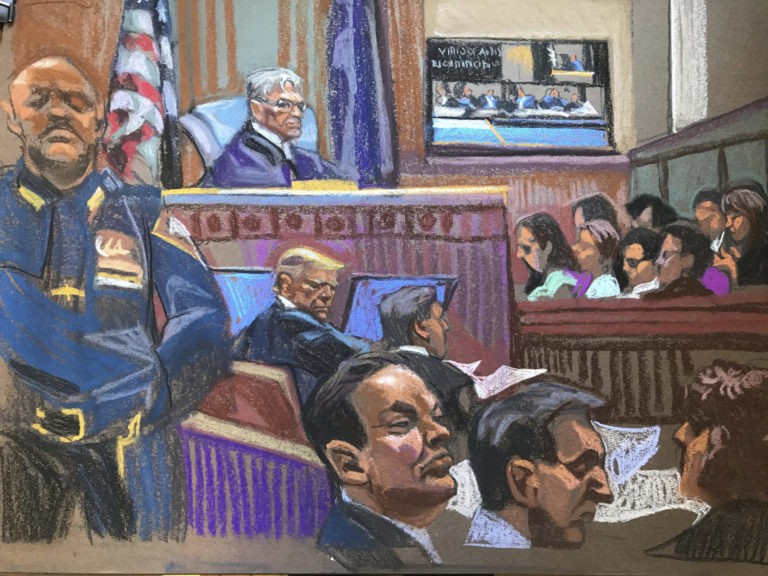
(Ken Silva, Headline USA) During Manhattan DA Alvin Bragg’s controversial prosecution Donald Trump, the presidential frontrunner sought to have campaign finance expert Bradley A. Smith testify about why Bragg’s case was unlawful.

Keeping in line with his many rulings against Trump, Judge Juan Merchan denied the defendant’s request to have Smith provide meaningful testimony during the trial. A New York City jury later convicted Trump in May, in a move that sent the GOP’s candidate poll numbers soaring.

While Smith wasn’t allowed to testify at Trump’s trial, he was given the opportunity to do so Wednesday at a House Weaponization Committee hearing.

Smith started his testimony by addressing a common misconception: While many have reported that Judge Merchan blocked all of his testimony, that wasn’t quite what happened, he said.

“The judge would have allowed me to testify. However, it was clear from his pre-trial rulings that such testimony would be limited to little, or perhaps nothing, more than reading portions of the statute to the jury,” he told the committee.

“It is fair to say that Judge Merchan refused to allow any meaningful testimony that would have contextualized the charges against Mr. Trump and provided valuable factual information to the jury, and I believe his restrictive rulings were erroneous.”

Smith then launched into his explanation for why Bragg’s case against Trump had no legal standing.

“As a practical matter then, having Michael Cohen front the money for a non-disclosure agreement between Mr. Trump and Stormy Daniels could have had no influence on the 2016 election. This undercuts the entire theory of the case offered by the prosecution,” he explained.

Meanwhile, the House GOP continues to investigate Bragg for his politically motivated case.

Bragg was originally set to testify to Congress about his case this Friday—the day after Trump was set to be sentenced—but a delay in Trump’s sentencing has apparently also delayed Bragg’s testimony.

The House Judiciary is also demanding communications between the Justice Department and Manhattan DA Alvin Bragg, New York AG Letitia James and Fulton County DA Fani Willis about their cases against former President Donald Trump.

So far, Attorney General Merrick Garland has refused to comply with Congress’s demands.

Ken Silva is a staff writer at Headline USA. Follow him at twitter.com/jd_cashless.

Manhattan DA’s Office Looks to Punt Weinstein Re-Trial to Post-Election

(Headline USA) Although Manhattan District Attorney Alvin Bragg and his team of George Soros-backed lawfare accomplicies may have been in a rush to prosecute former President Donald Trump ahead of the November election, they’re in no such hurry to schedule the retrial of accused sexual predator and Democrat megadonor Harvey Weinstein.

In April, New York’s highest court threw out Weinstein’s rape conviction after determining the trial judge unfairly allowed testimony against him based on allegations from other women that were not part of the case.

Manhattan prosecutors said Tuesday that they intend to bring new sexual assault charges against Weinstein-. However, the retrial will not take place until November, undoubtedly pushing it until after the election on the first Tuesday of the month, for which it would pose a major inconvenience to Democrats.

With prospects dimming that President Joe Biden will be at the top of the ticket, three of the leading contenders to replace him all have close ties to Weinstein that could be politically damaging, much as they were to Hillary Clinton in 2016.

Among his longtime supporters were Barack and Michelle Obama.

Likewise, Vice President Kamala Harris and California Gov. Gavin Newsom both once considered the disgraced Hollywood mogul a major benefactor early in their careers.

Although not necessarily loyal to each other, Newsom and Harris came up through the political ranks together—first serving respectively as mayor and district attorney of San Francisco, and later as lieutenant governor and attorney general of California.

Weinstein enjoyed the role of kingmaker, not only for the film-industry starlets he allegedly invited to his casting couch, but also for the state’s aspiring Democratic politicians. The imprimature of a lavish Weinstein fundraiser offered serious clout and cachet within the elite leftist ecosystem, on top of the money it raised.

Weinstein’s sexual proclivities, however, were an open secret, forcing him to become a sacrificial lamb after Trump’s election turned the #MeToo movement into a political imperative.

Assistant District Attorney Nicole Blumberg said in court Tuesday that prosecutors were actively pursuing claims of rape that occurred in Manhattan within the statute of limitations.

She said some potential survivors that were not ready to step forward during Weinstein’s first New York trial have indicated they are now willing to testify.

But when pressed by the judge, Blumberg said prosecutors have not yet brought their findings to a grand jury. She also said she could not provide the court a timeline for when their investigation would be complete.

“The People are still investigating in a trauma-informed matter,” she said. “That is an ongoing process.”

Weinstein lawyer Arthur Aidala, with his client sitting next to him in a wheelchair, suggested the investigation was simply a delay tactic from prosecutors, saying something similar happened ahead of the initial rape trial.

“Once again we have the individual and we’re looking for a crime,” he said. “We’ve got the ‘1-800-Get-Harvey’ hotline.”

Blumberg rejected the notion and said the prosecution’s plan was to proceed to trial in the fall.

“There’s certainly no delay tactics on our part,” she said. “We’re proceeding in the most expeditious manner.”

When asked by Judge Curtis Farber what month she anticipated, Blumberg responded: “November would be a realistic timeframe.”

Aidala said his client simply wants to get the trial going as soon as possible, noting he’s in his fifth year of incarceration.

“He’s suffering tremendously,” Aidala said, adding that Weinstein suffers from macular degeneration, fluid in his lungs and heart and diabetes that is “through the roof” because of the poor diet behind bars.

“He’s basically getting no treatment for any of it,” Aidala said. “He’s not a young man. He’s a sick man.”

“These tactics from prosecutors are just delay, delay, delay,” he added.

Judge Farber set the next pre-trial hearing for July 19.

Weinstein, 72, has maintained that any sexual activity was consensual. He’s currently in custody at the city’s Rikers Island jail complex but has suffered from medical problems throughout his time behind bars.

Weinstein, who had been serving a 23-year sentence in New York, was also convicted in Los Angeles in 2022 of another rape and is still sentenced to 16 years in prison in California. But in an appeal filed last month in California’s Second District Court of Appeal, Weinstein’s lawyers argued he did not get a fair trial in Los Angeles.

Adapted from reporting by the Associated Press

SCOOP: FBI Identified ‘Person of Interest’ in Capitol Pipe Bomb Case by Jan. 10, 2021

(Ken Silva, Headline USA) The FBI released a new batch of records about its Capitol Hill uprising investigation on Monday, revealing that investigators identified a “person of interest” in its Jan. 5/6 pipe bombs investigation within days of the incident.

The record about the FBI’s person of interest is a Jan. 10, 2021, report that summarized the bureau’s J6 investigation up to that point. The extremely faded report is difficult to read, but it appears to state: “FBI WF and USCP have identified a person of interest who may be a match to the description of the individual placing the bombs, and continue efforts to identify through surveillance footage.”

The FBI declined to comment in response to Headline USA’s questions about what happened to the person of interest, including whether the person was cleared or is still under investigation.

“We don’t have any comment on the documents.  The pipe bomb investigation remains ongoing,” an FBI spokesperson told this outlet.

The FBI has been extremely tight-lipped on its pipe bomb investigation, and most of the revealtions have come via congressional investigations or other agencies, such as the Bureau of Alcohol, Tobacco, Firearms and Explosives.

Last July, for instance, Rep. Thomas Massie, R-Ky., played a video showing a passerby “miraculously” finding a pipe bomb outside of the DNC headquarters on Jan. 6, 2021.

Massie’s revelation followed an interview he and other House Judiciary Committee members conducted with former FBI official Steven D’Antuono, who oversaw the bureau’s pipe bomb investigation until he retired last November. In that interview, D’Antuono disclosed that some of the cell phone evidence from the FBI’s pipe bomb investigation was “corrupted.”

More recently, congressional investigators revealed that the “passerby” pegged by Massie was, in fact, a plainclothes Capitol Police officer.

The latest major development came in March, when the Justice Department released ATF records showing that CIA explosives technicians were part of the response to the pipe bombs placed outside the RNC and DNC headquarters.

Still, the FBI is staying silent on the matter.

“It was 900 days ago when this happened, and you said you had total confidence that you’d apprehend the subject,” Massie said a year ago, to no avail. “It’s 900 days. You need to tell us what you found.”

Ken Silva is a staff writer at Headline USA. Follow him at twitter.com/jd_cashless.

GOP Sen. Dies after Questioning Climate Change: ‘Greatest Hoax Ever Perpetrated’

(Headline USA) Sen. Jim Inhofe, R-Okla., a conservative icon known for his strong support of defense spending and staunch climate-change skepticism, has died. He was 89.

Inhofe, a powerful fixture in Oklahoma politics for over six decades, died Tuesday morning after he had a stroke over the July Fourth holiday, his family said in a statement.

Inhofe, who was elected to a fifth Senate term in 2020, stepped down in early 2023.

As Oklahoma’s senior U.S. senator, Inhofe was a staunch supporter of the state’s five military installations and a vocal fan of congressional earmarks. The Army veteran and licensed pilot, who would fly himself to and from Washington, secured the federal money to fund local road and bridge projects, and criticized House Republicans who wanted a one-year moratorium on such pet projects in 2010.

“Defeating an earmark doesn’t save a nickel,” Inhofe told the Oklahoma City Chamber of Commerce that August. “It merely means that within the budget process, it goes right back to the bureaucracy.”

Inhofe frequently criticized the leftist climate-change agenda, calling it “the greatest hoax ever perpetrated on the American people.”

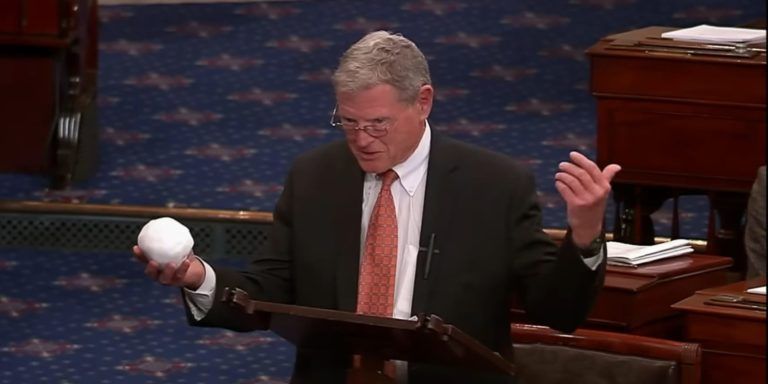
In February 2015, with temperatures in the nation’s capital below freezing, Inhofe brought a snowball on to the Senate floor. He tossed it before claiming that environmentalists focus attention on global warming as it kept getting cold. “It’s very, very cold out. Very unseasonable,” Inhofe said.

He was a strong backer of President Donald Trump, who praised him for his “incredible support of our #MAGA agenda” while endorsing the senator’s 2020 reelection bid.

During the Trump administration, Inhofe served as chair of the Senate Armed Services Committee following the death of Sen. John McCain, R-Ariz.

Inhofe caught national attention in March 2009 by introducing legislation that would have prevented detainees from the U.S. military prison in Guantanamo Bay from being relocated “anywhere on American soil.”

Closer to home, Inhofe helped secure millions of dollars to clean up a former mining hub in northeast Oklahoma that spent decades on the Environmental Protection Agency’s Superfund list. In a massive buyout program, the federal government purchased homes and businesses within the 40-square-mile region of Tar Creek, where children consistently tested for dangerous levels of lead in their blood.

“This is an example of a government program created for a specific purpose and then dissolves after the job is completed. This is how government should work,” Inhofe said in December 2010, when the project was nearly complete.

In 2021, Inhofe defied some in his party by voting to certify Democrat Joe Biden’s victory in the presidential election, saying that to do otherwise would be a violation of his oath of office to support and defend the Constitution. He voted against convicting Trump at both of his impeachment trials.

Born James Mountain Inhofe on Nov. 17, 1934, in Des Moines, Iowa, Inhofe grew up in Tulsa, Oklahoma, and received a bachelor’s degree in economics from the University of Tulsa in 1959. He served in the Army between 1956 and 1958, and was a businessman for three decades, serving as president of Quaker Life Insurance Co.

His political career began in 1966, when he was elected to the state House. Two years later he won an Oklahoma Senate seat that he held during unsuccessful runs for governor in 1974 and for the U.S. House in 1976. He then won three terms at Tulsa mayor starting in 1978.

Inhofe went on to win two terms in the U.S. House in the 1980s, before throwing his hat into a bitter U.S. Senate race when longtime Sen. David Boren resigned in 1994 to become president of the University of Oklahoma. Inhofe beat then-U.S. Rep. Dave McCurdy in a special election that year to serve the final two years of Boren’s term and was reelected five times.

Inhofe lived up to his reputation as a tough campaigner in his 2008 reelection bid against Democrat Andrew Rice, a 35-year-old state senator and former missionary. Inhofe claimed Rice was “too liberal” for Oklahoma and ran television ads that critics said contained anti-gay overtones, including one that showed a wedding cake topped by two plastic grooms and a photo of Rice as a young man wearing a leather jacket.

Rice, who has two children with his wife and earned his master’s degree from Harvard University Divinity School, accused Inhofe of distorting his record and attacking his character.

Inhofe’s bullish personality also was apparent outside politics. He was a commercial-rated pilot and flight instructor with more than 50 years of flying experience.

He made an emergency landing in Claremore in 1999, after his plane lost a propeller, an incident later blamed on an installation error. In 2006, his plane spun out of control upon landing in Tulsa; he and an aide escaped injury, though the plane was severely damaged.

In 2010, Inhofe landed his small plane on a closed runway at a rural South Texas airport while flying himself and others to a home he owned in South Padre Island. Runway workers scrambled, and Inhofe agreed to complete a remedial training program rather than face possible legal action.

“I’m 75 years old, but I still fly airplanes upside down,” Inhofe said in August 2010. “I don’t know why it is, but I don’t hurt anywhere, and I don’t feel any differently than I felt five years ago.”

Inhofe is survived by his wife, Kay, three children and several grandchildren. A son, Dr. Perry Dyson Inhofe II, died in November 2013, at the age of 51, when the twin-engine aircraft he was flying crashed a few miles north of Tulsa International Airport.

Adapted from reporting by the Associated Press

Americans Back to Running Up Credit Card Debt in May

(Mike Maharrey, Money Metals News Service) After paying down credit card debt in April, American consumers went back to running up the plastic in May. But borrowing for big-ticket items remained sluggish, indicating consumers are still struggling to make ends meet in this inflationary environment. 

Total consumer debt increased by another 11.3 billion in May, a 2.7 percent annual increase, according to the latest data released by the Federal Reserve. 

Americans now owe $5.06 trillion in consumer debt.

The Federal Reserve consumer debt figures include credit card debt, student loans, and auto loans, but do not factor in mortgage debt. When you include mortgages, U.S. households are buried under a record level of debt. As of the end of 2023, total household debt stood at $17.5 trillion.

Revolving credit, primarily credit card debt, was the main driver behind the May increase in consumer debt. This comes on the heels of a modest. 0.8 percent decline in revolving credit balances in April. This was likely due to people using income tax refunds to pay down credit card debt.

In May, consumers went back to charging it. Revolving debt increased by $7 billion, a 6.3 percent increase. This was in line with the percentage increase we saw in the first quarter.

Americans now owe $1.35 trillion in revolving debt.

It appears tax refunds gave consumers a bit of a reprieve, but they are still relying on credit cards to make ends meet, even as retail sales are declining, indicating Americans may be getting close to tapped out. 

Pundits and politicians have talked up the “robust economy” and the “resilient” American consumer for months, but this economic growth is courtesy of Visa and Mastercard. It was not exactly a sustainable economic trajectory. 

The double whammy of rising debt and interest rates exacerbates the debt problem. Average credit card interest rates eclipsed the previous record high of 17.87 percent months ago. The average annual percentage rate (APR) currently stands at 20.71 percent, with some companies charging rates as high as 28 percent.

This is one of the problems confronting the Federal Reserve. Even though inflation remains sticky, the central bank needs to ease interest rates before they bury debt-saddled American consumers.

The growth in non-revolving debt also reveals problems in America’s borrow-and-spend paradise. 

Non-revolving debt, primarily reflecting outstanding auto loans, student loans, and loans for other big-ticket durable goods, increased by $4.4 billion, a tepid 1.4 percent increase. This continues a trend of sagging spending on big-ticket items that we’ve seen in recent months. Before the pandemic, revolving credit growth averaged 5 percent. 

The question is how long can Americans keep borrowing? 

The U.S. economy has been on an unsustainable trajectory since the end of the pandemic. As Americans went back to work, they faced shortages and supply chain issues. Then they got hit with inevitable price inflation resulting from trillions of dollars of money creation during the pandemic years. Today, prices continue to increase, even as higher interest rates are squeezing borrowers.

Simply put, the post-pandemic economic rally was never sustainable. 

As prices skyrocketed, Americans blew through their savings to make ends meet. Aggregate savings peaked at $2.1 trillion in August 2021. As of June 2023, the San Francisco Fed estimated that aggregate savings had dropped to $190 billion.

In other words, Americans ran through $1.9 trillion in savings in just two years. 

Then they turned to credit cards.

Of course, credit cards have this nasty little thing called a limit.

In March and April, credit card spending dropped precipitously, indicating that Americans may be close to tapped out. Tax refunds provided a little breathing room, but how long will they last?

And what happens when they hit that limit?


Mike Maharrey is a journalist and market analyst for MoneyMetals.com with over a decade of experience in precious metals. He holds a BS in accounting from the University of Kentucky and a BA in journalism from the University of South Florida.


Is It Time to Get Bullish on Platinum?

(Mike Maharrey, Money Metals News Service) Is now a good time to get bullish on platinum? I’ve written a lot about the fact that silver appears to be underpriced given both technical factors and the supply and demand dynamics.

Platinum may be even more undervalued.

The current platinum price is hovering around $1,000 an ounce. To put that into perspective, platinum hit an all-time high of $2,213 an ounce in March 2008. This was higher than the record price gold hit in 2011. 

One of the factors driving that 2008 record was a severe supply shortage due to a power crisis and labor strikes in South Africa, the world’s leading platinum producer.

Before 2010, platinum was generally more expensive than gold. In recent years, this historical trend reversed. But over the last two years, platinum has shown signs of life. In 2023, the platinum price was up a healthy 12.5 percent. So far this year, the metal has charted modest gains of about 3.8 percent.

Supply and demand dynamics indicate there is plenty of room for platinum to push higher.

Like silver, we’re seeing significant supply deficits in the platinum market. In 2023, there was a market deficit of over 100 million ounces, according to the World Platinum Investment Council. This was due to a combination of increasing demand and lagging mine output.

The supply shortfall continued into the first quarter of 2024. 

According to the WPIC, total platinum supply in Q1 was the second lowest since the organization started tracking data.

As a result, the market deficit in Q1 came in at 369,000 ounces.

Platinum is an important component in automobile catalytic converters. Auto demand for the metal hit a 7-year high in Q1 and that pace is expected to continue through the rest of the year.

A rotation from electric vehicles to hybrids is boosting demand for platinum in the auto sector, according to the WPIC.

“Platinum demand is bolstered by stricter emissions legislation, increased hybrid vehicles that contain an internal combustion engine, and growth in the substitution of platinum for palladium. It is important to note that once platinum is substituted for palladium in specific vehicle platforms, this demand for platinum is likely to remain constant throughout the platform’s seven-year lifecycle, even if platinum prices rise to, or exceed, those of palladium for an extended period.”

Platinum jewelry demand also saw a healthy increase in the first quarter, rising by 5 percent year-on-year, driven by a 53 percent increase in Indian jewelry buying.

Overall industrial demand fell slightly from a record in 2023 but remained 17 percent above the pre-COVID average.

Investment demand is also on a positive track upward this year, supported by coin and bar purchases in China.

According to the WPIC, China’s retail investment in platinum is forecast to exhibit double-digit growth this year, driven by perceptions of the metal being undervalued relative to gold.

There is also a growing demand for platinum in the fast-growing hydrogen power sector.

“We are now seeing signs that platinum’s role in the hydrogen economy is gaining momentum, with our forecast for 2024 indicating a significant increase in demand to meaningful levels. This year will also witness the allocation and deployment of over US$300 billion in tax incentives and subsidies from various governments around the world, potentially further accelerating hydrogen’s demand for platinum,” WPIC CEO Trevor Raymond said. 

Looking ahead, the WPIC projects supply will remain flat even with the weak levels seen last year. Mine supply is expected to fall by about 3 percent offset somewhat by a rebound in recycling. But with demand expected to come in at a “robust” 7.6 million ounces, the WPIC projects a 476,000-ounce market deficit.

“For the second consecutive year, the platinum market will post a meaningful deficit underscored by platinum’s sustained demand and supply vulnerability amidst global economic challenges. While we currently forecast a deficit of 476 koz, it is worth mentioning that a revision to the bar and coin investment series, based on new field research and information, could mean this deficit is potentially deeper,” Raymond said.

Above-ground stocks are forecast to decline for the second straight year, falling another 12 percent. This would mark a 4-year low in above-ground platinum supply.

Meanwhile, China is set to launch its first platinum futures contracts.

According to the South China Morning Post, the Guangzhou Futures Exchange (GFEX) “will be the first exchange to allow delivery against its contracts of platinum and palladium in a form used by the main consumers, including carmakers and other industrial sectors, and the contracts may also support platinum investment demand in China.” 

According to the report, investors will be able to take delivery of platinum in both ingots and “sponge” – pure metal in powder form. 

“The ability to take delivery of sponge could be transformative for industrial users of PGMs, as well as carmakers, as this is the main form typically used for their manufacturing purposes,” the WPIC said.

According to a WPIC statement, the GFEX futures will allow platinum jewelry and investment product fabricators to hedge price risk. This could reduce premiums and reduce the discount on platinum buyback, making platinum a more attractive investment.

It remains to be seen whether platinum will regain the price parity with gold we saw before the mid-2010s, but given the supply and demand dynamics, it is reasonable to be bullish on platinum in the near to mid-term. Given the price disparity with gold, this may signal a buying opportunity. 


Mike Maharrey is a journalist and market analyst for MoneyMetals.com with over a decade of experience in precious metals. He holds a BS in accounting from the University of Kentucky and a BA in journalism from the University of South Florida.

Black Church Seeks to Confiscate ‘Proud Boys’ Trademark

(Ken Silva, Headline USA) The Metropolitan African Methodist Episcopal Church in Washington, D.C. has filed a claim to confiscate the “Proud Boys” trademark after winning a default judgment against the group last year.

The church’s move to take the Proud Boys logo stems from an infamous December 2020 incident, when a group of Proud Boys stole a Black Lives Matter banner from the church and destroyed it. That led to the arrest of then-Proud Boys leader and FBI informant Enrique Tarrio two days before the Jan. 6, 2021, Capitol Hill uprising. Tarrio is serving 22 years in prison for his role in Jan. 6, despite him not being there.

Tarrio’s story aside, the Metropolitan African Methodist Episcopal Church earned a default judgment against the Proud Boys last year. What was originally a roughly $1 million judgment has now ballooned to nearly $3 million thanks to attorney fees, post-judgment interest and other costs.

While it looks like the church might not collect a dime from the Proud Boys, it’s seeking alternative compensation.

“To the best of Metropolitan AME’s knowledge, [Proud Boys International] has permitted Proud Boys chapters to continue to make use of the Proud Boys Trademark in their ongoing marketing, recruitment, and other activities, without paying a cent of royalties to PBI—royalties that could be used to satisfy the Church’s Judgment,” the church said in its July 2 lawsuit, filed in DC Superior Court.

However, it’s not even clear whether the Proud Boys even has a legal trademark. Its former counsel Jason Lee Van Dyke, whose holding company is listed as a defendant in the church’s case, told this publication that he no longer owns it.

“I do not hold the trademark. I had it for some time after they kicked me out and held it merely as a courtesy. After the church thing, I revoked their permission to use it and told them that—if someone from the group didn’t claim it—I would surrender it to the public domain,” Van Dyke said.

“Nobody claimed it, so I surrendered it in Feb of 2021 and the surrender became final that May, I think. So the church is asking for something the Proud Boys do not even own.”

To Van Dyke’s point, a Feb. 1, 2021, letter from him to Tarrio shows that he revoked the Proud Boys trademark over the church incident, as well as the Proud Boys promoting Nazism and committing violence.

Van Dyke then surrendered the trademark. Jan. 6/Proud Boys attorney John Pierce has filed an application for the trademark with the Mad Aster through the shell company “Mad Aster,” but the U.S. Patent and Trademark Office has not granted the application, according to the church’s lawsuit.

The church’s lawsuit was first reported by Court Watch.

Ken Silva is a staff writer at Headline USA. Follow him at twitter.com/jd_cashless.

Of Course: Biden Donor Funds Smartmatic Suit Against Fox, Contrary to Denials

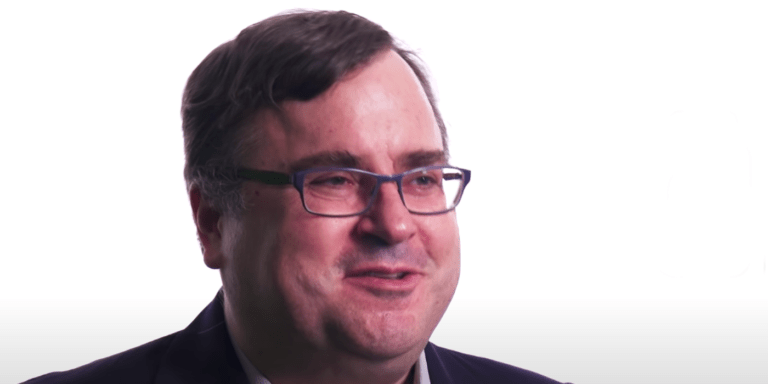
(Luis Cornelio, Headline USA) Reid Hoffman, a high-profile Democratic billionaire donor, has emerged as a key financier behind Smartmatic’s lawsuit against Fox News, contradicting the voting technology company’s previous claims of self-funding. 

Hoffman unleashed a “multimillion-dollar investment intended in part to help the company sustain its costly litigation,” reported the Washington Post on Monday. 

Smartmatic is currently suing Fox News and Newsmax for defamation following their coverage of Smartmatic during the 2020 election. 

Strikingly, Hoffman’s emergence as the lawsuit’s financier contradicts Smartmatic’s previous assertions. 

“Smartmatic does not have any third-party funding for the [Fox] cases, and never has had such funding,” Smartmatic attorney Erik Connolly told Reuters in April 2023.

According to the Washington Post, the timing of Hoffman’s investment could raise questions about the real intentions of the lawsuit, which Fox labeled as “baseless.”

It isn’t immediately clear whether Hoffman’s funding came after Reuters’ report was published. Nevertheless, it could corroborate Fox’s argument that the defamation lawsuit lacks merit, given Smartmatic’s lack of profits since 2017. 

“As a report prepared by our financial expert shows, Smartmatic’s damages claims against Fox News are highly implausible, disconnected from reality and on their face intended to chill First Amendment freedoms, so their alliance with a high profile Democratic donor and longtime supporter of President Biden to fund their lawsuit is entirely predictable,” Fox said. 

In a statement, Hoffman unashamedly defended his financial backing of Smartmatic, portraying the company as an apparent victim in the post-2020 election controversy. There is no evidence to back such assertion. 

“Smartmatic built a global business by using technology to better engage citizens, regardless of party or ideology, by making voting simple and trustworthy,” Hoffman claimed, before vaguely arguing, “After Donald Trump lost in 2020, however, Smartmatic became a target of the defamatory campaign to overturn his defeat.” 

Hoffman’s adviser, Dmitri Mehlhorn, stated that Hoffman got to know Smartmatic CEO Antonio Mugica through mutual acquaintances, according to the newspaper.  

“They already kind of liked each other broadly and remotely, and then this deal came up,” Mehlhorn said, referring to the convenient allyship. 

His previous involvement in high-profile lawsuits, including backing E. Jean Carroll’s defamation case against Donald Trump, highlight Hoffman’s sentiments against Trump, MAGA Republicans. 

This was more evident during his financial backing of failed presidential candidate Nikki Haley in her longshot bid against Trump. 

NYC Mayor Adams Unveils ‘Trash Revolution’ … Featuring Bins

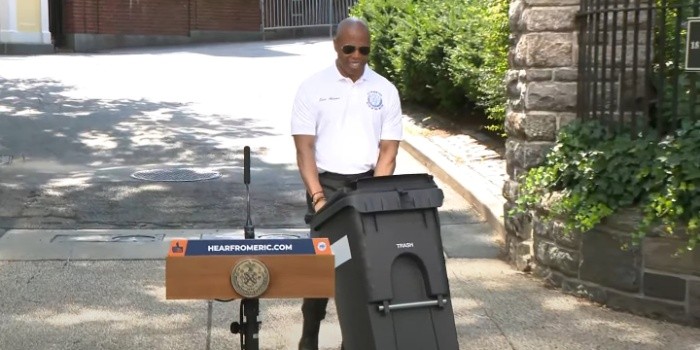
(Luis Cornelio, Headline USA) New York City Mayor Eric Adams has launched what he calls a “trash revolution” to supposedly tackle the city’s rampant rat problem—by introducing wheeled trash cans for residential homes. 

During a Monday press conference, set to the tune of Jay-Z’s Empire State of Mind, Adams boasted of city-mandated bins, claiming they will replace black trash bags that have long served as a source of food for rodents and roaches. 

“When you look at the billions of pounds of trash we remove off our streets annually, many people thought it was impossible that these babies here, the bins, were going to be part of our trash revolution,” the mayor said.

Conceding that trash bins are not a groundbreaking innovation, he added, “We’re only catching up to what other municipalities across the globe, what they are currently doing.” 

Under the new mandate, residences with fewer than 10 units must purchase these bins by Nov. 12.  By June 2026, all property owners will be required to fork over cash for government-approved bins, according to Gothamist. 

The city awarded a lucrative contract to Otto Environmental Systems to design these bins, raising questions about political favors. 

“The city needs to give sanitation overtime that they deserve, if youre not going to hire more sanitation workers to keep our city clean,” Curtis Sliwa, a former Republican candidate for mayor, wrote on Twitter, “But Adams, his solution is making you pay for his can design. Just another contract with kickbacks for his cronies and another expense for taxpayers.” 

To ensure compliance, Adams has threatened fines starting at $50 for those daring to resist his decree, with penalties escalating to $200 for repeated offenses, Gothamist reported. 

Sanitation Commissioner Jessica Tisch promised that by spring 2025, larger buildings will boast on-street containers for trash. 

Musk Blasts ‘Traitor’ Dems for Opposing Citizenship Verification to Vote

(Headline USA) Billionaire Elon Musk, a naturalized U.S. citizen, blasted as “traitors” Democrats who oppose citizenship verification voting requirements in a post on his social-media platform, X.

Musk’s comments followed a report by Axios that revealed House Democrats were planning to oppose the Safeguard American Voter Eligibility Act, which would require state election officials to ask about citizenship before giving voter registration forms to applicants and require those applicants to provide said proof of citizenship.

The bill would also empower the Department of Homeland Security to determine whether to deport noncitizens who have illegally registered to vote in federal elections.

“Those who oppose this are traitors. All Caps: TRAITORS,” Musk said of the bill. “What is the penalty for traitors again?”

The Constitution says traitors guilty of treason can be sentenced to death or be imprisoned for no less than five years. They can also be fined no less than $10,000 and be barred from ever holding office in the U.S.

Democratic leadership, however, is whipping its colleagues to guarantee they vote against the SAVE Act, according to Axios. 

House Minority Whip Katherine Clark, D-Mass., claimed in a memo that the bill would “prevent Americans from registering to vote with their drivers’ license alone” and would make a passport the “only acceptable standalone form of identification.”

She also claimed the citizenship-verification requirements would be an “extreme burden for countless Americans” and “further intimidate election officials and overburden states’ abilities to enroll new voters.”

Musk has been outspoken against Democrats’ efforts to remove voting-identification requirements, arguing that their opposition is part of their larger effort to stack their voter rolls with the millions of illegal immigrants the Biden administration has let into the country.

“Dems won’t deport, because every illegal is a highly likely vote at some point,” Musk said earlier this year. “That simple incentive explains what seems to be insane behavior.”

Democrats and their leftist media allies have long claimed, without evidence, that noncitizen voting is not a significant enough problem to impact the outcome of elections.

However, many on the Left are now grappling with a serious credibility crisis after finally acknowledging that they have systemically covered up President Joe Biden’s mental infirmities in recent years.