North Carolina Election Board Faces 7th Lawsuit in 52 Days

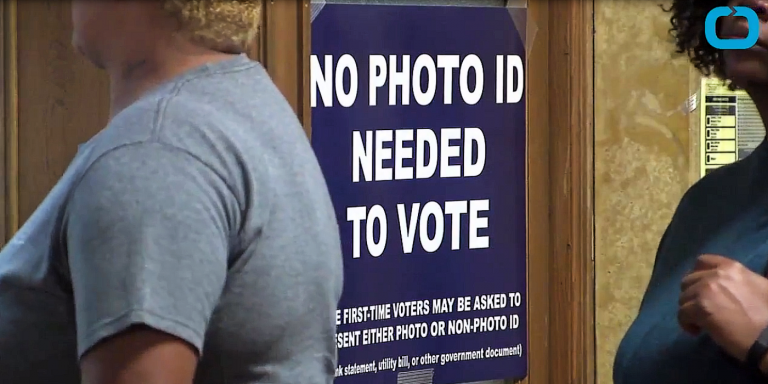
(Alan Wooten, The Center Square) North Carolina’s State Board of Elections says a mobile phone identification is acceptable for the state’s voter ID law.

The state and national Republican organizations on Thursday in court said it is not.

Seven times in 52 days, the five-member bipartisan state authority and its executive director who manage the elections have been sued. Playing offense as plaintiffs for the fourth time are the North Carolina Republican Party and the Republican National Convention, which is led by the former head of the state party.

Three weeks ago, the state board by 3-2 approved the Mobile UNC One Card that is used on the campus of the University of North Carolina at Chapel Hill. It’s voluntary there for students and staff with Apple phones.

State law, says plaintiffs, only allows ID in physical form. Options include military or veterans photo ID card issued by the U.S. government; ID card with photo issued by the U.S. or North Carolina government for a public assistance program; tribal enrollment card with photo issued by a tribe recognized by the state or federal government, which include the Cherokee-Eastern Band, Coharie, Haliwa-Saponi, Lumbee, Meherrin, Occaneechi-Saponi, Sappony and Waccamaw Siouan.

Additionally, there are 95 entities with approved student or government-employee photo IDs, or both.

According to the lawsuit, the board was in error to “expand the circumstances of what is an acceptable student identification card, beyond a tangible, physical item, to something only found on a computer system.”

Creating digital items, including through use of artificial intelligence, has been a subject of many polls this election cycle. A national poll from Elon University released in May said more than 3 in 4 Americans fear abuses of artificial intelligence will affect the 2024 presidential election, and many are not confident they can detect faked photos, videos or audio.

Defendants are the board as a whole, each member in their board capacity, and Bell. The board includes Democrats Alan Hirsch, its chairman, Jeff Carmon and Siobhan Millen; and Republicans Stacy Eggers and Kevin Lewis.

Since July 22, the state board has been litigated because of decisions related to ballot access involving the Justice For All Party, and the We The People Party; voter roll maintenance twice; freedom of speech involving John F. Kennedy Jr.; and a memo of instruction to county boards of elections in conflict with absentee by mail ballot state laws.

Sheriffs: ‘California is an Open Territory for the Cartel to do Whatever it Wants’

(Bethany Blankley, The Center Square) California residents are suffering from Biden–Harris administration “open border” policies and California’s sanctuary state law, California sheriffs argue.

At a recent U.S. House Judiciary Committee hearing on victim perspectives, Tulare County Sheriff Mike Boudreaux said, “when it comes to open borders and the impact of illegal immigration in California, I have a front row seat to the havoc those can wreak.”

Boudreaux is among many sheriffs in the state who don’t support Harris for president, he’s said after their image was used in one of her campaign ads.

He then described cases in the Central Valley related to the border crisis. The region is known as the agricultural heart of California and referred to as the “major breadbasket of the world” because they produce so much food, he said. The region has also had a long history with illegal immigration because an estimated 80% of agricultural workers are in the country illegally, he said. With illegal immigration comes crime, and that has stretched thin law enforcement resources, he said.

“When it comes to our open border, the Central Valley is at the foot of the mountain staring down an avalanche. We are confronting a barrage of violent criminals, events, and drugs flow from the border into our community. The free flow of illicit and deadly drugs, principally fentanyl, have turned the corridors of Highway 99 and Interstate 5 into two highways of death that unleash unspeakable carnage.”

He described how deputies and canines have been killed by criminal illegal foreign nationals who’ve been deported multiple times after committing multiple crimes in other states. He also described multiple agency operations in several counties targeting drug trafficking operations that uncovered how Tulare County has become a hub for the Sinaloa Cartel. Cartel member suspects they interviewed told them that under the Biden-Harris administration “it is easier now in the last three years than in the history of the drug organization to move illegal drugs across the border into the United States.”

He also described arrests of illegal foreign nationals operating out of Washington state who were allegedly transporting fentanyl for the Mexican cartel “all over the southern border up to Washington.” Arrested and detained on multiple charges, they were let out of jail the next day and never to be found.

“Their release was a slap in the face to the criminal justice system and a direct repercussion of failed immigration policies and an open border,” he said. California’s sanctuary law, SB54, prohibits law enforcement from working with U.S. Immigration and Customs enforcement (ICE). As a result, “there are no ramifications for their actions. California has basically become an open territory for the cartel to do whatever it wants.”

Mexican cartels “are infiltrating our communities, unleashing incredible violence and taking the lives of innocent people,” he continued, describing an execution style murder of a family, including a 16-year-old mother and her 10-month-old baby, The Center Square reported on last year.

Biden-Harris policies have “caused a major crisis in California and in America. We are seeing murders, marijuana grows, drug and human trafficking, financial scams, agricultural crimes, robberies and so much more. The rest of the world is taking advantage of the current policies concerning our border, recognizing the administration has removed the foundation of legal immigration. Allowing an unsecured border has encouraged the world to violate immigration laws resulting,” he said. The result is that local law enforcement is overwhelmed and soon won’t be able “to keep and maintain peace in our communities.”

At another Judiciary Committee hearing on California perspectives, Riverside County Undersheriff Don Sharp said his county “has felt the devastating effect of a weak border sanctioned by this administration.”

Sharp, who spent over 10 years in narcotics enforcement, said “the catastrophic impact cartels have on our communities is, and has always been, abundantly apparent. Our communities are facing an unbelievable flow of fentanyl, and fentanyl laced drugs; emergency response personnel are responding to dozens of overdoses and overdose fatalities daily.”

“The flood of deadly fentanyl to our streets is overwhelming and only made possible by complete border security failures under the current administration,” he said. Because Border Patrol agents are overwhelmed processing illegal foreign nationals into the country instead of patrolling for bad actors in the field, “the border is wide open.” This results in “larger drug and human smuggling loads. The risk of detection and loss of illicit contraband becomes less, and the shrinking risk is easily worth the reward for cartels and criminals.”

By contrast, when border security is strong and robust, he said, they see “smaller loads and more fearful cartels, as they should be when breaking our laws and harming society.”

The Riverside County Sheriff’s narcotic investigation unit alone seized a record 359 pounds of fentanyl and over 2.3 million fentanyl pills in 2023, he said, enough to kill the entire county’s population. This excludes the amount of fentanyl other agencies have seized.

“This is a staggering statistic of poison seized. What did we miss? We know we missed plenty. We wish the current administration understood what the full effect of their actions has created.”

He blamed both California politicians and the administration for skyrocketing border crime. “I am sick of battling the deeply flawed changes being made by them,” he said. “Our state and nation matter and our citizens are afraid of the consequences of an open border. The unknown number of terrorists and bad actors entering unchecked is eye opening and terrifying. It puts our county and communities in jeopardy.”


Young Women are Farther Left than They’ve Been in Decades

(Headline USA) Young women are more liberal than they have been in decades, according to a Gallup analysis of more than 20 years of polling data.

Over the past few years, about 4 in 10 young women between the ages of 18 and 29 have described their political views as liberal, compared with two decades ago when about 3 in 10 identified that way.

For many young women, their liberal identity is not just a new label. The share of young women who hold liberal views on the environment, abortion, race relations and gun laws has also jumped by double digits, Gallup found.

Young women “aren’t just identifying as liberal because they like the term or they’re more comfortable with the term, or someone they respect uses the term,” said Lydia Saad, the director of U.S. social research at Gallup. “They have actually become much more liberal in their actual viewpoints.”

While it is hard to pinpoint what is making young women more liberal, they now are overwhelmingly aligned on many issues, which could make it easier for campaigns to motivate them.

Young women are already a constituency that has leaned Democratic — AP VoteCast data shows that 65% of female voters under 30 voted for Democrat Joe Biden in 2020 — but they are sometimes less reliable when it comes to turnout.

Young women began to diverge ideologically from other groups, including men between 18 and 29, women over 30 and men over 30, during Democrat Barack Obama‘s presidency. That trend appears to have accelerated more recently.

The change in young women’s political identification is happening across the board, Gallup found, rather than being propelled by a specific subgroup.

Taylor Swift’s endorsement Tuesday of Democratic presidential nominee Kamala Harris, after her debate against Trump, illustrated one of the issues where young women have moved to the left. In Swift’s Instagram announcing the endorsement praised Harris and running mate Tim Walz for championing infanticide.

The Gallup analysis found that since the Obama era, young women have become nearly 20 percentage points more likely to support broad abortion rights. There was a roughly similar increase in the share of young women who said protection of the environment should be prioritized over economic growth and in the share of young women who say gun laws should be stricter.

Now, Saad said, solid majorities of young women hold liberal views on issues such as abortion, the environment, and gun laws.

“You’ve got supermajorities of women holding these views,” she said.

Adapted from reporting by the Associated Press

Percentage of Foreign-Born People in America Highest in a Century

(Headline USA) The percentage of U.S. residents who were foreign-born last year grew to its highest level in more than a century, according to figures released Thursday from the most comprehensive survey of American life.

The share of people born outside the United States increased in 2023 to 14.3% from 13.9% in 2022, according to estimates from the U.S. Census Bureau’s annual American Community Survey, which tracks commuting times, internet access, family life, income, education levels, disabilities, military service, and employment, among other topics.

International migrants have become a primary driver of population growth this decade, increasing their share of the overall population as fewer children are being born in the U.S. compared with years past. The rate of the foreign-born population in the United States hasn’t been this high since 1910, when it was 14.7%, driven by waves of people emigrating in search of a better life.

In 2023, international migrants accounted for more than two-thirds of the population growth in the United States, and so far this decade they have made up almost three-quarters of U.S. growth.

The growth appears to have been driven by people coming from Latin America, whose share of the foreign-born population increased year-over-year to 51.2% from 50.3%, according to the estimates. Latin America was the only world region of origin to experience an increase among those U.S. residents born in another country, as the share of foreign-born residents from Europe and Asia dropped slightly.

Among the states with the largest year-over-year bumps in the foreign-born population was Delaware, going to 11.2% from 9.9%; Georgia, to 11.6% from 10.7%; and New Mexico, to 10.2% from 9.3% The share of the foreign-born population dropped slightly in Washington, D.C., Idaho, Iowa, Maine, Minnesota, Montana, North Dakota and Oregon.

The Census Bureau figures don’t distinguish whether people are in the United States legally or illegally.

The rate of U.S. residents who identify as Hispanic, no matter what race, jumped last year to 19.4% from 19.1% in the previous year, according to the survey. At the same time, those who identify as non-Hispanic white alone dropped from 57.7% to 57.1%. The share of U.S. residents who identify as Black alone dropped slightly, from 12.2% to 12.1%, and it increased slightly for those who identify as Asian alone from 5.9% to 6%.

Adapted from reporting by the Associated Press

Calif. Not Paying Released Inmates $200 Could Cost Taxpayers $5B

(Kenneth Schrupp, The Center Square) San Francisco’s former district attorney is leading a class action lawsuit requiring the state to follow through on a 1973 statute signed into law by then-governor Ronald Reagan to pay prisoners who have served more than six months $200 upon their release as “gate money.” Including interest, the case could cost taxpayers $5 billion.

With former SF DA Chesa Boudin, now Executive Director at UC Berkeley’s Criminal Law & Justice Center, estimating California releases approximately 30,000 prisoners each year, his case says the class action body “exceeds hundreds of thousands of individuals.” Boudin says the legislature’s statute was quite clear in providing $200 (worth almost $1,500 in current dollars when it first went into effect) to prisoners when they exit prison if they aren’t being transferred to federal prison or another state.

“CDCR’s practice of routinely withholding gate money and applying unlawful and unauthorized deductions violates the law and undermines the integrity of the justice system,” wrote Boudin and the two other lawyers representing in the plaintiffs . “CDCR, which is charged with incarcerating those who break the law, is itself breaking the law every day.”

Boudin says the California Department of Corrections and Rehabilitation objected to the law before it was signed and lobbied for it to have authority over how much gate money would be provided to released inmates, and that the passed law’s clear language establishes $200 shall be provided upon release in nearly all circumstances.

Boudin then continues to outline how the CDCR “promulgated a regulation that directs its employees to deduct the cost of release apparel and transportation from people’s release money, which results in people receiving far less than the $200 required by law.”

The two plaintiffs representing the class are Colin Scholl, who spent 14 years at a CDCR prison and was provided $70 upon release after $130 deducted in clothing and transportation, and John Vaeseau, who spent 33 years at a CDCR prison before being transferred to a San Francisco jail and not receiving any gate money — which the case claims violates the gate money law given that Vaeseau was not being transferred to another state, or to federal prison, as “CDCR’s own policy guidelines acknowledge that people released from prison are entitled to gate money even when they are transferred into the custody of local law enforcement.

For relief, the suit is demanding re-evaluation of the payments made with unlawful deductions and payment of the deducted amounts to released prisoners, ending of the deductions, a judgment that CDCR violated state law, award pre-judgment interest and post-judgement interest on sums withheld from plaintiffs, awarding of attorneys’ fees and costs of the lawsuit, and “such other and further relief as the Court deems just and proper.”

In California, the default judgment interest rate is set by statute at 10%. This means an individual who did not receive his or her $200 gate money in 1973, perhaps due to, like Vaeseau, being transferred to another facility in the state but not within the state prison system, would receive need to be paid $25,625.99 in pre-judgement awards and interest.

Assuming there have been 30,000 prisoners released per year in the 51 years from 1973 to 2024, that the typical inmate has received only $100 of the $200 owed, that 3,000 of those inmates each year do not receive any money at all due to the non-payment of many transferred prisoners, at a 10% annual compounding interest rate, the prejudgment interest and payments would be nearly $5 billion; at $3,300,000 of new debt to prisoners per year, and 10% interest on the debt, the state could owe $4.65 billion. Given typical attorneys fees of 25-40% on class action settlements, and Boudin’s partnership in this case with Edelson, a leading for-profit class-action law firm, the joint legal team could take home over $1 billion on a $4.65 billion settlement.

Unspent COVID Funds to be Returned by End of Year

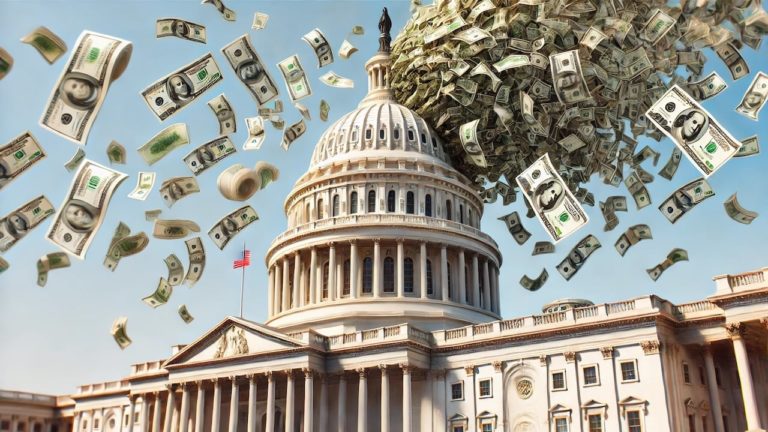
(Headline USA) For thousands of local governments, the clock is ticking to spend their share of $350 billion in COVID-19 relief funds approved by Congress and Joe Biden in 2021. Governments must obligate all their American Rescue Plan funds for specific projects by the end of this year or else return the rest to the U.S. Treasury.

About 80% of all funds had been obligated as of March, according to the most recent data reported to the Treasury by more than 26,500 local, state and territorial governments.

But some governments appear to have a lot more work to do than others.

About one in five governments reported obligating less than half their funds as of this spring, according to an Associated Press analysis, and about 3,500 had obligated less than 25%.

That includes 2,260 governments that reported no projects, leaving it unclear whether they had any plans for the money.

From the beginning, the American Rescue Plan faced criticism from some Republicans and government watchdog groups for allowing unnecessary and excessive spending, including on things hardly connected to the coronavirus pandemic.

Under Treasury rules, an obligation generally requires a government to place an order for services or property, enter into a contract or award a grant to another entity. Governments that meet the obligation deadline then face a second deadline to finish spending the funds by the end of 2026.

“There’s no question that some of this money was not needed and it’s being spent wastefully,” said Tom Schatz, president of Citizens Against Government Waste, a Washington, D.C.-based nonprofit.

The Detroit suburb of Dearborn Heights, which received more than $24 million, listed just one obligation on its spring Treasury report — about $79,000 for administrative expenses to select and implement projects funded with the federal aid.

As the federal deadline nears, some states and local governments are making backup plans to ensure they use all the money.

This spring, Missouri told the Treasury it had obligated 99% of its nearly $2.7 billion allotment. But some projects have fallen through or appear unlikely to need their full funding.

So lawmakers approved a revised spending plan that eliminated $49 million intended for COVID-19 response efforts and $16 million to remodel an old mental health facility for use in a sex offender rehabilitation program. Those funds were reallocated to dozens of new projects, including a college engineering building and a health care worker training program.

The Missouri Legislature also budgeted $150 million of American Rescue Plan funds for K-12 public schools as a fallback option if other projects don’t get moving. Several lawmakers in the conservative Freedom Caucus voted no, suggesting the federal pandemic aid was driving up federal debt and inflation.

“I’m fine if we were to give it back,” Republican state Sen. Rick Brattin, the Freedom Caucus chairman, told the AP. “We could at least hold our head high and say that we didn’t continue to contribute to the financial collapse of the American dollar.”

Facing the prospect that some of Connecticut’s $2.8 billion American Rescue Plan allotment could go unused, the state General Assembly this year reallocated $365 million to new purposes. The legislation also laid out a backup plan, directing Democratic Gov. Ned Lamont’s administration to reallocate any funds that appear unlikely to be obligated as of Oct. 15 to instead go toward budget shortfalls and higher education.

The city of New Orleans reported obligating 55% of its $387.5 million federal allotment as of this spring. But it’s been moving quickly to use the money. As of September, 86% has been obligated, New Orleans Chief Administrative Officer Gilbert Montano said. During the summer, the City Council shifted pandemic relief funds away from a couple of projects that faced timing questions to instead fund homeless shelters and clean up illegal dumps. Other slower-moving projects are on a watch list for potential reallocations before year’s end.

Montano made his position clear, “we’re not going to give any of that money back.”

Adapted from reporting by the Associated Press

Billions Gone and Little to Show for It after ‘Mind-Boggling’ COVID Fraud

(Casey Harper, The Center Square) Years after the passage of federal COVID-era relief and the subsequent loss of likely hundreds of billions of those taxpayer dollars, lawmakers are still unsure where that money went, how to get it back, and seemingly have done little to prevent it from happening again.

Federal watchdog and other reports estimate anywhere from $200 billion to half a trillion was lost to waste, fraud and abuse across various federal and state COVID-era programs.

“Insiders, including those who worked for state workforce agencies, conspired with organized crime factions and other individuals to defraud state UI programs and the states did little to stop them,” a Republican-led House Oversight Committee report released this week said. “Some states even hired individuals convicted of identity theft to process UI claims.”

Examples like that and the scope of the amount lost was the subject of a House Oversight hearing this week where lawmakers on both sides of the aisle and experts grappled with the scope of the lost funds and what to do about it.

“The estimated amounts of waste, fraud, and abuse in COVID-related programs are simply … mind-boggling,” Subcommittee on Government Operations and the Federal Workforce Chairman Pete Sessions, R-Texas, said at the hearing. “Half a trillion dollars. Maybe more. Much of it lost to criminal actors and our enemies. Often using comically simple tactics.”

The most common among those tactics was stealing unemployment dollars doled out by the federal government during the pandemic.

One inspector general report from the Small Business Adminstration estimated at least $200 billion in taxpayer money was lost.

“We estimate that SBA disbursed over $200 billion in potentially fraudulent COVID-19 EIDLs, EIDL Targeted Advances, Supplemental Targeted Advances, and PPP loans,” the report said. “This means at least 17 percent of all COVID-19 EIDL and PPP funds were disbursed to potentially fraudulent actors.”

Nearly all of those “fraudulent actors” have so far gotten away with the theft.

Congress approved $40 million for the Pandemic Response Accountability Committee, tasked with finding and preventing fraud. That committee and other investigative efforts have shown the COVID-era fraud was rampant and that little has been done to recover those funds.

That committee’s authority expires next year.

“Every dollar that goes to a fraudster doesn’t go to the small business, to the unemployed, to others that Congress were intending to help,” Michael Horowitz, Chair of PRAC, said at the oversight hearing this week. “If we want to continue to advance the fight against improper payments and fraud, we shouldn’t allow this important and fraud fighting tool to expire.”

Horowitz also said at the hearing that there is “clearly insufficient” access to data for oversight, such as accessing Social Security Administration’s death database so that payments are not sent to deceased individuals. He also pushed for his authority to be expanded to helping other agencies.

Orice Williams Brown, chief operating officer at the U.S. Government Accountability Office, also testified at the hearing that federal agencies can do more to prevent fraud of this kind. But federal agencies are not alone in the blame.

The House Oversight report released this week is called the “Widespread Failures and Fraud in Pandemic Unemployment Relief Programs” showing that states mishandled funds doled out by the federal government for unemployment insurance, sometimes with little oversight.

From the report:

The U.S. Government Accountability Office (GAO) estimates 11 to 15 percent of total benefits paid during the pandemic were fraudulent, totaling between $100 to $135 billion. The Department of Labor (DOL) Office of Inspector General (OIG) estimates that at least $191 billion in pandemic UI payments could have been improperly paid, with a significant portion attributable to fraud. As of March 2023, states reported recoveries of improper payments in an amount of only $6.8 billion.

The design of the Pandemic Unemployment Assistance (PUA) program led to massive fraud. During the program’s first nine months, claimants did not have to provide any evidence of earnings or prior work which made the program susceptible to fraud. DOL reported that the PUA program had a total improper payment rate of 35.9 percent.

Both sides have lamented the lost taxpayer dollars, but so far little has been done to prevent it from happening again, even as Congress continues to pass multi-trillion dollar spending bills often with little time for lawmakers to review.

Lawmakers passed two bills in 2023 to increase reporting from federal agencies on fraud and to prevent those previously convicted of financial crimes from receiving certain federal payment.

The House Oversight report recommended stronger security measures, cross checking with other relevant databases, more oversight and transparency, and more documentation from benefit recipients.

“If this is not a call to action…” Sessions said at the hearing. “I simply do not know what is.”

MURDOCK: Post Office Puts Odds of Bungling Ballot Delivery at Slightly Less than 5%

(Deroy Murdock, Headline USA) Wisconsin election officials have until Sept. 19 to distribute absentee ballots. That’s when the bad news begins.

North Carolina authorities planned to ship ballots on Sept. 6. This has been postponed indefinitely, to remove Robert F. Kennedy Jr. as an option.

Absent that wrinkle, North Carolinians would have started voting four days before Sept. 10’s Kamala Harris versus Donald J. Trump debate. That would have been as sick, twisted, and un-American as a jury deliberating before hearing the prosecution and defense cases.

What the hell is the rush?

Tarheels notwithstanding, Wisconsinites do not need to select the next Leader of the Free World 47 days before Election Day.

Virginia similarly will disgrace itself on Sept. 20. Michigan’s self-debasement follows, on September 26.

These swingy states, and others soon thereafter, will make this momentous decision—and determine control of the Senate, House, governors’ mansions, and city halls—long before mind-changing news breaks. This could include policy proposals, riveting ads, economic data, gaffes, or scandals that could make mail-in voters want to re-cast their ballots.

Too late!

Almost always, once citizens submit mail-in ballots for tabulation, that’s it—never mind their fervent pleas to change their choices.

The cancer of mail-in ballots metastasizes from there.

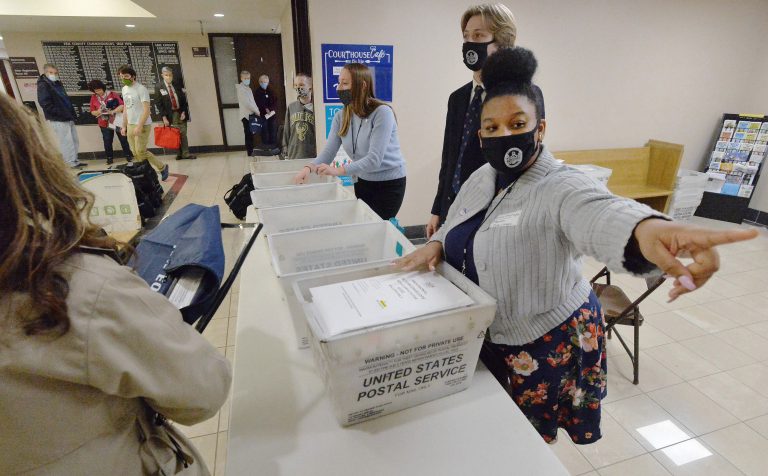
The U.S. Postal Service’s Inspector General (USPSIG) audited 15 mail-processing facilities and 35 delivery units in 13 states and Puerto Rico during the primary elections last February and March.

According to the USPSIG’s July 30 report, 97.01% of 33,042,496 ballots transmitted to voters arrived on time, as did 98.17% of the 10,258,169 ballots that they entrusted to boards of elections.

In other words, 987,970 or 2.99% of these ballots reached voters too late. Likewise, 187,724 or 1.83% of these ballots returned to election officials after their legal deadlines.

“We identified processes and policies that could pose a risk of delays in the processing and delivery of Election and Political Mail,” the USPSIG’s audit states. “Further, we identified issues related to some Delivering for America operational changes that pose a risk of individual ballots not being counted.”

The USPSIG found a postal venue where, on primary Election Day, “personnel stopped segregating the ballots about four hours prior to when ballots needed to be received at the board of election offices.” Even worse, “local management at one facility stated they were not aware primary Election Day was that week.”

If repeated by Nov. 5, such incompetence could prove conclusive. Consider these 2020 swing-state margins of victory:

Donald J. Trump – North Carolina: 1.34%

Joe Biden – Georgia: 0.23%, Arizona: 0.30%, Wisconsin: 0.63%, Pennsylvania: 1.16%

Had the Postal Service delivered a hypothetical 1.83% of completed ballots too slowly for tabulation (if at all), one or more of these toss-up-state results could have switched. It is no far stretch to imagine that tardy mail-in ballots sank Trump’s re-election.

By the Postal Service’s admission, failure is not an option. It’s a given.

“What should the average voter think about the US Postal Service’s own figures?” asks Veronica Lakeworthy, a southern California clean-ballot activist and member of the Murrieta–Temecula Republican Assembly. “Inefficient election-mail handling can swing the results by excluding YOUR VOTE!”

USPSIG believes the Postal Service is making progress on eight of 10 recommendations for improvement.

Fingers crossed.

But remember: This is the same Biden–Harris administration that admitted 323,000 unaccompanied illegal-alien minors and now cannot find them.

The mail-in ballot malignancy goes far beyond hapless-but-honest, postal workers. Security-technology expert and election-integrity advocate Jay Valentine of Fractal Computing LLC and Omega4America.com estimates that 3.5 million mail-in ballots will reach phantoms at unqualified swing-state addresses. These include seven “voters” registered at a vacant lot in Reno, Nevada, and 143 at industrial facilities in Hennepin County, Minnesota, among numerous such cases.

Unless Republican strategists and attorneys immediately insist that county clerks send zero voting materials to these ineligible addresses, GOP candidates and Trump himself could die politically in November from Stage 4 mail-in ballot cancer.

Deroy Murdock is a Manhattan-based Fox News contributor.

Biden Uses ‘Black Jobs’—The Same Term He Viciously Condemned Trump For

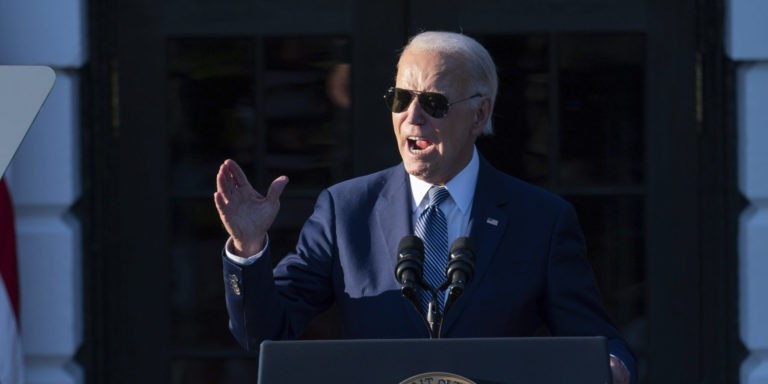
(Luis Cornelio, Headline USA) President Joe Biden used the term “black jobs” on Friday, echoing the phrase that the Democratic Party and the legacy media relentlessly condemned as racist when President Donald Trump used it during the CNN debate. 

The legacy media, however, turned a blind eye to Biden’s usage of the term, exposing yet another instance of leftist hypocrisy. Worse still, Biden made this allegedly offensive remark during a brunch celebrating black Americans. 

“In just three and a half years, we created 2 million new black jobs for black… black Americans,” Biden said during a gaffe-ridden speech. The audience responded with loud laughter as Biden raised his hand, seemingly attempting to calm the rowdy crowd. 

“By the way, the next black job to be filled is as president United States of America [sic],” he added, alluding to Vice President Kamala Harris.

The contrast between reactions to Biden’s “black job” gaffe and the backlash Trump faced for the same term is striking, as shown in a video compiled by the Media Research Center.

Trump used the phrase when highlighting the negative consequences of illegal immigration to black Americans. “They’re taking Black jobs now — and it could be 18, it could be 19 and even 20 million people,” Trump said on the CNN debate with Biden, then the Democratic nominee for president. 

The phrase drew partisan condemnation from Biden, Harris, former First Lady Michelle Obama and the NAACP.  

Harris herself chimed in, labeling the phrase as “another racist insult” from Trump. “Speaking of Black jobs, I have a Black job for you: Making sure the guy who said ‘Black jobs’ never becomes president again,” she added in the video shared by her campaign. 

Obama echoed Harris’s criticism, stating, “I want to know. Who’s going to tell him that the job he’s currently seeking might be one of those ‘Black jobs’?” The NAACP also condemned Trump via a statement on X: “What exactly are Black and Hispanic Jobs!?!” 

Conservatives did not mince words in response to the double standard on using the term. Reactions are included below. 


Pennsylvania High Court Rules Misdated Ballots Must Be Tossed

(Luis Cornelio, Headline USA) In a major victory for election integrity, the Pennsylvania Supreme Court finally ruled Friday that Philadelphia and Allegheny counties do not have to count misdated ballots, including those with no dates. 

The high court’s order overturned a lower court’s ruling that forced the two most populous and Democratic-leaning counties to accept flawed ballots, as long as they arrived before election day.

The infamous ruling had potentially damning implications for the impending 2024 presidential election, as both Vice President Kamala Harris and President Donald Trump aim to claim victory in November. 

In a 4-3 decision, the justices found that the Commonwealth Court had no jurisdiction to enforce the ruling, as the plaintiffs—some leftist non-profits—failed to include all 67 counties in Pennsylvania in the case. 

The court’s ruling covers the 2024 presidential election, delivering a major win for the battle against potential voter fraud. It also constituted an embarrassing blow to Democrats, who conveniently only targeted the two counties where they draw the most votes. 

The battle stemmed from Pennsylvania’s controversial election code, which expanded mail-in voting, but mandated ballots be properly dated—a fair and common-sense requirement. 

The date requirement affected 10,000 mail-in ballots during the 2022 midterm elections and even more during the 2024 presidential primaries, according to leftist group Democracy Docket. 

This latest high court decision comes as Harris and her allies scramble to find ways to secure Pennsylvania, a must-win state for Democrats. 

When asked Friday by reporters about the election in the Keystone State, Harris gave a non-answer, akin to her word-salads.  

“I am feeling very good about Pennsylvania because there are a lot of people in Pennsylvania who deserve to be seen and heard,” she claimed, failing to mention a single policy proposal for the state.