Hillary Clinton Blasts Joe Biden after Endorsing Him Twice

(Luis CornelioHeadline USA) Twice-failed presidential candidate Hillary Clinton appears to be suffering from buyer’s remorse about the 2024 race.

After repeatedly praising former President Joe Biden’s 2024 campaign, Clinton now says his decision to seek re-election was a “terrible mistake.”

“He made a terrible mistake for himself, his legacy and for the country,” Clinton said Monday of Biden’s decision to run for a second term.

She made the scathing remarks during an interview with a New York Times editor in Manhattan.

The comments are at odds with Clinton’s repeated endorsements of both Biden and former Vice President Kamala Harris during the election cycle.

A Headline USA review of Clinton’s social media found that she spent much of 2024 urging voters to back Biden.

“I’ll be voting Biden,” Clinton wrote on June 28, 2024.

Clinton quickly endorsed Harris, Biden’s chosen successor, after he exited the race later that summer.

“Here’s what I know: We need to defeat Donald Trump. We need to elect Kamala Harris,” Clinton wrote on Sept. 10, 2024.

Adding to her rebuke on Monday, Clinton said that a different Democratic nominee “would have beaten Donald Trump” if the party had a competitive race.

“I think it was a terrible miscalculation on the part of President Biden,” Clinton continued.

She further suggested the nominee could have been Harris, a governor or a senator. She also said Biden triggered a “terrible dilemma” after he claimed he had never signaled in 2020 that he would be a one-term president.

Her comments come as Biden and former first lady Jill Biden expand their longshot efforts to defend their political legacy amid criticism from Democrats who blame the Bidens for propelling Trump’s grand return to power in 2025.

Biden exited the race only after mounting pressure within his own party following his disastrous performance in the first debate with Trump.

Outlets like Headline USA had long covered the evidence of Biden’s cognitive decline throughout his presidency. By contrast, Legacy media organizations and Clinton herself downplayed or shielded him from scrutiny.

Ohio Town Promised Jobs But Got Foreign Workers Instead

(José Niño, Headline USA) A Chinese electric vehicle battery supplier pledged to bring over a thousand jobs to rural Ohio but ended up flying in foreign workers while leaving its promises unfulfilled, according to an investigation by journalist Breanna Morello.

Morello shared her exclusive findings on X after visiting Sidney, Ohio firsthand. “A Chinese company called SemCorp received tax credits in Ohio for jobs they NEVER created,” Morello declared. “Worst part? They’ve been IMPORTING FOREIGN LABOR!!”

According to reports by Dayton Daily News, SemCorp, the trade name of Shanghai-headquartered Yunnan Energy New Material Co., revealed plans in May 2022 to invest $916 million into a Sidney, Ohio facility producing separator film—a critical component in lithium-ion batteries for electric vehicles. The company promised to create 1,200 jobs by 2025.

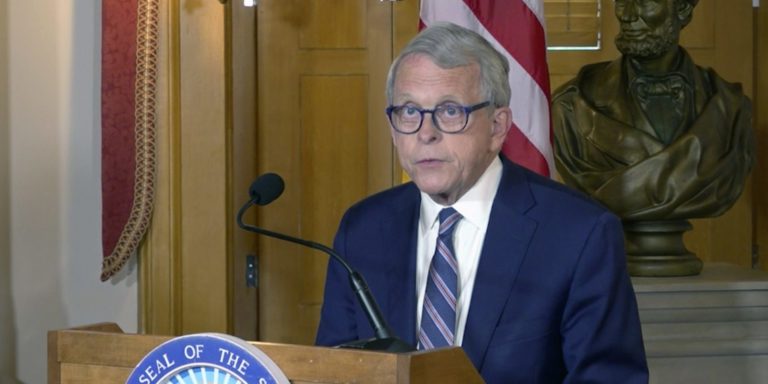
Governor Mike DeWine publicly championed the deal, and state officials greenlit tax credits worth an estimated $22.7 million—a 15-year, 2.1 percent job creation tax credit approved by the Ohio Tax Credit Authority—along with a 75% tax abatement through Sidney’s citywide enterprise zone, per WHIO TV. Earlier this month, the Ohio Tax Credit Authority voted to cancel the incentives entirely after SemCorp never executed its tax credit agreement with the Ohio Department of Development, per a report Morello published on Tuesday.

Morello obtained confirmation from a federal source that “Semcorp does employ Chinese nationals and they’re shuffling their way to Ohio.” Records show the company submitted nine I-129L petitions — federal forms that sponsors use to bring foreign nationals into the country for temporary work. Employment postings for the Sidney operation specify that applicants must speak Mandarin, indicating overseas hires fill roles originally earmarked for local workers.

State officials confirmed the deal never materialized. Ohio’s Department of Development informed Morello that “Semcorp never executed its tax credit agreement with the Department of Development. As a result, the Ohio Tax Credit Authority voted on June 1, 2026 to cancel the tax credit.”

Sidney’s municipal government now weighs its own response. Barbara Dulworth, the city’s Community Development Director, told Morello that “the city council will consider terminating the EZ agreement later this year due to non-performance.”

SemCorp offered no comment when Morello reached out.

José Niño is the deputy editor of Headline USA. Follow him at x.com/JoseAlNino 

Oil and Gas Leaders: Trump Iran Deal is Good News, Normalization to Take Months

(Bethany Blankley, The Center Square) Texas oil and natural gas industry leaders are cautiously optimistic about the president’s announced ceasefire deal with Iran.

President Donald Trump announced he plans to sign a deal with Iranian leaders on Friday, ending more than 100 days of a U.S.-Israel-led conflict that shut down the Strait of Hormuz and resulted in retaliatory attacks against U.S. allies’ oil and gas refineries.

The conflict caused the Dow Jones, S&P 500 and Nasdaq Composite to all report losses over the last few months. It also caused oil futures to top $120 a barrel, as the least expensive gas at the pump also topped $4 a gallon for the first time in Texas history. In other states, gas and diesel reached record highs but in Texas, home to refineries and record exports, gas prices reached an all-time high.

The conflict had rippling effects in Middle Eastern countries forcing Saudi Arabia, Kuwait, UAE, and Iraq to cut oil production and shut down several refineries critical to the region after they were damaged by Iranian retaliatory fire, The Center Square reported.

By April, the conflict had caused a net loss of up to 14.5 million barrels per day (bpd) of crude oil being transported through the Strait; aluminum, helium and fertilizer shortages were increasing, a jet fuel crisis was expected, and insurance companies were dropping coverage for cargo ships or increased premiums by 50%, The Center Square reported.

“A ceasefire framework and the prospect of a formal agreement with Iran are welcome developments for global energy. The closure triggered the largest supply disruption in the history of the global oil market, with roughly one-fifth of global oil consumption flowing through that strait daily before the conflict,” Ed Longanecker, president of the Texas Independent Producers & Royalty Owners Association (TIPRO) told The Center Square.

“Hundreds of ships remain trapped in the Persian Gulf, Gulf producers need time to restart throttled-back output, sea mines remain in the waterway, and core nuclear issues between Washington and Tehran are unresolved. Full normalization will take months,” he said.

He also reemphasized that the U.S. has been meeting global oil demand, led by Texas. Texas operators continued to break production records as well as exports of liquified natural gas (LNG), The Center Square reported.

“What this crisis has confirmed is the irreplaceable value of American oil and gas. When the Strait closed, the United States stepped into the supply gap and partially offset what would have otherwise been a far more severe global price shock. No other energy-producing nation can mobilize at the speed or scale of the United States and the Permian Basin in particular,” he said, referring to producers in west Texas and southeast New Mexico.

“A durable peace agreement is good news, but the lesson of the last several months is unambiguous. Robust domestic production is not an economic preference, it is a national security necessity, and the American oil and gas industry delivered when the world needed it most,” Longanecker said.​​​​​

Texas Oil & Gas Association president Todd Staples agreed, telling The Center Square that “an end to conflict and a successful diplomatic resolution signal a positive outcome for Americans and their allies alike. The oil and natural gas industry hopes for a speedy resolution and a return of predictability, because predictability supports planning. As global markets and shipping logistics adjust to this important step toward peace, Texas operators will continue to do what they do best by utilizing our state’s plentiful resources to deliver the energy that powers our modern way of life.”

Houston-based Andy Lipow with Lipow Oil Associates LLC addressed an obvious result consumers are already seeing at the pump: “The good news for consumers is that the oil market is selling off in anticipation of the reopening,” he told The Center Square. “We should see the national retail price of gasoline drop below $4 this week. That’s still a far cry from where it was prior to the conflict beginning when it was $2.98 at the end of February, but still 50 cents a gallon cheaper than where it was about one month ago.”

Oil futures fell to their lowest level since early March after the news of a ceasefire broke. The West Texas Index, the domestic benchmark, dropped to $80.75 a barrel. The international benchmark, Brent, dropped to $83 a barrel. All three major U.S. indexes also jumped after the news.

Lipow said there are still issues in the Strait like clearing mines, insurance companies adjusting prices for tankers and cargo ships “to say it is safe” enough to operate and insure them. Companies “need assurance of a safe shipping lane” and “guarantees from the Iranian government and IRGC that vessels will not be impeded, attacked, or seized,” he said.

The Wall Street Journal reported “senior U.S. officials said it could take more than two weeks to resume normal shipping operations in the strategic waterway” and “it could take some time to get the straight up and running.”

For U.S. domestic oil producers, “higher prices have encouraged some companies to put additional rigs to work, but if prices fall significantly, they may be forced to curtail future spending in the oil patch” in the Permian Basin, Lipow said.

Rig counts have increased by seven in the U.S. over the past year, according to Baker Hughes as of June 5. Internationally, rig counts are down by 25.

Longanecker also provided a cautionary note adding that “Monday’s price drop is a risk-premium correction, not a restoration of normal supply.”

Trump Suggests Syria Should ‘Take Care’ of Hezbollah in Lebanon

(Dave DeCamp, Antiwar.com) President Donald Trump on Tuesday suggested that Syria, which is led by former al-Qaeda commander Ahmed al-Sharaa, should “take care” of Hezbollah in Lebanon rather than Israel.

The president said he was “not happy” with Israel’s war in Lebanon, which has been supported by the US, due to the tactic of taking out entire apartment buildings, though his Pentagon employed similar tactics in Yemen and was responsible for major civilian casualties in Iran, most notably the bombing of the elementary school in Minab.

“Israel’s fighting Hezbollah for too long, and too many people are being killed. You don’t have to knock down an apartment house every time you’re looking for somebody because there’s a lot of people in those apartment houses and they’re not all Hezbollah, that I can tell you,” the president told reporters during a meeting with Qatari Emir Tamim bin Hamad al-Thani on the sidelines of the G7 summit in France.

“I suggested to Israel to let Syria take care of Hezbollah, because to be honest with you, I think they’d do a better job of doing it,” Trump said. He went on to praise Sharaa, formerly known by his al-Qaeda nom de guerre Abu Mohammed al-Jolani, saying he “has pulled that country together very quickly, he’s very capable, and he’s very good for me. He’s protected everything that I’ve asked for.”

Sharraa and his group of jihadists, known as Hayat Tahrir al-Sham (HTS), an offshoot of al-Qaeda, took power in Damascus in December 2024, ousting former President Bashar al-Assad. Sharaa has been embraced by Trump and visited the White House despite HTS and affiliated fighters being responsible for massacres of Alawites, Druze, and other minorities in Syria.

Sharaa said earlier this month that he had no intention of intervening in Lebanon, saying that “what is being circulated about Syria entering Lebanon is nothing more than rumors.”

Trump was asked on Tuesday if he was frustrated with Israeli Prime Minister Benjamin Netanyahu over Israel’s war in Lebanon, and said that he wasn’t and that he has a “great relationship” with the Israeli leader, though he added that he “didn’t like” that Israel bombed Beirut’s southern suburbs on Sunday, which was seen as an effort to sabotage the US-Iran Memorandum of Understanding.

“I didn’t like that he did an attack [over] a very minor little thing with some drones. I saw that attack, I saw where that bomb went. That was a vicious… that was too much. You can do too much also. But we’ve had a very effective relationship,” Trump said.

“Without the United States, there would be no Israel. Without me, there would be no Israel – because no other president was willing to do what I did. I had a great relationship with Bibi, but now Bibi has to be more responsible with respect to Lebanon,” he added.

Iran continues to insist that any deal with the US hinges on an end to Israel’s war in Lebanon, but Netanyahu has said he has no intention of withdrawing. Israel’s attacks in the country also continue, killing at least four people on Tuesday, though they are less intense since the announcement of the agreement between the US and Iran.

This article originally appeared at Antiwar.com.  


U.S. Precious Metals Industry Coalition Urges Congress to Advance SILVER Act to Address Critical Infrastructure Concentration & National Security Risks

(Sound Money Defense League, Money Metals News Service) A broad coalition representing dozens of key stakeholders across all segments of the U.S. precious metals industry formally called on Congress today to advance the System Integrity through Licensed Vault Expansion & Resilience Act (SILVER Act), bipartisan legislation designed to address national security risks by strengthening the resilience, competitiveness, and geographic diversity of America’s precious metals market infrastructure.

The Precious Metals Industry Coalition for Market Security and Access, whose members include U.S.-based depositories, mints, dealers, refiners, miners, logistics providers, banks, insurers, and investors, submitted a letter to congressional leaders highlighting what it describes as a significant and underappreciated concentration and security risk within the nation’s regulated precious metals delivery and settlement system.

The current structure of exchange-approved precious metals depositories concentrates regulated futures market storage capacity within a small geographic area around New York City, creating vulnerabilities for financial markets, supply chains, and national security.

“Geographic redundancy is a foundational principle of resilient infrastructure and risk management across critical industries and financial systems,” the coalition stated in a letter dated June 11, 2026, signed by more than 40 companies and trade organizations. The current single-region dependency is “creating dangerous concentration risks, limiting competition and regional participation, and imposing artificial constraints on the marketplace.”

The SILVER Act (SB 4621 and H.R. 8007) is sponsored by Sen. James Risch (R-ID), Sen. Catherine Cortez-Masto (D-NV), Rep. Mark Harris (R-NC), Rep. Russ Fulcher (R-ID), and Rep. Susie Lee (D-NV) and is supported by the Commodities Futures Trading Commission Chairman Michael Selig.

The bipartisan bill would not require approval of any specific depository. Instead, it would establish greater transparency and objective evaluation standards for depository approvals while ensuring that geographic concentration risk and broader public-interest considerations are addressed via the inclusion of several qualified depositories across the U.S.

The coalition argues that precious metals play an increasingly important role not only as financial assets but also as critical inputs for defense, aerospace, electronics, medical technology, and energy production. As a result, disruptions affecting a narrow region around New York City could have severe consequences extending well beyond the precious metals market itself.

“Passage of this simple bipartisan bill would modernize the nation’s precious metals infrastructure by promoting regional diversification, reducing costs, strengthening domestic supply chains, enabling new innovative digital products, and expanding market liquidity and access — while better aligning the system with the realities of a national marketplace,” the coalition stated.

The coalition’s full letter and its signers can be found here, and it reads as follows:

On behalf of our precious metals industry coalition partners consisting of U.S.-based depositories, mints, dealers, refineries, miners, logistics providers, banks, insurers, investors, and metals financing businesses, we urge you to address a significant and underappreciated concentration risk within America’s precious metals market infrastructure that poses vulnerabilities to national security, financial stability, supply chain resilience, and market continuity.

Currently, there are no depositories approved for the regulated futures markets outside a small sub-region within the Northeastern U.S., and this poses a systemic risk to the market, especially given the critical nature of precious metals and their increasingly vital role within the global financial system and the real-world economy.

Precious metals are not only financial assets; they are also essential inputs for electronics, aerospace, medical technology, energy systems, and defense-related manufacturing.

This concentration problem stems from an outdated practice by the primary derivatives clearing organization that requires gold storage vaults to be located within 150 miles of New York City.  Although no internal rule exists for silver, platinum, or palladium, vaults for these metals are, in practice, also not permitted outside the region.

A terrorist attack, natural disaster, cyber incident, infrastructure failure, or other security threat affecting this narrow corridor could severely disrupt metals settlement and delivery functions, undermining financial market stability and harming America’s supply chains.

Geographic redundancy is a foundational principle of resilient infrastructure and risk management across critical industries and financial systems. A more geographically distributed depository network would strengthen delivery capacity and settlement continuity during periods of market stress.

But this problem extends beyond risk exposure. The lack of geographic diversity also undermines market liquidity, competition, and access. It also undermines the ability to build precious metals supply chain infrastructure in other regions of the country.

Greater regional participation would support investment, infrastructure development, and skilled employment opportunities in states that already play a major role in domestic precious metals production and processing.

Many market participants across America are disadvantaged because nearby high-quality commercial depositories — already operating successfully under rigorous commercial and security standards — have been unable to participate in the public markets and therefore cannot offer ultimate liquidity. This is especially true in the Western U.S., where a significant amount of gold and silver mining, minting, manufacturing, processing, and trading takes place.

There is also demand from investors, businesses, and financial institutions for greater financial infrastructure outside the New York region and broader geographic choice.

Many prefer to store their metals closer to where they live or do business. Rather than removing their metal from Exchange warehouses altogether, these holders should be allowed access to new options, thereby increasing overall market liquidity. 

Expanding Exchange participation to include qualified facilities across the nation would increase competition, improve efficiency, and broaden market access. For example, commercial storage costs in other regions are materially lower than the maximum fees currently permitted — and commonly charged — by Exchange-approved depositories. Transportation costs can also be reduced, which creates savings for all market participants, including end commercial users, consumers, and investors.

Under Title VIII of Dodd-Frank, the Financial Stability Oversight Council (FSOC) designates certain derivatives clearing organizations (DCOs) as “systemically important financial market utilities,” and they benefit from an implicit government backstop. This creates a heightened expectation that they maintain robust risk-management practices that promote financial stability and operational resilience and reduce concentration risk. That’s because their failure or disruption could create severe liquidity or credit risks, thereby threatening the stability of the U.S. financial system.

At present, the primary DCO for the commodities futures market has been unwilling to consider adding qualified depositories in any other region, creating dangerous concentration risks, limiting competition and regional participation, and imposing artificial constraints on the marketplace. This not only harms investors, service providers, producers, and other market participants but also undermines the market as a whole.

The System Integrity through Licensed Vault Expansion & Resilience Act (SILVER Act) – SB 4621 and H.R. 8007 – offers a clear path forward.

The SILVER Act does not mandate approval of any specific depository. Rather, it promotes transparency, objective evaluation criteria, and due consideration of geographic concentration risk in depository approval decisions. It ensures appropriate consideration of the public interest in reducing systemic risk to the financial system and avoiding restraints on trade. 

Passage of this simple bipartisan bill would modernize the nation’s precious metals infrastructure by promoting regional diversification, reducing costs, strengthening domestic supply chains, enabling new innovative digital products, and expanding market liquidity and access —while better aligning the system with the realities of a national marketplace.

We respectfully urge the Committee to advance the SILVER Act and support a more resilient, competitive, and geographically diversified precious metals market infrastructure.

About the Coalition

The Precious Metals Industry Coalition for Market Security & Access represents a broad cross-section of the U.S. precious metals industry, including depositories, mints, dealers, refiners, miners, logistics providers, banks, insurers, investors, and metals financing businesses committed to strengthening the security, resilience, competitiveness, and accessibility of America’s precious metals markets.


Ron DeSantis Targets H-1B Workers in State Colleges

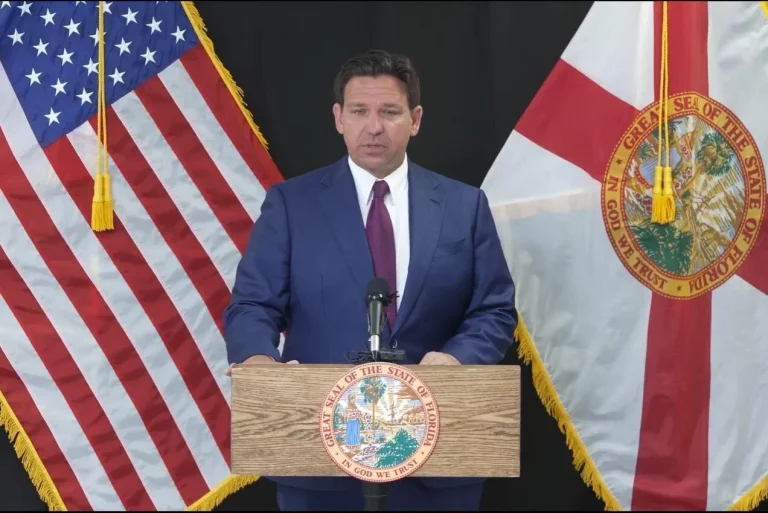
(José Niño, Headline USA) Florida Gov. Ron DeSantis took aim at foreign worker hiring in Florida’s university system, a move that drew praise from immigration hawks on social media.

On Saturday, Pascal Najadi posted on X celebrating the announcement, calling it a “bombshell moment” and adding “HUGE!” Najadi’s post amplified DeSantis’s demand that universities prioritize homegrown talent over imported labor, reproducing the governor’s remarks in stylized, all-caps form.

According to CBS, the governor delivered his directive on October 29, 2025 at a press conference at the University of South Florida in Tampa, accusing universities of hiring inexpensive overseas workers rather than capable American graduates and describing many H-1B hires as “cheap labor.”

“We can do it with our residents in Florida or with Americans, and if we can’t do it, then man, we need to really look deeply about what is going on with this situation,” DeSantis said.

Administration audits found roughly 400 foreign nationals employed at Florida public universities through H-1B visas. Per the Florida Phoenix, DeSantis called the reliance on such hiring “troubling,” reading off examples that included a public policy professor from China, a psychologist from the United Kingdom, an assistant swim coach from Spain, an athletic-department graphic designer from Canada, and a coordinator from Trinidad and Tobago.

The Chinese public-policy hire drew his sharpest criticism—a line Najadi amplified in his post, rendered there as “Why do we need to bring someone from CHINA to talk about public policy?!”

“I am directing today the Florida Board of Governors to pull the plug on the use of these H-1B visas in our universities,” DeSantis said.

Florida’s Board of Governors approved the prohibition on March 2, 2026, adopting a rule that bars new H-1B hires across all 12 public universities through January 5, 2027. The measure passed with two dissenting votes, from the board’s faculty and student representatives. Workers currently holding H-1B status can continue their employment and renew their visas.

Announced alongside the visa directive at the same October 29 event, Florida’s partnership between the state’s Department of Government Efficiency and its federal counterpart also canceled or redirected more than $33 million in DEI-related grants across the state university system, per a report by the Business Standard.

José Niño is the deputy editor of Headline USA. Follow him at x.com/JoseAlNino 

Study: Immigrant Welfare Use Dwarfs That of American Citizens

(José Niño, Headline USA) Immigrant-headed households access government welfare programs at dramatically higher rates than their American citizen counterparts, according to a new report from the Center for Immigration Studies.

The CIS analysis drew on Current Population Survey data spanning 2021 to 2025. The findings show that 47 percent of households headed by immigrants participate in at least one traditional welfare program such as food stamps, Medicaid, or subsidized housing. Among households headed by American citizens, that number drops to 28 percent, a difference of 19 percentage points.

“We find that non-citizen households use one or more means-tested programs at substantially higher rates than the U.S.-born in virtually every state,” CIS researchers Steven Camarota and Karen Zeigler note.

The disparity grows even more pronounced in states with substantial immigrant populations. In New York, 61 percent of immigrant households participate in welfare programs while only 33 percent of American citizen households do the same. Massachusetts registers 55 percent immigrant household welfare participation, followed by California at 54 percent, Arizona at 53 percent, and Maryland at 50 percent.

Even states with relatively small foreign born populations exhibit significant gaps. Half of all immigrant headed households in Idaho receive welfare benefits, double the rate among American citizen households. The disparity widens further in Nebraska, where 54 percent of immigrant households access welfare compared to merely 21 percent of citizen households.

John Binder of Breitbart News noted that hese patterns persist despite longstanding federal prohibitions on welfare access for most newly arrived legal immigrants and those present illegally.

“Although most new legal immigrants and illegal immigrants are barred from accessing most means-tested programs, this analysis, like others going back decades, shows that these restrictions have not prevented a large share of non-citizen-headed households from accessing the welfare system across the country,” Camarota and Zeigler wrote in the CIS report.

José Niño is the deputy editor of Headline USA. Follow him at x.com/JoseAlNino 

SPLC Official Shared Bank Accounts w/ Neo-Nazi Informant

(Ken Silva, Headline USA) The New York Post reported on Tuesday the identity of the Southern Poverty Law Center official who, according to court records, was in a relationship with one of the SPLC’s paid neo-Nazi informants.

According to the Post, the SPLC official is Heidi Beirich, who was the group’s director of intelligence between 2012 and 2019. The Post noted that the “Employee-2” named in the Justice Department’s indictment matches Beirich’s profile.

“One figure, referred to as ‘Employee-2’ in the indictment is described as a ‘person who would become Director of the SPLC’s Intelligence Project,’” the Post noted. “It also describes how ‘Employee-2’ wrote an article based on material stolen from National Alliance headquarters in 2014 and then paid off an informant to take the blame for the robbery.”

According to the DOJ, Employee-2 was in a relationship with an SPLC informant who infiltrated the neo-Nazi organization National Alliance. The informant has yet to be identified. He’s referred to in the indictment as “F-9.”

The DOJ indictment says F-9 and Employee-2 shared a house and two bank accounts.

“Between 2015 and 2021, approximately $140,000 in donors’ money flowed from the SPLC operating account … and was ultimately deposited into the joint bank accounts held by F-9 and [Beirich],” court records state.

“This amounted to approximately 66% of all money ever deposited into their joint bank accounts. [Beirich] then used donors’ money to pay the couple’s personal living expenses.”

The DOJ also said F-9 stole 25 boxes of documents from the National Alliance. The Post noted that Beirich wrote an article allegedly based on the stolen materials in 2015.

Another informant was paid to take the blame for F-9’s theft. In April, Headline USA revealed the likely identity of that informant, who’s referred to as ‘F-39’ in the indictment. He is likely former National Alliance accountant Randolph Dilloway. The indictment says F-39 was paid $6,000 to take the blame for F-9’s theft. That information aligns with a lawsuit from around that time accusing Dilloway of being paid over $5,000 by the SPLC to steal documents.

The Post said Beirich and the SPLC did not respond to requests for comment.

The SPLC has a pending motion to dismiss the DOJ’s indictment, arguing that the case is one of vindictive prosecution.

Ken Silva is the editor of Headline USA. Follow him at x.com/jd_cashless.

FBI Purportedly Foils Planned Attack on UFC White House Event

(Headline USALaw enforcement officials disrupted “planned attacks” meant to target the UFC cage-fighting show staged at the White House this past weekend, and multiple people were in custody, FBI Director Kash Patel said on Tuesday.

The nature of the potential threat was not immediately disclosed, with additional details expected to be released once charges are unsealed later Tuesday.

Five people were arrested from states including Ohio, Missouri and California, said a law enforcement official familiar with the matter. The official spoke to The Associated Press on the condition of anonymity to discuss information that was not yet public.

The FBI learned about the possible threat on June 10, four days before the mixed-martial arts extravaganza on the White House’s South Lawn, “and thanks to the rapid action of the FBI, our partners, and the Department of Justice in a multi-state operation, multiple individuals are now in custody and allegedly planned attacks were stopped cold,” Patel said in a post on X on Tuesday morning.

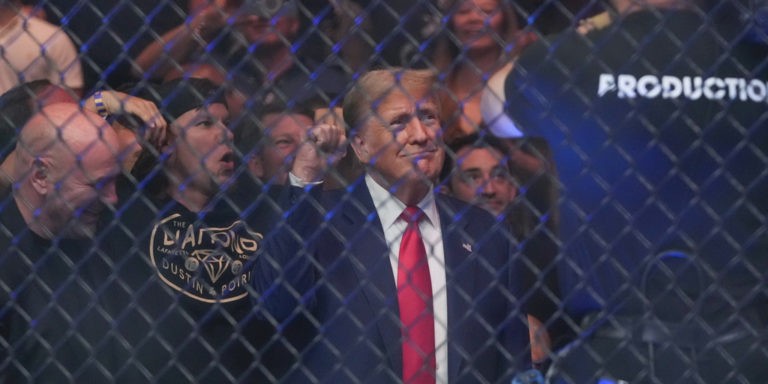
President Donald Trump, who celebrated his 80th birthday at the UFC event on Sunday, sought to tie the fights to larger celebrations of the 250th anniversary of the signing of the Declaration of Independence.

Adapted from reporting by the Associated Press

DOJ’s Probe Into Gavin Newsom Reportedly Dates to Biden Era

(Luis CornelioHeadline USA) California Gov. Gavin Newsom spent much of his Monday announcement making unsubstantiated claims about criminal investigations involving his wife. Left out of the fiery remarks, however, was one notable detail: one of the probes may have started during the Biden administration.

Newsom revealed the alleged investigation in a nearly five-minute video posted on social media and on a taxpayer-funded state government website. He specifically claimed that the DOJ is looking into First Partner Jennifer Siebel Newsom.

A source inside the DOJ told reporters multiple active investigations are related to Newsom’s administration and his aides. None of them directly target the governor himself.

One of the probes pertains to Siebel Newsom’s tax matters and was launched in 2025, according to the Daily Wire. This probe was triggered by whistleblower testimony and people in Sacramento, according to CalMatters.

A separate investigation involves Newsom’s former chief of staff, Dana Williamson, who pleaded guilty in May to a series of fraud-related charges.

According to her guilty plea, Williamson was part of a scheme to steal $225,000 from former Attorney General Xavier Becerra’s dormant campaign account.

Becerra left the funds in the account when he departed his state office to become Biden’s HHS secretary.

The investigations reportedly stem from the U.S. Attorney’s Office for the Eastern District of California.

Siebel Newsom leads the California Partners Project and the Representation Project, both nonprofit organizations. Details of the investigations and whether they are tied to these nonprofits remain unclear. In his video announcement, Newsom characterized them as a fishing expedition targeting his family and close associates.

Newsom also claimed that President Donald Trump ordered the investigations, but he offered no evidence to support that allegation.

Trump did say that he would have arrested Newsom on June 9, 2025, but he made these comments in response to the state government’s weak response to the anti-ICE riots of the time.

Trump did say on June 9, 2025, that he would arrest Newsom, though the comments came in response to the governor’s handling of anti-ICE riots in California.

“I would do it if I were Tom [Homan]. I think it’s great,” Trump said. “Look, I like Gavin Newsom. He’s a nice guy. But he’s grossly incompetent.”

Unlike his response this week, Newsom at the time fired back: “Come and get me, tough guy.”

Newsom’s communications director Izzy Gardon did not respond to Headline USA’s request for comment before deadline.